




Abstract
How do rebel organizations capitalize on transit migration? While numerous studies have examined the role of refugees, this article explores a broader yet significant category of mobile populations in civil conflict. Focusing on Mali, I argue that transit migration increases rebel capacity based on three causal mechanisms: Obstacles in transit, camping banditry, and dynamic recruitment. Obstacles are an enabling mechanism by facilitating the intersection between rebels and migrants. As camping bandits, rebels move between violent extortion and systematic exploitation depending on levels of competition. Finally, I argue that rebels recruit transit migrants using dynamic strategies, including coercive incentives and short-term contracts in which social and ideological requirements are relaxed. Combining quantitative analysis with original interview data, I find significant support for the causal argument and preliminary evidence for my conceptual framework. The findings improve our understanding of rebel organizations and the role of mobile populations in civil conflict.
Introduction
Transit migration refers to mobile populations temporarily staying in one or more countries to reach a further and final destination (OHCHR 2016, 5). In the Sahel, transit migration is commonly associated with irregular migration, which is the “[m]ovement of persons that takes place outside the laws, regulations, or international agreements governing the entry into or exit from the country of origin, transit or destination” (IOM 2022a). Most transit migrants observed in Northern Mali are young men arriving from neighboring countries and heading towards North Africa and, to a smaller extent, southern Europe (IOM 2022b). This trend is linked to freedom of movement within the Economic Community of West African States (ECOWAS) combined with Mali’s porous borders and weak state presence (Carling 2016). In sum, these conditions promote lucrative opportunities for migration services such as document forgery and smuggling, which enable West African nationals, faced with strict migration regimes, to exit ECOWAS by irregular means.
Opportunity structures of irregular transit migration are also found to be significant determinants of civil conflict (e.g., Buhaug et al. 2009; Tollefsen and Buhaug 2015). Mali and Niger have experienced several armed rebellions staged by Tuaregs operating from northern regions and benefiting in large from trafficking across poorly governed borders. Following Mali’s Tuareg rebellion in 2012, the conflict has become increasingly complex, involving multiple armed formations including transnational jihadist groups with links to Al-Qaeda and the Islamic State. Despite these developments, the volume of transit migration remains high (Molenaar and Damme 2017; Raineri and Rossi 2017). Although increased violence may cause temporary shifts in migratory flows, foreign interdiction policies and border controls appear to have a stronger influence on the nature of mobility (Bøås 2021; Raineri and Strazzari 2022; Stambøl 2019). Following Niger’s criminalization of migrant smuggling in 2016, the International Organization for Migration (IOM) (2016, 1) reported that “alternative routes are being used more,” including “a road to reach Libya that goes from Mali […] to avoid going through Niger.” New actors and routes have since emerged to bypass border controls, exposing transit migrants to higher risks (Micallef 2019).
It follows from the preceding remarks that West African migrants are both defiant and determined in face of dangerous journeys (Carling 2016). Qualitative research in Senegal suggests that prospective migrants are both aware of and willing to take high risks to realize their migration aspirations (Hernández-Carretero and Carling 2012), even if they believe there is a risk of dying higher or equal to 25% (Mbaye 2014). The intersection of transit migration and rebellion suggests frequent interaction, which, given migrants’ profile and risk-willingness, is likely to benefit the rebels. Yet, to my knowledge, there exists no systematic examination of transit migration and civil conflict. By conceptualizing and empirically testing the relationship between transit migration and rebel capacity, this article expands our knowledge of transnational dynamics in civil conflict and contributes to an important research gap. Furthermore, the issue carries considerable policy relevance. Knowing whether and how rebel organizations capitalize on transit migration sheds new light on the migration-security nexus and may have significant implications for migration management in regions of transit.
Using novel data by IOM (2022b), I find significant positive associations between the volume of transit migration and the number of government forces killed by rebels, suggesting an increase in rebel capacity. I attribute this effect to three causal mechanisms: Obstacles in transit, camping banditry, and dynamic recruitment. Obstacles refer to conditions preventing migrants’ desired progression, which in turn facilitate rebel exploitation. Given obstacles in transit, I argue that rebels operate as camping bandits, which is a reconceptualization of Olson’s (1993) notion of roving and stationary bandits. Roving bandits extort their victims’ resources, whereas stationary bandits seek to monopolize violence within their territorial domain and extract only a proportion of produced value to ensure long-term production. As camping bandits, rebels move between violent extortion (roving banditry) and systematic exploitation (stationary banditry) depending on levels of competition. Finally, I argue that rebels recruit transit migrants using dynamic strategies, including coercive incentives and short-term contracts in which social and ideological requirements are relaxed. Although migrants’ incentives are likely to be incompatible with rebels in a foreign region, they have few outside options during transit, and rebels may easily manipulate migrants’ participation constraints. Combining quantitative analysis with interview data among former migrants, I find significant support for the causal argument and preliminary evidence for my conceptual framework.
I begin with a brief discussion of existing research on mobile populations and civil conflict. In the following section, I develop my conceptual framework of transit migration and rebel capacity. Observable implications are tested through a mixed methods analysis of Mali. First, I examine the effect of transit migration on rebel kills against government forces. I then evaluate the quantitative findings and conceptual framework based on original interviews among former migrants. The article concludes with a summary of key theoretical and practical implications.
Previous Research
The literature has increasingly focused on transnational dimensions of civil conflict (Checkel 2013; Gleditsch 2007; Salehyan 2011). Within transnational perspectives, the role of refugees has drawn particular attention. Early quantitative studies suggest that refugees increase the risk of conflict onset and continuation in neighboring host- and sender countries (Salehyan and Gleditsch 2006; Salehyan 2011). The authors attribute this effect to refugees’ role in expanding rebel groups’ social network, including the transfer of arms, combatants, and ideologies, and that refugee camps in neighboring countries provide sanctuary and recruitment opportunities.
While the notion of refugees as a general security threat is challenged by Zhou and Shaver (2021), several associations remain well-established in the broader literature. Case studies have detailed how warring parties actively engage in the militarization of refugee situations (e.g., Harpviken and Lischer 2013; Lischer 2005; Muggah 2006). Militarization is typically found in areas where refugees are poorly governed and weakly protected (Loescher and Milner 2005), suggesting that host governments’ administrative capacity moderates the risk of refugee-related conflict (Böhmelt et al. 2018). Novel research offers additional nuance by examining the role of shared ethnicity between refugees and groups in host countries (Rüegger 2019), as well as refugees’ impact on communal violence (Fisk 2018, 2019).
Yet, by focusing on refugees in host- and sender countries, current research omits a significant category of mobile populations. The term “transit migration” has been subject to academic debate, primarily due to its politicized application and the term’s simplification of contemporary migration (Düvell 2012). Nevertheless, the notion of “transit” has analytical value as it captures a large group of people traveling through one or more countries to reach some (un)intended destination. Importantly, while transit migration may include refugees, it constitutes a much broader array of individuals, many of whom deliberately travel through conflict for reasons unrelated to physical insecurity. In Northern Mali, at least 90% of observed transit migrants originate from regions without recent associated conflicts (IOM, 2022b).
Emerging research has examined the role of migrant smuggling in irregular transit migration (Sanchez 2018). Although smuggling is considered a traditional business of the Sahel (Richter 2019), it overlaps with criminal networks involving non-state armed groups, including jihadist formations. For example, Al-Qaida in the Islamic Maghreb (AQIM) had already established a significant presence in Northern Mali during the early 2000s. By exploiting informal political structures and collusive government officials, AQIM became deeply involved in the trafficking of drugs and contraband, and allegedly also human beings (Bøås 2015; Harmon 2014). Current allegiances between ethnopolitical and jihadist groups suggest similar arrangements on border management (Molenaar and Damme 2017; UNSC 2018, 2019, 2020).
Despite the preceding remarks, we know little about the relationship between transit migration and civil conflict (Koser and Cunningham 2017), which is likely to feature dynamics and mechanisms that are poorly explained by current theoretical and empirical research.
Transit Migration and Rebel Capacity in Mali
In short, I argue that transit migration increases the capacity of Malian rebel groups by providing an independent source of economic and human resources. To explain how, I combine central findings from the literature on rebellion with insights from migration research to form a conceptual framework based on three causal mechanisms: Obstacles in transit, camping banditry, and dynamic recruitment.
Obstacles in transit are an enabling mechanism by constraining migrants’ trajectory and thus facilitates rebel exploitation (Figure 1). Given obstacles in transit, camping banditry and dynamic recruitment are jointly sufficient to increase rebel capacity. Competition is expected to positively moderate this relationship by incentivizing rebel groups’ extortion of transit migration. Based on my causal model, I present the first and overall hypothesis: A causal model of transit migration and rebel capacity.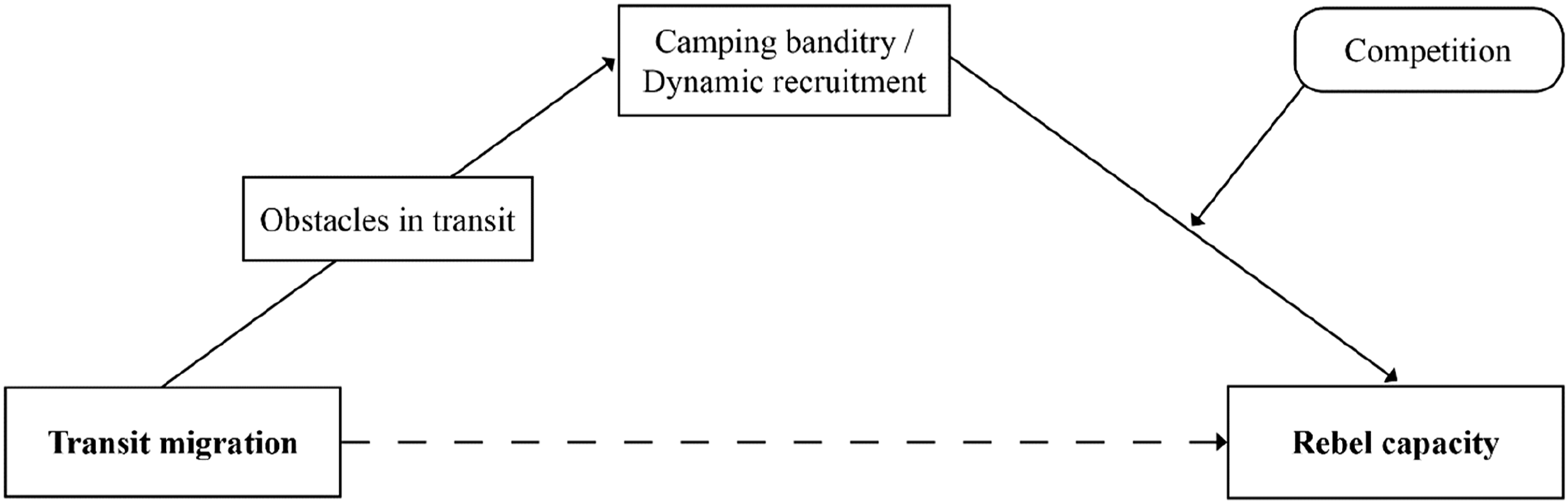
Transit migration increases rebel capacity.
The Nature of High-Risk Transit Migration
Global survey data from 2007-2013 suggest that approximately half of West African youth desire to permanently emigrate (OECD 2015, 43–44). The extent to which migration aspirations are realized depends on the migration infrastructure, which captures “the systematically interlinked technologies, institutions, and actors that facilitate and condition mobility” (Xiang and Lindquist 2014, 124). Due to strict migration regimes, most West Africans planning to migrate beyond the ECOWAS region will find it difficult to realize their aspirations by regular means. Rather, the level of outgoing transit migration in Northern Mali, most of which originates from Guinea, Ivory Coast, Senegal, and Gambia (IOM 2022b), is linked to commercial and social dimensions that facilitate irregular mobility (Carling 2016).
Migrants traveling irregularly through the Saharan desert face several risks including robbery, vehicle breakdown, and abandonment by smugglers, in which case the lack of food, water, and shelter is likely to cause death by dehydration and starvation. These factors account for more than 2,000 registered migrant deaths in the Mali-Sahel border region, though the actual number is believed to be much higher (IOM 2022c). Yet, although irregular transit migrants may end up in refugee-like situations, they are weakly protected by domestic and international law (OHCHR 2016). On the contrary, their status as irregular migrants aggravates vulnerability in transit as foreign interdiction policies incentivize high-risk mobility to avoid detection by authorities (Reitano 2015; Tubiana et al. 2018).
Thus, while transit migration in Northern Mali stems from individual aspiration and decision-making, the migrants’ scope of agency drastically diminishes as conditions of irregular mobility increasingly determine the nature of onward movement. The preceding individual and structural characteristics underscore my conceptual framework linking transit migration to the capacity of rebel organizations.
Obstacles in Transit
Transit migrants in the Sahel are faced with numerous obstacles, including financial difficulties, limited transportation options, and network failures. Most sub-Saharan migrants acquire substantial financing before the onset of the journey. Yet, initial funding is rarely sufficient as migrants increasingly rely on expensive and unpredictable services.
In recent years, transportation services have become increasingly constrained by foreign interdiction policies and competitive border management (Bøås 2021; Cold-Ravnkilde 2021). Nevertheless, anti-smuggling measures appear to have a limited effect on the volume of transit migration. As Carling (2016, 43) points out, migrants are “determined in the face of dangerous journeys,” and “[t]he question is whether this reduction in supply will reduce the volume of smuggling or simply expose the same number of migrants to greater risks and costs.” Case studies point toward the latter scenario in which sustained demand combined with interdiction policies put migrants at higher risk of exploitation (Reitano 2015; Tubiana et al. 2018).
Transit migrants’ coping opportunities diminish as obstacles increase in number and severity. When migrants are stalled in remote locations, such as Gao and Tombouctou in Northern Mali, the opportunities for income generation and onward movement are significantly reduced. In such circumstances, transit migrants will typically rely on social networks. For instance, migrant ghettoes in Gao serve as a network of solidarity, whereby some ghettos are connected to NGOs that may assist in cases of illness or mistreatment by local authorities (Harmon 2014). Yet, ghettoes only provide short-term solutions, are often unreliable, and do not solve transit migrants’ financial or logistical obstacles. Furthermore, extended networks with friends and relatives are often difficult to maintain when migrants are stalled in remote transit regions for longer periods, and families abroad may decide or be compelled to stop providing financial assistance (Schapendonk 2015).
Despite the number and severity of obstacles in transit, there is a high economic and social cost of returning home as migrants’ journeys are typically financed by friends and relatives (Claes et al. 2021). Given migrants’ determination, they are likely to seek any opportunity for onward movement. Based on the preceding discussion, I argue that obstacles combined with the risk-willingness of transit migrants in Northern Mali provide significant opportunities for rebel exploitation, leading to my second hypothesis:
Obstacles in transit facilitate rebel exploitation of transit migration.
Camping Banditry
Rebel organizations depend on material procurements, and even the most ideological groups must offer some tangible inducements to recruit and retain members (Gates 2002; Humphreys and Weinstein 2008; Weinstein 2005). For this, they need income. In Northern Mali, the border is arguably the most important resource (Scheele 2012), whereby a high demand for irregular transit migration has resulted in a lucrative smuggling industry (IOM 2021).
To illustrate rebel groups’ exploitation of transit migration, I introduce the notion of camping banditry. As camping bandits, rebels move between stationary and roving banditry, which are concepts originally introduced by Olson (1993) to explain the relationship between violence and governance (see also, Bates 2001; De la Sierra 2020). Roving bandits maximize short-term gains by extorting the full value of their victims’ resources. Stationary bandits monopolize violence within their territorial domain and extort only a proportion of resources in return for order and safety, thus ensuring productivity and long-term gains.
Rebel organizations tend to provide some form of governance within their territorial domain to gain legitimacy and income (e.g., Rubin 2020; Mampilly and Stewart 2021). Northern Mali can be characterized as “an area of overlapping and competing networks of informal governance”, based in part on access and control of illicit trade (Bøås 2015, 299). Consequently, rebels operating in transit regions may have incentives to maintain the productivity of transit migration and smuggling services. Rather than extorting the full value, they can benefit in the long term by establishing protection rackets and taxation schemes. Yet, territorial control is difficult to maintain amidst high competition. As Molenaar and Damme (2017, 10) point out, migrant smugglers in Northern Mali “have to navigate a complex physical terrain where they are up against an increasingly fragmented number of armed groups seeking to collect spoils.” In competitive environments, I argue that rebels employ responsive tactics to exploit accessible resources, which reflects similar findings by Avdan and Omelicheva (2021) concerning rebels’ involvement in human trafficking.
Thus, although rebel organizations tend to have long-term political goals, I argue that their mode of extortion varies. This is because most rebel groups have yet to consolidate desired control of territory and population, whether it involves capturing the state or seceding part of its territory. In the context of Northern Mali, rebel groups are partly and temporarily occupying territory in a competitive environment. Consequently, I argue that they are neither roving- nor stationary bandits, but somewhere in between. As camping bandits, rebels move between violent extortion and systematic exploitation depending on levels of competition.
Dynamic Recruitment and Short-Term Contracts
Theories on rebel recruitment assume a static supply involving several constraints on mobilization (Gates 2002; Wood 2003; Weinstein 2005; Humphreys and Weinstein 2008). Effective recruitment requires inducements that meet potential members’ participation constraints, which – depending on the group’s identity and goal – tend to include security and economic-, social, or functional rewards (Gates 2002; Wood 2003). Limited supply combined with economic or military shocks explains why some rebels resort to forced recruitment (Eck 2014). Yet, coercion exacerbates the challenge of retaining members, as forced recruits are more likely to shirk and desert, resulting in combat inefficiency and risks of infiltration. Effective retention will either require a constant stream of inducements, a credible and severe punishment scheme, or an effective process of socialization and indoctrination (Gates 2017).
I argue, however, that the preceding assumptions can be relaxed for regions of high-risk transit migration. Migrants passing through Northern Mali are extremely vulnerable as they lack protection from governments, are exposed to dangerous desert crossings, and because unfamiliarity in transit (e.g., local languages and customs) make it difficult to cope with obstacles. Although migrants have no apparent incentives to join rebel groups in a foreign country, their lack of agency and local attachment may be conducive to rebel organizations, especially in competitive and sparsely populated regions. By employing coercive incentives and short-term contracts, rebels may effectively recruit from a dynamic supply of manpower.
Recruitment opportunities depend on the nature of rebel-migrant intersections. Reports by UN panel of experts suggest that middlemen linked to rebel organizations recruit directly from migrant ghettoes (UNSC 2018, 35; 2019, 33; 2020, 3). This is likely to require costly manipulation, however, as migrants have access to feasible outside options such as income generation and planning of onward journeys, whereas proximity to government forces implies risky exposure. I argue that recruitment opportunities increase as migrants embark on desert crossings, especially for rebels able to intersect convoys in remote locations. Desert crossings are the most critical stage of transit as migrants are mobile and highly exposed. Faced with the choices of death, abandonment in the desert, or working for a rebel group, a migrant would essentially be coerced to participate. Thus, in the context of Mali’s transit corridors, rebels may benefit from dynamic recruitment strategies, including coercive incentives with short-term contracts for rank-and-file positions, as opposed to static recruitment schemes involving strict compatibility requirements. Dynamic recruitment alleviates constraints on local supply whereas short-term contracts lower the cost of shirking and desertion, thus providing a considerable advantage in competitive environments.
These arguments challenge previous research’s emphasis on rebel groups’ compatibility requirements (Gates 2002, 2017; Wood 2003, Weinstein 2005). Coerced migrant recruits will have weak social or ideological ties with rebels operating in a foreign region and are likely to seek outside options, such as realizing their migration aspirations or returning home. Most migrant recruits will therefore be risk-averse, which makes shirking more likely, and they will seek to desert given viable outside options. Social or ideological incompatibilities suggest that ethnic rebels will refrain from migrant recruitment. Yet, ethnic conflicts are rarely defined by grievances alone, but rather by pathways of complex interactions involving both incentives and opportunities (Bara 2014). Similarly, the assumption of ethnic homogeneity in identity-based rebellion is not apparent (Cunningham et al. 2012). Malian rebel groups with Arab or Tuareg identities comprise large numbers of former members from Ansar Dine and the Movement for Oneness and Jihad in West Africa (MUJAO), including several Sub-Saharan nationalities (Haugegaard 2018). Thus, ethnic group identity does not necessarily translate into strict requirements at the individual level.
Furthermore, rebels in competitive environments may shift their ideology to strengthen the group’s relevance and chances of success (Tokdemir et al. 2021). As Walter (2017, 8) points out, extreme ideologies can offer “significant organizational advantages over more moderate groups, especially in environments with multiple competing rebel groups, weak rule of law, and bad governance.” In the competitive environment of Northern Mali, Jihadist ideologies are employed as an inclusive mechanism (Boukhars 2018), largely due to its adaptability in the context of sociocultural tensions (Benjaminsen and Ba 2019). Indeed, as the conflict in Mali became increasingly fragmented, both MUJAO and Ansar Dine preached that their combat was in the name of Islam, and not Arabs, Tuaregs, blacks, or whites, thus appealing to the broader West African population (Huckabey 2013). Yet, most West Africans have no apparent link to the groups’ jihadist ideology, and interviews with former members indicate that prior religious conviction was not a requirement for participation (Thiénot 2013).
Finally, the risk of shirking and desertion among migrant recruits is likely to incur low organizational costs. First, as migrants in transit have few local attachments, the use of coercion by rebels is unlikely to alienate local communities. Second, given the irregular nature of mobility and lack of legal protection, migrants are unlikely to engage with government entities, thus reducing the risk of infiltration. Third, while most studies emphasize the role of combatants, the mobilization of rebellion requires logistical, administrative, and other practical work (Parkinson 2013). I argue that migrants are initially recruited into low-ranking positions to increase overall capacity. Since their tasks carry few risks, the cost of surveillance and punishment is likely to exceed the benefits of retaining migrant recruits when calculating for low productivity and dynamic supply. Rather, by using coercive incentives and short-term contracts, rebels can exploit transit migration more efficiently.
Together, the mechanisms of camping banditry and dynamic recruitment substantiate Hypothesis 1 that transit migration increases rebel capacity. Additionally, the theoretical insights suggest that competition moderates the priorities and behavior of rebel organizations, whereby higher competition is likely to increase extortion of migrants in transit, leading to my final hypothesis:
Competition increases rebel extortion of transit migration.
Research Design
I test my assumptions using a mixed methods explanatory sequential design. First, the effect of transit migration on rebel capacity is assessed through a quantitative sub-national analysis of Mali. Then, to further evaluate the quantitative findings and the salience of my causal mechanisms, I conduct a qualitative examination based on original interview data among former migrants. For my quantitative analyses, I use unbalanced panel data with monthly variation across the first administrative regions in Mali subject to active conflict between 2016 and 2020 (N = 4, T = 17–51). The periods vary in length based on data availability for transit migration. The region of Gao has consistent data from July 2016 to December 2020, whereas data is available from July 2017 to December 2020 for Tombouctou, July 2017 to July 2020 for Mopti, and August 2017 to December 2018 for Kidal.
Mali
I consider Mali as a most-likely case for my conceptual framework. Since 2012, the country has become a geopolitical hotspot involving multiple armed actors and the deadliest UN mission to date. Meanwhile, Mali remains a key priority for international migration management due to its role in facilitating irregular mobility. This is reflected in IOM’s establishment of transit monitoring points despite high conflict-related risks. Although there are additional monitoring points across the Sahel, Mali remains the only country with consistent sub-national data allowing for sufficient comparison across time and space.
By relying on a single case, the external validity of my findings is limited. Yet, there are several areas of similar characteristics, including the extended Sahel border regions along Niger, Burkina Faso, Nigeria, Chad, and Libya, as well as the Horn of Africa, Turkey, and Latin America. Hence, the findings may point to a broader explanatory range and a potential analytical generalization of the conceptual framework.
Dependent Variable
The outcome of interest is variance in rebel capacity. Although several indicators account for capacity, including financial turnover, administrative efficiency, or member base, such information is either unavailable or highly inaccurate. However, as the modus operandi of rebel organizations, the variance in rebel violence is likely to reflect variance in operational capacity. To measure rebel violence, I rely on the Georeferenced Event Dataset by the Uppsala Conflict Data Program (UCDP GED) (Sundberg and Melander 2013).
The use of violence as a measure of rebel capacity involves several limitations that require further specification. First, whereas rebel violence typically involves inter-group and one-sided violence, an increase in such numbers may indicate a decline in capacity (Eck 2014; Holtermann 2016; Hultman 2007; Wood 2010, 2013, 2014). My outcome variable is therefore specified as Strategic Rebel Kills, which is the best estimate of monthly deaths inflicted by rebels on government forces. Rebel kills against government forces, as opposed to general violence, offer a more unambiguous measure of capacity given its implied risk and demand for resources.
Second, almost all deaths inflicted on government forces since 2016 are perpetrated by the Group for Support of Islam and Muslims (JNIM) and IS of the Greater Sahara (IS-GS). Consequently, the analysis does not capture the potential effects of transit migration on the capacity of ethnopolitical groups, which may be expressed by more elusive indicators, such as economic or political capital. Nevertheless, given my interest in examining how transit migration impacts civil conflict, it makes sense to focus on actors engaged in violent competition with governments. Furthermore, while previously mentioned studies highlight the role of ethnopolitical groups in the migration economy, we know little about the involvement of jihadist formations as the main belligerents of state-based conflict.
Finally, the number of active rebel groups in Mali suggests that competition may influence the nature and scope of violence (Fjelde and Nilsson 2012; Lebovich 2019), including the role of transit migration (Hypothesis 3). Variables accounting for competition and other conflict-related characteristics are described further below.
Independent Variables
The main independent variable is Transit Migrants, which captures the number of monthly transit migrants based on IOM’s Flow Monitoring Reports at key locations in Mali’s first administrative regions (IOM 2022b). Although IOM began recording incoming migrants in mid-2017 (i.e., migrants returning through Mali), the reports state that these numbers remain highly inconsistent. Thus, I only include outgoing migrants transiting Mali toward an intended destination country. The data includes information on gender, age, origin, purpose of migration, and intended destination, which indicate that some 90% are young men arriving from relatively peaceful countries in West Africa, and who migrate primarily for economic reasons.
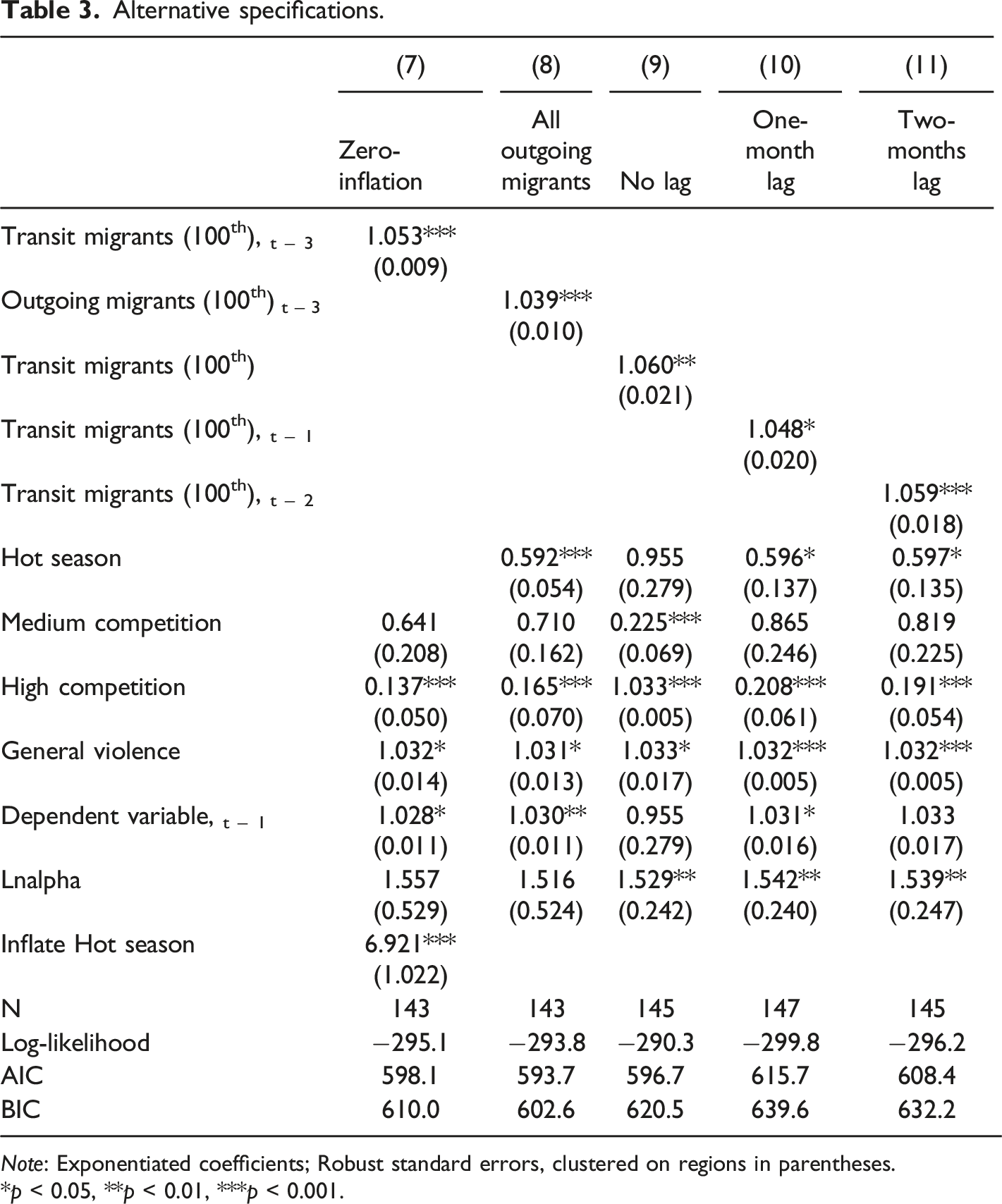
Thus, the relationship between Transit Migrants and Strategic Rebel Kills is unlikely to feature endogeneity as most migrants originate from areas without recent associated conflicts. Nevertheless, the independent variable is lagged 3 months to account for possible endogeneity and, more importantly, to capture potential causal effects. Because, if transit migration increases rebel capacity, the observed effect is likely to be delayed as it takes time to convert economic or human resources into combat capabilities. The 3 months delay is based on testing and overall effects with similar findings obtained at multiple lag structures (Table 3).
More importantly, because transit migration and rebel violence are dynamic phenomena, the relationship may feature spatial diffusion of cause and effect. Within the scope of my analysis, IS-GS is primarily active in Gao, whereas JNIM is active across all regions in Northern Mali. However, JNIM is an umbrella comprising four groups: Macina Liberation Front (FLM), Ansar Dine, AQIM, and Al-Mourabitoun. By cross-referencing with ACLED’s record of associated actors (Raleigh et al. 2010), I found that FLM is collaborating with Ansar Dine in Mopti, whereas AQIM and Al-Mourabitoun are primarily operating in Gao and Tombouctou. Hence, the responsible group is typically the one most active in the region where the armed event took place (Figure 2). Temporal distribution of Transit Migrants and Strategic Rebel Kills. The unit size for Transit Migrants is 100.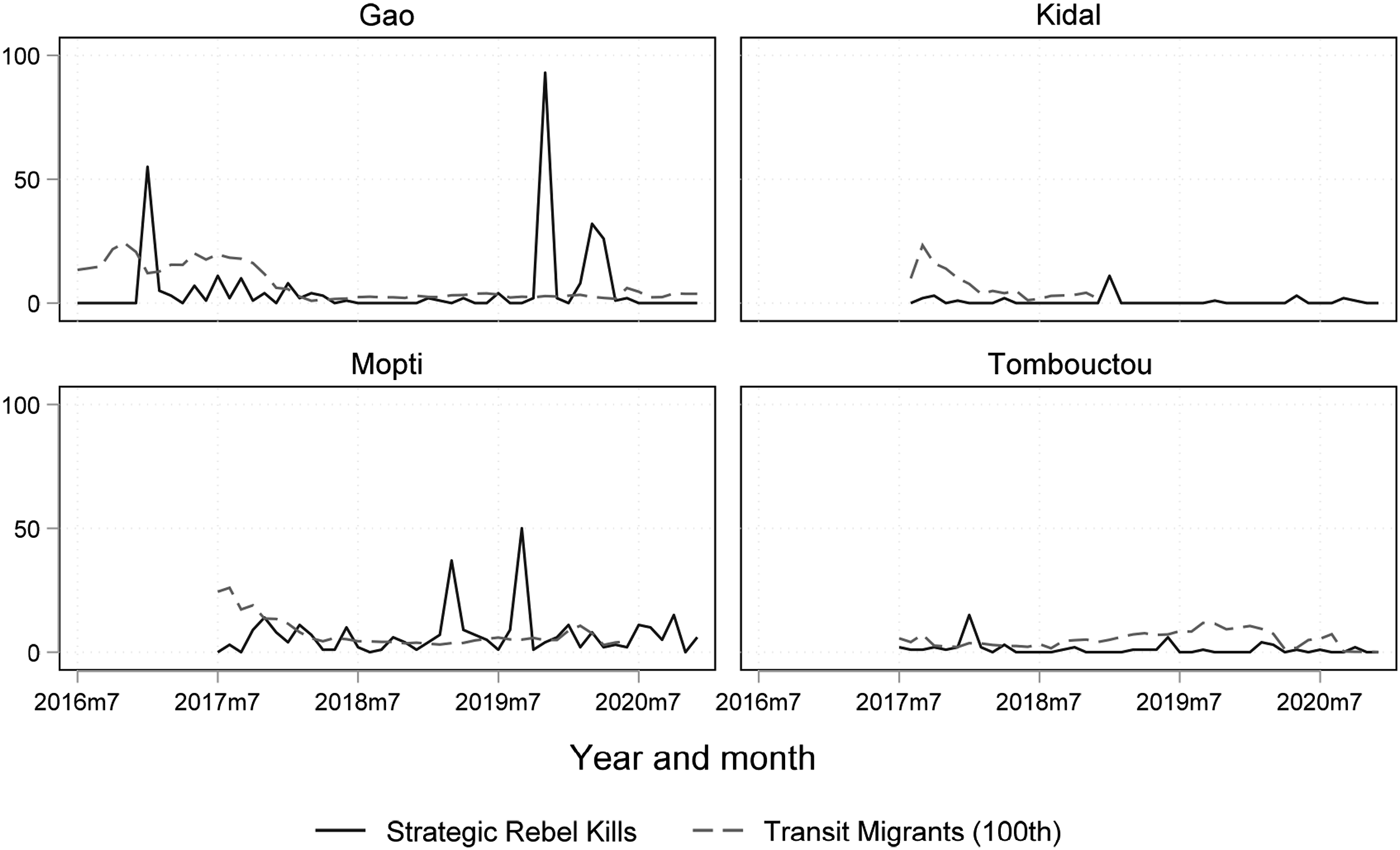
I consider three additional variables that are theoretically relevant and potentially confounding. First, Mali’s hot season aggravates fatigue and limits mobility, which is likely to reduce opportunities for armed clashes between rebels and government forces. However, extreme temperatures are also likely to exacerbate obstacles in transit by prolonging journeys and exposing migrants to higher climate-related risks, allowing for intensified rebel exploitation. To account for these dynamics, I include the dummy variable Hot Season as both a covariate and moderating factor using regional data from the World Bank (2021). The variable is coded as 1 for months with average temperatures exceeding 30 degrees Celsius, which corresponds with the actual hot season across my regions of analysis (April through October). Second, given the number of rebel groups in Mali’s current conflict, I expect the level of competition to negatively influence Strategic Rebel Kills by forcing rebels to reallocate resources. Yet, I also anticipate higher competition to intensify rebel extortion of transit migration as an easily accessible source of economic and human capital. To test these assumptions, I measure the unconditional and moderating effect of Competition, which is a categorical variable based on the frequency of armed inter-rebel events from UCDP GED. Months without armed inter-rebel events are coded as 0 (low), whereas months with one event are coded as 1 (medium), and two or more as 2 (high). Finally, to assess the influence of overall conflict intensity, I control for General Violence, which is the best estimate of total battle-related deaths from UCDP GED, whereby civilian casualties constitute the vast majority.
Method
Using Poisson and negative binomial regression models, both of which are appropriate for count data analysis, I find significant signs of overdispersion (see Online Appendix). In the case of influential overdispersion, the negative binomial regression produces more robust standard errors by employing an additional parameter allowing individual observations to vary in their average rates of an outcome. I nevertheless include a fixed-effects Poisson model with monthly dummy variables to control for regional heterogeneity and time trends, in which case the negative binomial regression suffers from incidental parameter bias. Furthermore, the distribution of my outcome variable is right-skewed with a large proportion of zero outcomes (Figure 3). Although this is expected given the inherent volatility of Strategic Rebel Kills, the potential influence of excessive zeroes is tested and reported further below. Frequency distribution of Strategic Rebel Kills.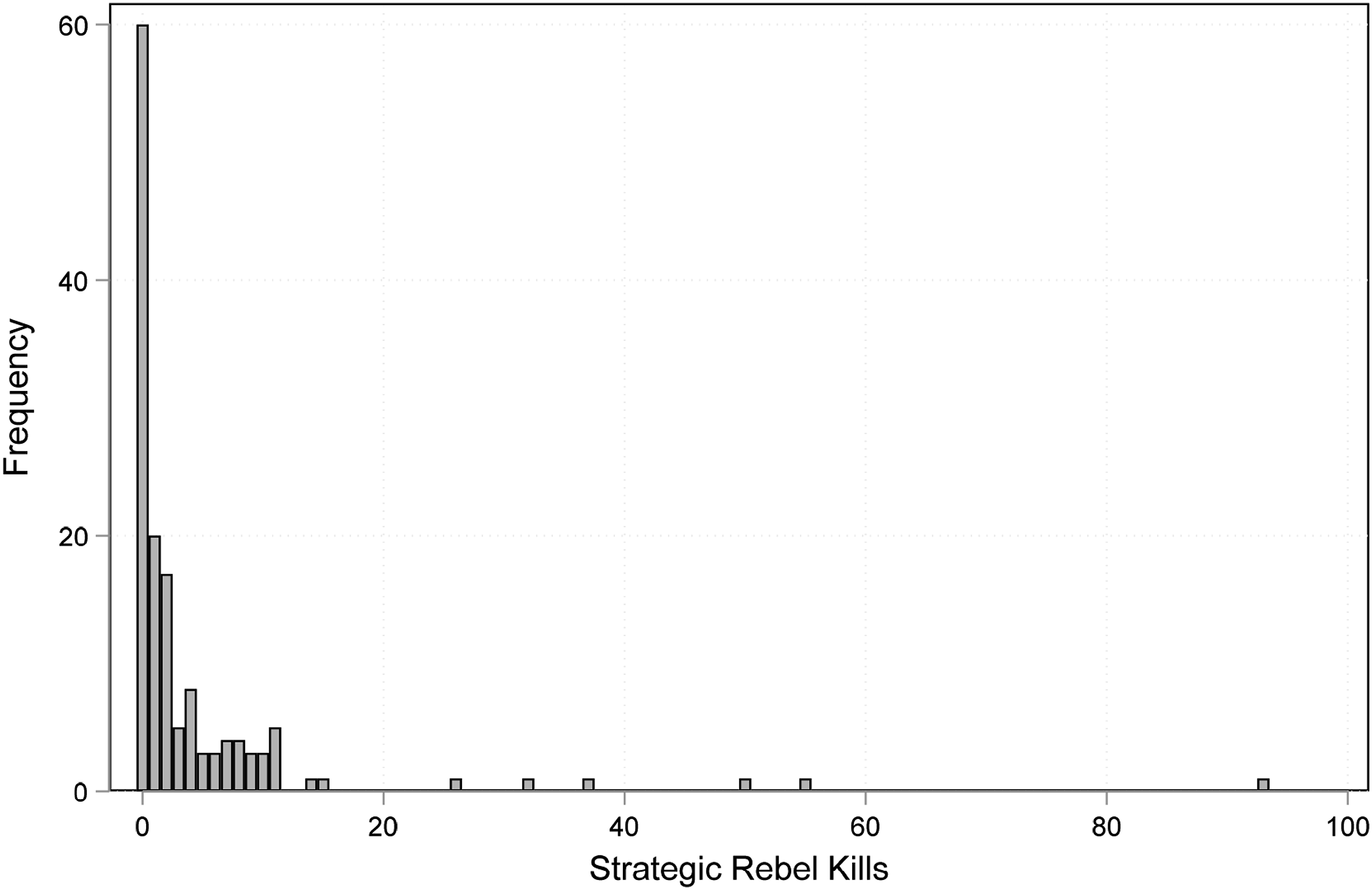
Figure 3 also highlights six considerable outliers, which may be linked to unobserved factors such as election cycles and strategic opportunities linked to government deployments. To assess the influence of outliers, I include a model omitting observations exceeding 20 monthly rebel kills. Finally, I measure the moderating effect of Hot Season and Competition, assuming that extreme temperatures aggravate obstacles in transit and that higher competition intensifies rebel extortion of transit migration (Hypothesis 2 and 3). All models employ clustered standard errors to account for cross-sectional dependence. I also include a lagged dependent variable to specifically test for past values of Strategic Rebel Kills.
Quantitative Results and Discussion
Strategic Rebel Kills and Transit Migrants.
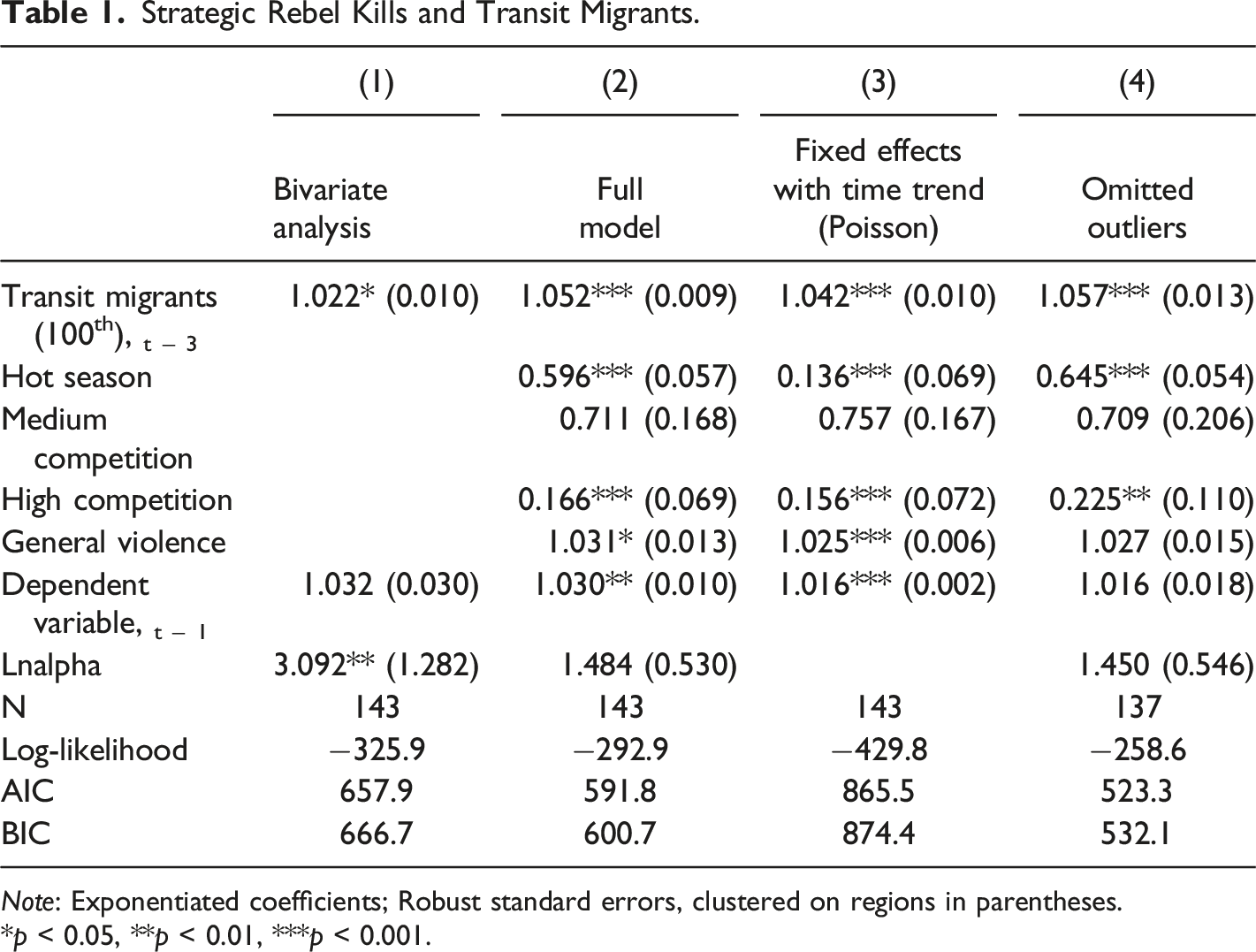
Note: Exponentiated coefficients; Robust standard errors, clustered on regions in parentheses.
*p < 0.05, **p < 0.01, ***p < 0.001.
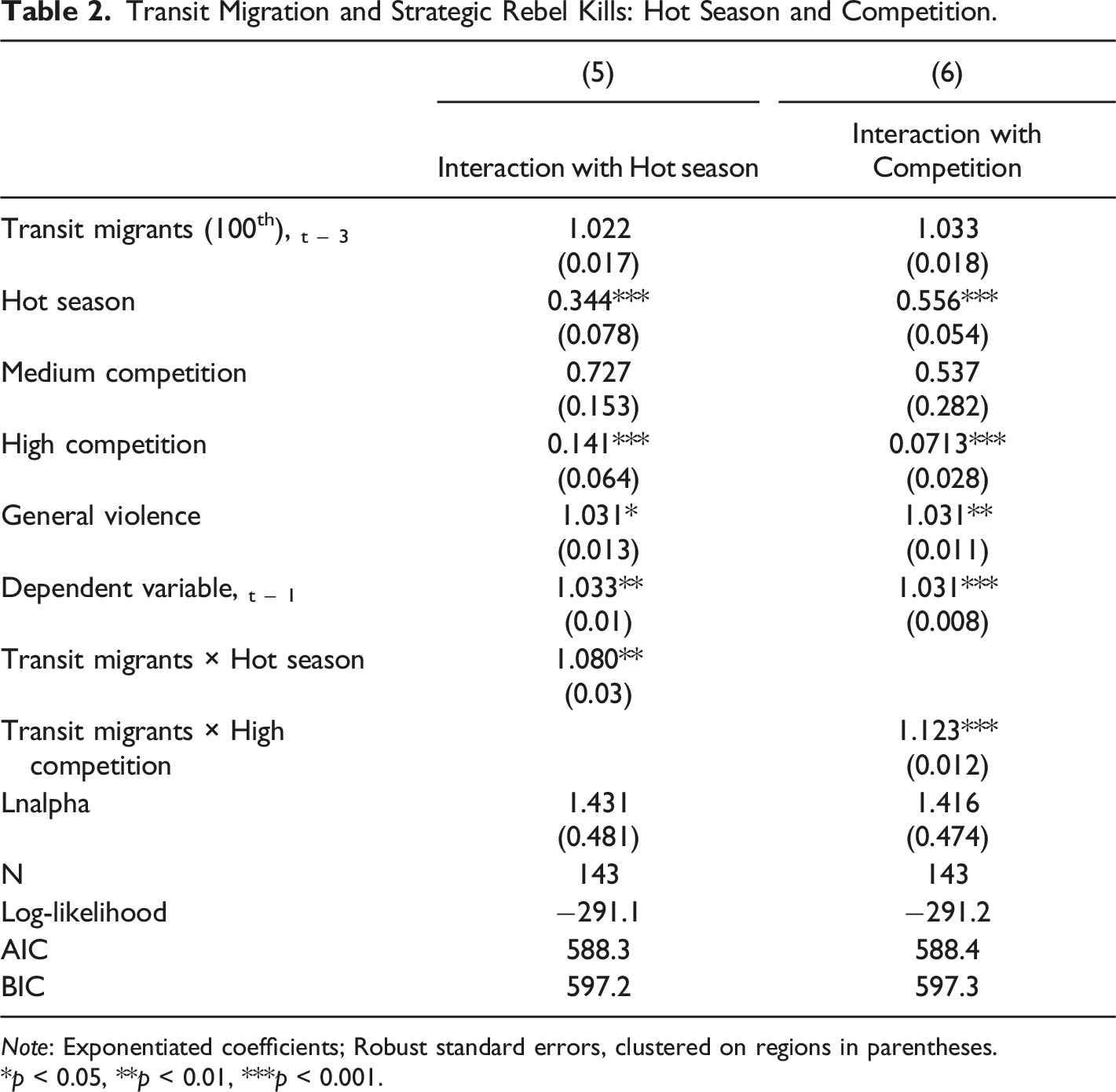
Model 1 reports a simple bivariate analysis. The coefficient estimate for Transit Migrants (100 th ) suggests that an increase of one unit (i.e., 100 migrants) is associated with an increase in Strategic Rebel Kills by a factor of 1.022, or 2.2%, in the following third month. By including control variables in Model 2, the effect of Transit Migrants (100 th ) increases to 5.2%. This increased effect stems from the inclusion of General Violence. Closer examination reveals that the influence of General Violence is based on its mediation of outliers (see Model 4 and Online Appendix). As a measure of overall conflict intensity, General Violence absorbs some of the residual variances in Strategic Rebel Kills, resulting in more precise estimations of Transit Migrants (100 th ). Model 3 presents the fixed-effects Poisson regression estimates. Controlling for heterogeneity and monthly trends, the coefficient for Transit Migrants (100 th ) remains significant with a small reduction in effect. As expected, by omitting outliers in Model 4, the effect of Transit Migrants (100 th ) increases by 0.5% compared to Model 2, whereas General Violence becomes insignificant.
Overall, the coefficient estimates for Transit Migrants (100
th
) prove to be quite robust, lending support for Hypothesis 1 that transit migration increases rebel capacity. The average marginal effects in Figure 4 further support this finding. Moving from 0 to 2,500 monthly Transit Migrants is associated with an increase of approximately four Strategic Rebel Kills in the following third month. However, the pattern is subject to widening confidence intervals, which is linked to the scope and right-skewed distribution of data on Transit Migrants (see rug plots in Figure 4). While these data limitations constrain the meaningful range of main effects, they also highlight the relevance of examining potential interactions linked to my hypothesized mechanisms, which may provide a better understanding of the relationship between transit migration and rebel capacity. Average marginal effects of Transit Migrants on Strategic Rebel Kills based on Model 2 (shaded area signifies 95% confidence intervals). Rug plots at horizontal axis show the distribution of observed monthly transit migrants.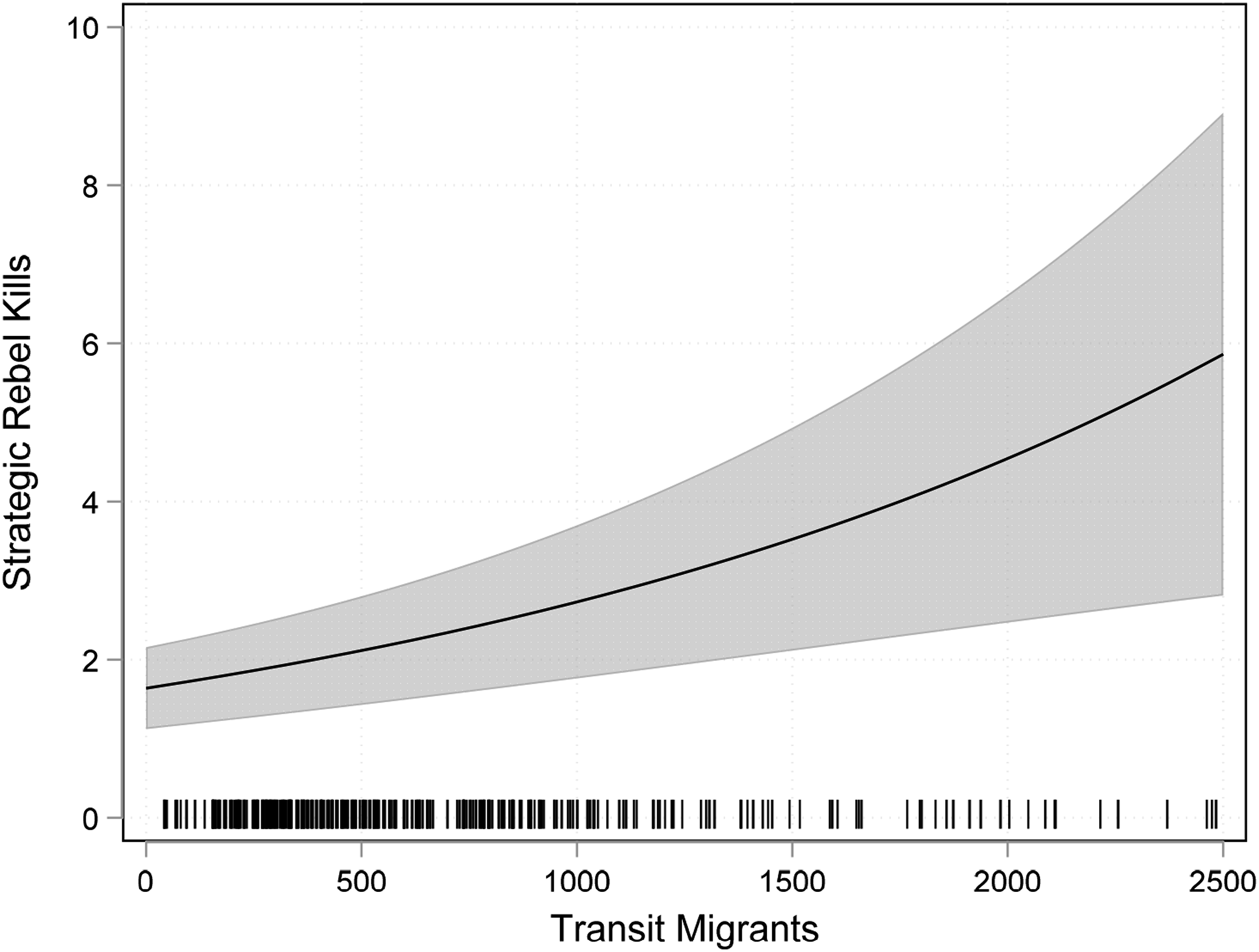
Transit Migration and Strategic Rebel Kills: Hot Season and Competition.
Note: Exponentiated coefficients; Robust standard errors, clustered on regions in parentheses.
*p < 0.05, **p < 0.01, ***p < 0.001.
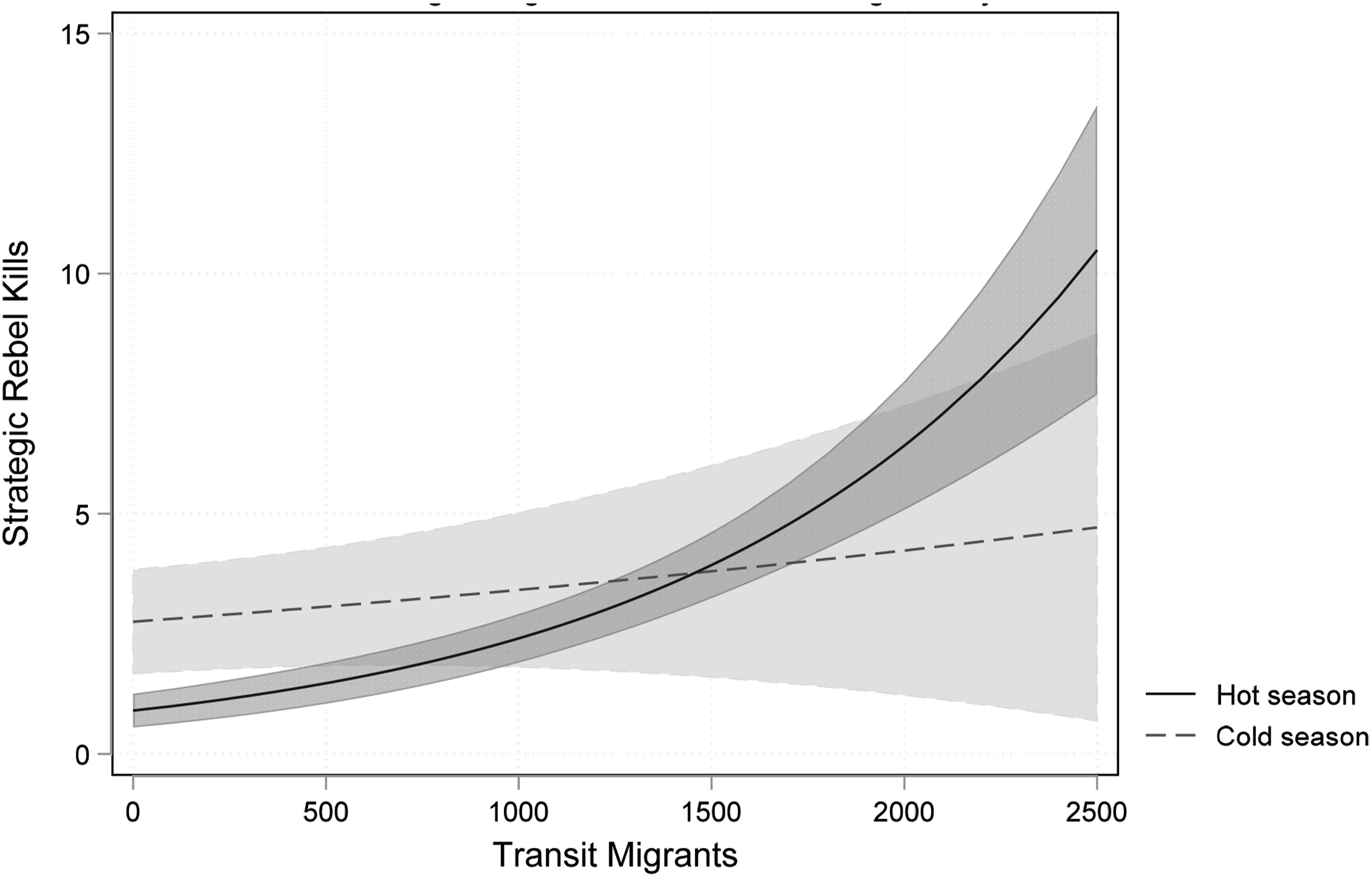
Average marginal effects of transit migrants conditional on hot season based on Model 5 (shaded area signifies 95% confidence intervals).
Model 6 reveals a similar association with regard to rebel competition. The main effect of moving from low to high Competition is a reduction in Strategic Rebel Kills by −77.5 to −85.2% (Model 2–4). This is arguably due to rebel groups’ reallocation of resources from state-based conflict towards inter-group contestation (Fjelde and Nilsson 2012). Yet, moving from low to high Competition simultaneously increases the effect of Transit Migrants (100
th
) on Strategic Rebel Kills by 12.3%. As illustrated in Figure 6, the moderating effect of Competition is particularly prominent for high levels of transit migration. This finding supports Hypothesis 3 that competition increases rebel exploitation of transit migration and provides preliminary evidence for the mechanisms of camping banditry and dynamic recruitment. Average marginal effects of transit migrants conditional on competition based on Model 6 (shaded area signifies 95% confidence intervals).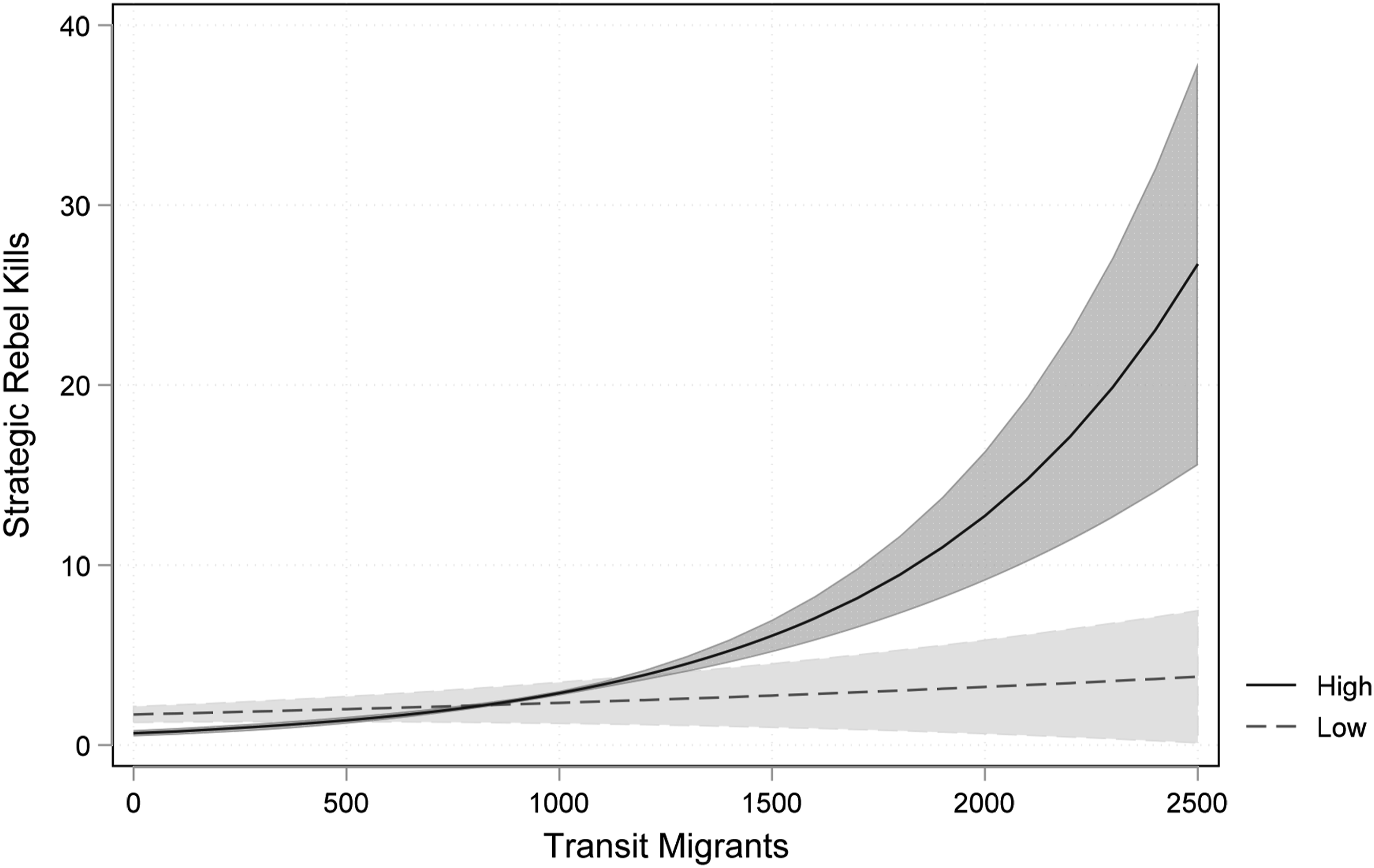
Alternative specifications.
Note: Exponentiated coefficients; Robust standard errors, clustered on regions in parentheses.
*p < 0.05, **p < 0.01, ***p < 0.001.
I also examined the relationship for all regions of Mali using rebel presence as an additional covariate, as well as alternative associations between Transit Migrants and other dimensions of civil conflict (one-sided, inter-rebel, and government violence). My analysis of all regions produced comparable results to those presented in Table 1, whereas other dimensions of civil conflict failed to report significant findings in favor of alternative theories (see Online Appendix). However, it is worth noting that transit migration had a significant negative effect on one-sided violence. This finding strengthens my assumptions and those of previously cited authors who argue for the role of transit migration in the socioeconomic stability of the Sahel and, consequently, the potentially destabilizing effect of foreign interdiction policies.
Overall, the quantitative findings support my theoretical assumption that transit migration increases rebel capacity and that extreme temperatures and rebel competition moderate this relationship. Transit migration appears to primarily affect the capacity of rebel groups under conditions of harsh climate or during high levels of inter-group competition. Alternative interpretations were considered. Based on the refugee literature, one notable explanation would be that transit migration increases the risk of conflict by upsetting ethnic relations and depleting local resources. While such dynamics appear to be present in some refugee situations (Fisk 2018, 2019; Böhmelt et al. 2018), transit migrants tend to seek any opportunity for onward movement and are therefore unlikely to aggravate socioeconomic conditions. On the contrary, transit migration constitutes an essential part of local economies in the Sahel by providing income for local businesses and should therefore have a mitigating effect on local conflict (Tinti and Westcott 2016; Raineri 2018).
Yet, the causal inferences are constrained by data limitations. Although my operationalization of rebel capacity is based on contextual analyses and past research (Hultman 2007; Wood 2010, 2013, 2014; Eck 2014; Holtermann 2016), it captures only one dimension of rebel capacity, which excludes ethnopolitical groups adhering to the 2015 peace accords. While Competition accounts for inter-group violence, these ethnopolitical formations are likely to play a bigger role due to their affiliations and involvement in the migration industry. Finally, the moderating effects of Hot Season and Competition fall short of examining the causal process of obstacles, camping banditry, and dynamic recruitment. Given these uncertainties, I perform a qualitative examination to further assess the findings and my overall conceptual framework.
Qualitative Examination
During fieldwork in Mali, I conducted semi-structured interviews with 22 respondents selected through purposive sampling, of which 20 are former migrants. I also interviewed one leader of a local NGO working with former and prospective migrants, and one security expert possessing extensive knowledge of Northern Mali. The interviews took place in Bamako and two villages located approximately 200 km from the capital.
Method
I follow Bleich and Pekkanen’s (2013) recommendations on how to report interview data (see Online Appendix). Here, I briefly discuss the most important considerations.
Regarding representativeness, the former migrants serve as primary sources in terms of their individual experiences and key informants concerning rebel behavior. The NGO Leader and Security Expert offer specialized knowledge on migration and security in Northern Mali. Importantly, 16 of the former migrants directly align with the quantitative data, as they passed through IOM’s flow monitoring points in Northern Mali between 2016 and 2020. Consequently, the sampling allows me to conflate and compare the overall empirical findings.
The absence of interviews with other West African migrants implies a potential selection bias. This bias is likely to underestimate positive findings, however, as Malian migrants possess stronger contextual knowledge and access to social networks, which is also supported by a relatively lower effect for all outgoing migrants in Model 8. Furthermore, Malian migrants can provide more specific information on routes, locations, and trends compared to non-Malian migrants. The lack of interview data from rebel organizations presents a more significant challenge. While the former migrants can detail rebel encounters, they possess limited knowledge about the organizational motives driving rebels’ behavior.
The goal of the qualitative examination is to assess the salience of my conceptual framework. Although the scope and sample of respondents are insufficient for a comprehensive assessment of all theoretical assumptions, it serves to substantiate the main causal argument and theorized mechanisms, while offering valuable guidance for future research.
Rebels and Obstacles
My conceptual framework suggests that obstacles in transit facilitate rebel exploitation, which is supported by the moderating effect of Hot Season. To further assess the influence of obstacles, I asked the respondents about their journey and the challenges encountered during migration, including where and how the challenges occurred.
Financing was a persistent barrier throughout the journey. As one of the former migrants put it, “if you don’t have money, you have a problem, but if you have money, you also have a problem” (Group 2). Another respondent explained that “when you start dealing with the middlemen in Gao, you start burning your money” (Migrant 5). Yet, asking their parents for assistance appeared to be a last resort, as most families had already spent their savings to finance the journey. Most of the former migrants had traveled through Gao towards El-Khalil, which is a border town on the Mali-Algerian border. Some had also traveled via Tombouctou (Group 1). Leaving Gao and Tombouctou was described as a point of no return, as the journey across the desert can take up to 5 days depending on the mode of transportation (i.e., pick-ups versus trucks carrying some 100 migrants) and the number of problems along the way, such as mechanical breakdown and rough terrain. El-Khalil was nevertheless described as a feasible border crossing due to its remoteness and the supply of smuggling services.
The former migrants emphasized extreme temperatures and limited water supplies as major challenges while traveling past Mopti and across Tombouctou, Gao, and Kidal. Two respondents had witnessed people dying of thirst and injuries (Migrant 6; Migrant 4). Yet, the most frightening experience involved the numerous encounters with rebel groups. Most respondents had passed between five to ten rebel checkpoints, primarily in the regions of Gao, Tombouctou, and Kidal, which is consistent with reports from the UN Panel of Experts (UNSC 2019, 32). The rebel posts were typically made up of five to six armed individuals of various nationalities, speaking Arabic, French, Bambara, and other West-African dialects. When asked if they knew which group the rebels belonged to, the respondents believed that they were part of a jihadist formation, while some mentioned one of the Tuareg movements, as most rebels had carried banners with Arabic inscriptions or the colors of Azawad, which refers to the Tuaregs’ ancestral homeland. Diverging answers are not surprising given the number of actors and affiliations in Northern Mali (Lebovich 2019). According to the security expert, the name Azawad was co-opted by several groups between 2013 and 2015 to legitimize their cause and gain access to ongoing peace negotiations (Security expert).
In sum, the interview data substantiates the role of obstacles in facilitating rebel groups’ exploitation of transit migration. Financial and logistical challenges constrain opportunities and push migrant trajectories toward hazardous regions subject to rebel control. Furthermore, the respondents’ emphasis on extreme temperatures corresponds with the moderating effect of Hot Season in Model 5, adding support for Hypothesis 2.
Camping Banditry and Dynamic Recruitment
The concept of camping banditry posits that rebels move between violent extortion and systematic exploitation depending on levels of competition. The notion of dynamic recruitment implies that rebel organizations recruit migrants despite social and ideological incompatibilities. These assumptions are partially supported by the moderating effect of Competition. To assess the salience of my theorized mechanisms, I asked respondents about rebels’ behavior and possible motives.
Estimate of Rebel Income from Transit Migration in Gao and Kidal for 2017.
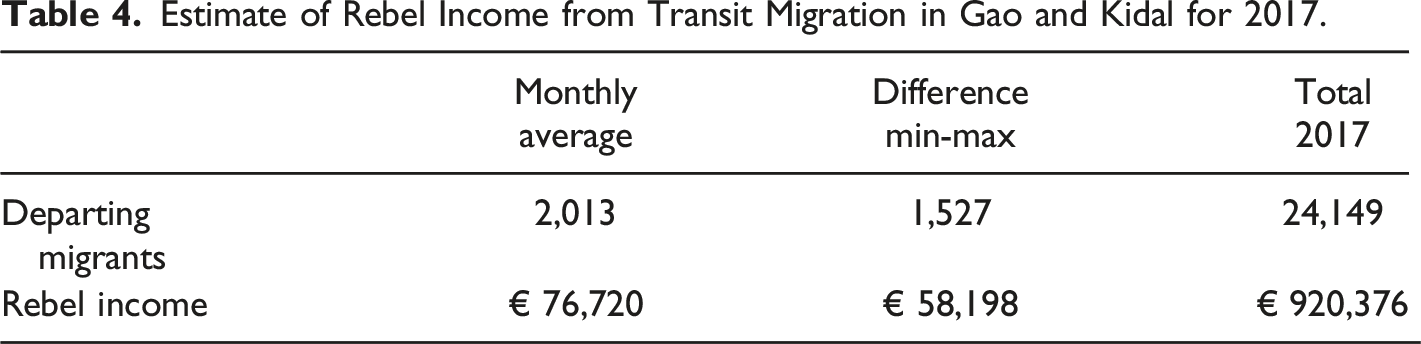
Occasionally, the rebels had also engaged in heavy extortion. Two of the respondents explained that some migrants were threatened at gunpoint, that the rebels had confiscated anything of value, and that some migrants were forced to stay behind (Migrant 5; Migrant 2). When questioned about the interaction between smugglers and rebels, the former migrants believed that there was a close collaboration. Some had witnessed the driver making phone calls as they were leaving Gao and before entering areas without cellular coverage (Migrant 1; Migrant 2; Migrant 5; Group 2). They argued that the driver was calling rebel associates to ask about conditions along the road. As one respondent explained, “the rebels are waiting at visible landmarks, such as uniquely shaped rocks or big trees” (Migrant 5). The drivers were never mistreated nor extorted, leading some respondents to argue that smugglers are essentially rebels themselves (Migrant 1; Migrant 5; Group 2), which corresponds to some extent with analyses by the UN panel of experts (UNSC 2018, 34).
Regarding recruitment, the most significant information was the recognition of individual rebels. Two of the former migrants were referring to the same rebel member who had emigrated from their home region in western Mali (Migrant 1; Migrant 6). Another respondent was referring to a second individual from a different region (Migrant 2). While two of the former migrants had avoided recognition, one respondent had interacted directly with the rebel. He explained that the rebel exploited their acquaintance by demanding additional money in return for “special protection” (Migrant 6). Based on these and similar accounts, the NGO leader expressed concern about the potential impact on local communities (NGO Leader). He argued that “recruitment of migrants does occur, but we do not know to which extent,” yet “if several migrants from the same region are recruited into an extremist group and become radicalized, it may pose a challenge to the local community should they eventually return.”
One respondent had migrated through Northern Mali twice during the mid-2000s. According to him, the rebels were not interested in recruiting migrants at the time (Migrant 3). In recent years, however, he argued that migrants are frequently detained by rebels for income and manpower, which corresponds with studies suggesting that higher competition has led to increased rebel extortion (Molenaar and Damme 2017; Micallef 2019). The respondent’s nephew was kidnapped in 2018, whereby rebels had called the family saying that “he would either be handed a gun, or they could pay [600 Euro] for his release.” Several respondents had witnessed fellow migrants being detained by rebels (Migrant 1; Migrant 2; Migrant 5; Group 2). They believed that detained migrants would get three choices; either die in the desert, acquire ransom from their family, or work for the rebels. According to the Security Expert, some rebel groups recruit migrants to strengthen their bargaining position by claiming a higher member base. While the Security Expert was referring to ethnopolitical groups who are part of the 2015 peace accords, the UN panel of experts has also expressed concerns about the recruitment of migrants by jihadist organizations. In 2020, the panel reported that influential smugglers facilitated the recruitment of up to 30 migrants per month for JNIM (UNSC 2020, 30).
Overall, the respondents’ information indicates that rebel organizations systematically exploit the economic and human resources of transit migration. This finding aligns with my interpretation of the quantitative results, providing additional support for Hypothesis 1. Furthermore, the variation in rebel extortion is consistent with the moderating effect of Competition in Model 6, adding support for Hypothesis 3.
Mixed Method Results and Limitations
In sum, the evidence supports my main theoretical argument that transit migration increases rebel capacity. The quantitative findings show that transit migration is positively associated with rebel violence against government forces (Table 1). This is, admittedly, a limited proxy for rebel capacity. Yet, the quantitative findings are complemented by migrants’ experiences, which add significant leverage by substantiating rebel groups’ systematic exploitation.
The role of obstacles in facilitating rebel exploitation is largely supported by the moderating effect of Hot Season (Figure 5) combined with interview data among former migrants, which detail how obstacles push migrant trajectories toward hazardous regions subject to extreme climate and rebel control. For the mechanisms of camping banditry and dynamic recruitment, the findings provide supportive evidence. The moderating effect of Competition (Figure 6) aligns with the former migrants’ description of systematic exploitation and occasional violent extortion, detention, and possible recruitment attempts, including respondents’ recognition of individual rebels as former migrants. In the context of Northern Mali, with multiple rebel groups competing for governance, the observed variation in extortion is likely to stem from strategic considerations involving shifting power dynamics.
While the overall findings underscore the relevance of my conceptual framework, they also highlight the need for more data and research to better understand the role of transit migration in regions of conflict. In addition to my theoretical arguments, future research should seek to examine more closely the relationship between facilitators of transit migration, such as smugglers and organizers, and rebel groups fighting the government. Qualitative examinations would benefit from a broader sample of transit migrants and, importantly, the perspectives of rebel organizations.
Conclusion
Research on mobile populations and civil conflict focuses primarily on refugees. Yet, in many regional conflicts, refugees constitute a small proportion of mobile populations. By recognizing the role of transit migration, this article expands our understanding of mobile populations in civil conflict and offers new perspectives on rebel organizations. My central argument is that transit migration contributes to rebel capacity by providing an independent source of economic and human resources. This claim is supported by a mixed-methods analysis of Mali. Quantitative findings show a positive association between the volume of transit migration and the number of government forces killed by rebels, whereas experiences among former migrants suggest a causal effect on rebel capacity linked to obstacles in transit and systematic exploitation.
The role of obstacles is particularly important, as it challenges the rationale of two major policy concerns: migration management and counterinsurgency. Several states, and the EU countries in particular, have engaged in restrictive interdiction policies to curb or stop ongoing migration in regions of transit (Cold-Ravnkilde 2021; Stambøl 2019). In the Sahel, these policies create additional obstacles that push migrant trajectories toward more dangerous routes, thereby increasing migrants’ vulnerability and destabilizing local economies (Tinti and Wescott 2016; Bøås 2021). My findings further suggest that obstacles in transit benefit rebel organizations. Thus, rather than creating additional obstacles in regions of conflict, migration management should focus on protective measures and address irregularities at stages in which migrants are unlikely to be exploited by rebel organizations.
Moreover, the evidence suggests that rebel groups vary in their level of extortion and that some rebels recruit migrants regardless of ethnic or ideological incompatibilities. These findings point to organizational aspects of rebellion that are poorly explained by current theories. In the Sahel, transit migration is essentially an independent economy in the context of competing rebel governance. Consequently, I have argued that rebels operate as camping bandits, shifting between violent extortion and systematic exploitation depending on the levels of competition. Low levels of competition incentivize sustainable exploitation, whereas high competition rationalizes extortion with little concern for long-term productivity. I have also argued that transit migration offers a dynamic and cost-efficient source of mobilization whereby constraints on ethnic or ideological compatibility can be relaxed. Rebel groups in competitive environments are likely to operate with different contracts depending on role, hierarchy, and supply. For low-ranking positions subject to dynamic supply, the use of long-term contracts with severe punishment schemes is inefficient. Rather, the evidence suggests that some rebel organizations operate with short-term contracts for low-ranking positions where the cost-benefit of retention is relatively low.
Finally, the article underscores the potential for new knowledge on this urgent issue. Although my findings are constrained to Mali, the explanatory framework should be relevant for regions of similar characteristics. For example, human rights officials in Colombia report that many Venezuelan migrants transit rebel territory, whereby rebels “initially offer migrants seemingly innocuous jobs as cooks and laborers, but that some end up as combatants” (Otis 2019). Yet, a broader analytical scope requires additional data on transit migration in regions of conflict, which is currently very limited.
Supplemental Material
Supplemental Material - Moving Through Conflict: Transit Migration and Rebel Capacity in Mali
Supplemental Material for Moving Through Conflict: Transit Migration and Rebel Capacity in Mali by Ole Sevrin Nydal in Journal of Conflict Resolution
Supplemental Material
Supplemental Material - Moving Through Conflict: Transit Migration and Rebel Capacity in Mali
Supplemental Material for Moving Through Conflict: Transit Migration and Rebel Capacity in Mali by Ole Sevrin Nydal in Journal of Conflict Resolution
Footnotes
Acknowledgements
I want to thank Kristian Berg Harpviken and Scott Gates for their guidance during my research, as well as the two anonymous referees for their helpful comments. I also want to give a special thanks to Sebastian Schutte for his input and encouragement.
Declaration of Conflicting Interests
The author(s) declared no potential conflicts of interest with respect to the research, authorship, and/or publication of this article.
Funding
The author(s) received no financial support for the research, authorship, and/or publication of this article.

Supplemental Material
Supplemental material for this article is available online at the JCR replication site.
References
Supplementary Material
Please find the following supplemental material available below.
For Open Access articles published under a Creative Commons License, all supplemental material carries the same license as the article it is associated with.
For non-Open Access articles published, all supplemental material carries a non-exclusive license, and permission requests for re-use of supplemental material or any part of supplemental material shall be sent directly to the copyright owner as specified in the copyright notice associated with the article.
