



Abstract
This article introduces the Commercial Military Actor Database (CMAD), a dataset able to support research on civil war and commercial military actors. First, the CMAD covers all civil wars from 1980 to 2016 across all of the world’s regions except Europe, which enables the investigation of long-term regional and global trends. Second, the CMAD encompasses the corporate market segment and mercenary outfits, which facilitates the analysis of how those actors have impacted conflicts differently. Third, containing detailed information about the relationships behind exchanges, the CMAD allows users to disaggregate market exchanges. Using the CMAD’s new data, we examined trends in the market for force, and demonstrate the data’s added value. We re-examining Akcinaroglu and Radziszewski’s study on how private military and security companies affect the duration of civil war. The findings show that the market’s influence on conflict can only be fully understood by including corporate and mercenary actors.
Introduction
Over the course of the last decade, quantitative research on civil wars has flourished. The first wave of studies focused on where and when conflicts have broken out by investigating country-specific variables such as gross domestic product, terrain, and regime type (Collier and Hoeffler 2004; Fearon and Laitin 2003). In time, however, researchers began exploring the characteristics of the actors involved in the conflicts, and, as a result, investigations into rebel groups and militias have significantly enhanced current understandings of conflict dynamics (Carey, Mitchell and Lowe 2013; Cunningham, Gleditsch and Salehyan 2009). Nevertheless, the role of commercial military actors (CMA), who provide force and force-related services for financial compensation, in civil wars has largely been neglected, even despite early evidence from case studies revealing their effects on civil war dynamics (Shearer 1998). Although systematic analyses based on larger datasets have more recently been undertaken (Akcinaroglu and Radziszewski 2013; Lees and Petersohn 2021; Petersohn 2014a, 2017, 2021b; Radziszewski and Akcinaroglu 2020; Tkach 2017), all have relied on rather limited data, which has precluded investigations into long-term trends, circumscribed the geographical scope of study, and/or reduced the detail of the market dynamics involved.
The subject of this article, the Commercial Military Actor Dataset (CMAD), addresses many of those current limitations in data concerning civil wars and CMAs. The CMAD identifies exchange events on the market involving CMAs, including mercenaries and private military and security companies (PMSCs), in all countries that have experienced civil war or armed conflict across all world regions, except Europe, between 1980 and 2016. 1 The dataset specifically seeks to facilitate investigations into CMAs, their relationships with clients, and, more generally, their impact on conflicts and the prospect of peace. In the subsequent sections, we compare the CMAD to pre-existing datasets, highlighting differences in the means of data collection, the variables considered, and limitations. Thereafter, we demonstrate the new data’s added value by re-examining Akcinaroglu and Radziszewski’s (2013) influential study on how PMSCs affect the duration of civil wars.
Pre-Existing Data About Commercial Military Actors
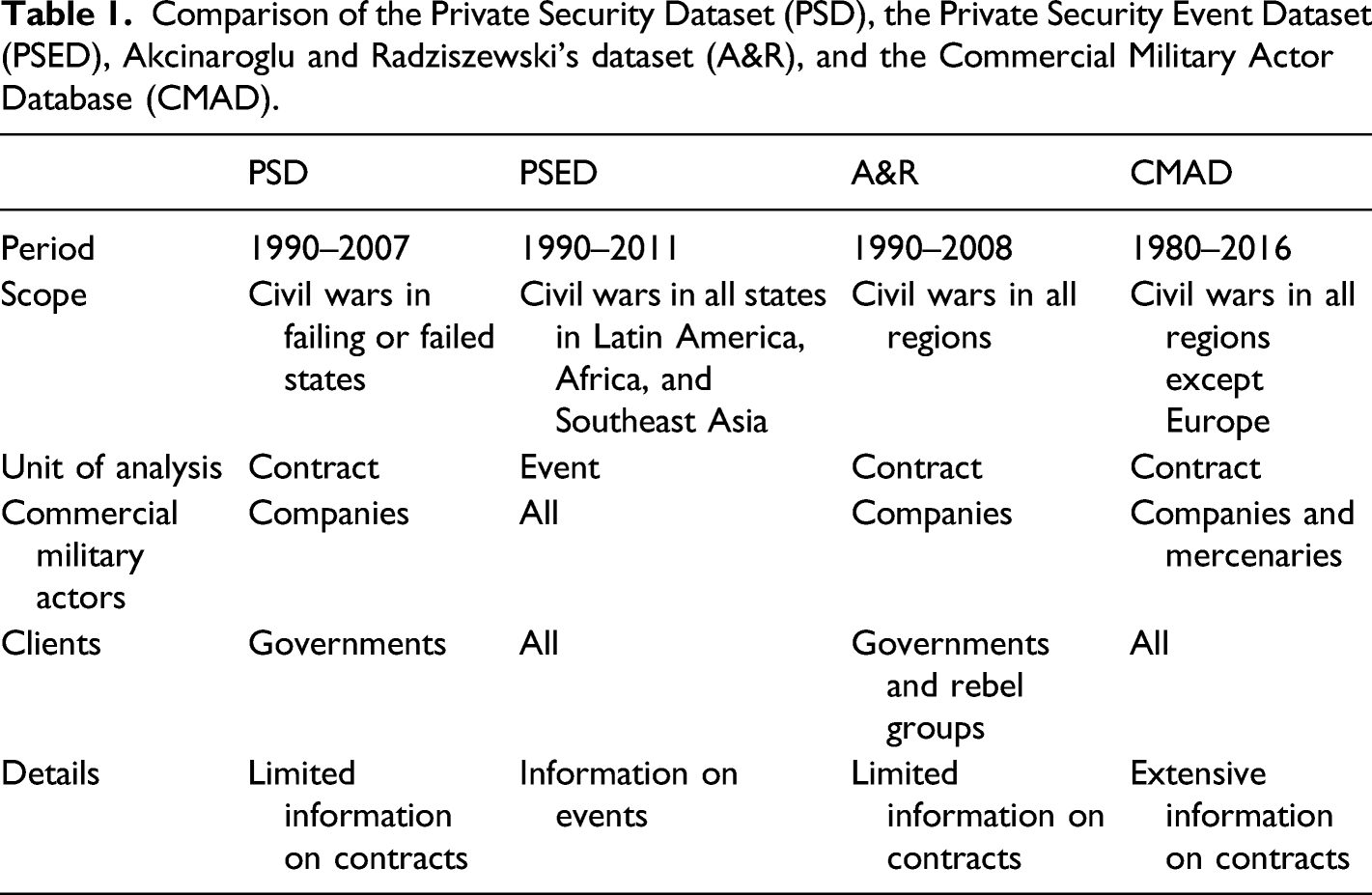
To date, three datasets offer information about PMSCs: the Private Security Dataset (PSD), the Private Security Event Dataset (PSED), and Akcinaroglu and Radziszewski’s (AandR) dataset (Akcinaroglu and Radziszewski 2020; Avant and Neu 2019; Branovic 2011). However, as demonstrated in this section, they all differ from the CMAD in crucial respects.
Published in 2011, the PSD focuses solely on public clients, including governments and international organizations, and their contractual relationships with PMSCs. Such exclusivity limits its analytical value for research on civil wars, however, because opposition actors and transnational corporations (TNCs) are not included, even despite their substantial influence on conflict dynamics (Bannon and Collier 2003; Cunningham, Gleditsch and Salehyan 2009). Moreover, the dataset covers only the brief period from 1990 to 2007 and spans only a subset of all civil wars—that is, ones occurring in failing or failed states.
By contrast, the Private Security Event Database (PSED), published in January 2019, covers all newsworthy events related to private security that have unfolded in three regions— Latin America, Africa, and Southeast Asia—from 1990 to 2012 (Avant and Neu 2019). Relative to the PSD, the PSED has a substantial geographic scope encompassing all countries, hence all civil wars, in the three regions. Although such a spread benefits research on civil wars, using the PSED comes at a cost. The dataset does not comprehensively map CMAs but instead identifies newsworthy events associated with private security providers, thereby positioning the private security event as the unit of analysis. Whereas inferences from recorded events to the underlying contractual relationships can be made, markets interaction that did not result in newsworthy events cannot be taken into account. Similarly, only information surrounding the events is provided, which excludes all other information about the underlying contracting relationships (e.g., duration of contracts and size of deployment). Moreover, although the PSED seeks to include all CMAs that have provided force and force-related services, it groups them all in a single category, which prevents differentiating types of providers, including mercenaries and PMSCs. Last, its regional focus excludes crucial cases of CMA-related activity such as ones from Iraq and Afghanistan.
Most recently, Akcinaroglu and Radziszewski (2020) developed a dataset for their investigation on PMSCs in civil wars occurring from 1990 to 2008. Given its specific initial purpose, however, their dataset covers only two clients: governments and opposition groups. Limited to two clients, the data exclude numerous other actors who tend to contract force and force-related services in conflict zones, including TNCs, nongovernmental organizations (NGO), and international organizations. Furthermore, the dataset does not incorporate any data for a large segment of the market for force: mercenaries. That limitation restricts investigations on how market actors affect civil war, because PMSCs and mercenaries differ in their impact on conflict dynamics (Singer 2003).
Comparison of the Private Security Dataset (PSD), the Private Security Event Dataset (PSED), Akcinaroglu and Radziszewski’s dataset (A&R), and the Commercial Military Actor Database (CMAD).
Defining Exchange Events and Commercial Military Actors
The CMAD compiles data concerning exchange events on the market for force from 1980 to 2016, for a total of 6971 exchange events in 72 civil wars and armed conflicts. 3 In essence, an exchange event is a commercial interaction between two actors wherein one party receives a service from another for financial compensation. Although that definition applies to a broad range of market exchanges, the CMAD exclusively covers exchanges involving CMAs, defined according to two criteria: one, having received financial compensation for a force or force-related service provided in a market exchange, and two, the actor is not being permanently integrated into a country’s armed forces. Formally, the second criterion is quite straightforward; CMAs are not composed of active military personnel and therefore remain outside the chain of command. However, applying that criterion without discretion risks misleading results, because CMAs have sometimes received honorary ranks for the duration of their contracts and thus been officially integrated into the armed forces (Singer 2003, 194). For actors, the CMAD therefore differentiates long-term integration into the armed forces from short-term integration by contractual ties during limited employment (Singer 2003, 43). The former is not coded as a CMA, whereas the latter is. In terms of composition, an actor receiving financial compensation does not need to be a company but can alternatively be an individual or group of individuals, as long as they are foreign nationals. Because their foreignness distinguishes them from warlords, militias, or rebel soldiers receiving payment, those individual or group actors are called mercenaries in the dataset. By contrast, a company is a legally registered entity with a headquarters and a corporate structure but does not have to be foreign; both domestic and foreign companies are recorded as CMAs. Altogether, in the CMAD, a CMA is an actor, either a company or a foreign national individual or group, who is not permanently integrated into the armed forces but receives financial compensation for providing force or a force-related service 4 .
In the CMAD, every exchange event is a configuration of several variables. To be coded, an exchange event requires a minimum of three pieces of data: its location, its year of occurrence, and clients or CMAs involved. Although that bare minimum of data allows coding, the lack of detail prevents any in-depth analysis of market interactions. At a maximum, additional information includes the client (i.e., the actor paying for the service), the specific contracting ministry of state clients, the consumer (i.e., the actor receiving the benefits of the paid service), and the service itself. Any change in the location, year, client, specific client, customer, agent, or service justifies the creation of a new exchange event in the dataset. For instance, if the U.S. government is shown to have contracted with Blackwater for security services in Iraq in 2004 and 2005, then two exchange events differing only by year appear in the CMAD. In addition, if available, information on the region and nationality of the company as well as operators and the size of the deployment is presented. However, a change in those variables does not justify creating a new exchange event. Thus, if the U.S. government contracted with Blackwater in Iraq in 2004, even if operators from the United States were employed for the first 6 months but British operators were employed for the last 6 months, then the situation remains a single exchange event. In a sense, an exchange event differs from a legal contract, for a single contract may include providing several services. For instance, in 2003, when the U.S. government contracted with a PMSC for peacekeeping and capacity enhancement in Africa, the single contract contained various services, namely logistics, training, and maintenance (McFate 2014). In the CMAD, the three services from that single contract justify three distinct exchange events.
Data Collection
In identifying exchange events, the CMAD primarily compiles information from a newspaper repository, NEXIS. Using keywords including “private security” and “mercenary” to identify potentially relevant sources, our search yielded tens of thousands of documents across all cases. Each NEXIS source was read, and if relevant, then the available information was summarized in a factsheet. Once all factsheets for a country were completed, exchange events were identified by determining what information each factsheet contained, whether a single factsheet contained information about several exchange events, and whether several factsheets referred to the same events. After the information for each exchange event was collated in a separate exchange sheet, it was coded and entered it into the database. Several precautionary measures were taken to assure the consistency of coding. For one, although several researchers collected data and created factsheets, the same researcher performed all coding for each region in order to promote coherency. For another, intercoder reliability tests were conducted during data collection, the identification of exchange events, and coding. 5
Nevertheless, drawing solely from newspapers as sources can introduce a systematic error into data collection. Because newspapers select stories to publish according to certain editorial procedures, have limited publishing space, and cater to certain audiences, using them exclusively may introduce selection bias, for, depending on the news outlet, some events are more likely to be reported than others. For instance, Swiss and German news outlets report differently to the British press because their relationship is less vulnerable to commercial imperatives (Umbricht 2014, 29). The CMAD sought to reduce such biases by integrating a wide variety of sources that are not determined by news dynamics, including parliamentary reports (Committee on Oversight and Government Reform 2010) and reports of the UN Special Rapporteur on the use of mercenaries (Ballesteros 1995), the UN Working Group on the use of mercenaries, and specialized NGO sources, including Who Profits? 6 Shock Monitor, 7 and the Overseas Development Institute. 8 We also relied heavily on academic sources, ranging from more general overviews such as Peter Singer’s Corporate Warriors (Singer 2003) and theoretical treatments of the phenomenon such as Deborah Avant’s The Market for Force (Avant 2005b), to individual case studies, including Hansen’s study on Somalia (Hansen 2008) and Peer Schouten’s on the Democratic Republic of Congo (Schouten 2014). Journalistic sources, including Steve Fainaru’s Big Boy Rules, Patrap Chatterjee’s Halliburton’s Army, and Phil Miller’s Keenie Meenie, were consulted as well (Chatterjee 2009; Fainaru 2008; Miller 2020). In addition, we included studies focusing on particular actors or clients, including Ostensen’s investigation on UN contracting and Krahmann’s exploration of NATO contracting (Krahmann 2016; Ostensen 2011). We also drew from publications by (former) PMSCs, including Eeben Barlow’s Executive Outcomes: Against All Odds (Barlow 2007). 9 Last, we developed a list of companies and screened their websites for information on specific contracts.
Although expanding the range of sources overcame the problem of certain biases, the reliability of the sources remains problematic. For instance, is a single newspaper report sufficient evidence for an exchange event, or is more corroboration needed? The CMAD acknowledges that problem by allowing users to differentiate levels of reliability, given that the more often a specific event is mentioned across various outlets, the more reliable the evidence is. The CMAD differentiates four levels of reliability, numbered zero to three. Zero indicates the strong likelihood that an exchange event occurred even though only indirect evidence is available. For instance, although an exchange event involving the same client and agent for the same service in the same location appears in the CMAD for both 2007 and 2009, no source could be found to corroborate the presence of the event in 2008. Thus, the event remains recorded as occurring in 2008 but with a reliability score of zero. Next, if an exchange event is corroborated by one or two sources, then it receives a score of one or two, respectively. If three or more sources corroborate the event, then it receives the highest score of three. The reliability at each individual level varies, however, because the quality of sources is not taken into account. For instance, an exchange event evidenced by an in-depth case study based on years of field research receives the same score as an event coded based on a single newspaper article. Because both events are supported by only one source, counting by frequency assigns them each a score of “Low.” We refrained from assessing quality, because it would have entailed highly subjective treatments of sources and made coding less transparent and potentially incoherent.
Descriptive Statistics on Commercial Military Actors
For the period from 1980 to 2016, the CMAD lists 6971 exchange events across 72 countries. Accordingly, the period of investigation contains 2592 country-years; CMAs were present in 1255 of those country-years (48.4%) but not in 1337 (51.6%). By region, the most CMA-related activity occurred in Africa (46% of cases, n = 3236 observations), followed in nearly equal shares by Latin America and Caribbean (18%, n = 1285), Asia (18%, n = 1260), and the Middle East (17%, n = 1190). 10
The CMAD can provide insights into trends on the market for force, widely acknowledged to have expanded substantially since the 1990s (Avant 2005a; Singer 2003). Figure 1 confirms that finding by showing a steady increase in market activities. Often, a second phase of more exponential growth is identified, starting in the early 2000s, which can largely be attributed to massive military operations in Afghanistan and Iraq at the time (Donald 2006; McFate 2014). Although the steep rise in the figure confirms the general tendency of those arguments, the CMAD also yields another, more surprising result: Although conflicts in Iraq and Afghanistan were certainly responsible for a proportion of the growth, exponential market growth remains even if both cases are excluded. Total contracting from 1980–2016.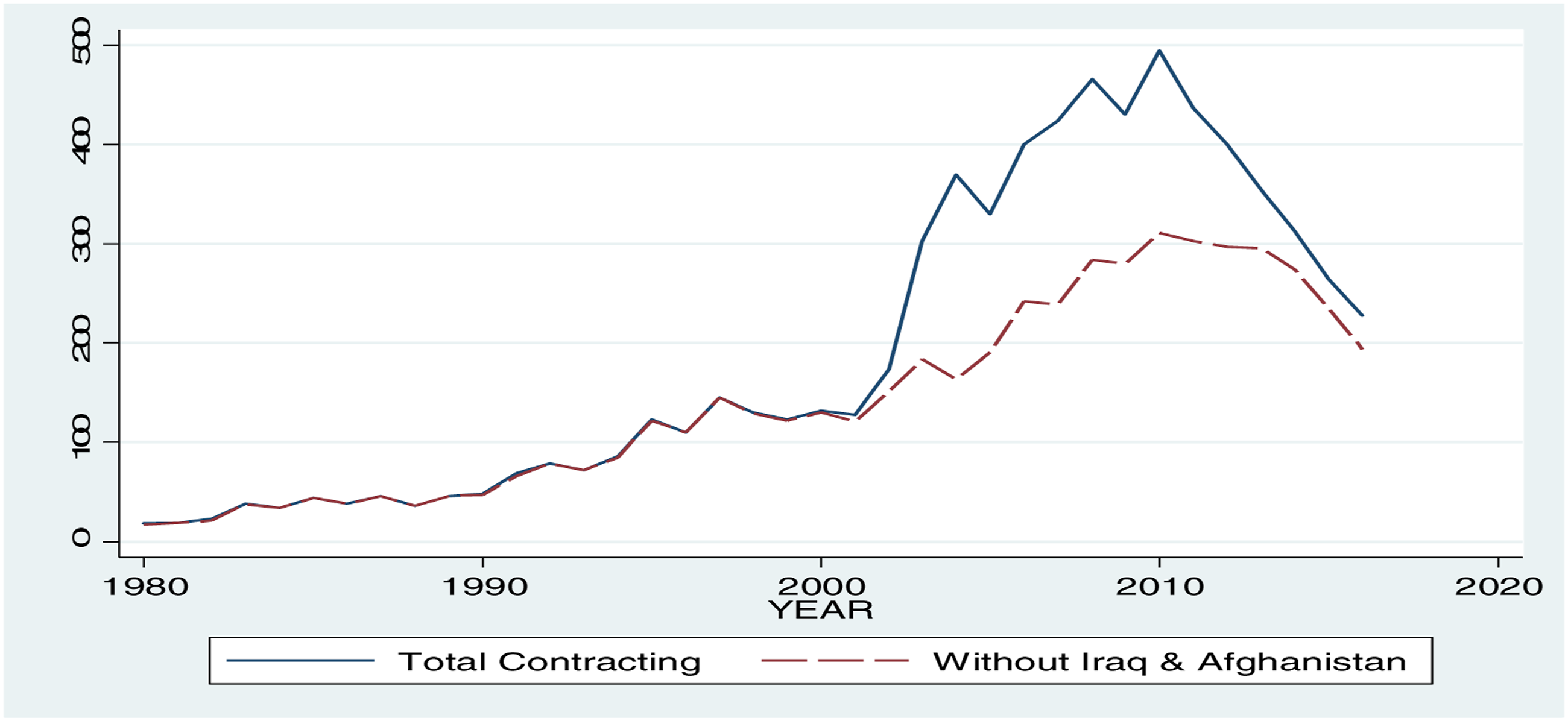
Figure 2 explores regional contracting dynamics. The Asia and the Middle East graphs indicate that contracting was on a very low level from 1980 until the early 2000s, yet this changed substantially with the start of the military operations in Iraq (2003) and Afghanistan (2001). However, the dynamics of contracting in Africa and Latin America are independent of the growth induced by these two operations. In Africa contracting was on a rather low level in the 1980s, yet it was in this region where contracting grew substantially in the early 1990s. In contrast to Asia and the Middle East where the frequency of contracting increased rapidly and peaked in 2010 and 2003 respectively, contracting in Africa increased incrementally and peaked then in the period from 2011 to 2013. The contracting dynamic in Latin America and the Caribbean remained stable on a low level from 1980 to 2000. However, from the early 2000s onwards, a slight increase in the frequency of contracting is recorded with a minor peak in around 2010. Overall, this seems to corroborate the above conclusions. The major military operations in Afghanistan and Iraq certainly drove the overall contracting trend, yet other regions, in particular Africa, contributed substantially to the growth of the market independently. Contracting by region from 1980–2016.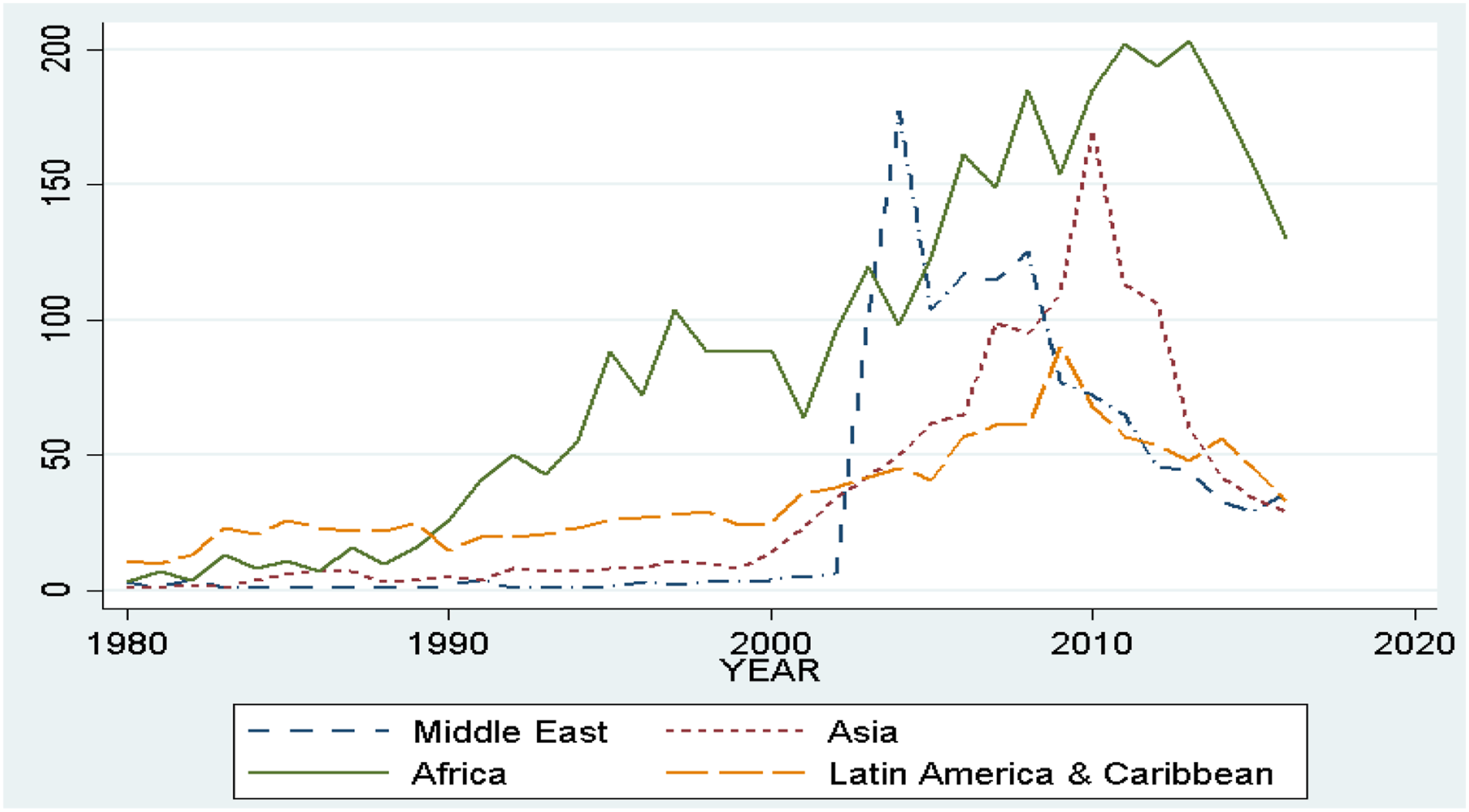
The CMAD not only captures all exchange events on the market for force but also records the specific services traded, broadly differentiated according to their distance from the “tip of the spear”—that is, their proximity to combat (Singer 2003, 91). The CMAD covers 11 categories of services, spanning the spectrum from combat services and support services (e.g., communication, maintenance), to logistics, security, consultancy, training, and reconstruction (Petersohn 2008, 10).
11
As shown in Figure 3, security services experienced the greatest growth of all categories, followed by logistics, consultancy and training, and combat services. The findings regarding security and logistic services are surprising, given previous results suggesting that both services were contracted in nearly equal frequency: that market actors contracted for security services approximately 15.5% of the time and for logistics approximately 18.2% of the time (Branovic 2011, 26). By contrast, the CMAD’s data suggest that security services were contracted far more frequently. The CMAD also shows a small market segment in which combat services were traded. Although scholars have discussed combat providers, conventional wisdom holds that such services are too controversial and considered to be illegitimate (Petersohn 2014b, 2021a), and the “door for private combat companies” seems to have closed in the late 1990s (Percy 2007, 227). However, the CMAD suggest that delegitimizing combat services had no noteworthy impact on the frequency of their provision, for throughout the period of investigation, such services were consistently provided at a rather low level. Contracting by service from 1980–2016.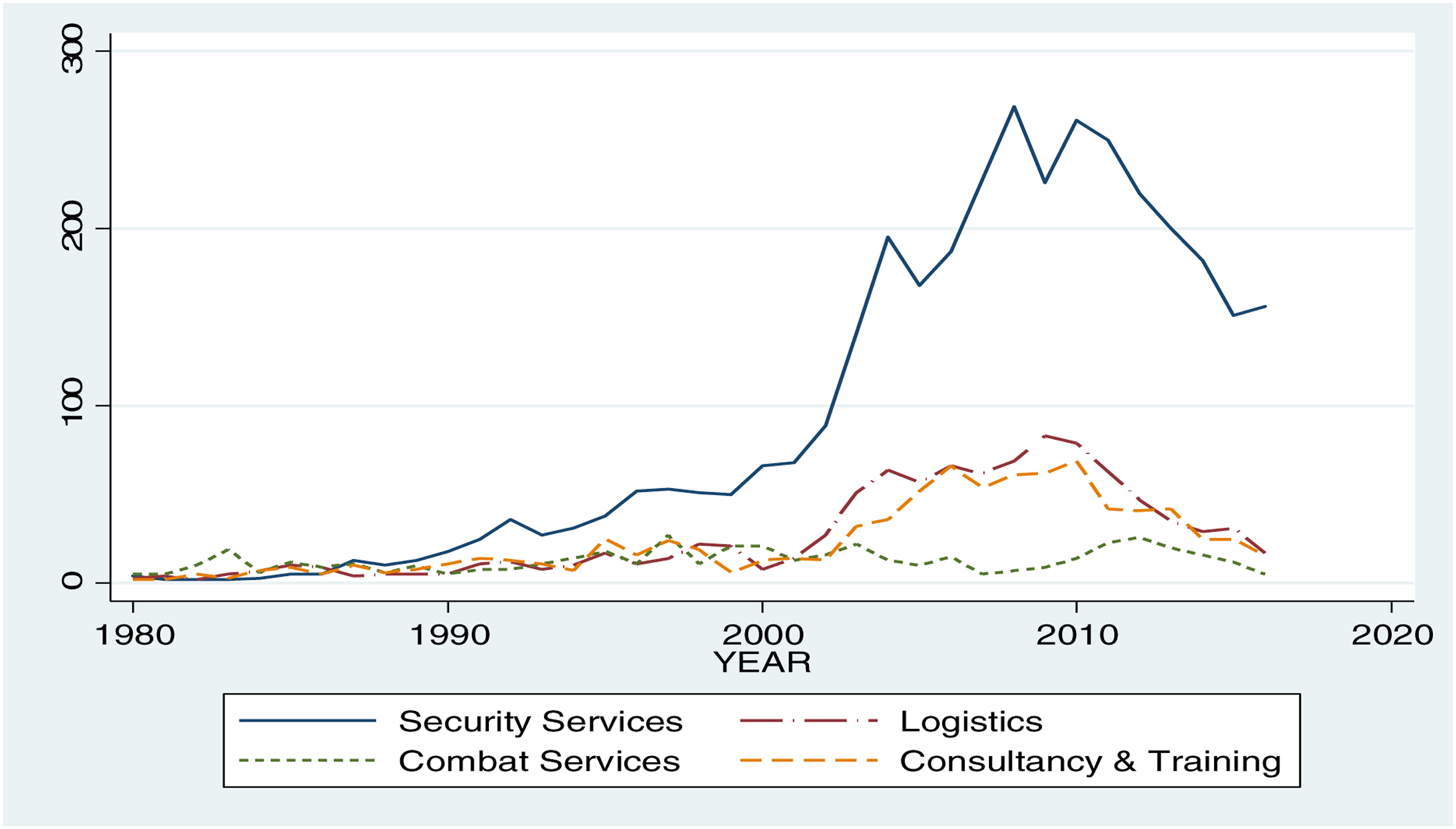
In the CMAD, contracting on the market for force is also classified by services as well as by clients and agents. For agents, three types are recorded: individuals, groups, and companies. For companies, the database additionally indicates whether the entity is privately held or publicly traded. The CMAD reveal that contracting by international companies (i.e., enterprises operating outside their home countries) experienced major growth in the early 2000s (Figure 4). By comparison, contracting by domestic companies (i.e., enterprises operating in their home countries) demonstrated a rather steady rate of growth. Although the data about domestic companies does not include domestic commercial contracts (e.g., contracts with a local grocery store), the CMAD does encompass contracts of domestic PMSCs with the government, opposition groups, NGOs, and TNCs. Last, the mercenary segment appears to have been unaffected by overall fluctuations on the market. Although the data confirm the market’s alleged bifurcation into a corporate segment and a mercenary segment (McFate 2014, 150), that development is nothing new, for the PMSC and mercenary segments were both present throughout the period from 1980 to 2016. Likewise, the industry has shown no overall trend of indigenization (McFate 2014). Growth in contracting by domestic companies indeed occurred slowly but did not increase at the same rate at which the presence of international companies decreased. Contracting by type of commercial military actor.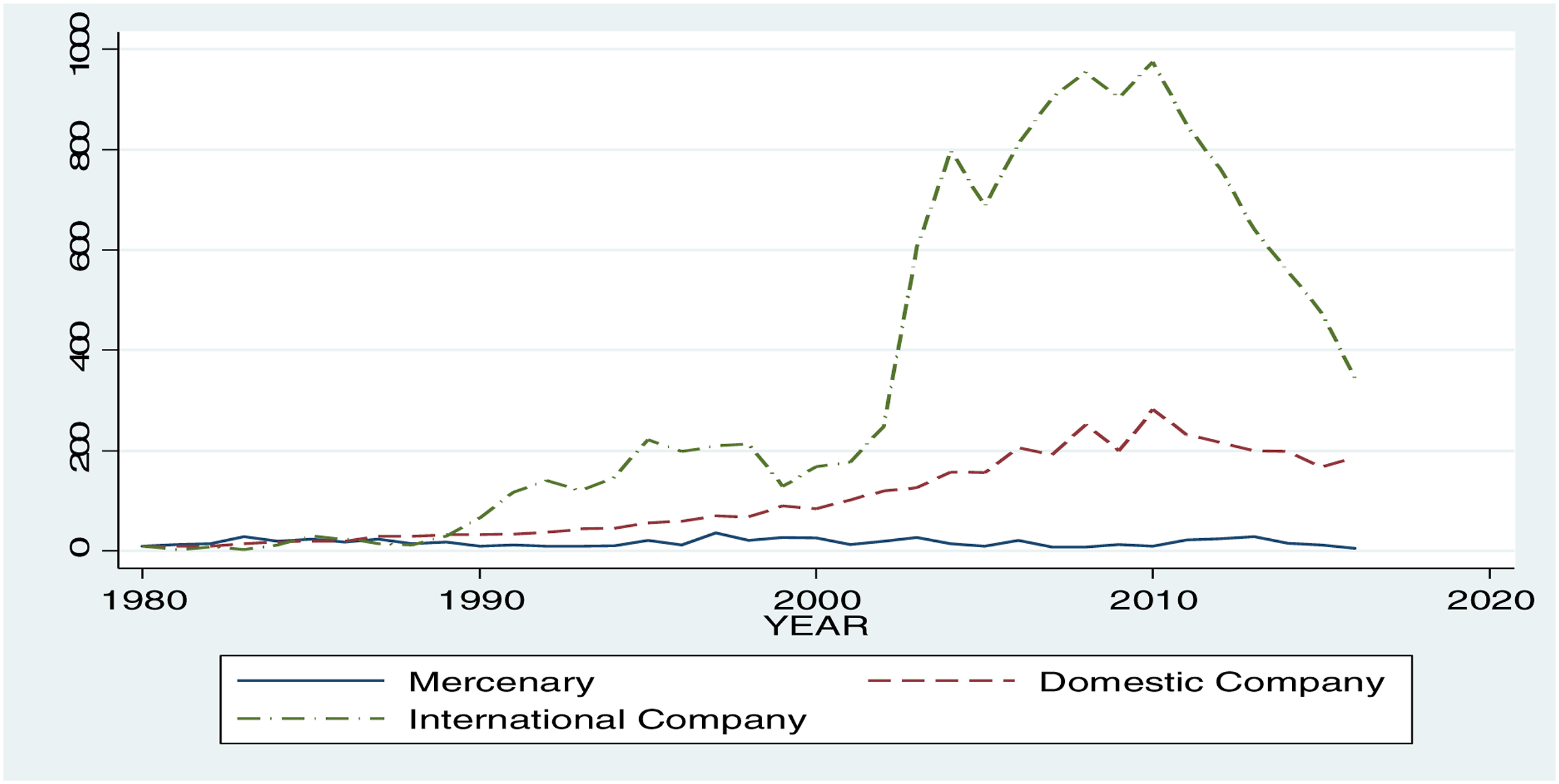
The detailed record of the CMAD moreover allows disaggregating which of those agents in fact provided the controversial combat services. As shown in Figure 5, mercenary outfits provided most of them, and only a few combat exchange events involved PMSCs whatsoever. That dynamic underscores the mentioned finding that combat provision is distinct from overall market development, for attempts at regulation and normative developments do not seem to have empirically altered the pattern of exchanges. Combat contracting by type of commercial military actor.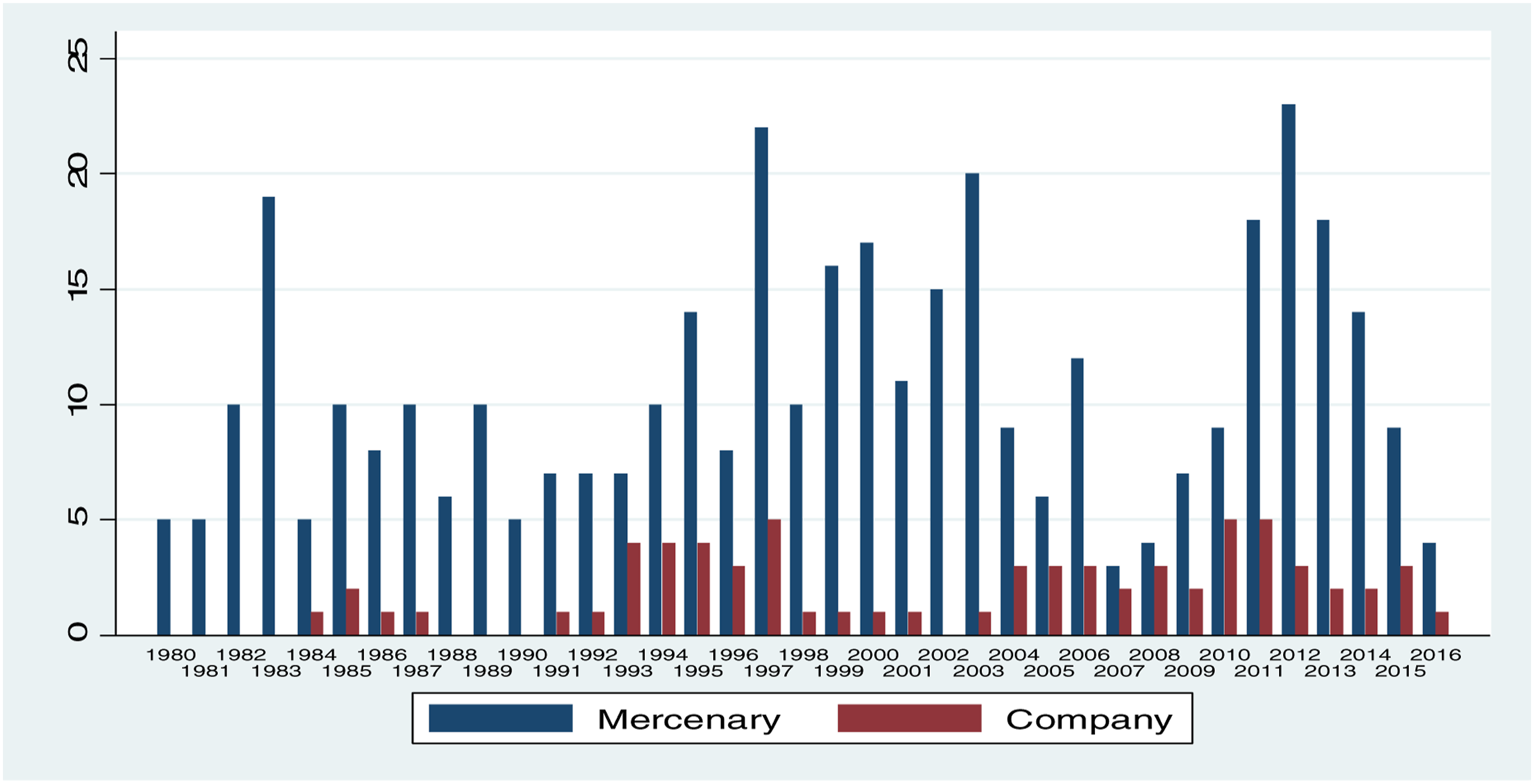
The CMAD allows the detailed analysis of trends in contracting by client and by consumer. Whereas the client is the party that in fact contracts and pays the CMA, the customer is the party that receives the services. In many cases, clients and customers are one and the same. For instance, when the U.K. government contracted diplomatic security in Iraq, it paid the company for services that it also consumed. At the same time, it additionally paid a CMA to provide training services to the Iraqi military. In those situations, the U.K. government is the client, whereas Iraq is the customer. The CMAD contains data to differentiate clients from consumers. While a variety of consumers are recorded by the CMAD, in the following we focus on national and foreign governments, TNCs, and opposition groups.
Turning to the other side of exchanges on the market for force, Figure 6 organizes the contracting activities in the CMAD by client. Understood as such, the data address concerns raised in the literature that the market empowers non-state actors and that the state has been losing its predominant position (Singer 2004, 180), chiefly by showing that governments are the most active players on the market. In the early 2000s, largely fueled by operations in Iraq and Afghanistan, the contracting activities of foreign governments increased substantially. Although national governments have increasingly relied on CMAs, the growth of such exchanges has been less pronounced than that of foreign governments contracting on the market. Moreover, as the CMAD’s data indicates, though non-state actors have relied on CMAs as well, that trend has not accelerated. TNCs have increasingly relied on CMAs, albeit only slightly more over time, while oppositional forces have indeed drawn from CMAs, albeit to a continuously limited extent. Contracting by client-type from 1980–2016.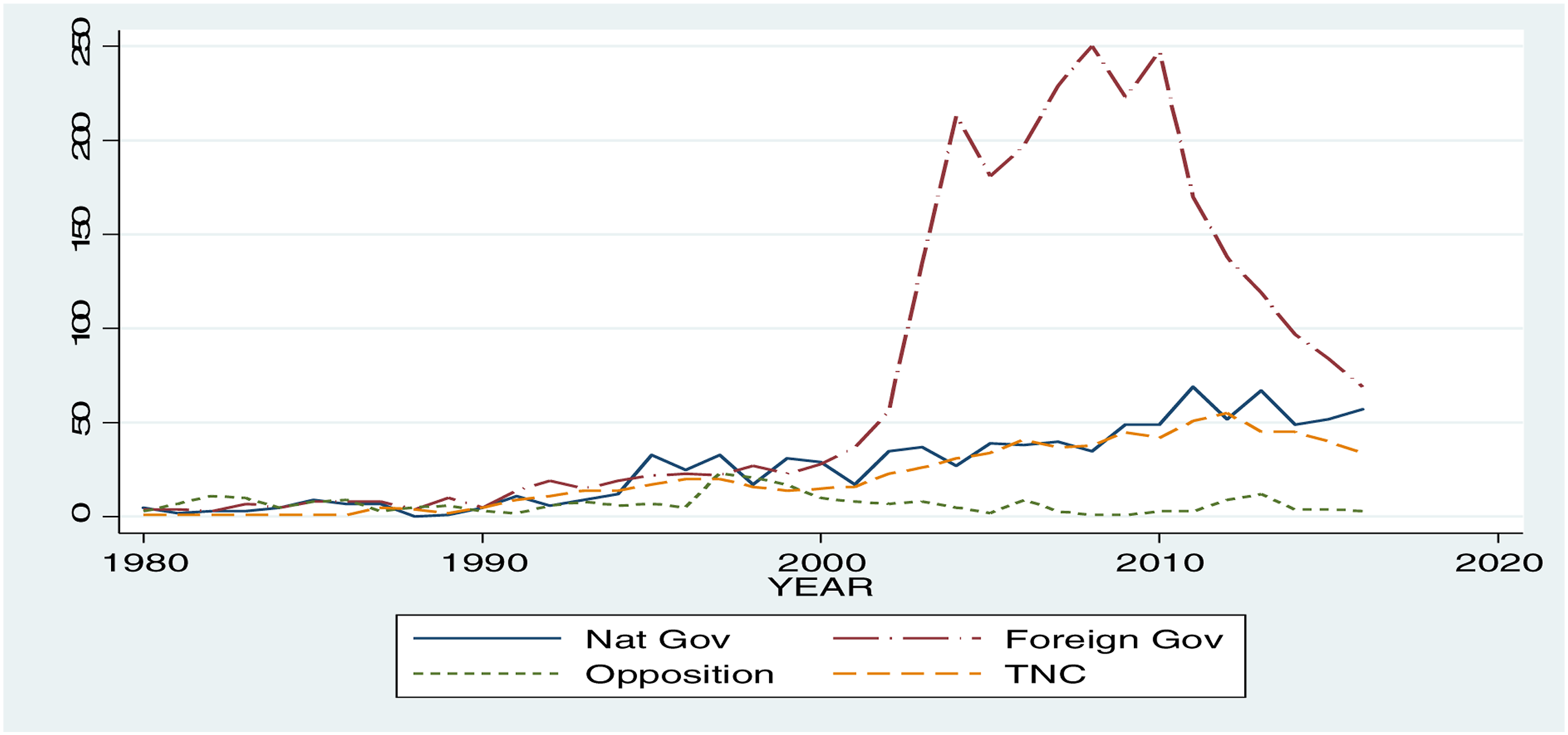
Because the CMAD differentiates entities that pay for services (i.e., clients) from ones that consume those services (i.e., consumers), plotting the interaction of consumers instead of clients considerably alters the trend lines. Although the customer and the client are one and the same in many cases, often services are paid by a foreign government to be consumed by the domestic government, particularly in nation-building efforts. That trend becomes more pronounced when the market activity of the domestic government is differentiated by client and customer. Whereas the market interaction of domestic governments as clients remained relatively low and rose only slightly (Figure 6), they were customers far more often, as indicated by their steep increase in market activity (Figure 7). The change in the market engagement of opposition groups is also noteworthy. Although such groups did contract on the market for force as clients (Figure 6), they more often did so as customers—that is, as third parties hiring services to benefit the opposition (Figure 7). That trend may indicate that CMAs have been increasingly employed by foreign powers that want to avoid direct intervention but support oppositional forces nonetheless. Contracting by consumer-type from 1980–2016.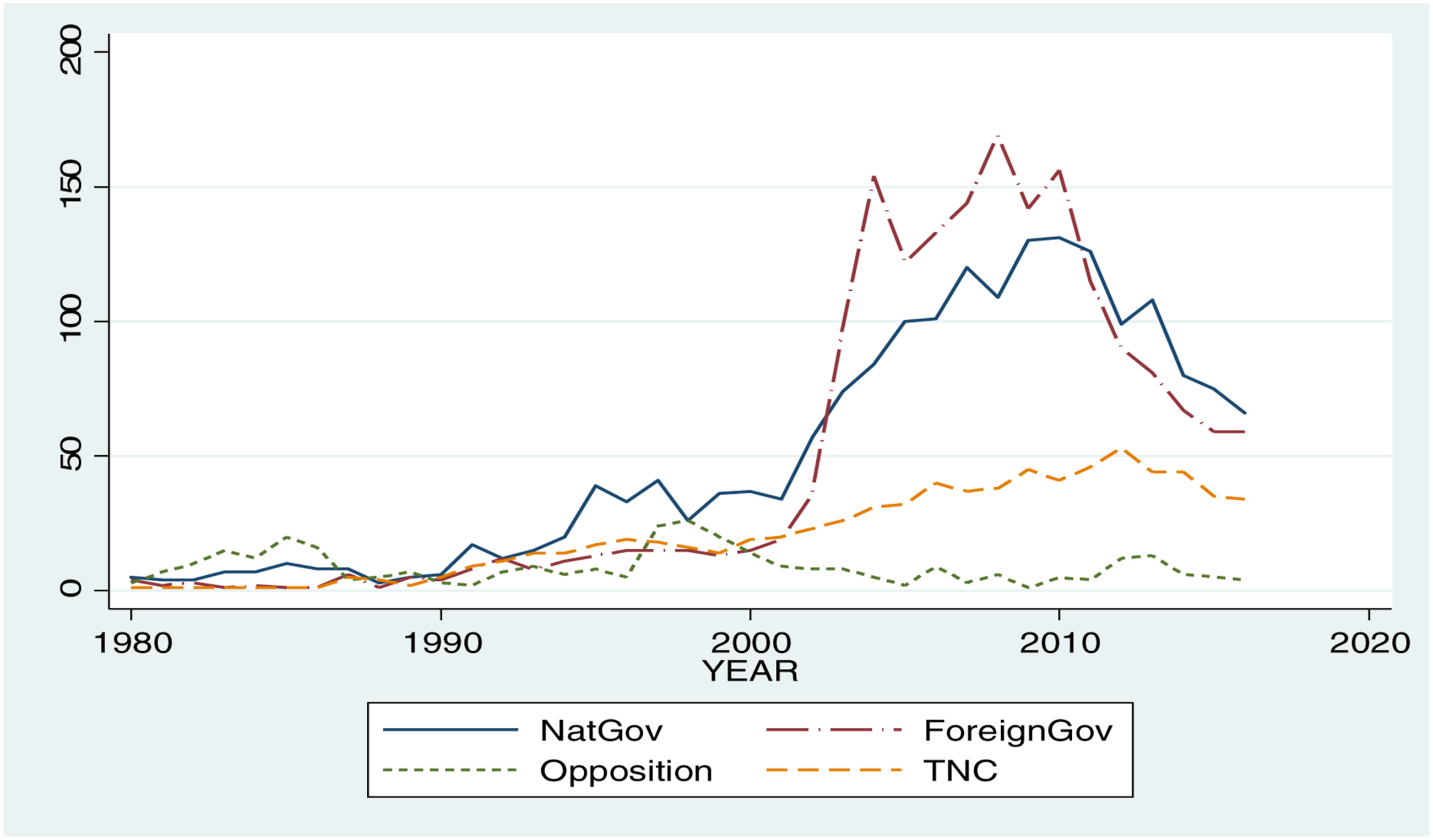
On top of that, the CMAD offers data about the region and country of origin of companies. Figure 8 shows several striking trends in the distribution of the home countries of companies working across the various regions of the world. For one, the global market for force seems to have been populated primarily by European and North American companies, which are the only ones operating across all regions. Whereas North American companies have demonstrated a similar level of contracting activity across all regions, European ones have mostly been active in Africa, followed by the Middle East, Asia, and, to a far lesser extent, South America. For another, Asian, South American, and Middle Eastern companies, by contrast, have chiefly operated within their home regions, and the contracting activities of African companies in Africa have been exceptionally high, with only slightly less activity than the activity of all companies from all other regions combined. Companies operating in regions by country of origin.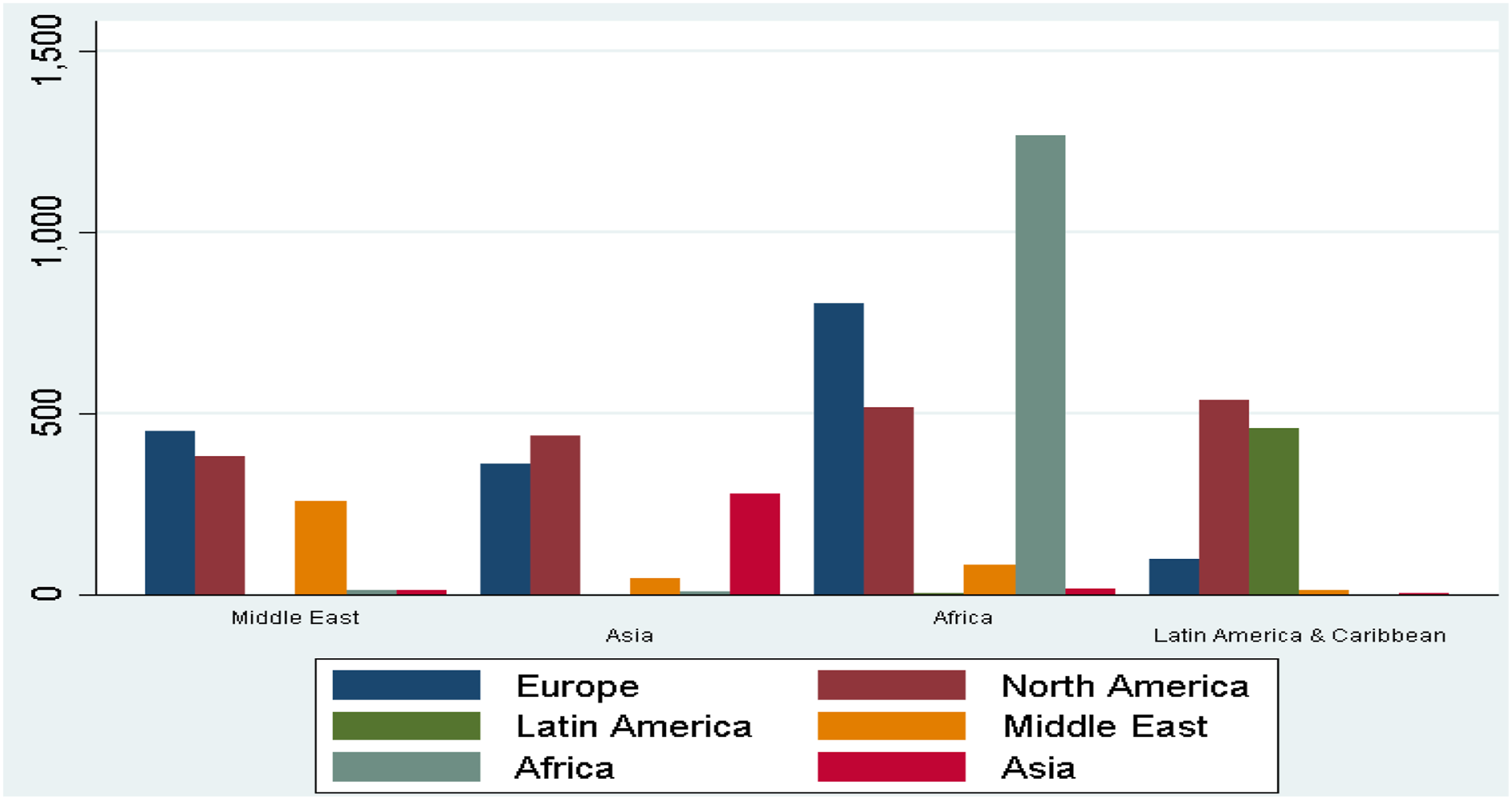
Representativeness
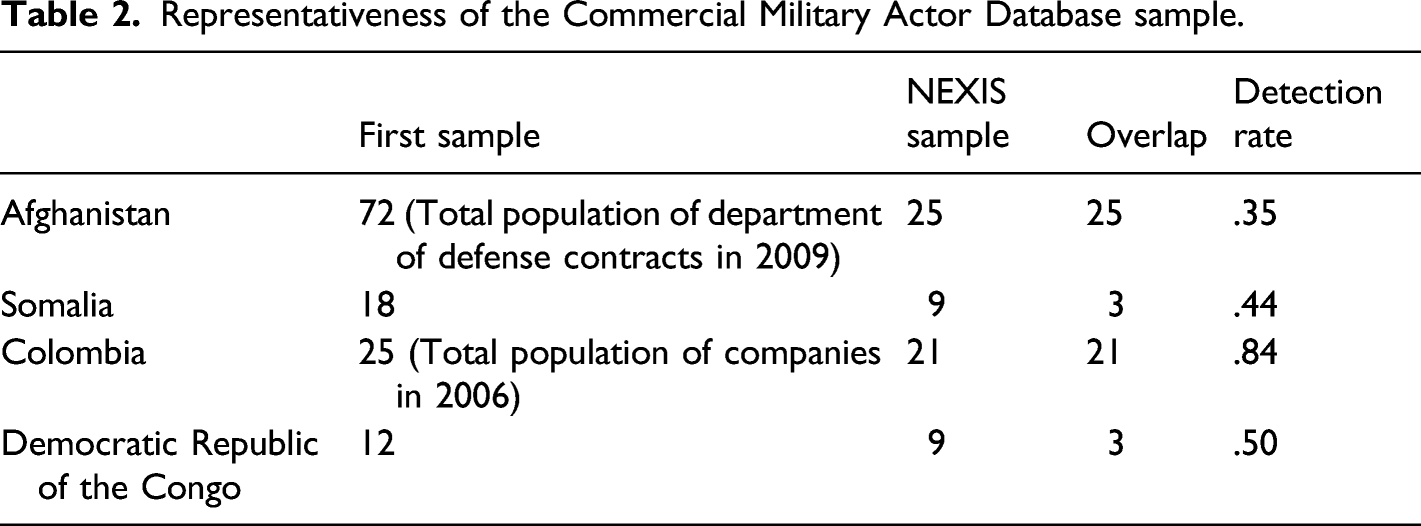
Although the CMAD is inevitably not comprehensive, for many exchange events are never reported, comprehensiveness is not necessary for conducting an analysis. However, an appropriate sample of the underlying population is. To a certain extent, the appropriate sample size depends on the size of the population, but because the size of the underlying population was unknown, we employed a mark-and-recapture approach to estimate the size, which involved comparing the independent and overlapping events in both samples. Based on the two scores and the total number of captured events, the probability of detection and non-detection could be calculated. The estimated size of the population was thus the total sample size divided by the combined detection rate of the two samples (Hendrix and Salehyan 2015). We considered the results from our search on NEXIS to constitute our second sample, whereas for our first sample, we turned to four in-depth case studies in Afghanistan, Somalia, Colombia, and the Democratic Republic of the Congo (Agence France Press 2010; Bryden et al. 2011; Hobson 2014; Pincus 2009; Schouten 2014).
Representativeness of the Commercial Military Actor Database sample.
Application of the Dataset
To demonstrate how the CMAD can be used to analyze conflict dynamics, this section re-examines a previous study. Of the several quantitative studies focusing on PMSCs and civil wars available for that purpose (Akcinaroglu and Radziszewski 2013; Petersohn 2014a, 2017; Radziszewski and Akcinaroglu 2020; Tkach 2017), perhaps the most influential is Akcinaroglu and Radziszewski’s investigation on how PMSCs influenced the duration of conflicts in Africa from 1990 to 2008 (Akcinaroglu and Radziszewski 2013). More recently, their investigation was expanded into a book covering not only civil wars in Africa but all civil wars worldwide during the same period (Akcinaroglu and Radziszewski 2020). In their work, Akcinaroglu and Radziszewski have identified three variables associated with the influence of PMSCs on the duration of conflicts: type of service, level of competition, and ownership structure (i.e., publicly traded vs. private). Of those variables, competition is the most widely discussed in the literature, and other studies have similarly revealed competition to be influential in explaining the influence of PSMCs on civil war dynamics (Petersohn 2017; Tkach 2017). Due to the prominence of the variable, our re-examination of Akcinaroglu and Radziszewski’s study focused on their models of competition, which we tested with the more detailed data of the CMAD in order to gauge whether their findings remained accurate.
The logic of Akcinaroglu and Radziszewski’s argument about competition maintains that increased market pressure incentivizes PMSCs to improve their performance, which in turn affects the duration of civil wars. One of their major findings has been that competition among government-hired PMSCs in fact decreases the likelihood of conflict termination by 25% (Akcinaroglu and Radziszewski 2020, 145). To evaluate that argument, they relied on their own “data of PMSCs intervention into civil wars from 1990 to 2008,” which nevertheless included conflict-years before 1990. In response, because their data collection did not seek information from before 1990, PMSCs were coded as being absent in all years prior to 1990, despite the fact that they were present in some conflicts prior to 1990. Acknowledging that discrepancy, Akcinaroglu and Radziszewski justified their coding decision by first arguing that PMSCs have become “prevalent in the post-Cold War era” (Akcinaroglu and Radziszewski 2020, 56–57). That claim implies, of course, that due to the non-prevalence of PMSCs prior to 1990, competition among them was nonexistent. The CMAD, however, suggests otherwise. Whereas the growth of the market accelerated in the 1990s, a substantial number of PMSCs existed in the 1980s—by the CMAD’s count, between one to five companies involved in 349 exchange events. Swed and Burland have recorded an even higher number of companies—from 10 to approximately 38—active in that decade (Swed and Burland 2020). In any case, it seems unjustified to consistently code PMSCs as being absent prior to 1990. On the one hand, competition indeed also works in markets populated by fewer actors; on the other hand, it makes a difference to the statistical estimations whether competition is absent due to the absence of PMSCs altogether, or due to only a single PMSC being present.
Second, Akcinaroglu and Radziszewski argue that post-Cold War PMSCs have differed from their pre-1990 counterparts. The latter were rather ad-hoc formations and not subject to regulation, while the latter were organized more permanently and subject to regulation. The extent to which the companies were organized differently before 1990 remains debatable, but the density of regulatory frameworks for PMSCs has certainly increased. One of the most important international regulatory frameworks continues to be the International Code of Conduct (ICoC). However, the ICoC was signed in 2010, two years after Akcinaroglu and Radziszewski’s study period had ended. Moreover, even if the post-1990 market has presumably been regulated to a higher standard, a large segment of PMSCs have sought to escape such regulations. The most notorious ones, called “fly-by night” companies, are established merely to turn a quick profit and are shut down if scrutiny increases. 13 In essence, the same type of firm that Akcinaroglu and Radziszewski have coded as being absent before 1990 are included in their data for the period after 1990. That inconsistency means either an underestimation (pre-1990) or an overestimation (post-1990) of PMSCs, which in turn has had direct repercussions on how the effects of competition have been estimated.
Third, although Akcinaroglu and Radziszewski have acknowledged that the market for force contained numerous ad-hoc mercenary outfits prior to 1990 (Akcinaroglu and Radziszewski 2020, 56–57), those outfits were excluded from their analysis because they, according to the authors, represent widely different entities relative to PMSCs after 1990. Despite organizational differences, they nevertheless remain CMAs that trade military and security services on a market. Similar to PMSCs, they offer clients the opportunity to enhance their military capabilities via monetary means and thus have similar potential to influence conflict termination. Because mercenaries have not disappeared since 1990 but are frequently contracted and often operate in the same conflicts as PMSCs, excluding that market segment may unduly simplify conflict dynamics.
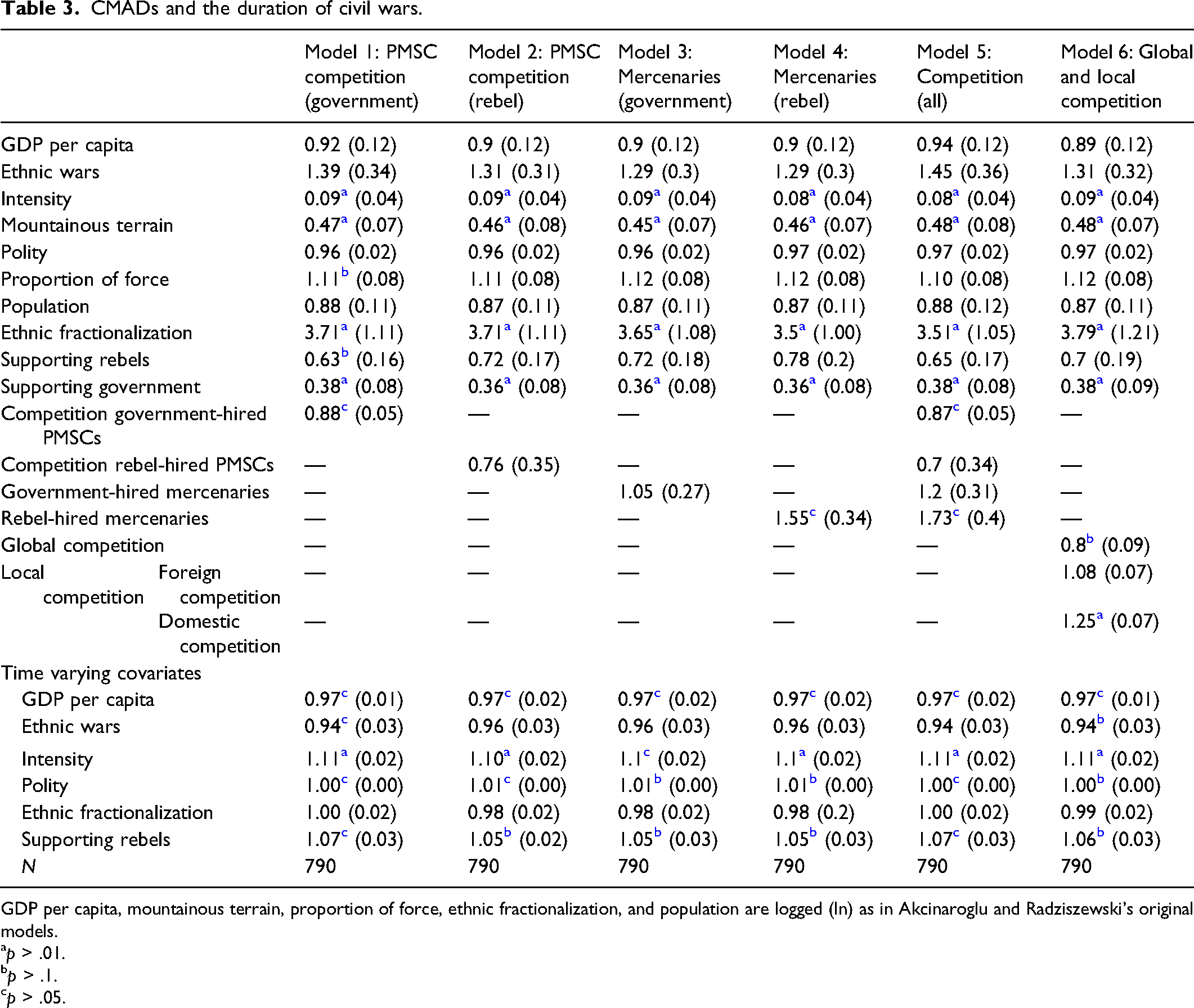
CMADs and the duration of civil wars.
GDP per capita, mountainous terrain, proportion of force, ethnic fractionalization, and population are logged (ln) as in Akcinaroglu and Radziszewski’s original models.
ap > .01.
bp > .1.
cp > .05.
The findings based on the CMAD differ substantially from those yielded by Akcinaroglu and Radziszewski’s data. Using Model 1, which tests the effect of competition among multiple government-hired PMSCs on conflict termination, Akcinaroglu and Radziszewski found that the variable reduced the likelihood of conflict termination by 25%. The CMAD’s data corroborate the direction of that finding but indicate a less substantial effect, namely a 12% lesser likelihood of conflict termination. In Model 2, which analyzes the effects of competition among rebel-hired companies, the CMAD’s data show the variable to be insignificant, which corresponds to Akcinaroglu and Radziszewski’s finding. The result is most certainly due to the fact that PMSCs rarely contract with rebel forces (Akcinaroglu and Radziszewski 2020, 98). Akcinaroglu and Radziszewski’s dataset contains 13 such contractual relations, whereas the CMAD contains 32.15
At the same time, the CMAD enables extending the discussion of competition among PMSCs beyond what Akcinaroglu and Radziszewski’s models allow. More specifically, it offers the possibility to include the mercenary segment of the market that is excluded from Akcinaroglu and Radziszewski’s analysis (i.e., Models 3–5). In contrast to rebel–PMSC contracts, rebel–mercenary contracts were quite common; rebels hired individual or mercenary groups in 230 cases. If that market segment is taken into account, then mercenaries contracted by rebels increased the likelihood of conflict termination by 51%. That result is surprising, given the reputation of mercenaries as being ineffective forces or forces that only aggravate conflict (Aning et al. 2000; Percy 2008). By extension, the result lends support to Fitzsimmon’s findings that mercenaries are not inherently ineffective but that effectiveness depends on a culture of operation emphasizing adaptability and flexibility (Fitzsimmons 2013). Of course, governments also frequent the mercenary market segment, and the CMAD includes 256 such cases. However, even though the findings indicate that mercenary involvement slightly increased the likelihood of conflict termination, they remain insignificant.
Another way to complement and extend previous research is to put Akcinaroglu and Radziszewski’s argument about local and global competition to the test. Local competition refers to the number of providers hired in a given conflict, while global competition refers to the general number of providers in the industry (Akcinaroglu and Radziszewski 2020, 83: 103). Although Akcinaroglu and Radziszewski did not specifically test how the level of global competition affects the duration of civil wars, the CMAD allows developing such a variable. Accordingly, Model six introduces three variables: global competition (i.e., number of PMSCs operating industry-wide in a given year), foreign competition, and local competition, the latter two of which capture the number of foreign and domestic companies, respectively, operating in any given year in a specific conflict. The findings suggest that international competition among all companies in the market in a given year decreased the likelihood of conflict termination by 20%. Although the variable of foreign competition indicates that likelihood of conflict termination increased slightly, the result remains insignificant. By contrast, competition among domestic firms increased the likelihood of conflict termination by 25%. Plausible explanations include that the local security industry has provided employment for actors with military skills who might otherwise support the opposition and that local companies have operated with more local knowledge and therefore been more effective.
Conclusion
This article introduced the CMAD, its principal concepts, and its variety of data. Following the description of the dataset, our reanalysis of a previous study sought to demonstrate how the new data can contribute to analyzing CMAs and civil wars. In turn, the results provide several insights and suggest various paths for research in the future.
First, the data allow updating certain findings about the development of the entire market for force since 1980. Although the market’s growth accelerated in the 1990s, corporate market activity prior to 1990 was already substantial. Moreover, contrary to conventional wisdom, the significant growth in the early 2000s was not exclusively due to Afghanistan and Iraq. Second, the CMAD not only corroborates the bifurcation of the market into corporate and mercenary segments but also shows that such division is not a recent development but has been consistent for almost 40 years. Third, because nearly all publications on privatized security have focused on PMSCs, mercenaries have largely been disregarded. However, mercenaries are frequently contracted on the market for force, not only by rebel groups but also by government agencies. To understand the impact of the market for force on conflict dynamics, it is crucial to include the full spectrum of commercial exchanges and providers, and the findings of our re-examination of Akcinaroglu and Radziszewski’s models support that argument. Along with the influence of PMSCs on conflict termination, the presence of mercenaries makes a difference as well. In fact, mercenaries are associated with increased conflict termination, whereas PMSCs are associated with it decreases.
While the CMAD yields new insights, it also suggests several avenues for future research, most in the form of questions. For one, why do mercenaries increase the likelihood of conflict termination despite their questionable reputation? More generally, that circumstance underscores the importance of investigating different market actors and relationships. Does the size of the contingent make a difference to conflict dynamics? Furthermore, because the CMAD provides details about the contracting of specific clients, thereby allowing investigations into whether CMAs are employed as foreign policy proxies. If so, then do they make foreign policy more adventurous? Does the market empower other non-state actors, including TNCs, to resort more often to violent means? Last, because the CMAD spans nearly 40 years and thus permits investigations of how market regulations have impacted interactions on the market for force, have regimes such as the Montreux Document or the UN Mercenary Convention caused measurable change in the behavior of clients and agents? The CMAD provides the necessary data to answer such questions and, as such, provides a sound basis for policy recommendations.
Lastly, while the CMAD certainly improves data-access, it also wrestles with limitations. For one, the CMAD only records data until 2016, which impairs the analysis of more recent trends such as the increased frequency of combat contracts, for example, the Russian PMSCs in Syria (Petersohn 2021a). Moreover, due to the dataset focusing on exchange events, details about the underlying legal contracts are not recorded. However, the type of contract, for example, cost plus or fixed costs, has been found to be influential for PMSC performance (Tkach 2017). Lastly, while the CMAD contains some information on subcontracting, data on this issue has not been gathered systematically. However, subcontracting is an important aspect in the dynamic of contracting as it complicates oversight and accountability, and affects CMA performance (Cockayne 2008). Future research projects may seek to remedy these shortfalls and complement the CMAD to further facilitate our understanding of contracting on the market for force.
Footnotes
Acknowledgments
We would like to thank Sara Mclaughlin Mitchell, Kristian Gleditsch, Nicholas Lees, Alex MacKenzie and the anonymous reviewers for their more than helpful and insightful comments on the earlier versions of the manuscript. Furthermore, we would like to thank Belgin San-Akca, Bethany Lacina, Chris Spearin, Chelsea Estancona, Benjamin Tkach, Christopher Faulkner, Joshua Lambert, Scott Fitzsimmons, Lee Seymour, Charles Mahoney, Corinne Bara, Joakim Kreutz, Seden Akcinaroglu, and Elisabeth Radziszewski—for their invaluable comments during the workshop ‘Commercial Military Actors and Civil Wars’ in Toronto, 2019. For their support during data gathering, we would like to thank Aleksandra Jarosz, and Elisabetta Carrubba.
Declaration of Conflicting Interests
The author(s) declared no potential conflicts of interest with respect to the research, authorship, and/or publication of this article.
Funding
The author(s) disclosed receipt of the following financial support for the research, authorship, and/or publication of this article: This work was supported by the Gerda-Henkel Foundation.
