




Abstract
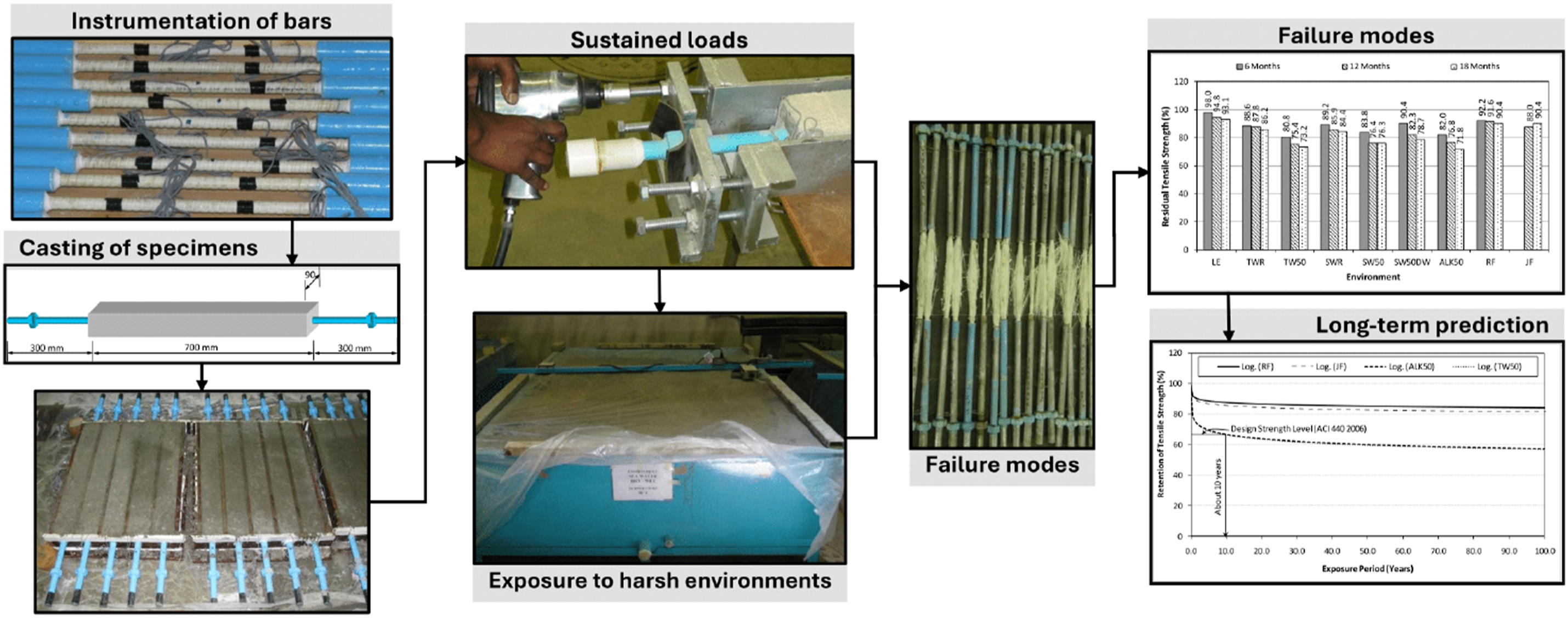
This paper investigates the tensile strength of glass fiber-reinforced polymer (GFRP) bars embedded in concrete under harsh environmental conditions and sustained loads. A total of 135 specimens were constructed for this investigation, each consisting of a 1.3 m length of GFRP bar centrally embedded in a concrete prism. After casting and curing, the specimens were exposed to a tensile stress that is 25% of their maximum tensile strength. The specimens were then exposed to six accelerated laboratory conditions for 6, 12, and 18 months, along with a controlled environment in the laboratory. The test conditions involved exposure to both seawater and tap water at temperatures of 23°C and 50°C, alternating wet/dry cycles in seawater at 50°C, and immersion in an alkaline solution maintained at 50°C. Moreover, two harsh field conditions (hot dry and hot humid) were also considered. GFRP bars’ performance was assessed through tensile strength tests. The results indicated that after the exposure of 18 months, the maximum tensile strength loss occurred in bars exposed to environments of tap water and alkaline solution at the temperatures of 50°C with 18.2 and 16.8% strength losses, respectively. Conversely, the two field conditions did not significantly affect the residual strength of the GFRP bars. The test results revealed that the sustained load alone increased the strength losses by an average of 6.4% with a minimum of 1.3% in the environment of seawater at room temperature and a maximum of 11.4% in the seawater (wet/dry cycles) at 50°C after 18 months.
Keywords
Get full access to this article
View all access options for this article.