




Abstract
Interest has grown in recent time on the development of three-component polymer nanocomposite with enhanced properties. However, the study focuses on the effect of TiO2 nanofiller on the mechanical, tribological, dielectric, and corrosion resistance properties of boron-free glass fiber (BGF) reinforced polyimide (PI) composite produced with spark plasma sintering route. Microstructure of the samples was examined using scanning electron microscopy. Mechanical, tribological, dielectric, thermal, and corrosion behaviour of the samples were characterized by nanoindenter, ball-on-disc, LCR meter, TGA, and potentiodynamic polarization test, respectively. The SEM results show that the introduction of the nanoparticles into the BGF/PI composite aids in more uniform distribution of the BGF particles within the PI matrix, and thus good interfacial interaction of the glass fiber and the PI matrix structure. Comparing the BGF/PI composite sample with BGF/TiO2/PI nanocomposite, it was observed that the nanocomposite depicted better hardness, elastic modulus, low friction coefficient and wear rate, dielectric, and enhanced corrosion properties. With TiO2 additions, hardness and modulus of the PI composite was improved by 56.6% and 10.1%, respectively. In addition, PI composites filled with TiO2 depicted a 0.07 coefficient of friction and wear rate of about 67.7% in reduction than that of neat PI and 9.0% in reduction than that of the pristine BGF/PI composites. Improved interactions between the reinforcements and the host matrix are suggested as the possible mechanism resulting to the desirable properties of the three-component PI nanocomposite recorded. Finally, the developed nanocomposite is suggested to be favourable for automobile, aerospace, and microelectronic device applications.
Introduction
Modified polymeric base composites, such as glass fiber-reinforced engineering polymers are currently adopted as a good structural, dry sliding, thermal and electrical material, particularly as lightweight, strength-to-weight ratio, and insulation alternatives to ceramic and metal materials. Owing to their attractive advantages of self-lubrication,1–3 mechanical strength,4,5 low dielectric constant, 4 low conductivity, 6 cost-effectiveness, easy processability, and superior cleanliness.7–11 A polymer composite can be described as a multi-phase material in which reinforcing or additive fillers (dispersed phase) are introduced in the polymer matrix chain (continuous phase), hence resulting in better characteristics, which cannot be achieved from each individual material alone. 10 Of both researchers and industries, polymer materials have reportedly a good matrix in composite preparation for engineering applications due to their unique features, such as low density, easy of manufacturing, good corrosion resistance, thermal and electrical insulation, self-lubrication effect, and so on. 12 However, among polymers, polyimides are presently a promising polymer material so desirable of anti-corrosion, insulation, and mechanical friction component material for automobile, aerospace, microelectronic device, and other industrial applications.13–16 Thus, to ascertain the expected improvement in polyimide composites characteristics, researchers are of the opinion that it is important to realise a very good fiber-matrix interface interaction, which will promote effective stress transfer from the matrix to the fiber fillers.17,18 The improvements reportedly focused on strengthen fiber-polyimide composites to meet extreme requirements so essential in some special conditions with the incorporation of micro or nano particles. Along this line, researchers and industries recently focus their interest on the development of three component polyimide composites for advanced engineering applications be it aircraft, automobile, or electronic device. 19 For instance, Yim et al. 20 investigated the effect of silica (SiO2) nanoparticles on the thermal, mechanical, and dielectric characteristics of glass fiber (GF)-reinforced polyimide composites prepared by solution/hand lay-up method. The results demonstrated that the GF/PI containing functionalised 5 wt% inorganic SiO2 possesses superior mechanical, thermal, and reduced dielectric response in comparison with those of the virgin PI composites. Li 21 conducted a study on the GF-reinforced polyimide composites filled with graphite particles with the application of hot press moulding technique. The study focuses on the tribological properties of the polyimide composites reinforced with glass fiber and graphite. The experimental results indicated that the addition of the graphite (30%) remarkably enhanced the wear resistance of the GF-reinforced PI composite. Furthermore, study on the fabrication and characterization of GF/PI/SiO2 composite aerogels with high specific surface area were presented by Fei et al. 22 The fabrication of the composites was performed using solution process. From the experimental results, the PI composites with 10 wt% GF and 1 wt% SiO2 depicted 0.29 MPa strength, 9.0% strain, and 0.0033 GPa elastic modulus higher than the other % reinforcement reported in the study. Still in the development of three component polyimide composites, Guo et al. 23 investigated on the improvement of the poor mechanical strength of SiO2 based gel through the crossing-linking of the SiO2 particles with PI and addition of clay particles into the skeletal SiO2/PI network via solution method. The formation of hydrogen bonding and covalent bonds by the hydroxyl ion functionalised clay edges reportedly improved the connectivity of SiO2 network and clay. Hence resulting to a synergistic reinforcement influence as evidenced by the modulus increment when compared to the virgin PI composite. Additionally, Hassanzadeh-Aghdam et al. 24 conducted a study on the micromechanical modelling of the thermal expansion coefficients for a unidirectional GF-reinforced PI composites containing SiO2 nanoparticles. The authors basically investigated the coefficients of thermal expansion of the unidirectional GF-reinforced PI composites with SiO2 particles addition as its mechanical properties have reported elsewhere. 25 From the model, it was observed that the incorporation of 5 wt% SiO2 nanoparticles to the GF/PI composites, decreases the transverse coefficient of thermal expansion (CTE) of the resultant nanocomposites. Meanwhile reverse is the case in term of the nanocomposites longitudinal CTE and the obtained results from the model were in good agreement with the experimental data reported in 26 when considering the silica volume fraction and the interphase elastic modulus as it slightly affects the thermal expansion behaviour of the nanocomposite. However, from the existing research work on the production and performance of three-component polyimide composites, its major drawback remains poor fillers combination, porosity, and difficulty in the dispersion of the inorganic fillers into the polymer matrix. 27 Hence, their insufficient mechanical, wear resistance, and corrosion resistance properties. On this light, the present study aimed to develop a novel three-component polyimide composites containing boron-free glass fiber (BGF) particles and titanium dioxide (TiO2) nanoparticles with enhanced mechanical, tribological, thermal, dielectric, and corrosion resistance properties using 3D turbula dispersion and spark plasma sintering (SPS) technique. As little or no comprehensive study on such material combination for the fabrication of three-component polyimide composite has been reported to the best of the authors knowledge, and hence the need for the study. Boron-free glass fiber (BGF) herein refers to the glass fiber type that comprises metallic oxides with SiO2 tetrahedron as its backbone without boron or boron oxide in its chemistry. 28 BGF is also described as an electrical corrosion resistance glass fiber with better intrinsic properties,29–32 hence its adoption over E-glass fiber in the present study. Also, the chosen of the TiO2 nanoparticles as an additive is because of its low cost, biodegradable, chemical stability and functionally versatile, which makes it acceptable for various applications.33–35 On the other hand, SPS as a novel fabrication approach in polymer composites was employed in the study because of its cost-effectiveness, low sintering temperature, rapid densification with controlled grain size and improved interface interaction of different particles when compared to the traditional techniques.36–39 However, as the principle of three-components of composite materials to achieve excellent performance reportedly good dispersion phase, fine interphase region also known as interface, and matrix transfers of load applied to fillers, which gives the resultant composite material environmental resistance.40,41 Therefore, in this work, a novel ideal of hybrid reinforced BGF with PI nanocomposite (TiO2) was characterized by SEM and SEM-EDS and the mechanical, tribological, electrical, thermal, and corrosion properties of the same were investigated.
Experimental method
Material
In the current study, polyimide powder provided by Xi’an Lyphar Biotech Co Ltd, China was used as the matrix. Boron-free glass fiber powder (<10 µm) was provided by Hebei Yuniu Fiberglass Manufacturing Co. Ltd, China. The rutile TiO2 nanoparticles (20 – 70 nm) of purity 99.98% was provided by Surface Engineering Research Laboratory, Tshwane University of Technology.
Sample preparation and fabrication
The composites were produced by 3D turbula mixer (model T2F) dispersion method followed by spark plasma sintering (Model KCE-FCT-HHPD-25). For the fabrication of the BGF reinforced PI composite, the BGF powder particles were first dispersed into the PI matrix for 3 h in a sealed container using the 3D turbula mixer. However, the homogenized/premixed powders (PI and BGF) were sintered at 320°C under an applied pressure of 30 MPa, heating rate of 10°C/min, and holding time of 9 min using a graphite die mould of 30 mm in diameter. 36 For the three-component BGF/TiO2/PI composite composition, which is also in accordance with Prabhu et al. 42 work. The BGF particles were blended with TiO2 nanoparticles, and the obtained premixed particles were dispersed/introduced in the PI matrix structural network using the 3D turbula mixer prior to the sintering. However, after the sintering process, for each sample, the graphite die mould was allowed to cool to room temperature and the consolidated sample powder is being removed from the die followed by sandblasting to remove the graphite contamination. The same sintering process for the composites was also applied in preparing the neat PI as the reference sample. In all the sample fabrication, the sintering temperature was monitored by a K-thermocouple positioned 2 mm from the internal die surface as to ensure homogeneous temperature distribution. The selection of the SPS parameters for the current study was based on literature and our previous study on glass fiber reinforced polyimide composites.36,37
Sample characterization
The microstructure of the produced samples was examined using high-performance scanning electron microscope (VEGA3-TESCAN) equipped energy dispersive X-ray analysis (EDX). The accelerating voltage was set at 20 kV to capture the images. The mechanical properties of the composites were obtained with nanoindenter (Anton Parr, NHT3) in accordance with the ASTM-D785 standard under applied load of 100 mN. The friction and wear tests were carried out with tribometer (Anton-Paar TRB3 model) ball-on-disc friction and wear tester at a speed of 200 r/min and load of 10 N for 15 min under dry sliding condition in accordance with ASTM G99/95 standard. The range of the parameters applied for the frictional test have been previously reported. 43 Stainless-steel ball of 3 mm radius and 0.03 μm roughness, Ra was utilised in the study as the counterpart. Samples wear rates were measured directly with a profilometer (Model: Surtronic S128) connected to the tribometer equipment. The sample dielectric and electrical conductivity properties were determined under room temperature using an LCR meter (B&K 891) at a frequency range of 100 to 60 kHz. To reduce contact resistance and current leakage during the test, the samples dielectric films were silver paste coated and epoxy around the formed electrostatic film capacitors. 44 Further, to reduce stray capacitance, the two copper electrodes used were ensured not to touch each other while the sample is being place between them during the test. Meanwhile the breakdown strength was ascertained with a concentric high voltage transformer (model BS 3941) according to EN 60243-1 and the procedure reported in. 45 Thermal stability of the fabricated composites was analysed using thermogravimetric analyzer (PerkinElmer, TGA 4000 Instruments, United States) under N2 atmosphere at a heating rate of 10°C min−1 from 25°C to 800°C. For corrosion behaviour of the developed samples, potentiodynamic polarization (PG STAT 302 N) test was carried out under 0.5 M HNO3 acid solution at the current range 100 mA to 100 μA, open circuit polarization of 120 s, start and stop potential of – 1.5 V to + 1.5 V, scan rate of 0.01 V/sec according to the ASTM G102-89. 46 Ag/AgCl reference electrode in KCl solution was adopted with platinum as the counter electrode and the sample (1 cm × 1 cm) as the working electrode.
Results and discussion
Morphology
Figure 1 presents the scanning electron microscopy (SEM) images and SEM-EDS results of the produced samples. Where Figure 1(a) shows the neat PI, Figure 1(b) shows the BGF reinforced PI composite without TiO2, Figure 1(c) shows the three-component reinforced PI nanocomposite (BGF/TiO2/PI), and Figure 1(d) depicts the SEM-EDS results of the nanocomposite. From the Figure (Figure 1), the neat PI display smoother surface than that of BGF/PI composite and BGF/TiO2/PI nanocomposite sample, which in turn indicates the presence of BGF and TiO2 nanoparticles in the PI matrix structural framework. However, introduction of the nanoparticles into the BGF/PI composite aids in more uniform distribution of the BGF particles within the PI matrix composite chain and reduction of shrinkage. This is because of the high surface area per particle size of TiO2 and its free surface hydroxyl groups, and as such less tendency for agglomeration but better dispersion of particles in the polymer composites.35,47 Hence resulting to the synergistic characteristics of the three-component nanocomposites reported in the study.10,48 Therein, the uniform distribution of the particles in the host matrix were quantified by ImageJ application.
49
Further, the use of 3D turbula dispersion and spark plasma sintering method on the other hand improves the diffusion of the TiO2 in the BGF/PI matrix, knowing the effect of plasma process in TiO2 powder production.50,51 Therefore, the better interfacial interaction and improved properties of the BGF/TiO2/PI sample as the nanoparticles and the glass fiber surface is of high affinity to the repeating units of the PI.22,47 In addition, the SEM-EDS of the three-component nanocomposite was carried out, basically to determine the elemental composition of the nanocomposite. And results revealed the present of carbon (C), oxygen (O), silicon (Si), calcium (Ca), aluminium (Al), titanium (Ti), and without any form of boron (see Figure 1(d)), hence evident that the glass fiber used in the BGF/PI and three-component PI nanocomposite is truly boron-free glass fiber.
28
As one of the advantages of boron-free glass fiber is good corrosion resistance behaviour.9,29 SEM image of the sintered sample; (a) Neat PI, (b) BGF/PI, (c) BGF/TiO2/PI, and (d) SEM-EDS of the BGF/TiO2/PI nanocomposite. Mag: × 300. SEM MV: 20.0 kV, WD (working distance): 11 – 16 mm, BSE: Backscattered electron, Model: VEGAS TESCAN.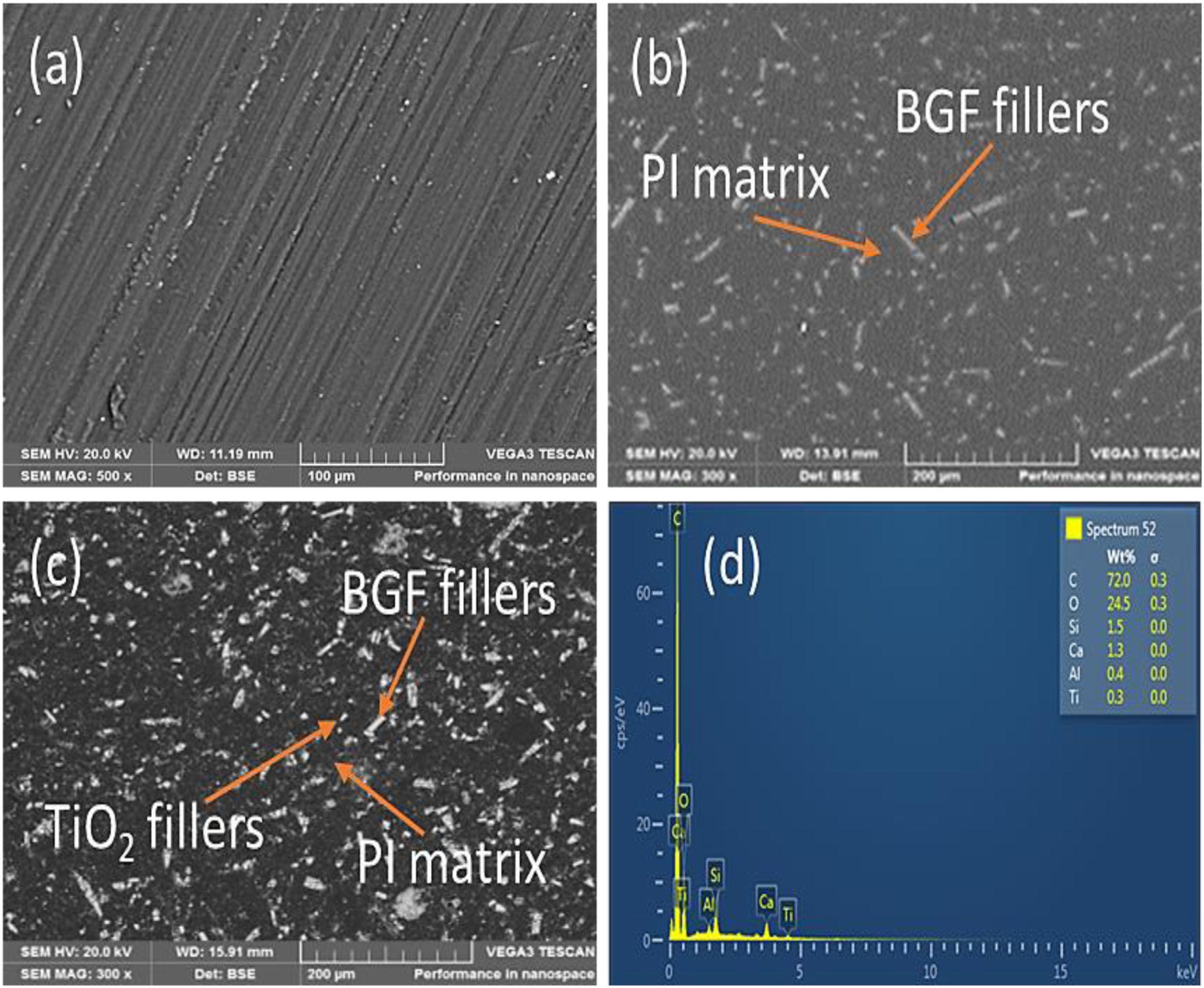
Mechanical properties
Figure 2 presents the nanoindentation curves (2a), hardness (2b), elastic modulus (2c), and creep (2d) behaviour of the produced composites. Nanoindentation is a powerful and modern way to determine the mechanical characteristics, such as elastic modulus and hardness of different materials. This technique has been extensively used to characterize the mechanical behaviour of polymers and nanocomposites.52–54 However, Figure 2(a) depicts load-penetration depth curves for the neat PI, BGF/PI composite, and BGF/TiO2/PI nanocomposites. The similarity among the curves illustrates that the composites are based on the PI matrices.
55
Herein, the maximum indentation depth of the neat PI was observed to decrease with the addition of BGF particles into its matrix. However, more decrease in maximum penetration depth was noted in the three-component nanocomposite in comparison with the neat PI and the BGF reinforced PI composite. This is because the interaction of TiO2 particles and BGF which consist of silica tetrahedron synergistically lead to the nanocomposite with better resistance to plastic deformation.56,57 The elastic displacement is being recovered during unloading. Herein, the initial unloading slopes, which is refers to as stiffness considering nanoindentation method
55
increase with TiO2 addition, and as such the effective moduli are improved. Furthermore, the hardness and the elastic modulus of the samples were computed from the nanoindentation curves applying Oliver and Pharr equation and technique,58,59 and presented in Figure 2(a) and (b). (a) Load-penetration curves, (b) Hardness, (c) Effective elastic modulus, and (d) Creep (%) of the sample materials.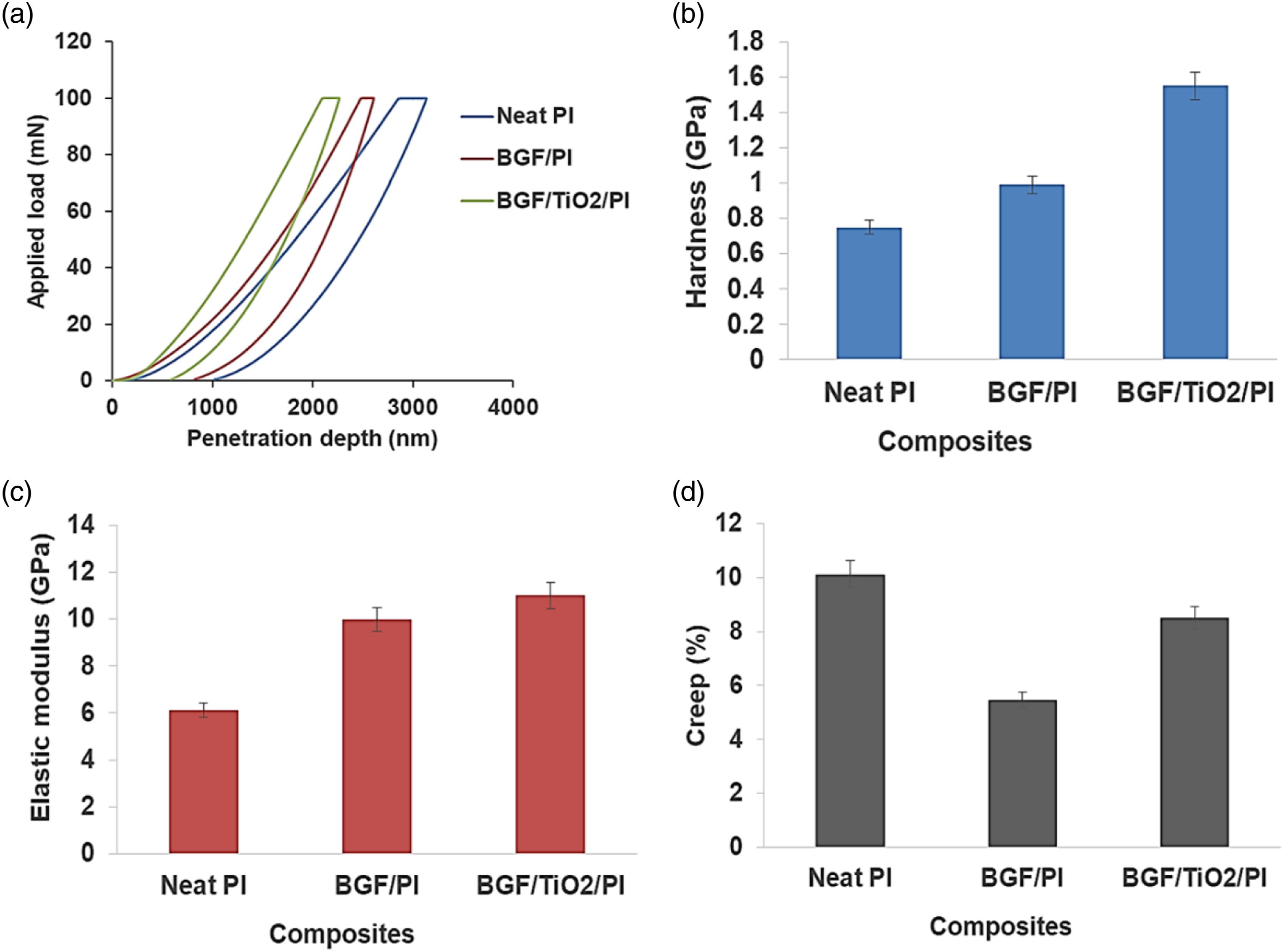




From Figure 2, the three-component PI nanocomposite depicted the maximum hardness (1.55 GPa) and elastic modulus (10.99 GPa) when compared with those of neat PI and BGF/PI without TiO2 nanoparticles incorporation (see Figure 2(b) and (c)). The addition of the TiO2 in the PI nanocomposite improves good interfacial bonding with the glass fiber and the PI matrix. 60 Thus, the better load transfer in the three-component nanocomposite, which in turn enhanced its hardness and elastic modulus. And the mechanism behind this could be attributed to the chemical bond and mechanical interlocking in the nanocomposite, which basically improves the three-component nanocomposite interfacial interaction that enables a stress transfer. In addition, with the nanoindentation method, characterizing the creep deformation of the samples during the unloading process even though that there is no pop-out phenomenon. 61 Results revealed that the reinforced composites depicted better creep resistance that the neat PI. Herein, for the neat PI, the creep behaviour could be due to the mobility of its molecule chain.62,63 Meanwhile, addition of BGF and TiO2 particles could share some loads, and as such makes the resultant composites so difficult to deform and thus their creep resistance over pure PI.
Tribological properties
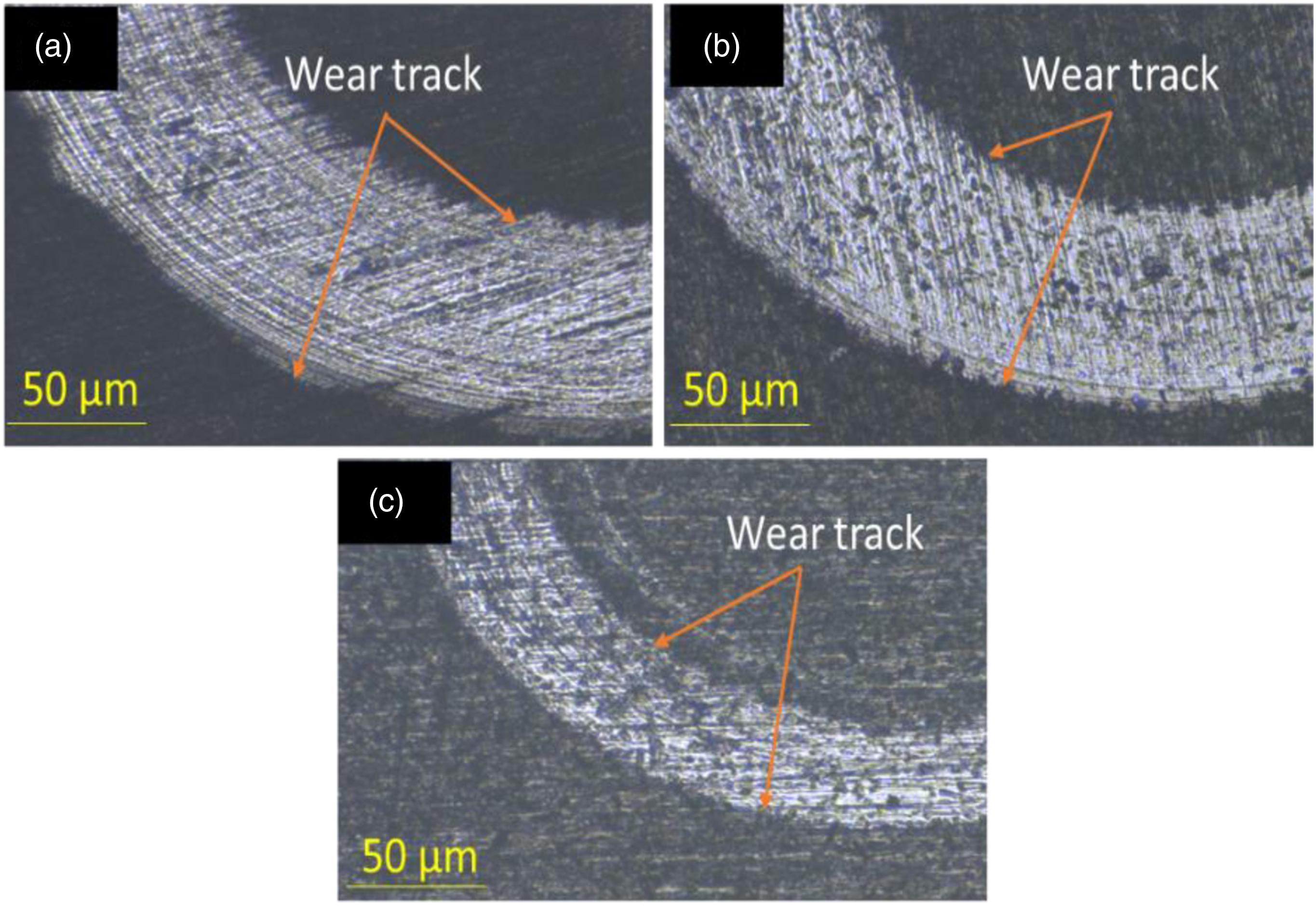
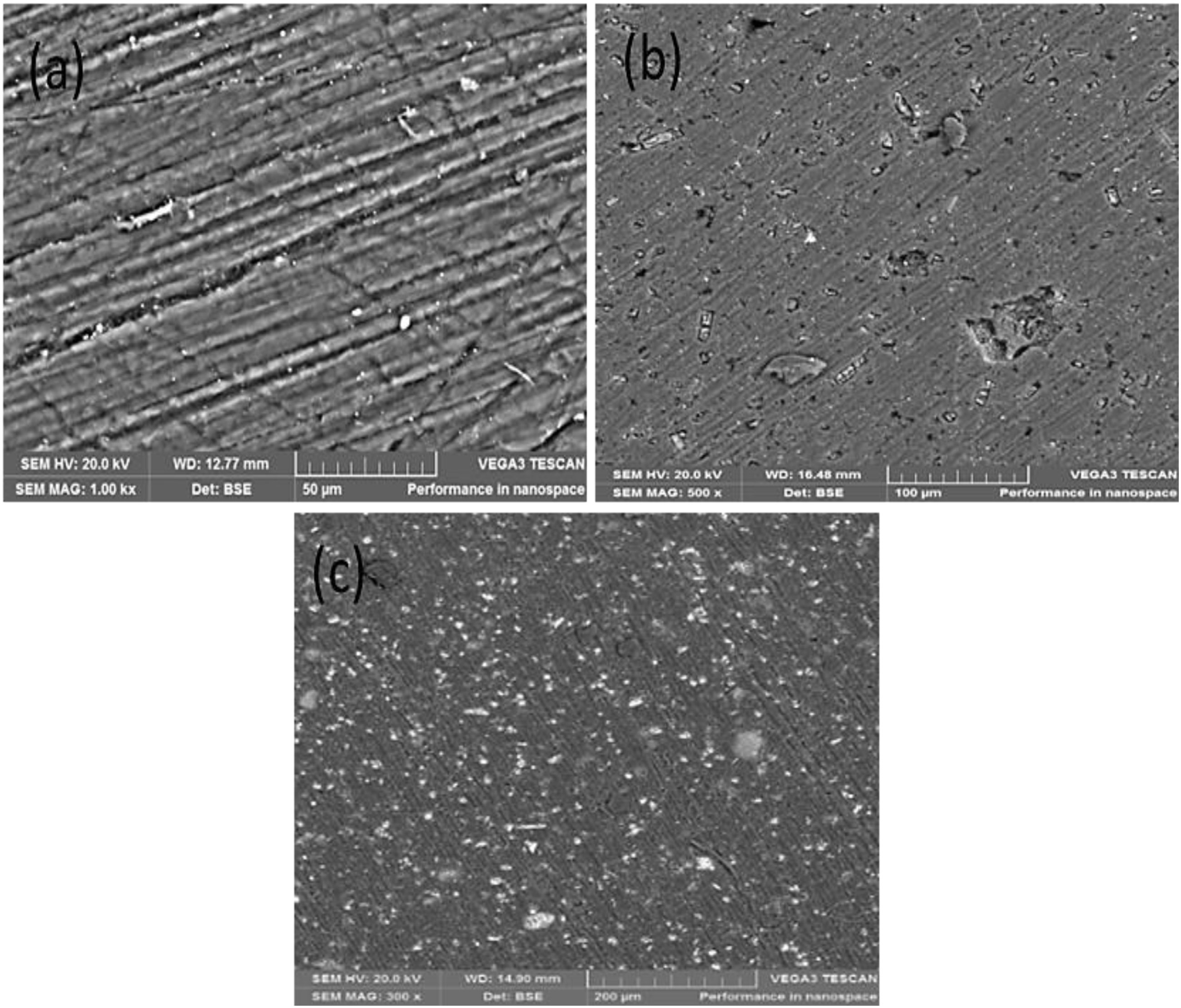
Figure 3(a) and (b), respectively, presents the coefficient of friction and wear rates of the produced samples at a normal load of 10 N with a sliding speed of 200 r/min. The BGF filled composites depicted a lower friction coefficient (0.25) in comparison with the neat PI (0.39). The PI composite reinforced with BGF particles exhibited better wear resistance when compared with that of the neat PI in correlation with their wear rates as can be seen in Figure 3(b). However, in adding TiO2 nanoparticles, a comparison of the friction coefficient and wear rate values of the BGF/PI and BGF/TiO2/PI composites were also presented in Figure 3. Therein, the coefficient of friction and wear mechanisms were correlated. From Figure 3, it can be seen that the coefficient of friction and wear rate of the three-component composites (BGF/TiO2/PI) is lower in comparison with the BGF/PI composite and the neat PI. This indicates that the BGF and TiO2 in the composite synergistically acts as a solid lubricant,22,33–66 in turn resulting to better film transfer by decreasing the composites coefficient of friction from about 0.25 for BGF/PI to 0.07. Composites filled with TiO2 nanoparticles depicted a wear rate of almost 67.7% in reduction than that of the neat PI and 9.0% in reduction than that of the pristine BGF/PI composites. And the possible mechanism to the % improvement reduction could be attributed to the strong bonding and good transfer film, which must have existed in the nanocomposite and when the coefficient of friction and wear mechanisms are correlated.12,67 Figure 4 shows the wear track of the neat PI and the composites. From the Figure (Figure 4), it can be seen that more debris and deformation occurred in the neat PI and BGF/PI (Figure 4(a) and (b)), hence their high worn-out surface. This basically evident that plastic deformation is the main wear mechanism of the virgin PI and the BGF/PI composite, thus their increased coefficient of friction recorded. For the three-component nanocomposite (Figure 4(c)), a slight plastic deformation seems to occur, and as such scratches on the worn surface of the BGF/PI composite filled with TiO2 nanoparticles were considerably reduced. Besides, one can observe a relatively smooth and compact worn surface, which is in good accordance with the desirable reduced coefficient of friction and improved wear resistance of the BGF/TiO2/PI nanocomposite. Again, one can agree to this as study by Ali et al.
68
and Panin et al.
69
revealed that good tribological behaviour of polymer materials can be obtain with nanofillers incorporation. And such is the case in the present study of the composite filled with TiO2 nanoparticles. (a) Coefficient of friction and (b) Wear rate of the neat PI and reinforced PI composites under dry sliding conditions of load 10 N and sliding speed 200 r/min). Optical micrograph of the samples wear track; (a) Neat PI, (b) BGF/PI, and (c) BGF/TiO2/PI composite.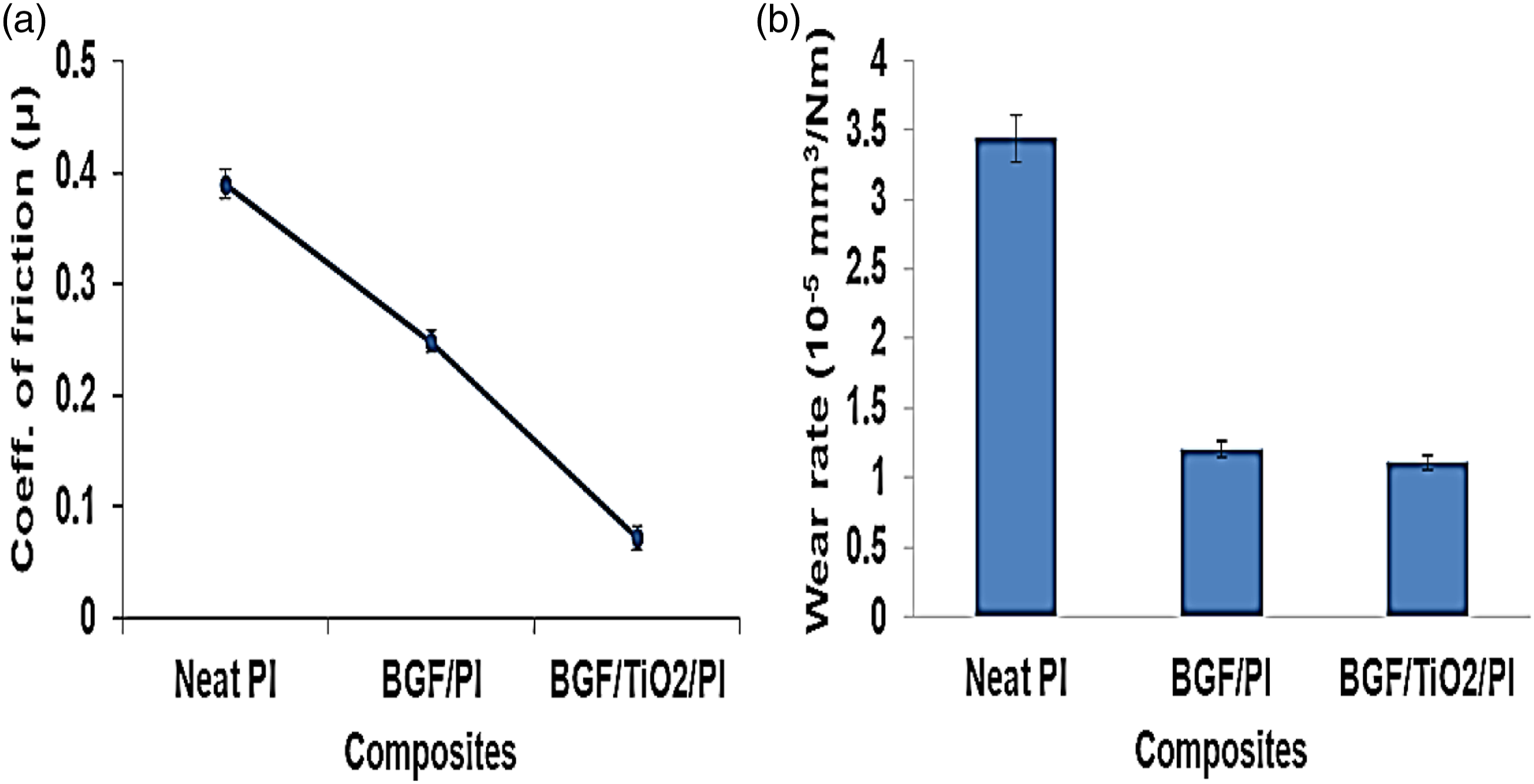
Electrical/dielectric properties
As dielectric constant reportedly a measure of the quantity of energy,
70
which occur on exposure of a material to electric field, the study investigated the influence of TiO2 nanoparticles on the electrical insulation of BGF reinforced PI nanocomposite. The dielectric characteristics of the samples were examined following a capacitance technique, and computed using the following equation:
71



Figure 5(a)–(c) shows the frequency dependence of the dielectric properties of the neat PI, BGF reinforced PI, and BGF/PI composite containing TiO2 nanoparticles at room temperature. While Figure 5(d) present the breakdown voltage of the neat PI and its composites. From Figure 5(a), it could be seen that the dielectric constants of the entire samples decrease as the frequency increases. This is because dielectric constant is a frequency dependent parameter in polymer systems; and the dielectric constant is usually governed by the number of dipoles present in the system and their capability to orient along an applied electric field.
72
However, at frequency range of 1 kHz – 60 kHz, based on the studied dielectric behaviour of the produced samples, results show that the BGF reinforced PI film exhibited a dielectric constant, dielectric loss, and electrical conductivity slightly lower than the neat PI. However, addition of TiO2 nanoparticles into the composites significantly decreased the dielectric constant and dielectric loss of the virgin BGF/PI composites, hence the drastic reduction of the resultant nanocomposite electrical conductivity from 4.46 × 10⁻⁵ S/cm of BGF/PI to 0.48 × 10⁻⁵ (S/cm) and improved breakdown voltage presented in the study (see Figure 5(c) and (d)). The possible mechanism for such reduction in loss and electrical conductivity as well as the improved breakdown strength of the three-component composite could be attributed to the more uniform distribution of the glass fiber within the PI matrix framework with the TiO2 additives. Moreover, evenly dispersion of fillers cannot only improve the interfacial bonding area of composite, but also efficiently hinder the dissipation factor.
73
In addition, space charge polarization generated in the three-component nanocomposite (BGF/TiO2/PI) could be ascribed to the remarkable decrease in dielectric loss and electrical conductivity of the nanocomposite as it could leads to more or less charge impediment.
74
Internal interface area formation between particles and dipoles offers traps for trapping of charge carriers, especially in polymer-based nanocomposites. However, the inhibition of space charge observed in the BGF/TiO2/PI nanocomposite on the other hand contributed in improving the electrical characteristics of the nanocomposite dielectric desirable for insulation.
75
In general, high affinity of the fillers to the host matrix structure, favourably restrain the PI chains and electron movement as well within the nanocomposite, which could result to reduced orientation polarization and electronic distortion.
76
Again, the deep interface traps, initiated by adding the nanoparticles, could capture carriers, hence resulting to a decrease in movement and therefore an increment in the dielectric strength of the BGF/TiO2/PI nanocomposite
77
(see Figure 5(d)). Further, better breakdown voltage of the three-component PI nanocomposites over the neat PI and the BGF/PI composite without TiO2 nanoparticles could be due to its anti-corona and electrical stress resistance behaviour.
45
Herein, the BGF/TiO2/PI nanocomposite depicted a breakdown voltage of 294 kV/cm, meanwhile the neat PI and BGF/PI composites depicted breakdown voltage of 240 kV/cm and 256 kV/cm, respectively. (a) Dielectric constant, (b) Dielectric loss, (c) Electrical conductivity, and (d) Breakdown voltage of the samples.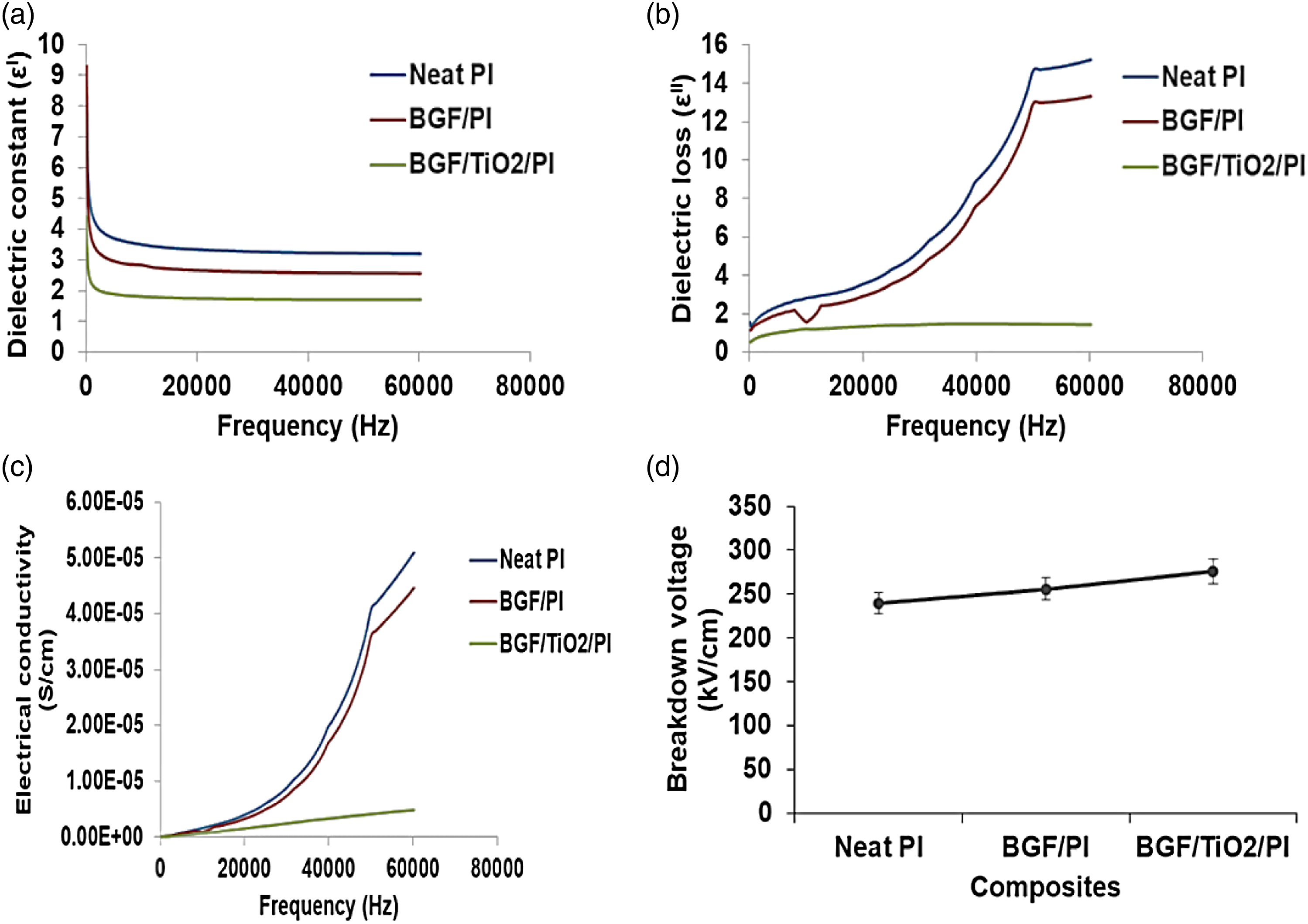
Corrosion properties
In producing novel polyimide-based nanocomposites, the idea is basically on the enhancement in mechanical, electrical, thermal stability, and production of ant-wear system. And these improvements give the polymer the quality to meet extreme requirements in some special application.
14
However, one focus of the present work is to uncover the synergistic interaction of BGF and TiO2 nanoparticles in improving the corrosion resistance of polyimide material either for coating and/or most engineering applications. As past studies posit that polyimide material is prone to moisture penetration, interfacial failure, and moderate life.78,79 Therein, the corrosion behaviour of the neat PI, BGF reinforced PI, and BGF reinforced PI nanocomposite with TiO2 additives under nitric acid (HNO3) environment were examined. Figure 6 shows the typical polarization curves of the produced samples after 1 h immersion in HNO3 electrolyte. Both samples depicted similar active-passive-transpassive characteristics. Notwithstanding this similitude, from the Tefel plots of corrosion potential against log corrosion current density (Figure 6), results indicated that the BGF/TiO2/PI nanocomposite depicted a lower passive film current density compared to those of neat PI and BGF/PI. This suggest that the passive film on the BGF/PI likewise that of the neat PI dissolved faster than that of BGF/TiO2/PI. Although, it is worth knowing that the BGF reinforced PI exhibited a lower corrosion current density than the neat PI. Herein, the dissolution rate and lower corrosion current density of the three-component composite (BGF/TiO2/PI) (see Table 1) could be related to the synergistic effect/interaction between the BGF and TiO2, hence resulting to its corrosion resistance. Such improved corrosion resistance of the BGF/TiO2/PI nanocomposites could be referred to its high polarization resistance (Rp) (Table 1) as study conducted by Medrano-Vaca et al.
80
shows that the higher the charge transfer resistance of a material, the lower the material corrosion rate. Therein, the high charge transfer resistance happened to slow the development of corrosion reactions under the electrolyte. Again, the reinforcements contain high electric field strength and high coordination number metal ion, such as Zn2+, Ti4+ and so on, which impedes the mobility of ion and at the time resist the migration ability of metal ions.
29
Besides, aluminium and titanium-based material are widely known as corrosion resistance materials.
81
The synergism effect of the fillers is an effective parameter, which basically hinders the ingression of the acid solution into the nanocomposites, and as such its less deterioration or fracture than the BGF/PI and neat PI
82
(see Figure 7). Moreso, it is well known that the rate of corrosion is directly proportional to corrosion current (icorr). Thus, the lower corrosion current density (jcorr) of a material, the better corrosion resistance and vice visa.
83
Potentiodynamic polarization curves for the Neat PI, BGF/PI, and BGF/TiO2/PI composites in 0.5 M HNO3 at room temperature. Electrochemical parameter results obtained from the polarization curves of the produced samples. Surface morphologies of the corroded samples; (a) Neat PI, (b) BGF/PI, and BGF/TiO2/PI nanocomposite. The image of the nanocomposite was captured at ×300. SEM MV: 20 kV, WD: 11 – 16 mm, BSE: Backscattered electron, Model: VEGAS TESCAN.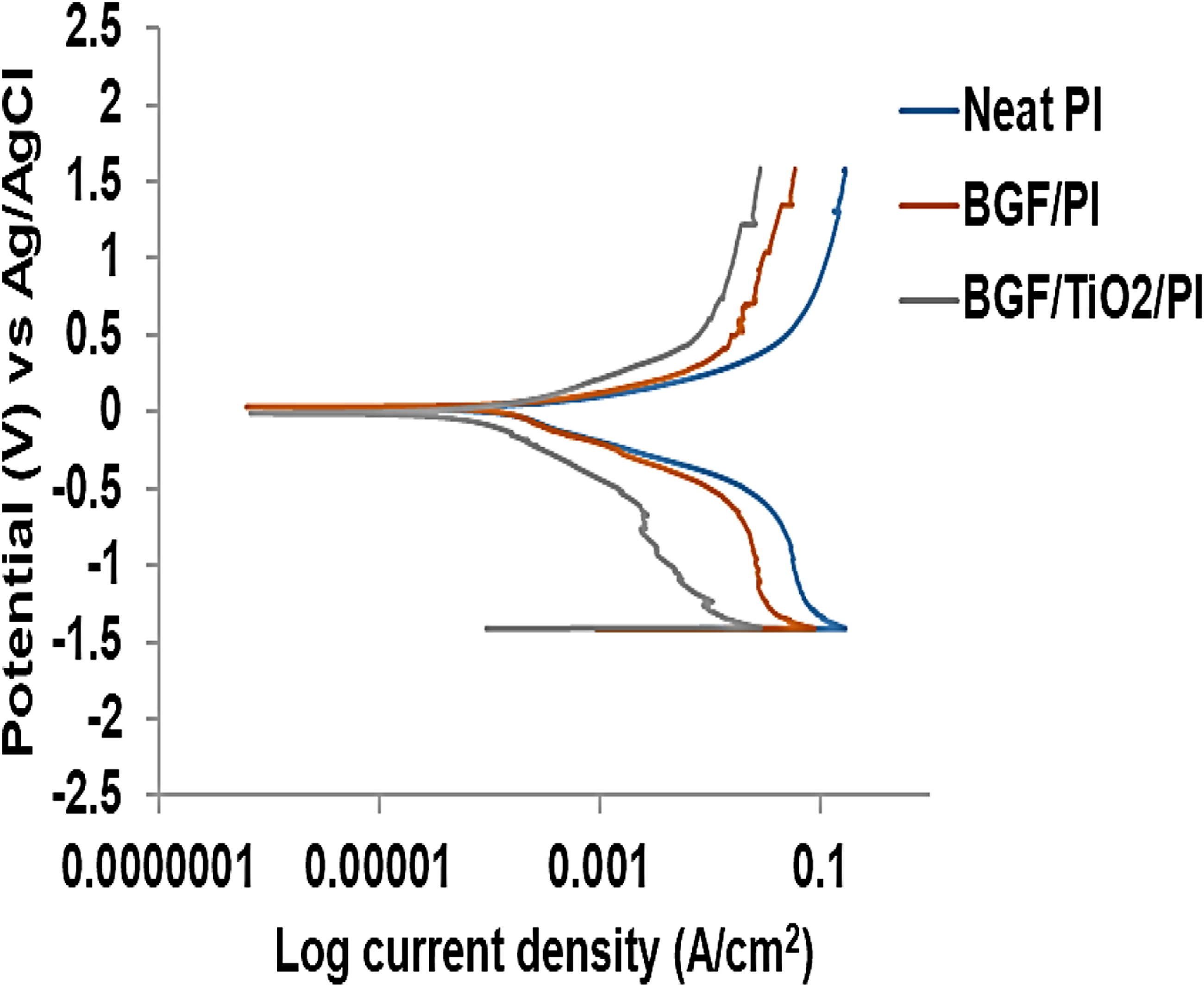

Thermal stability
Figure 8 depicts the TGA weight loss profiles of the pristine PI, BGF reinforced PI, and BGF/PI composite containing TiO2 nanoparticles. In the Figure 8, it is noticed that the onset degradation temperature moves towards higher temperatures, which indicate no loss of weight before 500°C. The heat resistance/char characteristics performance of the BGF/PI sample is observed to be similar in comparison to that of the neat PI up to 589.76°C decomposition temperature (Td, 10%). But on exposure to 648°C, the BGF reinforced PI sample starts to exhibit better thermal stability than the neat PI. This illustrates that with the addition of BGF particles into the PI matrix, its decomposition temperature behaviour can be improved. The improved thermal stability of the neat PI with BGF incorporation is expected owing to the BGF backbone, thermal insulation, and heat resistance properties.28,81,84,85 Further, examining the three-component nanocomposite (BGF/TiO2/PI), early decomposition temperature was observed, and this could be attributed to volatilization,
83
as stacked titania could hold accumulated heat that can accelerate the thermal conductivity and decomposition of the host matrix observed at Td, 5%, as titania would function as secondary heat source at that point.86–88 However, at optimum temperature decomposition rate, Td, 30% (690°C), the BGF/TiO2/PI nanocomposite is slightly stable than the BGF/PI sample. This demonstrates to a synergistic effect/interaction of the TiO2 and BGF fillers on the stability behaviour of the nanocomposite at such thermal decomposition rate when compared with the neat PI and BGF/PI sample. Thus, the better thermal stability of the BGF/TiO2/PI nanocomposite till 800°C temperature scan/exposure. Hence suggest its advantage over neat PI and BGF/PI composite samples, especially for long-term high temperature operation devices. TGA weight loss profiles of the produced PI and its composites.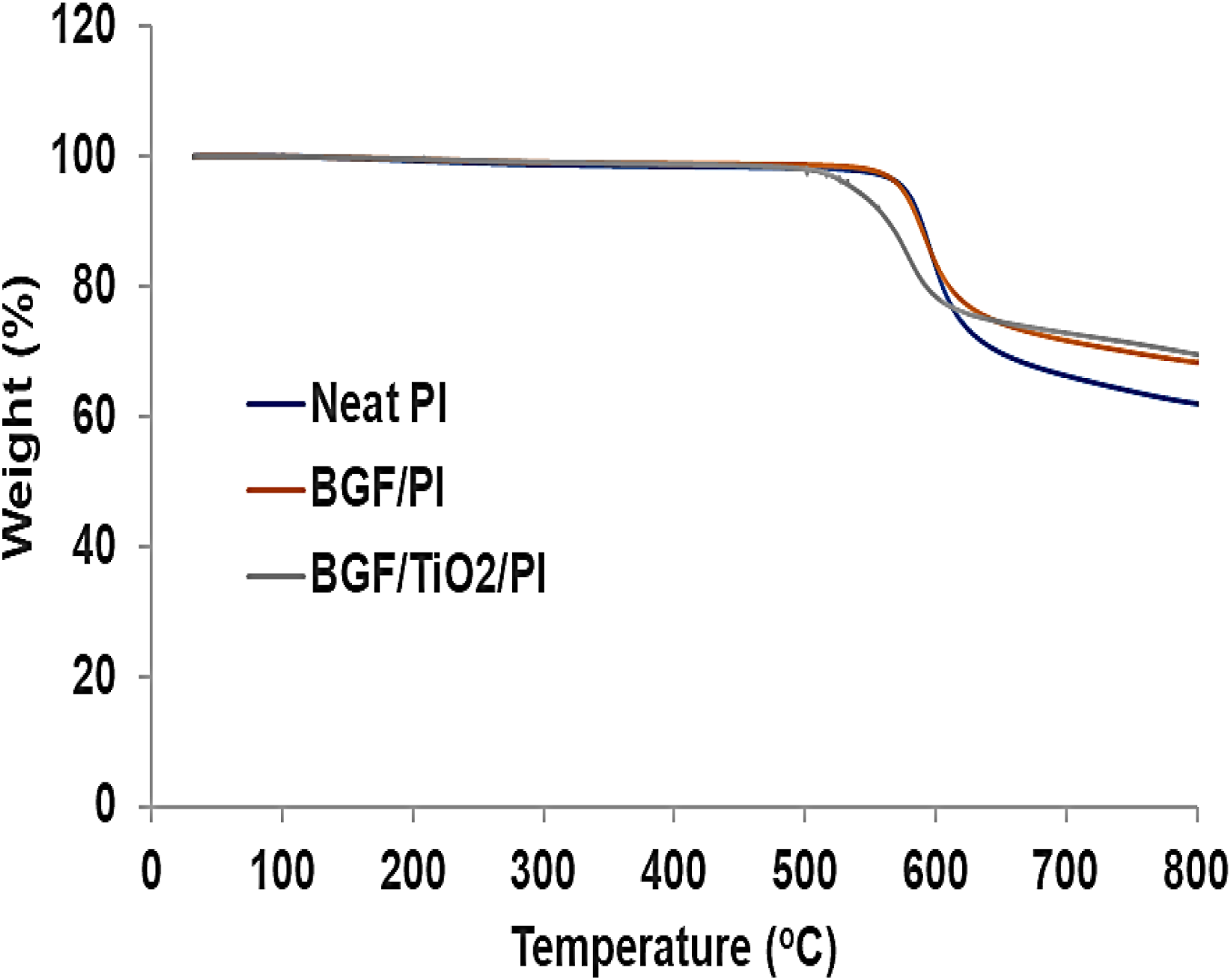
Conclusions
The mechanical, tribological, dielectric, thermal, and corrosion behaviour of the neat PI, glass fiber reinforced PI, and three-component PI nanocomposites were investigated to further the detail understanding of structure-property relationships of glass fiber reinforced PI composite containing TiO2 nanofillers. It is observed that: 1. The introduction of TiO2 nanoparticles in the BGF/PI composite improved its hardness and elastic modulus. The hardness and modulus of the glass fiber reinforced PI composite was improved by 56.6% and 10.1%, respectively. 2. Nanofilled glass fiber reinforced PI composite depicted improved friction coefficient and wear rate reduction when compared to the neat PI and virgin BGF/PI composite. 3. The three-component PI nanocomposite exhibited low dielectric constant and dielectric loss, hence the remarkable decrease in electrical conductivity reported in the study. 4. Corrosion resistance of the BGF/TiO2/PI nanocomposite was also enhanced in comparison to those of neat PI and the BGF/PI composite. 5. The polyimide materials were found to display high decomposition temperature, however, BGF/TiO2/PI nanocomposite noted to exhibit better thermal stability at high temperature scan. 6. However, based on the results obtained, the developed nanocomposite could be desirable for engineering application that require polymer nanocomposite material with better mechanical hardness and elastic modulus, low dielectric constant, wear resistance, and corrosion resistance properties. 7. This research work can be extended by subjecting the three-component BGF/TiO2/PI nanocomposite to tensile test in addition with numerical modelling and simulation, which could be beneficial for industrial/engineering applications.
Footnotes
Acknowledgements
The authors wish to thank the Centre for Energy and Electric Power (CEEP), Surface Engineering Research Laboratory (SERL), and Tshwane University of Technology (TUT) South Africa for their financial support in the course of this work.
Declaration of conflicting interests
The author(s) declared no potential conflicts of interest with respect to the research, authorship, and/or publication of this article.
Funding
The author(s) received no financial support for the research, authorship, and/or publication of this article.
