




Abstract
In recent times, glass fiber reinforcements are extensively used in the development of polymer matrix composites to improve their performance especially when used for engineering applications. As such, the focus of the present study remains on the effects of electrical corrosion resistance (ECR) glass particles on the mechanical and tribological properties of polyimide (PI) composites fabricated by the spark plasma sintering (SPS) process. SPS is a novel powder metallurgy method in producing homogeneous composite materials in short sintering time with finer microstructure. However, the PI composites were produced at different contents of ECR-glass reinforcement particles (5, 10, 15, and 20 wt %). The microstructural characterization of the samples was conducted using scanning electron microscope (SEM). Nanoindentation tests and pin-on-disc wear tests (under dry condition) were conducted to evaluate the mechanical and tribological properties of the composites. The SEM results revealed that the reinforcement’s particles were well distributed in the PI matrix phase. Incorporation of ECR-glass particles into the PI composites improved its hardness and elastic modulus. The ECR-glass/PI matrix composite loaded with 15 wt% ECR displayed a significant reduction in coefficient of friction from 0.091 to 0.015 and wear rate from 0.81 × 10⁻⁴ to 0.14 × 10⁻⁴ mm3/Nm. In addition, the ECR/PI composites exhibited improved dielectric properties over the pure PI. Hence, corroborating the potential of this ECR-glass reinforced PI for industrial (automobile and power) applications requiring high hardness, elastic modulus, good wear resistance, and low dielectric constant.
Keywords
Introduction
In the present scenario, polyimide as an excellent polymer material based on its outstanding performance has gained much attention from researchers and industries. Polyimide (PI) exhibits high mechanical strength, good thermal stability, and acceptable wear resistance under certain conditions.
1
Also, as one of the most promising high-performance polymer material, PI is known for its chemical resistance, high hardness, and electrical insulation properties.2–5 It is generally used as matrix in fabricating polymer based composites as insulation and self-lubricating bearing material.6,7 This is because polyimide composites exhibit low density, low dielectric constant and loss, better strength to weight ratio, and modulus.8–10 The incorporation of inorganic particles in PI matrix has shown to be an effective approach to enhance the mechanical, tribological, thermal, and dielectric behaviour of PI materials. However, microparticles or nanoparticles tend to agglomerate into larger clusters, in particular, when particle concentrations are much higher as a result of Van der Waals interaction.
11
Thus, it is critical to achieve homogeneous dispersion of filler particles in composite systems. Notwithstanding, several methods, for example, ultra sonication and high-speed crushers have been reportedly employed to improve the dispersion state of inorganic particles in the PI matrix network. Teixeira et al.
12
reported on the mechanical properties of long glass reinforced polyamide composites. The composites were fabricated with injection moulding. The results show that the incorporation of the glass fiber into the matrix improves its tensile strength and tensile modulus. Zhu et al.
13
investigated the influence of glass fiber on the mechanical properties of PI composites for high temperature insulation. In the study, to develop the PI composites, the sol-gel polycondensation and needle-punching process were adopted. The resultant composites depicted low density, high compressive stress, modulus (from 0.04 GPa to 0.11 GPa), good thermal stability, and low thermal conductivity, and as such evidence its use as high temperature insulation material. In another study, Yim et al.
14
fabricated polyimide-based glass fiber-reinforced composites using the hand lay-up method. The experimental investigation was on mechanical, thermal, and dielectric properties. On analysing the resultant composites, results showed that the addition of the glass fiber into the PI matrix enhanced its properties in comparison with the pure PI. However, adding silica additive in the composites, a low dielectric constant was recorded over the glass fiber reinforced PI composites. On the other hand, more progress is being made as to find out the different methods in modifying and improving the wear properties of PI based composites for high load-bearing and environmental conditions.15,16 For instance, Li
17
studied the tribological behaviour of polyimide composites reinforced with glass fiber (E-glass) and graphite particles. The glass fiber reinforced PI composites were prepared by means of ultra-sonication dispersion and compression moulding method. The results illustrated that the presence of the graphite solid lubricant in the glass fiber reinforced PI enhances its wear rate at optimal volume content of 30% graphite. Alexenko et al.
18
also reported on the improvement of PI composites strength and wear resistance using carbon and glass fiber fillers. The composite reinforced with 10 wt% glass fiber was recorded to increase from 2.60 GPa to 3.57 GPa. Also, Singh et al.
19
widely reported on the fabrication and mechanical responses of glass fiber/Al2O3 hybrid-epoxy composites. The hybrid composites were prepared by hand lay-up technique employing different contents (20, 30 and 40 wt %) of Al2O3 along with the E-glass fiber. In the study, results indicated that the optimal mechanical properties of the composites occurred at 40 wt % Al2O3 loading. However, little or no study on the fabrication of inorganic glass fiber (ECR-glass) reinforced PI composites using Spark Plasma Sintering (SPS) powder metallurgy process has been conducted to the best of the author’s knowledge, therefore the need for the current study. Thus, the aim of the present research is to investigate the effects of boron-free glass fiber (ECR-glass) particles on the improvement of the mechanical, tribological, and dielectric performance of PI composites using SPS process. The SPS as a novel processing method in composites was adopted in the study due to its cost-effectiveness and rapid densification over traditional methods. In addition, SPS main interest is the processability of polymers at low temperature and even beyond melting temperature.
20
These unique features of SPS result in a low heat input, which is a favourable prerequisite to sinter powder particles with controlled grain size and limited chemical interaction with different constituents compared to conventional methods.21,22 SPS is a pressure sintering process, which utilised on-off direct current pulse energizer,
23
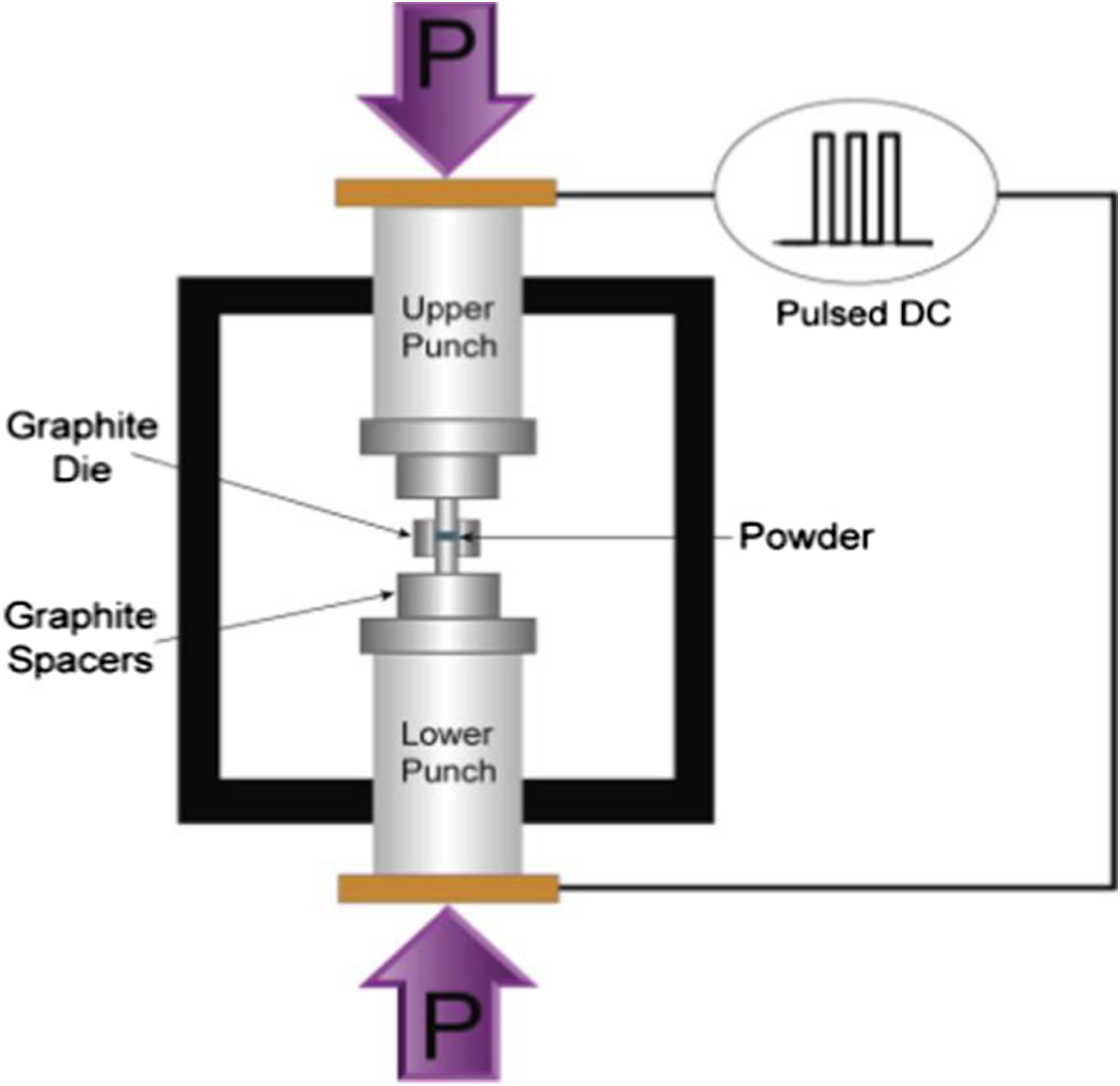
where mechanical pressure (20–100 MPa) is being applied to the die (graphite die) along the vertical axis and a pulse electric current of low voltage of about 4–20 V and high amperage (0.5–40 kA) is passed through the die (see Figure 1). SPS systems provide numerous advantages, such as consolidation of powders to near net shape, ease of operation and good control of sintering energy as well as short sintering time, low temperature sintering, high reproducibility, safety and reliability.20,24 Furthermore, the ECR glass type was chosen due to its intrinsic properties, such as dielectric strength, hardness, stiffness and elastic modulus,25,26 and as it use as reinforcement phase in polyimide composites has not been explored. However, it is expected that this study brings a new industrial application of glass fiber reinforced polymer composites in mechanical load-bearing and self-lubrication bearing operation systems. Based on the present findings, the study agrees that uniform dispersion of the particles and their interaction with the matrix has a vital role in the mechanical behaviour of the PI composites using the Turbula mixer method and SPS fabrication technique. In the study, the developed composites depicted lower dielectric constant, better hardness and elastic modulus in comparison to the similar fiber reinforced polymer matrix composites material in the opened literature.10,13,18,27–29 Schematic diagram of the spark plasma sintering apparatus.
32
Experimental
Material
In the present study, amorphous PI powder supplied by Xi’an Lyphar Biotech Co Ltd was used as the based matrix. ECR-glass powder (40–70 µm) as the reinforcement phase material used for the study was provided by Hebei Yuniu Fiberglass Manufacturing Co. Ltd, China.
Fabrication of ECR/PI composites
The ECR/PI composites were prepared at 5, 10, 15, and 20 wt% concentration of ECR-glass powder particles and sintered by KCE-FCT-HHPD 25 SPS machine manufactured in Germany. The reinforcement fractions were chosen to maintain the amorphous/insulation behaviour of the host matrix and as similar range of fraction has been reported on the mechanical and abrasive wear of polyimide composites18,29,30 but not with SPS fabrication method. In all the experiments, the temperature was observed by a K-thermocouple placed 2 mm from the internal die surface. ECR-glass powder/PI powder blends were prepared employing a 3-dimensional Turbula mixer for 2 h. After the mixing, the powders were weighed in order to obtain a 10 mm thickness of pellet disc with a diameter of 30 mm at maximum densification. Sintering was performed under a vacuum using a graphite die of 30 mm in diameter at 320°C sintering temperature, 30 MPa pressure, 9 min dwell time, and 5°C/min heating rate to ensure temperature homogeneity inside the sample. The selection of the SPS parameters was based on literature and our previous study on the optimization of SPS processing parameters in developing polyimide composites.20,31
Characterization of fabricated samples
The morphologies of the fabricated composite samples were examined using VEGA 3 TESCAN scanning electron microscope (SEM). The SEM was performed on thin carbon-coated composite samples and conducted at an accelerated voltage of about 20 kV and range of working distance (WD). The friction and wear properties of the composites were evaluated employing Anton Paar TRB3 tribometer in accordance with ASTM G99 – 95 standards. A dry sliding rotating module with pin-on-disc configuration was adopted for the wear analysis at room temperature. The parameters adopted for the frictional test are in the range of parameters reported previously. 33 A counterpart stainless-steel ball of radius 3 mm and 0.03 μm roughness (Ra) was used. Average of five tests for each sample was performed on the disc pin. The wear rate of the samples were obtained directly using a profilometer (Surtronic S128 model), which was attached to the tribometer after each test. This method determines the wear rate of a sample material by measuring the profile of the wear tracks created by plastic deformation. 34 The frictional coefficient of the developed composites was also reported. In addition, the nanomechanical behaviour of the resultant composites was determined using nanoindenter (Anton Paar, TTX-NHT3) in accordance with ASTM D785 standard. The nanoindenter was operated at an applied load of 200 mN, penetration time of 20 s, holding time of 20 s, and releasing time of 20 s. In the study, an average of five nanoindentation tests for each sample is reported. The average hardness and elastic modulus values is calculated from nanoindentation loading – unloading curves using the Oliver & Pharr method 35 and appropriate equations as presented in Sreeram et al. 36 and Shokrieh et al. 37 The adoption of the nanoindentation technique in characterizing the mechanical properties of the developed polymer microcomposites was based on previous studies.38,39 Prior to the nanoindentation and wear tests, each sample was ground with SiC paper up to 1200 grit and polished with diamond suspension (DiaDoublo poly 1 μm), and cleansed in distilled water and acetone respectively. The dielectric constant and loss were ascertained at room temperature using an LCR meter (B&K 891) at a frequency of 100 kHz.
Results and discussion
Microstructural study
Figure 2 shows the SEM image of the PI and reinforced PI composites. SEM results revealed that the ECR-glass, which consists of silica (SiO2) in its chemistry, was well dispersed into the PI matrix network structure. To validate this, the particle size distribution as a statistical data was examined using ImageJ software. Using the ImageJ software, it was recorded that the ECR/PI composites with 5, 10, 15, and 20 wt% ECR has a particle size distribution of 38.56 ± 10.52, 38.56 ± 10.52, 38.72 ± 11.03, and 40.03 ± 12.03 μm, respectively. This demonstrates that the use of a Turbula mixer way of dispersion enhances the uniform dispersion and distribution of the particles in the PI matrix, thus, the interfacial interaction between the ECR-glass particles and the host matrix (PI) as glass fiber surface is of high affinity to the repeating units of the PI.
40
The fabrication of the composites using SPS could have also contributed to the chemical bonding and/or adhesion observed in the resultant composites owing to the possibility of sintering powders to near full densification with little grain growth.41,42 Hence, favourable in the enhancement of the nanoindentation hardness and elastic modulus of the fabricated composites reported in the study. Scanning electron microscope image of (a) Pure PI (b) 5 wt% ECR/PI (c) 10 wt% ECR/PI (d) 15 wt% ECR/PI (e) 20 wt% ECR/PI. PI: polyimide; ECR: electrical corrosion resistance.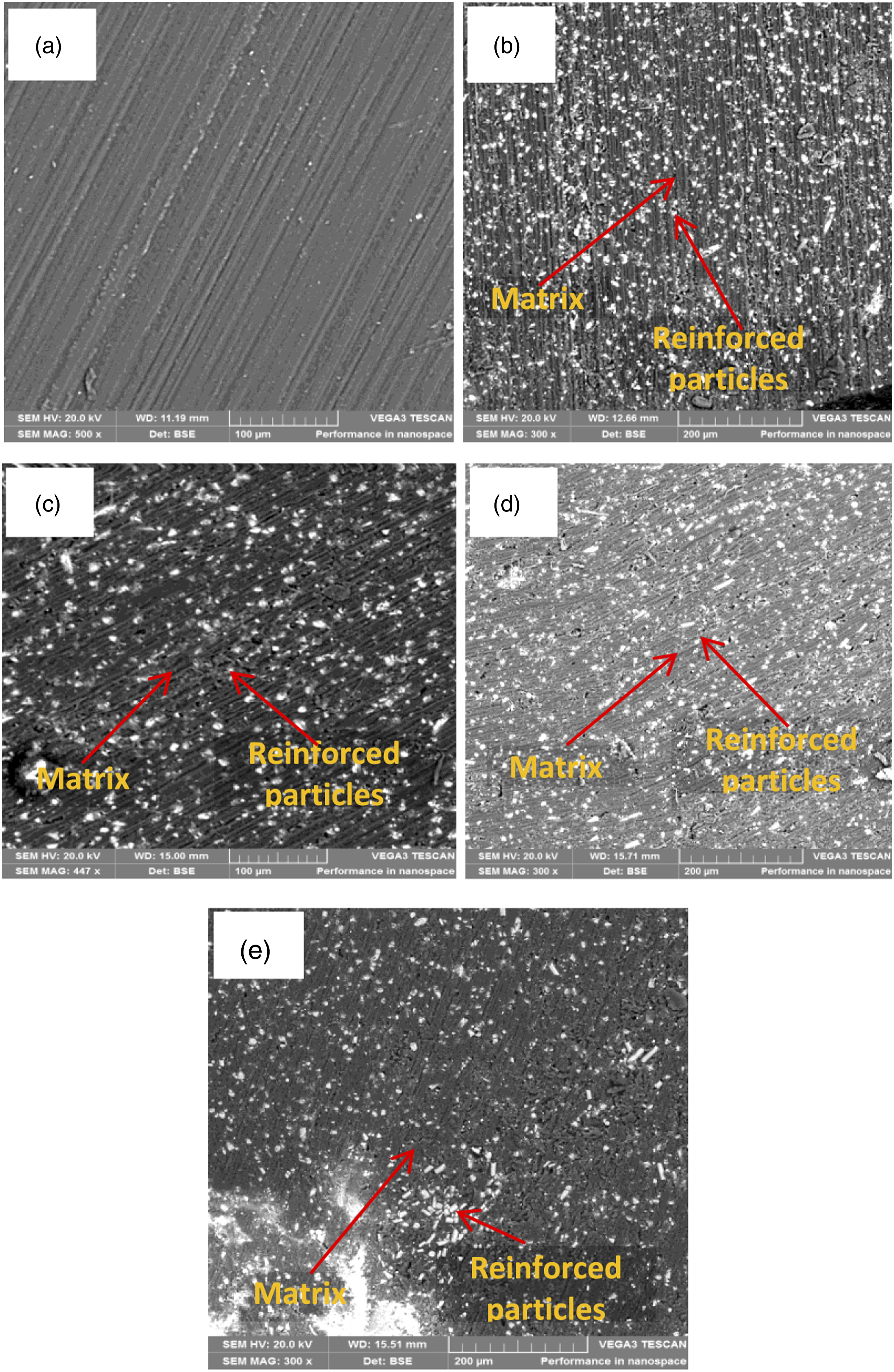
Nanomechanical properties
In today’s research, nanoindentation is known to be a powerful and advanced means to determine mechanical properties, such as hardness and elastic modulus of various materials. This technique has been widely employed to study the mechanical characteristics of polymers and composites.43–46 As such, the present study adopted nanoindentation tests to determine the hardness and elastic modulus of pure PI and PI reinforced ECR-glass composites developed via SPS method. Owing to the fact that indentation analysis is utilized in determining the mechanical characteristics of an indented material by plotting the indentation load against penetration depth.
47
From the nanoindentation tests, results revealed that the addition of ECR-glass in the PI matrix composites increases its hardness and elastic modulus. This result demonstrates that the ECR-glass in the PI matrix acts as reinforcement against plastic deformation; hence improved its mechanical hardness and elastic modulus (see Figures 3 and 4). Similar trend in hardness results using glass fiber as reinforcement were noted in Suryawan et al.
48
work. This may be due to the good interfacial bonding between the reinforcement and the host matrix.49,50 Herein it is right to say that glass fiber as a filler material in polymers do contribute to outstanding mechanical properties.
51
Figure 3(a) presents load – penetration depth curves for the pure PI and the composites with different ECR-glass particles contents. The similar pattern among the curves demonstrates that the composites are based on the PI matrices.
28
The curves also indicate that the maximum penetration depth decreases as ECR-glass content in the PI matrix increases (Figure 3(a) and (b)). Further, the presence of silica tetrahedron in ECR-glass attributes to the more resistance of the resultant composites to plastic deformation.
52
Besides, Figure 3(a) revealed that all the composites curve of the indentation depth shifted to the left when compared with that of the pure PI. This validates the reduction in the maximum penetration depth of the composites. In the study of the nanoindentation test, the elastic displacement is being recovered during unloading, and as such the initial unloading slopes i.e., the stiffness, which increase with the ECR-glass concentration, hence resulting in the hardness and effective elastic modulus values observed in the composites in comparison to the pure PI. And this confirms that the reinforcement particles were able to restrict the movement of the PI chains. However ascribed its resistance to deformation, where such type of strengthening the polymer matrix hardness is referred to as hardening.
53
The composites constituting ECR-glass from 10 wt% to 20 wt% exhibited more increment in hardness owing to their increase interactions with the tip of the indenter at high concentration.
35
Meanwhile, modulus of the ECR/PI composite loaded with 5 wt% ECR shown to be higher than those of 10 and 15 wt%, and this could be attributed to better stress transfer, which might have existed in the 5 wt% ECR/PI composite.
54
One can agree to this as studies by Fu et al.
55
and Cox
56
also confirmed that the elastic modulus of fiber reinforced composites depends extremely on the stress transfer in the composites. However, the optimal hardness (1.60 GPa) and elastic modulus (13.9 GPa) recorded in the study occurred at 20 wt% ECR-glass reinforced PI composites due to the lower penetration depth the composite depicted at 200 mN (see Figure 3(a)) when compared with the pure PI and other reinforcement composites. On the other hands, higher elastic modulus recorded in the ECR/PI composite with 20 wt% ECR reinforcement could be ascribed to the higher stress transfer, which must have existed in the composite system. From the study, the pure PI hardness (1.25 GPa) and elastic modulus (8.0 GPa) was recorded to be improved by 28% and 74%, respectively on 20 wt% loadings. (a) Load force against penetration depth and (b) penetration depth against penetration time. (a) Hardness and (b) Elastic modulus of pure PI and PI composites at different ECR-glass. Coefficient of friction and wear rate of the composites. PI: polyimide; ECR: electrical corrosion resistance.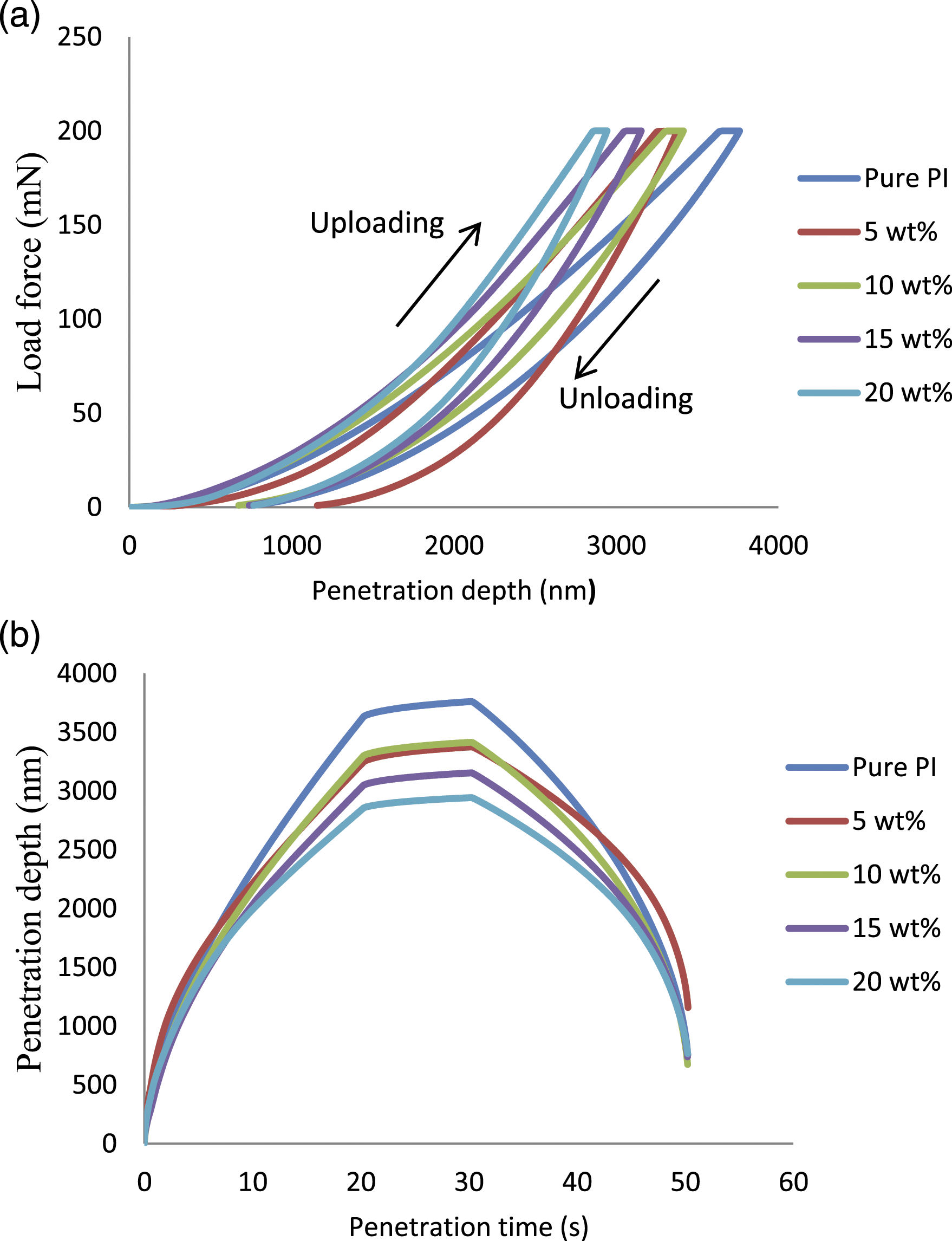
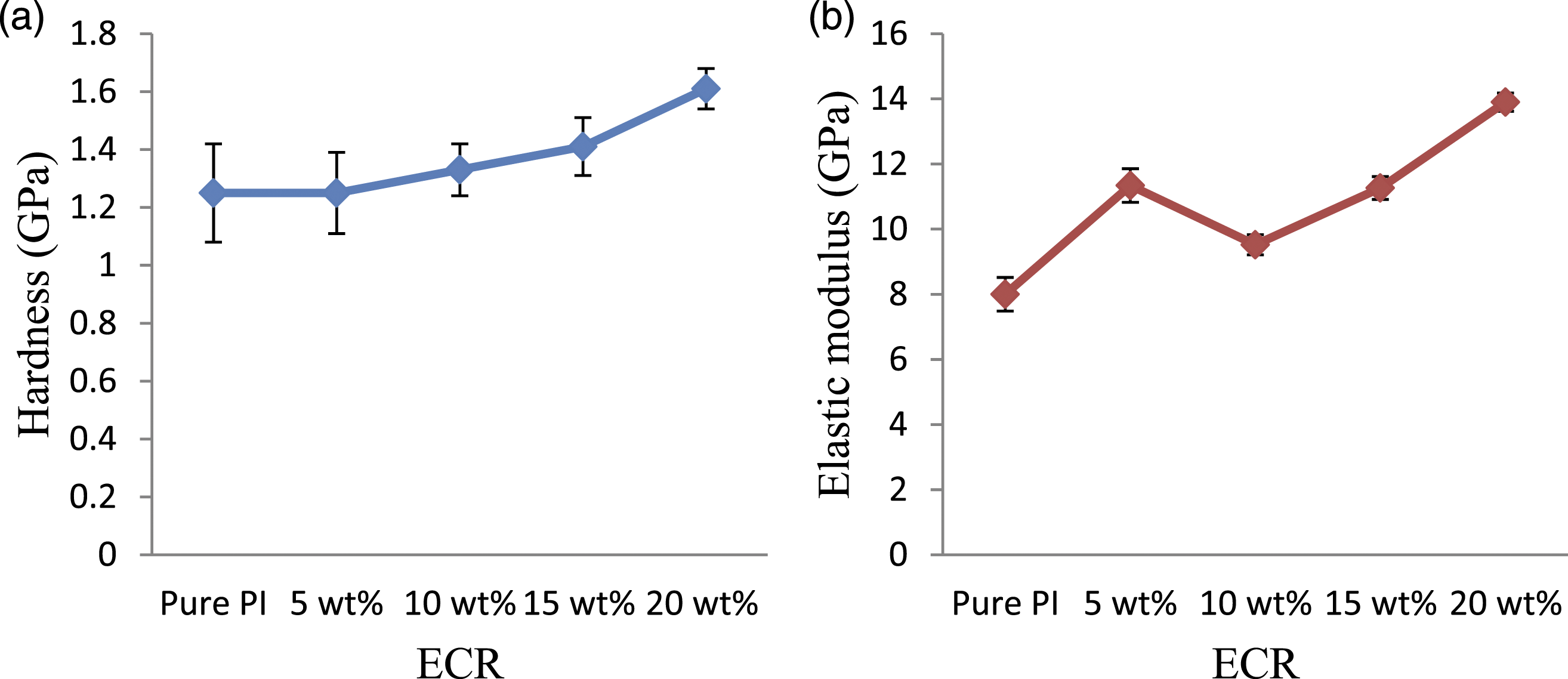
Figure 5(a) and (b) show the tribological properties of pure PI and PI composites with various ECR-glass contents sliding against stainless steel under dry friction condition at 150 rpm and load of 10 N. The results showed that the incorporation of the ECR-glass at different wt% results to the reduction in the coefficient of friction (CoF) and wear rate of the composites when compared with the pure PI (see Figure 5). Among the ECR-glass-reinforced PI composites, the CoF of 5 wt% ECR/PI sample is the highest and the CoF of 15 wt% ECR/PI sample is the lowest. As such, for the best combination CoF and wear rate results, the maximum reinforcement weight concentration is observed in 15 wt% reinforcement with wear rate of 0.14 × 10⁻⁴ mm3/Nm. The high CoF in the 5 wt% reinforced PI could be attributed to the fact that under sliding wear of polymer against metallic counterparts, the adhesion component of friction equals the product of the real contact surface area and the shear strength of the polymer.
57
Again, the elastic modulus of the 5 wt% ECR/PI composite decreases as there is an increase in temperature, which results in an increase in the real contact area, hence the increase in the CoF of composites recorded. A similar trend of results was also reported elsewhere.17,58 Considering the reduction in CoF and wear rate of the composites in comparison with the pure PI values, it is worthy to note that the ECR-glass acted as a solid lubricant in reducing the friction of the composites owing to its anti-crack high dispersion and modulus of elasticity properties.
59
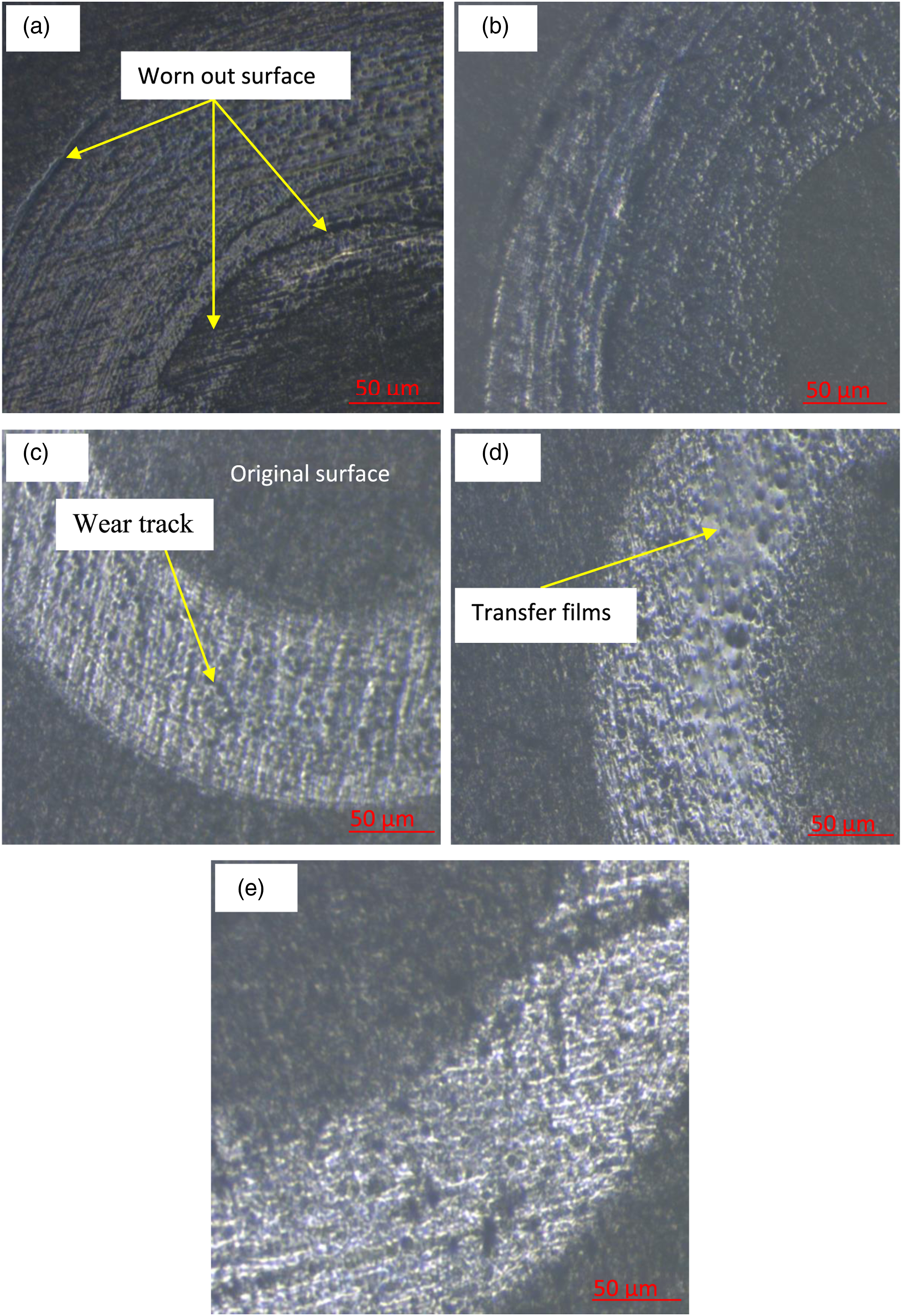
In addition, as the friction force component from adhesion was greatly reduced, better wear resistance of the composites was noticed than that of the pure PI with more scratches at the worn surface (see Figure 6(a)). Generally, wear mechanism in polymer materials are reportedly adhesion, abrasion, and fatigue wear,60,61 but a closer look at the groove in Figure 6(a) and (b) indicated that deformation, which is caused by wear track
34
is the main wear mechanism in the sintered composites, hence less debris were form. Beside, deformation as a wear mechanism in polymer composites was also confirmed in Olea-Mejia et al.
62
work. Herein, considering the deformation and adherence phenomenon, it can be deduced that there is transfer film in the reinforced composites and as such the composites were difficult to rupture, thereby hindering material worn out compared to the pure PI with many surfaces worn out during the friction test. Knowing that interfacial temperature is a factor ascertaining tribological properties,
57
it is accepted that generation of heat during friction results from the deformation of the material in contact with the actual spot. Such heat, however, could have contributed to the high wear rate of the ECR/PI loaded with 5 wt% ECR, though lower than that of pure PI. This is because PI happens to posse’s low thermal conductivity,
57
as some processes with their molecular mechanism are associated with the transformation of mechanical energy into heat.
63
However, the introduction of the 15 wt% ECR-glass in the PI matrix yielded 82.7% reduction in wear rate. The reason for this % improvement, on the other hand, could be on the basis of interfacial adhesion between PI and ECR-glass, integration of the formed debris into thinner film, and effective load transfer during the friction process.64–66 Beyond 15 wt% ECR-glass addition, a bit increase in CoF and wear rate was observed, although lower than the unreinforced PI, this could be attributed to the little aggregated particles and network structure/interfacial adhesion formed in the ECR/PI composite with 20 wt% reinforcement.
67
This research however provides reliable data/theoretical guidance for the tribological application of PI composites. (a) Coefficient of friction and (b) Wear rate of the pure PI and reinforced PI composites sliding against stainless steel ball (Load: 10 N, sliding speed: 150 rpm, duration: 15 min). PI: polyimide. Optical morphologies of wear track/worn surfaces of ECR/PI composite samples and transfer films on counterpart pin under load of 10 N at 150 rpm. (a) Pure PI, (b) 5 wt% ECR, (c) 10 wt% ECR, (d) 15 wt% ECR, (e) 20 wt% ECR. PI: polyimide; ECR: electrical corrosion resistance.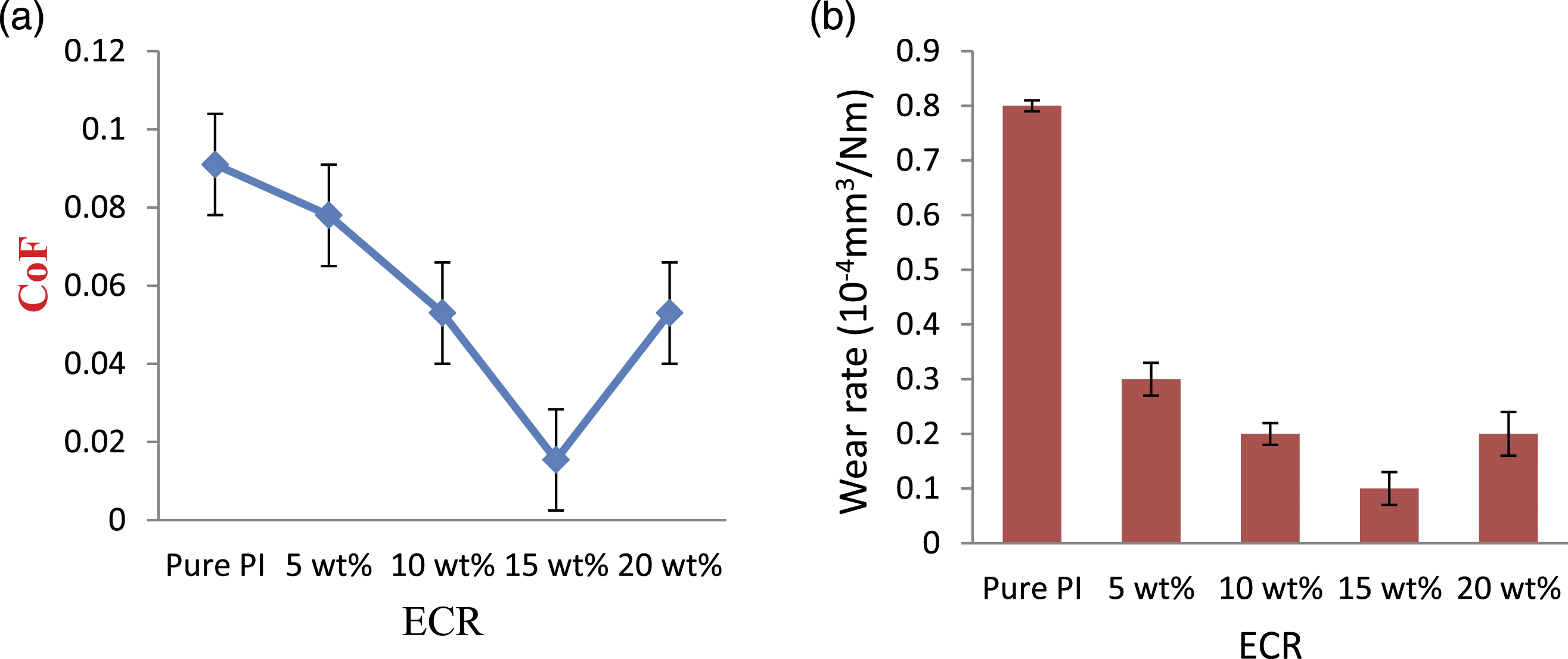
Dielectric properties
The influence of the ECR glass on the dielectric behaviour of the PI composites was investigated, and the results are presented in Figure 7. The pure PI depicted a dielectric constant of 3.15 and a loss of 2.65 at 100 kHz. However, the dielectric constant and dielectric loss were reduced by the incorporation of the ECR glass as can be seen in Figure 7. The ECR/PI loaded with 20 wt% ECR exhibited the lowest dielectric constant (1.70) and loss (1.42). This value was 46.3% and 8.8% lower than the dielectric constant and dielectric loss of the pure PI. These results indicated that low dielectric constant of PI composites could be obtained by introducing the inorganic ECR glass as reinforcement. Herein, the existence of ECR glass in the composites, as it constitutes silica in its chemistry could restrain the mobility of the host matrix (PI) molecular chain, hence reducing dipole (orientation) polarization and electronic distortion polarization. Moreover, study by Liu et al.
68
evidence this, as the presence of silica (SiO2) in PI composites reportedly hinders the movement of the PI chain and as such decreases polarization. Comparing the dielectric behaviour of the pure PI and PI composites reinforced with ECR glass, the obtained dielectric constant and loss could also be attributed to the lower dielectric loss, better dielectric strength and good insulation properties of glass fiber.25,69–71 Dielectric constant and dielectric loss of the Pure PI and PI reinforced ECR glass. PI: polyimide; ECR: electrical corrosion resistance.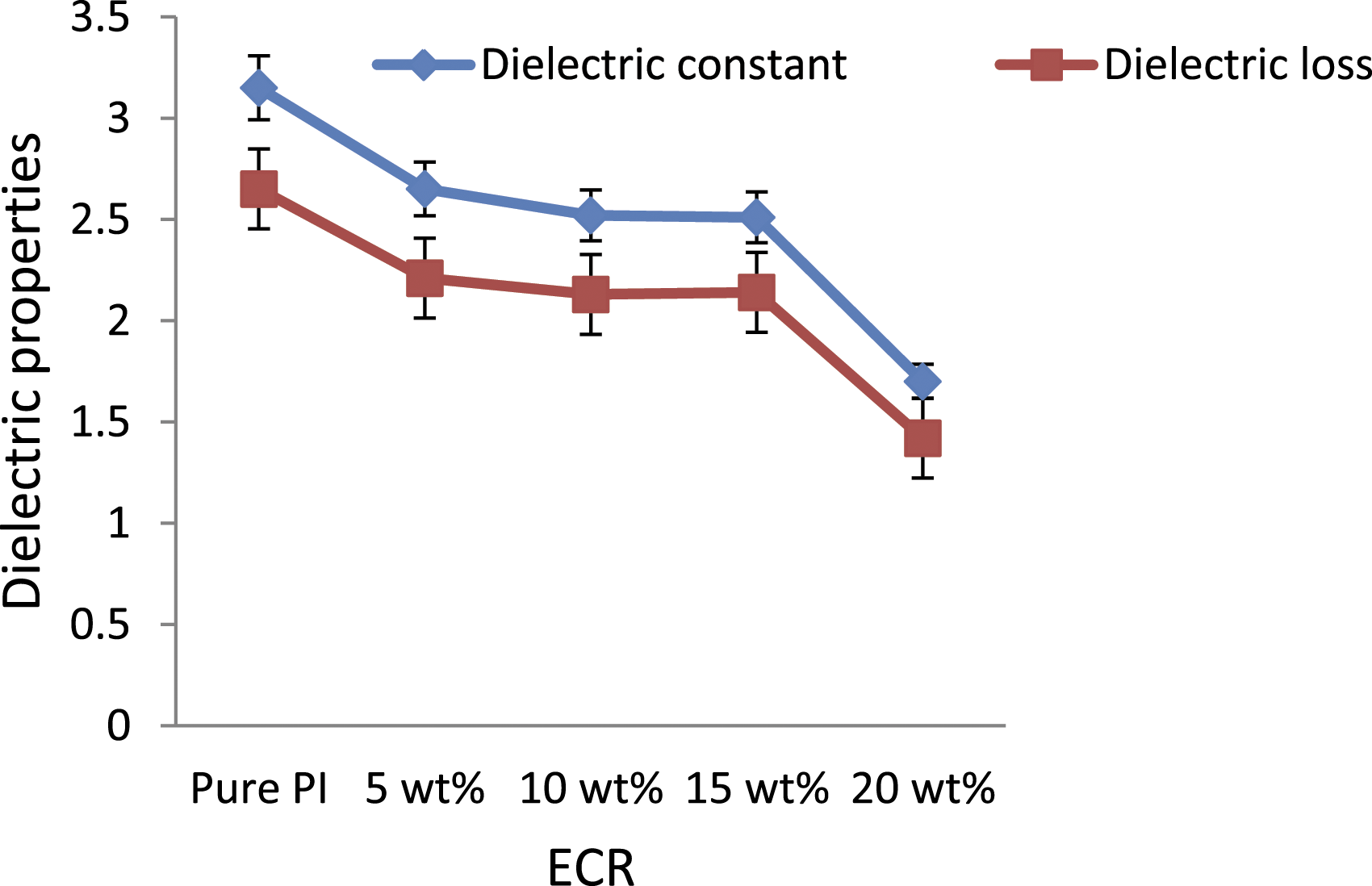
Conclusion
In this research, ECR-glass reinforced composites powders were produced successfully adopting the novel powder metallurgy method (SPS). The influences of ECR-glass particles on the hardness, elastic modulus, and tribological properties of ECR-glass/PI composites have been successfully examined. Thus, the following conclusions were drawn from the study: 1. Homogeneously dispersed ECR-glass particles were achieved within the reinforced PI composite powders using 3D Turbula mixer and SPS process, though little coagulation reinforcement was noticed at 20 wt% ECR additions. 2. Incorporation of the ECR-glass particles in the PI matrix in general results in an improvement in mechanical and wears resistance properties of ECR/PI composites. 3. In comparison with the pure PI, much better hardness and elastic modulus were observed for ECR-glass reinforced PI composites with ECR-glass concentration from 10 wt% to 20 wt%. At 10 wt%, the hardness and elastic modulus were increased by 8% and 19%, respectively. At 15 wt%, 12.8%, and 40.8% increment of the hardness and elastic modulus respectively were recorded. Meanwhile, for 20 wt% ECR-glass addition, the hardness and elastic modulus of the PI composites were enhanced by 28.8% and 73.8%, respectively. 4. From the study, the 15 wt% showed the lowest friction coefficient while 5 wt% displayed the highest friction coefficient. 82.7% reduction in the wear rate was recorded in the composites with 15 wt% ECR-glass incorporation. In general, reduction in coefficient of friction and wear rate were observed in the ECR-glass reinforced PI composites in comparison with that of the pure PI. 5. The developed ECR/PI composites loaded with 20 wt% ECR exhibited better dielectric behaviour favourable for insulation application. 6. This research work can be extended for other weight fractions of reinforcement (in the range of 4–18 wt %) for more useful results. The addition of tensile and thermal tests of the ECR/PI composites could be beneficial for industrial application.
Footnotes
Acknowledgements
The authors wish to thank the Centre for Tribology (CT), Centre for Energy and Power, and Tshwane University of Technology (TUT) South Africa for their financial support in the course of this work.
Declaration of conflicting interests
The author(s) declared no potential conflicts of interest with respect to the research, authorship, and/or publication of this article.
Funding
The author(s) received no financial support for the research, authorship, and/or publication of this article.
