




Abstract
Ni-Cr-ZrO2 composites with varying amounts of ZrO2 additive (5 wt%, 7.5 wt%, 10 wt% and 12.5 wt%) were fabricated using spark plasma sintering method at a sintering temperature of 1000°C, heating rate of 100°C/min, holding time of 5 min, and a pressure of 50 MPa. The effect of ZrO2 addition on the microstructure, tribological and mechanical properties of the developed composites were studied. The results showed that maximum densification was attained at 10 wt% ZrO2. Further increase in the fractions of ZrO2 within the composites results in a decrease in the relative density of the sintered composite. A significant increase in hardness from 433.24 HV to 510.11 HV and elastic modulus from 252.67 GPa to 294.6 GPa was observed in the fabricated samples as the ZrO2 content increase from 5 to 12.5 wt%. An appreciable improvement in the wear performance of the sintered samples was obtained with increasing ZrO2 content. The observed improvement in the properties of the sintered composites was attributed to the presence of the hard dispersoids of ZrO2 and formation of solid solution strengthening and hard Cr3Ni2 phases within the matrix of the sintered composites.
Introduction
The demand for lightweight materials for the production of some of the components of aircraft engines has influenced the continuous research and development of novel materials suitable for such applications. 1 Nickel-based alloys and composites are special type of materials with a unique combination of physical, chemical, and thermo-physical characteristics. These unique attributes results in their wide usage in different engineering applications such in automotive, aerospace, power, and nuclear reactors. 2 The ability of nickel-based alloys to maintain high strength at elevated temperatures, high resistance to wear, corrosion, and fatigue; and high toughness are distinctive attributes which increase their demand in the combustion chambers of aircraft, and power generation.3–8 Nickel-based alloys with a chromium content of 15–30% weight fractions are commonly utilized in land turbine and aircraft turbine engines where high temperatures and strong mechanical loads are encountered. This is due to their ability to maintain their strength at high-temperature, and also display good resistance to corrosion and oxidation at high-temperature. 9
As a result of their high efficiency at high temperatures, nickel-chromium (Ni-Cr) compounds are increasingly being evaluated for applications at extreme temperatures.1,10 The unique mechanical properties of Ni-Cr based alloys, such as excellent resistance to oxidation and hot corrosion, have classified them amongst the popular superalloys with a wide range of engineering applications and thus, are used for important structural materials.11,12 Nevertheless research has shown that their extensive usage in aero-engine is limited by their high specific density. 1 However, it has been reported that Ni-Cr alloys can be reinforced with hard particles like carbides and oxides to reduce their specific density and widen their usage in aero-engines.13,14 Carbides and oxides reinforcements are utilized because of their unique properties, such as high melting point, high resistance to plastic deformation and heat, physical and chemical stability. 15 These ceramics confer on the resulting composites outstanding properties such as toughness and wear resistance, which has made them useful in machining, cutting blades, and other applications. 16
In recent years, the use of zirconia particles as reinforcement has gained tremendous popularity because of its key qualities such as increased mechanical properties, high melting point, excellent chemical and heat resistance, and compatibility with living tissues. 3 Ni-ZrO2 is a feasible alternative for metal-ceramic composites since the coefficients of thermal expansion (TE) of nickel and zirconia are close to each other.17,18 Several studies focused on ZrO2 reinforced composites have been reported in the literature. Srivastava et al. 19 investigated the influence of ZrO2 addition on the chemical and mechanical properties of Ni-Co alloys through electrodeposition method. They discovered that the presence of ZrO2 nanoparticles altered the corrosion behavior of the sintered composite and enhanced its wear resistance. The development and characterization of Ni- ZrO2 composite by pulse electrodeposition was studied by Wang et al., 20 it was discovered that Ni-ZrO2 composite possessed better hardness properties and wear resistance when compared with pure nickel metal. Plazanet et al. 21 studied the effect of reinforcement on the mechanical properties of NiAl by comparing Sic and ZrO2 particles, they reported that the addition of ZrO2 better enhanced the fracture toughness and flexural strength of NiAl matrix composite better than the SiC. The synthesis and mechanical properties of Ni-W- ZrO2 nanocomposite coating fabricated by pulse electrodeposition was studied by Zhang et al. 22 It was reported that adding ZrO2 to the Ni-W matrix composite positively influence the particle size, harness properties, corrosion resistance and roughness of the sintered composite.
However, few report have been found on ZrO2 reinforced nickel matrix composites consolidated through the powder metallurgical route. Several powder metallurgical processes such as hot pressing (HP), hot isostatic pressing (HIP), cold isostatic pressing and compaction as well as spark plasma sintering (SPS) are employed in the fabrication of metal matrix composites (MMCs).23–25 However, the advantages of SPS which include accelerated heating rate, reduced sintering temperature, shorter sintering time, high sintered densities and reduced grain growth6,26–28 makes the process a preffered method of fabricating MMCs.
Until now, only a limited study has been conducted on Ni-Cr alloys reinforced with zirconia using the spark plasma sintering process in the literature. Hence, this work focused on spark plasma synthesis of Ni-Cr-ZrO2 composites. The effect of ZrO2 addition on the microstructural, mechanical and tribological characteristics of the developed Ni-Cr-ZrO2 composites is critically investigated.
Experimental procedure
Material and methods
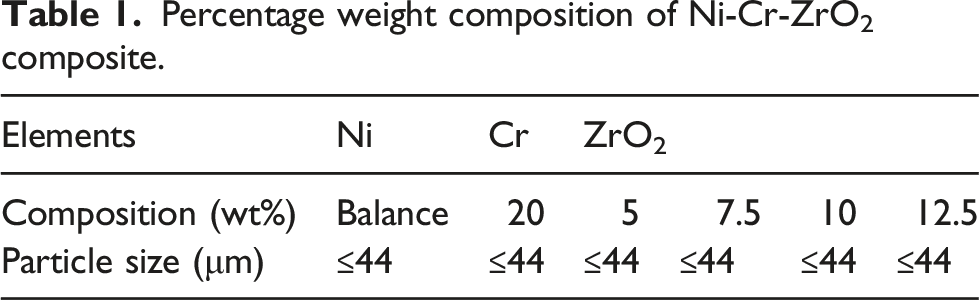
Percentage weight composition of Ni-Cr-ZrO2 composite.
Experimental procedures and characterization
Nickel, Chromium and zirconium oxide powders of the desired stoichiometry of Ni-20Cr-XZrO2, where X is 5, 7.5, 10, and 12.5 wt% (Table 1) were mixed in a tubular mixer (model T2F Nr.100, 462, Muttenz Switzerland) for 8 h at a rotating speed of 49 r/min. Pre-alloying was done with a ball-to-powder ratio (BPR) of 10:1, to aid the uniform distribution of the elemental powders. The pre-alloyed powders were poured into a graphite die of 20 mm diameter and 50 mm height, and then compacted manually. The inside of the graphite die was lined with a 0.2 mm thick graphite sheet, this was necessary to prevent a reaction between the powders and the graphite die. The graphite die-powder-punch assembly was then charged into the furnace of the spark plasma sintering machine (model HHPD-25, FCT Germany) operated at a sintering temperature of 1000°C, heating rate of 100°C/min, holding time of 5 min and pressure of 50 MPa to produce a cylindrical disc of Ø 20 mm × 7 mm. Prior to the selection of these sintering parameters, an initial trial-study was performed which revealed that a temperature exceeding 1000°C resulted in melt-out. The sintered samples were sandblasted, to get rid of any residual graphite layer on the surfaces of the samples. Then the relative density was determined using Archimedes’ principle. 29
A scanning electron microscope (JEOL JSM-7600F) equipped with EDS detector with INCA X-Stream 2 pulse analyzer was used to analyse the microstructure of the sintered samples, while the phases present in the sintered composites were evaluated using an X-ray diffraction (XRD) equipment (PANanalytical). The sintered samples were sectioned into smaller pieces of 5 mm × 5 mm and 10 mm × 10 mm each with the aid of a cutting machine. The sectioned surface was grounded and polished using grit sizes of 320, up to 2400, to get a mirror-finished surface. Anton-Paar TTX-NHT3 Nanoindentation tester equipped with a diamond Berkovich three-sided pyramid indenter (Oliver-Pharr method) was employed to determine the Vickers hardness, microhardness, and elastic modulus of the samples. The experiment used a 400 mN indentation load that imprints grids on the surface of the samples using a diamond Berkovich indenter. A minimum of 12 indentations was applied per load during the indentation for each sample with a pause duration of 20.0 s.
Anton Paar TRB3 pin-on-disc tribometer was used to perform the wear test on the sintered sample of dimension 10 mm × 10 mm. An alumina ball with a diameter of 6 mm was used as a counterface material. The test was conducted at a rotational speed and radius of 300 r/min and 3 mm respectively under varying loads of 10 N, 15 N, and 20 N and a frequency of 15 Hz. During the test, the stationary counterface ball was made to slide against a rotating disc comprising the test samples in a reciprocating motion. The coefficient of friction as a function of time for the composites was continuously recorded by the tribometer. The wear test was carried out three times on each sample to guarantee repeatability of the results. The wear rate was determined and the morphology of the worn surface of the samples was also analysed.
Result and discussion
Microstructural and phase analysis of the sintered composites
The SEM images of the sintered Ni-Cr-ZrO2 composites at different ZrO2 contents are shown in Figure 1(a)–(d). From Figure 1, dark and white coloured phases were observed within the matrix of the developed composites. The EDS analysis showed the preponderance of elemental Cr and Ni in the dark coloured regions while the predominance of Zr and O was observed in the white coloured regions within the matrix of the composites. This suggests these phases to be Cr-Ni and Zr-O compounds respectively. The presence of pores could be seen within the microstructure of the Ni-Cr-5ZrO2 composite (Figure 1(a)). Decreasing pores with increasing ZrO2 content was observed in Figure 1(b)–(d) due to the presence of homogeneously distributed ZrO2 particles within the composites matrix. This is because there is a uniform dispersal of ZrO2 particles across the Ni-Cr boundary, and no significant accumulation of ZrO2 particles was found. It has also been reported that incorporation of ZrO2 as sintering additive improves the sinterability of metal matrix composites.
30
This is in agreement with a study conducted and reported by Shuan Ma.
31
The Zr-O rich phase (white phase) is not as noticeable in Figure 1(a) as it is in Figure 1(d), where the percentage composition of ZrO2 is highest and uniformly dispersed throughout the matrix. Scanning electron micrographs of Ni-Cr-ZrO2 composites sintered at different ZrO2 content. (a) 5 wt% (b) 7.5 wt% (c) 10 wt% (d) 12.5 wt%.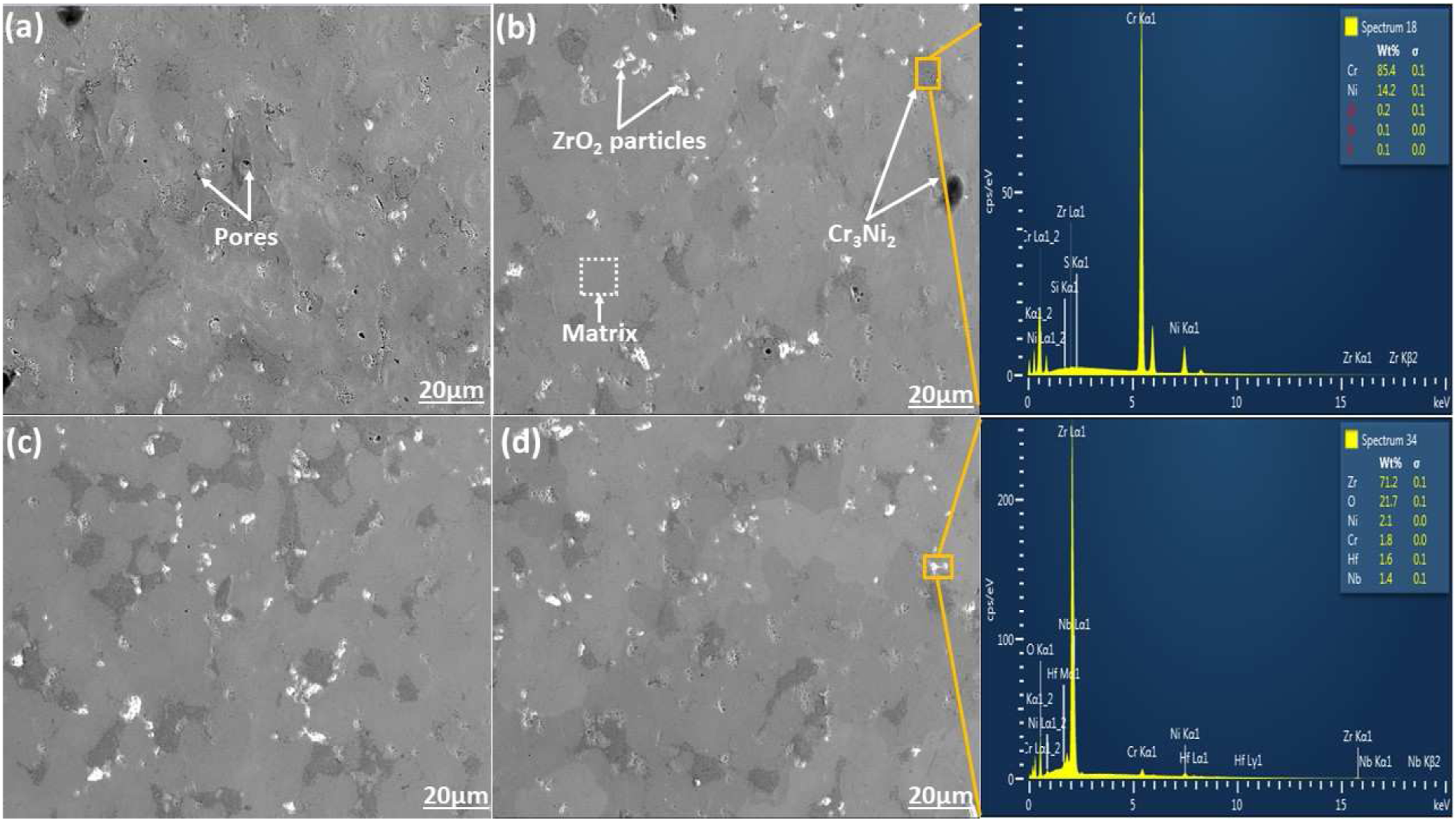
Figure 2 depicted the EDS mapping of the sintered Ni-Cr-12.5ZrO2 composite. The figure shows homogeneous distribution of elements within the composite. The blue colour regions represent the Ni-rich spots. Expectedly, nickel being in highest percentage composition is conspicuously present in all the phases. The green colour areas represents the Cr-spots. However, the brightly coloured spots in this matrix signify high concentration of Cr which correspond to the EDS quantitative analysis in Figure 1(b). The purple and pink colour regions represent the Zr-rich and O-rich spots in the matrix of the composite. EDS mapping and element distribution of Ni-Cr-12.5ZrO2 composite sintered at 1000°C.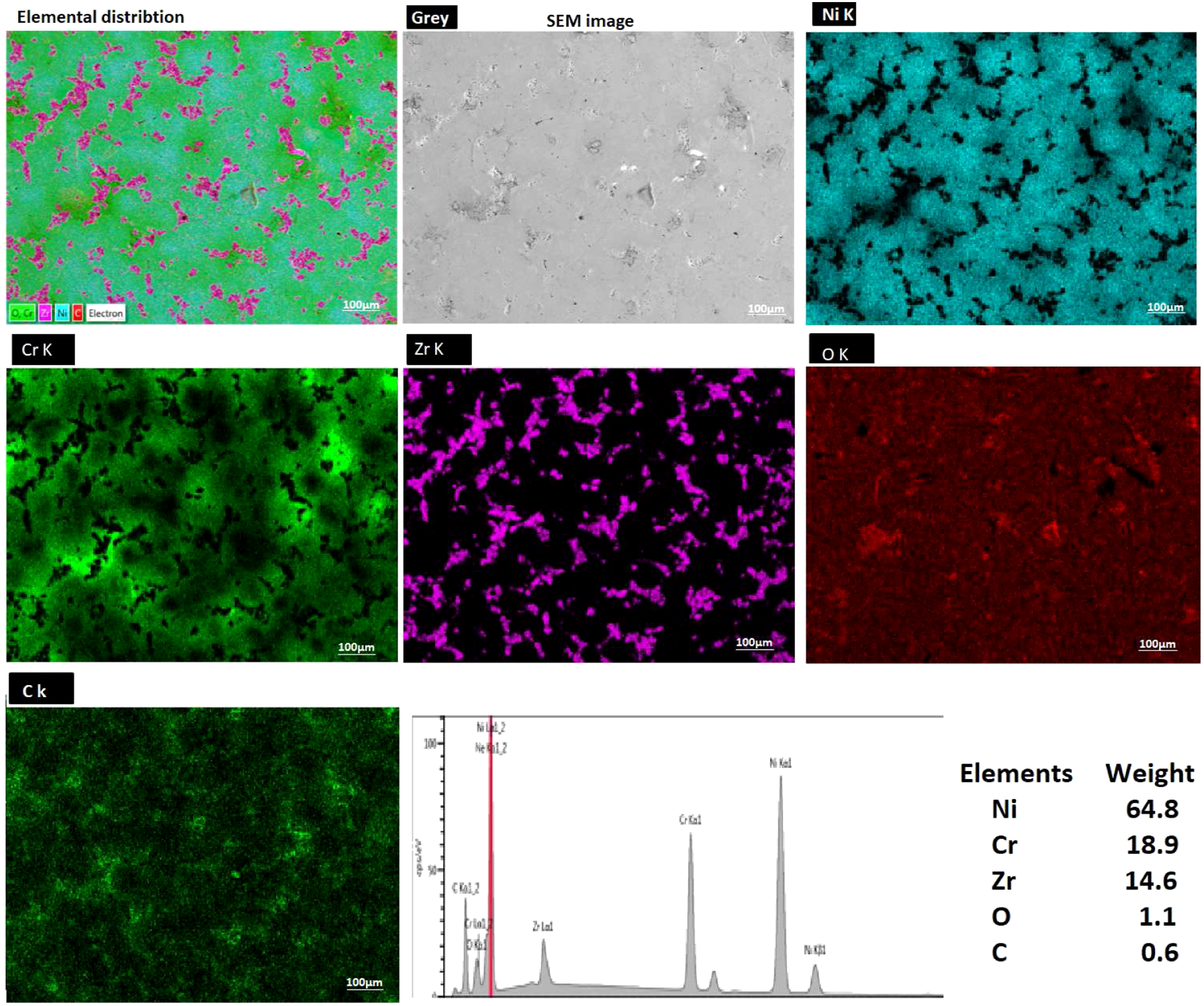
The XRD diffractographs of the sintered Ni-Cr-ZrO2 composites fabricated at different ZrO2 contents are shown in Figure 3. The XRD patterns showed the formation of solid solution phase of (Cr, Ni) and a hard tetragonal phase, Cr3Ni2. The presence of undissolved, hard ZrO2 phase within the composites matrix was also observed. This can be ascribed to the lower sintering temperature employed in this work (1000°C) compared to the melting temperature of ZrO2 (2680°C).
32
Thus confirming that the dark and white coloured phases observed in Figure 1 as Cr3Ni2 and ZrO2 phases respectively. As reflected in the pattern, the peaks are indexed to the cubic structure of nickel according to Wyckoff et al.
33
and Lundqvist.
34
In Figure 3, three noticeable peaks of Ni at Bragg’s angles (2θ) of 44°, 52° and 77° were observed throughout the sintered composites. It was revealed that pure nickel had a preferential orientation along the (111), (002), and (022) crystal planes. The prominent peak corresponding to Ni (111) and (Cr, Ni), was found at a Bragg’s angle (2θ) of 44°, and at Bragg’s angle (2θ) of 52° the peak corresponds to Ni (002). However, Ni (022) and Cr peak was found at Bragg’s angle (2θ) of 77° while only Ni was found on the peak as the ZrO2 content increased to 12.5 wt% in the matrix. Some minor peaks correlated to Cr3Ni2 can be noticed in XRD diffractograph. More peaks belonging to ZrO2 were observed with the increasing ZrO2 content in the matrix of the sintered composite. This can be attributed to increasing fraction of undissolved ZrO2 in the marix. It is noticed that the intensity of the Ni peaks reduced, and the base broadens, while the intensity of other phase peaks increases with increase in ZrO2 contents (Figure 3). The reduction in peak intensity indicates increased dislocation density as a result of flaws caused by grain refining capacity of ceramic particles within matrix.
35
This is responsible for the increase in the hardness property of the sintered composite as the ZrO2 content increases. XRD pattern of Ni-Cr reinforced zirconia composites varying ZrO2 contents.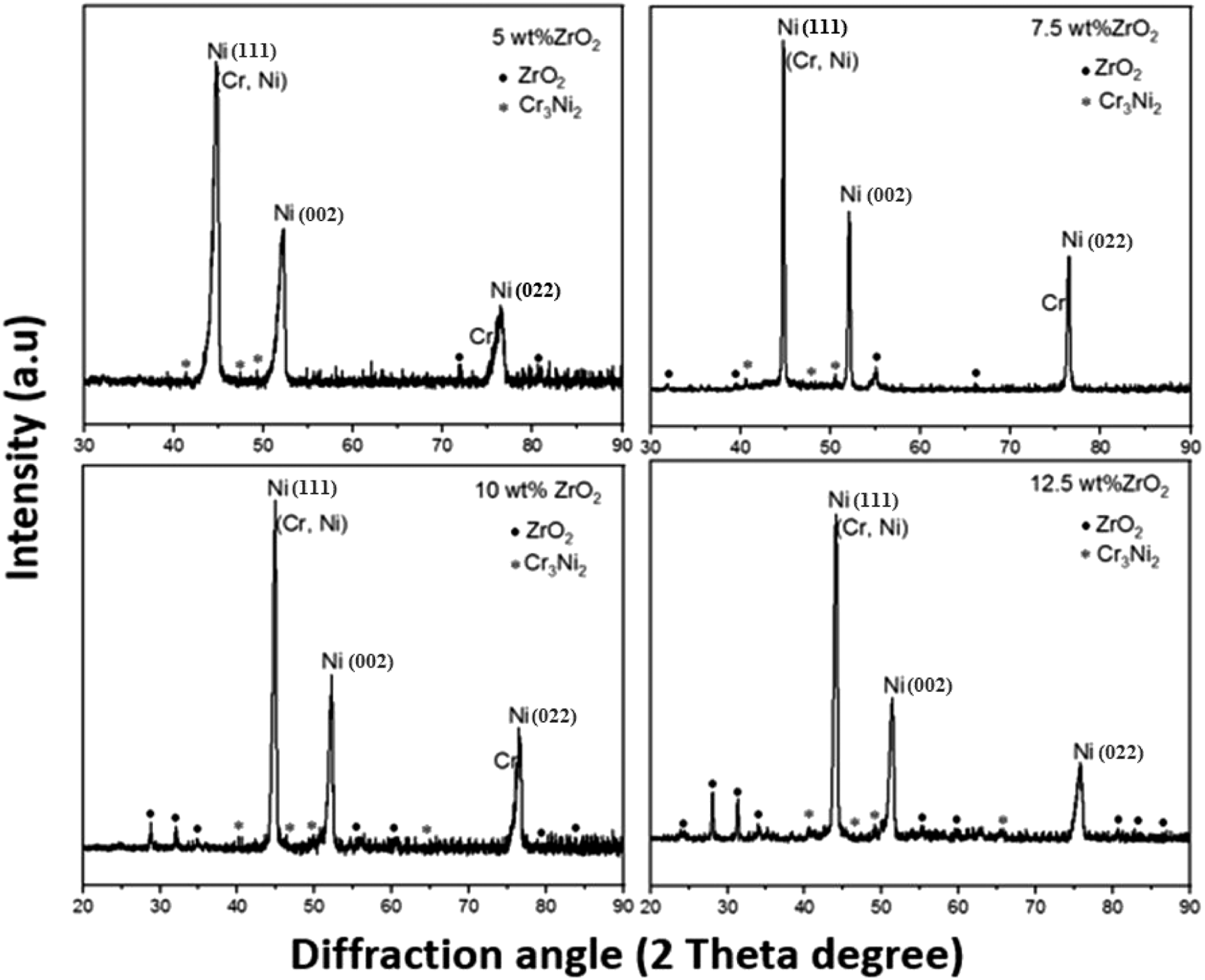
The increase in the intensity of the diffraction line of ZrO2 indicates a reduction in the weight percentage of nickel in the metal matrix. This is due the increasing the ZrO2 content, which also increases the crystallinity of the fabricated composite. Thus, signifying the ordered arrangement between the Ni-rich phase and ZrO2.
Densification and hardness of the sintered composites
Figure 4 shows the relative density and microhardness values as a function of the zirconium oxide content. Depicted in Table 2 are relative density values for the developed samples using the Archimedes’ principle. From these tables, it was observed that increasing the ZrO2 content in the Ni-Cr matrix led to a corresponding increase in the relative density to the maximum value of 98.21% at 10 wt% ZrO2. Subsequent addition of 12.5 wt% ZrO2 to the Ni-Cr matrix signal the onset of a decreasing trend of the relative density. According to Rominiyi et al.
23
and Baghery et al.,
36
homogeneous dispersion of reinforcement within composite matrix enhance densification while non-uniform distribution of reinforcement within the composite matrix results in agglomeration and this strongly reduce the density of the resulting composite. Thus it can be inferred that the uniform distribution of ZrO2 particles in the composite matrix was achieved up to 10 wt% beyond which the density begin to decline due agglomerations and porosities in the matrix of the composite. It is worth noting that density plays a major role in improving the mechanical properties of material because of its direct effects on the properties of the material (Table 3). Nanohardness and relative density plot of Ni-Cr-ZrO2 sintered at different ZrO2 composition. Relative densities of the sintered Ni-Cr-ZrO2 composites. Hardness, relative density and elastic modulus values.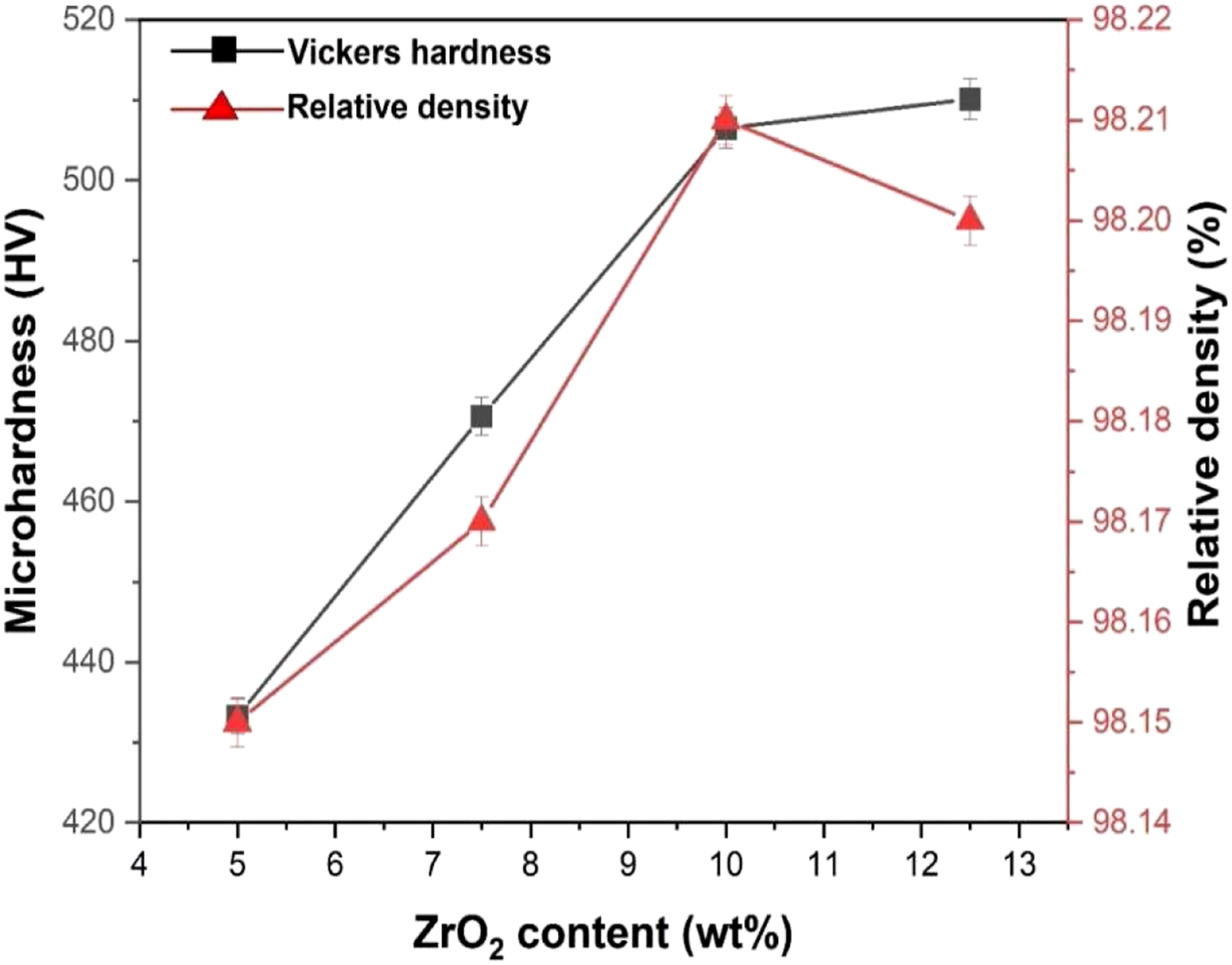


From Table 2, it was observed that the actual densities of all the fabricated composites were slightly less than the theoretical density. This showed that there is a strong adhesion between the Ni-matrix and the ceramic particles of ZrO2. 3
The variation in hardness of the sintered Ni-Cr-ZrO2 composites with increasing ZrO2 addition is presented in Figure 4. As expected, the relative density of the samples has common characteristics as the hardness which is a function of the ZrO2 addition. An increasing trend of microhardness values with increasing ZrO2 addition was observed in the sintered composites (Figure 4). It is worth noting that densification influence the mechanical properties of metallic composites, metals and alloys. Hence, composites with higher densities are known to have better mechanical properties, and reinforcing such composites and alloys with ceramic particulates will directly impart improve densification and mechanical properties.37,38 Also, the presence of hard, Cr3Ni2 phase and hard particles of ZrO2 in the composite matrix inhibit dislocation propagation. 39 This subsequently resulted in increasing microhardness value as the reinforcement content increased in the composite matrix as shown in Figure 4. Thus the highest microhardness value of 510.11 HV was obtained for composite containing 12.5 wt% ZrO2 and the least microhardness value of 433.24 HV was recorded for composite reinforced with 5 wt% ZrO2. Similar work conducted by Li et al. 40 on Ni-Mo-ZrO2 composites reported that the addition of ZrO2 nanoparticles influenced the hardness value of the sintered composites.
The force-depth curves
The nanoindentation experiments were carried out in order to examine the time-dependent nanoscale mechanical properties of the Ni-Cr-ZrO2 composites at room temperature. Figure 5 represents the force-depth curves of the sintered composites. It can be seen from the graph that the curves of all the sintered samples skewed to the left, signifying a reduction in the indenter maximum penetration depth with a force of 400 mN. The skewness of the curves of the composites indicated that the material was attempting to recover from the distortion.
41
However, the indentation depth of Ni-Cr-5ZrO2 composite of 1990 nm was greater than that of Ni-Cr-12.5ZrO2 composite by 301 nm. The variation of zirconia content in the composites also influenced the indention depth. At 12.5 wt% ZrO2, the indention depth is observed to reduce by about 15.1%, and hardness increase with about 31%, thus, the composite display enhanced hardness properties. Composite materials with a higher ZrO2 content are more resistant to plastic deformation than those with a lower wt% of ZrO2 due to inhibition of dislocations movement in the lattice.40,41 The decrease in the penetration depth indicated an increase in nanohardness of the material. Rodriguez et al.
42
also reported that the indentation depth is a major factor that determines the nanohardness property of a material. As a result, a decrease in penetration depth as observed in Figure 5 is frequently associated with an increase in nanohardness of a material.
43
The Nanoindentation force-depth curves of the sintered samples at varying ZrO2 contents.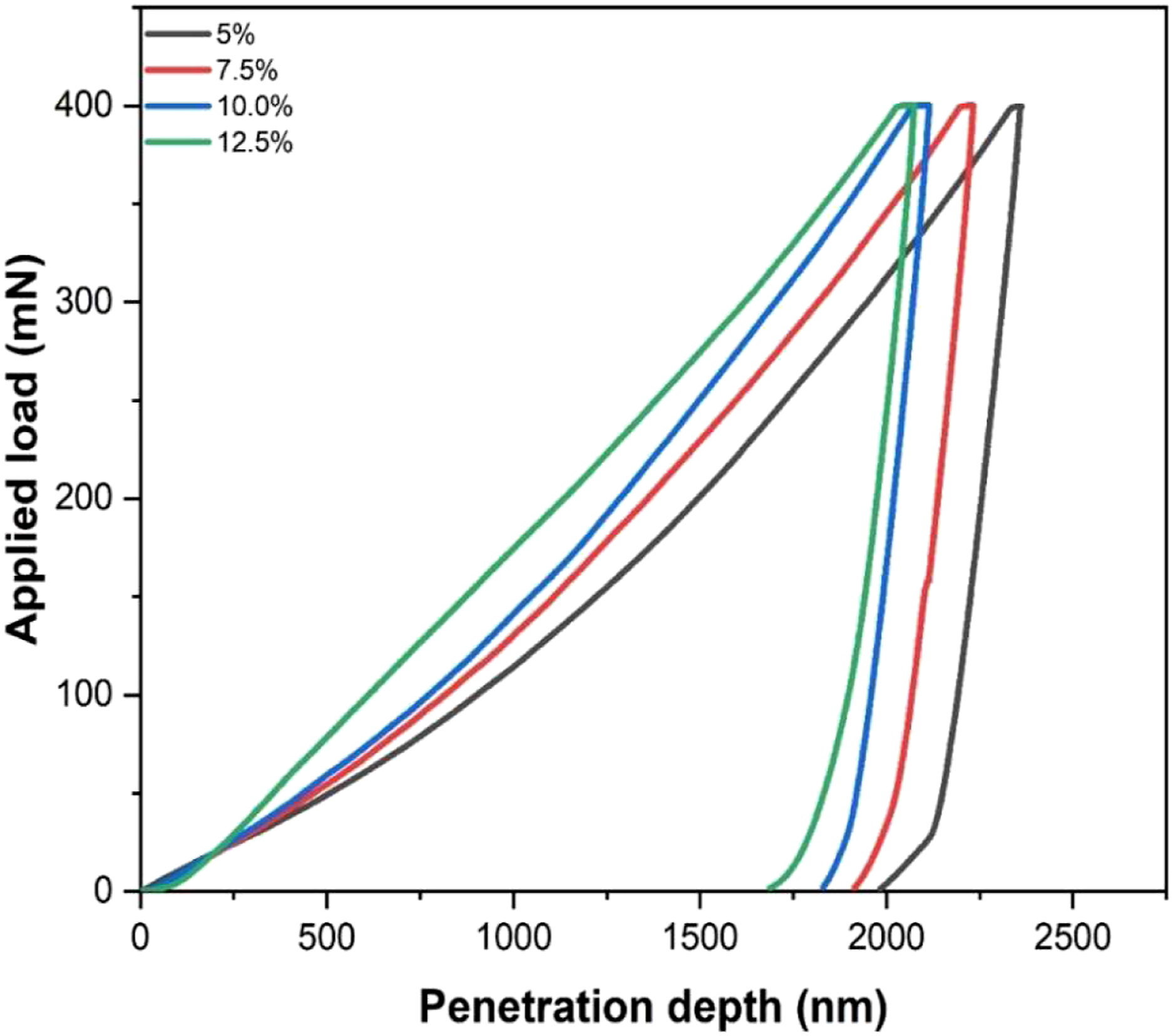
Nanoindentation hardness and elastic modulus
Figure 6 shows the relationship between the approximated elastic modulus (E) and the nanoindentation hardness (GPa) values with variation in ZrO2 content. The plot revealed that the addition of ZrO2 greatly influenced the hardness properties of the composites. The nanohardness value and the elastic modulus increased with increasing ZrO2 content. At 5 wt% ZrO2, the nanohardness value is 4.9 GPa, and the elastic modulus is 252.67 GPa, and at 12.5 wt% ZrO2, the nanohardness and elastic modulus increased to 7.1 GPa and 294.6 GPa respectively. An increase in ZrO2 content in the Ni-Cr matrix improved both the elastic modulus and the hardness properties of the sintered sample composite as seen in Figure 6. It is known that a higher amount of reinforcing particles in the matrix would result in more dislocations inhidition that result in an increase in the hardness of the composite.
44
Thus, this increase is caused by the high hardness property of the reinforcing elements, and the improvement in the properties of the composite could be due to changes in the microstructure, as the presence of hard ZrO2 can serve as a dislocations movement barrier. Therefore, a higher amount of energy would be needed to ensure the dislocation movement and this leads to an increase in the hardness of the composite.
30
Nanoindentation hardness and elastic modulus graph of Ni-Cr-ZrO2 composite sintered at different ZrO2 contents.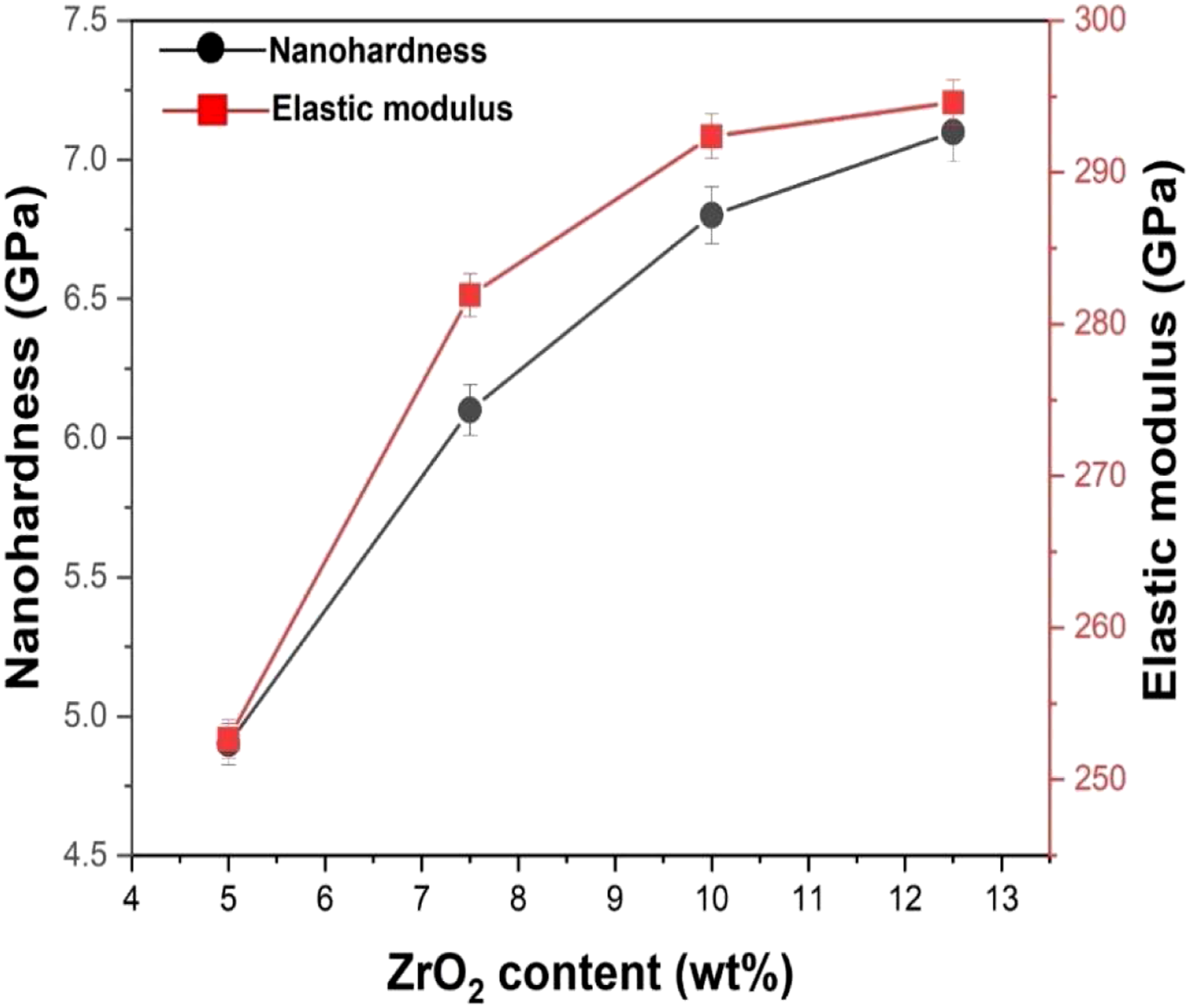
Wear rate and the average coefficient of friction
The values of the wear rate and the average coefficient of friction with varied applied load (10N, 15N, 20N) obtained for the sintered composites are shown in Figure 7(a) and (b), respectively. From Figure 7(a), it can be generally observed that the wear rate of the composite across the applied loads decreased with increasing ZrO2 content in the composites matrix. Under an applied load of 20 N, the material reinforced with the lowest fraction of ZrO2 reinforcement (5 wt%) displayed the highest wear rate of 2.709 × 10⁻⁴ mm3/Nm, while the lowest wear rate of 8.73 × 10⁻⁵ mm3/Nm was obtained for sintered composite containing 12.5 wt% of ZrO2. The observed trend in the wear rate of the composites is in tandem with the hardness results as presented in Figure 4. This agrees with the Archard’s equation of wear which states that the hardness of a material is inversely proportional to the volume loss/wear rate.45–47 Hence, expectedly, the least wear rate observed in composite containing 12.5 wt% ZrO2 across the applied loads can be attributed to the highest hardness of this sample as shown in Figure 4. (a) Wear rate (b) Average coefficient of friction of the sintered Ni-Cr-ZrO2 composites at different ZrO2 contents.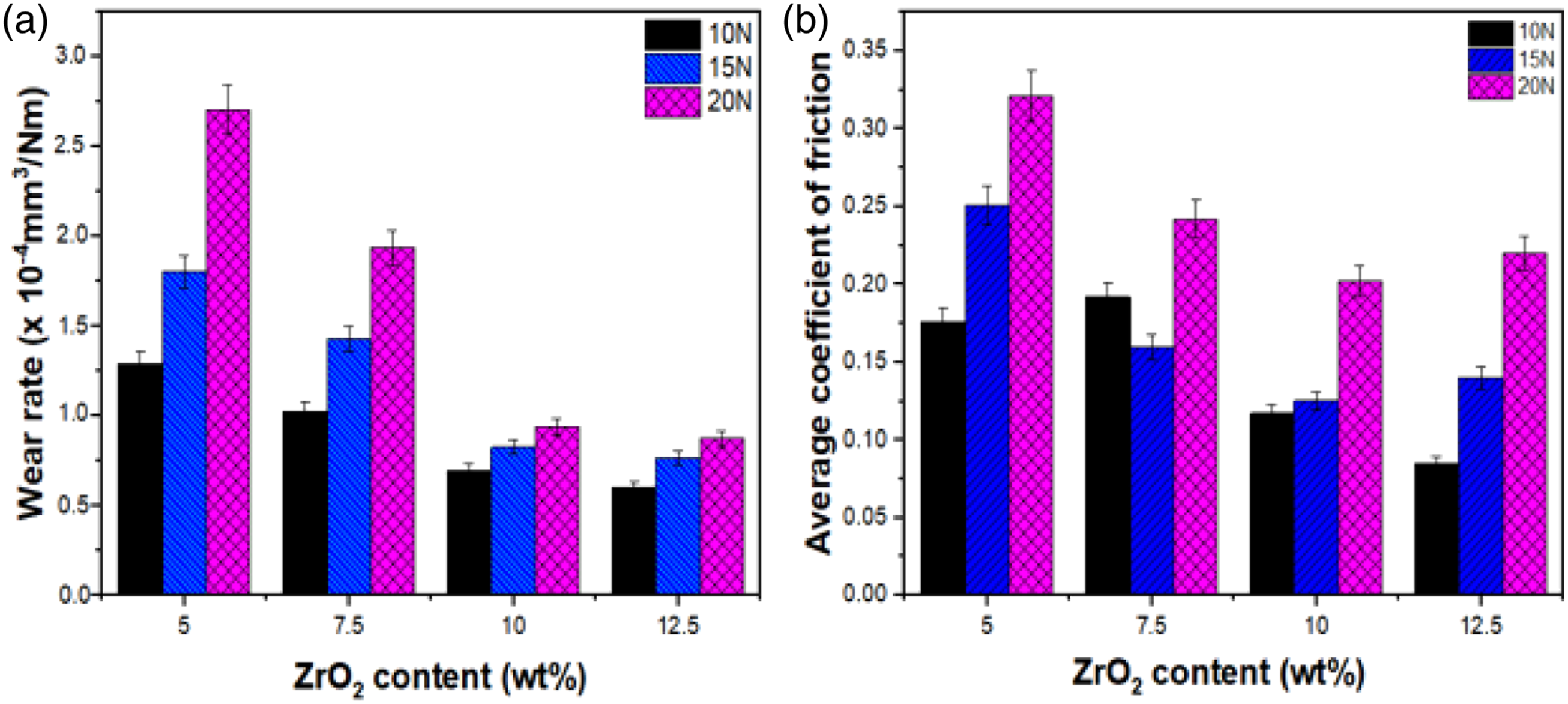
Figure 7(b) represents the average coefficient of friction (COF) of the sintered composites. It can be seen from this figure (Figure 7(b)) that the average coefficient of friction increase across the applied loads with the increasing ZrO2 content in the composites matrix. This behaviour can be attributed to the ease of plastic deformation and pulling out of the hard particles of ZrO2 from the surface of the composite at lower reinforcement content during dry sliding wear. Thus the high surface roughness which resulted in increasing average coefficient of friction as observed in Figure 7(b). However, increase in the volume of hard phases in the composite matrix with increasing ZrO2 content inhibit plastic deformation thereby ensuring relative surface smoothness of the composite during dry sliding wear. This result in decreasing average COF with the least observed in composite reinforced with 12.5 wt% ZrO2. The different phase distribution and the mechanical action due to frictional movement of the surfaces during the rotational motion caused the ceaseless formation and damage of the friction-reducing layer. The response of the material to wear is also determined by the type of the microstructural features i.e. phase distribution, which is not density-dependent. 48 The fluctuation in the average coefficient of friction could also be attributed to the formation of tribofilms at the friction interface due to the percentage composition of ZrO2. 29
Analysis of the worn surface
Figure 8(a)–(d) shows the SEM micrographs of the worn surfaces of the sintered composite under applied load 20N and dry sliding wear condition. Shallow grooves (Figure 8(a) inset) and delamination as well as the presence of debris as flakes were observed on the worn surfaces (Figure 8(a)). Under a high applied load of 20N, the wear debris forms a compressed transfer layer and spread over the sliding surface area (Figure 8(b)). This suggests the formation of a protective layer in the form of oxide layers on the rubbing surface due to the interaction between the counterface alloy and the surface of the sample, this significantly lowered the wear rate of the composites as the percentage content of ZrO2 increased (Figure 7(a)). Thus, the surface of the composites without delamination in Figure 8(c) and (d), revealed that as the ZrO2 content in the composites increased, the two predominant wear mechanism are abrasion with mild plastic deformation and adhesive wear.
29
Reinforcing with ZrO2 could have influenced the hardness property and caused a decrease in plastic deformation by inhibiting the sintered samples from undergoing additional flow stress when the sliding surfaces come in contact with each other. This is in conformity with what was reported in the literature.49–51 Hence, the enhanced wear rate of the composites with increasing ZrO2 content. SEM images of the worn surface of the wear track for the sintered Ni-Cr-ZrO2 composites at different ZrO2 contents (a) 5 wt% (b) 7.5 wt% (c) 10 wt% (d) 12.5 wt%.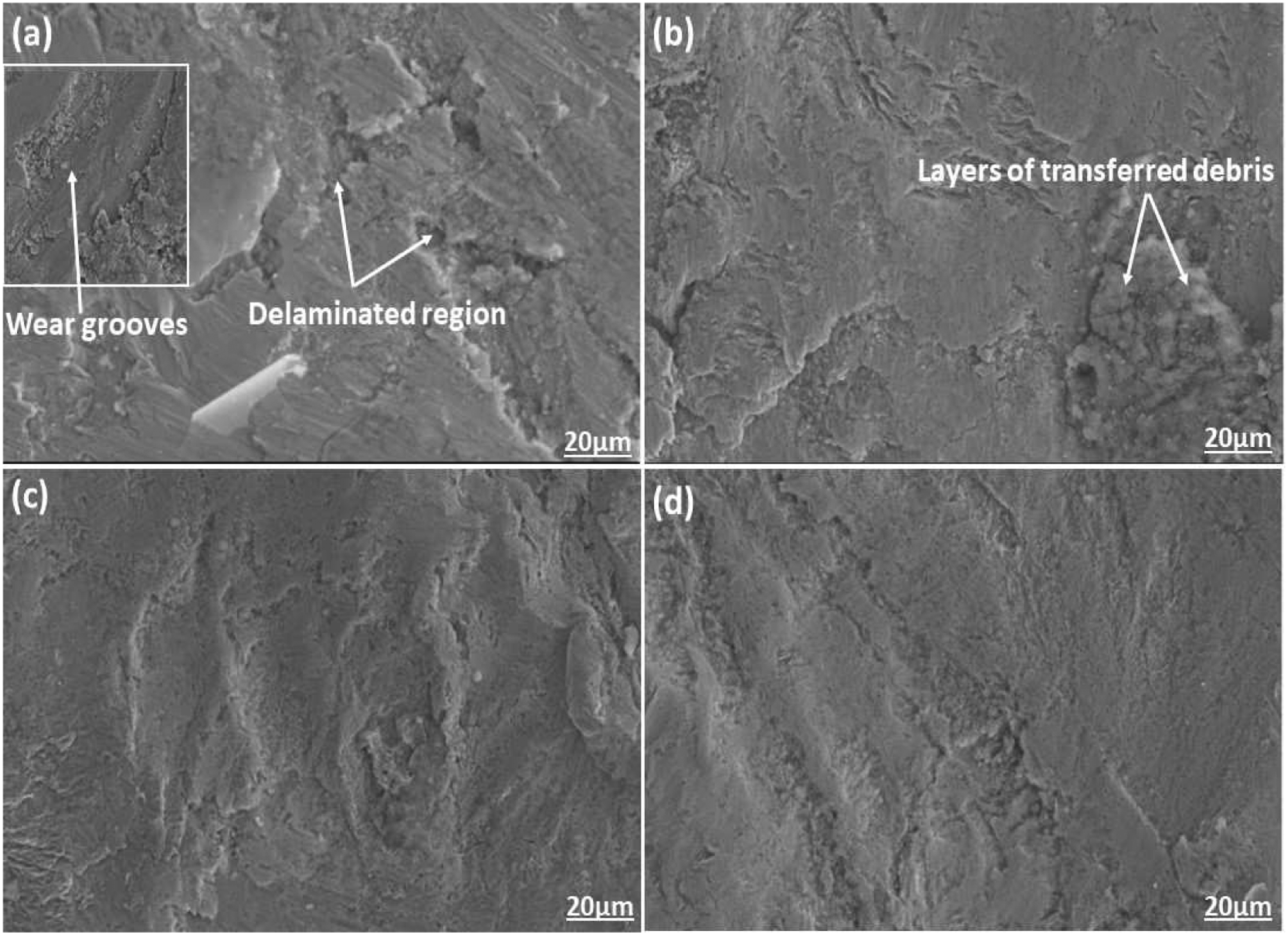
Conclusion
In this work, Zirconium oxide reinforced Ni-Cr matrix composites were successfully developed using the SPS process at 1000°C. The influence of ZrO2 additions on the microstructural, mechanical and tribological properties of the sintered composites were examined. The microstructural result revealed that reinforcing Ni-Cr matrix composites with ZrO2 enhanced the formation of new phases that improved the hardness property of the composites. Increasing relative density with increasing ZrO2 content were observed up to 10 wt% ZrO2. The microhardness, nanoindentation hardness and the wear properties of the sintered composites were found to improve considerably with the addition of ZrO2. According to this study, Ni-Cr-ZrO2 composites possess strong potential as an enduring material for load bearing applications.
Footnotes
Declaration of conflicting interests
The author(s) declared no potential conflicts of interest with respect to the research, authorship, and/or publication of this article.
Funding
The author(s) disclosed receipt of the following financial support for the research, authorship, and/or publication of this article: This work was supported by the Department of Mechanical and Mechatronic Engineering of Tshwane University of Technology, Pretoria, South Africa.
Availability of data and materials
Data will be made available upon reasonable request from the corresponding author.
Consent to participate
All the authors are in agreement with the revision of this paper.
Consent for publication
All the authors have agreed to the publication of this journal
