




Abstract
This article examines the political satire of Nova Scotian writer and politician Thomas Chandler Haliburton through the lens of early nineteenth-century transatlantic debates over reform and the best form of government. Haliburton’s Sam Slick sketches, featuring a charismatic Yankee commenting on global political affairs, were immensely popular at the time, being published and read in Britain, Canada, and the US. The following pages argue that Haliburton’s portrayal of American culture is informed by his negative views on popular democracy and on its relationship with the nascent industrial capitalism transforming North America. Haliburton’s political satire was meant to persuade colonial readers that the introduction of American-style elective institutions in Nova Scotia had the potential to radically alter British North American culture, and push the colonies out of the orbit of the Empire.
Keywords
Where now is our beautiful republic bequeathed to us by Washington and the sages and heroes of the revolution? Overwhelmed and destroyed by the mighty waters of democracy.
The rise of the United States as an economic and military force on the world scene in the early nineteenth century gave Britain a new serious political and economic rival, and offered an alternative vision of how nature, society, and government could be organized: a vision that went beyond the political debates, seeping into the zeitgeist (Giles, 2001; Gravil, 2000). This article examines the political satire of Nova Scotian writer and politician Thomas Chandler Haliburton through the lens of early nineteenth-century transatlantic debates over the best form of government. It argues that Haliburton’s portrayal of American culture is underpinned by the writer’s views of popular democracy and its relationship with the nascent industrial capitalism transforming North America. The following discussion situates The Clockmaker (1836–40/1995) within the vibrant transatlantic debates around colonial identity, Britishness, and the future of the British Empire in an age of democracy. My central argument is that, despite their spectacular popular success, the Slick sketches had clear political objectives; they were meant to persuade colonial readers that the introduction of more democratic, elective institutions in Nova Scotia had the potential to Americanize colonial society, to radically alter British North American culture, and push the colonies out of the orbit of the Empire.
*
While one may argue that during his lifetime his direct influence on Nova Scotia was political, Thomas Haliburton’s posthumous reputation remains primarily literary. Today few people read his sketches anymore, and his blatant racism and sexism make his writings difficult to use in the classroom. 1 Nevertheless, the characters and stereotypes that Haliburton created are still part of the North American imaginary and vocabulary, leaving their mark on later generations of American humourists such as Artemus Ward and Mark Twain (Chittick, 1924: 358–384). Throughout the nineteenth century, Sam Slick was famous and quoted not only in Montreal or Halifax, but also in Boston, New York, and London. In England, The Clockmaker sketches were a serious rival to Dickens’s Pickwick Papers (1836), which had come out at about the same time (Davies, 2005: 62). Indeed, Slick was so popular that often he and his creator were deemed to be one and the same person, a confusion which Haliburton encouraged. Yet the “real” Sam Slick was no travelling clockmaker. In the 1830s, Thomas Chandler Haliburton (1796–1865) was a prominent Nova Scotian politician and historian, known for his colourful involvement in the life of the colony, as well as for his historical and political writings. A charismatic public figure, Haliburton did not see himself as “Canadian”, in the modern sense of the word, but as Nova Scotian, and, first and foremost, as British. He was a judge in the Supreme Court of Nova Scotia until his retirement in 1856. In his sixties, he moved to Britain, where he led an active social and literary life. He was elected to the House of Commons, where he sat until two months before his death in 1865, two short years before the Canadian Confederation.
Most of the critical attention that Haliburton has so far enjoyed has focused on his historical or political output, on his satirical views of America, and more recently on his views of race or gender (Chittick, 1979; Clarke, 1994, 1997; Marquis, 1997; Panofsky, 1997; Royot, 1980, 1985). Yet most of the resulting criticism has neglected the relationship between Haliburton’s political views and the other dimensions of his writing, whether we are talking of race, gender, or class, or of his satirical portrayal of the US By contrast, I argue that, in order to better understand Haliburton’s writings, we need to situate him in the transatlantic and hemispheric contexts in which he actually lived and wrote, and take into consideration his involvement in the ideological debates of the time, a strategy which can shed new light on, and complicate our previous understanding of his legacy.
Haliburton turned to satire for specific political purposes. He tried to engage his audiences in the pressing debates of the age, particularly on colonial reform, as well as on larger — and related — matters, such as democracy, monarchy, and the applicability of American-style institutions in the British North American colonies. The first Slick stories originally appeared in serial form in The Novascotian between September 1835 and February 1836, and then in book format. 2 Soon after, an unauthorized English edition appeared in London in 1837 and an American edition came out by Carey, Lea and Blanchard, in Philadelphia. Here too the book was a hit, and within six months four new American editions were issued (Parker, 1995: xiii–cii). It is estimated that altogether approximately a hundred editions of The Clockmaker were published in the nineteenth century. Haliburton was the first Canadian author to achieve global success, quite an accomplishment for a colonial writer.
As a literary genre, The Clockmaker series represents a hybrid of influences ranging from the moral essay and the picaresque novel to political satire, which mixes the format of the frontier tall tale with elements from political pamphlets, references to popular culture, and fictional comments about current events. In the first series (1836), Sam Slick, the shrewd but charismatic Yankee clockmaker of Slickville, Onion County, Connecticut, is introduced as a pedlar who sells his wares to unsuspecting Nova Scotian farmers and their wives, while offering comments on colonial and international affairs. The narrator, an Englishman temporarily farming in Nova Scotia later identified as the Squire, meets Sam, strikes up a conversation with him, and then they travel together across the colony (Haliburton, 1995: 74). 3 A third character that comes in and out of the stories is the Loyalist Reverend Joshua Hopewell, who, although an American himself, is chronically sceptical about the future of the American republic, voices favourable opinions towards British realities and institutions, and is often the recipient of Sam’s overly patriotic and nationalistic rhetoric.
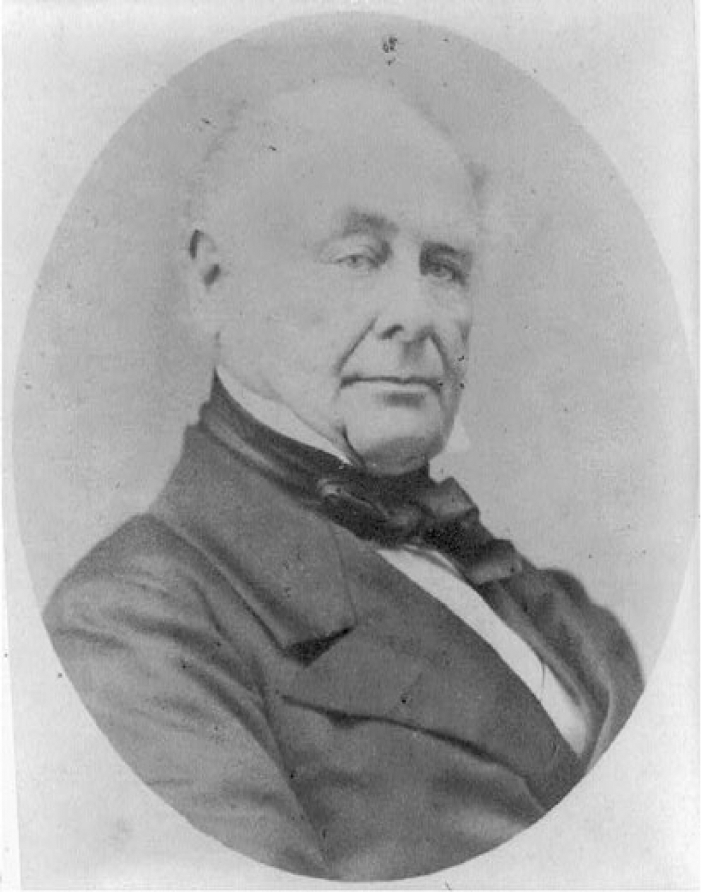
Thomas Chandler Haliburton (alias Sam Slick), 1796–1865, bust portrait. Courtesy of the Library of Congress, Prints and Photographs Division, LC-USZ62-41813.
The Clockmaker is part of a seminal series of works in the US and Britain, which contributed to the literary codification of the prototypical American figure. I argue that in this process, a crucial role was played by the contemporary debates surrounding popular democracy. As a character, Sam encodes both the literary traditions of American frontier humour and the ideological vocabulary of the British Empire. Haliburton uses “Yankee” as a marker of nationality, as well as a signifier for a set of attributes globally recognized as characteristic of the United States, but also of a threatening modernity the US came to symbolize. Sam Slick is a compelling example of a pre-Darwinian “survival of the slickest”, as he embodies the new liberal–capitalist ethos which conservatives like Haliburton feared (Royot, 1985: 123; 127). This usage of the term “Yankee” marks a shift from a national to a transnational framework. In the frontier stories that are generally considered to have inspired The Clockmaker, the divide between the image of the Self and the image of the Other was constructed along cultural, regional, and class lines: country versus town, frontier versus the more settled East, yet the whole contained within the same national space. In The Clockmaker however, the divide becomes one between three national cultures, one of which is at the intersection of the other two: British, Nova Scotian, and American. In doing so, Haliburton does not simply rework already successful models; he juxtaposes colonial and American identities, rhetorically re-inscribing national boundaries on the imaginary map of North America.
American democracy vs. British institutions
The rise of popular democracy was a contentious dimension of the threatening modernity symbolized by the US. Indeed, popular democracy and republicanism function in Haliburton’s satire as interrelated and mutually-reinforcing dimensions of the American image. As I have argued elsewhere, many of the resulting American features in Haliburton’s satire are extensions of attitudes towards popular rule and republicanism, essentialized into national characteristics (Godeanu-Kenworthy, 2009). The writer constructs a relationship of causality between the past of the British Empire and the present of North America as a whole: if the American Revolution hadn’t happened, popular democracy in the New World would have been kept in check by the British institutions. For instance, Reverend Hopewell repeatedly explains the shortcomings of nineteenth-century American society as the consequences of an egalitarian political system that had altered the colonies’ original institutions, culture, and mores away from the British model. Whether they admire American political culture (like Sam) or lament it (like Hopewell and the Squire), the protagonists in all three series of The Clockmaker describe its egalitarian proclivities as latent tendencies that existed in embryo in the Revolution, and were intensified and expanded by the rise of popular democracy.
All three series of The Clockmaker deal with topics inspired by democratic reform (elective councils, responsible government, male franchise), but the tone of the sketches in the third series gets increasingly dark and desperate. Published almost a decade after the Great Reform Act of 1832, and in the midst of passionate debates around the granting of responsible government to the colonies, the last series captures the immediacy of the matters to Haliburton, and strives to explain — in incrementally longer and more didactic sketches — the imperial consequences of such democratic reforms. To conservatives like Haliburton, the popular movements of the 1830s functioned as both real and symbolic threats to a worldview predicated on order and tradition. Reforming colonial institutions to incorporate democratic principles could open the way for republican ideas. Furthermore, the perceived relation of causality between democracy and republicanism brought issues of national identity to the fore of the debate: if monarchy was central to Britishness, any threat to its institutions was also a threat to national identity in general. In other words, in the case of the Canadian colonies, debating the shortcomings of representative democracy and of reform also had deep implications for colonial self-definitions. The history of the US had shown that republicanism led to popular democracy; the reverse could also be true. A democratic and republican British North America would lose its identity twice. First, by losing its British character, and second (a direct consequence of republicanism) because its annexation to the US would have been merely a matter of time. Such a scenario would have signalled the final defeat of the monarchy in the New World, and further undermined the relevance of Empire to the idea of Britishness in the nineteenth century.
At the heart of Haliburton’s construction of American otherness is not republicanism itself either as a form of government, or as a particular conceptualization of the political community. After all, the original struggle of the colonists could be at least partially explained as a fight to secure the freedoms deserved by British citizens abused by a tyrannical monarch. It is popular democracy the writer fears, which was at the time a highly contested idea even in the United States. The America of the Early Republic had evolved in what many thought a threatening direction, which endangered the freedoms secured by the Revolution (Gustafson, 2007: 114). Haliburton’s satire captures the internal ideological debates within American society itself. In the first series of The Clockmaker, in the sketch “The Preacher Who Wandered from His Text,” Professor Everett, an American Congressman whom Sam encounters on one of his trips, laments the state of American society: “Mr. Slick, our tree of liberty was a beautiful tree, a splendid tree. It was a sight to look at; it was well fenced and well protected, and it grew so stately and so handsome, that strangers came from all parts of the globe to see it” (39). The same idea reappears in the second series, in 1838. In “Confessions of a Deposed Minister”, Reverend Hopewell reflects on the intrusion of the democratic element into the original design of the American republic: “Where now is our beautiful republic bequeathed to us by Washington and the sages and heroes of the revolution? Overwhelmed and destroyed by the mighty waters of democracy” (354). Haliburton’s choice of words is significant; true liberty needs to be protected from the abuses of an uneducated populace. In Everett’s monologue, the fences surrounding the tree of liberty, rather than obstacles to freedom, are construed as protecting it. Along similar lines, according to Hopewell, Jacksonian democracy eroded the original ideas of the American founding fathers, rather than helped them develop. In other words, by positing the masses as a threat to liberty, rather than a guarantor of it, Haliburton delegitimizes pro-democratic claims in support of any form of authority rooted in popular will. Freedom and democracy are not synonymous, but rather incompatible.
The American model was the only type of republicanism that Canadians were likely to know directly; however, colonial attitudes about republicanism’s relationship with popular rule also responded to events in France. The French model was even less reassuring than the American one. The culmination of the 1789 Revolution in Napoleon’s empire had long compromised French republicanism in the British world as a dangerous, godless, levelling and mobocratic form of government, which could easily slip into tyranny; the turbulence of French politics throughout the nineteenth century and its rollercoaster of revolutions, republic, monarchy, and empire hardly contradicted this view. 4 Discontent in Lower Canada, and especially the 1837–38 Rebellions, further solidified associations between popular sovereignty and social unrest. French Canada’s example of anti-loyalism and rebellion was enough for Haliburton to violently oppose any concession that the reformers wanted to grant the French (Spriet, 1991). The sketch “Canadian Politics”, published in the second series in 1838, describes democracy in medical terms: it is a disease, a virus that spreads and infects, and those that are the most vulnerable to it are the French-Canadians: “Them chaps go to France, get inoculated there with infidelity, treason, and republicanism, and come out and spread it over the country like small-pox” (345). As long as they are allowed to use their language, Sam declares, the French are impossible to acculturate, thus functioning as hotbeds of republicanism within the British Empire: “If the French in Canada were to rebel … they’ll rebel as soon as they can walk alone, for the British have made ‘em a French colony instead of an English one” (345).
It is worth noting that in the Canadian colonies the main arguments in favour of republicanism revolved not around virtue and public good, but rather around ideas of victory against oppression, the rights of the common man, and of resistance to central authority. This direction in rhetoric alienated the majority of the settlers from republicanism because of the negative connotations around the idea of republic not as a purveyor of liberty through a limitation of government powers, but rather as harbinger of popular democracy and its excesses (Smith, 1999: 75). In The Clockmaker, American republicanism is construed as twice suspect; first, because of its association with a deep sense of betrayal towards the mother country through the American Revolution, and second, because that model had the potential of inspiring rebellion in the colonies. “Canadian Politics” dramatizes the appeal of American ideology for the French-Canadian radicals. American-style popular sovereignty is the source of inspiration for French-Canadian dreams of independence: “We shall be the France of America afore long — the grand nation — the great empire” declares Sam’s interlocutor (363). To the doctor’s illusions about the future of French Canada as an independent nation in North America, Slick opposes a scenario where, once the British Crown removed, French Canada would be forcibly incorporated in the United States: Our fur traders would attack your fur traders, and drive ‛em all in. Our people would enter here and settle — then kick up a row, call for American volunteers, declare themselves independent, and ask admission into the Union; and afore you know’d were you were, you’d find yourselves one of our states … Gist look at what is goin’ on to Texas to Florida, and then see what will go on here. We shall own clean away up to the North and South Pole, afore we’re done. (364)
In other words, American expansionism and the aggressive nationalism of the new republic are incompatible with the survival of any other political entity in North America. Ironically, the British Empire assumes the unlikely role of protector of French cultural survival in the New World. The Clockmaker’s reassertion of monarchy and empire as symbols and guarantors of colonial identity takes place against a background of negative associations between republicanism and popular democracy that merged British perceptions of events in France with Canadian insights into American egalitarianism.
The first two series of The Clockmaker articulate a rational defence of monarchy in North America from the perspective of its unique ability to control the democratic impulses of the New World. In “ A Body Without a Head”, Reverend Hopewell even prophesizes a future of mixed government throughout the continent. The monarchy “will come sooner or later” even to the United States, although with some variations required by the difference in environment. As American society matures, a hybrid system would emerge, presumably still organized around the Crown. Hopewell concludes: “As they lose their strength of executive, they will verge to republicanism, and as we invigorate the form of government … we shall tend towards a monarchy. If this comes on gradually, like the changes in the human body by the approach of old age, so much the better” (175). Haliburton’s use of biological metaphors helps to construct a paradigm of social and political order rooted in the inevitability of nature. It reinforces a teleological view of political history informed by a quasi-Darwinian process of natural selection assumed to end with the survival of the fittest political system.
By presenting constitutional monarchy as the most suitable form of government for the New World, even for the United States, Haliburton is simultaneously making an argument in favour of the hierarchical nature of society in general. The sketch ends with Sam shooting a partridge in the head, and the Squire musing on the parallels between the quivering decapitated body and the decentralized American government. The American federation, with its emphasis on decentralization — but also with its endless squabbles over state rights — was viewed by colonial conservatives as a cautionary example of republican centrifugal forces gnawing at the fabric of society, undermining its unity and cohesiveness (Smith, 1999: 116). The metaphor of the headless body graphically illustrates that point, and implicitly offers the British model as a desirable alternative.
Equality and freedom, equality or freedom
The Clockmaker unsettles the centrality of freedom in American narratives of national identity. To Hopewell, American freedom is “that happy condition of mankind where people are assembled in a community; where there is no government, no law, and no religion, but such as are imposed from day to day by a mob of freemen”. The celebrated American liberties amount to “the right of openly preaching infidelity” to “a licentious press”, “the absence of all subordination”, and culminating in “the insufficiency of all legal or moral restraint” (351). American history is reread as a continuous confirmation of the original move of the colonies away from the centre of order and lawfulness guaranteed by the Crown towards what Haliburton perceives to be a form of anarchy. Hopewell articulates the repressed trauma of the separation from Britain. His accounts use the traditional American tropes of liberation from the past and from oppressive rules and traditions as merely signposts for a national ideological descent into chaos.
Without the initial transgression of the law in 1776, British freedoms and social order would have still been guaranteed by the Crown throughout North America. In “Confessions of a Deposed Minister”, the Reverend situates himself at the intersection of the past and the present of the republic: I shall stump out of the univarse soon, Sam [...] I’m a lone man. The old men are droppin’ off fast into the grave, and the young men are troopin’ off fast into the Far West; [...] I’m well stricken in years now; my life stretches over a considerable space of the colony time, and over all our republic: my race is run, my lamp is out, and I am ready to go. (349)
Hopewell uses his position to articulate his critique of American history as search for freedom. The Revolution and its aftermath brought freedom to many, but also infringed upon the freedoms of many by usurping the authority of the British state whose responsibility was to protect everyone’s rights: We boast of freedom; tell me what freedom is? Is it havin’ no king and no nobles? Then we are sartainly free. But is that freedom? Is it in havin’ no established religion? Then we are free enough, gracious knows. Is it in havin’ no hereditary government, or vigorous executive? Then we are free, beyond all doubt. Yes, we know what we are atalkin’ about; we are wise in our generation, wiser than the children of light — we are as free as the air of heaven. What that air is, p’rhaps they know who talk of it so flippantly and so glibly; but it may not be so free to all comers as our country is. (350)
Thus, democracy and freedom are deemed incompatible because Haliburton fears that in a democracy, individual freedom and growth always impinge upon someone else’s liberties. In the same sketch, Hopewell articulates this point in an elaborate deconstruction of the flag and the eagle as American national symbols: “It’s a law of nature, Sam, said he, that things that grow too fast, and grow too big, go to decay soon. I am afeard we shall be rotten afore we are ripe” (350). The reference to growth and decay is developed in two directions. The first hints at the neo-imperial tendencies of the United States, while the second focuses on slavery, as twin manifestations of abuses of power within and without the boundaries of the American nation. On the one hand, the rhetoric of Manifest Destiny that legitimized American growth as a nation is undermined by the image of the American eagle as a bird of prey, attacking those unable to defend themselves: Our eagle that we chose for our emblem is a fine bird, and an aspirin’ bird; but he is a bird of prey, Sam, too fond of blood — too prone to pounce and on the weak and unwary. I don’t like to see him hoverin’ over Texas and Canada so much. (350)
On the other hand, slavery provides the writer with the most visible internal contradiction (and source of internal divisions) at the heart of a republic predicated on liberty and equality: “Our flag that you talk of is a good flag; but them stripes, are they prophetic or accidental? Are they the stripes of the slaves risin’ up to humble our pride by exhibitin’ their shame on our banner? Or what do they mean?”(350). Thus, the inconsistencies of American democracy become a double hubris that can both facilitate the republic’s spectacular growth and hasten its presumed failure.
Such negative views of democracy were not new. If anything, Haliburton merely revisits the ideas of Edmund Burke and Thomas Paine, adapting them to the realities of an industrializing and more democratic North America (Cannadine, 1999: 62). 1835 saw the publication of Alexis de Tocqueville’s Democracy in America, which sophisticatedly articulated the same ideas, and which, in Nature and Human Nature, Haliburton called “the best book that has ever appeared on the United States” (1859: 338). Like his contemporaries, Haliburton believed that democracy appealed to the deeply individualistic side of human nature, and that it was nothing more than organized selfishness: nothing can redeem the individual from the new gospel of egotism and materialism to which American democracy gave birth.
Hopewell identifies national narcissism as the main flaw of the American character. Americans are “image worshippers”, worshipping at the same time “the golden image” of material success and “the American image … An image of perfection … the personification of everything that is great and good, — that we set up and admire, and everybody thinks it is an image of himself” (353), laments Hopewell. Between materialism and individualism, national narcissism becomes the new civic religion of the American republic: “Oh! It is humiliatin’, it is degradin’; but we are all brought up to this idolatry from our cradle: we are taught first to worship gold, and then to idolize ourselves” (353). In a world in perpetual transformation, vulnerable to the upheavals of industrialization, which was already creating an increasingly homogeneous society, the mobs represented the most threatening direct by-product of such narcissism which places power in the hands of disorganized masses of self-interested individuals lacking a stable system of identification and a stable moral compass.
The dynamic and energetic society that Slick embodies is precariously balanced on the edge of chaos. This instability is explained in The Clockmaker as the result of two contradictory impulses. On the one hand, the American rhetoric of equality and freedom for all is belied by the realities of social and economic inequality, and of abuses of power by the majority against the more vulnerable groups, inside and outside the boundaries of the nation. On the other, equality as arch-principle of American democracy is portrayed as unnatural. Virtually all the protagonists in The Clockmaker turn sooner or later to examples derived from nature to prove their point. To Haliburton, equality does not exist in nature; if the distinction of classes is dismantled, all that remains is the distinction derived from material possessions. Yet such distinctions are arbitrary and artificial; there is no mutual relationship binding people situated on different rungs of the social hierarchy.
The Clockmaker paints an antagonistic portrait of social inequality in the United States. Throughout the three volumes, Sam pontificates on the advantages of the American system for shrewd individuals. Yet, alongside exaggerated patriotic and egalitarian slogans, his praise for the highly competitive system in the United States reveals the deep inequality that characterizes American society. In “A Body Without a Head,” Sam cynically explains to the Squire the unacknowledged truth about American democracy: “In our business relations we bely our political principles — we say every man is equal in the Union, and should have an equal vote and voice in the Government,” yet in the business world “every man’s vote is regilated by his share and proportion of stock; and if it warn’t so, no man would take hold on these things at all” (176). However, the second part of the argument struggles to naturalize this state of affairs. Family relations and race relations all serve to support Sam’s point, which is that “it would not do for all to be equal there”. Inequality reigns even in heaven; the universe “is ruled by one Supreme Power”, and the Angels have no special voice in its government (176). The Squire conveniently dozes off and misses the conclusion of Slick’s exposé, leaving the reader to ponder whether American citizens truly have a voice in government, or, if they do, if that is a good thing, given Haliburton’s misgivings about popular democracy. American society is not classless; class divisions are merely rooted in different principles.
Class informed Haliburton’s rejection of democratic reforms in Britain. Hopewell comments favourably on the British system of peerage as an institutional form of recognition for a society’s most valuable citizens: We are too enlightened to worship our fellow citizens as the ancients did, but we ought to pay great respect to vartue and exalted talents in this life … Arter all Sam, said he, … half a yard of blue ribbon is a plaguy cheap way of rewardin merit … (175)
The implication of this view is that protecting class privilege is crucial for the preservation of the British connection, for the rule of gentlemen under a hereditary monarch, and above all for the social stability necessary for good government. By offering Sam as the picaro moving up in life, while commenting on the significance of that very upward movement from an American perspective, The Clockmaker illuminates the mutability and indeterminacy of class categories in the New World. Adam Smith’s Wealth of Nations (1776) had a profound impact on eighteenth - and nineteenth-century ideas of class in Britain, particularly his proposition that “social status and social identity were primarily determined not by honor or prestige ranking … but by occupation and related to the means of production” (Cannadine, 1999: 56). The Clockmaker’s reading of the American social landscape is informed by the fluidity of class divisions in a new regime of identity where work, not rank, is the source of individual and collective self-definitions, and where wealth functions as the only universal marker of gentility.
In the third series, the sketch “Definition of a Gentleman” spells this out. After a lengthy exposé on social differences and class distinctions in Britain and the United States, Slick concludes: What your idea of a gentleman is, I don’t know, …; but my idea of a gentleman is jist this, one who is rich enough, willin’ enough, and knowin’ enough, when the thing has to be done in first-rate style, to go the full figur’, and to do the thing ginteel. That’s what I call a gentleman. (602)
The conclusion is that the United States has its own social hierarchies — but that here class distinctions have as much to do with money as they do with education or birth. Nothing is inevitable about one’s standing in life. In the new world, class is performative, and therefore the distinctions it signals between groups of people are, to Haliburton, threateningly meaningless. The potential for social unrest and division of class mobility stems from the corrosive power that the countless individual pursuits of happiness had on the cohesiveness of the social fabric.
Race and inequality
Haliburton’s use of racial inequality as a manifestation of natural order has attracted him much criticism in recent years (Clarke, 1994, 1997).
5
Indeed, much of his writing is deeply racist; offensive racial stereotypes punctuate The Clockmaker, making many parts quite unpalatable for contemporary audiences. Yet such attitudes and racial stereotypes were common among his contemporaries and echoed the increasingly racist tone of the popular culture of the time (Marquis, 1997). Throughout the British world, race was a versatile marker of exclusion; by the middle of the nineteenth century British definitions of race and class overlapped, validating both racial and class inferiority in relationship to the putative superiority of white genteel Britons (Cannadine, 2001: 6). At the same time, British opposition to American slavery was conveniently used to replace old pre-revolutionary associations of Britain with imperialism and oppression, by projecting these ideas onto the US (Wilson, 2003: 11). In “Slavery”, Slick struggles to explain the peculiar institution to the Squire. The pedlar’s explanation revisits many of the current Southern arguments in favour of slavery, and tries to place it on the same conceptual level as labour and marriage, both construed as naturally hierarchical and unequal types of relations: Take away corporal punishment from the masters and give it to the law, forbid separatin’ families and the right to compel marriage and other connexions, and you leave slavery nothin’ more than sarvitude in name, and somethin’ quite as good in fact. Every critter must work in this world, and a labourer is a slave; but the labourer only gets enough to live on from day to day, while the slave is tended in infancy, sickness, and old age, and has spare time enough given him to aim a good deal too. A married woman, if you come to that, is a slave, call her what you will, wife, woman, angel, termegant, or devil, she’s a slave. (272)
Haliburton gives no indication that he views slavery as a morally reprehensible institution. Rather, to him, slavery functions as the only American institution than confirms (and protects) the natural inequality of the universe. Haliburton uses race in order to shock his readers into realizing that absolute equality is unnatural, and that a classless world would be as absurd as one governed by racial equality, which in his view is impossible. In “The White Nigger”, slavery functions as a metaphor for hierarchy and for powerlessness. The sketch opens with the Squire’s observation that the American claim to freedom in the Declaration of Independence is “a practical untruth, in a country which tolerates domestic slavery in its worst and most forbidding form. It is a declaration of shame, and not of independence” (161). Sam’s reply conflates the language of race and class in order to expose the commonality between American slavery and Nova Scotian poor laws: “Now, we deal in black niggers only, but the Bluenoses sell their own species — they trade in white slaves” (161). The practice that Sam latches onto is the selling of the poor in indentured labor for the year, yet his comments indirectly exculpate slavery as the more “natural” practice: Americans “deal only in blacks” while the Nova Scotian (and British) colour-blindness merely means that any individual, “when reduced to poverty, is reduced to slavery, and is sold — a White Nigger” (165).
By describing poverty as a putative loss of whiteness, the language of “The White Nigger” betrays the fluidity of social categories transplanted from Britain into a North American context, and the mutability of markers of belonging under the pressure of new realities. This mutability becomes clear in Haliburton’s racialization of the Canadian colonies as white, and therefore truly British. The strategy was not new. As early as the eighteenth century, race was connected to national identity, with which it was even used interchangeably. Kathleen Wilson noted that in early America, “racialized notions of nation were put to work in the colonies to define the grounds for inclusion in the local community” (2003: 12). Furthermore, in their original conflict with the British Parliament, the American revolutionaries emphasized their presumed whiteness as proof of their Britishness which guaranteed them rights and freedoms, thus playing up a racialized notion of nation and playing down the internal ethnic and racial diversity of the colonies. Haliburton uses the same rhetorical strategy of racializing Britishness in order to undermine the legitimacy of the American republic in claiming any Anglo-Saxon lineage anymore. At the same time, he struggles to craft a narrative of a racially homogeneous British North America as the only ideological (and biological) heir of the British Empire in the New World.
Racial miscegenation is to the purity of the nation what democracy is to the stability of social relations. In the loose, chaotic Union, there is no strong central idea that can contain its unmanageable diversity, or bind the states together. In the second series, in the sketch “The Schoolmaster Abroad”, Sam’s praise of the advantages of Nova Scotia leads to a quasi-apocalyptical picture of the United States in the thralls of its own diversity. Self-destruction seems inevitable, fuelled by immigration of non-Anglo-Saxon stock and by the weakness of American republican institutions. Haliburton uses New Orleans as the epitome of the United States: an attractive and carnivalesque young land, with no past, no hierarchies, and no tradition, inhabited by people from the four corners of the world. The carefree ethos of New Orleans stems from a certain child-like innocence that disregards taboos and dismisses future and past alike. The inhabitants of the city are compared to “children playin’ in a churchyard, jumpin’ over the graves, hidin’ behind the tombs, a-larfin’ at the emblems of mortality, and the queer old rhymes onder ‘em …” (394). But the ominous tone of the passage hints at the potentially catastrophic consequences of such transgressions. The fragility of the space evokes the fragility of an entire country devoid of solid foundations: That ‛ere place is built in a bar in the harbor, made of snags, driftwood, and chokes, hauled up by the river, and then filled and covered with the sediment and alluvial of the rich bottoms above, bought down by the freshets. It’s peopled in the same way. The eddies and tides of business of all that country centre there, and the froth and scum are washed up and settle at New Orleens. It’s filled with all sorts of people, black, white and Ingians, and their different shades, French, Spanish, Portuguese, and Dutch, English, Irish and Scotch, and then people from every state in the Union. … It’s all a great caravansary filled with strangers … (394–5)
By contrasting American diversity with the supposed ethnic and racial homogeneity of Nova Scotia, “The Schoolmaster Abroad” puts forth a racialized view of Britishness. In the context of Haliburton’s scepticism about democracy, the danger of chaos, of disintegration, and social radicalization appear already contained in embryo in the ethnic and racial diversity inherent in a society of immigration. New Orleans is a microcosm of the United States as a whole. Not only are the American mobs unruly and dangerous because of the power vested in them, but the very creation of the US through emigration from all over the world contributes to its fragility and potential for anarchy.
The Canadian colonies function as the testing ground for the examination of British national character as a “production of climate, environment, stage of civilization, and human agency” (Wilson, 2003: 13). The Clockmaker captures the process by which, in a North American context, the two competing political ideologies contributed to its development by extending or limiting power to the members of the polity and thus controlling their access to national narratives of belonging. In “Travelling in America”, Haliburton satirizes the powerful myth of America; Sam enthusiastically describes the American melting pot as miraculously converting a motley gathering of lowlife from the Old World into “the greatest nation on airth” through the mysterious workings of democracy: Well, Squire, our great country is like that are Thames water — it does receive the outpourin’s of the world — homicides and regicides, jailbirds and galley-birds, poorhouse chaps, rebels, infidels, and forgers, rogues of all sorts, sizes and degrees — but it ferments, you see, and works clear; and what a’most a beautiful clear stream o’ democracy it does make, don’t it? (247)
The fascination that America exerted upon immigrants worldwide is depicted in ironic and ominous terms: the country has the power of attraction of a vortex. It is “a great whirlpool — a great vortex — it drags all the straw and chips, and floatin’ sticks, drift-wood and trash into it. The small crafts are sucked in, and whirl round and round like a squirrel in a cage — they’ll never come out” (56). The passage lends itself to a double reading; as Sam’s praise for the process of selection by which only the strongest survive in the United States, or as a warning. From this latter perspective, the fluidity of the American environment becomes synonymous with anarchy. The reverse of British imperial multiculturalism is American ethnic, class, and cultural miscegenation, with an implication that even the former Britishness of the 13 colonies has disappeared in the flow of immigration that transformed the ethnic and racial makeup of the United States.
Conclusions
The Clockmaker charts the many ways in which democracy had shaped American society and created the American national character, going from a valorization of individualism that lent itself to selfishness and exploitation of others in the name of the majority, to the radical reconfiguration of the social fabric. Nineteenth-century notions of class, race, or legality in the US were the product of the egalitarian and horizontal spirit with which democratic and republican institutions had corrupted the original culture of these British outposts, thus creating ‘American’ culture. By dramatizing the impact of democracy on all aspects of American life and warning about the consequences of embracing this model in the Canadian colonies, Haliburton encourages his readers to draw a direct connection between the de-centred world created by republicanism and democracy, and the popular abuse of freedom in any society that puts individual will and wisdom above the law. The resulting critique of American selfishness, materialism, imperialism, and arrogance sounds hauntingly actual. Haliburton’s nineteenth-century articulation of colonial conservatism in the larger imperial framework was informed by the view that democracy and monarchy are incompatible; were the British North American colonies to become more democratic, they would surely gravitate away from the imperial orbit. In short, Haliburton refuses a nation-centric perspective on American history, and rather chooses to read recent continental developments through the lens of imperial history. This perspective allows him to both delegitimize American democracy and to challenge the US rhetorical monopoly over freedom, while constructing a complex interrogation of the place of British North America in the larger imperial partnership.
Footnotes
Funding
Part of the research for this article was carried out while on a John W. Kluge Postdoctoral Fellowship at the Library of Congress, in Washington DC.