




Abstract
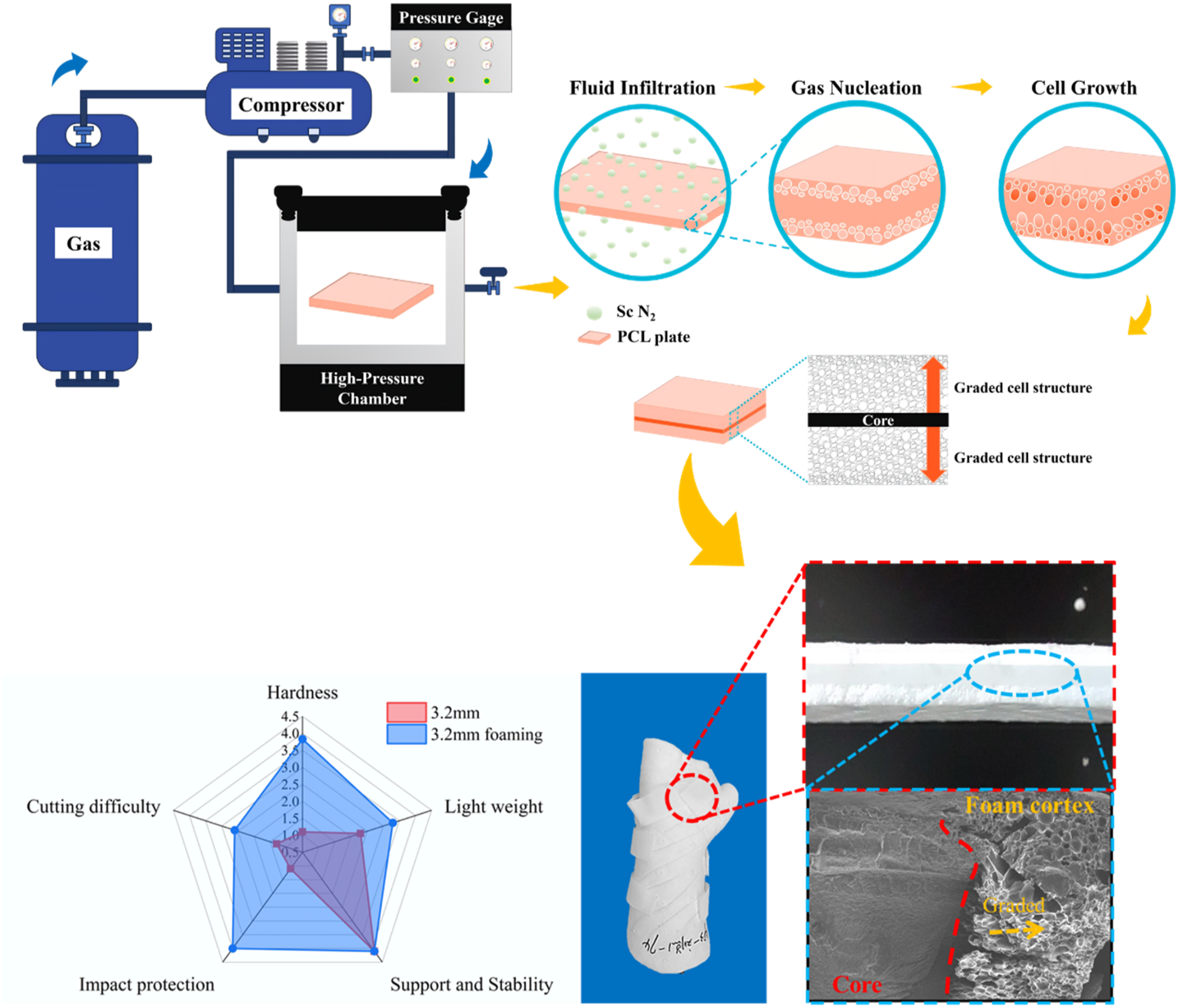
In this study, we developed and explored a novel sandwich-structured gradient polycaprolactone (PCL) foam material. Through theoretical and experimental research, a correlation between structural characteristics and performance was established, providing a research approach for the development of lightweight and comfortable rehabilitation brace materials. Supercritical nitrogen was employed as the foaming agent in this research, where the supercritical fluid foaming process was modulated to control the partial saturation of gas and the distribution of non-equilibrium gas concentrations, leading to the formation of a “sandwichˮ-style gradient structure core foam plate with a tiered design. Microstructural observations via scanning electron microscopy, revealed a continuous gradient variation in cell size within the foaming layer. Thematerial featured an integrated composite structure consisting of a foam layer, a core layer, and another foam layer throughout. Quasi-static compression tests were conducted to evaluate the energy absorption and shock-absorbing performance of this material as a protective brace. The findings demonstrated that the sandwich gradient structure plate exhibits outstanding overall compressive strength and energy absorption properties. Optimizing the proportion of the core layer in the material can lead to improved mechanical properties. A suitable ratio of the soft foam layer enhances both the cushioning and shock-absorbing performance, increases user comfort, and minimizes the risk of damage during the cutting process. Polycaprolactone (PCL)-based low-temperature thermoplastic foam plates with a sandwich gradient structure exhibit broad application prospects in replacing traditional rehabilitation brace materials.
Get full access to this article
View all access options for this article.
References
Supplementary Material
Please find the following supplemental material available below.
For Open Access articles published under a Creative Commons License, all supplemental material carries the same license as the article it is associated with.
For non-Open Access articles published, all supplemental material carries a non-exclusive license, and permission requests for re-use of supplemental material or any part of supplemental material shall be sent directly to the copyright owner as specified in the copyright notice associated with the article.
