




Abstract
Critical thinking can be promoted through narratives, puzzles, and riddles. Literature has indicated a need to reactivate African narratives to preserve African legacies for future generations. This study argues that African riddles, puzzles, and narratives should be used in African-themed video games to promote critical thinking and awareness of African culture. It emphasizes the importance of African-centered puzzles as a culturally relevant pedagogy that fosters students’ understanding of African cultural values. The study used a participatory culture framework to bring students together to develop an African-themed video game. The game, called Nolwazi, was investigated ethnographically to highlight critical aspects. The study presents the findings of the investigation and analysis. It concludes with a discussion of the importance of using African riddles, puzzles, and narratives in video games.
Plain language summary
The study explores the utilization of the rich African narratives, puzzles and riddles as tools in teaching students through video games. This study focuses on video games developed by South African students and how the video games have helped to create cultural awareness and foster critical thinking.
Introduction
One of the main ingredients of an educational system is its ability to promote critical thinking, which several European-American educational systems provide (Claybrook, 2023). Incidentally, these techniques or educational systems are utilized and included in several African Based educational curriculums.
It is necessary to shift away from Western educational systems and toward an African-centric approach that fosters critical thinking using African methods. Western educational systems fail to facilitate a balanced coexistence between African and Western cultures (Jegede, 1993; Mungazi, 2002).
A number of studies have highlighted the need for preserving many aspects of African culture and transmitting them to the younger generation through classroom teaching (Samuels, 2018). Ishengoma (2005) argued that incorporating riddles into the modern school curriculum increases the relevance of education to local communities. Using an example of the Haya people in Tanzania, the study revealed that African riddles contribute significantly to learners’ full participation in various aspects of African communities “by fostering critical thinking and transmission of indigenous knowledge” (Ishengoma, 2005).
Another study by George et al. (2022) further explained that African culture can be transmitted through the digital space which provides an avenue for Africans to creatively project African learning content. However, African academic communities have not yet utilized this platform effectively. The study by Mapondera (2023) supports this statement. Mapondera (2023) concluded that incorporating African philosophies into game play can introduce the audience to specific African ideals and demonstrate Africans’ ability to be creative on a global scale. For instance, Mapondera cited the Tsuro na Gudo Folktale which stresses the African philosophy of ubuntu (essential human virtue, compassion and humility) over selfishness. It also encourages creativity by projecting the supremacy of wisdom and ingenuity over brute strength. Mapondera (2023) highlighted that this folktale, and others like it, are been repackaged to make them attractive to the upcoming African generation. While the narratives remain the same, the characters in the folktale have been modified. Ultimately, the advent of technology and digital media has made it possible to re-invent and preserve these folklores and make it more interesting to the digital-prone upcoming African generations (Asimeng-Boahene & Baffoe, 2018). This also informs how these can be included in the African pedagogy (Asimeng-Boahene & Baffoe, 2018; Mapondera, 2023).
Furthermore, Karenga (2010) explained that, aside the benefit of preserving African culture, using African approaches to promote critical thinking can prepare students for school, frame learning topics around African cultural values, stimulate deep thinking, and use African narratives to educate and provide socialization on African heritage. Abah et al. (2015) and McCubbin et al. (2023) further noted that underperformance by students can be improved by using indigenous systems of scientific teaching, discovery, and development.
One who knows no proverb knows not his ancestors.
The Nigerian proverb clearly speaks to the aim of this study. “Proverb” is a proven vehicle through which African cultural heritages are transmitted across generations. In support of this, Claybrook (2023) and Karenga (2010) have highlighted that knowledge of African proverbs, riddles, narratives, and puzzles is a tool for maintaining and transmitting rich African cultural values, history, wisdom, and heritages. These tools are peculiar to the African culture. They sit well within the African cultural context, and they can help African students improve their learning strategies and promote African cultural values. It is important to introduce culturally aware pedagogical perspectives by implementing relevant actions and activities (Claybrook, 2023). An understanding of the power of culture is crucial as it is the frame in which the activities of a group of people are rooted (Karenga, 2010).
Riddles, puzzles, and narratives are indigenous knowledge acquisition tools for the African culture. Riddles form part of African oral literature. They are considered as knowledge repository, helping to sustain the African traditions over time. According to Madonsela (2020), riddles present the meaning of life that exists within a society and its uniqueness..They are instructional tools for the African children (Madonsela, 2020). Proverbs also impact cultural values across generations. They are wise phrases of thoughts and experiences for transmitting sound wisdom, judgment and principles of life enshrined within the African culture; they are different from riddles and narratives in that they are poetic in construction (Adom et al., 2021).. On the other hand, narratives are literary prose (combination of history and fictional stories) which serves the same purpose as riddles and proverbs (Madonsela, 2020; Mapondera, 2023). They tell the stories of African origin and happenings transmitted from one generation to the other. In teaching African students, Claybrook (2023) has indicated that Western ideas are often prioritized over African ideas or that African ideas are removed completely from students’ learning perspectives. Consequently, students dissociate from Africa because they have not been provided with adequate knowledge about the cultural heritages of the people of the continent. Mazama (2003) explained that:
Although most Africans, on the Continent as well as in the Diaspora, have, at least in theory, put an end to the colonial rule to which we were subjected for many years, we nonetheless still find ourselves in a state of mental subjugation that has gravely interfered with our ability to recover our integrity and truly decolonize ourselves . . . colonization was not simply an enterprise of economic exploitation and political control, as it was commonly held, but also an ongoing enterprise of conceptual distortion and invasion, leading to widespread confusion, and ultimately, “mental incarceration.” (Mazama, 2003, p. 3)
Claybrook (2023) argued that when discussing mental incarceration, Mazama (2003) focused on the intentional attack on African culture, techniques, values, concepts, and styles. Furthermore, there is a notion that controlling a people’s culture is tantamount to controlling their thinking (Claybrook, 2023). Although the use of Western themes has been educational, it is important to reflect and reassess its use and introduce African themes in a process that moves from decolonization to indigenization (McCubbin et al., 2023; Zhou et al., 2020). In order to protect, enshrine and preserve Africans values in their systems (indigenization), Mazama (2003) explicitly proposed that Africans must separate themselves from Western and European ways of thinking, feeling, playing, and developing (decolonization).
Moreover, Claybrook (2020) highlighted the importance of crafting African heritage in the development of African studies in universities. For example, it is crucial for students to understand African philosophical objects such as beads, necklaces, and headgear in order to effectively use them in their studies. These objects explore the thought mechanisms of historical, precolonial, and currently existing African communities. They identify or provide a genuine African perspective in the current post-colonial environment (Claybrook, 2023; Hountondji, 1996).
This current study uses riddles, puzzles, and narratives, peculiar tools representing African culture, to tell a significant African story from different perspectives. It incorporates various objects and symbols that hold significant value into video game players. The aim is to provide lifelong learning and an appreciation of historical knowledge. Asimeng-Boahene and Baffoe (2018) have indicated that these tools help provide lifelong learning and educational awareness to learners.
To foster critical thinking in African-themed video games, this article examines the use of narratives (African stories) and puzzles in an African-centered approach. The study takes inspiration from the Nolwazi video game, which was developed in South Africa, and extends this to travels across Africa in search of important artifacts in a futuristic setting. The next sections discuss African narratives, riddles, and puzzles.
African Video Games
Video games have increasingly become a topic of academic interest, particularly in their application to education. The digital age has brought about a novel approach to learning where traditional pedagogical methods are supplemented or replaced with technologically advanced teaching aids, including video games (King, 2018).
Boateng-Nimoh and Nantwi (2020) conducted a study on modifying a traditional Ghanaian game to enhance basic education systems. The researchers concluded that incorporating educational materials into games can help students retain material and be more motivated toward their classes. Video games can support the integration of pedagogical tools such as African narratives, riddles, puzzles, and other indigenous story-based knowledge systems into fundamental game mechanics and storytelling frameworks (Claybrook, 2023). The experiential and participatory nature of gaming offers a platform for cognitive engagement with cultural knowledge systems. It creates opportunities to acquire indigenous knowledge through narratives that emphasize neglected histories and hidden wisdom (Utstøl, 2023).
Video gameplay can foster learning communities, shifting the focus from memorization to developing 21st century competencies, including critical thinking, problem-solving, autonomous thought, collaboration, and communication (Games and learning, 2024). Video gameplay has gained recognition for its extensive educational potential, which enthralls players with features such as riddles, puzzles, and intriguing narratives (Nicholson, 2018). Gameplay enhances cognitive function, decision-making, and engagement through engaging narratives and interactive environments that promote experimentation, strategy, and active learning (Cameron, 2017; Rahmawati et al., 2022).
Oral traditions and storytelling are deeply ingrained into African culture. Video games with strong narrative components could serve as natural extensions of cultural teaching. They could help to preserve cultural heritage while improving education in ways that are relevant to local communities (Cerezo-Pizarro et al., 2023). African video games are designed and developed with an emphasis on representing and embracing various aspects of African culture, storytelling, esthetics, and philosophies. This results in a genuine experience that embraces the vast diversity of African heritage (Lewis, 2022). African video games draw inspiration from traditional African art forms, narratives, and puzzles. They serve as cultural and educational ambassadors, thereby enhancing engagement and knowledge acquisition (Onwuatuegwu & Paul-Mgbeafulike, 2023).
Video game designers from Africa have begun to use the medium to tell stories that resonate with their own experiences and heritage. Games such as Aurion: Legacy of the Kori-Odan from Cameroon and The Orchard of Lost Souls from Kenya feature narratives are deeply rooted in African folklore and mythologies (Yakes, 2015).
In addition to offering a platform for cultural expression and preservation for Africa, African-themed video games offer a way to deviate from the generic connection with Western culture by providing a platform to teach audiences around the world about the rich customs and varied civilizations of Africa (Bernal, 2020). Moreover, the games cater to local markets and are widely distributed through the use of smartphones (Bernal, 2020).
This study suggests that integrating games into African education could enhance student learning and develop rich research capacities. This approach has been regarded as one of the fastest growing trends in the digital media space. Being an entertaining approach to learning, gaming enhances the immersion tendencies of the students and creates a vivid awareness of the culture and history to be learnt. These assertions were proven by a number of authors including Adom et al. (2021), Izani et al. (2023), Ong-Flaherty et al. (2017), and Soyoof (2018). They achieved a remarkable cultural awareness in the subjects used in their studies. Collaboration between African and emerging researchers could help create an immersive, dynamic, and emotionally conducive learning environment.
The Relevance of African Video Games to Science, Technology, and Health Education
Video games can preserve African cultural heritage and enhance scientific and technological literacy, which is a key goal in African studies. Integrating African-based games into educational settings can enhance science and technology education, particularly when tailored to specific cultural contexts (Bayeck, 2020). Games can bring science and technology concepts to life. They offer the option for impactful learning, especially in low-resource environments where traditional educational materials may be scarce. Such games can serve the dual purpose of helping students learn about African culture and enhancing the study of science and technology. Video games offer a hands-on learning experience and showcase scientific experiments, mathematical problems, and technological scenarios (Barakabitze et al., 2019). This ensures that the curriculum contains more robust content, which in turn positively influences student engagement and interest in the fields of science, technology, engineering, and mathematics (Ekpo & &Sidogi, 2021). Moreover, when students see their culture and environment reflected in educational materials, it can validate their identity and potential as future scientists, technologists, engineers, and mathematicians (Dost, 2024).
Tabuti (2015) reiterated that Africa has a rich body of scientific knowledge hidden in its traditions and spiritual beliefs. This knowledge can be explored for beneficial use through educational video games. Tabuti (2015) specifically cited the science of plant species conservation as an example of scientific knowledge that can be better acquired through video games. Annetta et al. (2009) elaborated that video games can significantly enhance students’ conceptual knowledge, particularly in African settings. This can increase their interest and understanding of science subjects. Such games empower students by providing immersive and culturally relevant experiences in science and technology education (Barab et al., 2009).
Studies have also indicated the relevance of video games in health education. According to Daar et al. (2007), the knowledge of certain biotechnologies that can significantly improve health in developing countries can be better learnt through gaming platforms. Furthermore, video games have the potential to convey health-related information in a more engaging manner, which can lead to improved health outcomes when the information is applied. In support, Primack et al. (2012) wrote that:
Video games . . . represent an effective vehicle to provide health education; . . . to educate individuals about fire and street safety, knowledge and self-management of diabetes, and self-management of asthma. Video games also have potential value . . . as supporting psychotherapeutic treatment, improving self-esteem, conflict resolution, and improving spirometric measurement. Video games have additionally been used in an effort to enhance the cognitive or physical skills of healthcare providers (Primack et al., 2012, p. 631)
This implies that games can be more than just entertainment; they can be a vehicle for health education and positive behavioral change. In an African educational setting, video games could be used to teach about local health issues such as malaria, HIV/AIDS, and waterborne infections. This provides a better medium to acquire knowledge about health issues, especially in areas where access to formal health education may be limited (Primack et al., 2012).
In addition to enhancing health education, video games can also directly contribute to human health. Xu et al. (2020) highlighted that playing games can improve the outcomes of psychological therapy by about 70%, physical therapy by about 60%, physical activity by 50%, health education by over 40%, and pain distraction outcomes by over 40%. Playing video games serves as a form of therapy for individuals with mental health issues such as ADHD, PTSD, and anxiety disorders (Xu et al., 2020).
African Narratives in Video Games
African narratives, according to Darko et al. (2021), are beliefs, and values that are passed down from one generation to the next. Imagination, originality, and dynamism are necessary for a narrative to be effective, and they are also essential for transferring or advancing educational power to the youth within a community (Ong, 2019). They act as a window into the past and offer players a sense of wisdom (Hajbabaee, 2019). Moreover, they provide opportunities through which information about the various rich aspects of African past civilizations is projected for connection and learning. This includes issues related to agriculture, herbal medicine, and healthcare (Bayeck, 2020; Haoran et al., 2019).
African-themed video games have embodied interactive elements that allow viewers to connect with imaginative possibilities on an emotional level. This enhances conversations at the nexus of African philosophy, technology, and social ethics (Kaya & Seleti, 2013). They also offer a perspective through which to view the objectives and dynamics of the game (Carlquist, 2003).
African-Themed Riddles and Puzzles
The aim of riddles and puzzles is to critically challenge the mind of the gamer and to serve as a tool to learn new events within a space. Video game riddles and puzzles help players to advance in the game and to access vital information for the next level or next challenge (Vahlo & Karhulahti, 2020). Riddles and puzzles in video games can be narrative-based. Players may need to listen to preludes or character discussions to solve them. Riddles and puzzles help to ensure understanding and learning as they require proper listening and comprehension of previous conversations. Darko et al. (2021) explain that:
Riddles are used to address specific issues and concerns but with the ultimate goal of helping listeners use their inherent abilities to solve or think through situations. It is a way of introducing learners to intellectual discourse in a relaxing and mostly humorous way. Riddles encourage participants to work their brains and provide critical insights into conversation (Darko et al., 2021, p. 107).
The role of African riddles can be seen through their intellectual provisions and entertaining pedagogical approach (Abah et al., 2015). Ishengoma (2005) suggested that video games featuring African riddles and puzzles could be used as a tool to transmit African cultural values and skills to younger generations. Literature has indicated that the number of game players in Africa is increasing exponentially, making the continent the latest booming digital and gaming market in the world (Baabdullah, 2018). This provides a ready medium for transmitting these values and skills.
Research Question
How can we incorporate African culture, philosophy, and works through riddles, puzzles, and narratives in African-themed video games?
Research Method
This study used a participatory culture framework to engage students in developing African-themed video games. The purpose was to provide an African perspective for future video game developers. The games highlighted the benefits of using an African-themed approach as a tool to encourage game players to appreciate African video games.
The participatory culture framework was used to develop the video game, utilizing the 11 core media attributes of Jenkins (2009). The framework is aimed at encouraging participation to promote digital age participation amongst groups of people. Jenkins (2009) indicated these core media literacies as play (experimentation), performance (identity adoption), appropriation, simulation (constructing dynamic models), multi-tasking, distributed cognition, collective intelligence, decision-making, transmedia navigation, networking, and negotiation.
The participatory culture framework is a useful tool for encouraging students and learners to investigate issues that are of keen interest to them as a group with the aim of making discoveries (Alalem, 2023).
Case Study: Nolwazi (The African Warrior Princess)
Game Narrative
The Nolwazi video game is set in the year 3023: a futuristic era where the world has been unified under one global government that has erased cultural distinctions between nations and peoples. Nolwazi is a high-ranking government official who has helped advance this agenda. However, after her grandmother’s passing, Nolwazi discovers artifacts and relics from her ancestral African heritage that cause her to question the monolithic world she has helped create.
Driven by a need to uncover her origins, Nolwazi embarks on an expedition with her robot assistant under the guise of expanding the government’s territorial control. While traveling across the African continent, she encounters pockets of rebels and communities who have rejected the unified world order to preserve their traditional ways of life. Through her interactions with these groups, Nolwazi is exposed to the rich diversity of African cultures, values, and age-old wisdom from her ancestors. She realizes that her lineage traces back to a mighty legacy that firmly resisted cultural erasure.
The narrative explores themes of adaptability, reclaiming identity, and the resilience required to protect one’s heritage against oppressive societal forces as Nolwazi navigates across multiple African nations. Her quest is to provide an appreciation for the beauty and empowerment that African myths, philosophies, and traditions embody, which transcend the rationalized single-culture world.
The Technical Aspects of the Game
The game centers on an African story that players can explore by interacting with non-player characters (NPCs) and completing small missions related to their history. The goal is to create an immersive storytelling experience with dynamic characters and environments. The game has a linear structure in which players travel between African countries while completing puzzles, riddles, and quests. The NPCs direct the player using their unique customs, languages, dialects, headwear, and beads.
NPCs are characters in video games with whom the game player interacts. They are included in the game to provide information and entertainment. The goal is to keep players interested while giving them useful information.
Puzzles and Riddles Provided to Game Players of Nolwazi
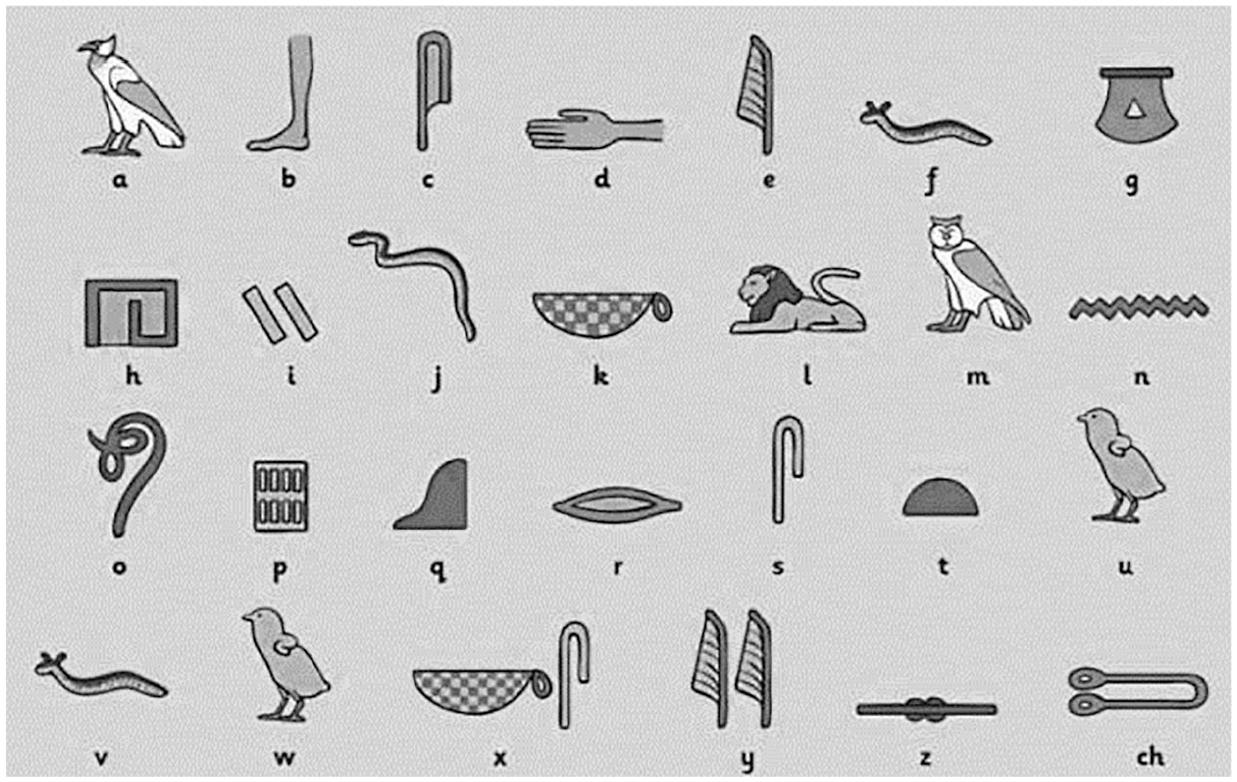
The video game offers three puzzles and three riddles. The first puzzle uses hieroglyphics as tools to solve the puzzle, which is the Egyptian aspect of the game. The hieroglyphics are used to solve puzzles in order to gain access to the next level. Figure 1 shows the hieroglyphics.
Hieroglyphics in the Nolwazi video game.
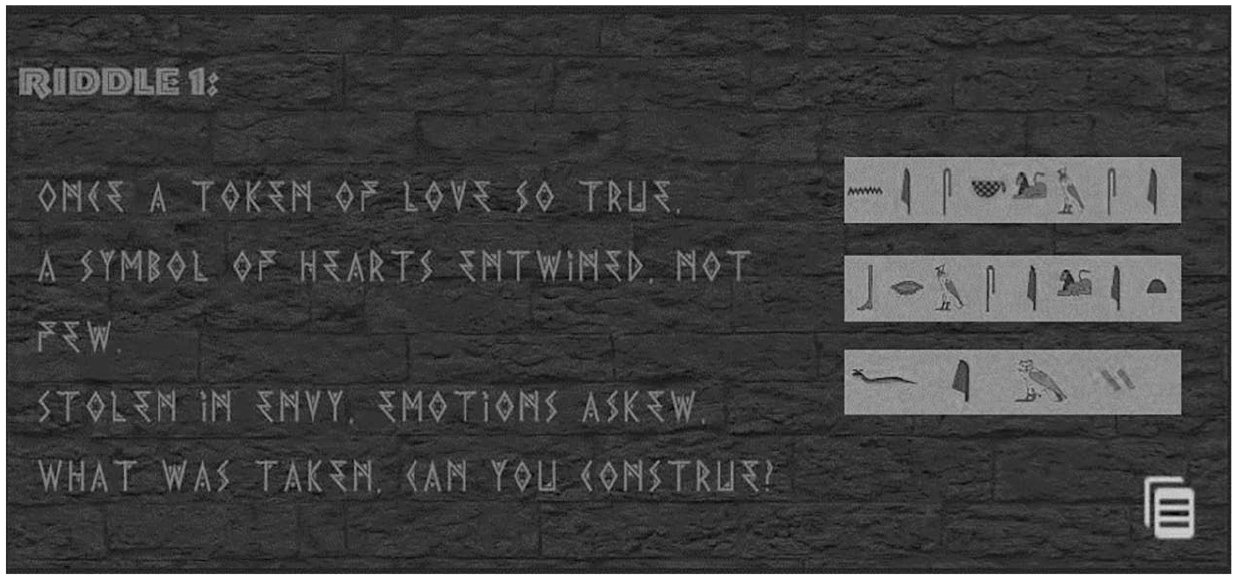
The hieroglyphics represent the various alphabetic letters for decoding the riddles. Riddle 1 is presented in Figure 2.
Riddle 1 in the Nolwazi video game.
Once a token of love so true. A symbol of hearts entwined, not few. Stolen in envy, emotions askew. What was taken, can you construe?
Using the hieroglyphics to decode Riddle 1 gives the result as
Riddle 2 in the Nolwazi video game.
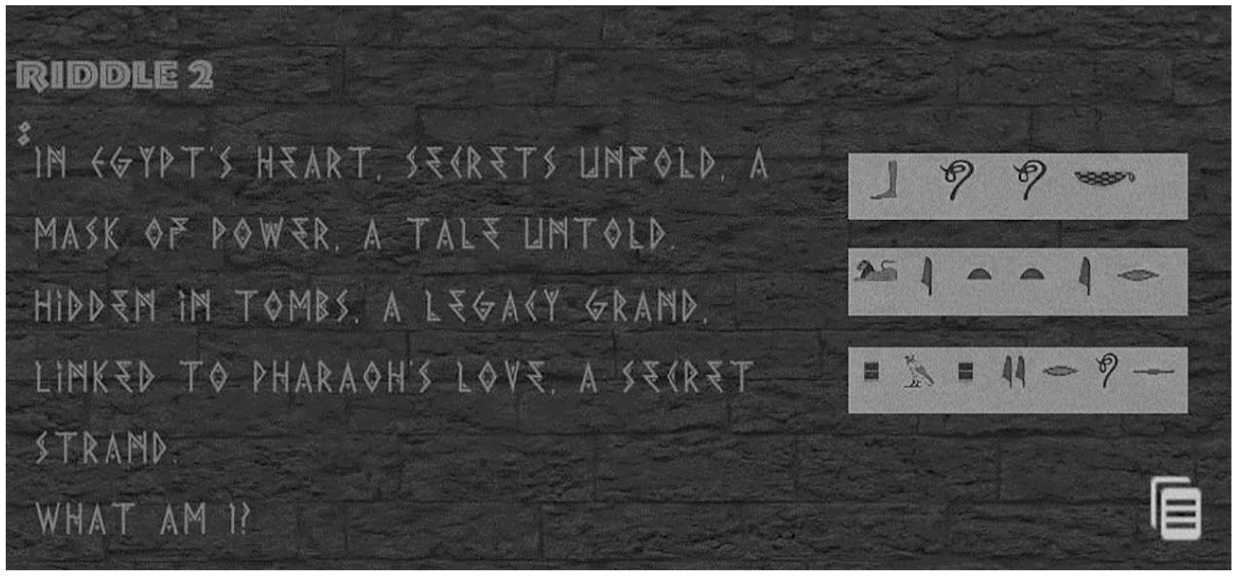
In Egypt’s heart, secrets unfold, a mask of power, a tale untold. Hidden in tombs, a legacy grand, linked to Pharaoh’s love, a secret strand. What am I?
The answer to Riddle 2 is
Riddle 3 in the Nolwazi video game.
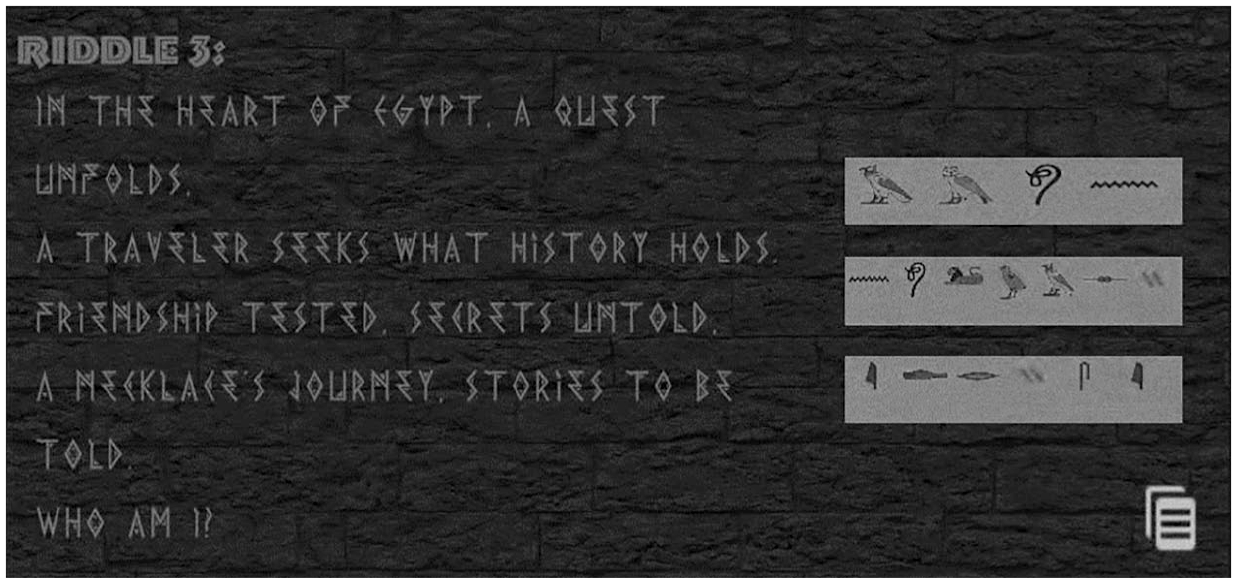
In the heart of Egypt, a quest unfolds. A traveler seeks what history holds. Friendship tested, secrets untold, a necklace’s journey, stories to be told. Who am I?
The answer to Riddle 3 is
Next are the three puzzles, shown in Figure 5, in which the player finds items in a maze. The puzzles are located within the maze in the areas marked 1, 2, and 3 for Riddles 1, 2, and 3. To exit the maze, the player must solve all three riddles. The end is marked by E, and the player simply walks through it upon completion.
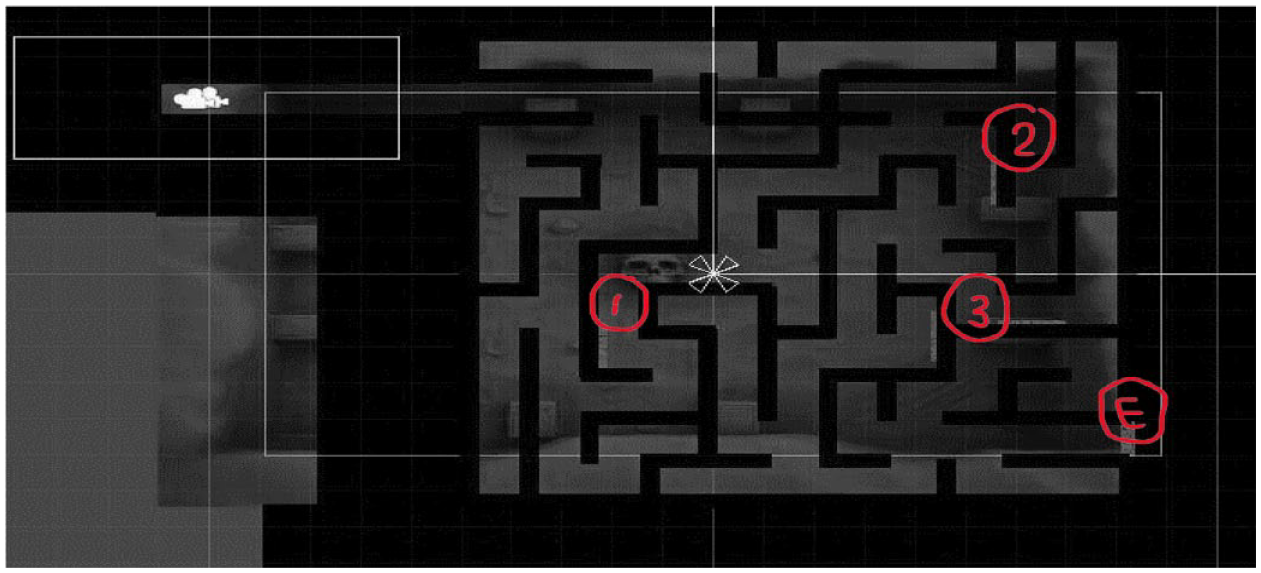
Maze/searching puzzle in the Nolwazi video game.
Figure 6 provides a simpler puzzle in the Nolwazi video game. The aim is to add numbers as Nolwazi buys food stocks from local traders.
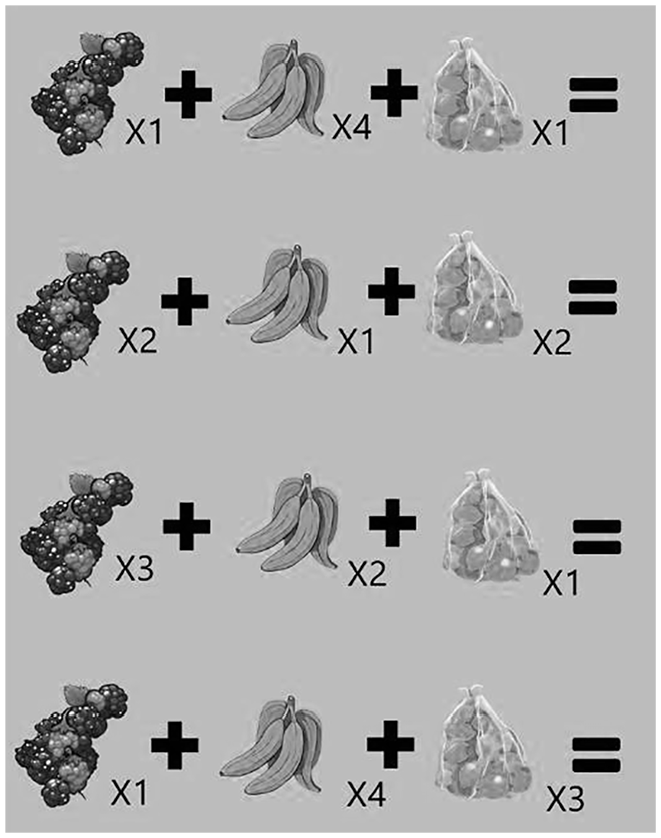
Mathematical puzzle in the Nolwazi video game.
Before the puzzle can be completed, Nolwazi has to pay attention to the clues the NPCs leave in their dialog with her. Through the NPCs, she finds out the cost of the fruits, which helps her to calculate the total amount in the puzzle:
Berries: 20N Plantain: 10N Lemons: 150N for 25 each
The solution to the mathematical puzzle is:
1 Bunch of berries + 4 plantains + 25 lemons = (20 + 40 + 150) = 210N 2 Bunches of berries + 1 plantain + 50 lemons = (40 + 10 + 300) = 350N 3 Bunches of berries + 2 plantains + 25 lemons = (60 + 20 + 150) = 230N 1 Bunch of berries + 4 plantains + 75 lemons = (20 + 40 + 450) = 510N
The puzzle teaches Nolwazi how to adapt to the new chaotic environment of the Nigerian food stock market. She must pay close attention to detail and understand the behavior of the market people in order to navigate this environment. The game was designed to make this math puzzle even more challenging.
It is important to note that different countries have different puzzles. Figure 7 shows the unsolved puzzle that Nolwazi used when she arrived in the Congo. The puzzle focused on Nolwazi discovering her family tree and understanding the roles of masks in Congolese communities.
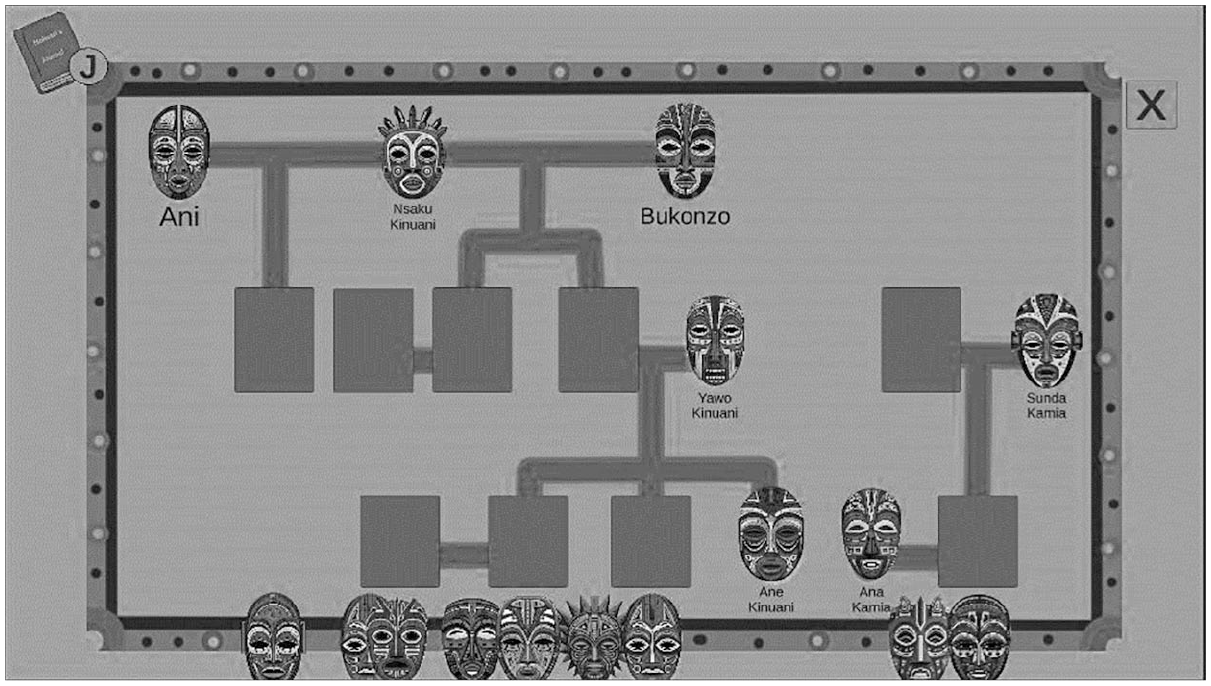
Unsolved Congolese puzzle in the Nolwazi video game.
The puzzle emphasizes the importance of understanding the rich ancestral roots in Africa. Figure 8 displays the solved puzzle, which is completed when Nolwazi has placed all the different names of the ancestors into the frame. Nolwazi can only learn more about this rich history by having discussions with various NPCs in the Congo.
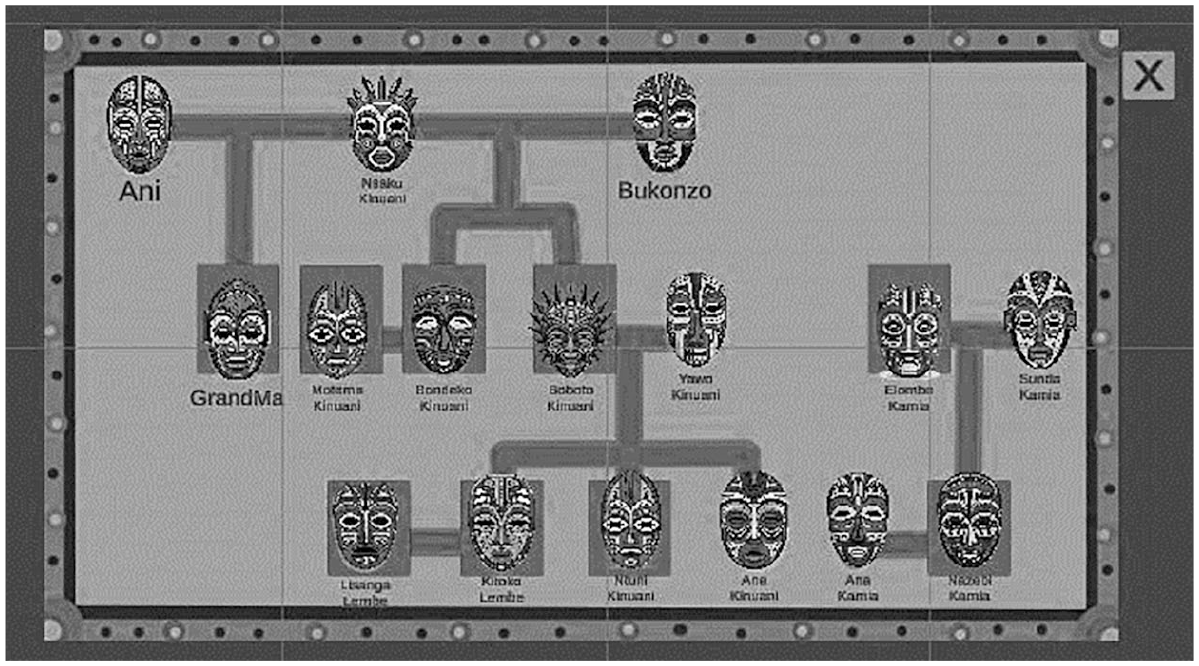
Completed puzzle in the Nolwazi video game.
This puzzle symbolizes the meaning of community. Through the interactions, connections can be established. Masks are quite prominent in Congolese culture to symbolize various things, such as a woman of the royal court or the face of an ancestor. In the game, each mask represents an individual in the community.
Observations From the Developed Video Game
As a lecturer, I have witnessed discussions about indigenization. It has been a great and beautiful journey to see my students incorporate African themes in various ways to improve their learning experience and share knowledge, especially through video games.
I had to teach the students various concepts in video game design, such as core mechanics, gameplay mechanics, the role of communication and interaction in video games, and the role of level design, which includes the different levels in video games and the need for different levels.
After teaching the students the core concepts, I reminded them of the term ubuntu. I explained how ubuntu is a critical aspect of our everyday lives and the need for indigenization of the video games we were going to create using a participatory culture framework.
The students were divided into groups of five and instructed to decide on the video games they would develop based on an African theme. I used the 11 principles of the participatory culture framework to guide myself as a lecturer and to help resolve issues among the groups of students.
The beauty was that the students all came up with different games, although this study focused on the unique game of Nolwazi. The game showed the riches of Africa, the empowerment of women, and the role of beads, headgear, culture, and the utilization of puzzles and riddles to travel across the various countries through the gameplay narrative. This game is unique because it allows players to learn about and reflect on the rich African culture. The game provides specific information about these countries.
After completing the African-themed videogames, the players and game developers shared their reflections on how they felt.
Feedback 1
By creating a game through an African lens, we have opened ourselves up to the possibility, and we might make more later on, which puts new uniquely African games into the market, spreading stories and cultures so often underrated in the wider world. Even if someone just sees and plays this game, they may be inspired to create more African-based content, or look into Africa, educating them and again helping spread that education.
Feedback 2
Gathering inspiration for the visual aesthetics involved a deep dive into African art, landscapes, and traditional motifs. By incorporating vibrant colors, patterns, and character designs inspired by various African cultures, we aimed to create an immersive experience that resonates with the game’s context while supporting the narrative and gameplay. Creating an adventure game allowed us to emphasize the importance of choices. We wanted players to feel the weight of decisions, impacting Nolwazi’s journey and the unfolding story. The focus was on fostering a sense of agency, where each choice had consequences, adding layers to the adventure experience.
Feedback 3
Our game brings significant value through its distinct approach to storytelling rooted in African culture and traditions. Traditional African storytelling often focuses on communal aspects, passing down knowledge through tales and embracing cultural diversity. In our game, we’ve embedded these cultural nuances into the narrative, promoting themes of community, diversity, peace, and perseverance. Moreover, our emphasis on exploration, puzzle-solving, and NPC interactions as core gameplay mechanics deviate from the conventional adventure game structure. This unique blend creates an immersive experience that not only entertains but also educates players about different cultures, fostering empathy and understanding. By incorporating African elements into the gameplay and narrative, our game stands out as a bridge between traditional storytelling and modern gaming, offering players an enriching and culturally diverse experience.
Feedback 4
I would say that the uniqueness of our game comes first with the narrative and then the fact that the game is not only an adventure game but also a puzzle game. The player has the ability to traverse through different lands and complete puzzles in every country that enables them to find out more about the cultures. Our game takes on different countries not always represented in games and represents the journey of a foreigner in them in an interactive experience. Our game is also unique in the way it tells the story of Africa. It is not tragic or mythical rather it is about real African communities who experience joy, love, hardship, and many more feelings that are often not represented in African stories.
Discussion on Students’ Feedback
The student feedback highlights the importance of incorporating African cultural elements into video games as an educational tool for promoting cultural preservation and cross-cultural understanding. Creating games from an African perspective can help elevate marginalized African narratives among people of African descent. This can raise awareness of underappreciated stories and traditions.
This research supports the idea explicitly stated in Feedback 1 that using native African stories, riddles, and puzzles in teaching might help students connect with their rich cultural history. The games are designed holistically around African philosophy and artistic designs with the aim of transmitting historically oppressed or marginalized cultural knowledge. The central focus of the game’s narrative is on communal elements and embedded cultural nuances, supporting the idea that African narratives serve as vehicles for cultural transmission. The students in Feedback 3 described how design decisions such as exploration, puzzle-solving, and interacting with NPCs improved immersion and produced an entertaining yet educational experience.
Feedback 4 demonstrates the peculiarity of portraying “real African communities” in a modern gaming experience that goes beyond standard “tragic or mythical” depictions. The game allows players to interact with the nuances of various African cultures and experience the joy, love, and hardship that reflect the diversity of lived experiences on the continent. The argument for diversifying learning materials with narratives that accurately reflect the depth and intricacies of indigenous African worldviews, storytelling traditions, and ideologies is aligned with the art major.
The students were pleased with the game that was created. The game incorporates their rich African culture into its development and plot. The students were especially excited about the puzzles and quizzes in the game.
This study addresses a wide range of audience spaces. In the first instance, it presents the possibilities of successfully creating games that include African-themes by African students. This provides the needed direction to policy makers in the African education sector who may wish to include this in the curriculum, stressing the possibilities of creating different Africa-themed games that suits different curriculum purposes. It also provides the inspirations for other African-themed game creators seeking to go the same route.
Besides, the study engages both the game creators and the users to become more familiar with African culture and ideologies. Irrespective of their location on the continent, African students can learn about the rich heritages and cultures across Africa. As such, African students (within the African environment) have the opportunities of engaging with indigenous elements of Africa in their curriculum. With rising use of smartphones and similar technologies, the games, so created can be easily accessed via these systems. A similar study by Adom et al. (2021) suggested the development of these games on mobile apps for the use of the target users.
Conclusion
This study has used African narratives, puzzles, and riddles to develop futuristic African video games that teach about African origins and rich African history. It serves as a stimulus for game developers on how to approach African video game development and provides insight into an indigenized and African-centered perspective with respect to shifting from decolonization to indigenization in learning spaces. Further investigations will focus on creating an African-themed framework for video game development.
Footnotes
Acknowledgements
I am grateful to the undergraduate students who allowed me to teach them how to make video games and the importance of using African themes in video games.
Declaration of Conflicting Interests
The author declared no potential conflicts of interest with respect to the research, authorship, and/or publication of this article.
Funding
The author(s) disclosed receipt of the following financial support for the research, authorship, and/or publication of this article: The author received support from the Humanities faculty with respect to this research.
