




Abstract
This article applies the left-behind places (LBPs) framework to explain how colonial planning legacies and post-colonial politics jointly reproduce marginalization in Chitungwiza. Drawing on 25 in-depth interviews with entrepreneurs and 10 key-informant interviews, complemented by municipal plans and secondary sources, we show that Chitungwiza’s economy is predominantly survivalist yet entrepreneurial, with firms embedded in dense social networks and uneven value-chain linkages to Harare. We (1) map empirical themes (markets, infrastructure, governance, finance, social capital) onto LBPs drivers (economic, infrastructural, political-institutional and socio-cultural), (2) identify contradictions, for example, digital uptake and formalization aspirations alongside deliberate small-scale strategies to avoid regulatory costs and (3) propose spatial governance and financial instruments to enable inclusive upgrading.
Introduction and background
Colonial planning laws forced Africans to reside in townships. Scheba and Turok (2020: 79) define townships as ‘neighborhoods that were deliberately designed under colonialism and then apartheid to function as segregated dormitories supplying labour to economic centres elsewhere in the city’. Owing to their original neglect (Harrison et al., 1997), we recognize townships as left-behind places (LBPs). This resonates with Pike et al. (2023), who argue that LBPs depict places ‘deemed less worthy of support and allocation of scarce public resources due to their lack of potential, reinforcing their neglect’. The absence of vibrant and successful economic activities in townships is a critical factor associated with LBPs. Zimbabwe is not an exception, as repressive policies have defined and shaped the establishment and management of urban areas in both the colonial and post-colonial contexts (Wekwete, 1988). These repressive policies have continued in the post-colonial era, for example, the 2005 Operation Murambatsvina 1 heavily affected township economic activities (Tibaijuka, 2005). While acknowledging the challenges of informal township economic activities, we argue that townships remain spatially segregated and depict LBPs. We highlight that an insufficient understanding of the contribution of township economies to socioeconomic development results in inappropriate policies. This constrains the growth of the micro-enterprises operating in these townships and thus compromising urban sustainability. Failure to address the challenges confronting township economies can exacerbate the living conditions of residents who fail to access certain goods and services, while also stifling the growth and potential of micro-enterprises operating there.
We situate our discussion in the context of Chitungwiza, Zimbabwe. Chitungwiza was established during the colonial period and possesses characteristics of a LBP. Local economic development in Chitungwiza lags and residents struggle to access services and economic opportunities. There is a need to understand the importance of township economies and formulate appropriate policy strategies and measures to control and regulate economic activities. This understanding can be facilitated through the LBPs concept, which offers nuanced insights and analyses to inform policy and practice on township economies. As Tups et al. (2024) argue, there is a geographical bias on the use and application of the LBPs theory, which tends to be applied more in the Global North context. Hence, we employ the LBPs theory to analyse enterprises focusing on skills, markets and infrastructural needs. We consider the operating environment, examine the scale of production and activities within Chitungwiza’s economy and identify urban planning interventions necessary to address the resulting challenges. Against this background, the objectives of the paper are to (1) show continuity of marginalization by piecing together its drivers in policy, law and practice, (2) present responses to the (re-articulated) dimensions of marginalization in townships and (3) discuss possible policy, law and practice pathways towards resilient and inclusive townships.
This study makes three contributions to economic geography and sustainable urban development. First, the study makes an empirical contribution to urban economics and spatial governance, considering the complexity of township economies, specifically in the less well-studied Zimbabwean townships. Thus, context-specific insights are provided, which can be compared with other southern African contexts such as South Africa, where many studies have focused on township economies (Charman et al., 2020; Harrison et al., 1997). Second, a theoretical contribution is achieved by employing the LBPs theory in urban economic geography of the Global South, as recommended by Tups et al. (2024). The study also provides spatial governance and economic policy recommendations critical in advancing the survival and sustainability of township economic activities. The stakes are also global: strengthening township economies contributes directly to SDG 1 (No Poverty) by expanding livelihood opportunities in structurally disadvantaged spaces, and to SDG 8 (Decent Work & Economic Growth) by enabling transition pathways from survivalist activities towards productive, better-paid and safer work.
Conceptualizing townships and their economies as LBPs
The township economy is complex and is defined as survivalist because it embodies strategies by poor, unemployed individuals seeking employment and trying to earn a living. Township enterprises are ‘make work jobs’ through which individuals use available resources, assets or networks to sustain their businesses (Charman et al., 2020). Petersen et al. (2019) define these as traditional survivalist operators, operating informally because of structural constraints. Structural constraints characterize townships as previously neglected and marginalized LBPs (Pike et al., 2023). Ranis and Stewart (1999: 263) argued that the township economy is a ‘sponge absorbing workers’ unable to secure formal employment or establish thriving enterprises. Hence, traditional survivalist operators are most likely to accept an available job elsewhere (Partridge et al., 2020), which explains the survivalist nature of the enterprises and the dependence of townships on economic activities happening elsewhere (Pike et al., 2023) and limited growth and continuity with some not anticipating growth (Charman, 2017; Petersen et al., 2019).
Township economic activities may also be a response to structural and locational discriminations (Soja, 2009); hence, it helps to provide goods and services lacking in predominantly dormitory residential areas. This locational discrimination reflects the spatial dynamics of the left-behindness of townships (Rodríguez-Pose, 2018). Infrastructure and support services are usually poor in townships, which compromises business operations (Harrison et al., 1997). The predominance of residential land uses limits the integration of economic activities, and thus, supporting infrastructure is often unavailable, and when available, is poorly maintained and governed. While not undermining the significance of regulations and laws governing township economic activities, sometimes these regulations stifle sustained business operations (Tups et al., 2024). Restrictive environments are created under the pretext of regulating and curbing public health issues, which is a major concern. This highlights how policies and regulations perpetuate the left-behindness of specific areas, calling for reconsideration of spatial planning and development policies (McKay et al., 2024). Consequently, many enterprises are operated from backyards or along streets, exposing the businesses to adverse weather, vandalism and crime. Conflicts and confrontations with authorities emerge because the spaces are not designated for these land uses (Scheba and Turok, 2020).
Charman (2017) highlights the significance of social networks and capital by showing how individuals in South Africa support one another by establishing business enterprises through soft loans and start-up capital. Rydin (2023) illustrates how social capital in a small United Kingdom town is critical in addressing the challenges of left-behindness. Maloney (2004) argues that social networks are the most preferred source of working capital among entrepreneurs because they are cheap, flexible and unlike the formal market. Petersen et al. (2019: 10) highlight the significance of ‘supply agreements between spaza shops and wholesale outlets’ in South Africa allowing for enhanced economies of scale in stock procurement. These agreements are helpful for small businesses with limited capital, which connects them to larger wholesalers. However, negative issues also arise from the agreements when markets are exploited and contraband or counterfeit goods are supplied, making the township a dumping ground.
While the township economy is largely small scale, informal and survivalist, some enterprises can be formal, large and engaged in manufacturing. Ranis and Stewart (1999) coined the term modernizing informal enterprises, including relatively larger enterprises, operating from non-residential premises, using dynamic technology and skilled labour. A key element of modernizing informal enterprises is their business linkages with formal markets and suppliers within and beyond the township. The supply chain integration of a township economy thus becomes key in plugging the gaps of left-behindness by allowing synergies in the broader regional economy.
Left-behind places and spatial justice
The LBPs concept emerges as a crucial concept to address long-standing socioeconomic problems and geographically uneven development (Tomaney et al., 2023). This concept characterizes any local community, area or city that is economically, culturally or socially disadvantaged as an LBP (Tups et al., 2024). Figure 1 presents the conceptual framework of the LBPs concept, illustrating the interplay between the theoretical foundation, drivers of marginalization and human agency and responses.
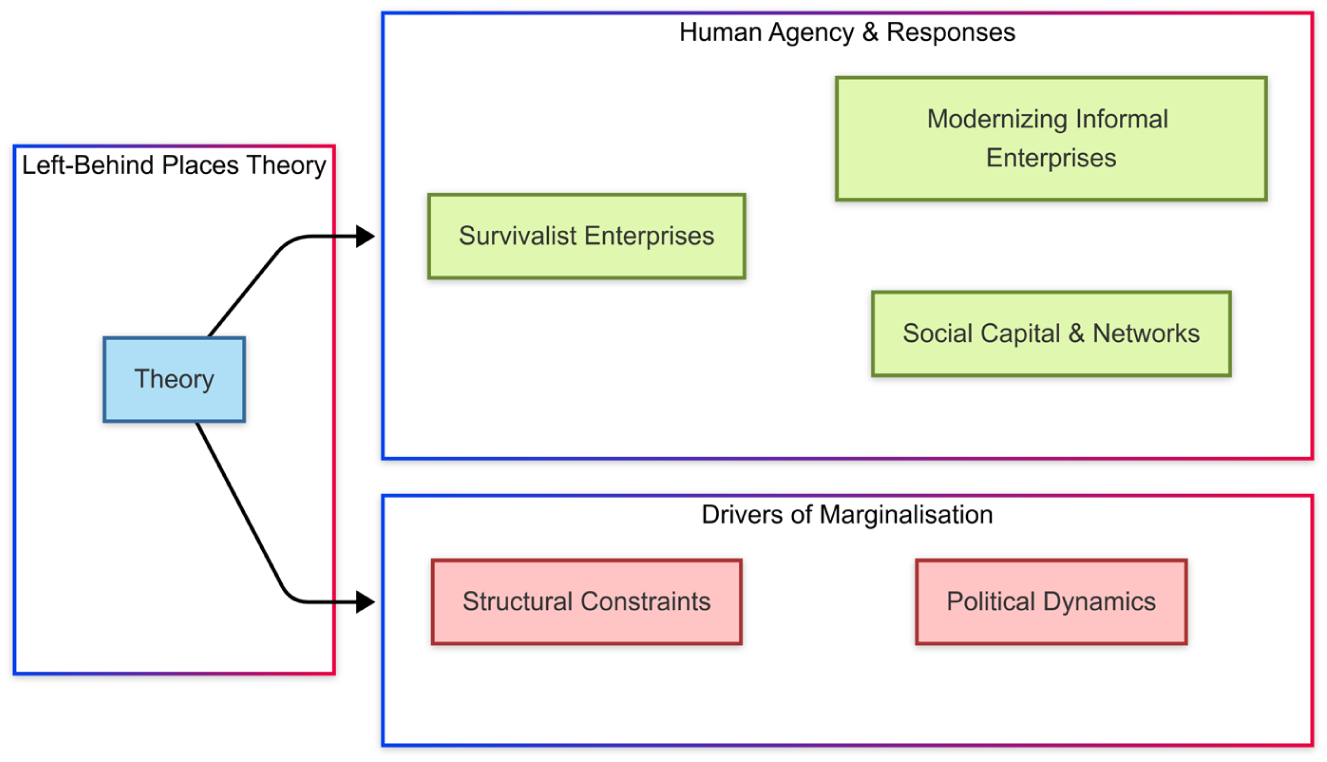
Conceptual framework of LBPs theory: drivers and human agency in marginalized contexts.
First, LBPs denote marginalized places at different scales, often lagging and declining and have limited economic opportunities (Rodríguez-Pose, 2018). This marginalization highlights spatial injustice attributed to outcomes and processes of unjust geographies and distributional patterns that favour certain places and communities (Soja, 2009). The left-behindness and spatial injustices are evident where there is limited ‘hard’ infrastructure and services, which isolates lagging areas and widens spatial injustices (MacKinnon et al., 2022). Many townships lag in progress, mostly due to poor structural or institutional weaknesses, which hinder communities’ adaptability to technologies, markets and economic changes (Fiorentino et al., 2024). These deficiencies are outcomes of spatial structures and planning systems that privilege and advantage certain individuals and communities due to their geographical location (Soja, 2009: 3). Spatial injustices also result from the unequal distributive outcomes of capitalist urbanization in which capitalist processes are prioritized ahead of human welfare and human needs (Harvey, 2012). Spatial dimensions of LBPs also consider employment and livelihood strategies and socioeconomic practices, which people employ to ‘make do’ and ‘get by’ (MacKinnon et al., 2022). These livelihood strategies reveal the left-behindness of certain places lacking formal employment or having high unemployment, and thus, residents engage in survivalist economic activities (Rydin, 2023).
Second, LBPs represents a political dynamic attributed to political decisions where a few elites and self-interested bureaucrats advance their selfish agendas with little regard for lagging places (Tomaney et al., 2023). This political organization of space is characterized by some redlining of urban investments, exclusionary zoning, territorial apartheid and the imprint of colonial social control of space use (Soja, 2009). These policy decisions limit the capabilities of use of urban spaces and thus complicate economic processes that can be undertaken in certain areas. When governments fail to distribute development resources equitably, geographies of discontent are created wherein marginalized individuals and groups are treated like ‘they don’t matter’ (Harvey, 1982). A multidimensional perspective recognizes that left-behindness is a combination of different factors characterizing historically marginalized places. According to MacKinnon et al. (2022: 42), LBPs are characterized by a combination of economic disadvantages, lower living standards, population loss/contraction/low growth, lack of infrastructure and political neglect and disengagement, which defines a place as left-behind. Figure 2 visualizes the multidimensional and interconnected nature of marginalization characterizing LBPs. It maps how social, economic, political and infrastructural marginalization mutually reinforces one another through cycles of exclusion, poverty, neglect, unemployment, weak service delivery and limited connectivity. The arrows and interlinkages highlight the dynamic relationships and feedback loops, showing, for example, how political neglect enables economic decline, which in turn deepens educational disadvantage and perpetuates social and infrastructural marginalization.
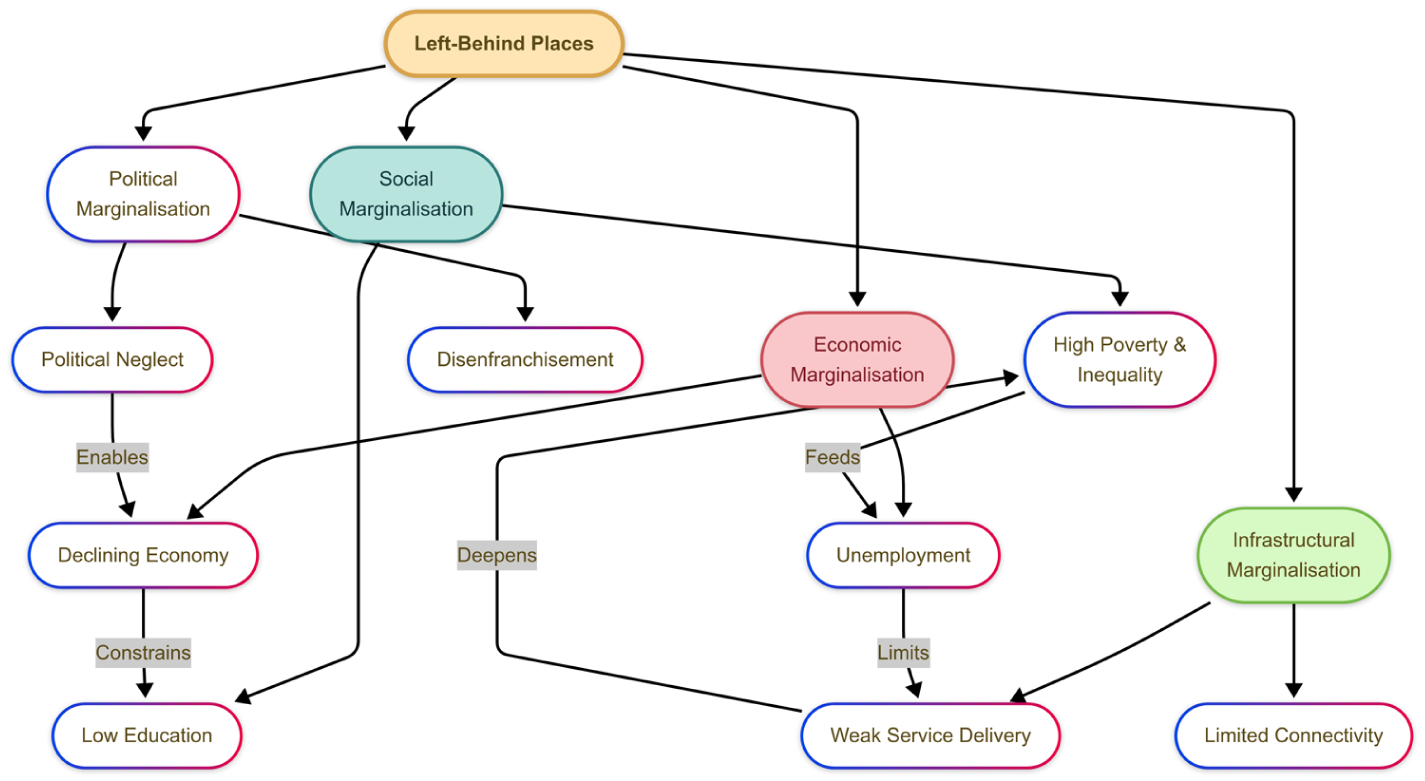
Interlinked dimensions of marginalization in LBPs.
Figure 3 is a comparative illustration of marginalization dimensions across four township sites in Chitungwiza (Zengeza, Manyame, St Marys and Seke). It demonstrates varying levels of social, economic, political and infrastructural neglect, highlighting the uneven spatial dynamics and development challenges faced within each area.
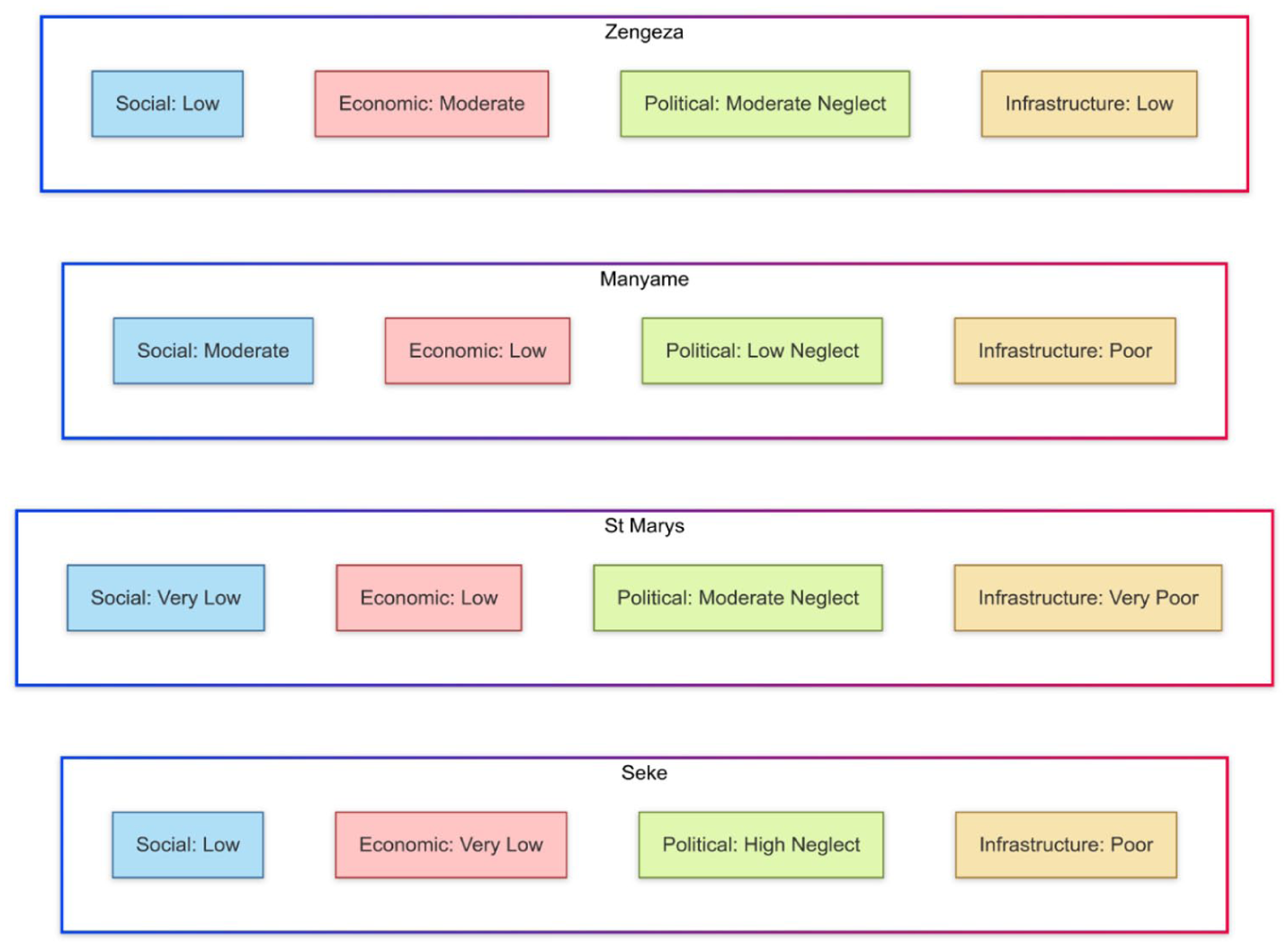
Multidimensional marginalization profiles of township sites in Chitungwiza.
Townships as LBPs in Zimbabwe: continuity of marginalization in urban policy, law and practice
In 1980, Harare had 15 townships concentrated more in the southern, eastern and south-eastern parts of the city. These townships are constrained by infrastructure deficiencies (Musewe, 2022). Infrastructure deficiency is partly attributed to colonial planning systems, which deliberately marginalized the townships, as explained by Bond (1993: 78) that ‘the local base of experience in township planning [during the colonial era] was weak’. This highlights unintended neglect of the Western planning orientation of the British colonial government, which did not recognize and integrate local realities. The absence of local plans to guide the economic development of townships is also evident in other countries, such as Indian cities, where townships were established and managed without any formal plans (Rai, 2012). The origins of Chitungwiza can be traced to Seke tribal trust land; Schlyter (2003) shows that in the 1950s, a settlement emerged on Seke tribal trust land. Through the Land Apportionment Act of 1930, tribal trust land was designated for Blacks because it represented land not allocated to whites. Until 1971, African townships were administered by the central government before municipalities were mandated with the responsibilities. Faced with the influx of Blacks in Harare, Chitungwiza was established to limit the number of Blacks in Harare while also reinforcing spatial segregation along racial lines. In 1976, refugees from war-torn rural areas flocked to urban areas and informally settled in places such as Derbyshire and were later relocated to Chitungwiza. This resonates with the political dimension of LBPs, overlooked by distant and self-interested metropolitan elites (Tomaney et al., 2023: 21).
At independence in 1980, Chitungwiza received a significant number of migrants. Between 1980 and 1990, multiple groups of squatters from different areas continued to be relocated to different townships in Chitungwiza (Schlyter, 2003). The government continued to ‘dump’ poor people in Chitungwiza, which reinforced the left-behindness of the townships by ‘trapping the poor’ into abject poverty (Partridge et al., 2020). Schlyter (2003: 17) recounted that the Director for Housing in 1987 bemoaned, ‘
Town Centre, a shopping complex, was built in 1990 to provide commercial and retail activities and ease the burden of residents travelling to Harare for most services (Mapfumo, 2012). The 2024 Master plan for Chitungwiza state, ‘the 1991 town centre proposal had limiting development conditions, for example, building height was capped at 3 storey suggesting basic conveniences were anticipated rather that a full-scale commercial hub focusing on the rest of the town’ (Chitungwiza Municipality, 2024: 3). However, the investment made at the Town Centre failed to fulfil the intended roles as the occupancy levels at the complex were low. Some proponents argued that the low occupancy at the Town Centre is attributed to high rental values charged (Mapfumo, 2012). This low occupancy of economic hubs shows under-performance of the township economy characteristic of LBPs (MacKinnon et al., 2022).
Political differences have also reinforced the left-behindness of Chitungwiza, especially after 2000. From 2000, Chitungwiza, like many urban councils in Zimbabwe, has been under the leadership of the main opposition political party, starting with the Movement for Democratic Change (MDC) in the early 2000s, and later renamed to MDC Alliance, and now Citizens Coalition for Change. This political leadership by the main opposition party resulted in marginalization of Chitungwiza, creating multiple deprivations, including water challenges, which have persisted for the past two decades, demolitions and evictions of settlements and a lack of investment in requisite infrastructure.
Methodology
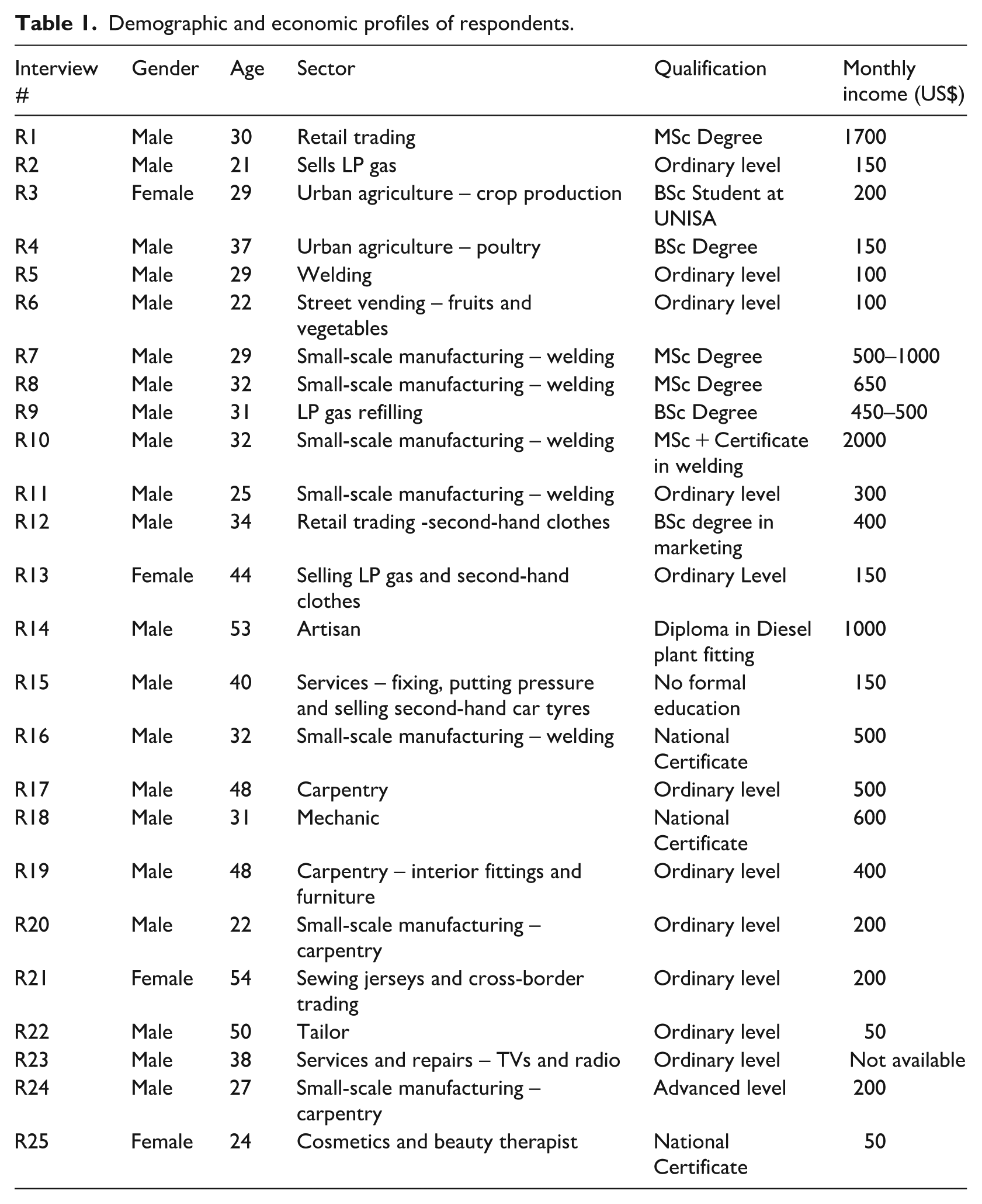
Guided by an interpretivist, narrative-inquiry design, we conducted 25 in-depth interviews with township entrepreneurs in Chitungwiza between September and November 2022 (each 60–90 minutes). A purposive strategy (also used for key informants) targeted variation by sector, business scale and entrepreneur profile (age, education, years in business) to capture diverse operating realities (Table 1). Participants were recruited via (1) gatekeepers in trader associations and ward councillors, (2) snowballing from initial interviewees and (3) site-based intercepts along commercial corridors and residential clusters with visible enterprise activity. Inclusion criteria were ⩾12 months operating in Chitungwiza, age ⩾18 and provision of informed consent. We were aware that non-probability sampling can risk selection bias towards more visible or accessible firms, and we mitigated this by combining gatekeepers, snowballing and site-based intercepts across diverse sectors and locations and by sampling negative cases (firms intentionally ‘staying small’).
Demographic and economic profiles of respondents.
While the entrepreneur sample was male-skewed, reflecting male dominance in carpentry, construction and certain retail niches, we interpreted findings with this limitation in mind. Where gendered patterns surfaced (e.g. women’s roles in hairdressing and small groceries; training markets), we identify them explicitly and avoid over-generalization. We also triangulate gender-salient points with key-informant views. Interviews solicited information regarding the typologies of economic activities, the scale of such activities, socio-spatial and temporal dynamics of the enterprises and the opportunities and challenges inherent in this township. Ten purposively selected key informants, comprising city planning officials, urban governance experts and academics, were also interviewed. Key informants brought specialized and macro-level perspectives to the study, enabling a more nuanced understanding of the structural and policy-driven influences on township economies. Interviews were audio-recorded (with consent) and transcribed verbatim by trained research assistants; Shona segments were translated to English and back-checked by a second bilingual assistant.
Narrative and thematic analyses were applied to the data. Specifically, the analysis was informed by the steps and procedures recommended by Erlingsson and Brysiewicz (2017) as follows: familiarization with the data, dividing data into meaning units and subsequently condensing meaning units, formulating codes and developing categories and themes. The analysis allowed for the identification of emerging patterns across the diverse stories and experiences shared by study participants. This involved a detailed coding process where data were first organized into potential themes and sub-themes. Each theme was reviewed and refined to ensure it accurately reflected the depth of the narratives. This approach was instrumental in moving beyond surface-level observations to uncover the underlying economic and social mechanisms impacting township economies. The analysis was iterative, with continuous comparisons made against the data to refine the themes and ensure they were grounded in the empirical evidence provided by respondents.
Interviews were conducted by researchers with prior field experience in Zimbabwean urban economies but no commercial or political ties in Chitungwiza. We minimized interviewer influence by using a semi-structured guide, neutral prompts and conducting interviews at locations chosen by participants. The study received ethical approval from the University of the Free State (Ethics approval number UFS-HSD2021/1726/21). Written informed consent was obtained; participants chose pseudonyms; audio files were stored on encrypted drives. For photographs, we obtained separate image-use consent. We also recognized our positions as Zimbabwean/Southern African urban scholars with prior policy and planning engagements. These positions offered contextual fluency but also shaped access. We mitigated potential bias via transparent sampling, paired coding and explicit attention to disconfirming evidence.
Results and analysis
The results are organized around five empirical themes – (1) nature/scope of activities and market conditions; (2) social capital; (3) productivity/technology; (4) physical infrastructure and (5) politics/institutions/finance – and explicitly map each to LBPs driver: economic (thin purchasing power, unequal competition, externalized value chains), infrastructural (servicing deficits, non-designated space), political-institutional (licencing frictions, discretionary enforcement, party dynamics) and socio-cultural/agency (dense networks, training, strategic informality). We also signpost contradictions (e.g. digital uptake versus deliberate smallness) and note where evidence triangulates or challenges the LBPs narrative.
Nature and scope of economic activities in Chitungwiza
Like most townships (Charman et al., 2020), the economic activities in Chitungwiza can be categorized into different sectors. For Chitungwiza, the predominant sectors included retail trade, service industry, small-scale manufacturing, agriculture, construction and real estate. Retail trading includes entrepreneurs who sell groceries, second-hand clothing and fruits and vegetables. While some respondents like R1 manage to rent formal shops from which they operate their business, other respondents could not afford to rent formal shops due to the survivalist nature of their enterprise (Charman, 2017). R13 sold second-hand clothes and LP gas in front of their house (Figure 4).
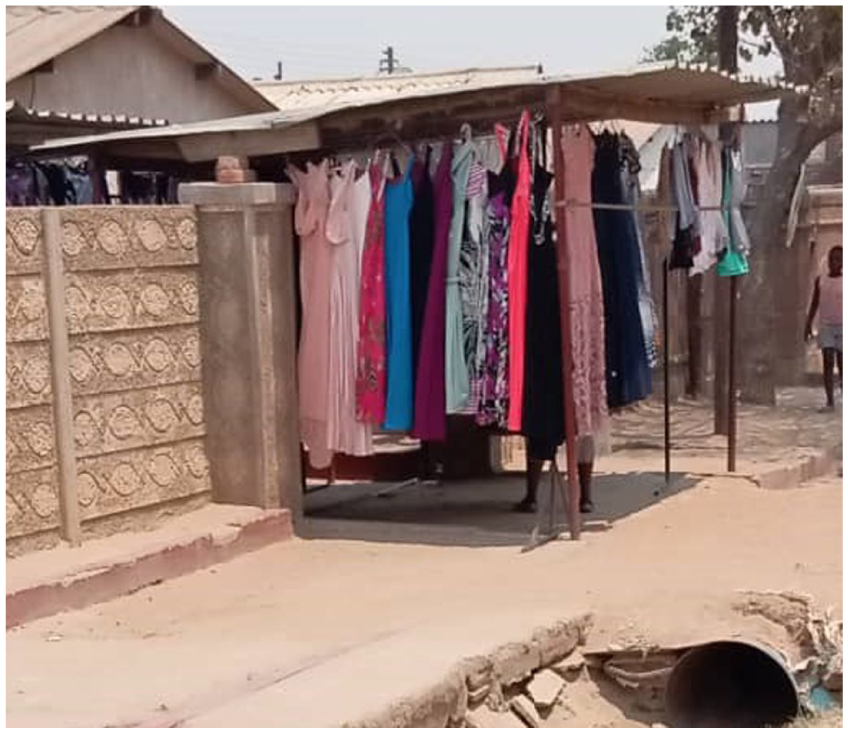
Second-hand clothes being sold outside a plot.
Other survivalist activities included selling second-hand clothes, TV and radio repairs, solar installations and carpentry (Figure 5). R16 pointed out that they just operated their business to survive, mainly due to the operational environment where customers had limited disposal incomes. The left-behindness of the township economy is thus evident here with low-quality goods, concentrated on trade, personal services and artisanal production (Rakabe, 2017). R16 narrated: If I move to another country, I can produce for a big company whilst employed and get a better salary. We produce for people who are suffering, so you sell through negotiations, you sell according to the customer’s budget.
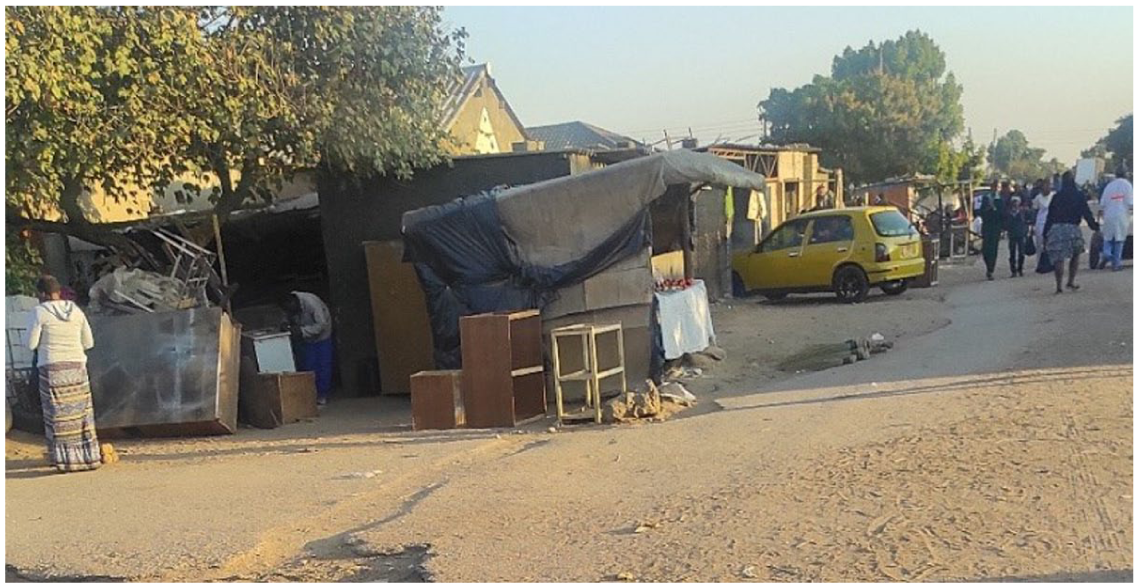
Survivalist type of businesses with carpentry being practised on the roadside.
The quote by R16 resonates with MacKinnon et al. (2022) on how poverty and inequalities are rife in LBPs. The deeply rooted inequalities and high poverty levels in Chitungwiza show how this poverty eventually affects the nature and scale of economic activities in townships.
Likewise, R15 indicated ‘Tiri kungongwavha ngwavha (we are hustling)’. From this quote, it is apparent that the township economy in Chitungwiza is dominated by individuals hustling to make a living. R4 said, ‘The business helped me to save money, allowed me to find something to do in the country where there are no jobs and increased household income’. This quote depicts the opportunistic nature of enterprises that engage in informal and small-scale businesses to sustain their families (Ranis and Stewart, 1999). The left-behindness of townships is also apparent in the lack of formal jobs (Pike et al., 2023), hence, residents find alternative ways to survive and make a living. In the context of Chitungwiza, unemployment rates are not only peculiar to townships but also nationally. The situation may differ from Pike et al. (2023), who observed that in the Global North, unemployment rates could be higher in LBPs. From Table 1, the youth (18–35 years) represent the largest share of individuals engaging in the township economic activities. This dominance of the youth in the township economy, is explained by the earlier point around high unemployment in Chitungwiza, especially among the youth. Due to the high unemployment among the youth, many have thus resorted to township economic activities as livelihood coping mechanisms. The issue of age is also related to the nature of the work which requires many efforts, for example, carpentry, walking around the township advertising and selling which then becomes more associated with the youth. However, there are some older individuals (R4, R10 and R14) engaged in some economic activities, but these tend to be individuals who have successfully worked elsewhere and have used their wages to start some success businesses in the townships.
Observations revealed the stylistic of mapping space and making use of it. Most businesses operated within residential areas where a portion of the property was used as a workshop, storeroom or trading space (Figure 5). This included individuals selling second-hand clothes and utilized spaces, including walls of public schools to hang their wares (Figure 6), while others tried to recreate their plots.
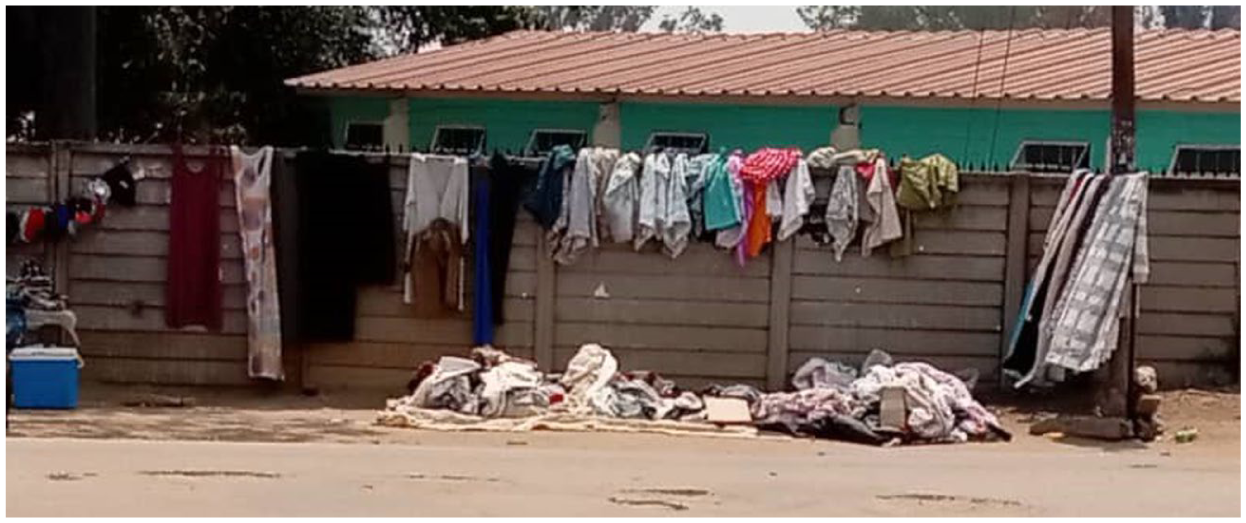
Second-hand clothes hung on a school wall.
Reported monthly takings varied widely. Where figures are mentioned, they reflect self-reported gross revenue in an average month unless otherwise noted; we qualify clear outliers in Table 1. For context, these figures sit above/below typical urban wage bands reported in Zimbabwe during 2022–2023; however, variability in inflation and exchange regimes cautions against direct comparisons. We therefore interpret incomes comparatively (across respondents/sectors) rather than as precise levels.
Social conditions/networks/cohesion
Social capital was identified as a critical factor in allowing individuals to start their economic activities. The findings confirm Rydin’s (2023) study, emphasizing the role of social capital in improving LBPs. In Chitungwiza, social networks help unemployed youth to be absorbed into the township economy (Ranis and Stewart, 1999) as pointed out by R15, Now I am the sole owner of everything and the boss here (giggles). I work with friends, not permanently, but occasionally, I assign them tasks to help me; it’s a matter of helping each other while we drink and work here.
Entry into trades is facilitated through informal training conducted by skilled individuals. For example, professional or seasoned hairdressers, carpenters and electricians train inexperienced and enthusiastic individuals in the skills and expertise of the trade. R25 indicated that she charged US$35 per month to train those interested and the training took 3–4 months. This shows the lack of skills and expertise among individuals in LBPs (MacKinnon et al., 2022) and the need for training and skills development to capacitate others. From this, we deduce that there is a demand for services allowing professional/skilled hairdressers to train others who would potentially join them and become competitors.
It was also revealed that social networks and capital were critical enablers in the township economy. According to R5, ‘The community members who buy goods from me, refer other customers here, that’s the most important avenue through which I get customers. Last year I was given a big contract at a certain church’. Likewise, R6 mentioned ‘I can be hired by my uncle who has networked with big companies, the community employs me in their homes, the place where I do my job here makes it possible for me to easily get customers’. First, R11 mentioned that when business was down in Chitungwiza, they moved around selling their wares, and at times, they went to Mhondoro. This showed that the products were sometimes sold outside the township, illustrating tenuous linkages between the township and other areas.
Productivity
Respondents occupied and utilized private spaces that they portioned and reconfigured in different ways. Figure 7 shows furniture being manufactured and advertised along a public road. Here, carpenters constructed a makeshift workshop seen in the background with corrugated iron sheets, used to store their equipment and valuables. R17 pointed out, if we get enough land to establish our workshops, we may grow and employ others. We need places with adequate services like toilets, electricity and water. Nowadays, most machines used in carpentry are electric. So, if we continue to use manual tools, we keep producing small amounts at a slower pace.
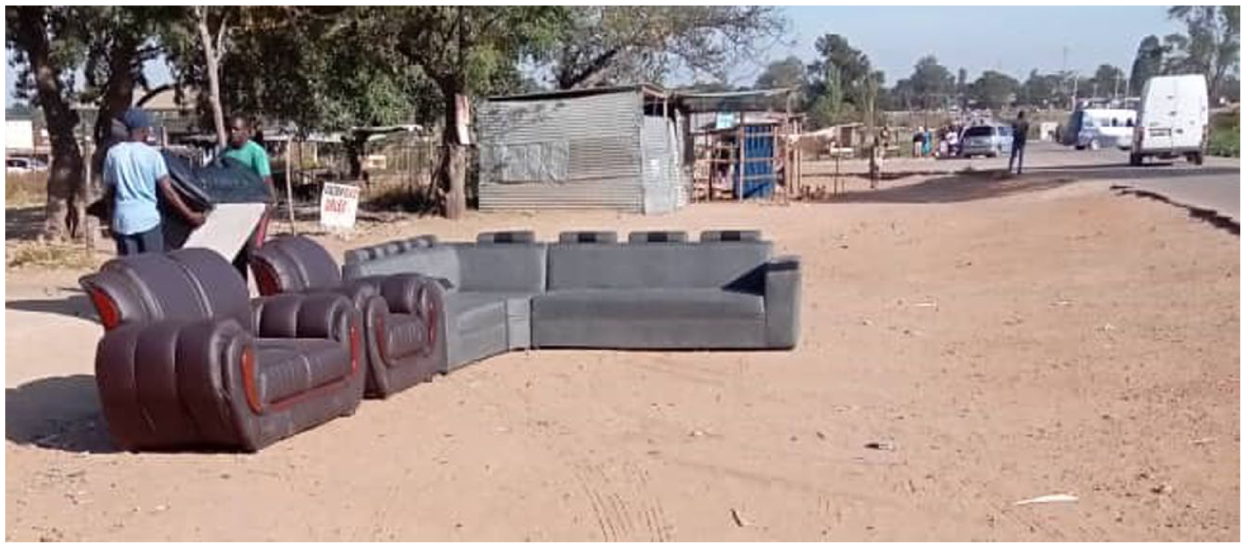
Couches manufactured along the roadside.
This response from R17 highlights the restrictions that come from operating along the roadside where there are no ancillary services. Such productivity confirms Rakabe’s (2017) view that township economic activities are static, unproductive and incapable of facilitating capital accumulation. However, R15 mentioned that they intended to construct the requisite infrastructure to facilitate their work, but the responses from the police and officials deterred them from such. This resonates with the political dimension of LBPs overlooked by distant and self-interested metropolitan elites (Tomaney et al., 2023).
Some respondents mentioned that they used technologies and made substantial investments in their businesses. R1 explained that he invested in point-of-sale machines that helped him make use of digital currency. Moreover, he mentioned that he used billing software, which helped him keep stock of his merchandise. Social media platforms are critical in enhancing the marketing of goods and services. Some respondents (R1, R12, R19, R24 and R25) mentioned the use of social media platforms to advertise and market their businesses. R8 stated, ‘I market through fliers, with technology nowadays I use WhatsApp groups and even Facebook to reach out to clients’. The practices challenge the traditional notion of township economy as technologically left-behind with entrepreneurs lacking financial literacy, not keeping business records and having low production (SNV, 2020). R4 explained that her business was made successful through networking and researching disease prevention. She also alluded to ‘The availability of the Internet means I don’t need much money to learn. I get information to succeed on the Internet’. This is an important issue that brings attention to the role of digital platforms in empowering individuals with skills and knowledge in business operations. However, there was limited use of the digital economy among the respondents. According to R8, there was more scope and breadth in adopting the digital economy, which facilitated ease of transacting with the clients, as ‘limited money transfer through EcoCash’ compromised their business operations.
Some enterprises were owned by individuals who aimed to expand and diversify their businesses. These individuals wanted their businesses to be regulated by acquiring trading licences and to go beyond small-scale and survivalist to modernizing informal enterprises, which operated from designated commercial and retail areas (Rakabe, 2017). R1 highlighted ‘The business is in a central shopping area, I opened another grocery shop at Makoni shopping centre, managed by my wife, currently, there are two; this one is managed by an employee. I’m looking forward to opening 2 more’. His sentiments showed focus and intent to expand his enterprises in the township, maximize the deficiencies of the market and provide retail services to the community. R1 also indicated that he paid shop licences to Chitungwiza Municipality and obtained stock from Harare. This showed the ability of businesses to contribute to city revenue and the integration into the wider regional business value chains. Table 1 shows the respondents’ incomes generated from the township economy. Some respondents made as much as US$1700 per month. However, this correlated with the level of education, also showing that the returns on capital investment was linked to commitment and dedication by entrepreneurs who invested their time and money in the business.
Participants’ routines reflect a habitus formed in contexts of infrastructural scarcity and discretionary enforcement: normalizing roadside production, multi-purpose home plots and social-network finance as taken-for-granted practices. Over time, these practices compound through cumulative advantage/disadvantage: small early gains (e.g. a family-funded tool purchase or a church referral contract) lower future transaction costs and widen market access, while early setbacks (e.g. confiscations, repeated electricity outages) increased risk premiums and entrench deliberate smallness.
Physical conditions and infrastructure
The lack of physical infrastructure (Figure 8) was identified as one of the major hindrances to the success and a critical factor contributing to the left-behindness of the township economy (Rodríguez-Pose, 2018). Many respondents lamented that the neglect of authorities in providing designated sites to operate from complicated their growth, as it brought uncertainty and people became sceptical about investing when they were threatened by the officials. This resonates with the treatment of LBPs by distant and self-interested metropolitan elites (Tomaney et al., 2023) and the failure to invest in physical infrastructure (MacKinnon et al., 2022; Rodríguez-Pose, 2018). R15 commented that ‘(Stops painting, looks at the interviewer, looks around and starts laughing) it sounds ridiculous (laughs), it’s a cat and mouse thing I can’t invest where I know I can be chased tomorrow’. This shows the structural challenges that need to be addressed to enable entrepreneurs to develop further.
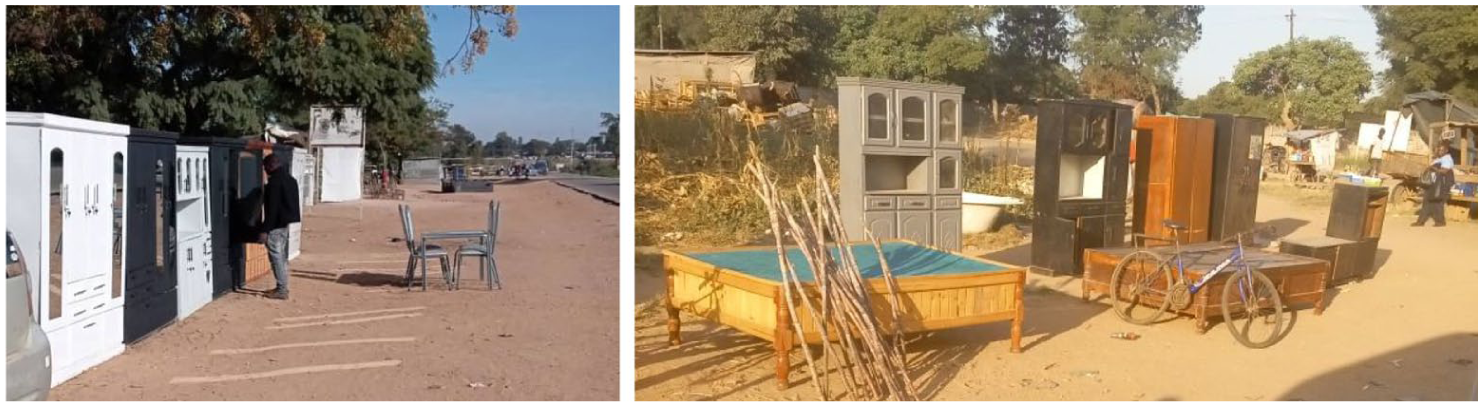
Economic activities undertaken on the roadside where there is no physical infrastructure.
There is limited availability of designated business spaces, especially light manufacturing enterprises, including carpentry, which need more working space, warehouses for storing raw materials, machinery and delicate furniture (Figure 5). A respondent explained, ‘I think the township should be upgraded for our enterprises to prosper if we are allocated proper working space, our businesses will flourish’. The lack of designated areas and physical infrastructure emerges as a major issue, attributed to locational discrimination (Pike et al., 2023; Soja, 2009) through which residential activity is the predominant land use activity zoned in the area.
Some respondents highlighted that the lack of municipal services, such as water, stifles their economic activities. R4 lamented that limited land on residential stands, load shedding and unreliable supply of clean water by the municipality of Chitungwiza affected business operations. R1 argued, [. . . ] although the local authorities are charging low prices for their services (water, power and refuse collection), this may be the reason why these services cannot be provided. In the end, local businesses would have to fork out more than the equilibrium prices to get these services.
A critical point is raised here regarding low charges for services, which makes cost recovery difficult, compromising service delivery. A key informant (an urban planning consultant) mentioned that levies and taxes were determined by the national government, and local authorities could not charge more than what was prescribed. This is done to ensure local authorities are never self-sufficient and have to rely on government grants and funds. Otherwise, some local authorities appear to be performing better than the central government, and this is not good for them. This situation of deliberate neglect of townships confirms the characteristic of LBPs as neglected and discontent places (MacKinnon et al., 2022).
Observed servicing gaps (electricity outages, water intermittency) align with municipal master-planning diagnostics (Chitungwiza Municipality, 2024) that identify constrained bulk services and maintenance backlogs. Our site observations (photos; field notes) documented non-designated workshops and roadside production consistent with these constraints.
Politics and government institutions
Many respondents confirmed they operated their businesses without any licences. Some (R6) were unaware of laws regulating their activities or the procedures required to obtain operating permits or licences. This ignorance was partly due to the perception (R13) that the township economy was akin to informality, hence no need for any licences. R2 and R16 highlighted that the municipality was not forthcoming when they tried to regularize their business. They frustrated applicants by sending them from one office to another without any results. R16 lamented ‘Even if I try to get it, I do not have the time to wait, especially around the pompous municipal officials yet I can do it illegally’. Others (R13 and R16) reasoned that there was no need for licences because the council did not create an enabling environment to conduct economic activities and there was too much red tape in acquiring permits and licences.
Corrupt authorities often took advantage of township entrepreneurs. Township economies are thus disadvantaged by self-interested officials (Tomaney et al., 2023) and some politicians, municipal officials and police who rob entrepreneurs, asking them to pay bribes. Respondents (R5, R9, R13 and R15) identified the municipal police as the major threat they face in conducting their business because they are criminalized. R5 bemoaned ‘The municipality itself and ZANU-PF youth come and demand bribes from us whenever they want but it’s bad because I am working for the money, yet they just benefit from corruption’. R9 mentioned that the corrupt Zimbabwe Republic Police also made it difficult for them to operate and asked for bribes and extortion money even when they were not on duty. This situation is attributed to a lack of a formal system, which could regularize and formalize township economic activities.
Key informants indicated that there was no plan to integrate township economic activities in developing the city. This is a major challenge that certain economic activities remain marginalized and criminalized within the township, much to the detriment of the business operators. R1 mentioned that ‘There is a need for Chitungwiza Municipality to engage with businesses to understand the needs of SMEs, including truly understanding how these laws are negatively affecting the operations and probably sort out solutions from SMEs’. This remark from R1 shows the deficiencies of municipal plans and policies that cater for the needs of small-scale businesses, resulting in their collapse and failure to succeed beyond being survivalist. Such neglect highlights the apparent left-behindness of townships from a policy and planning perspective, as stated by Tups et al. (2024).
Human well-being, aspirations and fears
Respondents identified limited access to credit loans as a major challenge for expanding their businesses. Respondent 5 lamented ‘we cannot borrow from banks; we do not even attempt because they will never consider us. It’s a waste of time’. The same sentiments were shared by R14, who mentioned that ‘there is no bank that can give you a loan. [. . . ]. The government may say we are giving loans, but these loans will only be for the youth, and I am way past that age group’. This resonates with studies on the township economy in South Africa (Rakabe, 2017; Scheba and Turok, 2020), where entrepreneurs struggle to expand their businesses due to a lack of adequate funds necessary for expanding their businesses. R14, R19 and R22 explained that their chances of getting loans and credit were jeopardized by the lack of collateral. Such limitations highlight the left-behindness of township entrepreneurs who remain marginalized in accessing opportunities (Bond, 1993).
While some entrepreneurs aspire to grow and expand their businesses, some respondents had no aspirations to grow their businesses. For example, R19 reasoned that while additional capital was good for expanding the business by buying additional machinery, the expansion would attract the authorities through company registrations and subsequent taxation from the Zimbabwe Revenue Authority and NASS. Specifically, R19 stated, If you grow big, you need more money. So, you can see that it’s better to remain small than to grow big and disappoint customers by delaying work. Moreso, if we grow, we need to regularize our business with NSSA.
These sentiments from R19 show the perspective of some entrepreneurs who decide to stifle the growth of their businesses to avoid the responsibilities of managing larger enterprises. Many respondents indicated that the failure of the formal economy sector in Zimbabwe was a motivator for engaging in township enterprises. As indicated in Table 1, some respondents even had tertiary educational qualifications, which could have allowed them to be formally employed. However, the economic woes in the country forced them to resort to township economic activities, which according to most of them had more rewards than being employed. R14 indicated: I’m a Diesel plant fitter trained with rails and certified with the City and Guilds. I resigned from my work because I was not being paid well. I have land and houses. I rent out some of my properties, but I can’t survive on that alone, so I had to find something. Now with my enterprising here I can buy better things than one formally employed [. . . ] most of those coming to the township came from those formal companies who are not paying adequate salaries.
The major reason that motivated most respondents to engage in the economic activities in Chitungwiza was the collapse of the economy and hard times. Here, businesses were operated to supplement household incomes, pathways out of poverty traps and a livelihood alternative for the poor. Specifically, R9 alluded: Things were tough after school. My father had a stroke when I was in university. He died immediately after my graduation. I became the breadwinner for the family. My sister was still in secondary school and needed school fees. My friend motivated me to start an informal business though he was educated too.
For some, the businesses act as a pathway to bigger things as they aspire to grow their enterprises and even improve their lives. For example, R17 explained that beyond sustaining his family, the business has enabled him to purchase a residential plot in Beatrice. He stated, I don’t think much about money to do what I want to do, to feed my family and anything that my family needs. The job benefits me a lot. I have managed to buy a stand in Beatrice for which I am making plans to build from this.
Summative figure 9 illustrates the multidimensional and interconnected factors influencing micro-enterprise activities in Chitungwiza. It highlights how demographics, economic activities, social capital, productivity, infrastructure, policy and aspirations interrelate in a complex ecosystem marked by both constraints and enabling mechanisms. There feedback loops and reciprocal influences between these dimensions, reflecting the lived realities and structural challenges faced by township entrepreneurs and left-behind places.
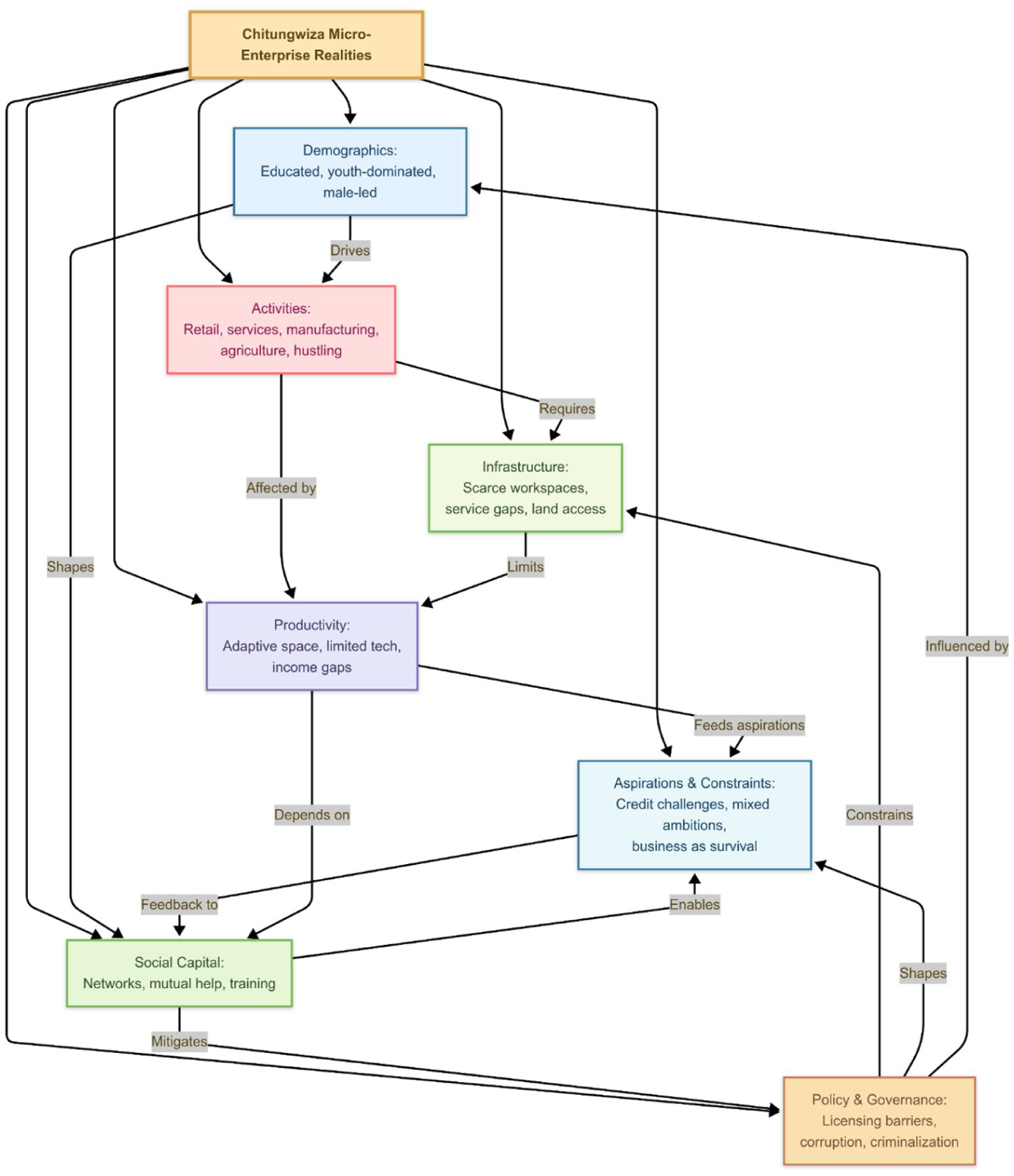
Interconnected dynamics shaping micro-enterprise realities in Chitungwiza.
Conclusions
The findings emphasize the survivalist nature of economic activities in Chitungwiza. This aligns with the situation in other southern African countries, showing the role of a township economy in absorbing the unemployed. Interestingly, Chitungwiza shows a high prevalence of business owners with formal training and education relevant to their businesses. This makes it possible for government intervention, as some enterprises lack the capital and enabling environment required to sustain growth and development. However, there is a need to provide training and capacity development, especially management and financial skills, as some respondents were hesitant to grow their enterprises due to the resulting responsibilities and taxation.
The criminalization of the township economy is pervasive, showing the attitude of authorities who take advantage of the township economy by extorting funds from individuals operating in this sector. This extortion exemplifies the marginalization of the poor who struggle to obtain permits and licences to operate legally. In this way, local authorities lose significant amounts of money through corrupt officials. This criminalization and marginalization are attributed to Western policies, which advocate for ‘order’ and zoning regulations. Such an approach calls for local authorities to reconsider how township economies are perceived and consider ways to create enabling environments where economies can thrive. Addressing left-behindness requires (1) zoning reforms and serviced micro-manufacturing precincts (electricity/water/ablutions) near existing residential clusters; (2) streamlined licencing (one-stop windows; transparent fee schedules) with amnesties to bring firms into the net; (3) graduated compliance (size-/risk-tiered health and safety requirements) and (4) tailored microfinance (purchase-order financing, equipment leasing, group guarantees) that recognizes township cashflow risks. Co-design platforms with trader associations can raise answerability and reduce discretionary enforcement.
We conclude that townships continue to be marginalized through laws, regulations and bureaucratic procedures, which work against township enterprises. To some extent, this is not deliberate discrimination but rather from geo-political and economic factors, which should be considered by decision-makers. Therefore, the overall economic and political context matters too. Hence, the problems of Chitungwiza may be as much to do with the dire straits of the Zimbabwe economy and the political malaise as any deliberate or even incidental marginalization of the town itself. Thus, much work is required to understand how policies should work when there is no level playing field.
The township economy in Chitungwiza is a thriving sector providing services to the community and beyond. While the authorities resent it and fail to provide a holistic plan to integrate it into the land use planning, they are losing significant potential income that could benefit the council through revenue and levies. This is evident first from the incomes that some individuals mentioned they make in a month, which surpasses the minimum wage, with some making monthly incomes of US$2000. It is key to consider the role the township economy plays in enhancing liveability in townships through providing goods and services. Thus, instead of penalizing the individuals engaging in this sector, it is appropriate to create an enabling environment for businesses that do not end up leaving some enterprises behind.
The township economy in Chitungwiza is characterized by individuals with a resilient and adaptable mind-set. However, the entrepreneurial spirit among these individuals needs to be complemented with an enabling policy, which nurtures rather than stifles businesses providing critical goods and services at the convenience of the community. Funding emerged as a major issue compromising the success of respondents’ businesses. Business owners struggle to access small loans and funds to establish or grow their businesses due to stringent measures from banks and financial institutions. We recommend that financial institutions reconsider their funding models and provide microfinance options, which cater to small-scale enterprises operating in Chitungwiza. We conclude that rapid urbanization makes problems in the township economy bigger and more difficult to address. Politics of difference and misgovernance further entrench the history of neglect that exacerbates the left-behindness of places like Chitungwiza. Hence, further research may explore the regulatory and policy framework to enhance the scaling up of the township economy in the Global South.
Footnotes
Acknowledgements
The authors appreciate the research assistance of Tinashe Magande and the language editing by Liesl Van Der Westhuizen. The assistance of Professor Robert Muponde and Professor Ivan Turok in framing and conceptualizing the article is acknowledged.
Funding
The authors disclosed receipt of the following financial support for the research, authorship, and/or publication of this article: This work was partly supported by the Department of Science and Innovation, South Africa National Research Foundation (grant number: SACN190418431632).
