




Abstract
While many researchers and policymakers use the capability approach to evaluate well-being, its application in the context of informal settlements remains limited. This study thus seeks to examine how people in informal settlements value central human functional capabilities, with a focus on poverty reduction. A critical realist paradigm and a multi-case study design were adopted to explore four informal settlements in Bulawayo, Zimbabwe. Data were collected through a digitalised semi-structured household questionnaire administered to 243 conveniently sampled informal settlement households, alongside four focus group discussions with informal community leaders and eight key informant interviews with government and NGO representatives. Quantitative data were analysed using SPSS version 17, and the qualitative data were analysed through thematic analysis. Abduction, retroduction and retrodiction were used for data interpretation and inference. Findings show that people living in informal settlements value all ten capabilities but not equally. Access to resources and the complex interplay of various conversion factors and social structures affect the attainment of capabilities. This study contributes to the literature on poverty reduction, demonstrating the utility of the capability approach in informal urban contexts. It also offers important insights for policy and practice in poverty reduction within informal settlements.
Keywords
Introduction
Although urban poverty is increasing, manifesting as informal settlements around the world, there is, however, a paucity of research on the capabilities of informal settlements. Informal settlements are suburban areas where residents have insecure land tenure, lack basic urban services, and their housing does not comply with building regulations (UN-Habitat, 2015). They often accommodate the urban poor (Matamanda, 2019) and are vulnerable to multiple hazards (Abunyewah et al., 2018).
When it comes to researching informal settlements, Turok and Borel-Saladin (2016) describe two contradictory perspectives. On one hand, informal settlements are viewed as ‘cul-de-sacs’ where people are confined in poverty, vulnerability and insecurity as the hostile environment constrains them from accessing opportunities. From this perspective, informal settlements are poverty traps and hotspots for social unrest (Bandauko et al., 2022). On the other hand, informal settlements are seen as ‘pathways-out-of-poverty’, offering optimism and hope as affordable gateways to urban economic possibilities for people coming from rural areas (Turok et al., 2017). In this view, living in an informal settlement provides an opportunity for individuals to be resourceful, developing the capabilities required to navigate urban life (Bandauko et al., 2022). Individual freedoms, coping capacities, capabilities and market forces become critical for achieving economic progress and resilience. This latter perspective aligns with the capability approach (CA) developed by Sen and Nussbaum (Robeyns, 2017), which is concerned with people’s fundamental freedoms to do things they value doing and have reasons to value.
Recently, there has been an increase in the adoption of the (CA) in researching poverty, as exemplified by Rippin (2015), Anand et al. (2020), and Schweiger (2021). In the CA, poverty is viewed as the deprivation of capabilities (Sen, 1999). Likewise, the risk of disasters may be viewed as the deprivation of capabilities to deal with disasters (Ton et al., 2019). Deprivation of capabilities does not only arise from limited resources, but also from individual and collective social, economic, and environmental factors and structures that enable access to and use of resources to mitigate poverty and disaster risks.
This article employs the capability approach lens to provide an empirical analysis of the capabilities of people living in informal settlements about poverty reduction. Four poor urban informal settlements in Bulawayo, Zimbabwe’s second capital city, were used as a multi-case study. This article starts by providing a brief description of poverty in informal settlements. It then describes the study area and the research methodology before examining the capabilities of people living in informal settlements in relation to poverty reduction.
Poverty in informal settlements in the capability approach
Urbanisation is one of the most significant demographic trends of the 21st century, with projections indicating that two-thirds of the global population will reside in urban areas by 2050 (World Bank, 2020). In developed countries, urbanisation is frequently associated with enhanced living conditions (Cole, 2019). However, in many developing countries, it has contributed to the proliferation of informal settlements (Jones, 2017), primarily due to insufficient infrastructure (De Bruin et al., 2021). Although there is a debate in the literature on the differences between informal settlements, slums, and shantytowns, these terms are often used interchangeably (Abunyewah et al., 2018). To avoid the negative connotations associated with terms such as slums and squatter camps, this study adopts the term’ informal settlements’ as a euphemism.
Historically, poverty has been narrowly defined as a deficiency in income (Collins, 2020); recently, it has been conceptualised as multidimensional (Iglesias et al., 2017). A multidimensional conceptualisation of poverty is critical in informal settlement contexts, as people face a multiplicity of challenges and vulnerability to hazards. Thus, reducing poverty to mere lack of financial capital obscures the breadth and depth of deprivations experienced in these contexts. The Capability Approach (CA) provides a more holistic framework and a multidimensional perspective. It also highlights the criticality of human agency in well-being (Broderick, 2018; Chipango, 2021), which is critical for poverty and disaster risk reduction.
In CA, Sen (1999) conceptualises human well-being in terms of ‘functionings’, the valuable states of being and activities that individuals have reason to value, such as being nourished, literate, or healthy. Capabilities denote the genuine opportunities available for achieving these functionings. Significantly, capabilities depend not only on the possession of resources but also on ‘conversion factors’, which are the personal, social, and environmental conditions that influence how effectively resources can be transformed into well-being outcomes (Grabowska, 2021; Robeyns, 2017; Walker, 2019). These include individual characteristics (e.g. gender, age), social institutions and norms (e.g. discrimination, stigma), and environmental variables (e.g. geography, natural hazards). The CA thus positions poor individuals not as passive recipients of aid but as agents capable of pursuing goals, constrained or enabled by their environments (Schweiger, 2021).
In informal settlements contexts, access to basic services is a global challenge (Mutyambizi et al., 2020). This challenge constrains the achievement of capabilities for poverty and disaster risk reduction. Sen (2010) aligns with Wisner et al., (2004) in the vulnerability perspective, which depicts disaster risk as an interaction between hazards and conditions of vulnerability. Informal settlements are often situated in hazardous areas, such as floodplains, thereby increasing residents’ exposure to hazards. A lack of capital, including social and economic, often exacerbates the impact of disasters, making recovery more challenging (García, 2024). Lack of resources in an informal context is not limited to one’s capacity to acquire them but also extends to systematic exclusion by the political and economic systems. The illegal status of residents in informal settlements may result in the denial of their right to receive assistance, despite this right being enshrined in international humanitarian law and national constitutions.
The central human functional capabilities
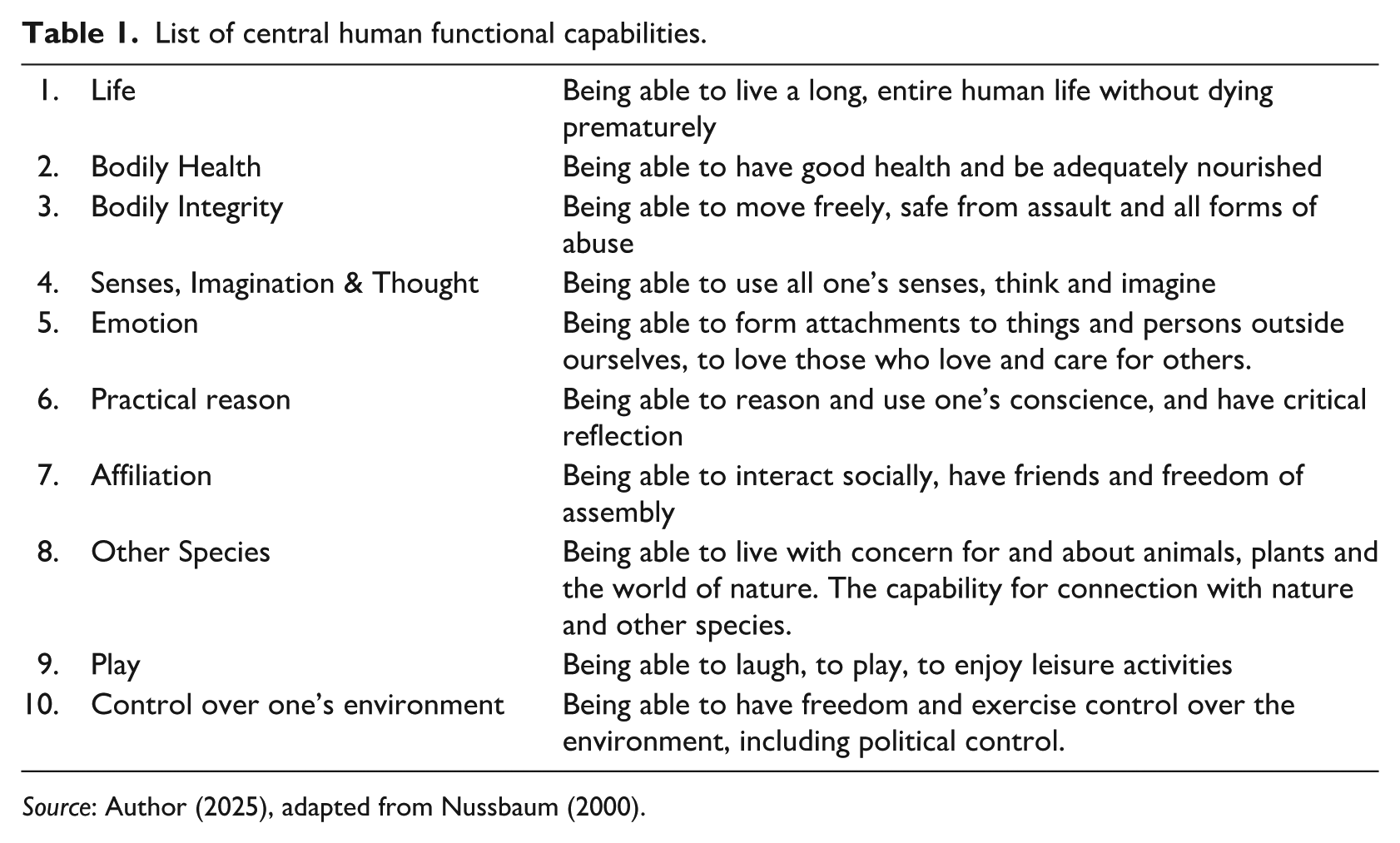
While Sen (1999) deliberately avoided formulating a universal list of capabilities, Nussbaum (2007) advanced a set of ten Central Human Functional Capabilities (CHFCs) that she argues are essential for a life with dignity, as shown in Table 1.
List of central human functional capabilities.
Source: Author (2025), adapted from Nussbaum (2000).
Table 1 provides a summary of the central human functional capabilities as identified by Nussbaum.
Nussbaum’s CHFCs framework addresses critiques of the CA’s supposed vagueness or lack of measurability by offering a structured yet flexible list that can be adapted across contexts (Robeyns, 2017). Empirical studies have increasingly applied the CHFCs to analyse the experiences of diverse, vulnerable groups such as children with autism spectrum disorder (Mousavi, 2017) and the elderly (Sarlak et al., 2020). Within informal settlements, the CHFC framework provides a robust foundation for identifying and addressing the intersecting forms of deprivation that inhibit individual and collective well-being.
The study area
Bulawayo, the second-largest city in Zimbabwe, was once the country’s industrial and commercial hub; however, it has undergone a dramatic transformation due to deindustrialisation. Before independence, the city’s strategic location, including its railway network and proximity to South Africa and Botswana, enabled it to flourish in the textiles, engineering, and food processing industries (Chenga and Zikhali, 2020; Chinjova, 2019). Following independence, there was an influx of people, mainly from the rural Matabeleland and Midlands provinces, who fled the civil strife that occurred between 1983 and 1987 in Zimbabwe, to Bulawayo. This sudden population surge led to the proliferation of informal settlements, as the city was unable to cope with the housing demand (Mpofu, 2021).
Other important aspects that catalysed the proliferation of informal settlements in Bulawayo include the economic challenges brought in by the Economic Structural Adjustment Programme (ESAP) in the 1990s, the erratic land reform programme and economic collapse in the 2000s. These challenges led to rapid de-industrialisation and disinvestment in Bulawayo (Mlambo, 2017). The loss of jobs led to an increase in the informal sector as people sought alternative livelihoods (Moyo, 2018). The lack of income led to disruptions in service provision in the city, resulting in housing shortages, water shortages, and road deterioration (Marumahoko, 2020).
The population in informal settlements further increased in mid-2005, coinciding with the central-party-driven mass urban evictions and demolitions known as Operation Restore Order/Murambatsvina (Hammar, 2017). In 2012, efforts supported by the International Organisation for Migration (IOM) were made to resettle people affected by Murambatsvina from Trenance and Killarney in Mazwi, 20 km from Bulawayo City Centre (Hammar, 2017). However, to date, some residents of Killarney and Trenance informal settlements are still awaiting resettlement.
Figure 1 illustrates the study area, comprising four informal settlements in Bulawayo. Although the four informal settlements are located in different parts of the city, they all face similar challenges in terms of access to basic services and being recognised as part of the city residents.
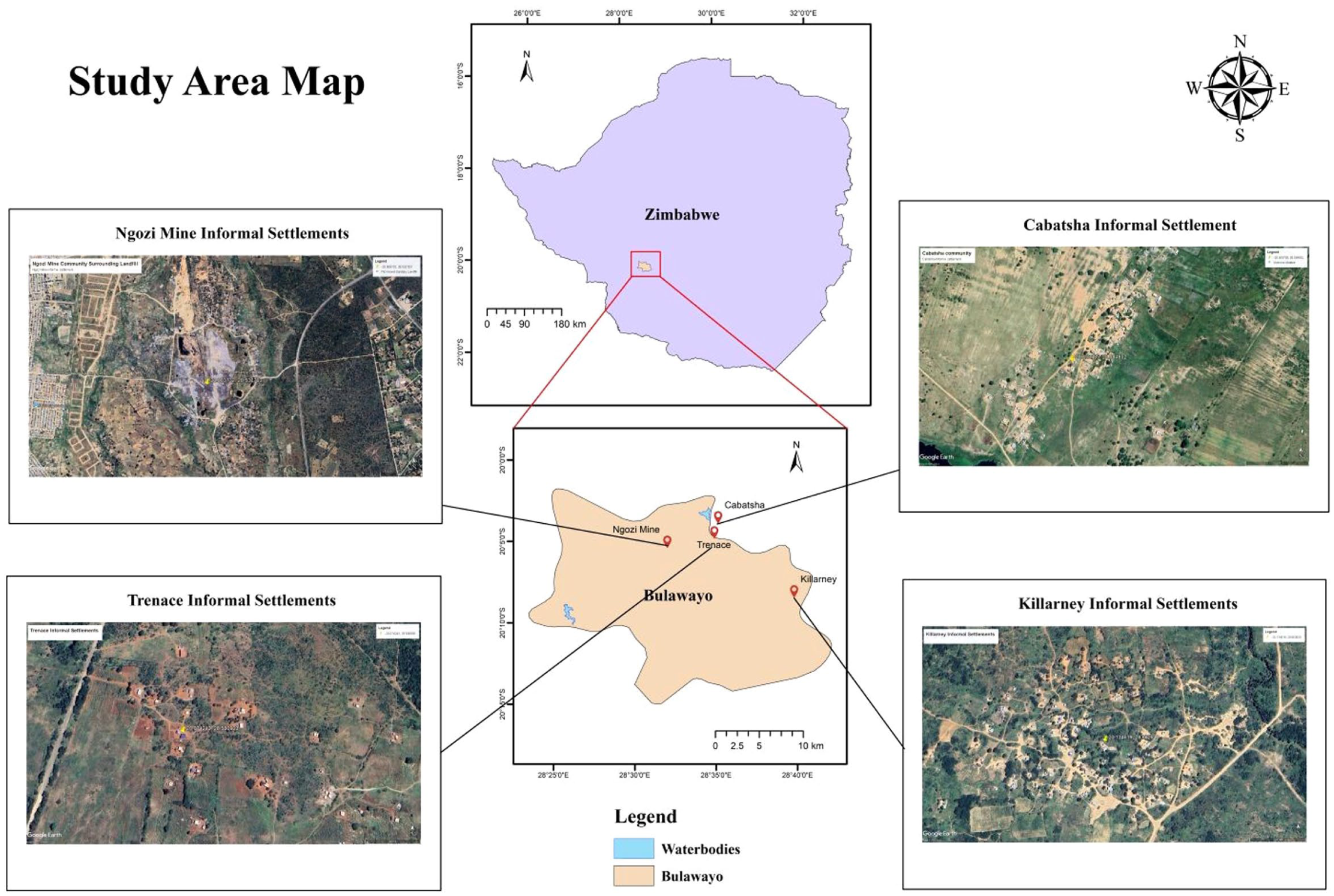
Map of the study area.
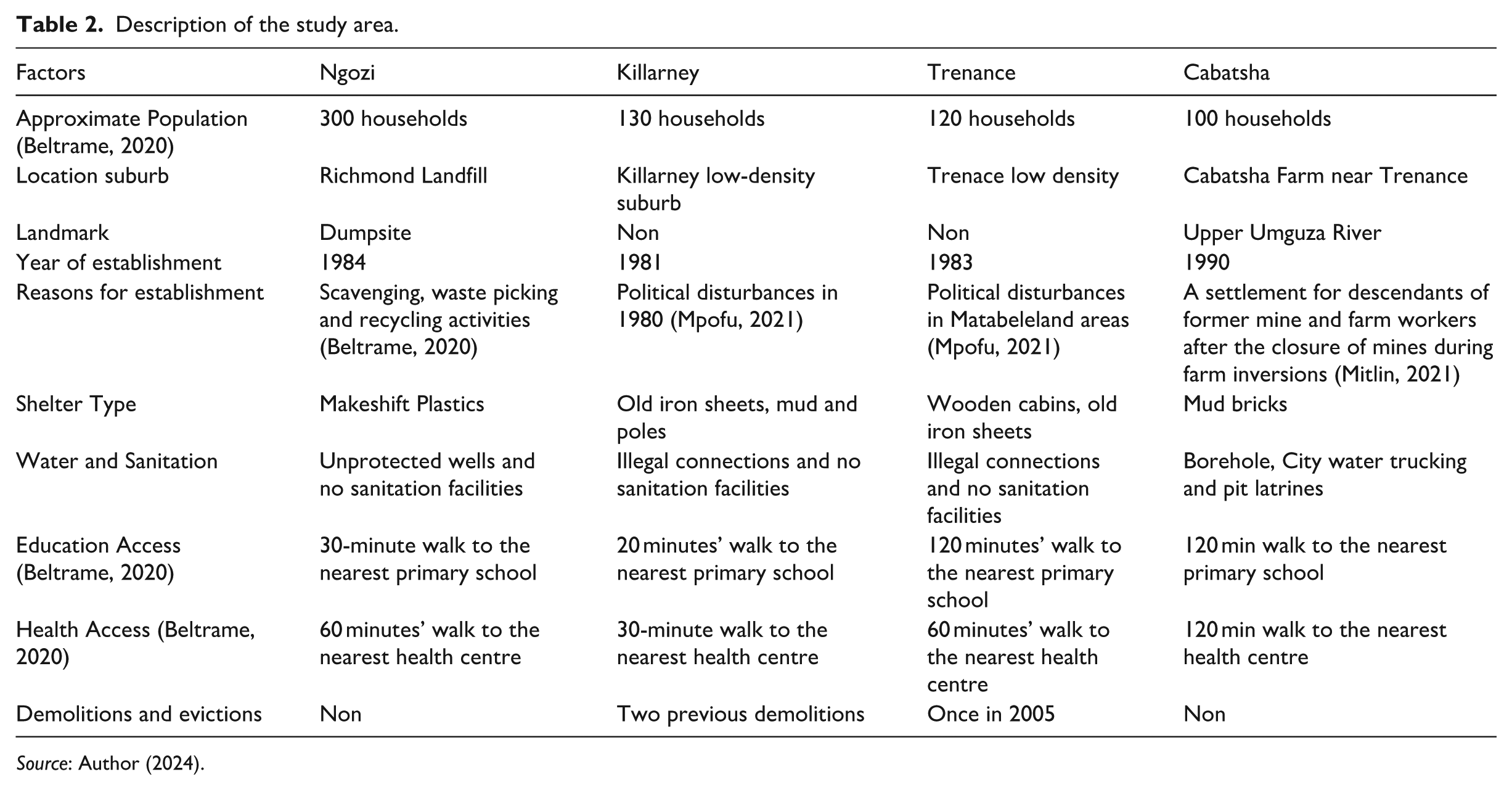
Table 2 describes the study area, which consists of four settlements. The table provides information on their location, population and the circumstances surrounding their establishment. It also includes information on access to basic resources and services such as shelter, water, sanitation, education and health services important for poverty reduction.
Description of the study area.
Source: Author (2024).
Materials and methods
To understand the capabilities of people living in informal settlements, the study adopted a multi-case study approach. The multi-case study approach enables a rich and detailed study of the phenomenon (poverty reduction) in different contexts (Ngozi mine, Cabatsha, Killarney and Trenance informal settlements) (Vohra, 2024). Poverty, being a complex real-world issue, necessitated a multi-case study design for data collection (Yin, 2018; Fearon et al., 2021). Halkias et al. (2022) noted that multi-case analysis is valuable for qualitative research as it allows participants to provide in-depth information about a phenomenon. The broader study was assessed and approved by University of Free State’s Ethics Committee, the study’s ethical clearance number UFS-HSD2024/1303).
The analysis of capabilities is based on Nussbaum’s 10 central human functional capabilities (CHFCs), which were considered essential for human development and well-being. To strengthen the explanatory power of the capability approach (Ton et al., 2021), the study employed a critical realism (CR) research methodology to understand the interplay between resource access, personal conversion factors, and valued capabilities for poverty reduction. Critical realism is a philosophical framework chiefly formulated by Roy Bhasker in 1987, serving as a methodological alternative to both interpretivism and positivism. It asserts that ontological reality is layered and exists independently of human experience, including empirical, actual, and real realms (Giese and Joseph, 2021). It enables the use of both the qualitative and quantitative data collection and analysis. In this study, qualitative data were collected through focus group discussions and key informant interviews, while household questionnaire was used for quantitative data. Both data were analysed through thematic analysis and the CR methods of retroduction and abduction. Retroduction is a process of identifying mechanisms that can explain why things they are, and abduction is interpreting the findings through possible theory.
Through CR, the study examined the empirical evidence to uncover actual reality such as the impacts of de-industrialisation caused by economic meltdown, displacements such as Operation Murambatsvina and impacts of disasters that shape perceptions. It also facilitated the identification of mechanisms such as stigma, discrimination and illegality that shaped their perceptions on what they value for poverty reduction. Integrating critical realism (CR) with the CA is becoming more common in explanatory research. Recently, it has been used in disaster risk reduction for people with disabilities (Ton et al., 2021), social work (Kjellberg and Jansson, 2022), development (Mazigo and Hattingh, 2020), and education (Sakata, 2021). The critical realism paradigm enhances the explanatory power of the CA. Fleetwood (2014) contends that critical realism encompasses stratified ontology, a constructivist epistemology, and a pluralistic approach, making it flexible and relevant for the CA to unravel causal mechanisms.
Data source and sampling
Municipality local office and Beltrame (2020) reports show that there are approximately 650 households in the four settlements. Therefore, the study conveniently sampled 243 households out of a projected 650 in the four settlements, and each settlement’s sample was proportionate to the number of households. Each settlement was clustered, and the fraction of each cluster determined the number of homes surveyed. Given the dynamic nature of informal settlements, convenience sampling was employed to identify participants (Gevaert et al., 2019). Four focus group discussions and four key informant interviews were conducted with local non-governmental organisations and government leaders.
Data collection took place from 23 October to 9 November 2024, using the Kobo Toolkit. Five research assistants were trained to assist with the data collection. The household questionnaire consisted of closed-ended questions in Likert-type-type format, ranging from ‘strongly disagree’ to ‘strongly agree’. Each Likert scale format question was followed by an open-ended question, which allowed the respondent to provide more details or offer informal feedback on their selected response. The primary investigator led two-session focus group discussions in each of the settlements. Eight community leaders participated in each focus group discussion. Semi-structured and unstructured interviews were conducted with four key informants from regional government and non-government organisations.
Data analysis
After completing the data collection process, the data were cleaned and coded accordingly. Deductive and adaptive theme analysis was used to evaluate qualitative data from key informant interviews and focus group discussions (Fletcher, 2017). The SPSS programme version 17 was used to analyse quantitative data. The Likert-type data were analysed through descriptive statistical analysis, including frequency, multi-response analysis, and cross-tabulation. Data were classified, and demi-irregularities were found using critical realism (Fletcher, 2017). Data analysis used critical realism’s abduction, retroduction, retrodiction, and data triangulation to identify resources, factors, structures, and causal mechanisms (Eastwood et al., 2016).
Results and discussion
Socio-demographic characteristics of the respondents
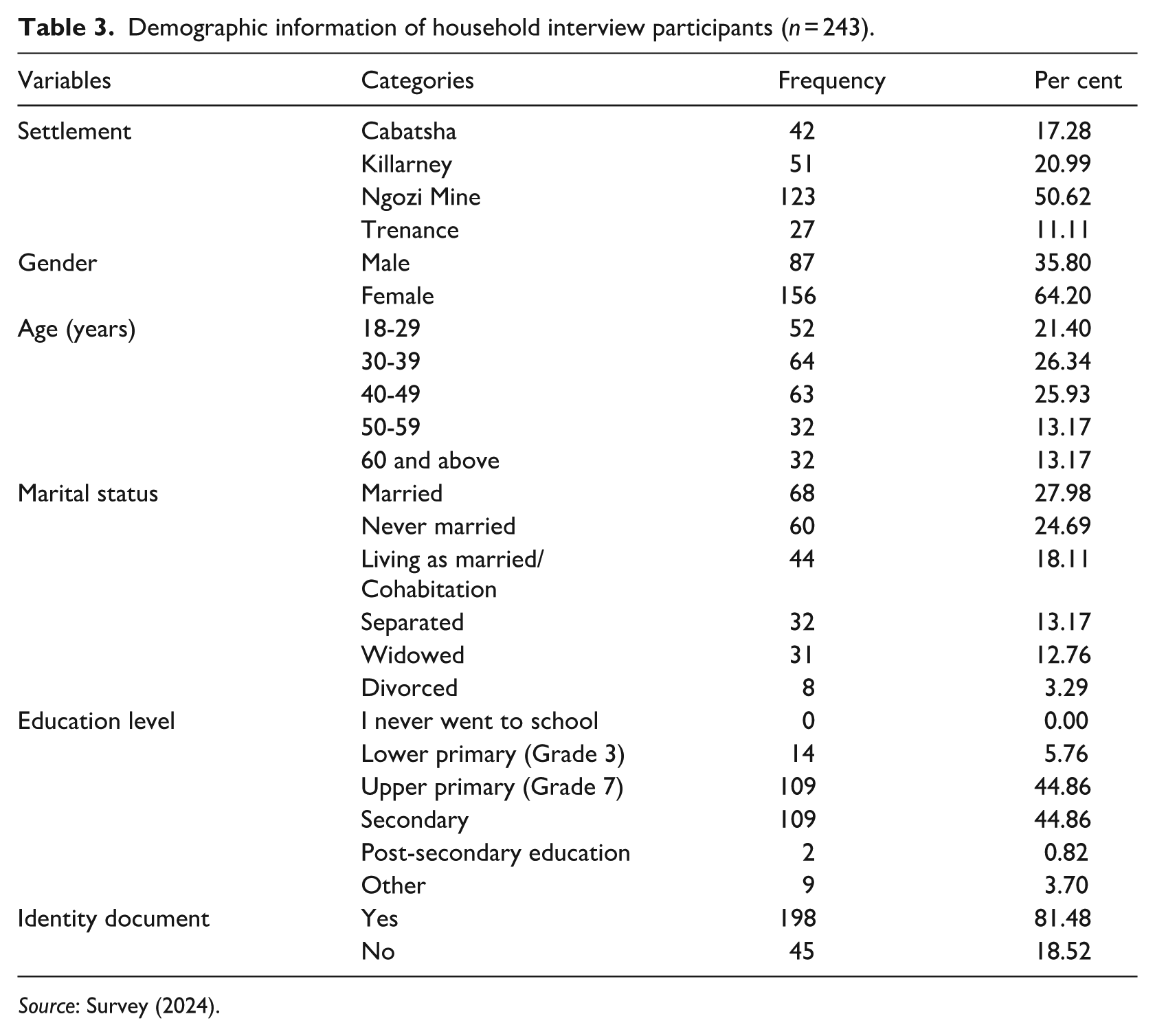
As indicated in Table 3 64% (N = 156) were female and 36% (N = 87) were male. Zimbabwe National Statistics Agency (ZimStats, 2022) reports that the 2022 census shows females comprise 54% and males 46% of the Bulawayo population. The study’s results align with the city’s gender trends, indicating that there are more females than males. Securing male participation in urban studies can be challenging, as they may not always be at home or may be uninterested (Phiri et al., 2021). Most participants were either married (28.5%) or cohabiting in a manner akin to marriage (18%). This was followed by those who had never married (25%), those who were separated (13%), those who were widowed (13%), and those who were divorced (3%). Poor communities, such as those in informal settlements, tend to consist of couples or larger families. Married couples or bigger families are at an advantage as many members participate in gathering resources.
Demographic information of household interview participants (n = 243).
Source: Survey (2024).
The average household size was 4.6, which was higher than the 3.7 recorded in Bulawayo, as reported in the country’s 2022 Population and Housing Census Report (ZimStats, 2022). Larger household sizes are a result of the extended family concept that is prevalent in the community (Salum, 2020). Higher average household sizes in informal settlements are linked to higher poverty levels (Mottelson and Venerandi, 2020). A quarter of the respondents were aged between 30 and 39 years (26.3%), followed by 40 and 49 years (25.9%), 18 and 29 years (21.4%), 50 and 59 years (13.2%), and 60 years and above (13.2%).
Analysis of resources, conversion factors and capabilities
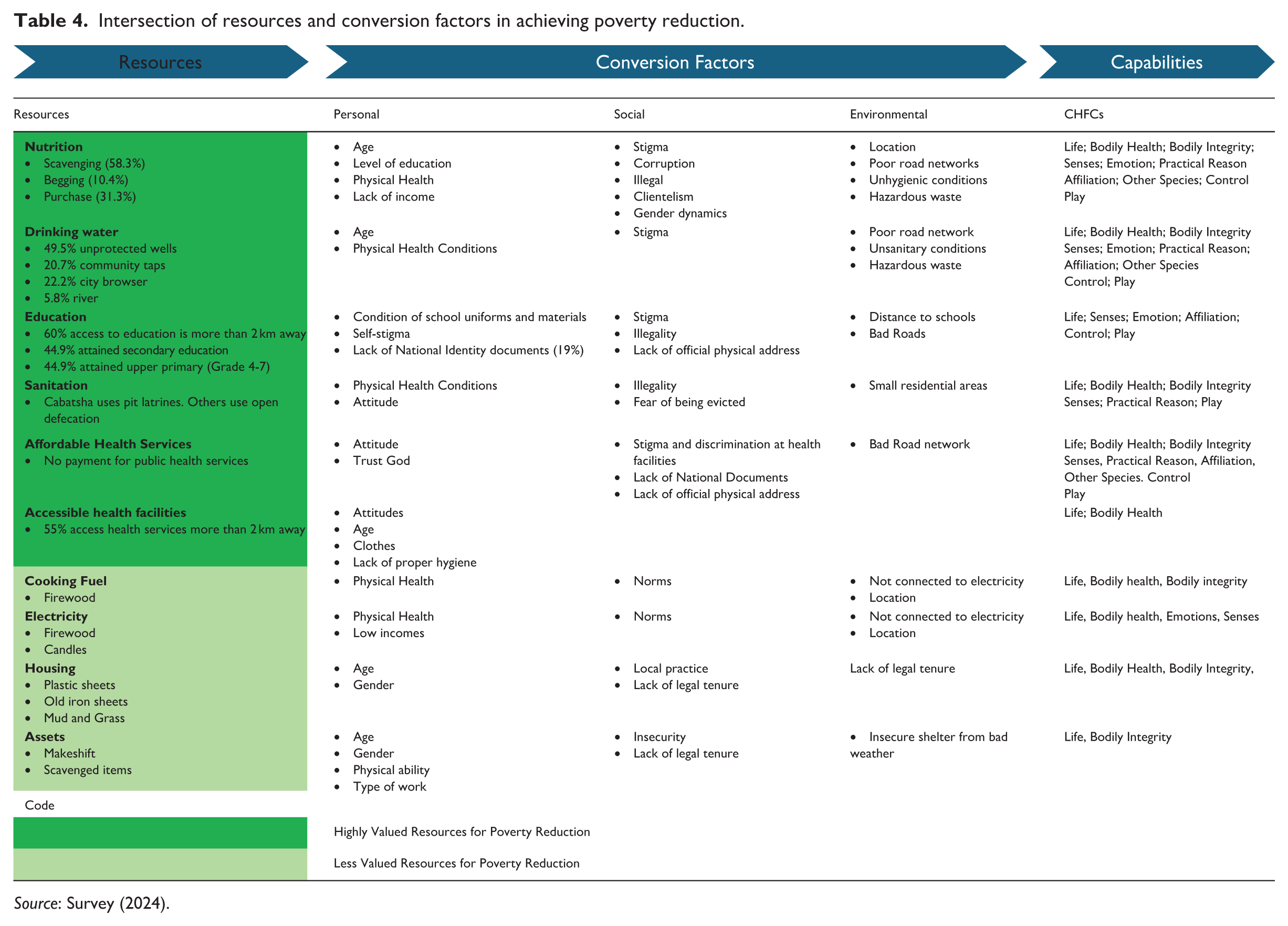
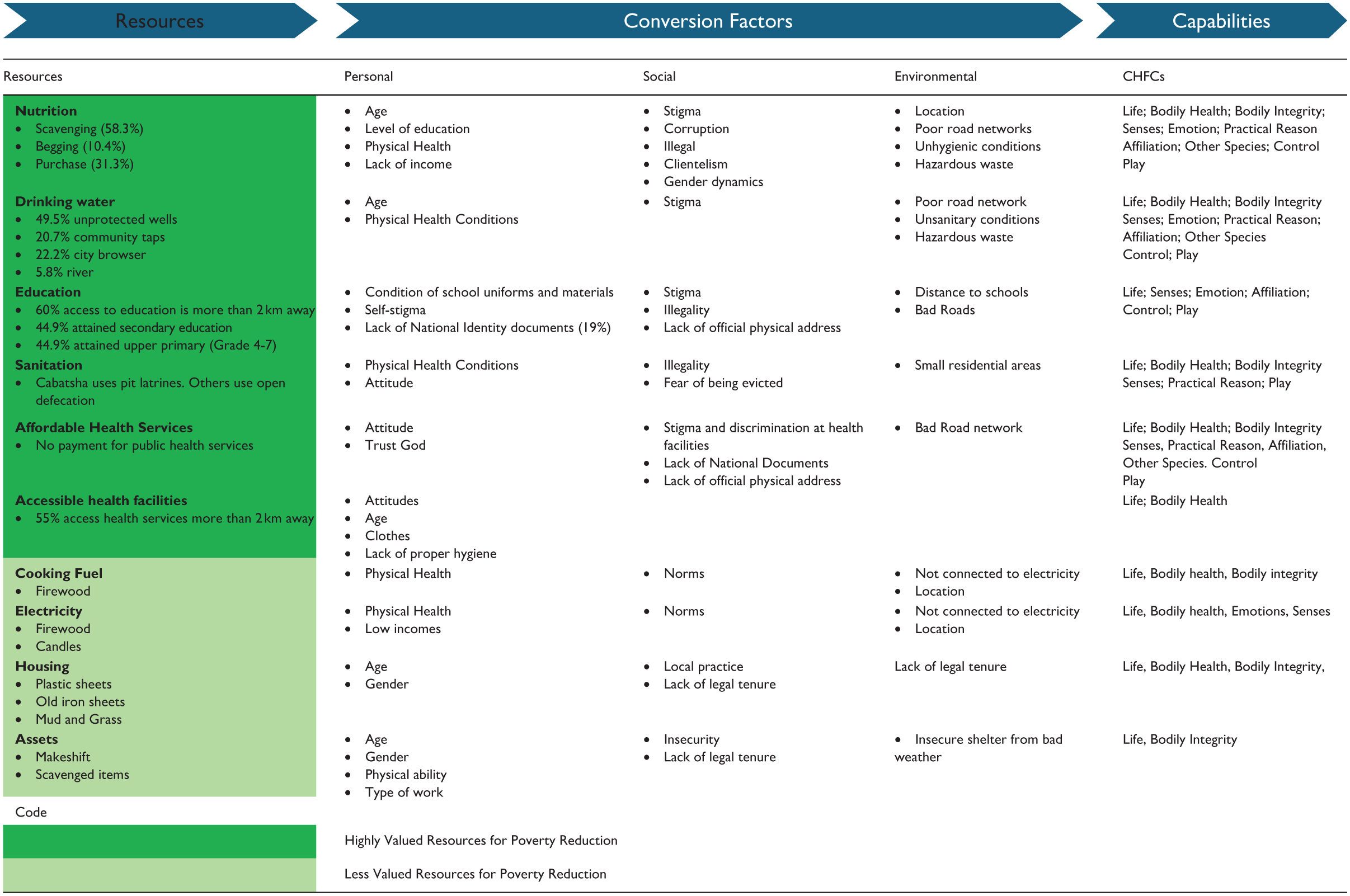
This section summarises in Table 4 the responses from household surveys, focus group discussions and key informant interviews on the access to resources and conversion factors that affect the attainment of valued capabilities.
Intersection of resources and conversion factors in achieving poverty reduction.
Source: Survey (2024).
Resources
Reasons for staying in informal settlements
In the four settlements, many residents had limited access to resources that would enable them to achieve the valued capabilities for poverty reduction. Most people (59%) reside in informal settlements due to a lack of financial capital, especially those in Ngozi Mine and Trenance they view the dumpsite as their main source of income. 13% view informal areas as their original homes, 30 % relocated from other places due to marriage and other personal reasons, particularly those in Cabatsha. About 4% stayed in informal settlements due to displacement, such as Murambatsvina and distressed relocation, as people could not afford formal urban life. Some residents highlighted corruption in the issuing of land and housing that deprives and disadvantages the poor population. The study underscores Marwal and Silva (2023) view that the quantity of resources can determine the location and type of housing. According to Loschmann et al. (2015), shelter quality is a key indicator of multidimensional poverty. In the study, all the housing structures consisted of plastic sheeting, notably in Ngozi Mine, rusted iron sheets, and mud. Such dwellings are highly vulnerable to environmental hazards with Killarney and Ngozi Mine susceptible to fires and those in Cabatsha experience wind and flooding due to their proximity to the river. Zerbo et al. (2020) noted that the shelter of flammable scrap materials increases the risk of fire in informal settlements.
The lack of financial capital, caused by economic challenges in the country further exacerbates the exposure to multiple hazards that people in informal settlements face. It also shows that people stay in for marriage purposes, and over time, they view these transitional places as their permanent homes. For example, in this study, more than 80% of the participants have been residing in informal settlements for over six years, which challenges the view that informal settlements are transitional places for rural-urban migration. The results contradict the notion of ‘pathways-out-of-poverty’ and instead embrace the cul-de-sacs, which view informal settlements as poverty traps. It reveals that vulnerable residents are trapped and have limited options to escape their current situation. The prolonged residence also reflects the reality of both a critical housing shortage and entrenched poverty in Bulawayo. According to ZimStats (2022), 42.7% of Zimbabwe’s urban population do not own the homes they live in, with some residing in temporary structures.
Lack of income
The study shows that 41% of the residents depend on plastic waste picking activities the majority being in Ngozi Mine and Trenance, 30% on casual work, mostly from Killarney and Cabatsha, 11% on selling scrap metal, 9% on vending, 5% on illegal mining, 3% on selling firewood and vegetable production, and only 1% are either formally employed or receive a pension. The engrained poverty levels were highlighted by the income levels reported by the respondents, with more than half (52.3%) indicating that their monthly incomes were between US$1 and US$20. In comparison, 35.4% indicated incomes of between US$21 and US$50% and 12.3% had monthly incomes exceeding US$51 The study shows that the majority (52.3% of people on leave on $0.67 per day, placing them in extreme poverty threshold as they live on less than $2.15 per person per day. 1 Challenges with obtaining identity documents as highlighted in Table 4, and territorial stigma caused by their location disadvantage people living in informal settlements in terms of securing better jobs.
Access to water, food, and public services
The study reveals that access to water and food is a significant challenge in informal settlements. For example, 51% of the residents depend on unprotected wells, 6% on the river, 22% on community taps that are often dry, and 21 21% on erratic supply from the City Council Bowser during drought seasons. Some respondents reported that they only access 4 litres of drinking water per day for a family of five, far below the Sphere Minimum Standard of 15 litres per person. According to community leaders and health personnel, poor water quality frequently exposes vulnerable individuals to health risks. Health challenges undermine the ability to achieve bodily health capabilities. Although 58% of residents purchase most of their food, a significant number rely on scavenging from the dumpsite (32%). In comparison, 6% beg for food, and the remaining 4% depend on both begging and the generosity of well-wishers. Climate change impacts such as EL-Nino induced droughts have been increasing (Matunhu et al., 2022), affecting crop production in rural areas. At the same time, economic challenges such as unemployment have affected the urban population more significantly, and this has impacted the rural-urban linkages in food security. The scavenged food is often expired or contaminated, increasing the risk of food poisoning and gastrointestinal illnesses. All the settlements are located in illegal areas; hence formal traders find it difficult to set up official shops in these areas and the local authority is either reluctant or has no resources to provide services to non-rent-paying residents. NGOs whose work is to complement government efforts face restrictions in providing long-term or sustainable livelihood to informal settlement residents, as the government fears that services will force more people into informal areas.
Public services are intended to be made available to citizens, and in the study, the respondents reported severe limitations they encountered in accessing public services, such as health and education, which were attributed to long distances to healthcare facilities and poor road infrastructure. Health services were provided sporadically through mobile clinics, and in some cases, respondents in Trenance indicated that they walked up to four kilometres to reach a healthcare facility, while children walked ten kilometres to and from school.
Conversion factors
The age, gender, education level, and marital status were examined to determine how they affected individuals’ ability to access and convert resources into valued capabilities. The physically and time-demanding nature of most livelihood activities in informal settlements often sidelines women. The competitive nature of activities like waste picking requires speed and alertness, favouring younger, non-disabled individuals. Educational attainment also plays a vital role; lower levels of education limit both job opportunities and the ability to make informed decisions about resource use: We could have had better jobs, health, and incomes if only we had a better education – and we would be able to make better life decisions. (Older woman, FGD)
Social conversion factors
The societal structures, including norms, power dynamics, and policies, were the social conversion factors that were considered. The study revealed that religious affiliation played a significant role in reducing poverty, as religious communities provided material support, facilitated child adoption and education, and mitigated the stigma associated with living in informal settlements. Despite the support networks, stigma and discrimination remained widespread. FGD participants described being stereotyped as criminals and socially excluded. In public institutions such as schools and hospitals, residents often experienced prejudice, and some even concealed their addresses to avoid discrimination. Derogatory terms such as Sibhonda/ vagrants, and abantu bemarabishi/People of the dirt reflected the profound social marginalisation faced by those communities.
Environmental conversion factors
The communities’ capabilities were assessed through environmental conversion factors, which included, but were not limited to, infrastructure, climate, institutional arrangements, and access to public goods. The survey (81%) and the focus group discussions together highlighted the location of the settlements as the primary cause of their limited access to resources and capabilities.
The 10 central human capabilities and poverty reduction in informal settlements
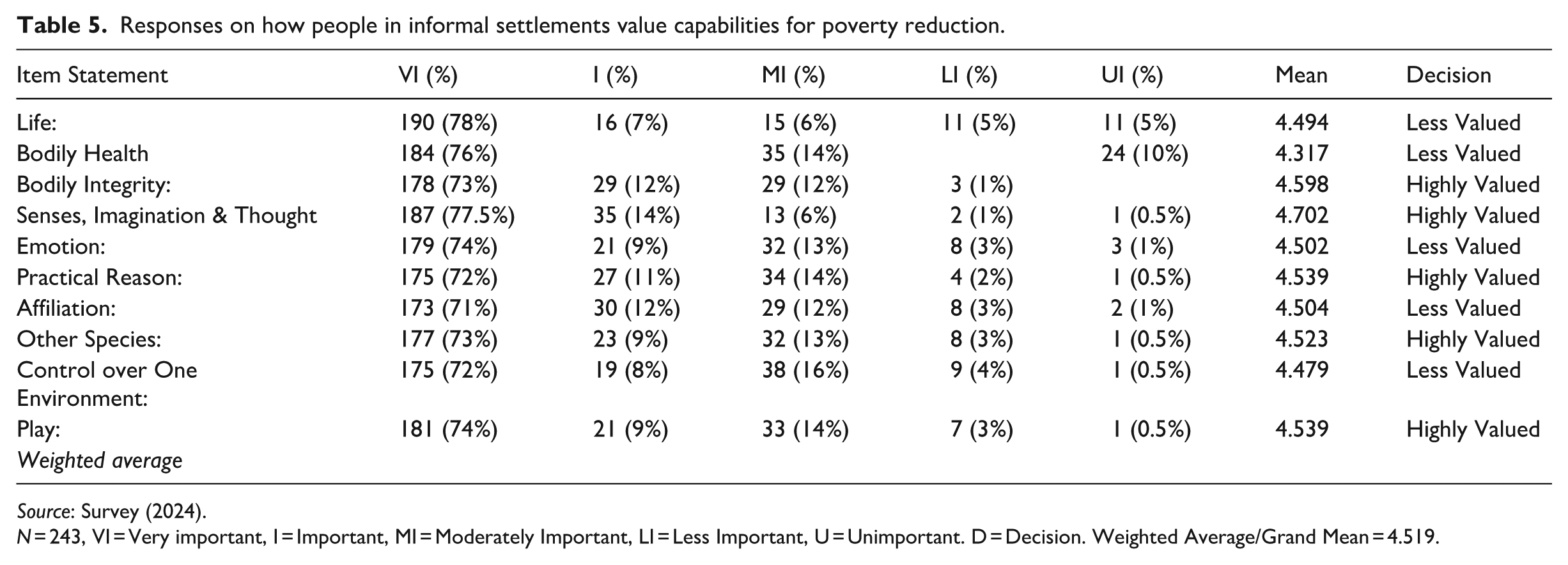
Table 5 summarises how people in the four informal settlements value each of the ten CHFCs. Although all the CHFCs are important, some are valued more highly than others based on the weighted average of 4.519. The weighted average is calculated by summing up all the means and dividing by the number of datasets. It is helpful to determine the significance of each value in the dataset. In this case, to understand the importance of each capability about others.
Responses on how people in informal settlements value capabilities for poverty reduction.
Source: Survey (2024).
N = 243, VI = Very important, I = Important, MI = Moderately Important, LI = Less Important, U = Unimportant. D = Decision. Weighted Average/Grand Mean = 4.519.
The study shows that capabilities such as life, bodily health, emotions, affiliation and control over one’s environment are perceived to be less valued compared to bodily integrity, senses, imagination and thought, practical reason and play. The residents of informal settlements perceive that the more valued capabilities are instrumental in achieving other capabilities. Robeyns (2017) observes that capabilities are interdependent. For instance, achieving the capability of bodily integrity contributes to the realisation of life and emotion. The section below analyses the CHFCs that are highly valued for poverty reduction.
Bodily integrity as a capability for poverty reduction
According to Nussbaum (2000) and Cabezas and Schweiger (2016), the capability of bodily integrity encompasses freedom from harm, autonomy over one’s body, and physical health. Fox and Thomson (2017) noted that bodily integrity entails bodily protection from harm and intrusion. In this study, 73% of respondents considered bodily integrity to be essential for poverty reduction, 12% considered it important, 12% considered it moderately important, and 1% considered it less important. This capability was found to be particularly relevant to women, the elderly, and other vulnerable groups across all settlements. Participants indicated that being free from harm and treated with dignity enhanced their ability to participate in livelihood activities such as waste cycling through gathering waste resources in Ngozi Mine. Everyday lived experiences of people in informal settlements strongly shape their perceptions. People often face harassment and beatings by police, as they allege that they provide a hiding place for criminals. For instance, bodily injuries limit the ability to acquire resources for poverty reduction. The access to services such as protection from police is limited due to territorial stigma and lack of land tenure.
Being free from physical and psychological threats was critical, as it facilitated the realisation of other capabilities such as good health, emotional well-being which is the capability of emotion, and longevity which is capability of Life which are important for poverty reduction. For example, to ensure bodily integrity, some women in informal settlements chose to cohabit with men for protection. Other adaptation strategies included living in clusters and walking in groups to reduce the risk of attacks. In some cases, girls were sent to live with relatives in rural areas to avoid potential abuse in the settlements: To protect the girl child from being abused here in the informal settlements, we send them to our relatives in rural areas. . . (Female FGD participant)
Despite such protective strategies, participants acknowledged that incidents of violence still occurred particularly in Killarney, which is near illegal mining activities. Reporting such cases remained difficult due to stigma and a lack of police responsiveness: It is difficult for abuse and even rape cases to be reported to the police by people in informal settlements. . . (Local leader, FGD participant)
Moreover, inadequate housing structures exposed residents to natural hazards such as storms and strong winds, especially in Cabatsha. Although bodily integrity is highly valued, limited access to protective services, lighting infrastructure, and women’s rights advocacy hindered the realisation of this capability.
Senses, imagination, and thought as a capability for poverty reduction
A majority of respondents (77.5%) considered the capabilities of senses, imagination, and thought to be very important for poverty reduction; 14% rated them as important, 6% as moderately important, 1% as less important, and 0.5% as not important. Respondents emphasised the role of physical senses particularly sight and smell, in livelihoods such as waste picking. Interestingly, residents appeared to be desensitised to the harsh odours emanating from dumpsites and unhygienic living conditions in Ngozi Mine. One participant stated, If we do not think or imagine, we will not have hope for a better future. . . (Male FGD participant)
This capability was closely linked with practical reasoning, particularly for the youth who held onto the hope of a better future. The ability to think is enabled by the level of education and the acquisition of new skills and resources for poverty reduction. Although the education system in Zimbabwe can be acquired from informal schools however, they are less affordable than the public schools, making it less accessible to poor communities.
Practical reasoning as a capability for poverty reduction
Practical reasoning, the capacity to make decisions and discern right from wrong, is a fundamental capability (Nussbaum, 2000). Practical reason is linked to agency freedom, which is the ability to decide what one wants. In this study, 72% of participants viewed practical reasoning as extremely important for poverty reduction, 11% as important, 14% as moderately important, 2% as less important, and 0.5% as not important. However, residents felt their autonomy was undermined by the stigma of being ‘illegal settlers’ or ‘waste pickers’ especially in Ngozi Mine and Trenance. This eroded their ability to make meaningful choices and plan for their futures. Practical reason in informal settlements is limited not only by resources but by failure to achieve other capabilities, such as control over one’s environment through political participation which helps shape their future. The study found that the reality that informal settlements are illegal and temporary significantly influences how residents plan and pursue poverty reduction strategies. Sen concluded, ‘No individual can think, choose or act without being influenced in one way or another by the society around him or her’ (Sen, 2004: 80)
The study also shows that people in informal settlements, such as those in Ngozi Mine, are from different parts of the country, hence they do not have a sense of collective poverty reduction or collective agency in poverty reduction as compared to those in Cabatsha. Ngozi Mine residents are driven by obtaining maximum income, while in Cabatsha, they aspire for a secure land tenure.
Practical reasoning was seen as enabling other capabilities such as empathy, emotional health, and affiliation. It also guided decisions about which resources were essential for escaping poverty: Sometimes, we receive food from well-wishers and little water from authorities; however, all this will not take us out of poverty. . . (Male FGD participant)
This sentiment shows the need for a more sustainable approach to poverty and disaster risk reduction in informal settlements.
Other species as a capability for poverty reduction
Residents of informal settlements depend on natural resources for fuel, building materials, and sanitation. Accordingly, 73% of respondents considered this capability important, 9% considered it very important, 13% considered it moderately important, 3% considered it less important, and 0.5% considered it irrelevant. Trees were highly valued for their ecological functions, providing shade, preventing soil erosion, and supplying firewood.
Communities showed some awareness of environmental preservation. Environmental awareness is attributed to the work of several NGOs and the strong environmental protection laws by the government. However, due to poverty and limited alternatives, environmental degradation especially the practice of dumping and cutting down trees for firewood persisted. Despite these challenges, residents expressed a desire to be acknowledged and respected by those in formal settlements. The data suggest that appreciation for the natural environment strengthens the development of other capabilities, including bodily health and imagination.
Play as a capability for poverty reduction
Play, defined as relaxation, social interaction, and freedom from constant labour, was recognised as vital for well-being. In this study, 74% of respondents deemed play extremely important for poverty reduction, 9% found it important, 14% considered it moderately important, 3% thought it less important, and 0.5% considered it not important at all.
In informal settlements, limited resources, such as sports equipment, sponsorship, and uniforms, restrict recreational opportunities. Netball was one of the few sports enjoyed by women for exercise and leisure. While prior research (Yerkes et al., 2018) suggests that men often participate more in leisure activities, this study finds the opposite to be true. Men in these communities rarely engaged in structured play. Youth, however, frequently attended nightclubs or social events, sometimes within informal homes converted for entertainment. Recreation was not only a source of joy but also a potential avenue for generating income and fostering social cohesion.
Discussion
Scholars who criticise Sen’s capability approach point to its lack of operationalisation as it does not define a list of capabilities, hence lacking objectivity and quantifiability (Karimi et al., 2016). The reason for not producing or endorsing a list of capabilities was that Sen feared the list would be used as a once-and-for-all policy tool (Van Staveren, 2008). In addressing the critique, Sen stated, I have nothing against the listing of capabilities, but must stand up against a grand mausoleum to one fixed and final list of capabilities. (Sen, 2004, p. 80)
To address these critiques, Nussbaum (2000) proposed the ten Central Human Functional Capabilities (CHFCs), which include life, bodily health, bodily integrity, senses, emotions, practical reason, affiliation, respect for other species, play, and control over one’s environment. However, according to Nussbaum (2000), the list of CHFCs is not conclusive and is subject to revision.
This study demonstrates that CHFCs offer a comprehensive framework for examining well-being issues, including poverty. The CHFCs encompass a broad aspect of human well-being that is useful in analysing poverty contexts, as indicated by most respondents who regard most of the CHFCs as important for poverty reduction. This study also agrees with Sen’s (2004) view that capabilities are contextual in that some CHFCs are more valued than others, depending on the context. The contextual nature of capabilities was also highlighted through the context-based definitions of capabilities, which are grounded in specific contexts, lived experiences, such as actual and objective reality. For example, the capability of ‘life’ in informal settlements is not limited to mere existence but also encompasses having self-worth and living a life one values or has reason to value. This perception aligns with research on informal waste pickers in India, who likewise prioritise specific capabilities (George, 2014). Temporal and contextual factors also shape the value of particular capabilities. Sarlak et al. (2020) and Wimberly and Sadler (2021) suggest that context influences the relative value of capabilities. Some scholars, such as Riddle (2016), propose ranking capabilities based on community perspectives
Capabilities such as bodily integrity, senses, imagination and thought, practical reasoning, play, and empathy towards other species were most highly valued compared to others. These capabilities were valued for three key reasons: (1) they are closely tied to agency, the freedom to pursue valued ways of being and doing, and (2) they act as enablers that facilitate the realisation of other capabilities. This study highlights the interconnected nature of capabilities, as the achievement of one capability can enable others (Robeyns, 2017). For example, bodily health facilitates life, play, and bodily integrity. Some capabilities function as ‘activation factors’, triggering the realisation of others. (3) They show the need for recognition and dignity. For example, although considering non-human species and the natural environment is particularly crucial in informal settlements, where communities often depend heavily on their surroundings for survival, people living in informal settlements have a deep desire to prove that they are part of the human species. Also, the role of awareness-raising activities by local authorities and NGOs shapes the perceptions of people on aspects such as environment. Their struggle for recognition is a way of fighting stigma and discrimination. This study demonstrates that self-worth is crucial for people living in informal settlements and highlights that dignity is a fundamental aspect of justice (Nussbaum, 2011).
While the capability approach traditionally emphasises ends (achievements) rather than means (resources), this study shows that in impoverished communities, the quantity and quality of resources are directly linked to the realisation of capabilities. For people in informal settlements, access to resources itself becomes a capability. Though this may seem contrary to traditional interpretations of the capability approach, it aligns with the understanding that a lack of resources is equivalent to a capability deficit. For example, a lack of mobility among disabled individuals is interpreted as a capability shortfall; similarly, for poor communities, resource scarcity represents a critical deficiency. The historical distinction between resource-based and capability-based approaches is, therefore, less relevant in these contexts. This study aligns with Van Jaarsveld (2020), who asserts that specific resources, such as natural resources, possess both instrumental and intrinsic value.
In addition to ensuring resource availability and equitable distribution, the quality of these resources must be considered for effective poverty reduction. Sain et al. (2024) observed that quality education is crucial for alleviating poverty. In informal settlements, access to essential services, including food, water, education, and healthcare, is often substandard. This study found that many residents rely on inadequate water supplies and scavenged food, exposing them to disease and compromising their ability to achieve bodily health and longevity. Moreover, landfill scavenging poses risks such as physical harm, chemical contamination, and biological hazards (Nyathi et al., 2018). Surface and groundwater near dumpsites are frequently contaminated with hazardous compounds, further threatening health (Chokor and Roberts, 2022; Olorunwa et al., 2019).
Conversion factors, personal, social, and environmental, play a key role in influencing the attainment of capabilities in resource-constrained settings. These interrelated factors can either facilitate or hinder capabilities (Hvinden and Halvorsen, 2017). This study found that age, gender, social norms, culture, and environmental risks such as fires and floods all influence capability outcomes. Notably, stigma and gender-based discrimination exacerbate exclusion, especially for women, whose unclean appearance is judged more harshly than men despite similar labour-intensive tasks.
Although conversion factors are traditionally viewed as mechanisms for converting resources into capabilities, this study shows that they also influence access to resources themselves. Stigma, insecure land tenure, poor documentation, and marginalised geographical locations restrict access to aid from both the government and NGOs. People in informal settlements are often stigmatised as criminals or threats to urban order (Bandauko et al., 2022; Fattah and Walters, 2020), and such territorial stigmatisation is frequently used to justify coercive actions, such as evictions and service denials.
Despite these challenges, informal settlements show strong adaptive capacities. Jones (2017, 2020) noted that residents gradually improve their living conditions through self-organisation. Over time, households improve the quality of their shelter and adapt to environmental hazards. However, this adaptation can sometimes be misinterpreted as a form of fatalism. Religious practices also play a role in fostering hope and resilience. Holbrook et al. (2016) observed that spiritual beliefs can mitigate fear of physical danger. Nevertheless, fatalism may reflect a ‘culture of poverty’, wherein attitudes and norms that perpetuate poverty are passed to future generations. Thus, capability enhancement must go beyond resource provision to include improved access and practical use.
Although the study shows that people in informal settlements perceive the capability of life, emotions and control over one’s environment as less valuable compared to others, the broader reality suggests that these capabilities are very significant for poverty reduction. For instance, Mousavi et al. (2015) argue that capability of life is essential and fundamental as it is the first in Nussbaum capability list. However, the lived experiences which in CR terms are empirical reality, are influenced by social and economic structures mechanisms that influence people’s views as important for poverty reduction (Mousavi et al., 2015). For instance, this study found that control over one’s environment, specifically political control, is inhibited by the political system in the country when urban populations are regarded as anti-government and, as a result, are punished for that. Also, Von Fintel and Ott (2017) noted that poor communities are less likely to participate in political activities. Although political participation is essential for a dignified life and flourishing life (Hedtke and Zimenkova, 2013).
Conclusions and recommendations
This study contributes to the literature on urban poverty and disaster management by centring the capabilities of poor and vulnerable populations in poverty reduction strategies. It affirms that people in informal settlements possess aspirations and values and, despite lacking resources and freedoms, strive to realise what they value. The findings show that poverty in informal settlements stems from both resource scarcity and deficiencies in valued capabilities. The ten CHFCs proposed by Nussbaum (2011) are critical for poverty alleviation and human flourishing in these contexts.
The study thus concludes that the conceptualisation and valuation of capabilities are context-dependent, influenced by resource quality, availability, and conversion factors (Owens et al., 2021). The findings reveal a desire among informal settlement residents to be treated as equal to others, to be recognised as human beings, including through expressions of empathy and joy, despite living in poor conditions.
This study recommends a systematic application of the contextualised CHFCs in understanding poverty and poverty reduction in poor urban communities. Poverty reduction strategies must prioritise resource provision and facilitate individual and social transformation to ensure access and capability development. Governments and NGOs must go beyond service delivery to recognise and support the intrinsic value of residents’ capabilities. These stakeholders must view informal communities not as problems but as essential parts of urban development. Emphasising highly valued capabilities is critical, as they activate other capabilities and enhance agency. This study recommends adopting a capability approach as a lens for analysing and designing poverty reduction strategies in informal settlements.
Footnotes
Author’s Note
Thabo Ndlovu is now affiliated to Disaster Management Training and Education Centre for Africa (DiMTEC), University of the Free State, South Africa.
Funding
The authors received no financial support for the research, authorship and/or publication of this article.
