




Abstract
In the 1970s, the Zimbabwe People’s Revolutionary Army (ZIPRA) opened its bases in the mid-Zambezi Valley, at Paradise and Mayovhe, under Chief Mola’s territory. This move by ZIPRA was motivated by a variety of reasons. The most important fact was that the Tonga-Goba people of this region were ready to support the war because they wanted to regain control of the riverscape from which they were displaced by the colonial state during the late 1950s when the Kariba dam was constructed. This paper examines how the colonial displacements of the Tonga-Goba people, their marginalization as well as the colonial regime’s “broken promise” all shaped their participation in the Zimbabwe War of Liberation in the 1970s. To explore this history of war from below, our study builds largely from the local Tonga-Goba narratives.
Introduction
Zimbabwe’s Liberation War, also known as Second Chimurenga, was fought between the colonial government’s Rhodesian Forces and the two African military wings—the Zimbabwe African National Liberation Army (ZANLA) and the Zimbabwe People’s Revolutionary Army (ZIPRA). Although these two military wings were concentrated in different parts of the country, under different nationalist leaderships, they shared a common goal—to achieve the freedom of Africans from the brutal white-settler government. While the former operated mostly along the eastern border with Mozambique, ZIPRA operated in the north-western parts of Zimbabwe as it had bases in nearby Zambia (Matanzima, 2022; McGregor, 2009). The people of this northwestern Zimbabwe border region still hold vivid memories about what was transpiring during this period, as well as their changing and complex relationships with ZIPRA guerrillas.
As remembered by a Mola resident, the Zimbabwe African People’s Union (ZAPU) military wing, ZIPRA, opened bases in Zambia and used Musampakaruma and Mola chiefdoms (see Figures 1 and 3) as avenues to cross over into Zambia (Interview, 5 April 2017). Following the creation of these bases, especially in 1976, ZIPRA guerrillas passed through Mola enroute to Zambia, which is adjacent to Lake Kariba. They often crossed through the area commonly known as “Paradise,” located at the lakeside in Mola Chiefdom. From these bases, numerous battles were fought on different sectoral fronts. However, in other marginal areas, such as Musampakaruma and Mola Chiefdoms, there were no confrontations between Rhodesian forces and ZIPRA guerrillas. However, the effects of the war were felt in these areas in various ways.
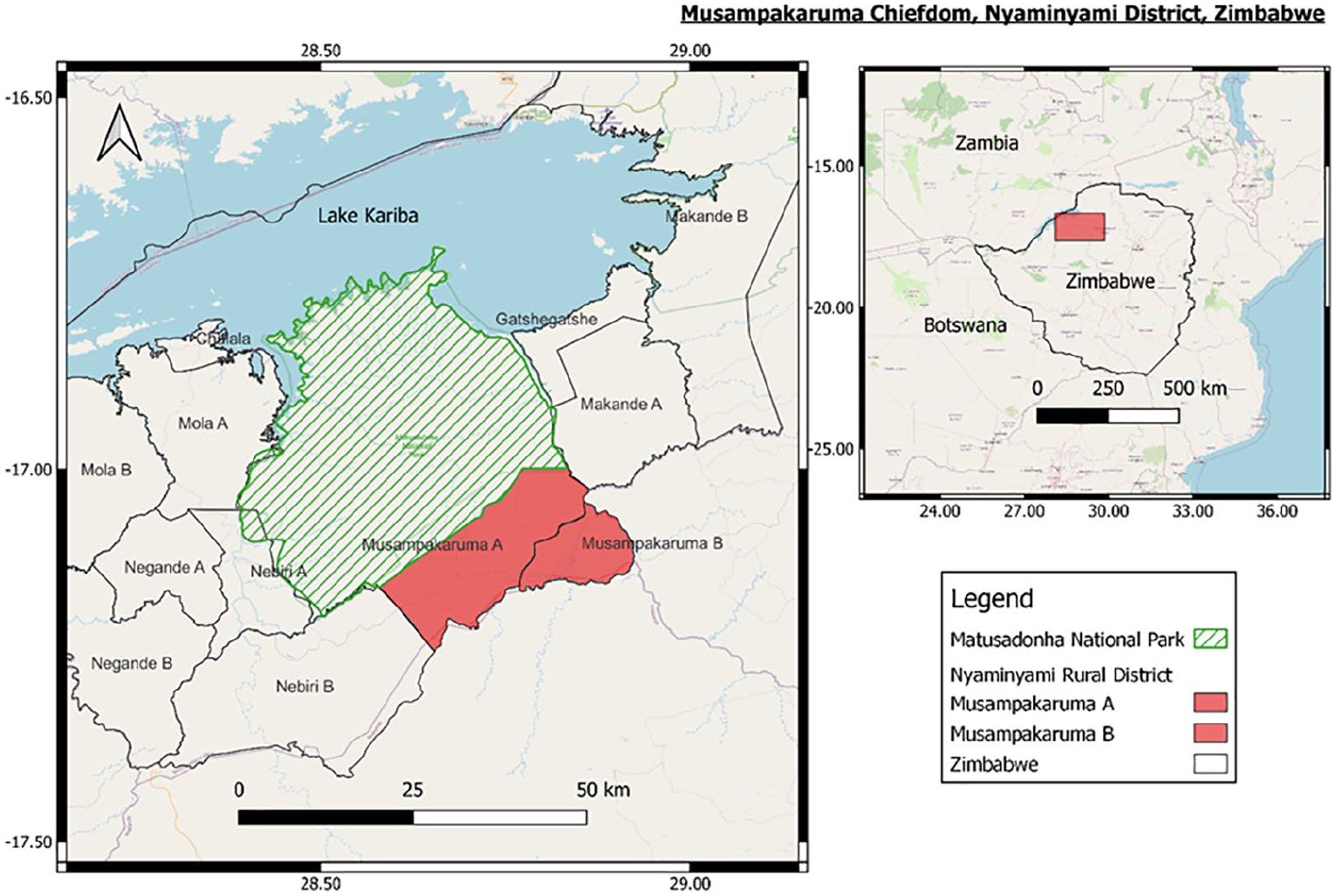
Map showing the location of Musampakaruma along Lake Kariba.
This paper discusses war experiences in the Zambezi Valley, focusing mainly on an understudied border region, the Nyaminyami District. This district is home to the Tonga and Goba (or Tonga-Shangwe) speaking peoples. We use the local stories of the Tonga-Goba people to explore how the marginalization of the region, as well as people’s displacement during the late 1950s, from their Zambezi homelands, determined their exposure to and participation in the war. The local stories we focus on in this study provide unique insights into war dynamics. They underscore the intricate relationship between marginalization, displacement, and war in the region. These stories, in particular, reveal why ZIPRA guerillas favored this region over others and, importantly, the rationale behind the Tonga-Shangwe’s involvement in the war. They also shed light on why guerrillas found it easy to garner support from peasants despite the increased presence of Rhodesian State. We demonstrate that the two themes of displacement and marginalization are particularly intriguing as they unravel how history and memory intertwine to shape people’s participation and the creation of diverse narratives and identities during and after the war.
Across southern Africa, dam-induced displacements have forced people from their homelands to marginalized regions lacking infrastructure development for decades (Isaacman and Isaacman, 2013; Mashingaidze, 2020; Matanzima, 2024; Muguti, 2023; Scudder, 1962). In the Kariba region, the marginalization of the Tonga-Goba became increased in postdisplacement contexts because the promises made to them during the displacement era were never fulfilled by the colonial government. Over time, their frustration towards the minority white settler government grew largely because of their displacement, broken promises, and increased marginalization. In the late 1970s, ZIPRA guerillas consequently capitalized on Tonga and Shangwe frustrations to garner support from local people. The guerillas also promised that if Africans obtained independence, the Zambezi Valley border regions would be developed, and they would be given full control of Lake Kariba. (Interview, 5 April 2017).
To highlight the local perspectives, this paper draws on a 5-year intermittent fieldwork among the Tonga-Shangwe people of northwestern Zimbabwe. Oral data, as well as archival evidence about the experiences of the war, were gathered as part of the large research project tracing the short-term and long-term impacts of the Kariba Dam on the Tonga-Goba people. While we combine a range of sources, we primarily rely on the oral narratives of the Tonga-Goba people to capture their everyday experiences during the displacement and war, a period covering about 30 years. The local voices also enable us to analyze how the displacement encounters, broken promises, and war of liberation became entangled in this border region, and how the local memories get reconstructed and negotiated over time. In addition, local voices allowed us to center on and reveal the contributions of the Tonga-Shangwe people to the war effort and how the war impacted their communities. The local voices and perspectives also provide a window for a fresh understanding of how spatial factors such as the border location and the environmental context, which significantly supported Lake Livelihoods, also shaped wartime encounters.
On the Zimbabwe war of liberation
The Zimbabwe War of Liberation is a widely studied topic. As such, we can only selectively cite some works. A successive generation of scholars from different disciplines has explored various topics about this war. Between the late 1980s and 1990s, debates centered around the reasons why Africans in Southern Rhodesia fought this war against a repressive white-settler government. As argued by Msindo and Nyachega, inspired by the euphoria of the early postcolony, the earlier scholarships produced celebratory accounts emphasizing military exploits and the sacrifice of guerrillas and peasants (Msindo and Nyachega, 2019). These works also became a crucial part of ZANU PF’s nation-building propaganda, and they focused more on ZANLA’s guerilla war in ways that marginalized ZIPRA’s war efforts (Bhebe and Ranger, 1995; Mugabe, 1983; Ranger, 1985). Other scholarships in the 1980s and early 2000s have examined the gendered dimensions of this war, showing that women were not only victims of war but that they were critical mothers of the revolution, supporters, combatants, spirit mediums, sellouts, and so on (Helliker et al., 2021; Kesby, 1996; Lyons, 2004; Staunton, 1991).
Mainstream scholarships have also focused on the suffering that the war caused to the ordinary people—not only because of the Rhodesians’ brutal methods but also the coercive guerrilla mobilization tactics (Alexander et al., 2000; Henkin, 2013). The relationship between armed guerrilla units and civilians has been central to scholarly debates in the past decades. Pioneering and more recent scholarships emphasized how colonial oppression and displacement generally forced civilians, especially the working class and peasants, to willingly participate in the war (Mhanda, 2011; Mothibe, 1996; Ranger, 1985). However, revisionists have revealed the more complex and coercive aspects that defined the wartime relationship between liberation army units and civilians (Henkin, 2013; Kriger, 1992; Maxwell, 1993; Msindo and Nyachega, 2019). As Kriger (1992), and Msindo and Nyachega (2019) have argued, coercion was an integral and unavoidable part of the armed struggle. In some cases, when faced with guerrilla coercion (as well as the colonial states’ violence), peasants, who had their own ideas and agendas, saw the guerrillas as potential allies whom they could also manipulate to further their own goals (Kriger, 1992). Consequently, guerrilla tactics varied between areas and episodes so much that they cannot be generalized (Henkin, 2013; Msindo and Nyachega, 2019). Our study underscores varied wartime encounters. While we highlight a huge displacement-induced Tonga-Goba willingness to participate in the war, we reveal the coercive tendency of the ZIPRA guerrillas.
Within the existing liberation war literature, other scholars have offered new perspectives to this war. As in the 1980s–2000s, other recent scholarships have enriched the debates through examining the disciplining tactics among ZANLA guerrillas (Mazarire, 2011), the spiritual temporalities of war (Chitukutuku, 2019), as well as aspects of health technology and guerrilla innovation during the war (Mavhunga, 2015). Beyond the violence, new perspectives highlight the creative forms of livelihoods forged by people caught in the “nets of war” (Msindo and Nyachega, 2019). More recently, scholars working within frameworks of borderlands have also revealed how border regions were important sites of contestations, not between the Rhodesian forces and the guerillas, but between different local military wings and those from contiguous countries such as Mozambique who supported the war in Southern Rhodesia (Nyachega, 2023).
Even though borderlands such as the Kariba region were significantly impacted by the war, the experiences of the local Tonga-Shangwe people during this time are less understood. This is because pioneering scholarships on the war tend to focus on what they viewed as highly contested war zones, such as the eastern regions of Zimbabwe bordering Mozambique. Of course, the Kariba region was not as turbulent as other parts of Zimbabwe during this time, but the people of this region hold vivid memories of how the war impacted them socially, economically, and physically. Those who were impacted by the war had first-hand experience of the displacement. Local narratives often compared and connected the Kariba-induced displacement and those of the war period; with the latter dubbed secondary displacements. Very little is known about the wartime history of the region. Most studies in this region have focused on the Kariba Dam construction and the forced displacements it necessitated (see, e.g., Dhodho, 2022; Mashingaidze, 2013, 2019, 2020; Matanzima, 2021, 2024). Yet, there is more to be learned through examining the entangled contexts of marginalization, displacements, and liberation movements in this part of the Zambezi Valley borderlands.
There is literature on the war covering the Zambezi region. For example, Weinrich (1977) briefly discusses the war among the Tonga people, but she does not provide much detail on their experiences. In a few sentences, she also described the infrastructure developments that the Rhodesian government introduced to this marginalized region during the war. As discussed later in this paper, all these developments, such as the construction of roads, were for the purpose of facilitating easy patrols by the members of the Rhodesian Security Forces (RSF), who were heavily monitoring guerrilla activities in the region. Furthermore, studies by Alexander and McGregor (2004) and McGregor (2009) discussed the war and the importance of the border during the war. However, they only focused on the Binga area where the Lake is very narrow and facilitates easy crossings into Zambia. Currently, there are no in-depth studies that have examined the experiences of the Tonga and Shangwe people as well as the role of the border further downstream, where the border is marked by a wider reservoir, Lake Kariba. Through the experiences of the Tonga-Goba people, our paper provides a detailed wartime history from below—a local history of a border region that has not been largely incorporated in previous scholarship.
Kariba Dam construction and resettlement
The Kariba Dam induced displacement’s course, process, and socio-economic impacts on the Tonga and Goba people shaped local people’s participation in the war and their everyday experiences. The Kariba case is a perfect example that elucidates the interplay between past processes of colonial development-induced displacement and how dispossession motivated people to participate in war, as well as shaping their everyday war experiences. As rightly argued by McGregor (2009), the Kariba dam was the flagship project of the complex political entity of the Federation of Rhodesia and Nyasaland (the Central African Federation), which was set up by the British government in 1953 with the support of minority white settler populations in the two Rhodesians colonies in disregard of the majority African people, “The dam was a monumental intervention that transformed the Zambezi Valley, providing the energy necessary for post-World War Two industrialization, creating the largest man-made Lake in the world and displacing those who had lived along it” (McGregor, 2009: 105).
The Tonga and Goba, who were displaced by the dam, suffered serious socio-economic impacts. They were separated from their kinsmen who resided on the north bank (Zambia); their riverine-focused religion and culture were foreclosed by the dam, and all the sacred shrines and places of power were inundated. Economically, people lost a river that sustained their livelihoods, including fishing and flood-fed agriculture. Even though people were impacted socio-economically, they were never compensated. The hardships that followed resettlement frustrated the Tonga-Goba people who saw the coming of the Second Chimurenga as an opportunity to change their conditions under colonial rule.
The Lake Kariba, created by the damming of the Zambezi and resulting in their displacement, was a preserve of the white men. The displaced Tonga-Goba had a few fishing camps allotted to them, and they had limited fishing grounds. For this reason, people were frustrated for a long time against the colonial government. The frustrated population saw the Second Chimurenga as their only chance to liberate and regain control of the waterscape, which was a form of identity and a source of livelihood (Matanzima, 2023). At the same time, guerrillas took as an opportunity to capitalize on the locals’ frustration to garner local support by promising them that they would win back the Lake if Zimbabwe was to become independent. Such an entangled narrative of the Lake, displacement and liberation war history reveals the different local wartime encounters among the Tonga-Goba, as examined in the following paragraphs. The Second Chimurenga came at a time when people were nostalgic about the Lake and its environs. As reminisced by Pedro,
when the war came, our memories about a lost home were set alive. The ZIPRA guerrillas would talk to the elders about how winning the war against the Rhodesians would give us control of our former homes and the entire Kariba environs. Many of us who were youthful in those days quickly became followers of this new message. We packed our bags and went to the Binga bases. (Interview, 5 June 2017)
Pedro’s story reveals the nexus between displacement, deep memories about their lost home, the desire to regain control of their homes, and their participation in the war. However, the war was to be fought in another district because of ZIPRA’s technical considerations in setting up their bases that enabled them to easily access Zambia. In Binga, the Lake was narrower compared to the much wider Nyaminyami sections, which made it difficult to cross the border when the need arose. In addition, the heartland of Tonga nationalism was Binga Rural District, where the majority of Tonga people resided. Therefore, it was strategic for ZIPRA to operate from Binga rather than in Nyaminyami. As a result, Binga experienced much of the war events compared to Nyaminyami. Despite this, the Tonga and Goba people of Nyaminyami Rural District experienced war in many ways discussed below.
Marginalization and the ZIPRA war
During the 1950s displacement, the Tonga-Goba people were moved to Musampakaruma and Mola to environments that were unsuitable for human habitation. The areas remained marginalized through the rest of the colonial era and lacked adequate water supply for either domestic or economic purposes (as their life had been sustained by water along the Zambezi). The soil in the entire area had low agricultural potential (see Dhodho, 2022; Matanzima, 2021; Matanzima and Marowa, 2022; Reynolds, 2019). The region had few socio-economic infrastructures. It lacked roads, clinics, schools, and other social services. As Pamela Reynolds observed, Mola had “no post office, no bank, no library, no market, no public means of transport. . .” (Reynolds, 2019: 9). This view was also shared by an elderly Mola woman. She indicated that:
During colonialism, there were no roads here. This road that you see, that comes from Karoi going to the Kariba Dam was constructed many years after we had been resettled. It was constructed when I had my sixth child. People used to walk on foot from Mola and Musampakaruma, on foot to Karoi to look for jobs in farms. We used to take four to five days walking. (Interview, 5 April 2017)
This testimony reveals not only the infrastructure-marginalization status of Mola but also the suffering that marginalization caused on people in their day-to-day lives. The peripheral borderland location of the Mola Chiefdoms worsened their isolation and their subsequent experiences of the war. In addition, these Chiefdoms (as shown in the maps below, Figure 3 and Figure 4) are not only at the margins of the state but are also surrounded by Matusadonha national parks and nature conservancies. As argued by Mashingaidze, essentially, the Tongas’ isolation in the Zambezi River plains, where colonial control was tenuous up to the building of the dam, had enabled them to live without much interference from the colonial government (Mashingaidze, 2019).
Before the Second Chimurenga, the Tonga and Goba people were thought of as people “living with animals” and were not much of a problem to the Rhodesian government. Felix Tombindo has described the Tonga as the “forgotten sons” of the empire as they were highly insulated (Tombindo, 2016). They were peaceful people who “lived off” the wild (Dhodho, 2022). Several land disputes that transpired between Africans and the settler colonial state in other parts of Southern Rhodesia, were not common in this region. The Rhodesians viewed the Mola as simply not a problem. Also, apart from running game parks and conservancies, the white settlers did not establish permanent homes in the region as it was unsuitable for habitation due to its reputation for malaria and sleeping sickness (Reynolds, 2019). Settlers intermittently toured the region and controlled it from the colonial administrative centers in Gokwe, Kariba, and Karoi, which were easily accessible towns.
Whereas the white settlers had been largely interested in touring this region, it was only during the 1950s dam construction years and during the Second Chimurenga that the Rhodesian state’s presence in the region grew rapidly. By the late 1950s, colonial officials argued, the Tonga people were “caught in the ruthless march of progress” and they “had to leave their homes” (see Mashingaidze, 2019: 93). A few years later, guerilla activities in the region grew rapidly, and the Rhodesian government established an army camp in the Zambezi Valley region crowded with lorries and aircrafts for counter anticolonial operations. This transformed the region into a contested war zone. By the mid-1970s, most of the holiday facilities along the Lakeshore became unused because of the security situation (Weinrich, 1977). More importantly, the border (i.e., Zambezi River and Lake Kariba) became essential, especially for guerrillas who had created bases in Zambia. The role of the border during the war brought these marginal rural areas into the eyes of the state for different reasons. McGregor argues that unlike during the 1950s, the actions of the Rhodesians in the 1970s reinforced official and settler discourse about the “exploitation of primitive peoples by nationalist agents and guerillas” (McGregor, 2009: 146).
The guerrillas had many advantages in this isolated region, including easy access for them to patrol villages through the Musampakaruma and Mola enroute to the Lake. The crossing points were in Mola Chiefdom, which was near the Lake, as shown on the map above (Figure 3), than Musampakaruma, which was far from the Lake (see map below). The demarcation between Musampakaruma and the Lake was purely a national park infested with animals; it was also mountainous; and finally, the Lake from the side was wider which required several hours to sail. Guerrillas did not risk spending most of their time sailing the Lake because they would be easily caught by the Rhodesian Forces. The geographical features of the border from the Musampakaruma area made it difficult for the guerrillas to reach Zambia. Whereas the Lake is somewhat narrow in Mola, the terrain from Musampakaruma to Mola is not highly mountainous.
The Tonga and Goba willingly supported the guerrillas as they had been convinced that after the war, they would gain “their” Lake back. However, the coercive tendencies noted by earlier scholars (Henkin, 2013; Kriger, 1992; Msindo and Nyachega, 2019) were also common in the region. Tonga-Goba narratives are indicative of the coercive tendency of the ZIPRA guerrillas. While coercion existed, the shared encounters of dam-induced displacement and continued marginalization naturally pushed them to participate in the war. In the postdisplacement period, the Tonga-Goba viewed Lake Kariba as “theirs” because they had borne the social cost of its creation. Consequently, their hopes to liberate the waterscape prompted the Tonga-Goba people to participate in the war in different ways and at different levels. As a Mola elder recalled:
we cooked for them, treated their wounds with our local herbs, accompanied them to the Lake or show them the routes to the Lake where they crossed over into Zambia. This area was a very thick- bush, infested with dangerous animals, and we were used to it, so we helped them. (Interview, 20 November 2021)
Motorized boats came from Zambia bases to fetch the guerrillas from Paradise and Mayovhe bays located in Mola. Consistently, different means of transport were used in other parts of the country to bring in (or out) guerrillas. In border zones that were characterized by complex geographical features, journeys to the foreign bases could be completed by foot. The Kariba Lake region is unique because it was the main region where boats were used. This is important because it provides a new critical reading on how we interpret Zimbabwe’s war and its associated mobilities throughout the country.
Observations about the Tonga-Goba’s voluntary participation in the war have also been made by earlier writers. Based on her first-hand experience, Weinrich wrote that “. . . as soon as guerrilla activities occurred in the area, the people offered their help to fighters, giving them food, accommodation, and carriers. . .” Weinrich (1977: 47). Carriers were very important, especially in Nyaminyami District, because not only were they carrying guerrilla armory, but they also helped them navigate the difficult terrain with thick bushes and deadly wild animals. The local people had vast knowledge regarding how to minimize or avoid attacks from animals as they had lived in the region for decades. Also, they knew the shortest routes to the Lake and the location of crossing points. Based on their advice and local cross-border networks, motorized boats from Zambia ferried guerillas from the bases at Paradise and Mayovhe, in Mola district.
For this reason, the Rhodesians mistrusted local villagers, which later resulted in their forced removal from this area into concentration camps known as protected villages (the most used term in the region was sub-offices). Realizing that the marginalized northwestern part of the country was becoming a breeding and playing ground for ZIPRA guerrillas, the colonial state fast-tracked the construction of roads that connected many parts of the region. These roads were mainly constructed for wartime accessibility rather than for development purposes. In other parts of Zimbabwe such, as the Honde Valley, these kinds of roads were named bhinya (bandit) roads because they were generally rough and were constructed for the purposes of war—to fight African liberation fighters whom colonial officials called bandits or terrorists. In Mola, as part of the war infrastructure, the government built “a new road along the river and lakeshore, positioned army camps at key points along it, patrolled regularly, used floodlights and mined the riverbank from Victoria Falls to Binga. . .” (McGregor, 2009: 147). This indicates how developmentalism in the late colonial period became intertwined with the colonial state’s counterinsurgency operations, where infrastructure facilitated Rhodesian needs to command and operationalize their war strategies. In this case, marginalized communities that had not known roads, bridges, and vehicles for almost two decades (after the 1950s displacement), came into contact with these infrastructures.
The road “boom” was followed by fast-tracked constructions of suboffices that served as regional command centers for Rhodesian forces during the war. Each Chiefdom had a suboffice. The villages in which these sub-offices were built became known as Chiweshe Villages. This name is derived from the concentrated camps or protected villages that were built at the start of 1974 in the Chiweshe area, located about 260 miles from Kariba. As remembered by elders, the locals named the areas they were moved to Chiweshe because they “. . .were going to live like the people of Chiweshe. . .” (Informal discussion, 17 October 2021). The Rhodesian government’s approach to the war was somewhat similar in most areas, especially in relation to the confinement of Africans into protected villages. The Rhodesians renamed Northwestern villages, so they became emblematic of the early “keeps’” to be opened in Zimbabwe in Mashonaland Central. The movement of the Tonga-Goba people into protected villages not only perpetuated their marginalization through double displacement but also created suffering and worsened their poverty. This is not unique to the Tong-Goba, as studies from other regions show the same patterns of colonial tactics of displacement and dehumanization during the war (see Manungo, 1991; Msindo and Nyachega, 2019; Ndawana and Zevure, 2019; Schmidt, 2013).
In the Nyaminyami district, there was no sustained confrontation between the ZIPRA guerrillas and soldiers, as was the case further in Binga and across the border in some Zambian Chiefdoms where casualties were recorded (Colson, 1995). But this is not to say this region was peaceful. It was turbulent because of displacement, harassment, and different kinds of torture as well as the abduction and murder of people by the Rhodesians and the ZIPRA units. In addition, from this region, the Rhodesian forces made several raids into Zambian territory. Bordering Rhodesia, the Valley (on the Zambian side) was especially hard hit. Controlling Lake Kariba, Rhodesian forces caused the total collapse of the fishery until after Zimbabwe’s independence in 1980. During the war, the presence of land mines throughout the Valley disrupted government services dealing with education, public health, and agriculture. With the cessation of tsetse control operations in the region, mortality among cattle increased to the extent that some villagers had to revert to hoe cultivation. Land mine explosions, as well as attacks by the Rhodesian forces, also killed Gwembe residents, including people in Tonga communities (Scudder, 2005) living on both sides of the border. For example, one woman and three men died from Rhodesian action in Zambia Tonga Chiefdoms on the other side of the Lake (Colson, 1995).
War experiences in Musampakaruma
In this section, we explore the experiences of the Tonga of Mola and Goba of Musampakaruma during the war. We argue that similarities outweighed dissimilarities in both areas in terms of everyday life during the war. Unlike Mola, which is located along the Lake shore, Musampakaruma is further inland (see Figure 2). Guerrillas passed through Musampakaruma (and other Chiefdoms such as Nebiri and Negande) from Gokwe on their way to Mola, where crossing points were located. Arguing from a displacement and marginalization point of view, the experiences of people in both areas became very similar. The construction of the Kariba Dam displaced people in both Chiefdoms, causing marginalization. Guerrillas capitalized on their frustrations of displacement to garner support, and they relied on locals to identify crossing points along the Lake and safe walking paths in lion-infested bushes.
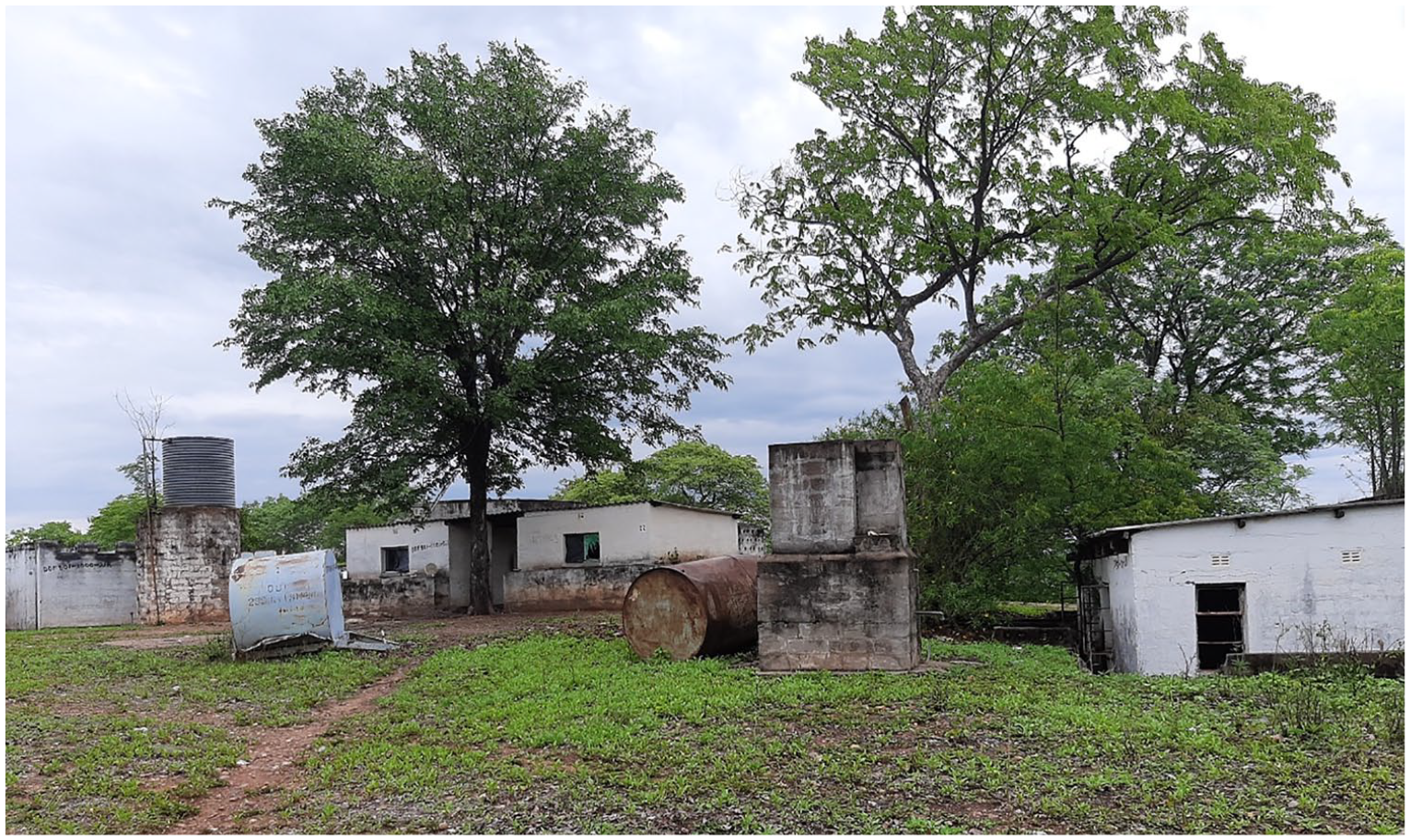
An image of a colonial sub-office in Musampakaruma Chiefdom.
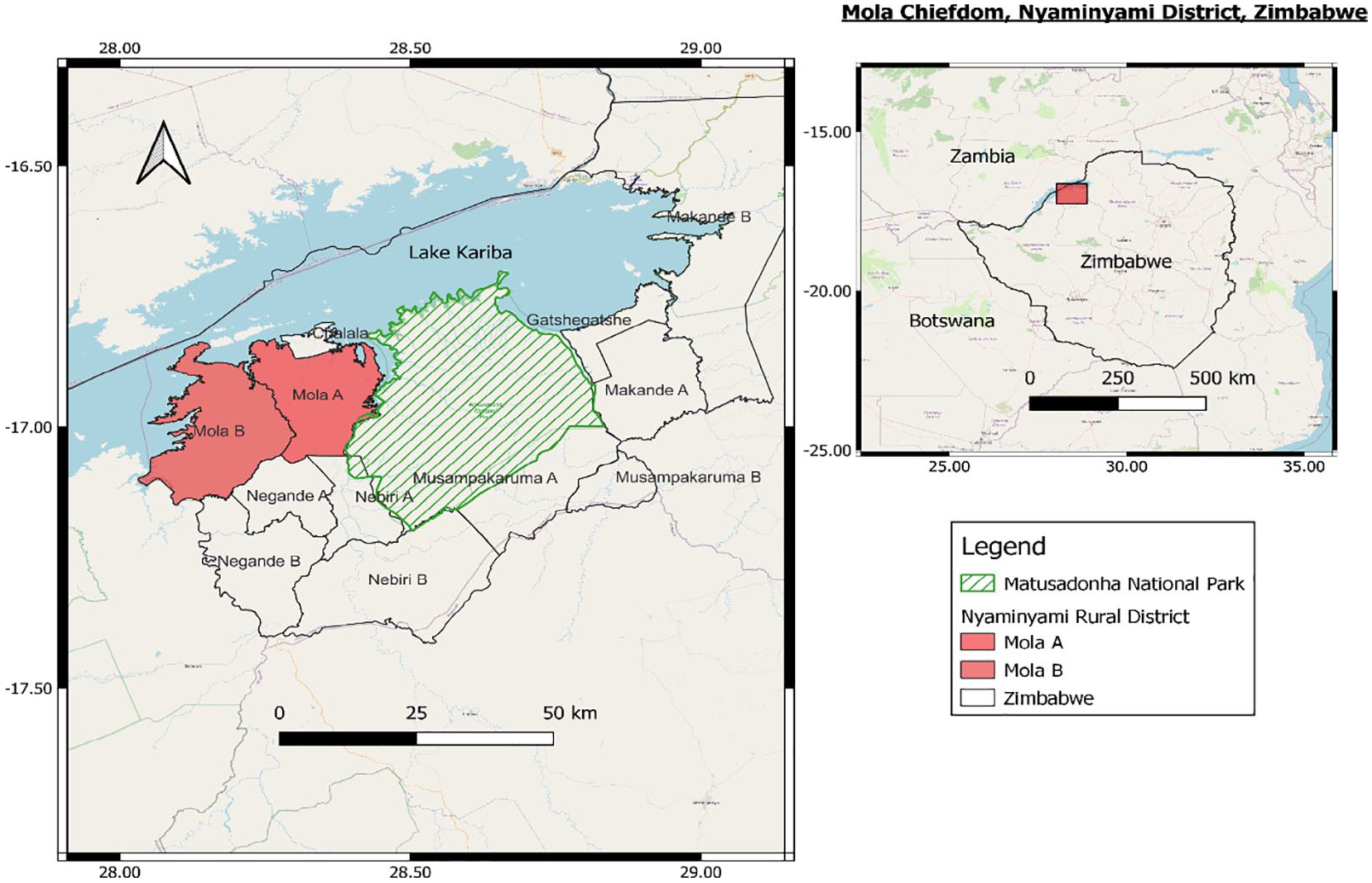
The map of Mola Chiefdom.
Following their forced removal from the Zambezi to pave the way for the dam, the Tonga-Goba resettled in Musampakaruma Chiefdom (see Figure 1) along the Marova River, in the Matusadonha National Parks. This region is highly infested with animals and is a well-known hotspot for human-wildlife conflicts. The main reason behind resettling along this river was to reestablish riverine agriculture and fishing, which the people were accustomed to when they lived along the Zambezi River.
To the Tonga and Shangwe speakers, the isolation of Marova River was not an issue because they regarded their residency there as a continuation of their river-focused lifestyle. But the guerrillas and Rhodesians had different opinions regarding this marginalization. To the guerillas, the isolation concealed their operations from the Rhodesian Forces’ surveillance. To the Rhodesian Forces, this isolation was a threat to colonialism, especially as such places were breeding grounds for guerrillas. Such different opinions about the rural landscape between guerrillas and Rhodesians influenced how they operated and interacted with local communities. Marova River had several fish species, especially during the rainy season, and its alluvial soils permitted two harvests each year. From the time they were displaced in the 1950s until the mid-1970s, with the Tonga-Shangwe experienced little state presence. However, little did they know that the isolation of the place would be attractive for guerrillas a few years later, as well as increased state presence, which further induced their displacement from Marova to an area called the “Chiweshes” near the suboffices of the colonial officials.
The Tonga-Goba people, who had lived near the Marova River for many years, were further displaced during the war. The river was regarded as a potential hiding place for the ZIPRA guerrillas, and the people living nearer to the Marova were believed to be guerrillas against the Rhodesian Security Forces. Indeed, during the Second Chimurenga, guerrillas and villagers worked hand in hand, as evidenced in many other parts of Zimbabwe (Helliker et al., 2021). The Rhodesian Security Forces then decided to move the Tonga–Goba people to sub-offices. Commenting on their war-induced forced displacements, one elderly male recalled that:
When we were chased away by the Kariba Dam, we first settled at Chidyamugwamu area. In 1977, we were then displaced again by the war between guerrillas and the British soldiers – Ian Smith’s soldiers. We were confined in ‘keeps’ [protected villages] nearer to the present day Chief Musampakaruma’s homestead . . . . We were carried by the Rhodesian Forces lorries from Chidyamugwamu to Chiweshe. (Interview, 12 December 2020)
The Tonga-Goba people knew why they were removed from the Marova River. They were aware that they were removed because Rhodesian Forces suspected them of harboring guerrillas in their villages. Commenting on this, a local resident and victim of the displacements recalled:
We came from the Marova River to settle in the Chiweshe villages during the War. In 1976, our Chief informed us that it was time for war and that every villager was supposed to come and live near the road, close to where the Chief lived. . . People were removed from Marova because the Rhodesian government feared that they would look after the guerrillas by giving them food and shelter since it was a far-removed area. People were carried by Pumas [soldiers’ lorries]. Taking them to the present-day sub-office in Ward 10. (Interview, 15 December 2020)
People remember their displacement during the war as hasty, abusive, and forceful. Just like the displacements of 1958, wartime displacement practices did not give people enough time to prepare to move. Harassment and torture from the colonial officials (and the army) were the dominant features of the war (Helliker et al., 2021). Their removal did not only detach people from Marova River, but it also impacted them socio-economically. Having left their fertile fields along Marova River, they became clustered in Chiweshe villages, where they could not practice any meaningful agriculture. They also arrived at the “Chiweshes” without any seeds for the farming season. Commenting on the economic impact of their removal from Marova during the war, another elderly male mentioned that:
The major problem was that the soldiers did not give us seeds when we reached Chiweshe. When we were resettled, we just threw sorghum seeds with sandy soils in the lorries. Some seeds were tossed in the air when the lorries were moving. We left our homes and gardens at Chidyamugwamu. This is why, during the first year of living at the Chiweshe, our harvests were very poor, and there was serious hunger and poverty. We received food handouts from the white men, but they were not enough. We wanted to farm for ourselves. (Interview, 8 April 2017)
People also recall that when they settled at the Chiweshe, they feared members the Rhodesian Security Forces and the ZIPRA guerrillas. Fear was generated by the recorded local casualties linked to war. There were also local people who disappeared from the keep during the war. These people are believed to have been assassinated by the guerrillas. This is because the relationships between the guerrillas and villagers were complex and changing, both temporally and spatially (Helliker et al., 2021). Sometimes guerrillas mistrusted villagers whom they often labelled as sell-outs. Furthermore, hunger was also another challenge. Narrating the problems faced at the keep, one male first-generation displaces bemoaned that:
We had hunger problems. Our fields were too small, and we ploughed using hand axes. We had no cows. Cows came after the war. In the first year, we did not harvest. In the second year, we obtained a few crops from our small fields. The Rhodesian Forces offices at the Musampakaruma ‘Keep’; surrounding them were the villages of the people in the Chiweshe area. I think this was the year we voted in 1980 when the year had ended. Our local old school, made of poles and grass, we had at the time was burnt by the soldiers. (Interview, 18 December 2020)
As indicated above, the Tonga-Goba people led precarious lives during this time. Precariousness and vulnerability caused by war became part of their everyday lives. As a local resident recalled,
The ZIPRA forces did not establish local bases in Musampakaruma Chiefdom because the area was characterized by hunger and famine. They were mainly concentrated in areas where there was abundant food. This Chiefdom had hunger and we could not provide them with more food. We ploughed by hoes. We had no cattle. That is precisely the reason why there were no confrontations in this Chiefdom. Guerrillas were away, we were confined in the Chiweshes. (Interview, 9 April 2017)
The locals mentioned that their removal from the Marova River to the “Chiweshes” was another factor that caused severe hunger. The river had alluvial banks that provided people with better food output as compared with the dry land areas surrounding the keep. The creation of the “Chiweshes” and the unavailability of food from civilians did not deter the ZIPRA forces from passing through Musampakaruma; however, in fact, there were occasions when the ZIPRA cadres were remembered to have passed through the chiefdom and caused severe havoc. But during these occasions, ZIPRA operations would lead to “witch-hunting” activities. As the locals remembered, the ZIPRA guerrillas killed the local chief at the time, Pondo Mbiri, who was regarded as a sell-out. Local narratives suggest that Pondo Mbiri never had good relations with the guerrillas and was therefore seen as a Rhodesian collaborator or “sell-out.” “Sell-out” identity construction is a recurrent theme in the Second Chimurenga stories. Ivan Marowa has shown that there were diverse constructions of the sell-out identities during the war, and in most cases, those identified as sellouts were tortured and killed (Marowa, 2009).
War experiences in Mola
When the Tonga-Goba people were displaced from the Zambezi in the late 1950s, they were moved to Dhela Valley which was close to the Lake. They were later removed from that place as it was considered closer to the Lake by white settler conservationists who argued that people would end up poaching fish and wildlife. They were thus pushed 10–15 km further inland, but they remained near Lake Kariba. Immediately after their second displacement, the colonial state opened new fishing camps for the displaced people. These fishing camps were/are under the Mola Chiefdom. Mola became comprised of the residential rural area and the fishing camp area. Contrary to what the state officials and the locals had imagined, the region did not attract fish traders from all over Rhodesia because of poor road and communication networks. As a result, two white settler companies, Irvin and Johnson, monopolized the fish market in Kariba town. Since Mola remained isolated and marginalized between the late 1950s and the early 1970s, the fishing camps barely benefited the locals for whom they were created. The locals’ economic conditions worsened, and they increasingly became angry about the colonial state’s failure to meet their promises about improved livelihoods after their displacement. When ZIPRA operations began in the region, the Mola people were ready for war.
Fishermen were only supposed to stay in the fishing camps on a temporary basis. The camps were not permanent residential areas, and the fishermen were not allowed to stay with their families there. As a result, the male-dominated fishing camps were used as the ZIPRA guerrilla’s stop-over sites before they crossed the Lake.
When the fishing camps were turned into departure points enroute to Zambia, the Mola people were exposed to the outside world because their areas had become zones of conflict between ZIPRA guerrillas and the Rhodesian Security Forces who patrolled the region to thwart guerrilla activities. Mola Chiefdom was much more turbulent than Musampakaruma, given its proximity to the Lake and the fishing camps.
As the war atmosphere intensified, the Rhodesian government displaced all people from their villages and situated them at their local sub-office (see Figure 4). A local informant, who was employed as a District Assistant during Zimbabwe’s Liberation War, explained the displacement the people experienced in the Chiefdom in the following words:
The Rhodesian Forces came here and told people that on Monday [no date] that they were going to be moved from their homesteads and be confined at Sub-office [Chiweshe Village]. The place where people were confined was named Chiweshe because people were going to live like the people of Chiweshe who were first confined to keeps during the war in Mashonaland Central. That is why this area is called Chiweshe. We stayed there from 1976, 77, 78, 79 until 1980. It was only after the cease-fire that people started to find other places to live in the Chiefdom as we were crowded at Chiweshe. People were confined at Chiweshe because the Rhodesians believed that if they remained in their homes, they were going to keep and provide food to guerrillas. (Interview, 5 April 2017)
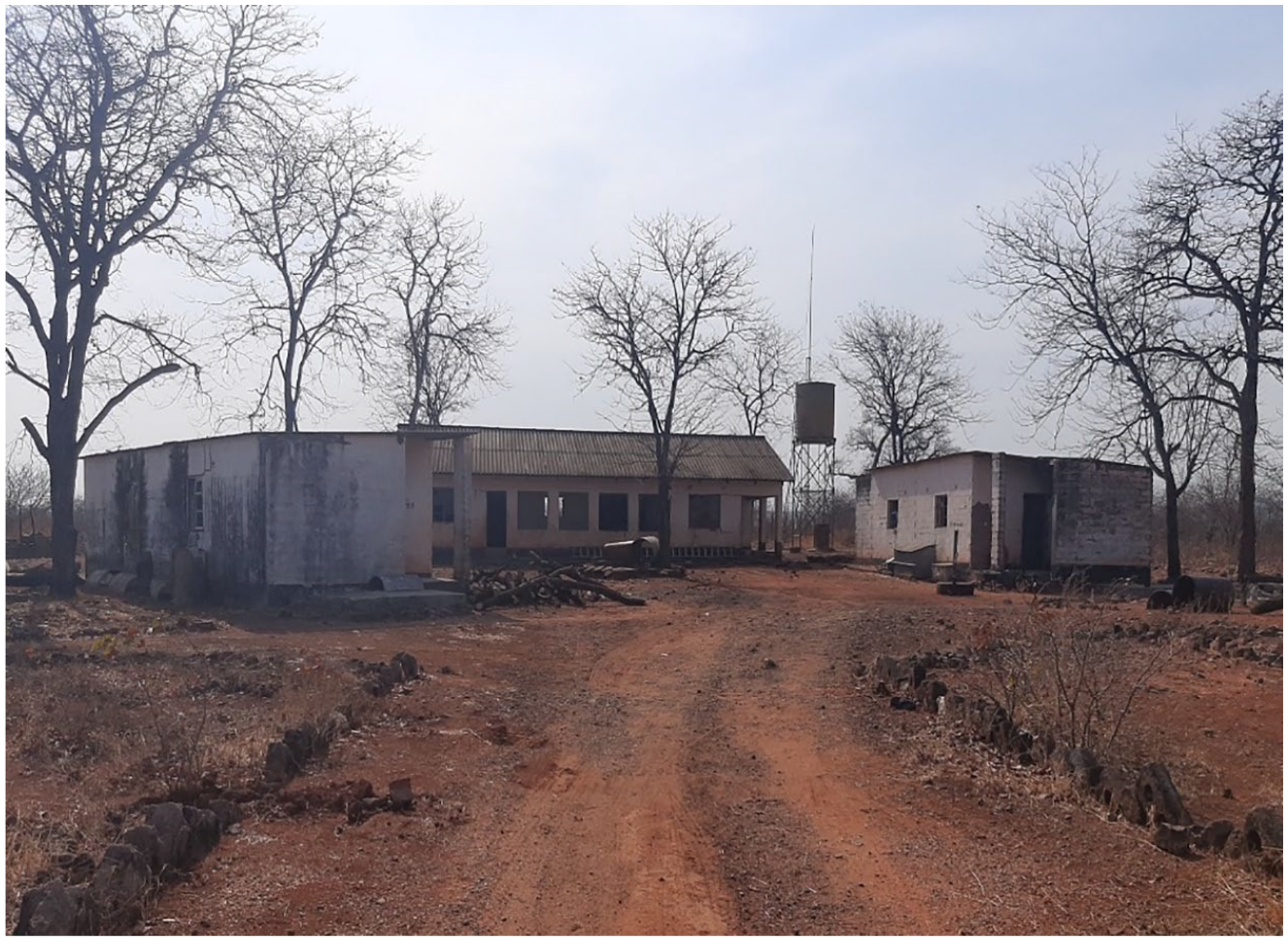
The image of a colonial suboffice in Mola Chiefdom.
Another informant from Mola also told anthropologist Pamela Reynolds in the 1980s that:
The government dislocated people for the second time in 1976, during the war fought between the white-controlled government and liberation forces, the government forced people to gather together in villages, causing them to leave the homes that they had built and the fields that they had tilled, with no compensation for the loss of crops, land claimed, or built structures; neither food nor assistance of any sort was offered. (cited in Reynolds, 2019: 78)
The ZIPRA guerrillas’ activities as well as Rhodesian Forces’ patrols in the area, destabilized the Chiefdom. People feared for their lives and just like during the move in the late 1950s, people had increased psychological, physiological, and socio-cultural stresses. During the war, ordinary civilians were often “caught in the middle” of guerrilla pressure and Rhodesia insurgency (Msindo and Nyachega, 2019). As Luise White pointed out, during the war, Africans were not hunted as prey on patrol, unless it was their own patrol, but rather in places where they were being “protected” from guerrilla violence and in the spaces where they were being remade into auxiliaries fighting for Rhodesia (White, 2016). Among the Mola, torture and harassment created everyday fears and changed the local socio-cultural and political environment. Recalling the situation in the 1970s, one Mola elder narrated:
people were tortured, harassed, and beaten by the white soldiers. If they suspected that you were a sell-out, you were beaten up. . . People had a tendency of selling-out each other, and everyone lived in fear. . . A lot of things would result in one being beaten up. . . Even if a person had a funny and expensive shoe. . . they were suspected of having interacted with either guerrillas or soldiers. People would want to know where you got that shoe from because they were not made locally. So, the answer was that you got it from outsiders, either guerrillas or soldiers. (Interview, 14 December 2021)
Socio-cultural stress was intensified by the verity that people could not properly enact their traditional and ritual practices in the presence or surveillance of either guerrilla forces or, to a larger extent, Rhodesian Forces. Religious activities were carried out at gunpoint, under the watchful eyes of the colonial officials. As one elder narrated:
We used to carry out our rituals. We carried them out in fear because the white men and DAs would visit us when carrying out rituals to see if guerrillas were not present. If the local DAs identify a stranger during the ritual ceremonies, they were beaten. (Interview, 5 December 2021)
As mentioned above, during the war, people were confined into one tiny village [Chiweshe] by the Rhodesian Security Forces as they were believed to shelter and offer food to the guerrillas. When they were displaced in the late 1950s, they were situated in this marginalized region. Initially, to the colonialists, this marginalization and underdevelopment was not a serious matter of concern. It was only during the war that they realized that the marginalization and underdevelopment of the Tonga regions they [colonists] created in the 1950s, were potential “birthplaces” and “hibernation enclaves” of guerrillas. Broadly, the confinement of the Tonga disrupted their culture in the late 1970s. It resulted in a lack of access to rivers and trees with everyday religious importance.
“The lake and the bush became the Tonga-Shangwe graveyards”: Guerrilla violence between 1976–1979
Apart from displacements, the war also resulted in the people of this region being labeled sell-outs. As stated earlier on, the Tonga people were resettled to marginalized areas, that were far removed from urban centers of colonial administration. These areas were often labeled “bushes” due to their underdevelopment and isolation (Mashingaidze, 2020; Reynolds, 2019). This marginalized border region was crucial during the war for both guerrillas and Rhodesian forces. For the guerrillas, Mola and Musampakaruma Chiefdoms were a potential hiding place occupied by the Tonga and Shangwe, who they forcibly demanded food from.
The Tonga-Shangwe people who did not cooperate in terms of providing food, water, carriers, and shelter to the guerrillas were identified as “sell-outs.” Sell-outs were beaten and tormented by guerrillas. Stories are told of Tonga men who were tortured and some who disappeared in the Nyaminyami Rural District during the war. As the narratives below reveal, those who disappeared are believed to have been killed by the guerrillas. One man reiterated that “all the bushes you see are graves. . ., even the Lake itself has people’s souls roaming around, the bushes and the Lake were places where sell-outs were buried and drowned” (Interview, 13 October 2021). These victims were not buried according to local traditional ways and hence were regarded as “roaming” spirits and “souls” of the Lake.
In 2017, one elderly man from Nyaminyami District who grew up in Mola narrated that:
many people disappeared during the war in this area. I remember two men from our area who disappeared during the war, and we never saw them. It was rumoured that they were killed by the guerrillas for being sell-outs. . .They were just taken at night from their homesteads and never came back. . . if you were suspected of being a sellout, you were killed. (Interview, 2 June 2017)
Another male elder who worked as a District Assistant during the local era indicated that:
During the war, if the guerrillas saw you with a new shoe, they would want to know where you got that shoe. If you do not provide a good answer, they could beat you. They would think that you got it from the white men. I was working for the white men, but I knew the experiences of many villagers. I had many stories of how they were harassed by guerrillas. (Interview, 2 June 2017)
Despite the violence guerillas unleashed on civilians, arenas and avenues of collaboration still existed. The guerrillas needed Tonga and Shangwe assistance in crossing the river [and the Lake], as it was difficult to navigate. Therefore, the River-people’s navigation skills became increasingly important for the guerrillas, as it was for the warring precolonial polities of the Lozi/Kololo and Ndebele. When the Lozi/Kololo and the Ndebele, who lived on adjacent banks of the Zambezi, constantly fought each other during the mid-nineteenth century, they relied on Tonga people who had canoeing skills. In the 1970s, the need for such skills was apparently significant. Due to the difficulties of crossing the waterscape[s], guerrillas considered blowing up the Victoria Falls Bridge and Kariba Dam (McGregor, 2009), to ease their movements, and in the process, they relied heavily on the locals’ crossing expertise.
The collaborations between the civilians and guerillas compelled the Rhodesian security forces to implement the sub-office scheme to confine the Tonga people. In the entire Nyaminyami district, the people of Mola Chieftaincy were prime suspects as they settled near the Lake, compared to those of Musampakaruma (or any other Chiefdom). Suspicions rose because there were some Tongas who kept guerrilla weapons in their homesteads. One informant narrated:
I remember many people from Mayovhe [a fishing Village in Mola] who used to work with guerrillas. Some of them became high-ranking officials in the army upon independence. They still receive war veteran monies from the government. One such man was my father-in-law. One of the huts in his homestead was an armory for the guerrillas. One day, the Rhodesian soldiers discovered this and burnt down the whole hut. . . (Interview 17 November 2021)
Fishing villages such as Mayovhe were temporarily closed for any fishing activities. JoAnn McGregor examined a comparable situation in the neighboring Binga where the security forces shut down the fishing camps, and white soldiers occupied them, as the youths used to cross to Zambia at night, and many were joining the war as guerrillas (McGregor, 2009). These secondary displacements had far-reaching consequences as they delayed the permanent settlement of the people.
Conclusion
The colonial displacements of the Tonga-Goba people, their marginalization as well as the colonial regime’s “broken promises” significantly shaped their participation in the Zimbabwe War of Liberation in the 1970s. In this paper, we have demonstrated how the opening of ZIPRA bases at Paradise and Mayovhe, in the mid-Zambezi Valley, among the Tonga-Goba under Chief Mola, was largely motivated by growing anticolonial sentiments in the area. The resentment and strong anticolonial sentiments among the Tonga-Goba arose from their marginalization as well as the colonial state’s failure to fulfill their promises to the Tonga-Goba. As we have shown in this paper, during the dam-induced displacement and resettlement in the 1950s, the Rhodesian regime promised the Tonga-Goba that they would have rights to control and access Lake Kariba for their different socio-economic aspirations. The Rhodesian government’s failure to fulfill this promise ignited huge anti-government sentiments among the Tonga-Goba people, who saw the coming of the war and ZIPRA guerrillas as an opportunity to liberate the Kariba waterscape. ZIPRA guerrillas also knew about the strong anti-colonial sentiments in the region arising from the broken promises. Therefore, the guerrillas capitalized on a strong local anticolonial condition to garner local support in the region. Throughout the war, guerrillas relied heavily on the Tonga-Shangwe expertise in crossing the river [and the Lake]. Yet the experiences of the locals and guerrillas were not always about collaborations. Although the Tonga-Goba people’s resentment against the colonial government generally made them willing participants in the war, our study has also revealed coercive ZIPRA tendencies in the region, emphasizing that wartime encounters cannot be generalized even in the same area, time, and socio-economic and political contexts.
In many ways, the Tonga-Goba wartime encounters were significantly influenced by what we see as “multiple displacements” and marginalization happening in different decades but with continuities in their impact and how people reconstruct this past in the present. In the 1950s, the Tonga and Goba were forced from their riverine homelands to Mola and Musampakaruma Chiefdoms, respectively, to pave the way for the Kariba dam. In the 1970s, the Goba and Tonga people were forced out of their homelands again and were moved to the newly created “keeps” named Chiweshes. Their forced removals caused different kinds of insecurities as their Marova-based riverine livelihoods were disrupted. The multiple displacements experienced by the Tonga-Goba during colonialism contributed significantly to their impoverishment. In addition, our study has revealed that severe impoverishment and hunger in Mola and Masampakura was worsened by the limited economic opportunities available to the Tonga-Goba and poor social infrastructural development. The area remained isolated, with poor road and communication networks that remained unresolved during the war. This marginalization still exists in the postcolonial period. As locals “remembered the past,” others would say that ZIPRA guerrillas also made unfulfilled promises, just like the Rhodesian government did. Many remembered the war negatively and emphasized that although they participated in the war with the hope of liberating the waterscape and gaining control of the region as they did in the pre-1950s period, the new government in the post-1980 period did not fulfill these hopes. Government-led programs, such as the Fast Track Land Reform Programme of the early 2000s, did not present the Tonga-Goba people with any opportunities to regain control and access to their waterscape and former homelands, such as the Marova River area, where they lived before being forced to move to the “Chiweshes.”
Footnotes
Author’s note
Nicholas Nyachega is now affiliated to The Ohio State University, USA.
Funding
The authors disclosed receipt of the following financial support for the research, authorship, and/or publication of this article. This work was supported by the La Trobe University HUSS Internal Research Grant (grant number 2021-2OS-HDR-0004).