




Abstract
The African continent is vulnerable to climate variability and change due to the sensitivity of all the economic sectors to climate and its low adaptive capacity. Sporadic rainfall and increasing temperature are rapidly emerging as the most serious problems affecting agriculture and food security in sub-Saharan Africa. Field-based research was conducted in the Gutu district of Masvingo Province using the participatory climate change adaptation appraisal to determine asset-based adaptation strategies employed by the smallholder farmers in building their adaptive capacity and resilience to climate variability. Questionnaire-based surveys, key informant interviews, and focus group discussions were used to collect data. Vulnerability indices were calculated using the expert judgment approach. The research adopted a design science research paradigm to generate innovative and useful artifacts to solve real-world problems. Multistage sampling was used to sample the interviewees. Results reveal that Gutu smallholder farmers use household assets to cope and adapt to climate change and variability with financial assets being the dominant asset affecting smallholder farmers’ vulnerability.
Introduction
Africa suffers disproportionately from the vagaries of climate change and climate variability exposing smallholder farmers to extreme degrees of vulnerability. Africa is one of the most vulnerable continents to climate change and climate variability (Bedair et al., 2023). Vulnerability and adaptation options to climate change in Africa and other developing countries have received increasing attention. Africa is characterized by nature-dependent livelihoods, indicating that the continent is disproportionally hit by adverse effects of climate change. According to Mushore et al. (2021), rainfall exhibits considerable spatial and temporal variability characterized by shifts in the onset of rains, increases in the frequency and intensity of heavy rainfall events, increases in the proportion of low rainfall years, decreases in low-intensity rainfall events, increases in the frequency and intensity of mid-season dry-spells.
The vulnerability of a country or region to climate change depends both on its socioeconomic development and on environmental factors (Kocur-Bera and Czyża, 2023). In addition, households with limited assets such as livestock and households that depend on rain-fed agriculture are more vulnerable to climate change (Ndlovu and Prinsloo, 2020). The means of resilience could be the assets and entitlements that an individual, a household, or a community can mobilize and manage in the face of hardship. It should also be noted that there are close linkages between vulnerability and livelihoods, and thus building resilience is a question of expanding and sustaining these assets (Twigg and Calderone, 2019). Vulnerability is envisaged to be closely linked to asset ownership. The more assets people have, the less vulnerable they are conversely, the greater the erosion of people’s assets, the greater their vulnerability (insecurity). Exposure in this case is the magnitude and duration of the climate-related exposure such as a drought or magnitude of change in precipitation. Sensitivity, on the other hand, is the degree to which the system is affected by the exposure. Adaptive capacity is the system’s ability to withstand or recover from exposure (Thathsarani and Gunaratne, 2018).
Climate variability as manifested in variable onsets and rainfall amounts, dry spells, recurrent droughts, and floods are intrinsic characteristics of many sub-Saharan Africa regions (Ayanlade et al., 2022). This implies that rain-fed agriculture already must account for these various characteristics. Sustainable smallholder agricultural production cannot be achieved in the absence of local coping and adaptation strategies to current variability and change and adaptive capacities for future climate changes (Makungo and Nkuna, 2023). This study sought to explore pro-poor asset adaptation strategies and processes for extremely poor households by analyzing theoretically and empirically autonomous as well as planned asset adaptation. An analysis of adaptation practices reflects poor people’s individual and collective characteristics, resources, and strategies (Roy et al., 2011). The objective of this article was to examine the vulnerability of the smallholder farmers in Gutu district and examine pro-asset adaptation strategies used by the farmers to respond to challenges related to climate change and variability.
Contextualizing climate change and variability
The asset-based framework for adaptation
The framework is premised on the assumption that individuals, households, and communities are not passive, but active actors who possess resources that they deploy to respond to emergencies such as extreme weather conditions. These resources, in the context of asset adaptation, are referred to as asset portfolios, bundles of assets, capital assets or endowments, and entitlements. It comprises the human, financial, physical, natural, and social assets. It is against this background that this article seeks to understand how the rural poor households in the Gutu district draw on their asset portfolios to build their adaptive capacity and resilience to the impacts of climate variability and change to ensure household food security. Thus, assets are not simply resources that people use to build livelihoods: they give them the capability to be and act (Rodriguez-Bilella, 2023). Households with limited fixed assets such as livestock and households that depend on rain-fed agriculture are more vulnerable to climate change (Ndlovu and Prinsloo, 2020). While the extremely poor households have a lack of assets and the inability to accumulate a portfolio of them, their adaptive responses are short-term, ad hoc, and only impact minimizing. There are close linkages between vulnerability and livelihoods, and thus building resilience is a question of expanding and sustaining these assets (Twigg and Calderone, 2019). It is against this background that vulnerability is envisaged to be closely linked to asset ownership. Assets available to poor individuals, households, and communities can facilitate their asset adaptation strategies. An asset adaptation framework argues that the asset portfolios of individuals, households, and communities are a key determinant of their adaptive capacity both to reduce risk and to cope with and adapt to increased risk levels (Serdeczny et al., 2024).
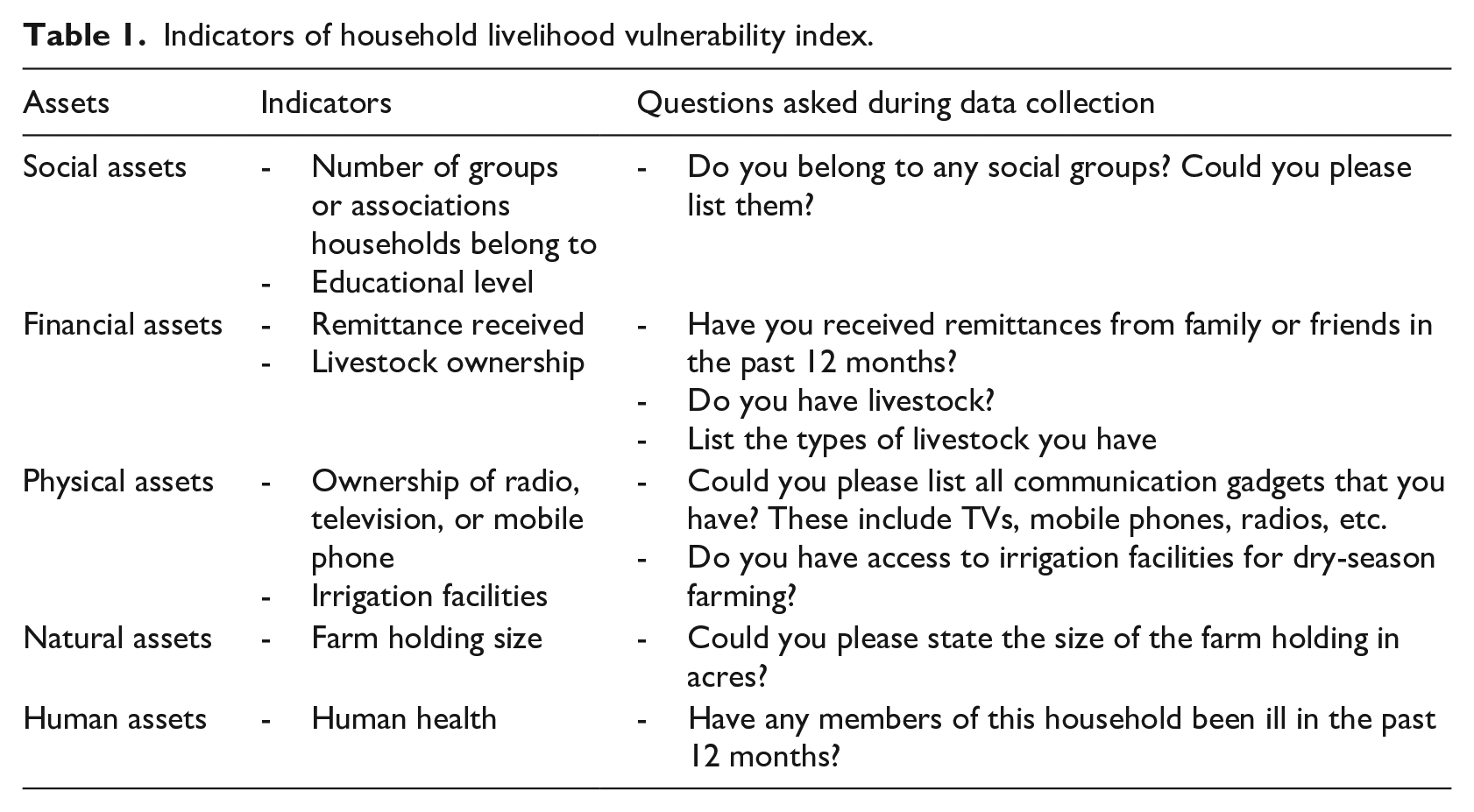
The asset-based approach focuses attention on assets such as human, financial, physical, social, and political assets of households, with the understanding that the quantity, quality, and productivity of their portfolio of assets determines the potential for long-term growth and poverty reduction (Siegel and Alwang, 2005, 1999). This was supported by Moser, 1998 who pointed out that these assets consist of produced durable things that can enhance a person’s ability to perform useful work for his/her livelihood. Table 1 defines the different types of assets such as human capital, financial assets, and physical, social, and political capital assets of households. Zhang et al. (2020) considered these assets as capital in their framework. To him, assets are not simply resources that people use to build livelihood, but these assets give the capability to be and to act as vulnerability. Assets not only allow them to survive, adapt, and alleviate poverty but are also the basis of agents’ power to act and reproduce the transformation of resources. Capital asset framework argues that households may be able to alleviate poverty in a specified period but if assets degrade, they might not be able to cope well in a subsequent period (Zhang et al., 2020).
Indicators of household livelihood vulnerability index.
Vulnerability framework
The conceptual framework can be viewed as exposed to both gradual climate change, mainly involving changes in temperature and precipitation, and climate extremes such as drought and flood. Exposure in turn affects sensitivity, that is, exposure to higher frequencies and intensities of climate risk seriously affects economic and social outcomes such as crop yield, income, and health. Exposure is also related to adaptive capacity. Specifically, higher adaptive capacity reduces the vulnerability of any smallholder farmer’s potential damage (Njoya et al., 2022).
The conceptual framework for vulnerability also suggests that sensitivity and adaptive capacity are interlinked. That is, given some fixed level of exposure, adaptive capacity influences the level of sensitivity. Lower adaptive capacity results in higher sensitivity and vice versa. Hence, sensitivity and adaptive capacity together with exposure add up to overall (total) vulnerability. The conceptual framework also captures socioeconomic vulnerability, which mainly deals with variations within a society Lee et al. (2022), and biophysical vulnerability, which emphasizes the adverse effects of environmental factors on human and natural systems. The integrated approach, which tries to integrate both biophysical and socioeconomic factors in analyzing vulnerability to climate change used in the assessment (Awolala et al., 2022).
Specific indicators as determinants of household livelihood vulnerability
Vulnerability is not a uniform taxonomy: for example, not all farmers and communities are equally vulnerable. It is against this background that this study used the Grundstein et al. (2021) according to which vulnerability is defined as, “The degree, to which a system is susceptible to, or unable to cope with, adverse effects of climate change, including climate variability and extremes. Vulnerability is a function of the character, magnitude, and rate of climate variation to which a system is exposed, its sensitivity, and its adaptive capacity” (Gumel, 2022). Thus, as per this definition, vulnerability has three components: exposure, sensitivity, and adaptive capacity.
Exposure
Yu et al. (2021) relate exposure to the degree of climate stress affecting a unit of analysis, that is, the magnitude and frequency of extreme events to which an area or unit of analysis is exposed. Exposure can be interpreted as the direct danger (i.e. the stressor), and the nature and extent of changes to a region’s climate variables (e.g. temperature, precipitation, strong winds extreme weather events). Smallholder farmers are usually exposed to such climate variables. Figure 1 above shows that Gutu district has three agroecological regions with some farmers experiencing extreme climate conditions especially those in regions 4 and 5 areas. The lack of physical assets such as irrigation facilities renders most smallholder farmers vulnerable (Durga et al., 2023).
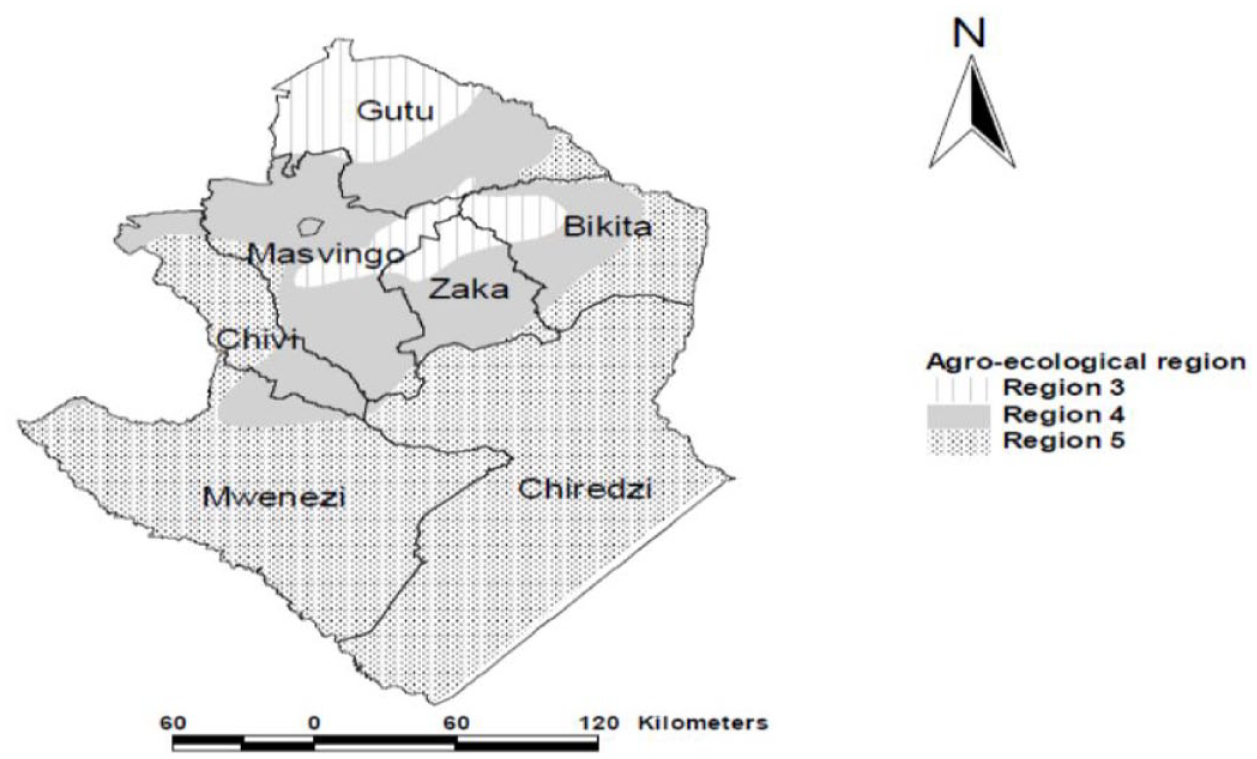
Masvingo districts agroecological regions.
Sensitivity
Sensitivity explains the human and environmental conditions that can either worsen the hazard or trigger an impact. In this study, I include factors that may have an impact on the sensitivity of farmers in the Gutu district. Climate extremes in different parts of the study area, the main constraints of agriculture are drought, famine, or hailstorm. From the definition above one can deduce that sensitivity results from dependence on the environment for livelihoods, food, shelter, and medicine: lack of access to decision making and justice, geographical context, and a range of intersecting inequalities including financial, socioeconomic, cultural, and gender status (Birkmann et al., 2022).
Adaptive capacity
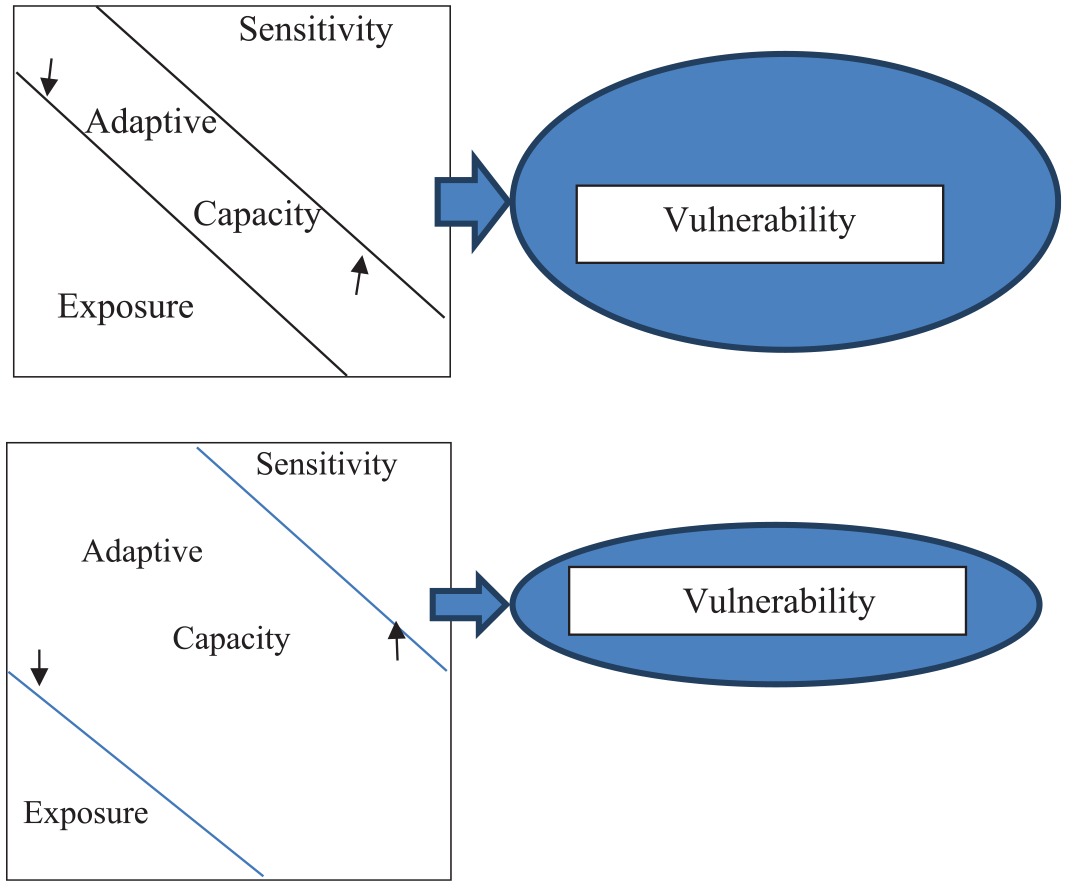
Serdeczny et al. (2024) describe “adaptive capacity” as the potential or ability of a system, region, or community to adjust to the effects or impacts of climate change (including climate variability and extremes). Adaptive capacity is a context-specific concept and can vary from country to country, from community to community, among social groups and individuals, and over time (Bhadra, 2012). Besides, according to Nesamvuni et al. (2022), adaptive capacity is considered “a function of wealth, technology, education, information, skills, and infrastructure, access to resources, and stability and management capabilities. Adaptive capacity refers to the pool of assets (social, physical, financial, natural, human, and cultural) and resources (technological, knowledge, and governance) that an individual, household, or community may mobilize to build resilience to climate change impacts. Therefore, analyzing vulnerability must involve identifying not only the threat but also the “resilience,” or the potential responsiveness of the system and its ability to exploit opportunities and resist or recover from the negative effects of a changing environment. The means of resilience could be the assets and entitlements that an individual, a household, or a community can mobilize and manage in the face of hardship. Adaptive capacity represents the potential to implement adaptation measures that help avert potential impacts. The enhancement of adaptive capacity is an effective means of facilitating adaptation to climate change and variability, especially for vulnerable groups such as small-scale farmers in developing countries (Etana et al., 2023). Overall vulnerability is calculated as the net effect of adaptive capacity, sensitivity, and exposure. The asset portfolios of individuals, households, and communities are a key determinant of their adaptive capacity both to reduce risk and to cope with and adapt to increased risk levels as shown in Figure 2.
Effect of adaptive capacity, exposure, and sensitivity on vulnerability (Yu et al., 2021).
The illustration in Figure 2 shows that when adaptive capacity is small or weaker, the smallholder farmers are highly vulnerable. In the same vein, if adaptive capacity is greater than exposure and sensitivity, it means smallholder farmers are less vulnerable. This scenario is a result of smallholder farmers having the assets to adapt to the prevailing climatic conditions. The elasticity of vulnerability depends on the tripartite relationship between adaptive capacity, exposure, and sensitivity.
Types of vulnerability
Social vulnerability
Most smallholder farmers are socially vulnerable. Social vulnerability can be loosely defined as the predisposition of people, organizations, and societies to the impacts of natural and man-made disasters (Mah et al., 2023). A quantitative description of the overall social vulnerability of an area or a region to shocks is measured based on such variables as proportion of elderly and children, rural housing density, gender, marital status, age, health status, educational level of household heads, etc. in the context of rural household’s social vulnerability to climate change: it is vulnerability due to the low social profile. Farmers with high institutional participation, many relatives in a community, family size with working potential, and participation in different social meetings usually have high social power to withstand adverse effects. Social capital is an intangible asset, defined as the rules, norms, obligations, reciprocity, and trust embedded in social relations, social structures, and societies’ institutional arrangements (Darmenova and Koo, 2021). It is embedded at the micro-institutional level (communities and households) as well as in the rules and regulations governing formalized institutions in the marketplace, political system, and civil society (Shafeeqa and Abeyrathne, 2022). Social capital refers to the relationship of households with other villagers. Households that have a good relationship with other villagers have a high adaptive capacity in terms of social capital because they will receive help from those villagers and neighbors. Social capital is represented by the average number of occasions agricultural assistance was given and/or received and that money was borrowed and/or lent (Eggerman, 2023).
Environmental and physical vulnerability
The relationship between natural capital and vulnerability to climate change is arguably one of the least contested. The greater the level of reliance of a household on natural resources, such as farming or forestry, the greater will be their vulnerability to climate change. This is because the availability of such natural resources is dependent on climatic variables such as rainfall, which are projected to change under climate change. The level of dependence on natural resources will likely vary from household to household. According to Mavhura, (2019), indicators for environmental vulnerability include but are not limited to the slope of the land, soil fertility, rainfall, temperature, frequency of hazards (drought, flooding, forest fire, disease outbreaks, etc.), vegetation cover, and others. In the overall vulnerability analysis model, these are variables for the measurement of sensitivity and exposure. Natural capital refers to the resources that a household owns. Natural capital is represented by agricultural land size and average. In rural communities, land is a critical productive asset for the poor.
Natural vulnerability
The higher the natural assets are, the higher the adaptive capacity of the household because they have the resources to respond to a climate event. Natural capital is represented by agricultural land size. Lack of security of tenure to the newly resettled farmers in Zimbabwe poses a major adaptation challenge (Chagutah, 2010; Muzari et al., 2016). Currently, resettled farmers are generally understood to possess 99-year lease permits, although very few of them have any documentation to this effect. Without guarantees of tenancy, farmers are reluctant to devote their total resources to making their land more productive, to the detriment of adaptation strategies (Chagutah, 2010). The full productive potential and sustainable use of natural resources and environmental management of resettled lands will only be realized when farmers are guaranteed secure tenure (Murken and Gornott, 2021). This was common to most of the smallholder farmers in the Soti Source and Mushaviri area.
Physical vulnerability
Physical capital is represented by the percentage of land held by a household that is irrigated and the number of accessible water sources. Physical assets also include the physical assets at the farmer’s disposal such as irrigation facilities, scotch cuts, and draught power (Ndlovu and Prinsloo, 2020). The higher the physical capital is, the higher the adaptive capacity. Lack of equipment to use on farms renders the farmer vulnerable. Poor infrastructure such as poor rural roads and transport networks also exacerbate small farmers vulnerable to climate change.
Human vulnerability
Human capital is represented by the percentage of working laborers within a household and the education level of the head of the household. The higher the human capital is, the higher the adaptive capacity of a household (Chisale et al., 2023). Labor is linked to investments in human capital; health status influences people’s capacity to work, and skill and education determine the returns from their labor. The labor shortages are felt more critically when farmers are supposed to adopt labor-intensive technologies such as conservation farming (which is one of the recommended climate change response options in smallholder agriculture in drought-prone Zimbabwe. Furthermore, the pandemic siphons household labour from agriculture, as the affected families divert time previously available for agricultural activities and channel it toward caring for sick household members. This was common in Gutu South where aids cases were reported during the survey. The pandemic drains labor from agricultural activities such as weeding, and harvesting as some members spend most of their time taking care of the victims of prostate cancer, tuberculosis, pneumonia, dengue, and diarrhea; noncommunicable diseases like heart disease, stroke, asthma, cancer, diabetes, and depression; and violence and injuries, hypertension, mental illness. Many of these diseases are prevalent in Gutu adding to the level of vulnerability of the households affected.
Financial vulnerability
Financial capital is represented by income per capita, and the percentage of income generated from nonagricultural sectors. The higher the financial capital, the higher the adaptive capacity of the household in responding to climate-related hazards. The research done has revealed that financial assets are the most dominant assets determining vulnerability in Gutu district more than other assets. Financial resources include such things as micro-insurance and diversified income sources (Githaiga, 2022). Based on experts’ opinion, the most important indicator for adaptive capacity is financial resources. Financial resources scored the biggest weight from experts because adaptation requires monetary expenditures. Moreover, higher financial resources make possible the acquisition of physical and information resources vital in carrying out adaptations. A livelihood comprises the capabilities, assets (stores, resources, claims, and access), and activities required for a means of living: a livelihood is sustainable and can cope with and recover from stress and shocks, maintain or enhance its capabilities and assets, and provide sustainable livelihood opportunities for the next generation, and which contributes net benefits to other livelihoods at the local and global levels and in the short and long term (Karki, 2021). The Sustainable Livelihood Approach can be used to explore how people combine different capital endowments including tangible assets (e.g. material resources such as land) and intangible assets (e.g. educational levels, claims, and access) to achieve livelihood objectives within the wider sociopoliticoeconomic conditions (Matiwane and Agnes Matiwane, 2023).
Materials and method
Study site
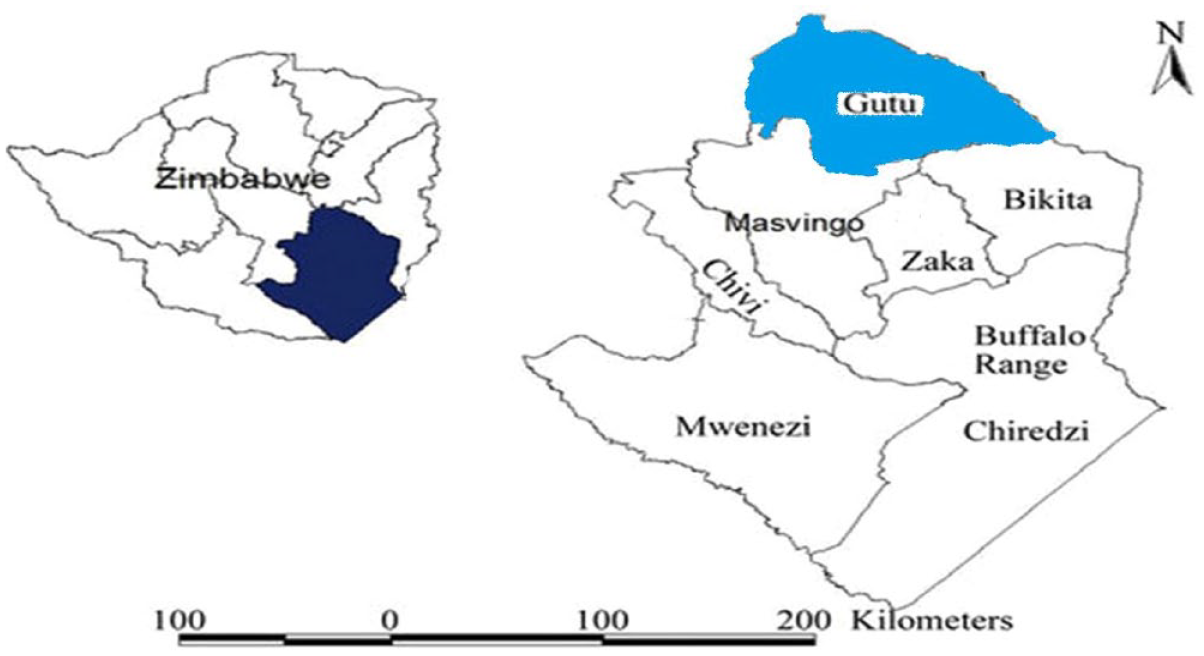
Gutu district located in the southern part of Zimbabwe between latitude: −19° 38′ 59.99″ S and longitude: 31° 09′ 60.00″ E. Gutu has an area of 7054 km2 with an average altitude of 1227 m above sea level. The climate is hot and dry throughout most of the year and prone to drought with some of the lowest rainfall in the country, usually 400 to 600 mm per year. Figure 3 shows Masvingo Province in which Gutu district lies.
Masvingo Province of Zimbabwe showing area under study.
Some parts of Zimbabwe are becoming warmer and drier crop productivity has also declined and livestock morbidity and mortality have increased (Mwadzingeni et al., 2021). Mawere (2015) claim that for the past two decades, Zimbabwe has been experiencing pronounced increases in temperature, recurrent droughts, and unpredictable rainfall patterns which have exacerbated suffering among the people, especially in the rural areas, where most of the population resides. The reason why Gutu was chosen for this study is that it experiences three types of acroecological regions, that is, regions 3, 4, and 5, all shared in one district as shown in Figure 1. Furthermore, Brown et al. (2012) researching within Zimbabwe observes that climate changes have resulted in more arid environments for agricultural production, which has shifted Zimbabwe’s five main agroecological zones. Zimbabwe once the breadbasket of southern Africa, turned to be a net importer of grain due to adverse impacts of climate change on the backbone of the economy.
Research methods
A mixture of participatory methods such as focus group discussions, household questionnaire surveys, and key informant interviews were used during data collection. Participatory analysis helps to integrate knowledge from both local farmers and science, particularly when comparing local farmers’ perceptions of climatic exposure characteristics and measured data. Thus, this research undertakes a design science research paradigm, as it designs and generates innovative and useful artifacts to solve real-world problems. During focus group discussions and questionnaire surveys, households were asked to highlight indicators linked to each form of a capital asset (human, financial, natural, physical, and social capital). This information was used to develop a household livelihood vulnerability index.
Sampling method
Multistage sampling techniques were employed to select the respondents for the household questionnaire, interviews, and FoGDs. Multistage sampling, whereby a sample is selected by using combinations of different sampling methods ensures adequate representation of all groups of interest, maintaining a high degree of validity and minimizing subjectivity in the sample selection (Creswell and Plano, 2011; Robson, 1993). A total of 218 household questionnaire surveys were conducted in the 12 wards. Six wards were selected from Gutu South and Gutu North. The households were selected randomly which enabled each household an equal chance to be selected. Data collection started with a Rapid Rural Appraisal Chambers (1994) during which community gatherings and transect walks were conducted with community members including community leaders at each of the wards from May 2023 to December 2023.
Calculation of vulnerability
Where V is the vulnerability, AC the adaptive capacity, E the exposure, and S the sensitivity. A higher adaptive capacity is associated with a lower vulnerability, while a higher sensitivity and exposure is associated with a higher vulnerability. Therefore, computation of vulnerability involves the identification of the exposure, sensitivity, and adaptive capacity of a system to climate variability and/or extremes. While the combination of exposure and sensitivity can determine the potential impact (first-order vulnerability assessment), the adaptive capacity is the extent to which the potential negative impacts can be averted or derived benefits from the opportunities. Hence, vulnerability is viewed as a residual impact in terms of exposure (E) plus sensitivity (S) minus adaptive capacity (AC). This study, therefore, uses V = f (AC−(E + S)) (Kim and Kwon, 2022), in the computation of vulnerability using the components of exposure, sensitivity, and adaptive capacity.
Thus, given the above equation, vulnerability is defined as a function of a range of biophysical and socioeconomic factors, commonly aggregated into three components that estimate adaptive capacity, sensitivity, and exposure to climate variability and change (Bedo et al., 2024).
Calculating the vulnerability indices
A review of the literature indicates that three methods are used to assign weights to indicators: (1) expert judgment (French et al., 2021); (2) arbitrary choice of equal weight (Hair et al., 2024); and (3) statistical methods such as principal component analysis or factor analysis (Kristian, 2022). I did not assign equal weights because this strategy is too subjective, and the literature shows that indicators do not equally affect vulnerability.
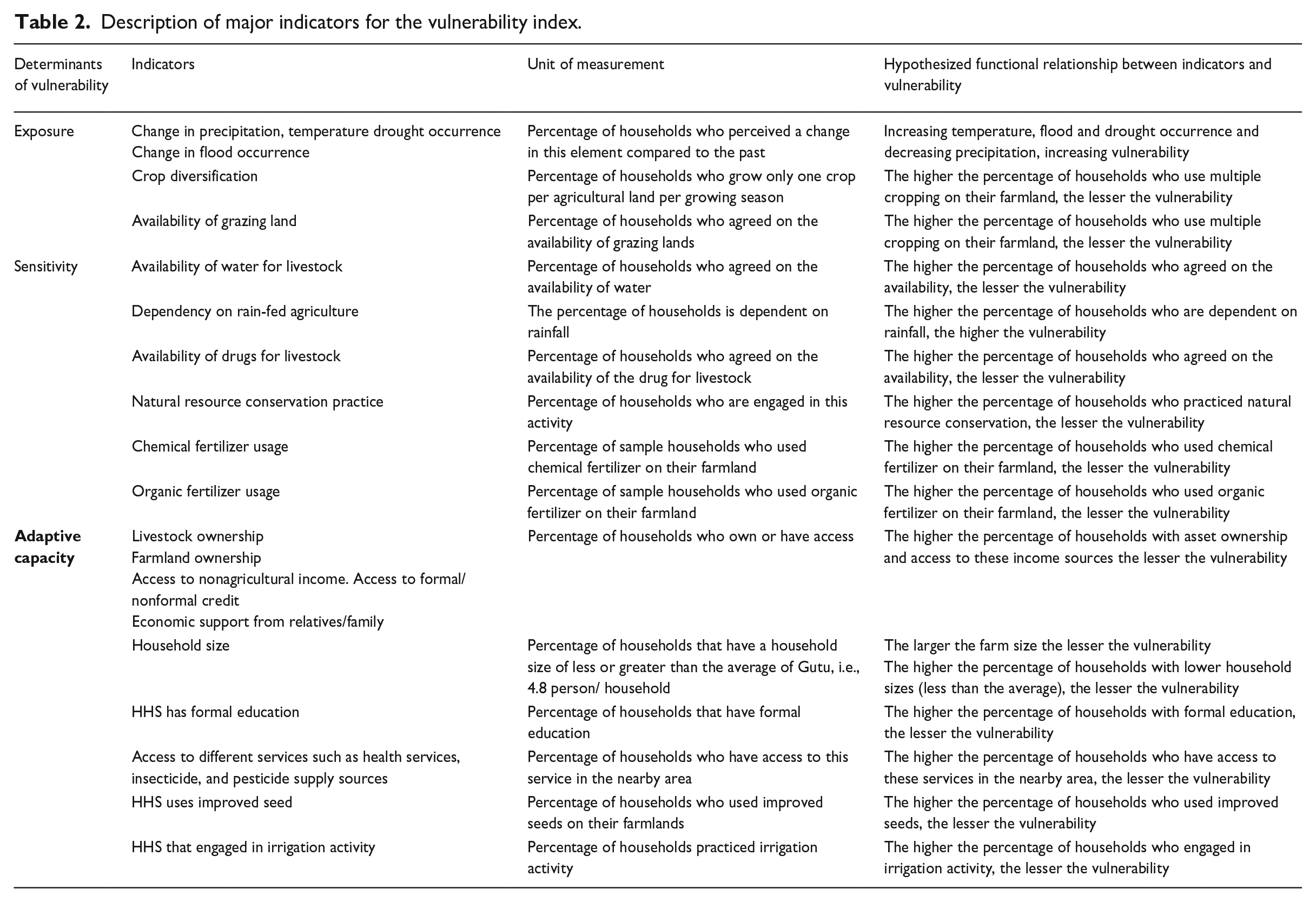
Table 2 shows the variables affecting the vulnerability index in any farming community. The indicators of each variable were used as the basis for the analysis. Table 2 also indicates the hypothesized functional relationship between indicators and small-scale vulnerability.
Description of major indicators for the vulnerability index.
Traditionally, the SLA has been applied by considering the five livelihood capital assets—human, financial, natural, physical, and social—as well as their links to an overall vulnerability context, processes, institutions (both formal and informal), and policies that govern people’s access to these capital assets (Qin et al., 2022). Table 1 shows the questions used in the field to assess the effect of each bundle of assets on the household livelihood vulnerability of small-scale farmer. Nagano and Sekiyama (2023) classifies factors that determine adaptive capacity into hazard-specific and genetic factors, and endogenous and exogenous factors. Generic determinants of adaptive capacity in social systems comprise such nonclimatic factors as economic resources, technology, information and skills, infrastructure, institutions, and equity (Chisale et al., 2023). Endogenous factors refer to the characteristics and behavior of the considered population group whereas exogenous factors include the wider economic and geopolitical context.
The livelihood vulnerability index
The Sustainable Livelihoods Approach, which looks at five types of household assets—natural, social, financial, physical, and human capital (Natarajan et al., 2022), is an approach used to design development programming at the community level (United Nations General Assembly, 1997). This has been supported by Defiesta and Rapera (2014) indicators used in recent times are largely based on the Sustainable Livelihood Framework which comprises five asset categories—human, social, natural, physical, and financial capital—from which livelihoods of people are built. The approach has proven useful for assessing the ability of households to withstand shocks such as epidemics or civil conflict. The sustainable livelihoods framework can be used for assessing local-level vulnerability and adaptive capacity by analyzing the status of five “capital assets”—financial, human, social, physical, and natural (Ye et al., 2022). Livelihoods in this context refer not only to income but also to the social institutions, gender relations, and property rights necessary to support a standard of living. The sustainable livelihoods framework has variously been applied to investigate the contextual and multidimensional nature of vulnerability (Jessica, 2023).
Results
Vulnerability analysis versus pro-poor assets
South Wards in Gutu South indicated various degrees of vulnerability as shown in Table 3. The wards were assessed in terms of exposure, sensitivity, and adaptive capacity depending on the resource endowment and asset mix to reduce climate variability. Six wards were analyzed to give an overview of the vulnerability in Gutu South. Table 3 shows the degree of ward vulnerability because of exposure, sensitivity, and adaptive capacity in Gutu.
Vulnerability of wards in Gutu South.
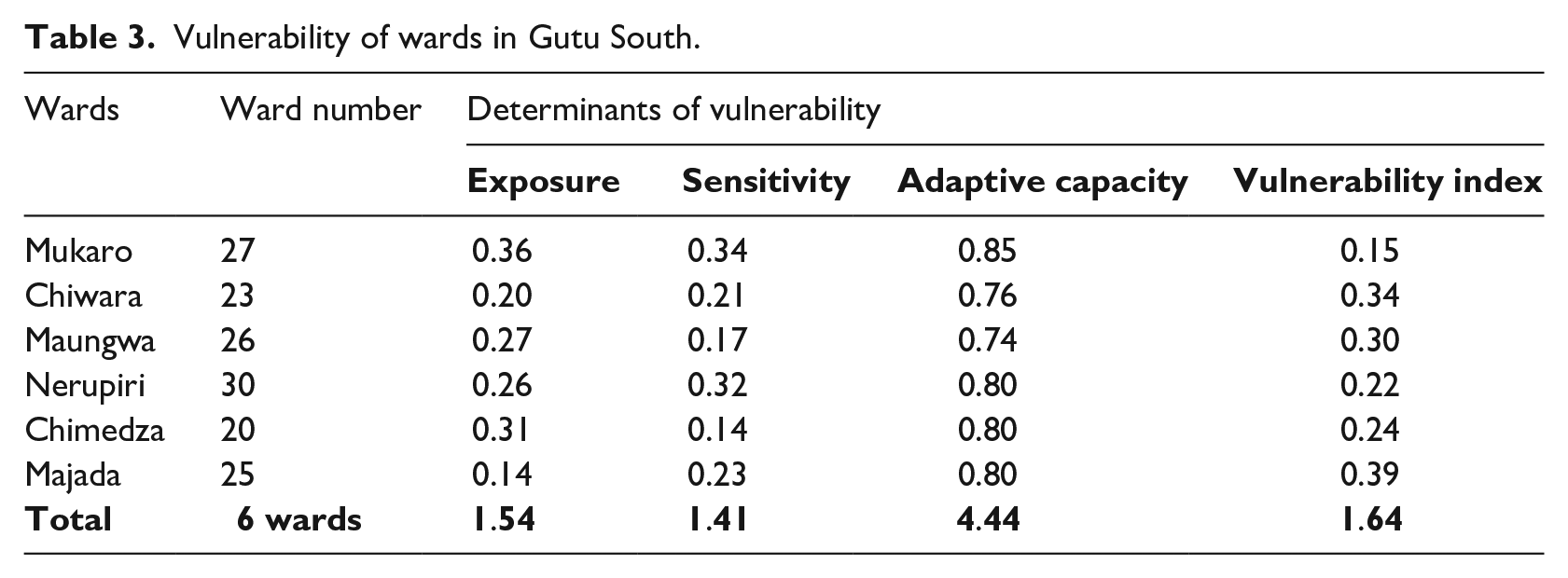
Majada and Chiwara wards have the highest vulnerability index in Gutu South. Mukaro and Nerupiri have low values of the vulnerability index. The results vary due to variations in adaptive capacity and the three variables (adaptive capacity, sensitivity, and exposure). Mukaro ward is the least vulnerable ward with a vulnerability index of 0.15.
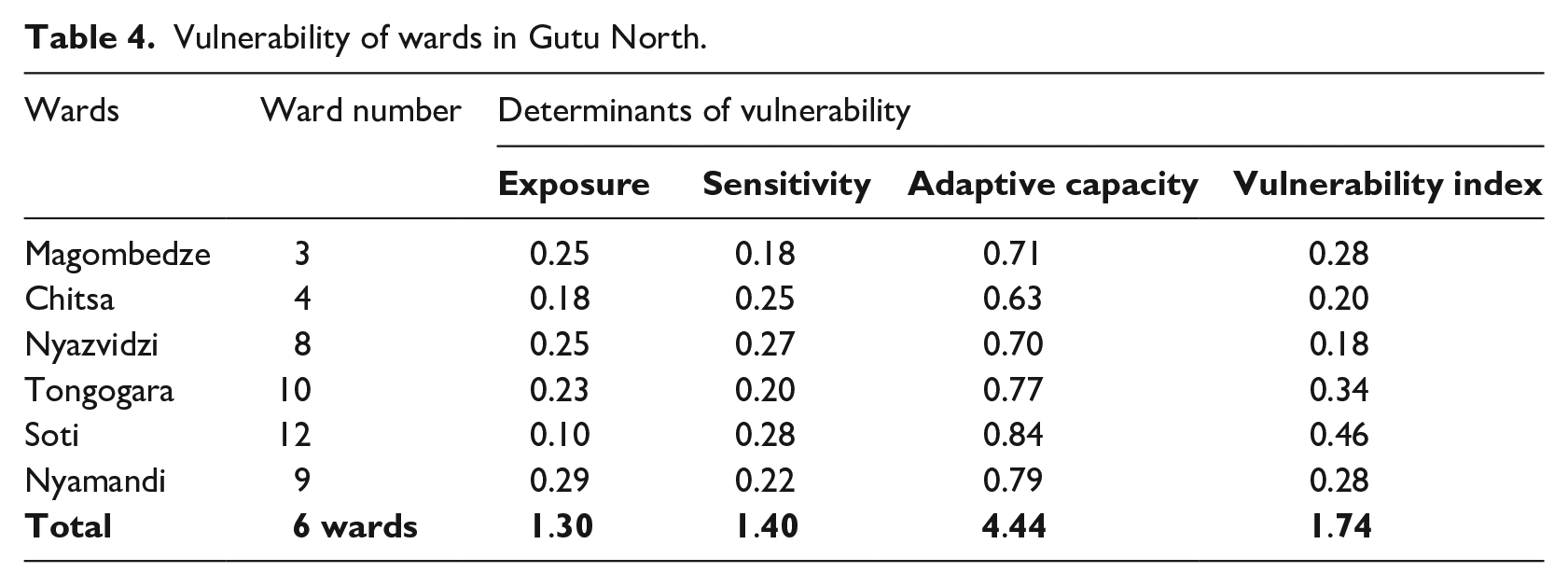
Soti ward appeared to be the most vulnerable ward in Gutu North as indicated in Table 4 with a value of vulnerability index of 0.46. Nyazvidzi is the least vulnerable ward in Gutu North with a vulnerability index of 0.18 as indicated in Table 4.
Vulnerability of wards in Gutu North.
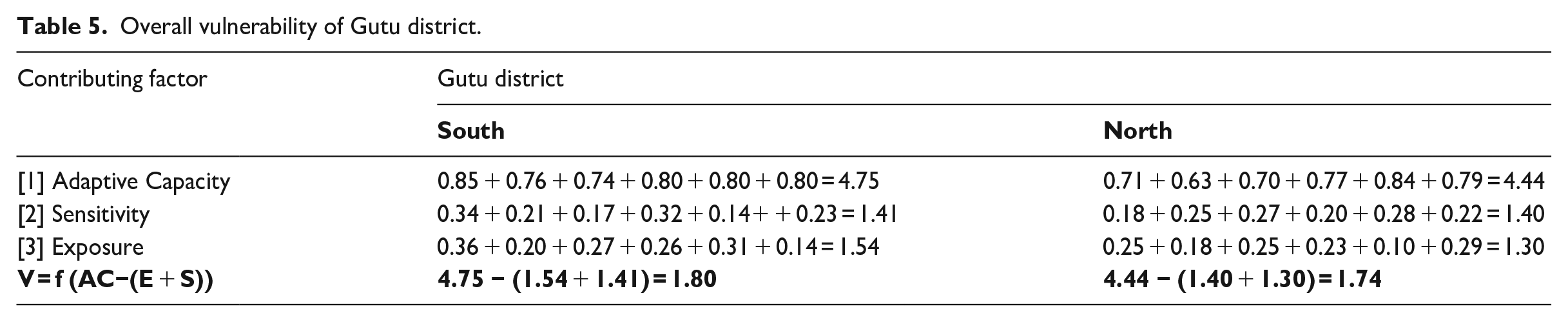
Computation of vulnerability scores through the assessment of adaptive capacity, sensitivity, and exposure of each ward both in Gutu South and Gutu North as indicated in Table 5. Table 5 above shows that Gutu North with a vulnerability score of 1.74 is more vulnerable to the impacts of climate variability as compared to Gutu South with a vulnerability score of 1.80 this is because its adaptive capacity is lower than that of Gutu South. When the value of sensitivity and exposure combined is higher than adaptive capacity, it means that the ward or district is highly vulnerable to climate variability. As noted in Figure 2, the higher the adaptive capacity, the lower the vulnerability of the smallholder farmers. On average, Gutu district has a vulnerability score of 1.77, which shows that is vulnerable. There is a need to assist the farmers in various ways to increase their adaptive capacity and lower their vulnerability.
Overall vulnerability of Gutu district.
Results from Figure 4 show that financial assets are the most important assets that affect smallholder farmer’s vulnerability to climate variability. It has been noted that with financial assets one can buy all other assets required to cushion themselves from climate variability impacts. Most of the respondents indicated that natural and human assets are not very significant in the adaptive capacity of smallholder farmers’ vulnerability as shown in Figure 4 above. Generally, the vulnerability of smallholder farmers in Gutu depends largely on financial assets.
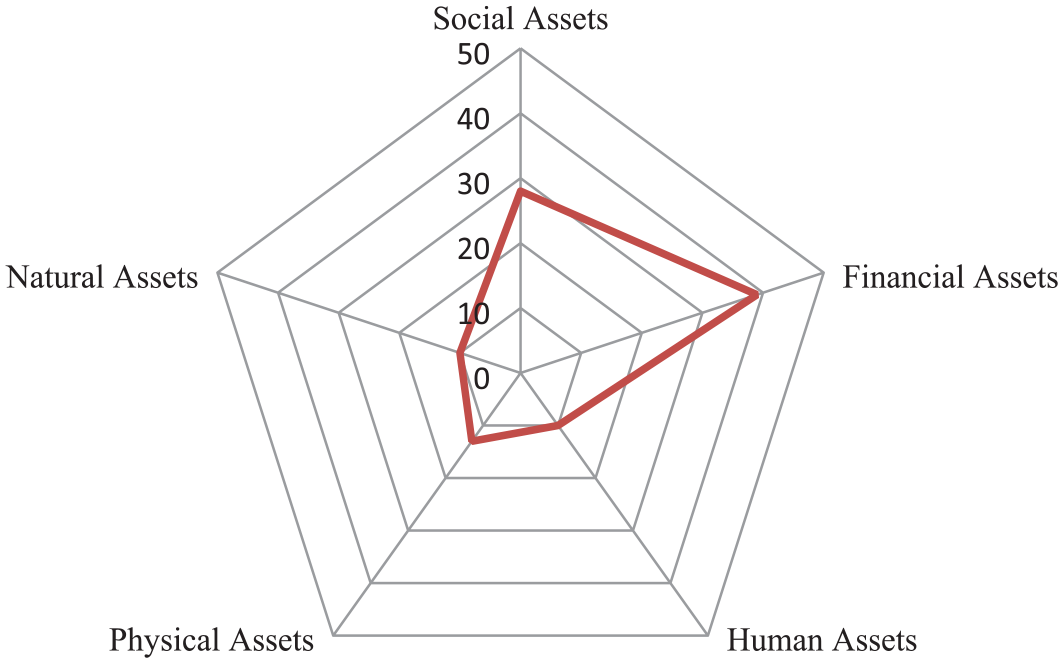
A pentagon of assets showing the influence of household vulnerability in Gutu. Source field data.
Pro-poor asset adaptation strategies to climate variability in Gutu district
Farmers in the Gutu district reported undertaking different types of adaptation actions to deal with climate variability and change. Changing planting dates, resorting to more nonfarm income, and using early maturing varieties of seeds were reported among the important adaptation actions among the farmers. Changing planting dates was mentioned as one of the most important adaptation actions to deal with climate variability and change. The use of asset-based measurements offers several insights for pro-poor adaptation. First, the forward-looking and longer-term view of an asset approach complements the focus on the future required for climate change adaptation (Figure 5).
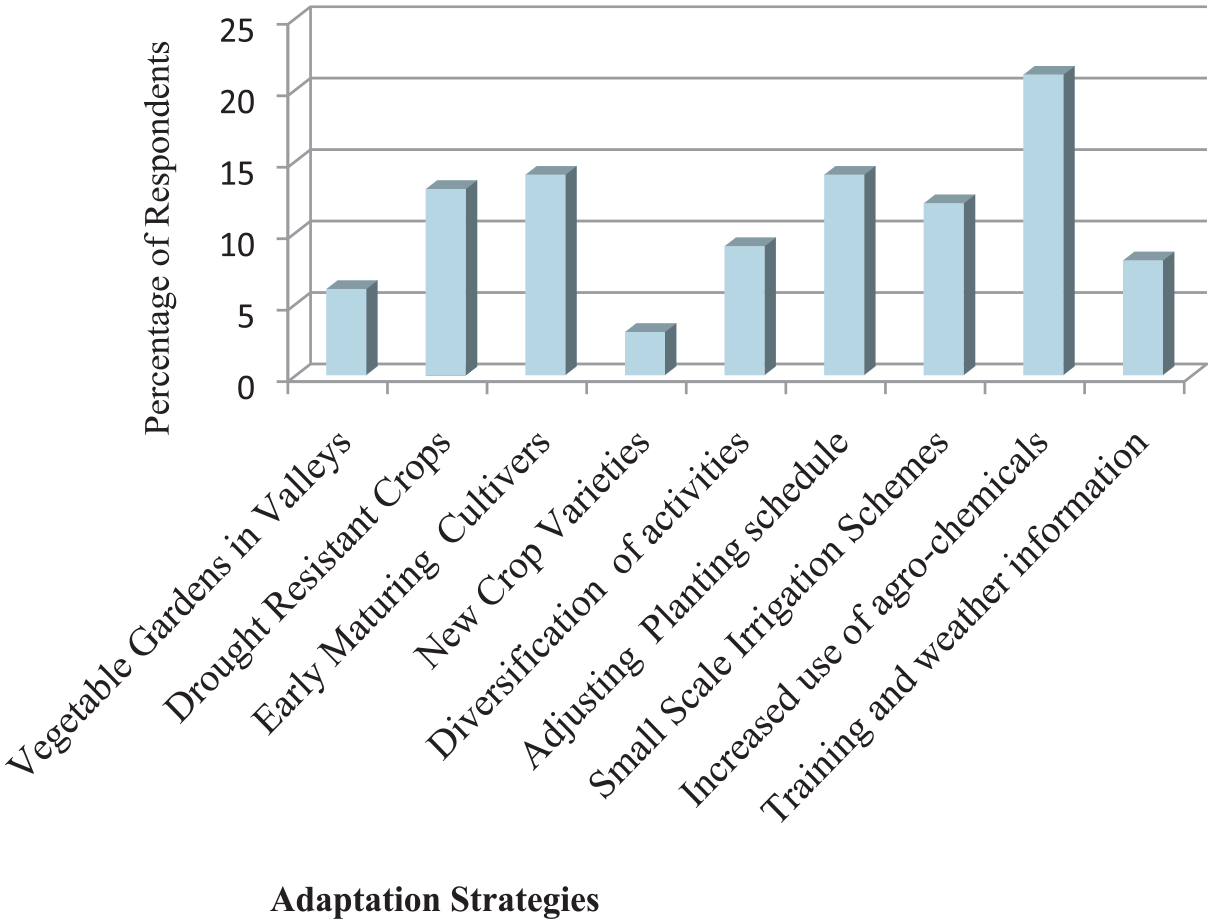
Adaptation strategies in Gutu district (field data).
Households’ risk exposure and sensitivity depend on their asset portfolio, asset allocation, and livelihood strategies (e.g. crop and livestock mix and varieties, diversification of farm and off-farm or nonfarm activities). However, Madamombe et al. (2024) concur that new crop varieties are paramount in adaptation strategies in Zimbabwe. The risk exposure and sensitivity of households are shaped by the policy, institutional, and structural context outside the control of households (Figure 6).
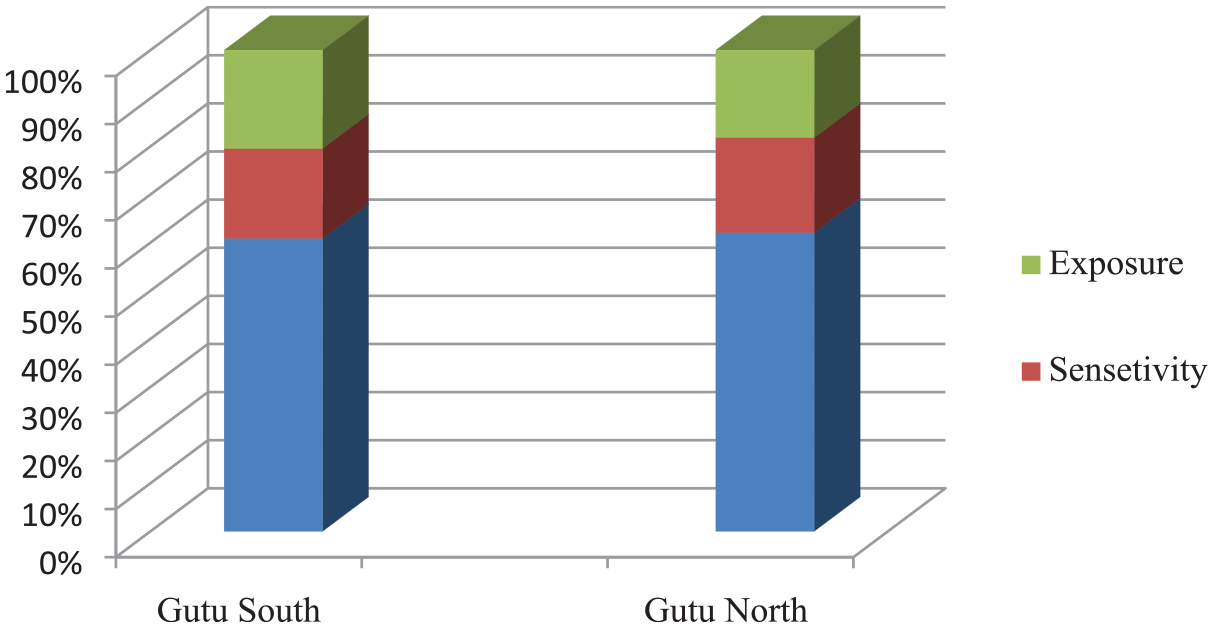
Vulnerability variables in Gutu district (field data).
Perception of small-scale farmers on rainfall variability in the past 10 years
Perception of households on climate change is a crucial pre-indicator in the adaptation process (Ricart et al., 2023). Results from the study show that households’ perceptions of climate variability and change are based on an assessment of mainly rainfall and temperature events as they experience them within the area. Similar findings were made in several studies in Africa which indicated that most farmers were aware of the increasing temperatures and decreasing rainfall (Mavhura et al., 2022).
Results from the study show that 44% of the surveyed respondents perceived that rainfall in Gutu district has decreased compared to the previous years as shown in Figure 7 above. In the same vein, 43% of the surveyed households also perceived that rainfall is coming late which shows a greater variability. The majority, of the household respondents who said rainfall were those who are in region 3 of the agroecological region as shown in Figure 1. Only 20% of the surveyed wards perceived rainfall as coming earlier than usual and this indicates rainfall variability in Gutu district. A very small percentage (5%) perceived that rainfall onset and end have not changed. The capacity of individuals, households, and communities to adapt is shaped by their access to and control over natural, human, social, physical, and financial resources (Nixon et al., 2023). The main challenge in Zimbabwe is that there is no comprehensive, specific national policy and legislative framework for climate change adaptation (Macheka, 2024).
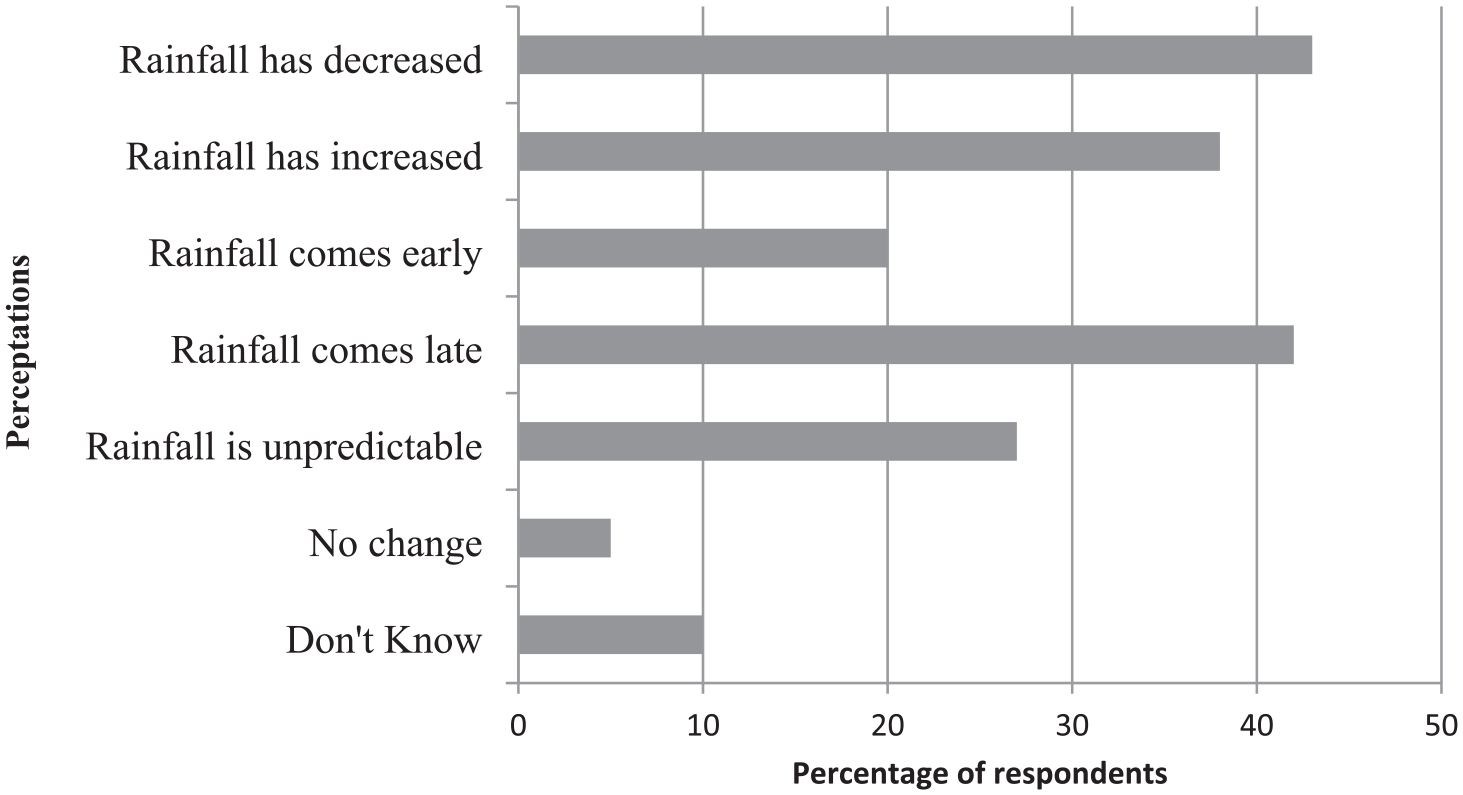
Perception of households on climate variability in Gutu (field data).
Adaptation limitations
Adaptation implemented at various scales cannot eliminate all climate change vulnerabilities as put forward by (Eriksen et al., 2021). This view has been supported by McCarl (2015), McCaul et al. (2016), and IPCC (2014), broad classes of public adaptations such as direct capital investments in major infrastructure facilities for resource supply (dams and irrigation water dissemination), and means for product movement (roads, airports, bridges, and ports), along with other infrastructure investment. One other limitation is research and development investment in creating climate-tolerant crop and livestock varieties plus new production practices appropriate for the altered climate (e.g. improved irrigation techniques or more generally climate-smart agriculture).
In Zimbabwe, dissemination of adaptation information through extension, formal education, or other communication vehicles has been a serious challenge for decades (Makuvaro et al., 2023). Most of the smallholder farmers lack basic education and they rely much on indigenous knowledge. The government has other priorities other than public assistance in implementing adaptation (providing financing, facilitating labor or enterprise movement, providing equipment, or adding adaptation aspects to public policy programs). Providing incentives for adaptation practice adoption. These limits can implement some adaptation strategies simply impossible or can require supporting forms of local, national, or international public action (such as the provision of financing, direct involvement in infrastructure development, enhancement of education, the conduct of research and development plus extension, and/or technology transfer) to facilitate implementation.
Recommendations
Investments in improved agricultural productivity such as land resource management, on-farm technology, access to extension services, transport, fertilizers, and improved seed varieties, should be implemented to enhance the resilience of agriculture. Integrated rural development schemes aimed at reducing the sensitivity of agriculture to the changing climate and increasing the adaptive capacity of the farmers should be the focus of governmental and nongovernmental organizations to get sustainable results in the alleviation of the problem of the farmers’ Gutu district. The Ministry of Agriculture should, within the strategy provide, early maturing and drought resistance maize seedlings to farmers and necessary farm inputs. In the same vein, the ministry in partnership with the private sector should every quarter organize on-field workshops for farmers, especially on specific aspects of processing, and cultivation of crops that require some agricultural dexterity, and to get feedback on the emergence of pests. Training on greenhouse farming for farmers in the state can be provided by the ministry, to improve farmers’ human assets. Farmer’s cooperatives should provide platforms for farmers to get credit facilities from banks or government sources of funding to improve their financial assets and these should be given at affordable interest rates. Development partners should focus on rural infrastructures like feeder roads, schools, and healthcare facilities for farmers. Research institute is incorporated into this strategy to provide answers to queries from farmers especially on scientific solutions to pests and crop infestations. The traditional institutions through the district heads and other local chiefs could galvanize support from farmers for the success of the strategy. They will serve as entry points to their communities. Farming households are the target of the strategy, and the improvement of their livelihood capital is the focal point, to reduce their vulnerability to climate-induced shocks. They would participate in the evolution of projects through their cooperatives.
Conclusions
In Zimbabwe, there is no comprehensive, specific national policy and legislative framework for climate change adaptation. In the Gutu district, it has been observed that financial assets and social assets are the major constraints to adaptation. Climate change or its variability represents an increased vulnerability for farmers, who face poverty, hunger, and famine aggravated by weak livelihood capital bases when the erratic rain fails. Most of the smallholder farmers concurred that rainfall has decreased over the years; rainfall is coming late, and rainfall is very unpredictable. Gutu North and South have almost the same adaptive capacity, Gutu North is more sensitive than Gutu South. Gutu North is more exposed than Gutu South. The smallholder farmer remains vulnerable to climate change and variability given its dependence on rain-fed agriculture. The farmers are aware of the changing weather patterns, major causes, and impacts within their localities, and are attributing this to climate change. Several adaptation strategies have been implemented, the dominant ones being increased use of agrochemicals, use of drought-resistant crops, and planting early maturing cultivars. Smallholder farmers’ livelihoods who depend on agriculture have developed ways to cope with climate variability autonomously, but the current speed of climate change will modify known variability patterns to the extent that people will be confronted with situations they are not equipped to handle. Adaptation must be understood as a process through which communities gain access to resources, information, and the ability to shape their lives and their livelihoods as the environment changes around them. It requires efforts at various levels of stakeholders such as farmers, line department officials, scientists, policymakers, etc. Farmers need to be trained in various aspects of coping with climate variability. Policymakers face multiple issues like poverty, illiteracy, infant mortality, malnutrition, environmental pollution, provision of basic amenities, etc., so broader issues such as climate vagaries and natural disasters get side-lined. It can be concluded that poor populations find it challenging to cope with the impacts of climate vagaries. The study results may help in policy decisions in formulating effective strategies for coping with climate variability in Gutu and Zimbabwe as a whole. A higher adaptive capacity of the communities does not necessarily imply that they are less vulnerable to the impacts of climate variability and change. Even if households are adapting, their effectiveness in reducing the vulnerability of households remains a question.
Footnotes
Declaration of conflicting interests
The author declared no potential conflicts of interest with respect to the research, authorship, and/or publication of this article.
Funding
The author received no financial support for the research, authorship, and/or publication of this article.
