




Abstract
Encouraging the public to report corrupt acts to state authorities is indispensable in combatting corruption. This article uses the Afrobarometer surveys (Rounds 7 and 8) focusing on Ghana to address a key question: Will high corruption tolerance and less trust in government reduce the tendency to report corrupt acts to relevant state authorities without fear? The current work draws on social accountability theory and political settlements framework. Our results indicate that tolerance of corruption does not predict the perceived propensity to report corruption, whereas trust in government is, with high trust increasing the likelihood of reporting corruption. The current work extends the substantiative understanding of the conditions under which respondents believe that ordinary people may or may not report corruption and the implications for strengthening anti-corruption work.
Keywords
Introduction
Corruption, an abuse of power for private gain at public expense, is a widespread problem around the globe (Cockcroft, 2014; Endoltseva et al., 2019; Friesenbichler et al., 2018; Gong and Xiao, 2017; Krambia-Kapardis, 2016; Persson et al., 2013). If left uncontrolled, particularly in developing countries, corruption hampers development when resources for public infrastructure and services, including healthcare, education, electricity, and water, are stolen (Gray, 2015; Onwujekwe et al., 2019; Otusanya, 2011; Sadiq and Abdullahi, 2013; United Nations Development Program, 2018). In 2021, bribes paid in cash to Ghanaian public officials amounted to GH¢5 billion (Korankye, 2022), showing that corruption remains a problem in the country. From a public goods perspective alone, combatting corruption is imperative, and the involvement of the citizenry is vital (Gong and Xiao, 2017; Mungiu-Pippidi, 2006; Nakirijja and Oijun, 2020; Shah and Schacter, 2004; Sondhi, 2000; United Nations Office on Drugs and Crime (UNODC), 2022).
Studies have found that several factors, particularly trust in government and tolerance of corruption that are products of specific institutional and political context, shape an individual’s propensity to report corruption (Amini et al., 2022; Fleming et al., 2022; Gong and Xiao, 2017; Gouvêa Maciel, 2021; Nakirijja and Oijun, 2020; Travits, 2010). If individuals are intolerant of corrupt acts, they are likely to report incidents of corruption to state authorities, while the willingness of individuals to report corruption is also related to their trust in state authorities’ ability to deal with corruption (Gong and Xiao, 2017). Trust refers to satisfaction with individuals or organizations, believing their performance and expectations (Alessandro et al., 2021; Hartanto et al., 2021; He and Ma, 2021). It affects how people behave, as they may want to follow government policies if they trust the government, and the trust people have in anti-corruption public institutions may inform their decisions to report acts of corruption (Alessandro et al., 2021; Gong and Xiao, 2017; Hartanto et al., 2021; Nakirijja and Oijun, 2020). Although the participation of Ghanaian citizens is critical in revealing corruption, no empirical research has been conducted in Ghana on predictors of the public’s perception of the propensity to report corruption. Using a nationally representative sample, this article contributes to addressing this gap.
The current work investigates whether tolerance for corruption and trust in the government influence the public perception of the likelihood of reporting suspected corruption to state actors. One key question is addressed: Will perceived high corruption tolerance and less trust in government reduce the tendency to report corrupt acts to relevant state authorities without fear?
In doing so, (1) the perceptions respondents have of corruption levels in Ghana and (2) their perception of how well or poorly the government handles corruption have been used as indicators of their trust in the government’s ability to combat corruption. Linear probability model (LPM) regression and data from the Afrobarometer surveys (Rounds 7 and 8) with a focus on Ghana have been employed. The Afrobarometer surveys are based on nationally representative samples.
The current article draws on social accountability theory and political settlements framework. Social accountability is “an evolving umbrella category,” which includes “citizen monitoring and oversight of public and/or private sector performance, user-centered public information access/dissemination systems, public complaint and grievance redress mechanisms, as well as citizen participation in actual resource allocation decision-making, such as participatory budgeting” (Fox, 2015: 346). Its overall goal is to improve institutional performance by strengthening citizen engagement and the capacity of the state to respond to citizen’s concerns (Fox, 2015). Fox (2015) differentiates between two forms of social accountability—tactical and strategic. Tactical social accountability approaches focus on information-led interventions limited to projecting only the citizen voice, which is insufficient for improving institutional performance. As a result, Fox (2015: 346) emphasizes the strategic social accountability approaches, which “deploy multiple tactics, encourage an enabling environment for collective action for accountability and coordinate citizen voice initiatives with reforms that bolster public-sector responsiveness.”
Conversely, a political settlement happens when the distribution of benefits aligns with the distribution of power across influential organizations or groups in the political system (Di John and Putzel, 2009; Khan, 2018). The political settlements framework helps explain why and how the same or similar institutions are effective in some contexts and not others and whether social accountability can improve institutional performance. In addition, a competitive political clientelism occurs when the political system is based on “a structured mutual patron-client relationship” (Oduro et al., 2014: 7). Because of Ghana’s intense 4-year cycle of electoral competition for political positions and state resources, the two main political parties, the New Patriotic Party (the NPP) and the National Democratic Congress (the NDC), constantly mobilize political support by doing whatever can help them win the next elections, resulting in patron-client political relations. For example, when they are in power, the NPP and the NDC often distribute state resources in exchange for political support in their bid to win elections (Bob-Milliar, 2011; Oduro et al., 2014). In a competitive clientelist political settlement, when people report or expose suspected corrupt acts, state authorities are less likely to investigate, prosecute, and sanction offenses, reducing public trust in the government (Abdulai, 2019; Asante and Khisa, 2019; Asomah, 2019, 2021, 2023; Oduro et al., 2014). This situation may discourage corruption reporting.
Understanding the Ghanaian case can enrich the literature on corruption for three main reasons. First, although successive governments have made anti-corruption campaign promises, corruption remains a major problem (Asomah, 2019; Graphic Online, 2019a, 2019b; UNODC, 2022; Yeboah, 2019). High-profile corruption cases such as the sale of contaminated fuel saga (Citi FM Online, 2017), the SSNIT software scandal (Peace FM Online, 2018), and the ambulance contract scandal (Asomah, 2019) attest to the fact that corruption is a big problem in Ghana’s Fourth Republic. As well, as shown in Figure 1, based on the Transparency International’s (2021) corruption perception index, Ghana has consistently failed to receive a score above 50.
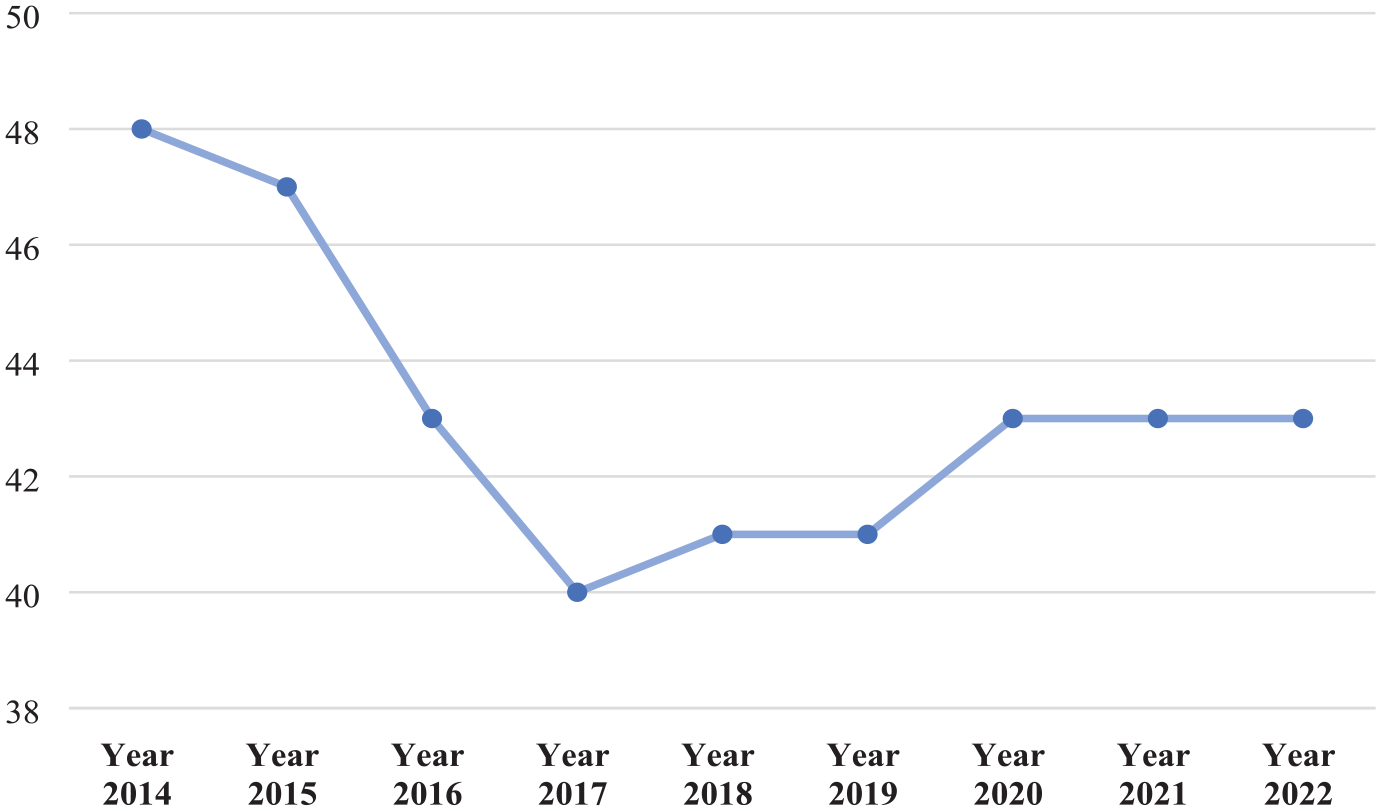
Corruption Perception Index scores for Ghana from 2014 to 2022.
Second, for corruption to be aggressively addressed, the public must play a critical role, such as staging anti-corruption protests and demanding accountability (Asante, 2019; Asante and Helbrecht, 2018). They must also refuse to tolerate corruption and be willing to report it to state authorities for redress if they trust the government to address the corruption problem.
Third, because of political pressures rooted in Ghana’s current competitive clientelist political settlement, Ghanaian law enforcement agencies and departments often lack the independence to implement anti-corruption laws (Abdulai, 2019; Asante and Khisa, 2019; Asomah, 2019, 2021, 2023; Oduro et al., 2014). One classic case illustrating this lack of independence is the President Akuffo Addo’s directive to the Auditor-General Daniel Domelevo to take an involuntary accumulated leave of 167 days in 2020 (Joy FM, 2020). Upon resuming work in 2021, the same president asked the auditor-general to proceed on compulsory retirement (Joy FM, 2021). The auditor-general’s surcharging of the then Senior Minister Yaw Osafo Marfo over Kroll’s contract (Joy FM, 2020) may have contributed significantly to his premature removal from office. Based on the Ghanaian case, social accountability theory, and political settlements framework, the current work extends the substantiative understanding of the conditions under which respondents believe ordinary people may or may not report corruption and the implications for strengthening anti-corruption work.
Propensity to report corruption, tolerance of corruption, and trust in government
As mentioned earlier, studies show that tolerance for corruption and trust in government anti-corruption agencies significantly influence individuals’ inclination to report corruption to law enforcement agencies (Amini et al., 2022; Fleming et al., 2022; Gong and Xiao, 2017; Gouvêa Maciel, 2021; Nakirijja and Oijun, 2020; Tavits, 2010). Tolerance of corruption has diverse meanings, such as individuals’ endorsement of corrupt events or individuals’ willingness to commit corruption (Alvarez, 2015; Pozsgai-Alvarez, 2022). However, in the political system, tolerance of corruption means citizens condone corruption (Chang and Huang, 2016). Similarly, tolerance of corruption could be defined as a citizen’s acceptance of corruption (Gong and Xiao, 2017; Gouvêa Maciel, 2021), as intended in the current work. In this sense, if a society has a low level of tolerance for corruption, its citizens tend to obey the law, and are less likely to engage in corruption and more likely to report corruption (Aizhen and Wang, 2014; Alvarez, 2015). Similarly, individuals with low tolerance for corruption may refuse to accept corrupt acts and therefore report them to state authorities (Gong and Wang, 2013; Gong and Xiao, 2017). Conversely, Horodnic et al. (2018), for example, show that giving bribes in the health sector is related to just high tolerance for corruption. In this study, we assume that citizens’ tolerance for corruption relates to past experiences of giving bribes; that is, experience of giving voluntary bribes could increase this person’s tolerance of corruption.
Another key predictor of individuals’ willingness to report corruption is whether they trust the government to deal with corruption. Research shows that low corruption tolerance does not equate with confidence in reporting corruption, and government’s response to corruption is critical in mobilizing citizens to join anti-corruption campaigns (Gong and Xiao, 2017; Lavena, 2013; Peiffer and Alvarez, 2016; Walton and Peiffer, 2017). For instance, in their study of Papua New Guinea, Walton and Peiffer (2017) observed that people’s inclination to report corrupt behaviors is positively associated with their belief that government will deal with corruption.
Ghanaian citizens, who enjoy the civil and political liberties of a democracy, are free to report corruption and help combat it (Freedom House, 2020). However, because the Ghanaian government demands that individuals who report corruption must produce evidence to support their claims (CDD-Ghana, 2018), they may not trust the government to address the problem, discouraging them from reporting it. In addition, in Ghana, corruption involving government officials, the police, judges, and magistrates (Amankwah et al., 2017; Asomah, 2019; Foltz, 2015; Lartey, 2019) may reduce citizens’ trust in the government’s willingness to curb corruption. Thus, even if citizens have low corruption tolerance, their low trust in state actors, including law enforcement agencies, may discourage them from reporting corruption to state authorities. The current study uses multiple regression to examine whether tolerance for corruption and trust in the government influence individuals’ propensity to report corruption. Also, as is common in previous studies (Amini et al., 2022; Gong and Xiao, 2017; Nakirijja and Oijun, 2020; Walton and Peiffer, 2017), the article uses gender, educational levels, employment status, and age as control variables.
Theoretical framework
Social accountability theory and political settlements framework help situate the current work in a proper institutional and structural context. Social accountability refers to “the wide range of citizen and civil society organization (CSO) actions to hold the state to account, as well as actions on the part of government, media and other societal actors that promote or facilitate these efforts” (McNeil and Malena, 2010: 1). In Ghana, Asante and Mullard (2021) show that social accountability actors involving a coalition of civil society groups exposed corruption in the agricultural fertilizer subsidy program, compelling authorities to address the problem, including improving local-level governance. As part of their efforts at combatting corruption, Asomah (2022: 14) argues that social accountability actors “use a combination of strategies—from advocacy, denunciation, and legal action to establishing and funding non-profit media outlets for investigative journalism purposes.”
Although social accountability can play a critical role in addressing corruption (Aderonmu, 2011; Asomah, 2019, 2020, 2022; Mungiu-Pippidi, 2006, 2013), its limits must be acknowledged (Asante and Khisa, 2019; Asomah, 2019). For example, Fox (2015: 356) draws attention to the limits of citizen voice when the state’s ability to respond to voice remains absent or weak, arguing that citizen voice alone cannot “do the work of the state’s horizontal accountability institutions.” For social accountability to achieve the desired impact, there must be an enabling environment for citizen voice and coordinated efforts to bolster the state’s capacity to respond to citizen voice (Fox, 2015). The public participation in social accountability “requires the availability of the structures and laws that define people’s rights, and the extent to which they can go in exacting accountability from duty bearers” (King et al., 2013: 62). As a result, respondents’ belief about whether ordinary people can meaningfully participate in anti-corruption efforts, including reporting corruption, is shaped by the institutional and political context in which they are embedded.
The political settlements framework, “the distribution of organizational power” in a particular society, explains institutional and policy effectiveness or failures (Khan, 2018: 637). In other words, political settlement refers to “the balance or distribution of power between contending social groups and classes, on which any state is based” (Di John and Putzel, 2009: 4). It happens when the institutional structure promotes the distribution of benefits or public resources in line with how power is distributed across different organizations in society (Di John and Putzel, 2009). According to Khan (2018: 640), the distribution of power delineates “the likelihood of particular organizations ‘holding out’ in contests seeking to influence institutional outcomes.” Influential organizations typically win since the “holding power is based on the capacity to mobilize and organize, using a variety of resources, of which the capabilities of mobilizing money is just one.” Some groups can mobilize supporters through “patron-client politics and wield considerable holding power” (Khan, 2018: 653). For example, they may mobilize “using identity, ethnic or other cleavages to organize patronage politics” and advance their vested interests (Khan, 2018: 644).
The political settlements framework helps examine why some policies/laws (and not others) get passed and whether those passed will be reversed, modified, or implemented, or their implementation will be affected by distortions and corruption to benefit influential organizations or groups. According to Khan (2018: 644), “powerful organizations are likely to block institutions and policies that are against their interest, or overturn them later, regardless of their social desirability” (Khan, 2018: 644). They may also use “distortions and corruption that can informally modify the implementation of particular institutions or policies in line with their own interests” (Khan, 2018: 648).
Ghana’s fourth republic epitomizes a competitive clientelist political settlement (Abdulai, 2019; Asante and Khisa, 2019; Oduro et al., 2014). The country has witnessed an alternation of power between the two main political parties since the restoration of constitutional rule in 1993 (Asante and Khisa, 2019; Asomah, 2019). Nevertheless, both parties, the NDC and the NPP, have failed to implement credible constitutional and institutional reforms to combat corruption despite their anti-corruption electoral campaign promises (Asante and Khisa, 2019; Asomah, 2019, 2020, 2023). Ghana’s 4-year cycle competitive electoral process for political power, which comes with the privilege to allocate public resources, has culminated in and reinforced competitive patron-client politics as political parties and candidates seek to meet the needs of voters, party supporters, and financiers to ensure their political survival (Abdulai, 2019; Oduro et al., 2014).
Organizations such as ruling coalitions, the military, and the police, who have high power to change the current political settlement in the country, have no incentive to do so because they benefit from maintaining it (Oduro et al., 2014). However, others, such as CSOs, youth groups, women groups, small-scale farmers, petty traders, and disability groups, who have low incentives to keep the current political settlement, have low power to ensure any meaningful changes (Oduro et al., 2014). According to Oduro et al. (2014: 24), “Ghana’s system of competitive clientelism undermines its public institutions and has a deleterious effect on public institutional efficiency, which is leading to inefficiencies in the provision of public goods and social provisioning.” This situation may erode the public confidence/trust in state institutions to deal with the corruption problem.
Corruption reporting, tolerance, and the level of trust in government are products of respondents’ evaluation or understanding of the structural processes/forces shaping corruption in a particular political system such as Ghana. For example, studies (Marquette, 2012; Persson et al., 2013) show if people believe that corruption is a norm in society and that almost everyone engages in it without consequences, they will likely tolerate it and refuse to report it. Similarly, the level of trust in government depends on whether citizens believe that the institutional and political structure contributes to corruption and whether state authorities are committed to addressing the problem. Given Ghana’s competitive clientelist political settlement and the limits it imposes on social accountability actors focused on anti-corruption work (Asante, 2019; Asante and Helbrecht, 2018; Asante and Khisa, 2019; Asomah, 2019, 2020, 2021, 2022), we hypothesize as follows:
H1. A high tolerance for corruption will likely reduce the tendency to report corrupt behaviors without fear.
H2. Perceived low trust in the government’s ability to fight corruption will likely reduce the tendency to report corruption without fear.
Methods
This study uses Rounds 7 and 8 of the Afrobarometer surveys on Ghana. Based on national probability samples that represent a cross-section of adult Ghanaians, that is, 18 years and above, these surveys collect data on several dimensions of socio-political and cultural issue, making the analysis in this study was possible. Data were collected from about 4800 respondents across Rounds 7 and 8. The 2010 Ghana Population and Housing Census formed the basis of this study’s sample, with clustered, stratified, and multi-stage sampling used to select the respondents. A questionnaire was devised and given to one eligible adult randomly selected in each household. The fieldwork was conducted by the CDD-Ghana. Alternating interviews between men and women filled the gender quota; male and female respondents were listed after which household members drew a numbered card to select individual respondents.
Measures
Dependent and independent variables
The outcome variable for this study is the propensity to report corrupt practices. Respondents were asked: In this country, can ordinary people report incidents of corruption without fear, or do they risk retaliation or other negative consequences if they speak out? 1 The responses were coded as “0” (Risk retaliation or other negative consequences) and “1” (Can report without fear).
The focal independent variables for this study include respondents’ corruption tolerance and their trust in the government’s ability to handle corruption. Several questions were combined to create a corruption tolerance index. These questions included the extent to which respondents gave a gift to or did a favor for a health worker (to obtain medical care), government official (to obtain a document needed), or police officer (to obtain assistance and avoid problems). Each of these questions was coded as “0” (No) and “1” (Yes). We are using the extent to which respondents engaged in these acts as a proxy measure of the level of corruption they tolerate. To examine the latent construct from the four questions, a principal component analysis (PCA) using tetrachoric inter-item correlation was undertaken. The analysis showed that the four questions tapped into a single underlying variable (see Table 1). The four items were used to generate an additive index, ranging from “0” (lowest tolerance for corruption) to “4” (highest tolerance for corruption).
Factor analysis of tolerance for corruption.
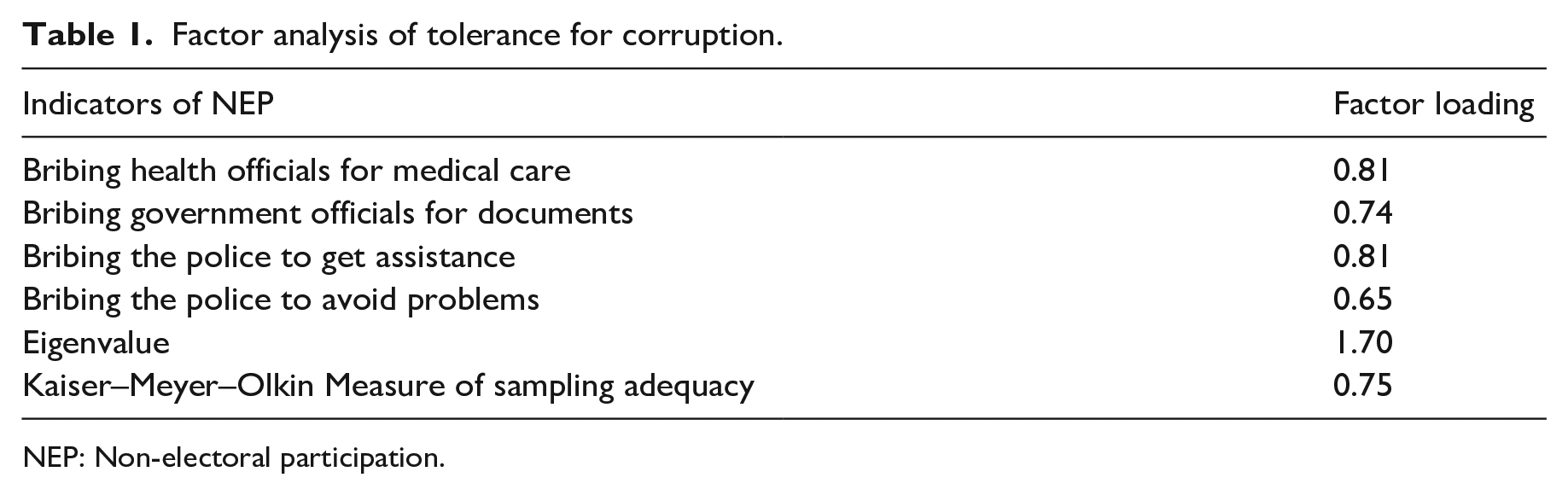
NEP: Non-electoral participation.
The trust citizens had in the government’s ability to fight corruption was measured by (1) their perception of the corruption level in the country and (2) their perception of how well or poorly the government handles corruption. Respondents were asked: In your opinion, over the past year, has the level of corruption in this country increased, decreased, or stayed the same? The responses were coded as “0” (Increased), “1” (Same), and “2” (Decreased). Respondents were also asked: How well or badly would you say the current government is handling corruption, or haven’t you heard enough to say? The responses were coded as “0” (Very Bad), “1” (Fairly Bad), “2” (Fairly Well/Good), and “3” (Very Well/Good).
Control variables
The control variables used for this study were gender, coded as “0” (Female) and “1” (Male); educational attainment, coded as “0” (Primary), “1” (Yes), and “2” (Secondary/University education); employment status, coded as “0” (Not Looking), “1” (Unemployed), “2” (Part-time employment), and “3” (Full-time employment); age; and contact with public institutions.
Data analysis
Descriptive analysis was used to describe the independent and outcome variables. LPM regressions were used in the multivariate analysis, which included four models. The method is appropriate when the average probability of the outcome studied is between 0.10 and 0.90, which is within the bounds of the propensity to report corruption, as shown in Table 2.
Frequency distribution for social structure and institutional variables.
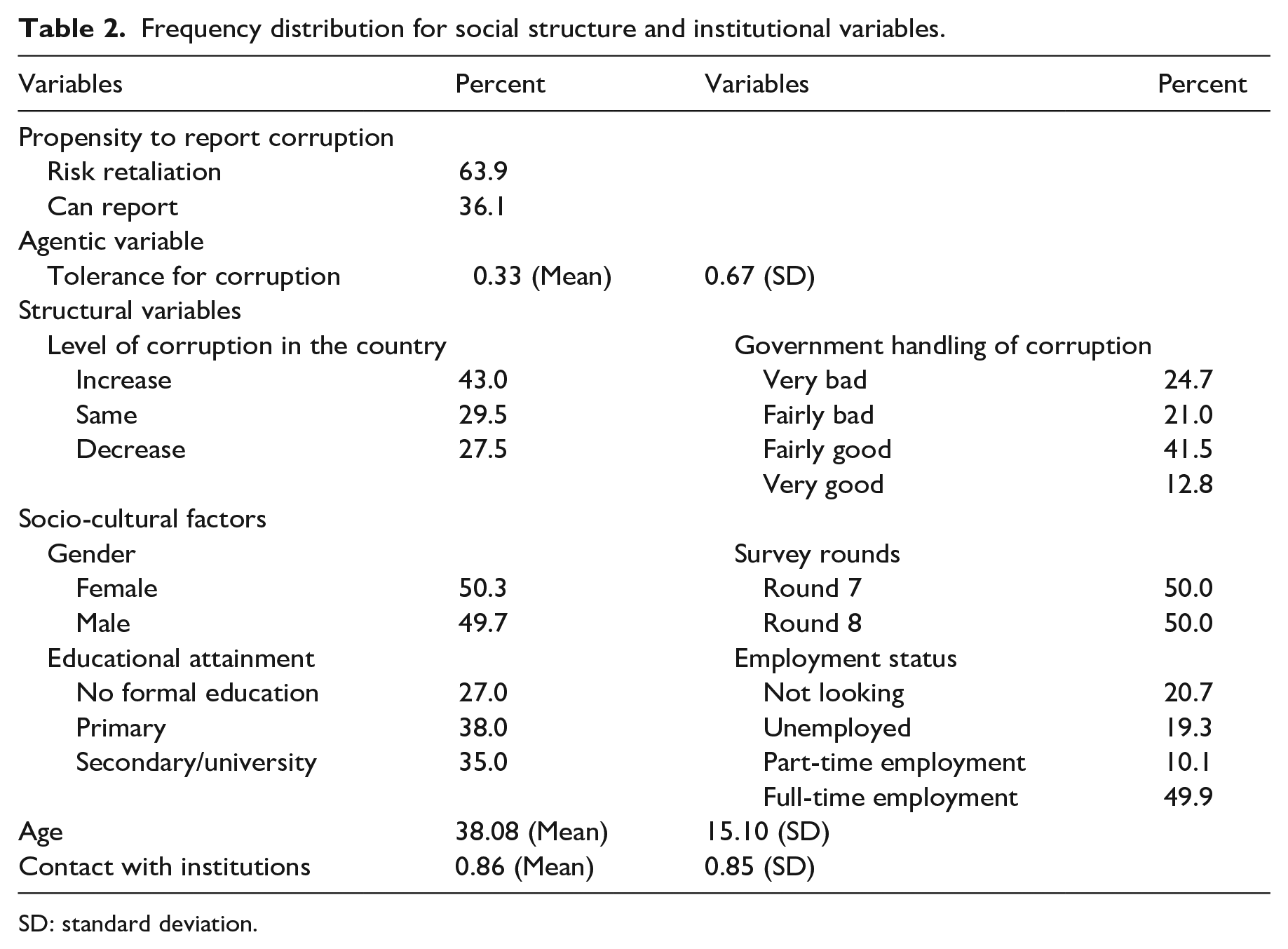
SD: standard deviation.
The first model examined the influence of tolerance for corruption and propensity to report corrupt practices, the second model added Ghanaians’ perceptions of the level of corruption and the state’s handling of corruption in the country to the first model, and the third model added the control variables to the second model. 2 The fourth model captured the interaction effects of Ghanaians’ perception of the level of corruption and the state’s handling of corruption on the propensity to report corrupt practices. Given the inability of Logit models to effectively compare coefficients in an interaction analysis (Mize, 2019; Mood, 2010), we employed LPMs, to analyze the interactions between Ghanaians’ perceptions of the level of corruption and the state’s handling of corruption on the propensity to report corrupt practices (Mood, 2010). Stata (version 15) was used in analyzing the data.
Because two datasets were combined for this analysis, the study’s round was recoded as a variable to examine how support for democracy varied between the two study periods. To examine whether the effect of the main independent variables on the propensity to report corrupt practices also varied across the two study periods, the multivariate analysis included interactions with each of these independent variables and the study round. Linear probability model regressions (shown in Table 3) were used in the multivariate analysis, which included four models. In the other multivariate models (see Table 4), Ghanaians were not any more likely to report corrupt practices in Round 8 as they were in Round 7. Similarly, the interaction analysis of the focal variables and propensity to report corrupt practices did not vary across the waves (see Table 4).
Linear probability model regressions predicting propensity to report corrupt practices.
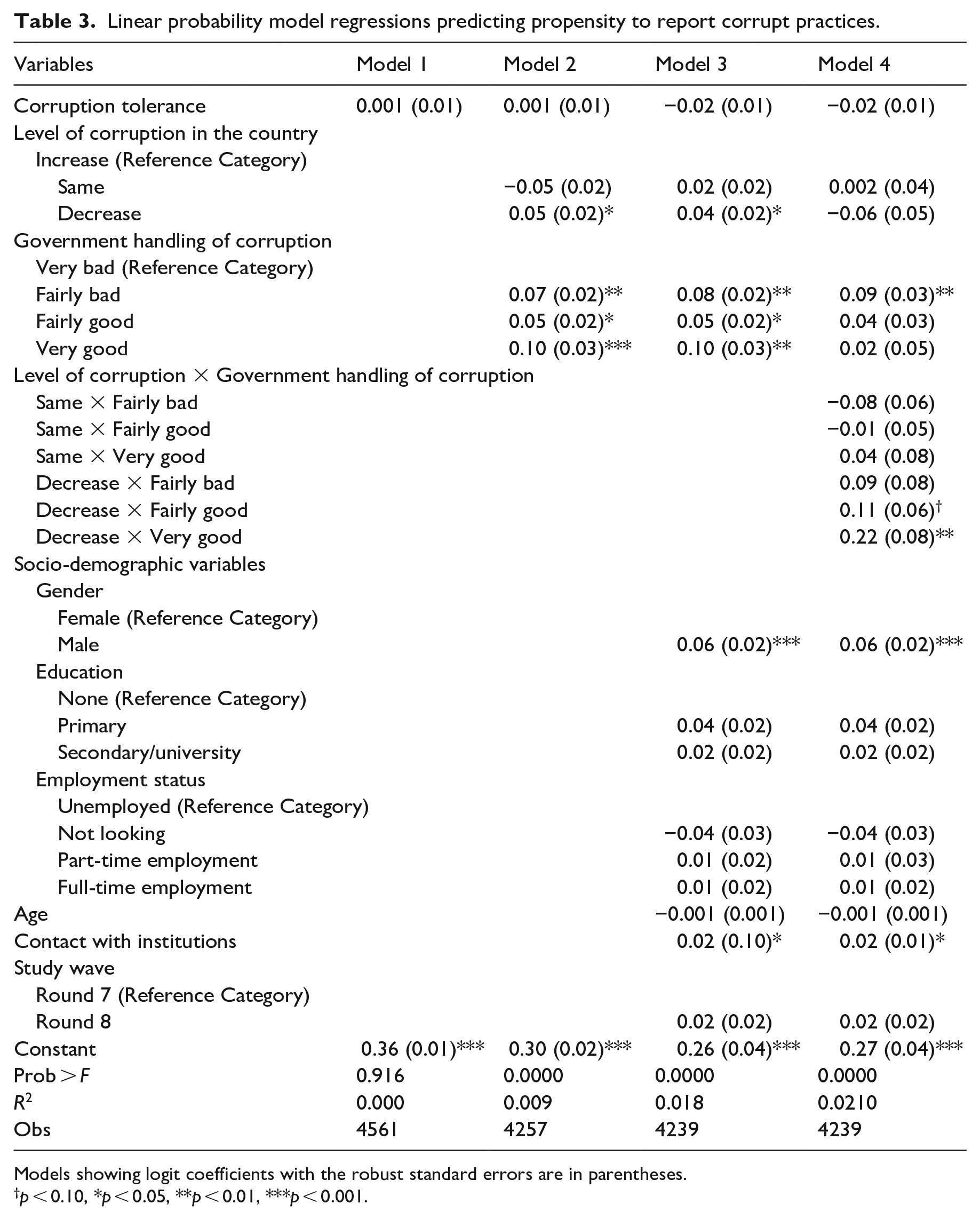
Models showing logit coefficients with the robust standard errors are in parentheses.
p < 0.10, *p < 0.05, **p < 0.01, ***p < 0.001.
Linear probability model regressions predicting propensity to report corrupt practices.
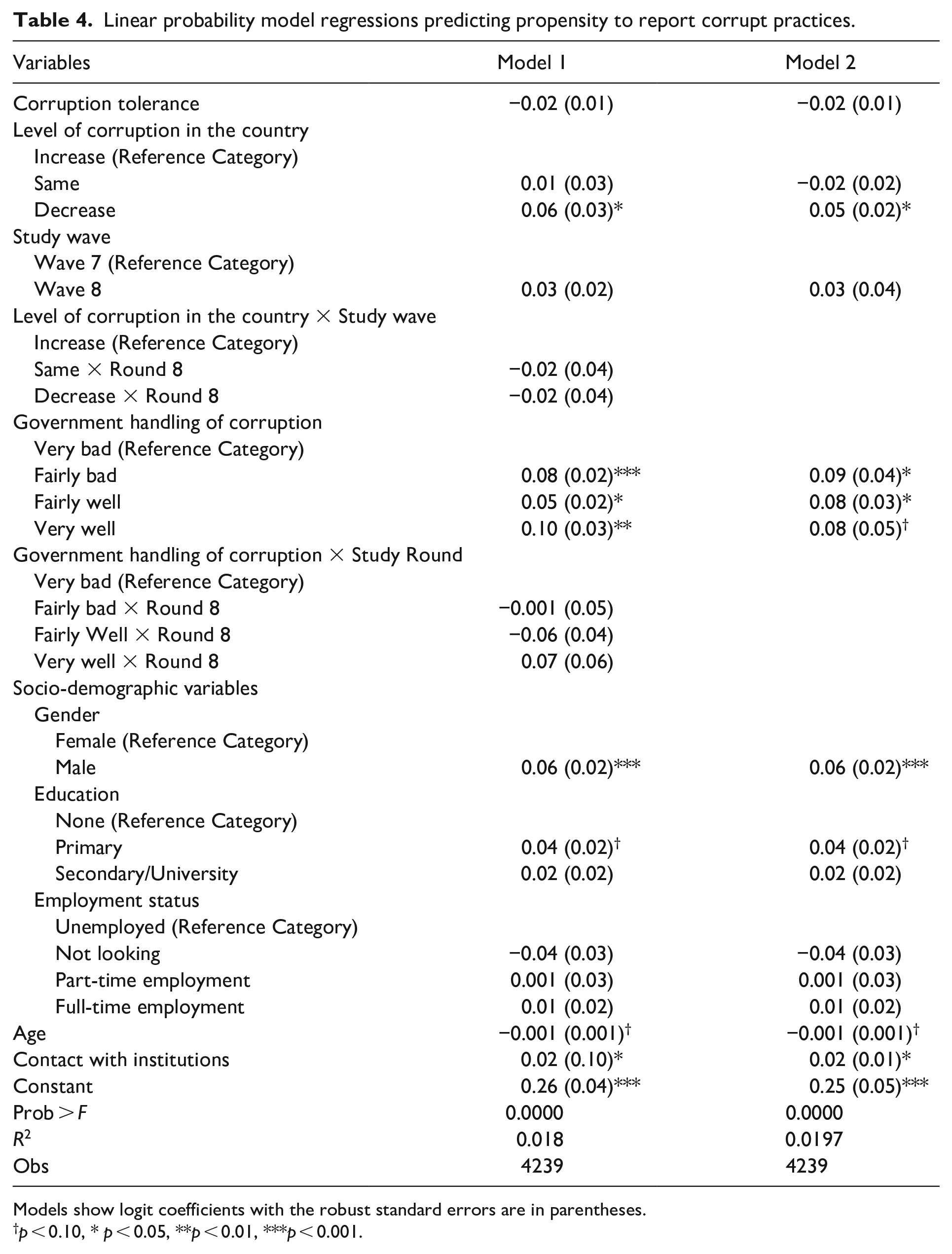
Models show logit coefficients with the robust standard errors are in parentheses.
p < 0.10, * p < 0.05, **p < 0.01, ***p < 0.001.
Results
Univariate analysis
Table 1 presents information on how the additive index for corruption tolerance was generated. Table 2 presents a distribution of the selected dependent and independent variables for this study. This table reveals that a fairly equal number of males and females were represented in the data. Up to 27% of respondents did not have formal education, 38% had attained primary education, and 35% had secondary and university educational certification. About 60% of the respondents were employed, and their mean age was 38. Whereas about 36% of the respondents indicated that they could report corrupt practices, 64% believed that they risked retaliation when reporting corrupt practices. In terms of the perception of corruption in the country, 43% of the respondents indicated that the level has increased, 29.5% that it has stayed the same, and 27.5% that it has decreased. In terms of the state’s handling of corruption, 25% of respondents indicated that it is being handled very badly, 21% say that it is fairly bad, 41% say that it is fairly well, and 13% claim that it is very well.
Multivariate analysis
Table 3 presents the linear probability models (LPMs) predicting the propensity to report corrupt practices without fear.
Model 1 is not statistically significant (p > 0.05), as the model shows that tolerance for corruption does not predict a propensity to report corrupt practices. Model 2 is statistically significant (p < 0.001), as the model shows that Ghanaians’ perception of the level of corruption and the state’s handling of corruption predict their propensity to report corrupt practices. This model explains 0.9% of the variations in the propensity to report corrupt practices. Model 2 shows that respondents who believe that the level of corruption has decreased in the country are more likely to report corruption than those who believe that corruption has increased. Similarly, those who believe that the state is improving its handling of corruption are more likely to report corruption than those who believe that the state is handling corruption badly.
Model 3 is statistically significant (p < 0.001), as the model shows that, even with the addition of control variables, Ghanaians’ perception of the level of corruption and the state’s handling of corruption still predict their propensity to report corrupt practices. This model explains 1.8% of the variations in the propensity to report corrupt practices. In this model, gender and contact with public institutions were found to predict a propensity to report corruption. Men were more likely to report corruption than women, while those who had more contact with police, health, and government officials were more likely to report corruption than those who had fewer contacts.
Model 4 is statistically significant (p < 0.001), as the model shows that the interaction between Ghanaians’ perception of the level of corruption and the state’s handling of corruption predicts their propensity to report corrupt practices. This model explains 2.1% of the variations in the propensity to report corrupt practices. Figure 2 shows that the line for the decrease in the level of corruption is highest for reporting corruption at the point where Ghanaians believe that the state is handling corruption very well.
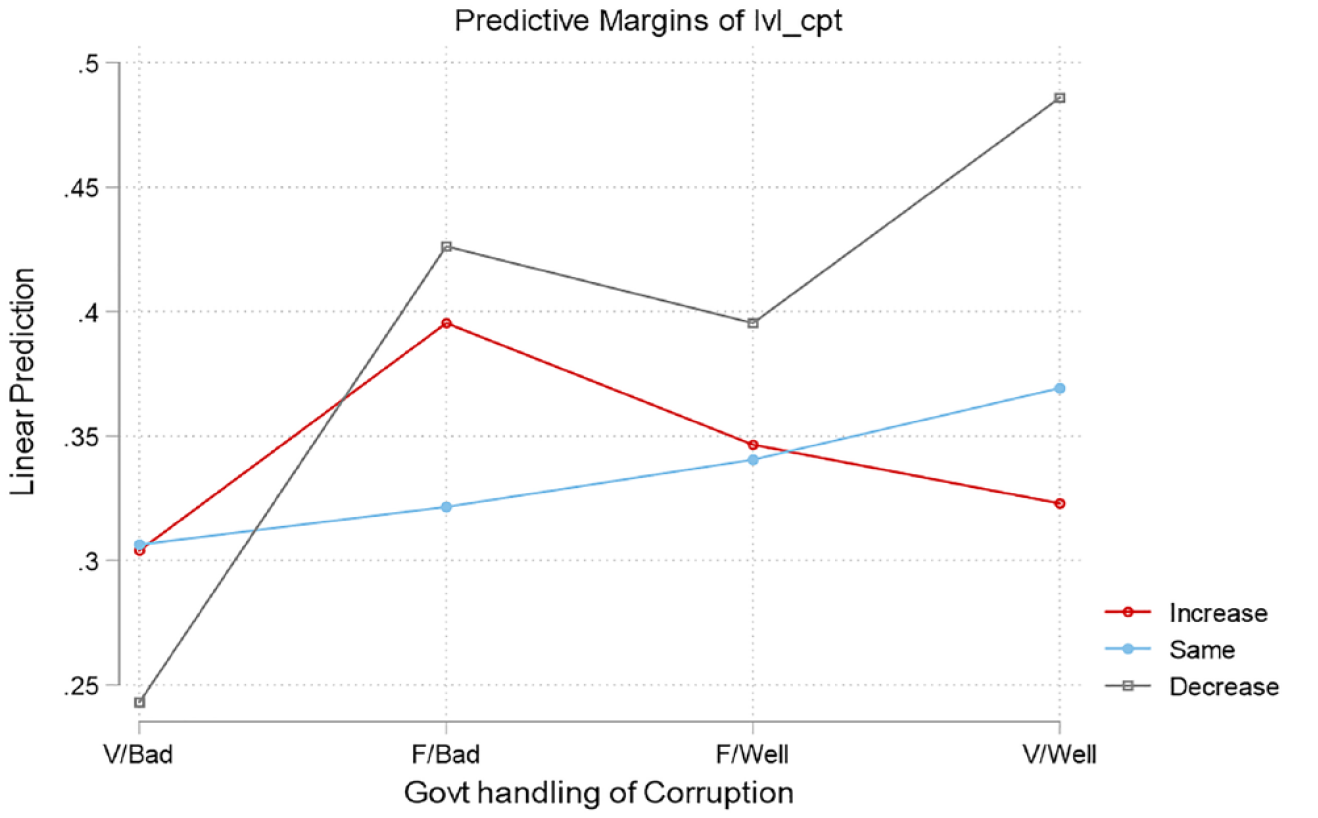
The link between the level of corruption and the propensity to report corrupt practices via the state’s handling of corruption.
Thus, based on the interaction analysis, Ghanaians who believe that the level of corruption in the country has decreased would be more encouraged to report corruption if they also believed that the state is handling corruption very well.
Discussion
The purpose of this study is to investigate whether respondents believe tolerance for corruption and less trust in government decrease the perceived propensity to report suspected corruption cases to state actors without fear. Our results show that perceived corruption tolerance does not predict the tendency to report corrupt behaviors without fear. Nevertheless, the study confirms that the perceived trust in the government’s ability to address corruption is associated with the tendency to report corruption without fear. First, our results indicate that individuals’ tolerance for corruption is not a statistically significant predictor of their willingness to report corruption. This finding contradicts previous work (Alvarez, 2015; Gong and Wang, 2013; Gong and Xiao, 2017). One primary reason may account for this contradiction: corruption tolerance does not matter in a context characterized by competitive clientelist political settlement, as in Ghana. Gift-giving in cash and kind by the two dominant political parties and their candidates in their bid to win elections is commonplace in the country (Asante, 2012; Bob-Milliar, 2011; CDD-Ghana, 2013a). Political parties and candidates who win power often “loot state coffers to pay off past campaign expenses, finance future elections, and accumulate wealth for future use should they lose power” (Asomah, 2023: 9). Administrative corruption involving public-sector employees is also prevalent, often without consequences (UNODC, 2022).
Second, our results show that citizens’ perception of trust in their government increases the likelihood that they would report corruption without fear. Respondents who indicated that the level of corruption has decreased in the country were more likely to report corruption than those who believed that corruption has increased. This finding suggests that individuals who believe that corruption has decreased may assume that government anti-corruption measures are working, and, therefore, be more likely to report corruption without fear. As well, individuals who believe that the state is handling corruption very well are more likely to report corruption to state authorities than those who believe that the state is handling it badly. The current finding confirms past research that citizens’ trust in government’s ability to address corruption is highly correlated with their propensity to contribute to anti-corruption campaign, including reporting corruption (Lavena, 2013; Peiffer and Alvarez, 2016; Walton and Peiffer, 2017).
After controlling for age, sex, education, and gender, the analysis shows that Ghanaians’ perception of the level of corruption and the government’s handling of corruption are statistically significant predictors of their willingness to report corruption. We also ran an interaction model using Ghanaians’ perception of corruption level in the country and their perception of the government’s handling of corruption. This interaction model shows that the tendency to report corruption is even higher if citizens believe that (1) the corruption level has decreased and (2) the government is handling corruption well. How much individuals trust their government depends on how well it is seen to be handling corruption.
The study indicates that respondents believe ordinary Ghanaians are less likely to report corruption because of their perceived low trust in the government to curb it. Assuming ordinary Ghanaian citizens do not tolerate corruption, it will still be meaningless to report it, knowing that the state authorities are themselves corrupt and will likely not do anything about combatting it. In this sense, the respondents’ perception of whether ordinary people will report corruption is based on their assessment/understanding of the institutional and political context in which they are embedded and how it fuels corruption.
As observed in other studies (Abdulai, 2019; Asante and Khisa, 2019; Oduro et al., 2014), the current work is consistent with Ghana’s prevailing political settlement. Any political party and their candidates who win power often “loot state coffers to pay off past campaign expenses, finance future elections, and accumulate wealth for future use should they lose power” (Asomah, 2023: 9), explaining the successive governments’ weak political will to combat corruption decisively. In this political context, corrupt practices, including collusive behaviors, yield much higher returns to the powerful ruling coalitions and their allies (Khan, 2018). As a result, in Ghana, “despite the increasing activities of the independent media, citizens and civil society organizations to check [political] corruption, little success has been achieved” (Asomah, 2019: 648). Other studies confirm the limits of social accountability actors engaged in anti-corruption work in the country (Asante and Khisa, 2019; Asomah, 2019, 2020, 2021, 2022, 2023; Oduro et al., 2014).
Limitations of the study
This study does not infer any causal associations between the independent and outcome variables. Given its cross-sectional nature, this study only refers to correlational associations, suggesting the need for panel studies. Nevertheless, even though they are cross-sectional, the Afrobarometer surveys provide adequate data, enabling us to address the objectives of this study. Another limitation of the study is the concept of the level of corruption in the society and in the state’s handling of corruption. These variables were based on the respondents’ perception of the state and society and not on the objective realities of the functionality of these structures. Thus, multilevel studies can be undertaken to apply country-level measures of governmental transparency and accountability to individuals’ perceptions of the state and society.
Conclusion
This article has addressed a key question: Will high corruption tolerance and less trust in government reduce the tendency to report corrupt acts to relevant state authorities without fear? Our results indicate that tolerance of corruption does not predict the perceived propensity to report corruption, whereas trust in government is, with high trust increasing the likelihood of reporting corruption. The study suggests that, even if ordinary people have low corruption tolerance, they are less likely to report corruption if they do not trust the government to address it. Unfortunately, as some Ghanaians have observed, Ghana has “only two main parties always positioned for power, and it is always family and friends, as a cartel, always come together, steal and go, and another will come” (Asomah, 2019: 643). The winner-takes-all politics, “the practice of state capture and the partisan monopolization of resources, power, and opportunities by the ruling party [whichever party in power] and its cronies” has gained notoriety in the country’s fourth republic (Asomah, 2019: 643).
In this light, to boost citizens’ trust in government and elicit their active participation in combatting corruption, governments must resource and allow state anti-corruption agencies to work without political interferences. Governments must be seen as enacting and implementing appropriate anti-corruption laws fairly and aggressively. However, as previous studies have shown (Abdulai, 2019; Asante and Khisa, 2019; Oduro et al., 2014), given Ghana’s competitive clientelist political settlement in the fourth republic, current and future Ghanaian governments are less likely to strongly support social accountability actors (including citizens) in combatting corruption. According to Asante and Khisa (2019: 31), “The political power exploited to commit corrupt acts also exercises considerable control over the existing institutional mechanisms to curb corruption.” This situation “severely constraints the ability of CSOs to effectively wage war against corruption” (Asante and Khisa, 2019: 31). Fox (2015: 356) has rightly argued that information-led approaches to social accountability cannot “do the work of state horizontal accountability institutions.” Hence, strategic approaches to social accountability that promote citizen voice and coordinated steps to strengthen the state’s capacity to ensure effective horizontal accountability are critical.
Footnotes
Acknowledgements
We are grateful to the anonymous reviewers for their constructive comments, especially for the literature on political settlement framework and social accountability.
Declaration of conflicting interests
The author(s) declared no potential conflicts of interest with respect to the research, authorship, and/or publication of this article.
Funding
The author(s) received no financial support for the research, authorship, and/or publication of this article.
