




Abstract
Chinhoyi in Zimbabwe is used as a case study to explore the potential of secondary cities in addressing urban challenges. This study is significant considering that while African cities are rapidly urbanizing, narratives in African urbanism focus more on large cities and metros. Adopting a qualitative research approach, data for this study were collected from interviews with 15 key informants and a review of policies and development plans. The study reveals that, albeit challenges bedeviling Chinhoyi, there is potential for sustained growth through maximizing local opportunities, including industrial capability, supporting the informal sector, promoting mixed-use development, and empowering the local authority.
Introduction
Despite rapid urbanization and focus on larger metropolitan cities, most of the demographic growth, especially in sub-Saharan Africa, is increasingly accommodated in secondary cities. Githira et al. (2020, pp. i) highlighted that by 2015, 46.94% of the urban population in sub-Saharan Africa lived in secondary cities, indicating the importance of secondary cities in accommodating the regions’ urbanites. However, policymakers and scholars seem to focus on larger cities, with little attention on secondary cities and their role in sustaining regional and national development (Ammann et al., 2021; Ranchod, 2020). The dominance of larger cities is attributed to the increased concentration of wealth, development opportunities, and economic power in the larger cities, resulting in growth disparities between the large and the secondary cities (Githira et al., 2020). Roberts (2019) pointed out that the disparities impact secondary cities’ sustained growth and development. Secondary cities lag behind, negatively affecting businesses, organizations, and people they accommodate. Yet, secondary cities have been identified as instrumental in poverty reduction and sustainable national urban growth and urbanization (Christiaensen and De Weerdt, 2017). However, the disparities between the large and secondary cities make it difficult for the secondary cities to contribute to the sustenance of local economies through their ability to act as engines of regional growth (Marais et al., 2016). This narrow focus on developing and investing in larger cities results in congestion and eventual maladies in the larger and metro cities. Larger cities often become overwhelmed and fail to provide adequate basic services to the urbanites (Turok, 2020). Subsequently, larger and secondary cities become vulnerable to growth and development shocks negatively impacting sustained national development. Nevertheless, the situation worsens in secondary cities, eventually left behind (Roberts, 2019).
Zimbabwe is not an exception, as there seems to be a dearth of studies that critically examine the opportunities and constraints of secondary cities in achieving sustainable urban development as espoused in the national urban agenda. The negligence of secondary cities in the country impacts urban development as their potential remains untapped and unrecognized (Cardoso and Meijers, 2017; Marais, 2016; Marais et al., 2016). Some proponents (Roberts, 2014) opine that if countries and regions grow sustainably and inclusively, policymakers and academics should focus on secondary cities.
It is critical to assess how secondary cities are situated in the urban hierarchy and their role in sustainable national urban development. This is critical considering the multiple deprivations of secondary cities (Githira et al., 2020) and the complications in property taxations that ought to finance urban development (Cirolia and Mizes, 2019), governance and political economy issues that all beg for some analysis. Zimbabwe’s political economy since the 1990s, characterized by devastating structural adjustment programs, land reforms, hyperinflation, and economic and political instability, negatively impacted urban growth and the development of secondary cities.
Therefore, this study uses Chinhoyi, a secondary city in Zimbabwe, as a case study, focusing on its dynamism and role in the national urban plan in a country dominated by Harare—the capital city’s primate growth characterized by centralized and authoritarian governance. This study explores secondary cities’ role in enhancing urban development. The study examines the socioeconomic and spatial factors present in Chinhoyi that are critical for sustaining the city’s development and growth. Critically, the study examines how these factors may contribute to spurring sustained urban growth as envisaged in the country’s urban agenda.
The study presents a conceptual framework that explains the dynamism of secondary cities. A discussion is proffered on the contribution of secondary cities to balanced, sustainable development, followed by an analysis of the urban system in Zimbabwe and the historical background of Chinhoyi concerning this urban system. The qualitative methodology that guides this study is based on a case study design. Next is the analysis of the local assets and economic base of Chinhoyi, focusing on how these are embedded in the broader regional and national urban system and their role in national sustainable urban development. It proceeds to analyze the state of service delivery in the city and its means for the growth of Chinhoyi and the national urban development trajectory.
Conceptualizing secondary cities
There is no single definition for secondary cities. Secondary cities can be defined based on their demographic characteristics, size, the functional and administrative hierarchy of the urban centers, and economic base. The demographic aspect that considers the population size is provided by the UN-Habitat (1991), indicating that the population range for secondary cities is between 100,000 and 500,000 people. According to Roberts (2019: 19), the population of secondary cities ranges between 10% and 50% of a country’s largest city or between 100,000 and 1.5 million. Secondary cities can also be determined based on the hierarchy in a national urban system (Brand et al., 2021). They are identified as cities between metropolitan and smaller regional cities that service mainly agricultural and resource-based industrial activities of their hinterlands (Roberts, 2019). Thus, secondary cities emerge as development growth poles that cater to areas’ commercial and administrative functions with extractive industries like agriculture, mining, or fishing (Hoffman, 2015).
Roberts (2019) defined it as polycentric collaborative competition that involves the collaboration of different secondary cities that eventually rely on each other and compete with the larger cities. Overall, the three broad spatial categories proffered by Roberts (2014) help us understand the spatial dimension of secondary cities and guide this study:
Subnational cities comprising centers of local government, industry, agriculture, tourism, and mining;
City clusters are synonymous with expanded, satellite, and new town cities surrounding large metropolitan city regions;
Economic trade corridors represent urban growth centers planned or developing along major transport corridors.
These secondary cities bring into perspective the aspect of connectivity which, according to Roberts (2019), is best analyzed as systems where there are different linkages between the large and the secondary cities and even with the rural hinterland that rely on the secondary cities. The connections include hard and soft infrastructure that helps to connect large and secondary cities. The potential of secondary cities to contribute to sustained urban growth is based on these linkages discussed subsequently.
Secondary cities have the potential to bring balanced and sustainable development. First, secondary cities assist in deconcentrating urbanization from the major cities. The benefits are spread spatially to regional populations who may not necessarily have to come to the primate cities for public, social, and commercial services (Marais and Cloete, 2017; Ranchod, 2020). Marais and Cloete (2017) asserted that growing urbanization could push larger cities beyond the threshold. While diseconomies make them less competitive, secondary cities in South Africa are emerging as new urban champions and the following places of growth. However, this is not always the case because services and opportunities in secondary cities do not match those in primate cities, where people continue to flock for social and economic opportunities and access to advanced infrastructure and services (Githira et al., 2020; Roberts, 2019).
Second, secondary cities sometimes absorb some of the shocks of larger cities, such as housing, transportation, unemployment, and environmental woes (Cardoso and Meijers, 2017). This contribution depends on national governments’ investment and economic opportunities created in secondary cities. Scholars like Chatiza (2020) highlight the importance of incorporating the informal sector into the planning and development of secondary cities to create employment, now scarce in larger cities. Secondary cities play another emerging role in decentralizing university education, and the universities are critical development agents in these cities. Recent research reveals that universities contribute to global and national development and local development (Chankseliani et al., 2021; Guerrero et al., 2016). Third, secondary cities may also reduce regional economic inequalities. Rondinelli (1983) reasoned that secondary cities slow migration to significant urban areas by providing most of the goods and services that big cities offer, thus intercepting the exodus of rural–urban migration directed toward the larger metro cities. In this way, secondary cities emerge as administrative and commercial centers for rural hinterlands, spreading economic growth benefits to the smaller regions instead of concentrating all the growth and development in the larger cities (Roberts, 2019).
Fourth, rural economies may be improved through linkages created between rural areas and secondary cities. Banket Township in Zimbabwe, for example, coexist with rural hinterland and settlements creating employment and higher order goods and services for the rural communities (Kamete, 1998). Wadie (2020) also observed that secondary cities emerged as Uganda’s job creation engines.
Certain factors stifle the growth of secondary cities. Secondary cities often lack the resources and capacity to manage their rapid urbanization. Many secondary cities, for example, struggle to provide the necessary services, create and retain jobs, diversify and revitalize their economies, retain capital, and attract investment (Cirolia and Mizes, 2019; Githira et al., 2020). This creates a backlog in demand for infrastructure and housing (Roberts, 2014). Most fall well behind in national measures of city competitiveness. Many have weak logistics, governance, and tax-base systems, while some have very high rates of informal sector employment and large slum settlements. The low tax base is one major issue that complicates the growth and development of secondary cities as the urban finance system is often jeopardized by limited funds for urban development (Cirolia and Mizes, 2019). Political issues and governance often muddle the success of secondary cities (Roberts, 2019). This often happens due to certain secondary cities’ remoteness, which may make it costly to install and sustain infrastructure to support urban development. Political will and commitment of elites and local governments are also critical for the successful development of secondary cities.
Secondary cities and the urban system in Zimbabwe
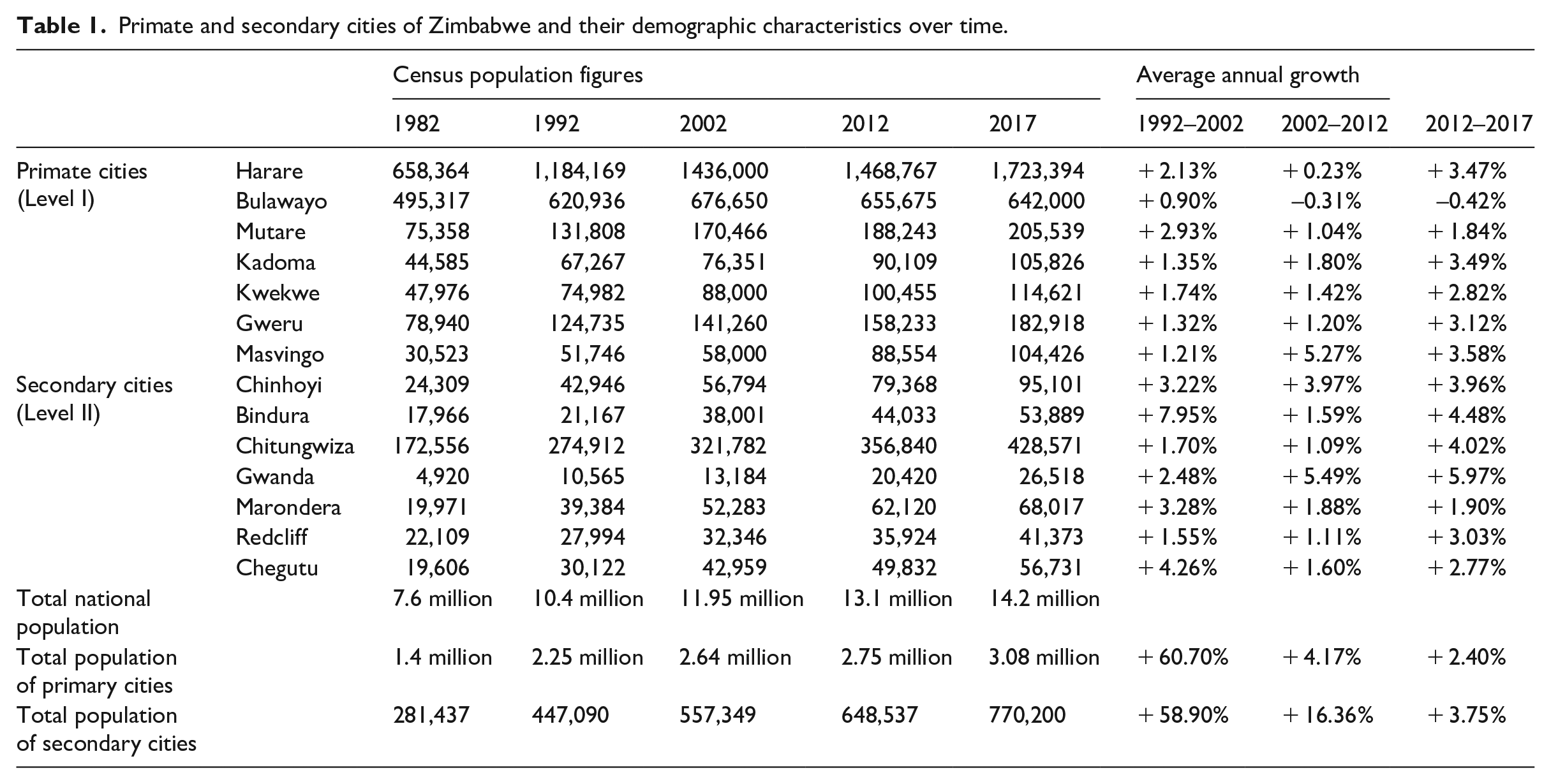
In Zimbabwe, urban areas are either places designated as urban due to their function or significance or places with at least 2500 inhabitants, compact settlement patterns, and more than 50% of the inhabitants employed in the non-agricultural occupations (ZimStat, 2018). The rank-size rule informs the classification of the urban system in the country based on its form and function. Although this classification seems to help categorize the cities, it does not consider the diverse factors that influence the growth and development of the cities. At times, there may be an increased population with no growth. According to the Urban Council Act of Zimbabwe, the urban system in Zimbabwe is classified into four levels. Level I includes the highest order urban areas, which are cities, second-level urban areas which include Chinhoyi are termed municipalities, then, level III town councils, and followed by level IV constituting the local boards (see Figure 1). Table 1 shows the demographic information of the primate and secondary cities in Zimbabwe, while Figure 1 represents the location of these various cities.
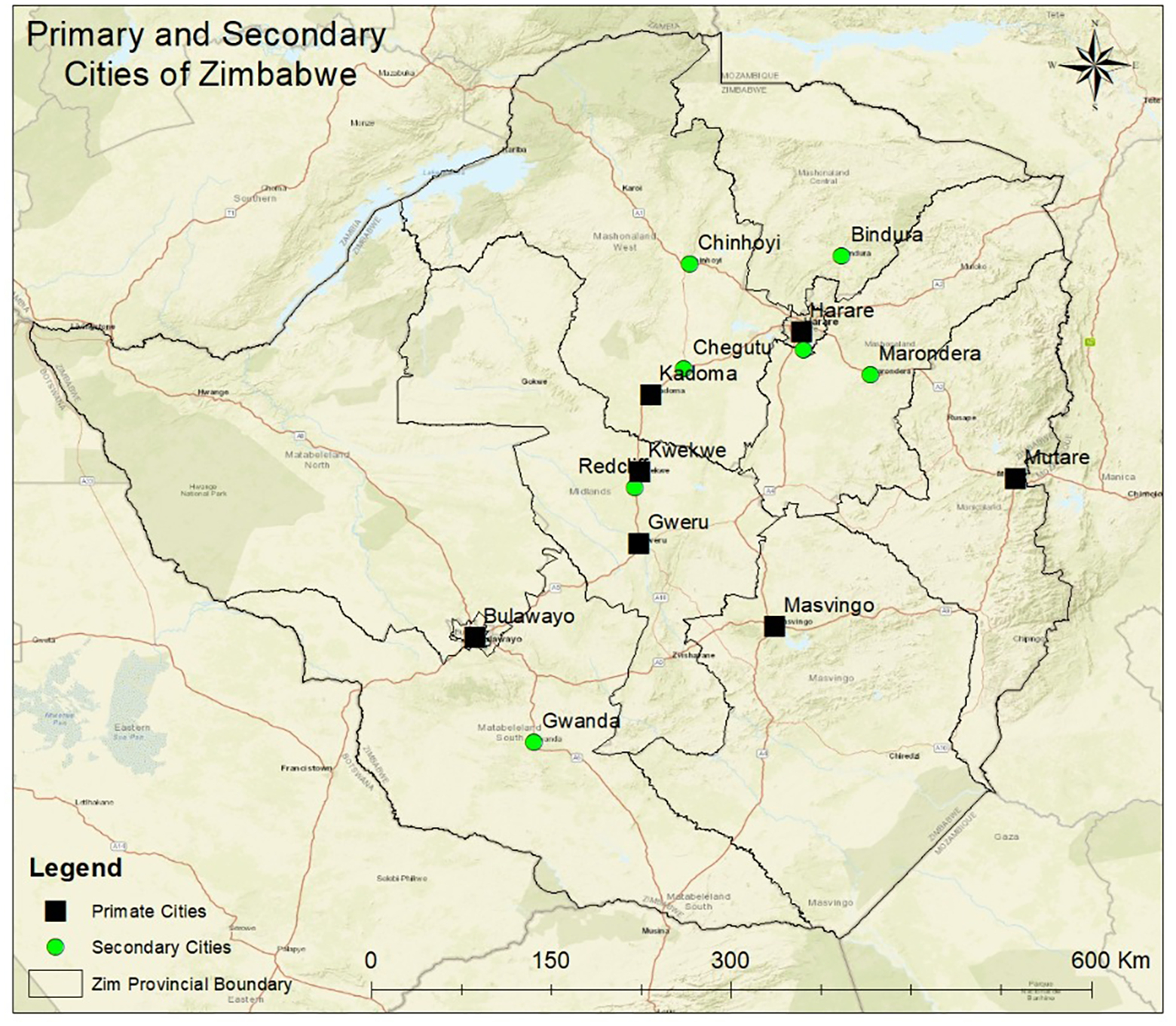
Map of Zimbabwe showing the location of the primary and secondary cities.
Primate and secondary cities of Zimbabwe and their demographic characteristics over time.
Materials and method
Description and justification of the study area
The selection of Chinhoyi as a case for this study was purposive. Of the secondary cities shown in Table 1, Chinhoyi has high population growth, showing its significance in absorbing the growing urban population. This growing population resonates with the national population growth trends projected for 2015–2032 which show that Mashonaland West province has the fastest-growing population of 2.3% which will only be second to Manicaland Province (ZimStat, 2015). Moreover, Chinhoyi has several socioeconomic and political characteristics that make it an interesting case to explore the contribution of secondary cities to address urban challenges. As shall be explained in the forthcoming paragraphs, Chinhoyi was selected due to its comparative advantage and role as an administrative center. The presence of minerals and agricultural lands around the town makes it ideal for sustaining agro-industries. At the same time, the university is also a major growth node considering the role of universities in sustaining local economies.
Chinhoyi was established in 1906 as a settlement scheme for a few Italian families and is currently the administrative capital of Mashonaland West Province. 1 The municipality that administers the town’s affairs is working toward attaining city status (Muonwa, 2019b). The establishment of Chinhoyi was presumably driven by mining activities in the hinterland of the existing city core, where people searched for gold and other minerals in abundance in the area (Zimbabwe Mining Development Corporation, 2017). The mining activities that continued on a commercial scale around the town resulted in the demand for consumer goods and administrative functions. The rapid growth of the settlement led to the dissolution of the village management board in 1946 and the elevation of Chinhoyi to become a Town Management Board until 1974 when the municipal status was granted to the settlement.
Also, the red clay soils found in Chinhoyi and the favorable climate made the surrounding areas a haven for White commercial farmers who engaged in different farming activities ranging from citrus production, maize, soya, dairy, horticulture, and tobacco farming (Banana et al., 2015). Kamete (1998) observed that the farms and mines surrounding Chinhoyi town provide a ready market for some urban goods and services from the town. At the same time, Chinhoyi thrived on the product and services from the farms and mines (Kamete, 1998). For this reason, it became key to analyze how this factor of prime agricultural land has been utilized to address urban challenges such as employment creation and industrialization.
The collapse of the world-mining prices in the 1990s had a major impact on the mining towns around Chinhoyi after some of the mines scaled down or shut down completely (Kamete, 2012; Zimbabwe Mining Development Corporation, 2017). Chinhoyi, the major urban center of these mining towns, had to accommodate the retrenched mineworkers. They came to the city seeking their right to the city like any other citizen in the country. In this regard, the contribution of mining towns to alleviating some urban problems in secondary cities would best be interrogated through the case of Chinhoyi following similar studies conducted in South Africa by proponents such as Marais and Cloete (2017).
Moreover, the land reform program launched in the early 2000s resulted in most workers on commercial farms losing their livelihoods, forcing them to migrate to the nearest towns. Many flocked to Chinhoyi for employment (Banana et al., 2015). Table 1 shows that the population of Chinhoyi has increased significantly over the past years. This population increase is evidence of the emerging trend of the growth of secondary cities in Zimbabwe. Chatiza (2020) noted that secondary cities, including Chinhoyi, are growing at rates between 10% and 50%, while the growth for Harare has been less than 10%. Table 1 also shows that the secondary cities have been growing gradually over the years while the growth of primate cities has been slowing down. This situation calls for sustainable measures and strategies to transform the town into an industrialized city of preference.
Research design and data collection methods
The study is qualitative and is guided by a case study research design. Primary and secondary data were collected for this study. Interviews were conducted with 15 purposively selected key informants, including municipal officials, officials from the provincial office of the Department of Physical Planning (DPP), entrepreneurs and business personnel in Chinhoyi, land developers, and political leaders and academics. The semi-structured interviews were used to solicit information from the participants on the opportunities inherent in Chinhoyi as a secondary city and how these contribute to sustained urban development and alleviation of urban challenges. Specifically, the interviews considered the following themes:
The economic base of the city,
The role of the university in supporting the sustainable development of the city,
Dynamics in urban informality and employment opportunities,
Nature and characteristics of the basic service delivery critical for sustaining urban livability,
Urban governance and land use planning strategies guiding urban development trajectory in Chinhoyi.
The semi-structured interviews were triangulated with official documents and development plans to enhance the validity of the findings. Observation and photography were also done to capture the various issues regarding socioeconomic activities undertaken in Chinhoyi and the nature of the service delivery. The secondary data were reviewed to identify the urban governance and land use planning strategies guiding urban development in Chinhoyi. The document review also focused on the extent to which the plans and strategies guiding urban governance and planning in Chinhoyi promote the socioeconomic growth of the city. The data were analyzed through thematic and content analysis.
Findings and discussion
Employment opportunities in Chinhoyi
One major challenge in most African cities is a lack of industrialization as most urbanization occurs without concomitant urbanization. Therefore, unemployment becomes a major issue in most cities. However, for Chinhoyi, the industrial capabilities of the town were recounted by one key informant who indicated that The surrounding mines and farms around Chinhoyi made it possible for the bolstering of the manufacturing industry in the town. This was after the land reform programme when companies like Steel Base continued to buy raw materials such as soya beans (for producing cooking oil), wheat for bread making, and sugar beans from the new farmers.
The official from DPP recounted that “Chinhoyi has an industrial base that was instrumental in its establishment.” From this perspective, it emerges that there is much scope and role of the city in becoming an industrial hub that will be sustained by the farms, thus curbing unemployment rates in the country.
This dominance is crucial for Zimbabwe because it helps to decongest Harare and other primary cities, as the town of Chinhoyi will be able to cater the employment needs of the working class, thus reducing the burden on the primary cities. The town planner remarked that Industrial capability and specialism is strong pillar for the sustained growth of any urban area that acts as a growth pole, as shown in the development of most industrial cities in Europe during the Industrial Revolution.
These remarks confirm the argument by Castells-Quintana and Wenban-Smith (2020) that if well managed, these industries can overcome the prevailing challenge in many sub-Saharan African countries of urbanization without corresponding economic growth. Moreover, Roberts (2019) pointed out that “sub-national regional urban centers of manufacturing, agricultural development, and administration help create sub-markets and value-adding opportunities to compete against the dominance of goods and services produced supplied by the metropolitan regions” (p. 21).
The role of the Chinhoyi University of Technology in urban development
Chinhoyi University of Technology (CUT) plays a critical role in sustaining the growth of Chinhoyi. First, it was pointed out by all the respondents that CUT contributes to supporting the growth and sustenance of the local economy of Chinhoyi through supporting the real estate sector. One key informant, a councilor, described the university as a strategic institution that supports the real estate sector in the town and provides employment opportunities for locals while also sustaining the retail sectors. The councilor highlighted that Property owners in the suburbs around the university (CUT) are benefiting from rental incomes as the students require housing outside the university premises.
The official from DPP further indicated that A university is a crucial resource for any city, and with CUT there are considerable gains for the town that include rental incomes and gentrification as there is a potential market for student accommodation.
It was further noted by the town planner that The university has managed to ease the pressure on the University of Zimbabwe which has long been the major public university in the country.
In this regard, the university has reduced the influx of tertiary students to Harare, where the University of Zimbabwe was for long the only university. This confirms the argument by Cardoso and Meijers (2017) on how secondary cities at times absorb some of the shocks of larger cities.
Moreover, the university is engaged in community projects that include renewable energy in small settlements around Chinhoyi (Mangirazi, 2018), employment creation, and agricultural production. The councilor interviewed pointed out that Students support several commercial and recreational activities in the city.
A business owner highlighted that The presence of university students sustains most of the businesses in this town.
Therefore, the role of CUT in Chinhoyi asserts the point raised by Guerrero et al. (2016), illustrating how universities help to spur local economic development. However, regardless of the potential role of the university in supporting the local economy and alleviating some urban challenges, it emerged that Chinhoyi municipality has not been able to implement a land use plan that integrates the university into the spatial development of Chinhoyi. An official from DPP stressed that The municipality is not adequately integrating the university into the land use plans for Chinhoyi that were prepared before the establishment of the university. Such complacency results in unregulated growth as universities are associated with positive and negative effects that must be addressed adequately to support the city’s sustained growth.
Economic sector and urban informality in Chinhoyi
Chinhoyi, the major urban center in the Makonde region, attracts more immigrants from rural areas. The politician emphasized that Chinhoyi is the first destination for individuals migrating from the hinterland to seek economic opportunities.
This is synonymous with the secondary cities mentioned by different proponents (Roberts, 2014, 2019). The official from DPP reasoned that The migration of the rural folks to Chinhoyi is possibly attributed to the seasonality of rural economic activities centered on agricultural production. Some rural populations only seek temporary livelihood opportunities during the off-season period when they will not engage in agricultural activities, usually from April to October.
In this regard, Chinhoyi is a city that slows migration to larger cities, as posited by Rondinelli (1983). Most of these individuals migrating to Chinhoyi have been absorbed in the informal sector, engaging in informal trading activities. A business owner lamented that
The authorities have not invested inappropriate sites for the vendors, which would help the local tax base as license fees can be collected from these individuals.
Most respondents explained that there is limited space to accommodate small enterprises, confirming the events in most secondary cities where infrastructure investment is limited (Githira et al., 2020). The official from DPP highlighted that limited investment in infrastructure resulted in the flight of many formal businesses out of the city.
This limited investment contributes to the low tax base of the municipality as individuals resort to makeshift structures and street vending (see Figure 2) not levied by the municipality. It was indicated by an official from the Municipality that the problem is also attributed to the ambitious land use and statutory development plans that fail to recognize the hierarchy of cities and the order of goods and services that need to be supported. The plans fail to recognize the role of the informal sector in sustainable urban development resulting in missed opportunities. Chatiza (2020: 3) argued that councils need to link informal with formal sectors through integration strategies focusing on spatial planning, governance, and city development. Yet, Chinhoyi does not have such a plan that integrates the formal and the informal sectors, compromising the growth of the economic sector in the city. This failure of the investment in strategic infrastructure affirms studies that show the neglect in the sustenance of the secondary cities and confirms the urban bias thesis where development initiatives continue to be concentrated in the primary cities, especially in Harare.
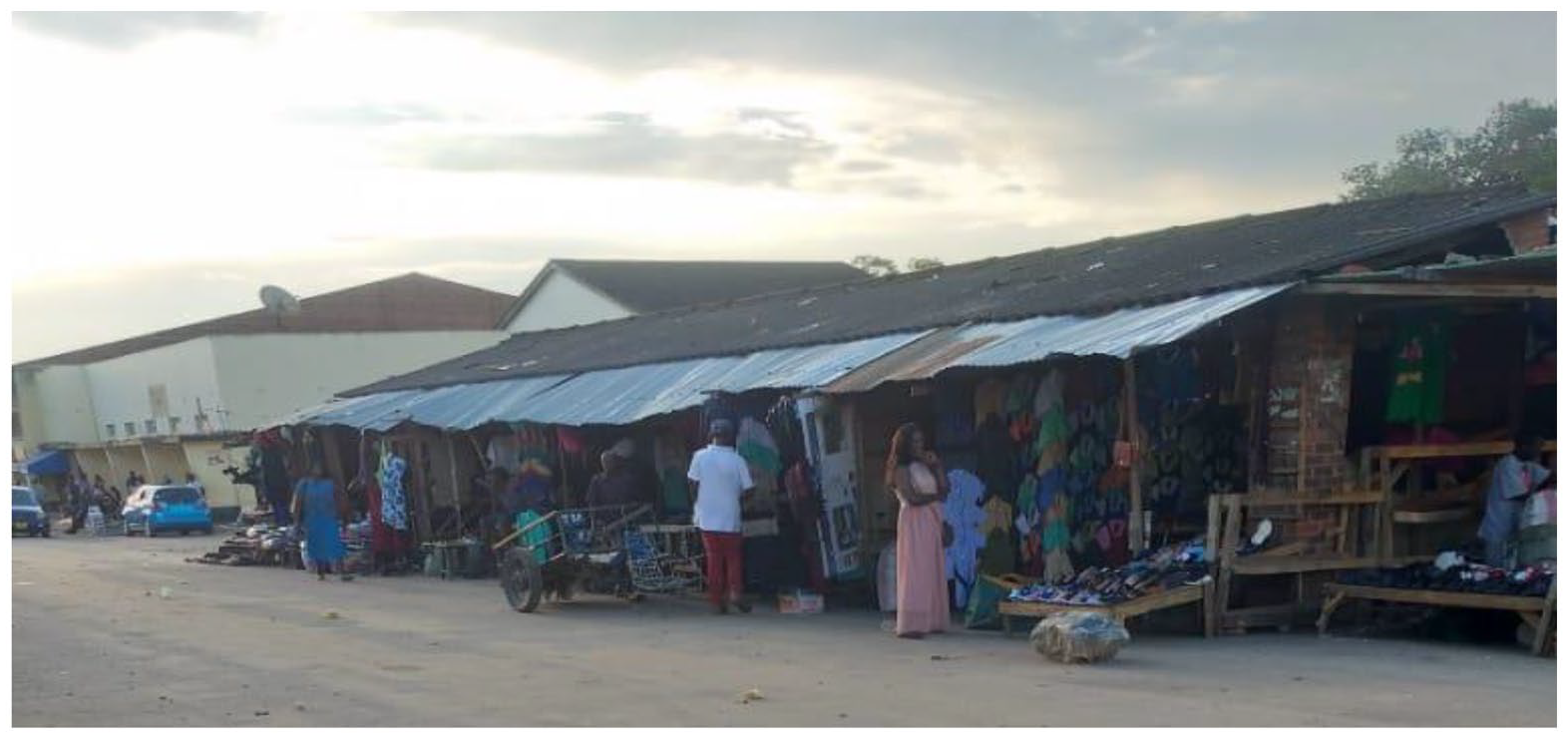
The market fails to accommodate traders, showing a need for upgrading the infrastructure.
Basic services delivery and infrastructural development in Chinhoyi
Basic services and infrastructure development are key to sustainable urban development. As indicated earlier (Turok, 2020), megacities often fail to cater to the needs of their growing populations, in particular water, sewer, and housing. The city planner indicated that Chinhoyi inherited from the colonial government a reticulated water supply that draws water from the perennial Manyame River and sewage collection and disposal facility.
However, the reticulated water system is old and susceptible to leakages and system failure, compromising citizens’ access to water (Ndlovu, 2019). Thus, the formal grid fails to supply adequate water due to the water rationing mechanisms used to curb water shortages across the city (Banana et al., 2015; Ndlovu, 2019). From the city’s daily demand of 30 megaliters, it is estimated that the municipality only manages to supply 15 megaliters (Office of the Auditor-General Zimbabwe, 2018). The mismatch between service delivery demand and supply in secondary cities makes them lag. Therefore, people continue to flock to larger metros with economic opportunities and access to advanced infrastructure and services, as reported by Githira et al. (2020) and Roberts (2019).
Road infrastructure within the suburbs of Chinhoyi requires maintenance and upgrading in some areas where the surfaced road has worn off (see Figure 3). It was pointed out by the town planner that Public transport operators often avoid such routes making it difficult for commuters to have timely access to public transport.
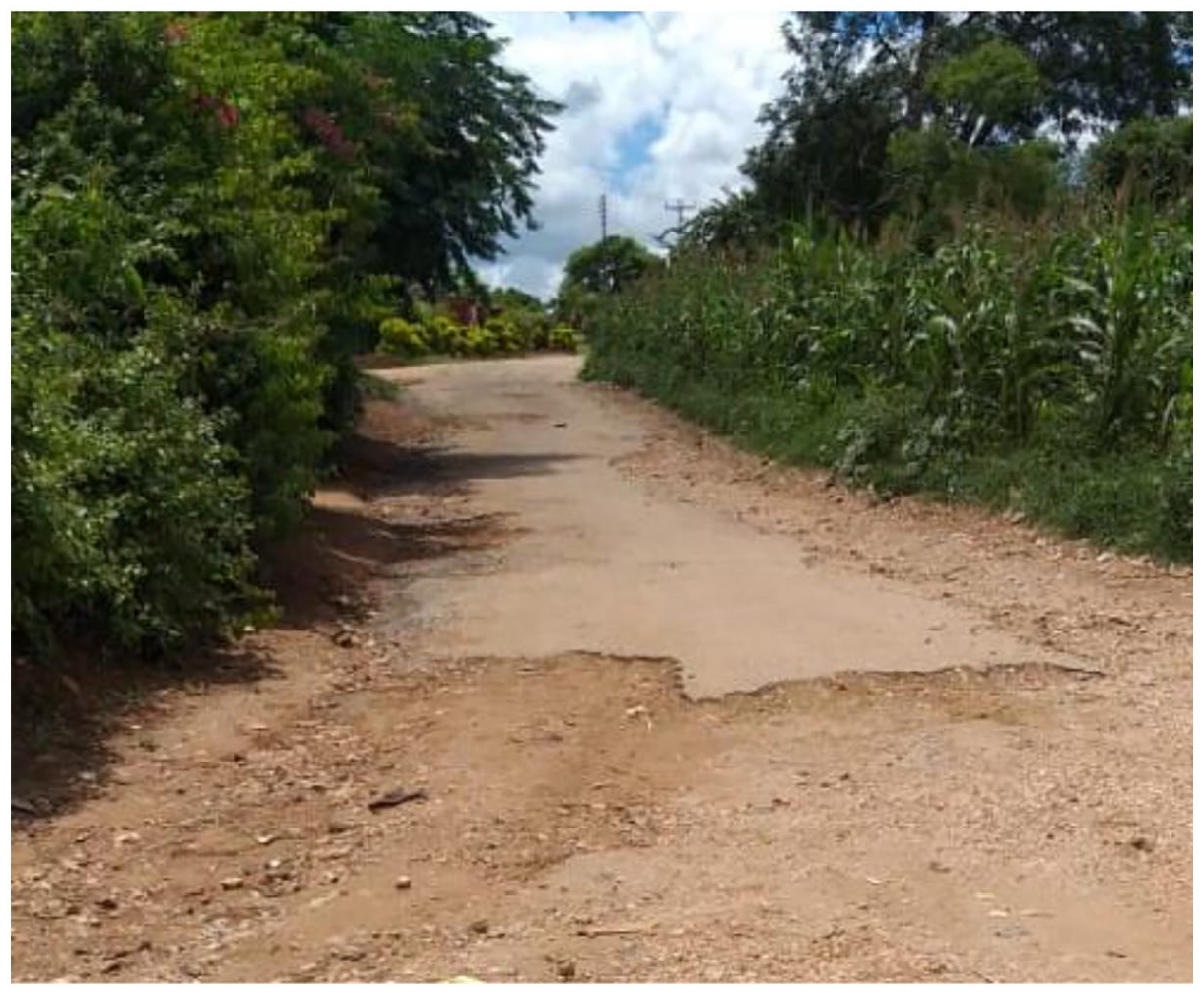
The once-tarred road infrastructure in a high-density suburb of Chinhoyi is now eroded, showing a lack of maintenance.
This was confirmed by residents who revealed that poor roads imply that they fail to access public transport services, leading to the proliferation of informal public transport services in the city. We observed that, while some residents in the city use non-motorized transport, especially walking, others resort to small vehicles that serve as public transport.
Other related problems affect the town aside from the financial woes plaguing Chinhoyi municipality and compromising service delivery. First, the official from DPP reasoned that following the closure of Alaska Mine, Chinhoyi Municipality absorbed the mining communities of Alaska and Shackleton into their jurisdiction. In her remarks, she recounted that Previously basic services for these communities were catered for by the mines and, when they came under the jurisdiction of Chinhoyi Municipality, the existing infrastructure was further constrained.
This situation exposes the failure of both local and national governments to formulate integrative plans that would cater to service delivery when smaller communities in the hinterlands of the secondary cities are integrated into a single urban region. In this regard, the situation in Chinhoyi provides challenges that are explained by Turok (2020) in which large cities become overwhelmed with the provision of basic services, which contradicts the narrative by Marais and Cloete (2017) that the secondary cities can deconcentrate urbanization from major cities. The absence of adequate basic services thus further worsened.
Second, the new settlements in Chinhoyi were being occupied before bulk infrastructure had been installed, a situation that proves to be difficult to rectify in other emerging settlements, like Hopley Farm Settlement, Caledonia, and White Cliff, in Harare (Matamanda, 2020). Subsequently, five emerging settlements in Chinhoyi that accommodate approximately 25% of the city’s population are connected to the municipal grid (Banana et al., 2015). This trend has become characteristic of many new developments in Zimbabwean cities through informal processes led by multiple and competing actors like the state, political elites, land barons, and dealer developers (Chatiza, 2020). A land developer alluded to this point that Despite the existence of undeveloped land in Chinhoyi, there are increasing land grabs by land barons, politically connected individuals, and property developers.
Commenting on these happenings, a planner in private practice explained, These practices may effectively address the city’s immediate housing need, but the long-term implications of these actions may significantly compromise the livability of the settlements.
The land grabs have increased land values in Chinhoyi. Some of the transactions are illegal, causing a loss of revenue to the council while creating potential land conflicts in the city (Chronicle, 2020). Such urban expansions diverge from the role of secondary cities discussed by Roberts (2019), where secondary cities contribute to socioeconomic development. Rather, the present situation in Chinhoyi is characterized by stifled sustained growth.
Third, interviews with key informants revealed that infrastructure deficiencies have also been attributed to financial problems. Articulating this point on infrastructure financing deficiencies, a politician remarked, The local authority has limited financial capacity to finance the construction of new infrastructure or repair and maintain the existing one. The national government’s priority to larger cities in budget allocation at the expense of second-tier cities like Chinhoyi, albeit their rapid growth compared to the larger city, also makes infrastructure development difficult.
The challenges for financing urban infrastructure in Chinhoyi confirm observations by other scholars (see Otiso, 2005), who concluded that the local governments are financially constrained owing to the limited financial capacity to fund the expansion of the growing cities. Besides the capacity and availability of funds, corruption and financial abuse have been rife in Chinhoyi municipality over the past years, as top officials have been linked to malpractices like benefiting from council accommodation while being paid housing allowances (Office of the Auditor-General Zimbabwe, 2018).
Urban governance and land use planning strategies in Chinhoyi
Land taxation
Like elsewhere in Zimbabwe, there is an increasing demand for residential land in Chinhoyi, with the municipality selling large pieces of land. The Department of Physical Planning official pointed out that Some of the municipal land sales in Chinhoyi include Mapako, high-income residential areas, and the city’s southern parts, accommodating low-income earners.
At the end of 2015, the council sold land worth US$ 5.8 million, indicating the abundance of land in the city. Another indication of land availability in Chinhoyi is depicted by the council’s payment of workers’ salary arrears with land (Muonwa, 2019a). However, such practices have resulted in the distortion of the land market as employees sell the plots at exorbitant prices (approximately US$ 4500 for 300 square meter plots), inflating the land prices in the city.
2
Developers interviewed revealed that Residential plots are being sold in the high-density residential suburbs for an estimated amount of US$ 12.9 per square meter and an average of US$ 20 in the low-density residential areas.
These figures indicate that land prices have been increasing over the past years, and an official from the municipality housing department believed that [. . .] with the city status that the local authority is trying to attain, the land prices keep soaring for speculative reasons.
Ironically, the local authority fails to realize such amounts of money because of statutory instrument 142 of 2019, which in section 1 restricts the use of foreign currency in all transactions in the country (Government of Zimbabwe, 2019). Subsequently, the council has to sell land at low prices while individuals transact in US dollars (Muonwa, 2019a).
The land is one major resource that cities bank on for property taxes through land value capture. However, the trend of illegal land deals and inflated land prices, whereby the municipality receives less value for the land while individuals cash in more result in depressed financial returns for the local authority. This relates to Cirolia and Mizes (2019) work that indicates the challenges of property taxes confronting secondary cities. Considering the deprivations noted by Githira et al. (2020) that plague secondary cities resulting from limited grants from the national government. Chatiza (2020) highlighted the same for secondary cities in Zimbabwe where there would be merit in harnessing the local property taxes. The land is one such asset that remains underutilized or captured by politicians, thus failing to benefit the development of the city.
Urban governance and planning in Chinhoyi
Through Section 206 (1), the Urban Councils Act empowers the local government minister to intervene in local affairs. This relates to the constitution of Zimbabwe in Section 264, which empowers the same minister to intervene in local affairs. There were instances in Chinhoyi where the local government minister used these powers to interfere in local affairs. For example, the canceling of accrued rates initiated by then Minister Ignatius Chombo in 2013 was a ZANU-PF campaigning strategy that did not consider the implications on local authorities (NewsDay, 2013). This negatively affected the council’s financial position and eventually contributed to the deterioration of service delivery (Dailynews, 2018). Commenting on the role of politics in urban development, an academic opined that The interference of politicians has also greatly disrupted effective local governance because Chinhoyi is governed by a Mayor from the opposition MDC party, yet the Minister is from ZANU-PF. This result in politics of difference in how resources, particularly land, have been allocated to the supporters of the ruling ZANU-PF. Thus, urban governance is compromised as the central government meddles in local affairs with its authoritarian rule complicating the success of local initiatives.
These urban governance challenges point to the need for empowering local governments in secondary cities to manage the affairs in their local areas.
The town planner alluded to the fact that land use planning in Chinhoyi is facilitated through statutory planning and is guided by the Regional Town and Country Planning Act (Chapter 29:12) of 1976, which encourages statutory plans to direct and control development. As such, development in the city informed by the Chinhoyi Master Plan of 1994 focuses on land use zoning. Nel (2016) criticized zoning in land use development as it encourages the development of unjust, unsustainable, and segregated cities.
Chinhoyi Master Plan is in stark contrast to the local realities calling for the existing status quo in the city to adopt a different planning approach. The contemporary development of Chinhoyi is guided by the master plan, focusing on single-use land uses or zoning development. Yet, over the past years, the socioeconomic and political terrain of Chinhoyi has changed, making it difficult for the proposals made in the master plan to be implemented. A key informant, an academic explained that The severity and implications of problems such as climate change were not fully anticipated and understood, and the master plan does not provide guidelines for climate change adaptation in Chinhoyi. The collapse of commercial agricultural sector and mining activities around Chinhoyi were never imagined in the mid-1990s as these sectors were booming and sustaining the national economy.
This brings to attention the incapacity of secondary cities to handle large populations and more complex problems, possibly due to their neglect by the national governments and limited scenario and strategic planning.
The existing development of the city follows this colonial set-up where low-density suburbs continue to accommodate the affluent while the low-income earners are concentrated in the southern suburbs with smaller plot sizes and far away from the city core. The result is spatial segregation between the haves and the have-nots, with a stark contrast like services in these new developments. While the colonial government used the industrial site to segregate communities based on racial lines, the existing government used the income to separate people. Although this may be done unconsciously, the implications will be difficult to eradicate if no action promotes mixed land use development. The city of Chinhoyi has different uses within new neighborhoods. However, the complication with the southerly development is encroachment into rural land. This has been a point of contestation between the traditional leaders in Zimbabwe and the local authority, as illustrated by Chirisa et al. (2020). The development trajectory thus perpetuates the existing situation in the larger cities that are grappling with segregation challenges which at times escalate into protests as citizens seek their right to equitable cities. Thus, secondary cities provide a platform for rethinking the city spaces and eradicating the inherent socio-spatial justices indicated by Githira et al. (2020) as prevalent in sub-Saharan Africa’s secondary cities.
Key lessons and conclusion
The study used Chinhoyi to decipher the opportunities and strengths inherent in secondary cities in Zimbabwe and their potential for enhancing sustainable urban development in the region. The study revealed that despite some challenges bedeviling Chinhoyi, there is much potential for sustained growth through strategic spatial planning, maximizing its local opportunities and industrial capability, supporting the informal sector, infrastructure development, promoting mixed-use development, and empowering the local authority.
The spatial and land use planning process is currently too rigid, perpetuates unjust and exclusion of cities, and is detached from the local realities. The study recommends mixed land uses, which eradicate the existing and ongoing segregated city based on income. Instead of adopting prescriptive and modernistic plans often inherited from the West and being a legacy of the colonial regimes as guided the development of most primate cities in Zimbabwe, for example, Harare, strategic plans may be used to guide urban development in secondary cities. Strategic planning that recognizes the linkages between different aspects of Chinhoyi is vital to enhance integrated development that captures the socioeconomic and environmental aspects of the city. Strategic plans are encouraged as they facilitate a coordinated vision for the medium- and long-term development of cities. In this regard, the spatial planning for Chinhoyi would be enhanced, ensuring coordinated development that considers the various assets of the city. More work needs to be done by the local authority to forge partnerships and work with the university in different aspects of the city’s development.
University students’ housing is one area that the council can invest in. These partnerships have been referred to by Roberts (2019) as the collaborative approach in developing secondary cities through local authority collaborations with other institutions like universities. In this way, the university becomes an anchor for the socioeconomic development of the city by integrating its strategic role into the city’s development agenda, thus promoting the establishment and growth of a vibrant university town. This could include the provision of ancillary recreation and retail facilities for students who are a unique demographic class. This needs urgent attention considering the scale of student influx into the city and how this influences the form and function of Chinhoyi. Presently, the local authority uses CUT as leverage to gain city status. Still, it should go beyond this and make the university an integral part of the city, contributing to employment creation and human capital development.
Land use in Chinhoyi highlights a predominantly sprawling residential type of land use. In this instance, Chinhoyi continues to grow beyond its boundaries into fertile, productive agricultural lands. This affects the country’s future food security, which is vulnerable to climate change. Chinhoyi, as an agro region, ought to contribute to the country’s food production and, most importantly, take the lead as an agro-production and processing region by establishing the value chain of agriculture processes. This brings to attention a serious matter, often overlooked where agricultural activities are overshadowed by residential development as urban development expands into the urban fringe. This has been a key issue in most metropolitan cities across Africa, where food systems are not factored in the city development process, and thus, food insecurities become rife in large cities. Therefore, for a secondary city like Chinhoyi, critical questions to consider beyond residential are the food security and livelihoods supported by agricultural activities. There is a need for authorities to invest in agricultural processes by establishing industries that add value to the farms, thus creating more employment opportunities while reducing the burden of unemployment and the need for people to migrate to the larger cities for economic activities. Thus authorities should monitor the development and expansion of the city so that it does not fully cripple agricultural production, which is vital for food security in the urban context.
The allocation of residential plots that lack access to bulk infrastructure and services is not a good way to develop the city. Turok (2020) has highlighted how large cities in the Global South grapple with service delivery provision as demand outstrips the supply. If the current trends persist in Chinhoyi, this time bomb may be difficult to rectify as the number of households residing in areas without water and sanitation increases. Public health problems are likely to occur and as observed in cities like Harare and Lusaka, Zambia, typhoid, and cholera outbreaks may then become frequent occurrences in the city. The council must ensure that land is serviced before its occupation. However, this situation can be attributed to national governments’ depriving secondary cities of infrastructure development and maintenance (Githira et al., 2020; Roberts, 2014). Yet, this has far-reaching implications that include depressed property value that, according to Cirolia and Mizes (2019), resulting in low property tax returns, thus compromising the municipal financial position.
It is important to note that secondary cities possess critical assets that form the basis for sustained urban development. Their development, which is in the infancy stages, allows local authorities and policymakers to integrate strategic planning decisions that would enable harmonized, inclusive, and progressive development. Secondary cities can show how development initiatives mitigate the major socioeconomic challenges that overwhelm cities while capitalizing on the opportunities. In short, secondary cities thus emerge as engines for growth and local economic development, with the greatest potential to shape and dynamize the urban future. However, their potential can be hindered by poor governance, corruption, and political interference. Adherence to old and archaic land use plans also tends to steer development on the wrong course of perpetuating spatial injustices. Therefore, it is critical for policymakers and planners to devise plans, policies, and ways that ensure that secondary cities realize their full potential. This includes the elimination of bottlenecks, exploration into new and innovative financing sources, identifying opportunities for rural–urban linkages, and forming strategic partnerships for development.
Footnotes
Declaration of conflicting interests
The author(s) declared no potential conflicts of interest with respect to the research, authorship, and/or publication of this article.
Funding
The author(s) received no financial support for the research, authorship, and/or publication of this article.
Notes
Author biographies
 . The book has been published with Springer Nature in November 2022.