




Abstract
This article explores the effects of United Nations (UN) emergency Covid-19 aid on its organizational reputation in the Middle East/North Africa (MENA) region—the prominent aid recipient under this scheme. MENA states are traditionally critical of the UN, perceiving it as a representative of Western and colonial order. We argue that Covid-19 presented an opportunity to reinforce UN regional reputation, despite historical grievances. We perform an original online two-stage survey among 667 social media users in the three most funded MENA states—Syria, Yemen, and Sudan, where reliable data are particularly difficult to attain. The results demonstrate how long-term positive perception of the UN improved over time, enhancing UN reputation.
Introduction
Over the recent decade, Muslim states in the Middle East/North Africa (MENA) region have attracted an increasingly significant portion of United Nations (UN) aid allocations, originating from the organization’s two largest humanitarian aid and disaster-relief funds: The UN Office for the Coordination of Humanitarian Affairs (UNOCHA) Country-based Pooled Funds (CBPF), and the UN Central Emergency Response Fund (CERF). While between 2010 and 2014, the MENA region accounted for 22.8% of the total CBPF allocations (US$0.57 billion) and 19.5% of CERF allocation (US$0.43 billion), during 2015–2019, this share rose to 48.1% of CBPF funds (US$2.12 billion) and 21.2% of CERF funds (US$0.50 billion)—peaking in 2019, at the eve of the Covid-19 crisis.
As part of this trend, Syria, Yemen, and Sudan received the region’s most substantial portion, sidelining Africa’s prominent aid recipients (e.g. South Sudan, Nigeria, and the Democratic Republic of the Congo). As noted by a UN humanitarian officer, “we saw a doubling of humanitarian money to the MENA region, even though other parts of the world were indeed at the bottom of the development index” (JB, interview with the authors, 23 September 2020). 1
Therefore, it is perhaps not surprising that MENA states also occupied the lion’s share of allocations in the CERF and CBPF special response funding to the Covid-19 crisis, instated in January 2020. 2 This emergency aid was decided as a preliminary response to the global pandemic, which originated with the spread of a new coronavirus called SARS-CoV-2 (acute respiratory disease), identified in the city of Wuhan, People’s Republic of China, in late 2019. The rapid spread of the virus had led the World Health Organization (WHO) to declare a Public Health Emergency of International Concern in January 2020, before formally deciding to characterize the outbreak as a global pandemic in early March 2020. 3 According to the WHO data, as of October 2022, there have been over 615 million confirmed cases of Covid-19 globally, causing nearly 6.5 million deaths. 4 To combat the pandemic, so far, more than 12.5 billion doses of specialized vaccines have been administered globally, in an unprecedented comprehensive worldwide campaign. Continuing its recent decade policy, the MENA region has been prioritized for UN aid. However, despite the fact that the MENA region occupies a substantial portion of overall UN contributions, global public opinion polls across the region consistently demonstrate an overly negative view of the UN and its leadership.
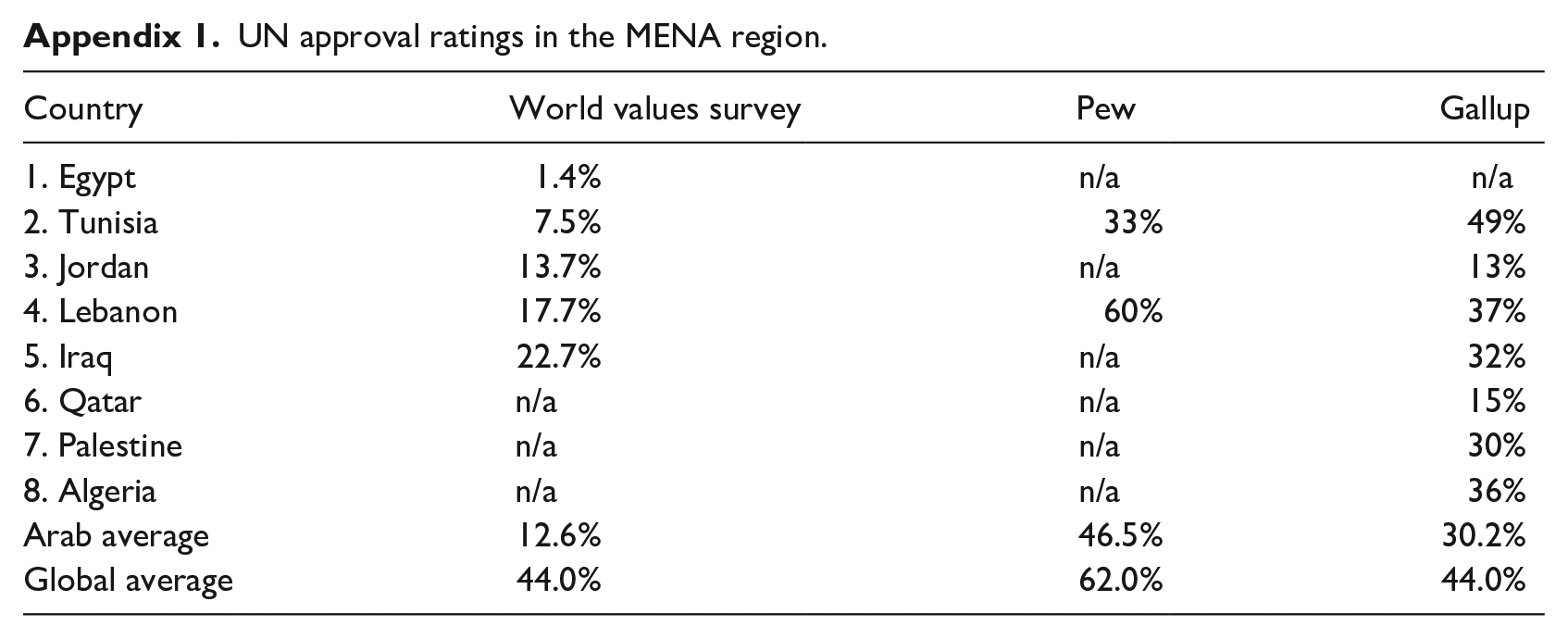
According to Gallup data, 5 residents of Arab countries hold particularly low UN approval ratings (e.g. Qatar—15%, Jordan—13%, Palestine—30%, Iraq—32%, and Lebanon—37%), compared with a global average of 44%, occupying a significant portion of the 20 states where UN disapproval ratings are higher than approval ratings. Recent Pew polls 6 reveal low UN favorability numbers in Tunisia (33%), and the current World Values Survey data (Inglehart et al., 2020) tell a similar story: The number of respondents who expressed confidence in the UN was extremely low in Egypt (1.4%), Tunisia (7.5%), Jordan (13.7%), Lebanon (17.7%), and Iraq (22.7%), compared with a 44% global average. This stands in stark contrast with high UN approval ratings in other African countries (e.g. Sierra Leone, 86%; Mozambique, 82%; Uganda, 81%; Malawi, 81%; and others), stemming from substantial UN development aid and involvement in peacekeeping operations—driving long-term positive sentiment.
This paper argues that the extraordinary dimensions of the Covid-19 crisis created an unusual opportunity for the UN to bolster its organizational reputation in this region, harnessing its diverse mechanisms of humanitarian aid. International organizations (IOs) dedicate a great deal of effort to maintain a decent reputation among the general public (Barnett and Finnemore, 1999; Daugirdas, 2019; Johnstone, 2010; Sharman, 2007). For the UN, this task has been particularly challenging in light of a long-standing negative public perception across the MENA region, which is rooted in deep distrust of the West and the democratic institutions associated with it (Isani, 2018; Pinfari, 2012; Rubin, 2003). We hypothesize that because of the severity of the present crisis and the visibility of multilateral aid in this regard, the UN’s efforts during the crisis are not expected to go unnoticed across the MENA region, and will prove effective in improving the organization’s reputation (defined as a long-term favorable judgment and positive perception) in these countries.
To support this argument, we harness insights from an original two-stage Arab-language public opinion poll, conducted in October 2020 and May 2021 among 667 social media users in Syria, Sudan, and Yemen—the states that received the highest aid allocations from the special Covid-19 fund. Access to reliable data in these countries is extremely rare and difficult, given their conflict-prone environments, poor infrastructure, and language barriers—all challenging hurdles this research attends to by focusing on those approachable for an online survey—young, urban, and web-savvy. We adopt a two-phase survey structure to improve our ability to accurately assess the shift in opinion over a considerable period of time in the span of the crisis, as we frame our hypothesis dynamically (i.e. an expectation to observe change over time). The results corroborate our expectations for long-term improvement in the UN’s perception among our survey population as a result of its robust role in humanitarian aid throughout the crisis. We untangle this multifaceted picture, and believe it makes a real contribution to the definition and understanding of the concept of IO reputation, to the nature of the relationship between UN humanitarian aid and its reputation in the MENA region.
The paper is structured as follows: The first section surveys the roots and causes of the problematic image of the UN across the MENA region, while the second section outlines the literature on the reputational considerations IOs apply in their policymaking. Subsequently, the third section provides an account of the resources that the UN has been investing in boosting their reputation, and the fourth section reviews the organization’s emergency humanitarian aid scheme throughout the Covid-19 crisis. Then, the paper outlines the survey model and details its design, offering a discussion of the results, followed by an analytical account of the implications for the concept of IO reputation. The final section concludes and provides policy recommendations.
Arab perception of the UN—a representative of a Western-led global order?
UN reputation building has been particularly challenging across the MENA region. This notion rests on complex historical and traditional/cultural adverse perceptions of the West and the political institutions associated with it, most notably the UN. The roots of this long-standing distrust are entrenched in the modern history of the Middle East, which has been in the center of an ideational clash with the West since 1798—a collision between different cultures, domestic customs, and traditions (Pinfari, 2012). Through the 19th century, the Arab-Muslim society struggled with Western influence and involvement in daily life, peaking with the 1916 Sykes–Picot agreement that triggered more suspicion and framed the West as imperialist and colonialist.
Western involvement in various Arab regimes across the Middle East continued after these entities became independent states (e.g. the UK in Iraq and Jordan), with strong colonial presence in mainstream Arab politics up until the late 1950s. Another source of Middle Eastern suspicion toward the West lies with traditional US foreign policy in the region, as exemplified by the American role in the 1953 overthrowing of the Iranian Prime Minister Muhammad Mossadegh (Rubin, 2003) and US ties with the Shah regime. Later, the US-led military operation Desert Storm (in retaliation for Iraq’s invasion of Kuwait in 1991), that tore the Arab world apart (Ismael and Ismael, 1993: 3), with its role in Iraq, and then in Libya, ended with the toppling of more Arab strongmen—Saddam Hussein and Moammar Qadhafi.
In the perception of Arab World leaders and residents, the UN itself was said to function as a representative of the Western-led liberal order (Isani, 2018; Isani and Schlipphak, 2020), and sometimes even embody modern-day colonialism. According to Makdisi and Prashad (2017), “in the Arab world, the UN was seen increasingly as a hostile entity, who’s political, security, and development agendas represented Western interests” (pp. 10–11). Along these lines, a comprehensive survey conducted by the Chicago Council on Global Affairs in 2008 across the Muslim world has shown significant support for the view that the UN is dominated by the United States. Specifically, 68% of Egyptians, 63% of Palestinians, 59% of Jordanians, and 53% of Turks endorsed this notion. 7 Dr Nabil Kukali, the Palestinian pollster who conducted the survey in the West Bank and Gaza Strip, said that “. . . these results reflect the widespread view among Palestinians that the UN is largely an instrument of US policy.” 8 Indeed, the United States accounts for about 22% of the organization’s regular operating budget (while Russia, for instance, accounts for 2% and India for less than 1%). This notion is translated into IO decision-making prioritization, especially when matters concerning the core policy interests are at stake. 9 In a notable recent example, in 2018, the United States halted funding of US$65 million to UNRWA—the UN Relief and Works Agency assisting Palestinian refugees—requiring a thorough re-examination of its operations and finances. 10 As US administrations shifted, in April 2021, the United States announced the restoration of aid to the agency, as well as a new donation of 150 million dollars. 11
Subscribing to this notion, Isani (2018) demonstrates that the population in the Middle East sees the UN as a US-led agent, translating to a particularly unfavorable opinion of the organization in matters related to peace and security, albeit slightly more accommodating toward the humanitarian aspect of its work. In a recent work, Isani and Schlipphak (2020) further depict how domestic anti-Americanism signaling by Arab regimes significantly affects the formation of public opinion toward the UN.
A current example from one of our survey countries, Yemen, includes a statement by a senior member of the Houthi Supreme Political Council in Sanaa, Mohammed al-Houthi, who said in July 2020 that “aid agencies . . . are following political orders from U.S authorities.” 12 A similar sentiment has been attributed to Hamas by the UN Deputy Secretary General—“. . . groups like Hamas have come to see the UN as an arm of their Western enemies” (Malloch-Brown, 2011: 75). Taking these numerous grievances into account—the skeptical, suspicious, and distrustful public sentiment toward the UN as a flagship representative of the Western-led global order—it becomes feasible to comprehend the inherent disbelief that the organization will be able to drastically change its standards in the long haul. Moreover, the UN’s current membership is split between democratic and autocratic regimes, composing of 89 democracies (liberal democracies and electoral autocracies) and 88 autocracies (closed autocracies and electoral autocracies). 13 Of these, the MENA regions is overwhelmingly composed of autocratic regimes, and hence constantly perceived as being “on the wrong side” of Western hegemony.
While the UN General Assembly provides an invaluable stage for third-world countries to debate and advance their agendas, the organization’s core decision-making body—the Security Council—remains at the helm of the great powers, as the United States, United Kingdom, and France (but also Russia and China) are still able to steer fundamental global problems in their direction. In the eyes of MENA states, this is particularly true with regard to the Israeli–Palestinian conflict, but also considering other matters involving Muslims throughout the world—for example, vis-à-vis the controversial Chinese treatment of the Muslim Uyghur minority group. The decade before the eruption of Covid-19 also saw vast Western involvement in the region, under the framework of the widespread internal turmoil in several Arab states, known as the “Arab Spring.” This series of mass anti-regime uprisings initiated in Tunisia in late 2010, protesting corruption and stagnating economy, had ultimately gained momentum across the region, where several long-reigning rulers were ousted (including Tunisia, Egypt, Yemen, and Libya). As these dramatic events unfolded, core Western powers became profoundly involved in the upheavals, in an attempt to promote democratization and regime change in countries where rulers were perceived as predominantly anti-Western. Most notably, as mass demonstrations had spread across Libya—ruled for decades by Muammar Gaddafi—the UN Security Council adopted resolution 1973 in March 2011, imposing a no-fly zone over the country. This resolution was followed by a large-scale military intervention against pro-regime forces by a 30-state coalition led by the United States, United Kingdom, and France. By August 2011, rebel forces were able to capture Tripoli, effectively terminating Gaddafi’s 42-year reign. Naturally, as the pandemic reached the region in early 2020, the events of the Arab Spring and the UN’s involvement were still fresh in public collective memory, influencing civilian views on all Covid-19-related measures. Furthermore, the US army and intelligence community played an active role during the Syrian civil war, and maintained certain involvement in Sudanese politics, as Washington was particularly hesitant to remove Sudan from the US State Sponsors of Terrorism (SST) list.
Reputation as a key tenet for IOs
IOs heavily rely on their organizational reputation—a set of beliefs about an organization’s capabilities, history, mission and intentions (Carpenter, 2014: 45), and enduring characteristics (Mercer, 2010: 16)—and attempt to obtain and sustain a steadfast reputation for a myriad of reasons. This definition implies the centrality of perception and subjective belief in evaluating the notion of IO reputation, as various audiences may interpret it differently, but eventually apply their individual view to accomplish the same task—predict the future behavior of actors (Lupton, 2020; Miller, 2003). Maor and Wæraas (2015) distinguish between three strands of organizational reputation approaches: the economic school of thought highlights the value of organizational signals/actions in boosting reputation among stakeholders; constructivists attribute a key role to social interactions that shape the perception of reputation; and the institutional perspective highlights the information-sharing capabilities of these organizations as means to advance their relative position. All approaches, however, share the understanding that organizational reputation can be either “won” or “lost,” and entails a variety of audiences, such as—in the case of IOs—member states, other IOs, and the general public, whether local or global (Klotz, 1999: 27–28). This broad understanding of IO reputation implies that there may exist several different forms of subsets of reputations at the same time, with regard to various aspects of IO behavior (e.g. effectiveness, credibility, and integrity). These eventually amount to the framing and construction of a singular narrative of a subjective computable assessment of the actor coupled with a prediction about its future behavior—a notion that is of immense importance to other ideas central to International Relations (IR) theory such as legitimacy and status.
A successful “track record” (i.e. organizational professionalism) is crucial to build reputation and institutional power for new IOs (Hurd, 2008: 174), and is generally more likely to attract states to delegate more resources and responsibilities to that IO (Daugirdas, 2019). A good reputation for professionalism is also important to persuade states to invest funds multilaterally rather than bilaterally (McLean, 2015), supporting the emergence of new issue areas of responsibility for existing and evolving IOs. The validation derived from a reputation of professionalism can also be framed and leveraged to attain a position of authority in international politics, as demonstrated by the Organisation for Economic Co-operation and Development (OECD)—which has become authoritative enough to gain a sphere of influence outside its original bureaucratic capacity (Sharman, 2007).
IOs can also possess a strong reputation on account of their efficacy and morality, as well as responsiveness to their member states and even to the general public (Daugirdas, 2019; Schneider, 2020). Other reasons IOs pursue reputation may include values and principles that seem appealing to certain member states, and eventually translate into bureaucratic gains and further delegation—especially among those that are ideologically motivated and perceive certain IOs to represent a normative world order (e.g. the International Criminal Court (ICC)). IOs pay close attention to their public image, rendering their reputation crucial in maintaining global attractiveness and socializing their policy interests (Hurd, 2005). A positive public perception allows IOs to gain the popular support required to drive member states into new policies or reforms, following the logic of two-level games (Putnam, 1988), such as substantial EU reforms that require unanimous popular vote ratification in all member states. Alternatively, a negative public perception can discourage states from gaining membership in certain IOs (e.g. the United States and the ICC) or, instead, drive them to withdraw their membership.
To remain reputable, IOs invest in community outreach and public relations schemes, to help brand their policy recommendations as trustworthy (Thompson, 2006). In times of crisis, these recommendations can become disputed, as exemplified by the American public opinion of the WHO during Covid-19, which sharply dropped from a 54% approval rating in early April 2020 to 25% by the end of that month. 14
Hence, we maintain that this concept of IO reputation consists of the ability of the observer to both explain an actor’s behavior in dispositional terms and predict a similar pattern of behavior for the long run (Mercer, 2010: 6). By that, this notion is ultimately different from the IO’s perceived legitimacy—“a belief that the IO’s authority is appropriately exercised” (Tallberg and Zürn, 2019) or “ought to be obeyed” (Hurd, 2008: 7). This perception often shaped the quality and functionality of bureaucratic mechanisms (Anderson et al., 2019) and may be detached from the crucial component of long-term evaluation and foresight.
Other than IR literature, this conceptualization of IO reputation also builds on the theoretical tenets of management studies that have widely regarded organizational reputation as a construct that involves long-term grounding. Lange et al. (2011) view the pillars of organizational reputation as a combination between good acquittance with its mission and structure, and the existence of clear future expectations about its overall conduct. These prospects are socially constructed, as different audiences may inversely perceive desirable organizational outcomes, but the various sets of expectations rest on shared knowledge of organizational past performance (Deutsch and Ross, 2003). According to this approach, perception of past outcomes eventually amounts to signals for future performance (Ravasi et al., 2018), or rather a “representation of past actions and future prospects” (Fombrun, 1996). For the public perception of IO reputation, this would entail a well-established view of the IO’s character, and a conviction that it would be taking the same path in the future. Therefore, our main hypothesis is as follows:
Over the course of the UN’s history, the organization has been struggling to advance itself—and thereby, global public opinion of it—in the “cosmopolitan” direction, still preserving substantial identification with the nation-state (Norris, 2009). Public opinion of the UN has, however, tended to shift in response to dramatic events, such as the 2008 global financial crisis (Arpino and Obydenkova, 2020) or other domestic economic downturns—a notion that coincides with the Covid-19 crisis. But the public’s backing of domestic measures does not necessarily contradict its support for IOs; rather, it constitutes an extension of it. This notion is corroborated by Dellmuth and Tallberg (2015), who showed that popular confidence in the UN has been shaped by its perceived performance and “confidence extrapolation”—which is influenced by trust in domestic institutions.
Organizational reputation has been an important tenet for the UN system as a whole. Daugirdas (2014) showed that the UN has been gravely concerned about its reputation since the cholera eruption in Haiti in 2010—widely believed to be imported and enhanced by UN peacekeepers from Nepal, and has been willing to take action to defend its reputation. The unease with organizational reputation represents a core tenet of the UN and IOs in general as strategic actors interested in preserving their standing among various stakeholders. The UN is the largest multilateral network of affiliated organizations, employing nearly 37,000 people in 193 locations, with an array of global offices and massive bureaucratic structure. Hence, reputational concerns are particularly important for IOs, as they may prove imperative for long-term survival. IOs that experience extreme internal instability may eventually dissolve or cease to operate properly (Gray, 2018), with their resources slowly cut back by the member states until they have become unviable.
The UN emergency aid allocations during Covid-19—an opportunity for reputational gains?
In the past, the reality of preferential UN aid allocation to the MENA region did not translate into reputational gains for the organization (see Appendix 1). However, the developing Covid-19 crisis provided a unique opportunity for the organization to build on its role as the most dominant humanitarian aid actor across the MENA region, to empower its organizational image. The surprising proportions of Covid-19 were so overwhelming that the UN quickly and efficiently set in motion a dedicated pooled humanitarian aid mechanism, composed of CERF and CBPF special response funding. Pertaining to the formation of this mechanism, a UN humanitarian officer (JB, interviewed on 23 September 2020), noted the following: Because Covid-19 was unique and we wanted to give the money quickly, in the interest of speed, we gave it (state donations provided—the authors) directly to the UN agencies and then they prioritized to it to countries.
The exceptionality of this funding scheme is in line with the view that Covid-19 constitutes a watershed moment in many societal, economic, cultural, and political realms, affecting nearly every aspect of life. In the sphere of global affairs, prominent scholars weighted the numerous consequences the pandemic may have, among other topics, on international order (Barnett, 2020; Drezner, 2020), international cooperation and crisis management (Lipscy, 2020; Pevehouse, 2020), the implications for armed conflict (Benziman, 2020; Ide, 2021), and the competition between the United States and China (Smith and Fallon, 2020; Wang and Sun, 2021). This scope of systemic change arguably affected the UN’s willingness to harness its vast organizational and institutional capacities to deliver a significant aid package quickly.
In terms of the mechanism employed, after prioritization by CERF/CBPF, funds were disbursed directly to the recipient countries (or agencies within those countries), with the help of the local UN Resident Coordinator (RC) or Humanitarian Coordinator (HC), where available, and under the general supervision and approval of the UN Emergency Relief Coordinator (ERC)—who reports directly to the UN Secretary General. The MENA region occupies the lion’s share of allocations in the CERF and CBPF special response funding to the Covid-19 crisis (47.5% of US$490 million, amounting to US$212 million). 15 As exemplified by Table 1, the Arab MENA states attracted more funds on average than African states, even though they were overall better positioned than their African peers to deal with the crisis, and in terms of their internal political and social cohesion. Within the MENA region, WHO East Mediterranean Regional Director, Dr Ahmed Al-Mandhari, classified Syria and Yemen as high-risk countries for the purpose of coronavirus aid distribution (April 2020), attributing this classification to “political fragmentation, resulting in limited humanitarian access.” 16 Other UN communications urged donors to increase aid pledges to Yemen (“. . . We urge all donors to honor their pledges and increase their support for Yemen before it’s too late”), reiterating that despite the limited resources, the organization is “eager to scale up life-saving work across Yemen . . . including food assistance, nutrition, water, sanitation and hygiene, health, livelihoods and protection assistance.” 17 And indeed, the UN takes pride in its essential involvement in these countries throughout the crisis via key core UN specialized agencies such as the WHO and UNOCHA, but also with the help of smaller UN-affiliated entities like the United Nations Population Fund (UNFPA) 18 and the UN International Organization for Migration (IOM). 19 The spirit of this effort was expressed as early as May 2020, when a UN communication specified that “the UN and humanitarian partners in Yemen are responding to the virus with a focus on case management, risk communications, community engagement and protecting the wider public health system.” 20
Top-10 receivers of Covid-19 emergency funding (MENA/Africa), CERF and CBPF.
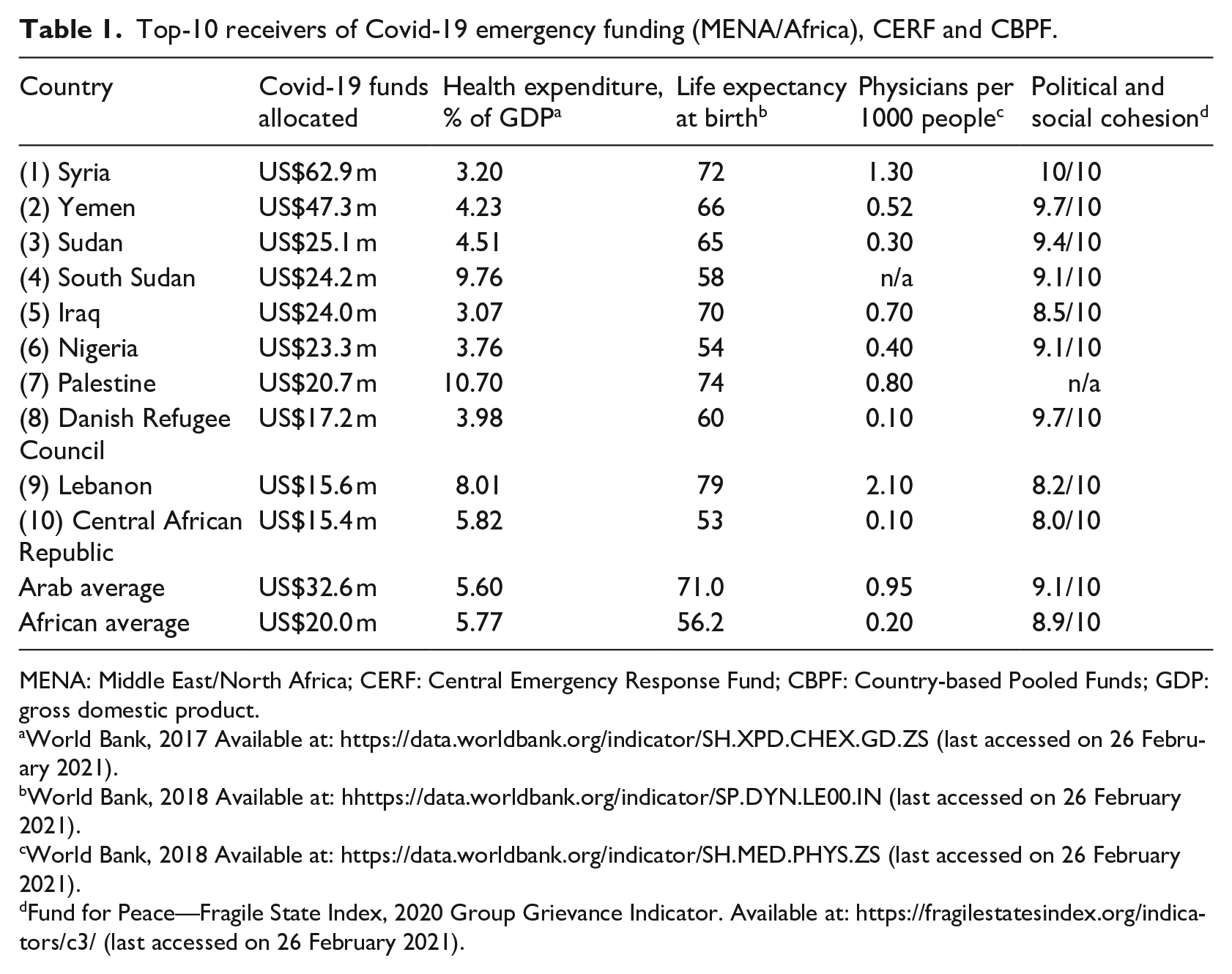
MENA: Middle East/North Africa; CERF: Central Emergency Response Fund; CBPF: Country-based Pooled Funds; GDP: gross domestic product.
World Bank, 2017 Available at: https://data.worldbank.org/indicator/SH.XPD.CHEX.GD.ZS (last accessed on 26 February 2021).
World Bank, 2018 Available at: hhttps://data.worldbank.org/indicator/SP.DYN.LE00.IN (last accessed on 26 February 2021).
World Bank, 2018 Available at: https://data.worldbank.org/indicator/SH.MED.PHYS.ZS (last accessed on 26 February 2021).
Fund for Peace—Fragile State Index, 2020 Group Grievance Indicator. Available at: https://fragilestatesindex.org/indicators/c3/ (last accessed on 26 February 2021).
A two-phase public opinion survey evaluating the effect of UN Covid-19 aid—methodology, design, and results
To assess the effect that UN Covid-19 aid has had on the organization’s reputation in the Arab World, we performed an original two-phased online structured survey among social media users in the three MENA states that received the highest amounts of CBPF and CERF joint funds—Syria, Sudan, and Yemen. 21 Given their unique conflict-prone environments and challenging living conditions, reliable survey data in these states is particularly difficult to attain, underlying the innovative nature of this endeavor. We attend to the accessibility challenge by focusing on those members of the public approachable for an online survey—young, urban, and web-savvy. Integrating original survey data from these countries in an independent IR context—despite existing limitations—is immensely valuable to advance our knowledge about how IO perceptions are being shaped in these states.
We included the top-three aid recipient countries in this analysis (rather than one state alone) to reduce the potential for contextual country-specific biases. This choice of countries also decreases the risk of geographical biases, as they significantly vary in their positioning across the MENA region (Africa, East Mediterranean, and Southern Arab Peninsula). These countries also differ in their Internet penetration rate, according to Word Bank data. 22 And indeed, demographically, survey respondents were mostly young (55% below 35 years), mostly identified as female—64%, and typically urban. In lieu of tangible accessibility to all population segments in the countries, the surveys were not designed as representative samples, but rather as an estimation of the views of social media users, who are typically young, urban, and web-savvy. While this framing limits our ability to offer a fully representative sample of the entire population, we find these respondent profiles better positioned to be well educated and hold relevant knowledge of concurrent events, and a realistic representation of the empirical value of our results. According to World Bank and UN Population Fund (UNPFA) data, urban population in these three countries averages at 42.8% and the share of population younger than 25 years averages at 63.1%. 23 This is a particularly interesting group to examine, as these individuals are more likely to occupy national leadership roles and take part in shaping public opinion in their respective countries compared to their rural, senior counterparts without Internet access.
We constructed country-specific online survey platforms via SurveyMonkey, 24 and communicated with social media users in these states via promoted Twitter and Facebook posts, as well as by direct sharing survey on popular online news outlets (all using an in-house designated Arabic-savvy team). This self-sustained approach averts possible errors that may occur when relying on survey companies, especially in the MENA region, where socio-political expertise and adequate cultural-linguistic skills are particularly valuable. Our online strategy also helps avoid possible social desirability biases (pleasing the interviewer) that are typical of face-to-face interviews. None of the respondents received monetary or other compensation, relaxing concerns over illicit external motives.
The first survey took place in the span of 20 days, between 12 October 2020 and 2 November 2020, yielding a total of 378 responses: 154 from Syria, 126 from Sudan, 58 from Yemen, and additional 40 responses from Libyan participants. 25 The respondents accessed the questionnaire via a designated URL link, which guaranteed that every unique user (i.e. a geo-verified IP address) was only allowed to fill out the questionnaire a single time. Completion time was 92 seconds on average (~1.5 minutes), ranging from 53 to 143 seconds (~2.5 minutes), and the most significant portion of responses was recorded on Fridays—the weekly vacation day in the Muslim tradition.
All questions were posed in Arabic (translations into English are ours, brought here for reference), aimed at accounting for the empirical components of organizational reputation (Mercer, 2010)—that is, (a) an established view of the IO’s actions and (b) a conviction that it would keep pursuing a similar behavior. The questionnaire was preceded by a foreword, to explain the purpose of the project. 26
The respondents were then asked a series of questions, requested to rate their levels of agreement on a 5-point Likert-type scale based on distinctions between positive–negative opinion, and were given the following choices: strongly to the positive (5), positively (4), neutral (3), negatively (2), and strongly to the negative (1). Another option was—I do not know. This series was phrased in the following manner:
[Q1] Does the UN role in [country X] during Covid-19 (including financial aid) affect your position with regard to the organization and its activities? 27
A second question directly pertained to the long-term component, that is, the conviction that the UN would keep pursuing a similar behavior vis-à-vis the respondent’s country. This question was presented as a simple yes/no question (with an “I don’t know” option in place, as well):
[Q2] Does the UN role in [country X] during Covid-19 (including financial aid) constitute a long-term change in its policy toward X? 28
We particularly highlight the financial aspect (but do not limit the responders to it), as it is the most visible component of the UN’s work on the ground and in the local traditional and social media platforms. All noticeable Covid-19-related projects (e.g. field hospitals; testing equipment; provision of food, water, and supplies) are paid for by the UN and can be generally interpreted as financial aid. The results of the first phase highlight the strong effect UN aid had had on the organization’s favorability in the region (see Figure 1).
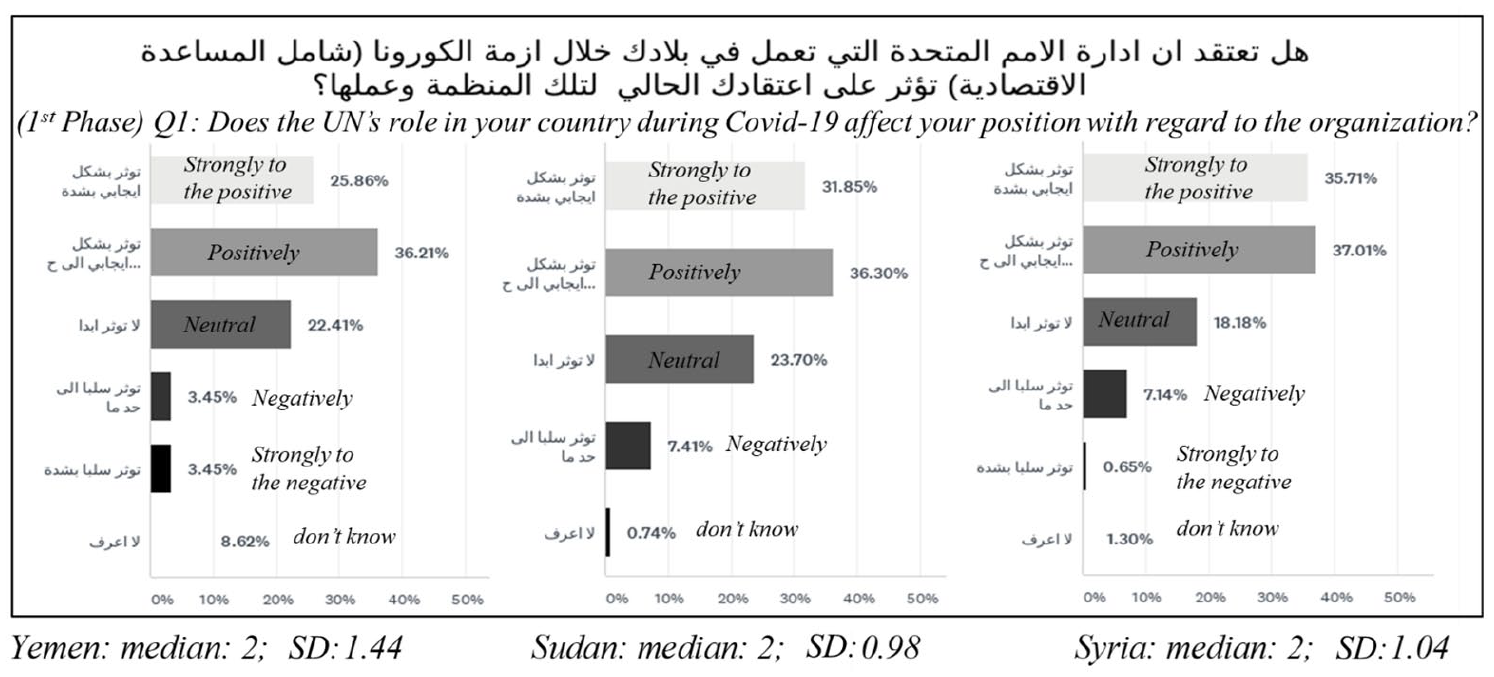
Phase 1 responses to Q1 (UN role during Covid-19) (left: Yemen; center: Sudan; right: Syria).
However, respondents in all countries strongly believed that the UN’s Covid-19 policies will not have a long-lasting effect on the organization’s approach to their countries (Q2—see Figure 2). A lasting perception of long-term effect is crucial for to the chances of translating the positive opinion toward the UN’s Covid-19 policy into enduring reputational gains.
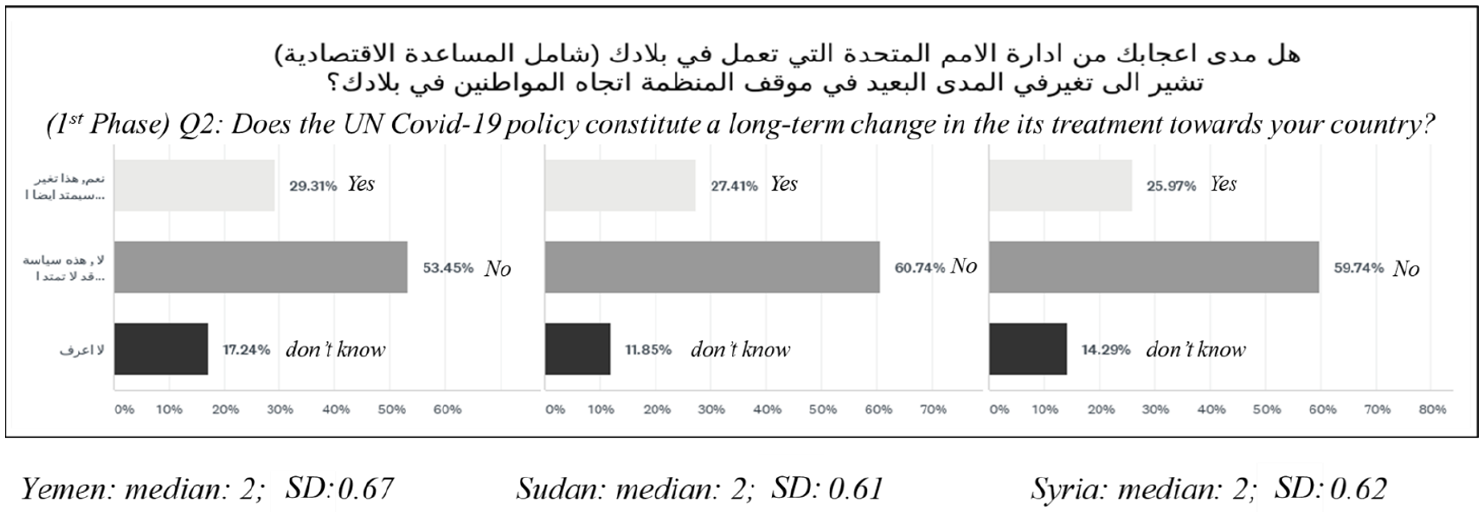
Phase 1 responses to Q2 (long-term effect of UN policy) (left: Yemen; center: Sudan; Right: Syria).
The second survey also took place in the span of 20 days, between 30 April 2021 and 20 May 2021 (approximately 6 months after the first survey), yielding a similar sum of nearly 300 respondents: 132 from Syria, 93 from Sudan, and 64 from Yemen. All technical specifications were designed in the exact same way as the first phase survey (access via designated URLs; communicated via promoted social media posts and by direct sharing on popular news outlets), with similar completion times, ranging from 46 to 161 seconds, with an average of 84 seconds (~1.4 minutes). 29
Our question structure for the second survey repeated the first phase, with one slight modification—before introducing Q1 (“Does UN aid affect one’s view of the organization”), we included a preface contextualizing the timeline of the Covid-19 crisis—“Roughly one year since the Coronavirus crisis erupted,” 30 directly followed by Q1’s original wording. Q2 (“Does UN aid reflect a long-term organizational change?”) remained in its previous form. Similar to the first survey, respondents during the second wave were typically young (a majority younger than 35 years) and urban, with a larger shares of those who identified as female (65%). The consistency of the sample structure across the two rounds indicates the likelihood of a fairly stable population of respondents. 31
The results of the second phase corroborate the strong effect of UN aid on the organization’s favorability in the region (Q1, see Figure 3), with around 76% of respondents attributing a positive or strongly positive role to its Covid-19 aid—a very similar number to the first phase of the survey (approximately 74%). But remarkably, respondents in all three countries have significantly altered their perception as to the question of whether the UN’s Covid-19 policies shall have a long-lasting effect on the organization’s approach to their countries—with as much as 74% affirmative responses, compared with only 28% in the first lag—a significant rise in long-haul confidence (Q2, see Figure 4). We attribute this improvement to the effect of a sustained humanitarian effort by the UN, visible for over a year, which has driven the respondents to perceive the change as ongoing, stable, and promising in the long term. Hence, we interpret the rise in long-term confidence as a signal for the widespread acknowledgment of the enduring effort, mostly reflecting their low expectations at the eve of the crisis in early 2020.
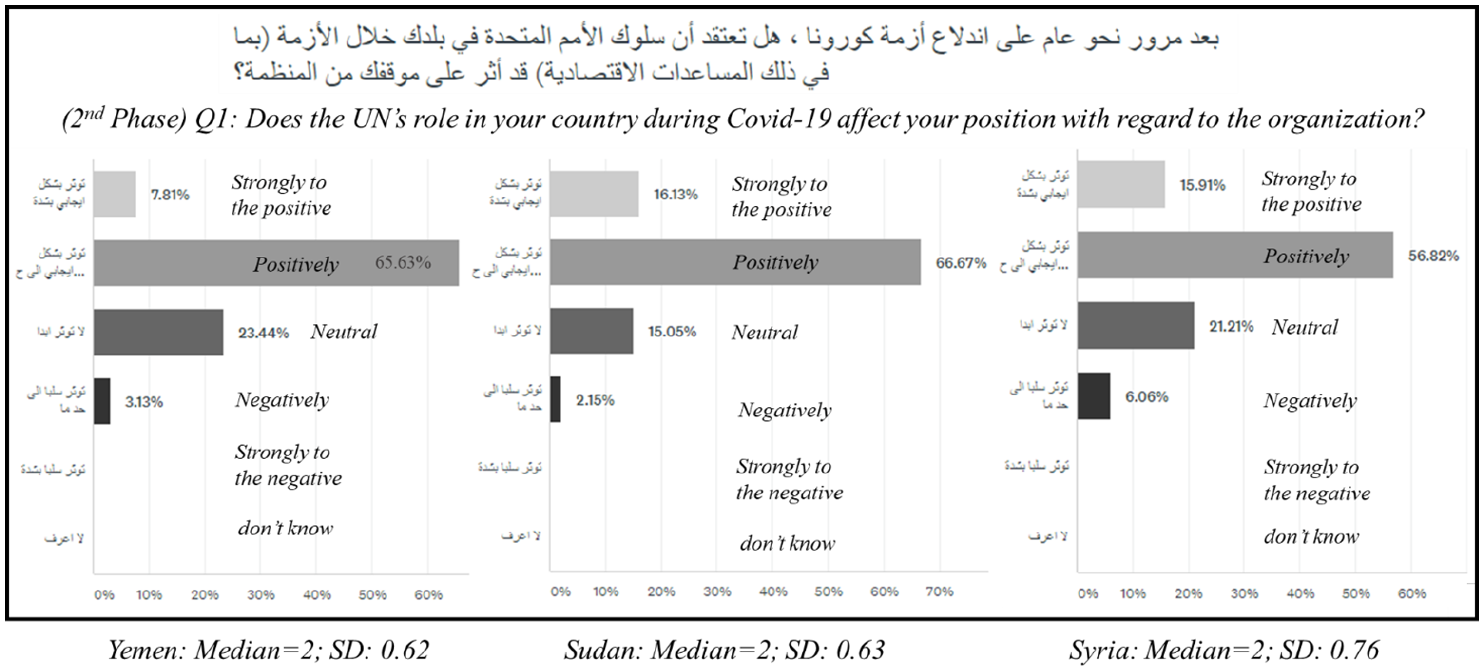
Phase 2 responses to Q1 (UN role during Covid-19) (left: Yemen; center: Sudan; right: Syria).
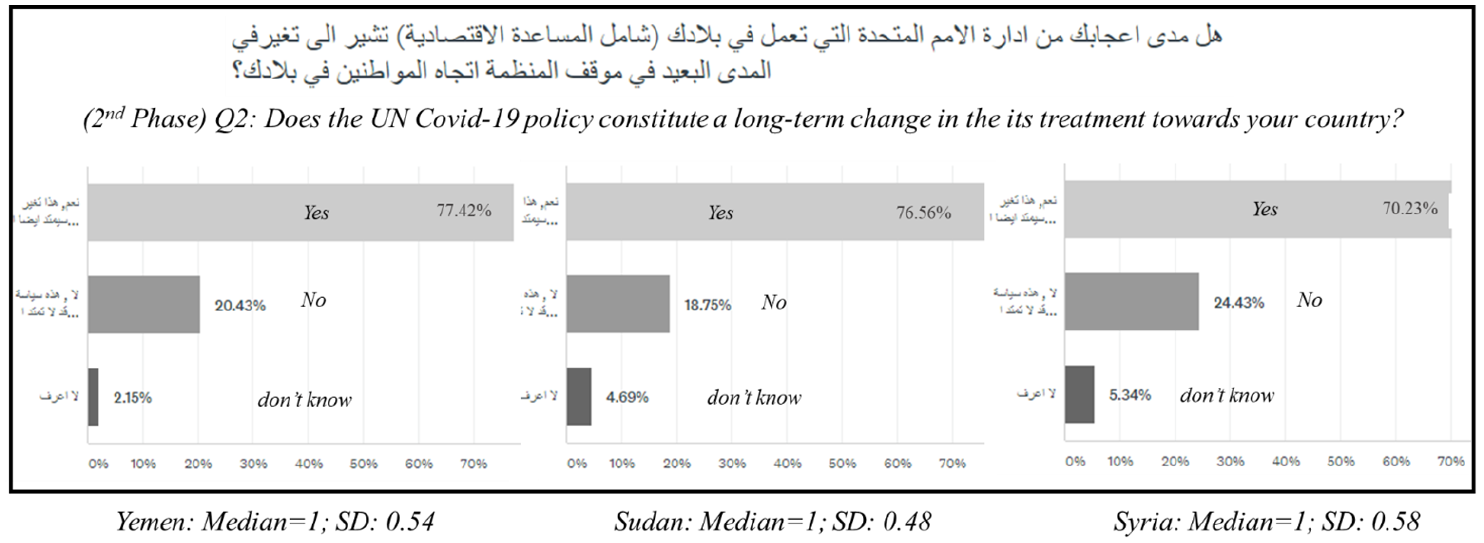
Phase 2 responses to Q2 (long-term effect of UN policy) (left: Yemen; center: Sudan; Right: Syria).
Figure 5 presents the integrated response trend for all 667 participants (from Syria, Yemen, and Sudan) across both surveys.
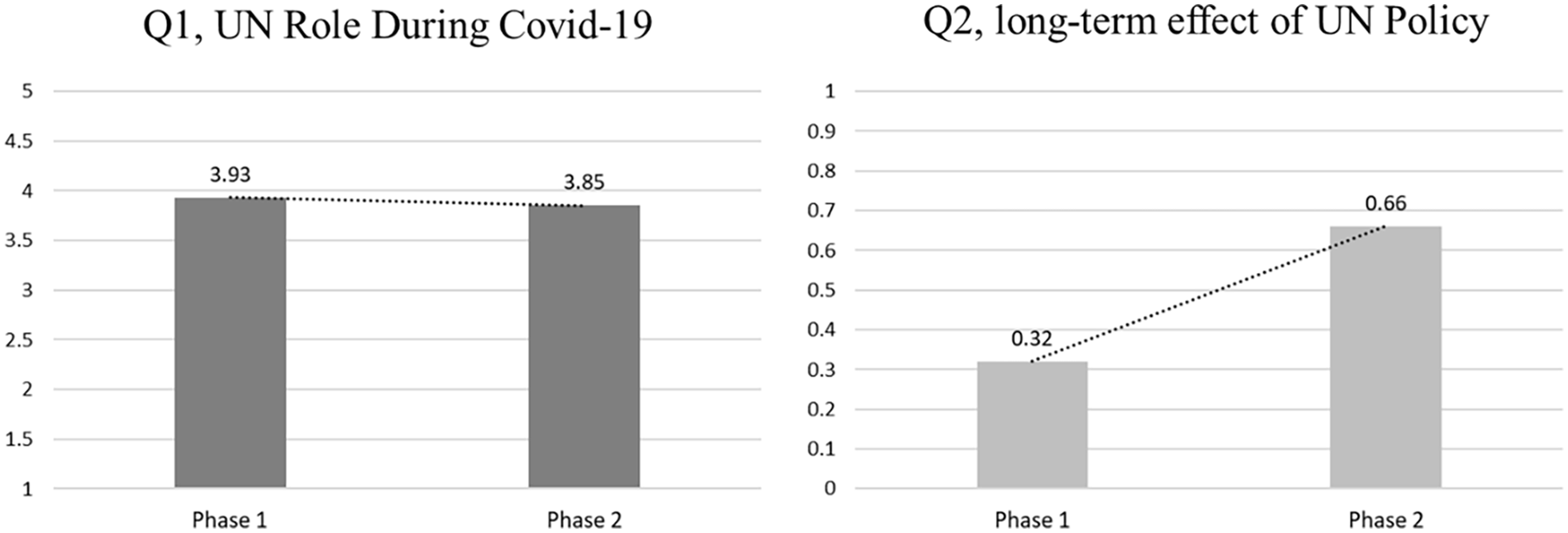
Integrated 667 responses (Syria, Yemen, and Sudan), Q1 and Q2, first and second phase.
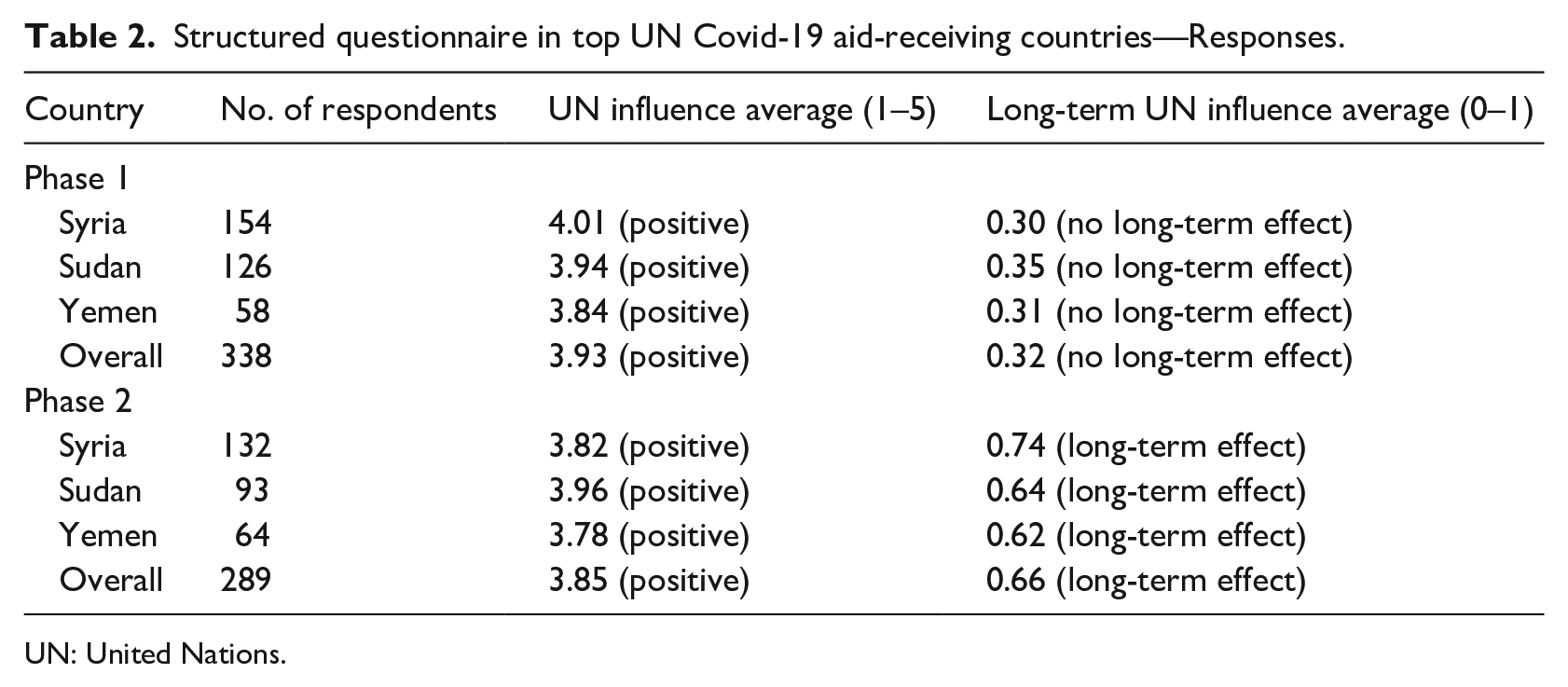
Table 2 summarizes the full range of responses throughout both phases of the survey, highlighting the similarity among respondents in all three countries vis-à-vis Q1, and the extensive surge in long-term confidence of the UN in Q2 as a function of time passed (October 2020 to May 2021).
Structured questionnaire in top UN Covid-19 aid-receiving countries—Responses.
UN: United Nations.
Discussion—winning reputational gains?
Evaluating the findings of the two surveys, the first remarkable outcome is the prominence of persistently strong positive views of UN Covid-19 aid (Q1) over the course of both surveys (74%–76%). This favorable view of multilateral aid, as expressed by respondents from all three states, may constitute a signal of frustration from local governments, given the continued challenges in providing healthcare facilities and infrastructure to cope with regular health provisions, let alone in cases of once in century global emergencies. Suffice to mention several examples for the narrative of domestic failure and dysfunction from the three states we investigate. In Sudan, comments made by the Minister of health, Akram Ali Al-Tum, who declared in May 2020 that Covid-19 was in fact “a mental illness” and called the public to avoid social distancing, drove extreme dissatisfaction and upheaval on social media and among local civil society organizations. 32 In Syria, a non-governmental organization (NGO) named “Physicians for Human Rights” indicated, in a January 2021 report, that the Syrian government has been heavily criticized for its inadequate response to the spread of the disease and for suppressing information regarding infection rates, with an emphasis on the lack of transparency and accountability. 33 In Yemen, the authorities have been accused of failing to comprehend the full scale of the pandemic, placing bureaucratic obstacles, hampering medical institutions’ ability to cope with the crisis. 34
Under these circumstances, humanitarian aid was enormously welcomed, as indicated by the responses. This notion is also in line with various existing development indices, such as the governance section of the Bertelsman Transformation Index (BTI), that examines the quality of political management in terms of several components, and places Yemen, Sudan, and Syria at the bottom of its 137-country ranking (132, 133, and 136, respectively), with scores ranging between 1.2 and 1.6 of 8.0 possible points. 35 This reality has spurred a long-lasting reliance on multilateral and bilateral humanitarian donations, cementing the centrality of day-to-day survival considerations.
But while respondents in our survey states overwhelmingly recognized the sheer importance of multilateral aid, translating this notion into IO reputational gains requires the component of long-term persuasion in the organization’s policy continuance or change. What drove the surge in the prospects for long-term faith and trust in the UN’s actions, from 28% on average in the first lag of the survey to 74% in the second phase? Primarily, we attribute this improvement to the effect of a sustained humanitarian effort by the UN, visible for over a year, which has driven the respondents to perceive the change as ongoing, stable, and promising in the long term. This notion was exacerbated by the exceptional scale of the crisis, and its potential to constitute a “game changer” in terms of the likelihood for UN reputational gains in the MENA region, despite historic grievances. Unlike “regular” aid campaigns, Covid-19 presented a unique opportunity for extensive and immediate impact in the region, as survival considerations have significantly intensified, and other forms of humanitarian aid became scarce, enhancing the visibility of UN aid.
Discussing how Covid-19 exacerbated the humanitarian situation in our survey countries, suffice to mention that acute food insecurity (famine or emergency/critical malnutrition risk) in Yemen has increased from 239,000 people in early 2019 to as much as 13.4 million in December 2020—more than half of the population, according to the The Integrated Food Security Phase Classification (IPC) Acute Food Insecurity classification, 36 citing worsening conflict conditions, unraveled economy, and decrease in aid. This figure further deteriorated to 17.3 million in February 2022—a staggering 55% of the population. According to an OCHA Humanitarian Needs Overview report (February 2021), 37 the dire situation in Yemen has been “exacerbated by . . . COVID-19, which led to a sharp drop in remittances . . . a lifeline for many families where 80% of people live below the poverty line.” An April 2022, assessment of the situation in Yemen continues this trend: “COVID-19 remains a serious health threat in Yemen . . . while measures introduced to mitigate the spread of the pandemic have caused interruptions to various vital services, including for nutrition, protection and education.” 38 Sudan and Syria saw similar trends, for example, doubling of food commodity prices in Syria between June 2019 and June 2020, 39 and a widening gap between humanitarian funding needs in Sudan and funds availability, coupled with a tripling of food commodity prices. 40 A different OCHA Humanitarian Needs Overview report for Syria (March 2021) 41 testified that the pandemic “has accelerated the economic downturn by further reducing already sparse income-generating opportunities . . . [and] impacted an already debilitated health system.” A July 2022 assessment of the World Food Programme estimated that over 12 million people in the country are facing acute food insecurity, nearly 65% of its overall population. 42 In the context of Sudan, OCHA’s country report identified widespread effects (December 2020), and particularly a “low capacity of the health system and testing in peripheral states.” 43 A September 2022 overview by UNOCHA warned of a “deepening hunger crisis, leaving families struggling to afford basic food commodities.” 44 In our view, these circumstances served as a catalyzing factor for the shift in long-term trust and perception of the organization’s future prospects vis-à-vis these countries, demonstrating that while “old habits die hard,” in times of exceptional circumstances, visibility and a genuine effort can drive an unexpected outcome.
Conclusion
IOs invest in bolstering their reputation, vital to attract states to delegate more resources and responsibilities to these IOs and to opt for multilateral collective problem-solving. An important tenet of IO reputation lies in the organization’s public image, as positive public perceptions often steer state and group behavior. To remain reputable in the public eye, IOs invest in community outreach, public relations, and other forms of communication. In that regard, the UN enjoys an integral advantage: the ability to directly speak to and engage with civilians, often with the help of various humanitarian aid mechanisms it operates on the ground in the most difficult stages.
While this unmitigated access is often thought to translate into favorable public opinion, UN reputation building has been particularly challenging across the MENA region, with approval ratings persistently low compared to its ratings elsewhere. This trend has been influenced by a traditionally skeptical and suspicious public sentiment in the MENA region toward the UN—as a representative of the Western global order, notwithstanding the long-standing reality of preferential UN aid allocation to the region. Nevertheless, given the unparalleled magnitude of the Covid-19 crisis, we maintained that the likelihood of UN reputational gains in the MENA region was expected to rise with the organization’s emergency Covid-19 aid provided to the region. During the crisis, the UN has set in motion a dedicated pooled humanitarian aid mechanism, pouring hundreds of millions of dollars into the region, which we expected to affect these long-lasting grievances, particularly when considering younger, urban, social media users.
As IO reputational gains entail a well-established positive view of the IO’s character, and a conviction that it would be taking the same path in the future, we performed an original online two-phased survey among social media users in the three MENA states that received the highest amounts of CBPF and CERF joint funds—Syria, Sudan, and Yemen, seeking responses on the effects of the crisis on their perception of the UN. Given their challenging environments, reliable survey data in these states are particularly difficult to attain, underlining the value of this endeavor and explaining the usage of an online survey. Our survey methodology reduced the risk of biases, for example, geographical, country specific, and Internet penetration related, adjusting for social desirability bias, with the two-phased structure helpful in assessing long-term fluctuations.
Our results suggest the prominence of persistently strong positive views of UN Covid-19 aid over the course of both surveys (76%–74%, accordingly) and a surge in long-term satisfaction with the UN’s actions, from 28% on average in the first lag of the survey to 74% in the second. This surge exceeded our expectations, and we maintain that it derives from the extraordinary dimensions of the crisis and its humanitarian consequences (including evaporation of other forms of aid), a setting that provided enhanced long-term visibility for UN aid and its actions on the ground. More broadly, we identify several policy implications for both IOs and leadership among beneficiary countries. First, multilateral investment in humanitarian aid should become more efficiently communicated in regions traditionally characterized with skepticism in global relief schemes, as our findings demonstrate that even long-standing perceptions can be somewhat altered, given the right circumstances. This could be accomplished by enhancing social media activity, to target younger audiences, as well as by traditional means of village-to-village information campaigns, preferably supported by prominent local figures. As for governments, directly engaging with IO professionals can constitute positive messaging for lower tier public officials at the local level and potentially assist in identifying other avenues for cooperation.
Future research should deepen the understanding of reputation formation among the general public in these regions, expanding the scope of our analysis, which is limited solely to the subset of young, urban social media users. A further assessment could also benefit from applying a comparative approach and reaching beyond the methodology of public opinion surveys that constitute inherently limited tools in crisis-prone regions (small sample sizes, low response rates, inadequate access to rural populations).
Footnotes
Appendix
UN approval ratings in the MENA region.
| Country | World values survey | Pew | Gallup |
|---|---|---|---|
| 1. Egypt | 1.4% | n/a | n/a |
| 2. Tunisia | 7.5% | 33% | 49% |
| 3. Jordan | 13.7% | n/a | 13% |
| 4. Lebanon | 17.7% | 60% | 37% |
| 5. Iraq | 22.7% | n/a | 32% |
| 6. Qatar | n/a | n/a | 15% |
| 7. Palestine | n/a | n/a | 30% |
| 8. Algeria | n/a | n/a | 36% |
| Arab average | 12.6% | 46.5% | 30.2% |
| Global average | 44.0% | 62.0% | 44.0% |
Acknowledgements
We thank Jaber Azbarga for diligent research assistance and Gil Feldman for statistical guidance.
Authors’ note
We are grateful to the participants of the The European Consortium for Political Research (ECPR) workshop on “Legitimation of IOs in Disruptive Times” (May 2021), the annual meeting of the Israeli Association for International Studies (May 2021) and the annual meeting of the American Political Science Association (October 2021), for their helpful comments. We are also indebted to Terrence Chapman, Sebastian Haug, and Michal Parizek for comments on earlier drafts, and to the anonymous reviewers.
Funding
The author(s) received no financial support for the research, authorship, and/or publication of this article.
