




Abstract
Providing electricity remains challenging in informal settlements. The relationship between electrification and the physical environment is critical but under-developed. I examine the temporary implications of electrification on the physical environment of Thembelihle in Johannesburg, South Africa. The results indicate that electrification has improved Thembelihle’s physical environment by improving the street grid and strengthened its social cohesion by increasing resource equity. In-situ upgrading could be used to develop settlements in areas unsuitable for residential development. Still, it must be adopted carefully, considering the opposed visions of the residents and local government and the foreseeable future relocation.
Introduction
According to United Nations Human Settlements Programme (UN-HABITAT (2013)), one-quarter of the world’s urban population as of 2013 lived in slums; furthermore, since 1990, the number of slum dwellers added to the global population was about 213 million. Scholars argue that informal settlements will be the dominant form of urbanisation in most developing countries (Gouverneur, 2015). Providing essential services to these dwellers and improvements in the physical layout of sites, pathways and public spaces can enhance informal settlement dwellers’ general health and well-being (Brown-Luthango et al., 2017: 491). The urgency of this need concerns policymakers, researchers and developers (Cobbinah et al., 2015) who know that modern electricity is considered a precondition for sustainable development and human well-being (Daioglou et al., 2012). However, since the nature of informal settlements, including their emergence and growth, has not been thoroughly studied, understanding the field cannot be satisfied with the current knowledge. There is a need to expand our understanding of many aspects of informal urbanisation to plan for proper upgrading. Studying existing projects is fundamental to understanding how emerging cities can appropriately deal with informality. Exploring these settlements’ ‘internal logic’ (Gouverneur, 2015; Roy, 2005) entails understanding their appearance, self-organisation and economic activities as critical to the success of any urban development (Arefi, 2018). This study addresses this challenge.
In South Africa, the Municipal Structures Act of 1998 outlined a new system of metropolitan government for South Africa: unicity metropolitan councils were introduced in six of South Africa’s major cities, following the local government elections in December 2000 (Wooldridge, 2002: 127). The redesign of the institutional framework for cities established single metropolitan governments in six major jurisdictions and enhanced their financial power (Cameron, 2005; Gore and Gopakumar, 2015). Since then, South African urban governments, including the city of Johannesburg, have been tasked to facilitate services (Pieterse, 2019). However, in 2011, 9% of the households (125,748) in Johannesburg still lived in informal settlements, of which 67% had no access to electricity (The Housing Development Agency, 2012). Although the Sustainable Development Goals (UN General Assembly, 2015) and the White Paper on the Energy Policy of the Republic of South Africa (Department of Minerals and Energy, 1998) have advocated providing basic energy services for all, the approaches to delivering electricity differ significantly between cities. To that end, the distribution of electricity in South Africa is still considered ‘an important yet neglected aspect of the politics of energy transitions’ (Baker and Phillips, 2019). Comprehensive improvement, which emphasises physical improvements and a full package of basic services (Brown-Luthango et al., 2017; UN-HABITAT, 2007), is a common way to provide electricity to informal dwellers. However, this approach has been criticised for not adequately considering social networks or economic activities (Abbott, 2002). Additional research is needed to understand the potential of ‘successful settlement transformation’ (Abbott, 2002) and the role that the physical environment plays in facilitating this transformation.
By studying electrification projects in Johannesburg, I intend to address the temporary implications of in-situ upgrading (providing infrastructure and services locally without relocation or eviction). Scholars are concerned about this approach as it keeps informal settlements in a status of uncertainty and has been applied in situations where permanent upgrading is impossible or must be delayed for budgetary reasons. My methodology is to conduct a field survey in an informal settlement to reveal the connections between electrification and the physical environment. Thembelihle is investigated because its electrification is one of Johannesburg’s largest projects, by far (City Power, 2016). This investigation thus presents the impacts of ‘Electrification of Unproclaimed Areas’ (Department of Energy, 2011) – a national policy that conceives electrification as an interim service and allows its implementations to be exempt from coordinating with other interventions. The sections are arranged as follows: the second section is a literature review of complex adaptive systems theory, informal settlements in Johannesburg, electricity policies in South Africa, and the background of electricity supply in Thembelihle. Section ‘Methodology’ provides details on the methodology and research process. Section ‘Result’ delivers the outcome of the field survey. Section ‘Discussion – Can In-situ Upgrading be a Workable Planning Approach?’ discusses the relationships between this study and other literature and my concern about in-situ upgrading. I provide conclusions in the final section.
Literature review
Complex adaptive systems and in-situ electrification in informal settlements
Many thoughtful scholars have been studying informal settlements and urban informality in terms of their various aspects (Abbott, 2002; Alsayyad, 1993; De Soto, 1989; Dovey, 2014; Dovey et al., 2020; Huchzermeyer et al., 2014; Roy, 2005; van Gelder et al., 2016). Nevertheless, as Kim Dovey (2012) has recognised, the challenge of furthering theories to help interpret how informal urbanism works remains to be met. This paper is interested in settlement changes as regards the physical environment. Therefore, I specifically engage with Dovey’s (2012) theoretical elaboration on complex adaptive systems, seeking to address how my findings could respond.
In his seminal work, Dovey (2012) explains that complex adaptive systems theory attempts to understand the complexities and dynamics of informality, while acknowledging that the system’s behaviour depends on unpredictable interactions between the parts. A complex system is one where the parts are both independent (unpredictable) and interdependent – the parts adapt to each other in unpredictable ways and self-organise. Over time, a regime with specific characteristics emerges and settles down; and in this process, four phases – growth, conservation, release, and reorganisation – may occur with cycles of change (Gunderson and Holling, 2002; Walker and Salt, 2006). Adopting complex adaptive systems theory to understand informality, I continuously seek ‘forms of resilient yet dynamic stability’ (Dovey, 2012: 377). Concurring with Dovey’s interpretation, I aim to profile a case of in-situ electrification that manifests some forms of dynamic stability, explicitly the temporary implications in the studied settlement.
Aside from this theoretical framework, scholars engage extensively with the empirical observations over in-situ electrification in informal settlements in various places. For example, in an attempt to understand the reasons for prompting slum households to obtain authorised electricity service in India, Luisa Mimmi (2014) identifies affordability as a major impediment to shifting to legal connections; she suggests consumption subsidies be considered within a slum electrification scheme.
Scholars are helping to characterise the underlying dynamics via in-depth explorations of concerns over electricity affordability. As Adusei et al. (2018) have shown, based on the case in Ghana, settlement dwellers are found to be willing and capable of paying for electricity services without compromising their ability to afford other life-sustaining services. Therefore, such a finding defies the conventional notion that settlement dwellers are always poor, leading to Adusei and colleagues’ suggestion that policymakers partner with settlement dwellers to help improve living conditions.
The local political economy may also complicate these scenarios, considering how new electricity services would conflict with the existing rules in these marginalised territories, especially illegal electricity suppliers. For example, de Bercegol and Monstadt (2018) uncover the political negotiation and resistance surrounding the electrification process in marginalised areas in Kenya. They argue that the organised responses of slum dwellers in Kibera (one of the most deprived areas of Nairobi), after decades of absence of state and Kenya Power and Lighting Company (KPLC), display a source of resistance to state/KPLC’s attempts to control the supply of electricity with territorial authority. This opposition was driven by the local cartels and resellers who have been providing electricity services in the absence of public utilities. Their case highlights the need to understand the political economy of a slum-upgrading project to comprehend its unexpected effects.
Despite earlier research work, understanding unpredictable dynamics in response to installing in-situ electrification is still a desired direction that goes beyond concerns of affordability, participation, and political climate. This need drives the author to explore how the settlement dwellers’ temporary responses contribute to local betterment. With insights derived from the fieldwork, I concur with Dovey’s (2012) notion that the urban planning profession accepts the unpredictability of informality over city formalisation. I can now move into an overview of Johannesburg’s informal settlements.
Informal settlements in Johannesburg
According to the National Housing Code of 2009 in South Africa (Department of Human Settlements, 2009), informal settlements can be identified based on the characteristics of (1) illegality and informality, (2) inappropriate locations, (3) restricted public and private sector investment to address poverty and vulnerability and (4) social stress. By this definition, informal settlements do not just involve uncertainty. They also represent the uneven development of a country (Huchzermeyer, 2016) and are home to the ‘socially, economically and environmentally disadvantaged people’ (Adegun, 2017: 177).
Informality in South Africa results from the challenge of providing enough ‘decent housing’ 1 in response to rapid urban population growth (Goldberg, 1996; Meth et al., 2019; Oldfield and Greyling, 2015; Turok and Borel-Saladin, 2016). Ntema et al. (2018) indicate four phases of informal settlement responses in South Africa, including (1) Phase 1 – apartheid (before 1986), (2) Phase 2: apartheid in transition (1986–1993), (3) Phase 3: the Reconstruction and Development Programme (RDP) housing for informal settlement upgrading (1994–2003) and (4) Phase 4: a new deal for informal settlements (from 2004 to present).
In adopting such an identification, the transition from apartheid (Phase 1) to post-apartheid (Phase 3) has allowed black people to stream to central areas of cities in South Africa (Todes et al., 2010). Although post-apartheid housing policies (after 1994) have adopted capital subsidies to support RDP for informal dwellers, this response still lags behind the growing urban population.
Although the Department of Housing’s (2004a) Breaking New Ground policy has suggested to ‘enhance housing design and promote alternative technologies, support and protection of indigenous knowledge systems’ (p. 16), the mechanisms to facilitate such practices have not been indicated (Fitchett, 2014). In response to inadequate state regulations, scholars suggest that low-income groups should be allowed to create their own solutions beyond the purview of the authorities (Chen, 2014; Turok and Borel-Saladin, 2016). This movement indicates that improvements in informal settlements are meant to occur through in-situ upgrading (Adegun, 2018) – the Upgrading of Informal Settlement Programme (UISP) (Huchzermeyer, 2011). ‘Re-blocking’ means to reconfigure a settlement into a more rationalised and orderly layout through subdivisions with an infrastructure and provision of services (Bolnick, 2012). As such, it becomes a measure to use upon the adoption of in-situ upgrading in South Africa, mainly because this measure is less disruptive (Adegun, 2018).
The specifics of informal settlements in Johannesburg resulted from rapid population growth and the decentralisation policies that influenced the new economic nodes in the city’s north in the 1990s (Todes, 2012). On the one hand, certain historical areas of freehold title, such as Alexandra, have been able to keep attracting low-income migrants into their informal settlements; on the other hand, some new informal settlements, such as Thembelihle, have emerged on the urban edge (Todes, 2012). Notably, the informal settlements in Johannesburg have experienced significant growth from 2000 to 2010 (The Housing Development Agency, 2012). In 2001, 16% of city households in informal settlements could not obtain piped water, 12% had no access to toilet facilities and only 27% used electricity for lighting (The Housing Development Agency, 2012). While the 2011 census indicated that the conditions of water, sanitation and electricity had improved to 9%, 4% and 33%, respectively (The Housing Development Agency, 2013), providing adequate basic services to informal dwellers remained an issue.
Given that scholars have called for future research to reveal the impacts of infrastructural interventions based on sustainable development considerations (Adegun, 2017), I seek to look at the relationship between electrification and the physical environment. Before addressing the background of my study area, Thembelihle, I will review national electricity policies and address how these policies have travelled to their implementation in Thembelihle.
Electricity policies in South Africa
In 2003, South Africa initiated an Integrated National Electrification Programme; it demonstrated ambitions of providing 50kWh to poor households every year (Musango, 2014; The Republic of South Africa, 2003). The country later introduced the Inclining Blocked Tariff (IBT) in 2010 to relieve low-income electrified households from the sharp increase in electricity prices. There are two approaches to delivering electricity to informal settlements in South Africa. First, a comprehensive improvement would involve either relocation or displacement to provide housing and good-quality infrastructure and services (Satterthwaite, 2012). Second, in-situ electrification would provide electricity locally to informal settlements. Comprehensive improvement is considered a conventional approach to eradicating informal settlements (Huchzermeyer, 2009; Lim, 1987). In fact, it was the only approach used to provide informal dwellers with electricity (by moving them to electrified houses) until 2011 – when South Africa adopted the Policy Guidelines For The Electrification Of Unproclaimed Areas as its new national strategy to electrify informal settlements (Department of Energy, 2011).
This policy supported projects that involved either upgrading or relocation to ensure suitability for long-term development. It allowed the municipalities to provide interim electricity to informal settlements on unsuitable land to fulfil local needs. In response to the Guidelines, the City of Johannesburg adopted the Electrification of Informal Settlements policy in 2014 to electrify informal settlements locally. Thereafter, the in-situ electrification approach was introduced to provide formalised electricity without relocation (City Power, 2014) (see Figure 1). Such a shift demonstrated how in-situ upgrading has recently been accepted in South Africa (Satterthwaite, 2012: 206).
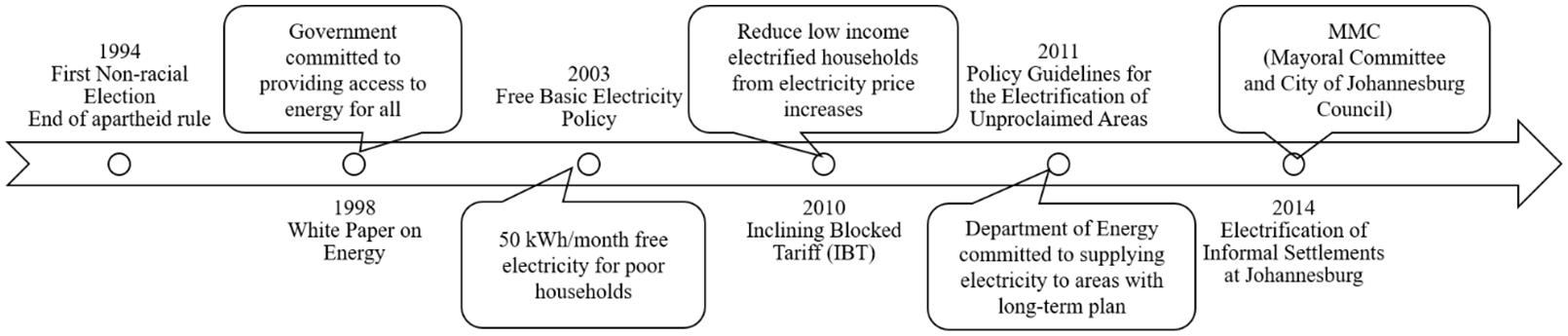
Electricity policies in Johannesburg.
Background – history and electricity supply in Thembelihle
This section presents the electrification process in Thembelihle – an informal settlement located in the south of Johannesburg, in Region G, Ward 8 (see Figure 2). This settlement was established in the mid-1980s; known as Esigangeni ( ‘in the bush’ in IsiZulu) (Tselapedi and Dugard, 2013), it sits within the formerly Indian community Lenasia. Starting with an abandoned brickworks allocation (Selokela and Langerman, 2019), a housing audit in 1996 registered the settlement as Thembelihle with 4,600 families. Given that the land was not proclaimed, City Power did not plan to instal electricity locally (Tselapedi and Dugard, 2013). In 2002, the local government began to move the households of Thembelihle to a new area, Vlakfontein. However, only 1,500 households were successfully relocated. The project was terminated because of the resistance and riots in Thembelihle.
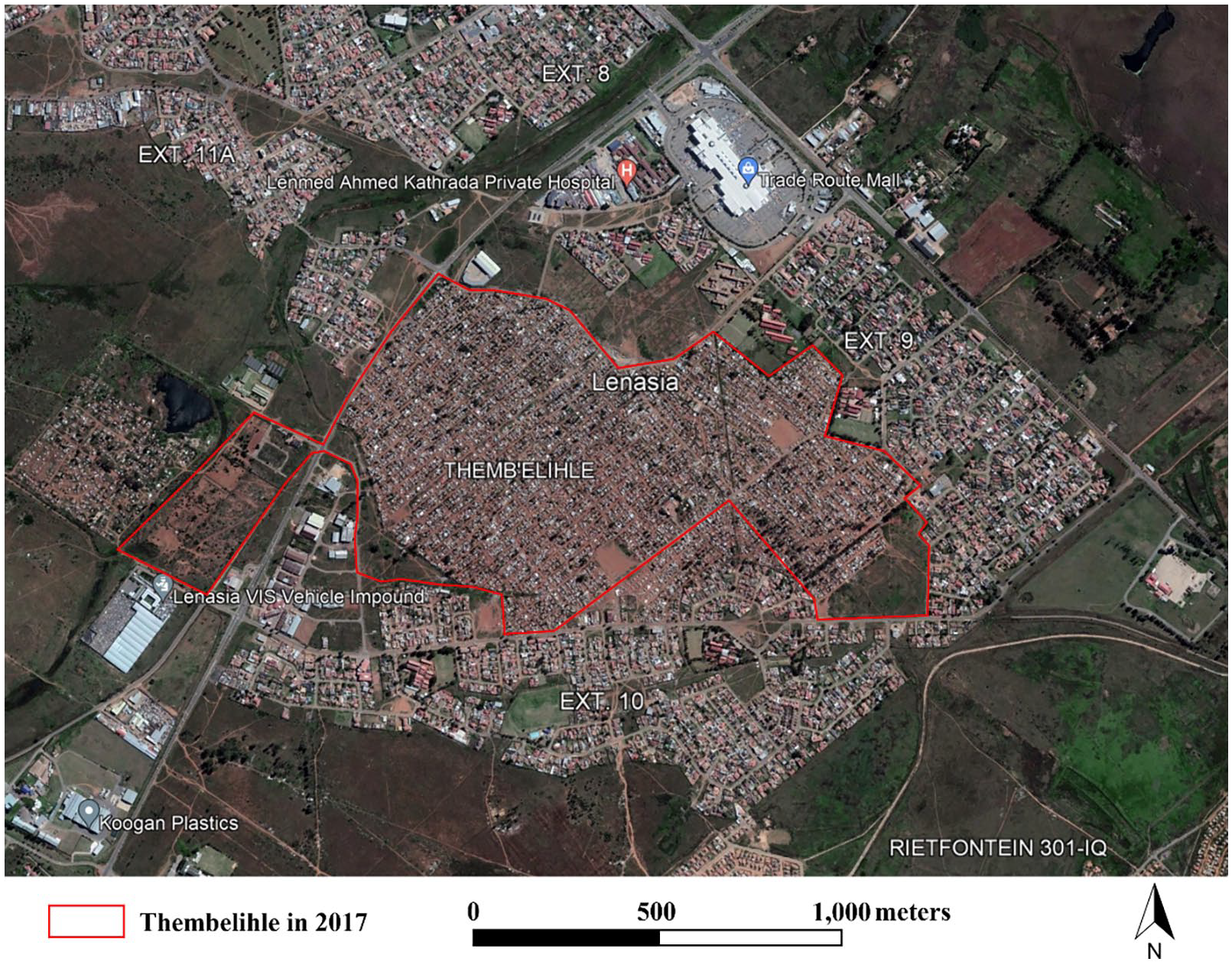
Aerial map of Thembelihle in 2017.
Subsequent population growth in Thembelihle was the result of new immigrants. A governmental audit in 2003 indicated that the number of households had increased from 4,600 to 7,000. This growth spurt represented a need for housing. Consequently, a new project was initiated in 2006 to move a part of the Thembelihle settlement to a new area called Lehae, a mayoral priority relocation project adjacent to Thembelihle (approximately 3 kilometres) (Huchzermeyer, 2009). Lehae was considered a relocation site for Mshenguville, Eikenhof, Thembelihle, and Dlamini Camp informal settlements. However, the cleared land in Thembelihle was again re-invaded by informal settlers. These attempts reveal that relying on relocation to accommodate informal dwellers could hardly meet the housing needs in Thembelihle.
To residents, moving to new houses was one alternative to improve living conditions; appealing for comprehensive development in Thembelihle, conversely, was another. The appeal of such a comprehensive development became clearer as both Vlakfontein and Lehae projects could not eradicate Thembelihle. A critical determinant affecting the decision on comprehensive development was the threat of dolomite diagnosed decades ago (Storie, 2017). Sitting on dolomite land meant that the ground was hazardous due to the potential for subsidence and sinkholes (Department of Public Works, 2010).
Because of this geologic condition, Thembelihle had been rendered undevelopable. Meanwhile, the tightened geotechnical legislation in South Africa has led to more restrictions when determining any land’s developability (Potgieter et al., 2016). Eventually, developing Thembelihle into a township has been deemed infeasible (SRK Consulting Engineers and Scientists, 2004). Despite this difficulty, growing voices from this settlement still urged the city to fulfil local needs with other services besides housing. Electricity was highlighted due to the risks of illegal connections that have caused the city a great financial deficit and resulted in a significant loss of life.
Once the earlier policies were recognised as impracticable, introducing electricity as an interim service (City Power, 2014) became a way to fulfil local needs. This transition revealed a ‘paradigm shift’ (Department of Housing, 2004b: 5) in South Africa’s policy; it was in response to informal settlements, which changed ‘from one of conflict or neglect, to one of integration and co-operation’ (Department of Housing, 2004a: 17). In-situ electrification in Thembelihle thus was a movement from ‘eradication’ to ‘compromise’. The electrification project in Thembelihle eventually took place in 2016 2 and was later completed in 2017. With over 7,000 electrified households, it was one of the largest pioneer projects solely completed by the City of Johannesburg.
Focusing on in-situ electrification and how it has affected residents in Thembelihle, my aim is to cover three themes in the findings: (1) the improved living conditions and stabilised physical environment after electrification, which elaborates on the physical environment changes and how these changes have affected residents, (2) the quality of the electricity supply, which addresses stability and affordability and (3) the expected services after electrification, indicating how the project has affected residents’ expectations for the future. Tackling these themes with first-hand information should prove valuable to researchers and city leaders. The following section provides the methodology of the fieldwork in support of these themes and objectives.
Methodology
The fieldwork was completed in the summer of 2017. The investigation included (1) seven in-depth interviews with local agencies and (2) one survey with 77 responses in Thembelihle, both carried out by the author accompanied by local fieldworkers to overcome the language barrier. I used a snowball sampling to identify the open-ended interviewees and inquire about their active involvement with Thembelihle’s electrification project. These interviewees worked in the Gauteng Department of Human Settlements, the Gauteng Department of Housing, the Housing Department in Johannesburg and City Power. I also interviewed the local contractors who carried out the project. Most interviews occurred in their workspaces. I asked the interviewees to share their experiences and opinions on the project; afterward, I allowed them to lead the conversations. These interviews were recorded for analysis.
I used a simple random sample in Thembelihle to conduct my household surveys. These surveys were spread across the settlement to achieve geographical representation. I targeted only adult household heads for participation. The interviewees were asked to answer questions about electricity supply, expected services after electrification and physical environment changes. A semi-structured questionnaire, including both open-ended and closed-ended questions, was used to facilitate the household surveys.
The questions were read to the participants; then the author recorded (on tape, with permission) and annotated the responses. The surveys with each household head lasted for approximately 30 minutes. The participants were also asked to specify where and how the physical environment had changed. These selected places were then observed and documented through photography by the author. The author transcribed the records from both the interviews and surveys into documents for context analysis. In this phase, I looked for emerging themes responding to (1) improved living conditions and stabilised physical environment after electrification, (2) the quality of the electricity supply and (3) expected services after electrification.
Of note, the participants of the interviews and surveys were informed about the research purpose before I began. Each respondent was assured that the data would be used for academic purposes without disclosing their identity. Each respondent was asked to give oral consent, which was recorded accordingly. These fore-stated arrangements served to preserve the rights of the respondents.
Result
Improved living conditions and stabilised physical environment after electrification
The observed changes are presented in Figure 3 (the items are parallel to the others). I used open-ended questions to ask about changes after electrification. The answers commonly involved ‘no change’ initially but then were followed with other opinions about installing streetlights and clarifying roads. I found that up to 40% of the interviewees mentioned that Thembelihle had ‘no change’, meaning the residents did not see significant changes after electrification, while also referring to other differences in the built environment. Of notice, because my fieldwork took place in the final stage of electrification, the physical changes caused by the installation of electricity poles were slow. There might be a time lag between electrification and the perceivable changes (such as the growing number of brick houses). Thus, I believe that stating ‘no change’ only meant that it would take some time for residents to recognise the physical environment changes.
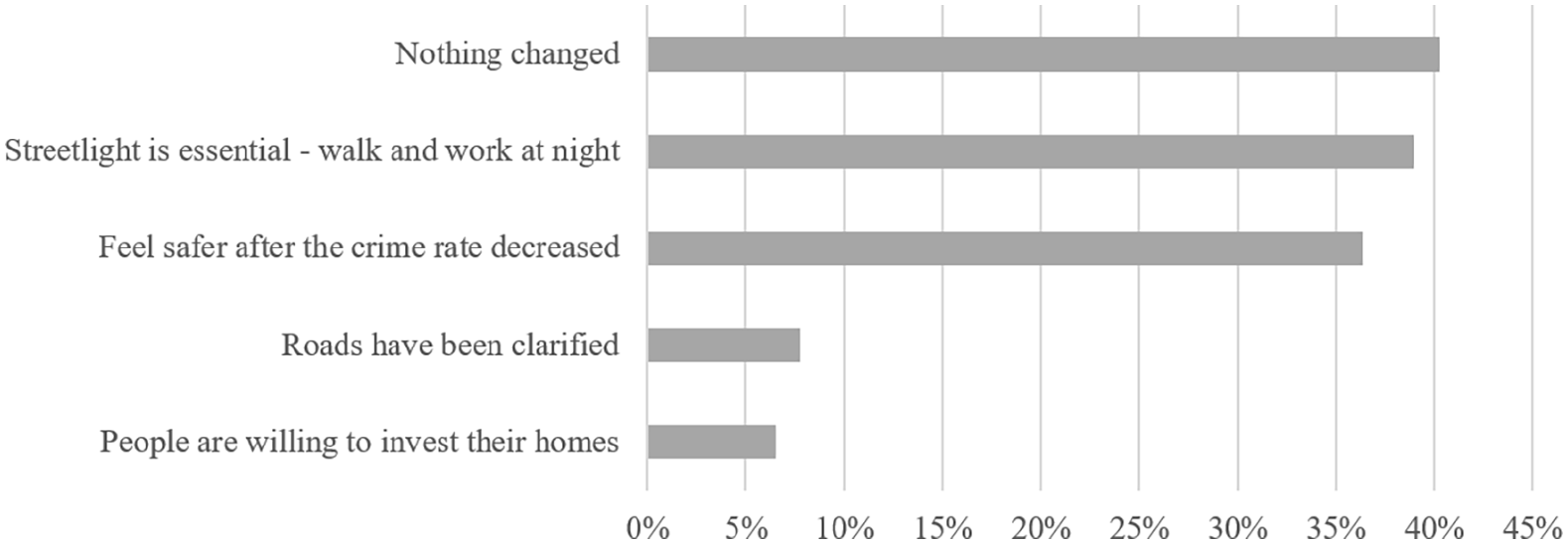
Changes in Thembelihle as described in interviews.
Table 1 and Figure 4 summarise the temporary implications of electrification on the physical environment in Thembelihle (with a narrative description, photos and graphical illustration), including: (1) illuminating public streets, (2) specifying property boundaries, (3) street formalisation and (4) self-help home upgrading.
Contribution of electrification to physical environment.
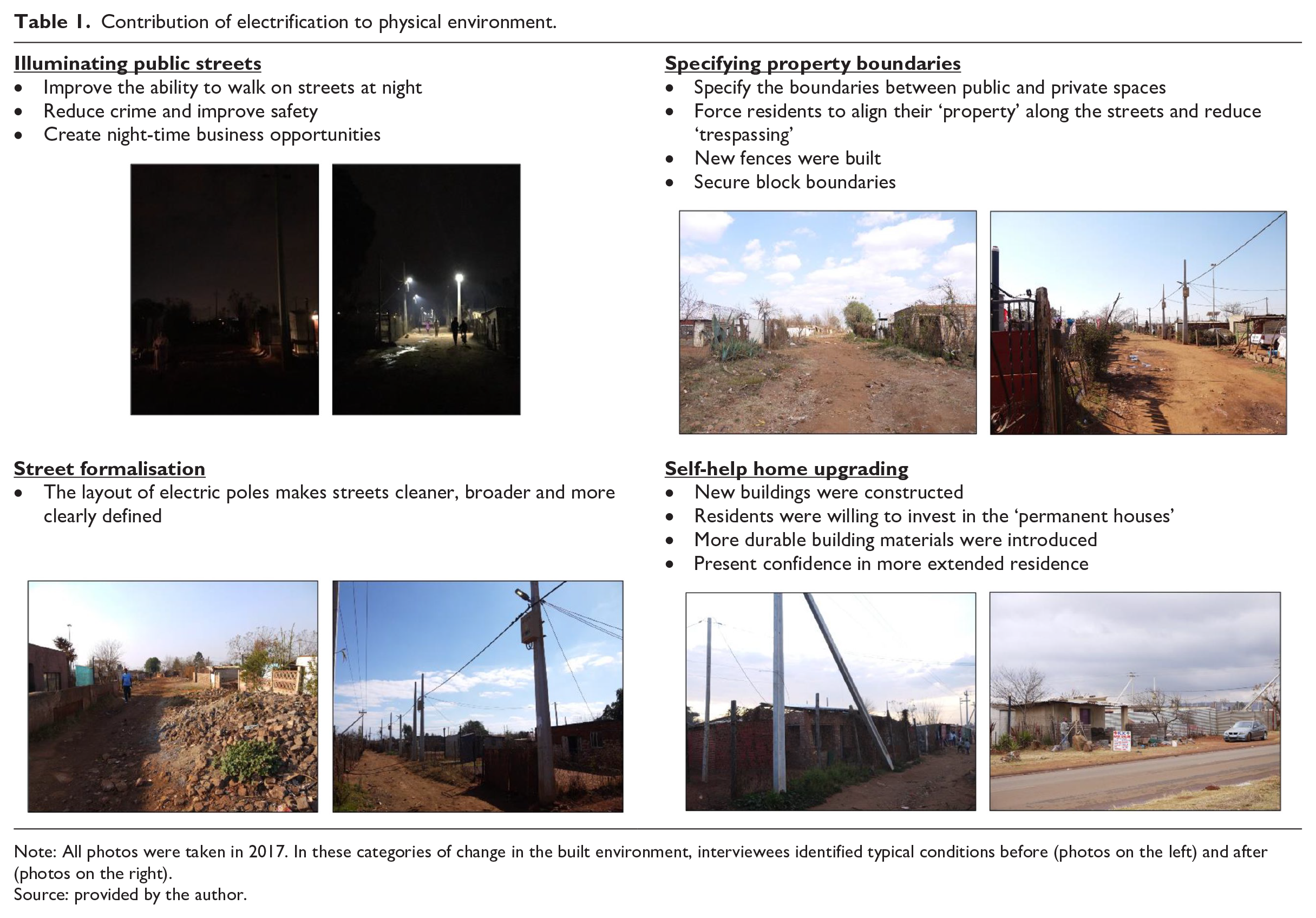
Note: All photos were taken in 2017. In these categories of change in the built environment, interviewees identified typical conditions before (photos on the left) and after (photos on the right).
Source: provided by the author.
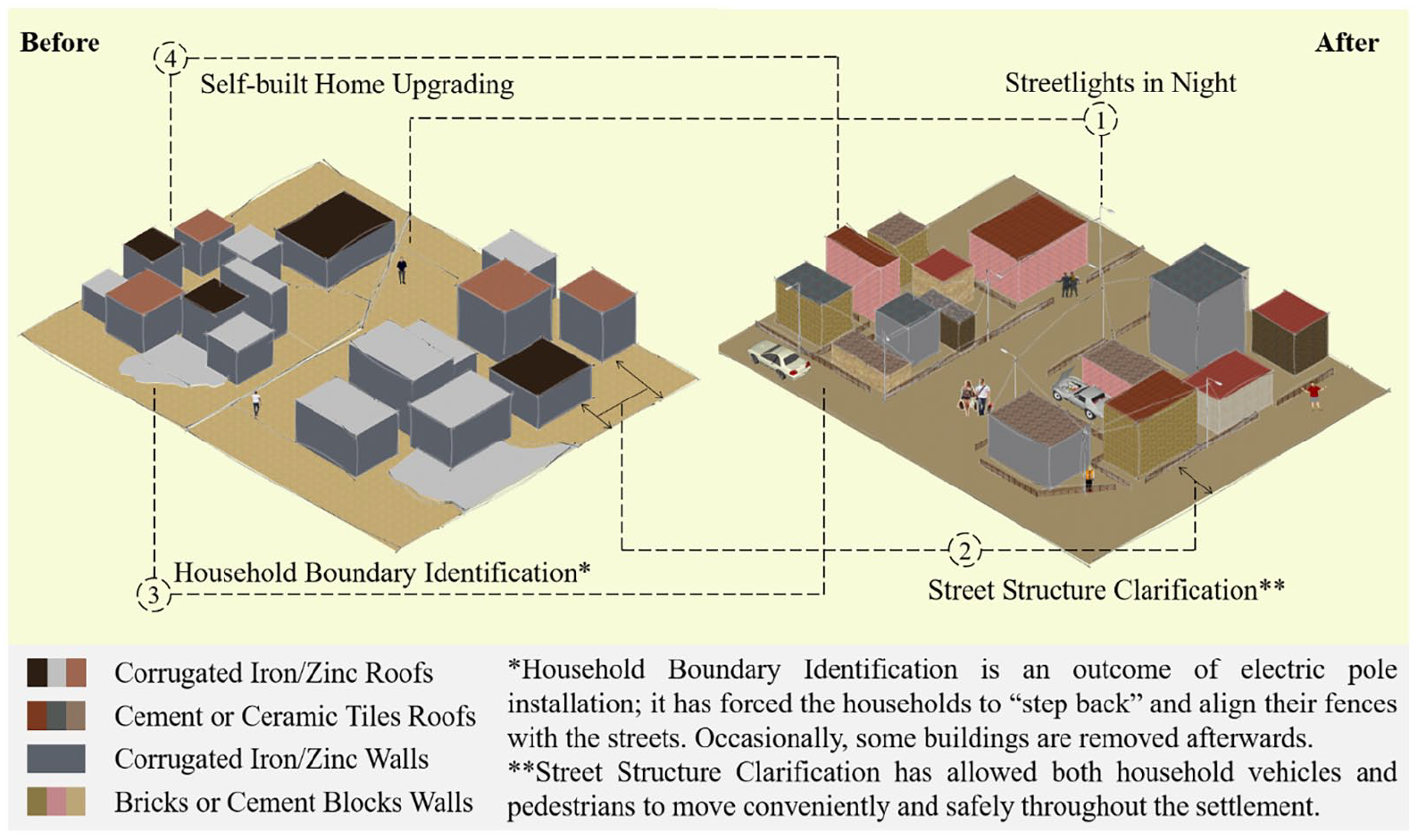
Changes in physical environment after in-situ electrification.
First,
This apparent change resulted in further socioeconomic benefits. As stated by another resident, ‘It changed life. Criminal acts decreased. Theft was frequent because the home might be dark at night if no one was home. Safety after electrification cannot be achieved without the streetlight’ (female, Interviewee 43, 7 July 2017). The improved visibility thus enabled the residents to walk at night, allowing them to watch their neighbourhoods and reduce crime. As a shop owner noticed, ‘The streetlight in front of my shop, and the light in my shop, help me notice any strangers approaching’ (male, Interviewee 42, 7 July 2017). Street lighting also led to more business opportunities because more residents felt safer and were willing to go out at night after electrification.
Second, the installation of electric poles specified
The third benefit of boundary specification was
Finally,
Quality of electricity supply
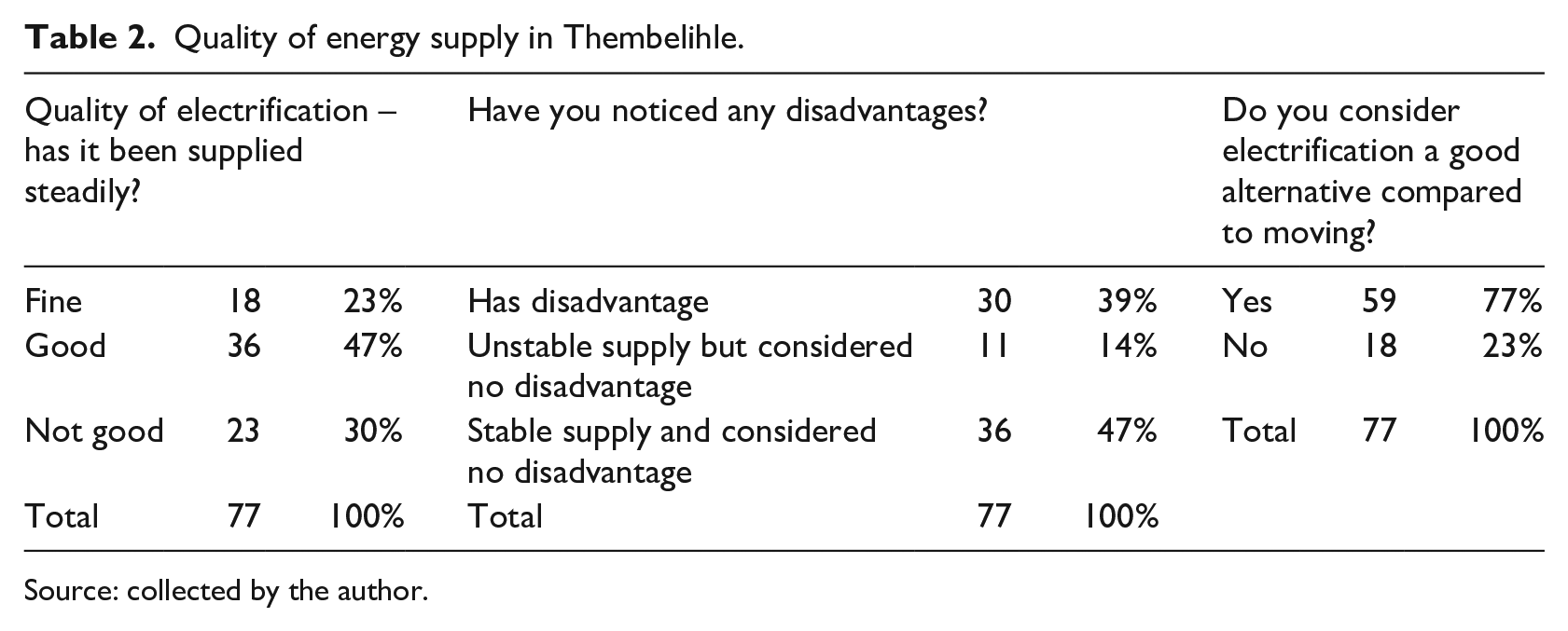
Given that electrification in Thembelihle was in progress during the fieldwork, I further asked the residents to reflect on the quality of electricity provided in terms of stability and affordability (see Table 2). Up to 47% of the interviewees identified electricity supply as steady, but this finding should be viewed in the context of frequent blackouts in Thembelihle. The residents revealed that these blackouts could happen up to 10 times every month, and they were common in an informal settlement. Despite this high frequency, the residents still sustained positive perceptions of the project because frequent blackouts were better than relying on illegal connections, let alone living with no electricity at all. From the residents’ point of view, having access to legal electricity is a critical advantage. This perception implies the settlement’s broader appreciation of electrification.
Quality of energy supply in Thembelihle.
Source: collected by the author.
Although about 61% of interviewees said there was no disadvantage to electrification, I found about 14% considered electricity supply unstable. Namely, the unstable electricity supply was not a significant problem to this group of participants. Having formal access to electricity was considered a privilege; by contrast, asking the city to improve the supply would be needless. As a female user said, ‘I know that the construction is ongoing, so I understand that the electricity would switch on and off frequently. But I believe it will improve’ (female, Interviewee 21, 5 July 2017).
These findings indicate a disconnection between the residents’ satisfaction and the actual quality of services. Common sense says that electrification would generally receive positive feedback; however, it is worth considering why some residents do not see an ‘unstable supply’ as a disadvantage. The findings reveal that informal dwellers are often concerned about electricity regarding accessibility instead of stability, especially when a settlement has just been electrified. This is in response to Simone’s (2010) suggestion that we should avoid an idealisation of residents’ resourcefulness. Their behaviour often imply a lack of better options (Simone, 2010). Accordingly, the divergence between the dwellers’ satisfaction and supply quality suggests that feeling optimistic about electricity supply does not mean that the supply is good.
Instead, the perceived positive disposition indicates a lack of better options for dwellers. One household lead addressed his concern over energy tariff: ‘We do not dare to open heater regarding the expensive tariff; we end up keep using wood for heat’ (male, Interviewee 56, 8 July 2017). Settlers often have limited options for essential services – take it or leave it. There were also concerns about (1) electrification progress (too slow, or some places yet to be covered by streetlight), (2) related technical issues (a restricted supply voltage; the electrical connection could be risky to electricity theft) and (3) electricity tariff (the payment included too many additional fees, like labour and taxes, making electricity expensive). However, these complaints were also rare.
Finally, this study found that 77% of the interviewees preferred to stay in Thembelihle after electricity provision rather than moving out and enjoying new housing with full urban services. This finding aligns with Gouverneur’s (2015) argument that informal dwellers rarely set their goals as moving out because they believe their homes and neighbourhoods can be gradually improved. Providing interim service is critical to informal dwellers, especially when considering the emotional and social bonds established from the process of self-construction.
Expected services in Thembelihle after electrification
The final theme of this fieldwork focuses on services expected after electrification. The results sketch a roadmap for future development in Thembelihle and display possible impacts of new infrastructures on the physical environment, subsequently enhancing the dwellers’ sense of belonging. The results indicate that the dwellers had long expected ‘housing’ to occur ‘here’. As an interviewee specified, ‘I am not going anywhere. Having a house here is the whole point’ (male, Interviewee 62, 8 July 2017). However, such an expectation contradicted the city’s position because there would be no other governmental plans for Thembelihle (female, office manager from the Housing Department in Johannesburg, 18 July 2017). About half the interviewees conveyed the expectation of local housing. From their perspective, electricity provision was understood as a municipal commitment. More than 70% of the interviewees considered that electrification had made the city more equal, and the dwellers were confident that the city would introduce more projects soon: ‘I see that electricity has come; it feels that I live in a town now’, a female interviewee said (female, Interviewee 11, 4 July 2017). Thus, the settlement has received significant investment from those dwellers who started to improve their homes with better building materials and home appliances. The city, by contrast, did not respond to expectations. According to interviews with local agencies, electricity was provided as an interim service, and the city had no long-term housing plan for Thembelihle.
Discussion – can in-situ upgrading be a workable planning approach?
My findings show how the built environment in Thembelihle has temporarily shifted after electrification. The electrification physically affected Thembelihle in two phases: (1) the preliminary implementation based on governmental intervention and (2) the dwellers’ self-help upgrading. The preliminary implementation related to installation of electric poles, illumination derived from streetlights and the reconfiguration of street structures. This reconfiguration was facilitated by the installation contractors, who negotiated with the households to reclaim the streets’ contours. These proactive and institutional interventions directly impacted the community. In response, self-help upgrading demonstrated the residents’ motivation to invest in their own houses, a willingness to maintain public spaces and the inspiration to preserve the heritage sites identified by the community. Self-help upgrading thus was driven by the residents’ attitudes. This responsive and community-oriented pathway has led to indirect impacts after electrification. Such an insight responds to what ‘good urbanism’ should present through an incremental approach (Dovey, 2014), leading to the creation of prosperous places for people.
In addition, the implications of electrification were not limited to the built environment; they also influenced the residents’ social context, such as improving women’s safety and enhancing the informal economy due to streetlight installation. I did not directly measure social cohesion; however, the residents’ preference for remaining in local areas reflected the growth of this cohesion although further research is needed to support this conclusion. Building upon these findings, the consequence of self-help upgrading to homes and the formalisation of neighbourhood blocks have allowed the settlement to meet the challenges of population instability and high-level mobility (Kovacic et al., 2016).
Most interviewees expressed a strong sense of belonging and the willingness to invest in the settlement. For example, the dwellers have started to build their homes with brick, glass and concrete instead of corrugated iron sheets or scrap wood. The buildings that have emerged after electrification will stay longer. Residents’ investments have also advanced the construction of other infrastructures, such as public roads and recreational spaces. When moving out was no longer the preferred option to the dwellers, the settlement’s population became more stable.
These observed interactions concurrently respond to Dovey’s (2012) interpretation of complex adaptive systems theory. Following this framework, in-situ electrification is seen as an external force implemented in the Thembelihle informal settlement, in itself a complex system. The dwellers adapted such an external force and positively responded with various activities leading to community betterment. Within cycles of change, Thembelihle is becoming a more resilient and stable community.
From a policy perspective, the stabilisation of Thembelihle highlights the critical role of in-situ upgrading as it provides the settlement with an opportunity to change qualitatively. Throughout the fieldwork, residents in Thembelihle demonstrated how electrification had increased their overall confidence in the community. The preliminary implementation eventually became a foundation for various further improvements. In linking this finding to South Africa’s current policy, the UISP recommends the extensive use of geotechnical investigations to determine how different parts of a settlement should be treated (Department of Human Settlements, 2009). This flexible mechanism led to in-situ electrification in Thembelihle and triggered the settlement’s housing construction. Observing the temporary implications of electrification for Thembelihle, some advantages of in-situ electrification can be further addressed.
First, in-situ electrification keeps residents in their original settlements and provides them with opportunities to sustain and enhance their local identity. I have observed the emergence of a solid social cohesion in Thembelihle, especially in regard to the process of self-help home upgrading. Because the residents had made up their minds to stay, they were willing to invest in their homes with durable materials and clean up the surrounding environment during my fieldwork. Of note, my case study’s citizenship process was explicitly presented during informal negotiations between the dwellers and the installation contractors who were deciding how the electric poles should be installed (male, project contractor in Thembelihle, 20 July 2017).
Second, prioritising electrification should encourage more self-help services and reduce the pressure on housing provision. As Andreasen and Møller-Jensen (2016: 46) recommended, the idea of providing full-package formal services should be reconsidered, given that informal dwellers can achieve more substantial improvements on their own. When city leaders are willing to recognise the ‘internal logic’ (Gouverneur, 2015) of informal settlements and further facilitate and support dwellers’ efforts to realise self-help solutions (Gulyani and Bassett, 2007), access and service quality in informal settlements will undoubtedly improve. To keep pace with informal settlements’ demographic and spatial growth, cities could focus on providing services and infrastructure, like electrification (Power and Kirshner, 2019), that will inspire more self-help upgrading sequentially.
Suppose the straight alignment of electricity poles triggered the response of households to live up to a more modern vision of the settlement. I am concerned about in-situ upgrading given the uncertainty this approach has led to. Where land is not suitable for residential development, the residents’ investment in formal brick-and-mortar houses becomes a problem because these self-help constructions do not follow safety precautions (e.g. slab foundations are required on dolomitic land). These houses ultimately will be demolished and households relocated, considering the high-risk dolomitic areas that parts of Thembelihle sit on. The households undoubtedly will resist such relocation given their aggregated investment and sense of belonging after in-situ electrification. Such a scenario will raise problems in the future. Whether to adopt in-situ upgrading as a short-term solution (to ease residents’ urgent need) and bear foreseeable risks (buildings collapse from sinkholes) in the long run is a critical planning challenge that must be further addressed.
As a result, if in-situ upgrading must be introduced as an interim solution in settlements that share a similar uncertainty with Thembelihle, the way to prevent the above problems is to enhance the transparency of upgrading projects (providing sufficient details) and the degree of community engagement (aligning the vision of the residents and local government). Gaining a mutual understanding between two parties is critical to reducing self-investment if the residents understand that permanent development is impossible. In doing so, the households’ resistance might be partially avoided when demolishment becomes inevitable in the future.
There are two directions for future research: first, since this paper only observed the temporary implications of in-situ electrification, it is worth developing a follow-up investigation detailing the aftermath of this project. Second, considering in-situ electrification has been adopted as an interim solution in Johannesburg, more effort could be invested in understanding the underlying trust issues in different phases. Pursuing these two directions will help policymakers design subtle policies that integrate places with challenges similar to those in Thembelihle.
Conclusion
In this paper, I used interviews and household surveys to study the temporary implications of in-situ electrification in Thembelihle informal settlement because it helps to further understand the internal logic of informality. My findings suggest that the built environment and social context in Thembelihle have stabilised due to the preliminary implementation of governmental intervention and the dwellers’ self-help upgrading. The cycles of reinforcing change in Thembelihle are part of a case study concurring that informality could be understood through complex adaptive systems theory (Dovey, 2012), that is, a settlement is a complex system that continuously adapts to external forces and engages positive responses for self-organisation. The stabilisation of Thembelihle highlights the importance of in-situ upgrading due to the opportunities for self-accommodation afforded to settlers. Even though some concerns were tied to project transparency and community engagement, the growing satisfaction and confidence observed in the field tally with UISP’s flexible policies on settlements in different settings.
Although my findings concur that in-situ upgrading could be an alternative to developing informal settlements in areas not considered suitable for residential development, I suggest this approach be used carefully, considering the opposed visions of the residents and local government. On the bright side, this approach to the physical environment has served to strengthen social cohesion, and its impacts on the residents have enhanced a sense of belonging. These benefits cover both physical and socioeconomic improvements and will potentially contribute to successful settlement transformation (Abbott, 2002).
As a consequence, this approach could lead to more significant equity in resource distribution and increased livelihood reconstruction opportunities (Cherunya et al., 2021). However, carelessly allowing residents’ investments could lead to future problems when these households are forced to relocate as the land is further determined to be unsuitable for staying. Tremendous pushback could occur if the residents assume that permanent development is a goal to achieve and would be carried out by the government. These concerns pose a planning challenge. I found that in-situ upgrading has made a vital contribution to sustainable urbanism by incorporating informal settlements into cities. Considering the problems of such an approach, planners might emphasise project transparency and community engagement since they are crucial to creating an urban future that the residents and local government would share.
Footnotes
Acknowledgements
The author thanks Professor Linda Samuels, Professor Ian Trivers, Professor John Hoal, and Professor Hongxi Yin for comments, critiques, and research support.
Declaration of conflicting interests
The author(s) declared no potential conflicts of interest with respect to the research, authorship, and/or publication of this article.
Funding
The author(s) disclosed receipt of the following financial support for the research, authorship, and/or publication of this article: This research was supported and funded by the Divided City Initiative and the Sam Fox School of Design and Visual Arts at Washington University in St. Louis.
