




Abstract
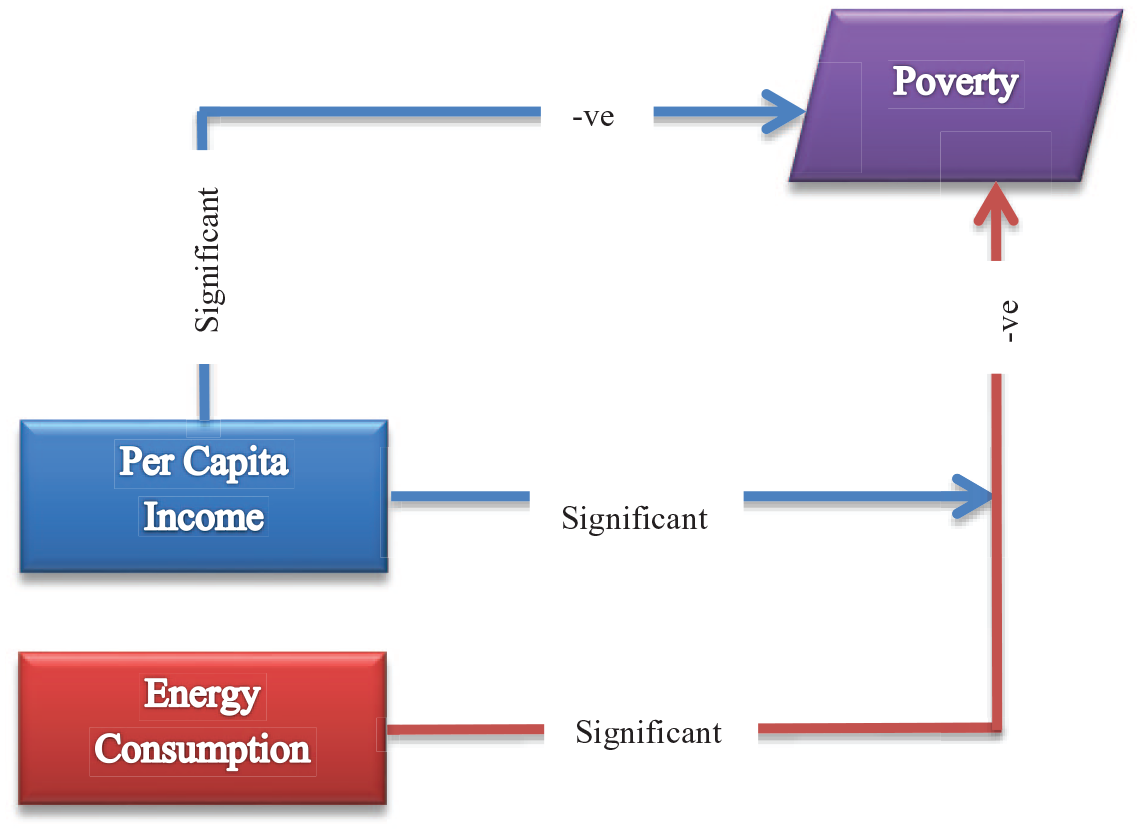
The moderating role of per capita income pertaining to poverty and energy consumption is a missing link in the literature. To this end, this study aims to explore the energy-poverty nexus in Pakistan, incorporating per capita income as a moderator. Based on the time series nature of the data, we utilize the autoregressive distributed lag (ARDL) technique for the period 1984–2018. We design two separate models, that is, poverty model-A (the primary effect model) and poverty model-B (the interaction effect model). Our findings validate the significant prevalence of the influence of per capita income, as a moderator, on the relationship between energy consumption and poverty in Pakistan. Interestingly, the nature of moderation was observed to be enhancing both in the short and in the long-run. This study provides important policy implications for mitigating poverty in Pakistan. Our empirical findings educate policy makers and academicians to consider moderating behavior of per capita income for robust energy-poverty policy making in Pakistan.
Graphical Abstract
Introduction
Poverty, though a multi-dimensional concept, is regarded as one of the world’s most prevalent issues across the globe (Janvry and Sadoulet, 2016). It is considered as deprivation of capabilities and well-being. Put differently; it is an inability to access basic stuff, which includes adequate food, clean water and sanitation, clothing, housing, and other facilities like health care and education, and so on (Datt and Sundharam, 2008; Haughton and Khandker, 2010). In this modern era, more than 700 million people still struggle to fulfill their basic needs and confront extreme poverty, and nearly 88 million individuals are jobless. Besides, almost 50% of the global population is living with a household income of less than US$2.50 per day (Boonperm et al., 2013).
Poverty, a defying issue, is mainly confronted by developing countries, and Pakistan, being a lower middle income developing economy (World Bank, 2015), is no exception. In Pakistan, about 40% of the total population is living in a poor condition (Rana, 2016). The statistics of the National Assembly of the secretariat in Pakistan acknowledged that around 29% of the population, that is, about 55 million people are living below the national poverty line. According to the United Nations Development Programme (UNDP, 2017), Pakistan is regarded as a poor country which is evident by its ranking in terms of poverty, placed 147th out of 170 nations. These alarming statistics emphasized the significance of the subject at hand and pushed international organizations and scholars throughout the world to dig into various primal reasons for wiping out this social and economic ailment (poverty). Poverty mitigation is among the principal goals of both national and international institutions. The alleviation of poverty also serves as the first target point of Sustainable development goals (SDGs; Sakanko and David, 2018). In line with SDGs, Pakistan has been persistently following the SDGs 2030 agenda through a joint resolution of parliament since 2016. The first SDG aims at the abolishment of poverty by the end of 2030. Furthermore, poverty alleviation is the first pillar of Pakistan’s vision 2025. To realize this aim, the authorities need to ponder different solutions for poverty reduction in Pakistan.
The consumption of energy by the nation’s residents and the specification of the nation’s energy services reveal its significance as decency of appropriate action, which would prove essential for mitigation of the poverty (Barnes et al., 2011). Recent research shows that energy-poverty linkage is gaining importance among the economists of developing countries (Betto et al., 2020). Energy plays an essential part in underpinning efforts to achieve SDGs and improve the socio-economic conditions of poor people around the globe. Many scholars established that poverty is the deprivation of basic necessities, so energy is one of the most crucial inputs for combating poverty because none of the basic needs can be provided without energy. Energy is a precondition for sustaining people’s well-being. At the most elementary level, it is a prerequisite of cooked food, boiled water, warmth (i.e. comfortable temperature for a living), and essential health care (like refrigerated vaccines, sterilization, and emergency care). Furthermore, energy is needed in order to enhance the living standard of the poor in terms of lighting, water storage, irrigation to enhance productivity, and in the provision of power for small scale industries.
The inability to access and afford clean and cheap energy is regarded as one of the fundamental pictures for poverty (Sakanko and David, 2018). Besides, it is argued that energy access is just a part of desired poverty mitigation policy (Njiru and Letema, 2018), and affordability is a significant constraint for poor citizens in order to enhance their living standards (Simcock et al., 2017) because eventually, the actual consumption of commodities and services, that energy as a carrier can facilitate, will enhance individual’s welfare (Karekezi et al., 2012). So, there is a need to work on the mechanism that could transform energy into worthwhile ventures. Such transformation would be complex in the presence of restrictions that hinder the effective use of energy for the welfare of the nation’s citizens. Hence, there is a dire need to analyze different dimensions that could affect the relationship between poverty reduction and energy consumption (Gavin et al., 2013). Some researchers have recognized that the choice of energy is highly influenced by the affordability of energy (Emagbetere et al., 2016; Fawehinmi and Oyerinde, 2002). Therefore, affordability limits energy consumption in combating poverty. Low per capita incomes (PCIs) are always being an obstacle in the efforts to reduce poverty (Dollar and Kraay, 2002; Pradhan, 2010; Satti et al., 2015; Tombolotutu et al., 2018). With increasing incomes, people can be expected to prefer relatively more efficient energy to enhance their living standard and prosperity. However, with low incomes, people cannot be able to afford or if they are expected to do so, then they will not be able to sustain their consumption of energy and hence, it will limit their capability to enhance their living standards and prosperity. Against this backdrop, this study focuses on the role of energy consumption in the reduction of poverty, incorporating PCI as a moderator.
The combinations of PCI growth, affordable, and sustainable usage of energy are the main pillars of alleviating poverty which contextualize the concept of poverty reduction in the framework of SDGs. Figure 1 shows that the main pillars of achieving SDG 1 have strong ties with achieving other SDGs in a suitable manner. The existing literature shows that ending poverty is a widely recognized solution to ending hunger and the nutritional deficiency, education achievement (Ferguson et al., 2007), good health (Ngoma and Mayimbo, 2017), and environmental problems (Oktavilia et al., 2018). Thereupon, for several pre-mentioned SDGs, there is a robust connection, especially with SDG 1, that is, poverty eradication (Blanca, 2014). That is why this study focuses on providing solutions to the abolishment of poverty. Against this backdrop, this study focuses on the role of energy consumption in the reduction of poverty, incorporating PCI as a moderator.
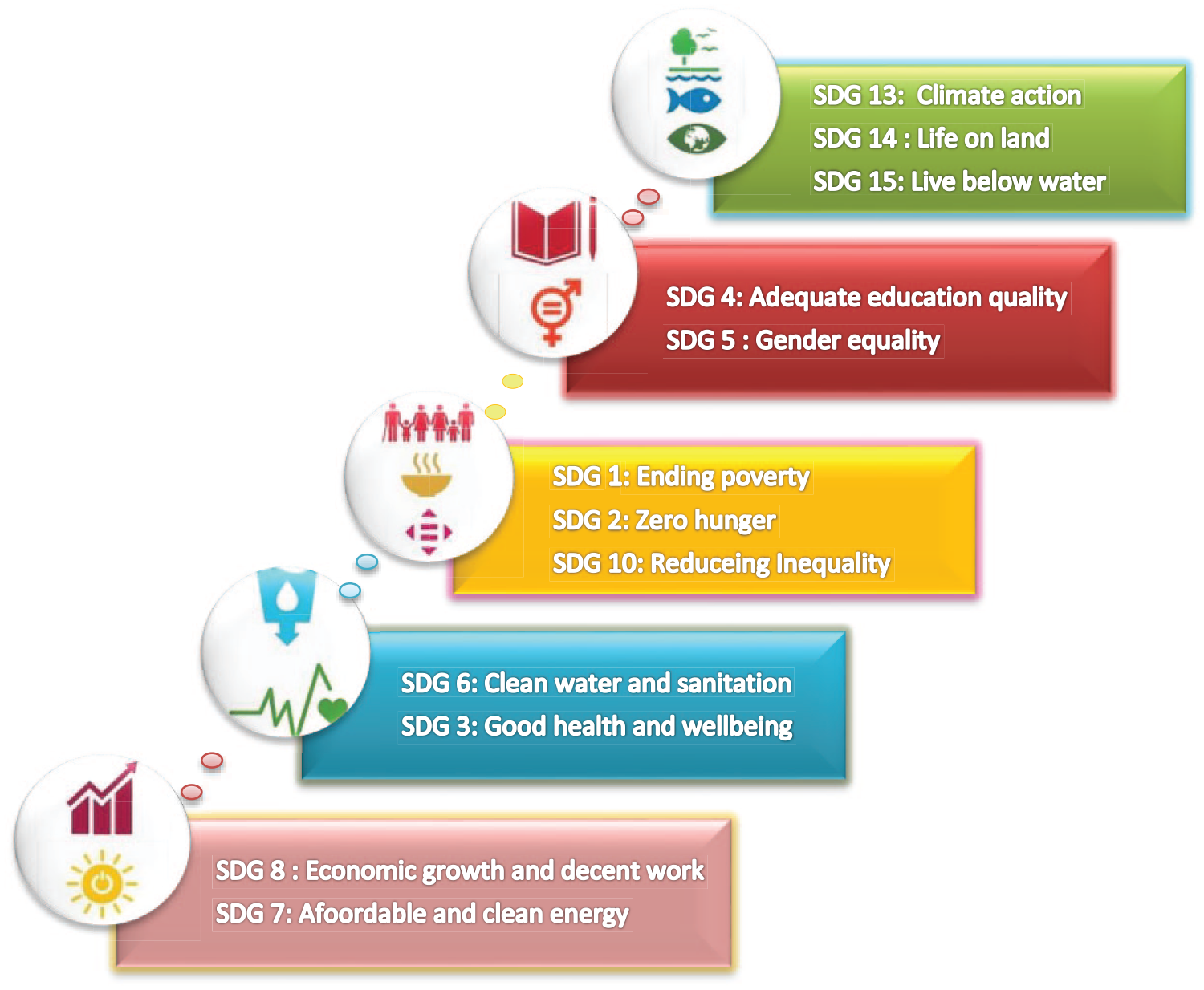
Poverty and sustainable development goals.
The thorough study of the existing literature reveals that there exist several gaps and shortcomings in the prevailing debate of income-energy-poverty, which this study wishes to address: First, only limited studies investigated the linkage between PCI, energy consumption, and poverty (Goozee, 2018). Second, the prevailing findings of existing literature on the PCI and poverty are only confined to the direct impact of PCI in combating poverty. Third, studies related to the direct effect of energy consumption on the poverty level are conflicting. For instance, some studies support a positive effect of energy consumption on poverty reduction (Sakanko and David, 2018), while others found no stimulating effect of energy use in reducing poverty (Okwanya and Abah, 2018). Fourth, although the direct impact of PCI on poverty has been explored; nonetheless, the moderating role of PCI on the relationship between energy consumption and poverty both in the short- and long-run is yet to be explored; particularly in the case of Pakistan, hence, we aim to bridge this gap.
The rest of the study is set forth as; Section “Literature review” comprises all the explanations of the related theoretical and empirical literature. The methodology section reported in section “Methodology” contains all the details of related data sources, projected-variables descriptions, and the model’s formulation. The subsequent section pertains to empirical findings and discussion. The conclusion section sum-up the entire study. Section “Implications of the study” outlines policy recommendations. Finally, Section “Limitations and future research directions” underscores the study limitation and future research directions.
Literature review
Theoretical review
Energy transition theory
The energy transition process is backed by two hypotheses, that is, energy ladder and energy stacking. The energy ladder hypothesis was introduced to the world health organization in the early 1990s (Chen, 1990). This worthy notion was developed by legendary American researcher Kirk Smith (1987). It was grounded on an understanding of how the level of energy consumption changes domestically as the nation becomes wealthier (Barnes and Floor, 1996). According to this view, whenever an individual experiences a rise in their purchasing power, he or she prefers superior over low energy (see the left diagram of Figure 2). Masera (2000) added to the concept of the energy ladder by proposing that, with increasing incomes, households do not frequently switch their energy choices to different fuels but use a combination of traditional plus modern energy sources. This process of consuming different energy at one point of time is termed energy staking (see the right diagram of Figure 2). Raising the consumption of clean and efficient energy is desirable for enhancing the well-being of both rural and urban households, given their income levels (Davis, 1998; Farsi et al., 2007; Gupta and Kohlin, 2006).
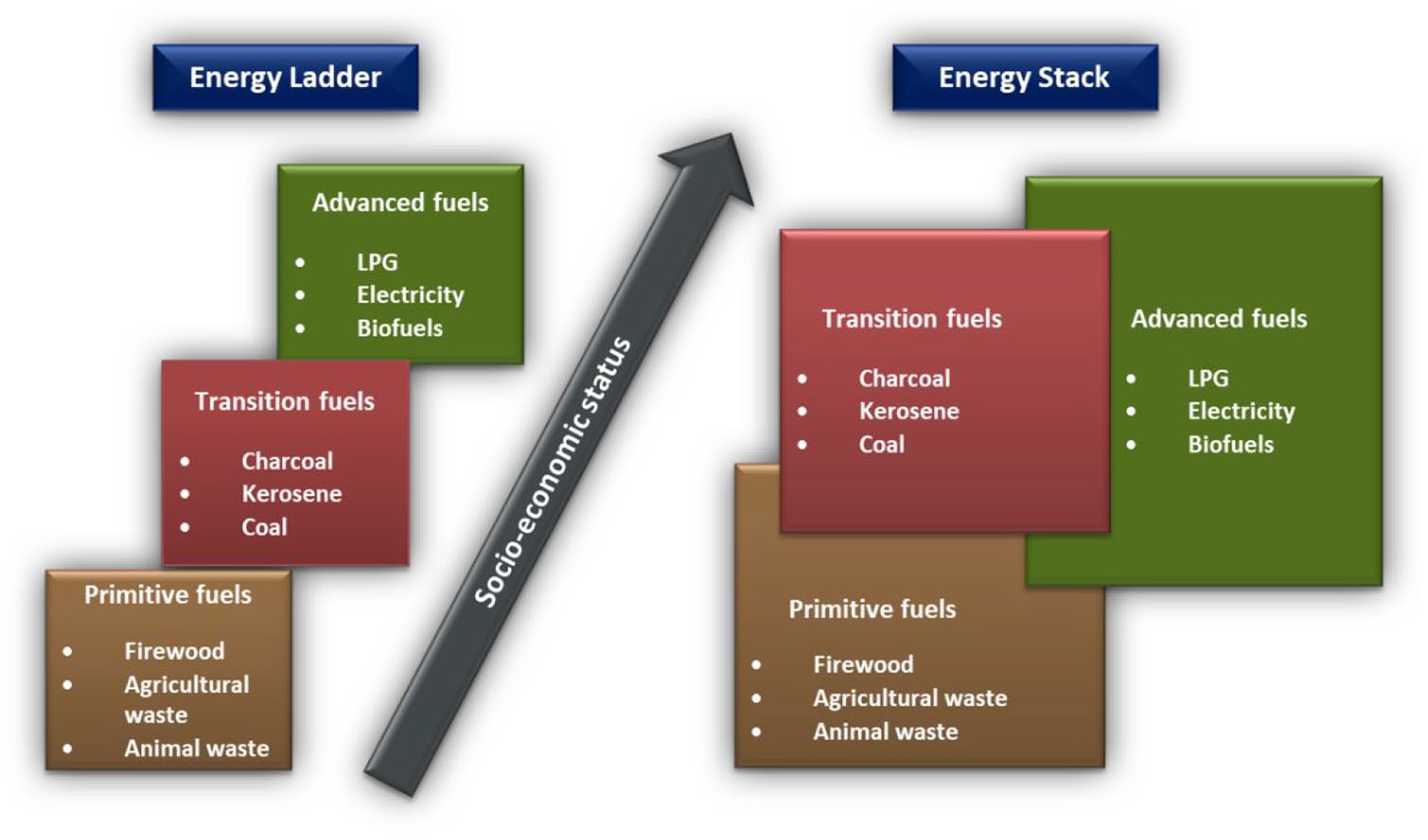
The process of energy transition.
The stepping up on an energy ladder is neither a jump nor a frequent rather a transitory process. A transition toward cleaner and better use of energy fuels is backed by the income and living standards of the community. Energy transition theory provides a notion that increasing the level (i.e. quantity and quality) of energy consumption will enhance the household’s well-being, thereby dismissing poverty. Hosier and Dowd (1987) and Leach (1992) are among the proponents of the energy transition theory. They related the level of income to the nature of energy consumed. Since access and affordability to energy play a central role in poverty reduction process, this theory proposed that the inability of the poor (due to low PCI) to consume more efficient and cleaner (modern) energy highlight the inability of a nation to fight against poverty and hence unable to ensures sustainable development of the economy (Kaygusuz, 2011; Pachauri and Spreng, 2004; Sovacool, 2012).
Vicious circle of poverty
Nurkse (1953) postulated that lower level of PCI is the leading obstacle in breaking the vicious circle of poverty. Minor savings, minimum purchasing power, and scarce demand are the outcomes of low level of income growth which is due to the shortage of output. Deficient productivity, in turn, is an indication of lack of capital formulation. The dearth of capital formulation is a result of little investment. Basically, it point out that the main reasons of poverty in the developing nations starts from low PCI, which leads to the paucity of demand and consumption. Inadequate consumption further reduces the formulation of capital which ultimately encourages poverty.
Vicious circle of energy-poverty
The theory states that the individuals, societies, and nations are poor because they are stuck into a vicious circle (Reddy, 2000). Inadequate earnings discourage the consumption of clean and efficient energy. If the citizens of any nation make use of the inefficient energy, it will have definite repercussions, especially for the poor people in the form of poor health, low productivity, less cash, and slight surplus. Hence, it will indulge the poor residents into a poverty trap. Nations having low PCI so are termed as poor and to mitigate poverty, macroeconomic policies directed toward growth, employment, technological advancement and institutional quality play a substantial role.
Empirical review
Poverty and energy consumption
The role of energy (especially the modern) was defined about more than half a century ago, back in 1950s, and turned out to be the center of focus when several international institutions, like World Bank (1985), United Nations Development Programme (2007), enlightened its vitality (United Nations, 1954). Causality linkage between energy consumption and poverty are well-examined by different researchers. Alhassan et al. (2015) found one-way causality between energy consumption and poverty level by employing granger-causality test in context of Nigeria. The study found that causality is running from energy consumption to poverty level and suggested that there is need to raise the use of energy by the citizens of selected nation. Unlike the previous study, a study conducted by Murtaza and Faridi (2015) found that poverty is leading and energy is lagging in the case of Pakistan, employing Toda and Yomamota (1995) causality test. They claimed that poor households are not able to maintain their energy consumption because of energy prices and thus, pro-poor development is needed to subside poverty which, in turn, would enable a poor population to use basic energy (cooking fuel, electricity) for their residential use. Savacool (2012) pointed out that poverty and energy deprivations go side-by-side, where a noteworthy share of poor people’s earnings is assigned to obtain and sustain energy services. Ogbeide and Evelyn (2020) found a bi-directional causality between poverty and low quality of energy consumption. They used the time period 1990–2017 to find the causality between poverty headcount and energy consumption by utilizing the annual data of Nigerian economy. The study found that low-quality energy products (coal, fuel wood) deteriorated the health and hence, ultimately enhances poverty headcount while relatively good quality energy product (electricity) reduces the poverty headcount. However, the control variables (inflation rate, female labor force participation rate, and household size) were also found to be the substantial contributors to the Nigerian high-poverty level. For effectively combating with the higher Nigerian headcount poverty, the study advocated for the availability of modern energy products, the reduction of the household sizes, and enhancing the female employment rate.
The analysis of previous studies guides us to infer that poverty is highly affected by the affordability and accessibility of energy in every country. Sakanko and David (2018) investigated a cross-section of 156 respondents on the three senatorial zones of Indian state. The logit regression model was used to analyze the associations among energy use, poverty, availability, and affordability of energy. The study concluded that the link between energy use and poverty is inversely (significantly) related, whereas availability and affordability of modern energy negatively influence the use of traditional energy in the selected sample. Dubois (2014) observed that the poverty is the inability to enjoy basic energy needs that is prominently found in Sub-Saharan Africa. This study explored several relations between energy use and poverty level for eradicating vicious circle of energy-poverty. The unaffordability and insufficient access to modern and clean energy sources by the population is the fundamental picture of poverty which further worsens if subsidies to energy use are reduced. Hussein and Filho (2012) supported the notion that to augment demand-supply side policies, there is a need to provide huge investments toward energy access and to make it affordable for poor population.
Limited studies were conducted to find out the long-run relationship between energy consumption and poverty. For instance, Okwanya and Abah (2018) used energy consumption as independent variable, the poverty level as dependent variable, whereas capital stock, political stability, and gross domestic product as control variables to study the long-run associations. They utilized fully modified ordinary least squares (FMOLS) method for empirical estimation. The study concludes that energy consumption and the poverty level are inversely and insignificantly related in the long-run. Moreover, political stability proved to have a significant impact on poverty reduction. They established that in order to maintain the positive effect of energy consumption on poverty reduction; quality infrastructure and political stability in the nation play a crucial role. On contrary, the study of Kunofiwa’s (2021) found a considerable (negative) influence of energy use in combatting poverty, and it was suggested to implement such policies that assure increased energy consumption geared toward poverty reduction in Brazil, Russia, India, China, and South Africa (BRICS) nations. In light of the aforementioned discussion, we hypothesize that
H1. There exists significant association between energy consumption and poverty in the context of Pakistan.
Poverty and per capita income
Poverty is a global, multifaceted phenomenon, and achieving sustainable poverty reduction is the foremost SDG. Researchers provide different precautionary ways that can enable the poor nations to escape from the state of being poor. To overcome the poverty trap, growth in PCI plays a quintessential role (Mulok et al., 2012; Tendulkar and Jain, 1995). Moreover, studies such as cross-national (Janjua and Kamal, 2011), country-specific (Pradhan, 2010), state level (Anggit and Fitrie, 2012), and district level (Asogwa et al., 2012) explicitly establish that rapid and persistent income growth is second to none in realizing poverty reduction goal.
Janjua and Kamal (2011) and Tahir et al. (2014) affirmed that PCI and education are negatively related to poverty alleviation in developing countries. Likewise, the findings were obtained by Dollar and Kraay (2000, 2001) for 70 developing nations support the idea that more progress in the rates of the real PCI are related with rapid mitigation of poverty level. Similarly, Rehman and Shahbaz (2014) explored the dynamic connection among the financial depth, national income, and poverty level for the period 1990–2008. This study also provided an evidence for the long-run affiliation among the pre-mentioned variables of Pakistan economy. Asogwa et al. (2012: 393) used structured questionnaire method to extract information from the selected farmers in the Benue state of Nigeria and found an inverse association between PCI and poverty.
Tombolotutu et al. (2018) aimed to seek the impact of PCI, life expectancy, unemployment, and literacy rate on the poverty rate by covering the time period from 2010 to 2013 at the district of Central Sulawesi province, Indonesia. Fixed and random effects were employed as main estimation tools. They obtained that income per capita was found to have a (significant) negative impact on poverty. Moreover, unemployment found to be positively related with poverty. The study recommended that government should create labor intensive employments opportunities and upgrade informal sectors to promote quality economic growth. Ali and Sharif (2020) used a time series of 41 years, from 1972 to 2013, to investigate the relationship between investment (total domestic investment), poverty (headcount ratio), and growth (PCI) in Pakistan. In order to achieve the goal, an autoregressive distributed lag (ARDL) technique was used. In both, the long and short run, the analysis indicated that the level of domestic investment benefits the poor through a direct allocation influence as well as a tortuous growth effect. It means that continued progress and a reduction in poverty are adversely connected. Considering the above reviewed literature, it is proposed that
H2. There exists significant association between per capita income and poverty in Pakistan.
Moderating role of per capita income
Since consumption of energy leads to an indirect (negative) impact on poverty, that is, if poor people consume more energy it implies that they are accomplishing their basic needs such as cooked food, boiled water, and warmth (Sakanko and David, 2018). Poor people are unable to switch from traditional energy use (unclean/hazardous) to modern energy use (relatively clean/unhazardous) because they are mainly constrained by their purchasing power to afford the clean energy sources (Dubois, 2014; Ogbeide and Evelyn, 2020). Researchers exploring the link between household’s poverty level and the type of energy they consume established that low income is one of the reasons that restrict the poor population from consuming energy (Baland et al., 2010; Gertler et al., 2011; Hussein and Filho, 2012). In developing countries like Pakistan, as purchasing power or PCI increases, people opt for relatively cleaner energy sources for satisfying their demand of basic necessities (like cooking, heating, and lighting). Whether PCI is a channel through which the energy consumption effects poverty in Pakistan is the main subject of investigation in this study.
Although the existing studies scrutinized the relationship between energy consumption and poverty (inter alia, Hussein, 2012; Nkomo, 2017; Ogbeide and Evelyn, 2020; Sakanko and David, 2018), and the relationship between poverty and PCI (inter alia, Asogwa et al., 2012; Janjua and Kamal, 2011; Tombolotutu et al., 2018). Keeping in view the vitality of PCI on the energy-poverty relationship, this study aims to explore the associations among pre-stated variables in a new dimension (i.e. moderation), which has not been explored yet. Baron and Kenny (1986) defined the moderator as “a qualitative or quantitative variable that affects the direction and/or strength of the relation between a predictor variable and a criterion variable.” By understanding the description of moderation and on the base of above stated considerations, one can expect that the increased incomes devoted to fulfilling the basic demand of necessities that energy as a carrier facilitates in turn display a noteworthy impact on alleviating the poverty. This backdrop motivates us to explore the role of PCI as a moderating variable on the association between energy consumption and poverty, that is, whether the relationship becomes stronger or weaker due to presence of income factor. In the light of the aforementioned motivations, we postulate that
H3. PCI moderates the linkage between energy consumption and poverty in Pakistan.
Methodology
Conceptual framework
The conceptual framework for moderation analysis is depicted in the Figure 3. First, we aim to examine the association between energy consumption and the poverty (H1); second, we aim to analyze the relationship between poverty and PCI (H2). Third, we intend to scrutinize the moderating role of PCI between energy consumption and the poverty (H3) in Pakistan in the presence of control variables such as inflation, population, and foreign direct investment.
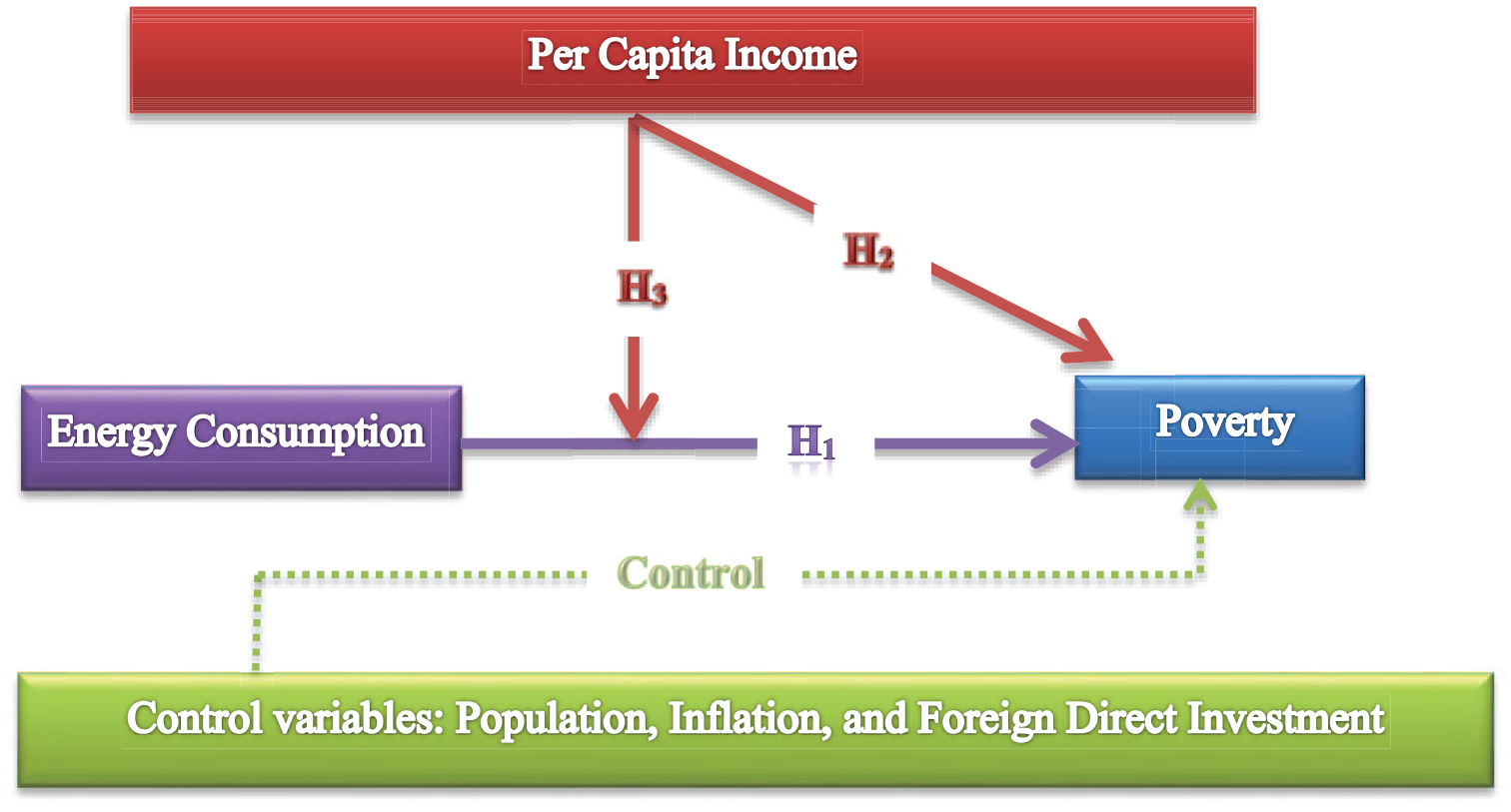
Conceptual framework.
Dataset narratives and sources
This study attempts to analyze the moderating role of PCI in energy consumption-poverty nexus. To this end, secondary data spanning from 1984 to 2018 is utilized. The operationalization of the study variables are depicted in the Table 1.
Variables description.
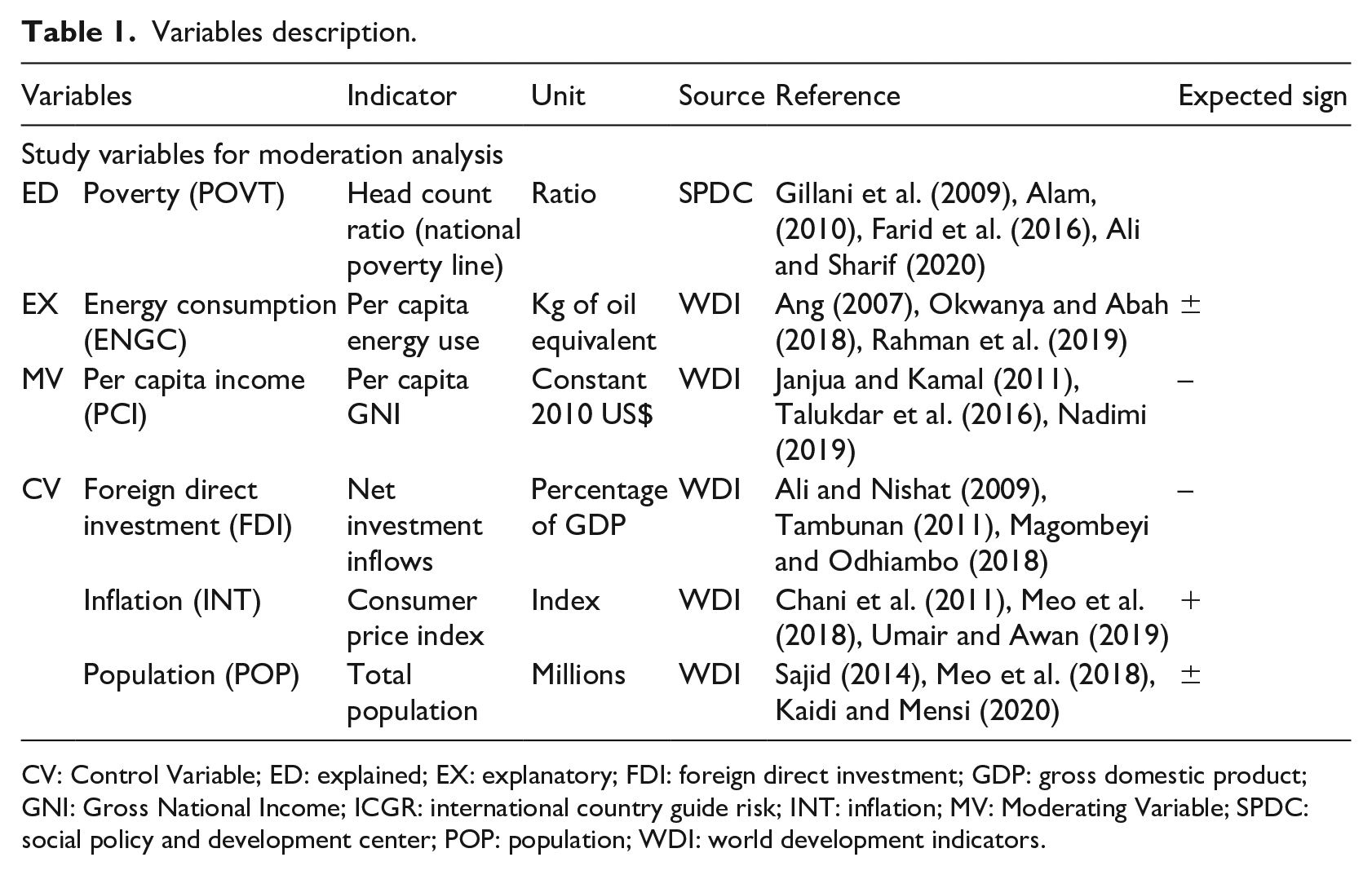
CV: Control Variable; ED: explained; EX: explanatory; FDI: foreign direct investment; GDP: gross domestic product; GNI: Gross National Income; ICGR: international country guide risk; INT: inflation; MV: Moderating Variable; SPDC: social policy and development center; POP: population; WDI: world development indicators.
Model building and description
According to Muli et al. (2017), when two variables, explanatory (EX) and explained (ED), are related, the moderating effect could be as follows:
Enhancing: if moderator increases, it would increase the effect of EX on ED;
Buffering: if moderator increases, it would diminish the effect of EX on ED;
Antagonistic: if moderator increases, it would reverse the effect of EX on ED.
Several authors have used two models (with and without interaction effect) to test the moderation using secondary time series data (Hoque and Yakob, 2017; Katircioğlu and Taşpinar, 2017; Rahman et al., 2019; Saberi and Hamden, 2019 among others). This study will follow the model building methodology of Baron and Kenny (1986) that are employed by Saberi and Hamden (2019) and Rehman et al. (2019). To scrutinize the moderation effect of PCI on the energy consumption-poverty (ENGC-POVT) relationship, this study adopts multiple regression hierarchical models setup. According to Baron and Kenny (1986), the following hierarchical regression can be employed in order to inspect the incidence of moderation.
Functional form of the model
Model A: (Main effect).

Model B: (Interactive effect).

Econometric form of the model
Model A: (Main effect).

Model (A) shows the effect of ENGC, PCI, and control variables (FDI, INT, and POP) on POVT. Equation (3) evaluates only main effects.
Model B: (Interactive effect).

Model (B) illustrates the effect of ENGC, PCI, the interaction of ENGC and PCI, and control variables on POVT. This model is the basic one to find out the moderating effect of PCI on the association between energy consumption and poverty. Equation (4) evaluates the moderation effect. For PCI to be a moderator, the γ6 term must prove to be significant; otherwise, PCI would consider as another explanatory variable of the poverty model.
Auto Regressive Distributed Lag (ARDL) model
With the purpose of testing moderation, this study applied Auto Regressive Distributed Lag (ARDL) bounds testing approach pioneer by Pesaran et al. (2001). This approach is effective because of its ability to determine the short-run and long-run relationship and produce reliable results in the case of small sample size (Haug, 2002; Pesaran et al. 2001). Unlike traditional co-integration techniques such as Johansen and Juselius (1992) co-integration, which require unique integration order, it is applicable irrespective of the integration order, that is, the variables could be stationary at levels, first difference or combination of both (Shrestha and Bhatta, 2018; Syed, 2021). The parsimonious nature of ARDL lays in its ability to work with a single equation model. Finally, it offers unbiased long-run outcomes and correct t-statistic regardless of endogeneity in the series (Appiah, 2018; Ullah et al., 2016).
General ARDL model
For moderation analysis, the ARDL models (poverty model-A and poverty model-B) can be written in its general form as follows.
Poverty Model A: (Main effect).
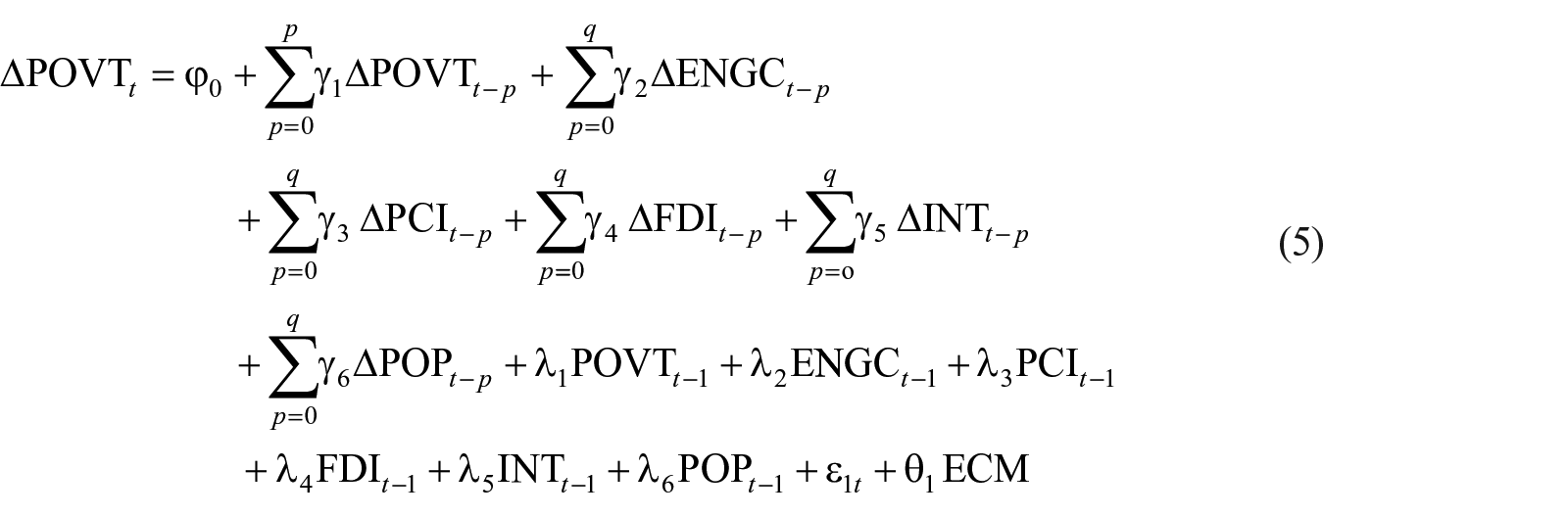
where POVT is the regressand, ENGC and PCI are the regressors, and INV, INT, and POP represents the control variables used in the model A of moderation analysis. ∆ is defined as the first difference operator. Here, ϕ0 is the intercept and γ1–γ6 is the short run coefficients while λ1–λ6 denotes the long-run coefficients and θ1 is the ECM coefficient. Finally, ε1t is normally distributed error term of this model.
Poverty Model B: (Interaction effect).
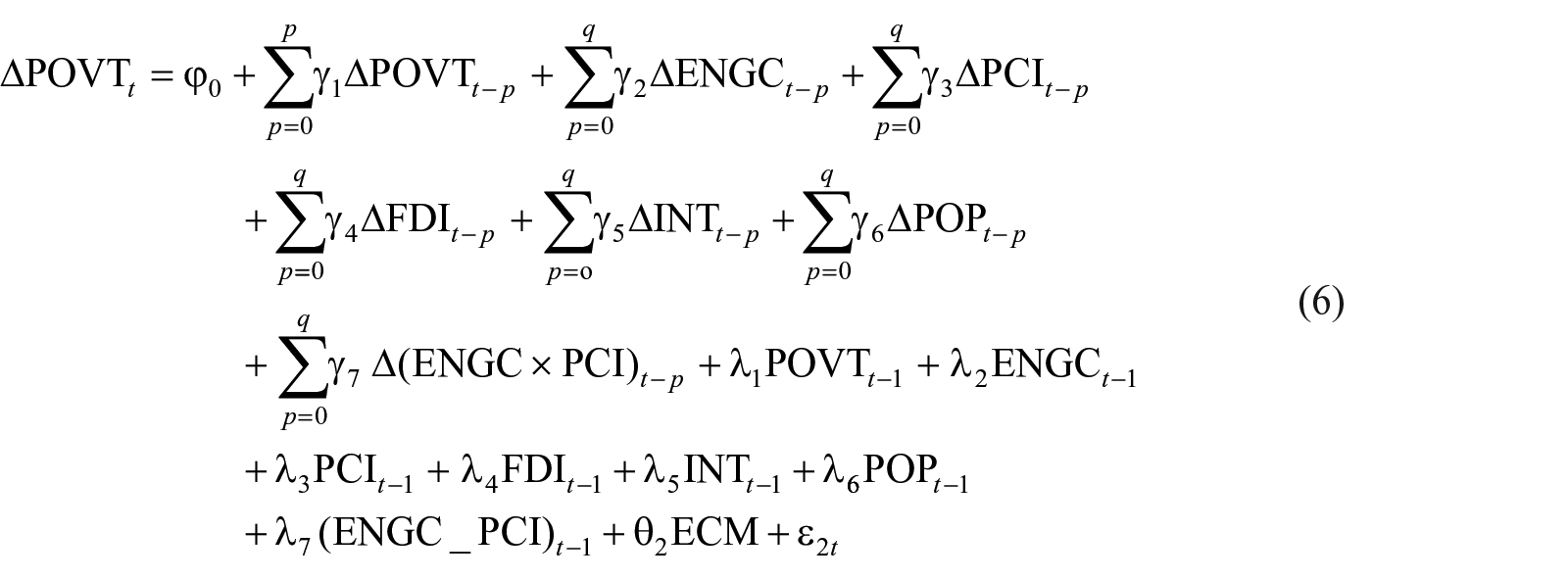
where POVT is the explained variable, ENGC is the explanatory variables, PCI is the moderator, PCI_ENGC is the interaction term, and INV, INT, and POP represent the control variables used in the model B of moderation analysis. ∆ is defined as the first difference operator. Here,
Empirical results
Preliminary analysis
Descriptive statistics
Table 2 reports the descriptive statistics of the modeled variables. The minimum values (−1.8823, −2.1566, −1.4214, 2.1645, 1.8429, and −0.8954) and maximum values (1.4928, 1.5021, 2.4117, 2.1645, 1.842, and 3.3351) corresponds to POVT, ENGC, PCI, INT, POP, and FDI, respectively, do not lie far away from their mean values thereby depicting the degree of stability. Standard deviation (SD) is the measure of variability. The value of SD is (one) for all series that is closer to their mean value (i.e. zero). It indicates that the distribution of the series is spread around their mean. The data for moderation analysis is standardized, zero mean and one standard deviation is the property of such transformed data. The Jarque–Bera values (4.1420, 2.8101, 2.9096, 4.8137, 1.8563, and 45.1260) of POVT, ENGC, PCI, INT, POP, and FDI respectively are insignificant at all significance levels which shows that series are normally distributed.
Descriptive statistics.
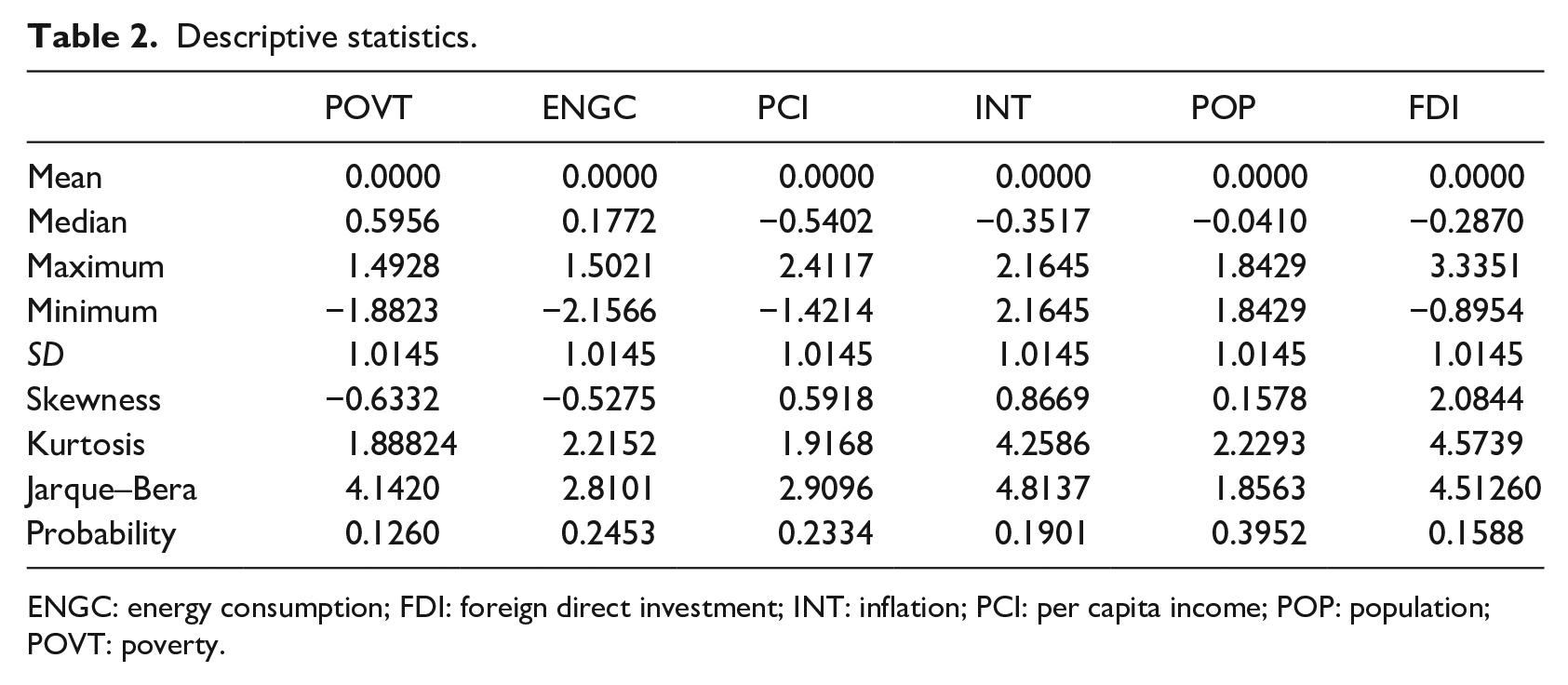
ENGC: energy consumption; FDI: foreign direct investment; INT: inflation; PCI: per capita income; POP: population; POVT: poverty.
Correlation analysis
To avoid the issue of multicollinearity prompted by the interaction term, we have standardized the model variables (Muli et al., 2017). It is obvious from the low correlations between the interaction term (PCI ENGC) and the individual terms (PCI) and ENGC that the analysis is devoid of multicollinearity. Table 3 shows the findings of correlation matrix of the variables for moderation analysis. Result confirms that there is no problem of multicollinearity in the data as none of the coefficient exceeds 0.60.
Correlational matrix.
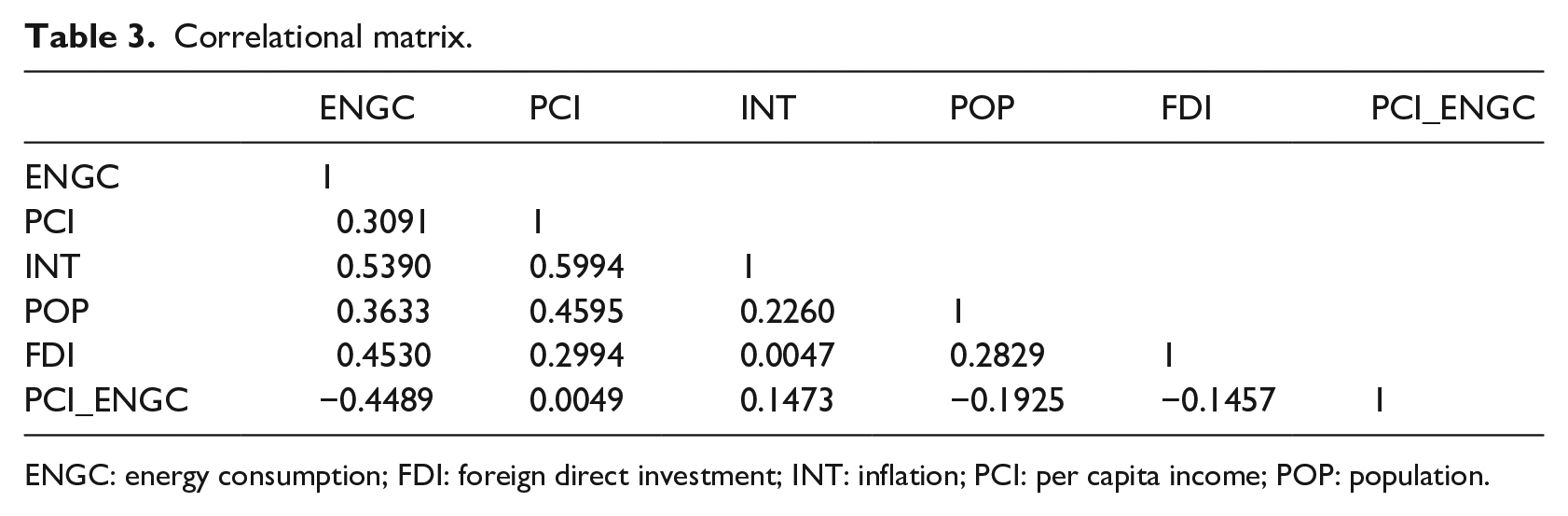
ENGC: energy consumption; FDI: foreign direct investment; INT: inflation; PCI: per capita income; POP: population.
Unit-root tests
To evaluate the stationarity characteristics of our variables, we have applied two types of unit-root tests, NG-Perron and KPSS. These tests are more reliable and robust for detecting unit root, especially for small sample size (Ali et al., 2020). The null hypothesis of KPSS test presents trend stationary series. The null hypothesis, under NP test, for the statistics of MZa and MZb shows the presence of unit root, while MZB and MZT show the absence of unit root. Table 4 showcases the results of unit-root tests, the outcomes of which affirm mixed order of integration.
Results of unit-root tests.
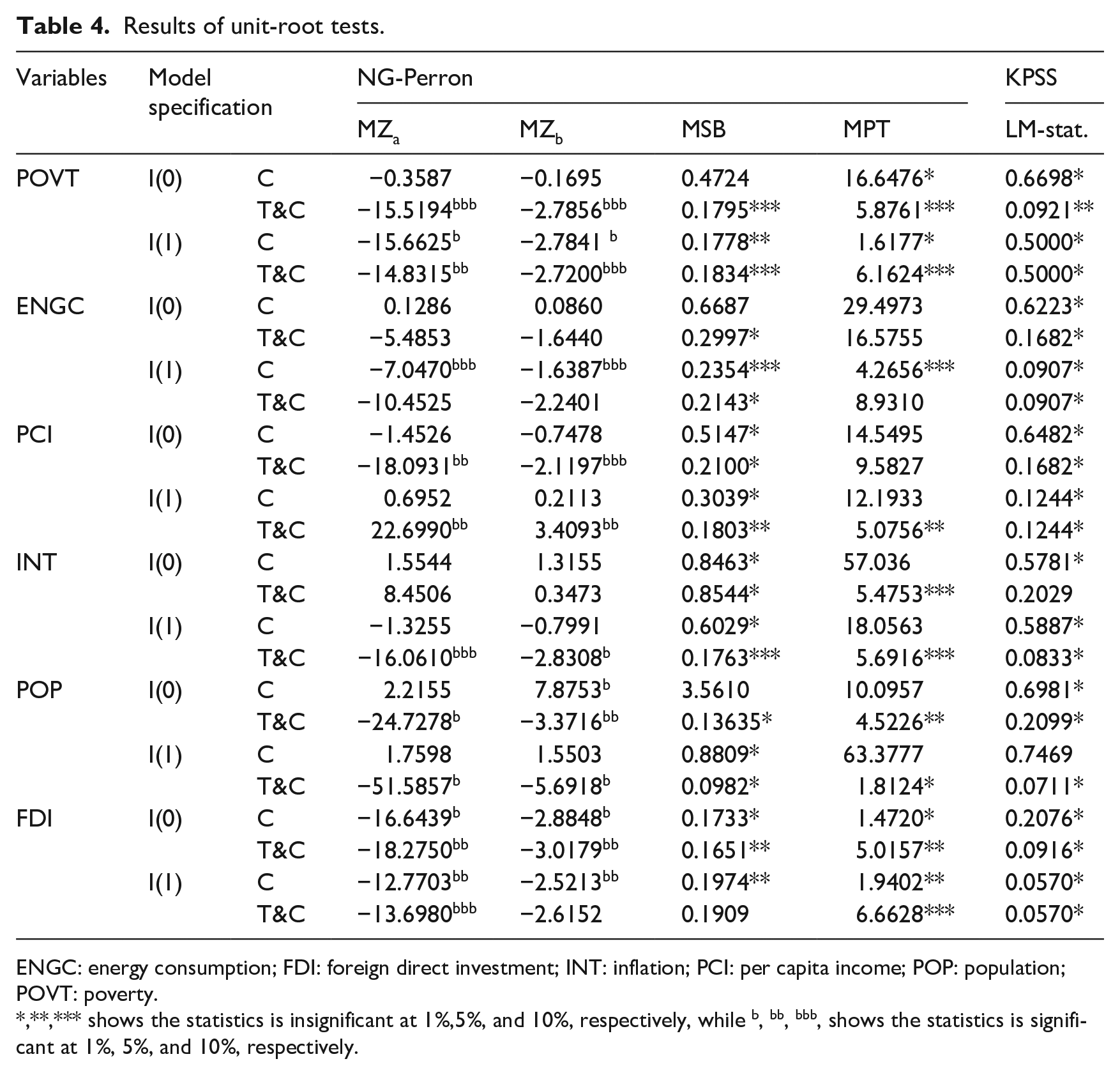
ENGC: energy consumption; FDI: foreign direct investment; INT: inflation; PCI: per capita income; POP: population; POVT: poverty.
,**,*** shows the statistics is insignificant at 1%,5%, and 10%, respectively, while b, bb, bbb, shows the statistics is significant at 1%, 5%, and 10%, respectively.
ARDL test results
To select the appropriate lag order, we employ the Schwarz Bayesian Criterion (SBC). The SBC is relatively more effective as it causes less loss of degrees of freedom. For the poverty model A, ARDL (1, 1, 1, 0, 1, 0) is the optimal lag order model whereas, for poverty model B, ARDL (1, 1.0, 1, 1, 1, 0) is the optimal lag order model that is automatically selected by software under SBC.
We have reported the bounds test results in Table 5. The computed F-statistic for model (A) is 49.08, whereas 27.16 is the calculated F-statistic of the model (B). It is evident that these calculated values of F-statistics are higher than their respective critical-upper-bounds, which entails that co-integration exist among the study variables.
Bound test outcomes.
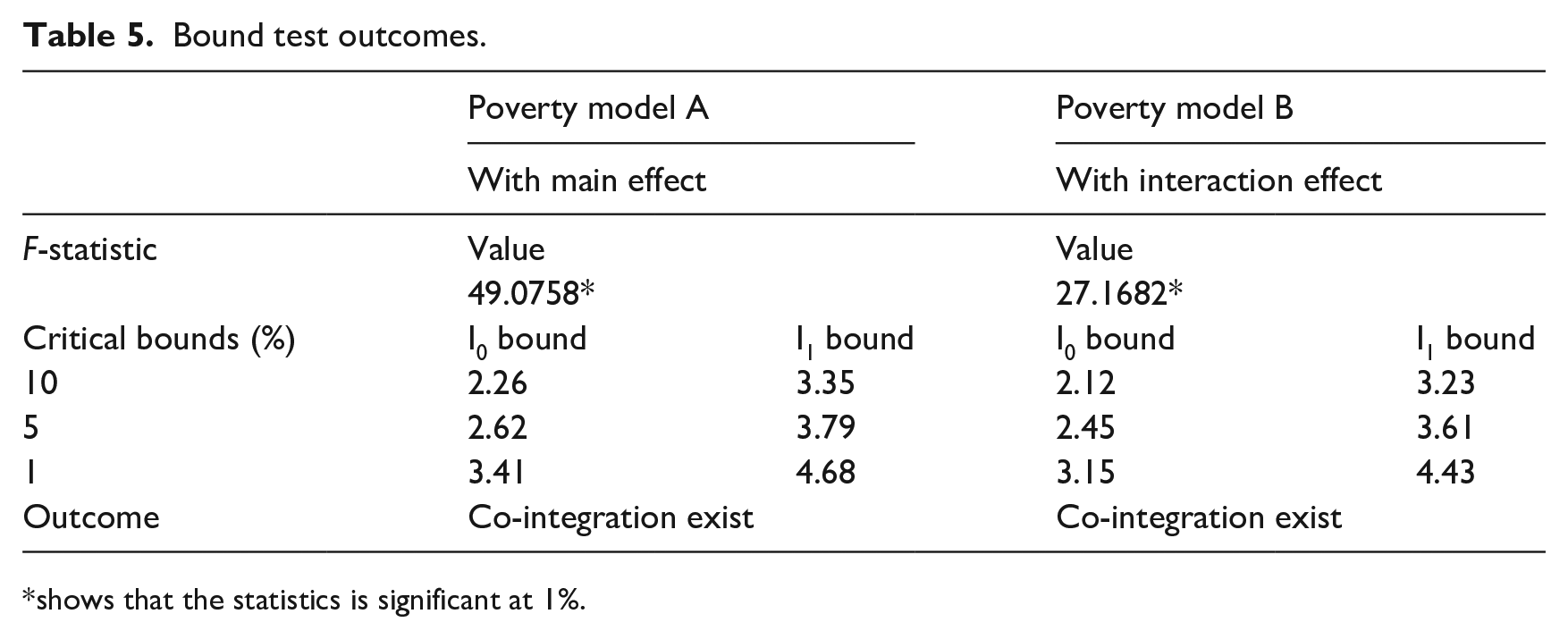
shows that the statistics is significant at 1%.
To determine the short- and long-run effects, we have devised two models. Poverty model A is built up to securitize the main effects of the regressors on the outcome variable. After approving the good-fit of poverty model A, poverty model B is regressed by adding the interaction term of (PCI_ENGC) on the top of explanatory and control variables in Table 6.
ARDL co-integration: Long-short run relationship.
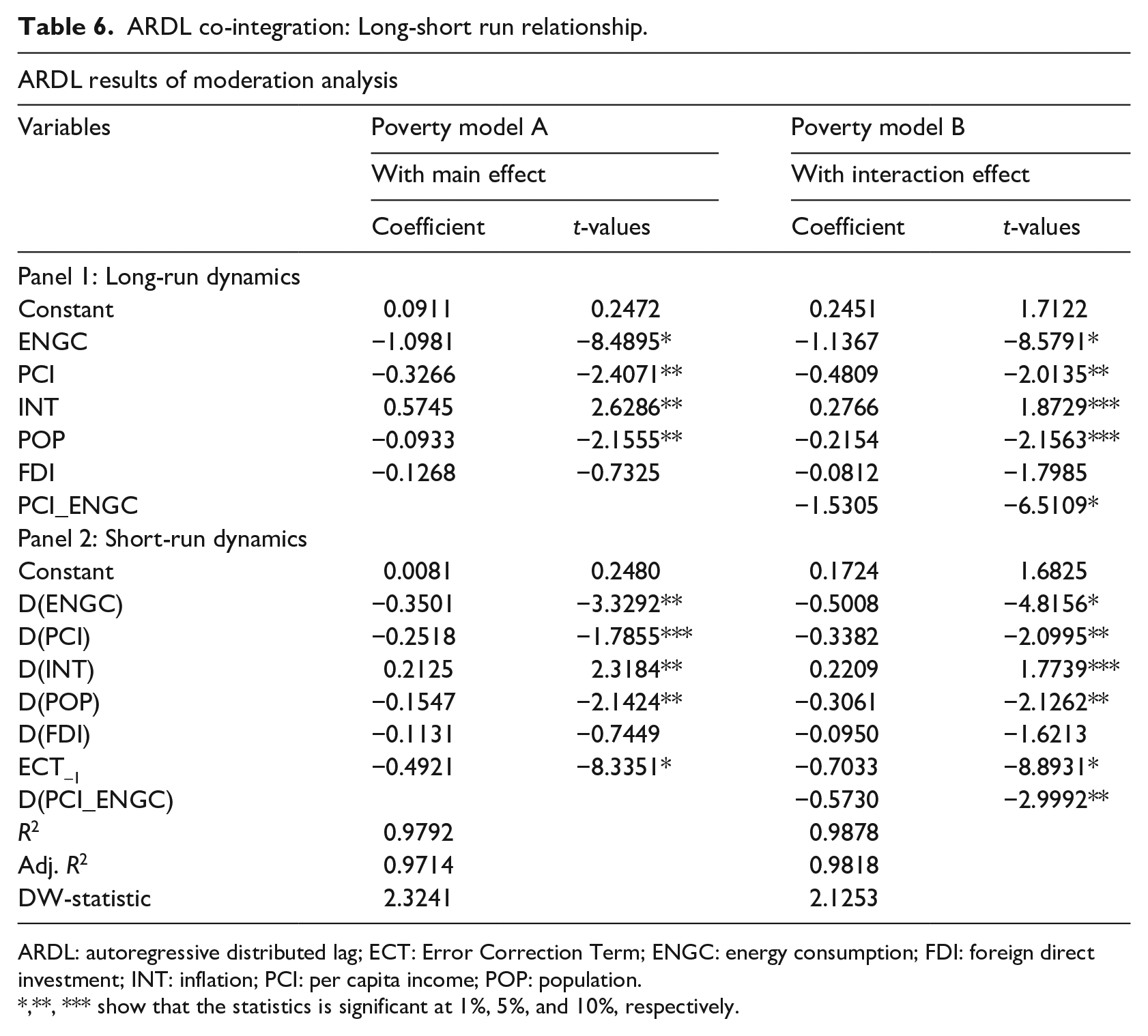
ARDL: autoregressive distributed lag; ECT: Error Correction Term; ENGC: energy consumption; FDI: foreign direct investment; INT: inflation; PCI: per capita income; POP: population.
,**, *** show that the statistics is significant at 1%, 5%, and 10%, respectively.
The empirical results reveal that energy consumption and per capita are significant and negatively associated with poverty in both short- and long-run as illustrated in the models A and B. These outcomes are similar to the findings of Hussein and Filho (2012), Kunofiwa (2021), Nkomo (2017), Ogbeide and Evelyn (2020) and Sakanko and David (2018) in the literature. Moreover, the significant and inverse relationship between income and poverty are also congruent with the previous studies (Ali and Sharif, 2020; Janjua and Kamal, 2011; Satti et al., 2015; Tombolotutu et al., 2018).
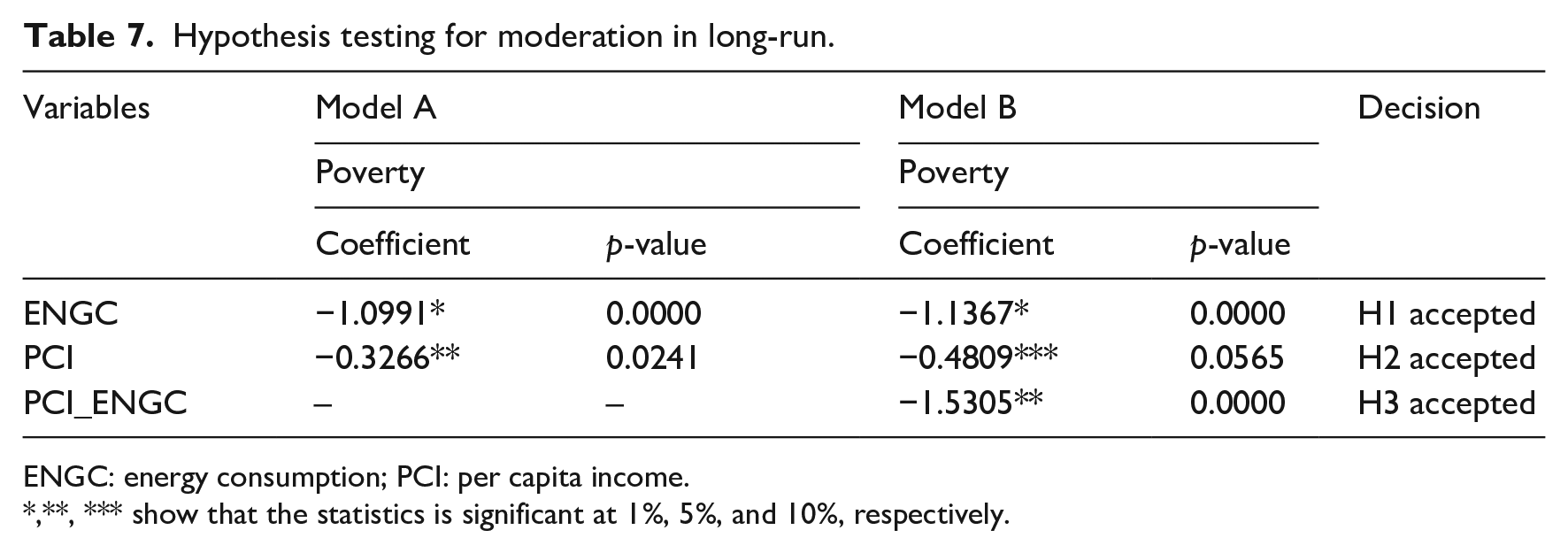
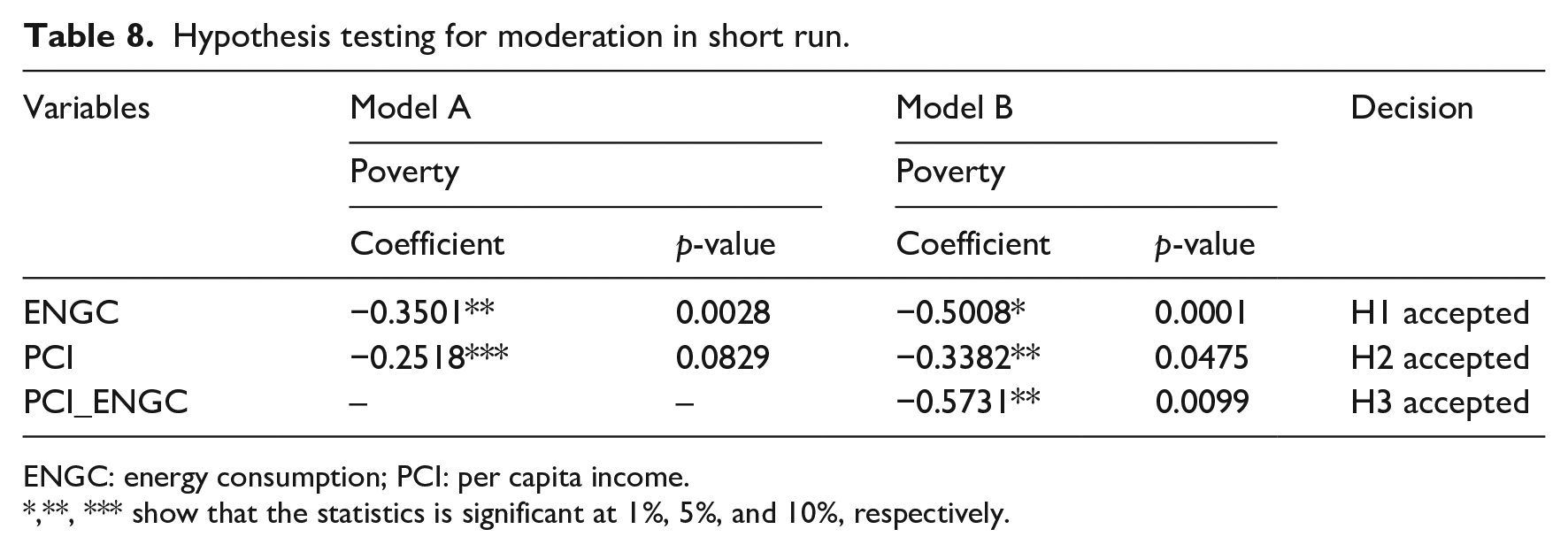
The assessment of moderation is gauged through the interaction term of income and energy consumption in the poverty model B. The significance of interaction term demonstrates the moderating effect of PCI on the affiliation between energy consumption and poverty in the short- and long-run. The coefficient of this combined effect (PCI_ENGC) has negative sign and greater in magnitude (i.e. 1.5305 in the long-run and 0.5730 in the short-run) as compared to the main effect (i.e. 1.0981 in the long-run and 0.3501 in the short run). Consequently, the moderating impact of PCI is enhancing. It specifies that ceteris paribus, one standard deviation increase in the PCI augments the impact of energy consumption in alleviating poverty by 0.4324 standard deviation (i.e. 1.5305–1.0981) in the long-run and 0.2229 standard deviation (i.e. 0.5730–0.3501) in the short-run.
The error correction term refers to how the error, or divergence from a long-run equilibrium, affects the short-run dynamics of a system. As a result, it explicitly predicts the time it takes for a dependent variable to return to equilibrium after other variables have changed. The error correction mechanism testifies the long-run co-integration relationship among variables (Kremers et al., 1992; Ullah et al., 2018). In this study, the negative coefficient of lagged value of the error correction term shows that error correction process is significantly convergent to the (long-run) equilibrium path. Moreover, the recovering speed from the past dis-equilibrium to current year’s equilibrium is approximately 49% (as depicted by model A) and 70% (as depicted by model B).
Regarding the results of control variables, inflation is found to be a significant contributor to the poverty through its ability to limit real purchasing power (see Danlami et al., 2020; Hassan et al., 2016); while increasing population is translated as a factor of production and hence, it does not add to the poverty which is in line with (Cruz and Ahmed, 2018; Sajid, 2014) studies. Moreover, we observed that in the absence of other variables, foreign direct investment has no compelling effect in alleviating Pakistan’s poverty. This outcome is consistent with the findings of Ogunniyi and Igberi (2014) and Magombeyi and Odhiambo (2017).
Hypothesis assessment for moderation
All three moderation hypotheses are accepted for both long-run and short-run. Table 7 shows the hypothesis testing for moderation in the long-run, whereas, in the Table 8, short-run hypothesis testing for moderation is portrayed.
Hypothesis testing for moderation in long-run.
ENGC: energy consumption; PCI: per capita income.
,**, *** show that the statistics is significant at 1%, 5%, and 10%, respectively.
Hypothesis testing for moderation in short run.
ENGC: energy consumption; PCI: per capita income.
,**, *** show that the statistics is significant at 1%, 5%, and 10%, respectively.
Since the hypothesis of moderation is acknowledged. Therefore, this paper, with the aid of ARDL, approves the moderation of PCI on the energy-poverty nexus in the context of Pakistan.
Diagnostic tests
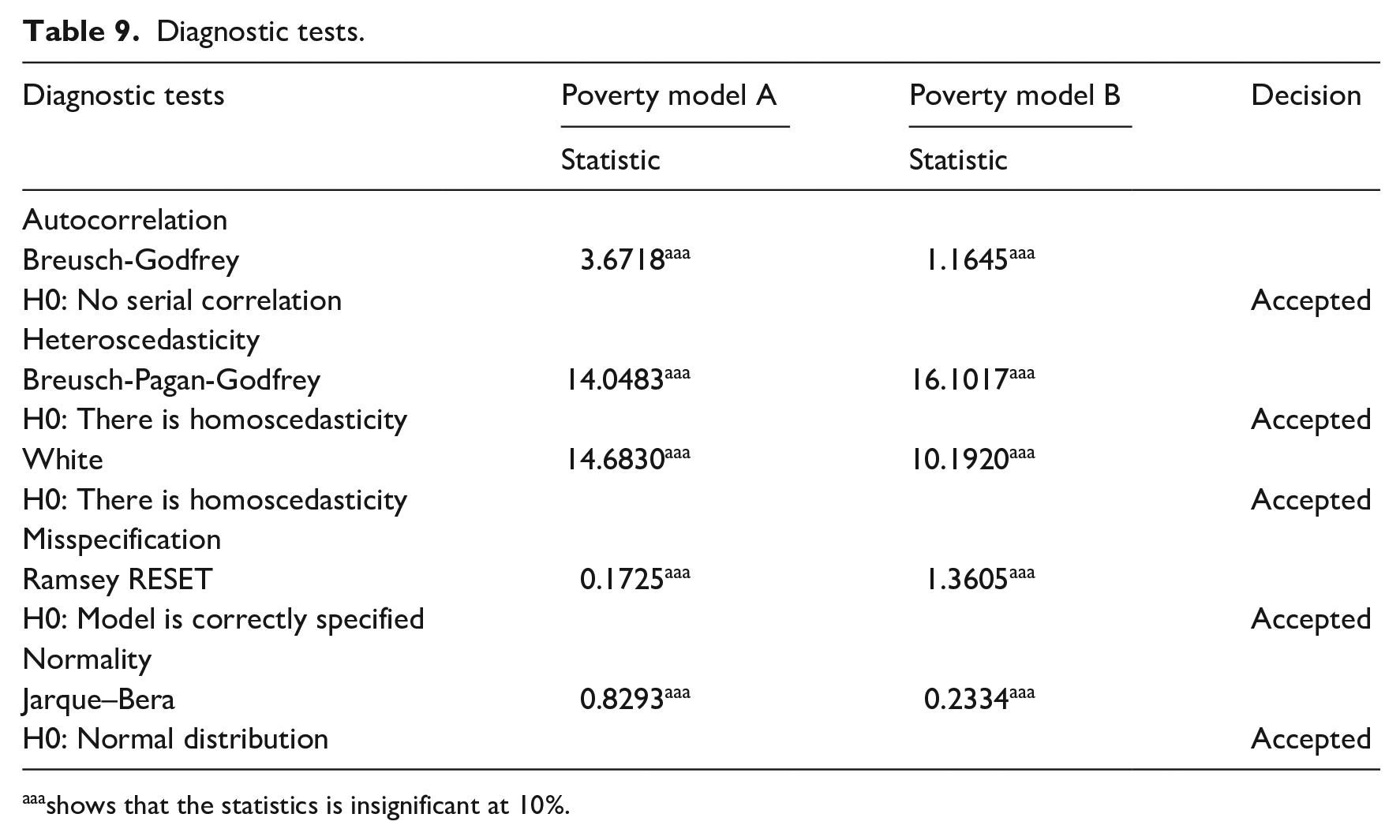
The statistic values of the applied tests are insignificant at all levels, thereby leading to accept the null hypothesis and concluded that both models (A) and (B) are free from the issues of non-normality (i.e. disturbance terms are equally identically distributed), no correlation between the successive residual terms, no heteroscedasticity (i.e. disturbances have constant variance), no model misspecification. We have reported the diagnostic tests in Table 9.
Diagnostic tests.
shows that the statistics is insignificant at 10%.
Finally, to check the stability of models (A) and (B), the CUSUM and CUSUMSQ tests have been applied, presented in Figures 4(a), 4(b), 5(a) and 5(b), which depicts that the value of CUSUM and CUSUMSQ are well inside the two lines of significance, thereby verifying the stability of parameters in both models (A) and (B).
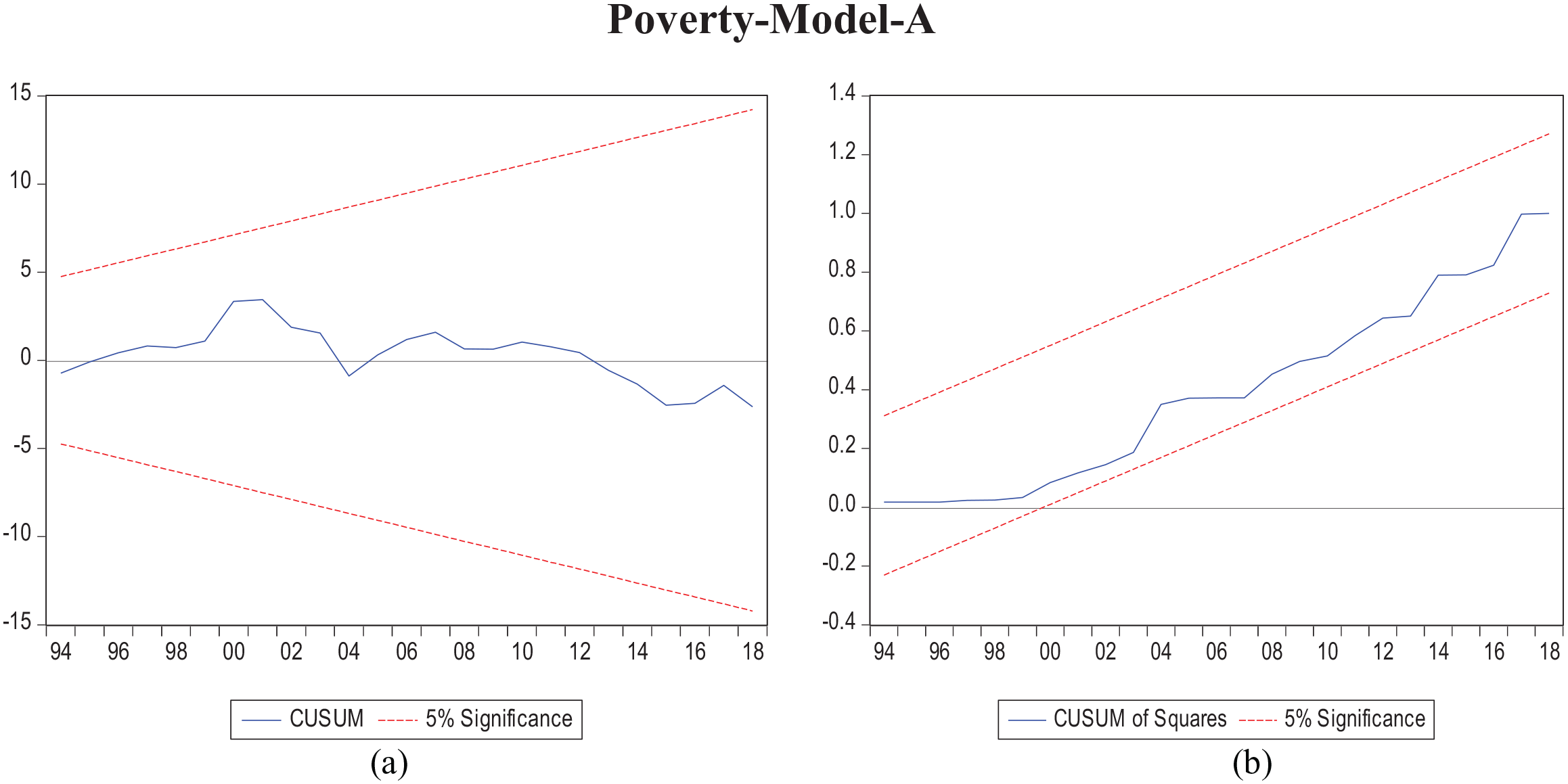
Poverty model A. (a) Plot of CUSUM test. (b) Plot of CUSUMSQ test.
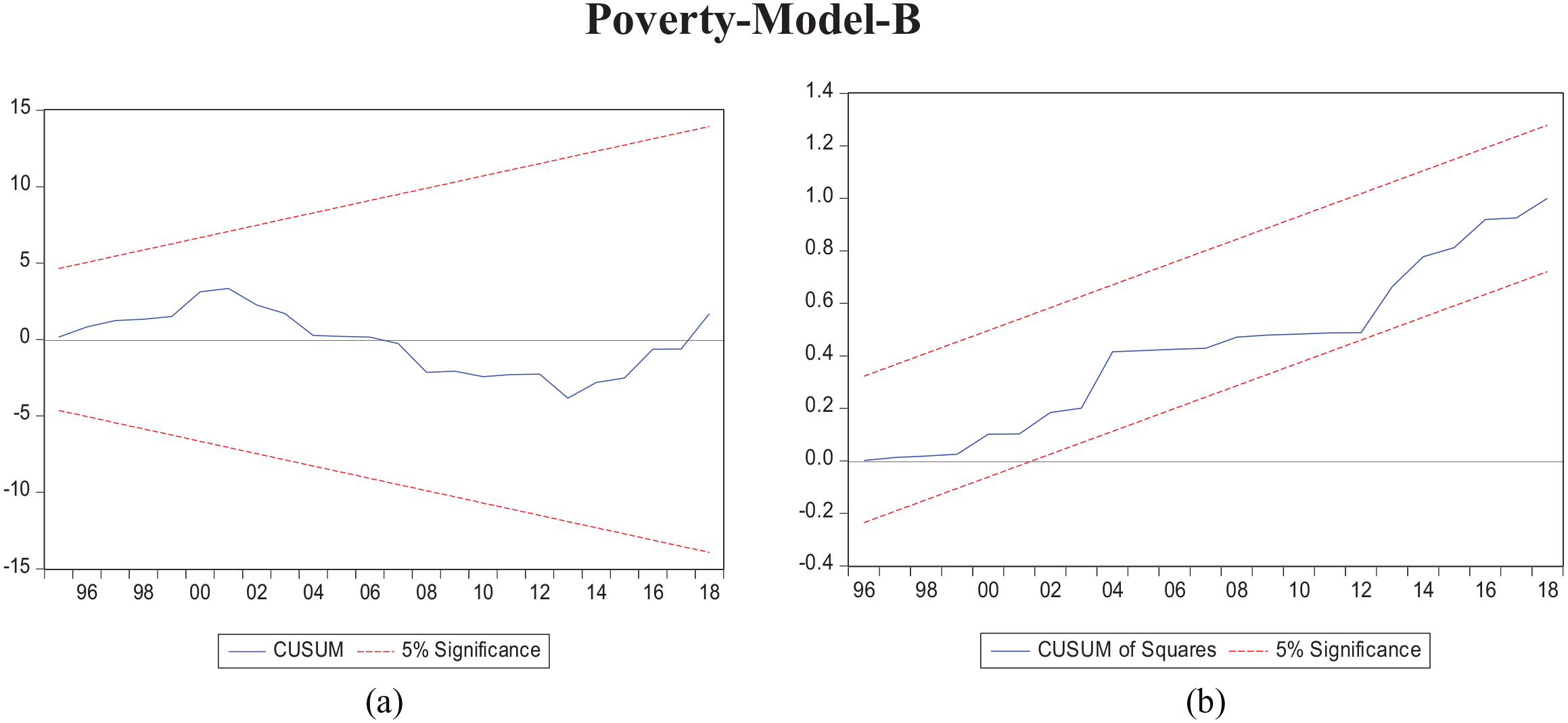
Poverty model B. (a) Plot of CUSUM test. (b) Plot of CUSUMSQ test.
Conclusion
Satisfaction of the basic wants is the utmost priority of every human being, and energy acts as a vital element in the provisions of several basic necessitates such as clean water, cooked food, and warmth. In developing countries like Pakistan, there is a dire need to analyze the impact of energy consumption on poverty by incorporating other aspects such as the income per capita utilized as a moderator in our study.
In corollary, this study not only explored the importance of energy consumption as a determinant of poverty mitigation but analyzed the prevalence of moderating role of PCI on the link between energy consumption and poverty. For moderation analysis, we designed two poverty models that is A (the main effect model) and B (the interaction effect model). We observed a significant moderating influence of PCI on the association between energy consumption and poverty in both short- and long-run. In developing nations, such as Pakistan, many people are deprived of better energy sources owing to low per capita earnings. If they experience a rise in their earnings, it will have a substantial impact on raising their utility through consuming more commodities (relatively more superior energy). When a poor household fulfills their basic consumption of (relatively cleaner) energy products, it will stimulate them to experience a relatively better quality life-style. This will have a definite impact on raising their well-being and prosperity, which, in turn, will diminish poverty in the country.0
Our empirical findings also corroborate that the role of PCI as a moderator enhances the impact of energy consumption in alleviating poverty. Basically, in the case of Pakistan, PCI is established to limit energy consumption in combating poverty and offers an opportunity to the poor people to smooth their energy consumption patterns in the short- and long-run. Interestingly, the combined effect of PCI_ENGC is found to be more promising than the direct effect of ENGC itself in mitigating poverty. Finally, the utilized diagnostic tests unravel that our estimations are reliable and can be deemed worthy of policy decisions.
Implications of the study
Based on the empirical findings, this study set forth the following recommendations. The study found significant and inverse link between PCI and poverty. Therefore, the Government of Pakistan should take notice of the imprudent management pertaining to the employment sector. Our study reveals that PCI has a dual role, that is, on one hand, it has a direct effect on reducing poverty, and on the flip side, it plays a vital role as a moderator. In this respect, it is advisable to policymakers that while strengthening the income generating opportunities, they must embark on some development programs aiming to equip people to be more productive and attain decent viable living. This can be achieved by designing policies aiming to espouse favorable circumstances for decent work. In corollary, enhanced technologies and relevant training will bolster productivity. Such measures will ultimately open new doors to trade and manufacturing; resultantly, the living standards of the working poor people will improve. In a nutshell, policies devoted to accelerate the PCI serve as an antidote to poverty mitigation in Pakistan. Energy consumption has been identified as a crucial variable in combating Pakistan’s poverty. Consequently, it is recommended that the Pakistani government look into delivering lower cost, higher quality (cleaner) energy to the poor. This would raise people’s ingenuity, and propel Pakistan’s disadvantaged population’s welfare and prosperity.
Limitations and future research directions
This study enlightens the moderating role of PCI in relationship with energy-poverty. Moreover, it underscores the role of energy consumption in mitigating poverty in Pakistan. This study has few limitations: first, we employed Head Count Ratio (at national poverty lines) to measure the poverty. Future researchers may explore alternative indicators of poverty at different poverty lines. Second, we conducted this study is in the context of Pakistan. As we know that poverty is a global issue, future researchers may examine moderating role of PCI pertaining to poverty and energy consumption in the context of other developing countries.
Footnotes
Declaration of conflicting interests
The author(s) declared no potential conflicts of interest with respect to the research, authorship, and/or publication of this article.
Funding
The author(s) received no financial support for the research, authorship, and/or publication of this article.

Data accessibility statement
The datasets used and/or analyzed during this study are available from the corresponding author upon reasonable request.