




Abstract
African countries are urbanizing rapidly, presenting complex challenges for urban waste management. A compelling nexus between urbanization and waste management can be found in Kigali, the capital and largest city in Rwanda. Since its founding in 1907, the city of Kigali has witnessed steady growth in terms of both population and geographical boundaries. Using mainly qualitative methods, this study provides an empirical survey of waste management practices in post-genocide Rwanda with an emphasis on the city of Kigali, the capital. The study analyzed current regulatory arrangements and legislative instruments, approaches to public cleaning, and minimization, collection, and final disposal of wastes. We found Kigali to be an exceptionally clean city with carefully organized and well-coordinated waste management service delivery systems in place. Conversely, the absence of effective minimization strategies, coupled with a lack of safe treatment and disposal facilities, militate against sustainable waste management.
Introduction
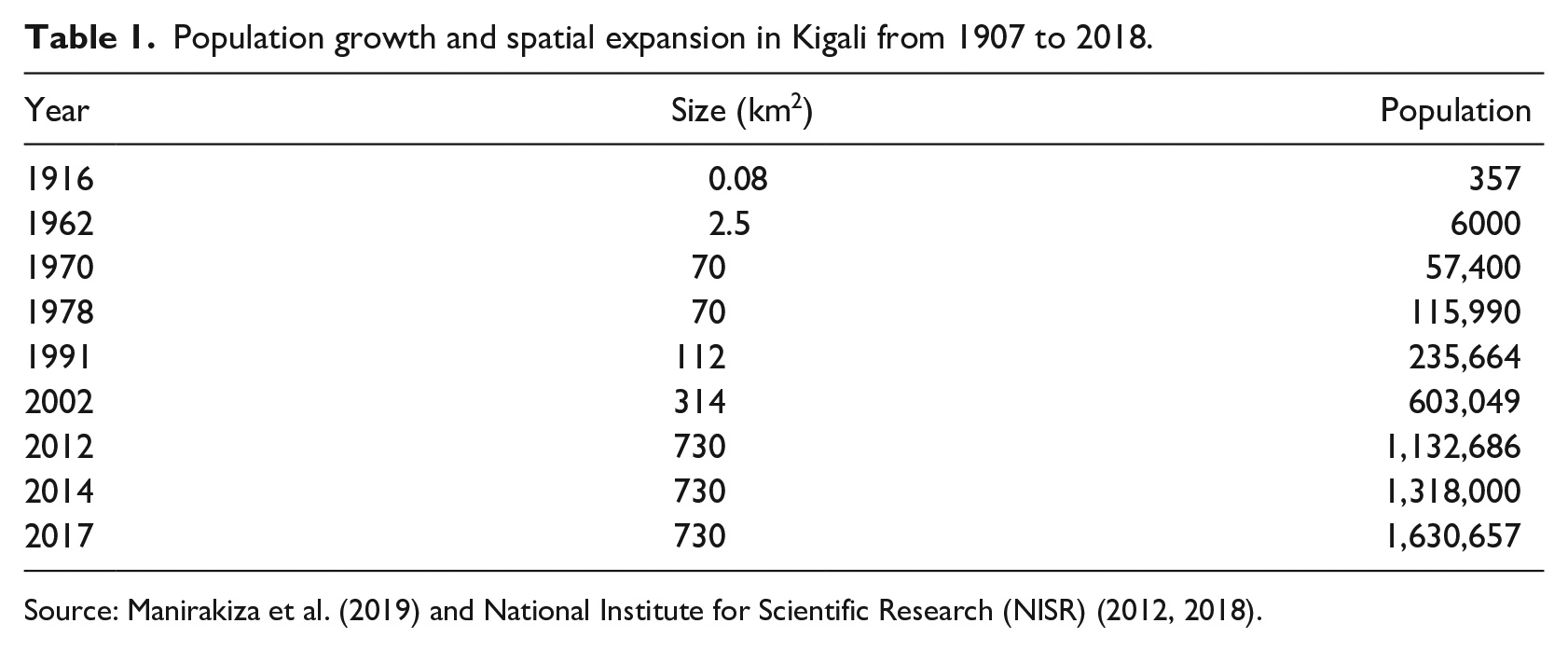
Cities in sub-Saharan Africa are growing rapidly, and in the past few decades some have attained “mega-city” status with populations exceeding millions of permanent inhabitants as well as regular commuters and visitors (Fekade, 2000; Hardoy et al., 2001). Such high rates of urbanization logically translate into the generation of massive volumes of waste per capita since most human activities produce some amount of refuse. Conversely, urban waste management presents complex challenges for urban administrators, the extent of which is widely documented (see, for example, Izeogu, 1989; Manga et al., 2008; Mwafongo, 1991; Onibokun and Kumuyi, 1999). Chief amongst such challenges include inadequate access to safe storage, collection, transportation, treatment, and disposal facilities. This results in the elevation of environmental and human health risks, which often culminate in disastrous consequences (see, for example, Abayomi, 2018; Almazán-Casali et al., 2019; Ayininuola and Muibi, 2008; Boadu and Kuitnenen, 2003; Ezeah and Roberts, 2014). While urban growth contributes to excessive waste generation rates in African cities, sustainable management strategies (reduce, reuse, recycle) are hardly prioritized, adding a layer of aggravation to the problem (see, for example, Cointreau, 1982; Getahun et al., 2012; Poerbo, 1991; Simatele et al., 2017). A compelling nexus between urbanization and waste management can be found in Kigali, the capital and largest city in Rwanda, a landlocked country straddling Central and East Africa. Since its founding in 1907, the city has witnessed steady growth in terms of both population and geographical boundaries (see Table 1).
Population growth and spatial expansion in Kigali from 1907 to 2018.
Prior to the Rwandan civil war and genocide against the minority Tutsi ethnic group in the 1990s, there were no effective arrangements governing urban waste management in the country. As a result, waste pollution characterized the Rwandan urban landscape, reaching a crisis point during the civil war due to the collapse of public institutions as well as the subsequent loss of human, technical, and financial resources. The return of many displaced citizens to the country after the conflict further accelerated urban growth, especially in the capital city of Kigali (Manirakiza, 2019), with no effective plan for waste management. At the end of the civil war, much of the country’s attention focused on reconciliation and nation-building, which further relegated the waste management situation to the background. In the year 2000, however, the focus shifted to sustainable development and waste management finally received some much-needed national attention. This was realized through a national consultative process spear-headed by post-genocide leaders aimed at giving Rwandans the opportunity to clearly define the future of the country following the devastation caused by the civil war and genocide (Government of Rwanda, 2000). During the consultations, the need for improved and sustainable waste management practices emerged as a priority area and the objective was set to endow each locality in the country with adequate units for treating and disposing of solid wastes by the year 2020 (Government of Rwanda, 2000). These objectives were enshrined in Rwanda’s Vision 2020 National Development Agenda, which was launched in 2000 and later revised in 2012. It has been two decades since the launch of the development agenda, yet not much is known or understood about the extent to which the waste management objectives set in the Vision 2020 Development Agenda have been met, due to a paucity of information in the literature. This study bridges this pertinent gap. Subsequently, we provide an analysis of institutional arrangements and regulatory instruments as well as approaches to the systemic management of municipal solid wastes in post-genocide Rwanda with an emphasis on the city of Kigali.
Materials and methods
Study area—city of Kigali
The city of Kigali is the capital and largest city, and one of the five provinces of Rwanda (see Figure 1). It covers a land area of 730 km2 and has a population of approximately 1.2 million inhabitants which has been projected to reach 4 million by the year 2040 (NISR, 2012). The city comprises three administrative districts (Akarere): Gasabo, Kicukiro, and Nyarugenge, which are subdivided into 35 sectors (Umurenge), 161 cells (Akagari), and over 1000 villages (Umuganda). Incorporated as a local government in 2005, urban governance is a preserve of the Kigali City Council (KCC), which comprises 11 councilors, six directly elected by the government and five appointed by the country’s president with the approval of cabinet. To ensure diversity and gender equity, each of the three districts—Gasabo, Kicukiro, and Nyarugenge—are legally required to elect an equal number of males and females to serve on the KCC. Each council member serves for a five-year term which is subject to renewal. The KCC performs a variety of functions including overseeing some aspects of urban waste management through its public health and environment program. The extent of the city’s involvement in waste management activities is documented in the findings of this study.
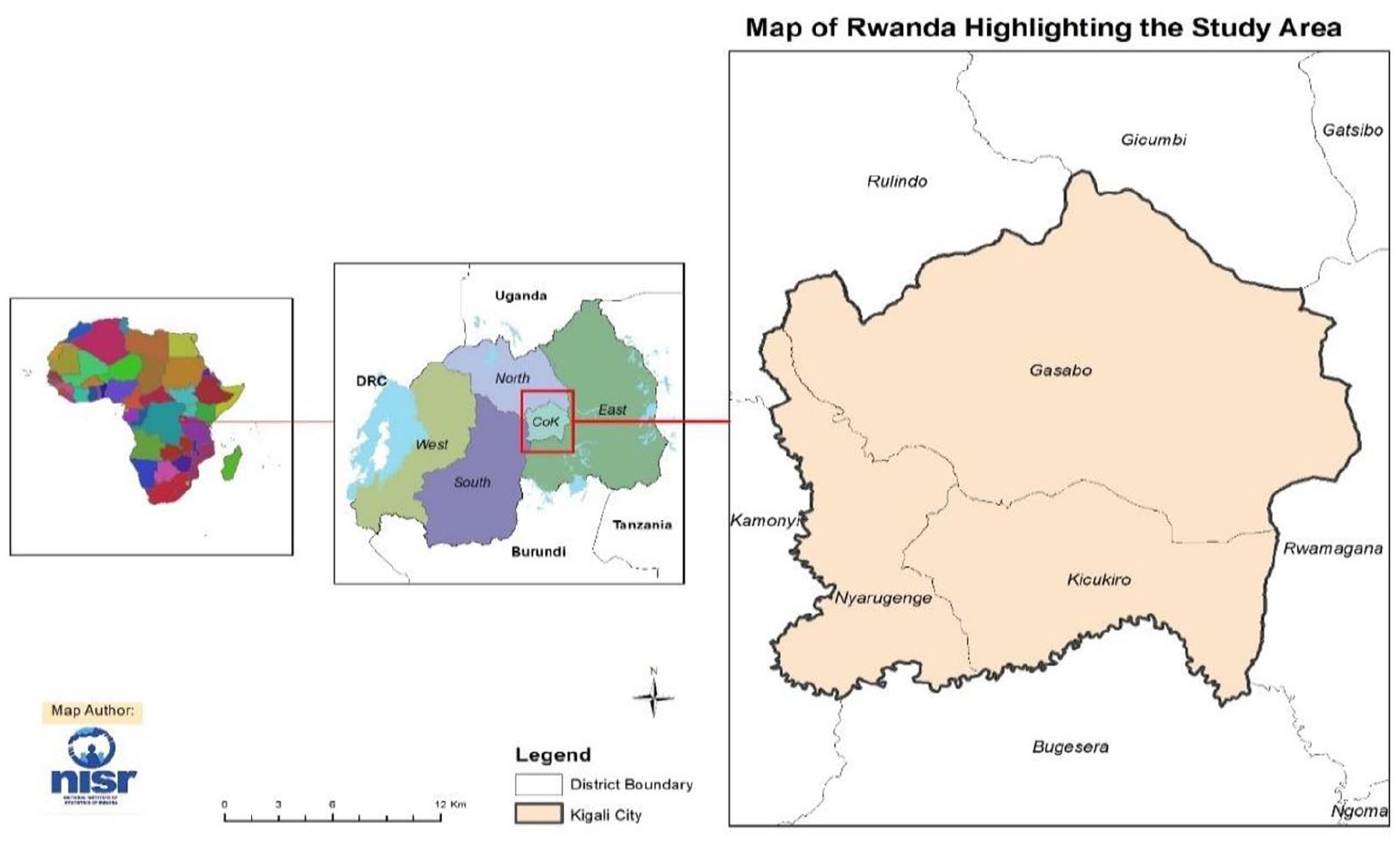
Map of the study area.
Data collection
Data were collated in all three districts of Kigali through a combination of methods including document analysis, interviews, and observation techniques. The analysis of official documents enabled an understanding of legislative and regulatory instruments pertaining to waste management service delivery in Rwanda. Documents reviewed include the National Sanitation Policy Ministerial Order No.4/DC/04 of June 7, 2004, which prescribes the annual fees payable by public utilities; Regulations on Solid Waste Collection and Transportation (2012); Regulations on Decentralized Wastewater Treatment Systems (2012); Regulations on Cleaning Services (2012); Guidelines on Liquid Waste Disposal and Treatment (2009); Guidelines on Standards for the Management of Waste Disposal Sites/Landfills (2009); and the Water and Sanitation Statistics of (2019). As Patton (2002: 293) has noted, notes, records, and documents constitute a rich source of information about institutions, organizations, and their programs, and this proved to be helpful in several ways including the drafting of the interview questions. An interview guide was also prepared based on the information garnered from the literature. In total, 20 semi-structured interviews were conducted with stakeholders drawn from both the public and private sectors. Interviewees were recruited through purposive sampling based on their familiarity and involvement with urban waste management. Officials from the Rwanda Utilities Regulatory Authority (RURA), Rwanda Environment Management Authority (REMA), Rwandan Standards Board (RSB), Water and Sanitation Corporation (WASAC), Rwandan Development Board, and the City of Kigali were recruited and participated in the study. Other interviewees were drawn from private sector participants including waste transporters, recyclers, and cleaning companies.
Participant and site observation techniques utilized during the data collection process involved multiple visits to the main waste disposal site at Nduba, located in the Gasabo district of Kigali. Additionally, cleaning and sanitation personnel operating in different parts of the city were observed at different times during the research. An observation checklist was used to collect data pertaining to waste segregation, storage, collection, transportation, treatment, and final disposal practices. The participant and site observation component of the data collection process allowed for the collection of data directly from individuals involved in the process of urban waste management. The data collected were carefully organized, open-coded, and analyzed for common themes. This type of data analysis provides a descriptive account of events and allows for cross-checking of information (Babbie, 2001). In order to provide a well-rounded analysis of the urban waste management situation in Rwanda, the data were triangulated with information provided by participants and verified by multiple sources (Denzin and Lincoln, 2003: 8). This approach has been shown to increase validity, credibility, and rigor in the research process (Guba and Lincoln, 1994).
Results and discussion
The findings of the study are delineated in terms of institutional arrangements and regulatory instruments as well as waste amounts and composition, minimization, public cleaning, collection, transportation, and disposal practices.
Institutional arrangements
Waste management activities in the city of Kigali are fragmented, with responsibilities entrusted to multiple agencies, mainly RURA, WASAC, REMA, and the KCC.
Rwanda Utilities Regulatory Authority (RURA)
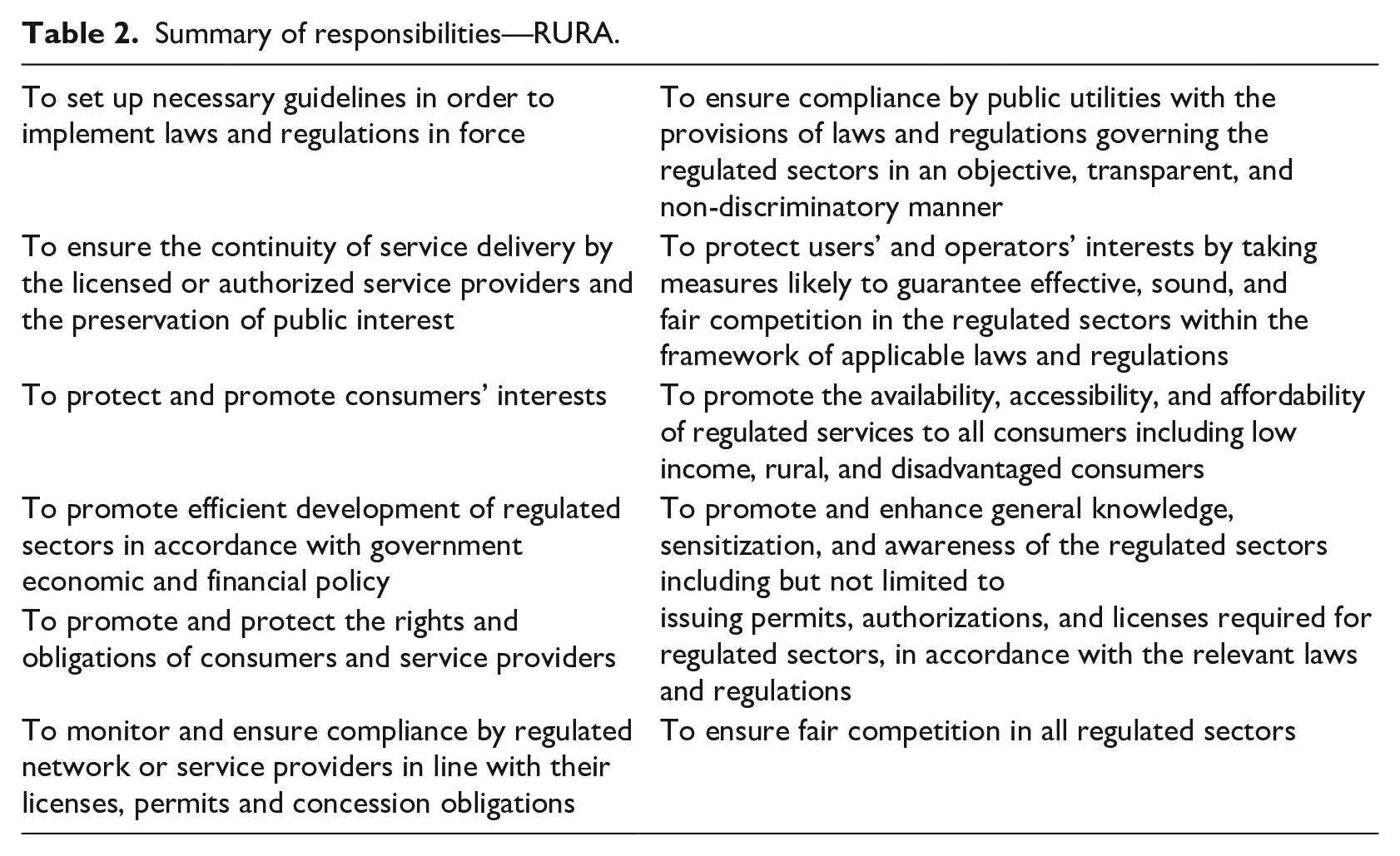
RURA is the chief regulator of public utilities in the country. Established in 2001 under Law no.39/2001 of September 13, 2001 (further reviewed and replaced by Law No.09/2013 of March 1, 2013, RURA undertakes several functions including the regulation of waste management service delivery. The agency’s main responsibilities involve overseeing public cleanliness through the collection, transportation, treatment, and disposal of wastes. In discharging its duties, RURA grants licenses to service providers and acts as an intermediary between policymakers, service providers, and consumers. RURA is also legally vested with the responsibility of ensuring fair competition among service providers while simultaneously promoting and protecting the rights and interests of consumers within regulated sectors (RURA, 2017). RURA is also authorized to carry out investigations and inspections at service delivery sites; impose administrative sanctions in case of a violation of laws and regulations; facilitate settlement of disputes related to regulated services; and issue directives to the regulated service provider as well as regulate tariffs (RURA, 2017). In so doing, RURA coordinates its activities with individual ministries responsible for each regulated sector and reports to the Office of the Prime Minister. A summary of the responsibilities of RURA is presented in Table 2.
Summary of responsibilities—RURA.
Rwanda Environment Management Authority (REMA)
REMA is mandated under Law no.63/2013 of August 27, 2013 to ensure national environmental protection, conservation, promotion, and overall management of the environment (Government of Rwanda, 2017). A central aspect of REMA’s role includes advising the government on all matters relevant to climate change and the environment. Although waste management is not explicitly stated as a responsibility of REMA, several aspects of its laws, regulations, policies, and practices deal with the subject, including the law prohibiting the manufacturing, importation, use, and sale of plastic bags and single-use plastic items in Rwanda. Another waste management regulation overseen by REMA pertains to the burial of toxic wastes. The agency also has a department dedicated to environmental education, the promotion of awareness, and the incorporation of safe waste management practices in the educational curricular. A summary of the functions of REMA is illustrated in Table 3.
Functions of REMA.
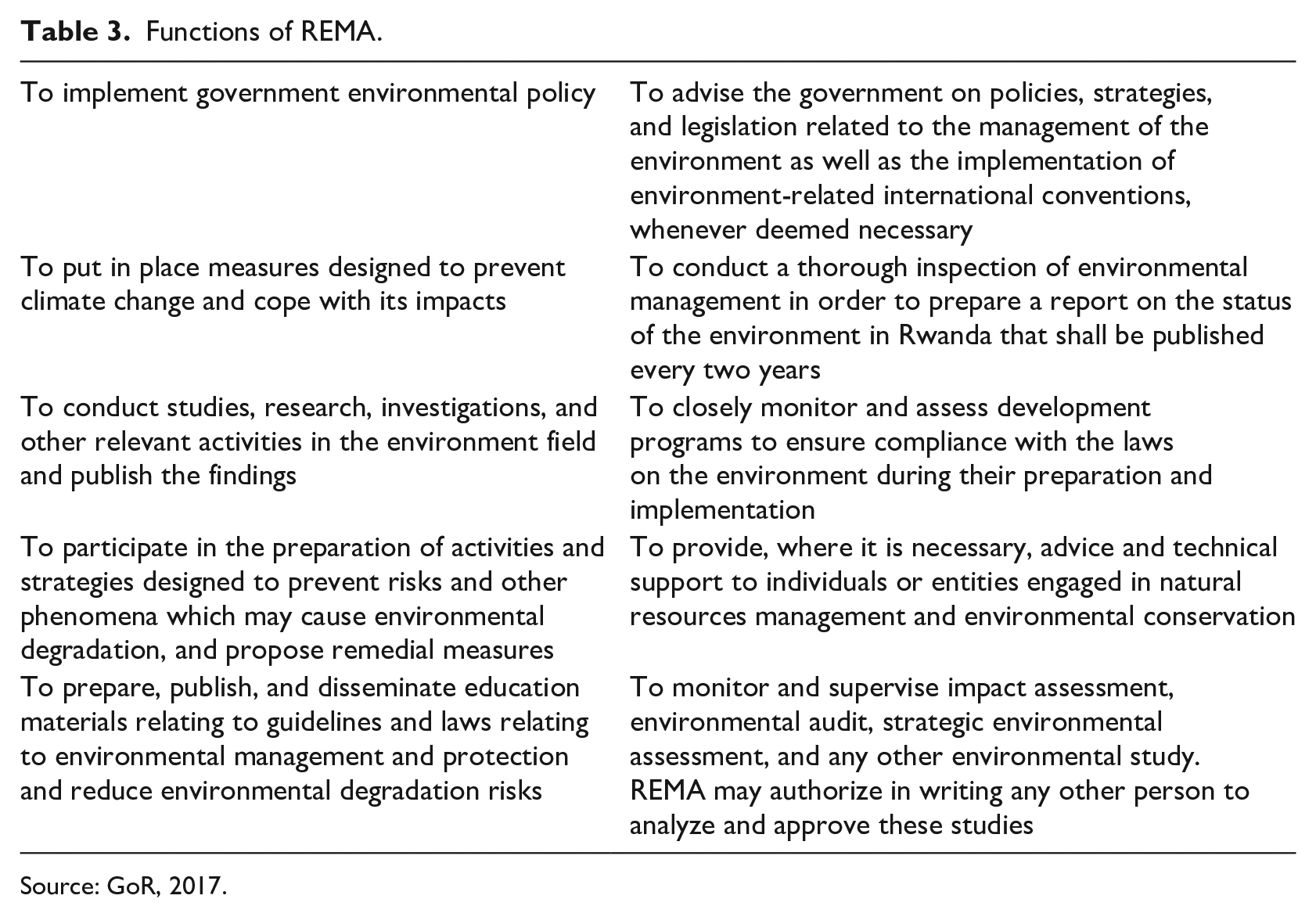
Source: GoR, 2017.
Water and Sanitation Corporation (WASAC)
WASAC is a registered limited liability entity under Rwandan company law, with the government acting as sole shareholder. It was set up by the government to manage water and sanitation services with the aim of ensuring efficiency in the sector. Although WASAC mainly deals with water issues, it performs several essential waste management and sanitation services. Such duties include ensuring sustainable waste management practices through the prevention, reduction, reusing, composting, recycling, energy recovery, and safe disposal of refuse in the country. WASAC also has the responsibility of putting in place measures aimed at ensuring better quality of services to customers at fair prices as well as the enforcement of waste treatment and disposal regulations. Some waste management service providers including street sweepers and dumpsite workers are contracted by WASAC on behalf of the City of Kigali.
City of Kigali
The City of Kigali is the local government authority responsible for the daily administration of the affairs of the city, of which waste management service delivery is a major part. Although the City of Kigali has no legal mandate to enact its own policies, it sets guidelines and mobilizes citizens through media campaigns aimed at keeping the city clean, green, and safe. The principal responsibilities of the City of Kigali involve ensuring compliance with and enforcement of laws, regulations, and policies set by the central government through RURA and other agencies. Operational funding for the city’s waste management activities is generated from two principal sources: the central government and, internally, through land taxes. A city manager appointed by the Prime Minister of Rwanda bears responsibility for the budget.
Regulatory instruments
Regulatory arrangements governing waste management activities in Rwanda are dispersed in several legal documents. These include: Ministerial Order No.4/DC/04 of June 7, 2004; Regulations on Solid Waste Collection and Transportation (2012); Regulations on Decentralized Wastewater Treatment Systems (2012); Regulations on Cleaning Services (2012); Guidelines on Liquid Waste Disposal and Treatment (2009); and Guidelines on Standards for the Management of Waste Disposal Sites/Landfills, 2009. The National Sanitation Policy is however the principal regulatory instrument that lays out a blueprint for the sound management of all aspects of sanitation in Rwanda, including liquid, solid, industrial, nuclear, electronic, and healthcare wastes. The policy emphasizes the need for an integrated waste management approach, one that draws from the core tenets of sustainable waste management—prevent, reduce, reuse, energy recovery, and safe disposal. In pursuit of these objectives, the policy entrusts the Ministry of Infrastructure to work in close partnership with stakeholders, public, private, and civil society to develop an integrated solid waste management system in Rwanda. Strategies for such an approach, as outlined in the policy, call for the mobilization of all stakeholders at the district level “with a differentiated approach for rural and urban areas and a special focus on Kigali” (Government of Rwanda, 2019). The policy further highlights the importance of sorting, collecting, transporting, and disposing of solid wastes in ways that prevent and/or minimize ruinous effects on the environment and human health. The National Sanitation Policy further reiterates the need for waste prevention and minimization strategies through (a) evaluation of waste production processes and identification of potentially recyclable materials; (b) identification and recycling of products that can be reintroduced into the manufacturing process or industry activity; (c) establishing recycling objectives and formal tracking of waste generation and recycling rates; and (d) providing training to sanitation service providers on waste recycling (Government of Rwanda, 2019). Sanitary landfilling is highlighted in the policy as the primary method for disposing of both municipal and non-municipal wastes, whereas incineration technology is to be used for healthcare and other types of hazardous wastes that require thermal treatment as a means of deactivating toxins and pathogens.
Waste amounts and composition
A formal audit to determine the composition and quantity of wastes fell outside the scope of this study. However, several interviewees estimated the amount of wastes generated in Kigali to be in the range of 600–700 tonnes/day based on a calculation of the number of waste trucks and disposal figures recorded at the officially designated dumpsite. A separate study by Kabera et al. (2019) estimates a per capita waste generation rate of 0.60 kg/day or 210 kg/year. Of this amount, putrescible organic materials constitute about 70% of the total volume of wastes while other types of refuse such as paper, cardboards, aluminum, metal, and plastics constitute the remaining 30%. Particularly regarding plastics, Rwanda is one of the few countries in the world that has effectively banned the manufacture, production, and use of single-use plastics since 2008 (law No.57/2008 of September 10, 2008). As result, single-use plastics are less noticeable in the waste stream. However, plastic packaging debris from imported goods as well as, straws, cups, water, and beverage bottles are highly visible in the composition of wastes generated in Kigali.
Waste minimization
Presently, there are no feasible policies and/or incentives in place to ensure the diversion of wastes from dumps through effective minimization. Although putrescible organic material constitutes a significant chunk of the total volume of wastes generated, composting as a minimization strategy is not carried out in any significant manner. The only waste minimization activity currently undertaken is recycling, which is inhibited by several factors including inadequate government support, high energy costs, and the lack of market for recycled products due to the importation of cheaper goods from abroad. Some recycling businesses also highlighted difficulties in obtaining feedstock due to poor source-separation practices. In instances where source-separation is practiced, comingling occurs during the collection and transportation process.
Public cleaning
Cleaning of urban public spaces in post-genocide Rwanda is a highly prioritized endeavor. Regulations pertaining to cleaning and sweeping of urban public spaces were initially created in 2011 against the backdrop of the need to ensure cleanliness in urban public spaces such as marketplaces, hospitals, government offices, streets, and parks. The regulations were later reviewed in 2017 with the objective of addressing challenges relating to capacity, standards, and professionalism among service providers (REMA, 2017). A major part of the decision to review the regulations was based on the need to address issues pertaining to the safety and protection of sanitation personnel, especially those who handle hazardous and toxic materials. In line with this objective, RURA, the chief regulatory body, mandated service providers to provide frontline personnel with protective gear and protection against accidents and work-related illnesses during the discharge of their responsibilities. Currently, there are approximately 200 licensed cleaning service providers in Rwanda. In order to meet the licensing requirements, a service provider is required to register with the Rwanda Development Board or the Rwanda Cooperative Agency depending on its designation, that is, whether it is a business entity or a cooperative. At least one staff member must be an accountant with at least a certificate in accounting or bookkeeping. Another staff member must possess a diploma in a field related to hygiene and an applicant is required to provide proof of having adequate equipment for ensuring good hygiene as well as protection gear for frontline personnel, including gloves, safety shoes, overalls, and nose guards. Personnel involved in street sweeping are required to have on fluorescent jackets with high reflecting effect for easy recognition by road users from a distance. Fines ranging from RWF10,000–20,000 (approximately US$10–20) are imposed on licensees whose personnel are found to be in violation of personal protective equipment (PPE) requirements. Additionally, applicants must pay a licensing fee of RWF100,000–500,000 (approximately US$108–540) for a five-year period.
Contributing to effective public cleaning in the city of Kigali is the practice of Umuganda, a mandatory communal practice that requires at least one able-bodied member of a household between the ages of 18 and 65 to participate in clean-up exercises on the last Saturday of every month. In Kigali and other cities in Rwanda, such exercises include weeding and cutting grass in public spaces; tree planting; street sweeping; and repair of public buildings. On the day of Umuganda, businesses, shops, vehicular traffic, and all commercial activities are suspended between the hours of 8 a.m. and 11 a.m. to enable citizens to participate in the process. Citizens who fail to participate in this mandatory clean-up exercise are subject to prosecution and conviction may result in fines of RWF5000 (US$6). Despite the stringent penalties, we found that voluntary participation in Umuganda is low, especially among middle- to upper-class residents. Some respondents decried the process as a time-consuming endeavor and tantamount to forced unpaid labor. However, several interviewees refuted such claims and contended that Umuganda is a national development strategy embedded in traditional participatory practices. This allows residents to express issues affecting the community and propose suitable intervention strategies. The practice also makes it possible for government officials to verbally transmit important policy initiatives and decisions to residents. Irrespective of its nuanced interpretations, the concept of Umuganda was found to play a major role in the cleaning and greening of Rwanda’s cities including Kigali, the capital city.
In the city of Kigali, service providers contracted by WASAC on behalf of the city routinely sweep streets and clean public spaces at different times of the day, six days each week. Wastes accumulated during cleaning and sweeping are stored aside for pick-up by licensed collectors and transporters. During the study, we observed that not all cleaning personnel wore the fluorescent jackets with high reflecting effect for easy recognition by road users from a distance, as inscribed in the regulations. Also, the use of PPE was not widespread among cleaning personnel, posing safety issues, although no accidents were observed or reported during the study.
Waste collection
In the city of Kigali, wastes are collected once a week from households and once daily in public places. RURA issues three categories of license to waste collection service providers in the country. The first category is issued to service providers operating within the city of Kigali and its three districts: Nyarugenge, Kicukiro, and Gasabo. The second is provided to service providers in secondary towns and cities outside of Kigali and the third category entails providers servicing noncities and rural enclaves. For service providers in the first category, each operator is required to have a minimum of three garbage trucks before they can be granted an operating license. Some operators were found to have as many as 12 waste collection trucks, although some were found to be old and run-down. Service providers are also required to provide frontline workers with adequate PPE such as safety boots, masks, gloves, and reflective jackets. This requirement is not strictly enforced and while some frontline personnel were found to have proper PPE, others did not.
There are currently 12 licensed service providers operating in Rwanda. User charges are calculated according to the district, sector, and economic status of residents. In the Nyarugenge district, low-income residents of the 10 sectors—Mageragere, Kanyinya, Nyamirambo, Kigali, Rwezamenyo, Nyakabanda, Muhima, Nyarugenge, Gitega, and Kimisagara—pay between RWF1800 and RWF2300 (approximately US$2–3) each month for two sacks of wastes as user fees. Middle-income earners in the same district and sectors pay between RWF3600 and RWF4600 (US$4–5), whereas high-income earners are charged between RWF5300 and RWF6900 (approximately US$5–8) monthly. In the Kicukiro district, low-income earners in the Gahanga, Gatenga, Gikondo, Kagarama, Konombe, Kicukiro, Kigarama, Masaka, Niboye, and Nyarugunga sectors pay RWF1200–2200 (approximately US$1–3) per month as user fees. Middle-income earners are charged between RWF3600 and RWF5100 (approximately US$4–6), while high-income residents are charged RWF5400–11,000 (US$8–12). User fees in the Gasabo district range from RWF1700 to RWF2200 (approximately US$1–3) for low-income earners; RWF3300–4400 (US$3–5) for middle-income earners; and RWF5000–6500 (US$5–7) for high-income earners. Various sectors in the Gasabo district include Bumbogo, Gikomero, Rusororo, Jabana, Ndera, Kinyina, Kimihurura, Remera, Rutunga, Jali, Nduba, Kimironko, Kacyiru, Gisozi, and Gatsata.
Overall, current approaches to waste collection in the city of Kigali were found to be highly efficient. The city is exceptionally clean and fundamentally devoid of the situation in many African cities where poor and infrequent collection contributes to massive accumulation of wastes in drains, water resources, streets, and parks. Incidents of indiscriminate littering were not observed and routine informal conversations with some residents in all three districts also indicate a great deal of satisfaction pertaining to general waste collection practices in Kigali.
Waste disposal
There is not a single sanitary and engineered landfill in Rwanda, and in Kigali the Nduba dumpsite located in the Gasabo district is the main waste repository for the city’s wastes. The dumpsite covers an area of approximately 43 acres, and is managed by city authorities. Approximately 300 personnel work at the dumpsite in different capacities including as sorters, security, and machine operators. The dump has a leachate catchment area which was found to be heavily saturated with solid wastes during the site observation. No effective methane collection systems were observed at the dump. Sections of the dump are also demarcated for the disposal of healthcare wastes, expired food products, organics, plastics, fecal sludge, liquid wastes, metals, cardboards, and glass products. The presence of an organized group of workers sorting recyclables such as paper, metal, and plastics was observed. Recyclable materials are compacted onsite, weighed, and sold to recycling companies.
Discussion
Kigali is undoubtedly an exceptionally clean city with a well-coordinated waste management system. However, it would be misleading and an act of misrepresentation to label current practices as integrated or sustainable, as stated in Rwanda’s National Sanitation Policy. In its standard outlook, the integrated approach, which is the bedrock of sustainable waste management, considers an array of options and not just collection and disposal when planning and making waste management decisions (Ali et al., 1996; Fernandez, 1993). In Kigali, the current structure is emblematic of the “out of sight, out of mind” approach, where the emphasis is on collection and disposal, with little or no emphasis on minimization, recovery, and recycling. The absence of effective minimization strategies which would ensure waste diversion is a major problem. Effective minimization strategies would create a myriad of socio-economic opportunities for local communities and private businesses. For instance, given that putrescible organic material constitutes the bulk of the wastes generated in Kigali, a robust composting program would be a good starting point. Composting involves the controlled biological decomposition of organic material with the aid of air, moisture, temperature, fungi, and bacteria (Epstein, 1997; Haug, 1993). Compost, a stabilized organic soil conditioner, is beneficial to plant growth and may be used primarily as a soil amendment or mulch by farmers, horticulturalists, gardeners, and other users. It is also imperative that authorities implement measures aimed at encouraging and promoting recycling activities as a viable waste minimization strategy. Recycling involves the conversion of rejectamenta into new useful products through physical, chemical or biological processes (Cunningham and Cunningham, 2004; Enger and Smith, 2004; Oskamp, 1995). This requires expertise, feedstock, and markets for recycled products, which is currently a major challenge in Kigali. To offset these challenges, authorities can encourage the collection of recyclables through source-separation in households, buy-back, drop-off, and curb-side programs. The government can also provide incentives such as rebates on energy costs to recycling businesses to defray expenses associated with energy use. Recycling businesses are currently not supported in any meaningful way in Rwanda.
The lack of a sanitary landfill is yet another major challenge facing post-genocide Rwanda. Although landfilling is considered the least desirable option in the integrated approach, it is nonetheless an essential aspect of every waste management system. This is because landfills provide a final disposal route for waste generated from end-of-pipe treatment processes such as recycling and incineration; therefore, its importance as a management option cannot be diminished (Chermisinoff, 2003). As illustrated in our findings, Kigali currently lacks access to a sanitary landfill. Waste disposal at the Nduba dumpsite carries major risks to the environment and public health. Particularly concerning for the environment is the production of leachates which carry both subtle and long-term effects on ecosystems and human health (see, for example, Read et al., 1998; Walsh and Lafleur, 1995). This is due to the heavy concentration of dangerous pollutants such as dissolved organic matter, inorganic macro components, heavy metals, and xenobiotic organic compounds (Bagchi, 1990). Unsanitary waste dumps also generate toxic gases which have been linked to global warming. These include methane, carbon dioxide, hydrogen sulfide, oxygen, nitrogen, benzene, and vinyl chloride (Bagchi, 1990). In terms of the human health risks, hydrogen sulfide produced in waste dumps is known to cause a myriad of human health issues including headaches, dizziness, nausea, and certain types of cancer, when inhaled at high concentrations (Goldberg et al., 1999). Against this backdrop, investment in an engineered landfill is seen as essential to the realization of the objectives of sustainable waste management. However, such an approach must be cognizant of the need to incorporate effective waste minimization strategies to avoid rapid saturation of the landfill. It must also be emphasized that although landfilling is considered the least desirable option in the integrated approach, it is nonetheless an essential aspect of every waste management system. Landfilling offers a final disposal route for waste generated from end-of-pipe treatment processes such as recycling, incineration, and other waste management options (Chermisinoff, 2003). Therefore, its importance as a waste management option cannot be diminished.
Another major deficiency embedded in Kigali’s current waste management system lies in the fragmented nature of institutions and regulatory instruments. Planning and decision-making processes are heavily centralized with responsibilities devolved to multiple agencies, each having a stake in some aspect of service delivery. Meanwhile, the City of Kigali, which is the local government authority, lacks the autonomy to enact its own policies. Elsewhere, such institutional fragmentation has been shown to result in poor coordination, fragmentation, overlap, and duplication, which can ultimately result in the waste of scarce resources (Leduka, 1991; Manga et al., 2008; Mwafongo, 1991; Onibokun and Kumuyi, 1999). Although this was not found to be the case in Kigali, such possibilities exist and must be addressed. Empowering and equipping the City of Kigali with the resources to spearhead waste management service delivery is seen as an ideal step toward improving the current situation. The Kigali situation also reflects a pattern in many African countries where waste management policies are enacted by central governments who also provide the bulk of operational funding, although additional revenue is garnered from user charges, municipal taxes, and external donor agencies (Ali et al., 1996; Gilbert, 1992). This leaves municipalities who are at the forefront with less power and resources to implement waste management policies.
Conclusion
Rapid urbanization poses significant challenges for waste management in African cities, but in the city of Kigali, authorities have instituted prudent measures aimed at keeping the situation under control. As delineated in our findings, approaches to public cleanliness as well as collection, transportation, and disposal practices are fundamentally sound, thereby preventing unauthorized dumping in public spaces and waterbodies. Conversely, the absence of effective minimization strategies, coupled with the lack of safe treatment and disposal facilities, inhibits the realization of the ideals of sustainable waste management. Therefore, we conclude that a renewed emphasis on waste minimization, coupled with sound investments in treatment and disposal facilities, would go a long way in improving the situation. Nonetheless, the current situation offers a refreshing outlook and great prospects for the future of urban waste management in Africa.
Footnotes
Funding
The author(s) disclosed the receipt of the following financial support for the research, authorship, and/or publication of this article: Author(s) received a York University SSHRC Explore Grant and a Minor Research Grant from the Faculty of Liberal Arts and Professional Studies at York University.
