




Abstract
The article examines the criminalization of street vendors in Abuja, Nigeria. It draws on the debate on informality, legality and rights, to highlight the tensions surrounding the law as a mode of regulation. As documented, ideology provides the rationale for the criminalization of street vending. The activity is deemed inimical to the modernist ideals of a clean and functioning city. Enforcement of the law is accompanied by the harassment of vendors. However, vendors remain on the streets by circumventing the law. The article highlights the shortcomings of a simplistic approach to the governance of informality. It cannot be legislated away.
Introduction
Street vending is an ‘omnipresent feature of the urban landscape’ (Cupers, 2015: 139). A defining characteristic is that it takes place primarily in public space. The dependence on public space renders street vendors particularly vulnerable because the ‘spaces, subjects and practices of street work’ are considered a threat to ‘an envisaged socio-spatial order and as a priority for intervention’ (Lindell, 2019: 3). Hence, the street has become a ‘concrete space for politics’ as policy-makers refashion and deploy technologies to control access, and new claims by informal actors continue to materialize (Graaff and Ha, 2015: 7). The technologies emerge out of the ideological, the institutional, material and juridical and have the main aim of redefining and refashioning ‘key livelihood spaces’ and delineating ‘appropriate behaviours and subjectivities to be included, whereby many street work practices are categorised as unfitting for these refashioned spaces’ (Lindell, 2019: 3). The ideological, notably modernity and neoliberalism, pave the way for the criminalization of street vending by inspiring laws that proscribe the activity (Graaff and Ha, 2015). The impact of the law on vendors is evident because daily vending practices often revolve around the circumvention of formal laws (Graaff and Ha, 2015). Ultimately, the reliance on the law as a mode of regulation raises questions about how laws emerge and are enforced and contested.
Abuja, the new capital of Nigeria, was conceived as a modern city in line with the Garden City philosophy with emphasis on aesthetics and spatial order (Mabogunje, 2001). As a capital city, Abuja has witnessed huge federal government investments that have facilitated local economic growth, and this, together with a fast-growing population and a central location with good transport links to the rest of the country, has made Abuja a popular destination for informal workers. Accused of causing environmental degradation, among other problems, the government sees the activities of informal workers, particularly street vendors, as a threat to the dream of producing a modern capital city. Hence, demolitions, evictions and the harassment of street vendors are common. When criticized, the government relies on the law to justify the treatment of vendors. This article examines how the law is deployed to regulate street vending in Abuja and the tensions that emerge.
Methods
Primary data was obtained between 2017 and 2019. Interviews conducted with officials of the Abuja Environmental Protection Board (AEPB), the agency responsible for municipal solid waste management (MSWM) and the regulation of street vendors, aimed to obtain information on the regulations governing street vending, their implementation and the nature of the relations with street vendors. A rights perspective, particularly the issue of violence against street vendors, was explored through interviews with officials of the National Human Rights Commission (NHRC). Forty-five vendors operating in three locations – the Eagle Square, an important national monument surrounded by federal government offices, and Wuse and Garki markets – were randomly selected and interviewed. The questions posed centred on personal characteristics, the reason for taking up street vending, the nature of the encounters with law enforcement agents, and the resistance strategies and tactics. Personal observation was useful in studying the activities and practices of street vendors and law enforcement agents. Secondary sources, notably government publications, provided information on planning and regulatory tools.
Informality, legality and rights
Informality remains a contested concept but there are a number of areas that most agree on. As opposed to earlier and highly simplistic approaches that defined the informal sector as ‘an autonomous, unregulated, often illegal . . . arena for jobs’ as opposed to the formal, seen as ‘registered, regulated . . . legal work’, there is now a broad consensus that such distinctions serve little purpose (Myers, 2011: 71–72; emphasis original). In many cases, informal workers acquire licences or pay levies to local authorities and there is evidence that state agencies act informally or reproduce informality (Myers, 2011: 71–72). Hence, the relationship between the formal and informal is messy, blurred and difficult to disentangle (Lombard and Meth, 2017). However, there is a tendency by the state to classify informal activities as illegal. This assumes a distinct boundary between formality/legality and informality/illegality. As Roy (2011: 233) points out, informality ‘uncovers the ever-shifting urban relationship between the legal and illegal, legitimate and illegitimate, authorized and unauthorized’. This fluid and ever-shifting relationship is reflected in Yiftachel’s concept of grey spaces. Using the example of apartheid South Africa, grey spaces are defined as spaces ‘positioned between the whiteness of legality/approval/safety, and the blackness of eviction/destruction/death’ (Yiftachel, 2009: 89). Grey spaces are neither integrated nor eliminated and are sometimes tolerated or encouraged.
Ideology plays a crucial role in defining legality. The modernist discourse ‘tends to conflate cleanliness and hygiene with progress’, as seen in the notion that ‘spaces of modernity must remain clean’ (Swanson, 2007: 708). In this narrative, informal workers are represented as pathological and blamed for dirtying the environment, producing congestion on sidewalks and creating disorder in public spaces (Devlin, 2015). State power is crucial because it determines the forms of informality that will thrive or disappear and ultimately what is legal. Hence, informality is seen as a power-laden concept used by urban authorities and elites to categorize informal activities as illegal (Lombard and Meth, 2017). Planning plays an important role in the process. Roy (2011: 233) points to the ‘valorization of elite informalities and the criminalization of subaltern informalities’ that produce an uneven geography of spatial value. Following from this, ‘planned-ness’ – defined as an area that looks planned regardless of its formal status in law – is key to the determination of legality (Ghertner, 2011: 280). Informal areas that are contained in master plans can be declared unplanned and illegal, while areas that are not, are accommodated because they are planned (Ghertner, 2011: 280). This sets the stage for the reclamation of informalized spaces through urban renewal, ‘while formalized spaces accrue value through state-authorized legitimacy’ (Roy, 2011: 233). Ultimately, the power of the state is ‘reproduced through the capacity to construct and reconstruct legitimacy and illegitimacy’ (Roy 2005: 149).The tension between the law and informality is evident. The law serves to confer some measure of legitimacy on state practices (Bandyopadhyay, 2015) but urban informality ‘serves to deconstruct the very basis of state legitimacy and its various institutions’ including maps, zoning and most importantly the law (Roy, 2011: 233).
A brief examination of the relationship between law and society further illustrate the tensions that accompany the law as a mode of regulation. Das (2011) identifies two traditions, the instrumental and the constitutive. The instrumental prioritizes the capacity of the law to regulate social relations. It emphasizes the extent to which the law is observed – a strict division between legal rules and customs or habits – but downplays the role of broader societal issues. In line with liberal-democratic views, the law derives its authority from the state. In the constitutive view, the law draws from ‘everyday concepts embedded in life’ and laws are neither stable nor impermeable (Das, 2011: 321). The law is ‘a residual category whose role is episodic, artificial, and often disruptive’ (320). The distinction between the instrumental and constitutive is that between law that impinges from the outside and one that constitutes the social world and ‘draws from everyday concepts embedded in life’ (321).
A discussion on the law and space necessitates a reference to the Lefebvrian concept of the right to the city (Roy, 2005). The concept advocates the ‘spatial understanding of politics’, one that ‘places urban space at the very center of its vision’ (Purcell, 2014: 141). Spaces ‘in the city are differently conceived of and acted upon’ through spatial technologies that ‘enrol space in varied ways and through which unruly spaces and groups can be made governable’ (Purcell, 2014: 9). Evidently, the law is an important tool in the production of governable spaces because it prescribes appropriate behaviour and practices. Setting the stage for conflict, the right to the city prioritizes the user or the inhabitant of urban space, because it is the ‘everyday experience of inhabiting the city that entitles one to the city’ rather than citizenship (Purcell, 2014: 142). This puts the use value of space over the exchange value and implies that users can make a moral claim to space, a move that undermines legal right. Lefebvre advocates the appropriation of space, an act of resistance and a way to undermine legal right (Villanueva, 2017), and acknowledges the tensions that would follow, pointing out that the state would judge the move illegal and deploy the police, army and judges to enforce the law. Ultimately, the question is how the right to the city is determined, in law or on the streets (see Mitchell, 2003).
The law and street vending
Some cities have specific laws on street vending while others resort to ad hoc or general laws on sanitation. Where specific laws exist, they determine the type of activities that street vendors can perform, and where. In Calcutta, India, the Street Vendors Act (SVA) was enacted to regulate street vending (Bandyopadhyay, 2015). The Act divides public space into two zones, vending and non-vending, recommends participatory management in the vending zones and mandates municipal governments to carry out a periodic census of vendors. The SVA is criticized for ‘spatially constraining street vending through stringent zoning norms’ and laying a foundation for the Indian government to govern the informal economy based on rationalities that expanded government intervention (Bandyopadhyay, 2015: 193). However, vendor unions and associations were involved in the process and it led to an increase in the number of associations and collaboration with the government. Furthermore, by ensuring the livelihoods of vendors, the Act ‘promises some amount of certainty to the tenuous existence of one segment of the lower rung’ of society (Bandyopadhyay, 2015: 193). In Lagos, Nigeria, the government relies on ad hoc measures and outdated laws traceable to the colonial era (Omoegun, 2015). Colonial rule was accompanied by the introduction of modernist and European notions of public health that prioritized disease control and sanitation (Njoh, 2012). The laws that evolved were authoritarian in nature and relied heavily on enforcement with harsh penalties as seen in the 1984 Street Trading and Illegal Markets Edict Act in Lagos (Omoegun, 2015).
The law and the subsequent criminalization of street vending paves the way for violence against vendors. As observed in Dhaka, Bangladesh, criminalization leads to punitive measures including the destruction or confiscation of vending equipment, physical and verbal harassment, fines and imprisonment (Etzold, 2015). Violence opens the way for further exploitation of vendors by enforcement agents through extortion in the form of ‘security payments’ or bribes, described as ‘an act of structural violence’ (Etzold, 2015: 173). Structural violence is defined as certain forms of injustice and marginalization imposed ‘on people through the strategic manipulation of the economic structures and power relations in a society’ (166). The police are implicated, accused of committing ‘acts of direct violence’ and evicting vendors from their sites by ‘order of high officials’ (173).
Finally, the law impedes the activities of vendors, but it can be contested or undermined. In Mexico City, vendors drew on a prior history of collective action and networking, artistic forms and petitions to protest a ban by the government (Crossa, 2015). In Calcutta, vendors drew on the law itself as a resistance strategy. Bandyopadhyay (2015: 209) points to a ‘judicialization’ of the politics of vendors, in which they resort to the courts in addition to their anti-eviction struggle on the ground. In New York, the Street Vendors Project (SVP) fought the imposition of strict vending regulations by exposing the contradictions of a discourse that promotes entrepreneurialism and demands self-reliance from its poorer citizens, but at the same time erecting barriers (Devlin, 2015). The SVP capitalized on the association of New York with immigrant success, highlighting a long-held view that in New York, ‘every group of newcomers has the opportunity to succeed’, especially if they are ‘willing to work their way to the top’ (Devlin, 2015: 51). Crucially, the appropriation of public space as observed in Bogotá, Colombia (Falla and Valencia 2019), Mexico City (Crossa, 2015) and in many other cities is a common tactic. Informal networks are particularly relevant in cases where there are no formal street vendor organizations. In Lagos, social networks and payment to municipal authorities and gatekeepers ensure access to the most desirable spaces (Omoegun et al., 2019). The payment of fees infers some measure of legitimacy but it does not give a legal right to occupy public space so vendors have, in addition, to pay bribes to local officials (Omoegun et al., 2019).
Abuja: a postcolonial capital city
Nigeria is one of a number of African countries that obtained independence in the early 1960s and went on to make the decision to relocate their capital cities. The relocation of capital cities became a way of shedding colonial legacies and at the same time producing modern capital cities that would enhance the image of the countries on the global stage (McNulty, 2001). In Nigeria, the new capital city would be everything that the colonial capital, Lagos, was not. Lagos is located on the Atlantic coast and served a major aim of the British colonial government to facilitate trade between the two countries. In addition, the city had become notorious for traffic jams, perennial flooding and deplorable housing and environmental conditions. Abuja, located in the geographic centre of Nigeria, was chosen as the new capital in 1976. An American firm, International Planning Associates, was given the task of preparing a master plan for the city. The plan, highly influenced by the modernist Garden City philosophy, was guided by the principles of ‘city beautiful’, ‘environmental conservation’ and ‘functional city’ (Mabogunje, 2001). It recommended a central area urban design plan with the development of the city to be done in Phases 1 to 3 expanding outwards from the central area. In addition to the central area, Phase 1 contains the districts of Maitama, Asokoro, Wuse and Garki (Figure 1).
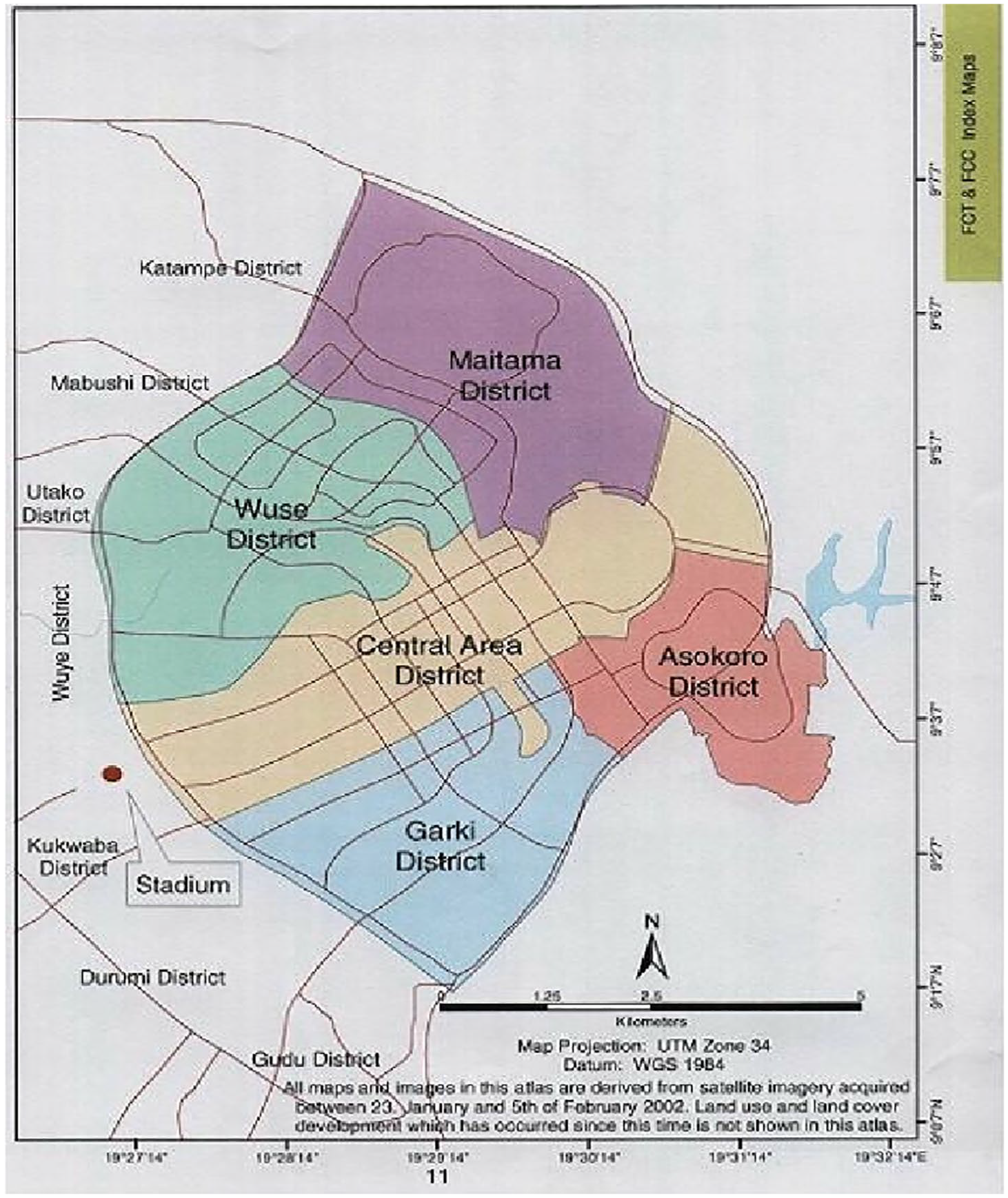
Map of Abuja showing the Central Area and the main city districts of Asokoro, Maitama, Wuse and Garki.
The central area houses government offices and a central business district and is thus particularly attractive to vendors due to the large numbers of potential customers. Wuse and Garki districts are also popular vending sites because they contain the biggest markets in the city in addition to commercial offices, shopping malls and motor parks. The development has not gone unnoticed by the government. Evictions and the frequent harassment of informal workers and street vendors in particular, in order to preserve the master plan, are common occurrences:
The Minister of the Federal Capital Territory (FCT) . . . has renewed the commitment of the FCT administration to maintain the Abuja master plan by intensifying demolition of illegal structures . . . The Abuja Master Plan is sacrosanct and all hands must be on deck to protect its principles. Abuja remains the window through which the world sees Nigeria and Nigerians. (Guardian, 2014)
As Ohwahwa (2005) observes, the dogmatic and lopsided interpretation of the master plan gave the impression that the minister wanted the less privileged out of Abuja. The banning of street vending in the central area and major districts confirms the trend. In addition to the master plan, elite interests also play a role in the socio-spatial exclusion of informal workers. For example, in 2016, a Ministerial Task Force for the Environment was set up by the Federal Capital Territory (FCT) minister even though the AEPB task force was already in place. According to a representative of the minister, in addition to not being happy with the overall performance of the AEPB task force, the minister, as the chief law enforcement officer of Abuja, had security on his mind when he created another task force. The case of the vendors who operate on overhead passes or bridges along the road leading to the Abuja international airport was cited as an example. Dignitaries and top government officials who frequently ply the route to the airport had complained to the minister that they felt threatened by the vendors. They saw the overpasses as vantage positions from which they could be attacked. In response, the task force issued a directive that there should be no vending within 100 metres of the road.
The appeal of street vending
A drive through the streets of Abuja would reveal the presence of vendors either as individuals or in groups in strategic places such as streets close to government offices, shopping malls, schools, markets, traffic intersections and car parks. Some vendors are highly mobile while others operate in relatively stable spaces (Figure 2). They trade in a wide range of goods, from electronics and household utensils to clothing items, shoes, meat, fruits and vegetables. They are differentiated on the basis of age, gender and income, among others. The younger group of vendors tends to operate in the most highly visible spaces; for example, directly on the streets where they peddle their goods to passers-by and passengers in vehicles. This makes them the most highly susceptible to harassment and arrests. Gender plays a role in the type of activities. Women dominate the food, fruit and vegetable businesses, while men have a tight control of activities such as newspaper vending. With regard to income, some vendors described street vending as a lucrative business, but for the majority it remains a precarious activity.
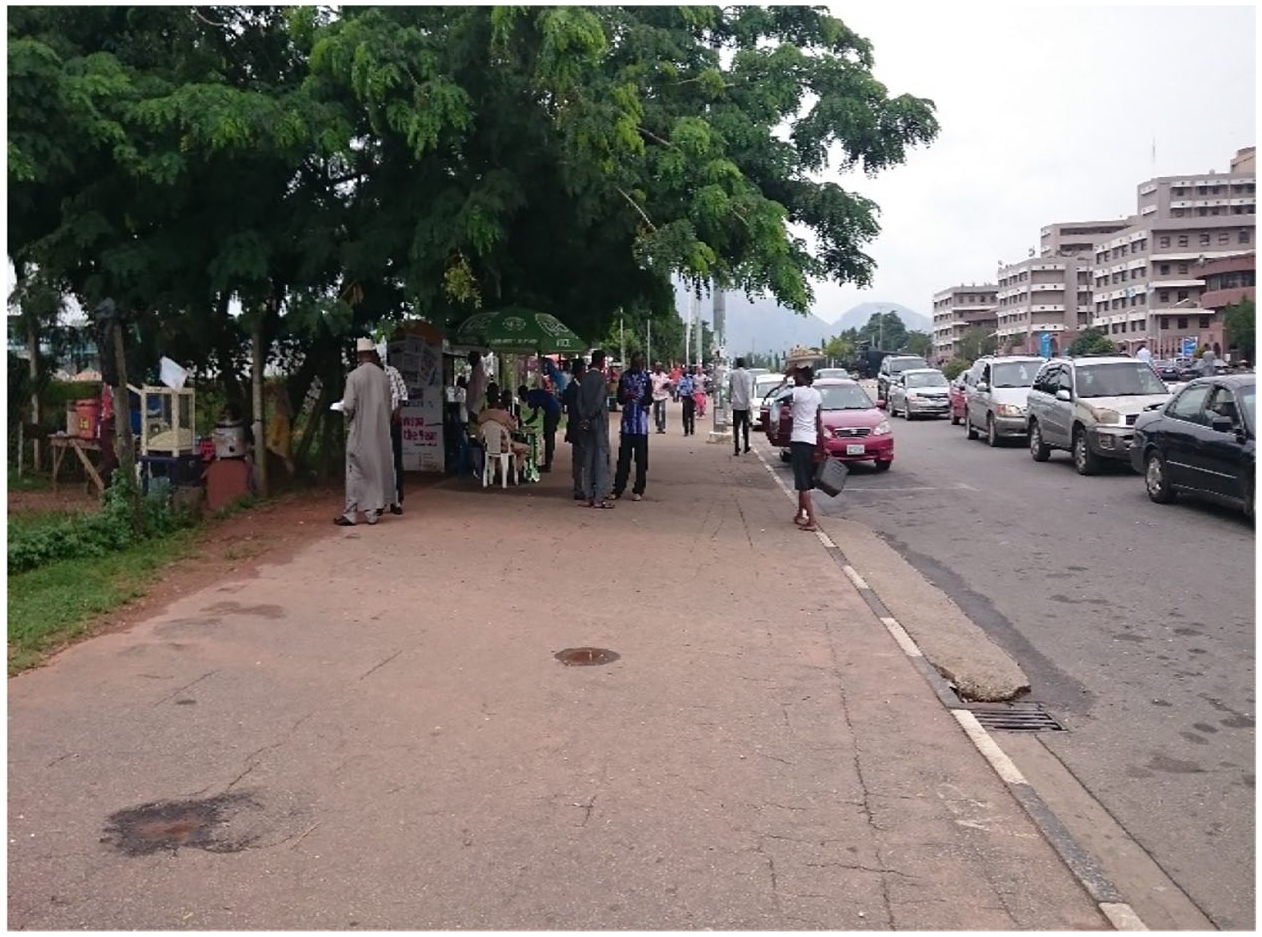
A street alongside Phase 2 of the Federal Secretariat Complex (to the right). Opposite the secretariat are three groups of vendors. The first is a highly mobile young female vendor with a bowl of groundnuts on her head. Next are two less mobile vendors occupying different spaces. There is a vendor directly on the pavement dealing with mobile phone accessories. Behind this vendor are a group of female food vendors operating behind the barbed wire fence around Eagle Square.
Poverty and the need to survive are strong motivations for engaging in street vending. A food vendor said she started the business because her neighbour saw how she was suffering and encouraged her to do something. Another was more poignant, remarking that ‘poverty allocated the space to me’ when asked how she acquired the space she was operating on. Some vendors engage in street vending to supplement the family income: ‘I have three children in the university and their father needs support so there is nothing else to do but this’ (interview, fruit vendor, close to Wuse market, 11 September 2017). Also related to poverty is the lack of formal employment, especially among university graduates:
I don’t have a job. What should I do? I graduated two years ago yet no job. I have applied in so many places but no hope so instead of remaining in a place with bad thoughts, I keep busy with this little thing at least. (Interview, mobile phone voucher vendor, alongside Eagle Square, 5 September 2017)
The problem of unemployment often introduced broader societal issues into the discussion. A vendor lamented that ‘being a common person on the street, I have no voice and the government takes pleasure in chasing people like me’. The sense of marginalization and injustice is reinforced by the claim that graduates who come from families with connections or who have money to offer bribes are better at securing formal jobs.
The law and the regulation of street vending in Abuja
There is no specific law on street vending in Abuja. The government relies on regulations governing MSWM, notably, the AEPB Act No. 10 of 1997. The Act is complemented by a national legal instrument, the Administration of Criminal Justice Act (ACJA). The AEPB task force plays a primary role in the enforcement of the AEPB Act, while mobile courts are used to prosecute offenders.
The AEPB Act
The AEPB Act No. 10 of 1997 confers the agency with the authority to manage MSWM in Abuja (Federal Republic of Nigeria, 1997). The AEPB is charged with the control and disposal of solid waste and ‘doing such other things as are necessary or expedient for the purpose of enhancing a healthy environment within the Territory’ (Federal Republic of Nigeria, 1997: 4). For our purposes, Part 1, number 3 of the AEPB Act is particularly relevant. It deals with the problem of littering and is commonly cited to justify the treatment of vendors:
No person shall deposit, throw, place or cause to be deposited, thrown or placed any solid waste in any alley, street, catch, basin or other public space or into a river or other waters in the Territory or onto any premises under the control of others. (Federal Republic of Nigeria, 2005: B 185)
Part I, number 16 contains penalties related to littering and other offences. Convicts are to pay a fine of not less than N10,000 (the equivalent of US$27.60 based on an exchange rate of N1=US$0.0027 obtained on 21 January 2020) or 3 months imprisonment or both. Part II, number 18 makes provision for environmental monitoring officers, giving them the authority to ensure compliance to appropriate mitigation measures and effective environmental practice. Part II, number 22 criminalizes the conversion of parks, green areas and other restricted areas into other land use and purpose.
The AEPB Act was produced during a military regime and hence with little scope for popular participation and transparency. Unlike in the case of the SVA in Calcutta mentioned earlier, it did not involve consultation with vendors. Furthermore, the Act evolved out of a national response to a specific event and was not necessarily a well-thought-out process. In 1988, Koko, a fishing village in the Niger Delta region, made headlines when it was discovered that an Italian company had paid the community to deposit toxic wastes from Italy. The incident revealed the lack of appropriate institutional and regulatory framework to deal with environmental problems. An immediate response was the promulgation of the National Environmental Protection Regulations Decree No. 58 in 1988 which aimed to identify solid, toxic and hazardous wastes dangerous to public health and the environment. The decree was followed by the establishment of the Federal Environmental Protection Agency (FEPA) in 1989. Following this, state governments across the country set up environmental protection agencies. The FCT followed with the AEPB Act and the AEPB. Thus, the AEPB Act is a general framework on the environment and does not specifically address issues related to street vending.
The ACJA of 2015
The ACJA is an Act of the National Assembly and a major legislation for the national criminal justice system. As the AEPB sees it, the ACJA complements the AEPB Act by addressing some of the shortcomings of the Act. Of particular importance is the issue of mobile courts. As discussed later, street vendors are prosecuted in mobile courts run by magistrates. Human rights activists have challenged the legality of mobile courts, arguing that such courts do not have the right to carry out investigations nor the power of arrest under the Nigerian constitution. The AEPB counters the allegation by arguing that as special courts, mobile courts are not bound by the provisions in the constitution. Even if they were, the agency cites section 109 (a) of the ACJA which states that criminal proceedings may be instituted by a magistrate’s court, ‘by a charge or a complaint whether or not on oath or upon receiving a First Information Report’ (FIR) to buttress the argument that mobile courts are legal (Pan African Institute of Paralegal Studies, 2015: 52). The FIR is a charge sheet filled in and signed by the police officer attached to the magistrates’ court. It contains information such as the name, address and occupation of the suspect, the offence, the time and date and where it took place. On the issue of arrests, the AEPB cites section 20 of the ACJA to justify that it has the power to arrest suspects: ‘A private person may arrest a suspect in Nigeria who in his presence commits an offence, or whom he reasonably suspects of having committed an offence for which the police is entitled to arrest without a warrant’ (Pan African Institute of Paralegal Studies, 2015: 20). Citing the ACJA and the stipulation that detention must be in a lawful facility such as a police cell, the AEPB acknowledges that it does not have the power to detain. This was cited as one of the reasons why police officers accompany AEPB enforcement agents on patrols. The ACJA also addresses the nature of criminal proceedings and penalties. According to section 356, subsection 1: ‘At the commencement of the hearing, the court shall state, or cause to be stated to the defendant, the substance of the complaint, and shall ask him whether he is guilty or not guilty’ (Pan African Institute of Paralegal Studies, 2015: 130–131).
If the defendant pleads not guilty, he or she is granted bail and a date is set for trial. If the defendant pleads guilty, the process is shortened. According to section 356, subsection 2: ‘Where the defendant pleads guilty and the court is satisfied that he intends to admit the offence and shows no cause or no sufficient cause why sentence should not be passed, the court shall proceed to sentence’ (Pan African Institute of Paralegal Studies 2015: 130).
The ACJA makes provisions for defendants to be represented by a legal practitioner or carry out their own defence. Furthermore, those under the age of 18 can be arraigned, but not prosecuted because it is against the law to imprison minors. If found guilty, penalties vary. The imposition of fines is the most common form of punishment according to the legal officer attached to the mobile court. Repeat offenders pay more. Failure to pay fines can result in detention in a police cell or imprisonment. The official maximum prison sentence is six months, but court officials maintained that, in practice, two to three weeks is more common. The ACJA also provides for probation and non-custodial alternatives with the option of sentencing those that cannot afford bail to hard labour or community service.
The AEPB task force
A task force is defined by Dictionary.com as a ‘temporary grouping of units under one commander, formed for the purpose of carrying out a specific operation or mission’ or ‘a group or committee, usually of experts or specialists, formed for analyzing, investigating, or solving a specific problem’. These suggest that a task force is ad hoc, has a narrow focus and authoritarian tendencies and is hence unlikely to adequately address the complexities of urban governance issues. In Abuja, the AEPB task force was primarily put in place to enforce the AEPB Act. It operates in two groups, one attached to specific locations, while the other goes on patrols around the city (Figure 3).There is evidence of lack of accountability and arbitrary behaviour on the part of enforcement agents. On a visit to the offices of the task force, the author observed a female food vendor sitting under a tree and crying profusely. The food had been confiscated and consumed by some enforcement agents. The case demonstrates the ease with which enforcement agents act outside the official rules since their task is to confiscate the goods. Ultimately, vendors spend much of their time trying to evade enforcement agents:
We were actually selling anywhere along the street in the previous years but the task force was our problem . . . they keep chasing us here and there. (Interview, vendor, Federal Government Secretariat, 6 September 2017) Nobody can approach them. No negotiation because we are all afraid of them . . . because they won’t even listen to us. (Interview, hairstylist, opposite Wuse Market, 11 September 2017)
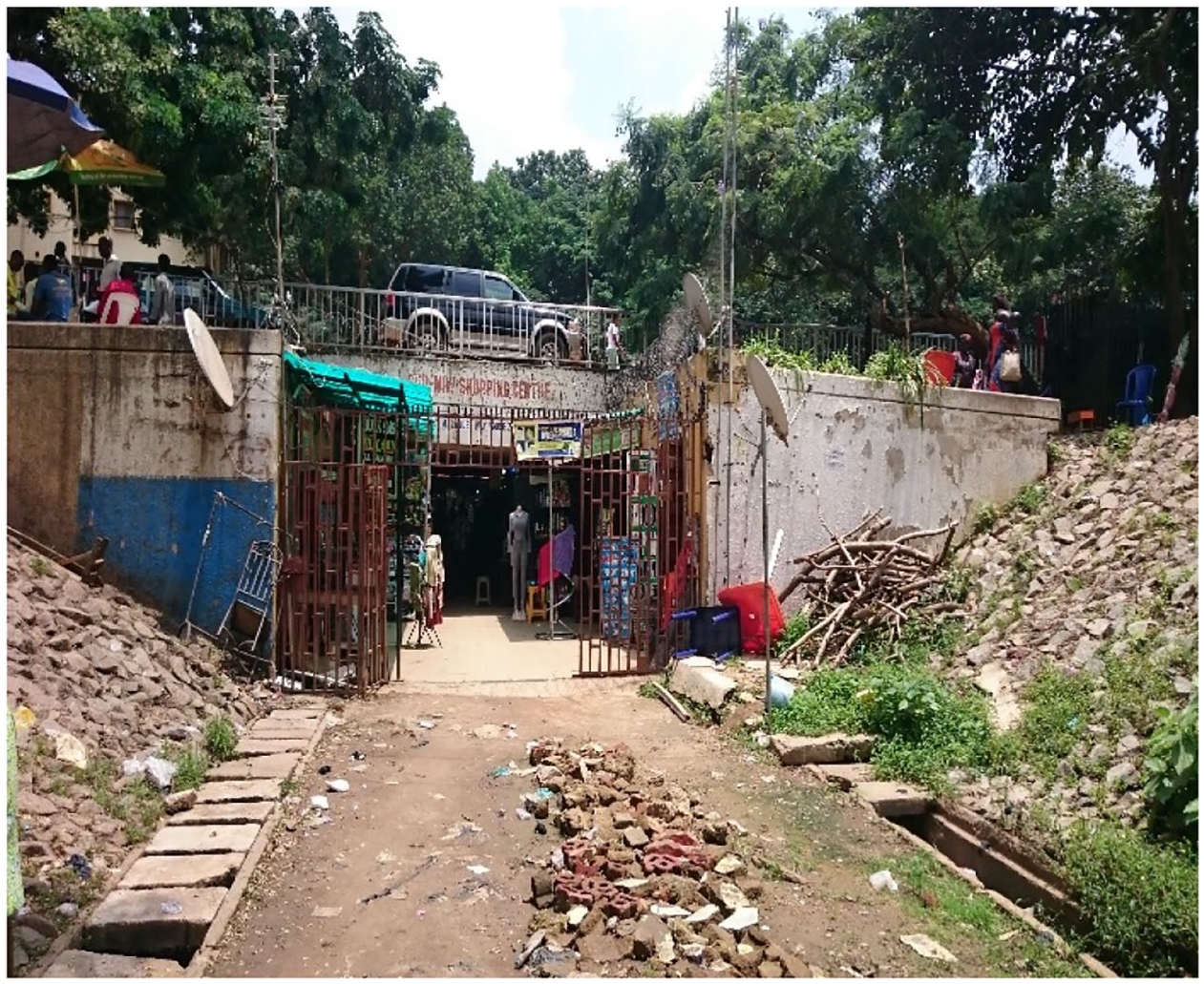
Street vendors operating on and under a bridge along a very busy street close to Wuse market.
Harassment and violence are common: ‘Sometimes they do cycle us here and burn our goods claiming we are having illegal transactions which creates fear in most of us. Some have left the place’ (interview, food vendor, Eagle Square, 6 September 2017).
Newspaper accounts confirm the constant harassment of vendors:
On June 12, hawkers in front of the Federal Secretariat in Abuja were harassed by officials of the AEPB . . . reporter . . . witnessed how the hawkers, mostly women selling perishables ranging from carrots, groundnuts, fruits, and corn ran away clutching their goods as the task force officials arrived. Speaking to . . . after the task force had left, many of the hawkers said similar incidents occurred every day. (Ibeh, 2013)
The police officers attached to the task force are implicated in the violence against vendors: ‘These officials, who go around the Nigerian capital in marked buses, harass the traders in the presence of gun wielding security officials usually police men’ (Ibeh, 2013). The harassment of vendors is accompanied by extortion and bribery: ‘Anyone that wishes to sell will be made to pay daily payment of N200 which will be used to keep the place clean and to appease the task force’ (interview, food vendor, Eagle Square, 6 September 2017).
There are many possible explanations for the high incidence of harassment and extortion. The nature of employment is one. Enforcement agents are temporary employees, which means they do not enjoy the benefits of permanent employment such as a pension. AEPB officials admitted that labour unions had been pressuring the agency to offer them contracts. The job insecurity may be contributing to maximize their earnings and hence the high incidence of extortion. In addition, the AEPB used to insist on some minimum level of education and basic training, but this has been jettisoned. The problem of lack of training, particularly in relation to violence against vendors, is attracting attention and is discussed later.
The mobile court
The mobile court features prominently in the prosecution of vendors. Upon arrest by the task force, vendors are taken to the court. The author had the opportunity to observe the proceedings of a mobile court in October 2017. A group of about 30 vendors had been arrested and brought to the court. The seized goods were on display for all to see. According to the lawyer attached to the court, displaying the goods is evidence that a crime has been committed in line with section 350, subsections 1C and 2 of the ACJA. The author noticed the police officer compiling the FIR. The officer recorded the personal data of each defendant, one by one, and the nature of the offence, the time and date, and where the offence was committed. Upon completion of the FIR, the officer handed it over to the lawyer who then passed it on to the magistrate. After going through the FIR, the magistrate acknowledged it, meaning the report was ready to be acted on. The defendants were told to stand up and the lawyer proceeded to read the charges against them one by one.
The next stage was the interrogation of each defendant with the magistrate stating the date, the nature of the offence and where it took place. During the process, a defendant under 18 years old was discharged with a warning not to commit the offence again. The rest were asked if they agreed with the summation by the magistrate and they replied in the affirmative. Next, they were asked if they were pleading guilty or not guilty. They all pleaded guilty as charged but pleaded for leniency. The magistrate convicted all of them and handed down sentences individually. First offenders were fined N2000 each (US$5.52) or 14 days in prison. Two female defendants were repeat offenders and charged a higher amount, N3500 (US$9.67) or 30 days in prison. Those who could afford to pay the fines did so immediately and their goods were released to them. Those who said they could not afford to pay the fines were still pleading for leniency by the time the author left the court.
The narrative provides useful insights into the experiences of vendors, particularly in relation to how the law is enforced. Contrary to the stipulations in the ACJA, the defendants were not informed of their rights to have legal representation. Furthermore, sometimes they were treated more as a group than individuals. This was observed when they were asked if they were asked if they were guilty or not. There is a possibility of pleading guilty just to conform. Another observation is that the entire process appeared to have been rushed. A short prosecution process is ‘beneficial’ to the different parties. For the magistrate who is attached to the court on a part-time basis, it frees up valuable time that is needed elsewhere. On the particular day, the magistrate was busy somewhere else and came to the court late. He still had another duty to attend to elsewhere after the proceedings and was in a hurry to leave. For the vendors, pleading guilty means avoiding a long, complex and costly litigation procedure. Once more, the problem is that some may plead guilty even if they believe they are not guilty.
Confronting and resisting the law
Over the years, the media, concerned individuals, non-governmental organizations (NGOs) and human rights activists have confronted the AEPB over the treatment of vendors. According to officials of the Human Rights Commission (HRC), the agency receives complaints about the task force on a regular basis. In response, and in line with the African Union’s Principles on the Decriminalization of Petty Offences in Africa, the commission – in collaboration with a number of NGOs – conducted a training programme for enforcement agents in June 2019. The principles defined petty offences as ‘minor offences for which the punishment is prescribed by law to carry a warning, community service, a low-value fine or short term imprisonment, often for failure to pay the fine’ (African Commission on Human and Peoples’ Rights, 2017: 9). Offences related to informal activities such as street vending are cited as examples. Petty offences are noted to be inconsistent with Articles 2, 3 and 18 of the African Charter on the right to equality and non-discrimination; Article 5 on the right to dignity and freedom from torture, cruel, inhuman or degrading punishment and treatment; and Article 6 on the right to liberty and security of the person and freedom from arbitrary arrest and detention (African Commission on Human and Peoples’ Rights, 2017: 9). Crucially, the African Commission on Human and Peoples’ Rights seeks to ensure that ‘laws that criminalise life-sustaining activities in public place’ (2017: 16) and ‘laws criminalising conduct in broad, vague and ambitious terms are reviewed’ and decriminalized (17).
The training organized for enforcement agents in Abuja addressed the problem of violence and respect for human rights. When asked to justify the treatment of vendors, enforcement agents said they were simply doing their duty by enforcing the law. In response, they were told to strike a balance between enforcing the AEPB Act and respect for human rights. Their attention was drawn to the fact that no law supports the physical abuse of a suspect or even a convict. Other issues addressed include the necessity of following due process, for example informing vendors that they have a right to legal representation. Furthermore, the inconsistences in the laws and regulations used to govern street vending came up. An example is the issue of arrests. Officials of the HRC acknowledged that there is a conflict between section 35 of the national constitution, which states that persons arrested should be told in writing why they are being arrested and section 6 of the ACJA which stipulates that the person does not have to be told if he or she is physically pursued before being arrested. Applying the ACJA, which is what the AEPB does, means prioritizing it over the constitution, which is against the law. The problem of illegal detention also came up. Enforcement agents were accused of arresting minors and taking them to the National Agency for the Prohibition of Trafficking in Persons (NAPTIP). NAPTIP follows up by arresting the person they work for. This is contrary to section 7 of the ACJA which states that you cannot arrest someone in lieu. The AEPB counters with a reference to Part IV, No. 17 (4) of the AEPB Act which states: ‘If any child contravenes any of the provisions . . . the parent, guardian or such person charged with the custody of the child shall be held liable for the offence and dealt with accordingly’ (Federal Republic of Nigeria, 1997: 10).
Street vendors in Abuja are by no means helpless (see Adama, 2020 for a detailed account of the range of strategies and tactics deployed by street vendors in Abuja to maintain access to public space). AEPB officials acknowledged that vendors quickly reoccupy the spaces they are evicted from. Such vendors are constantly on the lookout for enforcement agents and run and hide when they are approaching and come back soon afterwards: ‘We are always vigilant and ready to run’ (interview, corn vendor, on a street alongside Wuse market, 11 September 2017).
Vendors also adopt less visible strategies or tactics such as paying fees to secure and maintain access to public space. The practice is common among vendors who operate in a cluster. It is a paradox and one of the complexities of the interface between the formal and informal. If the activities of street vendors is illegal, as claimed by the state, why do local officials collect and allocate space to vendors to operate? In addition to blurring the lines between legality and illegality, the case highlights how the state sanctions informality. Figure 3 shows vendors operating along an underpass and on a bridge close to Wuse market. The underpass has been converted into shops secured with a gate, obviously an illegal act. However, the vendors pay fees to council officials. Interestingly, the bridge is only a few metres away from the ‘watchful’ eye of enforcement agents (see Figure 4).
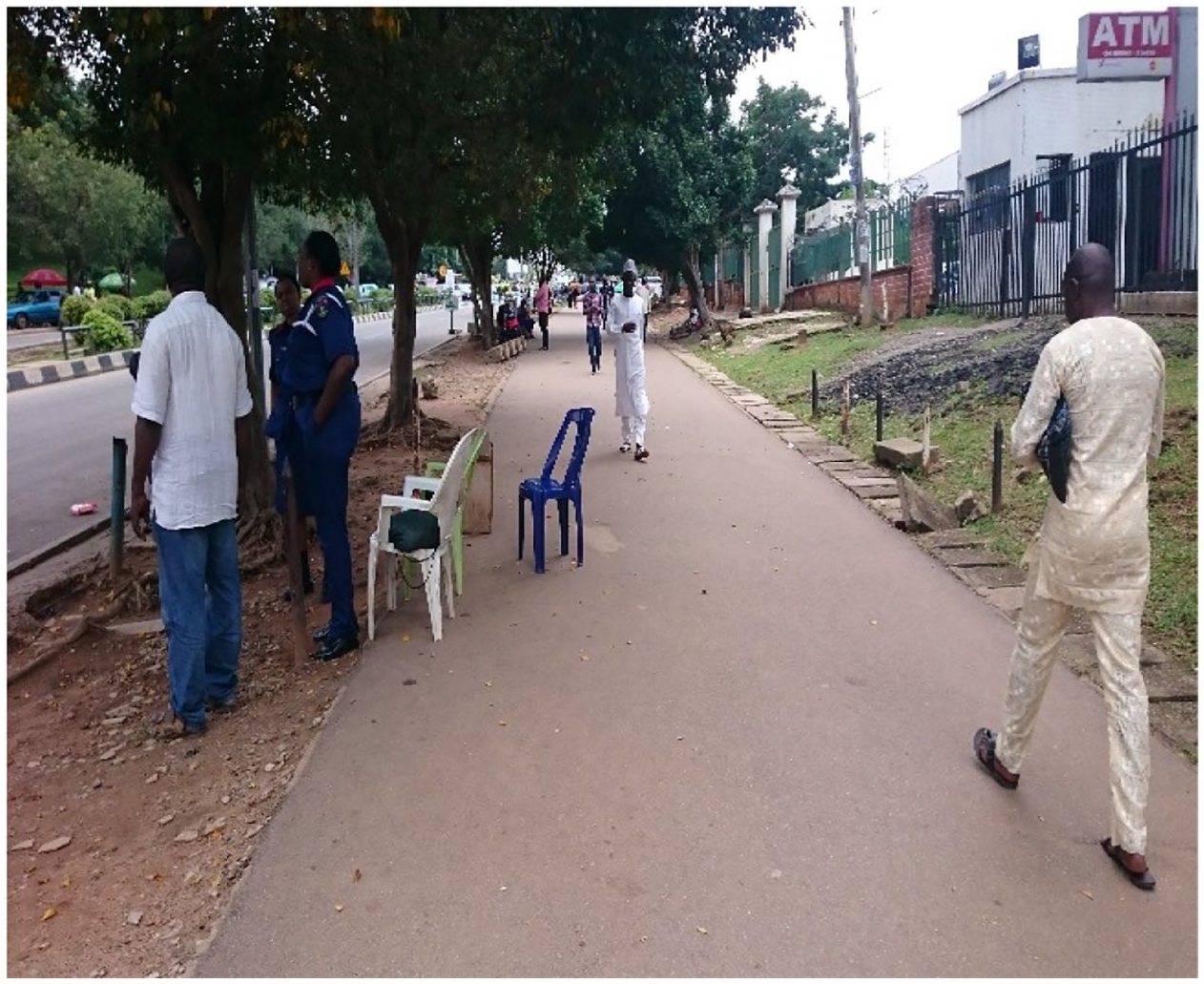
An enforcement agent in uniform stationed along the street in front of Wuse market. Notice that the pavement behind her is cleared of vendors while across the street in the background and to the left of the picture, newspaper vendors operate under umbrellas.
Another case of the state directly contravening the law and promoting informality was observed at Eagle Square. As noted earlier, the AEPB Act cites the conversion of green spaces as an illegal act. A group of female vendors was found to be operating on green spaces behind a barbed-wire fence around the square. Interviews revealed that they were paying fees to the management of the facility. Interestingly, the payment of fees is not often enough to guarantee access to public space. It limits the encounters with the task force, makes it possible for vendors to operate in spaces considered illegal and avoid arrest and prosecution. However, it is common for vendors to contribute money on a regular basis to give to the task force as bribe in order to maintain access to space: ‘Anyone that wishes to sell will be made to pay daily payment of N200 which will be used to keep the place clean and to appease the task force’ (interview, food vendor, Eagle Square, 6 September 2017).
Popular mobilization and protests are common resistance strategies but the study did not uncover any street vendor associations or unions, a necessary precondition. Instead, there are product based associations that primarily focus on the welfare of members. The exception are the newspaper vendors. After years of harassment, they formed a union and liaised with the press to confront the government. Subsequently, an agreement was reached with the state that they could operate with stands on the streets, but on the condition that they remain in specific places and do not move from place to place. Other vendors resort to informal networks when there is a need to challenge the government. A group of vendors operating around Eagle Square was able to come together to protest an eviction notice.
Conclusion
The article falls within the broader body of research on the new constellations of actors and interests driving the contemporary transformation of cities in Africa. In particular, it draws attention to the disciplinary technologies being deployed to control actors and activities considered illegitimate and the conflicts that emerge. The case study of street vendors confirm the practice of using the law as a disciplinary technology. It also reveals the tensions that accompany the law as a mode of regulation. The Abuja case points to the adoption of laws that emanate from modernist notions of what a city should look like, an instrumental understanding of the law that prioritizes enforcement, but neglects broader societal issues such as poverty and the need for survival. The gap between the law and the reality on the ground inevitably results in tensions as the rationality of survival clash with the modernist visions. Tension is exacerbated by the adoption of regulations and practices that are authoritarian, arbitrary, un-constitutional and contradictory. Furthermore, the reliance on the law paves the way for violence against vendors. However, the case confirms that marginalized urban groups can and do resist hegemonic policies and practices that seek to threaten their livelihoods. The law is undermined and contested in various ways including protests, appropriation or physical occupation of public spaces, paying fees and offering bribes to local officials to occupy spaces deemed illegal.
At a broader level and in the context of the governing of informality, the Abuja study highlight the tensions that accompany a simplistic understanding of informality. The government’s official approach suggests a clear distinction between formal and informal, and legal and illegal. In practice and as documented the reality is different. The lines are blurred and the state itself is noted as a producer of informality. Crucially, the government’s approach suggests that informality can be legislated away. This is not the case. Street vendors are willing to break or circumvent the laws in order to pursue their livelihoods.
Footnotes
Funding
The author disclosed receipt of the following financial support for the research, authorship and/or publication of this article: This work was supported by the Swedish Research Council (grant number 2015-03474).
