




Abstract
This paper recounts the chance discovery and multi-step follow-up exploration of an unexpected and remarkably robust empirical regularity in a planned change training exercise. Participants (predominantly experienced management professionals) appear surprisingly unattracted – even avoidant – to the work and activities associated with the final ‘anchoring’ phase of planned change. If replicated in practice, this ‘anchoring reticence’ may lead to the non- or at least underinstitutionalization of planned change efforts, that is, to ‘unclosed loops’ of change. This may undermine or even nullify change efforts and thus provide a new explanation for the allegedly low success rate of planned change efforts. Using a post-game follow-up questionnaire and extensive discussions with participants, we systematically explore this finding in depth and probe several tentative explanations for the apparent ‘unpopularity’ of change anchoring activities. Next, we discuss our findings from both a theoretical and practical angle, bringing in the reflections of an expert panel. We find that anchoring activities tend to be avoided because they are considered boring, hard, ‘not my concern’ and superfluous. We trace the origin of these beliefs to managers’ professional and educational socialization, which tends to undervalue tactical management. Our findings provide new suggestions for explaining unsuccessful planned change initiatives. Zooming out, they point to the more generic phenomenon of orphaned and neglected practices in organizations and the mechanisms behind their languishing subsistence. For this organizational learning failure, we provide a tentative model.
Keywords
Introduction
‘Everyone loves to brainstorm new ideas – there's always a sense that things can be improved, especially when it comes to someone else's work. But taking real responsibility for making those improvements happen is far more challenging. Many people can say, ‘I wanted something different’, but far fewer can say, ‘So this is what we’re going to do’ and even fewer can see it through to actual implementation. Let alone committing, ‘Give it to me, and I’ll dedicate the next three years to embedding it fully into practice’. I recognize this dynamic in many of my professional contexts, including my own work. (Mark ‒ pseudonym; change expert)
So what is really at play here? Many organizations actively strive to improve their functioning. When the direction of their desired development is clear, they often shape that ambition for improvement by means of a planned change program. Although such change projects have created an extensive industry of both academic research and professional consultancy, the effectiveness of much such planned change activity seems limited at best. Despite evidence of their importance, management practitioners appear to make limited use of available scientific evidence when making decisions or implementing organizational changes (Barends et al., 2017; Hay et al., 2021; Stouten et al., 2018). In popular change management literature, high figure failure rates of planned change initiatives have been circulating for years (e.g., Beer & Nohria, 2000; Ewenstein et al. 2015; Hammer & Champy, 1993; Kotter, 2008). Although, on closer inspection, those failure numbers appear to be empirically unsubstantiated (Hughes, 2011; Ten Have et al., 2017), the picture of the difficulty and limited long-term effectiveness of planned change does find broad resonance in the professional community of change managers and consultants: creating lasting, sustainable change is a difficult job.
The extant professional literature on organizational change management is replete with explanations of these problematic organizational change processes. A lot of attention tends to be paid to success factors in the early stages of planned change, such as trust in the leader (Kouzes & Possner, 2012; Maurer, 2010) and a compelling guiding vision (Ibarra, 2015) or purpose (Bridges, 1991). However, considerably less effort appears to be aimed at tactics of implementation, in particular around the deliberate institutionalization or ‘anchoring’ of the changes (see Cummings & Worley, 2005; Greenwood et al., 2002; Stouten et al., 2018; Van Olffen, 2014). This disbalance in scholarly attention thus seems to mirror our recurring finding of a relative disinterest for these processes among managers, a phenomenon we call ‘anchoring reticence’. Could this be (partly) responsible for many of the ‘unclosed loops’ – and ultimate failures – of planned change programs in practice?
In the following, we first describe the context and content of this empirical regularity. We do so by briefly reviewing how the change literature, across both teleological and non-teleological models, has consistently emphasized anchoring as essential for achieving sustainable organizational change. Next, we describe our discovery of anchoring reticence in practice. We then develop a series of possible explanations for its occurrence and test them on the basis of a survey among the training participants. The results are discussed, first, from a theoretical angle. Next, in order to determine the contextual relevance of our findings to the (poor) change practice, we submit them for discussion to a panel of change researchers, professionals and consultants. Finally, we broaden our findings by theorizing them as a ‘special case’ of a more general class of shunned or ‘orphaned’ management practices.
Study Background
Cyclicity and Anchoring in Planned Change Theory and Practice
In 1947, Kurt Lewin published a ground-breaking article in which he presented his field theory of social change. Lewin contended that the observed level of social phenomena, such as the level of criminality in a city or the productivity of a group of factory workers, is in fact an equilibrium that is reached and sustained by countervailing forces pushing it upwards or downwards. By careful research and intervention design, social scientists were to become true ‘social engineers’: first, in finding out what the operating forces on the equilibrium are and subsequently in manipulating these forces to raise or lower these equilibria according to what was desired from a managerial or public policy viewpoint. This was done by selectively strengthening and weakening the forces operating on the equilibrium. As such, the equilibrium was to be ‘unfrozen’, moved and ‘(re)frozen’ in the desired direction (see also Cummings et al., 2016). This general mindset eventually became the foundation of many normative planned change models in the organization development (OD) tradition and beyond. Here, change in organizational phenomena is fostered typically by helping organization members navigate through a series of change ‘phases’. As the model assumes an (undesirable) equilibrium at the ‘start’ and a new (desirable) equilibrium at the ‘end’ of the process, it is characterized as ‘linear’ in nature. We see this iterative aspect of the planned change process returning in almost all its later incarnations (Cummings et al., 2016). Several academics have later been (very) critical of the inherent ‘sequentialism’ of Lewinian models such as the well-known eight-step approach by Kotter (1996). Weick (2001, p. 57–91) has outlined the limitations of such process ‘blueprints’ as well, emphasizing the relevance of ‘bricolage’-like improvisation (rather than determination), breaking down 21 implied assumptions of blueprint planning into alternative assumptions, like ‘designs as recipes’ (not blueprints), ‘designs as attention’ (rather than intention) and designs being relatively transient (instead of relatively permanent). Notwithstanding the validity of such more ‘fluent’ conceptualizations of the change process, it stands to reason that when organizations undertake a more or less directed (i.e., ‘planned’) effort to improve an aspect – any aspect – of their functioning they will want to retain, build and capitalize in some way on the lessons learned in the past. In that sense, these linear models contain an implicit cyclical, self-referential feedback component as well – both within any change project and from one project to the next.
Over time, various authors have developed practical, more fine-grained renderings of Lewin's seminal ‘phased change’ idea, leading to a multitude of multi-step planned change models. For instance, Bullock and Batten (1985) integrated 33 OD phase models then existing, into an overarching four phase model (Exploration – Planning – Action – Integration). More recently, Stouten et al. (2018) created the most extensive integrative summary on managing planned organizational change to date by reviewing no less than seven popular practitioner-oriented change models plus findings from scholarly research on organizational change processes. Their integration of these models results in 10 evidence-based steps – a sequence of process outcomes – to manage planned organizational change. Their integrative summary also included the cyclical feedback aspect (in Step 9: monitoring and strengthening) and the anchoring aspect of planned change (in Step 10: institutionalization).
On a deeper theoretical level, the main generative mechanism in all these planned change models mentioned above is the so-called teleological ‘motor’ of organizational change (Van de Ven & Poole, 1995). Teleological theory describes system behavior that is directed towards some goal or end state. Such teleological reasoning underlies (implicitly or explicitly) many ‘agentic’ organizational (change) theories, adaptive learning and most models of strategic planning and goal setting. Teleological adaptation includes ‘a repetitive sequence of goal formulation, implementation, evaluation, and modification of goals based on what was learned or intended by the [organizational] entity’ (Van de Ven & Poole, 1995, p. 516). It is therefore inherently cyclical in nature. Apart from the typically staged and cyclical character of planned change models, both the reviews of Bullock and Batten (1985) and Stouten et al. (2018) identify another striking and important similarity across these models: the nature of their final phase. This phase is varyingly labelled ‘consolidation’ (Judson, 1991; Kotter, 1996, 2012), ‘anchoring’ (Kotter, 1996, 2012), ‘institutionalization’ (Judson, 1991; Kanter et al., 1992, Schein, 2010), ‘reinforcement’ (Hiatt, 2006; Kanter et al., 1992), ‘stabilization’ (Lippitt et al., 1958) or ‘refreezing’ (Lewin, 1947) – the latter being the historical foundational label for the final phase of planned change (Cummings et al., 2016). As all these labels suggest, this is the phase in which that what is learned, developed or altered during the change process is to be somehow secured or ‘saved’ for future use. For instance, by ‘anchoring’ or ‘formalizing’ it in new rules, procedures, structures or other organizational arrangements such as remuneration, training and education and to set the stage for establishing (new) blended logics (Ramus et al., 2017, p. 1282) and (new) moral systems (Solinger et al., 2020, p. 517).
Anchoring in Non-teleological Models
Whereas the teleological models discussed above explicitly emphasize anchoring as the final stage of a change cycle, various non-teleological change perspectives also include mechanisms that provide for the inter-temporal stabilization of organizational transformations. First, in evolutionary models (Aldrich et al., 2008, 2020; Burgelman, 1991) the retention mechanism preserves newly selected variations that are essential for organizational survival. In Aldrich's own words: ‘Without the constraints on variation provided by retention mechanisms, gains from selected variations would rapidly dissipate’ (Aldrich et al., 2020, p. 25). Successful adaptations must be preserved to avoid regression to previous states. Under competitive circumstances, effective retention efforts (i.e., anchoring) shield beneficial selected variations from (new) environmental pressures and endless variational ‘drift’. Second, in neo-institutional theory (Greenwood & Hinings, 1996) adaptive change is driven by a dialectical motor (Van de Ven & Sun, 2011) whereby existing organizational arrangements or templates (‘thesis’) are challenged by competing logics (‘antithesis’). As the organization grapples with experiments and cognitive restructurings, it moves toward a new arrangement (i.e., a ‘synthesis’) via re-institutionalization (Greenwood et al., 2002). ‘Once fully institutionalized, ideas can survive across generations, uncritically accepted as the definitive way of behaving’ (Greenwood et al., 2002, p. 61). Without such anchoring, organizations remain trapped in institutional contradiction. A similar point is made in the literature on organizational learning and ambidexterity (March, 1991; Raisch & Birkinshaw, 2008), showing that paths of innovative survival require concomitant learning processes of creative exploration/variation on the one hand and the exploitation of the retained variations on the other. This dynamic capability acts as a dual mechanism to create and anchor ever progressing learnings, which is essential as ‘[w]ithout it, path dependence dynamics or structural inertia drive organizations (…) in the face of changing markets and technology – toward failure’ (O'Reilly & Tushman, 2008, p. 200). Fourth, research into organizational routine dynamics (Becker, 2004; Pentland & Feldman, 2005) holds that practices are retained to the extent that they offer organization members reliable, effective and efficient ways to produce quality outcomes. As such, routines reflect earlier learnings and can be considered knowledge repositories or stores of organization-specific memory (Argote & Guo, 2016). Research in this vein has shown that successfully applied routines build organizational capabilities that lead to the replication of learned action templates – even when circumstances shift considerably (Ingram & Baum 1997; Jensen & Szulanski, 2004; Szulanski & Jensen, 2006; Grandinetti, 2022). As such, this literature even warns against the dangers of ‘stickiness’ (Szulanski, 1996), that is, for the indiscriminate anchoring of past best practices. Fifth, in theories of system transitions (e.g., Hebinck et al., 2022; Rotmans, 1994), change is explicitly conceptualized as a dual process: an anabolic and a catabolic one. The anabolic part builds up the new ‘regime’, whereas concurrently the catabolic part breaks down the old. Graphically, this results in a typical ‘X-curve dynamic’ describing the switch between regimes over time. Variants of this mechanism have also been applied in the change management area (e.g., Bridges, 1991; Van Olffen et al., 2019). Anchoring figures prominently in the anabolic part of this model as the new is to be ‘solidified’ through institutionalization and stabilization, but also – in the catabolic part – by actively ‘phasing out’ the old through discouragement or restrictive legislation. Finally, cultural anthropology (Van Gennep, 2019) describes so-called ‘rites of passage’ that are used to articulate and facilitate a group member's movement to new stages of life or group involvement, such as (wo)manhood or adulthood. After separating from the old and being temporarily in a ‘liminal’, transitional position, the individual's new, irreversible status is affirmed and articulated (i.e., ‘anchored’) through rituals of ‘incorporation’ (e.g., by granting new symbolic dignities through clothing or privileges). They serve to formally and symbolically ‘close off’ and shed a developmental stage and progress into a new one.
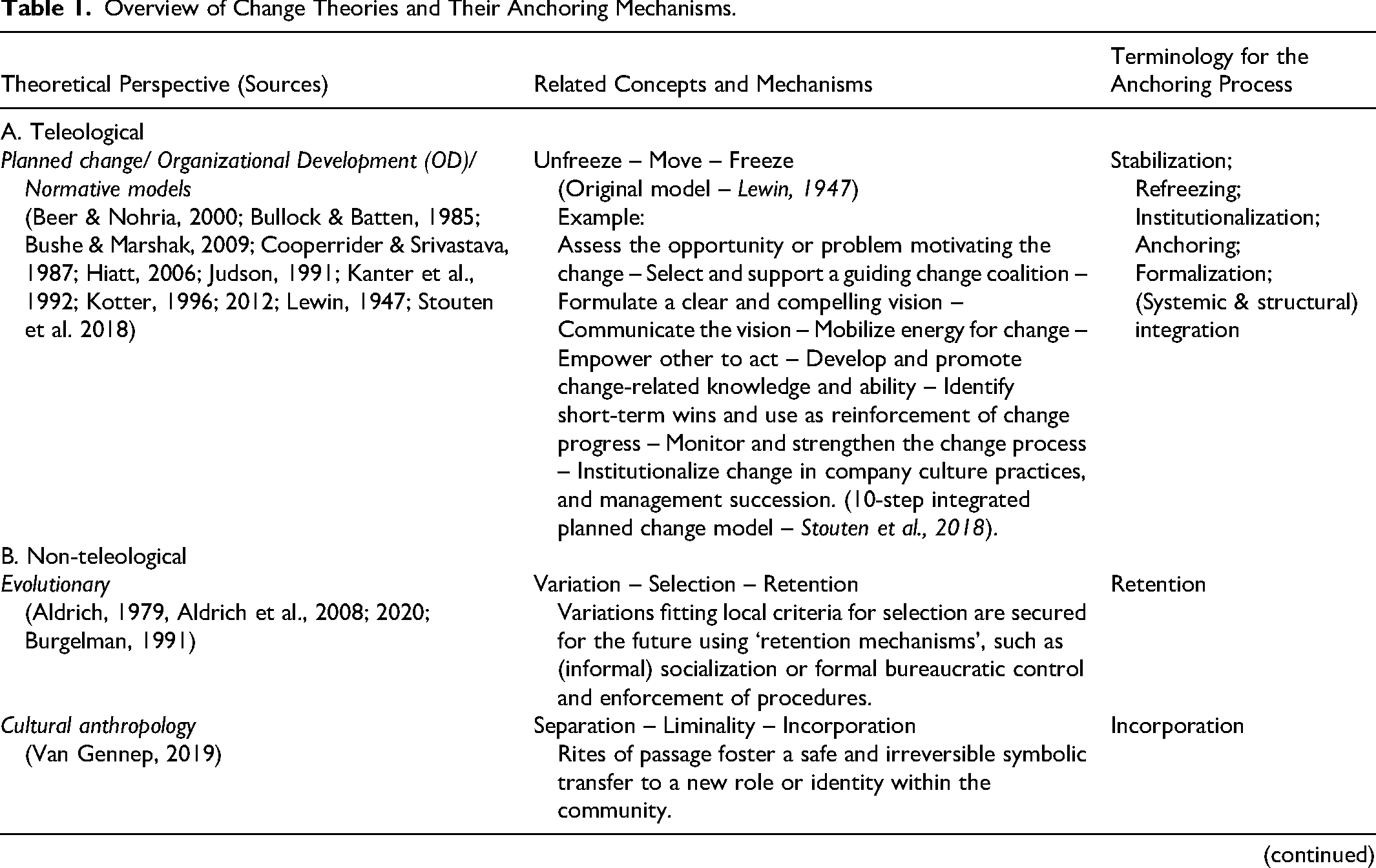
Collectively, these non-teleological perspectives – summarized in Table 1 – demonstrate that anchoring serves multiple fundamental organizational functions, for example, stabilization, learning, integration, transition and legitimization, beyond the mere change management effectiveness of teleological models. Both perspectives converge on the essential need to somehow preserve or ‘anchor’ changes. Note that the term ‘anchoring’ also provides a more precise alternative to Lewin's more broad-based term of ‘refreezing’ as it pertains to the preservation of beneficial, new practices within the organization's entire routine bundle. This makes the systematic anchoring reticence we discovered in practice a puzzling phenomenon worthy of closer examination.
Overview of Change Theories and Their Anchoring Mechanisms.
The Empty Q4 Phenomenon
Discovery Context
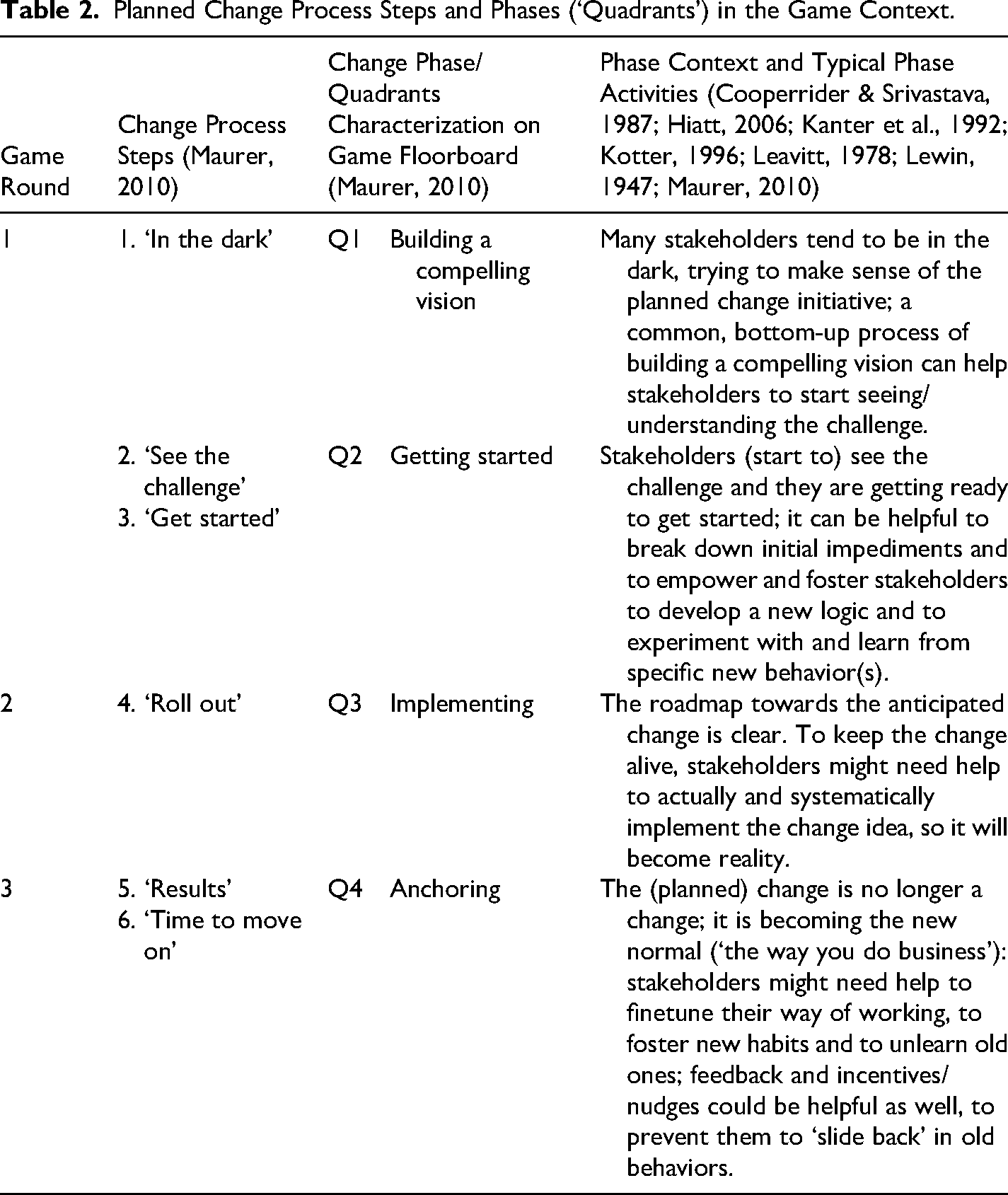
Our discovery of the anchoring reticence phenomenon emerged from systematic observation during simulation gaming sessions on organizational change. Simulation gaming offers a powerful method for studying organizational dynamics by reproducing ‘the central characteristics of a system in order to understand, experiment with and/or predict the behavior of that system’ (Duke, 1980). When combined with collaborative learning and debriefing dialogues, such simulations create spaces where participants navigate realistic trade-offs while making underlying assumptions and behavioral patterns explicit (Duke & Geurts, 2004; Thiagarajan, 1993). The specific simulation used was ActeeChange, a ‘serious game’ that integrates various planned change models (e.g., Kotter, 1996; Lewin, 1947; Maurer, 2010; among others) into an algorithm tracking game participants’ progress through a simulated change cycle. The cycle phases follow Maurer's (2010) hands-on terminology, which is clearly Lewinian in spirit and closely matches other planned change phase models (see Figure 1 and Table 2). Participants form small teams of four to five people navigating their ‘boat’ through change phases visualized on a circular floorboard, managing stakeholders who enter or leave the boat based on the intervention choices the team makes. Sessions typically span one day with three gameplay rounds alternating with collective debriefings and a final meta-level dialogue connecting game experiences to actual professional practice (Koops, 2017). As a game facilitator who has conducted over 100 sessions with various participant groups in the Netherlands, the first author repeatedly observed a striking pattern during post-game debriefings. We now present this discovery in detail.
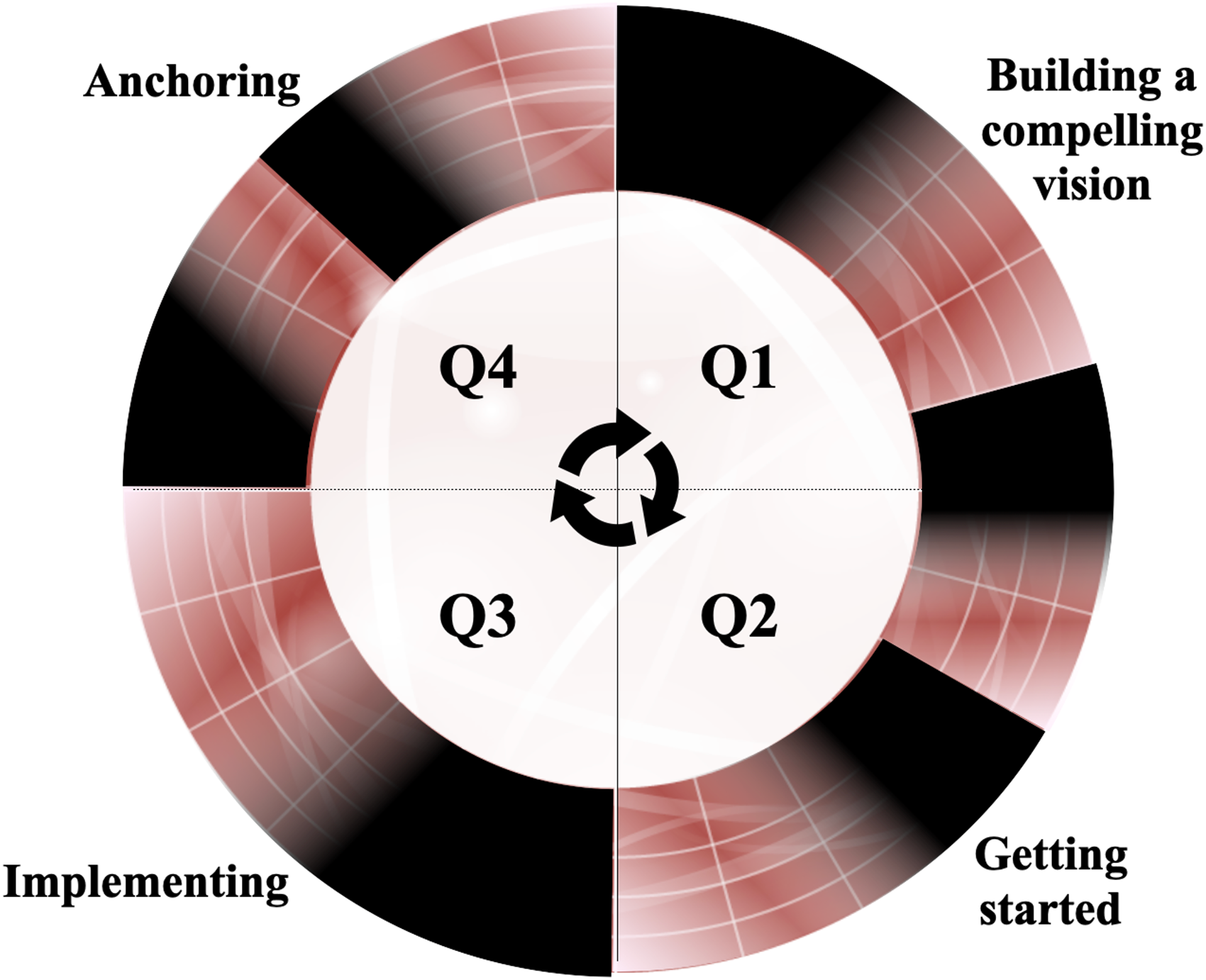
Game change cycle (floorboard design).
Planned Change Process Steps and Phases (‘Quadrants’) in the Game Context.
Study 0: Initial Discovery and Informal Research Phase
Over the period 2016 to 2020, the first author has facilitated playing around 30+ Actee simulation sessions involving a total of more than 500+ individuals. Participants came in varied groups, such as executive master students, ‘high potentials’, project leaders, program managers, financial managers, middle and higher-level managers, from both corporate and (semi-)public organizations. During this period, he routinely deployed the so-called ‘favorite quadrant exercise’ after the game was fully completed and debriefed. In this exercise, the four quadrants of the floorboard (see Figure 1) were highlighted, and all participants were invited to physically position themselves in one ‘favorite’ quadrant depending on their answer to a question posed informally (at first) in varying ways, such as: In what quadrant are you most comfortable? In which quadrant can you best bring out your personal strengths? Which quadrant represents your highest ‘energy zone'? Every time, after positions were taken, the fourth quadrant (‘anchoring’) remained almost empty. This surprised both the facilitator and the participants.
Based on head counts in 11 ‘constellation photos’ taken at different game sessions between 2016 and 2020, the combined percentages of participants in each quarter were Q1: 26.4%; Q2: 41.4%; Q3: 27.4% and Q4 a very low 4.8% (total n = 157). This pattern – featuring a sharp decline in preference for Q4 – appeared to be remarkably similar across time, question variants and organizations/participants types. We came to informally refer to this serendipitous discovery as ‘the empty Q4 phenomenon’. It elicited surprise, wonder and debate among game participants every time it materialized during the favorite quadrant exercise: ‘why is Q4 empty’? As researchers, we came to label participants’ apparent preference to ‘avoid’ the work and activities associated with the final ‘anchoring’ phase of planned change as anchoring reticence. As noted, the systematic and striking nature of this occurrence prompted us to advance beyond the preliminary study phase toward a more rigorous and formal exploration of its significance.
Methods of Subsequent Research Phases After Discovery
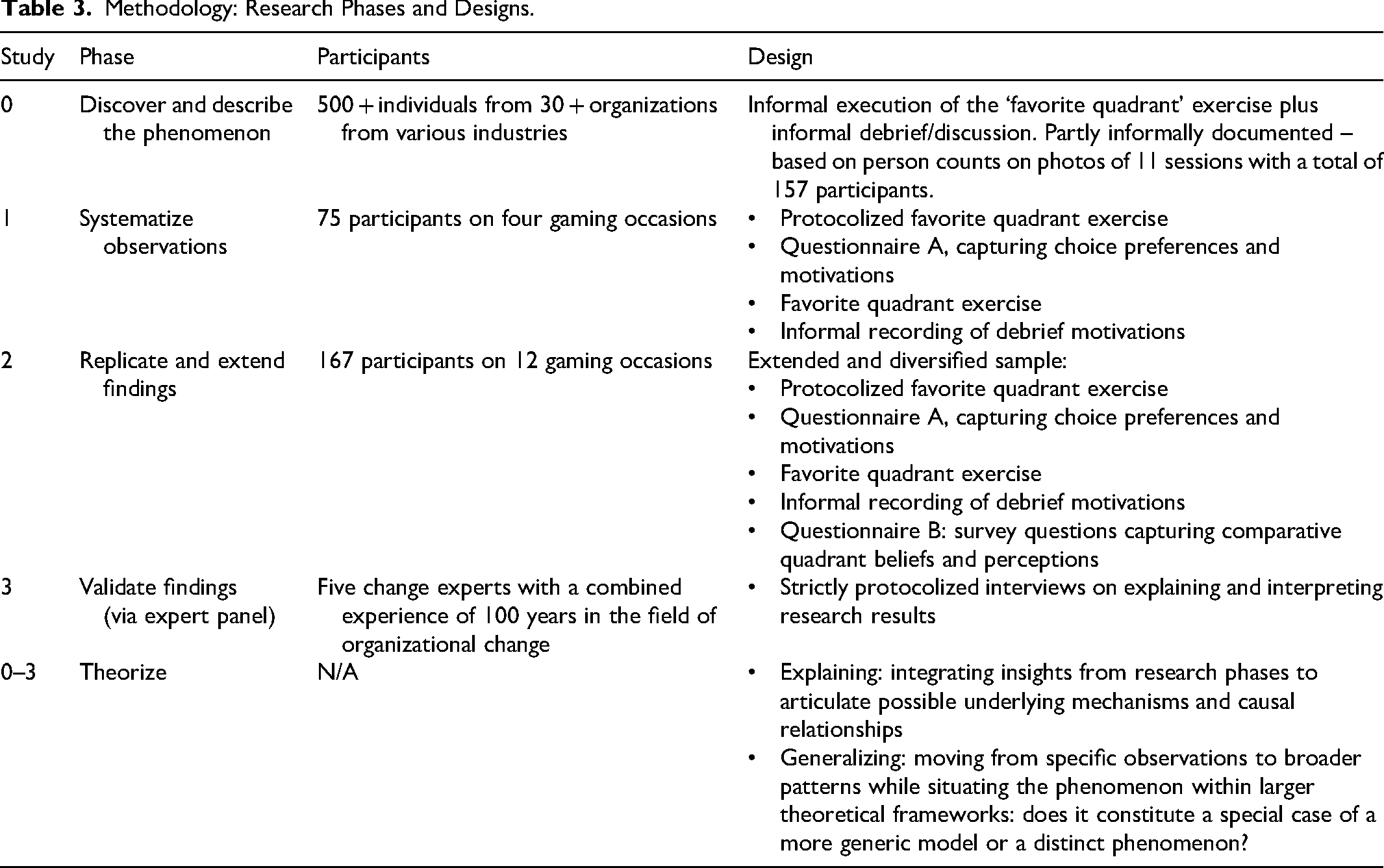
Upon discovering the empty Q4 phenomenon, we did not yet systematically keep track of the precise outcomes of the favorite quadrant exercise, nor did we follow an unambiguous protocol to carry it out, as the exercise was mainly designed for triggering a useful (closing) dialogue in our training sessions. These group dialogues already yielded many tentative explanations for the empty Q4 phenomenon. To systematize our research, we proceeded in three steps: a design phase, a replication phase and an expert validation phase. Table 3 highlights the designs of each study/ research phase. Below we first describe and discuss the set-up and results of Research Phases 1 and 2. Following phases are addressed later in this paper.
Methodology: Research Phases and Designs.
In the design phase (Study 1), our aim was to systematize and protocolize the exercise in order to strengthen its features as a valid scientific experiment. First, we made sure that at every new occasion we introduced the exercise in exactly the same ‘neutral’ wording and explicitly avoided labelling any quadrant in a normative (‘good’ or ‘bad’, more or less ‘important’) way during the game. Next, we administered a formal individual post-game questionnaire A that asked participants to rank-order the change quadrants according to their personal preference as to ‘in which quadrant you would like to be deployed by highest (to lowest) preference in a change project’. To avoid recall problems when answering, the change cycle and (labelled) quadrants were displayed in the questionnaire as in Figure 1. We also asked participants to shortly motivate/explain the choice of their highest and lowest preference quadrant. Only after completion of this Questionnaire A, participants were asked to take their positions of first preference on the physical floorboard and the favorite quadrant exercise was carried out and debriefed as usual. Finally, we now started to explicitly record the motivations of individuals for their quadrant choice during the informal debriefing. After four additional game occasions (involving 75 participants) we were confident to have a robust, standard experimental protocol and a first grasp of their choice motivations.
In the replication phase (Study 2), we continued with the tested protocol of Study 1 and sought to roll out and have our first findings confirmed in a much wider and diversified sample covering 12 additional gaming sessions involving 167 participants. We again probed their quadrant preference motivations through open format questions. Next, we deepened our exploration of quadrant preferences by explicitly surveying possible differences in beliefs and perceptions that underlie them. The 12 items in this survey (Questionnaire B – see Appendix) were derived from the preference motives and the rich and lively debrief dialogues during the previous informal and design phases of this study. Combined, they enabled us to chart the different ‘images’ participants hold of each quadrant.
Study Findings
The design phase of Study 1 involved four gaming occasions and was intended to empirically confirm the ‘empty Q4’ regularity that was previously noticed in the informal stage. Indeed, of the total 75 participants in this phase, only four (5.3%) chose Q4 as their quadrant of first choice (Rank 1). The other quadrants were ‘rated first’ as follows: Q1: 45 (60%); Q2: 14 (18.7%); Q3: 11 (14.7%). Only one respondent indicated ‘no preference’ for either quadrant. The average ranks assigned to each quadrant were (1 = most preferred; 4 = least preferred): Q1: 1.8; Q2: 2.3; Q3: 2.6 and Q4: 3.3. Pairwise comparisons of these rank averages revealed that all except the Q2–Q3 difference were highly significant (p < .001). Chi-square tests further indicated no significant differences of the quadrant preference distribution between these four organizations/occasions. In all, these results strongly confirmed the informal finding that indeed almost no one has a first preference for Q4 and that this finding appears consistent between occasions/ organizations. We therefore proceeded to the replication stage in order to deepen our understanding of the phenomenon.
In the replication phase (Study 2), new data were collected on 12 different game occasions between 2020 and 2022. As we were interested in the generality of the (almost) empty Q4 phenomenon, we purposely included a diverse sample of groups. We first investigated whether the preference distribution between quadrants differed by characteristics of the groups involved. See Table 4 for details.
Study 2: Replication – Research Results by Occasion/Group.
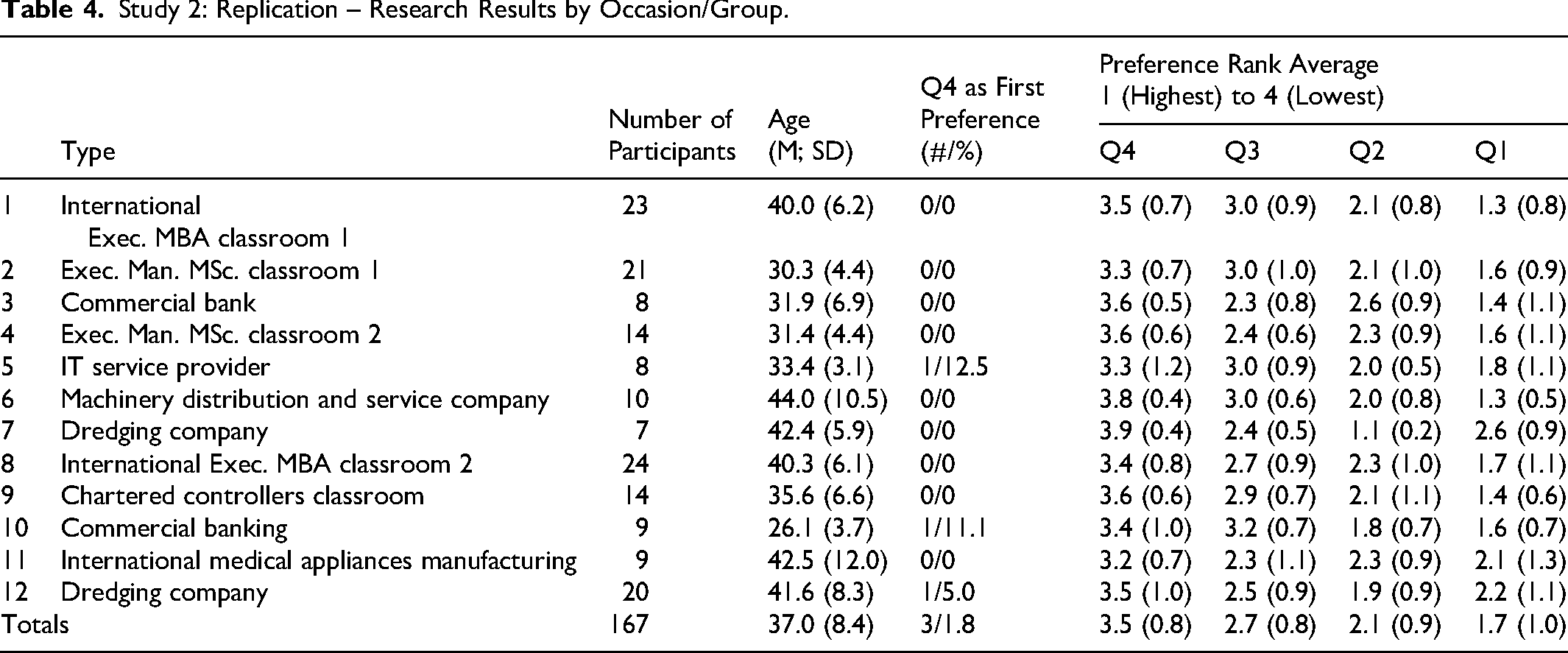
As shown in Table 4, group sizes ranged from seven to 24 participants. The relative orderings of preferences did not differ significantly according to chi-square tests between groups of below and above the median group size of 12. Another distinction in group types is that between formal executive education classroom groups (n = 5) and in-company training groups (n = 7). Three types of executive classrooms were involved: a relatively younger (aged around 30) Executive Management MSc. class, a relatively older International Executive MBA class (aged around 40) and a class of chartered controllers (aged around 35). A chi-square test did not reveal significant differences in the relative orderings of quadrants between classroom groups or in-company groups. In fact, inspection of Table 4 reveals a closely similar pattern of preference orders across all occasions. Q4 is indeed by far and very consistently the least popular quadrant, chosen by less than 5% of the participants and often, indeed, left empty as a first choice. The typical pattern of quadrant attractiveness – with only minor exceptions – after Q4 appears to be: Q3, Q2 and – as ‘top favorite’ – Q1, as will be explained and elaborated next. Given this qualitative similarity between organizations and the lack of other significant preference-ordering differences between groups, we conclude that the ordering phenomenon appears to be replicated systematically between all group contexts. Apparently, this preference effect is mainly individually determined. For this reason, we will focus our follow-up analyses below on the group-pooled data at the individual level. The last row of Table 4 shows the total ‘disaggregated’ rank averages of all 167 participants. Table 5 shows the details of the preference distribution in the combined dataset.
Study 2: Replication – Combined Research Results (n = 167).a
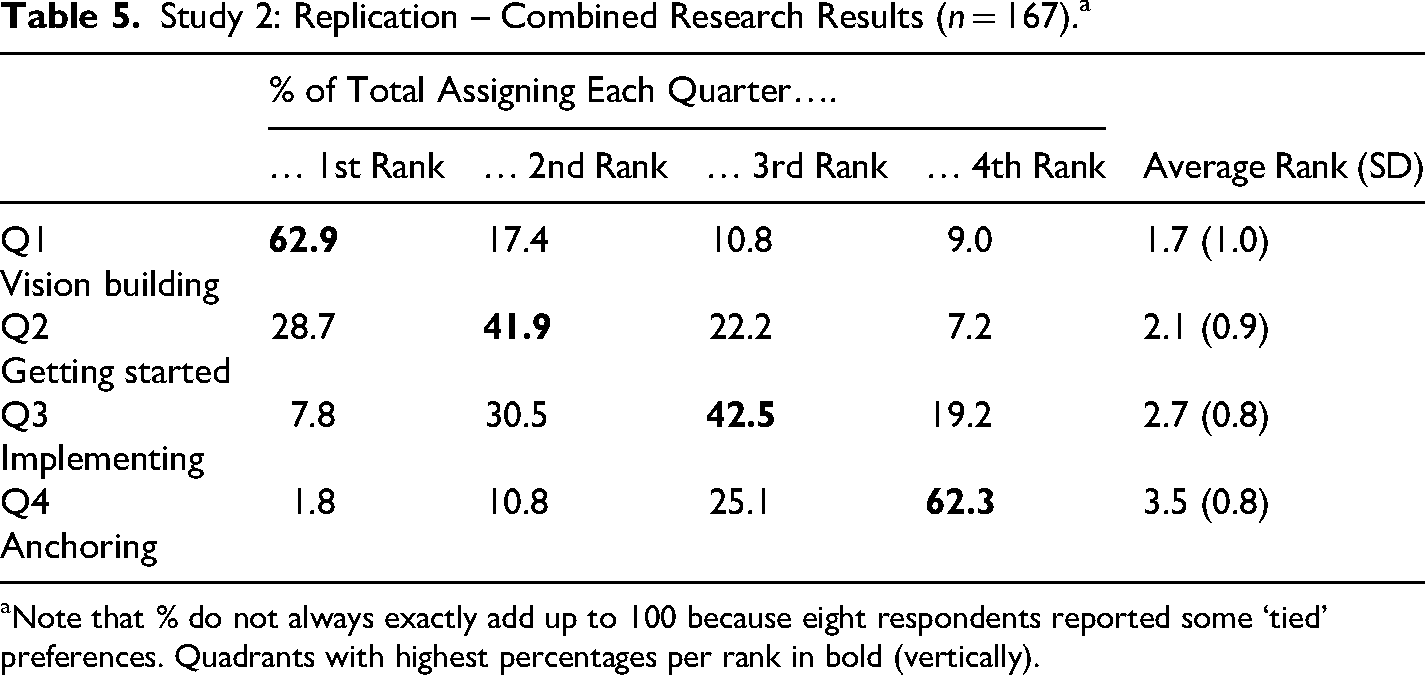
Note that % do not always exactly add up to 100 because eight respondents reported some ‘tied’ preferences. Quadrants with highest percentages per rank in bold (vertically).
The highest frequency per rank (i.e., vertically) is in bold. It replicates the general pattern of systematically declining popularity from Q1 to Q2, to Q3 and finally to Q4. Significant chi-square tests (p < .001) supported the qualitative finding of the highly uneven distribution of preferences for each quadrant. The average ranks assigned to each quadrant (last column) differed significantly (p < .001) in all pairwise comparisons. Most important for the current paper's purposes is the last row. It shows that Q4 is put in last position by 62.3% of all participants and on third or last position by even 87.4%. Less than 2% of participants have a first preference for Q4 to be employed. Q4, the ‘anchoring quadrant’, appears to be actively shunned. It is this phenomenon we focus on in the current paper and explore in more detail below.
Toward Explanation: Three Follow-Up Studies
To find out why game participants seem to systematically shun the anchoring quadrant Q4, we followed up by conducting an exploration of their preference motivations and of the comparative beliefs they hold about the various quadrants. As outlined in the method section above (see also Table 3), we first captured low Q4 preference motivations directly through open questioning and coding. Second, comparative beliefs about the various quadrants were first inventoried from the informal research phase and the debrief sessions of the favorite quadrant exercise in the design phase. These were included in a questionnaire and administered to all subsequent participants in the replication phase. In our third and final study, a panel of field experts in planned organizational change was invited to reflect on and discuss our findings. We had two major aims in doing this. First, we wanted to make sure that the phenomenon we laid bare passes the triviality test in the eyes of field experts. Second, we wanted to source their professional knowledge of planned change in the field in order to explore further what might account for this phenomenon. We will discuss the outcomes of each follow-up exploration next.
Spontaneous Motivations Given for Shunning Q4 (Open Format Question; Study 1)
Of all game participants marking Q4 as their lowest preference quadrant, 89% provided a written motivation for it. A total of 159 motives were recorded in the replication phase (Study 3). These motivations were open coded by two independent coders, who reached complete consensus after deliberation. Respondents often mentioned more than one motive. Coding the motives eventually yielded four motive categories. These are described below in decreasing order of frequency.
‘Anchoring Is Boring’: The Low Energy Motive (70% of All Respondents)
A very large majority of respondents motivates their lowest preference for Q4 by referring to it as ‘boring’ or ‘not exciting’. The work involved in anchoring is considered to be ‘standard’, ‘predictable’, ‘repetitious’, ‘detaillistic’, ‘daily implementation’ and – as such – rather tedious and uninteresting. In all, the Q4 work is associated with low energy, low challenge and simply ‘less fun’. Typical motivations in this category include: Anchoring is less fun, because it seems like the change has already succeeded; I am not a finisher, I get bored.
Although many do profess that proper anchoring is important, they tend to grow impatient at this final stage and feel an urge to move on. New projects are looming and people fear losing steam. As some respondents said: At the end of a project my mind already goes to the next project as I like to set up new things; Most of the action is gone here and I feel drawn to doing new things.
‘Anchoring Is Hard’: The Lacking Competence Motive (27% of All Respondents)
Respondents citing this motive acknowledge that they prefer not to be employed in Q4 because they consider anchoring a (very) difficult task. As one of them put it: Finishing what you have started and preventing people from returning to old habits is the toughest part of the change. Anchoring is hard, I prefer to leave that to others, and: Others are much better at this.
But what exactly makes anchoring difficult for them? Oftentimes, the required competences they feel to lack remain rather underspecified (‘a different mindset’; ‘special skills’) or they are only described in very broad terms, as in ‘nailing down processes’ or ‘implementing’. Others are more precise in what competences they lack that they deem essential for proper anchoring. These typically include tenacity, control, endurance, discipline, structuring, planning and attention to detail. The work to be done in Q4 thus appears to be associated with meticulous process management, which they often do not consider to be their professional or even personal strength (e.g., ‘not my cup of tea’). Sometimes, they associate these ‘Q4 qualities’ simply with management experience they feel they lack. Finally, some acknowledge a personal skills shortcoming in involving and sometimes even disciplining others in order to anchor change: For (endlessly) involving and dragging along others, I am too impatient; Convincing people is not my strength.
These personal shortcomings also raise the question whether and to what extent these lacking competences imply specific finishing leadership competences and skills: an important issue, as touched upon later in this paper.
‘Anchoring Is Not My Concern’: The Low Importance Motive (20% of All Respondents)
Q4 is often given the lowest preference because respondents – for various reasons – deem it less important (to them). First, anchoring activities may be considered as not important to their leadership role. It is considered as ‘operational work’ and/or ‘execution’, something that can be ‘outsourced’ or left to employees or managers. They prefer to leave the ‘roll out’ or the ‘fine-tuning’ to others. As one participant described this role division: Anchoring takes place by employees themselves; they have to prove – through their behavior – that they understand where we as a company want to go. This is what you must communicate as a manager (…). I think anchoring is also a job of the management team. Sure, I will be supportive and give the good example, but I am more of a visionary, who is there to facilitate and help my management team rather than the one that executes it. It may feel like you are already there, and this final step has little to add.
‘Anchoring Is Superfluous’: The Automaticity Motive (12% of All Respondents)
The final category of reasons why respondents have Q4 as their lowest preference is that anchoring is considered as something that happens ‘automatically’ after implementation and takes care of itself. This seems a natural extension of the low importance motive above. Anchoring is seen as a natural consequence of the proper management of the earlier change phases, especially of raising engagement, automatically leading to a (final) embodiment of the ‘new normal’. When a sufficient number of people are engaged and accept the change, the anchoring will follow automatically. If we go well in the beginning: build a nice project, get started with all the team, engage people and implement (…), the results will be achieved.
Image/Belief Differences Between Quadrants (Survey; Study 2)
During Research Phases 1 and 2, we extensively debriefed every favorite quarter exercise by having a group dialogue on the typical ‘first preference distribution’ they had formed on the floorboard (Figure 1). These conversations focused on their choice motivations and on finding tentative explanations for the pattern that had materialized, especially for the empty Q4 phenomenon. Over time, we build upon earlier debriefs and enriched the (lively) discussions – and the participant's learning – by bringing in previously provided motivations for discussion as well. These dialogues yielded five typical categories of beliefs and perceptions participants appeared to hold about the differences between the various quadrants, particularly regarding Q4. Of their comparative ‘image’ so to speak. To more systematically probe how these beliefs and perceptions – initially gathered from group dialogues – are distributed over the four quadrants, we started to explicitly survey them in the replication phase. This survey consisted of a set of 12 questions (see Appendix) that was administered before doing the favorite quadrant exercise (but after the game was played). The comparative statistics of these beliefs and perceptions between quadrants are shown in Table 6. Below, we will discuss them per category, with a special focus on Q4.
Study 2: Replication – Comparative Quadrant Image/Beliefs (n = 167).a
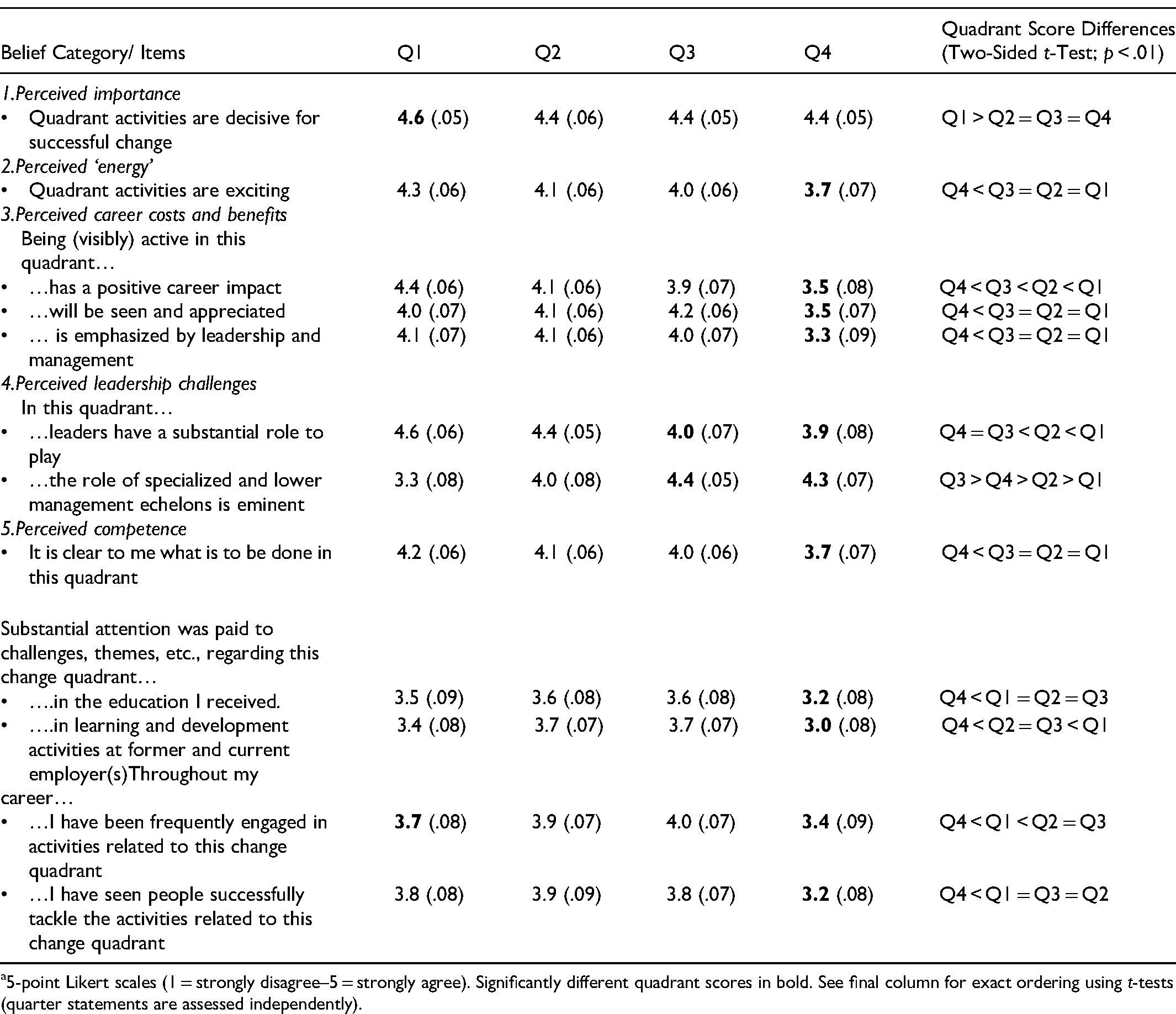
On inspecting all the relative belief scores between quadrants in Table 6, it becomes immediately clear that Q4 often stands out as significantly different from the other quadrants. Clearly then, our questions did pick up the salient image differences that we inventoried in the earlier phases of this research. Together, they provide a clear picture of how Q4 is typically regarded.
First, respondents do not seem to underestimate Q4 in terms of its importance (belief category 1 in Table 6) for successful change. It scores solidly above 4, together with Q2 and Q3. Only Q1 are slightly higher. At least intellectually, then, these professionals and students acknowledge that anchoring is very important (i.e., a ‘decisive’ factor). This concurs with the relatively low percentage (20%) of ‘low importance’ and ‘automaticity’ motives reported earlier. Still, this acknowledgement does not seem to spur a desire to engage in it. The other four belief categories are rather more unfavorable towards Q4 and may override its perceived importance for successful change. First, Q4 appears to have a bad reputation in terms of verve. Its associated activities are considered much less exciting than those of any of the other quadrants. This concurs with the earlier reported personal motivation of 70% of all respondents that anchoring activities are perceived to be ‘boring’, ‘not exciting’, ‘predictable’ and so on. In short, these activities are perceived to provide a low amount of ‘energy’. Second, being active in Q4 is considered systematically less rewarding in terms of career, visibility and higher management attention. In other words: there are fewer ‘career points’ to be scored there. Apparently, at the end of the change cycle, management attention itself is drifting off, perhaps to a new change cycle, making the anchoring work of Q4 less attractive from a career perspective. Those ‘left behind’ must engage in activities, such as ‘policing’ colleagues for sticking to the newly implemented ways of working, that many find unattractive from a professional and social point of view. Third – and relatedly – anchoring is perceived to have little real ‘leadership character’. It apparently tends to be associated with ‘clerical’ work that is often described even in pejorative terms by our (aspiring) managerial respondents. ‘That's just execution’, as one of them informally remarked. These findings seem to indicate that implementation and anchoring activities are perceived to be managed instead of led and belong to the responsibility of ‘others’ rather than the respondent's. This could well relate to the low energy motive, endorsed by 70% of all respondents since respondents do not seem to be eager to engage in anchoring activities. The automaticity motive (endorsed by 12% of the respondents) seems to relate to this perception as well: the presumption that anchoring ‘takes care of itself’. The fourth and final category of unfavorable beliefs centres around lacking competences to perform well in Q4. This starts simply with being unaware of what is to be done in this quadrant in the first place. Q4 activities appear to be at a clear knowledge disparity vis-à-vis the other quadrants. Across a range of formal and informal ways of learning and education, respondents indicate that Q4 topics were systematically the least addressed. Respondents also report the least experience with Q4 activities – either personally or vicariously by observing others. This may be a result of (widespread) inattention or simply a lack of anchoring – of closing the learning loop – in planned change projects per sé. Note also that learning Q4 activities ‘on the job’ at current and former employers has the lowest score of all (3.0). All this relative neglect of ‘Q4 learning’ may well have contributed to Q4 activity being less familiar or well understood: what is unknown is typically unloved. These beliefs in turn could also contribute to the idea (or even justify) that anchoring is perceived to be ‘not my concern’ or superfluous (the low importance and automaticity motives above).
It seems that we have a somewhat sobering conclusion to draw here. Anchoring activity appears to be actively avoided despite being judged as decisive for change. It is systematically liked less because it is considered relatively unfamiliar, professionally unchallenging, managerially disregarded and career-wise disincentivized. Note that this unfavorable ‘mix’ of beliefs may well be self-strengthening. What is simultaneously considered relatively dull, hard, unfamiliar and not seen nor rewarded is very unlikely to be chosen, even if it is considered important.
Field Expert Panel Validation (Expert Interviews; Study 3)
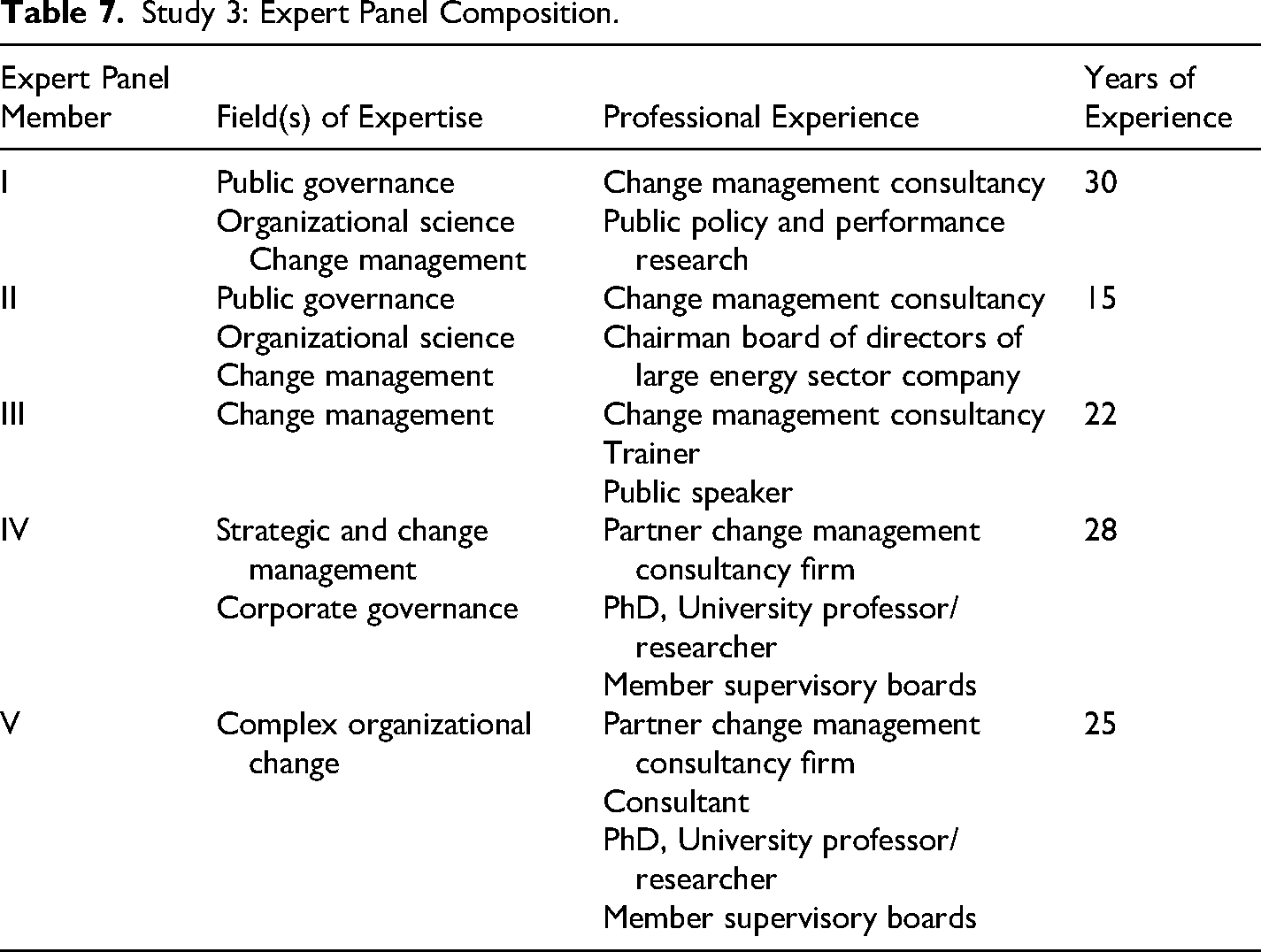
Our panel was composed to represent deep knowledge and field experience in planned organizational change efforts. Table 7 describes the five panel members with a combined experience of one hundred years in the field of organizational change both in private and (semi-)public organizations. Panel members were invited ‘to discuss a new research finding we would like to hear your professional opinion about’.
Study 3: Expert Panel Composition.
To set the stage, the panel members received an introduction video a week prior to the interview, explaining only the set-up of the simulation game and describing the four quadrants. In this way we saved valuable time for the online interview, and we made sure they were all briefed in exactly the same way. No results were revealed yet. All five expert panel members were then interviewed one-on-one by the first author, using a strict protocol to make sure we did not influence their interpretation or judgment of the phenomenon upfront. Interviews were recorded verbatim for analysis.
The interview itself proceeded as follows. First, an explanation of interview technicalities was given and we asked whether they had seen and understood the video. Any remaining questions were then answered. Next, the panel members were asked to imagine the following situation: ‘Imagine a heterogeneous group of 1000 management professionals with 10+ years’ experience in various organizations, who understand the meaning of the four change quadrants. Suppose these professionals were asked in which quadrant they would like to be deployed in by highest preference in a change project…’. The expert panel members were then asked to predict how these highest preferences would be distributed over the change quadrants among this fictional group of management professionals. Subsequently, they were asked to motivate the distribution they expected. Only after they had given their predictions and motivations, did we explain our research and reveal our findings. These were summarized and a pie chart reflecting the first rank scores of Table 5 was presented to them. Finally, panel members were asked to reflect freely on the ‘empty Q4’ result and how they would explain and interpret it. They were not informed of all the motivations and beliefs participants provided us with, so as not to prime them in any way. A week after the interviews, expert panel members were asked by e-mail whether they had any follow-up reflections.
In order to categorize the explanations of our experts, two authors independently coded the transcripts of the interviews based initially on the five belief categories we derived earlier, as laid down in Table 6. Complete consensus among the coders was achieved after deliberation.
Results
On the question of the first preferred quadrant in the hypothetical situation, all expert panel members indeed attributed the lowest expected percentage share to Q4, varying from 5% to 20% with an average of 13%. Q1, Q2 and Q3 scored an average of 38%, 24% and 25% respectively: a somewhat – but less explicit – declining trend from Q1 to Q4, but Q1 and Q4 as clear outliers in sync with our findings. In reflecting on the question of how the expected quadrant preferences were distributed, Expert V elaborated: This type of [experienced] professional [is] generally very interested in establishing a vision (…); [as for] implementation, the attention is often decreasing and not seen as the nicest thing to do. And this is even more the case for retaining [i.e., ‘anchoring’] (…).
All explanations and reflections the experts subsequently provided for the low percentages in Q4 appeared to fit in any of the five categories identified through Studies 1 and 2 (as in Table 6). Therefore no additional explanatory categories were created. As a consequence, we feel confident that our three studies’ combined data covered (‘saturated’) the most common explanations of the phenomenon. Below, we discuss them consecutively.
Lower Importance
Experts themselves recognize the importance of implementation and anchoring activities for the success of planned change initiatives, but show clear awareness that practitioners tend to underestimate it: (…) anchoring – people know it is a must, but they are not primarily interested in it. (…) I wish the other change phases [Q3 and Q4] would represent more expertise and that organizations find these phases more important. (Expert IV) The [management] attention just drops once the change shifts to implementation. (…) people suppose ‘they get it’ – but in fact this is only where it really starts!
Lower ‘Energy’
Most experts recognize that anchoring activities are (perceived as) – rather dull. In the opening quote of this paper, Expert II already pinpointed that many professionals’ energy tends to gravitate toward generating innovative ideas rather than realizing and finishing existing ones. Other experts support this notion depicting Q4 activity ‘where people just have least interest in’ (Expert IV), ‘not the nicest (…) nor the sexiest’ thing to do (Expert V). In all, these type of frequently mentioned characterizations seem to underline our previous finding: to be engaged in anchoring activities in a change project is systematically perceived as considerably less exciting than the first quadrants.
Unfavorable Balance of Career Costs and Benefits
The third belief category of Table 6 indicated that management professionals believe there are career implications for certain work activities. Specifically, professionals who are openly engaged in anchoring activities are perceived to receive comparatively less recognition, appreciation and attention from leadership and management. In a similar vein, Expert I offers a sociological explanation deriving from professional socialization: It is almost ‘Bourdieu’ (…) What is being appreciated in one's professional field? (…) If one is ‘into vision’ [Q1], one is [considered] more senior and more important. ‘Everyone wants to master in strategy’.
Combined, such internalized professional and educational norms may have biased managers against the ‘hard work’ of anchoring. However, experts shed light on more material explanations as well, such as in Expert IV's ‘following the money’-argument: (…) organizations mostly tend to spend money on the first phase of a planned change initiative. And that is not always a good thing, because the third and fourth phase could get underexposed and underfunded. (…) At the start (…), there could be a crisis or a high ambition; top management is willing to invest a lot to formulate a strategy or a compelling vision and also to introduce this vision in the organization. After that, [however,] the vision is ‘on its own’ in the organization with less resources available; departments have to pay for [implementation and anchoring] themselves, for example. (…) Only at moments of [formal] management reports the attention tends to increase again (…) in order to find out if progress is made (…) and results are [indeed] achieved. perverse or cynical motives; (…) just give me the simplest things to do with the highest reward and lowest risk of failure, implying that activities in Q4 are under-rewarded, complex, and carry a higher risk of failure, which is why they are shunned. Apparently, lower rewards for anchoring activities could well be connected to perceived lower levels of appreciation for and systematic underbudgeting of implementation and anchoring activities.
Lower Need for (Senior) Leadership Attention
As experts mentioned the tendency among management professionals to shy away from anchoring activities, results on belief category 4 in Table 6 resonate: anchoring planned change initiatives is perceived to require a relatively less prominent leadership role. Relatedly, most panel members indicated that anchoring reticence may result from practical misconceptions of planned change initiatives originating from unfavorable and inadequate educational and professional training. First, management professionals might […] erroneously think – e.g., because they read Kotter – it starts with urgency instead of with relevance; short big strikes, because this is the only way with urgency. Everything that takes a long breath and that is relevant: you don't want it. With a top down approach, something will surely happen. These kinds of misconceptions can remain unchecked and undisputed, because organizations ‘recycle’ them, change initiatives are not being properly evaluated and educational programs mistakenly reproduce them. (Expert I) … the role of management in implementation and control disappears as people ‘do it themselves’. (…) A kind of ideal situation in which you [as a manager] do not have to do a lot, not even on the level of middle management (…). Persistent convictions seem to be at work here. We do NOT only need charismatic, transformational leaders; to get going we need transactional leaders as well. Who feels responsible for the actual implementation and retention of the intended change? This makes the [research] results a wake-up call for (middle) managers and people [active] in implementation.
Complexity: Lacking and Unclear Competence Needs
In Study 2 we found that there is relative unclarity about what is actually to be done in Q4 in comparison to the three other quadrants. According to different experts, part of this may stem from the complexity of anchoring activities. In the words of Expert II: So what I also observe is that for many professionals – in my experience – it is easier to start things than to stop things or to finish things. So one of the major challenges I always identify in realizing large change trajectories is that you must persevere and must hold on. And not quickly starting the next thing. Anchoring is very much about actually making your change sustainable. Everyone can make a vision (…) [but] the craftmanship to realize things in the implementation is really a different story, (…) testing in practice is another question, another depth, complexity and skill; for anchoring even more (…) the complexity of acting, the craftmanship and the impact: they all increase (…). In a change, people often have not done it before, [and] when one has not done something before, you have to give him or her time to learn (…) and what does one have to learn? Of course you can only see that when you start to implement. When you don't execute this [learning process] in a good way, all kinds of [unproductive] assumptions could arise. The misery of the anchoring phase is its turbulence, because certain things remain from previous change phases; this is the reason why this phase is sometimes seen as negative – people start to talk about sanctions etc. (…) not nice at all (…), [for example] ‘anchoring’ one's diet after losing 30 kilos (…) is slogging and terribly heavy. Because the only thing you do is guarding old patterns will not start to dominate again.
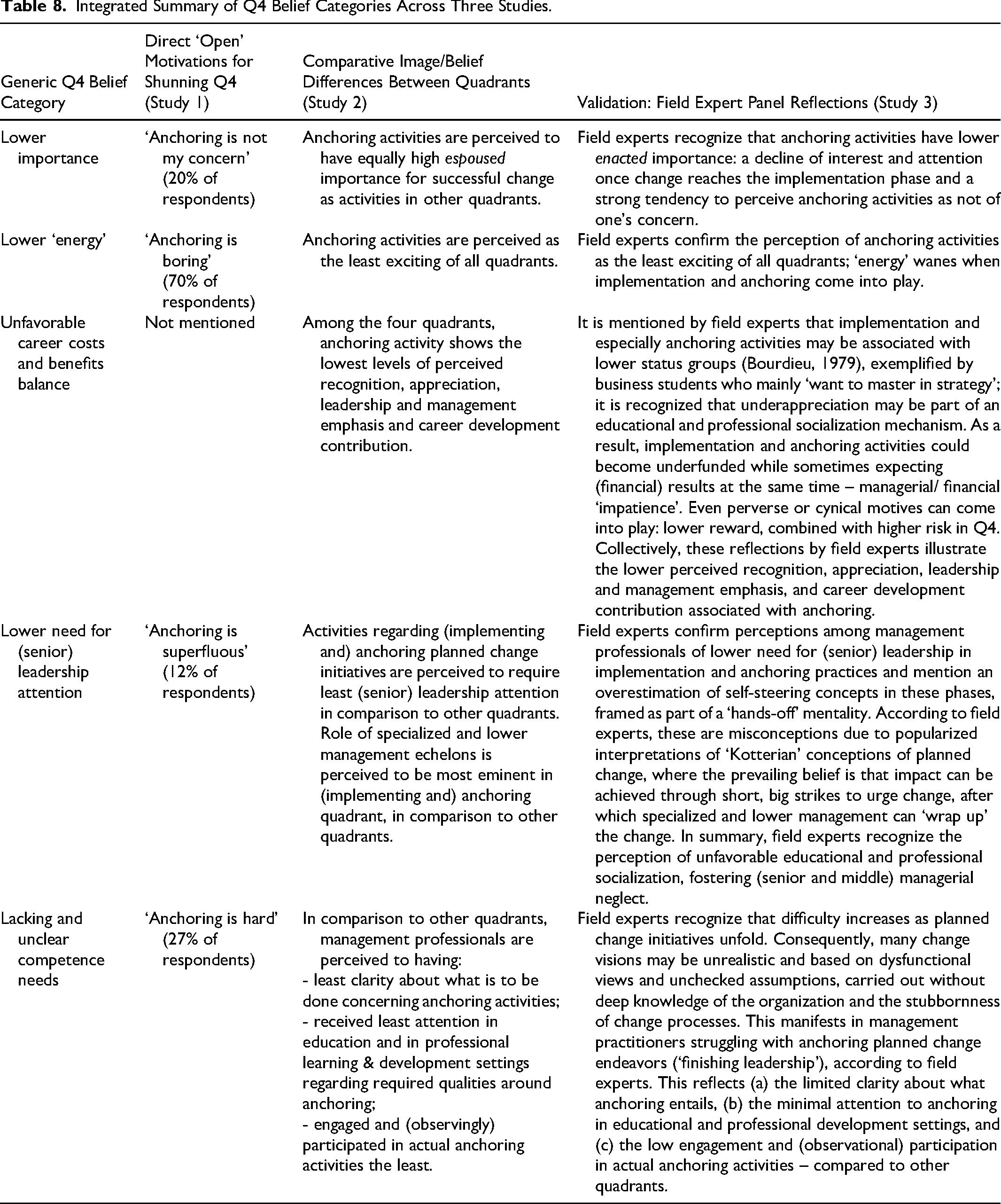
Table 8 integrates the different explanatory elements reported in the five Q4 belief categories, subdivided into the direct open motivations for shunning anchoring activities (Study 1), comparative image and belief differences between the four ‘change quadrants’ (Study 2) and reflections and speculations of field experts (Study 3).
Integrated Summary of Q4 Belief Categories Across Three Studies.
Discussion
As laid down in Table 8, our findings indicate that the anchoring phase (Q4) of planned change is systematically avoided by management professionals, as it is perceived as boring, difficult, outside their responsibility, and of limited career benefit. This ‘anchoring reticence’ appears to be rooted in professional and educational socialization processes that tend to undervalue tactical management. As a result, the institutionalization of change is often neglected, offering a novel explanation for the persistently low success rates of planned change initiatives. At the same time, we have demonstrated – and summarized in Table 1 – that anchoring activities are crucial, as they represent a fundamental part of organizational change, not only from a teleological perspective.
In our description and analysis so far, we have tried to find out why there is such reticence to the anchoring activities in the last phase of the change cycle. We can summarize these explanations in four theme categories. Below, we briefly discuss these four categories and how they might be related. In this way, we hope to gain more insight into the precise mechanism by which the attention to anchoring activities seems to be systematically limited. We then ‘zoom out’ on this specific process and propose a more general model of underinsititutionalization that explains why certain practices – which are otherwise recognized as valuable and useful – still struggle to get the attention they deserve. A model for ‘orphaned and neglected practices’, so to speak. We conclude with some initial thoughts on how to promote the attention for anchoring activities in practice and in future research.
Inducing Core Themes of Anchoring Reticence and Their Interplay
The first theme, costs & benefits, relates to (perceived) incentives around careers and financial motives. Anchoring activities tend to be the least appreciated, emphasized and rewarded by leadership and senior management, in comparison to other quadrants. This may have a financial budgeting dimension as well as Q3 and Q4 activity is typically underfunded. Institutionalized perceptions of low importance, superfluity and dullness and perhaps the general lower status associated with these activities make anchoring unrewarding both financially and career-wise.
The second theme addresses the ambiguity surrounding knowledge and competence requirements for successful anchoring compared to other quadrants. Our results indicate that anchoring planned change initiatives is considered challenging, as complexity tends to increase as these initiatives unfold. Analyzing (the hardship of) anchoring practices of planned change, field experts indicate that this increasing complexity apparently leads practitioners to approach implementation and anchoring phases of change initiatives with dysfunctional views, unchecked assumptions, and/or insufficient organizational knowledge. Therefore, a more fundamental root cause of educational bias may be the limited availability and accessibility of a robust educational and learning and development infrastructure. This is backed by significantly lower perception-based scores of education and learning and development activities regarding ‘Q4 challenges and themes’ and a similar pattern emerging in perceived workplace learning experiences (Table 6). This finding is further corroborated by Figure 2, showing a map from a multinational (2022) depicting L&D activities across the different change phases. Again, a steep decline in attention to later phases and a notably empty anchoring (‘sustain’) phase is evident.
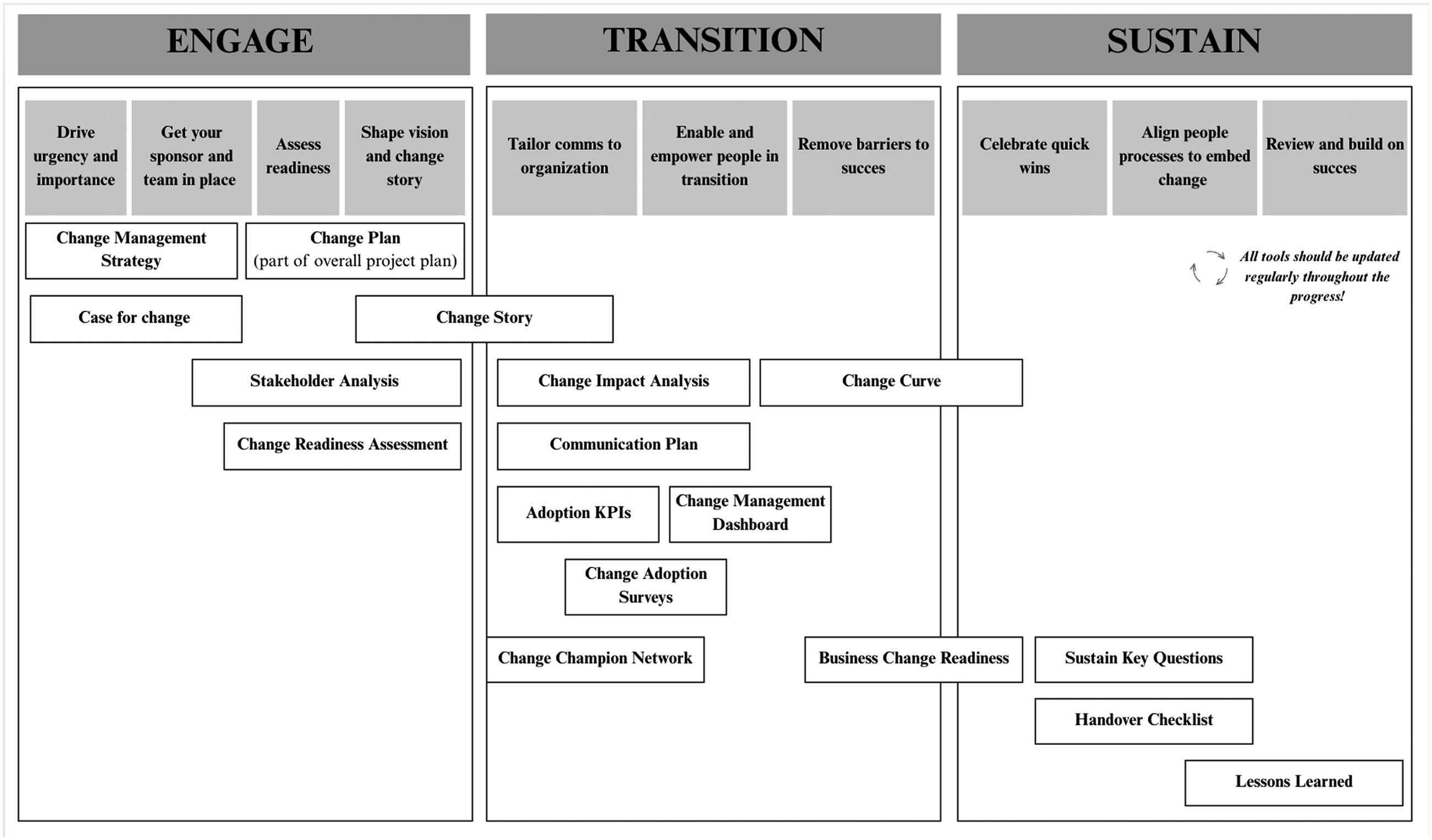
Anonymized map of learning and development change management activities of a multinational, differentiated by change phases (2022).
Low familiarity with anchoring practices also seems to be in sync with statements by Greenwood et al. (2002, p. 61), Cummings and Worley (2005, p. 189) and Stouten et al. (2018, pp. 767-768) about undertheorization, understudy and limited empirical evidence of institutionalization (processes) around planned change initiatives. In all, theory concerning institutionalization of planned change initiatives seems to be underdeveloped, residing in nascent to intermediate theoretical territory (Edmondson & McManus, 2007).
The third theme reveals consistently unfavorable attitudes toward anchoring activities in planned change initiatives. Our findings demonstrate that up to 70% of respondents perceive anchoring activities as boring, with energy diminishing significantly when professionals face these tasks. This attitudinal pattern seems to align with Kahneman's (2011) dual-process theory, as management professionals tend to avoid the effortful anchoring activities which arguably require more demanding – meticulous, persistent – ‘System 2’ thinking. If anchoring activities tend to be perceived as unrewarding, complex and boring, they may tend to evoke negative emotions resulting in avoidance behaviors, such as an aversive, ‘not my concern’ attitude. Professional socialization may in turn reinforce these unfavorable attitudes, creating a widespread image of unimportance and resulting managerial neglect toward anchoring activities.
Finally, institutional factors fundamentally shape how organizations approach (anchoring) activities in change management. Our analysis reveals a consistent pattern of organizational life that subtly yet powerfully seems to discourage sustained commitment to unattractive anchoring work. Organizations typically seem to allocate fewer resources to anchoring efforts while performance evaluation and reward mechanisms favor earlier phases of change initiatives. This valuation disparity may create professional environments where anchoring work holds low status. Similarly, organizational learning frameworks rarely seem to prioritize developing anchoring competencies, leaving significant knowledge gaps among practitioners. These institutional elements may be deeply interwoven within organizational fabrics, creating enduring challenges to effective change anchoring – a critical factor for long-term transformation success that often receives insufficient attention despite its importance.
A Generic Model of Orphaned and Neglected Practices
We propose that the set of mechanisms driving the shunning of anchoring practices could in fact be a ‘special case’ of a more generic model of underinstitutionalized practices. Institutional research provides ample examples of the way practices or routines in organizations get institutionalized (e.g., Greenwood et al., 2002; Howard-Grenville et al., 2016; Lounsbury & Crumley, 2007; Sturdy, 2004) or de-institutionalized (e.g., Ahmadjian & Robinson, 2001; Casillas & Huising, 2025; Greve, 1995; Gurses et al., 2024; Oliver, 1992). This leaves the phenomenon of partial institutionalization largely uncovered (see also Greenwood et al., 2002, p. 61). Inspired by our findings in the case of change anchoring practices, we forward Figure 3 detailing the possible elements of a model for such orphaned practices or ‘half-baked’ implementations.
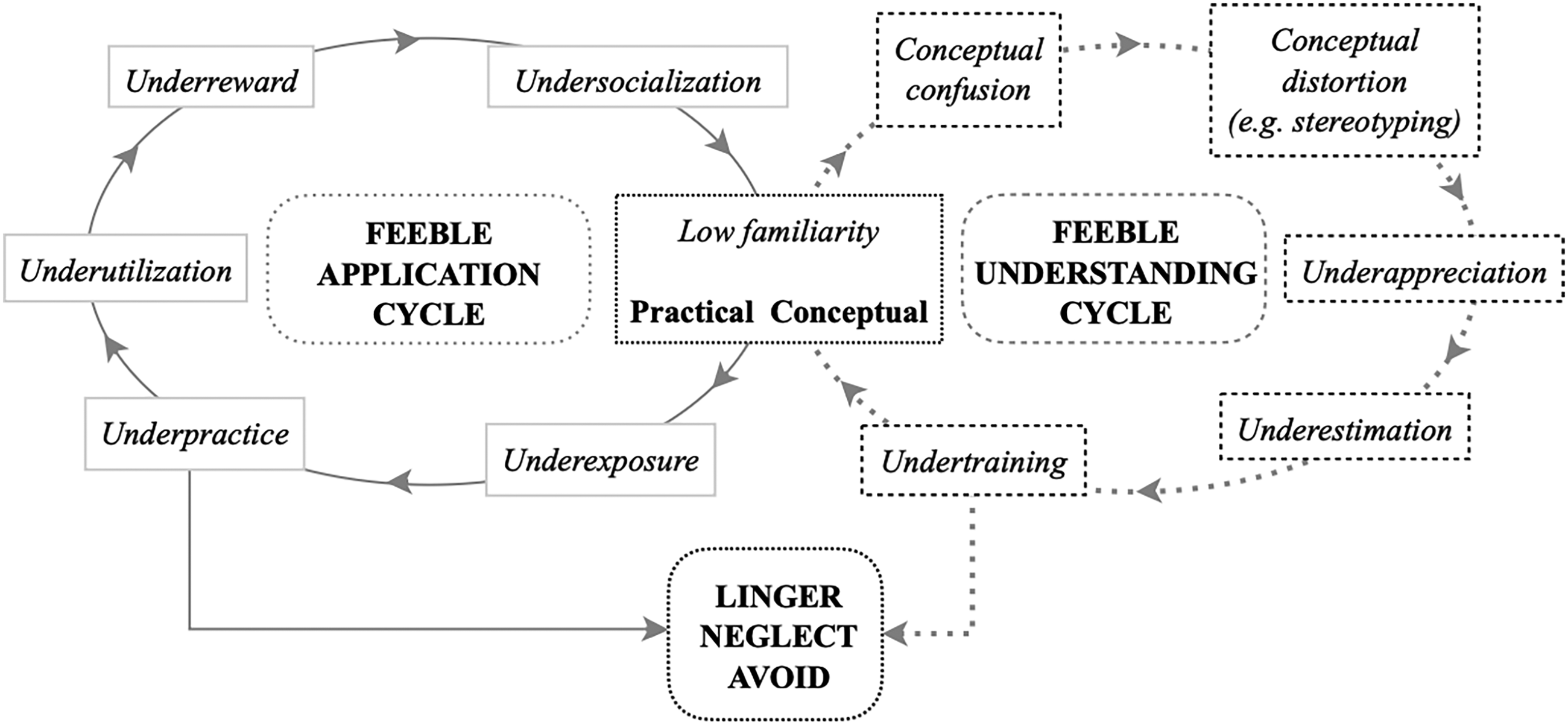
Induced theory of orphaned practices.
The model consists of two ‘loops’: one practical and one conceptual. The practical loop forms as low initial familiarity with a practice leads to low exposure of organization members to that practice. As a result, they do not get ample opportunities to experience and practice the routine. Therefore it is underutilized for its intended purposes. This means it cannot prove its worth and is not considered ‘rewardable’. This leads to the practice not being shared or promoted in the formal and informal networks of the organization: it is undersocialized, which strengthens its low familiarity. This leads to a cycle of feeble application of the practice. In the conceptual loop, low familiarity breeds uncertainty about what the change is all about and what its functional value is (Yin et al., 2024). As the practice is still around ‘for some reason’, this conceptual confusion triggers negative conceptual distortions: it is stereotyped and – as a result – underappreciated. Unknown, unloved. Its potential worth for the organization is consequently underestimated. This, in turn, lowers the motivation for training it – which in turn supports the unfamiliarity. Combined with the conceptual loop, this leads to feeble understanding. Routines that receive low practice and low training will be neglected and avoided as nobody sees their utility and nobody fully masters them. To the extend they do persist in some form, they lead an orphaned life. This dynamic adds up to a collective learning failure.
Contributions and Recommendations for Further Research
Upon reflection, we argue that our study makes four contributions to the present organizational change literature. Firstly, the most apparent contribution in our research is the empirical discovery of the puzzling phenomenon of anchoring reticence. Despite the theoretical importance and the normative rhetoric around the anchoring phase coming from stepwise change models, this phase of planned change is – in practice – systematically avoided by management professionals. Proponents of (normative) stepwise change models and change professionals will want to come to grips with what this apparent knowing-doing gap implies for their theories and models, as the phenomenon of ‘anchoring reticence’ appears to be rooted both in professional and educational socialization processes that tend to undervalue tactical management. For instance, our results counter naïve readings of Lewin's (1947) refreeze metaphor that such stabilization occurs as a natural automatism requiring no intentional action on the part of management. Instead, the strong indications of undertheorization, insufficient study, and limited empirical evidence regarding the institutionalization processes surrounding planned change (Cummings & Worley, 2005; Greenwood et al., 2002; Stouten et al., 2018) suggest the need for a dedicated, fundamental research program. While we do not claim to propose a comprehensive blueprint for such a program, we focus on recommendations aligned with our direct findings and analyses.
A second contribution is that anchoring reticence provides a potential explanation for the repeatedly espoused high failure rates of planned change initiatives (Beer & Nohria, 2000; Ewenstein et al., 2015; Hammer & Champy, 1993; Kotter, 2008). Research examining the relationship between these failures and the neglect of anchoring activities remains strikingly sparse. After all, anchoring contributes not only to the efficiency of the change process itself, but also – more broadly – to the development and safeguarding of a knowledge base comprising new procedures and insights. It supports the cultivation of collective intelligence. The espoused importance of anchoring is reflected in its presence as a core component of virtually every organizational change or learning model, as we laid down in Table 1. Without at least a minimal degree of anchoring, an organization loses its cognitive and behavioral integrity and is unable to exhibit intelligent, adaptive behavior over the long term. This clearly contributes to the failure of planned change efforts as the learning cycle of change tends to remain ‘unclosed’.
Thirdly, our data have inspired a tentative model of orphaned and neglected practices in organizations which warrants deeper theoretical and empirical study of the partial or only ‘half-baked’ institutionalization of new organizational routines. For instance, do these practices get adopted in their rudimentary form from the start – and if so: why? Or do they get marginalized over time? In a more general sense, the ‘bundle of routines’ that organizations arguably represent (Aldrich et al., 2020) includes practices ranging from very well-understood and well-practiced to very ill-understood and ‘underpracticed’. The ‘orphaned’ category we described in this paper seems to fall at the lower end of this spectrum. Future process research could shed more light on how the specific mix of routines in this respect comes about and differs between (types of) organizations.
Lastly, we think our study makes a potential methodological contribution as an example of discovery-oriented, phenomenon-driven research, which Schwarz and Stensaker (2016, p. 245) defined as problem-oriented research that focuses on capturing, documenting, and conceptualizing an observed phenomenon of interest in order to facilitate knowledge creation and advancement. Our approach serves as one example of what this may look like. The process (as laid out in Table 3) started with an unexplained empirical regularity in practice that was plain to see for everyone involved. This raised our fascination and curiosity. We then systematized our observations, which allowed comparisons of the phenomena's occurrence in different settings. From that we let explanations unfold. First, spontaneously from open inquiry with participants and then more systematically using a questionnaire. These were enriched by expert reflections ‘from the outside’. Finally, based on our findings, we forwarded a tentative model for the genesis and sustenance of a broader class of phenomena of which the focal one may be only a ‘special case’. This methodology involves a constant dialogue between observation, interpretation and ultimately theorization, leading to a rich description of an organizational phenomenon that – in our experience – resonates with many change practitioners and experts alike. It helps foster the ecological validity of management research and thus its practical relevance.
Remedies for Shunned (Anchoring) Practices
As we have shown to have strong indications for undertheorization, understudy and limited empirical evidence of institutionalization (processes) around planned change (Cummings & Worley, 2005; Greenwood et al., 2002; Stouten et al., 2018), we first propose to strengthen the theoretical foundation of this specific field as a prerequisite for healthy anchoring practices, in which management practitioners do not shun, but seek and experience these activities. On this foundation, (change) management education, learning & development and management practitioners can build. A clear and mature theoretical identity could also contribute to a more balanced (educational) view, to informed and evidence-based practices, more appreciation (status), and a more positive ‘image’, thereby mitigating unproductive educational and professional biases and socialization processes.
We acknowledge that immediate solutions to counteract neglected anchoring activities are difficult to implement, given their apparent deep integration in dominant perceptions, mindsets and established practices. Nevertheless, several remedies may be viable in the short term by determined and reflective practitioners. For instance, enhanced reality checks and feedback loops can facilitate alignment between visionary ambitions and actual change capacity. Resource allocation might also benefit from readjustment; whereas visionary planning frequently receives substantial attention, implementation and anchoring processes often seem to suffer from inadequate funding. If professional pride in proper anchoring is to be built, so are the required funds. Furthermore, patience constitutes an essential element. Change processes inherently involve delays, learning curves and setbacks. Budgeting mechanisms should reflect this temporality by accommodating behavioral adjustment and increasing complexity over time. Leadership development and training programs would benefit from greater emphasis on preparing leaders to anchor change effectively – to better apply ‘finishing leadership’ rather than a ‘hands-off’ managerial approach, legitimized by misdirected self-management philosophies. Steadfast ‘finishers’ should receive more formal and informal acknowledgement as the safeguards of a proper, closed learning cycle. In short, true anchoring of change requires adequate budget, time, training and continued, visible (top) management attention. Finally, organizational reward systems should recognize and value those who contribute to sustainable change. Experience in anchoring processes and operational leadership should be acknowledged as fundamental to professional advancement. Implementation and particularly anchoring – similar to the final fourth quarter in a basketball game – represent decisive moments (‘crunch time’) in which preparation, leadership, and reflection must converge to secure successful outcomes.
Conclusion
In this paper, we reported on a chance discovery and subsequent exploration of a phenomenon, we labelled as ‘anchoring reticence’. Anchoring should be understood as the deliberate and purposeful institutionalization of what is being changed or learned within a planned process of organizational change. Yet, our findings indicate that the anchoring phase of planned change is systematically avoided by management professionals, as it is perceived as boring, difficult, outside their responsibility, and of limited career benefit. In this paper, we propose that the process by which an important routine such as anchoring gets gradually undervalued and underpracticed, may explain why so many change initiatives ultimately fail and how it may be an instance of a more generic collective learning failure that creates orphaned, neglected and shunned – in short: underinstitutionalized – practices in organizations.
Footnotes
Funding
The authors received no financial support for the research, authorship, and/or publication of this article.
Declaration of Conflicting Interests
The authors declared no potential conflicts of interest with respect to the research, authorship, and/or publication of this article.
