




Abstract
Change can affect employee work behavior and well-being in a variety of ways. The mediating and moderating factors that produce these effects, however, are not fully understood. This study examines the mediating role of uncertainty on affective commitment and organizational attractiveness and assesses whether psychological empowerment can mitigate the effects of change-related uncertainty. Survey data stems from 971 young German banking sector employees during a change period. Results reveal a negative relationship between change and affective commitment as well as between change and organizational attractiveness, with both relationships mediated by uncertainty. Furthermore, empowerment does not moderate this mediation for affective commitment but does for organizational attractiveness. Thus, there are fewer negative effects of uncertainty on organizational attractiveness when psychological empowerment is high. This has several implications for practice: uncertainty should be counteracted during change processes, for example, through transparent communication, and psychological empowerment should be promoted before and during change processes.
Introduction
The fact that organizational change is now a part of daily life for many employees is not a new development. These various changes in organizations can have a considerable effect on employees, but the direction in which change affects employees depends primarily on whether employees perceive change as personally helpful (as having positive effects) or harmful (as having negative effects) (Oreg et al., 2011). In contrast, clearly negative effects for employees are caused by uncertainty, which is often induced by change (Nelson et al., 2013; Schweiger & Denisi, 1991). While preliminary study results suggest that the relationship between change and negative outcomes is mediated by uncertainty (Rafferty & Griffin, 2006), in their organizational change literature review, Oreg et al. (2011) call for more research on the mediating and moderating effects of change. This study firstly aims to build on previous research and examine whether the relationship between change and affective commitment as well as that between change and organizational attractiveness are mediated by uncertainty. Secondly, little research has been conducted on the factors that could help employees reduce the uncertainty caused by change; therefore, this study also aims to investigate whether psychological empowerment can help reduce the effects of uncertainty caused by change.
Change can have several different effects on employees. For example, there is evidence that employees’ commitment is affected by change (Herscovitch & Meyer, 2002). Fedor et al. (2006) revealed that employees’ commitment increases when they perceive change as favorable, while it decreases when change is perceived as unfavorable. Similarly, job satisfaction and psychological well-being increase when change is perceived as favorable, while turnover intentions and absenteeism decrease (Amiot et al., 2006; Martin et al., 2005). However, while change can have a positive impact on employees, only a few companies have managed to implement change processes successfully (meaning that the negative consequences outweighed the positive ones) (Al-Haddad & Kotnour, 2015). Although companies are aware of the mostly negative impact of change on their employees, organizational change has become unavoidable for companies to remain competitive (By, 2005).
One variable that is caused by change but which, in contrast to the variables mentioned above, makes it more difficult for employees to deal with change is uncertainty (e.g. Ashford, 1988; Nelson et al., 2013; Pollard, 2001; Rafferty & Griffin, 2006). A change process always involves changes for employees; a changing work environment is characterized by, for example, the restructuring of previous processes, shifts in responsibilities, or the redefinition of areas of responsibility. Such changes can cause confusion among employees, lead to lower confidence in their competencies, or raise concerns about job security. According to Rafferty and Griffin (2006), employees have more feelings of uncertainty when there is frequent change or less planning involved in a change. As experiencing uncertainty is a critical cognitive appraisal and therefore stressful for employees (Rafferty & Griffin, 2006), it is not surprising that change-related uncertainty causes negative outcomes such as decreased satisfaction, commitment, perceptions of trust, honesty and caring in the organization, and mental and physical health, as well as an increase in turnover intentions (Bordia et al., 2004b; Hui & Lee, 2000; Nelson et al., 2013; Rafferty & Griffin, 2006; Schweiger & Denisi, 1991). Thus, change affects employees and organizations in two major ways: (a) change has a direct impact on employees that can vary as described and (b) employees are also indirectly influenced by the uncertainty change causes. In contrast to the direct influences of change, the uncertainty caused by change has clearly negative consequences for employees and thus also for organizations. More recent research has found evidence that the relationship between change and several outcomes might be mediated by uncertainty. More specifically, Rafferty and Griffin (2006) indicated that uncertainty mediates the negative relationship between change and job satisfaction as well as the positive relationship between change and turnover intentions.
Not only is it important for companies to successfully implement change processes to remain competitive, it has also become essential for companies to retain their employees in the long term as the costs of losing knowledge when employees leave a company are high (Joseph et al., 2014). Change-related uncertainty impacts, in addition to other factors, employees’ intention to quit such that turnover intentions increase when employees feel uncertain (Bordia et al., 2004b). Therefore, particularly in times of change, when there is increased uncertainty among employees, it is important for companies not to lose their employees. One variable that denotes the desire of employees to stay with an organization is their affective commitment (Felfe et al., 2014; Meyer & Allen, 1991), which is defined by Meyer and Allen (1991, p. 67) and “refers to the employee's emotional attachment to, identification with, and involvement in the organization. Employees with a strong affective commitment continue employment with the organization because they want to do so.” Affective commitment therefore has a direct impact on employee retention and predicts turnover intentions, with turnover intentions being lower for employees with high affective commitment (Somers, 2009; Wasti, 2003). Moreover, affective commitment is, for example, positively related to organizational citizenship behavior, performance, and pay satisfaction, while it is negatively related to stress (Meyer et al., 2002; Newman & Sheikh, 2012).
Organizational attractiveness can also predict retention and helps to prevent employees from leaving a company (Joseph et al., 2014). The definition of organizational attractiveness includes a focus on both potential and current employees. Amongst job seekers, organizational attractiveness is a factor that draws their attention to potential employers and comprises the “envisioned benefits that a potential employee sees in working for a specific organisation” (Berthon et al., 2005, p. 156; Jiang & Iles, 2011). Jiang and Iles (2011) propose that these are two dimensions, with external applicants belonging to the external dimension of attractiveness and existing employees of the organization to the internal dimension of attractiveness. For current employees, organizational attractiveness describes the degree to which they are encouraged to continue working for their current employer and perceive the organization as offering good workplaces (Bakanauskiene et al., 2017; Jiang & Iles, 2011; Joseph et al., 2014). Although previous research has often focused on potential employees, it is important to also consider current employees in terms of organizational attractiveness (Bakanauskiene et al., 2017), as employees describe their employers more positively when the latter's perceived organizational attractiveness is high (Lievens et al., 2007). If employees perceive their organization as attractive, they are more likely to recommend the organization to others, both offline and online through channels such as Glassdoor.com, which have become important for employers’ recruitment strategies. Such online channels have in fact proven to be a decisive competitive advantage for companies as they compete for the best employees in the so-called “war of talents” (Bakanauskiene et al., 2017). Thus, in times of change, the internal dimension may be more important to organizations in terms of retention, which at the same time could continue to ensure a good reputation for the company externally (e.g., through recommendations from current employees).
Thus, both affective commitment and organizational attractiveness are related to employees’ willingness to stay in an organization. However, they differ according to the organizational identification literature in that affective commitment represents an emotional component, whereas organizational attractiveness (as organizational prestige) impacts the evaluative and the cognitive components the most (Boroş et al., 2011). According to Boroş et al. (2011, p. 111), organizational identification involves three components: the emotional component represents “emotional involvement with the group”; the cognitive component is about self-categorization, meaning the cognitive awareness of oneself in a group; and the evaluative component about group self-esteem.
Maintaining high commitment and high organizational attractiveness and successfully managing change are key aspects for companies to stay competitive. To our knowledge, commitment and organizational attractiveness have not yet been studied in the context of organizational change and change-related uncertainty. We assume that organizational change has an impact on the perceived affective commitment of employees and their perceptions of the attractiveness of the organizations they work for and that this relationship is mediated by change-related uncertainty. Since uncertainty is perceived as a stressor and an unpleasant state by employees, this study proposes the following hypotheses, as shown in Figure 1:
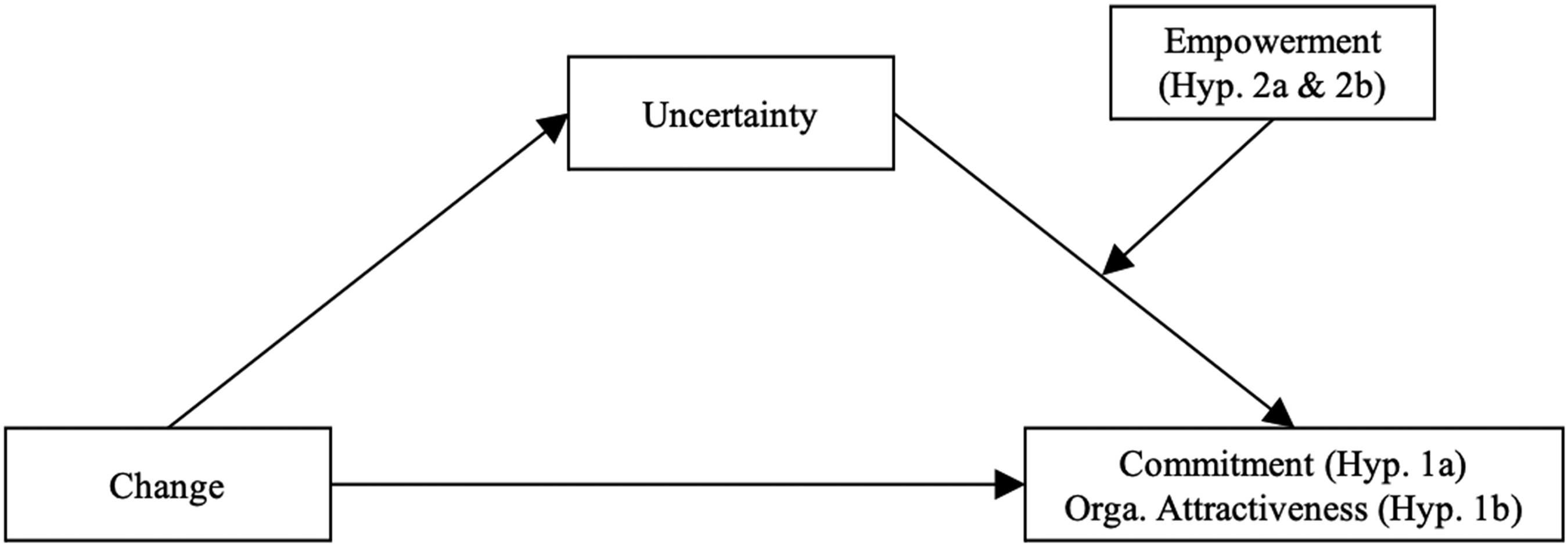
Conceptual model hypotheses 1a, 1b, 2a, and 2b.
As stated, many negative effects of change-related uncertainty have been examined with regard to employees. However, factors reducing change-related uncertainty and its negative consequences have, to the authors’ knowledge, received less attention thus far.
In times of change, employees seek cues in their working environment regarding the impact that a change will have both in general as well as for them personally to avoid unpleasant feelings induced by potentially harming consequences. If they do not receive this information—for example, due to insufficient communication—the resulting ambiguity will cause uncertainty (DiFonzo & Bordia, 1998; Lau & Woodman, 1995). Though it may seem impossible to avoid the emergence of uncertainty during change processes, the question arises as to what could help employees gain more control to mitigate the negative effects of uncertainty.
According to organizational research, psychological empowerment can nurture a sense of control among employees because it actively shapes both their work role and their work context (Spreitzer, 1995). Spreitzer (1995) defines empowerment based on the arguments of Conger and Kanungo (1988) and Thomas and Velthouse (1990) and posits that this active orientation of employees manifests itself through four cognitions: meaning, competence, self-determination, and impact. According to Spreitzer (1995, pp. 1443–1444), “meaning involves a fit between the requirements of a work role and beliefs, values, and behaviors”; competence “is an individual's belief in his or her capability to perform activities with skill”; self-determination “is an individual's sense of having choice in initiating and regulating actions”; and impact is “the degree to which an individual can influence strategic, administrative, or operating outcomes at work.” It is important to emphasize that empowerment is shaped by the particular work environment. Consequently, how empowered employees feel varies depending on the situation and can be strengthened by certain interventions (Thomas & Velthouse, 1990). Empowerment has numerous positive effects on employees’ attitudes and behaviors. It is, for example, positively related to commitment, job satisfaction, organizational citizenship behavior, and performance, and it is negatively related to turnover intentions (Abdissa & Fitwi, 2016; Li et al., 2015; Seibert et al., 2011; Ukil, 2016). Prior research has emphasized that empowerment can play an important role in organizational change. Lizar et al. (2015) provided evidence that empowerment positively influences employees’ readiness for change, and Lamm and Gordon (2010) could show that employees’ support for change is positively related to empowerment. Empowerment can be helpful for organizations during times of change because employees can make quick decisions when they are empowered, which can be a competitive advantage (Ongori, 2009). Moreover, empowerment can help leaders successfully manage change by inducing a greater sense of control among employees (Conger & Kanungo, 1988).
Taking the presented results of change-related uncertainty and empowerment together, for employees, one major problem stemming from organizational change is the resulting state of change-related uncertainty (Bordia et al., 2004a), as this negatively affects employees and organizations. In contrast to uncertainty, empowerment is known for its positive impact on the work context and its association with a sense of control, which can be especially important for employees in times of change. While uncertainty is perceived as an unpleasant, aversive state, it is known to motivate any behavior that could help people reduce their feelings of uncertainty (Hogg, 2007; Van den Bos & Lind, 2002). Since empowerment can strengthen employees’ sense of control, empowerment may become particularly important when employees feel uncertain, and an increased sense of control could mitigate the negative effects of uncertainty. Since there is often a lack of definite information about the final outcome, transformation almost inevitably leads to a certain degree of felt uncertainty. This may also be reflected, for example, in the fact that uncertainty is “one of the most frequently cited concomitants of extensive organizational change among employees” (Nelson et al., 2013, p. 277). Moreover, Paulsen et al. (2005) found evidence that despite different levels of personal control, employees’ perceived uncertainty was similar. Therefore, we do not assume that empowerment can prevent the emergence of uncertainty among employees in times of organizational change, but we maintain that it can mitigate the effects of the uncertainty that change produces.
Based on past findings, one might think that empowerment could also be helpful in times of organizational change by directly mitigating the negative effects of change. This may be especially true for those who are empowered to have a direct impact on organizational change, such as managers. However, it is questionable whether this applies to all employees, particularly young employees without management responsibility who likely have little direct influence on change processes, even if they feel a high level of empowerment in their daily work life. Young employees are of particular interest at times of change as they show a higher resistance to change than older employees (Kunze et al., 2013). Thus, while it is conceivable that empowerment has a mitigating effect on the direct effects of organizational change, we assume that this effect does not exist, especially for young employees without management responsibility.
However, we do assume that empowerment could help reduce the negative outcomes of change-related uncertainty for affective commitment and organizational attractiveness, as shown in Figure 1, and formulate the following hypotheses:
Method
Procedure and Participants
The data was collected in 2019 as a part of a research project conducted in cooperation with a large banking group in Germany. All banks included in the study were independently run and had their own branch structure and organizational resources and setup. During the data collection period, the whole banking group was undergoing a major restructuring of business and development processes due to ongoing digitization efforts in the financial sector and changes in legal regulations. Thus, different change processes were occurring simultaneously in sales, customer service, administration, and vocational training/development in different banks with different intensities. Though the change process itself involved the same topics across all banks, there were differences in the intensity with which the restructuring was driven forward within individual banks. All banks that participated in the survey were undergoing a change process, so it can be assumed that all employees who participated in the survey were affected by these processes. The data for this study was collected as part of a major employee survey of apprentices and young employees, who were asked about similar but not identical topics. It was assumed that apprentices can only experience a low level of empowerment during their vocational training, so these constructs were not part of the survey for apprentices. Consequently, only the data from young employees was used for this study. All young employees had completed a vocational training of two or three years or a similarly structured bachelor's degree in banking and had started to work permanently in the bank within the previous three years. Vocational training was the main recruiting and qualification path within this banking group, and most permanent employees qualified for their current position through this training (which was sometimes augmented with post-graduate degrees). The study was undertaken from October 10 to November 22, 2019, and 1,051 young employees from more than 106 different German banks participated. An exact response rate could not be determined for data privacy reasons (the exact tenure structure of employees within the banks is subject to data protection and workplace regulations). Therefore, a response rate of approximately 15% is estimated from the overall age structure in the banking group. For the analyses, all participants who provided either no or an incorrect assignment code for their bank were excluded; 80 participants were excluded for this reason, meaning that all analyses were conducted on a total sample of 971 participants. These employees were, on average, 22.56 years old (SD = 6.15; minimum age = 18, maximum age = 41; 93% were 26 years old or younger), and 59.6% stated that they were female (40.4% male and 0% diverse).
At the beginning of the survey, participants received general information about the research and goals of the study. Next, they answered demographic questions (e.g., age, gender) and questions about their onboarding process, the vocational trainee program, and potential improvements to these. The following section, which focused on work tasks, included most of the constructs relevant to this study, in addition to several others (e.g., corporate culture). Participants answered questions in randomized order on their empowerment, the attractiveness of their respective banks, and the change and related uncertainty they perceived in their organizations. The next sections contained questions on the topics of leadership, performance appraisal, and the transitional processes from apprenticeship to permanent staff. These questions were followed by a section focused on the employees’ organizations in general, which included the affective commitment scale. The questionnaire concluded with questions about further training and career opportunities and an option to provide feedback on the survey.
Measures
Change
To measure change, we translated and adapted the three items for frequent change and the three items for transformational change (Cronbach's alpha = 0.740) from Rafferty and Griffin (2006) to the participants’ work context. Participants had to rate frequent change from 1 (strongly disagree) to 5 (strongly agree) and transformational change from 1 (not at all) to 5 (a great deal). Example items are “It is difficult to identify when changes start and end” (frequent change) or “To what extent have you experienced changes to the values of your banking group?” (transformational change).
Change-Related Uncertainty
To measure change-related uncertainty, we translated and adapted the four items for psychological uncertainty (Cronbach's alpha = 0.814) from Rafferty and Griffin (2006) to the participants’ work context. Participants had to rate their agreement with the items from 1 (strongly disagree) to 5 (strongly agree). An example item for uncertainty is “I am often unsure how severely a change will affect my bank.”
Empowerment
Empowerment was measured using the 12-item scale for psychological empowerment (Cronbach's alpha = 0.839; meaning Cronbach's alpha = 0.833; self-determination Cronbach's alpha = 0.860; impact Cronbach's alpha = 0.849; competence Cronbach's alpha = 0.637) from Spreitzer (1995), which was translated into German. Participants had to rate their agreement with the items from 1 (strongly disagree) to 5 (strongly agree). Example items are “The work I do is very important to me” (meaning), “I am confident about my ability to do my job” (competence), “I can decide on my own how to go about doing my work” (self-determination), or “My impact on what happens in my department is large” (impact).
Commitment
Commitment was measured with the 5-item scale for affective organizational commitment (Cronbach's alpha = 0.892) from Felfe et al. (2014). Participants rated their agreement with the items, which were adapted to the bank context, from 1 (strongly disagree) to 5 (strongly agree). Items were, for example, “I am proud to belong to my bank” or “I would be very happy to spend the rest of my working life at my bank.”
Organizational Attractiveness
To measure organizational attractiveness, we translated and adapted six items (Cronbach's alpha = 0.891) from the 15-item measurement by Highhouse et al. (2003). Participants had to rate their agreement with the items from 1 (strongly disagree) to 5 (strongly agree). We used the following six items: “My bank is attractive to me as a place for employment,” “I would accept a job offer from my bank again anytime,” “I would recommend my bank to a friend looking for a job,” “Employees are probably proud to say they work at my bank,” “My bank has a reputation as being an excellent employer,” and “There are probably many who would like to work at my bank.”
Results
Data Analysis
As the data was hierarchical and young employees were nested in banks, the intraclass correlation coefficient (ICC(1)) was calculated first to determine whether the use of multilevel analysis was required. The average group size per bank was 9.16 (SD = 8.17). The results revealed ICC(1)s of 0.07 and 0.08, indicating that the bank level explained 7% of the variance of affective commitment and 8% of the variance of organizational attractiveness, confirming that multilevel analysis was necessary. For appropriate multilevel mediation analysis, it was necessary to determine at which level variables were measured. Since both predictors and outcome variables were measured at the individual level, in this context, the model was labeled a 1-1-1-model. Following the recommendation of Zhang et al. (2009) for 1-1-1-models, we group-mean-centered all predictors before the analysis and added the means as Level 2 parameters into the model. Since the random intercept and random slope model showed no significant difference from the random intercept model, all reported models are random intercept models. The software environment RStudio (Version 1.3.1093) was used for all analyses (R Core Team, 2020; RStudio Team, 2019).
Descriptive Analysis
Means, standard deviations, ICC(1)s, and correlations among the Level 1 variables are displayed in Table 1. Correlations among the Level 2 variables are displayed in Table 2.
Means, standard deviations, ICC, and correlations among the uncentered Level 1 variables.
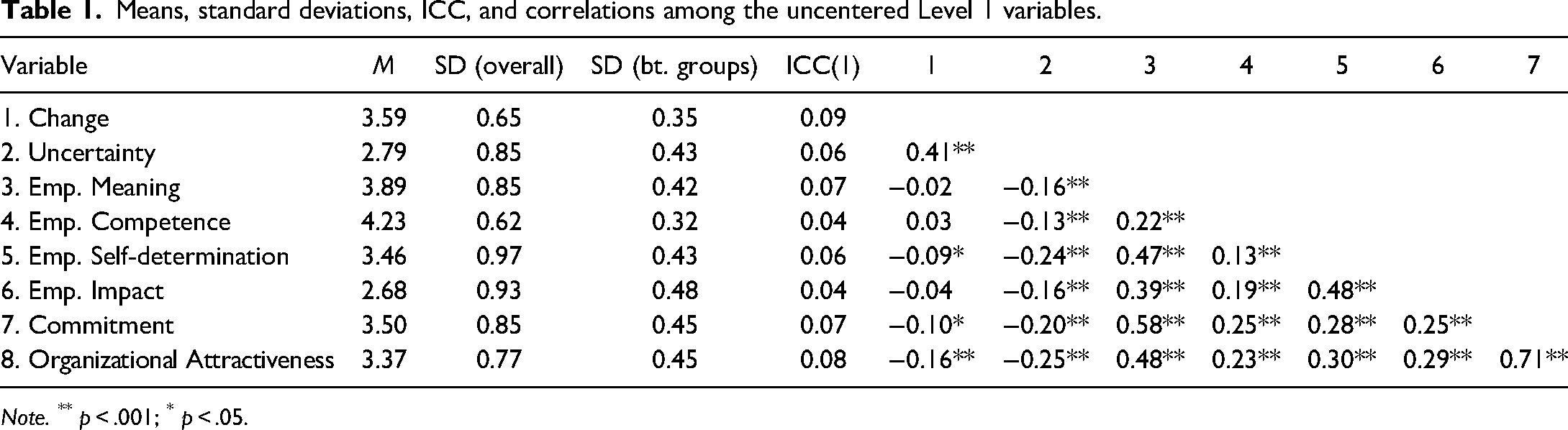
Note. ** p < .001; * p < .05.
Correlations among the Level 2 variables.
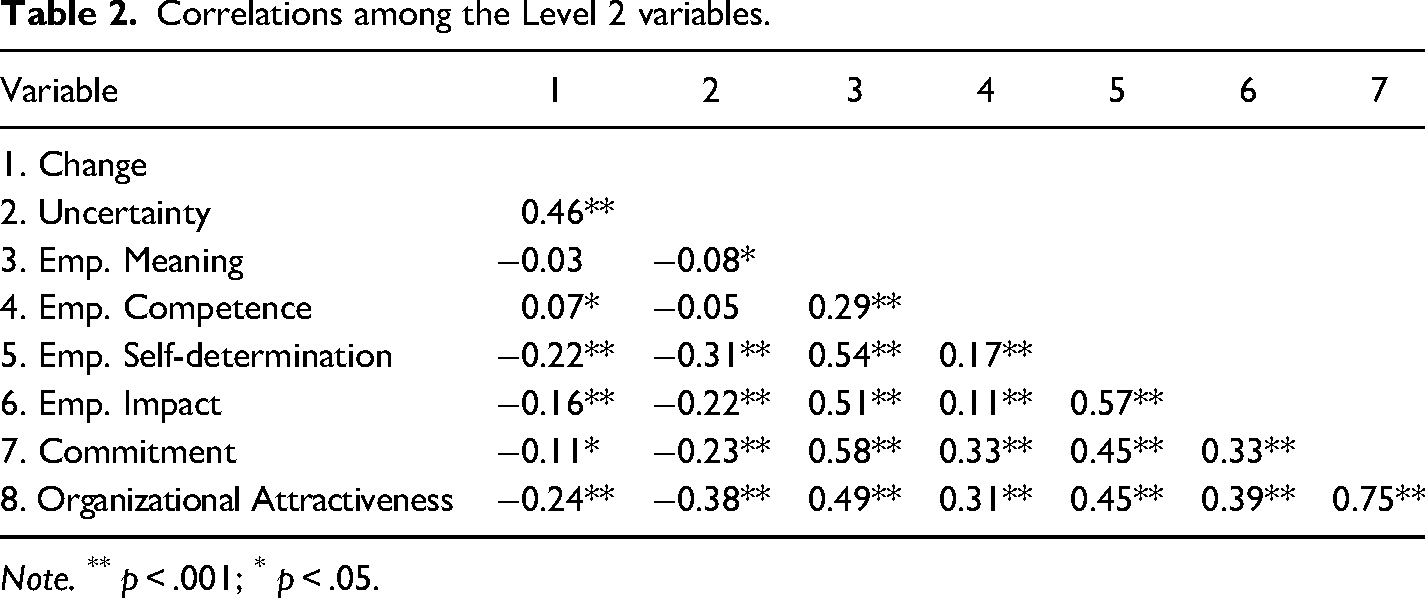
Note. ** p < .001; * p < .05.
Hypothesis Testing
Hypothesis 1a assumed that the relationship between change and affective commitment is mediated by uncertainty. To analyze the assumed hypothesis, we used the R package mediation (Version 4.5.0) together with the lme4 package (Version 1.1-26).
In Model 1, change was added as predictor and uncertainty as dependent variable. The results indicate that change significantly predicts the mediator variable of uncertainty (γ = .53, t = 13.39, p < .001). In Model 2, change and uncertainty were added as predictors and affective commitment as dependent variable. Model 2 reveals that change (γ = −0.03, t = −0.57, p = .571) does not significantly predict affective commitment, but the mediator uncertainty does (γ = −0.19, t = −5.19, p < .001). The results further reveal a significant indirect effect of change on affective commitment through uncertainty (γ = −0.10, p < .001, 95% CI (−0.14, −0.06)). The total effect of the mediation model (γ = −0.13, p = .008, 95% CI (−0.22, −0.05)) and the proportion of the indirect effect in the total effect (γ = 0.78, p = .008, 95% CI (0.38, 2.29)) are significant. These results support Hypothesis 1a.
Hypothesis 1b assumed that the relationship between change and organizational attractiveness is mediated by uncertainty. In Model 1, change was added as predictor and uncertainty as dependent variable. The results of the Model 1 analysis are the same as the results for affective commitment and are not reported again. In Model 2, change and uncertainty were added as predictors and organizational attractiveness was the dependent variable. Model 2 indicates that change (γ = −0.07, t = −1.74, p = .082) does not significantly predict organizational attractiveness, but the mediator uncertainty does (γ = −0.18, t = −5.49, p < .001). The analyses further reveal a significant indirect effect of change on organizational attractiveness due to uncertainty (γ = −0.09, p < .001, 95% CI (−0.13, −0.06)). The total effect of the mediation model (γ = −0.17, p < .001, 95% CI (−0.24, −0.09)) and the proportion of the indirect effect in the total effect (γ = 0.56; p < .001, 95% CI (0.32, 1.03)) are significant. These results support Hypothesis 1b.
Prior to calculation of the models of Hypotheses 2a and 2b, to further test the theoretical model of the empowerment scale with its four subscales, a confirmatory factor analysis was conducted. We therefore tested whether the three items for each subscale loaded on the corresponding subscale, allowed intercorrelation for the factors and tested the model with no higher order factor. Consequently, the model contained four factors. Since all survey questions relevant to the study were mandatory (whereas unrelated questions were not mandatory), there was no missing data, and parameters were estimated with maximum likelihood. Results of the model fit revealed χ2 = 153 (df = 48) and a 3.19 χ2/df ratio, indicating a weak model fit. In contrast, CFI (0.98), TLI (0.97), and the RMSEA (0.05) indicated a good model fit (Hu & Bentler, 1999), supporting that the theoretical model accords with the data. In the following, all analyses were calculated with the four subscales of meaning, competence, self-determination, and impact.
To test Hypothesis 2a, which stated that empowerment moderates the indirect effect of change on affective commitment due to uncertainty, all subscales of empowerment, the interaction term of all subscales of empowerment and uncertainty, and the interaction term of all subscales of empowerment and change were added to the previous mediation model.
Moderating Role of Meaning on Affective Commitment
In Model 1, change and the interaction of change and meaning were added as predictors, while uncertainty served as dependent variable. Model 1 demonstrates that change (γ = 0.52, t = 13.43, p < .001) significantly predicts the mediator uncertainty. In Model 2, change, uncertainty, the interaction of change and meaning, and the interaction of uncertainty and meaning were added as predictors, while affective commitment was used as dependent variable. Model 2 demonstrates that the mediator uncertainty (γ = −0.07, t = −2.54 p = .011) significantly predicts affective commitment, while change (γ = −0.07, t = −1.73, p = .084) and the interaction of meaning and uncertainty (γ = −0.01, t = −0.30, p = .764) do not significantly predict affective commitment. These results do not support the meaning dimension of Hypothesis 2a as no difference in the relationship between change-related uncertainty and affective commitment could be found for employees with low or high perceived meaning.
Moderating Role of Competence on Affective Commitment
In Model 1, change and the interaction of change and competence were added as predictors and uncertainty as dependent variable. Model 1 shows that change (γ = 0.53, t = 13.71, p < .001) significantly predicts the mediator uncertainty. In Model 2, change, uncertainty, the interaction of change and competence, and the interaction of uncertainty and competence were added as predictors, and affective commitment was used as dependent variable. Model 2 shows that the mediator uncertainty (γ = −0.15, t = −4.12, p < .001) significantly predicts affective commitment, while change (γ = −0.06, t = −1.18, p = .238), and the interaction of competence and uncertainty (γ = −0.05, t = −0.81, p = .417) do not significantly predict affective commitment. These results do not support the competence dimension of Hypothesis 2a as no difference in the relationship between change-related uncertainty and affective commitment could be found for employees with low or high perceived competence.
Moderating Role of Self-determination on Affective Commitment
In Model 1, change and the interaction of change and self-determination were added as predictors and uncertainty as dependent variable. Model 1 indicates that change (γ = 0.51, t = 13.19, p < .001) significantly predicts the mediator uncertainty. In Model 2, change, uncertainty, the interaction of change and self-determination, and the interaction of uncertainty and self-determination were added as predictors, with affective commitment serving as dependent variable. Model 2 shows that the mediator uncertainty (γ = −0.14, t = −3.73 p < .001) significantly predicts affective commitment, while change (γ = −0.03, t = −0.71, p = .481), and the interaction of self-determination and uncertainty (γ = 0.00, t = 0.10, p = .924) do not significantly predict affective commitment. These results do not support the self-determination dimension of Hypothesis 2a as no difference in the relationship between change-related uncertainty and affective commitment could be found for employees with low or high perceived self-determination.
Moderating Role of Impact on Affective Commitment
In Model 1, change and the interaction of change and impact were added as predictors, and uncertainty was used as dependent variable. Model 1 shows that change (γ = 0.53, t = 13.49, p < .001) significantly predicts the mediator uncertainty. In Model 2, change, uncertainty, the interaction of change and impact, and the interaction of uncertainty and impact were added as predictors and affective commitment as dependent variable. Model 2 shows that the mediator uncertainty (γ = −0.15, t = −4.26, p < .001) significantly predicts affective commitment, while change (γ = −0.04, t = −0.88, p = .380) and the interaction of impact and uncertainty (γ = −0.01, t = −0.12, p = .901) do not significantly predict affective commitment. These results do not support the impact dimension of Hypothesis 2a as no difference in the relationship between change-related uncertainty and affective commitment could be found for employees with low or high perceived impact.
The results of the moderating effects of change and the subscales of empowerment were not significant for the mediator uncertainty or for affective commitment (see Supplementary Materials for detailed results).
To test Hypothesis 2b, which stated that empowerment moderates the indirect effect of change on organizational attractiveness through the mediation of uncertainty, all subscales of empowerment, and the interaction term of all subscales of empowerment and uncertainty, and the interaction term of all subscales of empowerment and change were added to the previous mediation model. Results for all Model 1 analyses are the same as for affective commitment each and are not reported again.
Moderating Role of Meaning on Organizational Attractiveness
In Model 2, change, uncertainty, the interaction of change and meaning, and the interaction of uncertainty and meaning were added as predictors, while organizational attractiveness was used as dependent variable. Model 2 reveals that change (γ = −0.11, t = −2.87, p = .004), the mediator uncertainty (γ = −0.10, t = −3.34 p < .001), and the interaction of meaning and uncertainty (γ = 0.09, t = 2.68, p = .008) significantly predict organizational attractiveness. To further interpret this interaction effect, simple slopes were analyzed. The results of the interaction are displayed in Figure 2 and uncover a greater significant effect of uncertainty on organizational attractiveness for low meaning (1 SD below the mean: b = −0.16, t = −4.27, p < .001) than for medium meaning (mean: b = −0.10, t = −3.34, p < .001), while there is no significant effect for high meaning (1 SD above the mean: b = −0.03, t = −0.75, p = .46). The results thus support the meaning dimension of Hypothesis 2b by proving that the relationship between change-related uncertainty and organizational attractiveness is lower for employees who perceive a lot of meaning compared to employees who perceive little meaning. Hence, when change-related uncertainty is high, employees are more attracted to their organizations when they perceive a lot of meaning compared to little meaning. When change-related uncertainty is low, employees are similarly attracted to their organizations, regardless of their perceived meaning.
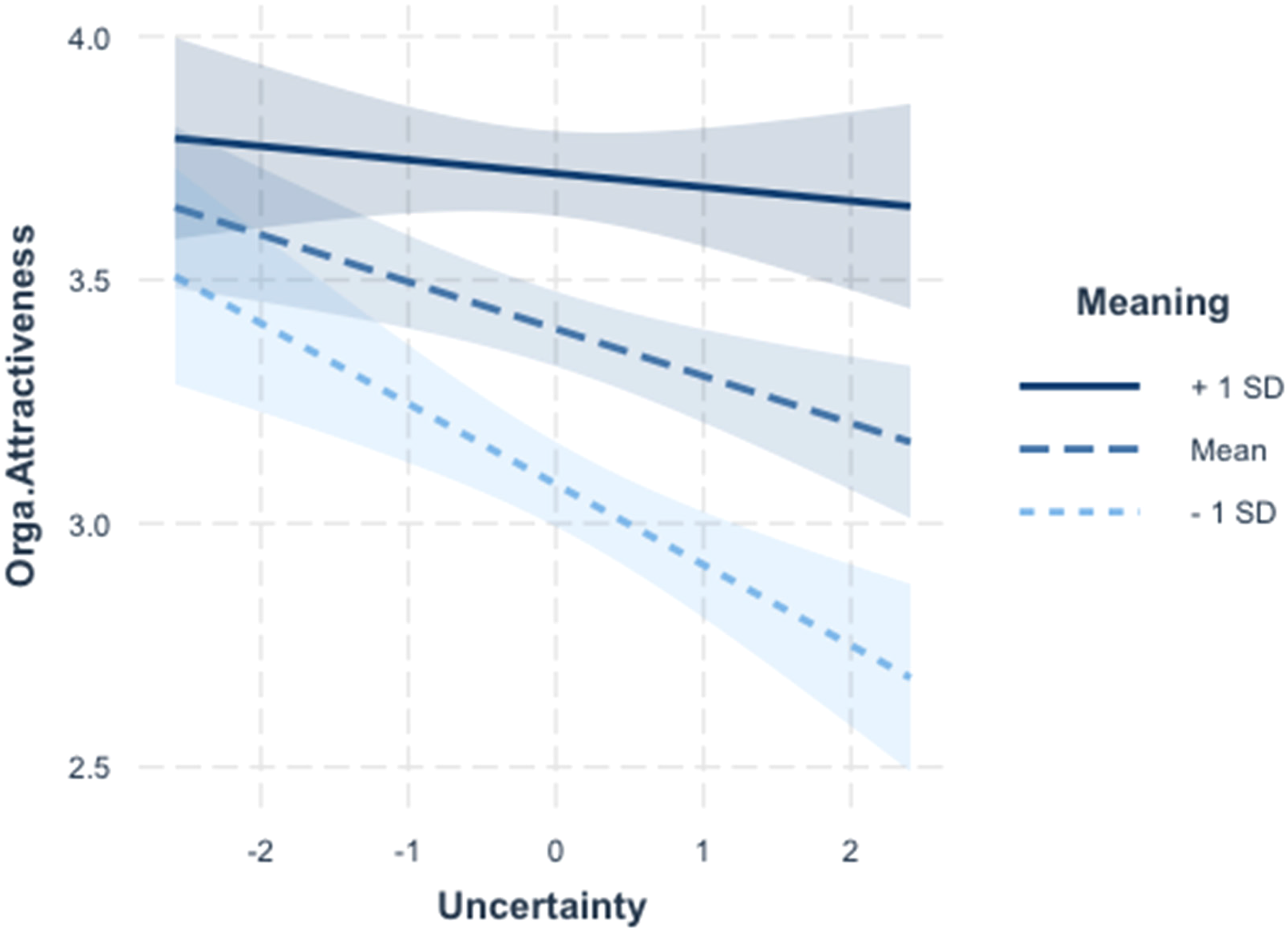
Two-way interaction of change-related uncertainty and psychological empowerment meaning on organizational attractiveness.
Moderating Role of Competence on Organizational Attractiveness
In Model 2, change, uncertainty, the interaction of change and competence, and the interaction of uncertainty and competence were added as predictors, and organizational attractiveness served as dependent variable. Model 2 shows that change (γ = −0.10, t = −2.31, p = .021) and the mediator uncertainty (γ = −0.15, t = −4.53 p < .001) significantly predict organizational attractiveness, while the interaction between competence and uncertainty (γ = −0.00, t = −0.05, p = .959) is not significant. These results do not support the competence dimension of Hypothesis 2b as no difference in the relationship between change-related uncertainty and organizational attractiveness could be found for employees with low or high perceived competence.
Moderating Role of Self-determination on Organizational Attractiveness
In Model 2, change, uncertainty, the interaction of change and self-determination, and the interaction of uncertainty and self-determination were added as predictors, while organizational attractiveness was used as dependent variable. Model 2 shows that the mediator uncertainty (γ = −0.13, t = −4.09, p < .001), the interaction of self-determination and uncertainty (γ = 0.10, t = 3.13, p = .002), and the interaction of change and self-determination (γ = −0.10, t = −2.27, p = .024) significantly predict organizational attractiveness, but change does not (γ = −0.08, t = −1.81, p = .070). To interpret this interaction effect, simple slopes were analyzed. The results regarding the interaction between uncertainty and self-determination are displayed in Figure 3 and reveal a greater significant effect for uncertainty on organizational attractiveness for low self-determination (1 SD below the mean: b = −0.22, t = −5.09, p < .001) than for medium self-determination (mean: b = −0.13, t = −4.09, p < .001), but no significant effect was found for high self-determination (1 SD above the mean: b = −0.04, t = −0.98, p = .33). Thus, the self-determination dimension of Hypothesis 2b is supported as the relationship between change-related uncertainty and organizational attractiveness is lower among employees who feel they possess a great deal of self-determination compared to employees who feel they possess little self-determination. Thus, when change-related uncertainty is high, employees are more attracted to their organizations when they feel a lot of self-determination compared to little self-determination. When change-related uncertainty is low, employees are similarly attracted to their organizations, regardless of their perceived self-determination.
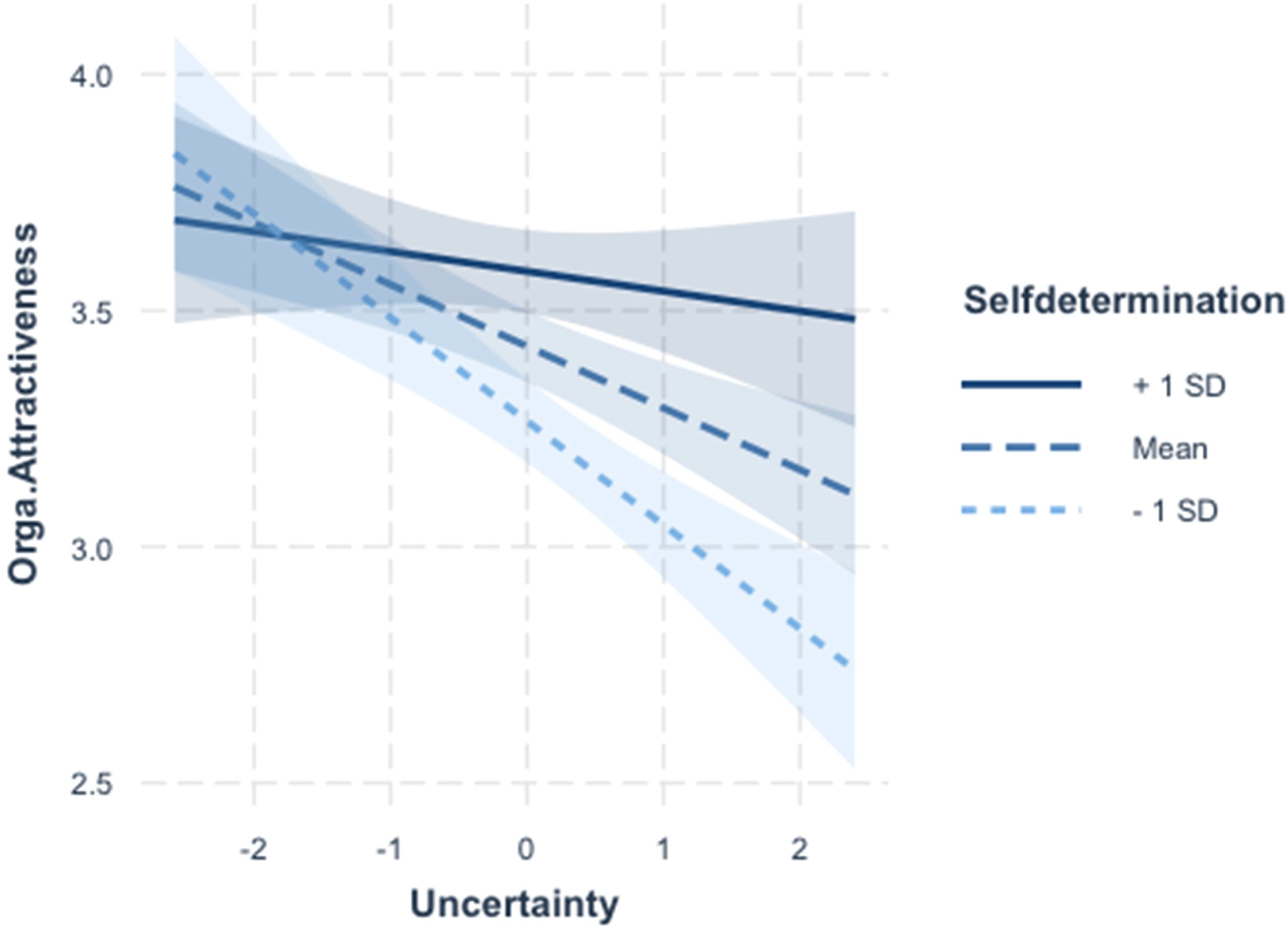
Two-way interaction of change-related uncertainty and psychological empowerment self-determination on organizational attractiveness.
The results of the interaction of change and self-determination are displayed in Figure 4 and reflect the significant effect of change on organizational attractiveness for high self-determination (1 SD above the mean: b = −0.17, t = −3.00, p < .001) but not for medium self-determination (mean: b = −0.08, t = −1.81, p = .07) or low self-determination (1 SD below the mean: b = 0.02, t = 0.31, p = .76). These results show that employees with high perceived self-determination are more attracted to their organizations than employees with low perceived self-determination when there is less change, but there is no difference in organizational attractiveness for employees with high or low self-determination when there is lots of change.
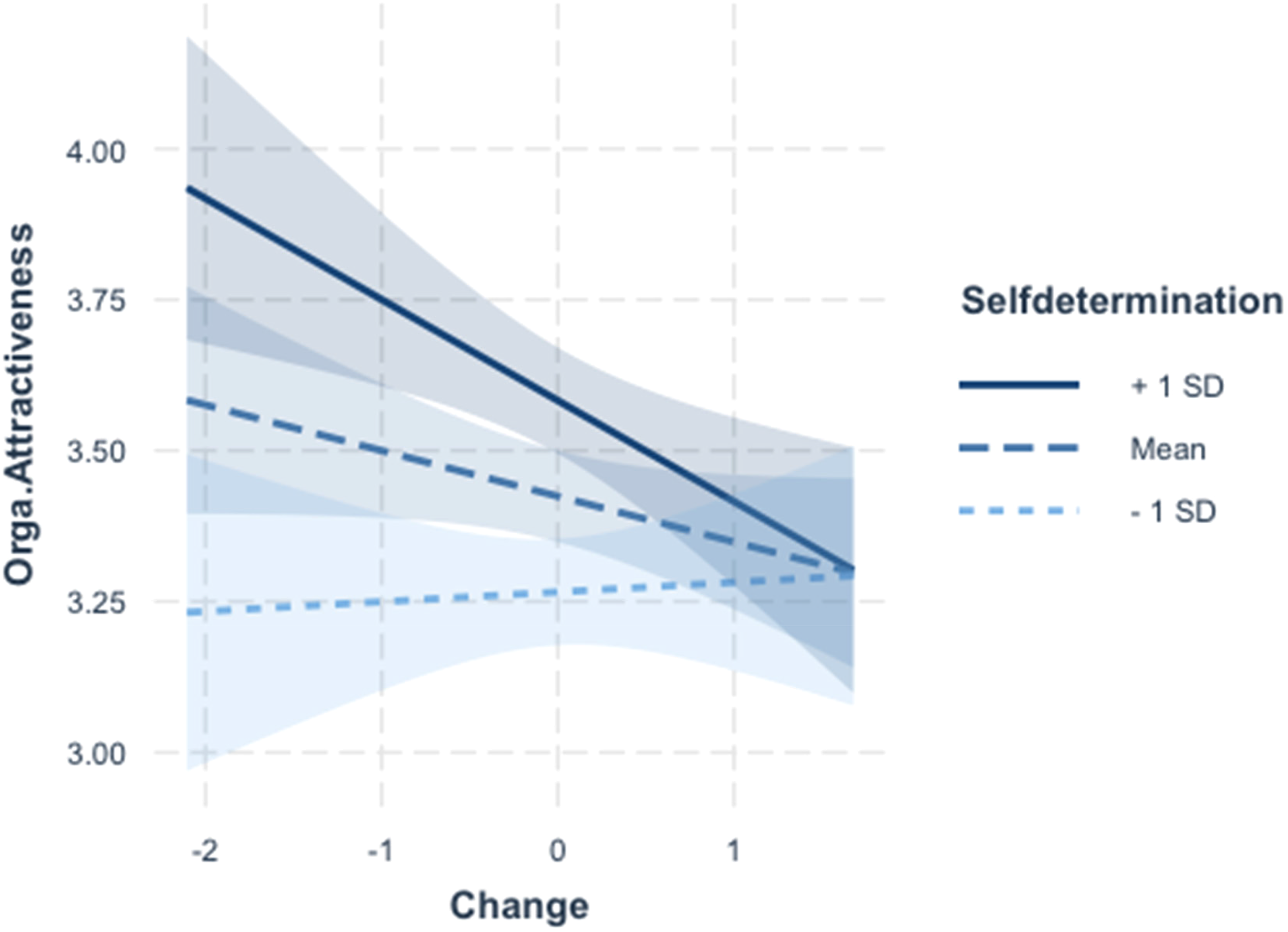
Two-way interaction of change and psychological empowerment self-determination on organizational attractiveness.
Moderating Role of Impact on Organizational Attractiveness
In Model 2, change, uncertainty, the interaction of change and impact, and the interaction of uncertainty and impact were added as predictors, while organizational attractiveness was used as dependent variable. Model 2 shows that change (γ = −0.10, t = −2.17, p = .031), the mediator uncertainty (γ = −0.14, t = −4.37, p < .001), and the interaction of impact and uncertainty (γ = 0.08, t = 2.28, p = .023) significantly predict organizational attractiveness. To interpret this interaction effect, simple slopes were analyzed. The results of the interaction are displayed in Figure 5 and reveal a greater significant effect of uncertainty on organizational attractiveness for low impact (1 SD below the mean: b = −0.21, t = −4.78, p < .001) than for medium impact (mean: b = −0.14, t = −4.37, p < .001), and no significant effect for high impact (1 SD above the mean: b = −0.07, t = −1.52, p = .13). These results support the impact dimension of Hypothesis 2b by indicating that the relationship between change-related uncertainty and organizational attractiveness is lower for employees who perceive a lot of impact compared to employees who perceive little impact. Therefore, when change-related uncertainty is high, employees are more attracted to their organizations when they perceive a lot of impact compared to little impact. When change-related uncertainty is low, employees are similarly attracted to their organizations, regardless of their perceived impact.
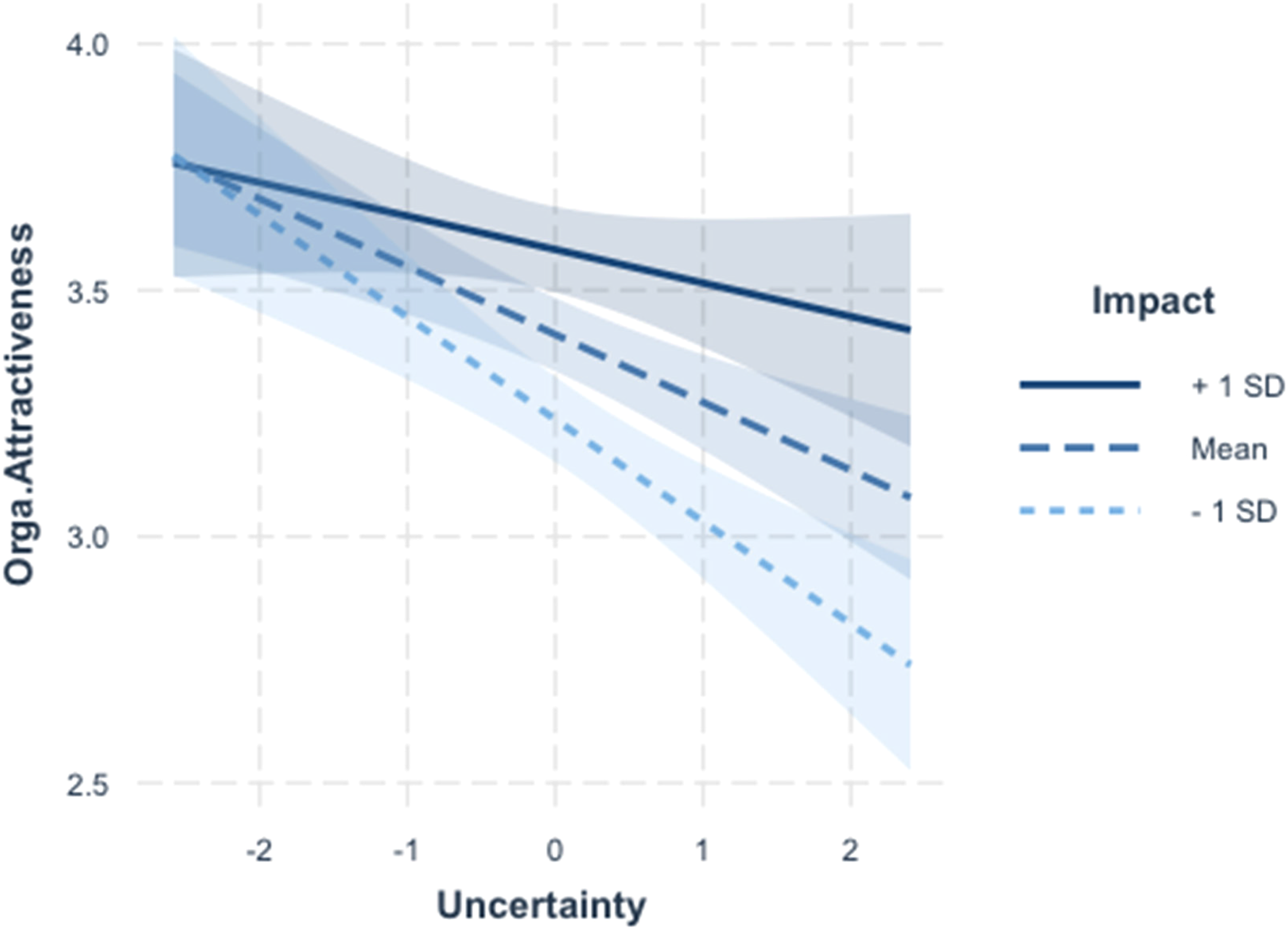
Two-way interaction of change-related uncertainty and psychological empowerment impact on organizational attractiveness.
Results of the moderating effects of change and the subscales of empowerment were not significant for meaning, competence, and impact (see Supplementary Materials for detailed results).
Discussion
As hypothesized, the results of the study reveal that uncertainty mediates the negative relationships between change and affective commitment and between change and organizational attractiveness. These results build on Rafferty and Griffin (2006), who illustrated that the relationships between change and job satisfaction and between change and turnover intentions are both meditated by uncertainty. The results of this study further contribute to the current literature by answering the call of Oreg et al. (2011) for more research on the mediating and moderating effects of change. Although it is known that uncertainty can be induced by change processes, the fact that change-related uncertainty mediates the relationship between change and various outcomes represents an important finding for researchers and practitioners. However, change-related uncertainty seems to mainly mediate the negative effects of change, as shown by the results of this study as well as Rafferty and Griffin (2006). Consequently, organizations and research should focus not only on the change process itself and how it affects employees but also on how employees can be supported and which factors can help them to cope with change-related uncertainty.
The results provide initial insights into what could help employees deal with change-related uncertainty by revealing that psychological empowerment can contribute to reducing the effects of change-related uncertainty. More specifically, the results suggest that three components of empowerment—namely meaning, self-determination, and impact—could reduce the effects of change-related uncertainty on organizational attractiveness. However, the competence component did not indicate this effect. The results regarding organizational attractiveness further revealed an interaction between change and self-determination whereby the level of organizational attractiveness is higher for employees with high self-determination when there is no or less change compared to employees with low levels of self-determination. In cases of high change, employees report similar levels of organizational attractiveness, regardless of their level of self-determination. This interaction implies that a high degree of self-determination leads to more organizational attractiveness at “normal” times without change. However, in line with the predictions, a high degree of self-determination does not seem to mitigate the direct negative effects of change; rather, it only indirectly mitigates the negative consequences of change-relate uncertainty.
Overall, these results might suggest that the three components of meaning, self-determination, and impact might help employees to better cope with the effects of change-related uncertainty than the competence component. If self-determination and impact are examined more closely, they are characterized by a certain degree of control. According to the definitions of these two components, employees with a high level of self-determination have agency in their actions, and employees with a high level of impact feel they can influence outcomes in their workplace. As hypothesized, these feelings of control despite uncertainty seem to help employees cope with change-related uncertainty, at least to the extent that the effects of uncertainty on organizational attractiveness can be reduced. The meaning component includes, among other things, the level of congruence between one's own values and those of the organization. One's own values become more important in situations of uncertainty (McGregor et al., 2001), which may explain why meaning can reduce the effects of uncertainty on organizational attractiveness. Although the results suggest that competence plays a minor role in buffering the effects of change-related uncertainty, further studies should examine this effect again. In this study, this could also be due to the fact that the reliability of the competence data, which has a Cronbach's alpha of 0.637, is rather moderate. At the same time, this study includes a sample of young employees one to three years after their vocational training. At this point in their careers, employees’ knowledge and assessment of their professional skills could be lower than for employees at later points in their career (e.g., with older employees or managers). Further research should address whether competence may play a greater role among older employees in the context of change-related uncertainty than among young employees.
The buffering effects of empowerment could not be found for the effect of change-related uncertainty on affective commitment. It initially seems surprising that the effects of uncertainty on organizational attractiveness—but not on affective commitment—can be mitigated by empowerment since the two constructs are correlated; however, though these constructs reflect similar aspects of work life, the study results indicate that affective commitment and organizational attractiveness are distinct and affected differently by uncertainty and psychological empowerment. As described, according to organizational identification literature, both constructs belong to different dimensions. Boroş et al. (2011) indicated that the dimensions of organizational identification have different effects on organizational behavior, with the evaluative and the cognitive dimension having a direct impact on organizational behavior and the emotional dimension having a more indirect effect. A possible explanation for the results here could be that personal and organizational influences also have different effects on these dimensions. However, this issue should be explored in more depth in further studies.
Another possible explanation for the different effects of empowerment on affective commitment and organizational attractiveness is provided by Felfe et al. (2014), who assume that a prerequisite for organizational commitment is a clearly identifiable organization. This is often not the case during change processes, and thus, change may also lead to an organization's identity changing and possibly being no longer tangible for employees. The lack of a clear organizational image can then result in employees encountering difficulties in forming commitment to it (Felfe et al., 2014). Another possible explanation relates to the specific details of this sample as young employees in particular do not see any clear future prospects with their employers. As the market share of online banks is growing steadily, even if young employees perceive their banks as attractive employers, they may be unsure of the future of today's branch banks, which could impact employee affective commitment. However, a clearly tangible organizational identity may not be important in assessing an organization's attractiveness. This assumption could explain why the effects of change-related uncertainty on affective commitment cannot be mitigated by empowerment, but the effects of change-related uncertainty on organizational attractiveness can. While this may be possible explanations, further research is needed. First, future researchers should examine whether there are other differences between employee affective commitment and perceived organizational attractiveness in the context of change; second, they should consider whether psychological empowerment can also buffer the negative effects of change-related uncertainty on other variables.
To our knowledge, this study is among the first to show that empowerment can mitigate the effects of change-related uncertainty for organizational attractiveness. The results contribute to the existing literature in several ways. Firstly, they support that psychological empowerment moderates the mediation of change on organizational attractiveness through uncertainty. In addition, they expand on the mediating role of change-related uncertainty and the moderating role of empowerment in times of change. They also contribute to the literature on job stress by providing preliminary evidence that empowerment can help mitigate the negative effects of change-related uncertainty. The sample of this study is unique both in terms of age (exclusively young employees) and industry (exclusively the banking sector). Thus, the results also contribute to answering Bordia et al. (2004b) call for further research investigating whether all employees use similar strategies to cope with change-related uncertainty. Lastly, the findings highlight two outcomes of affective commitment and organizational attractiveness in the context of change and change-related uncertainty. Although both outcomes are affected by change in general, the components of meaning, self-determination, and impact of psychological empowerment can help mitigate the effects of uncertainty on organizational attractiveness but not on affective commitment.
Limitations
This study has several limitations. Firstly, this is a cross-sectional study. Although the results may provide some insight into the mediating role of change-related uncertainty during organizational change and the mitigating effects of empowerment, future studies should examine the change process at different points in time, particularly because perceived empowerment also depends on external conditions and organizational change has a direct effect on empowerment (Kuokkanen et al., 2009). Likewise, researchers should investigate changes in employees’ perceived empowerment and their effects on change-related uncertainty.
Another limitation is the homogeneity of the sample. All participants were young employees from the same banking group. On the one hand, the young age of the sample provides interesting insights as young employees show a higher resistance to change than older people (Kunze et al., 2013). Thus, the findings could be of particular interest for companies with a large number of employees in this age group to reduce the negative effects of change-related uncertainty. On the other hand, the results do not provide any information on whether older employees react differently to change and the associated uncertainty. Furthermore, employee age could also have an impact on affective commitment. For example, one item was “I would be very happy to spend the rest of my working life at my bank”; if the structure of the German banking groups studied here is such that even young employees find it difficult to gain a foothold in other sectors due to their vocational training, questions like this may be answered differently by older employees. Employee positionality should also be scrutinized. For example, it is conceivable that for managers who feel empowered also the direct consequences of change could be mitigated through empowerment. Future research should take this into account and examine other age groups as well as other industries and employee positions.
Implications for Practice
The results of the study highlight that in times of change, organizations should focus on mitigating change-related uncertainty since the negative effects of change can also result from change-related uncertainty. This insight is important for supervisors and management because it makes a difference whether change in general or rather the resulting uncertainty have negative consequences for employees. It is important to counteract employee uncertainty because the emergence of change-related uncertainty appears to be unpreventable (or at least cannot be prevented by high empowerment); only the negative consequences can be mitigated. As other research has shown, uncertainty can be reduced, for example, through strategies such as clear, transparent communication about the change process (e.g., DiFonzo & Bordia, 1998). It may also be helpful to set up an e-mail address or to designate a person in the company to whom employees can ask questions. Supervisors should also pay close attention to their employees and emerging questions during this time to proactively counteract change-related uncertainty.
Furthermore, the study highlights that empowerment, especially meaning, self-determination, and impact, can mitigate the negative effects of change-related uncertainty on organizational attractiveness. Psychological empowerment, in particular, is an important factor for a company at any time as it is associated with numerous positive effects (e.g., job satisfaction, performance) (Abdissa & Fitwi, 2016; Seibert et al., 2011). Consequently, empowering employees can be worthwhile for companies in multiple ways. The positive effects of empowerment pay off in terms of increased sales for companies because empowered employees perform better and are more motivated. Additionally, in times of change, empowerment can help employees reduce their change-related uncertainty, thereby reducing its negative effects.
Previous research has established that perceived empowerment depends on the situation and can be increased by certain interventions (Thomas & Velthouse, 1990). Empowerment encompasses four different dimensions (meaning, competence, self-determination, and impact) (Spreitzer, 1995). It can be concluded from the results of this study that it is important for companies to strengthen the empowerment among employees, especially in times of change. Ideally, this should be achieved before the change process begins so that the effects of change-related uncertainty can be minimized.
The following practical implications might be derived for the three dimensions meaning, self-determination and impact. To enable employees to maintain a high sense of meaning during a change process, company restructuring should be consistent with employee values and behaviors. These values and behaviors can be identified through regular employee surveys in which the planned change actions are described (after they have been appropriately communicated to the employees) and the fit between the employees’ values and the values they see in the planned change actions is evaluated. The change actions that influence employees’ direct work activities are particularly important. Less formally, this could also be regularly addressed by supervisors. In this way, it would be possible to notice the loss of meaning in one's work at an early stage and to be able to take countermeasures if necessary; this could ensure that the employees’ sense of meaning remains high (or is even increased) even in times of change and that the negative consequences of change-related uncertainty are mitigated.
To maintain and increase self-determination, young employees in particular should be given a great deal of freedom in the completion of their tasks. During a change process, this could mean that special tasks or changes in activities are announced as early as possible so that employees have the opportunity to distribute and plan the completion of these tasks themselves. This approach would not only give them freedom in completing their tasks but also (to a certain extent) in deciding which activities they take on. Since tasks often change during change processes, it is important to emphasize timely communication in order to increase employees’ self-determination.
To enhance employees’ impact, management could give employees a voice in certain decisions, such as those that directly affect employees’ daily work. While management can make major strategic decisions and set the framework for the change process, employees themselves can make decisions that affect their work. Young employees are often very motivated to contribute their own ideas and suggestions for improvement. In addition, their relatively fresh view of the company may enable them to recognize weaknesses better than longstanding employees. This could create a win-win situation as the company benefits from the innovative ideas of young employees, and employees experience a higher sense of impact by positively influencing the change process. However, to effectively increase impact, employees must not only be allowed to have a say but should also be empowered to implement their ideas.
In conclusion, these findings implicate that it is essential that organizations implement change successfully—which only a few organizations have succeeded in doing thus far (Al-Haddad & Kotnour, 2015) —and offer suggestions on how to do so. We hope that the results described here will contribute to more frequent and more successful implementations of change in the future.
Supplemental Material
sj-docx-1-jab-10.1177_00218863221132313 - Supplemental material for How Empowerment Can Help to Reduce Change-Related Uncertainty in Young Employees
Supplemental material, sj-docx-1-jab-10.1177_00218863221132313 for How Empowerment Can Help to Reduce Change-Related Uncertainty in Young Employees by Sarah Lang-Lehmann, Patrick Müller, Marc-André Reinhard and Sarah Volz in The Journal of Applied Behavioral Science
Footnotes
Acknowledgments
We thank Dr. Michael Thaler for his help in recruiting the sample for the study described in this article.
Declaration of Conflicting Interests
The author(s) declared no potential conflicts of interest with respect to the research, authorship, and/or publication of this article.
Funding
The author(s) disclosed receipt of the following financial support for the research, authorship, and/or publication of this article: This publication is supported by M4_LAB. M4_LAB is a transfer project at the University of Applied Sciences - Stuttgart within the framework of the “Innovative Hochschule” initiative funded by the Federal Ministry of Education and Research under the grant number 03IHS032A.

Supplemental Material
Supplemental material for this article is available online.
References
Supplementary Material
Please find the following supplemental material available below.
For Open Access articles published under a Creative Commons License, all supplemental material carries the same license as the article it is associated with.
For non-Open Access articles published, all supplemental material carries a non-exclusive license, and permission requests for re-use of supplemental material or any part of supplemental material shall be sent directly to the copyright owner as specified in the copyright notice associated with the article.
