




Abstract
The concepts of positive psychology and positive organizational scholarship emphasize the value of employees’ positive emotions and satisfaction for organizations to thrive. However, conceptions of positive practices or virtuousness emanating from managers are not yet fully established and suffer from incompleteness and inconsistency. This study establishes a framework that holistically and coherently captures management practices that lead to satisfaction among employees, applying text mining and unsupervised machine learning methods to a large sample of employee reviews (n = 5,650). The framework of positive management practices (PMP) encompasses the six dimensions of respectful interaction, open communication, interpersonal support, reasonable instructions, intellectual support, and managerial competence. In a subsequent analysis, this study finds a positive association between PMP at the organizational level and firm profitability, indicating that companies should ensure that employees in leadership positions understand and adopt PMP.
Keywords
Introduction
In today's fast-paced, uncertain, and highly competitive business environment, organizations’ human capital is increasingly recognized as a key source for a sustainable competitive advantage (Huselid, 2018; Vedd & Kouhy, 2005). As such, for organizations to unlock the full potential of their employees, they need to keep them healthy and motivated even in trying times (Marler & Boudreau, 2017; Youssef & Luthans, 2012). One promising approach to achieving these aims is highlighted in the concept of positive organizational scholarship (POS) (Cameron et al., 2003; Diener et al., 2020; Donaldson et al., 2019; Meyer, 2018). Based on positive psychology, the purpose of POS is to investigate virtuousness, positive outcomes, positive practices, and positive properties of organizations and their members (Cameron et al., 2003; Cameron et al., 2011). As employees in leading positions are often described as role models and social “climate engineers” that impact the well-being of their employees, examining the positive practices emanating from managers is particularly vital (Avolio et al., 2004; Eisenberger et al., 2020; Gooty et al., 2010; Kelloway et al., 2013; Naumann & Bennett, 2000).
While the literature has developed a variety of leadership theories that follow a positive approach, scholars have increasingly raised concerns about positive leadership (PL) research. For instance, Alvesson and Einola (2019) argue that PL is overly ideological and focuses too much on the person of the leader rather than on the experience of the follower. Moreover, PL has been criticized for its flawed theoretical foundations and for being too abstract to be effectively applied in real business practice (Alvesson & Einola, 2019; Crossan et al., 2017; Einola & Alvesson, 2021; Hackett & Wang, 2012). A more empirical and pragmatic research approach along with a stronger emphasis on individuals’ experiences, as emphasized in POS (Meyer, 2018), presents a possible avenue to address these concerns. However, conceptions of positive and virtuous leadership as they emerge from POS are yet not fully established and suffer from incompleteness and inconsistency (Cameron et al., 2011; Meyer, 2018; Mills et al., 2013). Only a few studies in this body of literature exist that examine positive practices and virtuousness emanating from employees in leading positions (e.g., Cameron, 2012; Kelloway et al., 2013), disagreeing about the practices and virtues that should be included in an overall construct (Meyer, 2018). Additionally, capturing information on (management) behavior has been criticized for relying too heavily on self-reporting questionnaires that do not capture what employees really feel, think, or see, because of framing effects or desirability biases (Fischer et al., 2020; Lonati et al., 2018; Mills et al., 2013; Schwarz, 1999; Zizzo, 2010). Consequently, no construct or standardized measurement currently captures and contextualizes positive practices across managers’ full scope of roles and responsibilities.
To fill this lacuna, this study aims to establish a framework of positive management practices (PMP) that holistically and coherently captures management practices that lead to satisfaction among employees. Since there is neither a holistic construct nor a uniform measurement method for PMP, I take a novel approach to studying positive practices by applying text mining and unsupervised machine learning methodologies on a large body of unstructured data. In particular, the data is retrieved from reviews by corporate employees that appeared on the company-rating platform kununu.com. This exploratory empirical approach enables to investigate managers across their full scope of roles and responsibilities, resulting in a holistic perspective on their workplace practices without being limited to the shortcomings of questionnaires or the ideological perspective and incomplete scope of single PL theories. The results of this exploratory approach reveal that PMP manifest in six dimensions, namely respectful interaction, open communication, interpersonal support, intellectual support, reasonable instructions, and managerial competence.
Moreover, while POS focuses on human well-being at its core, scholars emphasize the side effect of positivity on organizational performance with the idea of “doing well by doing good” (Cameron, 2011; Cameron et al., 2011; Meyer, 2018; Wang & Hackett, 2016). Therefore, I conduct a subsequent quantitative analysis to investigate whether there is an association between PMP and firm profitability and which of the six identified dimensions are the most important drivers of this relationship. The richness of qualitative information on management practices that can be gleaned from employees’ reviews on kununu.com, in combination with the applied text mining approach, enables this study to be conducted at the level of large German capital market-oriented companies between the years 2011 and 2019. The findings indicate that a higher level of PMP positively relates to firm profitability.
This study offers numerous contributions to the contemporary literature of POS and PL. The explorative part extends the academic knowledge on positive practices and virtuousness in organizations. Although constructs for positive practices and organizational virtuousness exist (Bright et al., 2006; Cameron, 2011; Cameron et al., 2004; Cameron et al., 2011), scholars disagree on which virtues to include in an overall construct (Meyer, 2018). For instance, while Cameron et al. (2011) include in their definition of virtuousness the practices caring, compassion, forgiveness, meaning, inspiration, and respect, other authors consider virtues such as responsibility, thankfulness, humility, and prudence (Bright et al., 2006; Kelloway et al., 2013; Sison & Ferrero, 2015). Hence, as Meyer (2018) summarizes, “the POS movement leaves it up to future research to determine exactly the virtues to be included in the concept of organizational virtuousness […]” (p. 259). Furthermore, as POS pursues a behavioristic approach that connote virtuousness to positive behavior, it has been criticized for its ignorance of the philosophical perspective that considers virtues as personal character traits (Hackett & Wang, 2012; Meyer, 2018; Wang & Hackett, 2016). Meyer (2018) emphasizes the responsibility of future researchers to find ways to reconcile the POS idea of virtuousness and the Aristotelian notion of virtues. The current study addresses the aforementioned challenges by providing a comprehensive list of virtues that should be considered in the concept of leadership virtuousness. Moreover, the framework of PMP provides space to situate character-based virtues in their respective context and delivers key behavioral indicators that reflect those virtues (Hackett & Wang, 2012), making a first step in harmonizing the behavioristic and the philosophical perspective of virtuousness (Meyer, 2018).
The quantitative analysis establishes the link between PMP and firm profitability using hard (objective) performance measures. Although the value of POS does not depend on how it impacts organizational outcomes, such findings may nonetheless increase organizations’ readiness to implement positive practices (Cameron, 2020; Cameron et al., 2011). In the existing leadership literature, few studies have examined the relation between PL and firm profitability using hard performance measures. Moreover, the studies establishing this link either investigated branches or departments within one company (Hartnell et al., 2020; Koene et al., 2002; Wilderom et al., 2012) or focused solely on top management (Judge & Piccolo, 2004; Peterson et al., 2009; Shin et al., 2015; Waldman et al., 2001). However, since employees typically interact with supervisors rather than top managers (if at all), and since supervisor behavior has been proven to have a major influence on employee well-being (Kelloway et al., 2013), examining the impacts of supervising managers’ practices is particularly vital. While there exists evidence of the various positive outcomes coming from healthy supervisors-followers relationships, such as increased follower satisfaction, productivity, and OCB (Cole et al., 2006; Kuvaas & Dysvik, 2010; Mills et al., 2013), no study, to the best of my knowledge, has examined a relationship between supervising managers’ positive practices and firm profitability at the organizational level. However, this jigsaw piece could be a reason for companies to recognize the importance of lower-level management practices. The ability of the applied text mining approach to analyze vast amounts of unstructured data allows for addressing this research gap and finds that “doing well by doing good” may improve profitability even at the level of large German organizations.
Next, the paper makes methodological contributions to POS, and the organizational behavior literature in general. First, it introduces an alternative method for capturing practices in organizations without being influenced by the way researchers design surveys or participants’ social desirability biases. Used in a complementary way to traditional research, text mining and unsupervised machine learning applied on unstructured data can enrich the literature to find novel, undiscovered patterns and to validate the generalizability or Zeitgeist relevance of established theories (Leavitt et al., 2021).
Finally, the paper contributes to the literature of strategic human resource (HR) management, and in particular, to the emerging literature of workforce analytics (or HR analytics) (Huselid, 2018). Marler and Boudreau (2017) describe workforce analytics as the use of more sophisticated analysis of HR-related data to support strategic decision-makers by linking HR decisions to organizational outcomes. Scholars agree that the relationship between HR measures and business performance needs to be further explored in quantitative and large-scale studies in order for HR analytics to gain more attention in practice (Angrave et al., 2016; Huselid, 2018; Marler & Boudreau, 2017). By linking PMP and firm profitability via text mining, this study not only introduces an avenue for analyzing a company's workforce well-being, but it also emphasizes the importance of investing in tools that help to improve employees’ positive emotions, thus ensuring a productive workforce.
The remainder of the study is organized as follows. The next section provides a definition of PMP and develops the study's hypothesis on why PMP could enhance the profitability of organizations. Thereafter, in the explorative part of this study, the text mining approach is introduced, followed by a presentation of the concept of PMP. Subsequently, in the quantitative part of this study, I investigate the relationship between PMP and firm profitability. Finally, the last section offers a general discussion, future directions, and practical implications.
Theoretical Background
Positive Management Practices
The understanding of the term “positive” in this study is based on the concepts of positive psychology and POS. Positive psychology studies positive emotions, which manifest as flow and happiness in the present, hope and optimism for the future, and well-being and satisfaction in the past (Diener et al., 2020; Seligman & Csikszentmihalyi, 2000). The study of POS examines organizational practices through a positive lens (Cameron et al., 2003); it applies positivist methods to find good and thriving practices, rather than those that are bad and failing (Meyer, 2018). Cameron et al. (2011) define positive practices as behaviors, techniques, and routines that are (i) positive deviant, (ii) have an affirmative bias, and (iii) reflect the ideas of virtuousness and eudemonism. The first connotation, positive deviance, describes exceptional actions that go beyond the usual performance. Second, the research on positive practices has an affirmative bias, in that it refers to strengths and capabilities rather than weaknesses and problems (Cameron et al., 2011). It emphasizes what elevates organizations and its members, what goes right in organizations, and what is experienced as good (Cameron, 2012). The third connotation refers to virtuousness and eudemonism, concepts that focus on fostering humankind's goodness (Cameron et al., 2011). Eudemonism, which can be traced back to Aristotle in his Nicomachean Ethics, is a perspective of happiness and the worthiness of human life (Aristotle & Barnes, 1984). Also inspired by the doctrines of Aristotle, virtuousness is outlined as a quality that represents moral excellence that is “inherently valuable, apart from any benefit that may accrue” (Cameron et al., 2011, p. 269) (Meyer, 2018). Examples of Aristotelian individual virtues are prudence, courage, justice, truthfulness, and friendliness (Hackett & Wang, 2012; Peterson & Seligman, 2004). In contrast, virtuousness in the concept of Cameron et al. (2011) is reflected by the positive practices of caring, compassionate support, forgiveness, inspiration, and meaning, as well as respect, integrity, and gratitude.
In line with the ideas of positive psychology and POS, I define PMP as behaviors, techniques, and routines of managers that denote virtuousness and lead to positive emotions among employees. Hence, the definition comprises the connotations of affirmative bias, expressed by the focus on employees’ positive emotions resulting from PMP, and virtuousness, as an aggregate of individual virtues, which manifests in positive practices. Following Meyer (2018), however, I exclude the connotation of positive deviance because leadership practices do not have to be exceptional in order to induce positive emotions in subordinates. The term “management” is defined as a group of organizational members that have leading and supervising functions (Jones & George, 2018). This includes all levels of the hierarchy, from the CEO of a company to immediate supervisors and team managers, provided any leader-follower relationship exists.
In recent years, the idea of “positivity” has also largely influenced the leadership literature. Leadership theories that follow a positive approach include virtuous leadership, authentic leadership (AL), PL, ethical leadership, servant leadership, transformational leadership, and charismatic leadership (Hackett & Wang, 2012; Malinga et al., 2019; Mills et al., 2013). However, these theories are grounded in different conceptional constructs and schools of moral philosophy (for a comprehensive discussion see Hackett & Wang, 2012; Wang & Hackett, 2016). First, while leaderships styles such as transformational leadership place a strong focus on employee effectiveness (Inceoglu et al., 2018), the main outcome of the PMP concept is employee well-being as induced by managers through the amplifying effect of virtuous behavior (Cameron et al., 2011), with employee effectiveness being only a consequence of employees’ positive emotions. Moreover, in contrast to the ethical leadership theory, the conceptualization of PMP does not explicitly expect subordinates to embrace norms and ethical values, and in contrast to servant leadership, the PMP approach is not solely focused on meeting subordinates’ needs (Wang & Hackett, 2016). Further, although the concept acknowledges virtuousness as part of positive practices, it also differs from virtuous leadership, which is solely grounded in virtue ethics (Hackett & Wang, 2012). Rather, the PMP concept can be viewed as an empirically grounded approach to virtuousness, yet providing room for philosophically grounded virtues to be considered in specific contexts. Finally, although it is based on the same grounding of positive psychology, the concept of PMP differs from AL (Avolio & Gardner, 2005) and Cameron’s (2012) concept of PL. While AL centers on the leaders themselves and their respective fidelity to their personal values, their self-awareness, and their ability of self-reflection (Alvesson & Einola, 2019; Avolio & Gardner, 2005), PMP focus on manager-subordinate relationships. Cameron's concept of PL stronger emphasizes extraordinary practices, whereas PMP more comprehensively incorporate practices that evoke positive emotions. Moreover, both AL and Cameron's PL are more generic in nature and build on attributes from other leadership theories; for instance, an authentic leader is described as one who acts in accordance with deep personal values, and a positive leader supplements other leadership theories with an emphasis on positive energy (Avolio & Gardner, 2005; Avolio et al., 2004; Cameron, 2012). In contrast, given its empirical origins, PMP is a contemporary and pragmatic approach that can be readily adopted by practitioners seeking to positively influence the psychological state of their employees (Crossan et al., 2017; Mills et al., 2013).
The Link Between Positive Management Practices and Firm Profitability
I argue that PMP positively influence subordinates, leading to positive outcomes at the individual level. In order to corroborate this argument, I refer to theoretical concepts and empirical findings from positive psychology and social exchange theory (SET). Both concepts are interrelated in that supervisor support as part of the SET has been found to predict well-being and positive emotions among employees (Cole et al., 2006; Eisenberger et al., 2020; Kurtessis et al., 2017), while, on the other hand, positive emotions have been linked to better interpersonal relationships (Cameron, 2012; Diener et al., 2020). For each line of the two concepts, I then establish the link between positive outcomes at the individual level and positive outcomes at the firm level, and, eventually, the profitability of a firm. I illustrate these relationships in Figure 1.
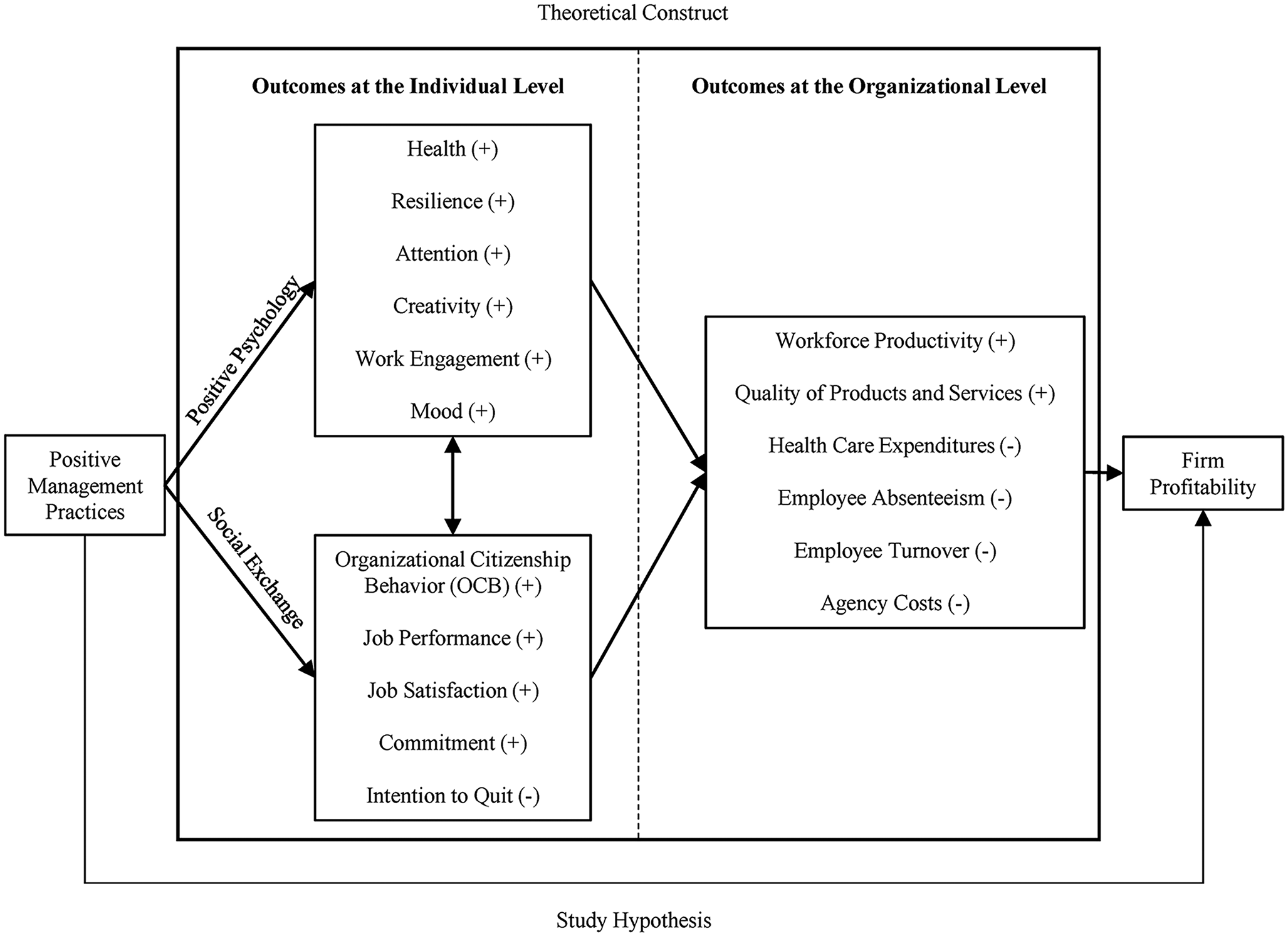
The link between positive management practices and firm profitability.
Social Exchange Theory
The SET has been an influential concept for understanding workplace behavior (Cropanzano & Mitchell, 2005). Social exchange is described by Emerson (1976) as a frame of reference in which the flow of valued items follows certain exchange rules. In organizational behavior, research often focuses on reciprocity as an exchange rule (Cropanzano & Mitchell, 2005). Reciprocity means that an action of one party leads to a reaction by another party (Cropanzano & Mitchell, 2005). In this context, Eisenberger et al. (1986) introduce the concept of perceived organizational support. Based on the reciprocity norm, the authors argue that an employee who feels supported by the organization feels, in turn, obligated to care about the organization's welfare, which leads to greater employee efforts to achieve the organization's goals (Rhoades & Eisenberger, 2002).
Indeed, empirical work finds evidence for a relationship between perceived organizational support and organizational citizenship behavior (OCB), such as interpersonal help, loyalty, or performance beyond duty (Lynch et al., 1999; Moorman et al., 1998). A further aspect of perceived organizational support is perceived supervisor support (PSS), which focuses on the relationship between supervisors and subordinates. Similarly, this relationship is at the focus of the leader-member exchange theory (LMX) (Cropanzano & Mitchell, 2005). Both PSS and LMX are understood to be interrelated with perceived organizational support, in that PSS/LMX are often referred to as an antecedent of perceived organizational support (Kurtessis et al., 2017; Rhoades & Eisenberger, 2002; Wayne et al., 1997). Empirical studies have found LMX and PSS to be positively related to job performance, job satisfaction, job retention, and positive emotions among employees, as well as negatively related to counterproductive work behavior (Cole et al., 2006; Kuvaas & Dysvik, 2010; Masterson et al., 2000; Mills et al., 2013; Rhoades & Eisenberger, 2002).
Taken together, I conjecture that PMP lead to increased perceived organizational support and PSS, which result in positive individual outcomes such as higher job satisfaction, higher employee retention, increased engagement in OCB, and decreased counterproductive work behavior. These individual outcomes can again be linked to positive outcomes at the firm level. For instance, a company with satisfied employees who highly engage in OCB and avoid counterproductive work behavior will have lower agency costs that may arise due to higher monitoring costs and disengagement in working toward organizational goals (Jensen & Meckling, 1976). Such costs could negatively impact a company's profit and loss statement and, hence, its financial performance. The relationship between improved OCB and organizational performance has also been supported by empirical evidence (Koys, 2001; Messersmith et al., 2011; Podsakoff et al., 2000; Walz & Niehoff, 2000). Further, Huang et al. (2015) and Melián-González et al. (2015) investigated the relationship between employee satisfaction and firm performance, reporting significant associations between employee satisfaction and various hard performance measures.
Positive Psychology
Positive psychology is the study of finding ways to foster strengths, virtues, well-being, and resilience in individuals and groups in order to enhance happiness and life satisfaction (Donaldson & Ko, 2010; Gillham & Seligman, 1999; Seligman & Csikszentmihalyi, 2000). At the heart of positive psychology lie positive emotions that manifest themselves in individuals’ well-being and satisfaction (Diener et al., 2020; Seligman & Csikszentmihalyi, 2000). As this study's conception of PMP is empirically linked to employee satisfaction, I expect that PMP enhance employees’ positive emotions. Moreover, emotionally intelligent leaders are frequently cited as one of the main sources of positive emotions among employees (Gooty et al., 2010). For instance, Avey et al. (2011) found evidence in an experimental study that leaders’ positive psychological capital – efficacy, hope, optimism, and resiliency – is positively related to the positivity of their followers. Rego et al. (2014) showed that AL is positively linked to followers’ hope and positive affect. Finally, certain virtues of leaders, such as humility and compassion, have been shown to increase positive emotions among followers (Cameron, 2012; Meyer, 2018; Owens & Hekman, 2016).
The literature has linked positive emotions at work to several individual outcomes, such as resilience, health, creativity, attention, and work engagement (Diener et al., 2020). As described in the broaden-and-build model introduced by Fredrickson (1998), positive emotions can build permanent personal resilience resources, which function as reserves to enable individuals and organizations to deal with negative events in the future (Fredrickson, 1998, 2001). Cameron and colleagues refer to that as a “buffering effect”, as positivity strengthens resilience, which buffers organizations from negative events (Cameron et al., 2011). Further, Seligman and Csikszentmihalyi (2000) emphasize the implications of positive psychology for mental and physical health. They argue that optimistic beliefs can affect the immune system, protect people from illness, and prevent depression and anxiety (Seligman et al., 1999). More recent studies even found that positive emotions are associated with a lower risk of heart disease and lower functional limitations (Davidson et al., 2010; Wiese et al., 2019).
Second, positive emotions have been linked to creativity and attention (Baas et al., 2008; Rego et al., 2014). Fredrickson (1998) argued that individuals who experience positive emotions have a broader field of momentary thoughts. That is, they tend to have an expanded range of ideas that come to their minds (Fredrickson, 2001). Related to this, Ellsworth and Smith (1988) examined the different patterns of pleasant emotional experience. In their study, they found a positive relationship between interest and attention as well as between interest and pleasantness. Another study by Avey et al. (2011) concluded that participants with a higher level of positive capital provide more solutions and a higher level of original solutions than participants who report a lower level of positive capital. More recently, Rego et al. (2012) and Rego et al. (2014) linked employees’ positive emotions, such as hope and optimism, to their creativity.
Third, positive emotions have been linked to work engagement (Ouweneel et al., 2012; Schaufeli & Salanova, 2007). Schaufeli et al. (2002) define work engagement as a “positive, fulfilling, work-related state of mind that is characterized by vigor, dedication, and absorption” (Schaufeli et al., 2002, p. 74). Here, vigor refers to a high level of energy, effort, and persistence with which employees perform their tasks, dedication refers to employees experiencing a sense of meaning, inspiration, and challenges in their work, and absorption describes a state of “flow” that employees experience while working (Schaufeli & Bakker, 2004). Fourth and finally, positive emotions are linked to improved interpersonal behavior, which leads to better teamwork and cooperation between coworkers (Barsade, 2002; Diener et al., 2020).
In summary, the literature suggests that PMP lead to higher creativity, attention, health, work engagement, and better mood among employees, yielding more productivity and better performance outcomes both at the individual and the team levels (Chi & Gursoy, 2009; George, 1998; Kaplan et al., 2009; Meneghel et al., 2016; Oswald et al., 2015). Transferred to the corporate level, I conjecture that if a company's workforce is more attentive, fewer errors will occur, which leads to higher productivity and better quality of products and services (Seppälä & Cameron, 2015). Moreover, a company with happy and healthy employees is more resilient to negative events and tends to have lower health expenses, less employee absenteeism, and decreased employee turnover, all of which impacts the profit and loss statement, and, hence, the profitability of a company (Jiang et al., 2012; Kirca et al., 2005; Koys, 2001; Seibert et al., 2011; Seppälä & Cameron, 2015; Zhou et al., 2008). Given the theories and empirical evidence from research on positive psychology and social exchange, I suggest that the more employees experience PMP, the more positive the emotions of the workforce and the better the social exchange relationship between supervisors and followers, eventually being reflected in the profitability of the firm. Hence, I posit the study's hypothesis:
A Framework of Positive Management Practices
Data Collection
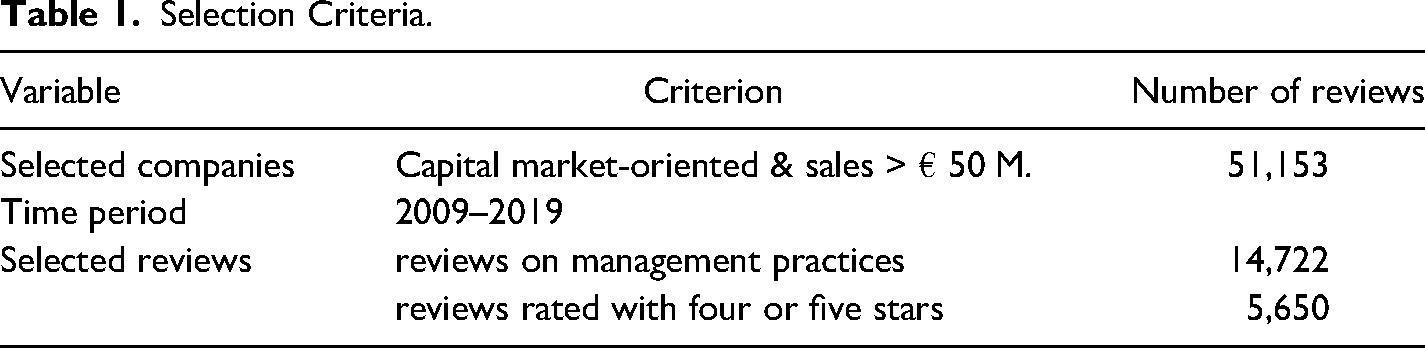
Given the increasing amount of text data on social media platforms, I gathered employees’ opinions and perceptions about their supervisors from kununu, a leading European employer rating platform where employees can rate their employers on a 5-point Likert scale, with five stars representing the highest rating and one star the lowest rating (kununu.com). In addition to a quantitative assessment, employees can express their individual opinions and thoughts on various topics in a free-text format. To obtain information about PMP, I gathered reviews on the topic “supervisor practices” in which employees across all levels of hierarchy describe and evaluate the practices of their supervising manager(s). Moreover, to observe positive practices, reviews were collected that are rated with four or five stars, indicating that the employee is satisfied with the manager, which implies positive emotions. Example quotes are provided in the Appendix. I collected the data from large German capital market-oriented companies (annual sales of at least 50 million euros) between the years 2009 and 2019. Thereof, the data contains 14,722 reviews on supervisor behavior, with 5,650 (38%) rated positively (
Selection Criteria.
Methodology
The text mining procedure followed a bag-of-words assumption and consisted of standard text preprocessing approaches in natural language processing such as tokenization, part-of-speech tagging, lemmatization, and removal of stop words (Silge & Robinson, 2017; Zhang et al., 2010). Text preprocessing is essential to transform the unstructured text data into a machine-readable format (Hickman et al., 2022). I provide a detailed description of the preprocessing approach in the Appendix. Subsequently, I used unsupervised machine learning to cluster words that frequently occur together in reviews. To find a comprehensible and reliable solution for such word clusters, I used a meta-model approach (see e.g., Gionis et al., 2005) by combining four unsupervised machine learning techniques: hierarchical clustering (average linkage and Ward's method), non-hierarchical clustering (k-means clustering), and network analysis (Newman-Girvan algorithm) (Milligan, 1981; Murtagh & Legendre, 2014; Newman & Girvan, 2004; Ward, 1963). The overall text mining and unsupervised machine learning procedures are illustrated in Figure 2. Further details are provided in the Appendix.
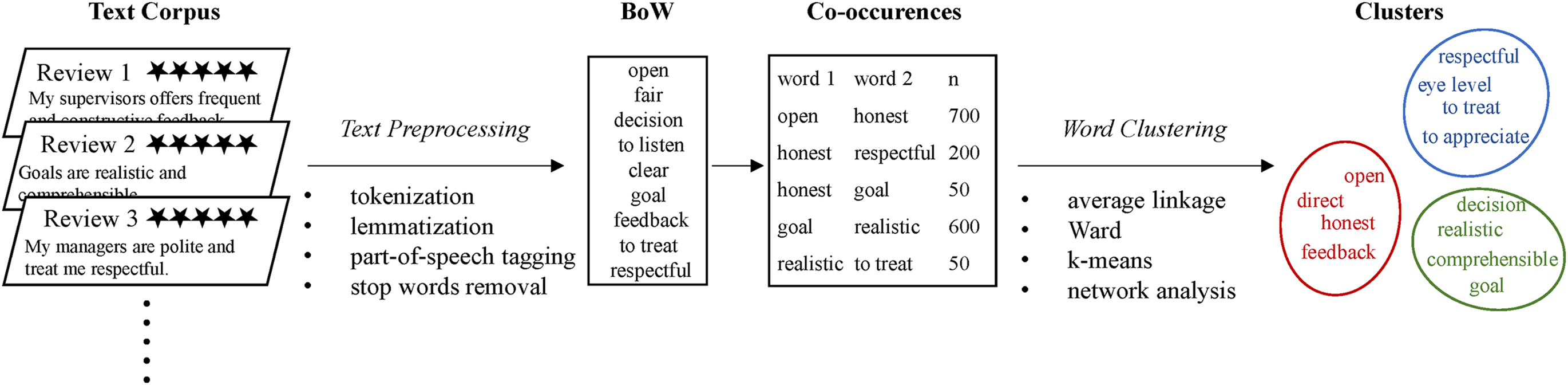
Overview of text mining procedures (exemplified).
The results reveal a six-cluster solution. In a final step, I compared the individual words that the different methods assigned to a cluster. The results of all four methods agree for 80% of the allocated words. Another 15% of words are found to agree by a majority vote, while the algorithms disagree for 5% of words. I accepted a word in the corresponding cluster if there is a full agreement or a majority vote (i.e., three out of four methods agree). Figure 3 summarizes the final cluster solution.
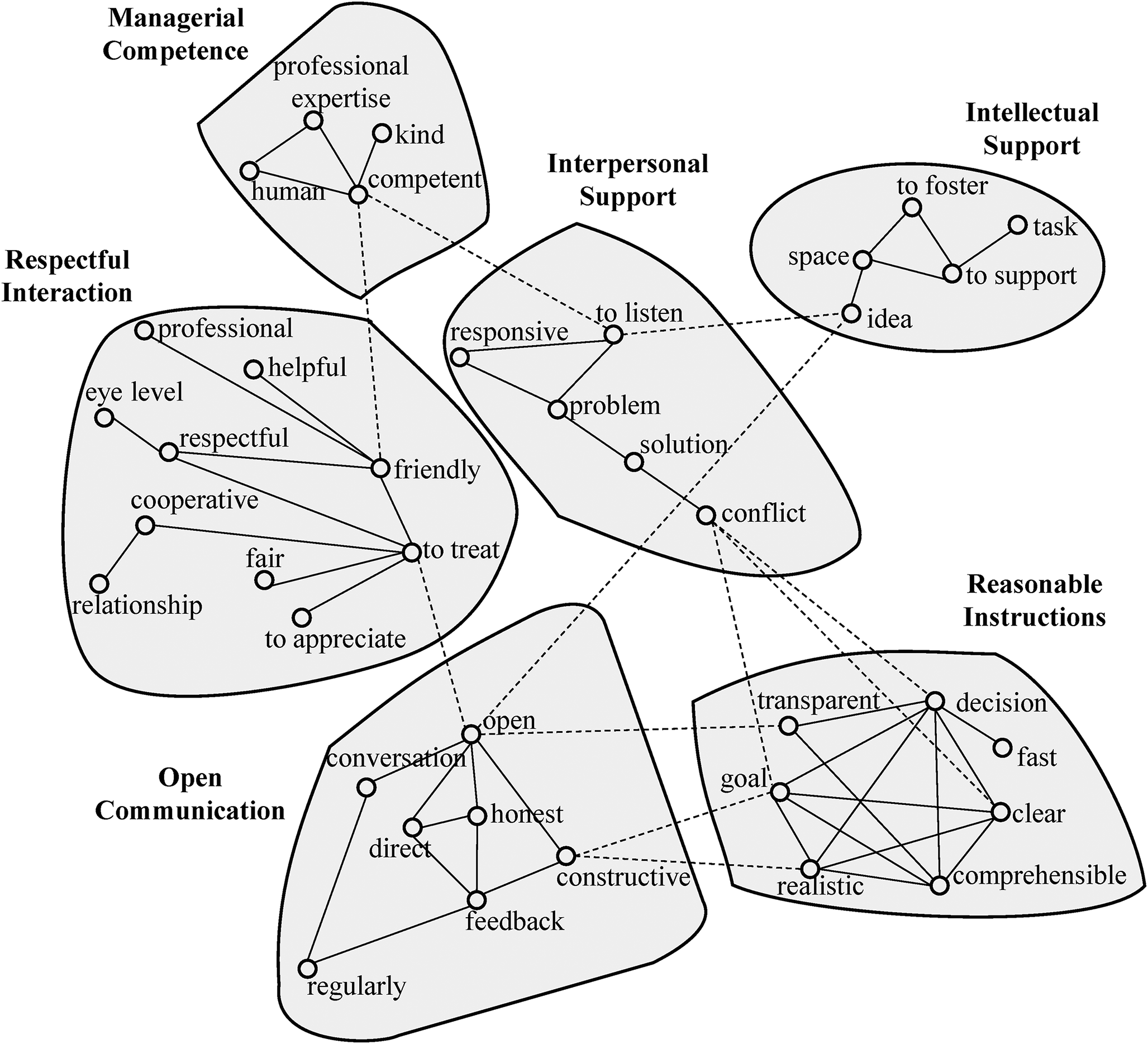
Framework of positive management practices. Note: Lines demonstrate significant word correlations within one dimension. Dashed lines demonstrate significant word correlations between dimensions. A more detailed presentation of each dimension is provided in the Appendix.
Presentation and Interpretation of Positive Management Practices
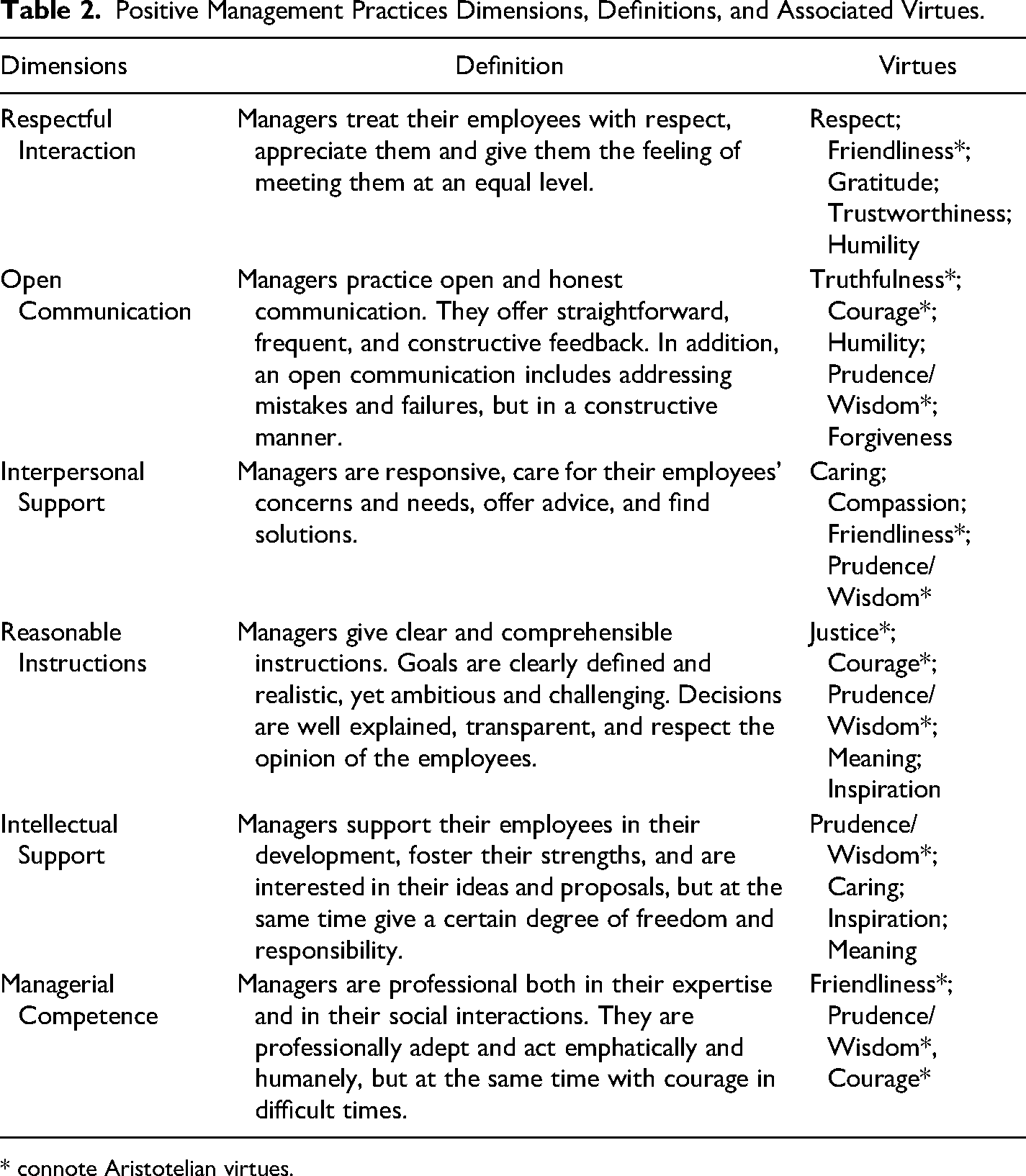
The six clusters identified in the previous section present the different contexts in which PMP manifest, which I refer to as “dimensions of PMP”. The dimensions of PMP and their short definitions are presented in Table 2. To gain a better understanding of each dimension, I present additional words that correlate significantly with words in the respective dimension in the Appendix (Figure A 7—Figure A 12).
Positive Management Practices Dimensions, Definitions, and Associated Virtues.
* connote Aristotelian virtues.
In the first dimension, the majority of words are directly associated with the word to treat. This dimension is about how managers treat their employees and interact with them. Employees are satisfied with their treatment if their managers treat them in a friendly way, respectfully, appreciatively, and give them the feeling of meeting them at eye level. In addition, relationships between managers and employees are described as loyal, open, and honest (see Figure A 7). I label this dimension respectful interaction. This dimension reflects the virtues respect, friendliness, gratitude, trustworthiness, and truthfulness and is largely consistent with Cameron’s (2011) positive practice dimensions respect, integrity, and gratitude. However, above that, the dimension respectful interaction particularly emphasizes the importance of treating employees as equals and avoiding arrogance, which points to the relevance of the virtue humility.
The second dimension contains the words conversation, feedback, regularly, constructive, open, direct, and honest. This cluster suggests that employees value open, honest, and straightforward communication with their managers. Similarly, employees appreciate when they receive honest and constructive feedback on a regular basis. Hence, I label this dimension open communication. This dimension is less comparable to one of Cameron’s (2011) positive practices, but it does cover the practice caring, in that managers who give frequent and constructive feedback seem to be interested in their employees, and the practice integrity, in that employees value an open and honest way of communicating. I also find the words feedback and constructive to be correlated with the word mistake, showing that open communication includes addressing errors and failures, but in a constructive manner (see Figure A 8). Although this dimension is connected to the first dimension (as illustrated by a dashed line in Figure 3), in that employees appreciate a respectful and equal way of communicating, the findings also indicate that the practice open communication largely concerns business task-related matters. Overall, this dimension comprises the virtues truthfulness (reflected by open and honest communication), courage (reflected by honest and straightforward communication), and humility and forgiveness (reflected by a respectful way of communicating, even in the event of negative feedback).
In the third dimension, the three most often occurring words are to listen, problem, and responsive. Managers in this dimension are responsive, care for their employees’ concerns and needs, offer advice, and find solutions (see Figure A 9). Hence, I label this dimension interpersonal support. In addition, this dimension frequently contains the words conflict and solution. Conflicts should be resolved diplomatically, objectively, and jointly, and discussed thoroughly (see Figure A 9). This dimension includes elements from Cameron’s (2011) positive practice dimensions caring, and compassionate support, which emphasize helpful behavior and high levels of empathy and responsiveness. Hence, the dimension interpersonal support primarily reflects the virtues caring, compassion, and friendliness. However, in order to diplomatically resolve conflicts or to offer useful advice, the virtue prudence also plays an important role in this dimension.
The fourth dimension concerns decision-making and goal setting, particularly how instructions are conveyed in the processes. I label this dimension reasonable instructions. Employees perceive it as positive if their managers’ decisions are comprehensible, clear, fast, and transparent. It is also appreciated if decisions are well explained, justified, discussed, and if employees get involved (see Figure A 10). Likewise, the possibility of speaking up and the precise communication of information are important prerequisites in the conception of organizational justice, especially in the dimension of procedural justice (Colquitt, 2001). Regarding goal setting, I find that positive reviews often contain words such as realistic, comprehensible, and clearly defined. Employees seem to appreciate understanding their goals and expectations. These findings are similar to concepts of goal-setting theory, which states that managers should set specific goals (Latham & Locke, 1979). Furthermore, the word goal correlates with the words ambitious, demanding, challenging, and achievable (see Figure A 10). Overall, the dimension reasonable instructions is more a business task-related management practice. It shows analogies to Cameron’s (2011) positive practices meaning and inspiration, by the motivating nature of these two practices, and addresses the virtues justice, prudence, courage, meaning, and inspiration.
The fifth dimension includes the words to foster, to support, task, idea, and space. Employees appreciate managers who support their development, foster their strengths, and are interested in their ideas and proposals but, at the same time, leave room for discretion and responsibility. Their tasks are described as interesting, motivating, and diversified, tasks in which they can grow (see Figure A 11). Hence, I label this dimension intellectual support. This dimension comprises elements from Cameron’s (2011) positive practices dimensions inspiration and meaning but also from compassionate support and caring, albeit the latter at more of a professional level. For instance, managers are interested in and promote the professional development of their employees and mentor their employees on business-related tasks. To conclude, this dimension comprises the virtues prudence (as a necessary prerequisite for providing intellectual support), caring, inspiration, and meaning.
The last dimension yields a more general view of the competencies of a manager. Managers in this dimension are described as competent in terms of both professional and as social skills. I label this dimension managerial competence. The term professional expertise frequently appears with terms such as methodical and objectively. The dimension is also tightly linked to the dimensions respectful interaction and interpersonal support (see Figure 3). Managers seem to maintain a friendly and professional relationship with their employees and make them feel like they are taken seriously. Further, the word human is correlated with words such as pressure and courage, indicating that managers react with humanity in situations of pressure and even prove their courage in hard times (see Figure A 12). In addition, the words human, professional expertise and courage bring to mind the virtues friendliness, prudence (particularly knowledge of business), and courage, respectively.
Finally, as illustrated in Figure 3 the individual dimensions exist on an interrelated continuum. For instance, the dimension open communication is closely connected to the dimension reasonable instructions, particularly in regard to goal setting. Employees appreciate clear and comprehensive goals, but they also value regular and constructive feedback on their task performance. Moreover, how feedback and instructions are conveyed plays an important role, which is evident from the connection to the dimension respectful interaction.
Positive Management Practices and Firm Profitability
Research Design
In the following section, I conduct a regression analysis using panel data to investigate the potential relationship between PMP and organizational profitability. I obtained data on supervisor practices from kununu.com. The data includes all reviews that report supervisor practices. Financial and supplemental data is retrieved from the Compustat Global Database. Similar to previous studies that used employer rating platforms to asses employee satisfaction (Huang et al., 2015; Jung & Suh, 2019; Melián-González et al., 2015), I excluded firm-year observations with fewer than ten reviews. I collected data from large German capital market-oriented companies between the years 2011 and 2019, with 2011 being the first year with ten or more reviews per firm-year, resulting in a final sample of 799 firm-year observations from 182 companies.
PMP Measures
In order to determine the measures for PMP and their dimensions at the firm level, I aggregated employees’ individual reviews as follows: First, to determine if a review contains information on any of the dimensions, words that were identified as keywords in a respective dimension (see Figure 3) were used. Each time a review contained one of the words from a respective dimension, it was classified as such. A review that provided information on different dimensions was classified for each dimension. For an overall measure of PMP, I incorporated the words from all dimensions combined. Next, the reviews were labeled as “1”, “0”, or “
Firm Profitability Measure
In leadership and organizational research, the profit margin, net income divided by sales, is commonly used to measure firm profitability (Koene et al., 2002; Waldman et al., 2001). However, in line with more recent literature (Chun et al., 2013; Shin et al., 2015), I use operating profit as the numerator since I am interested in the profitability of a company in view of its actual operational purpose, instead of the net income, which also includes non-operating costs (i.e., taxes and interest). Hence, I define the operating profit margin (OPM) as the operating profit, incorporated as earnings before interest and taxes (EBIT), divided by sales.
Regression Models
In the first model, I examine the link between firm profitability and PMP (overall). In the second model, I investigate the relationship between firm profitability and the dimensions of PMP. I use both models without controls (baseline) and with controls (full). The full regression models are summarized in equations (1) and (2),
Regression Model 1

Regression Model 2
Results
Main Analysis
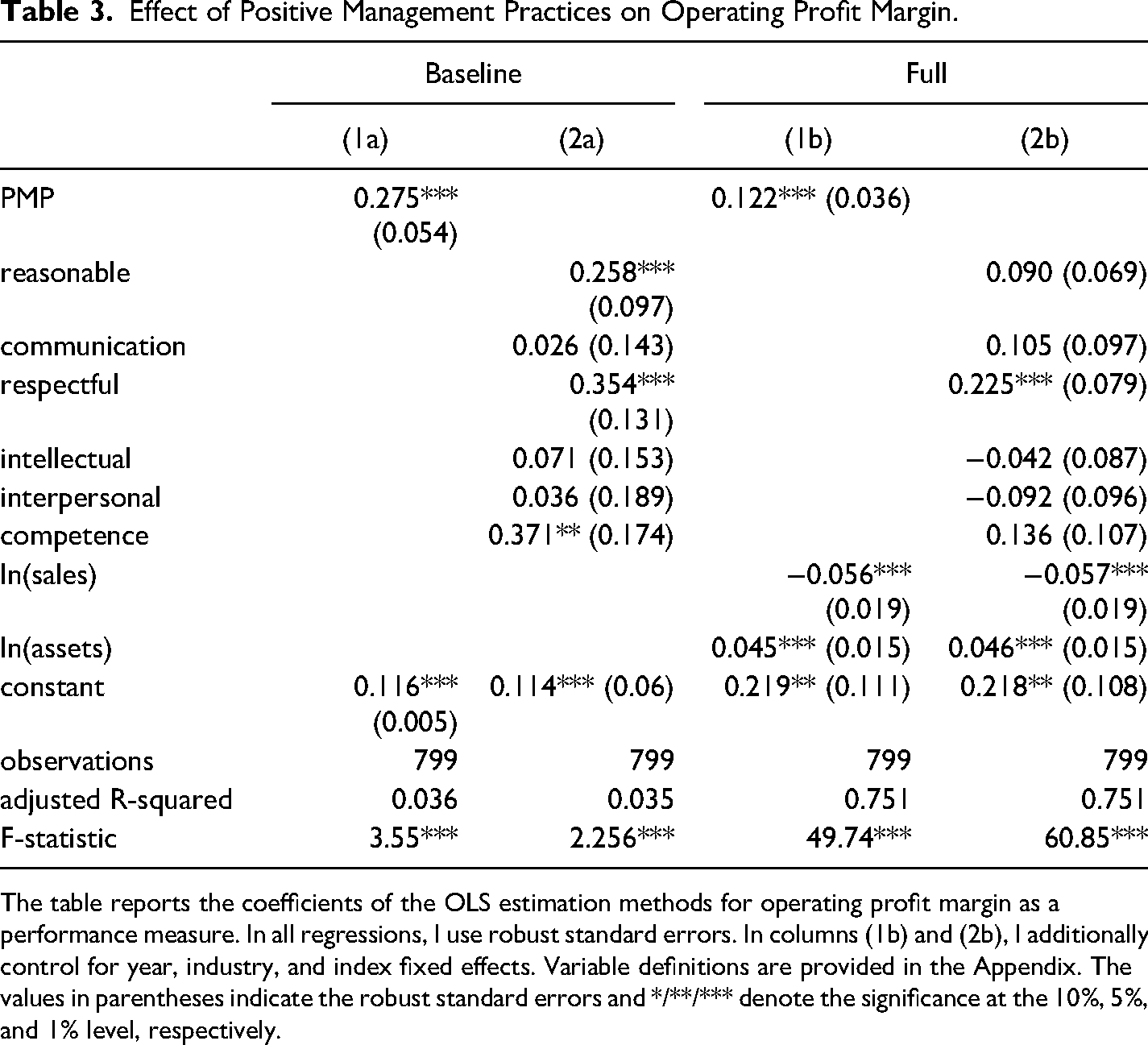
Columns (1a) and (1b) of Table 3 shows the results from the first model. The coefficient of
Effect of Positive Management Practices on Operating Profit Margin.
The table reports the coefficients of the OLS estimation methods for operating profit margin as a performance measure. In all regressions, I use robust standard errors. In columns (1b) and (2b), I additionally control for year, industry, and index fixed effects. Variable definitions are provided in the Appendix. The values in parentheses indicate the robust standard errors and */**/*** denote the significance at the 10%, 5%, and 1% level, respectively.
Further, I test whether additional information could be obtained by examining the six dimensions of PMP. I report the results from the second model in column (2a) and column (2b) of Table 3. I find a significant coefficient for the variables
Additional Analyses
I employ additional analyses to investigate the impact of (i) selection bias, (ii) reversed causality, and (iii) model modifications on the regression results. The results are summarized in the Appendix (A.5). First, by only incorporating companies with sufficient reviews on supervisor behavior, I risk a biased sample selection, as there may be specific reasons that employees of a particular company rate their supervisors. To mitigate that concern, I use a two-stage Heckman correction (Heckman, 1979). Incorporating the inverse mills ratio into the regression models does not affect the results.
Second, as higher company performance might lead to increased subsequent
Third and finally, I test the robustness of the main results by adding an alternative performance measure (
General Discussion
Theoretical Implications
The results of the present study have several implications for the field of POS. This study's findings reveal that PMP place a stronger emphasis on professional relationships compared to positive workplace practices, as was done in Cameron et al. (2011). In particular, giving task feedback, promoting employees’ professional development, and showing justice and prudence in decision-making and goal setting are emerging components in PMP. Moreover, PMP at both the interpersonal and professional levels emphasize the importance of humility (as opposed to arrogance) for thriving relationships.
Moreover, given that positive practices and virtues are tightly connected, the PMP framework has implications for the concept of organizational virtuousness by demonstrating (i) which virtues to include in a concept of virtuous leadership, (ii) that different virtues are important in different contexts, and (iii) that the same virtues may reflect in different practices depending on the respective context. In regard to (i), the results of this study indicate that out of the 59 virtues that Hackett and Wang (2012) summarized from the PL literature, 14 of these virtues frequently occur in the analyzed employee reviews. While Wang and Hackett (2016) incorporate only the six “cardinal values” in their construct of virtuousness leadership, the conception of PMP represents a more holistic, less abstract framework, yet the contextual classification still provides cohesiveness, indicating that the construct of leadership virtuousness can be easily applied. Regarding (ii) and (iii), the findings suggest that employees in different contexts value different virtues and that the same virtue of a manager may be reflected differently in their practices depending on the context. For instance, the virtue of courage appears to be important in the contexts of communication, instructions, and managerial competence. While courage is valued in the context of communication in the sense that managers communicate straightforwardly, courage is valued in the context of instructions in the sense that managers should be able to make a final decision in the event of disagreement. Another example is the virtue of prudence, which occurs in five of the PMP dimensions. In the context of communication, e.g., prudence is valued in the sense that it is needed to provide constructive feedback. In the context of instructions, prudence is important for making reasonable decisions and choosing the right means to achieve the desired goals. Moreover, the fact that prudence is the most frequently occurring virtue among all dimensions empirically proves the importance of this virtue, which has been frequently referred to as “master virtue” in a construct of leadership virtuousness (Crossan et al., 2017; Meyer, 2018).
The second part of the study examines the link between PMP and firm profitability. Thus, this study adds to the body of literature that examines the relationship between PL and objectively measured organizational financial performance (Peterson et al., 2009; Shin et al., 2015; Waldman et al., 2001; Wilderom et al., 2012). However, the studies mentioned above focus on CEOs and top managers as the object of inquiry, explaining the link to firm profitability through role modeling and inspiration to influence follower effectiveness (Alvesson & Einola, 2019; Inceoglu et al., 2018). In contrast, the current study establishes the link between PMP and firm profitability through managers’ impact on employees’ positive emotions, acknowledging that frequent exposure to supervisors’ practices is a major determinant that affects employees’ mental well-being (Gooty et al., 2010; Kelloway et al., 2013). While the literature has linked positive supervisor behavior and positive leader-member exchanges to a number of individual- or team-level outcomes, such as strengthened resilience (Fredrickson, 1998, 2001), increased work engagement (Ouweneel et al., 2012), and reduced counterproductive work behavior (Cole et al., 2006; Kuvaas & Dysvik, 2010), the question of whether and how PL (focusing on supervisors) relates to firm profitability has remained largely unsolved. In this regard, Hartnell et al. (2020) demonstrate that a supportive climate and increased OCB induced by PL can even negatively impact a branch's financial performance. The current study sheds new light on this relationship by demonstrating that the more employees in management positions engage in positive practices, and particularly in respectful interactions, the higher the company's profitability. This underscores the importance of the way supervising managers treat their employees in fostering employees’ positive emotions and the resulting positive effects in organizations, which eventually impact the company's profitability.
Regarding the remaining dimensions, the analyses yield mixed results. For the dimension intellectual support and interpersonal support, I find positive (but insignificant) coefficients in the main analysis and a significant negative coefficient in one of the additional analyses. One possible explanation for these mixed results could be that firm profitability can be affected in a negative way if managers give their employees too much freedom in their tasks by setting generalized goals. This argumentation is supported by the goal-setting theory (Latham & Locke, 1979). On the other hand, findings from research on shared leadership indicate that less clear instructions are positively related to team performance (Zhu et al., 2018), indicating that there might be a non-linear relationship between intellectual support and firm profitability. Moreover, a negative effect of the dimensions intellectual support and in particular interpersonal support might be explained by the argument of resource allocation since supervisors who spend much time helping others have less time for their own task completion (Bergeron, 2007; Hartnell et al., 2020). However, as coefficients in the present study are insignificant in most tests, a final conclusion cannot be drawn. A more depth analysis between the dimensions of PMP and firm profitability and the underlying mechanisms of this relationship remain to be explored in future research.
Finally, the study yields implications for the field of organizational change. The inherent uncertainty associated with change processes has the potential to trigger negative emotions (such as anger, anxiety, or rejection) among a company's workforce (Kiefer, 2002). Scholars emphasize the potential of leadership in positively influencing employees’ emotions during change processes (Agote et al., 2016; Cameron & McNaughtan, 2014). As PMP and positive emotions are highly interwoven, I propose that PMP are particularly valuable mechanisms for fostering employees’ positive emotions during organizational change processes. Moreover, as employees often view their supervisors as representatives of the organization (Eisenberger et al., 2020; Rhoades & Eisenberger, 2002), the positive social exchanges that result from PMP may spill over to employees’ perceptions of their company and may lead them to trust and accept the company's change decisions. Similarly, Gigliotti et al. (2019) demonstrate a positive effect of employees’ perceived support by their employers on the level of trust and readiness to change. In a different study, Vardaman et al. (2012) find a positive relationship between the number of positive relationships individuals form in their working environment and the extent to which they interpret the change as controllable, which in turn, has been linked to the success of the change process (Dutton & Duncan, 1987; Thomas et al., 1993; Vardaman et al., 2012). Vardaman and colleagues argue that both friendship and advice-seeking relationships are associated with increased access to information and social support, leading individuals to view change issues as more controllable. Given the positive effect of PMP on positive emotions and healthy relationships, the findings of these studies underline the importance of a high prevalence of PMP in organizations to support change processes.
I leave it to future research to further investigate this proposal. Similar to this study, unstructured data from employee reviews combined with text mining could be used in an event study to examine PMP, positive emotions, virtuous behavior, or other leadership practices and their effects on organizational change success.
Limitations and Future Directions
This study faces several limitations. First, I investigate PMP perceived by German employees. Dahlsgaard et al. (2005) identify the six virtues wisdom, courage, humanity, justice, temperance, and transcendence as recurring virtues across many cultures in the world, most of which become evident in the results of the present study. However, there might still be cultural differences in how employees perceive positive practices. Future research could extend the study's framework of PMP by investigating what employees of different cultures perceive as positive (or negative) management practices. Moreover, the explorative approach applied in this study requires some subjective choices by the researcher. Although I combined four different clustering methods in this study to reduce subjectivity and strengthen the robustness of the results, confirming the proposed six dimensions of PMP in a confirmatory factor analysis would be an important contribution for future research. In addition, I encourage future researchers to create a questionnaire for practical application.
Finally, this study's methodology is not designed to prove a causal relationship between PMP and firm financial performance. Even though I addressed potential biases due to endogeneity, there are too many external influences that the study approach cannot control. Determining causal relationships requires conducting experiments, quasi-experiments, or event studies. Nonetheless, the study design has proven valuable in uncovering new patterns and relationships that could not have been uncovered without using these techniques. For future research, combining text mining with more traditional approaches can be fruitful to exploit the complementary strengths of different methods (Bloomfield et al., 2016). This is applicable in mutual directions: Text mining and online media content could be used to generalize findings from the lab and to validate the local, temporal, or Zeitgeist relevance of established theories, while, at the same time, novel patterns and correlations identified with the help of text mining (as in this study) could be validated using more traditional approaches such as experiments and confirmatory factor analyses (Leavitt et al., 2021).
Practical Implications
This study also yields practical and social implications. Examining employee reviews with text mining approaches helped to identify practices that are valued by employees in real business practice and that lead to positive emotions and satisfaction among employees. In addition, organizations with a higher degree of PMP, particularly respectful interactions, are associated with higher profitability. At the same time, the PMP presented have triggered employees to publish a favorable rating on the employer rating platform kununu. Such platforms are becoming increasingly important for potential employees in their decision to work for a certain employer (Dube & Zhu, 2021; Jung & Suh, 2019). Hence, teaching PMP may additionally lead to better evaluations on employer rating platforms, eventually helping companies to attract new talent.
The findings are particularly important for fields of strategic human resource management (SHRM) and strategic management accounting (SMA), which play an important role in hiring employees and managing their behavior (Vedd & Kouhy, 2005). SHRM and SMA practitioners could use both the text mining methods and the findings presented in this study to develop tools for measuring and implementing PMP in their organization. For instance, practitioners can apply the presented text mining approach to measure a company's level of PMP, or selected dimensions of interest, by simply counting reviews containing the respective words in positive and negative contexts, subtracting them from each other, and dividing them by the total number of reviews. Compared to a benchmark or looking at the ratio over time, the resulting ratio can indicate useful information about the average sentiment toward this management practice in the company. Integrated into a strategic performance measurement system, e.g., the balanced scorecard, such metrics can serve as decision support and for strategy control regarding the firm's desired management behavior.
Further, based on the findings of this study, practitioners can design questionnaires to measure the PMP in specific (smaller) departments. For example, regarding the dimension respectful interactions, a questionnaire could ask employees to rate the following statements: “my supervisor treats me and my co-workers with respect”, “my supervisor shows appreciation for our work”, “my supervisor is honest and acts with integrity”, and “my supervisor is humble and meets me and my co-workers at eye level”. Moreover, the virtues identified within the PMP dimensions, i.e., prudence, respect, friendliness, gratitude, trustworthiness, humility, courage, forgiveness, caring, compassion, justice, meaning, inspiration, and truthfulness, can be integrated into the corporate values to increase the overall presence of such virtues. Finally, PMP can be taught in training courses for employees in management positions. In doing so, the training can be guided by the findings of this study and cover all six dimensions of PMP.
Overall, I advise companies to ensure that employees in leadership positions understand and adopt PMP. Incorporating PMP measurements into strategic management accounting tools, reinforcing the virtues in the company's core values, or teaching them in management training are possible paths of implementation.
Conclusion
The concepts of positive psychology and POS emphasize the importance of employees’ positive emotions and satisfaction for organizations to flourish (Cameron et al., 2011). The current study provides a framework that holistically and coherently captures management practices that lead to satisfaction among employees. Moreover, this study finds a positive association between PMP at the organizational level and firm profitability. This association is particularly driven by the dimension of respectful interaction.
In conclusion, PMP not only elicit positive emotions and satisfaction among employees, but also have a positive effect on firm profitability, even in large German organizations. While this study was not designed to prove a causal relationship between PMP and corporate financial performance, the results indicate that it is still worthwhile to consider the concept of PMP in future research and to integrate it into corporate identities.
Supplemental Material
sj-docx-1-jab-10.1177_00218863221120827 - Supplemental material for The Effect of Positive Management Practices on Firm Profitability – Evidence from Text Mining
Supplemental material, sj-docx-1-jab-10.1177_00218863221120827 for The Effect of Positive Management Practices on Firm Profitability – Evidence from Text Mining by Martin Becker in The Journal of Applied Behavioral Science
Footnotes
Declaration of Conflicting Interests
The author(s) declared no potential conflicts of interest with respect to the research, authorship, and/or publication of this article.
Funding
The author(s) received no financial support for the research, authorship, and/or publication of this article

Supplemental Material
Supplemental material for this article is available online.
References
Supplementary Material
Please find the following supplemental material available below.
For Open Access articles published under a Creative Commons License, all supplemental material carries the same license as the article it is associated with.
For non-Open Access articles published, all supplemental material carries a non-exclusive license, and permission requests for re-use of supplemental material or any part of supplemental material shall be sent directly to the copyright owner as specified in the copyright notice associated with the article.
