




Abstract
Corporate–startup collaboration (CSC) allows the co-development of innovations for pressing societal needs. Paradoxically, CSC is both fueled and challenged by diverging interests and approaches of the unequal actors. We apply a paradox lens to better understand the complex collaborative demands of CSC from the perspective of the corporate actors involved. Over the course of three years, we conducted 52 contextualized semi-structured interviews in a corporate-sponsored accelerator pursuing sustainability improvements. We identify five CSC paradoxes, which we translate into guiding principles for managing such paradoxes with a both/and mindset. Further, we show how these guiding principles help to address interdependencies between the CSC paradoxes. By disentangling the inherently paradoxical nature of the collaborative demands, we contribute to a fuller theoretical understanding of how organizational actors can manage these demands. We encourage companies engaging in CSC to use the guiding principles for empowering organizational actors’ understanding and approaches to CSC paradoxes.
Pressing societal challenges affect and are affected by multiple organizations (Ferraro et al., 2015), requiring “diverse sets of collaborative partners that join forces” (Ahn et al., 2019, p. 267) to leverage the requisite diversity for innovations that one organization by itself cannot achieve (Ahn et al., 2019; De Silva & Wright, 2019). Corporate–startup collaboration (CSC) is particularly promising in this regard. Hübel et al. (2022) showed that startups specializing in new and sustainable alternatives for traditional products can provide critical learning opportunities to corporates (e.g., how to create and leverage sustainable products). Corporates can help these startups to expand their business by providing resources, such as money and distribution channels, and together they create value for society (Hübel et al., 2022). For instance, CSC can create intertwined product and expertise loops to conserve resources and promote sustainability (Todeschini et al., 2017; Veleva & Bodkin, 2018). Moreover, as the collaboration between the airline Swiss and the spin-off Synhelion to produce and leverage solar fuel for aviation (Synhelion, 2022) exemplifies, CSC enables the co-development, production, and diffusion of more sustainable technologies (Pakura, 2020).
Although CSC is promising for joint innovation, asymmetries in power, resources, experience, and pace (Das & He, 2006; Minshall et al., 2010) and contradicting motives and interests (Hora et al., 2018; Jackson & Richter, 2017) can appear between these collaboration partners. CSC may therefore surface tensions such as between creating and capturing value (Alvarez & Barney, 2001). To date, research has mostly adopted a strategic perspective on how such tensions are addressed (e.g., Alvarez & Barney, 2001; Diestre & Rajagopalan, 2012). However, it is actions by individuals and groups that shape organizations’ strategies (Eisenhardt et al., 2010) and the actors involved may be confronted with additional (competing) demands in their actual collaborations. For example, actors of the large organizations must both create open, trustful relationships with startups while managing different expectations and setting clear boundaries (Remneland Wikhamn, 2020). Given organizational actors’ importance in realizing collaborations across organizational boundaries, there is surprisingly little research telling us how they can best manage the related demands to shape and support the collaborations instigated, thus calling for further investigation (Bogers et al., 2017; Remneland Wikhamn, 2020; Salter et al., 2014). In other words, it has been recognized that successful CSC substantially depends on individuals from large organizations who enact it, but our knowledge of the actual collaborations and organizational actors’ roles and their perceptions is still limited. This leads us to ask: What are the competing demands perceived by organizational actors in CSC? How can organizational actors effectively navigate these competing demands in CSC?
To answer the first question, we conducted a qualitative study within a corporate accelerator that is committed to enabling societal and sustainable improvements through CSC. We engaged in this setting over three years to contextualize the insights gained from 52 semi-structured interviews. We applied a paradox lens (Lewis, 2000; Smith & Lewis, 2011) to understand the competing CSC demands of actors from large organizations (i.e., organizational actors who initiate and execute CSC). Findings show five distinct paradoxical CSC tensions, which we labelled as goal paradox (immediate/higher-level goals), tie paradox (internal/external ties), diversity paradox (contrasts/commonalities), approach paradox (preparation/flexibility), and experience paradox (building/using experience). To answer our second question, we took abductive reasoning steps and translated the paradoxes identified into five guiding principles for how to manage them with a both/and mindset (Miron-Spektor et al., 2018; Schad et al., 2016; Smith & Lewis, 2011; Smith & Tushman, 2005). We suggest that CSC paradoxes can be approached fruitfully by applying these guiding principles and show how they reinforce each other to steer CSC toward success.
In addressing the inherently paradoxical nature of CSC when it comes to the actual collaborations, we significantly extend our understanding of managing demands in CSC. With the paradoxes we identified and our guiding principles, we provide a more fine-grained understanding of the demands and organizational actors’ role and options in managing and thereby affecting CSC (Bogers et al., 2017; Remneland Wikhamn, 2020). Furthermore, our research has important practical implications, since the five guiding principles we developed can help organizational actors to understand and manage the demands inherent in the collaborations, thus enabling successful CSC as a key to co-create a better world.
Theoretical Background
Corporate–Startup Collaboration
Corporates and startups may differ in their decision logics, expectations, beliefs, cultures, and processes (Bannerjee et al., 2016; Jackson & Richter, 2017; Minshall et al., 2010; Urbaniec & Zur, 2021). While this can be challenging, a certain difference between the corporate and startup is important to leverage benefits for renewal (Rigtering & Behrens, 2021). For instance, knowledge bases and approaches related to social and sustainability issues that diverge from their own capabilities allow corporates to learn, making them ready to create societal benefits (Hübel et al., 2022; Mirvis et al., 2016). Since large organizations are known for their inertia (York & Venkataraman, 2010), collaboration between large firms might not offer such differences. In contrast, startups are known to be flexible, can get by with little bureaucracy, are agile and risk affine (Hora et al., 2018; Weiblen & Chesbrough, 2015). Thus, CSC as a particular type of open innovation (OI) (Remneland Wikhamn, 2020; Weiblen & Chesbrough, 2015) can provide the differences needed to leverage benefits (Rigtering & Behrens, 2021). For example, Hübel et al. (2022) found that allying with sustainability startups allows corporates to both learn from and about these startups (e.g., about market niches and how promising sustainability products and collaborating with respective startups can be). These new insights can stimulate interest and decisions to further broaden CSC engagement for pursuing sustainability innovations. For such spill-over, direct engagement of actors from the large organization with startups is crucial (Hübel et al., 2022).
However, cross-boundary engagement also poses demands for the organizational actors involved, as recent research has started to investigate. For instance, Salter et al. (2014) found that organizational actors feel a tension between sharing information and protecting confidentiality when trying to initiate a cross-boundary collaboration and sensed that startups experience similar issues. To handle competing disclosure demands, organizational actors shared information selectively and helped potential collaboration partners in deciding what (not) to share from their side, creating trust. Furthermore, Remneland Wikhamn (2020) found that change agents from large organizations involved in CSC are confronted with exploration—exploitation and value creation—value capturing paradoxes. They managed them with two paradoxical activities. Through “anchoring work” they tried to break up the entrenched internal-corporate setup and culture to create space for collaborating with startups while trying to secure backup through alignment with internal stakeholders. Furthermore, through “navigating work”, they directly engaged with startups and facilitated relation formation between startups and internal colleagues, while simultaneously guarding CSC boundaries.
Lauritzen and Karafyllia (2019) recently suggested reframing conflicting OI demands, such as between openness and control, as paradoxes instead of problems. This change in perspective allows for new ways of exploring links between the competing collaboration elements and allows acceptance that tensions will persist, asking for continuous management (Lauritzen, 2017; Smith & Lewis, 2011). Building on this recent research, we use a paradox lens (Lewis, 2000; Smith & Lewis, 2011) to address our questions about the competing demands perceived by organizational actors in CSC and how to navigate them effectively.
Applying a Paradox Lens to Corporate–Startup Collaboration
Paradox is defined “as contradictory yet interrelated elements that exist simultaneously and persist over time” (Smith & Lewis, 2011, p. 382). Such elements may comprise opposing demands, perspectives, or interests, and tensions occur between such contradictory elements (Lewis, 2000; Smith & Lewis, 2011). A core assumption of paradox theory is that managing paradox successfully requires differentiation and integration of both elements of the paradox over time, while choosing one element of the paradox over the other will increase, rather than decrease, the tension between the elements (Smith & Lewis, 2011). With a both/and approach, a dynamic equilibrium between the elements can be established, allowing both elements to be given attention. Dynamic equilibrium describes a “constant motion across opposing forces” (Smith & Lewis, 2011, p. 386) and centers around creating a moving balance between the two elements of a paradox by permanently switching the focus to either element to a certain extent, moving between them, so that one element can continuously counterbalance the other and vice-versa (Schad et al., 2016; Smith & Lewis, 2011).
Elaborating on the foundations of what makes people successful in leveraging paradoxical tensions, research on the individual level has highlighted the advantages of a both/and mindset (Miron-Spektor et al., 2018). A mindset is a “cognitive filter” that guides how the environment is perceived and interpreted (Gupta & Govindarajan, 2002, p. 116). As a mental lens, it affects people's understanding of and responses to situations (Dweck, 2000). When adopting an either/or mindset, one element of a paradox is neglected, which accentuates the tension further because it undermines the relationships between the elements (Lüscher & Lewis, 2008; Miron-Spektor et al., 2011). This kind of mindset thus “oversimplifies management practices and demands” (Lewis, 2000, p. 769). Conversely, a both/and mindset facilitates cognitive engagement with tensions, illuminating each contradictory element to accept each with its unique value, and investigating synergies between the opposites (Miron-Spektor et al., 2018; Smith & Lewis, 2011; Smith & Tushman, 2005). Specifically, through differentiation the aspects in which the elements diverge can be identified, which helps people to distribute resources in a way that both elements can be nurtured. In turn, through integration the links how the elements are connected to mutually inform one another can be investigated (Smith & Tushman, 2005). A both/and mindset thus permits “more complex and challenging resolution strategies” to be enacted (Smith & Lewis, 2011, p. 392). In summary, how people respond to paradoxical contradictions is rooted in their cognitions, making organizational actors’ both/and mindset crucial to leverage tensions (Miron-Spektor et al., 2018; Smith & Lewis, 2011; Smith & Tushman, 2005). We use this concept to develop guiding principles for how CSC paradoxes may be approached successfully.
Furthermore, while much of the paradox literature has studied single paradoxes in isolation, more recently, scholars have started to explore the relationships and dynamics between multiple paradoxes, known as “knotted tensions” (Sheep et al., 2017). They refer to“tensions that mutually impact one another in either prismatic (amplifying) or anti-prismatic (mitigating) ways” (Sheep et al., 2017, p. 469). The concept captures the idea that paradoxes might act together because of relationships between elements across paradoxes. For instance, an element of one paradox might relate to an element of another paradox, which might further be entangled with an element of a third paradox (Sheep et al., 2017). The following example illustrates how two paradoxes are knotted and that managing one of the paradoxes helps or hampers managing the other. Actors might experience a classical learning–performing paradox (Lewis, 2000; Smith & Lewis, 2011), namely, a tension between engaging in exploration and learning together with the startup, while feeling the pressure of delivering tangible results to their management. Furthermore, they might encounter a typical belonging paradox (Lewis, 2000; Smith & Lewis, 2011), experienced as a tension between identifying with their organization and identifying as a team member in an innovation team with the startup. Acting as both a member of their organization and a member of the innovation team will help them to engage in both learning and delivering results, while identifying as an organization member only will shift the focus to performance goals, thus hampering learning.
As these descriptions exemplify, applying an either/or logic to knots increases the tensions in all paradoxes due to their interrelated nature, provoking imbalance at the expense of innovation. In contrast, under a both/and logic, paradoxes intertwine in a way that can fruitfully outplay potential downsides of related tensions, because it channels the attention toward how the elements of the tensions involved can inform each other, highlighting emerging opportunities across paradoxes (Sheep et al., 2017). Furthermore, Jarzabkowski et al. (2021) showed that knotting paradoxes to create a positive dynamic across them is an ongoing endeavor and that pre-existing knots may be disrupted, challenging the beneficial state created. This stimulates actors to “reknot” paradoxes by building a connection between elements of paradoxes across paradoxes. These discussions in the paradox literature imply that thinking about how to navigate CSC paradoxes requires doing so for single paradoxes, but also being vigilant as to how the interplay between paradoxes can be addressed, and that considering a both/and stance towards (knotted) paradoxes may be promising.
Methods
We adopted a qualitative approach to gain a rich understanding of organizational actors’ perceived demands in the context of CSC (Edmondson & McManus, 2007; Graebner et al., 2012). This is in line with studies adopting a paradox lens to better understand the complex reality of (open) innovation (e.g., Lauritzen, 2017; Sheep et al., 2017). We conducted 52 semi-structured interviews as the base for our analysis and contextualized our findings with insights from a three-year engagement within a corporate accelerator program.
Research Setting
Switzerland has been ranked as the most innovative country globally for ten consecutive years (World Intellectual Property Organization, 2021). Tapping into this fruitful environment, we conducted our study within a Swiss “corporate accelerator” (Moschner et al., 2019) program (“program” in the following) over the course of three years. The annually reoccurring program is committed to fostering sustainability, societal improvement, and ecosystem development. It hosts multiple large organizations as program partners including leading incumbent firms, public and governmental institutions, and foundations. In addition, national and international startups, preferably in their later stage of development, apply to the program. The program's key performance indicator is the number of realized proof-of-concept (PoCs) projects, in which partner organizations and startups jointly tackle a variety of issues (e.g., energy solutions, data protection, reducing food waste). With its aims and focus on PoCs, the program provided an ideal setting to investigate our research questions.
While several organizations continued their participation, others newly joined or left within the three years in which we accompanied the program, and the batch of participating startups changed every year. Startups applying to join run through a multi-stage selection process, which is organized in different focus areas (e.g., health, food). They are selected according to specific criteria (e.g., team, maturity) and are offered expert advice and business development support. Moreover, startups attend several pitching, presenting, and networking opportunities with stakeholders (i.e., investors) from the ecosystem. Over the course of three years, our author team engaged in extensive observation and informal exchange within the program. We attended multiple startup selection meetings and events (e.g., opening/closing events, meet and greet, networking, demo, and dinner events). Thereby, we repeatedly observed interactions between large organizations and startups. We spent a considerable amount of time in the location of the program engaging in informal exchange with corporate and startup members and the program team. This allowed us to familiarize ourselves with the language, spirit, and collaboration modes of the program and to understand its role in bringing the diverse parties together. Our presence and visibility legitimized our research, helping us to approach our interview partners, supported by the program managers.
Sample and Data Collection
In our work, we focused mainly on the perspectives of the individuals involved from the large organizations. In the program, organizational representatives acted as a so-called “single point of contact” (SPoC). They were mostly dedicated innovation managers who managed the relationships with the startups, the program, and their own organization. While SPoCs initiated PoCs, they involved other corporate members (CM) who interacted with the startups in the operational execution of the PoCs. We thus aimed to capture both SPoCs’ and CMs’ perspectives on the CSC in our interviews. Correspondingly, if we speak of organizational actors in the following, we refer to the actors of the large organizations (i.e., SPoCs who initiate CSC and CMs who execute CSC). Additionally, we complemented the CMs’ perspectives with the startup members’ (SM) view of the CSC, using their views to carve out competing CSC demands even better. In the following, we describe our data collection procedure and provide a full sample description in Figure 1.
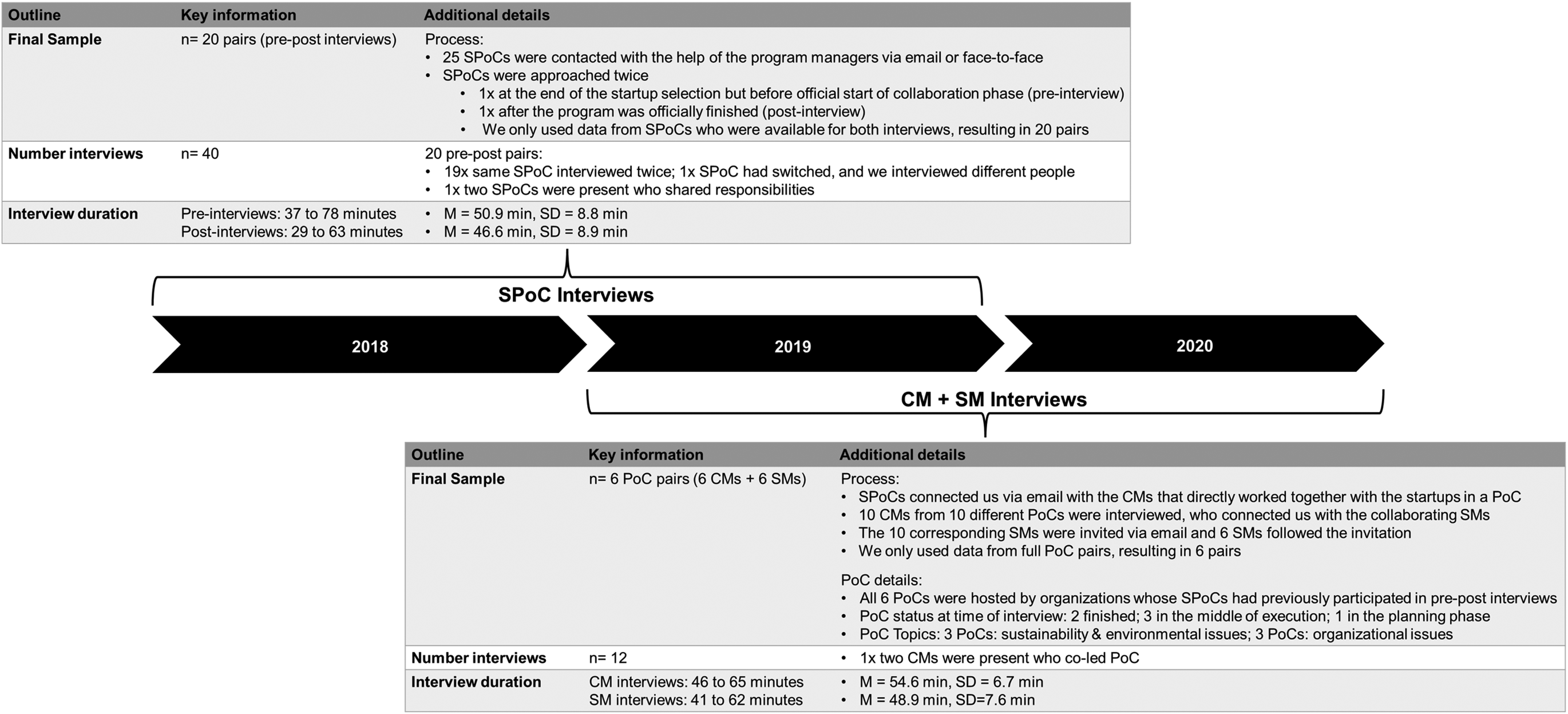
Data collection flow chart with sample information. Note. SPoC = single point of contacts; CM = corporate members; SM = startup members; PoC = proof of concept; M = mean; SD = standard deviation.
First, we contacted 25 SPoCs of the large organizations in two consecutive years (2018–2019). We approached them twice to learn about both their aims and expectations for the program (pre-interviews) as well as their actual experiences and evaluations (post-interviews). We only used data from organizations where SPoCs were available for both interviews. Thus, two trained interviewers from the author team collected 20 pairs of pre- and post-interviews (resulting in 40 interviews). In our interview guidelines, we included simple and broad questions in line with our first research question about competing CSC demands. We asked the SPoCs about corporates’ expectations for and their experience of the program, the corporate internal collaboration structure, their perceived opportunities, challenges, success factors, and key learning in the CSC. To make our inquiries more tangible, we asked for examples of critical incidents. We formulated them in familiar terms, asking about the “biggest challenge” or “biggest opportunity” so far. This allowed us to gain deeper descriptions of key topics while giving the respondents the opportunity to report on aspects that were relevant for them (Bott & Tourish, 2016; Cope & Watts, 2000).
Second, in two consecutive years (2019–2020) we interviewed pairs of CMs and SMs who were collaborating in the operational execution of specific PoC projects. We interviewed 10 CMs from 10 different PoC projects about their experiences within these PoCs. We invited the 10 corresponding SMs; six of these SMs accepted the invitation. Thus, we had paired SM and CM interviews from six PoCs (resulting in 12 interviews). Three PoCs were related to sustainability and environmental issues and three focused on tackling organizational issues. The interview guidelines involved questions about their perceived success factors, challenges, tensions, and internal-corporate setup for collaborating with startups. We informed all the interview partners individually about the purpose of the study, guaranteed confidentiality, and conducted the interviews either face-to-face at any of interviewees’, researchers’, or program's office location, or online. We held the interviews either in English or in German, and audiotaped and later transcribed them verbatim with the interviewees’ permission. Where necessary, we have translated German interview quotations to illustrate the findings.
Data Analysis Procedure
To analyze the interviews, we followed the grounded theory procedure outlined by Gioia et al. (2013). Accordingly, we identified first-order concepts, second-order themes, and aggregate dimensions. Overall, we worked through 599 pages of transcripts (single space, 286,521 words) of SPoCs’ interviews, and 207 pages of transcripts (single space, 100,925 words) of the CMs’ and SMs’ interviews (see Figure 2 for CSC data structure).
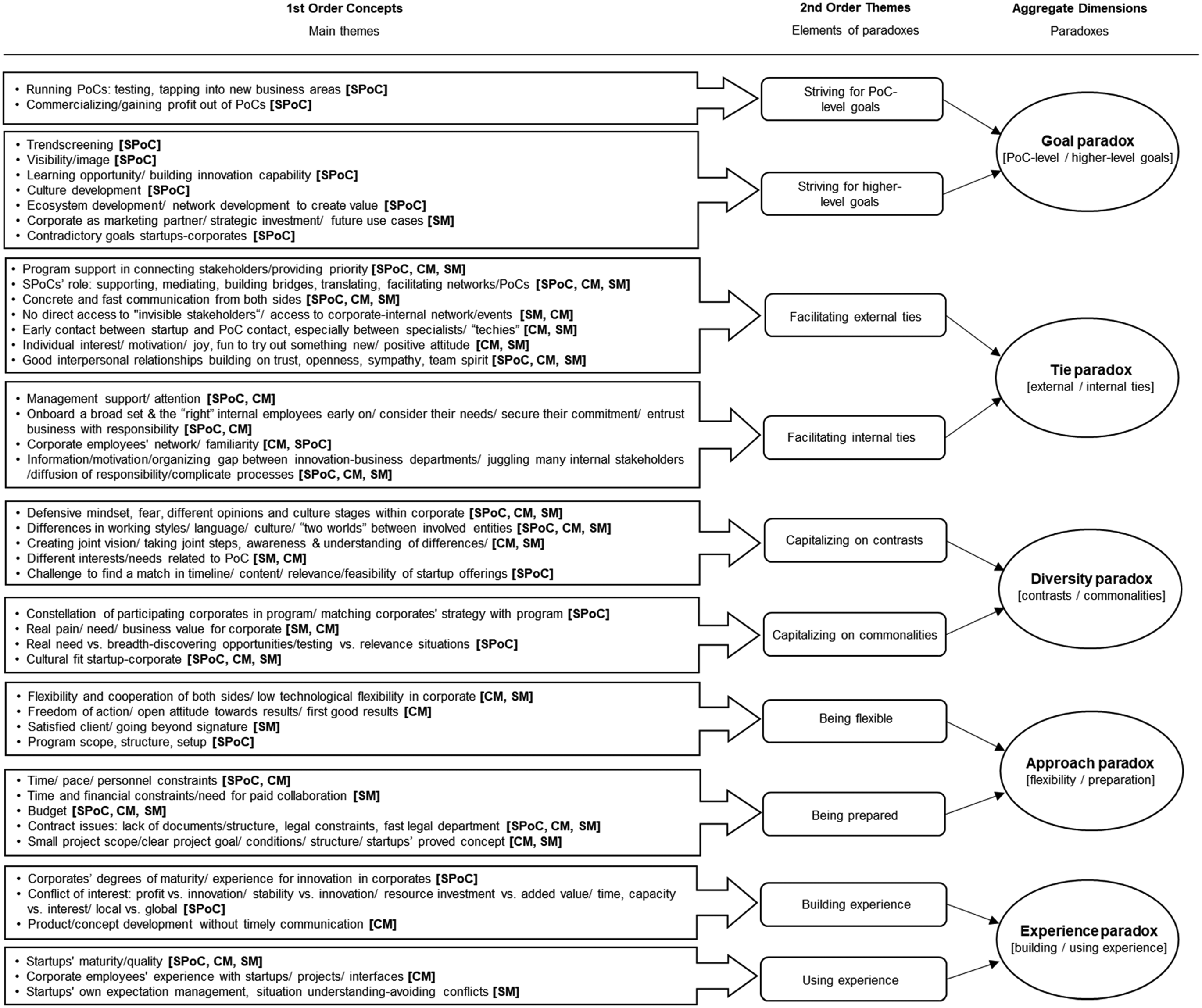
Data structure for corporate–startup collaboration paradoxes.
Identifying First-Order Concepts
Within a first-order analysis, we identified reoccurring major topics surrounding success factors and challenges in the CSC, while staying as close as possible to the language of our interview partners. To ensure the reliability of our procedure, a team of three trained coders started with the same set of four paired interviews and condensed them into single case descriptions, containing major topics and key quotes (two pre-post SPoC interview pairs; two CM-SM interview pairs). This corresponds to 15.4% of the total data set, representing a typical proportion in multiple coding for reliability (O’Connor & Joffe, 2020). With this multiple coding step, we cross-checked our interpretations and discussed potential disagreements in both major topics and procedure (Barbour, 2001). Thus, we aligned the targeted level of detail and procedure of labelling emerging topics and noting down quotes within the coder team. Afterwards, we juxtaposed each interview pair to compare the SPoCs’ perceptions before and after the program and between CMs’ and SMs’ perceptions, respectively, as an additional source of information. Finally, through a comparison across the different pairs, we grouped reoccurring major topics together and labelled them accordingly. This resulted in first-order concepts in which we remained close to the interviewees’ language; for instance, one challenge was labelled “no direct access to invisible stakeholders.”
Forming Second-Order Themes
We developed the second-order themes in an iterative process within our author team. While the first and second author were involved in conducting the interviews and had already been part of the initial coding team, the third author had not been involved before and thus provided a valuable “outside” perspective, asking for clarifications and explanations to refine the themes. In this step, we began to cycle between our data, emergent themes, and relevant literature. This is an approach that “might be viewed as transitioning from ‘inductive’ to a form of ‘abductive’ research” (Gioia et al., 2013, p. 21). We repeatedly discussed emerging themes and labels in-depth, and realized different active categorization steps (Grodal et al., 2021). First, we merged first-order concepts into second-order themes based on their similarity. In this step of the analysis, the informants’ language receded into the background, giving way to more abstract, theoretical labels (Gioia, 2021; Gioia et al., 2013); for example, “striving for higher-level goals.” Second, when meaningful, we split up broader second-order themes when there seemed to be a difference in the content focus (e.g., “stakeholder involvement” was split into “facilitating internal ties” and “facilitating external ties”). Third, we repeatedly reassessed the second-order themes to ensure their overall meaningfulness and distinctiveness. We allowed second-order themes to reflect information from all sources (CMs, SMs, and SPoCs) if the underlying first-order categories touched on the same issues (e.g., “being flexible”). However, we also allowed separate themes to emerge if a major topic appeared only within one or two perspectives (e.g., “striving for PoC-level goals” from the SPoCs’ perspective). In Figure 2, we indicate sources for all first-order concepts.
Forming Aggregate Dimensions
We continued with merging the second-order themes into aggregate dimensions. Through the close engagement with our data described above, we observed both contradictions and interrelations between our second-order themes, indicating their paradoxical nature. Examples are facilitating internal and external ties or being flexible and prepared. To make sense of these observations, we discussed them repeatedly and tried to look beyond what interviewees themselves might see (Gioia, 2021). We did so in cycling between our themes and insights from the paradox literature (Lauritzen, 2017; Lewis, 2000; Smith & Lewis, 2011), which helped us to better understand and label the five paradoxes we identified as researchers to tackle our first research question about competing CSC demands.
Developing a CSC Model
Finally, to answer our second research question about how competing CSC demands can be navigated, we followed abductive reasoning steps (see Figure 3) to develop a propositional, practice-oriented model. In the first phase (step 1), we combined theory and anecdotal evidence to elaborate on how single CSC paradoxes can be approached with a both/and mindset (Miron-Spektor et al., 2018; Smith & Lewis, 2011; Smith & Tushman, 2005), translating the CSC paradoxes into guiding principles as recommendations for how to understand and approach CSC paradoxes. In the second phase, we built on the notion of knotted tensions (Jarzabkowski et al., 2021; Sheep et al., 2017) to address how multiple CSC paradoxes may interplay and how to approach them jointly to leverage CSC (steps 2, 3, 4).
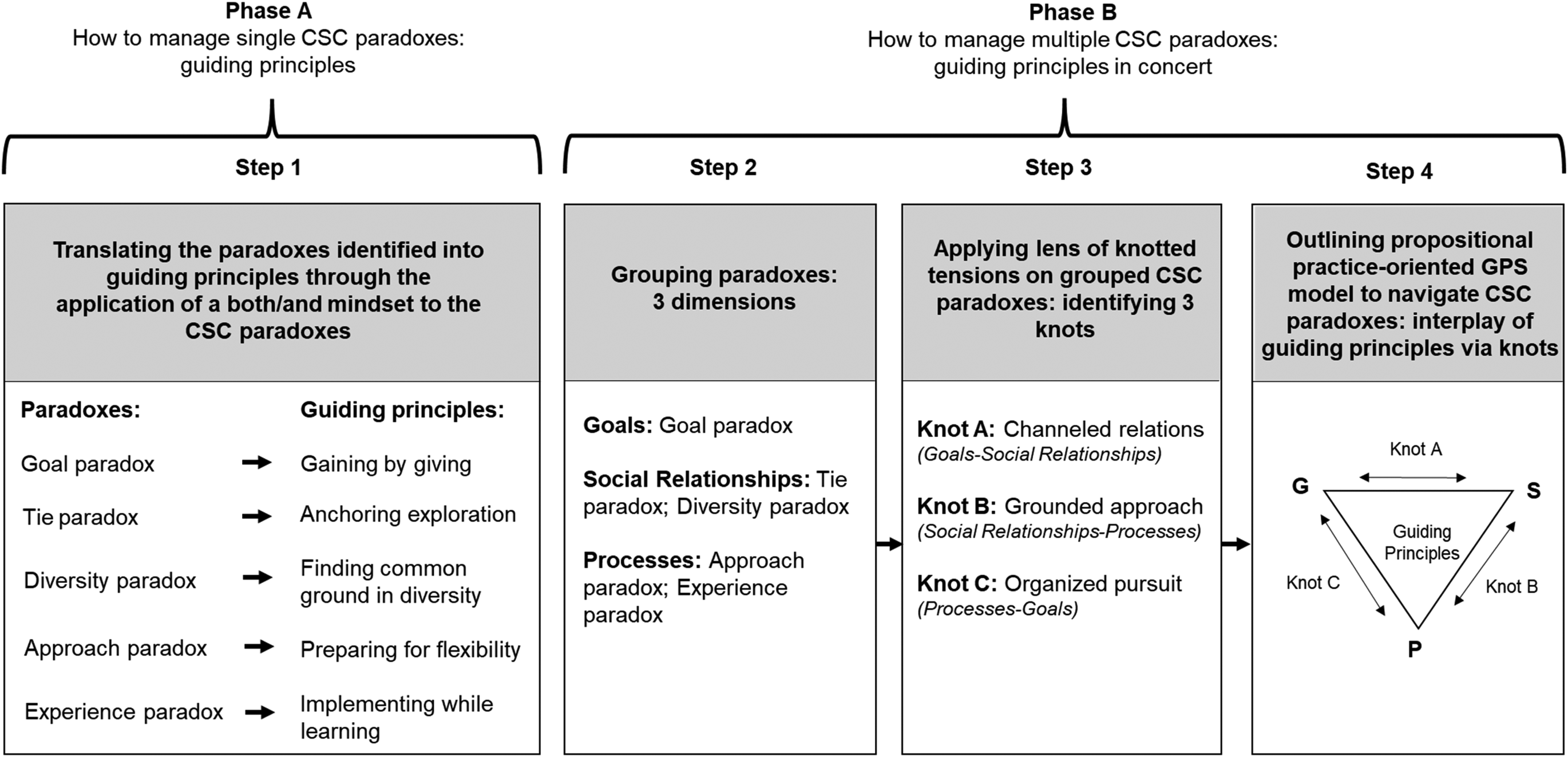
Outline of theorizing steps for developing a propositional, practice-oriented GPS corporate–startup collaboration model.
Findings
We describe our insights on competing CSC demands along the five aggregate dimensions representing the CSC paradoxes. They are based on 10 second-order themes as respective elements of the paradoxes that are further illustrated with quotations in Table 1.
However, the asymmetry in the levels of giving on the PoC level and benefitting on higher levels posed a tension, in particular for organizations that had already taken part in the program for several years. For them, realizing PoCs with truly innovative outcomes became increasingly relevant and a condition for future program participation. For instance, an organization had participated since the program's inception to support the local ecosystem and to use it as a marketing tool, but the SPoC also stressed that it was crucial for them “to be able to find a possibility to test something in our organization that we have not yet been able to do,” as this would affect their decision for further participation (SPoC08_1). Similarly, another SPoC stated that PoCs are not a “charity case” but an opportunity to learn and to make themselves visible as a company that offers real collaboration for startups despite uncertain outcomes, “not always just talk and no action” (SPoC03). These descriptions exemplify our observations within the interviews and informal exchanges that SPoCs were caught between the need to focus on higher-level (i.e., learning, visibility, ecosystem) and PoC goals (realizing collaborations) simultaneously.
In the SPoCs’ descriptions, we observed that they tended to temporarily emphasize higher-level benefits for the company and ecosystem (i.e., image as a higher-level goal) to explain their goal to engage in PoCs as “helping the startups” rather than pursuing own innovation goals (i.e., a PoC-level goal): But then also to give [name] startup a platform so that they can establish themselves in [location] which would be superb since this then gives a good story for us because we have invested in a novelty, we are now [area], we are now at the forefront with this alternative. (SPoC14_1)
The following examples illustrate the tension between facilitating internal and external ties. SPoCs and CMs struggled to move quickly with the startup while taking time to include internal ties. For example, a CM described that they had to proceed fast with the startup to test their solution within a certain timeframe but that they simultaneously had to give their legal department time to work through specifications (CM13). Furthermore, our interview partners contrasted the complex corporate internal setup (CM11, SM10) with a certain simplicity for startup exchanges (e.g., intuitive, CM13). For instance, a CM expressed that involving internal ties would have “super escalated” due to diverging views on risks and resources, while collaborating with startups was “very near so to speak, very uncomplicated” (CM01).
We observed in the organizational actors’ descriptions that, especially at the beginning of a PoC collaboration, they typically invested much effort in the creation and exploration of ties with SMs. SPoCs facilitated ties between CMs and SMs (SPoC09, SPoC14, SPoC19), who started to build a relationship (CM02), often based on humorous and fun exchanges (CM11, SM05). We interpreted these narratives as team-building efforts between CMs and SMs toward a trustful, open relationship (CM13, CM11). Once the collaboration between CMs and SMs was established, additional internal ties became important to anchor these collaborations. Often, they involved several stakeholders early on to gain their commitment and support (e.g., SPoC12, SPoC13, SPoC14, SPoC15, SPoC20, CM02, CM11). While this pattern was common, one CM deliberately kept the involvement of additional internal ties (e.g., legal, IT) very small initially in order to protect the PoC from hurdles (CM01).
What certainly is a role of the two of us [SPoCs], is to bring these two worlds together (…) it is important that we bring the stakeholders together to bring them on a shared level in very different dimensions, culturally, contentwise. (SPoC03_1)
We noticed in the SPoCs’ descriptions that they were entrenched between short- and long-term horizons in handling the contradictory modes of being prepared and flexible. For example, they had to consider long-term budget cycles to be prepared for CSC, while PoC discussions with startups occurred flexibly at short notice (SPoC20). Organizational actors additionally associated flexibility with openness and preparation with a certain closure. For instance, startups’ flexible product adaptation was seen as openness to alternatives (CM01, CM08), while preparing PoC processes and scope helped to maintain focus (CM11).
However, we noticed in the interviews that the fast-paced program environment and manyfold collaboration possibilities made it challenging to prepare accordingly (SPoC01, SPoC10, SPoC14, SPoC16). For example, both SPoCs and CMs struggled to make time available flexibly for PoCs in addition to their daily business (SPoC19, CM08): I think you also can't plan this. (. …) And this gets annoying after a while. When you know you have to do this on top as well. When am I supposed to do this now? Then you may get a bit frustrated for the moment. But yes, this is, “close your eyes and go for it.” (CM11)
Illustrative Quotes for Elements of Paradoxes.
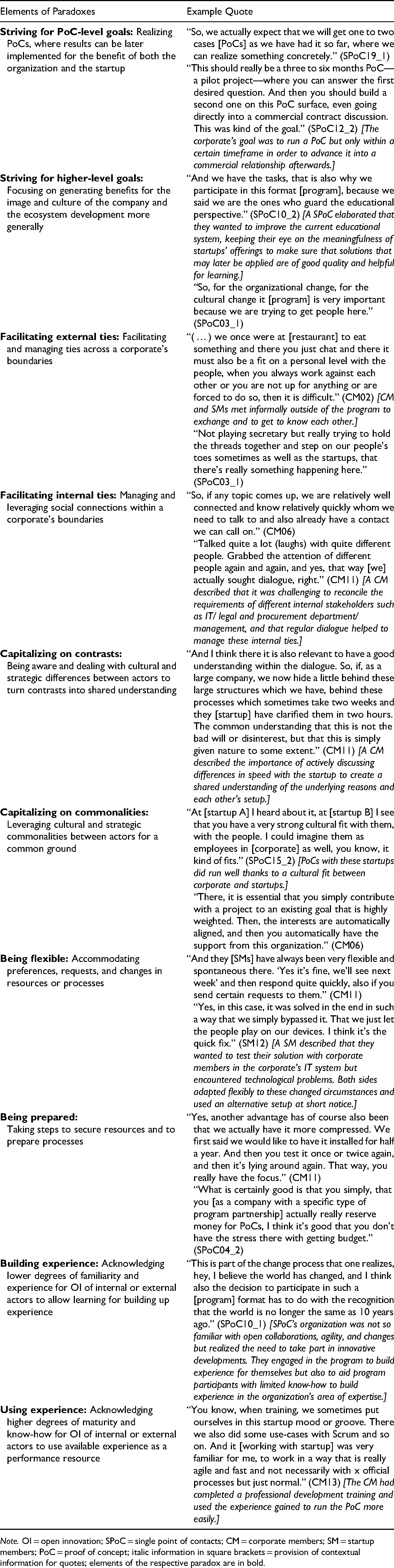
Note. OI = open innovation; SPoC = single point of contacts; CM = corporate members; SM = startup members; PoC = proof of concept; italic information in square brackets = provision of contextual information for quotes; elements of the respective paradox are in bold.
We observed that organizational actors struggled to provide leeway for learning opportunities to build experience while using experience to secure PoC performance. As exemplified above, lower degrees of experience make it harder to perform but create learning opportunities to build experience, while using experience allows performance but can impede learning. This posed a tension for organizational actors, because in the light of both PoC-level (i.e., implementing, performing) and higher-level goals (i.e., learning, developing), they needed to ensure experience was used to implement PoCs while providing learning and development opportunities to build experience.
We identified typical patterns to approach this tension. According to our observations in the interviews, organizational actors tended to proceed with people who had a certain interest, professionalism, and experience, thereby elevating performance over learning opportunities. For example, being aware of different experience stages for CSC across departments, they strategically proceeded with organizational actors from more experienced departments who knew what to do and why, which made it easier to proceed (SPoC12). Similarly, a startup that was experienced in collaborating with corporates offered inputs on potential use-cases, making it easy to proceed (CM06). While this was a typical reaction, we also found instances where organizational actors focused on building experience. For example, when inexperienced startups struggled to understand corporates’ perspectives (e.g., SPoC19, SPoC6), a SPoC informed them about ideas for a use-case (SPoC19).
Developing a Model to Navigate CSC Paradoxes with a Both/And Mindset
In our contextualized interview study, we identified five paradoxical tensions in answer to our first question about organizational actors’ competing CSC demands. We now move beyond these findings and apply the paradox lens (Lewis, 2000; Miron-Spektor et al., 2018; Smith & Lewis, 2011) to develop a propositional, practice-oriented model for how to navigate these paradoxes with a both/and mindset for CSC success, attempting to answer our second question through a process of abductive reasoning (see Figure 3 for theorizing steps).
Developing Guiding Principles for Navigating CSC Paradoxes
In a first step, we translated the paradoxes we had identified into five guiding principles that allow organizational actors to address the five CSC paradoxes. We built on the core assumption of paradox theory that a both/and stance toward paradoxes allows them to be managed successfully (Smith & Lewis, 2011), a perspective supported by anecdotal evidence from our interviews and observations. Thus, we drew on the concept of the both/and mindset (Miron-Spektor et al., 2018; Smith & Lewis, 2011; Smith & Tushman, 2005) to develop five guiding principles. They illustrate how the elements of the respective CSC paradoxes can build on each other, namely through gaining by giving, anchoring exploration, finding common ground in diversity, preparing for flexibility, and implementing while learning. They represent recommendations for how to approach the CSC paradoxes with a both/and mindset to create a dynamic equilibrium within single CSC paradoxes (Smith & Lewis, 2011).
We noticed the paradoxical nature of the CSC demands across the entirety of our interviews, partly being apparent in differing statements across actors, partly as an explicit topic—or not, if an either/or mindset was predominant. In the translation process, we then posed the following question: what would it mean to approach these paradoxes with a both/and mindset? To answer it, we scrutinized each element of the respective paradoxes regarding their value and distinctions from each other and then focused on their interrelation, as under a paradox lens both moves are central to move forward (Miron-Spektor et al., 2018; Smith & Lewis, 2011; Smith & Tushman, 2005).
For instance, we explored the two elements of the goal paradox from a both/and perspective. We observed that “striving for PoC-level goals” was recurringly associated with supporting startups rather than with a corporate's own innovative benefits, emphasizing a “giving” aspect. However, this PoC investment was also expected to generate benefits regarding image, culture, or ecosystem, as represented in “striving for higher-level goals”; thus, it is also associated with “gaining.” While gaining and giving might first seem contradictory, they are interdependent and mutually supporting, which suggested gaining by giving as a guiding principle. Giving as a base for gaining enables continued engagement with startups and the ecosystem despite the uncertain innovation outcomes of PoCs for organizations. This guiding principle might further stimulate discussions about meaningful giving to achieve different desired outcomes, thus supporting innovative outcomes over time.
We applied the same logic to all five paradoxes and describe the guiding principles in Table 2. To illustrate how they might appear in practice, we searched for specific instances as anecdotal evidence. We did so by leveraging our contextualized knowledge (e.g., informal exchanges pointing to usage of the program environment and startups’ fresh perspectives to make internal colleagues curious, engaging them as well—anchoring exploration) and by selectively going back into organizational actors’ thick descriptions in our interviews.
Guiding Principles to Approach Corporate–Startup Collaboration Paradoxes with a Both/And Mindset.
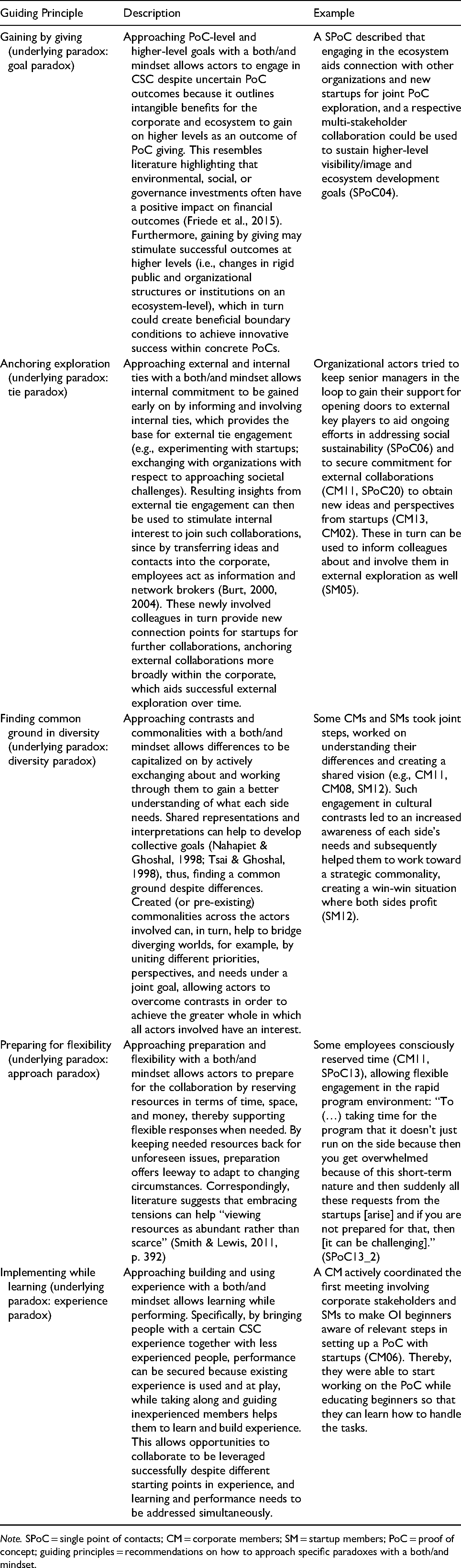
Note. SPoC = single point of contacts; CM = corporate members; SM = startup members; PoC = proof of concept; guiding principles = recommendations on how to approach specific paradoxes with a both/and mindset.
Managing Multiple CSC Paradoxes with the Guiding Principles
Once we had established the guiding principles, next, we needed to understand how they work together to navigate the interplay of multiple CSC paradoxes. In a second step, and moving our analysis from the single paradoxes to the interplay between them, we found it helpful to group the five CSC paradoxes into three collaboration dimensions, namely
In a third step, we applied the lens of knotted tensions (Jarzabkowski et al., 2021; Sheep et al., 2017) to our CSC paradoxes and explored knots between the three dimensions by focusing on the connections between the elements of the respective paradoxes. We describe these knots in the following, understanding them as propositions (see Figure 4 A to C).
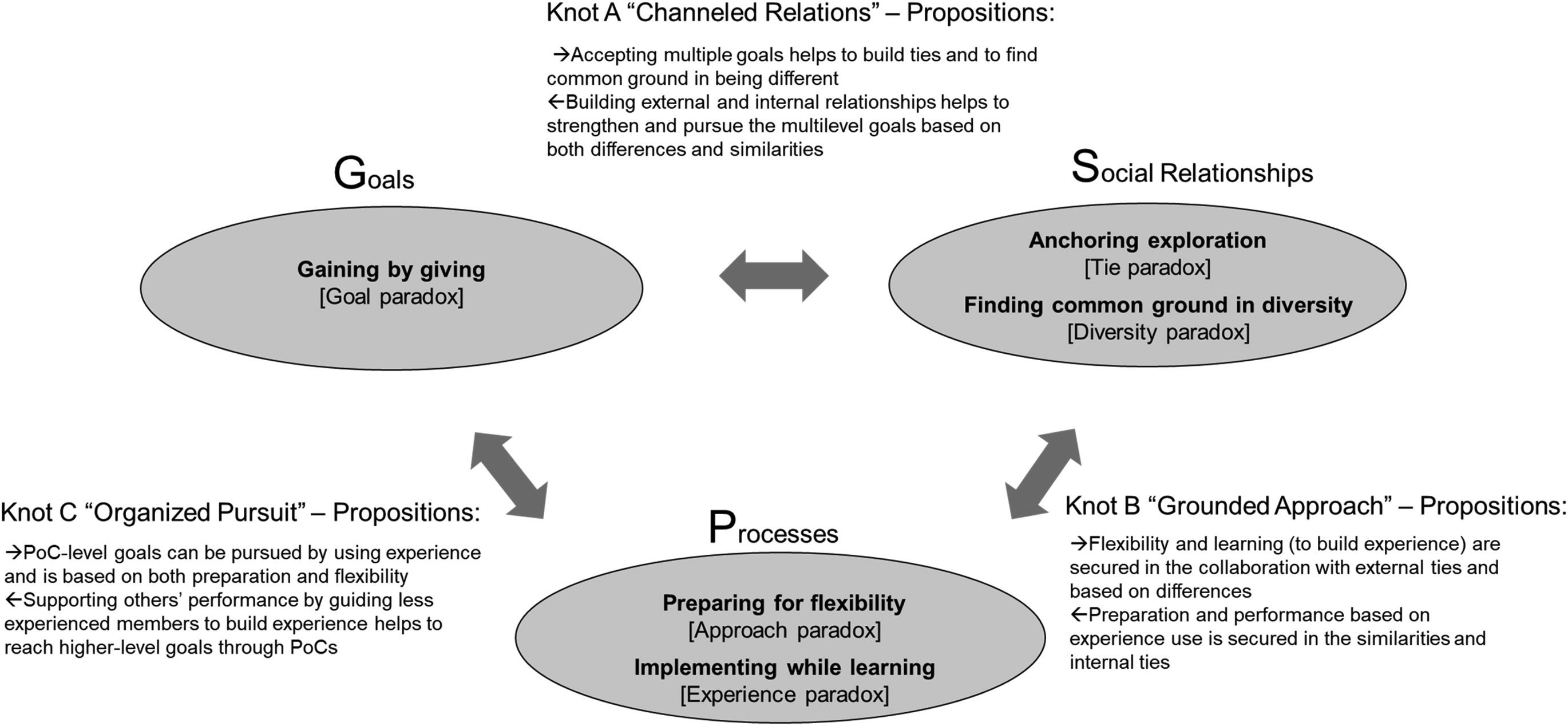
A propositional, practice-oriented GPS model to navigate corporate–startup collaboration paradoxes with guiding principles.
The first knot is labelled “channeled relations” (A) and refers to the links between
The second knot, labelled “grounded approach” (B), refers to the links between
Finally, the third knot “organized pursuit” (C) pertains to the links between
Finally, in a fourth step, in Figure 4 we display our corresponding propositional, practice-oriented
To summarize, we propose that applying the guiding principles can create a dynamic equilibrium within specific CSC paradoxes. Furthermore, through the knots between the paradoxes, the guiding principles can connect and interrelate to create a dynamic equilibrium across CSC, ultimately facilitating CSC. Thus, we suggest that organizational actors understand and approach CSC paradoxes with the defined guiding principles to facilitate a dynamic equilibrium within and across paradoxes, thereby shaping CSC.
Theoretical and Practical Implications
In answer to our first question about competing CSC demands, based on our data we identified five distinct paradoxes in the actual collaborations. Moving beyond them, we followed abductive reasoning steps to tackle our second question about how organizational actors can navigate CSC paradoxes. We translated the paradoxes identified into guiding principles, developing a propositional, practice-oriented model of how the guiding principles enable the effective navigation of the multiple, knotted CSC paradoxes. As we outline in the following, this enhances our theoretical and practical knowledge of CSC in important ways.
Navigating Paradoxes to Co-Create a Better World
Complex global challenges involve multiple stakeholders (Ferraro et al., 2015) and can culminate in paradoxical tensions (Jarzabkowski et al., 2021; Schad & Smith, 2019). Organizations stand amid societal challenges and related paradoxes, both contributing and reacting to them (Ferraro et al., 2015; Jarzabkowski et al., 2021). Increasingly, they acknowledge the importance of working towards a more sustainable future and their own role in it (Frishammar & Parida, 2019) but struggle to change accordingly because they are locked into their current system due to inertia (York & Venkataraman, 2010). Many startups, in turn, embrace social and/or sustainability missions next to pure economics (e.g., circularity; Todeschini et al., 2017; Veleva, 2021). Although restrained in their resources, they are often more passionate about innovating for the greater societal good, rush ahead in doing so, and stimulate corporates to engage as well (Hockerts & Wüstenhagen, 2010). Corporates may provide startups with needed resources, market access, and experience in CSC (Hora et al., 2018; Weiblen & Chesbrough, 2015) while benefitting from spill-over effects for corporate social responsibility goals (Hora et al., 2018). CSC helps to bring experts from both sides together to work on specifications of a startup's sustainable technology, and to jointly test and diffuse respective solutions (Pakura, 2020). However, to do so, organizational actors need to bring these two worlds together well and our study suggests that they may be confronted with the tie paradox (facilitating internal/external ties) when doing so.
Our guiding principle anchoring exploration can help organizational actors to understand how creating an internal support base can provide the substance for CSC. Applying this principle allows synergies to be leveraged to co-create and test societally beneficial solutions. Furthermore, our findings suggest that CSC also means being confronted with knots between several distinct CSC paradoxes. This provides an opportunity to intertwine the guiding principles we developed for the greater societal good. For instance, anchoring exploration secures needed social capital and resources to generate value in concrete PoCs (e.g., testing, developing sustainable solutions), which is based on finding common ground in diversity (e.g., by leveraging differences in setup and similarities in language or background). Such giving on a PoC level, in turn, may allow the broader ecosystem to gain (e.g., first PoC insights and results of societally valuable solutions might stimulate discussions on creating connections between relevant public and private stakeholders to jointly tackle overarching societal issues that cannot be solved alone). As these descriptions exemplify, our guiding principles may support organizational actors to approach CSC paradoxes fruitfully, which might be key to navigating toward positive CSC outcomes to address societal challenges. Thereby, our study adds one important piece to the overarching paradoxical puzzle of solving the complex societal challenges of our time.
Theoretical Implications
Our work advances insights on CSC in important ways. First, in focusing on organizational actors in actual CSC, we expand our knowledge of the competing demands they face. Remneland Wikhamn (2020) studied how change agents involved in CSC maneuver through their paradoxical work life, urging researchers to understand other stakeholders’ CSC engagement as well. With our research, we complement this work and target both SPoCs (resembling these change agents) and also a previously neglected but important group of actors in CSC, namely CMs who actually execute CSC operationally together with startups. Acknowledging both perspectives allowed us to gain in-depth insights on the paradoxical CSC demands they face. Our findings replicate earlier CSC findings, for example, organizational actors were challenged by startup inexperience (Hora et al., 2018; Minshall et al., 2010) and complex internal-corporate processes (Bannerjee et al., 2016). However, going beyond earlier findings, we found that CSC demands can be bundled into five distinct collaboration paradoxes surrounding goals, processes, and social relationships, thereby adding substance and structure to the initial picture of CSC paradoxes identified by Remneland Wikhamn (2020). Our findings suggest that both SPoCs and CMs took a similar stance toward paradoxes by typically focusing on one element to temporarily resolve the tensions. However, according to paradox theory, this can hamper CSC because it cancels out short-term collaboration benefits over time (Lewis, 2000; Smith & Lewis, 2011). In summary, with our study we draw a more nuanced and comprehensive picture of what CSC actually means for the organizational actors involved, contributing to a more fine-grained understanding of their paradoxical reality when enacting CSC (Remneland Wikhamn, 2020).
Second and most importantly, by combining our insights on the CSC paradoxes we identified with developments in the recent paradox literature (e.g., Jarzabkowski et al., 2021; Miron-Spektor et al., 2018; Smith & Lewis, 2011) we go beyond describing these paradoxes. By developing guiding principles and theorizing how they can be used to jointly contribute to more effective CSC through the knots between paradoxes, we shed light on organizational actors’ roles in CSC. Specifically, our insights suggest that organizational actors can shape CSC by applying the guiding principles we developed to create a dynamic equilibrium within single CSC paradoxes, which subsequently helps them to reach a dynamic equilibrium across CSC paradoxes, facilitating positive CSC outcomes. Thereby, we advance insights on how organizational actors may be able to “deliver the ‘fruits’ of OI” (Bogers et al., 2017, p. 13) by positively affecting the strategically envisioned CSC, suggesting that they can do so by first understanding CSC paradoxes through the defined guiding principles and by applying them in a way that they reinforce each other toward CSC effectiveness. With our work, we thus contribute significantly by developing a deeper understanding of the underpinnings of organizations’ strategic OI CSC engagement (Bogers et al., 2017).
Practical Implications
Our findings suggest that individuals are confronted with (at least) five paradoxical tensions when engaging in CSC. Programs that aid cross-boundary collaborations are considered important pillars for supporting participants to understand paradoxical tensions and to deal with them (Lauritzen, 2017; Neudert & Kreutzer, 2021). Correspondingly, program managers can use our overview of CSC paradoxes to sensitize actors from large, participating organizations about the paradoxical demands inherent in CSC and to educate them on the guiding principles. Using the guiding principles as recommended actions could help these actors to understand how the elements of the CSC paradoxes inform each other and how applying them can help to approach these paradoxes. Furthermore, outlining the knots between paradoxes and informing organizational actors how guiding principles can interplay to address multiple CSC paradoxes according to our practice-oriented model might help them to understand the paradoxical demands and potential approaches to manage CSC even better. Additionally, since CMs who execute PoCs might be distributed across the organization and are often involved later on, we encourage organizations interested in CSC to empower organizational actors more broadly in understanding the CSC paradoxes by using the guiding principles and to train them in their application to steer CSC towards success.
Limitations and Future Research
Our research builds on a three-year involvement in a corporate accelerator program. This allowed us to observe interactions between corporates and startups and to familiarize ourselves with the context. Within this setting, we conducted 52 interviews with multiple, corporate internal and -external stakeholders. Thereby, we captured three different perspectives on CSC, providing valuable insights on competing demands in CSC. Nevertheless, our study has some limitations that provide avenues for future research.
First, the results are based on a single corporate accelerator program setting in Switzerland with specific goals and procedures, which most certainly affect the dynamics in CSC. For instance, the program hosted multiple, large organizations, which might accentuate the goal paradox since the importance of higher-level goals might be more evident when private and public stakeholders convene. Also, interestingly, we did not identify the often-discussed paradox of openness between being open versus protective (e.g., Laursen & Salter, 2014) as a critical issue in our setting. This might be because the program provided a safe space, PoCs were protected legally, and the idea of contributing to the ecosystem was heavily emphasized. In addition, the involved startups were mostly later-stage, which might affect the interactions between actors since experience is relevant for CSC. Thus, the generalizability of our findings to other countries and programs remains to be investigated. Future research might extend to other settings such as single-corporate programs or early-stage startup CSC.
Second, in our research, we captured multiple CSC perspectives before and after the program and in different PoC elaboration stages. However, our qualitative approach limits insights into causal relationships. Thus, we suggest that future research may perform an intervention study and train organizational actors in understanding the paradoxes and in adopting our guiding principles. Research could thereby empirically examine if a CSC in which organizational actors apply our defined guiding principles is more successful than a CSC without them. Finally, we focused on the collaborative side from the organizational actors’ perspective, leaving room to disentangle the interplay of paradox management approaches across levels. Our study suggests that organizational actors may shape CSC by approaching CSC paradoxes with guiding principles based on a both/and mindset. However, recent research suggests that a both/and mindset needs to be shared to be impactful (Miron-Spektor & Paletz, 2017; Miron-Spektor et al., 2022). Thus, the potential positive effect of applying guiding principles may depend on a collective understanding within the broader PoC team (i.e., involving SPoCs, CMs, SMs, or actors from legal, IT, or marketing) of how to approach CSC paradoxes. Furthermore, organizational actors’ efforts might be undermined if the firm itself applies an either/or approach at the strategic level. Thus, future research might investigate cross-level contingencies for applying the guiding principles to facilitate CSC. Similarly, future research could investigate if the CSC paradoxes identified appear similarly or differently for SMs and how approaching them might play into their CSC decisions.
Conclusion
Innovations are key to tackling grand challenges (Ahn et al., 2019) and organizations increasingly engage in CSC to leverage complementarities (Veleva & Bodkin, 2018; Weiblen & Chesbrough, 2015). With our work, we provide insights on the paradoxical demands of CSC and suggest that organizational actors approach them jointly with specific guiding principles to leverage such collaborations. Doing so might be key for CSC engagement and therefore for co-creating lasting change and innovation for a better world.
Footnotes
Acknowledgement
We thank our editor, Prof. Dr. Danielle Zandee, the editorial team, and the anonymous reviewers for their valuable and constructive suggestions.
Declaration of Conflicting Interests
The author(s) declared no potential conflicts of interest with respect to the research, authorship, and/or publication of this article.
Funding
The author(s) received no financial support for the research, authorship, and/or publication of this article.
