For the first paper, see CeragioliR. C.. “The debate concerning ‘red’ Sirius”. Journal for the history of astronomy.xxvi (1995). 187–226. I will assume in the present article that the reader is familiar with the details of this paper.
2.
for a previous attempt at a solution, see CeragioliR., “The riddle of red Sirius”, in RugglesC. L. N.SaundersN. J. (eds). Astronomies and cultures (Niwot, Col., 1993). 67–99. The present paper refines that solution (especially as regards Ptolemy) and to seeks to make it known to a wider body of interested scholars.
3.
The translations of all texts in this paper are my own unless otherwise noted. By “brightest” Ptolemy means “the brightest star in the sky”. On this point see ToomerG. J., Ptolemy's Almagest (New York and London. 1984; hereafter: Ptolemy's Almagest), 387 (n. 88) and 405. The Greek text () can be found in HeibergJ. L. (ed.), Claudii Ptolemaei opera quae exstant omnia, i: Syntaxis mathematica.ii (Leipzig, 1903; hereafter: Syntaxisii). 142.
4.
The Greeks and Romans generally did not distinguish the constellation Canis Major from the star Sirius by name, but often called both simply “Dog” (Greek. “”; Latin. “Canis”), as Ptolemy does in the present passage. Occasionally, however, the name normally reserved for the star itself (Greek, “”: Latin. “Sirius” or “Canicula”) was applied to the whole constellation. For more on these difficulties of stellar nomenclature see below, ref. 54.
5.
The translations are Toomer's: See Ptolemy's Almagest. 348 and 374 [= Syntaxis ii. 52 and 114]. “Engonasin” — or to be precise. “ [On-His-Knees]” — was the usual Greek name for the constellation now known as “Hercules”.
6.
Ptolemy's Almagest. 340 (= Syntaxisii. 37].
7.
For Ptolemy's references to the globe, see Almagest 7.4 [= Ptolemy's Almagest. 339; Syntaxisii. 36]; and especially Almagest 8.3 [= Ptolemy's Almagest.404–7; Syntaxisii, 179–85], where he details its construction. At Almagest 8.6 [= Ptolemy's Almagest.417; Syntaxisii. 204] Ptolemy speaks of manipulating the globe to ascertain phases of stars. These data were needed for astrological prognostications concerning the weather.
8.
For the second star catalogue, see Tetrabiblos 1.9, in BollF.BoerÆ. (eds), Claudii Ptolemaei opera quae exstant omnia, iii, 1: ' (Leipzig, 1957), 22–30. An English translation of the Tetrabiblos exists in the Loeb Classical Library series: RobbinsF. E. (ed.), Ptolemy Tetrabiblos (Cambridge, Mass. and London, 1980). The star catalogue can be found at Robbins, op. cit., 46–59. On the relationship between the Almagest and the Tetrabiblos, see Ptolemy's discussion at Tetrabiblos 1.1 [= Boll and Boer, op. cit., 2–3; Robbins, op. cit., 2–5].
At Almagest 7.4 [= Ptolemy's Almagest, 340; Syntaxisii, 37], Ptolemy cites some examples of changes he has made to Hipparchus's constellation shapes.
11.
The globe's obvious limitation as an image of the sky is that it presents the sky mirror-reversed: Users of the globe see the sky as it were from outside the celestial sphere, whereas observers of the real sky see the celestial sphere from inside..
12.
It is applied in the Almagest to all the first magnitude stars whose modern B-V colour index is 1.0 or greater (Aldebaran, Betelgeuse, Pollux, Arcturus, and Antares).
13.
The description of the Milky Way occurs at Almagest 8.2 [= Ptolemy's Almagest, 400–4; Syntaxisii, 170–9]. For the axis and graduated rings see Almagest 8.3 [= Ptolemy's Almagest, 404–7; Syntaxisii, 179–85].
The contradiction will not be stark, because Ptolemy has chosen “pale yellow” or “flaxen” (“”) as his default colour. But it is still strange. Sirius should be coloured the default (like Vega or Rigel), not the of Betelgeuse and Antares.
16.
Ptolemy's Almagest, 4–5. Toomer has been partially anticipated in the notion of interpolation by the Almagest's most recent editor: See HeibergJ. L. (ed.), Claudii Ptolemaei opera quae extant omnia, ii: Opera astronomica minora (Leipzig, 1907), pp. xciii–cix.
17.
On the general format of ancient books, see: ReynoldsL. D.WilsonN. G., Scribes and scholars, 3rd edn (Oxford, 1991), 2–5, and Plate I. For the lengths of some ancient rolls, see ibid., 244–5.
18.
Ptolemy's Almagest, 5 and n. 8: And Heiberg, op. cit. (ref. 16), p. cxlii (n. 2).
19.
Heiberg believed that the chapter divisions were due to the booksellers: See Heiberg, op. cit. (ref. 16), p. cxli. But perhaps the use of terms such as ‘editor’ and ‘bookseller’ are anachronisms. The publication and dissemination of books seems to have been largely unorganized in Antiquity. A more probable scenario for the propagation of a modified Ptolemaic text would envisage the normal mechanism of individual copying: A prominent scholar might make his own privately edited text available to his students or to other scholars for copying. If he were a member of the Alexandrian Museum, he might also deposit a copy of his text in the Museum's library for copying and research. The prestige of the scholar or his edited version's usefulness might guarantee that his text was the one people tended to copy. For useful comments on ancient ‘editions’ see TurnerE. G., Greek papyri (Princeton, 1968), 112–13.
20.
A medieval biographical notice appears in the Suda: AdlerA. (ed.), Suidae lexicon, ii (Leipzig, 1931), 702. 10–16; a modern discussion by ToomerG. J. can be found under “Theon of Alexandria” in GillispieC. C. (ed.), Dictionary of scientific biography, xiii (New York, 1976), 321–25. Concerning scholarship at Alexandria in late Antiquity one may consult, WilsonN. G., Scholars of Byzantium (Baltimore, 1983), 42–49.
21.
See Toomer, op. cit. (ref. 20), 322. For the even more drastic effects of the early Alexandrian scholars on Homer, see the brief account given in ReynoldsWilson, op. cit. (ref. 17), 8–13.
22.
See Heiberg's descriptions of mss. B (Vat. graec. 1594), Vat. graec. 198, and G (Vat. graec. 184) in Heiberg, op. cit. (ref. 16), pp. xxxiv and xxii; and Syntaxisii, p. iii.
23.
Heiberg, op. cit. (ref. 16), pp. xciii–cxxvii, especially pp. cxxvi–cxxvii. It should be noted that Toomer disagrees with Heiberg's suspicion about D: See Ptolemy's Almagest, 3. Nevertheless, both men agree in principle that the Almagest contains numerous interpolations, which is all that matters to my argument.
24.
These can be gleaned from Toomer's “Appendix B” in Ptolemy's Almagest, 661–7. Toomer cites them according to the volume, page, and line number of Heiberg's text: Vol. i [= HeibergJ. L. (ed.), Claudii Ptolemaei opera quae exstant omnia, i: Syntaxis mathematica, i (Leipzig, 1898; hereafter: Syntaxisi)], 225.4; 317.4–5; 319.7; 353.24–354.1; 358.20–21; 385.7; 404.17–18; 417.23; 451.12–13; 475.15–17; 498.8; and vol. ii [= Syntaxisii], 259.4–5; 319.8; 504.20; 526.1.
25.
See i [= Syntaxisi], 72.13–15; 318.11 [not cited in “Appendix B”, but rather at Ptolemy's Almagest, 201 (n. 45)]; and ii [= Syntaxisii], 12.12; 522 (col. 4); 525.23. Note that for “ii, 522” Toomer reads “ii, 520” in error (see Ptolemy's Almagest, 666). At i, 347.16–17, and ii, 260.8, we have significant omissions in the entire Greek manuscript tradition.
Other major interpolations suspected by Toomer include i [= Syntaxisi], 72.13–15 (19 words; note that these are not found in ms. D); 353.24–354.1 (9 words); 451.12–13 (8 words); and 475.15–17 (13 words).
28.
See above at ref. 12 for the stars.
29.
On the ineptitude of the various textual additions, see Ptolemy's Almagest, 5; 219 (n. 5); 245–6 (n. 41); 268–9 (n. 83); 282 (n. 16); etc.
30.
The astrological significance of Sirius's reddishness at rising can be gleaned from a prognostic detailed in Book I, Chapter 23 of Hephaestion of Thebes's astrological treatise: See PingreeD. (ed.), Hephaestionis Thebani apolelesmaticorum libri tres, i (Leipzig, 1973), 73.4–7. This text will be quoted below at ref. 77. It is curious to note that the Suda (op. cit. (ref. 20), 702.13–14) credits Theon of Alexandria with a lost treatise entitled, On the rising of the Dog-star. Such a text, if authentic — and Toomer believes it possibly spurious [see Toomer, op. cit. (ref. 20), 323 (col. 2)] — would suggest an astrological bent in Theon that might be just the sort necessary to add a note concerning Sirius's ‘reddishness’ to the Almagest's star catalogue.
31.
Much ink has been spilt in debating Ptolemy's dependence on a prior catalogue. For an historical review and analysis of the problem, the best single source is GrasshoffG., The history of Ptolemy's star catalogue (New York, 1990), 1–128. For bibliography since Grasshoff, see ShevchenkoM., “An analysis of errors in the star catalogues of Ptolemy and Ulugh Beg”, Journal for the history of astronomy, xxi (1990), 187–201; WdarczykJ., “Notes on the compilation of Ptolemy's catalogue of stars”, ibid., xxi (1990), 283–95; EvansJ., “The Ptolemaic star catalogue” (a review of Grasshoff), ibid., xxiii (1992), 64–68; and SwerdlowN. M., “The enigma of Ptolemy's catalogue of stars”, ibid., xxiii (1992), 173–83.
32.
For ‘red’ Sirius in the Arabic translations see: KunitzschP., Der Almagest die Syntaxis mathematica des Claudius Ptolemäus in arabisch-lateinischer Überlieferung (Wiesbaden, 1974), 230–2 and 320–2.
33.
Dogs were sometimes kept as pets and treated with affection, particularly at a later period in Antiquity (see for example the charming second-century a.d. epitaph for a lap dog called Fly in Anthologia Latinaii, 2.1512). For a useful discussion of dogs in Greek poetry which demonstrates the ambivalent way in which they are treated there, see: LiljaS., “Dogs in ancient Greek poetry”, Commentationes humanarum litterarum, lvi (1976), 1–156, with her results summarized on pp. 126–9. For a more sophisticated discussion of Homeric dogs see: RedfieldJ. M., Nature and culture in the Iliad (expanded edition) (Durham, N.C. and London, 1994), 193–9.
34.
Homer, Odyssey17.290–327.
35.
Homer, Iliad1.225; 6.345: And 22.66–71.
36.
Pseudo-Theocritus, Idyll25.78–79.
37.
Hesiod, Theogony769–73.
38.
For a recent survey of the ancient belief in living stars, see ScottA., Origen and the life of the stars (Oxford, 1991). In philosophical circles the belief was a hallmark of Platonic and Stoic thinking. Aristotle also appears to have accepted it, as did some Christian theologians.
39.
Pliny, Naturalis historia 18.68.270; and Geminus, Isagoge17.26 and 17.31–36 in ManitiusC. (ed.), Gemini elementa astronomiae (Leipzig, 1898), 190 and 192–4. Geminus (probably first century b.c.) is here arguing against the idea of “effluences”, but his statements show it to have been a wide-spread belief. Part of Geminus's text is quoted and translated at ref. 53 below.
40.
Aratus, Phaenomena332–5; the scholia in MaassE. (ed.), Commentariorum in Aratum reliquiae (Berlin, 1958), 408.19–21 and 27–28; Germanicus, Aratea336–339; and Avienus, Phaenomena734–741.
41.
In RodgersR. H. (ed.), Palladii Rutili Tauri Aemiliani viri inlustris opus agriculturae, etc. (Leipzig, 1975), 168.3–12. Several of the longer Greek and Latin texts quoted in this paper appear only in translation, so as not to lengthen the paper unduly. The originals of these texts can easily be found in modern editions.
42.
Aristotle, Historia animalium9.49B (633a. 12–16); Pliny, Naturalis historia 10.45.87 and 18.69.292; Oppian, Cynegetica3.314–325; and Aristophanes of Byzantium, Historiae animalium epitome 2.244 in LambrosS. P. (ed.), Supplementum Aristotelicum.i, 1 (Berlin, 1885), 90.5–11. The text of Oppian will be quoted below.
43.
For the oryx see Pliny, Naturalis historia 2.40.107, and Aelian, De natura animalium7.8. For the goats see Plutarch, De sollertia animalium21 (974F).
44.
Homer, Iliad22.31.
45.
Soranus of Ephesus, Gynaecia2.55 [124] in IlbergJ. (ed). Corpus medicorum graecorum, iv (Leipzig. 1927), 91–92.
46.
Aristotle, Historia animalium8.20 (602b.21–23); Theophrastus. De causis plantarum5.9.1; Hesychius. s.v. and in SchmidtM. (ed.), Hesychii Alexandrini lexicon, i (Halle. 1858; reprint Amsterdam, 1965), 307, #7909–10; and Etymologicum magnum, s.v. in GaisfordT. (ed). Etymologicum magnum (Oxford, 1848; reprint Amsterdam. 1962), 159.33–35.
47.
Translation of Goold in GooldG. P. (ed.), Manilius Astronomica (Cambridge, Mass. and London, 1977), 316–19.
48.
Hesychius, s.v., in op. cit. (ref. 46), iv (Halle, 1862; reprinted Amsterdam, 1965), 17, #345; Plutarch, Quaestiones convivales3.10 (658B); and the scholia vetera to Hesiod, Works and days417a in PertusiA. (ed). “Scholia vetera in Hesiodi opera el dies”, Pubblicazioni dell Università Cattolica del S. Cuore, liii (n.s.) (Milan, 1955), 143; the scholia to Lycophron, Alexandra 397 in ScheerL. (ed.), Lycophronis Alexandra, ii: scholia (Berlin. 1958), 148.6–11 and 148.18–19; and the Orphic Argonautica120–1.
49.
Images of Canis Major with a solar crown will be discussed further and illustrated below. For images of the Sun-god with a crown see JaegerB. (redactors). Lexicon iconographicum mythologiae classicae, iv/2 (Zürich and Munich, 1988), 366–85; and ibid., v/2 (Zürich and Munich, 1990), 631–57. See also Virgil. Aeneid12.162–164, which depicts King Latinus's brow as encircled by golden rays, “the mark of his grandfather, the Sun [Solis avi specimen]”.
50.
“Sed secundum physiologicos, idcirco <canis> caloris sidus putatur, quod id animal igneam vim habet: Nam quod natura inimicum umorem habeat, propterea fieri ut aegre aquam hauriat ad restinguendam sitim: Nam ideo cos, qui rabidi canis morsu continguntur. aquam refugere et, ni cito subveniatur, perire siti, quia virus eius animalis. quod contrarium umori sit. similiter in corpore humano saeviat”, in ThiloG.HagenH., Servii Grammatici qui feruntur in Vergilii carmina commentarii.ii (Leipzig, 1884; reprinted Hildesheim, 1961), 423.9–14. It should be noted that Thilo and Hagen's text does not read “poison” (Latin, “virus”) in this passage but offers instead the mss. reading “nifus”, a corrupt nonsense word. “Virus” is the emendation of Barthius and should be accepted. The ancients believed that human rabies was a kind of poisoning produced by the venomous saliva which rabid dogs inoculated into their victims. “Virus” was the Latin term lor this venomous saliva: See Celsus. De medicina 5.27.2B. 51. Suitable texts include Celsus, De medicina 5.27.2; Pseudo-Alexander of Aphrodisias, Problemata 1.76 (quoted below); Philumenus, De venenatis animalibus eorumque remediis1–4 in WellmanM. (ed.), Corpus medicorum graecorumx/1.1 (Leipzig, 1908), 4–9; and CaeliusAurelianus, Celerum vel acutarum passionum libri tres3.9.98–3.14.117, in DrabkinI. E., Caelius Aurelianus on acute diseases and on chronic diseases (Chicago, 1950), 360–75.
51.
“”, in IdelerJ. L. (ed.), Physici et medici graeci minores (Berlin, 1841; reprinted Amsterdam, 1963), 24. It should be noted that Ideler's text does not read “withered []”, but instead the nonsense word “”. This appears to be a typographical error. Renaissance editions read “”, a recognized verb meaning “to be weak” or “to be withered.” Accordingly, I have adopted “” in place of Ideler's meaningless text.
52.
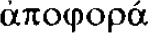
For Sirius's “effluence” as the cause of summertime heat, see Geminus, Isagoge17.26: “For everyone assumes that the star has a peculiar power and is the cause of the intensification of summertime heat, when it rises with the Sun []”, in Manitius, op. cit. (ref. 39), 190.12–15. At Isagoge 17.33 Geminus specifies this “peculiar power []” more closely as an “effluence []”; see Manitius, op. cit., 192.27. For rabies's greatest incidence at Sirius's rising, see Pliny, Naturalis historia 2.40.107, and the scholia to Aratus, Phaenomena 27 in Maass, op. cit. (ref. 40), 345.7–8. One late ancient source (early to mid-sixth century a.d.) directly states that Sirius caused the disease: See LydusLaurentius loannes, De mensibus 4.114.
53.
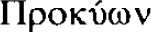
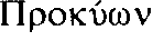
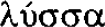
I say “Sirius/Canis Major” because as noted above the ancients regularly did not distinguish Canis Major from Sirius by name. In fact, Ptolemy, Hipparchus, and Geminus seem never to use the word “Sirius” at all, but always call the star only “Dog” (Greek, “”). Geminus, Isagoge3.14 [in Manitius, op. cit. (ref. 39), 40.22–42.3] even says: “The bright star on the mouth of the Dog … is called ‘Dog’ according to the same name as the whole constellation []”. So too Canis Minor and Procyon are never distinguished by name in Antiquity, but again Geminus says that both are called by the same name, “Procyon” (Greek, “”): See Geminus, ibid., 40.21–22. This makes a certain sense, since both Sirius and Procyon are so much brighter than the other stars in their respective constellations that they tended to assume the role of the entire constellation. And to complicate matters further, there was even a tendency toward not distinguishing Procyon/Canis Minor from Sirius/Canis Major. For example Galen, In Hippocratis epidemiarum libros I et II1.1.17 [in WenkebachE.PfaffF. (eds), Corpus medicorum graecorumv, 10.1 (Leipzig and Berlin, 1934), 12.28–30], tries to distinguish Sirius from Canis Major by calling Canis Major “ [Dog]” and Sirius “ [Procyon]”. See also Hyginus, De astronomia2.36: “it (i.e. Procyon/Canis Minor) is reckoned into all the same stories as the preceding Dog (i.e. Sirius/Canis Major) [isdem omnibus historiis quibus superior Canis adnumeratur]”, in Le BŒuffleA., Hygin l'astronomie (Paris, 1983), 78. This statement is quite false to judge from our surviving myth texts, where Procyon/Canis Minor almost never appears. But it shows how closely linked — perhaps almost fused — the two dogs were in Hyginus's mind. This is hardly surprising since Procyon takes its name and identity from the fact that at the latitude of Greece and Rome it rises before (i.e. “Pro-”) Sirius/Canis Major (“Cyon” = “”). “Procyon” therefore means “the (bright) star that rises before the Dog”. Thus, Procyon's identity depends wholly on Sirius itself. Procyon is merely a lesser doublet of Sirius. If, in the remainder of the present paper, I fail to maintain a rigid distinction between Sirius and Canis Major, or Procyon and Canis Minor, or even Sirius/Canis Major and Procyon/Canis Minor, the reader should not be alarmed. The ancient evidence points to a fusion in their identities.
54.
For recent discussions of the manuscript see VerkerkC. L., “Aratea: A review of the literature concerning ms. Vossianus lat. q. 79 in Leiden University Library,”Journal of medieval history, vi (1980), 245–87; and KatzensteinR.Savage-SmithE., The Leiden Aratea: Ancient constellations in a medieval manuscript (Malibu, Calif, 1988).
55.
Photographs of the miniatures have been published by KoehlerW.MütherichF. (eds), Die karolingischen Miniaturen, iv (Text und Tafeln) (Berlin, 1971).
56.
Verkerk, op. cit. (ref. 55), 260–6.
57.
For the Farnese statue see SchlachterA., Der Globus (Leipzig and Berlin, 1927), 43; and KarusuS.GislerJ.-R.el at. (redactors), Lexicon iconographicum mythologiae classicae, ii/l (Zürich and Munich, 1984), 926. For descriptions of other Sirius coins from Ceos, see HeadB. V., Historia nummorum, 2nd edn (Oxford, 1911), 482–4. For a larger selection with photographs, see WrothW., A catalogue of the Greek coins in the British Museum, ix (London, 1886), 89–97 and Plates XXI and XXII. And for a coin depicting the Sun-god surrounded by very similar rays, see “Helios 247” in JaegerB., op. cit. (ref. 49), v/2, 644 showing an Aeginetan half drachma from 350–300 b.c. For other such representations of the Sun-god, see ref. 49 above.
Ibid., 130. See also KoehlerMütherich, op. cit. (ref. 56), Tafel 69a for another depiction of Sirius/Canis Major, this time from Codex Harleianus 647. Note the sharp fangs in Sirius/Canis Major's mouth which are absent from the same manuscript's depiction of Procyon/Canis Minor, ibid., Tafel 73b.
60.
ChantraineP., Dictionnaire étymologique de la langue grecque: Histoire des mots, iii (Paris, 1974), (s.v.) 651–2; LincolnB., “Homeric : ‘Wolfish Rage’”, Indogermanische Forschungen, lxxx(1975), 98–105; and idem, Death, war, and sacrifice (Chicago and London, 1991), 131–7.
61.
For the heat of wolves, see Plutarch, Quaestiones convivales2.9 (642C). For Sirius's ability to dissolve bones, see Pseudo-Hesiod, Scutum151–3; and for Sirius's ability to dissolve other bodies, see Isidore of Seville, Etymologiae3.71.14.
62.
Manilius, Astronomica5.208 (quoted above at ref. 47) in fact says of Sirius that it “raves with its own fire”. “Raves” translates the verb derived from Latin rabies, i.e. ‘madness’. So for Manilius, the Dog-star is in effect a fiery mad dog.
63.
This description appears to derive from a natural history attributed to the Alexandrian scholar Aristophanes of Byzantium (late third century b.c.), which survives in epitome: See Aristophanes of Byzantium, Historiae animalium epitome, op. cit. (ref. 42).
64.
Manilius refers here to Sirius's acronychal rising in December and heliacal setting in May. For Sirius's redness and the season's coldness, compare the Assyrian inscription quoted below at ref. 78.
65.
Goold's translation in Goold, op. cit. (ref. 47), 34–37.
66.
Already in archaic Greece it was believed that the stars remain in the sky during the day and do not simply vanish. See Hesiod, Works and days417–419: “For then [i.e. after the dog days] the star Sirius travels less over the heads of death-bound humans during the day, and takes more enjoyment from the night”.
67.
In Greek sources the name is given as “Icarius”: See e.g. Aelian, De natura animalium7.28; and Nonnus, Dionysiaca, 47.35ff.
68.
Hyginus says that the dog was “Procyon”. However, in other texts (to be quoted below) this story explicitly belongs to Sirius. Again we have evidence for the fusion in identity between Sirius/Canis Major and Procyon/Canis Minor. I shall treat Hyginus's account as applying to the Heavenly Dog which for convenience I call “Sirius”. It should be clear by now that I do not consider Sirius and Procyon to be distinct mythic entities: See ref. 54 above.
69.
In le BŒuffle, op. cit. (ref. 54), 23–27.
70.
The verb that Hyginus uses to describe Maera's self-sacrifice is parento, which literally indicates the performance of the Parentalia, a Roman sacrifice in honour of dead parents or relations. Thus Hyginus represents Maera as fulfilling the demands of pietas (that is, “dutifulness to parents”), the highest Roman virtue, in the highest possible degree by sacrificing its most valuable possession — its own life — for its mistress. Here we see the tame goodness of Sirius to the utmost degree. The ancients marvelled at Maera's self-sacrifice: See Aelian, De natura animalium 7.28. The name “Maera” derives from the Greek verb marmaíro [], meaning “to flash” or “to glitter”. Thus even on Earth Maera, the “flashing one”, anticipates its future role as the famous “flashing” Dog-star. For more on Sirius's scintillation in ancient folklore, see below.
71.
Zeus's cult title “Icmaean” (also spelled “Icmian”) indicates “Zeus of Moisture”. See CookeA. B., Zeus, iii, Part 1 (Cambridge. 1940), 265–271.
72.
In PfeifferR. (ed.), Callimachus, i: Fragmenta (Oxford, 1949), 79–80.
73.
“… …”, in WendelC. (ed). Scholia in Apollonium Rhodium vetera (Berlin, 1935), 168.8–12.
74.
On the cult fusion of Zeus and Aristaeus see the scholia vetera 2.498–527b in Wendel, op. cit. (ref. 74), 169.13–14. See also Pindar, Pythian 9.62–65 (Snell-Maehler).
75.
Diodorus of Sicily. 4.82.1–3.
76.
“… ”, in PingreeD. (ed). op. cit. (ref. 30), 73.4–7. My previous translations of this sentence have contained an error [see Ceragioli, op. cit. (ref. 1), 208, and op. cit. (ref. 2), 94]. I misunderstood the words “” as applying to the Nile, although this involved impossible syntax. Pingree has punctuated his text of the epitome of Hephaestion to show that he takes these words with “” [see PingreeD., Hephaestionis Thebani apotelesmaticorum epitomae quattuor (Leipzig, 1974), 185.18–21]. The sentence then appears to mean that if Sirius “passed through []” the atmosphere with its “colour” or “character []” “like waves” or “like the current []” [of the Nile itself?]”, etc. Apparently, if Sirius appeared like mighty flood, then the Nile was supposed to follow suit.
77.
Germanicus, Aratea339–40: “No star pleases a farmer more or less, and it is observed from its first rising [nullo gaudet maiusue minusue/agricola et sidus primo speculatur ab ortu]”. And GraysonA. K., Assyrian royal inscriptions, ii (Wiesbaden, 1976), 55: “At the time of cold, frost, (and) ice, at the time of the ascension of Sirius when it is red like molten copper, he [arranged] (and) formed herds of… gazelles, etc”.
78.
For example. NewcombS., The stars (New York and London, 1901), 122; MartinM. E., The friendly stars (New York and London, 1907), 110; and ServissG. P., Astronomy with the naked eye (New York and London, 1908), 43. For a photograph of the effect see Sky & telescope, lxxviii (1989), no. 2, 154.
79.
“[″H] ”, in Maass, op. cit. (ref. 40), 407.22–26. On Sirius's red flashes see also a text ascribed to the Venerable Bede (De signis coeli33, in Maass, op. cit. (ref. 40), 590): “Canis Major, which rises after Orion. It has one gleaming star on its tongue, which they call ‘Sirius’ and ‘Dog’, which reddens much and at intervals changes colours… [Canicula, quae oritur post Orionem. Habet stellam splendidam in linguam I, quam Syrium et Canem vocant, rutilantem multum et per intervalla colores inmutantem…]”.
80.
“”, in Maass, op. cit. (ref. 40), 408.3–7.
81.
ChantraineP., op. cit. (ref. 61), vi/l (Paris, 1977), 994 (s. v.) and the bibliography he cites.
82.
“”, in Wendel, op. cit. (ref. 74), 170.18–171.1.
83.
“ …”, in SturzF. W. (ed.), Etymologicum graecae linguae Gudianum (Leipzig, 1818), 497.50–56.
84.
Clearly this means “in the summer”.
85.
“”, in Gaisford, op. cit. (ref. 46), 710.25–27. The last five words [“ (and to stick … mouths)”] are found in only one of Gaisford's mss.
86.
is the perfect active infinitive of the verb , which means in the first instance “to grin and show the teeth”. It is properly used to describe the open mouths of dogs: See Aristophanes, Wasps901; and the scholia to the line, in DübnerFr., Scholia graeca in Aristophanem (Paris, 1877; reprinted Hildesheim, 1969), 155 (col. 2), lines 7–10.
87.
“”, in Pseudo-Eratosthenes, Catasterismi33. See OlivieriA. (ed.), Mythographi graeciiii, l: Pseudo-Eratosthenis Catasterismi (Leipzig, 1897), 40.9–11.
88.
For the evidence see Ceragioli, op. cit. (ref. 1).
For the importance of astrology under the Roman Empire, see BartonT., Ancient astrology (London and New York, 1994), 38–52.
93.
Servius on Virgil, Georgics 4.424 in ThiloHagen, op. cit. (ref. 50), iii (Leipzig, 1887; reprinted Hildesheim, 1961), 352.25–27; and LaurentiusLoannes Lydus, De mensibus 4.114.
94.
ScullardH. H., Festivals and ceremonies of the Roman republic, (Ithaca, N.Y., 1981), 108–10.
95.
KnottD. R., The wheat rusts — breeding for resistance (Berlin and New York, 1989), 6–8 and frontispiece, showing a colour photograph of leaf and stem rust on wheat plants. 97. “… quo sidere moto/tosta sitit tellus, praecipiturque seges”: Ovid, Fasti 4.939–940. Frazer's translation slightly adapted, from Sir FrazerJ. G., Publii Ovidii Nasonis fastorum libri sex, i (London, 1929), 243. Ovid's astronomy is in error when he speaks of Sirius “rising” in late April. He should refer to it as “setting”: See Frazer's commentary on the passage in op. cit., iii (London, 1929), 404–5. My previous translation of these lines contained some errors: See Ceragioli, op. cit. (ref. 2), 95.
96.
(1) “Catularia porta Romae dicta est, quia non longe ab ea ad placandum caniculae sidus frugibus inimicum rufae canes immolabantur, ut fruges flavescentes ad maturitatem perducerentur”, in LindsayW. M., Sexti Pompei Festi de verborum significatu quae supersunt cum Pauli epitome (Leipzig, 1913), 39.13–16; and (2) “Rutilae canes, id est non procul a rubra colore, immolantur, ut ait Ateius Capito, canario sacrificio pro frugibus deprecandae saevitiae causa sideris caniculae”, in Lindsay, op. cit., 358.27–30.
97.
RichardsonL.Jr, A new topographical dictionary of ancient Rome (Baltimore and London, 1992), 301–2. The name “Catularia” appears to derive from Latin ‘catulus’ (‘puppy’), which seems a peculiar name for a city gate. It has been suspected that Catularia might instead derive from the family of the Catuli, prominent Republican nobles, who may have built or rebuilt the gate. See Richardson, op. cit. On the other hand, Festus's epitome of Flaccus explicitly states that the gate was named from the sacrifice of dogs. 100. AugustineSt, Enarrationes in psalmos77.27; and LoeweG.GoetzG. (eds), Corpus glossariorum latinorum, ii (Leipzig, 1888; reprinted Amsterdam, 1965), 556.51.





 ) can be found in
  ”; Latin. “Canis”), as Ptolemy does in the present passage. Occasionally, however, the name normally reserved for the star itself (Greek, “
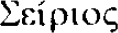 ”: Latin. “Sirius” or “Canicula”) was applied to the whole constellation. For more on these difficulties of stellar nomenclature see below, ref. 54.
 [On-His-Knees]” — was the usual Greek name for the constellation now known as “Hercules”.
 (
(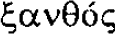 ”) as his default colour. But it is still strange. Sirius should be coloured the default
 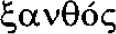 (like Vega or Rigel), not the
  of Betelgeuse and Antares.
 and
and  in
in  in
in 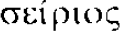 , in
, in 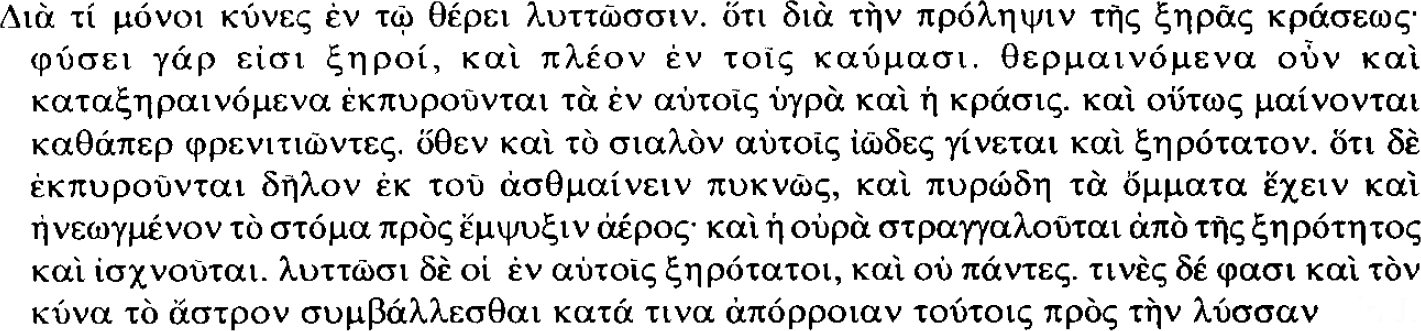 ”, in
”, in  ]”, but instead the nonsense word “
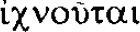 ”. This appears to be a typographical error. Renaissance editions read “
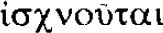 ”, a recognized verb meaning “to be weak” or “to be withered.” Accordingly, I have adopted “
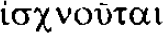 ” in place of Ideler's meaningless text.
 ]”, in
  ]” more closely as an “effluence [
 ]”; see
  ”). Geminus,
  ]”. So too Canis Minor and Procyon are
  ”): See
  [Dog]” and Sirius “
 [Procyon]”. See also
  ”). “Procyon” therefore means “the (bright) star that rises before the Dog”. Thus, Procyon's identity depends wholly on Sirius itself. Procyon is merely a lesser doublet of Sirius. If, in the remainder of the present paper, I fail to maintain a rigid distinction between Sirius and Canis Major, or Procyon and Canis Minor, or even Sirius/Canis Major and Procyon/Canis Minor, the reader should not be alarmed. The ancient evidence points to a fusion in their identities.
 )
) 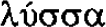 : ‘Wolfish Rage’”
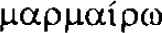 ], meaning “to flash” or “to glitter”. Thus even on Earth Maera, the “flashing one”, anticipates its future role as the famous “flashing” Dog-star. For more on Sirius's scintillation in ancient folklore, see below.
 …”, in
  ”, in
”, in  ” as applying to the Nile, although this involved impossible syntax. Pingree has punctuated his text of the epitome of Hephaestion to show that he takes these words with “
 ” [see
  ]” the atmosphere with its “colour” or “character [
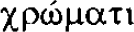 ]” “like waves” or “like the current [
 ]” [of the Nile itself?]”, etc. Apparently, if Sirius appeared like mighty flood, then the Nile was supposed to follow suit.
 ”, in
”, in  ”, in
”, in 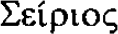 ) and the bibliography he cites.
 ”, in
”, in  …”, in
 ”, in
”, in  (and to stick … mouths)”] are found in only one of Gaisford's mss.
 is the perfect active infinitive of the verb
 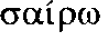 , which means in the first instance “to grin and show the teeth”. It is properly used to describe the open mouths of dogs: See Aristophanes,
  ”, in Pseudo-Eratosthenes,