The translations of all texts in this paper are my own unless otherwise noted. By ‘brightest’ Ptolemy means ‘the brightest star in the sky’. See ToomerG. J., Ptolemy's Almagest (New York, 1984; hereafter cited as Toomer), 387, 405 and note 88. The Greek text (‘’) can be found in HeibergJ. L. (ed.), Claudii Ptolemaei opera quae exstant omnia, i: Syntaxis mathematica, ii (Leipzig, 1903; hereafter cited as Heiberg), 142. For a discussion of Ptolemy's term ‘reddish’, see below in the text at ref. 39.
2.
A full bibliography of red Sirius would contain about one hundred items. Since 1970 alone there have been nearly forty discussions. See refs 112, 113, and 115 for recent bibliographic samples.
3.
I have already published work on this solution elsewhere. See CeragioliRoger, ‘The riddle of red Sirius’, in RugglesC. L. N.SaundersN. J. (eds), Astronomies and cultures (Niwot, Col., 1993), 67–99.
4.
See the remarks of SteffeyP., ‘Red Sirius silliness’, Sky and telescope, lxxxiv (1992), 246, quoted below at ref. 123.
5.
FernieJ. D., ‘Bloody Sirius’, American scientist, lxxvii (1989), 429–31, p. 430, remarks that astrophysics has ‘bent over backward to accommodate a historically red Sirius’.
6.
For al-Farghānī's text and a Latin translation see GoliusJ. (ed.), Muhammedis fil. Ketiri Ferganensis, qui vulgo Alfraganus dicitur, elementa astronomica, Arabicè et Latinè (Amsterdam, 1669), 74.
7.
For al-Sūfī's text and a French translation see SchjellerupH. C. F. C. (ed.), Description des étoiles fixes (St Petersburg, 1874; reprinted Frankfurt am Main, 1986), 217–22.
8.
For Schmidt's career see AshbrookJ., The astronomical scrapbook (Cambridge, Mass., 1984), 251–8. For his colour observations see ClerkeA. M., The system of the stars (London and New York, 1890), 147. On the subject of star colours and visually observing them, see SteffeyP. C., ‘The truth about star colors’, Sky and telescope, lxxxxiv (1992), 266–73, p. 268; and LundmarkK., ‘Luminosities, colours, diameters, densities, masses of the stars’, in Handbuch der Astrophysik, v/1: Das Sternsystem (Berlin, 1932), 363–88, pp. 371–5 and 383–6 for the difficulties involved.
9.
For the discussion of Sirius in Antiquity see von DyckW.CasparM. (eds), Johannes Kepler: Gesammelte Werke, vii: Epitome astronomiae Copernicanae (Munich, 1953), 3.5, pp. 235–41; for the colours see ibid., ii: Astronomiae pars optica (Munich, 1939), 6.12, p. 229: ‘Canis, omnes successive colores iridis [induit]…. Canis, cujus est crystallinus color…’.
10.
‘Bonā fide, vidisti umquam Caniculam, Seneca? Ego saepè: Et flammam ejus argenteo fulgori, aut adamanti propiorem, quàm pyropo’, in LipsiusJ. (ed.), L. Annaei Senecae philosophi operaquae extant omnia3rd edn (Antwerp, 1632), 683–4, note 48.
11.
For some recent writers proposing these explanations, see: MoorePatrick, The new guide to the stars (New York, 1974), 118; idem, Astronomers' stars (New York and London, 1989), 57; and Steffey, op. cit. (ref. 4).
12.
For al-Sūfī's complaint about the deceptiveness of his predecessors, see Schjellerup (ed.), Description (ref. 7), 29ff. For his statement of Ptolemy's procedure, see ibid.42. For Tycho's discussions see DreyerJ. L. E. (ed.), Tychonis Brahe Dani opera omnia, ii: Astronomiae instauratae progymnasmata (Copenhagen, 1915), 150–1; and iii: Stellarum octavi orbis inerrantium accurata restitutio (Copenhagen, 1916), 335–7. Modern discussions of the star catalogue's errors can be found in Toomer, 14–16; and PetersC. H. F.KnobelE. B., Ptolemy's catalogue of stars (Washington, D.C., 1915), 7–15.
13.
For the Tetrabiblos's description of Sirius, see Tetrabiblos 1.9.21, in BollF.BoerA. (eds), Claudii Ptolemaei opera quae exstant omnia, iii/1: AΠOTEAEΣMA TIKA (Leipzig, 1957), 29, lines 12–13.
14.
I quote only three sources for Sirius's redness in this paper. Others can be found in Ceragioli, op. cit. (ref. 3), 88–94 and footnote 39.
15.
BarkerT., ‘Remarks on the mutations of the stars’, Philosophical transactions of the Royal Society, li (1760), 498–504.
16.
The last two claims are mistaken. On the first claim, seeToomer, 386, note 85.
17.
‘To/’, in MaasE. (ed.), Arati Phaenomena2nd edn (Berlin, 1955), 20. Barker's text errs in leaving out the word ‘his (oί)’. All of his quotations are in the original languages without accompanying English translation.
18.
‘…’, in Maas (ed.), op. cit. (ref. 17), 20–21.
19.
‘Namque pedes subter rutilo cum lumine claret / feruidus ille Canis stellarum luce refulgens’, in SoubiranJ. (ed.), Cicéron: Aratea, fragments poétiques (Paris, 1972), 172.
20.
‘seu rubra Canicula findit / infantis statuas’, in WickhamE. C.GarrodH. W. (eds), Q. Horati Flacci opera2nd edn (Oxford, 1901).
21.
MalinD.MurdinP., Colours of the stars (Cambridge, 1984), 88–91, p. 88.
22.
‘persta et obdura, seu rubra Canicula findet / infantis statuas, seu pingui tentus omaso / Furius hibernas cana nive conspuet Alpis’, in WickhamGarrod (eds), op. cit. (ref. 20).
23.
‘Nec mirum est, si terrae omnis generis et varia evaporatio est, dum in caelo quoque non unus appareat color rerum, sed acrior sit Caniculae rubor, Martis remissior, Iovis nullus in lucem puram nitore perducto’, in CorcoranT. H. (ed.), Seneca: Naturales quaestiones, i (Cambridge, Mass. and London, 1971), 18–19.
24.
‘Sed Canis habet … in capite … alteram, quam Isis suo nomine statuisse existimatur et Sirion appellasse propter flammae candorem, quod eius modi sit ut praeter ceteras lucere videatur; itaque, quo magis earn cognoscerent, Sirion appellasse’, in ViréGh. (ed.), Hygini de astronomia (Stuttgart and Leipsig, 1992), 83–84.
25.
LalandeJ.-J., Astronomie1 st edn, i (Paris, 1764), 212, and 3rd edn, i (Paris, 1792), 267; and BaillyJ.-S., Histoire de l'astronomie moderne, nouvelle édn, ii (Paris, 1785), 704–11, especially p. 707.
26.
For Lalande's explanations see op. cit. (ref. 25), 3rd edn, i, 267–8. Bailly had already critiqued these ideas in op. cit. (ref. 25), 698–704. For Schubert's remarks see SchubertF. T., Populäre Astronomie, i (St Petersburg, 1804), 273; and iii (St Petersburg, 1810), 132–3.
27.
‘Welche totale Revolution muß auf dieser Sonne, oder wenigstens in ihrer Atmosphäre vorgegangen seyn! und welche nochweit größre Katastrophe müssen diejenigen Sterne erlitten haben, deren Stelle am Himmel nicht mehr gefunden wird, deren Feuer also erloschen ist, wenn man nicht den Untergang ganzer Sonnensysteme annehmen will’, Schubert, op. cit. (ref. 26), iii, 132–3.
28.
HerschelJ. F. W., ‘Brief des Baronets’, Astronomische Nachrichten, xvi (1839), no. 372, cols 187–90, cols 187–8.
29.
See BruhweilerF. C.KondoY.SionE. M., ‘The historical record for Sirius: Evidence for a white-dwarf thermonuclear runaway?’, Nature, cccxxiv (1986), 235–7, p. 236; and Bonnet-BidaudJ. M.GryC., ‘The stellar field in the vicinity of Sirius and the color enigma’, Astronomy and astrophysics, cclii (1991), 193–7, p. 194.
30.
See ref. 1. Others also called it brightest: Hyginus, De astronomia2.35 (see ref. 24); Manilius, Astronomica1.410–11 (see ref. 71).
31.
See Bonnet-BidaudGry, op. cit. (ref. 29); idem, ‘L'énigme de la couleur de Sirius’, Recherche, xxiii (1992), no. 239, 105–7, p. 107; and MutzS. B.WyckoffS., ‘Preliminary results from a search for a nebula in the vicinity of Sirius’ (abstract), Bulletin of the American Astronomical Society, xxiv (1992), 1301. In the same articles, Bonnet-Bidaud and Gry also suggest that a putative third member of the Sirius system in a high-eccentricity orbit could occasionally pass close enough to the main pair to draw off an envelope of matter that could act as the absorbing agency.
32.
‘Tout bien examiné, tout bien pésé, il semble done que Sirius était jadis rougeâtre, et qu'en moins de 2000 ans il est passé de cette teinte au blanc le moins équivoque’, from Annuaire du Bureau des Longitudes1842, 353. This was unavailable to me, but SchiaparelliG. V. quotes these words in his article, ‘Rubra Canicula’, Atti dell'i. R. Accademia di Scienze Lettere ed Arti degli Agiati di Rovereto, iii/2/2 (1896), 1–37, p. 4; reprinted in his Scritti sulla storia della astronomia antica, i/2 (Bologna, 1926), 181–211, p. 183.
33.
BailyF., ‘The catalogues of Ptolemy, Ulugh Beigh, Tycho Brahé, Halley, Hevelius, deduced from the best authorities’, Memoirs of the Royal Astronomical Society, xiii (1843), 8.
34.
SmythW. H., A cycle of celestial objects, ii: The Bedford catalogue (London, 1844), 160.
35.
von HumboldtA., Kosmos (Stuttgart, 1850), iii; English translation, Cosmos by OttéE. C. (London, 1851); and French translation, Cosmos by FayeH. (Paris, 1851).
36.
‘Sirius gewährt … das einzige Beispiel einer historisch erwiesenen Veränderung der Farbe … sei es in der Photosphäre des Sternes selbst, sei es in wanderden kosmischen Gewölken’, Von Humboldt, op. cit. (ref. 35, 1850), 169–70.
37.
See for example Steffey, op. cit. (ref. 4).
38.
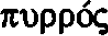
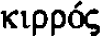
HelmreichG. (ed.), Galeni in Hippocratis de victu acutorum commentaria quattuor, in Corpus medicorum graecorum (Leipzig and Berlin, 1914), V, ix/1, 218, lines 9–10. See also Galen, De methodo medendi12.4, in KühnC. G. (ed.), Medicorum graecorum opera quae extant (Leipzig, 1825), x, 834, lines 4–6, where Galen gives ‘flame-coloured’ () or ‘pale’ () as synonyms for .
39.
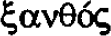
Another misleading suggestion of Humboldt's was that Ptolemy called the majority of stars ‘yellow’. This is based on Almagest 8.3 [= Heiberg, 182 and Toomer, 406], where Ptolemy speaks of constructing a celestial globe on which he will mark most of the stars with a (blonde/flaxen) colour. This is hardly an appraisal of the actual colours that most stars show. Nevertheless, it was soon taken up into the debate and so represented.
40.
For a detailed account see David DeVorkin, ‘Stellar evolution and the origin of the Hertzsprung-Russell diagram’, in GingerichO. (ed.), The general history of astronomy, iv: Astrophysics and twentieth-century astronomy to 1950, Part A (Cambridge, 1984), 90–108.
41.
DeVorkin, op. cit. (ref. 40), 93–94, and Fig. 6.1.
42.
For Schjellerup's attacks see his Description (ref. 7), 25.
43.
Geminus, 3.14, in ManitiusC. (ed.), Geminus: Elementa astronomiae (Leipzig, 1898), 40.22–42.3. Geminus (probably 1st century b.c.) was a textbook writer on mathematical subjects.
44.
For a brief discussion of the Arabic translations and manuscripts see Toomer, 2–4. Kunitzsch speculates that because red Sirius made no sense to the Arabs, they gradually dropped the description from their translations of the Almagest. At present the description is found only in a part of the surviving Arabic manuscripts. See KunitzschP., Der Almagest, die Syntaxis Mathematica des Claudius Ptolemäus in arabisch-lateinischer Überlieferung (Wiesbaden, 1974; hereafter cited as Der Almagest), 230–2 and 320–2.
45.
See Ptolemy, Almagest8.1 [= Heiberg, 168–9 and Toomer, 399]. ‘Nebulous stars’ are close groupings of small stars, some of which may not be resolvable with the naked-eye. The small stars around λ Orionis and Praesepe in Cancer count as ‘nebulous stars’ in the Almagest.
46.
For descriptions see NewcombS., The stars (New York and London, 1901), 122; MartinM. E., The friendly stars (New York and London, 1907), 110; and ServissG. P., Astronomy with the naked eye (New York and London, 1908), 43. For a photograph of the effect see Sky and telescope, lxxviii (1989), 154.
47.
ChambersG. F., A handbook of descriptive and practical astronomy4th edn, iii: The starry heavens (Oxford, 1890), 39; and Clerke, op. cit. (ref. 8), 146–7.
48.
SeeT. J. J., ‘History of the color of Sirius’, Astronomy and astrophysics, xi (1892), 269–74, 372–86; ‘Explanation of the mystery of the Egyptian phoenix’, ibid., 457–61; ‘Note on the history of the color of Sirius’, ibid., 550–2. This set of articles is hereafter cited as See, ‘History’.
49.
On his life and character consult PetersonC. J., ‘A very brief biography and popular account of the unparalleled T. J. J. See’, Griffith observer, liv (1990), no. 7, 2–16.
50.
WebbW. L., Brief biography and popular account of the unparalleled discoveries of T. J. J. See (Lynn, Mass. and London, 1913).
51.
See, ‘History’, 269.
52.
Ibid.386.
53.
Ibid.552.
54.
Ibid.269.
55.
Ibid.270 in reference to Homer, Iliad, Book 22, lines 29–32.
56.
For example, See, ‘History’, 271 and 383.
57.
Cicero, Aratea, Fragment 33, lines 322 and 412.
58.
For Aries see Germanicus, 4.78, in GainD. B. (ed.), The Aratus ascribed to Germanicus Caesar (London, 1976), 48. See did not know it, because he used an old edition of Germanicus, but the line referring to Canis Major that he found in his text (line 341 of LeipzigBuhle's, 1801 edition) was not by Germanicus but an interpolation from Avienus (Phaenomena749). In fact, therefore, Germanicus does not refer even to Canis Major as ‘ruddy’. See's ‘evidence’ from Germanicus thus totally evaporates.
59.
Avienus, Phaenomena1376 (see ref. 79).
60.
Manilius, Astronomica 1.409 (see ref. 71).
61.
SchiaparelliG. V., ‘Rubra Canicula ii’, Atti dell'i. R. Accademia di Scienze Lettere ed Arti degli Agiati di Rovereto 3rd ser., iii/1 and 2 (1897), 1–24, pp. 9–11; reprinted in his Scritti sulla storia della astronomia antica, i/2 (Bologna, 1926), 212–34, pp. 221–3. This reprint and the reprint of ‘Rubra Canicula’ (ref. 32) will together be referred to as Scritti.
62.
‘.’ Compare my translation with that of ManitiusC., an expert on ancient Greek astronomy: ‘Denn dieser Stern ist von demselben Stoff wie alle Sterne. Mögen nämlich die Sterne aus Feuer oder aus Äther bestehen, alle besitzen die nämliche Kraft. Auch müßte von der großen Zahl der Sterne die vom Hundsstern ausgehenden Kraftäußerung aufgehoben werden’. Greek text and German translation in Manitius (ed.), op. cit. (ref. 43), 192–3, end of each page.
63.
LynnW. T., ‘Color of Sirius in ancient times’, Astronomy and astrophysics, xi (1892), 634–5; ‘The alleged red colour of Sirius in ancient times’, The observatory, xv (1892), 264–5; ClerkeA. M., A popular history of astronomy during the 19th century3rd edn (London, 1893), 453, note 6.
64.
Schiaparelli, opera cit. (refs 32 and 61).
65.
Schiaparelli, ‘Rubra Canicula’, 2–3 [= Scritti, 182–3]. SamterH., who wrote a review article presenting Schiaparelli's results to the German public, focused on contradiction even more sharply. See SamterH., ‘War Sirius jemals rot?’, Himmel und Erde, ix (1897), 543–52, especially p. 544.
66.
Ptolemy does not explicitly say this, but at least one other ancient astrologer took it for granted and attributed the doctrine to Ptolemy. See Hephaestion of Thebes, Apotelesmatica 1.3.1 in PingreeD. (ed.), Hephaestio Thebanus: Apotelesmatica, i (Leipzig, 1973), 32. 8–11.
67.
Schiaparelli, ‘Rubra Canicula’, 11–2 [= Scritti, 190–1] in reference to Ptolemy, Tetrabiblos 1.9.21 in BollBoer (eds), op. cit. (ref. 13), 29.12–13.
‘magna fides hoc posse color cursusque micantis / ignis ad os. vix sole minor, nisi quod procul haerens / frigida caeruleo contorquet lumina vultu / cetera vincuntur specie, nec clarius astrum / tingitur oceano caelumque revisit ab undis’, in GooldG. P. (ed.), Manilius: Astronomica (Cambridge, Mass. and London, 1977), 36–37.
72.
‘’, in Pingree (ed.), op. cit. (ref. 66), 73.4–7.
73.
For Schiaparelli on Hyginus see ‘Rubra Canicula’, 29–30 [= Scritti, 205–6]; on Manilius see ibid.31 [= Scritti, 206–7]; on Hephaestion see ibid., 32–4 [= Scritti, 207–9].
See ibid., 9–11 [= Scritti, 221–3]. For the quote see p. 10 [= Scritti222].
76.
NewcombSimon, The stars (New York and London, 1901), 121–2; LynnW. T., ‘The colour of Sirius in ancient times’, The observatory, xxv (1902), 63; idem, ‘The alleged change of colour in Sirius’, The observatory, xxv (1902), 130–2; ClerkeA. M., A popular history of astronomy during the 19th century4th edn (London, 1902), 375, note 3; idem, Problems in astrophysics (London, 1903), 255–6; and idem, The system of the stars2nd edn (London, 1905), 135–6.
77.
‘Bei diesem hellen Stern sind … die roten Blitze so deutlich zu sehen, daß möglicherweise die Angabe aus dem Altertum, er sei ein roter Stern, hierdurch erklärt werden kann’, in PlassmannJ., Die Fixsterne (Kempten and Munich, 1906), 115, note*.
‘Sed primaeva Meton exordia sumpsit ab anno / torreret ruti locum Phoebus sidere Cancrum, / cingula cum veheret pelagus procul Orionis / et cum caeruleo flagraret Sirius astro’, in SoubiranJ. (ed.), Aviénus: Les Phénomènes d'Aratos (Paris, 1981), 151.
80.
GundelW., De stellarum appellatione et religione Romana [= Religionsgeschichtliche Versuche und Vorarbeiten, iii/2; Giessen, 1907), 34.
81.
‘Etenim Ceos accepimus ortum Caniculae diligenter quotannis solere servare coniecturamque capere, ut scribit Ponticus Heraclides, salubrisne an pestilens annus futurus sit. Nam si obscurior et quasi caliginosa Stella extiterit pingue et concretum esse caelum ut eius adspiratio gravis et pestilens futura sit; sin inlustris et perlucida Stella apparuerit significari caelum esse tenue purumque et propterea salubre’, in PeaseA. S. (ed.), M. Tulli Ciceronis de divinatione (Urbana, Ill., 1921; repr. New York, 1979), 327–8.
82.
KuglerF. X., Sternkunde und Sterndienst in Babel, i: Babylonische Planetenkunde (Münster, 1907), 242 (the star mentioned as ‘glowing like copper’, KAK.SI.DI, is now understood to be Sirius); EddingtonA. S., ‘Star’, Encyclopaedia Britannica11th edn (1911), xxv, 784–93, p. 788, middle of left col.
83.
BollF., ‘Astronomische Beobachtungen im Altertum’, Neue Jahrbücher für das klassische Altertum, xxxix (1917), i, 25–27.
84.
OsthoffH., ‘Die Farbenangaben in den altbabylonischen Sternverzeichnissen und die Farbe des Sirius’, Die Himmelswelt, xxx (1920) (this was unavailable to me); SarasinP., ‘Ueber die Farbenveränderung des Sirius in historischer Zeit’, Verhandlungen der naturforschenden Gesellschaft in Basel, xxxv (1923–24), ii, 58–59; SchiaparelliScrittiSeeT.J.J., ‘Historical researches indicating achange in the color of Sirius, between the epochs of Ptolemy, 138, and of Al Sūfi, 980, a.d.’ (hereafter cited as See, ‘Historical researches’), Astronomische Nachrichten, ccxxix (1926–27), Sondernummer, cols 245–72.
85.
‘Da liegt sie vor uns, die Stadt der Jahrtausende, und erschien wie eine Witwe in ihrer Trauer. Die Jahrhunderte, welche auf ihr liegen, die vor Alter sinkenden Ölbäume, die Grabmäler mit den weißen Steinen, die von der Zeit durchlöcherten Felsen, das zerstreute Gemäuer, alles erinnert an die schweren Begegnisse, die diese Stadt erlitten hat’, in See, ‘Historical researches’, 251–2.
86.
See, ‘Historical researches’, 245 and 272.
87.
Ibid.245, 272 and 268.
88.
For full text see ref. 23.
89.
See, ‘Historical researches’, 272.
90.
PlassmannJ., ‘Die Farbe des Sirius’, Die Himmelswelt, xxxvii (1927), 137, and ‘Die Farbe des Hundssternsim Altertum, Nachschrift des Herausgebers’, ibid., 163–5.
91.
OsthoffH., ‘Zur Farbe des Sirius im Altertum’, Astronomische Nachrichten, ccxxix (1926–27), cols 443–4, and ‘Die Farbe des Hundssterns im Altertum’, Die Himmelswelt, xxxvii (1927), 158–63.
92.
Concerning Boll, see Osthoff, ‘Die Farbe’, 161–3; concerning the piling up of passages, see ibid., 160–1.
93.
Ibid.162.
94.
‘Ob sich dadurch aber ein erfahrener Beobachter täuschen läßt? In größeren Höhen nehmen die farbigen Strahlenblitze ab und lassen die wahre Farbe des Sternes leicht erkennen. Ebenso fraglich ist es, ob man die Röte des Sternes beim Auf- und Untergange in folge der ungünstigen Luft der untersten Schichten zur Erklärung heranziehen darf. Warum ist diese falsche Farbe nicht auch bei allen andern weißen Sternen angeführt?’, ibid.163.
95.
DittrichA., ‘Woher das Epitheton ‘rot’ für Sirius stammt’, Astronomische Nachrichten, ccxxxi (1927–28), cols 385–6.
96.
Ibid., cols 385–6: ‘wenn der Sukudu rot ist’; ‘in den Tagen der Kälte, des Hagels und der Regenschauer, in den Tagen, wo KAK.SI.DI aufleuchtet, welcher rot wie Kupfer ist….’ GraysonA. K., Assyrian royal inscriptions, ii (Wiesbaden, 1976), 55 includes a full translation of this text. It forms part of an annalistic account apparently of the reign of the Assyrian King Ashur-bel-kala, who ruled from 1073 to 1056 b.c. The quoted lines come for a description of the king's hunting exploits. Grayson translates as follow: ‘At the time of cold, frost, (and) ice, at the time of the ascension of Sirius when it is red like molten copper, he [arranged] (and) formed herds of … gazelles, etc’.
97.
StentzelA., ‘Ägyptische Zeugnisse für die Farbe des Sirius im Altertum’, Astronomische Nachrichten, ccxxxi (1927–8), cols 387–92.
98.
Ibid., col.390.
99.
GundelW., ‘Sirius’, in Paulys real-Encyclopädie der classischen Altertumswissenschaft, ii/5 (Stuttgart, 1927), 314–51, pp. 325–7. For the new evidence see ibid.326.45–58 and Ceragioli, op. cit. (ref. 3), 88–94 and footnote 39.
100.
Three late comers to the debate add nothing of importance: BoslerJ., Cours d'astronomie, iii (Paris, 1928), 13, note 3; Lundmark, op. cit. (ref. 8), 386–8; and PannekoekA., A history of astronomy (London, 1961), 157, translated from the Dutch original: De Groei van ons Wereldbeeld (Amsterdam, 1951), 127. Pannekoek, although having published at the dawn of the recent phase of the debate, belongs in spirit to the older phase.
101.
The principal and almost sole investigator to revive and extend has been van GentR. H.. For his bibliography see ref. 113.
102.
KopalZ., Close binary systems (London, 1959), 542–3.
103.
JohnsonH. M., ‘Stellar evolution and the color of Sirius’, Astronomical Society of the Pacific leaflets, viii (1962), no. 383.
104.
Ibid.8.
105.
Ibid., 6–7.
106.
LauterbornD., ‘White-dwarf production in binary systems of large separation’, in HackM. (ed.), Mass loss from stars (New York, 1969), 262–6; and the discussion of LauterbornD.PaczynskiB., reported in GyldenkerneK.WestR. M. (eds), Mass loss and evolution in close binaries (Copenhagen, 1970), 191–3.
107.
Lauterborn, op. cit. (ref. 106), 266.
108.
LauterbornPaczynski, op. cit. (ref. 106), 192–3.
109.
LauterbornD., ‘Evolution with mass exchange of case C for a binary system of total mass 7M⊙’, Astronomy and astrophysics, vii (1970), 150–9.
110.
RakosK. D., ‘Photoelectric measurements of Sirius B in UBV and Strömgren system’, Astronomy and astrophysics, xxxiv (1974), 157–8.
111.
LindenbladI. W., ‘On K. D. Rakos' photoelectric measurements of Sirius B’, Astronomy and astrophysics, xli (1975), 111–12.
112.
The most important of this bibliography is as follows: MaranS. P., ‘Red, white, and mysterious’, Natural history, lxxxiv (1975), no. 7, 82–87; BurnhamR., Burnham's celestial handbook, i (New York, 1978): Andromeda-Cetus, 392–4; BrecherK., ‘Sirius enigmas’, Technology review, lxxx (1977), no. 2, 52–63, pp. 54–57, reprinted in BrecherK.FeirtagM. (eds), Astronomy of the ancients (Cambridge, Mass. and London, 1979), 91–115, pp. 95–102; MalinD.MurdinP., Colours of the stars (Cambridge, 1984), 88–91; Fernie, ‘Bloody Sirius’, op. cit. (ref. 5); and Moore, op. cit. (ref. 11, 1989), 53–57.
113.
Here the most important bibliography is: D'AntonaF.MazzitelliI., ‘Constraints on the corona model for Sirius B’, Nature, cclxxv (1978), 726–7; van GentR. H., ‘Red Sirius’, Nature, cccxii (1984), 302; SchlosserW.BergmannW., ‘An early-medieval account on the red colour of Sirius and its astrophysical implications’, Nature, cccxviii (1985), 45–46; TangT. B., ‘Star colours’, Nature, cccxix (1986), 532; ManfroidJ.HeckA., ‘A propos de la couleur de Sirius’, Ciel et Terre, cii (1986), no. 6, 151–2; McCluskeyS. C., ‘The colour of Sirius in the sixth century’, Nature, cccxxv (1987), 87; van GentR. H., ‘The colour of Sirius in the sixth century’, ibid., 87–88; SchlosserW.BergmannW., ‘The colour of Sirius in the sixth century’, ibid.89; WarnerB.SnedenC., ‘HD 38451: J. R. Hind's star that changed colour’, Monthly notices of the Royal Astronomical Society, ccxxxiv (1988), 269–79; van GentR. H., ‘The colour of Sirius’, The observatory, cix (1989), 23–24; BicknellP., ‘Sirius and Manilius’, ibid., 58–59.
114.
Li-ZhiFang, ‘A brief on astrophysics in China today’, Chinese astronomy and astrophysics, v (1981), 1–10, p. 4.
115.
Xiao-YuanJiang, ‘The colour of Sirius as recorded in ancient Chinese texts’, ibid., xvii (1993), 223–8. Bonnet-BidaudJ.-M.GryC. in three articles, ‘Sirius and the colour enigma’, Nature, cccxlvii (1990), 625; ‘The stellar field in the vicinity of Sirius and the color enigma’, Astronomy and astrophysics, cclii (1991), 193–7; and ‘L'énigme de la couleur de Sirius’, Recherche, xxiii (1992), no. 239, 105–7, have also attempted to analyse Sima Qian, but not convincingly. Jiang says of their work: ‘This is a complete misunderstanding of the real meaning of the text’, Xiao-YuanJiang, op. cit. (ref. 115), 228, note 6. TangT. B., ‘Did Sirius change colour?’, Nature, ccclii (1991), 25 also takes strong exception to their analysis.
116.
Xiao-YuanJiang, op. cit. (ref. 115), 226–7.
117.
Bruhweiler, op. cit. (ref. 29).
118.
Ibid.235.
119.
JossP. C.RappaportS.LewisW., ‘The core mass-radius relation for giants: A new test of stellar evolution theory’, Astrophysical journal, cccxix (1987), 180–7.
120.
Ibid., 185–6.
121.
See refs 1, 24 and 71 above.
122.
Bonnet-BidaudGry, op. cit. (ref. 115, 1991), 194–6, and op. cit. (ref. 115, 1992), 107; and MutzWyckoff, op. cit. (ref. 31).





 ’) can be found in
  /
/ ’
’
 …’, in
  ) or ‘pale’ (
 ) as synonyms for
  .
. (blonde/flaxen) colour. This is hardly an appraisal of the actual colours that most stars show. Nevertheless, it was soon taken up into the debate and so represented.
 .’ Compare my translation with that of
  ’, in
’, in