Michelson's apparent unawareness of earlier work has been mentioned in HaleG. E., The new heavens (New York, 1922), 41, and in PeaseF., “Interferometer Methods in Astronomy”, Ergebnisse der Exakten Naturwissenschaften, x (1931), 84–96. MillikanR. A., in his memoir on MichelsonA. A. (National Academy of Sciences Biographical Memoirs, xix (1938), Fourth Memoir), provides evidence for Michelson's exposure to Fizeau's ideas: “At Paris he acquired a good command of French and became well acquainted with the French physicists of that period…. It is probable that it was his careful study here in Paris of Fizeau's work that got him started on his main lifework in interferometry” (p. 135). See also LivingstonMichelson Dorothy, The master of light (New York, 1973), Chap. 4.
5.
Discussions of the causes for the lapse in time are found in: Lundmark, op. cit. (ref. 1); Hale, The new heavens, 42; WilsonH. C., “Measuring the Stars with the Interferometer”, Popular Astronomy, xxix (April 1921), 189–97.
6.
Sources of archival material: George Ellery Hale Papers, 1882–1937, Microfilm Edition (California Institute of Technology, Pasadena, 1968), copy at Boston University; The Michelson Museum (China Lake, California); The Lick Observatory Archives (Santa Cruz, California); University of Chicago and Yerkes Observatory Archives; Harvard University Archives; Clark University Archives; Princeton University Library. The Michelson Museum (McAllisterD. T., Curator) has been especially helpful in supplying material and assistance.
7.
HallG. S., Annual report of the President (Clark University, 1890), 32ff.
8.
Meeting of the National Academy of Sciences, April 1890, recorded in part in the Worcester Gazette (28 April 1890).
9.
Letter, Michelson to E. C. Pickering, 6 July 1890 (Harvard University Archives, copy in Michelson Museum). See also: Livingston, op. cit. (ref. 4), 156. The July paper mentioned by Michelson appeared as expected: MichelsonA. A., Philosophical magazine, 5th series, xxx (1890), 1–21.
10.
PickeringE. C., Proceedings of the American Academy of Arts and Sciences, xvi (1880), 1.
11.
Letter, Michelson to E. S. Holden, 11 April 1890 (Lick Observatory Archives). Correct date probably 1891 since reference was made to the Cambridge tests accomplished in the latter part of 1890. This assumes, of course, that Michelson had actually completed the tests at Cambridge before he concluded that the Cambridge sky was too poor to use for the interferometric work.
12.
Op. cit. (ref. 8).
13.
Ibid.
14.
Op. cit. (ref. 11).
15.
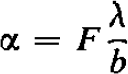
Letter, Michelson to Holden, 29 April 1890 (Lick Observatory Archives). Within this letter Michelson provided the following introduction to the theory behind his technique (emphasis in original): “If two adjustable slits are placed before the objective and the telescope be focussed on a star there will be interference fringes parallel to the slits. If the object be of sensible magnitude the fringes are less distinct and vanish when the angle is about the “limit of resolution” α = α = ang. diameter, λ = wavelength, b = distance between slits, and F = about 1·22. Hence if the slits are moved apart till the fringes vanish and the distance between their centers b be noted—α is determined— The fringes increase again in distinctiveness if the slits are too far. In fact, it is a periodic phenomenon, and the minimum of distinction can be observed with surprising sharpness. The same kind of observations can be used also for double stars too close to be resolved by telescope.” Detailed reviews of the theory as applied to astronomical problems are given in: Michelson, op. cit. (ref. 9); Michelson, Light waves and their uses (Chicago, 1903), 128; Michelson, Studies in optics (Chicago, Phoenix ed., 1962), chap. 11; BornM. and WolfE., Principles of optics (Oxford, 1970), 271ff; RussellH. N., Astronomy, ii (Boston, 1927), 737ff; FinsenW. S., “Double Star Interferometry”, Popular astronomy, lix (October 1951), 399–418; Working notes of O'DonnellT. J., Michelson's assistant at Chicago after 1919 (material courtesy Michelson Museum).
16.
Letter, Holden to T. G. Phelps, 12 July 1891 (Lick Observatory Archives).
17.
MichelsonA. A., “Measurement of Jupiter's Satellites by Interference”Publications of the Astronomical Society of the Pacific, iii (1891), 274–8.
18.
Chicago Herald (2 September 1891); Boston Herald (20 September 1891); Utica Observer (New York) (30 September 1891). Courtesy Clark University Archives.
19.
Boston Herald, ibid.
20.
Letter, Holden to Michelson, 16 December 1893 (Lick Observatory Archives).
21.
Michelson, op. cit. (ref. 9), 21. Michelson's refractometer design was originally intended to keep the convergent angle of the interfering beams of light small so that the interference fringes could be examined without need for excessive magnification of the image in the focal plane. This modification was later shown to greatly increase the effective beam width of the interferometer itself.
22.
Letter, Michelson to Hale, 28 December 1904 (Hale Papers).
23.
Michelson, op. cit. (ref. 9), 21.
24.
See NielsenAxel V., “History of the Hertzsprung-Russell Diagram”, Centaurus, ix (1963), 219–53.
25.
MauryAntonia C., “Spectra of Bright Stars”, Harvard annals, xxviii, pt. 1 (1897). See also: CurtissR. H., “Classification and Description of Stellar Spectra”, Handbuch der Astrophysik, v (1933), 1–108, pp. 29ff.
26.
HertzsprungE., “Zur Strahlung der Sterne”, Zeitschrift fur wissenschaftliche Photographie, iii (1905), 429–42. Hertzsprung was originally drawn to Miss Maury's classification scheme by her implication that the c subclass represented different evolutionary order than did the other subclasses. See Lundmark, op. cit. (ref. 1), 437.
27.
HertzsprungE., “Uber die optische Stärke der Strahlung des swarzen Körpers und das minimale Lichtäquivalent”, Zeitschrift für wissenschaftliche Photographie, iv (1906), 53ff.
28.
See WesselinkA. J.ParanyaK., and DeVorkinK., “Catalogue of Stellar Dimensions”, Astronomy and astrophysics supplement, vii (1972), 257–89, p. 259.
29.
PickeringE. C., op. cit. (ref. 10), 1.
30.
RussellH. N., “The Densities of Variable Stars of the Algol Type”, Astrophysical journal, x (1899), 315–18.
31.
Nielsen, op. cit. (ref. 24), 241.
32.
These classifications (the c and ac designations) provided Hertzsprung with invaluable hints in his early work. For the nature of the Maury system see Maury, op. cit. (ref. 25).
33.
JonesB. S. and BoydL. G., The Harvard College Observatory 1839–1919 (Cambridge, Mass., 1971), 241.
34.
RussellH. N., “Some Hints on the Order of Stellar Evolution”, Science, xxxii (1910), 883ff.
35.
Letter, W. S. Adams to H. N. Russell, 5 March 1913 (Princeton University Library).
36.
Letter, A. S. Eddington to W. S. Adams, 16 May 1916 (Hale Papers).
37.
Letter, H. N. Russell to W. S. Adams, 15 May 1916 (Hale Papers).
38.
The original address was before the Royal Astronomical Society in June 1913, and was printed in Observatory, xxxvi (1913), 324–9. A reply to this paper from Eddington (ibid., 467–71) stimulated a further note by Russell: “On the Probable Order of Stellar Evolution”, Observatory, xxxvii (1914), 165–75.
39.
Address date 30 December 1913. Reprinted as “Relations Between the Spectra and Other Characteristics of the Stars”, Popular astronomy, xxii (1914), 275–94, 331–50.
40.
HaleG. E., op. cit. (ref. 4), 42.
41.
On 25 August 1919, in order to relieve his fears about atmospheric turbulence, Michelson spent an evening examining fringe visibility with the 40-inch refractor at Yerkes Observatory. BarnardE. E. assisted and noted his presence in his observing book. The mask used, as pictured in Barnard's book, was broken by two lenticular apertures fixed in position at opposite end of a diameter of the mask—exactly like Stephan's mask (Yerkes Observatory Archives).
42.
Letter, Michelson to Hale, 1 September 1920 (Hale Papers; copies of this and other Hale papers were kindly supplied by the Michelson Museum).
43.
Letter, Hale to Michelson, 18 November 1919 (Hale Papers).
44.
v. HarkánjiB., Astronomische Nachrichten, clxxxv, no. 4419 (1910), 33; clxxxvi, no. 4451 (1910), 161; HnatekA., Astronomische Nachrichten, cxcviii, no. 4731 (1914), 33. It is possible that this apparent professional disregard by American scientists for the work of Germans (or at least of work appearing in German journals) during and just after World War I might be another instance of the general boycott held at the time. See KevlesD.“‘Into Hostile Political Camps’: The Reorganisation of International Science in World War I”, Isis, lxii (1971), 47–60.
45.
Letter, H. Shapley to H. N. Russell, 30 September 1920 (Princeton University Library).
46.
Considerable correspondence between Russell and Hale in January and February, 1920 reveals that Hale informed Russell that Michelson, instead of Russell, had obtained a research associateship at Mount Wilson for his interferometric work (19 January 1920). Russell responded positively with encouragement and with predictions for stellar diameters (30 January 1920) which apparently were not heeded by Hale.
47.
Letter, Michelson to Hale, 27 November 1919 (Hale Papers).
48.
Letter, Hale to Michelson, 3 January 1920 (Hale Papers).
49.
AndersonJ. A., “Application of Michelson's Interferometer Method to the Measurement of Close Double Stars”, Astrophysical journal, li (1920), 263–75.
50.
Letter, Hale to Michelson, 5 February 1920 (Hale Papers).
51.
Simultaneous with his Yerkes tests, Michelson continued work on laboratory models. As late as January 1920, he worked in Chicago with aperture separations of about four feet. Indoor tests with artificial single and double sources were believed to be successful, which led Michelson to conclude: “… I see no reason why it should not work with star light—in which case perhaps you would suggest that we save time by starting at once on the 25 ft …” (Letter, Michelson to Hale, 11 January 1920 (Hale Papers)). To avoid confusion it should be pointed out that this last letter by Michelson was written in response to Hale's optimistic letter of 3 January. In other letters concerning Michelson's laboratory models, it was quite evident that sky tests were not fruitful due to the poor Chicago sky and the lack of a suitable equatorial mount on the roof of Ryerson Laboratory on the University of Chicago campus. Very little of Michelson's laboratory apparatus survives today; see “T. J. O'Donnell File”, p. 18 (reverse), item M-30 (Special Collections Library, University of Chicago). This file contains recollections by O'Donnell, Michelson's technical assistant for many years. O'Donnell's description of the apparatus indicates that it closely resembled the refractometer beam constructed at Mount Wilson and in some way anticipated the design of the 50ft interferometer.
52.
Letter, Hale to Michelson, 4 October 1920 (Hale Papers).
53.
EddingtonA. S., “The Internal Constitution of the Stars”, Nature, cvi (1920), 14–20, p. 17; originally delivered as the opening address of Section A of the British Association, 24 August 1920, at Cardiff.
54.
RussellH. N., “The Probable Diameters of the Stars”, Publications of the Astronomical Society of the Pacific, xxxii (1920), 307–17.
55.
EddingtonA. S., Monthly notices of the Royal Astronomical Society, lxxxiii (1923), 313–15.
56.
PeaseF. G., Notebook 1, sheet 42, 14 July 1920 (approximate date) (Hale Observatories, copy in Michelson Museum).
57.
Letter, 0Russell to Hale, 11 January 1921 (Hale Papers).
58.
Hale, The new heavens, 50; MichelsonA. A. and PeaseF. G., “Measurement of the Diameter of α Orionis with the Interferometer”, Astrophysical journal, liii (1921), 249–59, p. 258. Merrill was evidently looking for a companion to Betelgeuse because a periodic term in its radial velocity had been observed. This periodic term and Betelgeuse's known light variability had been interpreted by Bottlinger and Lunt as due to its being a spectroscopic binary and possibly even an eclipsing system. After the December 13th observations were announced, FrostE. of Yerkes wrote to Michelson enclosing a reprint of Russell's December paper (which Michelson, in reply on 4 January, had not yet seen) and then later wrote again (21 January) asking if the observation could be interpreted as due to the possibility that Betelgeuse is a double star and that the vanishing of the fringes was caused by the separation of the two components and was not an actual diameter observation. Michelson, in reply (24 January), felt that this was probably not so on account of Merrill's work: Hale's letter and Pease's report indicate that a distinct falling off in visibility was noted with the interferometer measurements with the 100-inch (not the 20-ft beam) and that this was independent of the position angle. This would indicate a confirmation of the results to be anticipated from the small range in magnitude— showing that if there is a companion it must be relatively small (or of feeble intensity). [Emphasis in original.] (All the letters quoted in these remarks are from the Yerkes Observatory Library). Pease's continued observations of Betelgeuse with the 20 ft beam did show variations which were first thought to be due to poor seeing conditions. By late 1922, however, Pease was certain that the dimensions of Betelgeuse were varying within limits almost equal to the range defined by Russell's and Eddington's estimates. This was the first direct observation of a pulsating variable. Letter, Pease to Russell, 24 October 1922 (Princeton University Library); PeaseF. G., “Possible Variations in the Diameter of α Orionis”, Publications of the Astrononomical Society of the Pacific, xxxiv (1922), 346–7.
59.
RecallsShane C. D. the later efforts of Pease: I was on Mount Wilson when Pease was trying to get it [the 50 ft interferometer] into operation and I was profoundly impressed with the care and patience he exercised. He would work patiently all night trying to get fringes from a star by adjusting the difference in path lengths by minute steps. (Personal communication, 22 May 1973 by Mrs. ShaneC. D..) For detailed discussions of the 50 ft device see: Pease, op. cit. (ref. 4), and “The New Fifty-Foot Stellar Interferometer”, Scientific American (October 1930), 290ff.





 α = ang. diameter, λ = wavelength,