




Abstract
This paper examines the identity of the sitter in Jusepe de Ribera’s painting The Sense of Sight (c.1610s). Previous studies have suggested that the figure might be the Neapolitan optician Francesco Fontana (c.1580/1590–1656) and that the telescope he holds was painted based on a model created by Fontana himself. However, this research challenges that interpretation and instead proposes that the sitter is the polymath Fabio Colonna (1567–1640), who acquired his knowledge of telescope-making through guidance from Galilei. Additionally, the paper presents the first detailed analysis of the telescope depicted in Ribera’s work, demonstrating that – contrary to established scholarship – it does not correspond to any known telescopes attributed to Galilei.
Keywords
Introduction
In two papers, published in 2017 and 2022, the astrophysicist Paolo Molaro suggested that the man holding a telescope in Jusepe de Ribera’s painting The Sense of Sight (c.1610s) (Figure 1) might be identified with the Neapolitan optician Francesco Fontana (c.1580/1590–1656), 1 whose only known portrait is an etching included in Fontana’s treatise Novae coelestium terrestriumque rerum observationes (New Celestial and Terrestrial Observations, Naples, 1646) (Figure 2). According to Molaro, in fact, Francesco Fontana was, as early as the mid-1610s, a renowned Keplerian or astronomical telescope 2 maker and his tools were highly praised at the main European courts, 3 hence Ribera wished to perpetuate his memory. Also, Molaro seems to imply 4 that the telescope held by Ribera’s man was painted after an exemplar made by Fontana himself (Figures 1 and 6). In this paper I will challenge Molaro’s identification on the basis of physiognomic comparisons between the two portraits. Moreover, I will provide the first detailed description of the telescope as depicted by Ribera and challenge the theory that the telescope was painted after the instruments attributed to Galilei. Finally, I will advance an alternative identification of Ribera’s sitter.
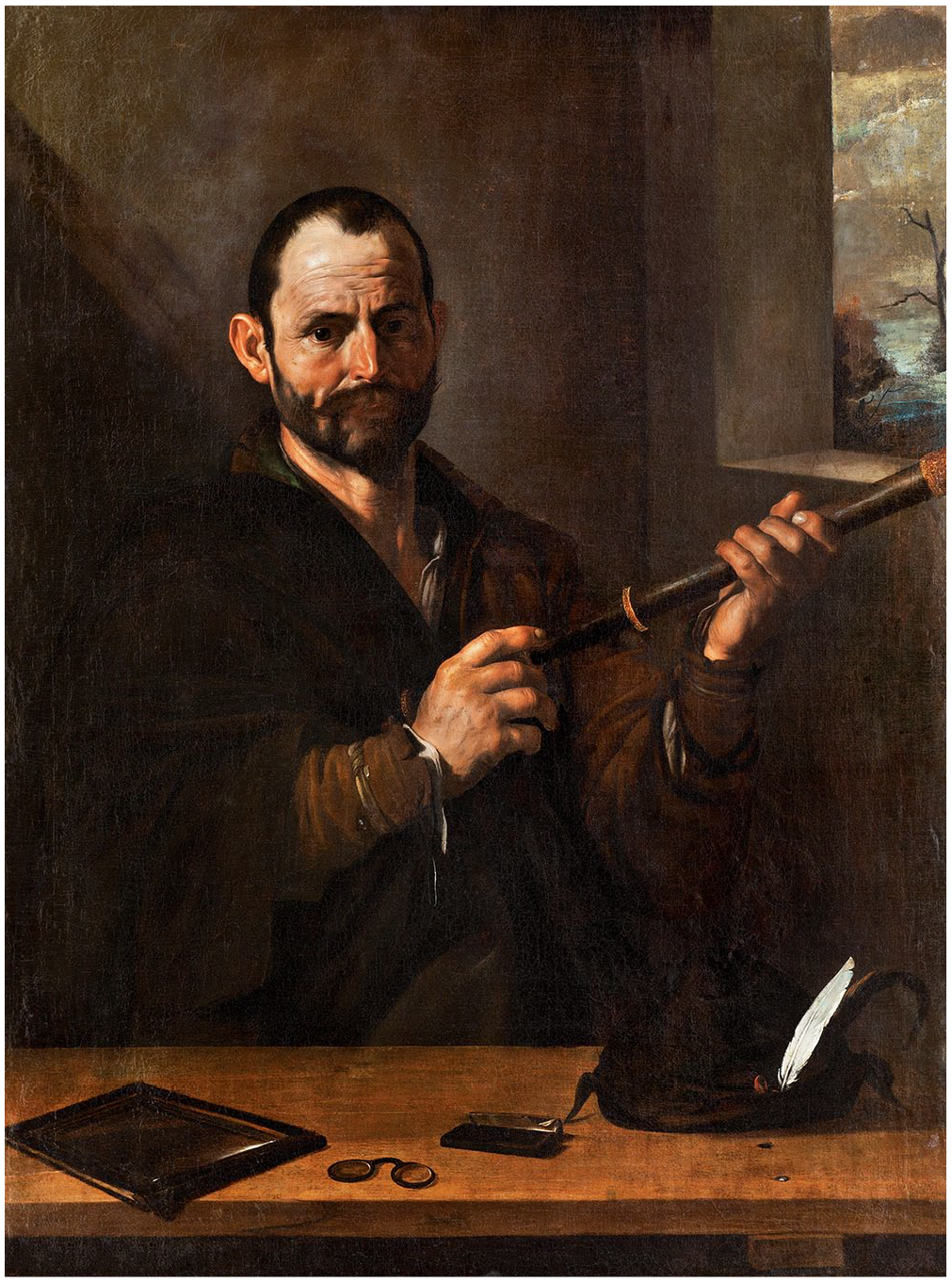
Jusepe de Ribera, The Sense of Sight, oil on canvas, c.1610s, 114 × 89 cm.
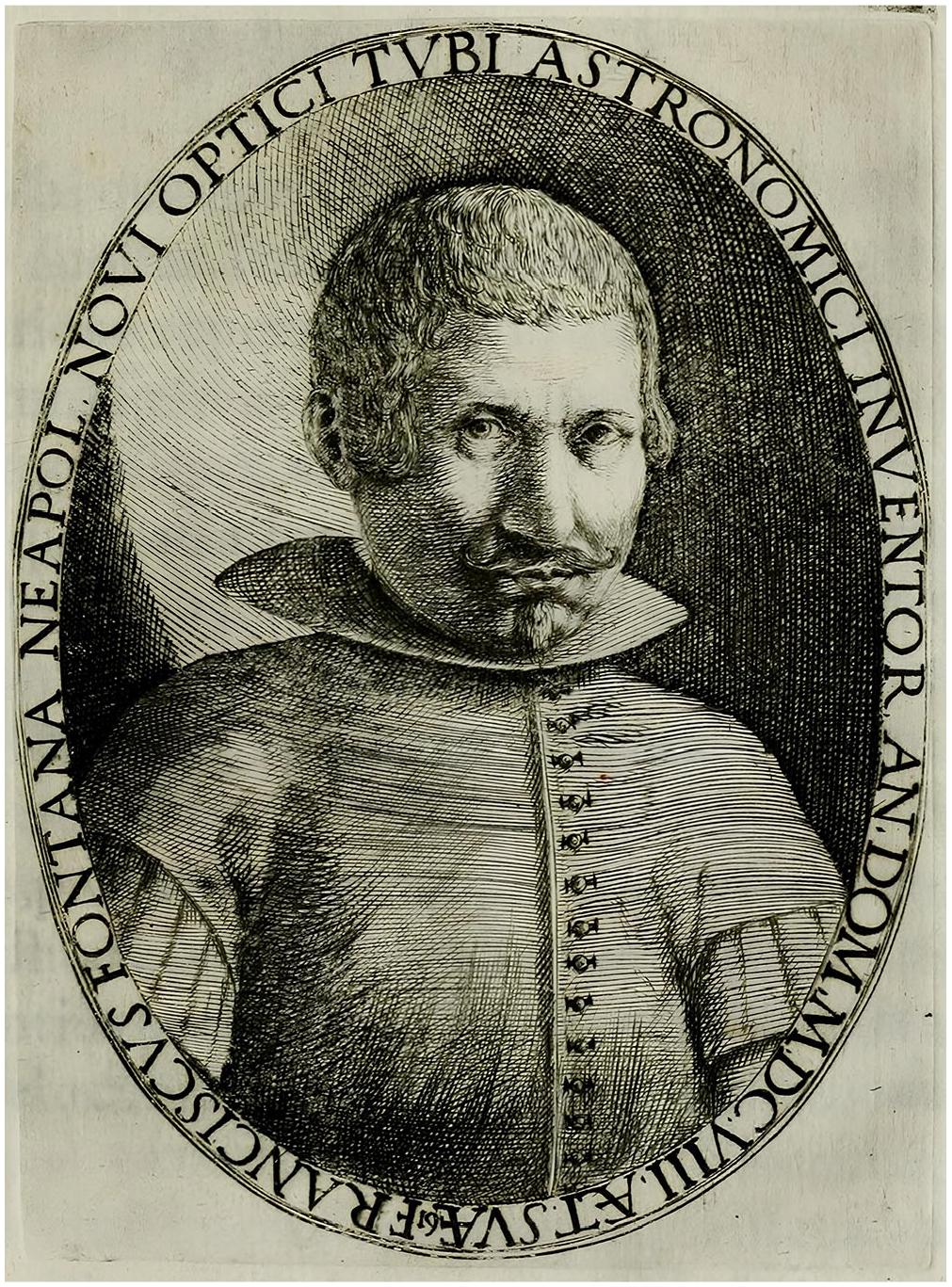
Portrait of Francesco Fontana, etching, from Novae coelestium terrestriumque rerum observationes (Naples, apud Gaffarum, 1646).
Jusepe de Ribera: A biographical sketch and the Sense of Sight
Jusepe de Ribera (1591–1652) was undoubtedly the most prominent painter of Spanish Naples in the first half of the seventeenth century and one of the most innovative interpreters of Caravaggio’s painting in Europe. A native of Xátiva, Valencia, Ribera arrived in Rome in around 1606, where he lived until 1616, sojourning in Parma in 1611, before finally moving in 1616 to Naples, where he would reside for the rest of his life. In Rome he studied classical sculpture and the great European artists of the Renaissance, as well as his contemporaries, notably works by Caravaggio (1571–1610). The move to Naples led to a career progression for Ribera as the viceroys of Naples and the viceroyal court personages became the painter’s main patrons. Ribera’s prolific production as a painter and graphic artist includes works on subjects ranging from religion and mythology to the depiction of figures exhibiting physical anomalies. 5
Ribera was a groundbreaking artist and contributed to shaping the course of seventeenth-century art. His ingenuity is shown in a set of paintings of the Five Senses, 6 to which the Sense of Sight, discussed here, belongs (Figure 1). A brief note on the series is required to set the scene before I discuss the painting representing Sight. In his Considerazioni sulla pittura (Thoughts on Painting, 1617–1621), the art dealer and collector Giulio Mancini (1559–1630) provides important biographical information on Ribera and briefly mentions a series of five paintings representing the senses: ‘He made many works here in Rome, and in particular for ***, Spanish, who owns five beautiful half-figures representing the five senses’. 7 Based on this short account, art historians working between 1966 and 2005 have been able to identify five paintings scattered in different collections 8 and to reconstruct a series of five senses which may be those mentioned by Mancini. 9 As to the anonymous Spanish patron, on the basis of an inventory published in 1994, 10 the art historian Giovanni Papi has suggested identifying him with Pedro Cussida (or Cossida), a Spanish diplomat and art dealer who sojourned in Rome between 1602 and 1622. 11 On the basis of stylistic comparison with Ribera’s Neapolitan period (beginning in 1616), Nicola Spinosa 12 suggests that some paintings of the series might have been made in Naples and then sent to Rome. On the other hand, Papi 13 does not exclude the possibility that the extant series might have been entirely executed in Naples and therefore might be different from the one reported by Mancini. Be that as it may, it has quite reasonably been argued that the series was devised in the light of the scientific debate on the reliability of the senses as discussed by the Academy of the Lynx between Rome and Naples, which I will expand upon toward the end of this paper. 14 Moreover, the series has reasonably been dated to around the second decade of the seventeenth century, although there might be scope for a later date, as we will see.
Each painting of the series, measuring about 118 cm × 88 cm, shows a nondescript space, lit diagonally, with only a modest table on which are displayed objects related to the sense depicted. Smell and Taste are represented respectively by a weeping beggar holding a halved onion 15 and a corpulent figure behind a table laid with a makeshift meal. The figure staging Touch – a blind man holding a sculpted head with his back turned away from a painting laid on the table behind him – alludes to the age-old debate on the relative merits of painting and sculpture. 16 Hearing is represented by a relatively young person holding a plucked string instrument, possibly a calascione. Finally, Sight features a man holding a telescope, and is arguably one of the earliest representations of such an instrument 17 (Figures 1 and 6). On the table there are some objects connected with sight which are visibly worn out: a mirror and a pair of pince-nez with their open case. On the right side lies a brown hat adorned with a red bow and two uncostly and unprocessed feathers; the white one is a goose feather, while the brownish one is more difficult to identify because of the shadow, but may be that of a pheasant. 18 The painting is the only one of the series to include a window through which a river or lake is visible, with what appears to be a bush and bare tree branches. 19
The two portraits in comparison: Francesco Fontana and Ribera’s man with the telescope
Scepticism about the identification of Ribera’s man with the Neapolitan optician Francesco Fontana has already been advanced. 20 Nevertheless, I will provide a detailed description of the figures (Figures 1–4) in order to enable the reader to make an informed decision.
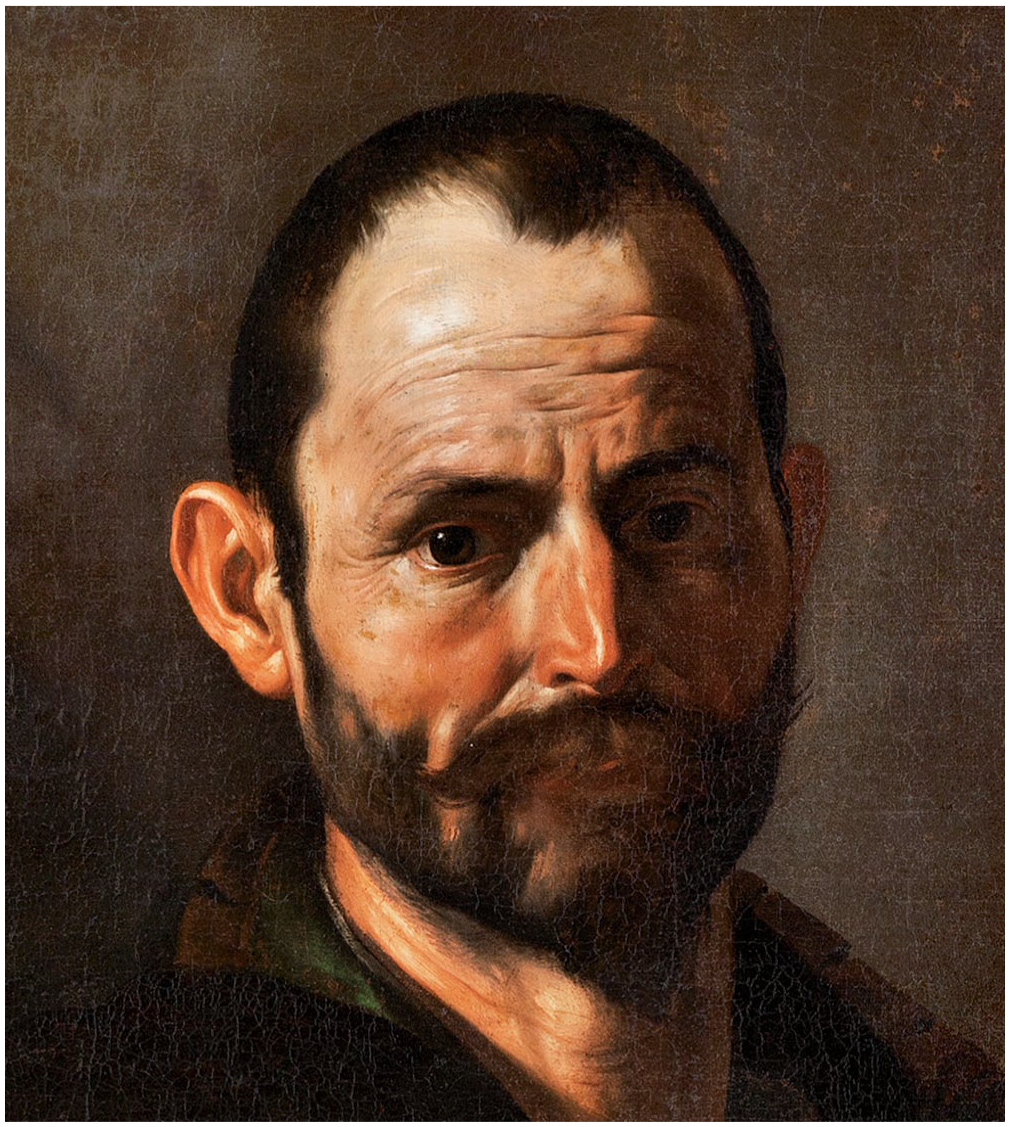
Detail of Figure 1.
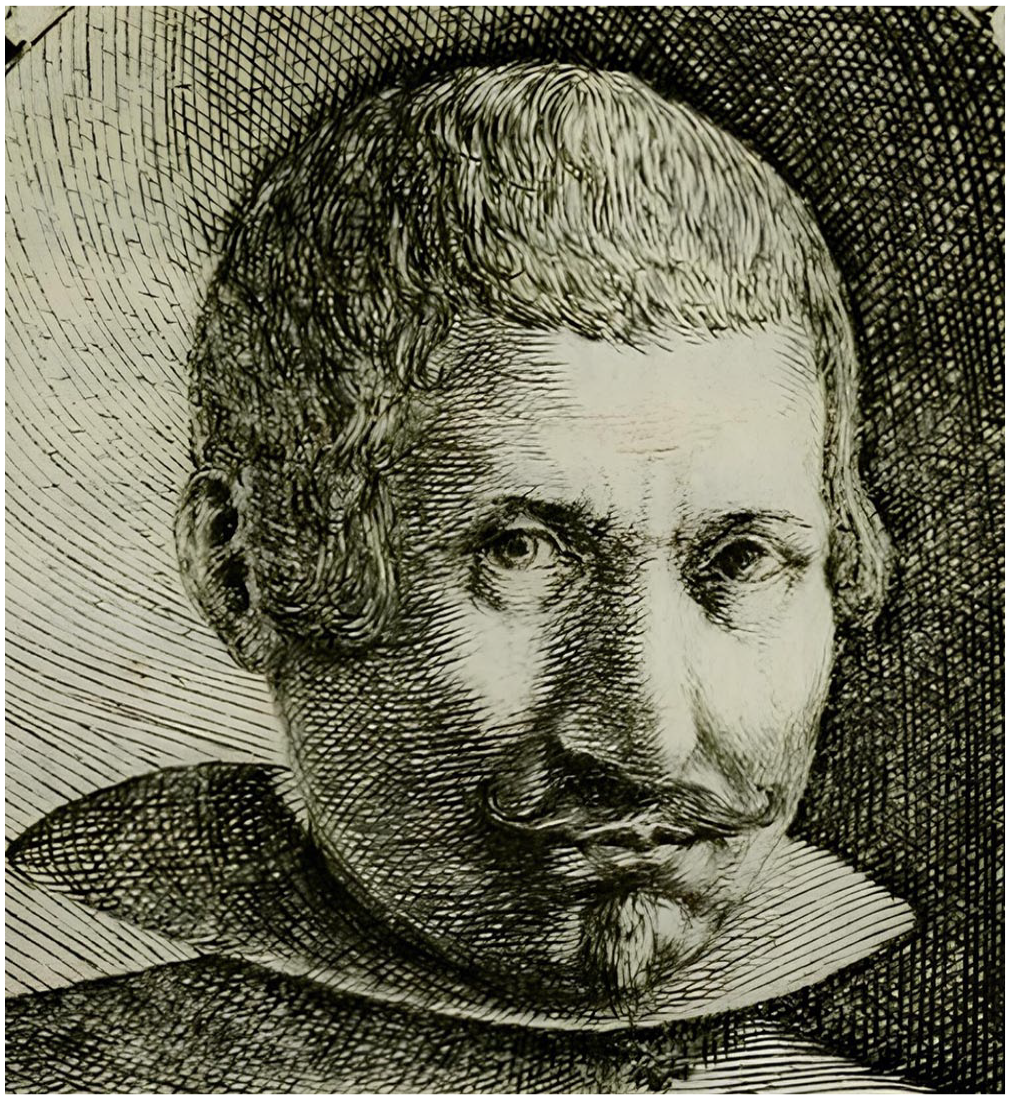
Detail of Figure 2.
The man representing Sight in Ribera’s painting (114 cm × 89 cm) wears a white linen shirt and a brown jacket with cuffs tightened by means of laces, while a darker over-robe, not quite visible owing to the darkening of the canvas, hangs from his right shoulder. Contrary to Spinosa’s inaccurate description, the man’s attire does not look ‘tattered’ at all. 21 It looks slightly worn out but decent. The sitter is holding a telescope, which clearly alludes to the scientific advancements of the time. The shape of the man’s head is oval rather than round, while the face is relatively slim. His skin is tanned and stained with brownish freckles. His hair, moustache, and beard are dark and surround a well-proportioned mouth with thin lips. The deeply lined forehead is wide and prominent, and ploughed with wrinkles that enhance his vivid gaze. The eyes look relatively elongated and have thin eyebrows; the ears are prominent and sticking out. The aquiline nose has a sharp bridge and a swelling in the middle; the cartilage forming the wings of the nostrils is very thin. We can estimate that the man is in his forties, if not his early fifties.
Francesco Fontana’s half-figure portrait is printed on an unnumbered sheet between page ten and the preface to the reader of Novae coelestium (1646). The Latin inscription in the oval frame around the portrait reads as follows: FRANCISCVS FONTANA NEAP[OLITANVS] NOVI OPTICI TVBI ASTRONOMICI INVENTOR. AN[NO] DOM[INI] M.DC.VIII. AETATIS SVAE 61. The English translation would then read as follows: Francesco Fontana, from Naples, inventor, in the year 1608, of a new [kind] of astronomical telescope. [Portrayed] at the [current] age of 61. 22 It is understood, on the basis of comparison with similar portraits, that the digits should be read as 61, and not 19, and that the portrait therefore features Fontana as a 61-year-old person in 1646 and not as a young man in 1608, the earliest date at which he is alleged to have invented a new telescope. 23
The man wears a short-sleeved, buttoned jacket, closed at the neck and with an all-round flat collar. Overall, the man has a round head and the fleshy face of a well-fed person. He has thick, slightly wavy hair and sideburns, and wears a moustache and goatee, which were common fashion at the time. These surround a very small mouth with relatively fleshy lips. The man has round rather than elongated eyes, and thin eyebrows; the ears are relatively small and very close to the head. The nose bridge is straight and large, the nasal base wide, and the wings of the nostrils fleshy.
Portraits of the same individual made by different artists at different times do not necessarily need to share the same likeness, but in this case the facial dissimilarities between Fontana’s portrait and Ribera’s man are striking enough to invite the suspicion that they are two different people. The detailed physiognomic descriptions provided above should equip the reader with sufficient visual information to make a cross-comparison between the two figures and hopefully to conclude that they are not the same person since they do not share a single physiognomic feature.
The telescope in Ribera’s Sense of Sight and Galileo’s telescopes: An overdue clarification
The telescope painted from life by Ribera is of a dark brown colour (Figures 1 and 6). It is not possible to ascertain which material the painter tried to imitate, but from the texture it is not unreasonable to surmise that it was leather or paper (these materials would likely have covered cardboard or wooden tubes in real life). The device has a main tube, two draw tubes, and three ferrules, that is, one reinforcing ring at the ocular end of each tube. The diameter of the three ferrules seems to be the same, a characteristic common to telescopes made until about 1630. 24 The telescope shows three golden decorations: one near the objective, on the painting’s right edge, one on the ferrule in the middle, and one on the ferrule at the opposite end, just behind the man’s right hand (Figures 6 and 8). Considering that the average male hand’s width is around 9–10 cm, we can reasonably say that, proportionally, the telescope length in real life would have been around 60 cm, provided that it is extended to its full length and that no portions are beyond the painting’s edge. Expanding upon a suggestion put forward by art historian José Milicua in 1992, and accepted by Paola Santucci, 25 Spinosa asserts that the instrument ‘is an exact reproduction of the exemplar made by Padua University on behalf of Galileo Galilei, who had designed it in 1609 and sent it over to the Pope [i.e., Paul V] in Rome at the beginning of the second decade of the seventeenth century’. 26 We shall need to shed light on this identification.
The Museo Galileo in Florence holds the only two extant telescopes attributed to Galileo (Figures 5 and 7). The one with inventory 2427 (Figure 5) is 1273 mm long and is made of wood, paper, and copper. Although this could have been made by Galileo during his time in Padua (1609–1610), no sources seem to mention any connection with Pope Paul V. 27 Moreover, the poor condition of the device does not make it easy to compare with Ribera’s telescope (Figure 6). Nevertheless, as telescope 2427 is not made of draw tubes, it cannot be identified with Ribera’s instrument. In fact, historians of science Huib Zuidervaart (2020) and Tiemen Cocquyt (2020) have both confirmed that Ribera’s device is a draw telescope (that is, extendable), a finding which Giorgio Strano (2023) has further confirmed with the identification of two draw tubes (the latter could be the same length as the draw of the main tube; Figure 10). 28 It is therefore impossible to corroborate Spinosa’s assertion since he provides no evidence whatsoever. Unfortunately, however, this information has been taken on by other scholars, thereby becoming established in the literature.
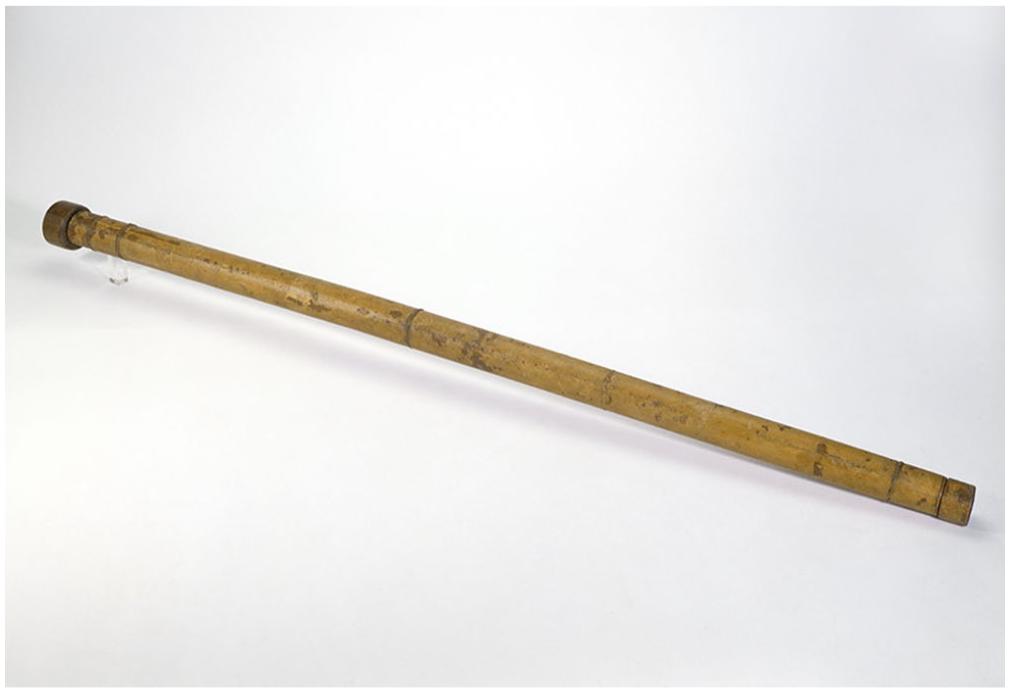
Galileo Galilei, Telescope, wood, paper, and copper, c.1610, 1273 mm (length).
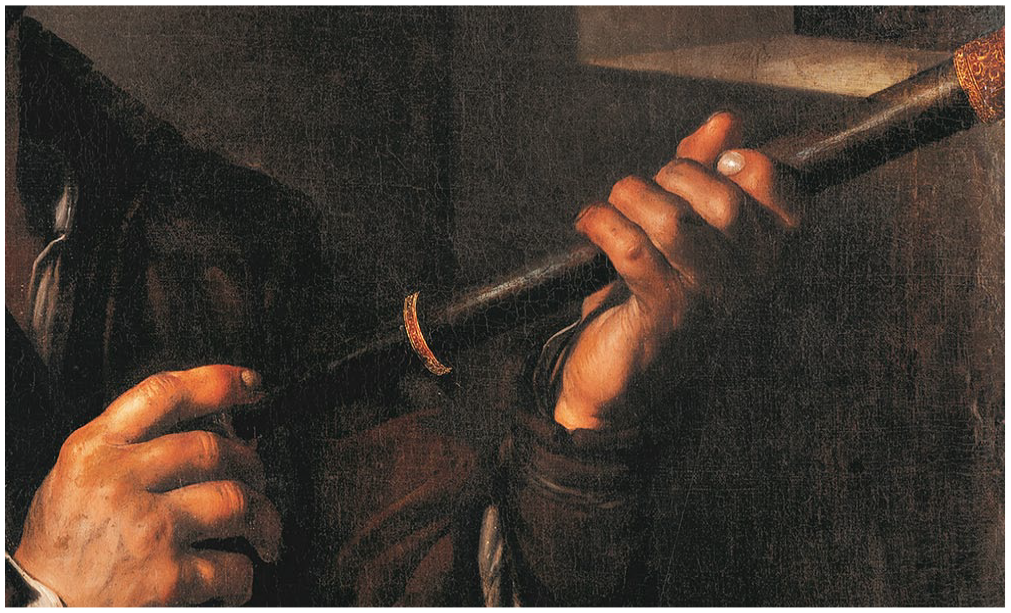
Detail of Figure 1.
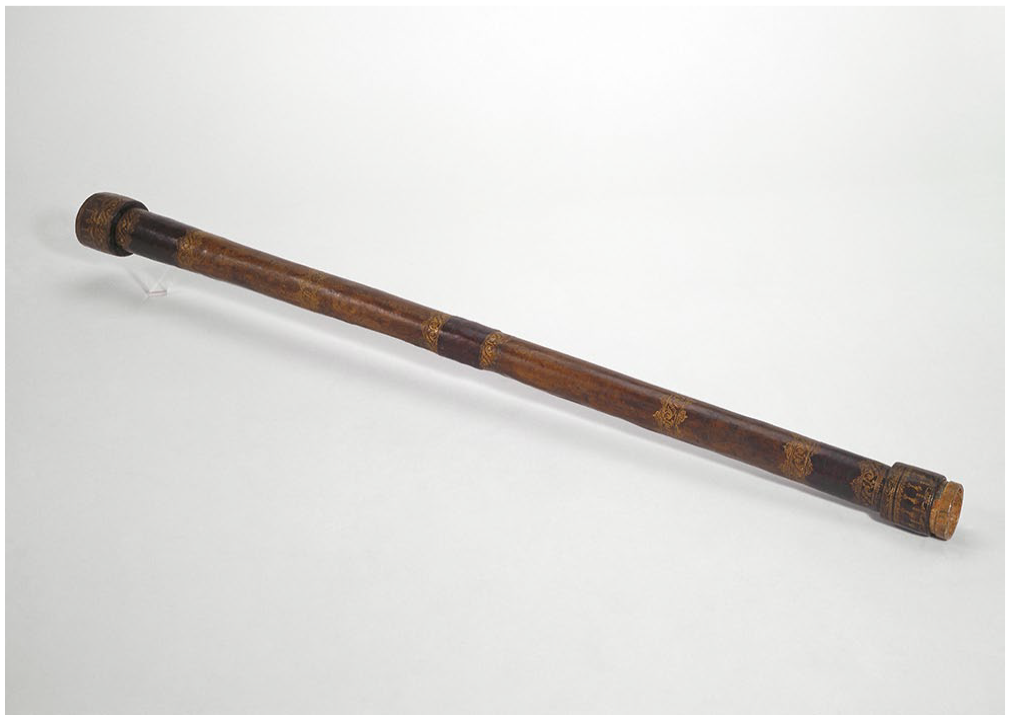
Galileo Galilei, Telescope, wood and leather, 1610s, 927 mm (length).
Regarding the other telescope, inventory 2428 (Figure 7), it has been suggested that it may have been made for Cosimo II, Grand Duke of Tuscany, in the early 1610s. 29 This exemplar is in a much better condition. It is 927 mm long, made of wood and leather, and consists of a main tube with separate housings at either end for the objective and the eyepiece. The swirling golden tooling over the tube and the two lens housings is not entirely dissimilar from the golden decorations on Ribera’s telescope (Figures 6–9). It is therefore likely that it was this item, with its peculiar tooling, and not the previous one, that has misled art historians into making a connection with the telescope attributed to Galileo. Nevertheless, considering once more what Zuidervaart (2020), Cocquyt (2020), and Strano (2023) have argued, 30 and considering that Galileo’s devices do not seem to have draw tubes, we can safely conclude that Ribera’s telescope was not painted after any extant telescopes attributed to Galileo.
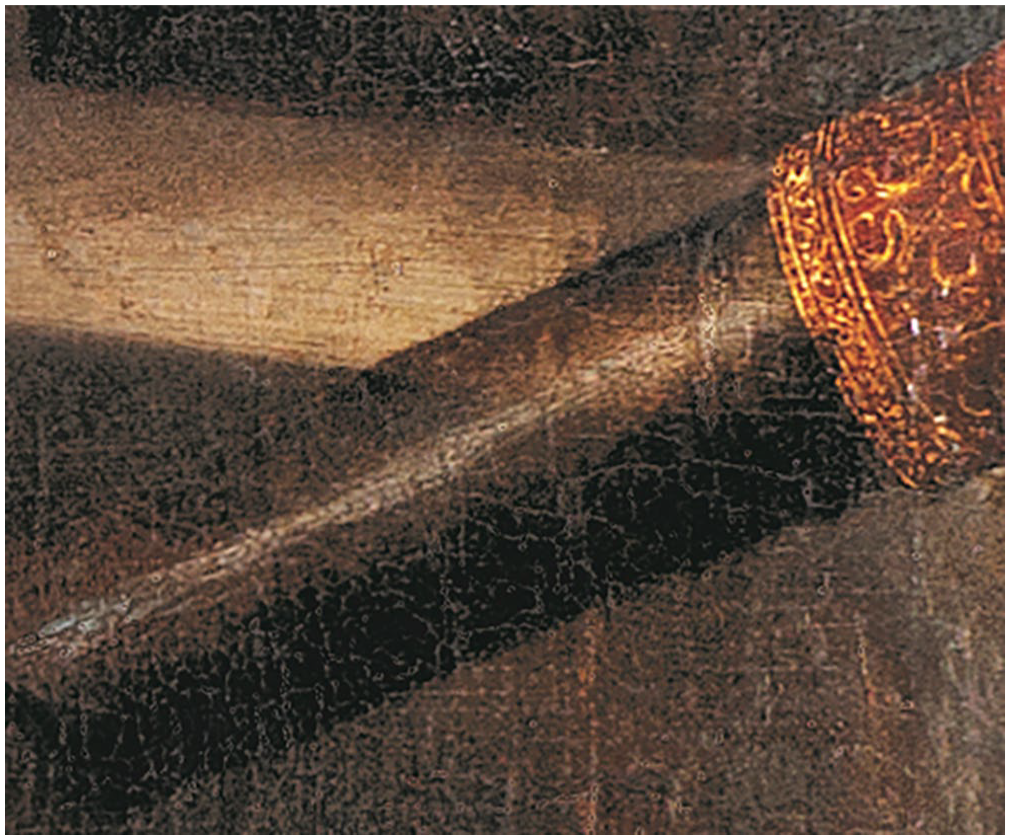
Detail of Figure 1.
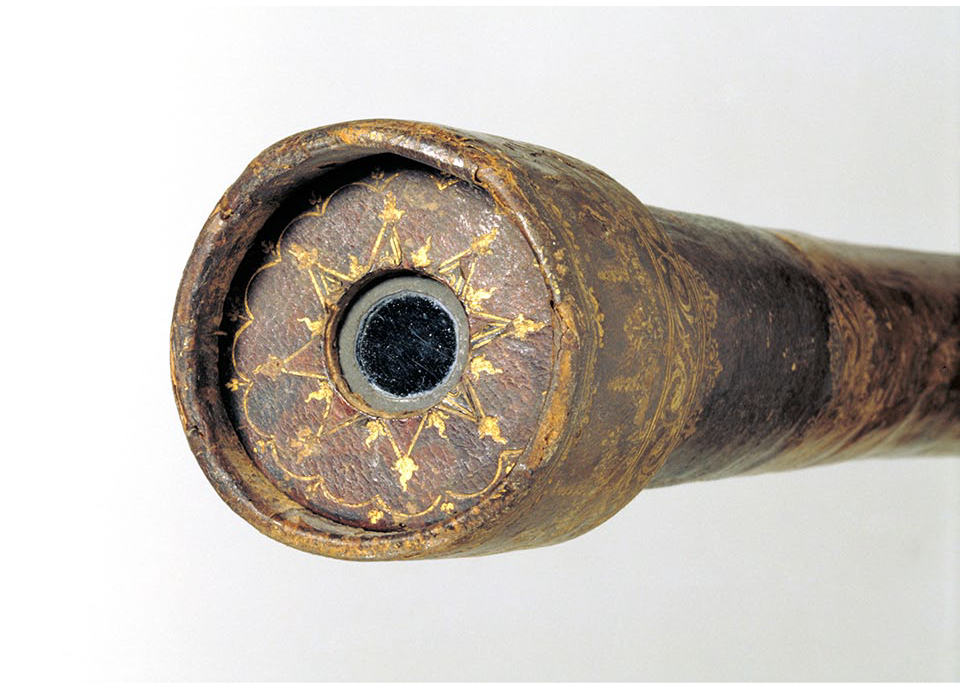
Detail of Figure 7.
Finally, some remarks on the orientation of the telescope are necessary. Although the claim that the man is holding the telescope the wrong way round has already been refuted, 31 a few words are required on this issue to dispel any doubts. If we trace two imaginary lines along the contours of the telescope, we can see that the two lines converge toward the centre of the painting, as the draw tubes’ diameters narrow, thus revealing that the telescope was painted with the correct orientation. The sketch we publish here, courtesy of Giorgio Strano, which is the first graphic reproduction of Ribera’s painted device (Figure 10), clearly shows the device’s correct orientation, with the objective side pointing upwards, in the man’s left hand, and the eyepiece in his right hand.
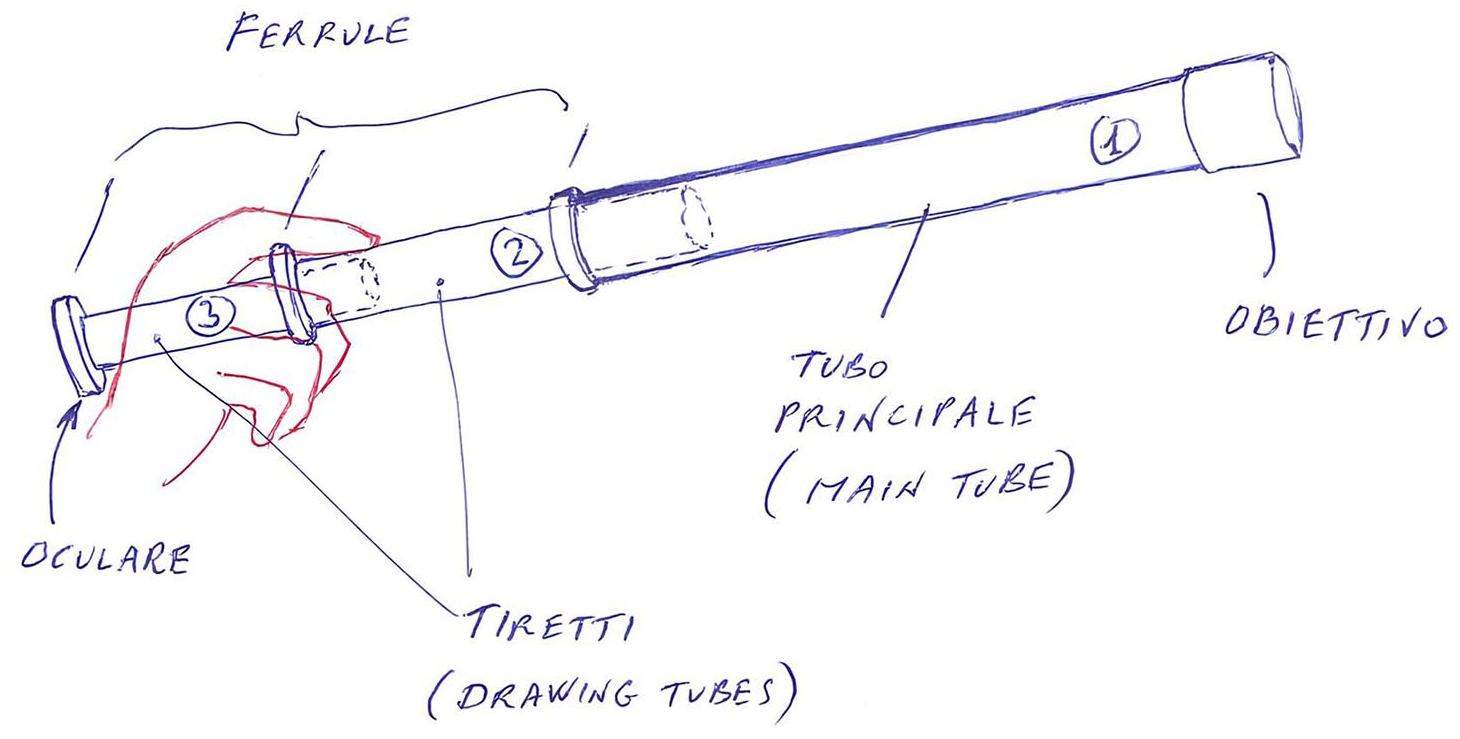
Giorgio Strano, Graphic reproduction of Ribera’s telescope, blue and red pen on paper, 2023.
Toward a new hypothesis for the identification of the sitter and the dating of the painting
Although the fascinating connection with the extant devices built by Galileo is untenable at the present time, Ribera’s series of the Senses remains very intriguing. There are, in fact, some loose ends to tie up that might yet confirm the connections between the painter and the cultural societies of his time. Firstly, it is paramount to remind the reader that Ribera’s Five Senses is rooted, as has reasonably been argued, in the investigations conducted by the Academy of the Lynx, one of the most prestigious European cultural institutions of the period. 32 Founded in Rome by Federico Cesi in 1603 with the purpose of creating a scholarly network devoted to the study of nature, the Academy included the most renowned European scholars, among them the same Galileo, from 1611. It is well known, in this regard, that the investigative methodology employed by the Lyncean scholars prompted a debate about the functions of the sensory faculties and the empowerment of vision through technological devices, such as the microscope and the telescope. 33
Having established that Ribera’s telescope does not have any direct connection with the instruments made by Galileo, what could have been the connection between Ribera and the Lynceans? It has been emphasized recently that Ribera was connected with Johann Faber, 34 a German member of the Academy of the Lynx, who, in his turn, was very close to the painter’s biographer Giulio Mancini. 35 Interestingly, the vivid account of Ribera’s life provided by Mancini is such that we can reasonably say that he knew the painter personally. 36
Yet another promising avenue needs to be explored. The intriguing resemblance between Ribera’s man and Fabio Colonna (1567–1640), a Neapolitan polymath member of the Academy of the Lynx, has escaped scholarly attention. To date we have two portraits showing Colonna’s features. The first is the 1605 official etched portrait displaying a 38-year-old scholar (Figure 11) wearing fine clothes, as appropriate for a man of noble lineage. 37 The second portrait, previously known as the Gentleman of Locko Park, has been convincingly, if not indubitably, identified as an older Fabio Colonna (Figure 12).
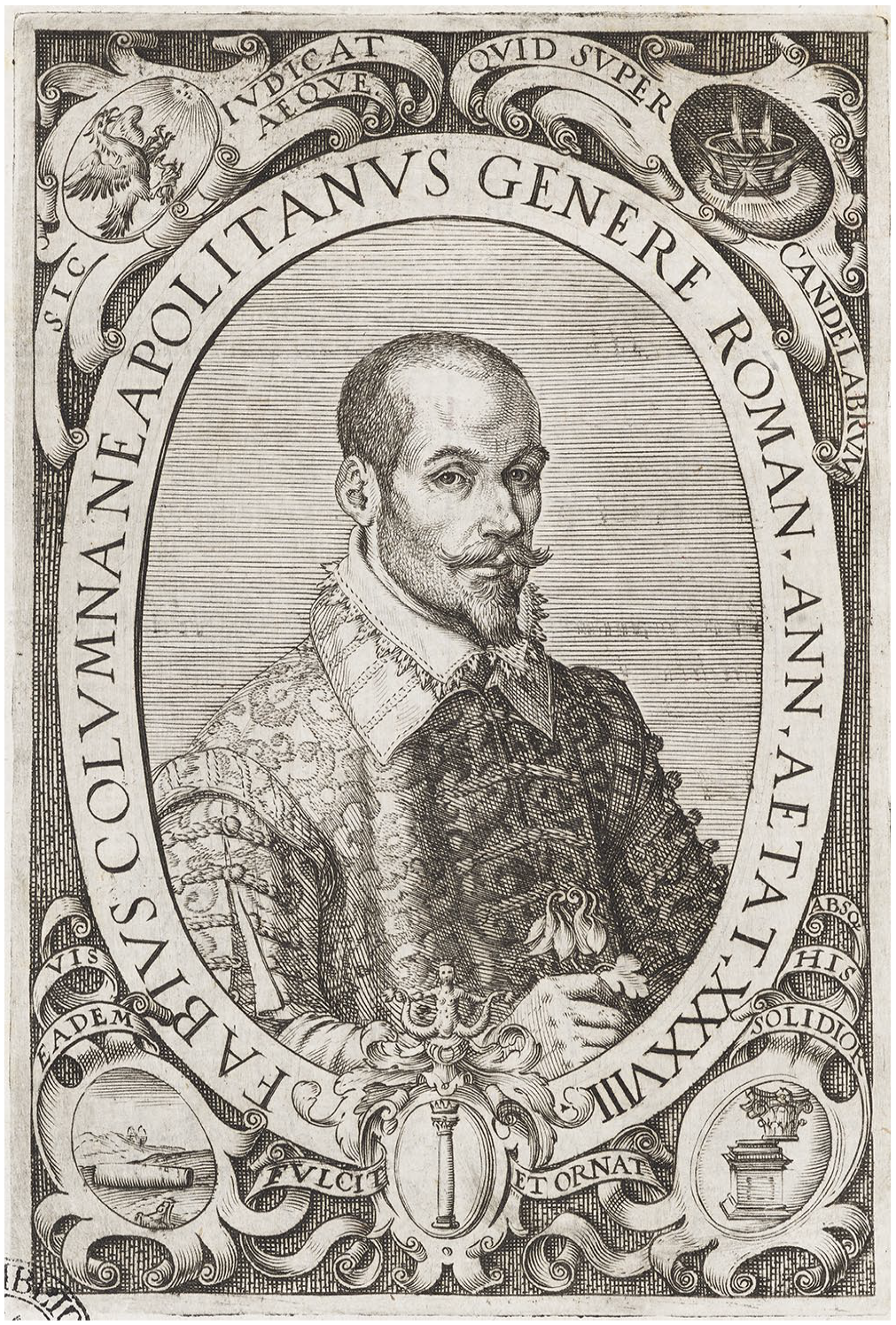
Portrait of Fabio Colonna, etching, from Minus cognitarum (Rome, Faciotti, 1606).
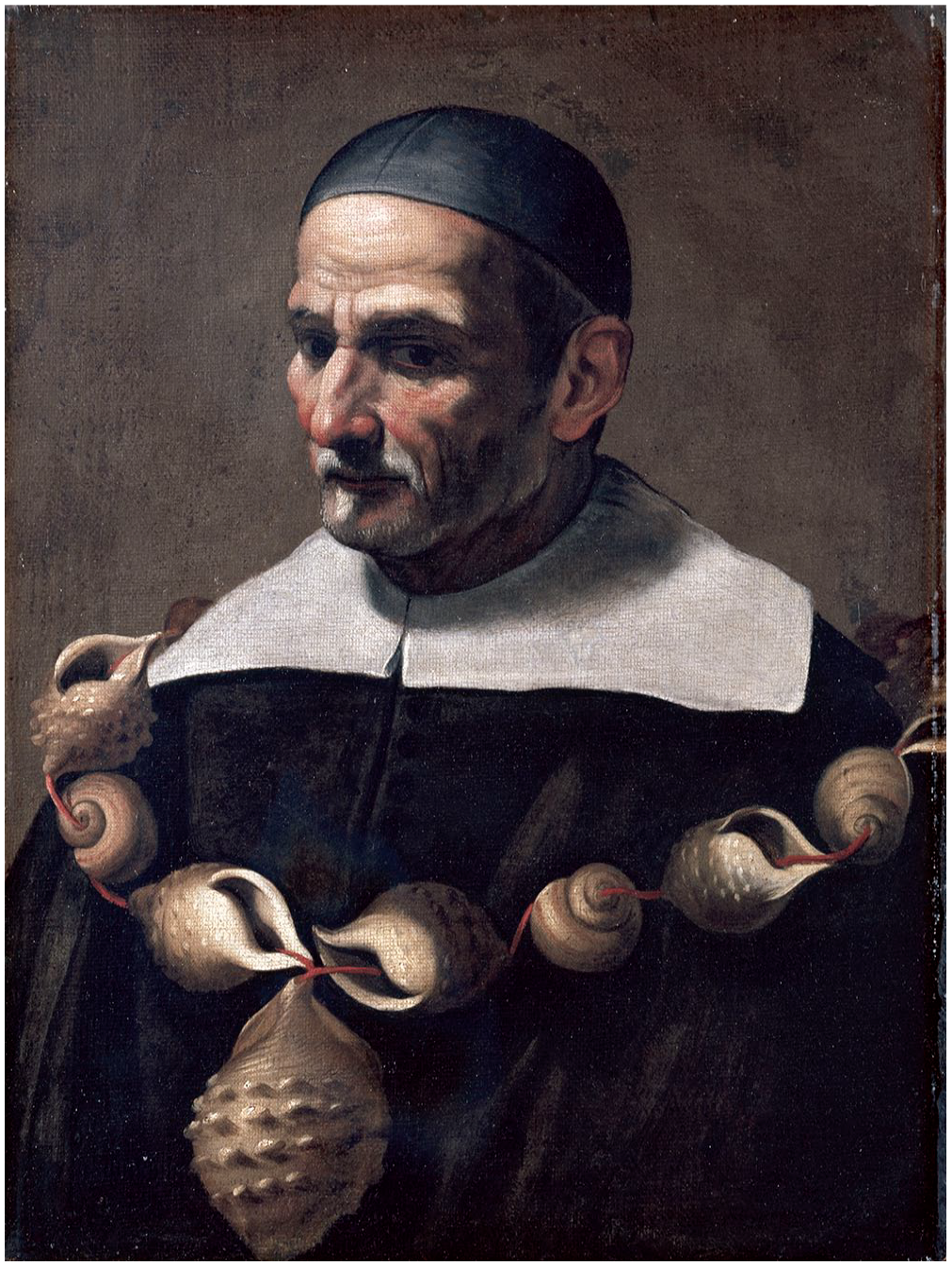
Riberesque painter, Portrait of Fabio Colonna, oil on canvas, c.1620–1630, 46 × 35.5 cm.
The identification of the Locko Park figure as Colonna has been substantiated through his resemblance to the 1605 etching and via the close comparison of the necklace made of seashells with specimens studied by Colonna. 38 If we again consider Ribera’s man and contrast the three portraits (Figures 3, 13, and 14), we can reasonably say that they share very similar facial features. A couple of details must also be pointed out. The ears are notably more prominent and sticking out in the two painted figures than in the etched one, while the etched Colonna and Ribera’s figure have thinner and more pointed noses. Beyond the differences and commonalities, it seems reasonable to assert that the three figures bear a strong resemblance to one another overall, with the two painted figures’ resemblance to each other especially strong. 39 A further step is necessary to better appreciate the possible connection between Ribera, Colonna, and the Academy of the Lynx.
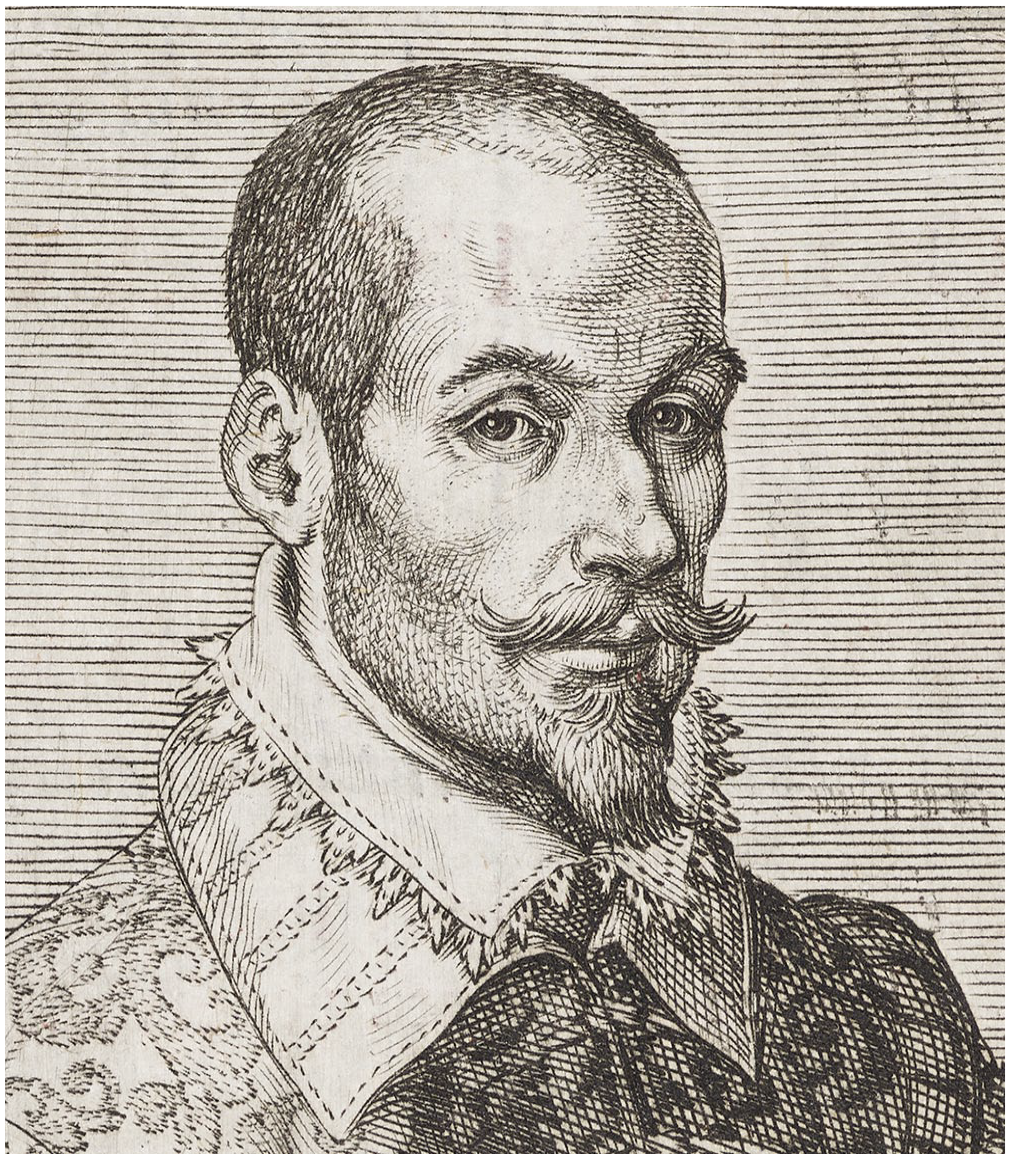
Detail of Figure 11.
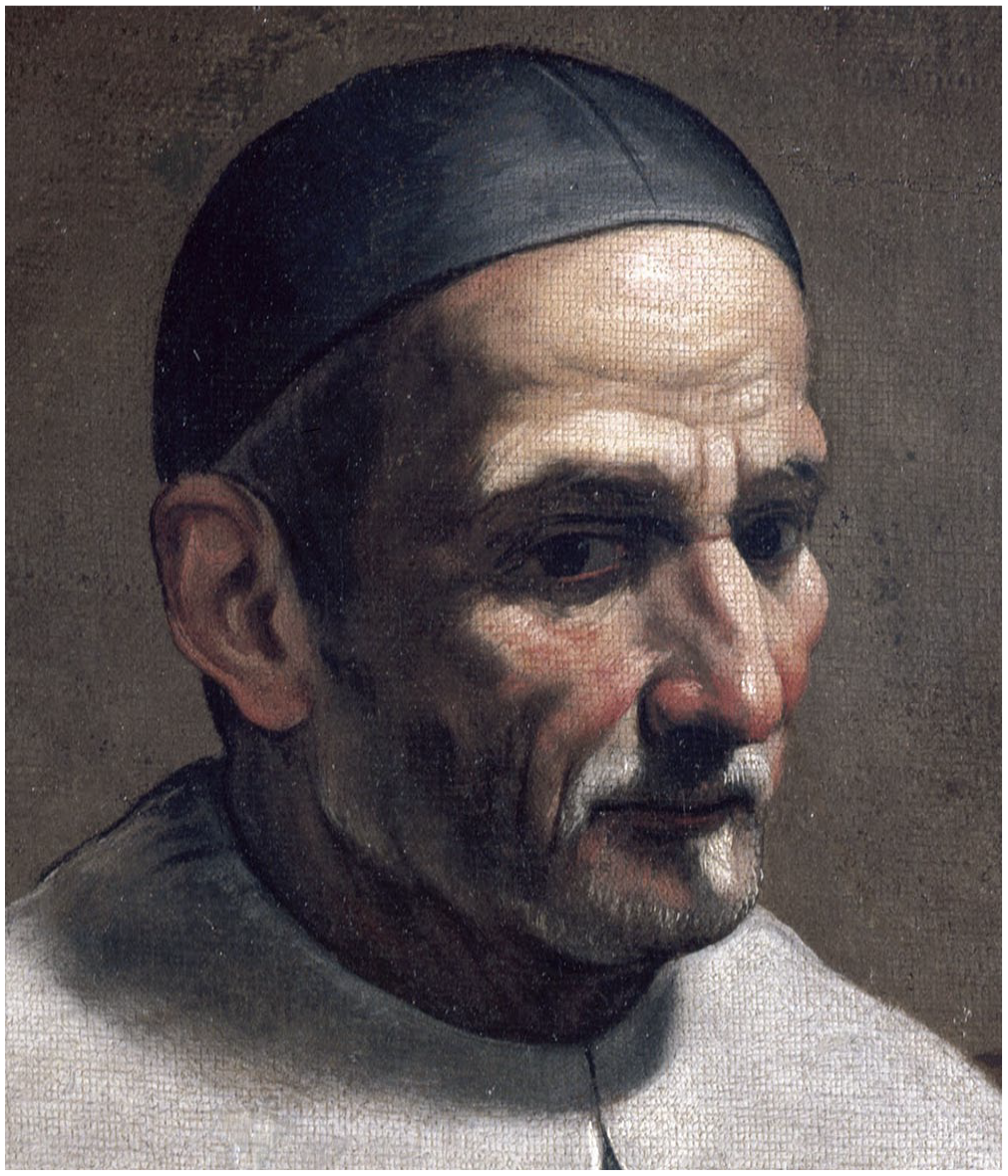
Detail of Figure 12 rotated by 180º degrees.
Admitted to the Academy in 1612, 40 Fabio Colonna was widely renowned among European scholars for his research on botany and marine biology, although he became seriously committed to optics thanks to Galileo. Colonna played a strategic role in the life of the Academy and his reputation was such that he served as its vice president. 41 Letters by Colonna to Galileo, sent from Naples between 1612 and 1619, testify to the scholar’s interest in optical devices. By taking advantage of Galileo’s advice, Colonna learned to make optical lenses and was able to build a prototype of the telescope as early as 1613. 42 Moreover, he sent the scientist the diagrams resulting from his observation of sunspots, studied the combination of lenses, and, together with a fellow Lyncean, the Neapolitan Giambattista della Porta (1535–1615), was working on the release of a new, more powerful telescope. 43
Whether Colonna’s contribution was of any import or not – a matter for historians of science to assess – what is significant is that his documented commitment as a dilettante shows a genuine interest in the telescope and in optics in general. 44 If the man depicted is Fabio Colonna, this would not necessarily imply that the telescope in the painting is one made by himself. We need also to consider that Colonna personally knew Francesco Fontana and was aware that the latter was able to make telescopes. 45 Unfortunately, the depicted telescope does not suggest anything about its optical configuration and physical construction; on the other hand, Colonna’s letters do not allow us to make any direct connection with Ribera’s telescope. Therefore, it is impossible, at the present, to identify the instrument as a specific type of telescope or to associate it with a specific maker.
If my suggested identification is feasible, we would therefore have three portraits of Colonna: the 1605 etching, Ribera’s Sense of Sight of c.1615–1616, and the Riberesque portrait dating to c.1620–1625 (although I would suggest around 1630), 46 in which Colonna would be aged respectively 38, about 49, and between 58 and 63, if we accept a later date (between 1625 and 1630) for the latter, which seems to best fit the appearance of the elderly man. An important note needs to be added. Although art historians suggest the decade of the 1610s for Ribera’s series of the Senses, historians of science such as Zuidervaart and Cocquyt claim that this is a very early date, at least for the Sight, on the account of the telescope’s physical construction. This is confirmed by Strano, who suggests the 1620s, 47 a difference which art historians must consider for a serious reassessment of Ribera’s Senses.
These portraits have different functions and serve different purposes that have inevitably been addressed by changed circumstances (media and sites of display, for example) and by the artists’ technical abilities, as well as differing attitudes to perceiving and representing the sitter’s identity in a specific situation and time. 48 In the etching, a relatively young Colonna, surrounded by Latin mottos and family emblems, is understandably presenting himself to the learned reader as a gentleman of noble and ancient lineage. In the Locko Park painting, the necklace and the tunic replace the fashionable accoutrements of the nobleman and hint at the scholar’s total devotion to science. 49 Finally, Ribera’s painting shows another aspect of the scholar’s life. Unsurprisingly, Colonna is not wearing fine garments but rather coarse fabric clothes, more suited to a natural philosopher accustomed to exploring nature on arduous expeditions. 50 On the other hand, Ribera executed dozens of portraits of ancient philosophers wearing tattered clothes, 51 an iconographic novelty that, far from having any mocking intent, made those eminent figures more humanly concrete.
It is not possible to know when and where Ribera might have met Colonna, as we have only scant chronological details. We know, for instance, that from 1592 onward Colonna moved between Rome and Naples several times. He was in Rome in 1610 52 and perhaps in August 1615, this time on the occasion of the Academy’s anniversary. 53 As for Ribera, he settled in Naples in mid-1616 and married Caterina Azzolino, daughter of the painter Giovan Bernardo Azzolino, allegedly toward the end of the same year. 54 It is plausible that Ribera visited Naples before 1616 to make the necessary arrangements prior to his wedding and further possible that he made part of the series in Naples and sent it to Rome, as has long since been suggested. 55
Conclusions
The findings presented in this research article have questioned, by means of physiognomic comparison, the intriguing but unfeasible identification of Ribera’s man with the Neapolitan optician Francesco Fontana. Moreover, the first, thorough visual analysis of Ribera’s telescope has challenged the view, long since established among art historians, that the instrument was made after the exemplars attributed to Galilei.
Moreover, I propose that the sitter in Ribera’s painting be identified with the Neapolitan polymath Fabio Colonna, a distinguished member of the Academy of the Lynx. Physiognomic resemblances between Colonna’s known portraits and Ribera’s man with a telescope, alongside evidence showing Colonna’s ability to make telescopes with Galilei’s advice, support the suggested identification.
While this study does not offer a conclusive answer as to whether the depicted telescope was made after an instrument constructed by the Lyncean Fabio Colonna, its interdisciplinary approach provides a new insight into an artwork that encompasses different fields of knowledge. This research then reinforces the hypothesis that Jusepe de Ribera was acquainted with the members of the Academy of the Lynx, one of the most prestigious cultural societies of the time, and with their interest in optical instruments. This hypothesis is of no small importance: it suggests a complex interplay between art and science in a contextual perspective. In doing so, it places the painting, and one of the earliest representations of a telescope, in the wider art-historical and scientific context of seventeenth-century Europe.
Footnotes
Acknowledgements
For their constructive criticism of my manuscript, I wish to thank art historians Professor Karen Lang and Dr Alexandra Hoare. I am also grateful to historians of science Dr Giorgio Strano (Museo Galileo, Florence), Paolo Del Santo (Museo Galileo, Florence), Dr Huib Zuidervaart (Huygens Instituut, Amsterdam), and Dr Tiemen Cocquyt (Rijksmuseum Boerhaave, Leiden): their expertise has greatly benefited this study. Similarly, I extend my gratitude for the comments and questions submitted by academic staff and students of the University of Bristol, Department of History of Art, where I first presented an early draft of this research. Finally, I would like to thank the Document Supply and Open Research & Scholarly Publications teams at Coventry University for their invaluable support throughout the development of this work.
