NeugebauerO., “From Assyriology to Renaissance art”, Proceedings of the American Philosophical Association, cxxxiii (1989), 391–403.
2.
GoldsteinB. R., “On the Babylonian discovery of the periods of lunar motion”, Journal for the history of astronomy, xxxiii (2002), 1–13.
3.
GoldsteinB. R., “Ancient and medieval values for the mean synodic month”, Journal for the history of astronomy, xxxiv (2003), 65–74.
4.
As ToddR. B. (“Géminos”, 472–7 in GouletR., Dictionnaire des philosophes antiques (Paris, 2000)) observes, there is no external evidence that allows us to date Geminus: All we know is that he mentions Hipparchus at Intro. ast. 3.8 and 3.13, that he summarized a work by Posidonius (c. −135 to c. −49), and that he is cited by Alexander of Aphrodisias in a work written c. 200. The only internal evidence to be found is in Geminus's remark at Intro. ast. 8.20–24 that the Egyptian festival known as the Isia coincided 120 years ago with the winter solstice according to Eudoxus (that is, with a date for the winter solstice associated with Eudoxus in a calendar or parapegma), but that there is currently a month separating this festival and the winter solstice. Since Geminus plainly refers to the Egyptian calendar (cf. Intro. ast. 8.16–19), since the Egyptian and Alexandrian calendars first diverged no later than −21 (see BickermanE. J., Chronology of the ancient world, 2nd edn (Ithaca, NY, 1980), 49; JonesA., “Geminus and the Isia”, Harvard studies in classical philology, xcix (1999), 263–6), and since this divergence consisted in the latter's adding a sixth epagomenal day and thus did not involve altering the date of any festival in Egyptian calendar but only fixing it in relation to the Sun (see HannahR., Greek and Roman calendars: Constructions of time in the classical world (London2005), 122–4), it follows that Geminus must be have been writing before (or at least not much after) −21. Moreover, given the external evidence of Posidonius's dates (see KiddI. G., Posidonius (Cambridge, 1988–99)), it then follows that Geminus lived and was writing in the first century b.c. before its last quarter: cf.AujacG., Géminos: Introduction aux phénomènes (Paris, 1975), pp. xix–xx. For refutation of Neugebauer's argument that Geminus wrote the Introductio around 50 (NeugebauerO., A history of mathematical astronomy (New York, 1975), 579–81, 1064), see Jones, op. cit., 255–67.
5.
Neugebauer (op. cit. (ref. 4), 584–5) assumes that it is authentic without comment, though he appears to rely on the Greek text edited by ManitiusC. (Gemini elementa astronomiae (Leipzig, 1898)) in which the passage is bracketed as a later interpolation.
6.
For a fuller account, see ToddR. B., op. cit. (ref. 4), as well as “Geminus and the ps. Proclan Sphaera”, pp. 7–48 in BrownV., Catalogus translationum et commentariorum, viii (Washington, DC, 2003); and Aujac, op. cit. (ref. 4), pp. xci–cix.
7.
There is evidence of the translation into Arabic of Greek astronomical texts during this period. The treatises in the Little astronomy, for example, were translated into Arabic by LūqāQusta b., who died around 912: cf.HeathT. L., Aristarchus of Samos: The ancient Copernicus (Oxford, 1913), 320–1.
8.
On the manuscript tradition of this “treatise”, see ToddR. B., “The manuscripts of the pseudo-Proclan Sphaera”, Revue d'histoire des textes, xxiii (1993), 57–71.
9.
See ref. 11.
10.
Todd, op. cit. (ref. 4), 472–3.
11.
In sexagesimal notation, this is 29;31,50,8,20 days. This number is preserved in Gerard of Cremona's Latin translation of a now lost Arabic translation and in one of the Greek manuscripts, Vaticanus gr.318. (This manuscript is the work of a learned copyist who, Aujac thinks (op. cit. (ref. 4), p. cxxi), is reliable on technical matters and for the transmission of numbers, but perhaps less faithful in preserving other aspects of Geminus's text.) Moreover, as GoldsteinBernard R. has kindly confirmed for me, this number is also preserved in Moses ibn Tibbon's Hebrew translation of the same Arabic translation, ms. Parisianus heb.1027 (see f. 29b). Curiously, neither of the two Greek manuscripts on which Aujac ultimately bases her edition has this number: Constantinopolitanus Palatii veteris gr.40 has 29;31,40,50,24 and Vaticanus gr. 381 has 29;31,40,8,24. Still, they each have a sexagesimal value, and it seems likely that these values are variants due to copyist's errors. The upshot, apparently, is that the Babylonian value was established in the Greek ms. tradition before the Arabic translation.
12.
: See Aujac, op. cit. (ref. 4), 55–56.
13.
Manitius, op. cit. (ref. 5), 118 deletes : The occurrence of this particle is odd both for its extreme postponement and in light of the earlier occurrence of μńv.
14.
Manitius, op. cit. (ref. 5), 118 makes this supplement in order to maintain consistency in the way Geminus writes of intervals or cycles as being of so-and-so many days. It would also seem to be required to avoid the awkwardness of having both and modify .
15.
: See Aujac, op. cit. (ref. 4), 56.
16.
: See Aujac, op. cit. (ref. 4), 56.
17.
Geminus talks of the “octaeteris as a whole” because he has in fact introduced a number of them — that in 8.27 as well as the 8-year components of the 160-year cycle (note in 8.41) and presumably of the 16-year cycle (8.37–39). These 8-year cycles vary slightly in the number of days and in the number of months equated. For example, in the 16-year cycle, one octaeteris has 2923 days and the other, 2924 days, though both have 99 months. Accordingly, when Geminus writes in 8.42.
18.
.
19.
the conjunction indicates that these various octaeterides are mistaken in their number of months and days. The next is epexegetical: It shows that this error is to be viewed in what follows as an error in the intercalation of months.
20.
Aujac (op. cit. (ref. 4), 56) brackets this sentence (). As she remarks (ibid.142), the difference between a synodic month of 29;31,50,8,20 (= 29.53059) days and one of 29 ½ 1/33 (= 29; 31, 49, 5, 27 or 29.53030) days is not sufficient to require the insertion of an additional intercalary day in an interval of 16 years. She is probably right that this line recalls the argument of 8.37–39 in which it is shown that there are three intercalary days in a 16-year cycle which assumes the latter value. The error lies in supposing that the former value entails another intercalary day. One should hesitate to ascribe this error to Geminus, given the numerical competence he displays elsewhere in the treatise; that is, it seems better to regard this sentence at least as an interpolation. Cf. Manitius, op. cit. (ref. 5), 267–8.
21.
Hollow months are of 29 days; full months, of 30 days.
22.
For Geminus (Intro. ast.8. 26: cf.BowenA. C.GoldsteinB. R., “Geminus and the concept of mean motion in Greco-Latin astronomy”, Archive for history of exact sciences1 (1996), 158, n3), calendrical cycles entail identifying a whole number of days with a whole number of months. Accordingly, if the length of the month is 29 ½ days, such a cycle must have an even number of these months, say, 2p of them, where p is a whole number. But, since 2 p · 29 ½d = 59 pd, and since 59d = 30d + 29d (cf. Intro. ast.8.3), the number of full and hollow months will be equal no matter what p is.
23.
: Its daily magnitude, scil. its length in days. The idea is that there is a perceptible fraction of the day which, along with the 29 ½ days, constitutes the synodic month; and that this fraction guarantees that there will be more full than hollow months. Cf.“mais en fait la durée mensuelle comporte un supplement appreciable”, Aujac, op. cit. (ref. 4), 55.
24.
Cf. Intro. ast.8. 37–39.
25.
See ref. 18.
26.
Aujac, op. cit. (ref. 4), 142.
27.
Manitius, op. cit. (ref. 5), 267–8.
28.
Manitius, op. cit. (ref. 5), 268.
29.
In 8.47, Geminus states that the value for the lunar year is “very nearly 354 days”, as accurately (ascertained). Perhaps he says this on the ground that it is 12 months of 29 ½ 1/33 days. If so, 8.46–47 simply recasts the revision of the octaeteris in 8.36–38.
30.
As BrittonJohnhas pointed out in private communication, 2 ½ 1/33 is the closest representation of the Babylonian value with only two unit-fractions — the next unit-fraction would be 1/3435 — and this raises the question of whether the 2 ½ 1/33 is but the result of converting from sexagesimal notation to unit-fractions. Such difference between the two values as there is amounts in 19 years to roughly 1;38,37 hours. In 76 years, the longest interval that Geminus considers, the difference becomes roughly 6;34 hours. Were Geminus concerned with eclipse-cycles, however, this would be important.
31.
In 18.10 Geminus computes the mean anomalistic month by dividing the number of days in the exeligmos (19756) by the number of anomalistic months (717) in this period; and he states that it is 27;33,20 days, when he should have said that it is 27;33,13,18 days. The error here arises, I think, not from incompetence but from his effort to explain, on his own terms, lunar values that derive from two different Babylonian text-traditions: cf. Bowen and Goldstein, op. cit. (ref. 20), 164–5.
32.
Though the construction of the initial octaeteris begins with the implicit assumption that the mean synodic month is 29 ½ days, its value in this cycle is 2922/99 = 29.151515 days. In the 16-year cycle, the value of the mean synodic month is 5847/198 = 29.53030 days. It is uncertain whether Geminus intends to keep the year-length of the 160-year cycle the same as that of the 16-year cycle or as that of the original octaeteris: If the former, the value for the mean synodic month is 58470/1979 = 29.54522 days; if the latter, it is 58440/1979 = 29.53007 days.
33.
Cf. ref. 27.
34.
Over the course of 19 years (235 months), the difference between the first two values accumulates to roughly 18 minutes; over the course of 76 years (940 months), the difference between the first and the third values amounts to just under 15 minutes.
35.
See ref. 11.
36.
The anonymous reader objects that there is another possibility: Simply bracket the passage after the first sentence of 8.43 and before the last sentence of 8.45. In his words,.
37.
We do expect Geminos to explain why the number of days in an octaeteris is not correct, just as in the next paragraph he explains why the number of months is not right. But all he needs to show this is that the octaeteris was constructed on the false assumption that the mean lunar month is 29 ½ days exactly; the Babylonian System B number is clearly the wrong thing to bring up.
38.
Such a restoration, however, is based on a misapprehension of 8.27–42; it is by no means preferable to Manitius's deletion of 8.43–45. Granted, the month-length in the octaeteris of 8.27–31 is not 29 ½ days: This value is only assumed at the outset as a crude parameter that is refined in constructing this cycle. In fact, the value for the synodic month of the octaeteris in 8.27–31 and the values in 8.36–41 (see refs 17, 30) are all greater than 29 ½ days, and each of these octaeterides involves numerous intercalations. So it would be unseemly for Geminus to remark, “[This] is why the full months will have to be more numerous than the hollow ones”, even if he did write, “The reason is that the interval of a month has not been ascertained accurately”. Moreover, it is unlikely that he even wrote the latter sentence. As I have explained (ref. 17), is epexegetical and signals that the criticism of the octaeteris is to focus on the number of months to be intercalated in a cycle that meets all the desired criteria. 8.42 does not warrant expectation that there is to follow a statement of why the number of days in the octaeteris is incorrect. Indeed, Geminus has already indicated that the month-length of the octaeteris is problematic in 8.37, by introducing the month of 29 ½ 1/33 days, a month-length described as “ascertained accurately” (). So, given that this value is preserved in the 16-year cycle and in the 160-year cycle (if it has 58440 days), the restoration proposed is not only gratuitous, it entails a troubling denial that this value is accurate, even though the same value is approved in 18.1.
39.
On this reading, it not a critical problem that Geminus does not consider the length of the synodic month implicit in each cycle, because his focus in correcting the octaeteris is on its intercalations not on its month-length. Of course, one would certainly like to know why he thinks 29 ½ 1/33 days is a good value, and whether he thinks it the same or different than those values implicit in the 19-year and 76-year cycles (see ref. 32). But these concerns do not bear adversely on the logic of his exposition, as they did earlier when 8.43–45 was retained in the text.
40.
See RochbergF., Babylonian horoscopes (Philadelphia, 1998).




 : See
: See  : The occurrence of this particle is odd both for its extreme postponement and in light of the earlier occurrence of μńv.
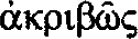 and
and  modify
 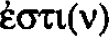 .
. : See
: See  : See
: See  in 8.41) and presumably of the 16-year cycle (8.37–39). These 8-year cycles vary slightly in the number of days and in the number of months equated. For example, in the 16-year cycle, one
  .
. indicates that these various
  is epexegetical: It shows that this error is to be viewed in what follows as an error in the intercalation of months.
 ). As she remarks (
 : Its daily magnitude,
  is epexegetical and signals that the criticism of the
  ). So, given that this value is preserved in the 16-year cycle and in the 160-year cycle (if it has 58440 days), the restoration proposed is not only gratuitous, it entails a troubling denial that this value is accurate, even though the same value is approved in 18.1.