




Abstract
This article presents a comparative analysis of the Czech Republic and Colombia’s implementation of the United Nations Guidelines for Alternative Family Care. Based on secondary data, we identified a shared adherence to the UN framework; a strong Czech system for alternative caregivers’ selection, training and support; a deep ethical commitment of Colombian foster families to ensure children’s well-being, despite limited resources; and the relevance of supporting parents at risk of having their children removed from their care and integrating the effects of unplanned migration into alternative care strategies. The findings are valuable for improving practices in social work and social policy.
Introduction
The optimal implementation of alternative family care as part of the social and legal protection of children is crucial for states that have adopted the Convention on the Rights of the Child (United Nations, 1989) and that follow the United Nations Guidelines for the Alternative Family Care of Children (United Nations General Assembly, 2009). Thus, contemporary research on alternative family care is still conducted worldwide in different social conditions and systems (e.g. Chinwe and Uzoma, 2019; Davidson et al., 2016; Holland, 2020; Rácz, 2018; Rogers and Karunan, 2020; Schwinger, 2008; Vasudevan, 2014).
Our study aims to analyse and compare the experiences and challenges faced by the Czech Republic and Colombia in implementing the UN Guidelines for Alternative Family Care. Previous studies have analysed principles, values and guidelines for the alternative care of children (Lerch et al., 2020; Rácz, 2018; Rogers and Karunan, 2020; Rutter, 2000), and some of them have reviewed the application of the UN Guidelines in selected countries (Cantwell et al., 2012; Davidson et al., 2016). However, a cross-national comparison of the application of the Guidelines has not yet been conducted.
The two countries selected for this analysis are geographically distant, culturally different and stem from backgrounds with diverse social perspectives. By 2024, their demographic and socio-political characteristics revealed a parliamentary republic in the Czech Republic and a presidential republic in Colombia. Both countries have a similar proportion of the female population (51%) and fertility rates (1.7%). However, from an ageing perspective, while Colombia has a higher distribution of its population under 14 years of age (21% compared with 15.8% in the Czech Republic), Czechia has a greater proportion of its population over 65 years old (20.8% compared with Colombia’s 10%) (United Nations Population Fund [UNFPA], 2024).
By 2022, the Czech Republic’s population was predominantly Czech (83.8%), with other nationalities including Moravian (5.0%), Slovak (1.3%), Ukrainian (1.1%) and Vietnamese (0.4%) (Czech Statistical Office [CZSO], 2023). Meanwhile, the Republic of Colombia declares itself a multicultural and multi-ethnic nation, with 86.5 per cent of the population identifying as mestiza (white-indigenous mixed background), 10.3 per cent Afro-Colombians, 3.1 per cent Indigenous peoples and 0.006 per cent Roma (National Administrative Department of Statistics [DANE], 2018).
Over the past decade, incoming migration, mainly from Venezuela, has notably increased, with an estimated 1.8 million by 2021, 18 per cent of whom are children and young people under 18 years of age (Rosales et al., 2022).
Despite their contrasting socioeconomic and political realities, the selected countries converge in their commitment to the protection of children and to follow the framework of the UN Guidelines. Reviewing the experiences, challenges and strategies to apply the framework in their specific contexts can shed light on lessons that can be mutually drawn and applied in similar circumstances.
In this article, we start by presenting the methodological design, followed by a brief introduction to the alternative family care systems in both countries and an analysis of the application of selected UN Guidelines. Finally, a discussion on both systems’ limits, opportunities and possible mutual inspirations for social policy and social work is included.
Design of the study
Child and family-related issues are those mostly included in comparative studies within the context of social work (Beck and Hämäläinen, 2022; Ghaderi et al., 2021), usually following a cross-national qualitative approach (Barney and Chagunda, 2023; Bird et al., 2012; Chapple and Ziebland, 2018; Lattas et al., 2023; McCleary and Wieling, 2017; Meeuwisse and Swärd, 2007). This also applies to comparative analyses of alternative family care.
We decided to use a comparative analysis as a useful method for evaluating and contrasting two different national systems and as a valuable tool for gaining a deeper understanding of them. As Baistow (2000) summarises, international comparative research enables us to learn about others, from others, about ourselves and with others. In our research, we use a comparative analysis approach to answer these main questions:
How do both countries’ child protection and alternative family care systems work?
How do they reflect the values and principles of the UN Guidelines for Alternative Family Care?
What challenges are faced by the two countries, and how can each inspire social policy and social work?
We use a case-oriented comparative analysis, which, according to Ferragina and Deeming (2023), aims to interpret and understand the patterns underlying a phenomenon more than identifying the causal nexus of critical variables. Previously, Del Valle and Bravo (2013) compared the systems of 16 countries, yet neither Colombia nor the Czech Republic was included. Later, Holland (2020) published another comparison of the Czech Republic, Lithuania, Norway, Poland, Romania and Russia. In this regard, Beck and Hämäläinen (2022) point to the lack of comparisons, including countries in Africa and South America, and recommend covering fewer countries to obtain a comprehensive and in-depth understanding.
In our article, we combined the European and Latin American perspectives through the lens of the UN Guidelines for Alternative Family Care, focusing on Part B: Alternative Care. The principles from this section have been chosen to study specific aspects of the functioning of alternative family care systems. When reviewing each UN recommendation, we aimed to understand how this aspect is addressed and mirrored in each country’s system, as well as their similarities and divergencies.
Furthermore, we used official policy documents, secondary data, and results of various surveys and analyses from both countries; thus, this article is not grounded on any direct studies with human or animal participants. As a central limitation to our study, we acknowledge the lack of similar data on some topics and variations in definitions of key terms used in this area, for example, foster care and relative/kinship care. Also, authors continually discussed the use and meanings of key terms in their original languages (Czech, Spanish) and their translations to English. Despite this effort, slight nuances of the original understanding and use of different terms can be lost in the translation.
How do Czechia and Colombia’s child protection and alternative family care systems work?
By signing the United Nations Convention on the Rights of the Child, both societies have decided and committed themselves to ensuring and protecting children’s rights, prioritising the principle of the best child’s interest (Vásquez and Estrada, 2016). It is relevant to note that according to the Convention, children are defined as individuals under the age of 18 years. Currently, the Czech Republic ensures and protects children under its 1999 legislation, while Colombia does so under its 2006 laws.
Similarly, systems operate across various ministries. In Czechia, one of the key actors for alternative childcare is the Ministry of Labour and Social Affairs (MLSA), which oversees social policy by providing financial support and services for families and social and legal protection for children by including alternative family care. Another key actor is the Ministry of Education, Youth and Sports that establishes children’s care homes, including those with educational facilities, and the Ministry of Health responsible for homes for people with disabilities. Likewise, Colombia’s key offices for child-related matters include the Ministry of the Interior, Ministry of Labour, Ministry of Health and Social Protection, Ministry of National Education, Ministry of Equality and Equity, and Ministry of Justice and Law. The national institutions responsible for family protection are grouped under the National Family Welfare System (SNBF) umbrella. The system is coordinated by the Colombian Family Welfare Institute (ICBF), which, along with a broad group of institutions, mainly from the areas of health, social protection and education, implement the respective actions to ensure the protection of children.
The Czech Republic’s child protection system is undergoing transformation led by the MLSA (2021), but coordinating this process with institutions in other ministries, like residential children’s homes, has proven challenging. The Ministry aims to deinstitutionalise childcare by emphasising a shift from viewing children as ‘objects’ or ‘victims’ to recognising them as rights holders with inherent claims to protection. The Act on Social and Legal Protection of Children from 1999 is fundamental in this area (Novotná et al., 2022).
In Colombia, the robust regulatory framework regarding child protection includes three national laws (1098/2006, 1232/2008 and 1361/2009) that served as a recent context for the Law of Childhood and Adolescence (2018). These regulations provide crucial guidance on recognising children and young people as rights-bearing individuals and also commit the national and local governments as central guarantors (Rosales et al., 2022).
Following the strategy of moving across the country, social and legal protection authorities operate at the national/departmental/district/regional, or municipality levels, both in the Czech Republic and in Colombia. In the Czech Republic, the State, through the social and legal protection of children authorities (SLPA), is the guardian and representative of the child in the name of the Nation that protects their interest and well-being. These bodies/authorities operate at various levels and intervene when the child’s best interest is endangered.
In Colombia, the Children and Youth Code recognises the authority of family advocates, family commissioners, the children and youth protection branch of the national police, and the attorney general. At the operational level, the SNBF’s professional teams assigned to monitor the children’s conditions comprise psychologists, social workers and nutritionists, who are expected to act around the country once the threats of violation have been confirmed. The national authorities determine the most appropriate measures to initiate the Administrative Process for the Restoration of Rights (PARD) (Rosales et al., 2022).
In the Czech Republic, the alternative childcare system offers two options for children currently without care for various reasons: institutional care and family care (Figure 1). The system of alternative family care consists of the following formal arrangement types: adoption, foster care (temporary and long-term), kin foster care (long-term), care by another person and guardianship with personal care.
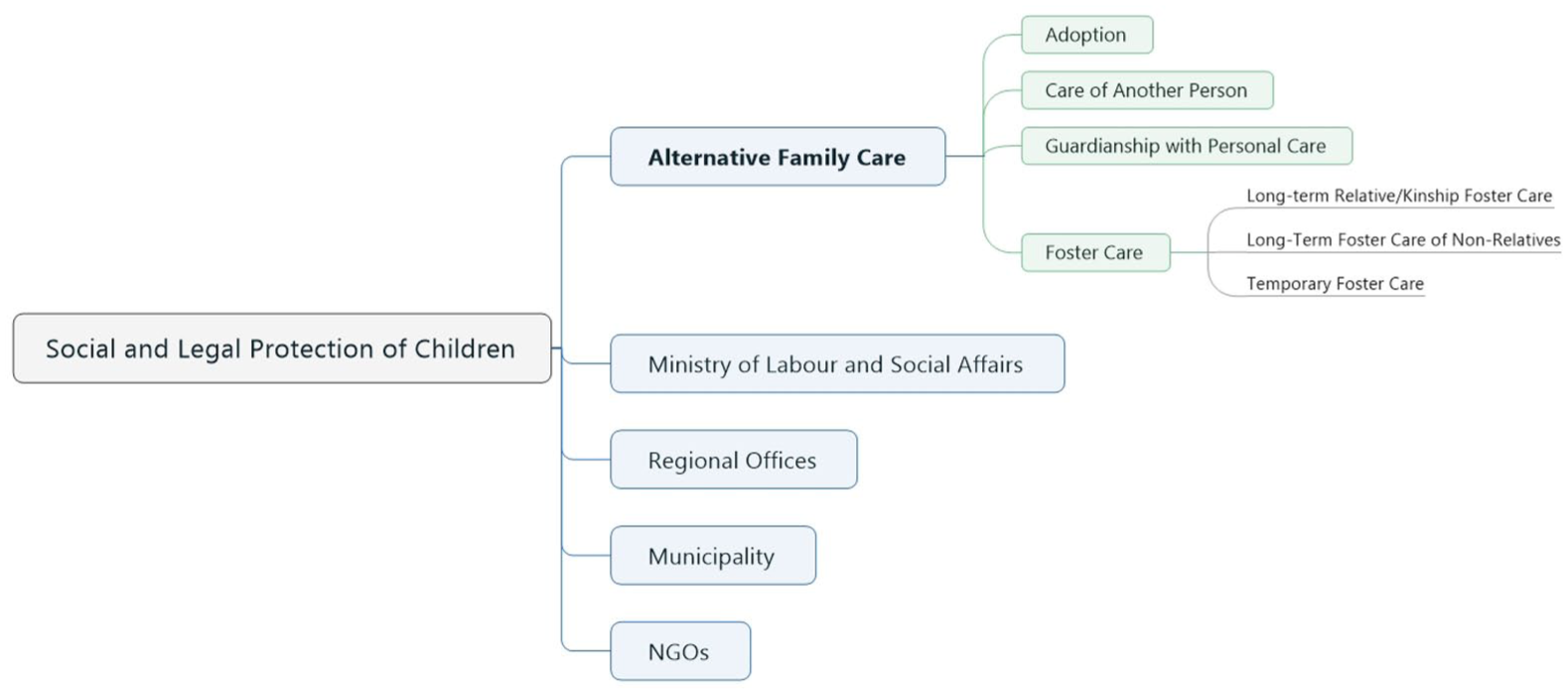
Alternative family care in Czechia.
Social workers operate within the system at multiple levels in the following key areas:
Development of frameworks and methodologies within the MLSA;
Information and guidance services to prospective applicants for alternative family care (national, regional, municipal levels);
Liaising with individuals interested in alternative family care, collecting and evaluating relevant information (municipal level);
Maintaining records of children eligible for alternative family care, preparing prospective caregivers and facilitating the ‘matching’ process between children and applicants (regional level);
Overseeing the implementation of alternative family care, supervising foster families and providing ongoing support (municipality, NGOs).
In Colombia, like most Latin American countries, the foster care system identifies informal and formal placements (Figure 2). Regarding informal placements, family members or friends assume the children’s care without a court order. The formal placement requires a court order, and children are placed in foster families or institutional environments (Fernández-Daza, 2018). The options presented by the alternative family care system include adoption, temporary foster care (offered by ICBF’s Foster Families programme), and guardianship with personal care. As in many parts of the world, informal kinship care is also a popular alternative in the country (Rosales et al., 2022).
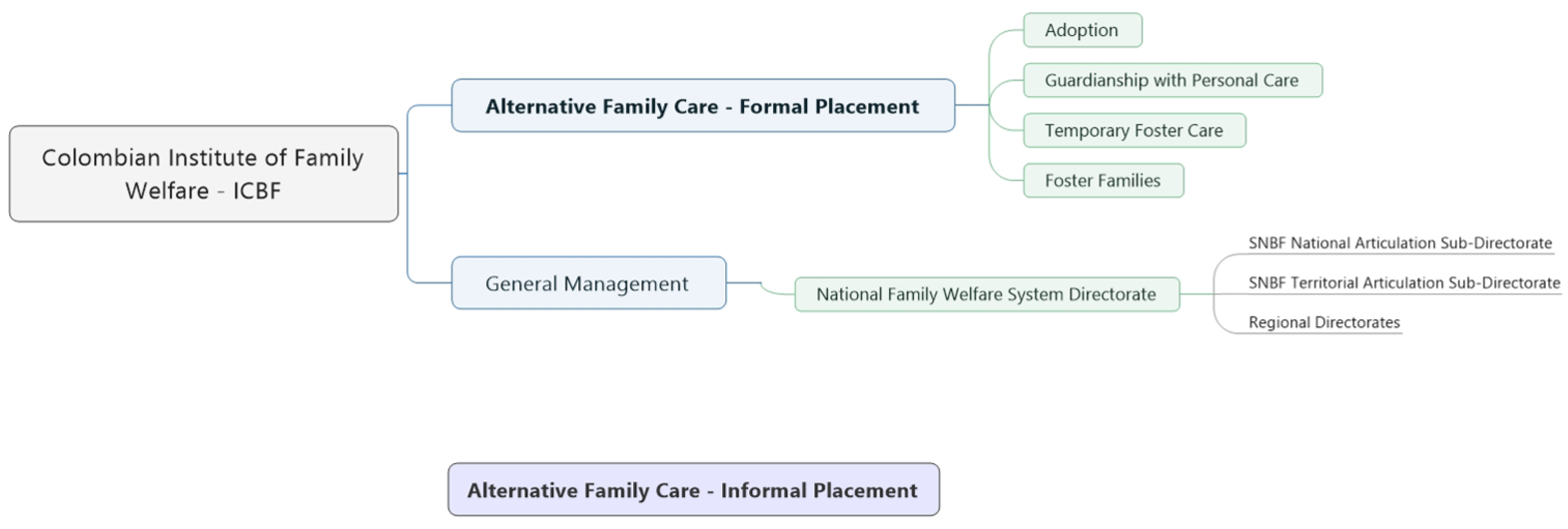
Alternative family care in Colombia.
Both countries have built information systems that provide relevant and up-to-date data on the outcomes of their child protection efforts. Official figures from the Czech Republic indicate that by 2022, the social and legal protection authorities registered approximately 134,000 cases. Of those, 8500 cases were of abused and neglected children. Moreover, 20,000 children were placed in the care of persons other than their parents, and almost 6000 were living in institutional care (MLSA, 2022).
Official figures in Colombia indicate that between 2012 and 2022, the family care system reported 464,489 children in administrative processes (PARD). Of those, 128,878 involved reports of sexual, physical, psychological or intrafamilial types of violence. Between 2021 and 2022, the family care system reported a significant increase in children in administrative processes, with approximately 55,000 each year. By June 2023, figures indicate that more than 71,000 children had active administrative processes, with over 16,000 entering the system in 2023. In addition, the number of Venezuelan children served by the SNBF has significantly increased, rising from 500 in 2012 to 105,153 in 2019. Among them, 2188 children have been served by PARD due to sexual violence or negligence (Rosales et al., 2022).
UN Guidelines implementation: Main findings
In this section, we compare how the selected UN Guidelines for the Alternative Care of Children are developed in the Czech Republic and Colombia systems. It focuses specifically on Part II, General Principles and Perspectives/B Alternative Care Guidelines, which comment on the essential parameters of the alternative family care systems: All decisions should take full account of maintaining the child close to his usual place of residence. (UN Guidelines, II/B/11)
As members of the UN and signatories of the Convention on the Rights of the Child, the Czech Republic and Colombia prioritise the social and legal protection of children, aiming to maintain a connection with their biological families whenever feasible. In cases where biological parents cannot provide care, alternative caregivers are primarily sought within the family network.
In the Czech Republic, the Social and Legal Protection of Children Act, § 20, 3b, underscores the priority of placing children in foster care with relatives or individuals closely connected to their family. State oversight of this care is executed by staff from the social and legal protection of children authorities.
Alternative family care from non-relatives typically occurs within the child’s local region. If suitable caregivers are not found there, the search extends to other areas, potentially leading to international adoption. This process mirrors the approach applied in institutional care, where infant institutions primarily serve local children. Statistics indicate that 74 per cent of children live in an institution within their region of permanent residence, while 20 per cent come from neighbouring areas (Klusáček, 2020).
In Colombia, authorities strive to keep children who must be separated from their families in the same city of residence, except in cases where significant risk demands relocation. This approach enables regular visits from their biological family and enhances accessibility for ICBF members. Under no circumstances will children or adolescents be placed with individuals residing abroad unless a formal adoption process is conducted, which may result in an international relocation. Ethnic diversity in Colombia has meant that the State has gradually become more inclusive and diversified its policies, trying to ensure that children and adolescents receive protection following their cultural traditions. In this regard, indigenous children are prioritised for placement within Indigenous families (Rosales et al., 2022): Decisions regarding children in alternative care should have due regard for the importance of ensuring children a stable home and of meeting their basic need for safe and continuous attachment to their caregivers. (UN Guidelines, II/B/12)
In both the Czech Republic and Colombia, it is a national principle that children require stable relationships, which institutional care may not provide. In such settings, fluctuating staff and shift work prevent consistent caregiving. Ultimately, a child’s optimal developmental environment is within a family.
Regarding the focus of the systems, the Czech Republic prioritises securing enduring alternative family care, subjecting cases of children returning to institutional care to thorough scrutiny. Quality screening and education for prospective alternative family caregivers contribute to the sustainability of these arrangements. Long-term foster care is bolstered by support mechanisms within the accompanying institute, providing foster families with a range of services and both financial and non-financial assistance (Macela, 2023).
On the contrary, the Colombian model focuses on strengthening and protecting bonds between children/adolescents and their families or support networks (ICBF, 2021). The Administrative Process for Rights Recovery mandates an 18-month limit for authorities to determine adoptability or close the case for family placement (ICBF, 2021). However, many children exceed this timeframe due to low adoption rates and bureaucratic delays. This results in emotional bondings within foster homes, which can hinder secure attachments and cause distress when children leave (Avendaño Pérez et al., 2016; Quijano Montoya and Campuzano Rivera, 2021). Furthermore, resource shortages and excessive bureaucracy lead to prolonged stays in ‘temporary centers’, intended for emergency placements, negatively affecting children’s emotional well-being (Rosales et al., 2022): Removing a child from the family must be a measure of last resort. This solution must then be regularly reviewed. (UN Guidelines, II/B/14)
Family reintegration, prioritising the child’s interests, is fundamental to all services and interventions in the Czech Republic when a child leaves parental care; if this is not feasible, alternative family care is pursued (MLSA, 2021). Temporary foster parents offer provisional care from birth, while long-term foster parents, school children’s homes or homes for those with disabilities offer extended alternative care. These two offers apply to specific groups such as abused, premature, withdrawal-affected or disabled children (Klusáček, 2020).
In Colombia, the law guarantees children’s right to a family and prohibits their separation unless their rights cannot be protected within the family’s environment. Foster homes serve as temporary alternatives, aiming to offer children family experiences and the development of emotional bonds (ICBF, 2021).
In 2022, in the Czech Republic, 134,105 children were listed in the basic social and legal protection register of children authorities, with 3395 removed from parental care (MLSA, 2022). In that same year, Colombia had 73,417 children subject to an administrative process of rights restoration (PARD). Of these, 59 per cent (43,316) remained with their biological families, 27 per cent (19,823) were in institutional care and 14 per cent (10,278) resided with foster families (El Tiempo, 2022): Financial and material poverty, or conditions directly and uniquely imputable to such poverty, should never be the only justification for the removal of a child from parental care. (UN Guidelines, II/B/15)
Poverty poses a substantial risk in both countries due to parents’ precarious economic and social conditions. However, most social workers in the Czech Republic do not view the family’s financial status as grounds for child removal (Topinka, 2017). Similarly, Colombia does not accept financial limitations or poverty as justification for child separation. Nonetheless, to observe the principles of necessity and suitability, the government should offer a system that prevents and protects families from experiencing poverty and extreme poverty conditions, which remain a challenge in Colombia. Currently, families receive limited economic assistance through social programmes, a support that is insufficient to meet their needs or achieve financial autonomy. Consequently, actors of the SNBF acknowledge that poverty often serves as the argument to separate a child from their family, and negligence – interpreted as a cause of separation – is usually conceived as poverty (Rosales et al., 2022): Siblings with existing bonds should, in principle, not be separated. (UN Guidelines, II/B/17)
The Czech alternative family care system prioritises maintaining the cohesion of sibling groups, considering them a vital source of resilience for children unless this contradicts the child’s best interests (Matějček, 2002). Typically, sibling groups are placed together in long-term foster care within the system. While the recommendation to preserve sibling unity is upheld, challenges persist in placing large groups of siblings from a socially disadvantaged background in alternative family care (MLSA, 2021).
Colombia, unlike other Latin American countries, has policies to prevent sibling separation in child protection (UNICEF, 2013). Foster care placements prioritise sibling groups, with up to five members placed together when possible. However, due to placement constraints and the system’s aim for even distribution across foster accommodations, known as the quota system, siblings are not always placed together. In these situations, regular visits are arranged to maintain their connections within the protection system (Rosales et al., 2022): States should seek to devise appropriate means to ensure child’s welfare and protection while in informal care arrangements. (UN Guidelines, II/B/18)
In the Czech Republic, care by grandparents and other relatives is governed by existing legal frameworks, such as kinship foster care or ‘entrusting a child to the care of another individual’. Informal care arrangements are never permitted. Czech legislation, particularly §§ 954 or 962 of the Civil Code, favours alternative family care provided by relatives to uphold natural family bonds. Relatives’ care constitutes the primary form of alternative family care, ‘with approximately 67% of children in foster care being placed with relatives’ (Macela, 2019: 3).
In Colombia, children without parental care are often placed informally with relatives or familias de crianza (foster families), classified as informal alternative care by the UN Guidelines (United Nations General Assembly, 2009). Although these arrangements aim to provide stable and safe bonds, many remain unreported, limiting access to economic and social support, including caregiver training (Rosales et al., 2022). The ICBF’s protection services respond to the needs of children, families and communities on demand (ICBF, 2021). Furthermore, Colombia’s Catholic tradition assigns godparents a cultural responsibility to care for their godchildren, sometimes leading parents to entrust their children directly to them. Notably, in 2014, the Constitutional Court ruled in favour of a family separated from their godson after 13 months, ordering the child’s return to the informal caregiving home (Sentencia T-836/14): The use of residential care should be limited to cases where such a setting is specifically appropriate, necessary and constructive for the individual child concerned and in his/her best interests . . . alternative care for young children, especially those under the age of 3 years, should be provided in family-based settings. (UN Guidelines, II/B/21-22)
In the Czech Republic, priority is given to alternative family care. Starting from 2025, it is expected that children under 3 years old will not be placed in institutions. This shift is driven by civil and professional initiatives backed by political support. As per § 971 of Act No. 89/2012 Coll., Civil Code, institutional care is only ordered when deemed necessary, with courts assessing whether entrusting the child to an individual is more appropriate (Petrov et al., 2019).
Most children’s stays in infant institutions are court-ordered. The placement of a child in an infant institution established by the Ministry of Health (as opposed to children’s homes under the Ministry of Education) does not have to be decided only by a court with the involvement of the social and legal protection of children. Parents can place them there, for example, only based on concluding a contract with the organisation. In 2020, 14 per cent of children were placed in these institutions in this way. A persistent issue is the ongoing placement of children over the age of 3 years in such facilities, sanctioned by the founders and authorities for social and legal child protection (Klusáček, 2020).
Czech experts assert that even children with specific needs, such as those with severe disabilities, as well as abused or neglected children, do not require institutional care; all of them can be placed in foster families. In the Czech Republic, there is a gradual shift away from placing young children in long-term residential care based on the belief that every child needs a nurturing relationship and individual care for healthy development (Klusáček, 2020). Although infant institutions still exist, their role is changing to focus more on providing ambulatory services for families, diminishing their traditional function. The number of children under 3 years in nursing homes has significantly decreased, with nearly half fewer placements between 2018 and 2020 (Klusáček, 2020). This decline is linked to strengthened alternative family care systems, particularly through legislative changes like the introduction of temporary foster care in 2013. This trend indicates a reduced institutionalisation rate for the youngest children, with funds redirected to support alternative care and family preservation.
In Colombia, institutional placement is considered a last resort, with a strong preference for foster care, especially for children under 3 years of age (ICBF, 2021). Consequently, a significant number of children in the PARD are placed in kinship care or foster families (El Tiempo, 2022; ICBF, 2021). However, a shortage of foster homes persists, leading to some children being placed in residential care, often far from their biological families, due to limited local placements (Rosales et al., 2022; UNICEF, 2013).
Approximately 19 per cent of children in PARD are under 5 years old and are placed in residential alternative care (Malagón, 2021). This underscores the urgent need for more foster homes to provide a family-oriented environment for vulnerable children. A significant challenge is the geographical disparity in the distribution of foster homes; authorities often choose residential care close to the biological family rather than placing children with foster families in different areas (ICBF, 2021). Addressing these issues is crucial to ensure all children access suitable, nurturing care that promotes their well-being and development. Furthermore, recent reviews indicate that financial and administrative constraints lead to disparities between intervention strategies – primarily separation and relocation – and efforts aimed at prevention and family reunification (Rosales et al., 2022): All alternatives in childcare should be developed in the context of an overall deinstitutionalisation strategy. (UN Guidelines, II/B/23)
The Czech Republic is working towards transforming the services for children at risk and their families, aiming for the deinstitutionalisation of most services. The national strategy for the protection of children’s rights (2021) states that institutional care should be tailored to children’s needs. This involves reducing the capacity of institutional facilities, decreasing the number of children in residential services, shortening the duration of these services and establishing a minimum age limit for placing at-risk children in residential care.
Apart from school institutional facilities, there has been a notable decrease in children placed in other types of residential care settings. In children growing up outside their families, the proportion between alternative family care and institutional care shifted from approximately 50:50 in 2010 to 75:25 in favour of alternative family care by 2021 (Macela, 2023).
The introduction of ‘temporary foster care’ instituted in 2013 has been instrumental in the deinstitutionalisation of care for the youngest children. In 2021, 71.2 per cent of children aged 0–2 years were entrusted to temporary foster parents, with an additional 14.4 per cent under 5 years of age. According to the MLSA, the number of children under 3 years in institutions decreased substantially by May 2022, representing a 10th of the pre-reform figures from 2010 to 2012. ‘Most children transition from temporary foster care to another form of alternative family care (52.4%) or adoption (24.5%). Others return to their biological families (18.9%), or, rarely, to institutional or emergency care facilities (4.2%)’ (Macela, 2023: 12).
Colombia’s National Development Plan 2018–2022 introduced strategies aimed at promoting the deinstitutionalisation of children, which prioritise placement in institutional environments only as a last resort while concurrently focusing on strengthening families to facilitate the reunification of children with their parents. In addition, as part of the strategy Mi hogar abre las puertas (My home opens its doors), efforts were made to increase the availability of foster homes by 10 per cent (500 units) via introducing new types such as multiple, transitional, emergency, weekend, shared care and ethnically focused homes (El Tiempo, 2022). The following National Development Plan (2022–2026) continues the efforts to deinstitutionalise children under protective measures and expand alternative care modalities and availability.
Concluding discussion
Our analysis indicates that both countries have institutionally responded to the UN Guidelines for Alternative Family Care by integrating them into their alternative care systems. Nevertheless, they also face specific challenges regarding their current circumstances.
In the Czech Republic, the alternative childcare system is divided into the responsibilities of various ministries, complicating overall communication and making it difficult to implement changes aimed at better observing and meeting children’s rights and needs (Macela, 2015). The role of social workers as professionals is critical in the Czech system of alternative family care and permeates all its levels. In particular, workers in social and legal protection authorities are, according to the Social and Legal Protection of Children Act, ‘an extended arm of the state’ guaranteeing compliance with all children’s rights.
Within the MLSA, there is a well-developed system for assessing and training foster care applicants, matching them with children who need care and providing subsequent support during foster care. Authorised non-profit organisations support foster families, and the quality of their care is inspected by the social and legal protection of children’s bodies. The trend of deinstitutionalisation of childcare and strengthening foster care has started, but the situation of children with specific needs still must be addressed (Křižanová and Klusáček, 2018). Moreover, there is still insufficient attention to biological parents whose children have been removed from care.
The effort to unify the system of support for children in alternative care under the responsibility of one ministry, or at least to unify approaches to this target group, is recommended, as well as the continuation of the trend of reducing the number of children placed in institutional collective care. Further professionalisation of foster care is necessary (Macela, 2022), especially the training of professional foster carers for children with specific needs. An equally important recommendation is to educate the public on issues of alternative family care to ensure that there are enough people interested in the role of alternative caregivers in the community (Talpa, 2019). Within the system, it is also relevant to look for support options for biological parents who do not currently have their children in care for various reasons so that they can take care of the child again.
In Colombia, the increased placement of children in foster homes suggests that authorities’ actions are more focused on intervention than on preventing child rights violations within families (Vásquez and Estrada, 2016). Foster families lack sufficient psychosocial training and support throughout the care cycle, including post-placement. Prolonged stays in foster homes can lead to separation distress for both children and foster families, but often it seems that the ICBF prioritises the protection of children’s rights over those of foster families. Some families have opted to leave the foster families programme to avoid the associated grief (Ángel and Flórez, 2023; Franco Pinilla and Ortega Álvarez, 2021). Colombian law prohibits ‘determinate adoption’, meaning that a foster family cannot apply to adopt the children in their care, even when strong emotional bonds exist (Quijano Montoya and Campuzano Rivera, 2021).
More intervention is needed in the control and inspection of foster homes to preserve the physical and emotional well-being of the children (Vásquez and Estrada, 2016). The visits by the interdisciplinary teams to foster homes often fail to meet their purpose of protecting the minors and are sometimes perceived as a simple box-ticking exercise (Rosales et al., 2022). A better selection of foster homes is needed to guarantee the overall protection of children and adolescents and to avoid re-victimisation during these processes. This situation demands applying high-quality standards and providing training to foster families as caregivers. As mentioned, all stages of these processes must be documented and studied, including the prevention of families becoming at risk, the effectiveness of implemented protective measures, and a follow-up on the reintegration into their families of origin. The limited studies conducted have been carried out by organisations running the programme, introducing a potential bias that deters critical analysis of these realities (Vásquez and Estrada, 2016). In this context, social workers can play a vital role by enhancing integral support to foster care placement. This could involve utilising school and community strategies for early intervention and developing comprehensive support for foster families. Recognising the impact of caregiving and separation, family counselling and professional development for foster families are essential.
Both systems offer the potential for mutual improvement. The Czech Republic’s sophisticated system for selecting, training and supporting alternative caregivers, with its effective integration of non-governmental and state sectors, could serve as a model for Colombia. This approach could inform strategies for preventive monitoring of both formal and informal foster care, mitigating the risk of abuse and neglect and providing a structured programme for skill development and effective post-care support within the formal system.
Conversely, Colombia’s alternative family care model offers valuable insights for the Czech system. The ethical commitment of Colombian foster families enables them to prioritise children’s well-being, even amid limited state support. Moreover, Colombia’s approach can inspire the Czech system to adopt a more flexible model, moving away from its strict formalisation of all care forms.
Similarly, experts in both contexts could focus more on examining the experiences of caregivers whose foster children have left their homes. A pressing need is paying due attention to support biological parents and families that have experienced or are at risk of having their children removed from care. Finally, within the current global context of conflict and social turmoil, the effects of unplanned child migration must be integrated into long-term plans for alternative care.
This article makes a significant contribution to social work by highlighting the deinstitutionalisation strategies adopted by the Czech Republic and Colombia. These strategies emphasise the importance of a supportive family environment for children within their natural social settings. While both countries share a common foundation and similar values, they exhibit variations in their systems, processes and practices. This finding underscores the potential for enhanced collaboration among international professionals to promote a global perspective on childcare systems.
The study also suggests that both countries can learn from each other’s experiences to improve their alternative family care systems, fostering children’s well-being and healthy development. By focusing on international comparative analyses of foster care systems, social work researchers can identify best practices that contribute to better outcomes for children’s care. Continued efforts are essential; thus, scholars, policymakers, social workers and practitioners from diverse contexts can draw on these Central European and South American case studies to critically analyse the implementation of guidelines that better support their own realities.
Footnotes
ORCID iDs

Ethical considerations
This article is not grounded on any direct studies with human or animal participants.
Funding
The authors disclosed receipt of the following financial support for the research, authorship and/or publication of this article: This article was developed within the time allocated for scholarship at the Universities of Hradec Králové, Pontificia Universidad Javeriana–Cali, and Strathclyde. No additional financial support was required for the research, authorship and/or publication.
Declaration of conflicting interests
The authors declared no potential conflicts of interest with respect to the research, authorship and/or publication of this article.
Data availability statement
No datasets were generated or analysed in this study. Only publicly available data were used, and all sources have been appropriately cited.
Statement on AI
No content was searched, summarised, or generated with the assistance of AI. We used Grammarly as an AI-powered writing assistant, as English is not our team members’ first language.