




Abstract
Against the backdrop of global commitments towards achieving gender equity as reflected in the United Nations Sustainable Development Goals, this paper explores how social work engages with menstruation in peer-reviewed literature. A scoping review was conducted using systematic methods, producing a dataset of 25 papers. Data analysis revealed that menstrual experiences – despite being characterised by injustice – is an under-represented issue in social work discourse. The findings emphasise a need for the profession to engage in transformative social work research and practice to prioritise menstrual justice and equity and to extend the profession’s contributions to global priorities.
Keywords
Introduction
There is increasing recognition of the importance of menstruation experiences as a critical element in achieving social justice outcomes and gender equity (Barrington et al., 2021; Hennegan et al., 2019; Medina-Perucha et al., 2023). Social work is a profession concerned with social justice, human rights, and gender equity, but the extent of engagement with menstrual experiences as a social justice and human rights issue by social workers is unclear. This article examines menstruation in the context of persistent global gender discrimination and inequity by analysing peer-reviewed literature to identify the social work profession’s engagement with menstruation to address fundamental injustices arising from experiences of menstruation.
Throughout the paper, we use the term menstrual experiences as a more nuanced construction of menstruation, to position menstruation in its relational, sociocultural, and political context, rather than use narrower terms such as menstrual hygiene or menstrual health management (Hennegan et al., 2019). We also locate menstruation beyond the rigidity of the traditional gender binary of female/male and recognise that menstruation is experienced by women, those who identify as non-binary, transgender men, and genderqueer individuals (Barrington et al., 2021; Bobel, 2010; Medina-Perucha et al., 2023; Society for Menstrual Cycle Research, 2011). Hence, gender neutral inclusive pronouns and terms are used whenever possible throughout (e.g. people who menstruate, menstruators) and we simultaneously continue to refer to women and girls to maintain their visibility in the discussion and avoid their erasure.
Context of menstrual experiences, poverty and injustice
Despite the critical role of menstruation in human reproduction, it is subject to almost ubiquitous misconceptions, taboos, stigma, unhygienic practices, social exclusion, silencing, negativity, and shame (Bobel, 2010; Chandra-Mouli and Patel, 2017; Hennegan et al., 2019; Shannon et al., 2021). In their exploration of menstruation in low and middle-income countries (LMIC), Chandra-Mouli and Patel (2017: 30–31) describe menstrual injustice as a ‘key impediment’ hindering the ability to conduct everyday activities and as ‘a foundation for lifelong disempowerment’ limiting access to education, development, and self-confidence. Similarly, Hennegan et al.’s (2019) and Shannon et al.’s (2021) reviews of menstruation in LMIC both reinforce the view of menstrual justice as critical for global health and gender equity and argue for holistic, sustainable, and nuanced approaches to eliminate menstrual injustice.
In a systematic review of literature about menstruation in high income countries (HIC), menstruation is also located within a broad sociocultural context characterised by negativity both at individual and collective levels (Barrington et al., 2021). Barrington et al. (2021) also highlight how social science studies have documented the negative constructions of menstruation and how feminist scholars have conceptualised menstruation as an issue of gender injustice, perpetuated by androcentric religious and cultural meanings, community attitudes, perceptions, and experiences. Given the complexity of menstrual injustice and its consequences, sustainable multisectoral, interdisciplinary approaches are needed to achieve global menstrual health and menstrual justice (Hennegan et al., 2021).
Within the global policy context, an explicit focus on menstrual experiences has been described as ‘integral’ to achieving global health, gender equity and the Sustainable Development Goals (Hennegan et al., 2021: 31). However, in Barrington et al.’s (2021) review, the literature on menstruation is described as generally lacking focus on policy and practice, with few studies examining socioeconomically disadvantaged groups in HIC. They did however note an emerging body of literature with a focus on menstrual advocacy, especially in response to menstrual inequity and poverty, as did Hennegan et al. (2021). Menstrual inequity, menstrual poverty and period poverty are terms used to describe the lack of access to menstrual materials due to a lack of resources and/or financial constraints (Barrington et al., 2021; Medina-Perucha et al., 2023). Barrington et al. (2021) provide some examples of initiatives in HICs to address menstrual poverty, including Scotland’s free provision of menstrual materials and in Australia the free provision of menstrual products in many government schools. Other ground-level manifestations of menstrual injustice include exclusion from the general community, work, and/or school, as well as heightened exposure to male violence and threats to safety (Amery et al., 2023; Bobel, 2020).
Defining menstrual justice
To capture the multidimensional nature of menstrual justice, we have drawn from Amery et al. (2023), Armour et al. (2023), Bobel (2020), and Johnson (2019) to develop our transformative, intersectional vision of menstrual justice. We define menstrual justice as characterised by the absence of oppression of menstruators that is, the absence of discrimination, disadvantage, stigma, restrictions, isolation, threats to safety, or actual harm. Menstrual justice involves menstruation being valued as a normal human occurrence and menstruators having ready access to a diverse range of sustainable menstrual products along with environmentally safe options for disposal or re-use. This broad construction of menstrual justice aims to capture the socio-cultural, political, epistemic, environmental, and material aspects of menstrual justice.
Conceptualising menstrual justice in the social work domain
The International Federation of Social Workers (IFSW) outlines the inherent dignity and worth of humanity, human rights and social justice as foundational to the profession’s Global Statement of Ethical Principles (IFSW, 2018). Social work commitment to promoting justice, including menstrual justice, is broadly reflected in global social work policies. These principles emphasise the importance of a multidimensional practice approach, such as promoting self-determination at the micro-level and the challenging of unjust policies at the macro level (IFSW, 2018). In addition, the IFSW (2021) acknowledges the profession’s broad commitment to the United Nations’ (UN) Sustainable Development Goals (SDGs). The IFSW notes how the three intersecting foci for transformative change – social, economic, and ecological – align with social workers’ commitment to justice, collective action, sustainability, diversity and equity for all (IFSW, 2014, 2021). In the preamble to the UN 2030 Agenda for sustainable global development (UN, 2015) the eradication of extreme poverty and the empowerment of women and girls are foregrounded as integral to peaceful, sustainable existence. Yet despite this commitment, to date there is scant evidence of real progress towards transformative global change (IFSW, 2021). And while the SDGs highlight the need for gender equity and access to appropriate sanitation, particular issues related to menstrual experiences are not explicitly addressed in goals, targets, or indicators. Considering that women, girls and menstruating people represent approximately half the population worldwide, this is a major omission from the SDGs. Thus, there remains a central challenge to extend the scope of global development goals – beyond water, sanitation and access to period products – to encompass sociocultural and political aspects of menstrual justice and equity (Roaf and de Albuquerque, 2020).
Thus, the conceptual foundation for this review of literature draws on feminist theory, taking a holistic, human rights approach to menstruation as a sociocultural, political and embodied phenomenon (Bobel, 2010; Noble, 2021). This conceptual framework has the capacity to explore ways in which the dominant patriarchal, modernist discourse has constructed menstruation as a barrier to equity, often sidelined, disrespected, and trivialised through sexist and misogynist sociocultural and political practices (Buys, 2024; Guilló-Arakistain, 2024). As Bobel (2020: 2) states, ‘sexism . . . shapes our menstrual culture’. It is hoped that in raising awareness of menstrual justice as an issue entangled deep within ‘the root structures of inequalities’ (Bobel and Fahs, 2020: 1013), social workers will mobilise and engage with critical menstrual studies as an emerging area of multidisciplinary scholarship and activism, as part of our profession’s commitments to equity, social justice and transformative change (Bobel, 2020).
Furthermore, the extent to which social workers have engaged with these issues is unclear, as most of the current literature comes from medical and health sciences. As such, it is timely to systematically examine what the social work profession currently offers in relation to menstrual experiences, and to consider potential contributions social work could make to not only advance the SDGs but realise professional goals related to social justice, gender equity and human rights within the context of menstrual justice and equity.
Research aims and question
The focus of this study is to gauge the nature and extent of social work’s contribution to issues related to social justice and human rights, including experiences of stigma and discrimination that produce and reinforce circumstances of menstrual injustice and inequity. Against the backdrop of global commitments to gender equity within the SDGs, this research had two aims:
Examine peer-reviewed literature on social work engagement with the topic of menstrual experiences.
Identify opportunities for future social work research and practice.
To address these aims the following question guided the study: What is the nature and extent of social work engagement with menstrual experiences in peer-reviewed literature?
Method
To address the aims and question, a scoping review was conducted to examine social work’s engagement with the field of menstrual experiences. According to Colquhoun et al. (2014), a scoping review is a ‘form of knowledge synthesis’ that strives to systematically investigate existing knowledge on a specific topic (p. 1292). A methodological framework for scoping reviews was adopted to guide the research and consisted of five stages involving: development of the research question; identification of relevant studies; selection of studies for inclusion; charting the data; and reporting the results (Arksey and O’Malley, 2005; Colquhoun et al., 2014).
Data collection
The Preferred Reporting Items for Systematic Reviews and Meta-Analyses (PRISMA) statement was used to report on the process of data collection (Page et al., 2021). This statement facilitates transparency in the reporting of results (Moher, 2021; Moher et al., 2015) and is detailed in Figure 1.
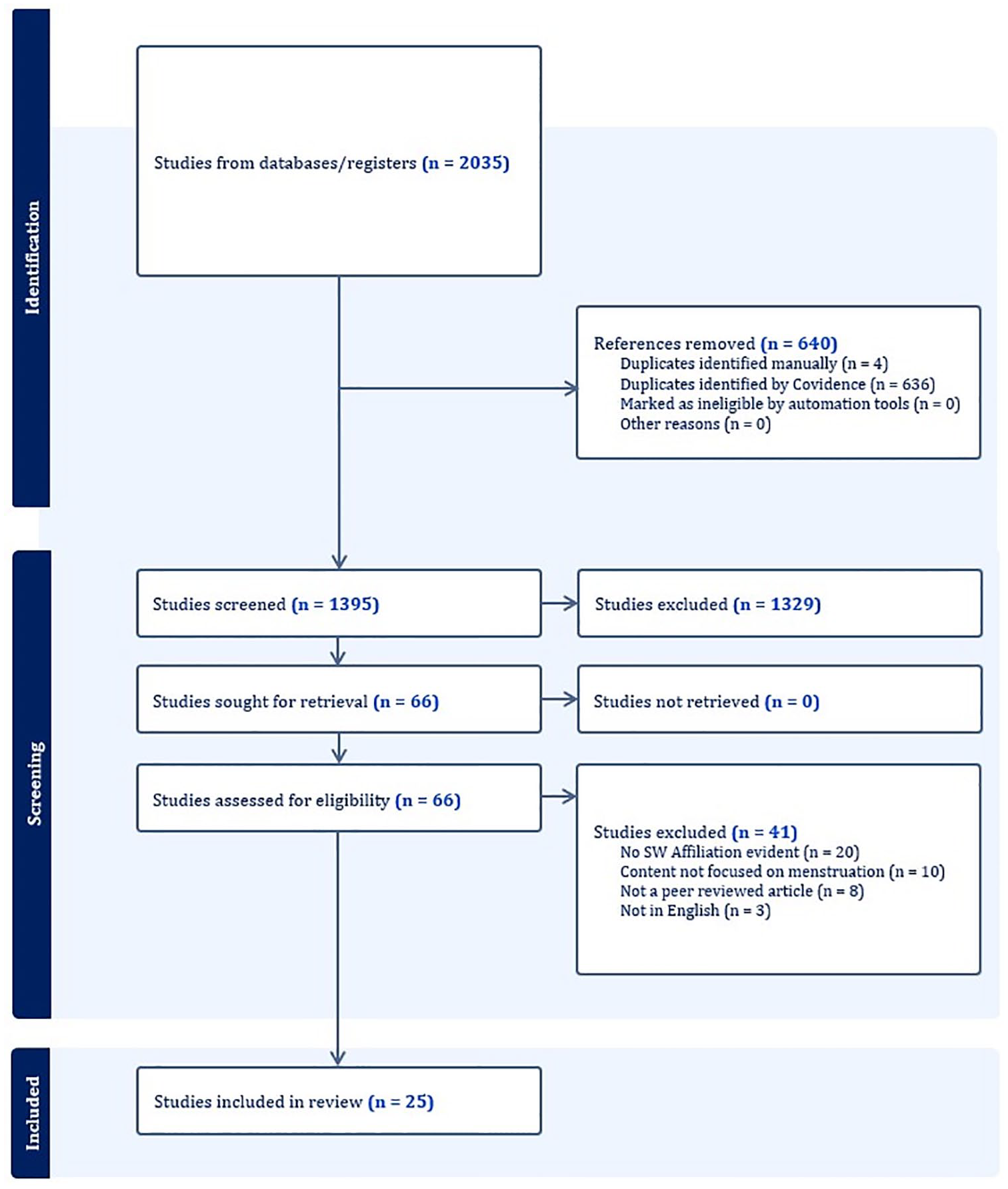
PRISMA diagram.
Search strategy
A systematic search of scholarly databases was conducted on 19 January 2023 for social work peer-reviewed literature with no date restrictions. Nine databases were searched: ProQuest Social Science database; ProQuest Sociology; SocINDEX (EBSCO); Academic Search Complete (EBSCO); Psychology and Behavioural Sciences (EBSCO); Cinahl (EBSCO); Web of Science Core Collection; Scopus; and Medline (OVID). A protocol of search terms was developed to identify literature in each database: Social work AND menstru* OR menarche OR menses OR menarcheal OR catamenia OR ‘period poverty’ OR ‘sanitation-related stress’ OR ‘sanitation-related psychosocial stress’ OR ‘access to sanitary products’.
Data screening
Four inclusion criteria were established: (a) published in English; (b) a peer-reviewed empirical or non-empirical journal article; (c) menstruation focused; and (d) social work affiliated. The third criterion required articles to focus on menstruation within a social, cultural or health context. All articles with a dominant focus on menstruation within a bio-medical context, such as bleeding patterns, were excluded. Similarly, all articles that briefly mentioned menstruation, for example as a list of health indicators, were excluded. The fourth criterion relating to social work affiliation was based on previous social work scoping reviews (e.g. Boetto et al., 2021; Mason et al., 2017) and required at least one author to be social work affiliated via their named school, department, or organisation, or for the article to be published in a social work journal. A social work journal was determined by being listed in the Scimago Journal and Country Rank’s ‘social work’ subject category (https://www.scimagojr.com/) or having the term ‘social work’ in its title.
Web-based software, Covidence, was used to manage data screening. Covidence is a data extraction tool designed to facilitate the data collection process for various types of reviews, including scoping reviews (https://www.covidence.org/). The first four authors independently engaged in the process of data screening, involving two levels: title and abstract screening; and full text review. In cases where authors were uncertain about the inclusion of articles, all four authors met as a whole group to discuss until consensus was reached.
The database search identified a total of 2035 articles and after duplicates were removed 1395 articles remained. Data screening at the title and abstract level removed 1329 articles, leaving 66 articles for screening at the full text level. Data screening at the full text level removed 41 articles; of these 41 articles 20 were not social work affiliated, 10 were not focused on menstruation, eight were not peer-reviewed articles, and three were not written in English. This process of data screening left 25 studies for data extraction, outlined in the PRISMA diagram (Figure 1).
Charting the data
Data extraction was undertaken to provide a descriptive summary of the articles. Arksey and O’Malley (2005) define charting the data as ‘sifting, charting and sorting material’ to synthesise key aspects of the articles (p. 26). This process was undertaken by adapting Covidence’s charting table to include key characteristics relating to year of publication, author location, country where the research was conducted and author location, research design, geographic location, theoretical approach, author affiliation and social work content. Charting the data was undertaken independently by three members of the research team, with each article reviewed by at least two members. Charted data details were then compared by two members of the research team with differences discussed by the whole team using reflexive conversations until consensus was reached.
Findings
The findings are presented in two sections, with the first detailing the characteristics of the studies, and the second covering the nature and extent of social work engagement with menstrual experiences.
Overview of studies
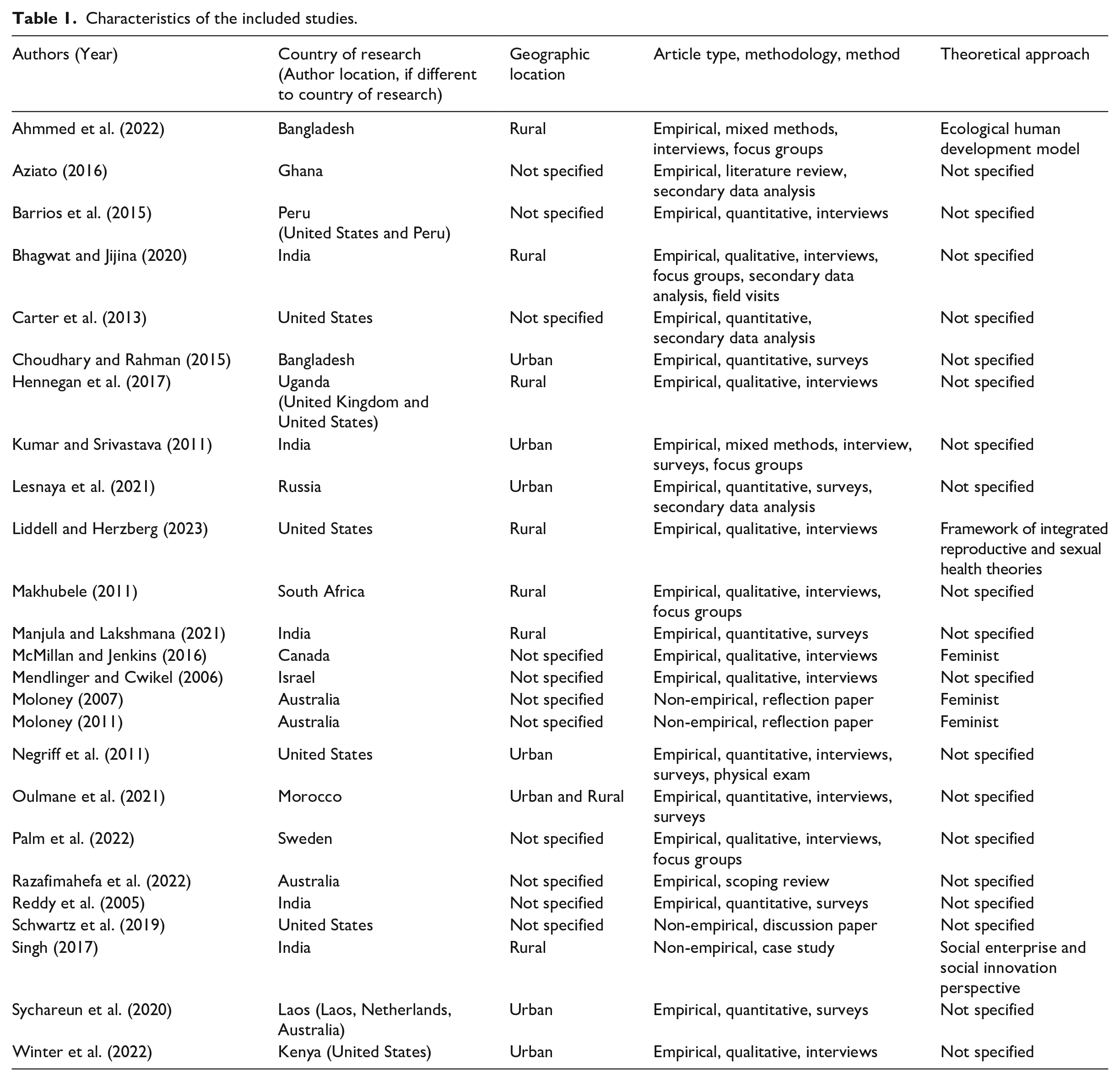
Table 1 presents an overview of the 25 papers included in this review by detailing key characteristics and elements of research design.
Characteristics of the included studies.
Year of publication
A growth in publications has occurred since the year 2000 with a steady increase in the number of articles published across 5-year increments (see Figure 2). Although there were no articles published between the years 2000 and 2004, three were published between 2005 and 2009, five were published between 2010 and 2014, seven were published between 2015 and 2019, and 10 were published between 2020 and January 2023. As shown in Figure 2, this latter period of 3 years represents a substantial advancement in publications relating to menstruation, with these studies accounting for 40% of the dataset.
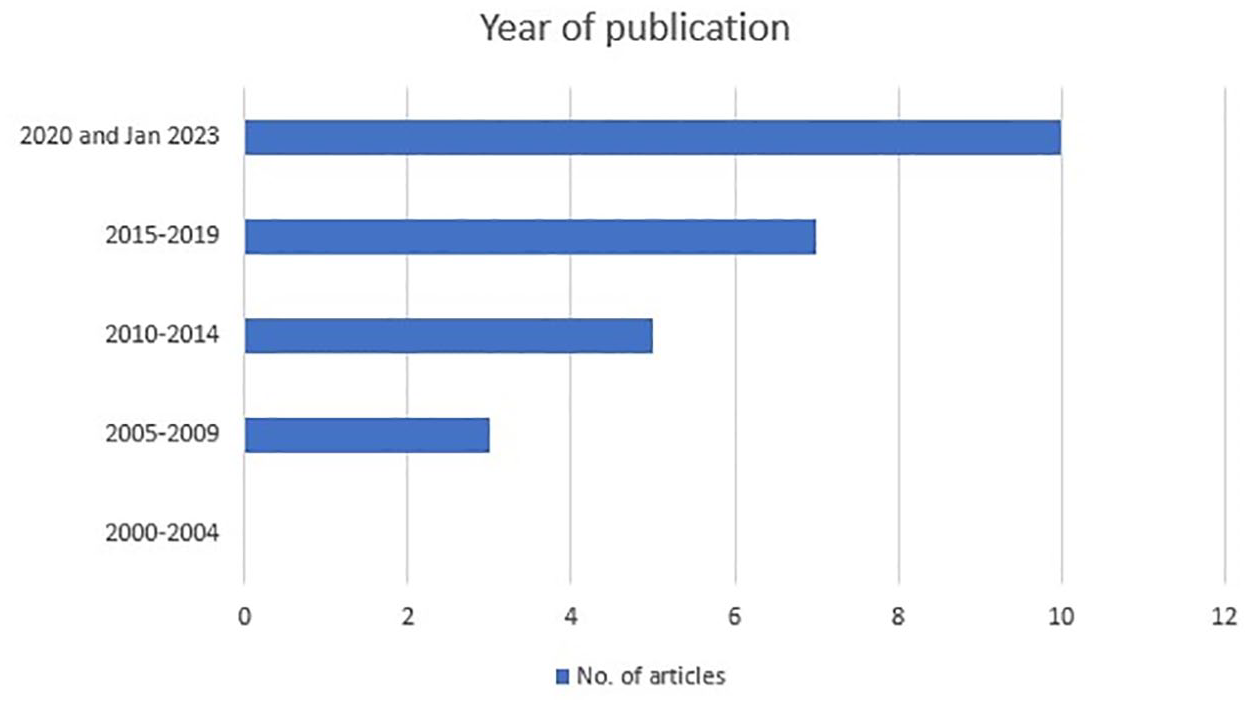
Years the included studies were published.
Country of research and author location
As shown in Table 1, all of the empirical studies conducted research within one country, with the exception of Razafimahefa et al. (2022), who undertook an international scoping review. The countries that had the most sources were India with five studies (Bhagwat and Jijina, 2020; Kumar and Srivastava, 2011; Manjula and Lakshmana, 2021; Reddy et al., 2005; Singh, 2017), then the United States (U.S.) with four studies (Carter et al., 2013; Liddell and Herzberg, 2023; Negriff et al., 2011; Schwartz et al., 2019), and Bangladesh with two studies (Ahmmed et al., 2022; Choudhary and Rahman, 2015). All the authors of these studies were listed as being located within those countries.
Author location and country of research were consistent in most of the other studies, which were conducted in Australia (Moloney, 2007, 2011); Canada (McMillan and Jenkins, 2016); Ghana (Aziato, 2016); Israel (Mendlinger and Cwikel, 2006); Morocco (Oulmane et al., 2021); Russia (Lesnaya et al., 2021); South Africa (Makhubele, 2011); and Sweden (Palm et al., 2022). Two studies had at least one author in the team from the same location in which the research was conducted, being Laos (Sychareun et al., 2020) and Peru (Barrios et al., 2015). Other authors in these studies originated from the Netherlands and Australia (Sychareun et al., 2020), and the United States (Barrios et al., 2015). Finally, there were two studies where author location differed from the country of the research entirely, where the authors of a Kenyan-based study originated from the United States (Winter et al., 2022), and research conducted in Uganda was led by authors originating from the United Kingdom and USA (Hennegan et al., 2017).
Geographic location
Twelve of the articles did not specify whether the research was conducted in urban and/or rural contexts. Of the 13 sources that did report, there was almost an even split with six studies taking place in urban areas only (Choudhary and Rahman, 2015; Kumar and Srivastava, 2011; Lesnaya et al., 2021; Negriff et al., 2011; Sychareun et al., 2020; Winter et al., 2022), and seven in rural locations (Ahmmed et al., 2022; Bhagwat and Jijina, 2020; Hennegan et al., 2017; Liddell and Herzberg, 2023; Makhubele, 2011; Manjula and Lakshmana, 2021; Singh, 2017). One study was conducted in both rural and urban settings (Oulmane et al., 2021).
Research design
A majority of 21 studies were classified as empirical, as original research findings were presented (see Table 1). Four studies were classified as non-empirical, as they were a discussion paper (Schwartz et al., 2019), a case study (Singh, 2017), or reflection on methods used in research (Moloney, 2007, 2011). Of the 21 empirical studies, nine were quantitative, eight were qualitative, two used a mixed method approach, and two used a literature review method. Eleven of these empirical studies used one research method and 10 used two or more. The most used methods were interviews (n = 13), followed by survey (n = 8), and there was an even split between focus groups (n = 5) and secondary data analysis (n = 5).
Theoretical approach
A majority of 19 studies did not explicitly outline a theoretical approach for their research or non-empirical work. Of the six that did, three outlined a feminist approach (McMillan and Jenkins, 2016), two of which were from the same study (Moloney, 2007, 2011). One study specified an ecological human development model for examining sexual and reproductive health (Ahmmed et al., 2022). Similarly, another study detailed a Framework of Integrated Reproductive and Sexual Health Theories, which incorporated several theories and concepts, especially eco-systemic theories and reproductive justice (Liddell and Herzberg, 2023). Finally, Singh (2017) outlined a social enterprise and social innovation perspective for their case study.
Findings related to social work engagement
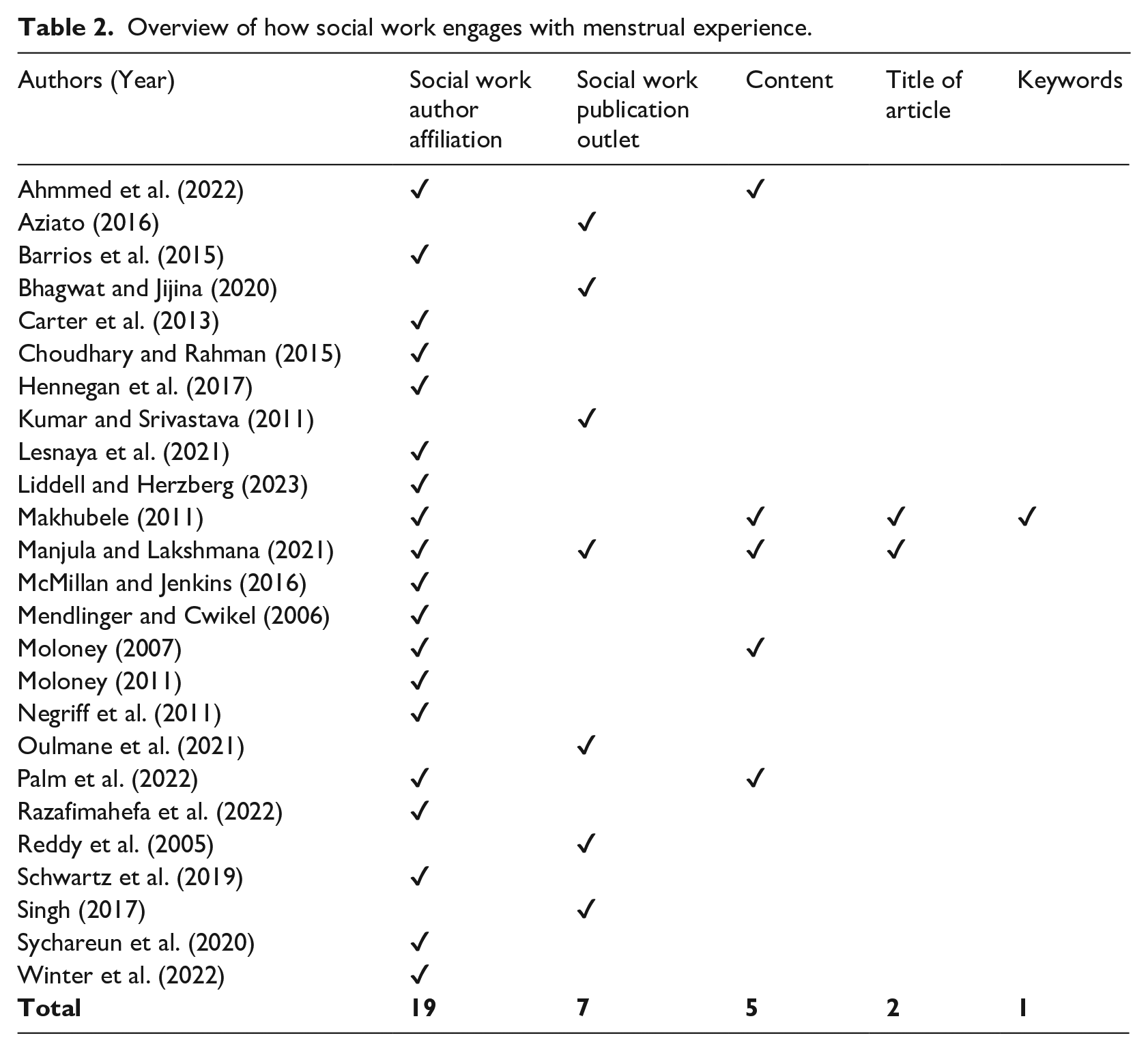
The following section details the nature and extent of social work engagement with menstrual experiences, along with content related to social and global contexts that did not include specific reference to social work. Table 2 provides an overview of social work engagement by identifying social work affiliation of author and/or publication outlet, as well as social work content within the sources, including the title of the article and keywords.
Overview of how social work engages with menstrual experience.
Social work affiliation
Social work affiliation could be established either by author affiliation to a social work organisation, and/or via publication in a social work outlet. In 19 of the 25 articles social work affiliation was established through at least one of the authors being listed as having an affiliation to a social work organisation – typically a department or school of social work at a university (see Table 2). It is important to note this does not necessarily mean that the author had a social work qualification, only that they were affiliated with a social work identified organisation in some way. Seven articles (28%) were categorised as having a social work affiliation due to the publication outlet being identified as a social work publication; one article had both types of affiliation (Manjula and Lakshmana, 2021).
In relation to the seven articles published in social work journals, three of these were published in Social Work in Public Health (Bhagwat and Jijina, 2020; Kumar and Srivastava, 2011; Oulmane et al., 2021), two in The Indian Journal of Social Work (Manjula and Lakshmana, 2021; Reddy et al., 2005), one in the Hong Kong Journal of Social Work (Singh, 2017), and one in The Social Work Practitioner-Researcher (Aziato, 2016). The remaining 18 articles were not published in social work journals. Most of these articles were published in health-related journal outlets (n = 11; Ahmmed et al., 2022; Barrios et al., 2015; Choudhary and Rahman, 2015; Hennegan et al., 2017; Lesnaya et al., 2021; McMillan and Jenkins, 2016; Makhubele, 2011; Negriff et al., 2011; Razafimahefa et al., 2022; Schwartz et al., 2019; Sychareun et al., 2020) or outlets broadly identified as social science/social policy outlets (n = 7; Carter et al., 2013; Liddell and Herzberg, 2023; Mendlinger and Cwikel, 2006; Moloney, 2007, 2011; Palm et al., 2022; Winter et al., 2022).
Social work content
Only five of the sources made explicit mention or reference to social work in the body of the article (Ahmmed et al., 2022; Makhubele, 2011; Manjula and Lakshmana, 2021; Moloney, 2007; Palm et al., 2022). Two of these sources also referred to social work in the title of the article (Makhubele, 2011; Manjula and Lakshmana, 2021), with the former also mentioning social work in the keywords (see Table 2). Specific social work content highlighted the need for enhanced social work practice, including the need for increased practitioner awareness (Palm et al., 2022), and practice approaches relating to psychosocial interventions and community education (Manjula and Lakshmana, 2021), and cultural safety, sensitivity and diversity (Makhubele, 2011).
In the body of the article, two sources made only one brief reference to social workers as either part of the sample of the study (Moloney, 2007) or social work graduates involved with data collection for the research (Ahmmed et al., 2022). Another study, in Sweden, had social work participants, but there was further content within the body of the article (Palm et al., 2022). The study focused on sources of knowledge of health professionals regarding female genital mutilation (FGC) and menstrual pain. The social workers reported on the usefulness of FGC-specific information and education for increasing their awareness of health-related issues that may be experienced among women and girls.
Manjula and Lakshmana (2021) discussed social work in the implications and recommendations sections of their article. Their study sought to examine the impact of dysmenorrhoea among 32 adolescent girls in rural India, and the efficacy of psychosocial interventions for managing menstrual pain. The authors called on social work, including social work schools to play a role in delivering psychosocial interventions and increase health education to adolescent girls in disadvantaged communities and rural settings.
Makhubele (2011) contained the most content and references to social work. Their study was conducted in the rural Limpopo Province in South Africa and through engagement with 10 older community members (ages 65–80) the researcher sought to ‘. . .explore and describe the role of indigenous knowledge towards sexual and reproductive health and rights’ (Makhubele, 2011: 161). Social workers are mentioned in the introduction, implications and conclusion sections of the article. Makhubele contextualised the importance of social work practice being culturally sensitive and respectful of cultural diversity and incorporating such approaches into formal social welfare programmes to enhance the rights of indigenous populations. In the implications and conclusion sections, these themes are reiterated, with emphasis on social work acknowledging the ethnocentric roots of the profession to work towards cultural safety and look for opportunities to learn about the strengths and benefits of indigenous knowledge about sexual and reproductive health. The need for reciprocity, collaboration and equity when working alongside indigenous populations is highlighted.
Content on social and global contexts (without reference to social work)
In terms of content on social and global contexts and menstrual experiences that did not include specific references to social work, data was grouped according to key topics. This content highlighted global social justice and sociocultural issues, especially regarding the topics of persistent myths and stigma associated with menstruation (Kumar and Srivastava, 2011; Winter et al., 2022), along with social taboos, and shame (Ahmmed et al., 2022; Aziato, 2016).
Schwartz et al. (2019) explored gender diversity and menstrual equity for non-binary and transgender people, while McMillan and Jenkins (2016) discussed social constructions of menstruation. Some of the multidimensional impacts of menstrual injustice were also discussed, such as school attendance, bullying at school and access to menstrual products (Aziato, 2016; Bhagwat and Jijina, 2020), as well as perceived behavioural issues during puberty (Carter et al., 2013) and the impacts of child sexual abuse in relation to early menarche (Barrios et al., 2015). Mendlinger and Cwikel’s (2006) article contrasted non-Western and Western knowledge about menstruation, while Liddell and Herzberg (2023) focused on First Nations American matriarchal contexts. Singh (2017) explored ways in which social enterprises could improve menstrual justice, while Bhagwat and Jijina (2020) emphasised the importance of localised approaches in community work.
Finally, two articles specifically referred to the UN SDGs highlighting the necessity of menstruation being factored into global efforts for achieving sustainable development goals (Winter et al., 2022) and emphasising the importance of access to clean water and sanitation for all, regardless of socioeconomic status (Singh, 2017). Another study which predated the release of the SDGs, referred to the UN’s Millennium Development Goals and concluded that gender equity and the needs of adolescent girls – especially reproductive health needs – should be prioritised in the then new SDGs (Choudhary and Rahman, 2015).
Discussion
This is the first study to scope the engagement of the social work profession with the topic of menstrual experiences. The findings reveal that menstrual experiences are a timely topic, given the profession’s commitment to the SDGs (IFSW, 2021), and the increased concentration of recent English-language publications observed within this review. The countries of research and geographic locations in the findings indicate a diversity of research being undertaken across high-income and low-income countries in rural and urban contexts, with a mix of research designs that highlight persistent socio-cultural issues related to menstrual inequity and injustice documented in wider literature (Hennegan et al., 2019; Medina-Perucha et al., 2023; Shannon et al., 2021). While only a few studies were explicit about a theoretical approach, the presence of feminist frameworks within the findings (McMillan and Jenkins, 2016; Moloney, 2007, 2011), as well as a conceptual basis for our study, further demonstrates the importance of critically examining the gendered barriers and stigma that continue to be perpetuated against women, girls and menstruators.
While peer-reviewed sources were found with social work affiliation via organisation affiliation and/or publication in a social work journal outlet, there was a substantial lack of social work specific content on how social work as a profession is engaging with menstrual experiences and addressing issues related to social justice and human rights. It is possible that richer knowledge about social work engagement in this area can be found in broader types of literature, including grey literature and professional publications. Likewise, articles published in languages other than English could hold more substantial social work specific content, especially considering the diversity of countries of research present in the findings of this study. Future research could expand the search criteria into these areas to add rich understanding to the topic.
The findings of this study showed only a small number of sources highlighting social work’s engagement with menstrual experiences, within the context of female-genital mutilation (Palm et al., 2022), health education (Manjula and Lakshmana, 2021) and culturally sensitive practice (Makhubele, 2011), especially in rural communities. These areas demonstrate some of the critical social justice and human rights issues that women, girls and menstruators experience, and the need for menstrual justice for social justice outcomes, global health and gender equity (Barrington et al., 2021; Hennegan et al., 2019; Medina-Perucha et al., 2023; Shannon et al., 2021). There was more content on social and global contexts that did not include specific reference to social work in the dataset. Much of this broader content was consistent with wider literature that speaks to ongoing stigma, exclusion and shame associated with menstruation (Bobel, 2010; Chandra-Mouli and Patel, 2017; Hennegan et al., 2019; Shannon et al., 2021). In addition, the bulk of the sources were largely published in non-social work fields, consistent with the wider literature (Barrington et al., 2021; Hennegan et al., 2021; Society for Menstrual Cycle Research, 2011), further indicating a lack of social work engagement.
Implications for transformative social work
A range of implications arise from the findings of this study, especially for transformative social work theory, education, practice and research. The profession’s core purpose is to recognise the diverse impacts of intersecting systems of oppression and to undertake action that transforms oppressive systems to improve outcomes and equity (IFSW, 2014, 2021). On this basis, menstrual experience is a lived experience worthy of greater social work attention, advocacy, research, and action for transformative change, if the profession is to contribute to menstrual justice and equitable social development.
At the conceptual level, menstrual justice should be brought into clearer focus within the social work frame of reference – including the education of social workers – especially through engagement with critical menstruation studies and feminist theory (Bobel, 2020; Noble, 2021; Roaf and de Albuquerque, 2020). Such conceptual foundations form part of a more comprehensive effort to re-shape the dominant discourse surrounding menstrual experience, bringing patriarchal oppression into sharper focus. This then provides social workers with the conceptual tools to articulate the ways in which modernist and androcentric discourses continue to marginalise menstrual experiences and the ways in which this maintains gender inequity. Thus, a transformative conceptual framework is at the heart of multidimensional action for menstrual justice and gender equity.
At the practice level, the findings emphasise a need for the profession to engage in multidimensional practices to raise awareness of menstrual injustice as a pervasive global issue. For example, the profession could advocate for the scope of sustainable development goals to be broadened to highlight the sociocultural and political context of menstrual injustice. In addition, as a basis for action, targets and indicators relating to menstrual justice should also be embedded in the SDGs if gender equity is to be improved through strategic planning and evaluation. This macro level approach can be complemented by micro level action, such as improving uninterrupted access to education, employment and social activities (Chandra-Mouli and Patel, 201) and increasing access to menstrual products and finances (Barrington et al., 2021; Medina-Perucha et al., 2023). An intersectional approach is also essential to ensure that the diverse needs of people and communities, such as women and girls with disabilities, and from varied religious and cultural backgrounds, are recognised and addressed.
The findings also indicate a wide range of opportunities for further social work research to explore menstrual experiences. For example, a comprehensive exploration of discourses surrounding menstrual experiences could be undertaken via an integrative review of ‘grey literature’ such as policy documents, discussion papers, government reports, social media, and so on. Likewise, collaborative international research partnerships could be formed to identify and evaluate policy and practice initiatives designed for menstrual justice. In addition, research exploring transformative approaches to social work education and professional development would contribute to the body of knowledge to inform social work theory and practice.
Limitations
While this research provides insight into social work’s engagement with menstrual experiences, the methodology adopted has limitations. As a scoping review, the number and type of literature extracted were determined by the defined search strategy and databases. This means that articles adopting alternative terms to describe menstrual experiences to the ones used in this study may have been omitted. Also, works published in grey literature, such as policy documents, government reports and media were not included. Perhaps the most critical limitation to this study is the exclusion of articles published in languages other than English. Given the global nature of menstrual experiences and the cumulative experiences of poverty and disadvantage experienced by women, girls and menstruators in low-income countries, cultural inclusivity in this area of knowledge is critical for gaining epistemic justice. Nevertheless, this scoping review provides a starting point for understanding social work’s engagement with menstrual experiences and provides a foundation for identifying future directions in research, policy and practice.
Conclusion
Menstrual injustice is a pervasive global issue impacting on gender equity and sustainable development and yet as demonstrated in this scoping review, menstrual experiences are not correspondingly visible within English-language social work publications. Drawing on its multidimensional perspective and transformative intent, the social work profession should extend its contribution to addressing this ingrained global issue, rather than maintaining relative silence. Indeed, as social work continues its own transformation beyond its dominant androcentric and Euro-centric origins, critical approaches to menstrual justice would be complementary to the profession’s overall transformative effort as well as more broadly to global sustainable development goals.
Footnotes
Funding
The authors would like to acknowledge that Charles Sturt University Faculty of Arts and Education provided support with research assistance for this project (NI).
Ethical approval and informed consent statements
No human participants were involved in the research reported on in this article, therefore informed consent and ethics approval was not required.
Statement of AI use
Generative AI was not used in the preparation of this manuscript.
