




Abstract
This article reports on a quantitative research project with Bachelor of Social Work students in Queensland, Australia, about student involvement in environmental activities and environmental curriculum content. As environmental perspectives in social work are still emerging, research into student perceptions of the environment is limited, particularly in Australia. This project found most students valued the natural environment both personally and as emerging practitioners. Students participated in many environmental activities, with students more focused on future micro social work practice. Many students identified environmental content within their degree and expressed a desire for more, to support the future needs of clients.
Introduction
Social workers use a range of theories to understand the interactions between people and their environments. Ecological systems theory was developed by Uri Bronfenbrenner (1979) to not only include individual perspectives but to understand how social and environmental factors influence behaviour and well-being. This concept is also known as person-in-environment (O’Leary and Tsui, 2021). However, this approach focuses on how relationships and social systems affect clients rather than considering the impact of the natural environment (Besthorn and Saleeby, 2003; O’Leary and Tsui, 2021). Concerns about climate change and natural disasters regularly attract media attention. Issues include rising sea levels, hotter temperatures, droughts and storms leading to housing and food insecurity, economic and financial impacts, and loss of life (McAuliffe et al., 2024). Indeed, in recent years, Australia has been impacted by increasing natural events such as bushfires and floods (McAuliffe et al., 2024). Therefore, it is important that social work education and practice consider addressing the interconnection of environmental and social issues, as well as challenging the degradation of the environment (Panagiotaros et al., 2022; Ramsay and Boddy, 2017a). However, it is not yet well documented how social work education is embedding environmental perspectives into the curriculum (Slattery et al., 2023). This study explored the views of social work students in Queensland, Australia, about the importance of the natural environment to social work education and practice.
Literature review
Environmentally conscious social workers believe the health and well-being of people are connected to the welfare of the planet (Gum, 2022; Jones, 2010). Marlow and Van Rooyen (2001) established that 93% of social workers surveyed from New Mexico, the United States and South Africa considered the ecosystem to be of personal significance, while 71% stated the natural environment was important to social work as a profession. However, many respondents failed to integrate the natural environment into their social work practice. Marlow and Van Rooyen (2001) concluded that a lack of knowledge explained why social workers agree the environment is important but do not address the environment in their practice. In addition, Shaw (2013) reported that 68% of 373 practitioners surveyed were not provided with any knowledge of the natural environment as part of their social work education, yet 90% of respondents felt environmental content should be provided within the social work curriculum. This aligns with Nesmith and Smyth (2015), who found that 75% of social work practitioners surveyed felt it would be beneficial to include environmental justice as a topic within the social work curriculum. In addition, while 92% of survey participants had clients facing environmental injustice, respondents stated they had not been provided with appropriate knowledge to manage this in their social work education (Nesmith and Smyth, 2015).
Faver and Munoz (2013) surveyed 105 Latino Master of Social Work (MSW) and Bachelor of Social Work (BSW) students about environmental awareness. Their findings stated that 85% of students were relatively concerned about the environment, 73% were attentive to environmental concerns, yet only 66% were well informed about environmental issues. Previously, integrating environmental actions and activities into the curriculum to educate social work students has tended to have been through community development and macro-oriented pedagogy (Drolet et al., 2015; Esau and Keet, 2014; Garlington and Collins, 2021). Indeed, Mizrahi and Dodd’s (2013) longitudinal study found that macro-focused social work students had high rates of activism prior to and during their degree. However, Pawar and Thomas (2017) acknowledged that, within Australia and the United States, course content, placement and work opportunities are oriented towards micro social work practice. Miller and Hayward’s (2014) study of 205 MSW and BSW students found that 79% of participants considered environmental issues important to social work, while 72% felt social and environmental justice were closely related and relevant to macro practice. Furthermore, 63% of students indicated environmental issues needed to be included in social work curriculum but only 21% of students recalled sufficient environmental content, with 31% reporting having no environmental exposure at all. More recent studies of students across the United States by Chonody et al. (2020) recommend integrating more environmental content into social work curriculum to help students understand the nexus between the natural world and practice.
Many universities do not mention the natural environment in the titles and descriptions of social work courses. On examining the descriptions of social work curricula of universities in the United Kingdom, Greece, Germany and Switzerland, Papadimitriou (2023) did not find the terms ‘green social work’ or ‘eco-social work’ and noted that the term environment only referred to the context of people. None of the courses of the 513 accredited social work programmes in the United States were found to have key terms such as environmental justice or sustainability (Chalise et al., 2022). After reviewing social work degrees offered at Australian universities, Harris and Boddy (2017) found only 0.43% of all social work courses mentioned the environment and most information was superficial.
However, some emerging studies demonstrate an environmental reconceptualising of social work education. Cox et al. (2021) discussed curriculum redesign at an Australian university to consider eco-social perspectives. Furthermore, Chalise et al. (2022) described curricula changes, field education opportunities and course content that envisaged environmental justice education. However, Naranjo (2020) suggested social norms and structural issues inhibit the adoption of environmental social work practice and called for further debate about environmental issues within academia. A qualitative assessment of Swedish students undertaking a social work course on sustainability found the need to challenge capitalist, consumerist discourses to move from an anthropocentric to eco-centric paradigm and identified that critical thinking and advocacy are important skills to develop in environmental courses (Rambaree, 2020).
Australian-specific research includes Boetto and Bell (2015), who created a trial, online ecological social work course and used student feedback to prove the efficacy of including such courses in the curriculum. Others have utilised student placements as transformational learning experiences to incorporate knowledge about environmental sustainability (Cordoba and Bando, 2022; Crawford et al., 2015). In addition, Papadopoulos (2019) explained environmental concepts should be integrated into all courses, using scenario-based learning, as the ecosystem relates to all fields of practice.
However, Papadimitriou (2023) suggested available course descriptions do not supply enough details to enable environmental content to be identified. Furthermore, students may be able to choose environmental electives from other disciplines (Chalise et al., 2022; Naranjo, 2020). The importance of mapping and including environmental content in social work education is recognised (Bailey et al., 2018; Boddy et al., 2018; Jones, 2010; Ramsay and Boddy, 2017b); however, the voices of students are less well documented. Merzian et al. (2019) reported that 83% of Australians aged between 18 and 34 surveyed were concerned about environmental issues; therefore, it is plausible this figure could align with social work student environmental concerns.
This research project aimed to explore social work students’ knowledge and attitudes towards environmental issues, exposure to environmental content during their social work studies and if students perceived the natural environment to apply to social work education and practice. This paper presents data from a quantitative survey about social work students’ perceptions about the natural environment in Queensland, which was undertaken in 2018.
The overarching research questions were:
Do BSW students perceive environmental social work to be important to their future social work practice?
How engaged are BSW students in environmental activities?
What environmental content do BSW students study?
What would BSW students like to learn about environmental social work?
Method
This study comprised a quantitative survey, with some text box answers, following an exploratory, cross-sectional approach. Exploratory research is conducted to learn more about a particular subject (Babbie, 2016), and a cross-sectional study is conducted at one point in time and is the preferred method for ascertaining the prevalence of an attitude or perception of a specified population (Kumar, 2002). Convenience sampling was used as this is commonly used to investigate emerging areas that have little previous research (Alston and Bowles, 2013). Ethics approval was granted by Griffith University’s Human Research Ethics Committee (2018/656).
Four Queensland universities that offer a BSW degree were chosen to distribute the survey. These were: Griffith University (GU), Gold Coast; James Cook University (JCU), Townsville; University of Queensland (UQ), Brisbane; and Queensland University of Technology (QUT), Brisbane. These universities are representative of the social work student population within Queensland, with two from the Brisbane metropolitan area, one from the Gold Coast and the other from regional Queensland. Recruitment emails were sent to social work lecturers in August and September 2018, inviting them to distribute the surveys to their online or on-campus BSW students at any stage in the degree.
To meet varying programme requirements across universities, a hard-copy survey was created to distribute to students face to face and an online version using Lime Survey. Each consisted of 13 multiple-choice questions and five text box questions. Three fourth year BSW students pre-tested the survey to check the ease of answering each question, logic and accuracy.
All data was entered into an Excel Spreadsheet, with each question having its own page. Descriptive statistics, describing what was presented in the data (Alston and Bowles, 2013), were used to analyse the quantitative survey data, while inductive thematic analysis was used to generate themes from the qualitative data arising from the text box answers (Kumar, 2002). The key concepts were categorised and coded by the researcher and research supervisor three times, until salient themes were identified and the data was saturated (O’Connor and Joffe, 2020).
Results
A total of 82 students responded to both the written and online versions of the surveys across the four Queensland universities. Twenty students were eliminated for not being BSW students or only partially completing the survey, leaving a total of 62 participants. This consisted of 20 students from QUT, 18 students from GU, 15 students from UQ and 9 students from JCU.
Participants were asked to provide non-identifiable demographic information. This was compared to previous GU BSW student data to explore whether survey participants were comparable to a typical BSW cohort. Most respondents identified as female (77%), with 23% of respondents identifying as male This aligned with the GU data showing the majority of BSW students to be female. Sixty per cent of participants were aged between 18 and 25, 18% were aged between 25 and 30, 3% were between 30 and 35 and 19% were aged 35 + years. The historic GU data had identified older cohorts; therefore, study respondents were on average younger than a typical GU cohort.
Participants identified as being Australian (42%), Indigenous Australian (2%), Australian and other culture(s) (16%), a culture outside of Australia (27%) and not stated (13%). No GU comparison data were available for cultural background. Thirty-four per cent of the respondents were in their first year of study, 27% in the second year, 23% in the third year and 16% in the fourth year.
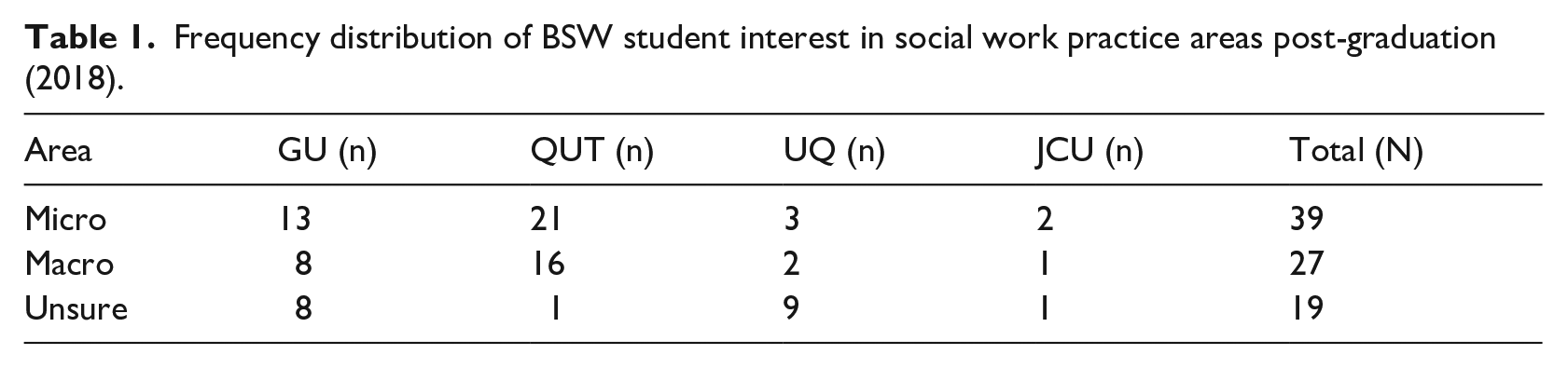
Participants were provided with examples of practice options to determine their area of interest once they had completed their social work degree. Micro areas included family, generalist practice and case management, while macro areas included community development and policy practice. Students were able to indicate an interest in more than one practice area. Responses were summarised as micro or macro practice (Table 1), with micro practice being the area of practice of interest to more students on graduation (n = 39). Nineteen students were unsure about their future practice.
Frequency distribution of BSW student interest in social work practice areas post-graduation (2018).
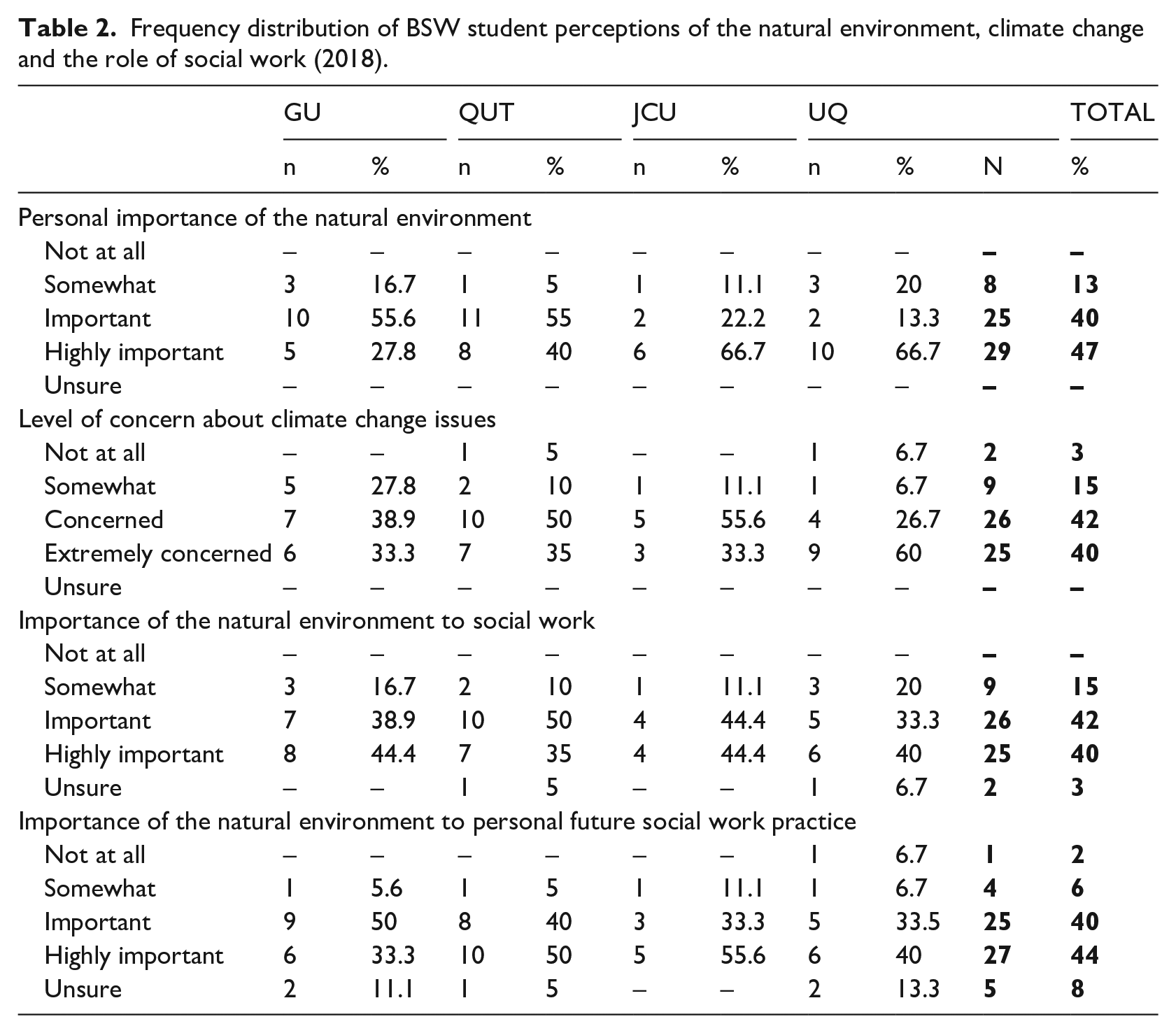
Participants were asked four questions to gauge their perception of the natural environment and climate change issues (Table 2). All participants expressed some personal investment in the natural environment, with 87% of respondents stating this to be important or highly important. Ninety-seven per cent of participants expressed a level of concern about climate change, with 82% saying they were concerned or extremely concerned. Again, 97% of participants said they thought the natural environment was important to social work, with 82% noting this to be important or highly important. Finally, 90% of respondents said that the natural environment had a level of importance to their future social work practice, with 84% stating this to be important or highly important.
Frequency distribution of BSW student perceptions of the natural environment, climate change and the role of social work (2018).
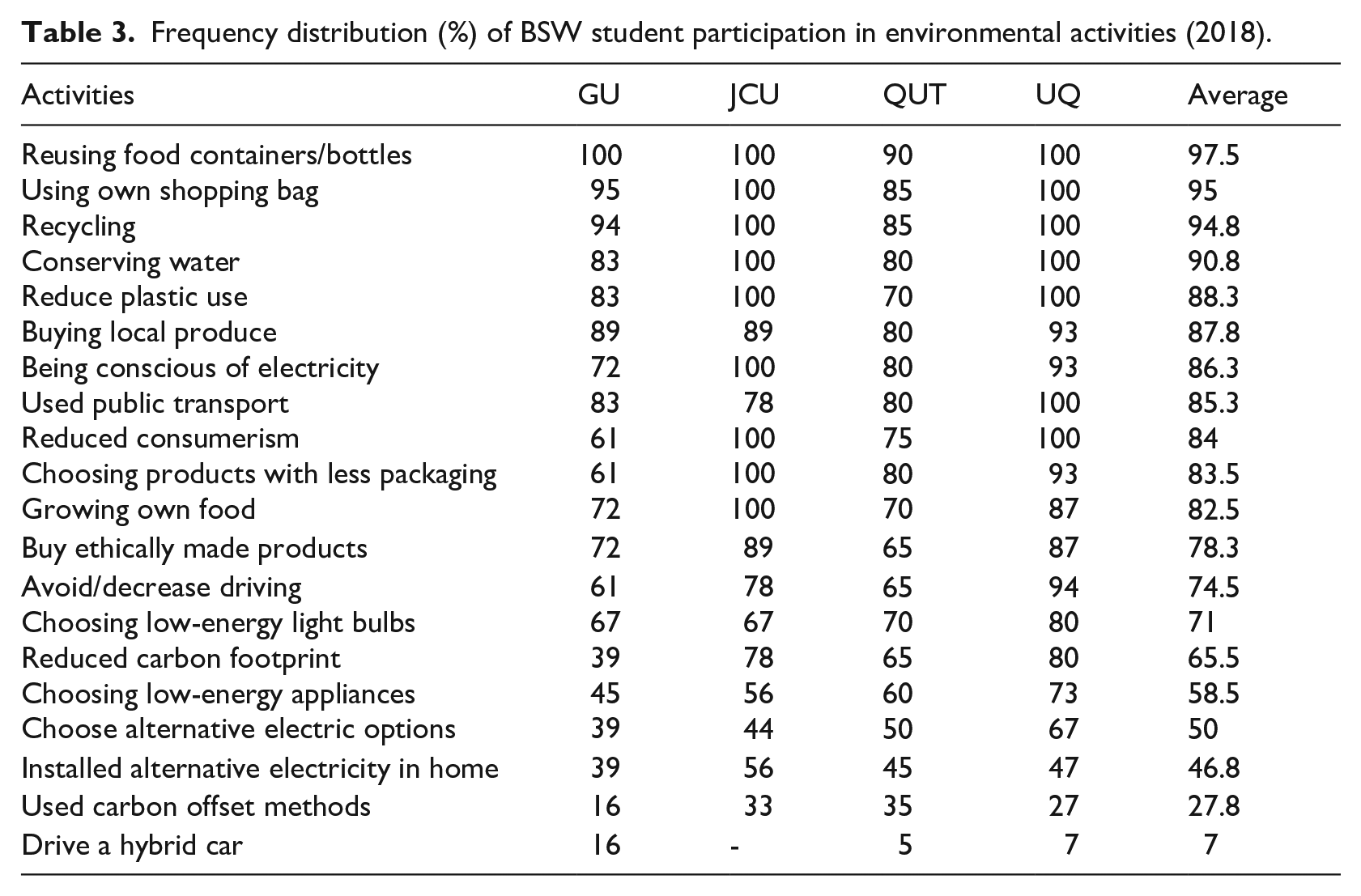
Participants were then asked to consider pro-environmental and sustainable activities to determine their personal level of engagement over a 5-year period (Table 3). Four activities had more than 90% average participation: reuse of food containers or bottles (97.5%), use of own shopping bags (95%), recycling (94.8%) and conserving water (90.8%). JCU participants reported a 100% participation rate across nine variables and UQ reported 100% participation across seven of the 20 variables. The variables ranked below 50% related to driving a hybrid car (7%), using carbon offset methods (27.8%) and installing alternative electricity in home (46.8%).
Frequency distribution (%) of BSW student participation in environmental activities (2018).
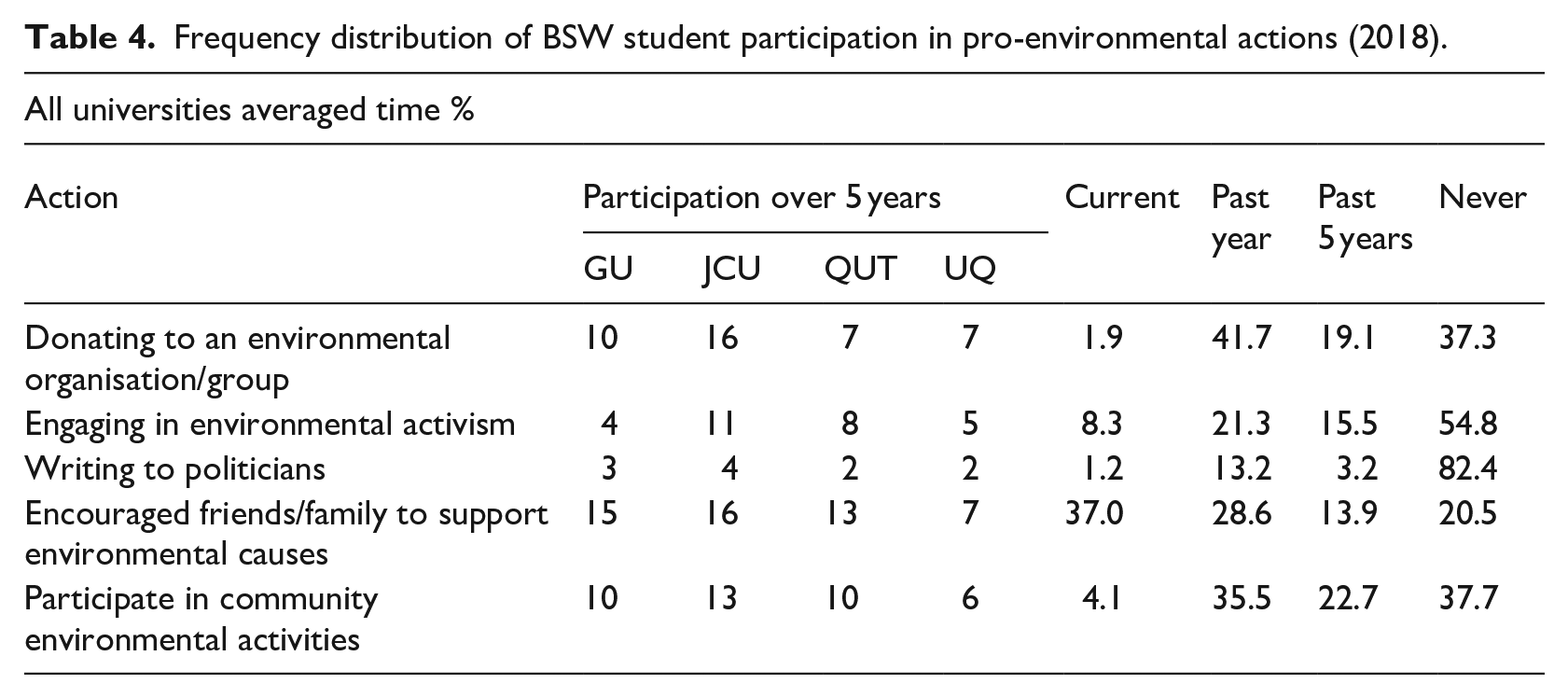
Participants were then asked if they had donated to an environmental cause, participated in any environmental activism, participated in affirmative environmental activities or encouraged friends and family to support environmental causes (Table 4). Only 17.6% of participants had written to politicians about their concerns for the environment; however, 79.5% encouraged friends or family to support environmental causes and 62.7% donated to an environmental organisation or group.
Frequency distribution of BSW student participation in pro-environmental actions (2018).
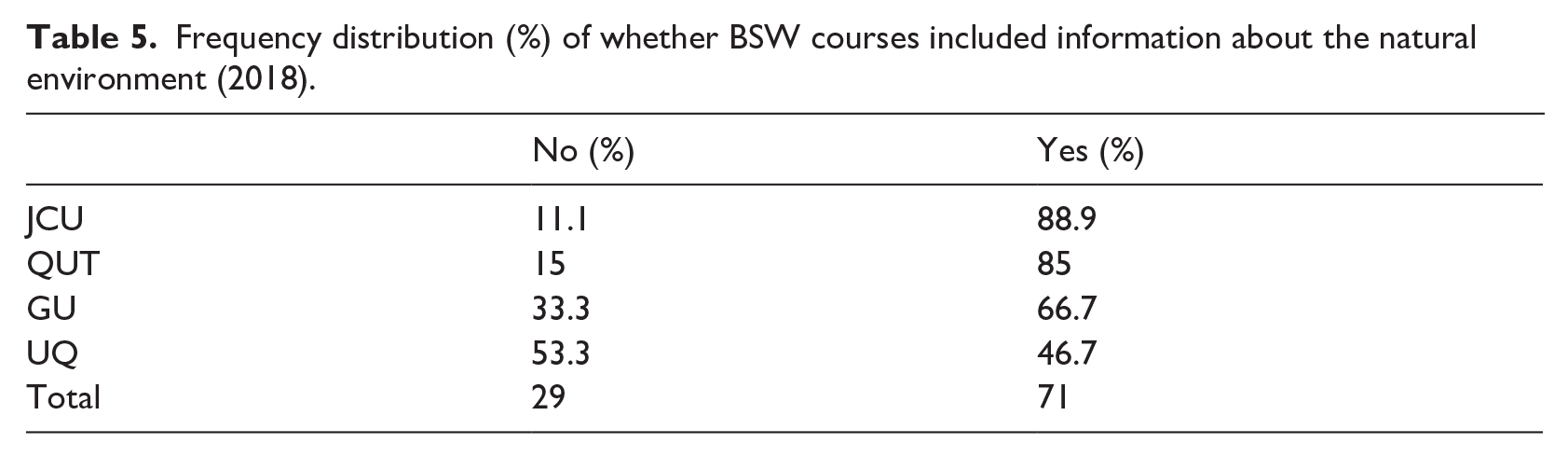
To better understand environmental content currently embedded in BSW social work curriculum, participants were asked to specify courses that provided content on the natural environment (Table 5). About 88.9% of JCU and 85% of QUT participants had covered social work engagement in the natural environment thus far, with two-thirds (66.7%) of GU and less than half (46.7%) of UQ participants experiencing the natural environment in their studies to date.
Frequency distribution (%) of whether BSW courses included information about the natural environment (2018).
Participants who stated the natural environment was included in their curriculum were then asked to specify the content. The thematically coded results are presented in Table 6. Course material varied considerably across universities, with environmental theories the most covered topic, followed by community development and human rights. QUT students had the most varied content (nine), followed by GU (seven) and JCU and UQ both with six.
Frequency distribution (n) of environmental course material specified by BSW students (2018).
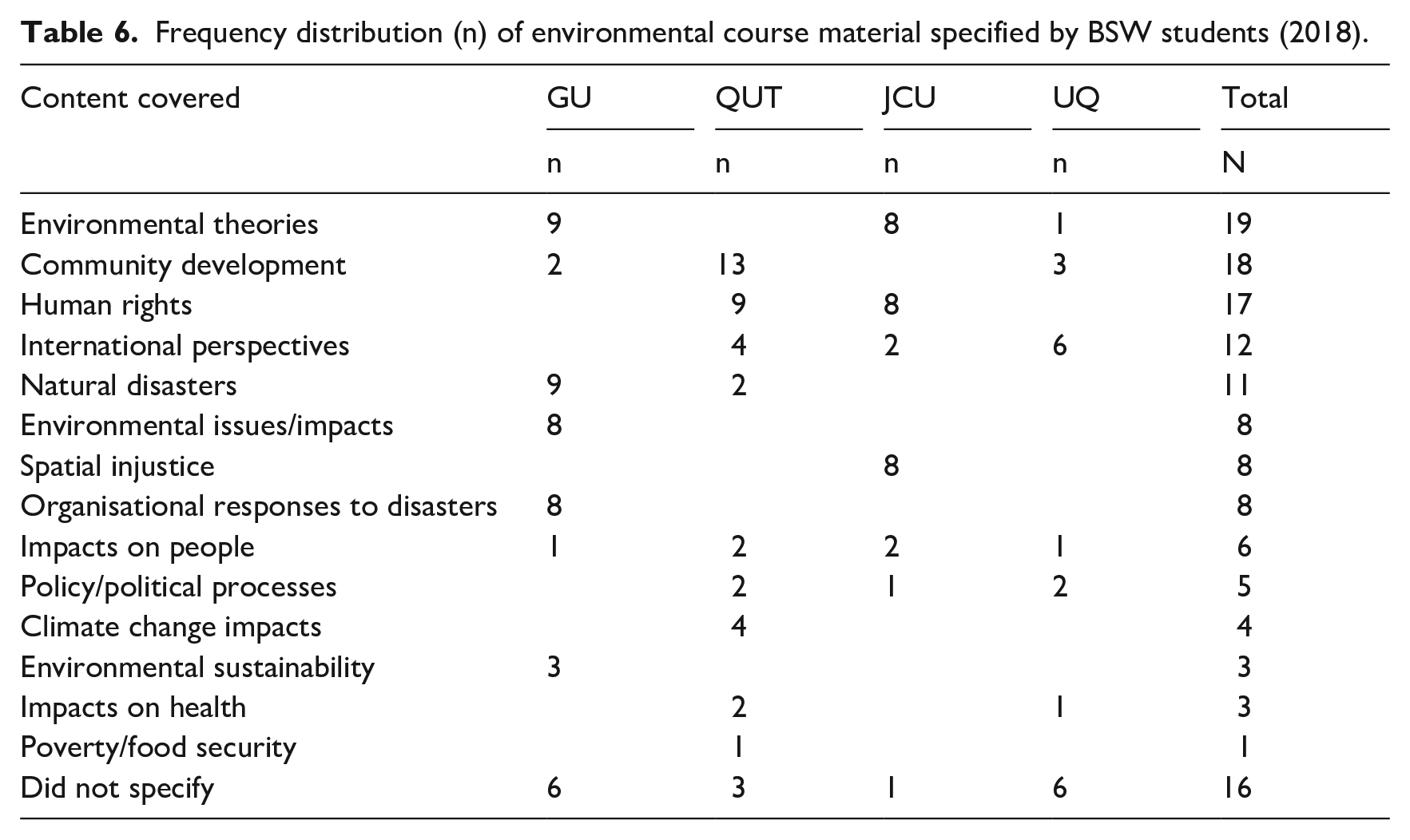
Students at QUT identified four courses that included specific environmental content, with one course having a range of specific environmental topics. Students from GU identified three courses that had some environmental content but no specific course. Students at UQ identified two courses and one elective that contained some environmental content, but three students noted there was no specific course about environmental social work available. Seven out of the eight JCU students who responded described a particular environmental course offered within their social work degree, with two students describing additional content in another course.
Participants were asked if the BSW should contain more environmental content (Table 7). About 65.5% of respondents thought the BSW curriculum should provide students with more course content related to the natural environment for emerging social workers, although 20.7% were uncertain.
Frequency distribution (%) of whether BSW curriculum should provide more content on the natural environment (2018).
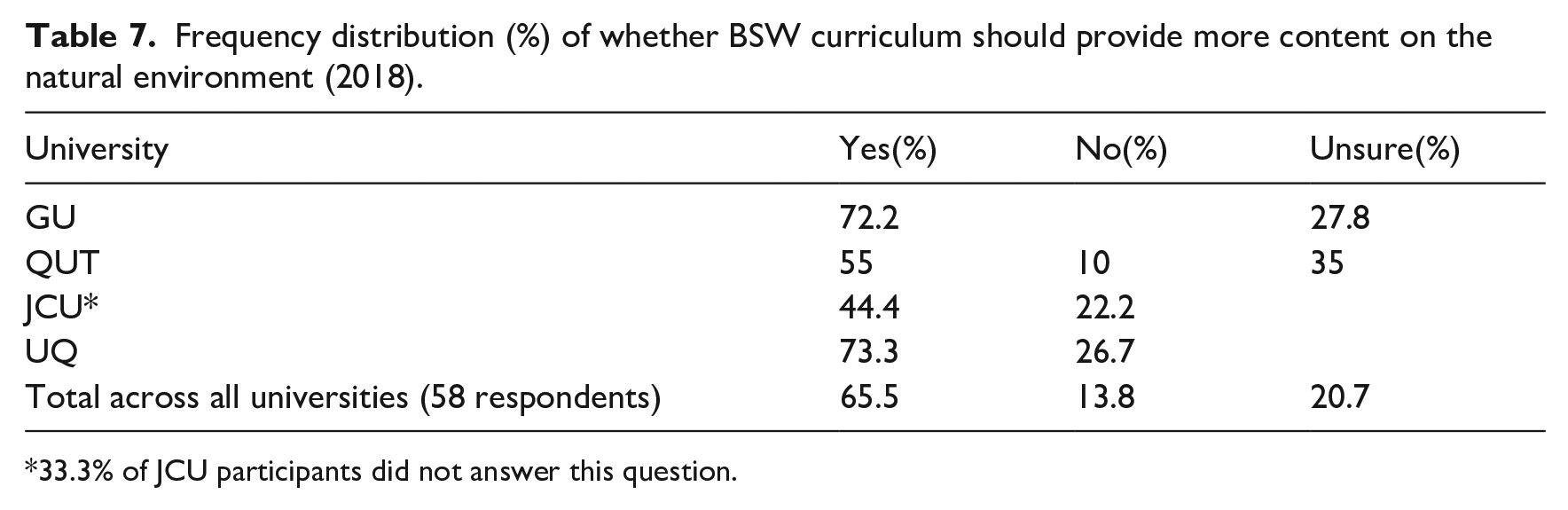
33.3% of JCU participants did not answer this question.
Participants who answered ‘yes’ to more content were asked to provide qualitative responses regarding content they thought should be included in the BSW curriculum for emerging practitioners to better support individuals and communities impacted by environmental issues. The thematically coded results are shown in Table 8.
Frequency distribution (n) of environmental content BSW students would like included in curriculum (2018).
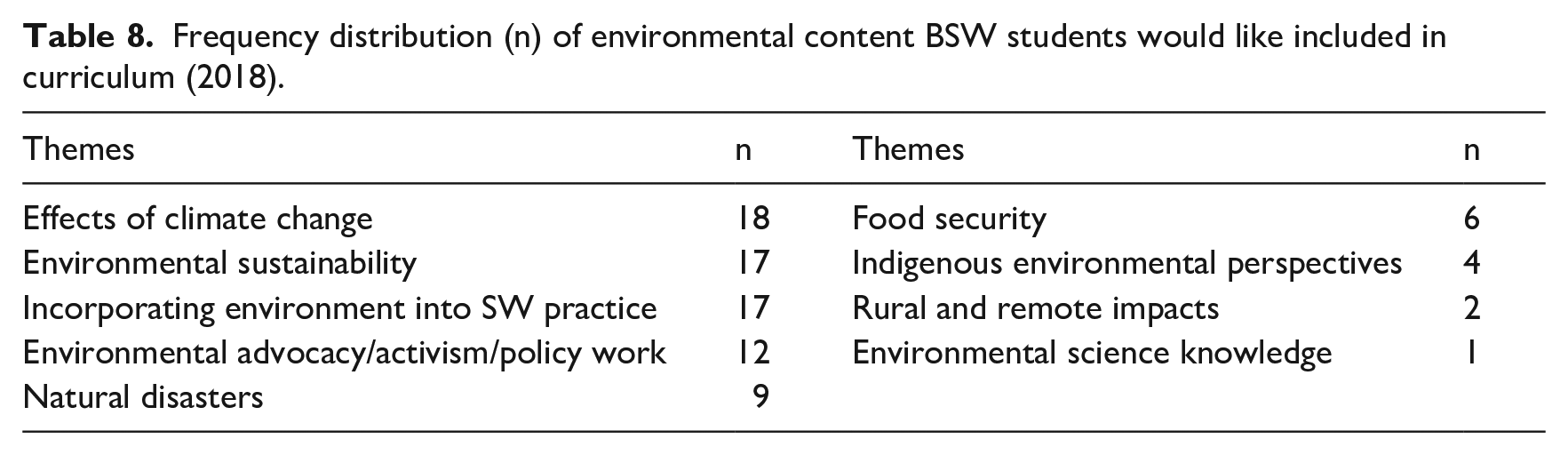
Effects of climate change was deemed the most important theme, of which categories included knowledge and understanding, effects and impacts on people and communities, strategies to reverse climate change, forced migration and climate change refugees. This was closely followed by Environmental sustainability and Incorporating environment into SW practice. Rural and remote impacts and Environmental science and knowledge were the least popular content matter considered for inclusion.
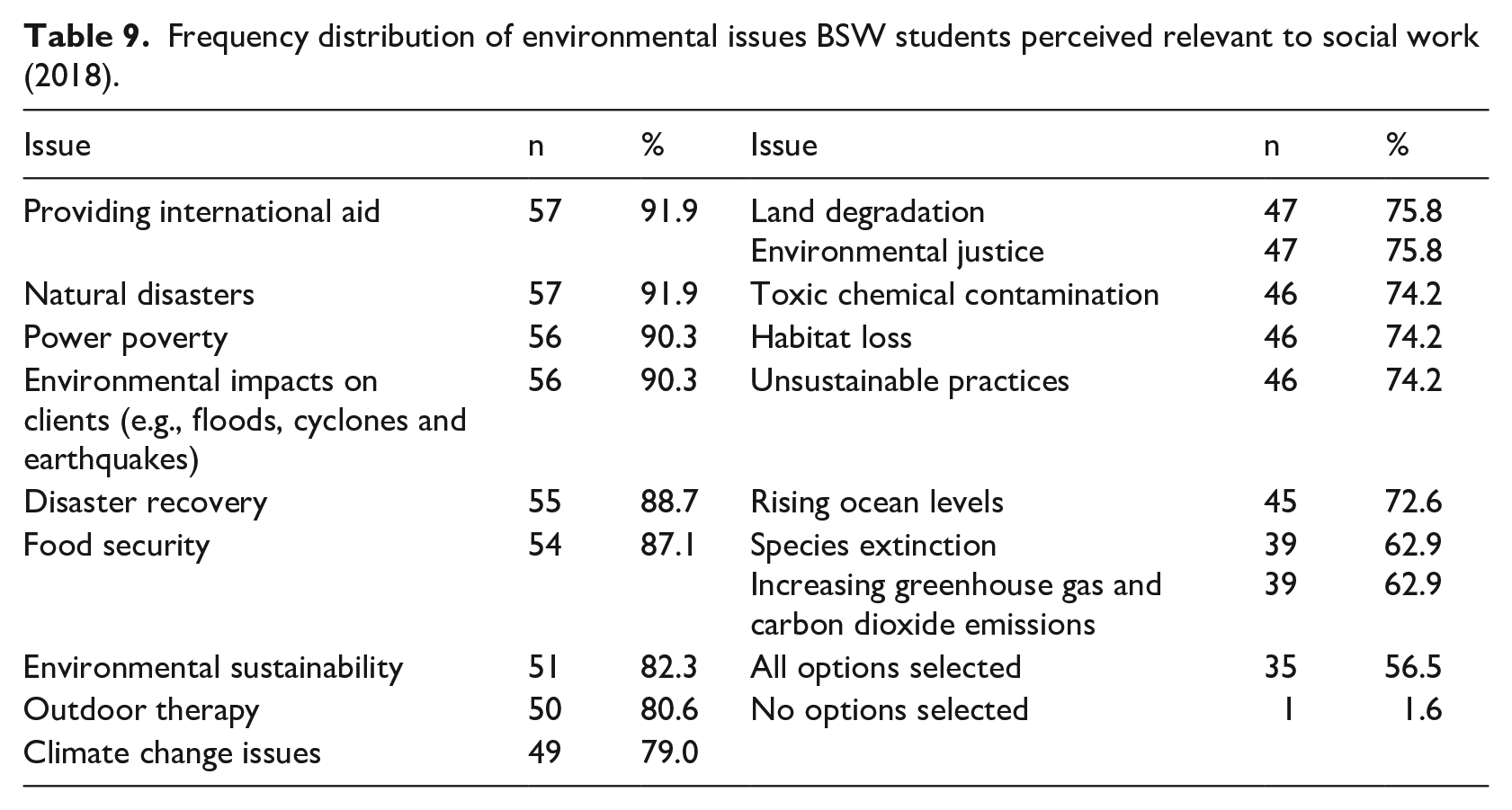
Participants were provided with a list of 18 environmental issues to determine their relevancy to social work (Table 9). Providing international aid, natural disasters, power poverty and environmental impacts on clients were identified by more than 90% of participants. All the issues presented received agreement from greater than 60% of participants. More than half the students (56.5%) agreed that all issues were relevant to social work. Only one participant selected no issues.
Frequency distribution of environmental issues BSW students perceived relevant to social work (2018).
Discussion
The aim of this exploratory study was to identify if BSW students perceived the natural environment to be important for inclusion in social work education and practice, their participation in environmental activities, the environmental content currently included in their social work education and what content students viewed as important for future education and practice. It should be noted that the term environmental social work was used as an overarching term to describe the inclusion of environmental perspectives in social work, rather than adhering to a specific theoretical perspective.
Do students perceive environmental social work to be important to their future social work practice?
This research found that 100% of students surveyed thought the natural environment had some importance, with 87% of students viewing the natural environment and associated issues as having considerable importance to them personally (Table 2). While this survey was a self-selecting sample, this figure is higher than the level of concern about environmental issues (83%) of Australian 18- to 34-year-olds, as reported by Merzian et al. (2019). In addition, 97% of participants thought the natural environment was important to social work, with 90% of respondents noting the natural environment had a level of importance to their personal future social work practice (Table 2). Eighty-two per cent of participants considered the natural environment to be important or highly important to social work. This is similar to Miller and Hayward’s (2014) findings, where 79% of students considered environmental issues important to social work. In addition, over 84% of survey respondents stated that the environment was important or highly important in their future social work practice (Table 2). This highlights that emerging Australian social work practitioners believe it is important to incorporate the natural environment into practice.
Previous studies showed that students who expressed an interest in macro-oriented social work practice had higher personal environmental concerns as well as social and environmental activism rates (Miller and Hayward, 2014; Mizrahi and Dodd, 2013). However, this study found differently, as can be seen in Table 1. Thirty-nine students indicated a micro social work practice preference with 27 preferring macro practice. This was surprising as environmental social work has tended to focus on macro-oriented pedagogy (Drolet et al., 2015; Esau and Keet, 2014). In addition, Crawford et al. (2015) found that BSW and MSW students in a rural Australian setting had difficulty connecting environmentally sustainable practices within a micro practice field placement setting. It is interesting that this study found more students were interested in pursuing micro social work practice yet had a high interest in environmental issues and practice. Despite the expressed intention to practise at a micro level in the future (Table 1), students strongly supported meso and macro-level determinants such as environmental sustainability, and advocacy, activism and policy work (Table 8). Academics have advocated for a move from micro to macro practice for environmental concerns and sustainability to become embedded in social work practice, to meet the needs of future clients (Boetto and Bell, 2015; Crawford et al., 2015; Pawar and Thomas, 2017). However, students in this study were more focused on a micro practice career (Table 1), likely to undertake micro-level activities and actions (Tables 3 and 4), yet had a high interest in environmental issues (Table 2), which have previously been viewed as macro issues. This could be due to increasing awareness of the impact of natural events (McAuliffe et al., 2024) or the continuing focus of curriculum on micro practice. Nevertheless, this warrants further investigation to prepare graduates for future practice.
How engaged are BSW students in environmental activities?
Despite the smaller student sample in this study, the participation rate for all designated pro-environment activities (Table 3) and actions (Table 4) was considerably greater than that for similar studies by Shaw (2013) and, Miller and Hayward (2014). It is hypothesised that this reflects an increased social acceptance of individual actions being important to ensure environmental health.
Students had higher engagement in free or low-cost activities they could participate in at home such as reusing food containers or bottles, using their own shopping bags, recycling, and conserving water (Table 3). Higher participation rates in recycling and using shopping bags were expected, due to Australian Councils supplying recycling bins to households and Queensland introducing the plastic bag ban in 2018 (National Retail Association, 2024). Students had lower engagement in activities that required a large investment, such as buying a hybrid car or installing alternative electricity options. A preference for low-cost action was similar to the findings of Shaw (2013), Miller and Hayward (2014) and Chonody et al. (2020), which is potentially due to participants being university students with a low income. Investing in carbon offsets had low support despite not always being an expensive option, but this could be explained as this is not always promoted in Australian media.
Students were unlikely to participate in activities focused on creating macro-level change. For example, 82.4% had not written to politicians and 54.8% had not engaged in environmental activism. However, 79.5% of students had encouraged family members or friends to support environmental causes (Table 4). The low level of engagement in macro-level change activities is disturbing for a profession with a commitment to justice (Garlington and Collins, 2021) and indicates the need to strengthen the curriculum to equip students with knowledge and tools to make structural level change. This is particularly important given the impacts of managerialism and the neo-liberal agenda on narrowing the role of the profession (Strier, 2019).
What environmental content do BSW students study?
Participants reported high rates of exposure to environmental content, with 71% of students stating they had covered information about the natural environment in their curriculum thus far (Table 5). In order, from most to least, were JCU, QUT, GU and then UQ. Students specified 14 areas of environmental course content (Table 6). Eight out of nine students from JCU affirmed having learnt about environmental issues, with seven out of these students describing one specific environmental course and two describing a further course. Students at QUT identified four courses, GU students three and UQ students two courses and one elective. This aligns with Harris and Boddy (2017), who found there were two BSW courses referring to the environment offered at JCU, while GU and QUT each had a course that included the natural environment in their title or content descriptions, while no courses on the environment were identified at UQ. Any discrepancies may be explained as lecturers may still integrate environmental examples in their lecturers and tutorials, even if the course title and description do not include explicit environmental terms. In addition, recruitment emails were sent to lecturers inviting them to take part in this study and distribute questionnaires to their students. It may be that specific lecturers promoted the study as they had an interest in environmental social work and chose to distribute the questionnaires in classes where environmental content was included, thus impacting results.
What would BSW students like to learn about environmental social work?
The survey found that 97% of participants thought the natural environment was important to social work, with 82% noting this to be important or highly important. Ninety per cent of respondents said the natural environment had a level of importance to their future social work practice, with 84% stating this to be important or highly important (Table 2). However, only 65.5% of participants said that the social work curriculum should provide more content about the natural environment (Table 7). This variation is surprising and could indicate a disconnect between education and practice, or that the inclusion of the natural environment into social work education and practice is still developing, with traditional methodologies continuing to dominate (Harris and Boddy, 2017; Miller and Hayward, 2014; Papadimitriou, 2023). This is supported by studies expressing the need to include more explicit links between social work education and the natural environment (Chonody et al., 2020; Marlow and Van Rooyen, 2001; Naranjo, 2020; Nesmith and Smyth, 2015; Papadopoulos, 2019).
Students identified environmental content that they would like included into BSW curriculum (Table 8). Effects of climate change was the most important, closely followed by Environmental sustainability and Incorporating environment into SW practice. Students were also provided with a list of 18 issues related to social work practice (Table 9). The topics students considered the most relevant were Providing international aid (91.9%), Natural disasters (91.9%), Power poverty (90.3%) and Environmental impacts on clients (90.3%). Interestingly, the results from Tables 8 and 9 were quite different, with, for example, natural disasters being a middling priority in Table 8 and a high priority in Table 9. It may be that current content in social work courses on natural disasters is considered sufficient or that students are uncertain of the role of social workers during disasters. The broad themes of Effects of climate change, Environmental sustainability and Incorporating environment into SW practice (Table 8) could be seen to align with Environmental impacts on clients (Table 9); however, students may require further clarity about how these concepts relate to social work practice. Nonetheless, these results provide information about the knowledge students perceive relevant to their future social work practice and provide a starting point for redeveloping curriculum.
It was disappointing that Indigenous perspectives were not embraced in this study; however, this could be due to the wording of questions included in the survey or that Indigenous perspectives need to be more fully integrated across social work curriculum.
Limitations
The survey was designed for an Australian audience, but this made it more difficult to make direct comparisons with research from overseas by, for example, Miller and Hayward (2014), Mizrahi and Dodd (2013) and Shaw (2013). A tool that could be adapted for future surveys is the New Environmental Paradigm (NEP) developed by Shaw (2013). Nonetheless, the similarities in the findings would indicate that students perceive the natural environment as relevant to their future practice, are engaged in environmental activities and would like more knowledge to include the natural environment in their practice.
This study focused on a self-selected sample of BSW students in four universities in Queensland. Other relevant groups such as MSW students, practitioners, clients and academics could be included in future research. Furthermore, a wider geographic spread and larger sample size could lead to more generalisable results.
As noted, questionnaires were sent to specific university lecturers who recognised the importance of the environment in social work. It may be they chose to distribute the questionnaires in classes where environmental content was included or that they integrated content in other courses, which may have biased the overall results.
Finally, this study was undertaken in 2018, prior to the COVID-19 pandemic and subsequent natural disasters across Australia. It is likely that due to these events, climate impacts and the inclusion of the natural environment are even more at the forefront of social work student and practitioner minds, with natural disasters becoming more prevalent. However, curriculum changes in universities take time; therefore, this study provides valuable information for building environmental curriculum in social work education.
Recommendations
Further exploration is needed to investigate why the students in this study recognised a strong link between micro-level practice and environmental social work as opposed to macro-level environmental practice, which previous studies found. Students may require more guidance on the tools used in macro-level practice, such as community development and political change, to empower them to create change in alignment with their environmental concerns. Or perhaps academics need to consider integrating environmental approaches across micro, meso and macro practice education. Further research could explore how newly qualified practitioners integrate environmental concerns and impacts into practice, which could inform teaching on practice methods.
As this research was conducted in Queensland, comparable studies at other universities would be helpful to find if the results were replicated. Further quantitative research to understand the scope of student environmental perceptions and actions, as well as social work curriculum content from other states, and overseas, would be helpful. It may also be beneficial to include both BSW and MSW cohorts to align with previous research.
Students in this study indicated a variety of courses that they would like to see included in the curriculum (Tables 8 and 9) and these suggestions may be helpful for the universities of research participants as well as other universities in Australia. This may guide curriculum development to provide emerging social workers with skills and knowledge to mitigate the environmental crisis.
Conclusion
While this research focuses solely on BSW students, it provides a basis for future research of Australian students regarding student perceptions of the importance of the natural environment in social work practice and education. Queensland universities appear to be providing BSW students with some content related to the natural environment; however, 65.5% of students surveyed wanted more environmental social work curriculum content, which aligns with the views of Bailey et al. (2018), Boddy et al. (2018), Jones (2010) and Ramsay and Boddy (2017b). Students prioritised several topics for inclusion in the curriculum including climate change, natural disasters, international aid, sustainability, power poverty, environmental impacts on clients and processes to incorporate environmental approaches into practice. This is valuable information for educators seeking to develop environmental social work curriculum. Interestingly, the results of previous studies linking environmental social work with macro-level practice were challenged by this study that found high-level engagement in environmental activities by students interested in pursuing micro-oriented social work practice. However, students took part in multiple low-cost actions at home rather than participating in environmental action and activism. Students expected that the natural environment would play a considerable role in their careers and agreed further knowledge of environmental issues was important for their future social work practice.
Supplemental Material
sj-docx-1-isw-10.1177_00208728241309484 – Supplemental material for Is the natural environment important to social work education and practice? Perspectives from social work students in Queensland, Australia
Supplemental material, sj-docx-1-isw-10.1177_00208728241309484 for Is the natural environment important to social work education and practice? Perspectives from social work students in Queensland, Australia by Hilary Gallagher, Kylie Ross and Sylvia Ramsay in International Social Work
Supplemental Material
sj-docx-2-isw-10.1177_00208728241309484 – Supplemental material for Is the natural environment important to social work education and practice? Perspectives from social work students in Queensland, Australia
Supplemental material, sj-docx-2-isw-10.1177_00208728241309484 for Is the natural environment important to social work education and practice? Perspectives from social work students in Queensland, Australia by Hilary Gallagher, Kylie Ross and Sylvia Ramsay in International Social Work
Supplemental Material
sj-docx-3-isw-10.1177_00208728241309484 – Supplemental material for Is the natural environment important to social work education and practice? Perspectives from social work students in Queensland, Australia
Supplemental material, sj-docx-3-isw-10.1177_00208728241309484 for Is the natural environment important to social work education and practice? Perspectives from social work students in Queensland, Australia by Hilary Gallagher, Kylie Ross and Sylvia Ramsay in International Social Work
Supplemental Material
sj-docx-4-isw-10.1177_00208728241309484 – Supplemental material for Is the natural environment important to social work education and practice? Perspectives from social work students in Queensland, Australia
Supplemental material, sj-docx-4-isw-10.1177_00208728241309484 for Is the natural environment important to social work education and practice? Perspectives from social work students in Queensland, Australia by Hilary Gallagher, Kylie Ross and Sylvia Ramsay in International Social Work
Footnotes
Acknowledgements
We would like to acknowledge all the students who responded to the survey, without whom this research would not have been possible.
Declaration of conflicting interests
The author(s) declared no potential conflicts of interest with respect to the research, authorship and/or publication of this article.
Funding
The author(s) received no financial support for the research, authorship, and/or publication of this article.
Ethical approval
Ethical approval was granted from Griffith University’s Human Research Ethics Committee (2018/656) on 7 August 2018. Participants were recruited in August and September 2018.

Data statement
The dataset generated and analysed for this study is not publicly available as consent from participants was not sought to share the data more widely than for the purpose of this study.
Supplemental material
Supplemental material for this article is available online.
Author biographies
References
Supplementary Material
Please find the following supplemental material available below.
For Open Access articles published under a Creative Commons License, all supplemental material carries the same license as the article it is associated with.
For non-Open Access articles published, all supplemental material carries a non-exclusive license, and permission requests for re-use of supplemental material or any part of supplemental material shall be sent directly to the copyright owner as specified in the copyright notice associated with the article.
