




Abstract
Drawing on a socio-technical approach, we examined Finnish social welfare professionals’ (n = 990) perceptions of the effects of digitalization on their work and how these are associated with factors related to work and client information system usage using mixed graphical modelling. Overall, perceptions were predominantly positive. Digitally replaced services were most common in the non-public sector. Higher client information system ratings were associated with perceptions of more active client roles, supportive decision support systems and faster service processes. The relationship between various factors and perceived effects of digitalization appears complex and should be considered during the digital transformation of social work.
Keywords
Introduction
Over the years, technology has become an integral part of social work practice (López-Peláez et al., 2023a), accelerated by the COVID-19 pandemic’s push towards digital practices (Fiorentino et al., 2022). Digitalization is seen as essential for reducing costs and improving services (Schiffhauer and Seelmeyer, 2021), driving a strong global political narrative to further enhance the digitalization of welfare services (e.g. United Nations, 2020). Given these developments, it is crucial to understand how social welfare professionals perceive this transformation. Our study focuses on these perceptions in relation to the stated policy, goals of the Finnish national eHealth and eSocial strategy, which aims to renew service production (Ministry of Social Affairs and Health, 2015).
Digital social work, defined as the use of information and communication technology (ICT) in social work or social services (López-Peláez et al., 2023a), is characterized by its multifaceted, fluid and complex nature, demanding contextual understanding (Taylor, 2017). Digital transformation in workplaces introduces new technologies that alter task execution, social interactions and the overall employee experience (Meske and Junglas, 2021).
Digital tools and services are believed to redefine human agency (Wessels, 2013), and increase client engagement and service utilization (Pink et al., 2020). The active role of clients can enable service processes to be partially or completely replaced digitally (Ranerup and Henriksen, 2022). Moreover, decision-support systems (DSSs) with algorithms trained on administrative data (Gillingham, 2019) can help social welfare professionals make informed decisions and allocate resources efficiently (Castillo de Mesa, 2023). However, timely decision-making requires sufficient information (Fitch, 2019). Digital information enables new ways of transferring and sharing data, facilitating easier access to information between professionals (Räsänen, 2015).
However, the realization of digitalization goals in social work is influenced by both the physical and digital work environment. To understand this dynamic, we adopted socio-technical theory, which highlights how social and technical elements within organizations are interconnected and influence each other, shaping the functionality of an organization (Trist and Bamforth, 1951; Walker et al., 2008). The Organizational Interaction Diamond (OID) model offered a robust framework for our study, clarifying the interplay of technology, tasks, structure and people in digital transformation (Leavitt, 1965; Wigand, 2007). In this study, tasks represent perceived changes in social work due to digitalization, with technology focusing on client information system (CIS) use and structure illustrated through work-related elements. Most factors align with multiple components, underscoring their interconnectivity and collective impact on the organizational context.
Previous studies highlight how work characteristics influence employee attitudes towards digital transformation (Meske and Junglas, 2021). Variations in technology adoption across sectors are attributed to differences in purpose, staffing and leadership (Mohammed et al., 2018). Organizational structure affects the information management needs, necessitating digital tools that enhance workplace functionality without leading to ethical complications (López-Peláez et al., 2023a; Mohammed et al., 2018). It is also important to recognize the potential unintended consequences of digitalization, such as professional isolation (López-Peláez et al., 2021). Navigating digital environments requires managing complexities like digital hierarchies and ensuring cohesive information exchange (Castillo de Mesa et al., 2022). Barriers like inadequate infrastructure for technology implementation and evaluation may also hinder optimization (Murray et al., 2015).
Social welfare professionals’ experiences with CISs may also influence their perceptions of digitalization. Studies conducted in Finland have identified challenges related to the CIS usability, information flow and interprofessional collaboration (Salovaara and Ylönen, 2022; Ylönen et al., 2020). Internationally, difficulties in accessing relevant, comprehensive information (De Witte et al., 2016) and recognizing clients’ social contexts (Wastell and White, 2014) have been noted. Concerns have also been raised about user confidentiality and privacy (Murray et al., 2015). Inadequately addressing social welfare professionals’ needs in CIS development is a primary cause of its failure to support social work (Devlieghere and Roose, 2019; Koskinen, 2014). Thus, active participation in CIS development is crucial, but not yet fully utilized (Martikainen et al., 2022).
Based on the theoretical framework and previous research, we hypothesize that the factors related to the digital transformation of social work form a complex entity with interlinked components. However, there have been a lack of conceptual and statistical tools to analyse and illustrate such complexity. The psychological network approach offers a promising methodology to study the interplay of multiple factors in different domains (Borsboom et al., 2021). To understand the multidimensionality of a phenomenon, it is often not enough to focus only on individual components, but the organization of these components as a whole. In this area of research, entities are conceptualized as an interplay of elements that all interact in a network (Borsboom et al., 2021; Jordan et al., 2020).
Our study aimed to examine social welfare professionals’ perceptions of the effects of digitalization on their work and to analyse how these perceptions were associated with factors related to work and CIS usage. To obtain a comprehensive understanding of the phenomenon we utilized the novel approach of network analyses. With our findings, it is possible to improve the understanding of the changing nature of social work and how digitalization goals meet the needs of practice. This will allow organizations to further streamline work and improve the quality of social services. The research questions were as follows:
How do social welfare professionals perceive the effects of digitalization on their work?
How are (1) the perceived effects of digitalization, (2) factors related to work and (3) factors related to CIS usage connected in the network structure?
Methods
Study context
In Finland, the social welfare and healthcare system is based on public services supported by government funds. In addition to the public sector, private companies and nongovernmental organizations provide both free and fee-based services (Act on Organising Healthcare and Social Welfare Services, 612/2021). Recently a large-scale reform changed the financial and organizational basis for public social welfare and healthcare services with the goal of providing integrated services (Jormanainen et al., 2022). In Finland, social welfare professionals promote and maintain the functioning, social well-being, safety and inclusion of individuals, families and communities (Ministry of Social Affairs and Health, 2019).
In a comparison of the level of digitalization in European Union member states, Finland ranked first in 2022 (European Commission, 2022). In 2020, while almost all Finnish public social welfare organizations had an electronic CIS, a quarter of non-public agencies were still operating without such a system. In addition, several different CISs were utilized in public social services (Salovaara et al., 2022c). According to Finnish legislation, CISs should be interoperable so that they can share, and store client documents created in public and private social services through the national Client Data Archive (Act on the Electronic Processing of Client Data in Healthcare and Social Welfare, 784/2021).
Participants and data collection
A national survey was conducted as part of the national Monitoring and assessment of social welfare and healthcare information system services project (STePS 3.0) (Vehko, 2022). Data were collected through an online survey from social welfare professionals with at least a bachelor’s degree in September–October 2020. The data collection was conducted in collaboration with trade unions (Talentia, JHL, YKA), who sent an invitation and link to the survey to working-age (under the age of 65 years) social work graduates (n = 12,471) from their membership registries. The survey targeted both social workers and social counsellors. The social workers provide comprehensive client care and evaluate service effectiveness, while counsellors support them, often performing overlapping tasks. The distinction between these roles can be fluid, with task emphases differing by service (Social Welfare Act, 1301/2014). Before the survey was disseminated, it was tested by experts (Salovaara et al., 2022a). During data collection, incomplete contact information in the membership registries limited outreach, so the survey invitation was also disseminated through the sector networks and social media, yielding 990 responses from social welfare professionals.
Ethical considerations
The survey was approved by the Ethics Committee of the Finnish Institute for Health and Welfare (THL/482/6.02.01/2020). Participation in the online survey was voluntary. The unions did not share the members’ personal information with the researchers.
Measures
All variables used are detailed in Figure 1 and Supplementary Material 1 (Supplementary Table S1).
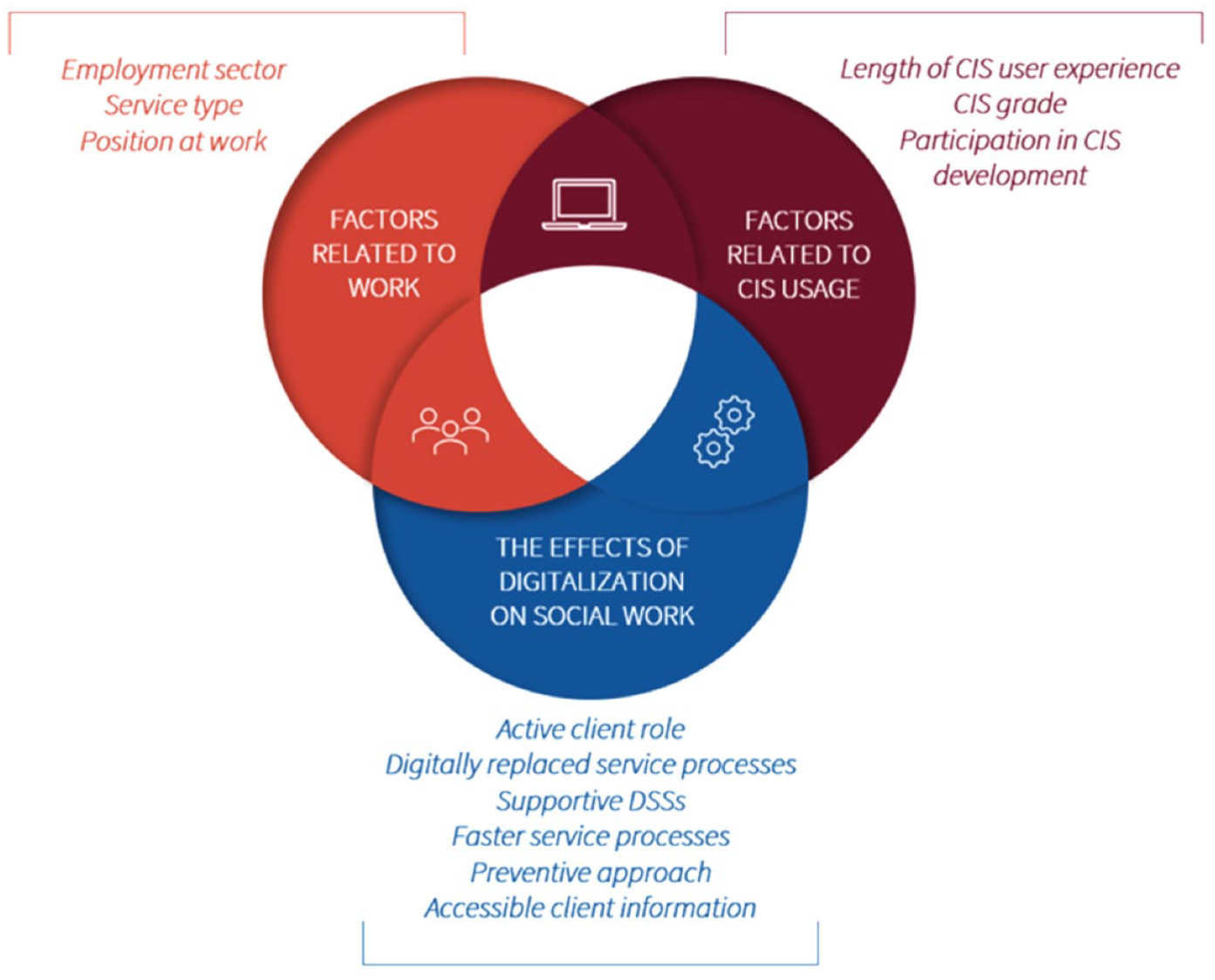
Variables used in this study.
Perceived effects of digitalization on social work
We used six statements to gauge social welfare professionals’ experiences with digitalization, reflecting the Finnish eHealth and eSocial Strategy 2020 goals (Ministry of Social Affairs and Health, 2015). Respondents were asked to rate on a 5-point Likert-type scale (ranging from 1 = fully agree to 5 = fully disagree) how the digitalization of social services had affected their work within the past 3 years.
The statements were as follows:
Clients’ active role in their own service has improved (active client role).
Service processes or sub-processes have been replaced by digital services or applications (digitally replaced service processes).
New decision support systems or applications support the work (e.g. reminders) (supportive DSSs).
Digitalization has accelerated the client service process (faster service processes).
Opportunities for preventive work have improved (e.g. through early intervention) (preventive approach).
Access to client information has been facilitated (accessible client information).
The scale was reverse coded for analysis, with higher values indicating greater agreement. For the descriptive results, the response options were recoded as (1) somewhat or fully disagree, (2) neither agree nor disagree, and (3) somewhat or fully agree. In the network analysis, each statement was used separately as a continuous variable. Similar statements have been used in other questionnaires (Saukkonen et al., 2022; Virtanen et al., 2023).
Work-related factors
Work-related factors included the employment sector, service type and position at work.
The employment sector was determined by asking the respondents’ main employment sector and categorized as 0 = public and 1 = other.
The service type was determined by asking respondents where they mainly worked. Social work implementation varies between institutional and non-institutional services, influenced by setting and client needs. In institutional services, technology utilization often centres around CIS, whereas non-institutional services emphasize digital service delivery to clients. Real-time CIS recording is more common in institutional services and healthcare compared with non-institutional or emergency social services. Respondents were categorized as 0 = non-institutional or emergency social services and 1 = institutional services or healthcare. Respondents who answered they worked in information management or did not provide an answer were coded as missing (n = 30).
The position at work was assessed by asking whether the respondents were in a leadership position and categorized as 0 = employee and 1 = leader.
Factors related to CIS usage
The factors related to CIS usage included the length of CIS user experience, CIS grade and participation in CIS development.
The length of CIS user experience was assessed by asking respondents how long they had used their primary CIS and categorized as 0 = less than 1 year, and 1 = 1 year or more.
The CIS grade was assessed by asking respondents to rate their primary CIS, categorized as 0 = 4 to 7 (low grade) and 1 = 8 to 10 (high grade). The response option ‘I am not able or willing to give a grade’ was coded as missing. This scale has been used repeatedly in the assessment of health information systems by physicians (Viitanen et al., 2011) and registered nurses (e.g. Kyytsönen et al., 2020).
Participation in CIS development was assessed by asking whether the respondent had participated in CIS development activities and categorized as 0 = no and 1 = yes. The statement has previously been used among physicians and registered nurses (Martikainen et al., 2020).
Statistical analysis
Descriptive analyses were performed with SPSS (IBM SPSS Statistics 28) to characterize the sample and variables. Due to non-response, observations varied in descriptive analyses. A network analysis was then conducted using mixed graphical models (Haslbeck and Waldorp, 2020) in R (version 4.1.1; R Core Team, 2021) estimating the associations between the perceived effects of digitalization, work-related factors and factors related to CIS usage. In the network, each variable is represented as a node and pairwise connections between variables are represented as edges. The adjusted and standardized regression coefficients are denoted by b. Edge width and colour indicate dependency strength and sign, respectively. The centrality statistics were examined to evaluate the relative influence of each factor in the network with respect to the standardized node strength (Epskamp et al., 2018). Predictability of continuous variables and network stability and accuracy were also evaluated (Epskamp et al., 2018; Haslbeck and Waldorp, 2018). The network analyses are described in detail in Supplementary Material 1.
Results
Characteristics of the participants
The participants’ characteristics are presented in Table 1. The majority (85.5%) of the respondents worked in the public sector, and more than two-thirds (72.9%) in non-institutional or emergency services. Most were employees (82.6%). In total, 16.2% had less than 1 year of experience with their current CIS. Over two-thirds (72.5%) rated their primary CIS low and one-third (32.8%) had participated in CIS development.
Characteristics of participating social welfare professionals (N = 990).
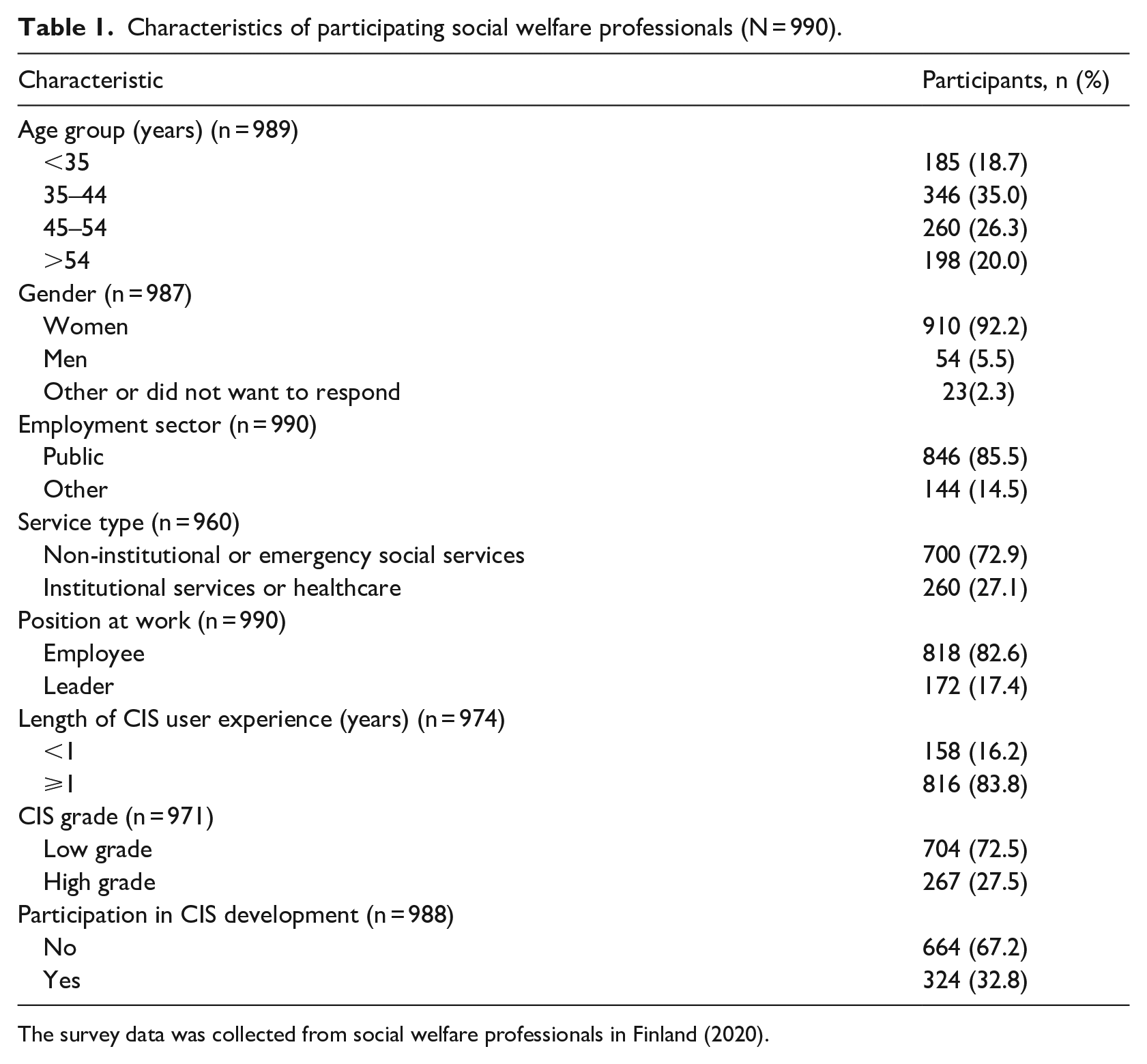
The survey data was collected from social welfare professionals in Finland (2020).
Perceived effects of digitalization on social work
The perceptions were more positive than negative overall in nearly all areas examined (Figure 2). Over half of the respondents (55.6%) agreed that processes or sub-processes has been replaced with electronic services or applications due to the digitalization (mean 3.39, SD 1.07), and more than half (53.5%) indicated that access to client information has been facilitated (mean 3.39, SD 1.04). Nearly half (48.5%) agreed that the digitalization had improved the active role of clients in their own service (mean 3.29, SD 0.97), while 39.2 percent perceived that digitalization had accelerated the client service processes (mean 3.08, SD 1.09). Over a third (36.0%) agreed that new DSSs supported their work (mean 3.01, SD 1.10). However, only 23 percent agreed that the opportunities for preventive work had improved due to digitalization (mean 2.80, SD 0.97).
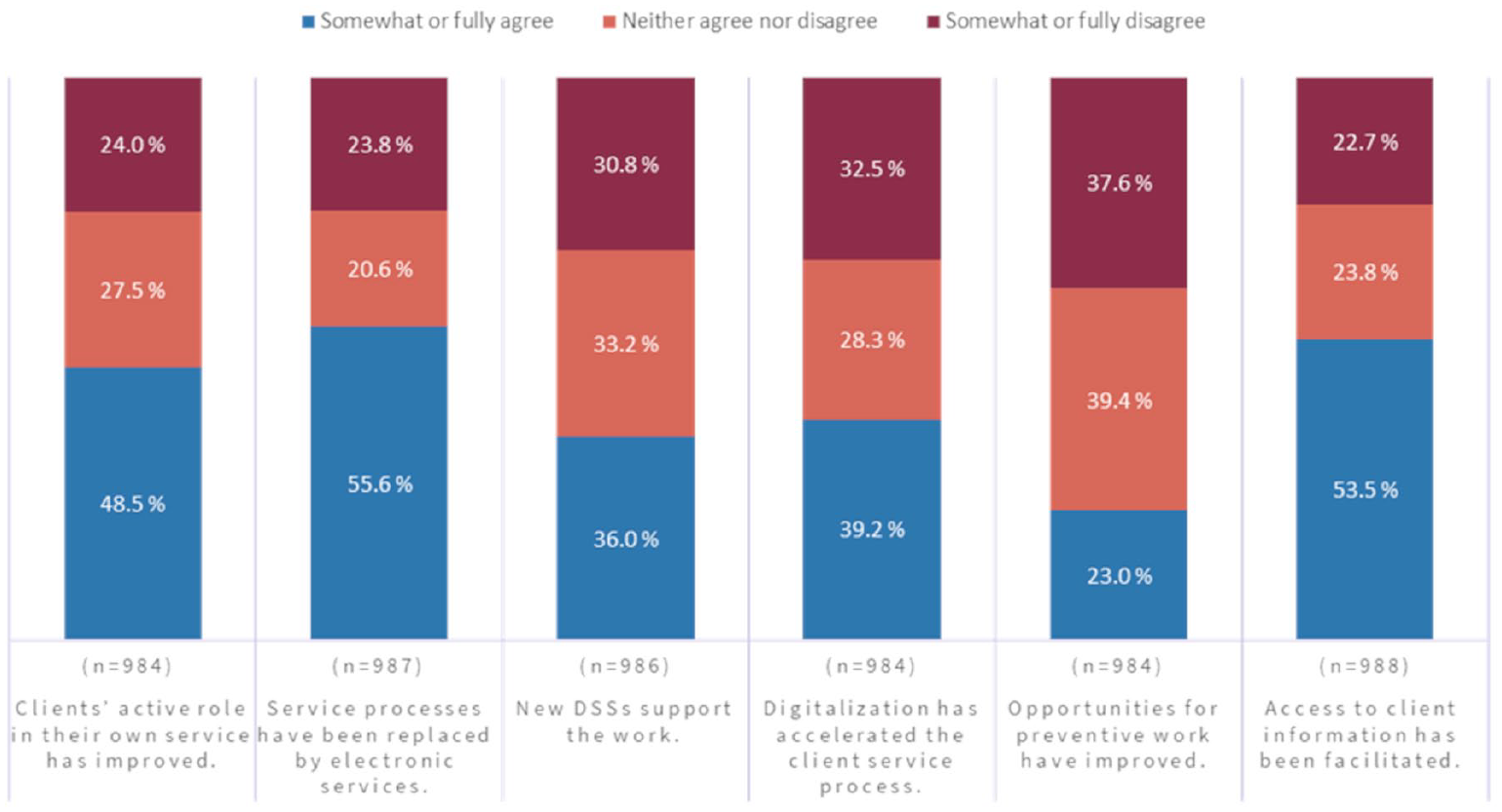
Social welfare professionals’ perceptions (n = 990) of the effects of digitalization on social work in Finland (2020).
Associations between perceived effects of digitalization, work-related factors and CIS usage
The resulting network (Figure 3) shows the connections between all 12 included factors: the perceived effects of digitalization on social work (1–6), factors related to work (7–9) and CIS usage (10–12). In the estimated network, the nodes were connected to 4 to 8 other nodes.
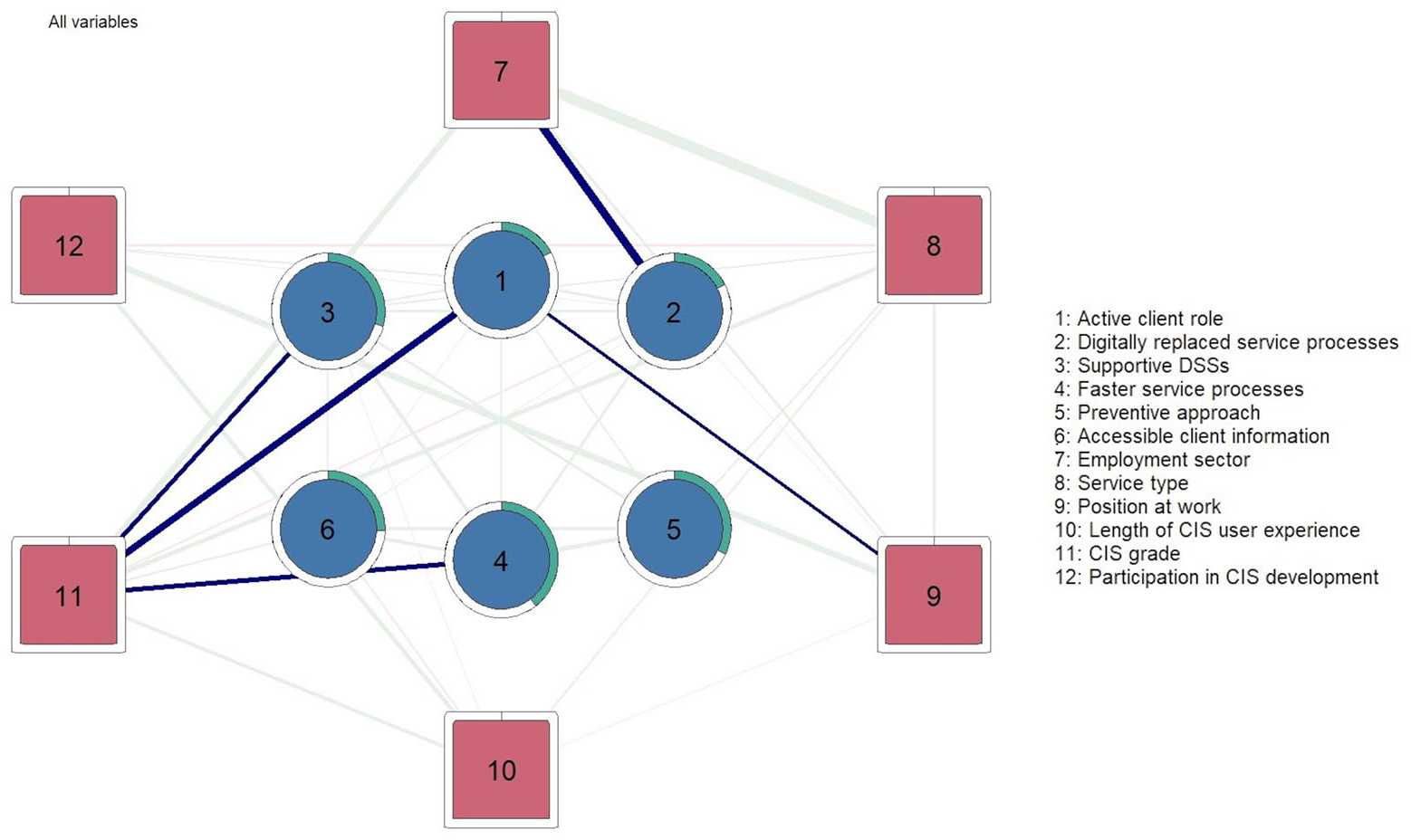
The visualized main network (n = 921) of the perceived effects of digitalization on social work and factors related to work and CIS usage. The strength of the dependency is reflected in the weight of the pairwise edge. Positive edges are shown in blue and green, and negative edges are shown in red. The green ring around each node represents its amount of predictability. The survey data was collected from social welfare professionals in Finland (2020).
The strongest direct connections to the perceived effects of digitalization are presented first. The non-public employment sector was associated with replaced service processes (b = 0.16). A higher CIS grade was associated with perceived improvement in the clients’ active role (b = 0.15), supportiveness of DSSs (b = 0.14) and faster service processes (b = 0.14). Holding a leadership position was associated with higher agreement on the more active role of clients (b = 0.12).
For other connections, only the strongest (values reaching above 0.20) are reported in the text. The network presented the following connections between the perceived effects of digitalization on social work. Improved possibilities for preventive work (b = 0.29) and facilitated access to client information (b = 0.21) were associated with faster service processes.
The network also presented the following connections (not directly connected to the perceived effects of digitalization). There was a strong association between the employment sector and service type (b = 0.74). A strong positive association was also found between having a leadership position and participation in CIS development (b = 0.47). The non-public sector was associated with a higher CIS grade (b = 0.39). In addition, working in institutional or healthcare services was associated with a higher CIS grade (b = 0.28). A longer CIS experience was associated with participation in CIS development work (b = 0.26).
The predictability of the perceived effects of digitalization ranged from 17.1 percent (active client role) to 39.7 percent (faster service processes) of the explained variance in the continuous variables.
Figure 4 shows the standardized centrality indexes in terms of node strength, reflecting the overall influence in the network. The service type (8) had the highest cumulative strength of connections to other variables, followed by the employment sector (7) and CIS grade (11).
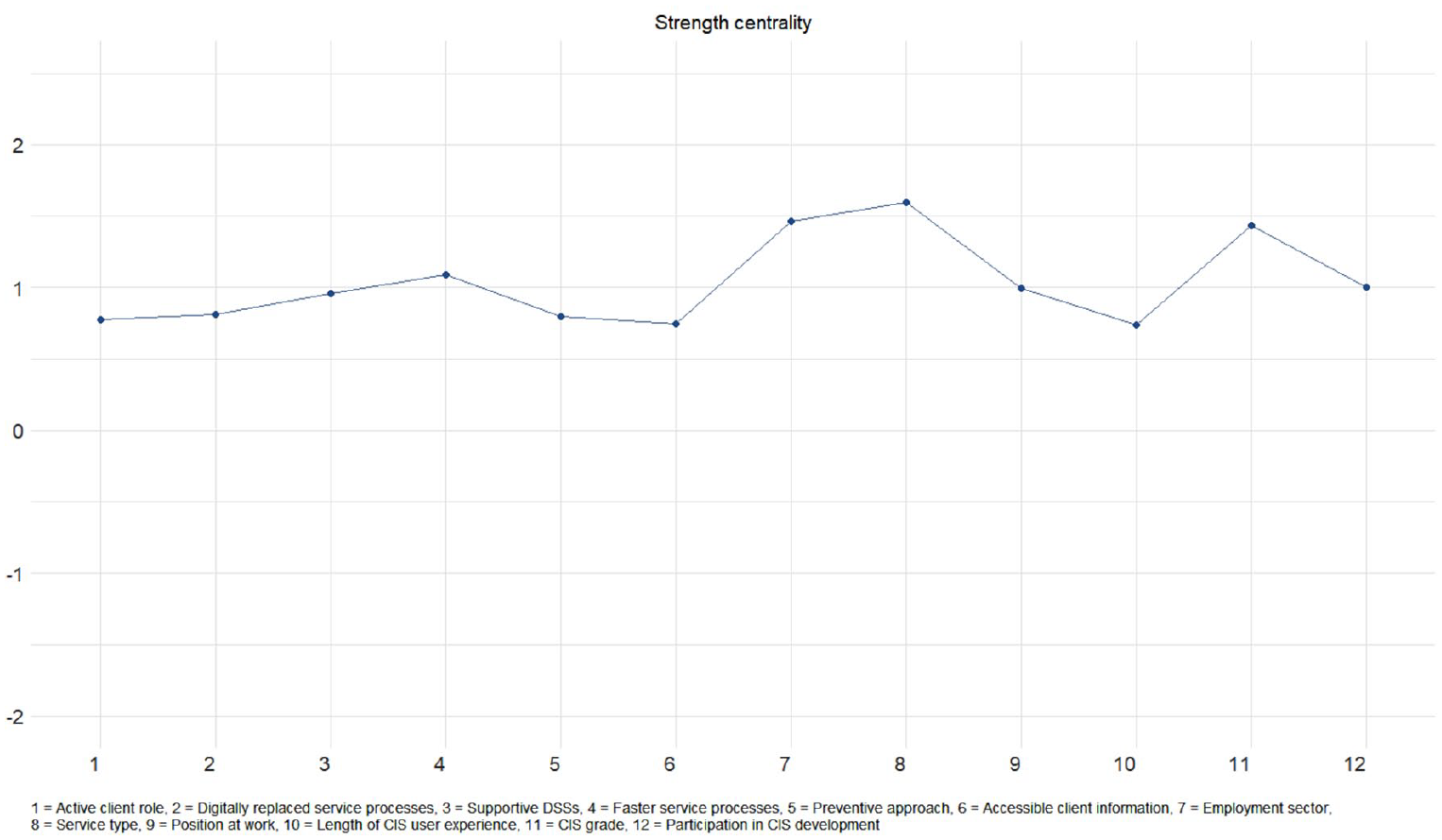
Standardized (i.e. z scores) centrality indexes denoting node strength for each of the 12 factors. The survey data was collected from social welfare professionals in Finland (2020).
The stability analyses are presented in Supplementary Material 1 (Supplementary Figures S1–S4).
Discussion
Perceived effects of digitalization on social work
Our study aimed to examine the social welfare professionals’ perceptions of the effects of digitalization on their work and to analyse how these perceptions were associated with factors related to work and CIS usage. We found that while strategic goals of social work digitalization are well established in some areas, they are yet to be achieved in others. Perceptions were overall more positive than negative across most areas examined. The highest agreement on the positive effects of digitalization were indicated for digitally replaced service processes, accessible client information and the more active role of clients. Approximately half of the respondents agreed with these developments. The least approval was given to the improved opportunities for preventive work through digitalization, with less than a quarter of respondents agreeing. Perceptions regarding the acceleration of client service processes and the support provided by DSSs were more evenly distributed, leaning slightly towards the positive.
The eHealth and eWelfare strategy in Finland has contributed to functional service integration by examining digitalization experiences across various professional groups (Jormanainen et al., 2022). Our findings on social welfare professionals’ perceptions of a more active role for clients and accessible client information were very similar to those previously reported in healthcare (Saukkonen et al., 2022).
According to this study, perceptions of improved opportunities for preventive work and facilitated access to client information were associated with faster service processes. In addition, better access to client information might also have implications for preventive social work. These results were partially expected, as client information can help identify needs for specialized or long-term social services (Hujanen et al., 2021). However, less than a quarter of social welfare professionals considered that digitalization had improved the opportunities for preventive work, suggesting that efforts must be made in this area. Structured documentation could help in achieving this goal, as it provides guidelines for high-quality record keeping (Hujanen et al., 2021).
In this study, the perceived improvement in the active role of the clients was associated with all the perceived effects of digitalization, suggesting that clients play an essential role as an active agent in promoting the digitalization of social services. This implies that enhancing clients’ active participation could also further other digitalization goals, emphasizing human agency’s centrality in social work. To ensure active participation, services must be accessible, support equality and protect digital rights (Act on the Provision of Digital Services, 306/2019). Examples of successful digital developments, including smart homes and service robots for the elderly in Korea, as well as mobile self-care applications for young people in Taiwan, can effectively foster client independence (see López-Peláez et al., 2023b). Digital transformation can profoundly impact human agency by improving the availability of social services and engaging with hard-to-reach groups (Nordesjö et al., 2022; Storer et al., 2022). Previous social work research has been criticized for not focusing enough on issues of human agency, portraying individuals negatively or viewing them as responsible for their problems (Parsell et al., 2017). Exploring the transformation of human agency in digital social work is crucial for realizing digitalization’s benefits and enabling vulnerable individuals to advocate for their own best interests.
Factors associated with the perceived effects of digitalization on social work
The network analysis highlighted the complex interdependence of multiple factors related to the perceived effects of digitalization on social work, highlighting the central role of work-related factors and CIS.
Results suggest that electronic replacement of service processes is more prevalent in the non-public sector compared with the public sector, indicating the differing nature of social work in different sectors. The private sector’s narrower focus may offer more flexibility for digital innovation. Conversely, the public sector’s diverse service requirements, including exclusive public welfare responsibilities like emergency services (Act on Organising Healthcare and Social Welfare Services, 612/2021), limit the digital substitution. Through the lens of the OID model, we observe that sectoral differences underscore the significant role of structural, task-related and technological factors in shaping the digital transformation in social work. Technology is a critical component of organizational infrastructure required to optimize functionality and address client needs across all sectors (Storer et al., 2022).
The CIS grade emerged as a pivotal variable in the network, directly influencing several perceptions of digitalization’s effects. Utilizing the OID model, we identified the connections between technology and tasks as a key driver for the digital transformation in social work. First, social welfare professionals who gave a higher grade to their primary CIS perceived that digitalization has promoted the active role of clients more than those who rated their systems lower. Some CISs have an integrated client portal providing the ability to communicate digitally with clients, and to use client-generated data as part of recording and collecting customer feedback (Salovaara, 2021). While previous research emphasizes the need for secure and user-friendly communication tools to enhance client participation (Gillingham, 2014; Pohjola and Korhonen, 2014), CIS development has predominantly focused on client data management, often overlooking the importance of secure client–social worker interactions (Pohjola and Korhonen, 2014; Salovaara and Ylönen, 2022). Successful digital communication tools can enable clients to participate interactively in new ways (Aasback, 2022) and improve the clients’ engagement (Zhu and Andersen, 2021). Since early 2023, Finnish citizens have been able to access their social welfare data on the national patient portal, MyKanta Pages (Kanta Services, 2022), although the data sharing will be gradual as social welfare providers update their systems accordingly (Act on the Electronic Processing of Client Data in Healthcare and Social Welfare, 784/2021).
Second, higher CIS ratings were associated with better supportiveness of DSSs. This aligns with expectations in cases where the DSSs are integrated with the mainly used CIS, indicating that a high-quality system likely supports integrated DSSs’ functionality. However, the integration of a DSS in a CIS is still relatively rare in Finnish social welfare organizations (Salovaara et al., 2021). Successful DSS development necessitates thorough evaluation of data quality and relevance, along with the application of appropriate techniques (Gillingham, 2019). Promising results from Sweden show that robotic process automation in public social services can positively impact discretionary practices (Ranerup and Henriksen, 2022).
Third, social welfare professionals who evaluated their primary CIS more highly believed that the clients’ service processes had been more accelerated by digitalization than social welfare professionals who gave a lower grade. Our findings align with healthcare studies where higher health information systems ratings have been associated with perceptions of faster consultations and easier access to client information (Saukkonen et al., 2022). Technological innovations can improve client service access (Vaithianathan et al., 2020), but faster processes do not ensure better quality without aligning with social work values (Koskinen, 2014). Understanding how the CIS can be utilized in an appropriate client-oriented way could enable increased efficiency. Previous studies have indicated user challenges related to CIS use both in Finland (Salovaara and Ylönen, 2022; Ylönen et al., 2020) and internationally (De Witte et al., 2016; Wastell and White, 2014). Challenges such as poor CIS usability and insufficient information flows may prevent the positive development of digitalization. Our results indicate that a high-quality CIS can be a powerful accelerator for achieving several digitalization goals.
Moreover, our results suggest that social welfare professionals who work in institutional or healthcare services gave their primary CIS a higher grade compared with those who worked in non-institutional or emergency social services. In addition, those who worked in the non-public sector gave their primary used CIS a higher grade compared with those who worked in the public sector. This highlights the complex interplay between organizational structure and technology and illustrates how differences in sectoral and service-specific structures may impact the alignment and effectiveness of CIS to support social work. Social welfare professionals in the public sector tend to be more critical of the support they receive from CIS compared with those in the non-public sector (Salovaara et al., 2022b). The public sector’s broader responsibility for social services contrasts with the private and third sectors’ focus on specific services or client groups (Salovaara et al., 2022c), making it easier for non-public sector organizations to find a CIS aligned with job requirements. In addition, the CIS brands differ by sector and type of service, which may explain some of the differences in perceived satisfaction with CIS (Salovaara et al., 2022c).
In the current study, leaders perceived that digitalization had promoted the active role of clients more compared with professionals. There are several possible explanations for this result. Management needs have been shown to take precedence over those of professionals in socio-technical projects (Wastell and White, 2014) and CISs have been implemented based on management priorities (Gillingham, 2021). In addition, our results showed that leaders were more involved in the development of CISs compared with professionals, which can lead to better acceptance of the implemented digital solutions (Martikainen et al., 2022) and engage the leaders in digital transformation. These associations reflect the interconnectedness of structure, tasks, people and technology in the digital transformation of social work.
Limitations
This study has several limitations. The psychometric properties of our measures for assessing the perceived effects of digitalization have yet to be tested. However, the statements are based on the Finnish eHealth and eSocial Strategy 2020, outlining digitalization’s effects on social work within the strategy’s priority areas. These statements were developed by experts and have been tested and used in earlier studies (Saukkonen et al., 2022; Virtanen et al., 2023). Although single-item measures have limitations in capturing complex concepts, our statements were carefully posited to reflect the specific aspects of our study, aligning with the considerations by Allen et al. (2022). In addition, our statements focused on aspects that could be considered positive. Thus, the results might have been different if we had focused on the negative ramifications.
We treated Likert-type scale variables as continuous in the network, a method previously used in other studies of mixed graphical modelling (e.g. Liu et al., 2021; Saukkonen et al., 2022). Our network’s correlation stability for edge weight was 0.594 and for strength centrality 0.439. Interpretations of relative edge sizes should be cautious, as values above 0.5 are considered stable. Because our data were cross-sectional, the directionality of the observed relationships could not be established. Although our data limit causal inference, this study reveals complex interconnections and identifies patterns that inform future longitudinal or experimental research. In addition, it is worth noting that our inability to calculate the response rate and assess precise representativeness is a limitation. However, the relatively large sample size included reasonably diverse composition of social welfare professionals in terms of age, service backgrounds and regions in Finland.
Caution should be exercised in generalizing our results to other countries and contexts. Finland is one of the pioneers in digitalization, but our study reflects the situation before the broader impacts of the COVID-19 pandemic and health and social services reform. This study is also limited to CIS users. Nonetheless, these results provide a benchmark for 2020, allowing for future comparisons.
Conclusion
Our findings suggest that social welfare professionals perceive the stated strategic goals of social work digitalization to be relatively well realized in some areas, while in others the desired benefits have yet to be observed. Access to client information and the active role of clients seem to have improved, while there is still work to be done in utilizing digitalization for preventive work.
The OID model and network analysis provided valuable prospects for understanding the multidimensionality of the digital transformation of social work. The model fits our context well, providing a framework to understand the interconnections between technology, tasks, structure and people. Several factors appear to have a complex relationship with the perceived effects of digitalization, supporting our hypothesis that factors related to digital transformation in social work constitute a complex entity where components are closely interrelated.
The quality of the primary used CIS appears to be critical for promoting the clients’ agency, the supportiveness from DSSs and faster service processes. Thus, the organizations could benefit from investing in a high-quality CIS and the factors affecting its successful implementation and use, such as comprehensive and continuous communication with professionals and targeted support (Nadav et al., 2021). When transitioning to a new CIS, considering user experiences is crucial. However, it is often more prevalent to adapt to the existing information system and enhance current workflow processes with the CIS. It is also recommended to allocate dedicated time for managers and professionals to participate in system development. Furthermore, we emphasize the importance of participatory design approach for redesigning work dynamics in organizations (Gillingham, 2015). This approach, involving all stakeholders, is fundamental for effective digital social work.
Our findings emphasize the need to consider organizational factors, as certain benefits of digitalization appear to be sector and service specific. Therefore, the implementation of new digital solutions in social work should carefully consider the context, which has also been emphasized in the experiences of several other countries (see López-Peláez et al., 2023b). There is potential for cross-sector and cross-service learning, particularly regarding the digital replacement of service processes. Hence, enhancing the dissemination of best practices between sectors and services should be improved.
In the future, promoting client agency could potentially help achieve other digitalization goals. Further studies are needed to examine how the improved information flow, structured documentation and DSSs could be systematically utilized in preventive social work. A more comprehensive view is needed when evaluating the multilayered digital transformation of social work. Attention in future research must extend beyond technology to encompass its critical interplay with tasks, structure and people integral to this transformation.
Supplemental Material
sj-pdf-1-isw-10.1177_00208728241265015 – Supplemental material for Perceived effects of digitalization on social work in Finland: A network analysis approach
Supplemental material, sj-pdf-1-isw-10.1177_00208728241265015 for Perceived effects of digitalization on social work in Finland: A network analysis approach by Petra Saukkonen, Marko Elovainio, Samuel Salovaara, Lotta Virtanen, Anu-Marja Kaihlanen, Emma Kainiemi, Tuulikki Vehko and Tarja Heponiemi in International Social Work
Footnotes
Declaration of conflicting interests
The author(s) declared no potential conflicts of interest with respect to the research, authorship and/or publication of this article.
Funding
The author(s) disclosed receipt of the following financial support for the research, authorship and/or publication of this article: This study was funded by the Strategic Research Council of the Academy of Finland (Project Grants 327145 and 352501) and the Ministry of Social Affairs and Health (Project 414919001). ME was supported by the Academy of Finland (Project 339 390). The funders were not involved in the design of the study or in the collection, analysis or interpretation of the data.

Supplemental material
Supplemental material for this article is available online.
Author biographies
References
Supplementary Material
Please find the following supplemental material available below.
For Open Access articles published under a Creative Commons License, all supplemental material carries the same license as the article it is associated with.
For non-Open Access articles published, all supplemental material carries a non-exclusive license, and permission requests for re-use of supplemental material or any part of supplemental material shall be sent directly to the copyright owner as specified in the copyright notice associated with the article.
