




Abstract
Health social workers, like social workers in general, have been found to utilise research knowledge to a low degree. No previous study has made comparisons based on the following: higher education, job tenure and workplace. This article is based on statistical comparisons between 1236 health social workers in Sweden working in various healthcare contexts. The central finding was that higher education was the factor with the largest impact. Workplace and especially job tenure were found to be less influential. An implication for practice is to raise the knowledge requirements in terms of research knowledge utilisation already from bachelor’s degree level.
Keywords
Introduction
Social work and its knowledge base have been debated for many years (cf. Epstein, 2009; Trevithick, 2008). According to the International Federation of Social Workers, social work practice is based on both a broad theoretical ground and research (IFSW, 2022). Despite this claim about research use in practice, the support for research use social workers is weak (e.g. Ekeland et al., 2019; James et al., 2019). The last decades have been characterised by an ongoing process and discussion about evidence-based practice (EBP) (Bergmark and Lundström, 2011; Jacobsson and Meeuwisse, 2020; Parrish et al., 2023). EBP derives from evidence-based medicine and is an approach in which one key component is the review, assessment and, where appropriate, use of relevant research (Parrish et al., 2023). The advocates of EBP argue that health care and social services should be based on the best available evidence to benefit the users, while the opponents claim that problems are individualised, medicalised and that only specific forms of research (e.g. randomised controlled trials and systematic literature reviews are relevant). In Sweden, the National Board of Health and Welfare has endeavoured, through reforms and policies, to steer health and social services towards EBP (Jacobsson and Meeuwisse, 2020). This article focuses on health social workers and research knowledge utilisation.
Health social workers constitute a particular group of social workers as they operate in health care, a setting in which other professions, mainly medically trained, make up the majority (Sjöström, 2013). In some national contexts, there may be other professions whose tasks overlap with those of health social workers such as counsellors (Umstead, 2019), primarily working with counselling (cf. Isaksson et al., 2017). Health social workers are active in different health care settings, for example, primary and hospital care, as well as public and private health care (Browne, 2006; Ståhl and Lundälv, 2023). In Sweden, where this study is based, a large majority of health care is publicly funded by tax revenues. There is no official register on health social workers in Sweden. In 2011, Statistics Sweden estimated the national population of this group to be 5100 (The National Board of Health and Welfare, 2014). Eight years later, the health social workers in public health care were estimated at approximately 4500 (The National Board of Health and Welfare, 2022). Previous studies on health social workers and research knowledge utilisation are scarce. Existing research, however, shows the same pattern as for social workers in general, the use of research results is limited (Björkenheim, 2007; Heiwe et al., 2013; Ståhl and Lundälv, 2023; Udo et al., 2019). It is unknown whether different background factors affect health social workers’ utilisation of research knowledge. Umstead (2019) found that counsellors, having a master’s degree, used research in their daily work with clients. This study focuses on the potential influence of three background factors: higher education (highest completed degree), job tenure (number of years in profession) and workplace at a comparative level. Higher education in the educational system in Sweden includes different forms of degrees. These degrees are associated with different numbers of higher education credits (see Table 1). Job tenure includes number of years working as a health social worker. Workplace includes different forms of health care organisations, for example, primary care, hospital and university hospital. There are seven university hospitals in Sweden, all of which are affiliated with a university. A central mission of university hospitals, in addition to providing health care, is to promote and conduct research. This mission is not limited to specific professions (Ministry of Social Affairs, 2016).
Sample characteristics of 1236 health social workers who responded to the web survey in 2022.
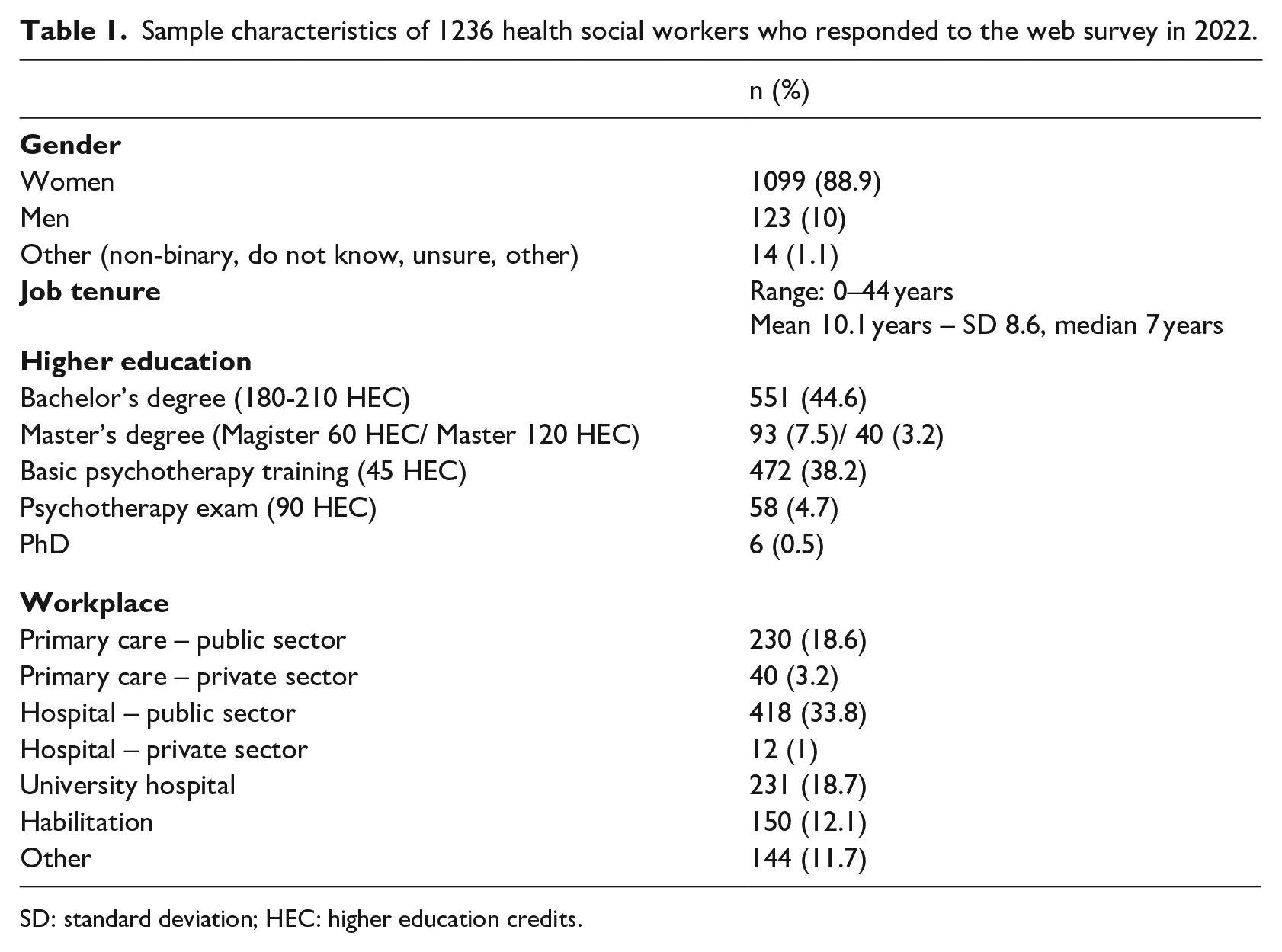
SD: standard deviation; HEC: higher education credits.
In this article, the following definition of research knowledge by McCafferty (2022: 9) is used: evidence gathered systematically by prescribed methods, and process and outcome data. Thus, research evidence includes both original empirical studies and review studies. Knowledge utilisation is defined as a process of consideration in which a professional takes part in and assesses knowledge (e.g. research literature, method literature, media) and, if appropriate, uses it to inform their practice (Metzler and Metz, 2010). In this article, the terms utilisation and use are used interchangeably (cf. Heinsch et al., 2016).
Previous research
Previous research related to social workers and research knowledge utilisation including comparisons based on different background factors have mainly been conducted in relation to EBP. As research knowledge constitutes one part of EBP, studies with this orientation have a relevance for the topic of this study. However, this study is not focusing on EBP. The background factors that have been highlighted in existing comparative research are higher education, job tenure, and workplace.
Higher education in addition to a bachelor’s degree has been found to affect the perception of research knowledge positively. Social workers with a greater number of higher education credits perceived scientifically tested methods and interventions as more important than those who did not study after attaining their bachelor’s degree (Bergmark and Lundström, 2011). Social workers with a master’s degree were more often found to be interested and competent in using research than their lower educated peers (Iversen and Heggen, 2016). Social workers with a master’s degree have also been found to have stronger opinions regarding EBP than social workers with a bachelor’s degree. The higher educated social workers were both more critical and more non-critical than the lower educated group, who tended to choose the ‘not sure’ response to a greater extent (Ekeland et al., 2019). However, according to another study, highest completed education was not statistically significantly contributing to predicting attitudes towards EBP and use of evidence-based resources (Iovu et al., 2015).
Previous research has investigated longer job tenure as a factor that might affect social workers’ use of research knowledge. Iversen and Heggen (2016) noted that relatively recently graduated social workers primarily stated colleagues and supervision as their most important knowledge sources, as expected. However, senior social workers with 10 or more years in the profession stated the same. Another study found no support for longer job tenure being an especially important factor considering attitudes to methods and interventions based on research (Bergmark and Lundström, 2011). Previous studies have investigated number of years of job experience as a potential predictor of positive attitudes against EBP. No evidence was found that this variable was important as it was statistically insignificant (Iovu et al., 2015; James et al., 2019).
Few studies on social workers have made comparisons of the workplaces of respondents. Bergmark and Lundström (2011) found differences in attitudes to scientifically tested methods and interventions between social workers in different areas of practice. Social workers in what is defined as child and family and drug abuse were more positive than those in social assistance (Bergmark and Lundström, 2011). In another study, more specifically measuring attitudes to EBP, it was found that social workers in child welfare comprised the group with the highest number of non-critical answers to EBP. All other groups of respondents, social welfare, mental health and drug treatment, and other, gave a higher number of ‘not sure’ responses (Ekeland et al., 2019).
No previous studies were found that made comparisons between health social workers and their use of research knowledge based on background factors. Health social workers are present in various healthcare settings together with several other professions (Browne, 2006). Among these professions, nurses and occupational therapists are examples of occupational groups with a length and scope of their higher education training comparable to that of health social workers. A study on occupational therapists found that a higher level of academic education was the most significant predictor of research utilisation (Brown et al., 2010). Another study including several occupational healthcare groups, among them a small number of health social workers, found a statistically significant difference in engagement in EBP activities between those with a bachelor’s degree and those with a doctorate degree. The same pattern was evident between those with a master’s degree and those with a doctorate degree. However, no significant difference was found between health care professionals with a bachelor’s degree and those with a master’s degree (Moore et al., 2018). Number of years in profession has been found to have a different impact on healthcare professionals. Occupational therapists with a longer job tenure were more engaged in research activities (Brown et al., 2010). Seniority, measured as more than 5 years in occupation, among nurses did not predict research utilisation. A comparison based on two different workplaces was not able to predict research utilisation either (Moe and Enmarker, 2020).
Aim
The aim of this study was to explore the plausible influence of higher education, job tenure and workplace on health social workers’ use of research knowledge.
Methods
Data collection and participants
This article is based on an online survey that was distributed to health social workers all over Sweden. The survey contained 16 questions in total, nine on background characteristics, and seven on the respondents’ use of research and other knowledge sources. The survey is attached as Supplementary Material (Supplementary Material 1). For this study, two questions were selected to deepen the analysis. These were the questions on frequency of reading research literature and use of knowledge sources.
The authors approached four organisations engaging health social workers who were asked to distribute the survey. The trade unions the Union for Professionals and Vision were approached as well as the Swedish Association for Health Social Workers and the National Network of Research in Social Work in Healthcare. All the organisations except Vision accepted the request and distributed the survey. In the case of the Union for Professionals, all their members registered as health social workers (n = 2906) received information and a link to the survey. Information about the survey and a link to participate were also sent to the members of the Swedish Association for Health Social Workers (n = 450) and the National Network of Research in Social Work in Healthcare (n = 64, not including the authors). In the latter case, the members of the network were also encouraged to share the survey with others in their health social work networks. Respondents with membership in several participating organisations received invitations to participate from all the organisations concerned. The information sent out by each organisation was identical, which probably meant that respondents did not answer the questionnaire more than once. The survey was open between 1 March and 16 May 2022 and two reminders were sent out by each organisation that distributed the survey. In total, 1236 health social workers participated.
Variables
The background variables used in this study were higher education, job tenure and workplace. The original variables of higher education and workplace both consisted of outcomes with varying numbers of observations. Due to the assumption of the Chi-Square test for Independence in which the expected counts should be five or more in at least 80 percent of the cells and no cell should be expected to contain less than one observation (Field, 2018; Kim, 2017), the variables of higher education and workplace were recoded. The original variable of higher education included both magister’s degree and master’s degree. Both degrees are further higher education that can be studied after completing a bachelor’s degree in Sweden. These two outcomes were merged into one, master’s degree (Magister/Master), as both types of degrees provide eligibility to apply for doctoral programmes in Sweden (Christensen, 2020). Only six respondents had a doctoral degree and were therefore recoded as missing. The original variable of workplace included the options primary care private sector and hospital private sector, both with considerably fewer observations than the other outcomes. However, primary care private sector included a sufficient number of observations and was therefore kept, while hospital private sector was recoded as missing, due to too few observations (n = 12). Job tenure was kept as a continuous variable.
The dependent variables used in this study were frequency of reading research literature and the binary variable of whether one had chosen research results as one of their three most important knowledge sources used in practice. The latter variable was chosen to investigate further since it is specifically about the respondent’s use and appreciation of research results in practice.
Statistical analysis
The variable on reading of research literature was categorical, therefore analyses were performed through cross-tabulation and the Chi-Square (χ2) test for Independence and ANOVA tests. The χ2 tests included variables with more than two outcomes. A statistically significant χ2 test (p-value ⩽ 0.05) means that there is an association between variables based on differences between the expected and observed values (Kim, 2017). In analyses in which a statistically significant result was obtained, the post hoc test Fisher’s exact approach was used to identify the cell(s) behind this result (Shan and Gerstenberger, 2017). Differences found from the post hoc test will be reported in relation to the expected values (Kim, 2017). Job tenure and the variable on reading of research literature was analysed with the one-way ANOVA test. In the analysis of the binary variable (0 = was not chosen, 1 = was chosen) of whether respondents chose research results as one of their three most important knowledge sources, a binary logistic regression analysis was used. The logistic regression analysis was preceded by a check for possible multicollinearity between the independent variables and a check for a possible interaction effect between highest completed degree and number of years in profession. No multicollinearity or interaction effect was detected. The independent variables were used both as single predictors to obtain the unadjusted odds ratios and combined in a model to obtain the mutually adjusted odds ratios. All analyses were performed using IBM SPSS Statistics version 27.0.
Ethical considerations
Four organisations engaging health social workers were approached of which three accepted the request. These three organisations shared information about the study and a link to the survey. The information clarified the aim of the study, the statement on the voluntary nature of participation and the information on anonymity (Beauchamp and Childress, 2013). Swedish national ethical guidelines were followed, including voluntarily participation, informed consent and anonymity (Swedish Research Council, 2017). As the approach used meant that no respondents’ identities could be revealed, no formal ethical approval was required. Consent from respondents was obtained by their participation.
Results
Descriptive results
The sample characteristics are presented in Table 1. Almost 9 out of 10 respondents were women. The range of job tenure spanned between 0 and 44 years and the mean and median values indicate that the respondents were experienced in their profession. Respondents’ highest education was mainly a bachelor’s degree followed by basic psychotherapy training. There was a spread among the respondents in terms of workplaces where most of them were working at a hospital in the public sector. Respondents who chose ‘other’ as their workplace were mainly employed in different settings of psychiatry or youth centres. Figure 1 shows the distribution of responses to frequencies of reading/taking part in different types of literature. It was found that health social workers read research literature frequently to a lower extent than reading/taking part in the other forms of literature. In Figure 2, the distribution of responses is shown for the survey question where respondents chose their three most important knowledge sources used in practice. Research results were one of the potential responses that was chosen to a lower extent among health social workers.
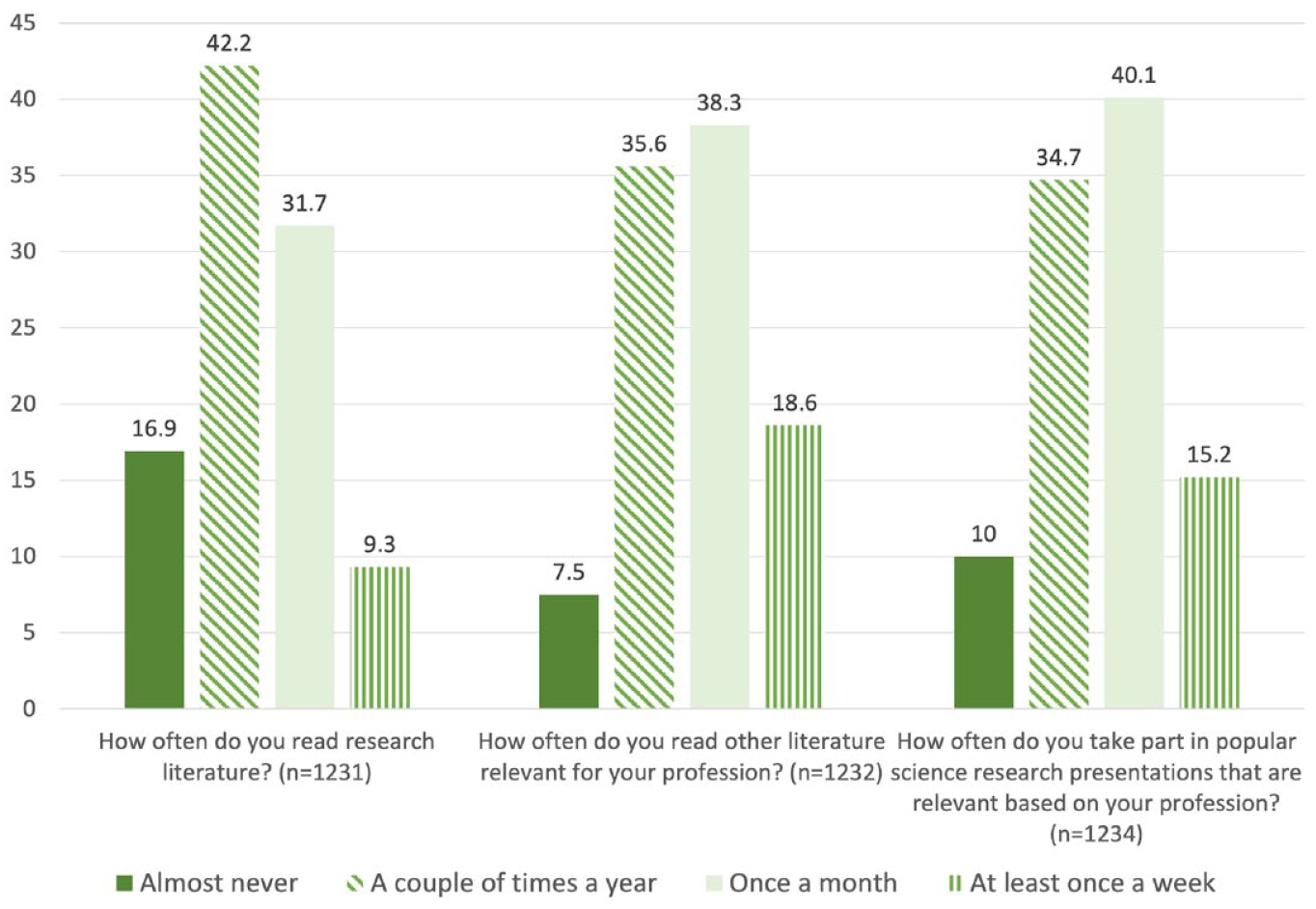
Frequencies with which respondents read/took part in literature related to knowledge and profession (percentages).
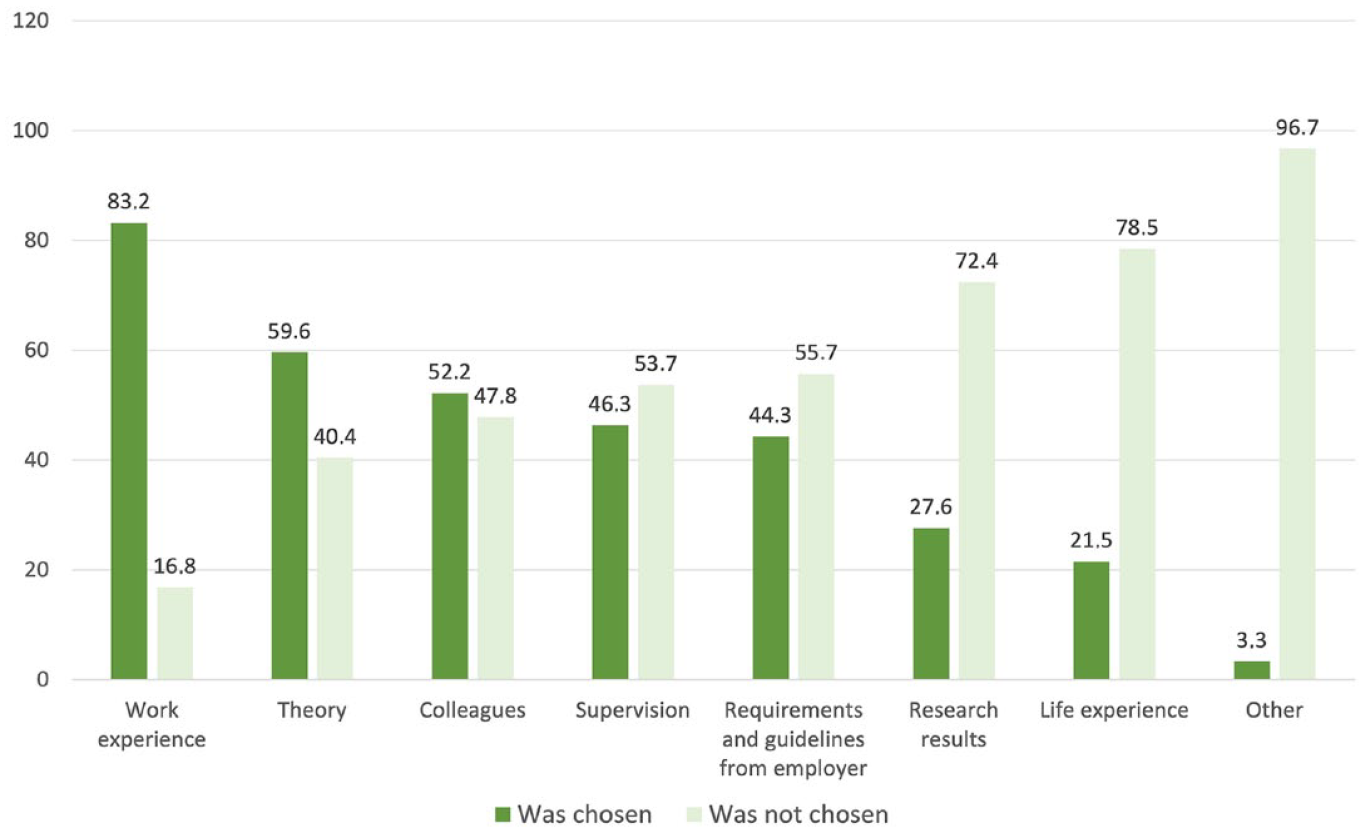
Distribution of responses to the survey question asking respondents to choose their three most important sources of knowledge used in practice (percentages). Health social workers responded to the web survey in 2022.
Results from multivariate analyses
Tables 2 and 3 show the tests of plausible associations between the background factors and the variable on reading of research. The cell(s) that contributed to the statistically significant independence between the variables in the Chi-Square tests are highlighted in Table 2.
Cross-tabular analysis with the variable on reading of research literature against the categorical background factors.
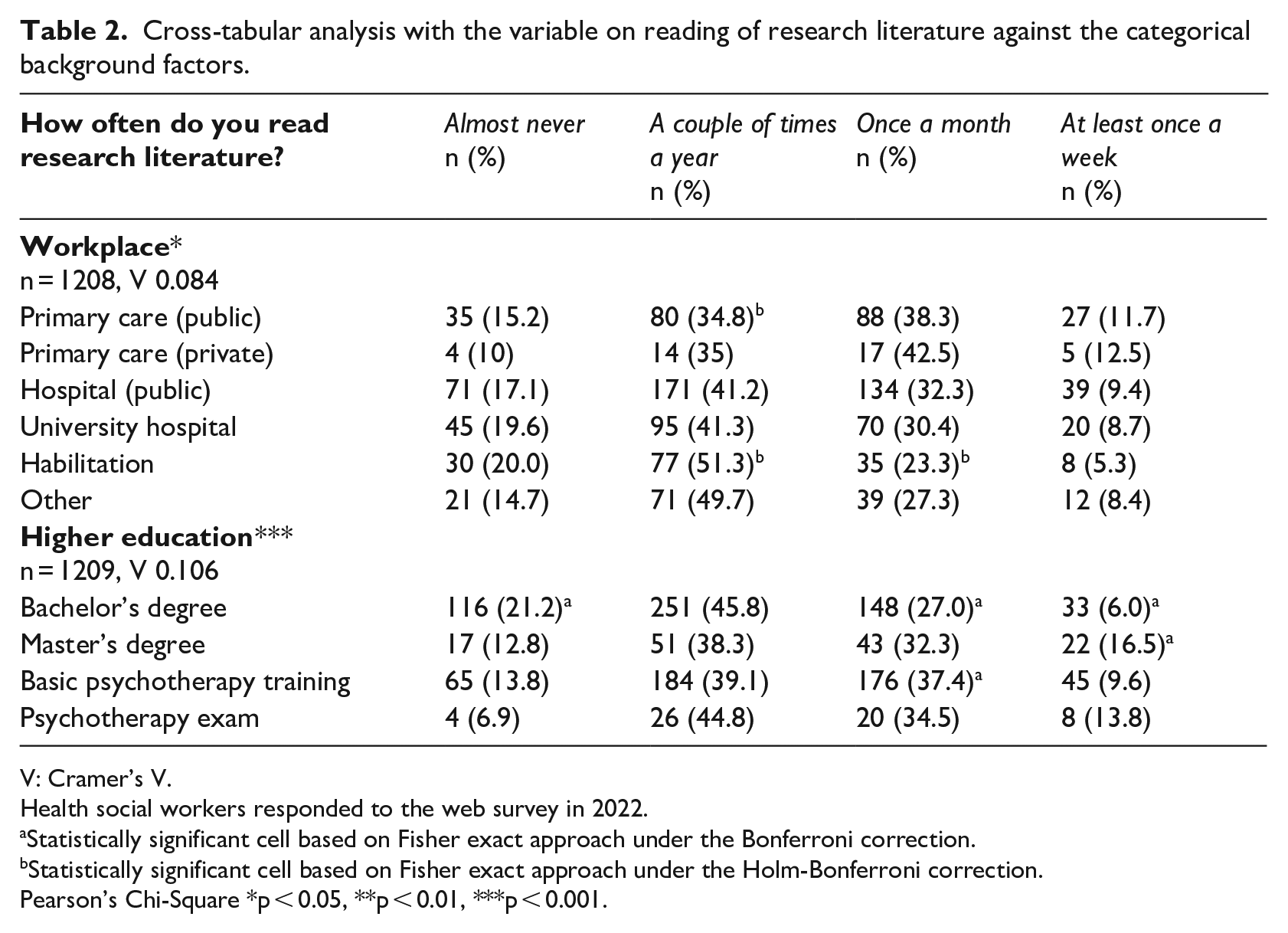
V: Cramer’s V.
Health social workers responded to the web survey in 2022.
Statistically significant cell based on Fisher exact approach under the Bonferroni correction.
Statistically significant cell based on Fisher exact approach under the Holm-Bonferroni correction.
Pearson’s Chi-Square *p < 0.05, **p < 0.01, ***p < 0.001.
One-way ANOVA test between job tenure and the variable on reading of research literature.
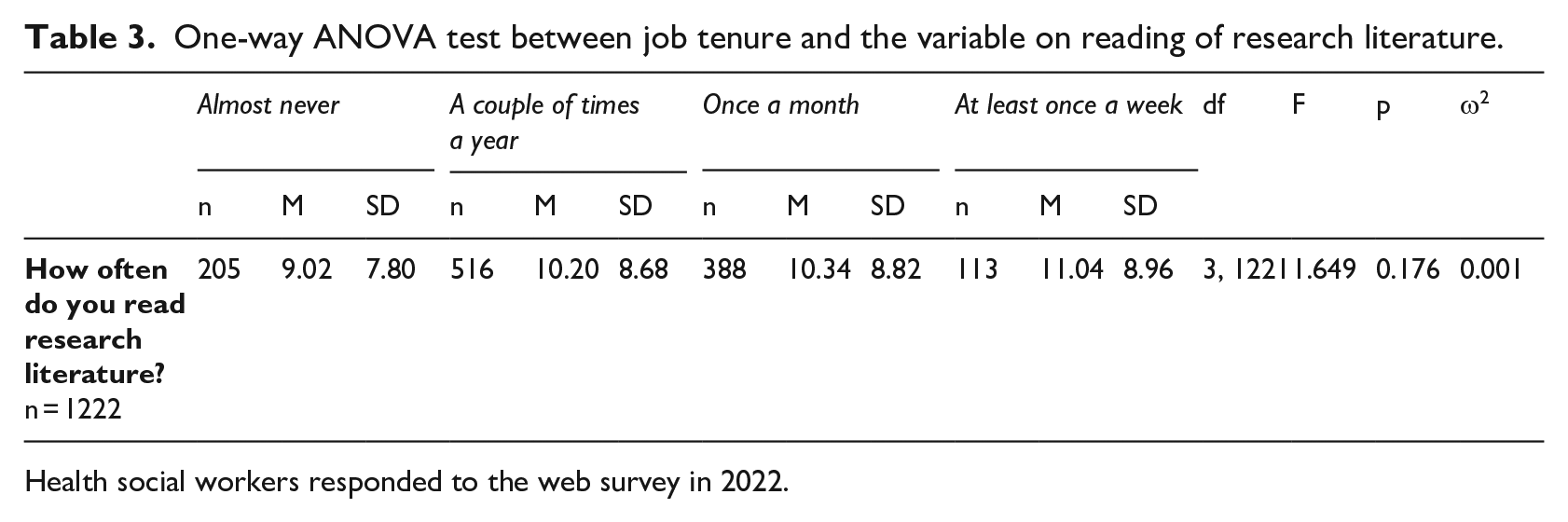
Health social workers responded to the web survey in 2022.
The analyses between reading research literature and the background factors workplace as well as higher education showed that there was a statistically significantly difference between the outcomes. It was found that a greater proportion of health social workers in primary care (public) read research literature more often than expected. The pattern was the opposite for those in habilitation in which fewer than expected read research more regularly. Health social workers with a bachelor’s degree read research literature to a lower extent than expected while the opposite was found for those with a master’s degree and basic psychotherapy training. The one-way ANOVA test (Table 3) showed that there was no statistically significant difference in job tenure between respondents who had chosen different responses.
Results from logistic regression analysis
Table 4 includes the unadjusted odds ratios for independent variables in relation to research results (chose research results: n = 341, did not chose research results: n = 895) for comparison when entered into the mutually adjusted full model. Job tenure was statistically significantly associated with choosing research results as a single independent variable, but this association was insignificant when entered in the full model. In the mutually adjusted model, two variables included outcomes that were statistically significantly associated with choosing research results. Having taken a psychotherapy a exam was statistically significantly associated (adjusted OR = 4.15, 95% CI = [2.30, 7.51]) with choosing research results as one of the three most important knowledge sources in practice. Working at a public hospital (adjusted OR = 0.65, 95% CI = [0.45, 0.94]) or university hospital (adjusted OR = 0.6, 95% CI = [0.39, 0.92]) were found to be statistically significantly associated with lower odds of choosing research results as one of the three most important knowledge sources in practice. Respondents choosing research results had a 35% reduction in the odds of working at a public hospital and 40% reduction in odds of working at a university hospital.
Unadjusted and mutually adjusted odds ratios for characteristics associated with choosing research results as one of the three most important knowledge sources used in practice among health social workers, n = 1182.
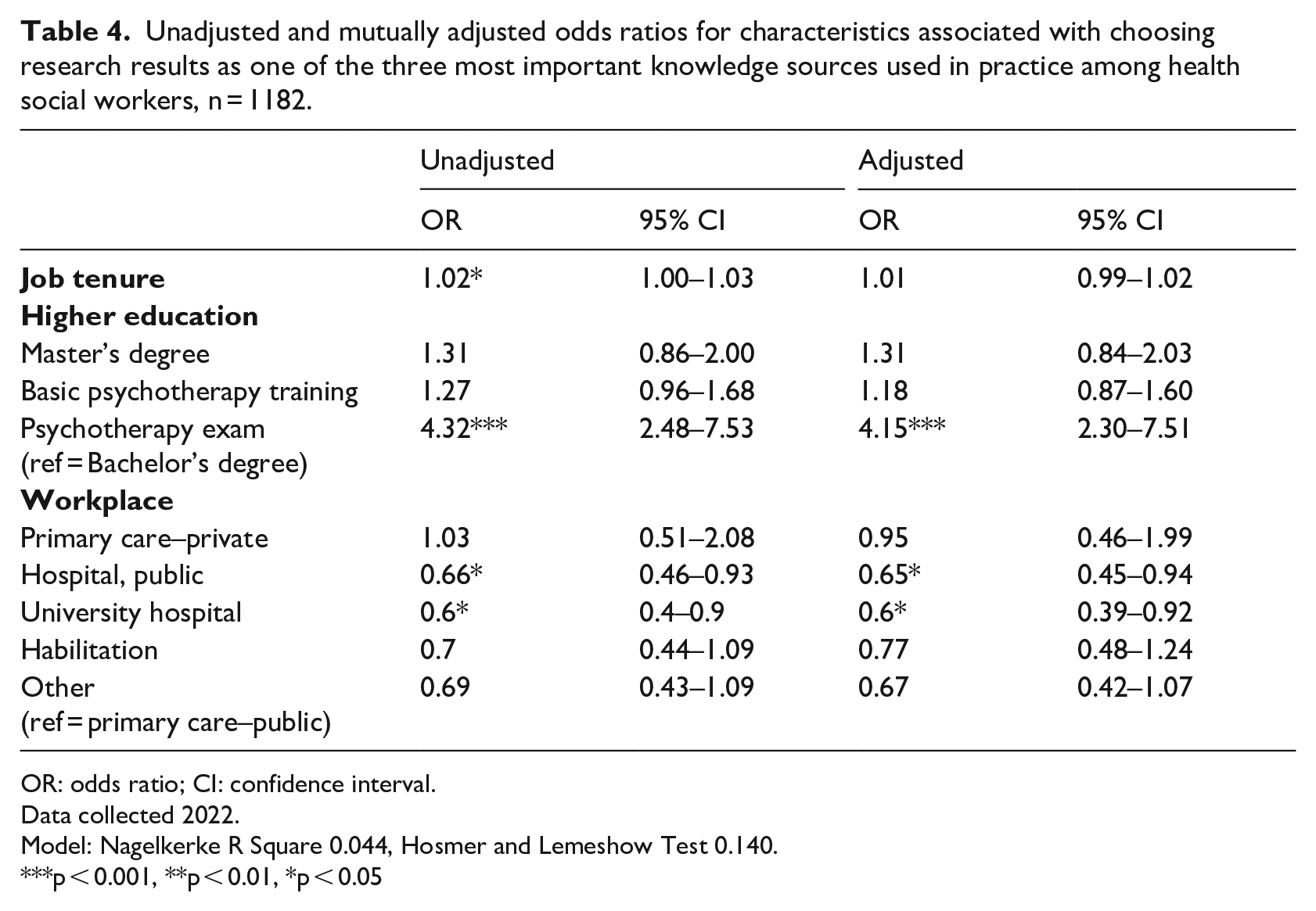
OR: odds ratio; CI: confidence interval.
Data collected 2022.
Model: Nagelkerke R Square 0.044, Hosmer and Lemeshow Test 0.140.
p < 0.001, **p < 0.01, *p < 0.05
Due to the results obtained from the logistic regression analysis, this was followed up by a cross-tabulation analysis between the higher education and workplace (Table 5). The results showed that the proportion of health social workers with a bachelor’s degree is significantly higher in hospitals (public) and university hospitals than in primary care (public), which was the reference category in the regression analysis. The proportion of health social workers with a master’s degree was higher in hospitals and university hospitals than in primary care, but for those with a basic psychotherapy training or having taken a psychotherapy exam the pattern was the opposite.
Cross-tabular analysis with the variables higher education and workplace following up the results obtained from the logistic regression analysis.
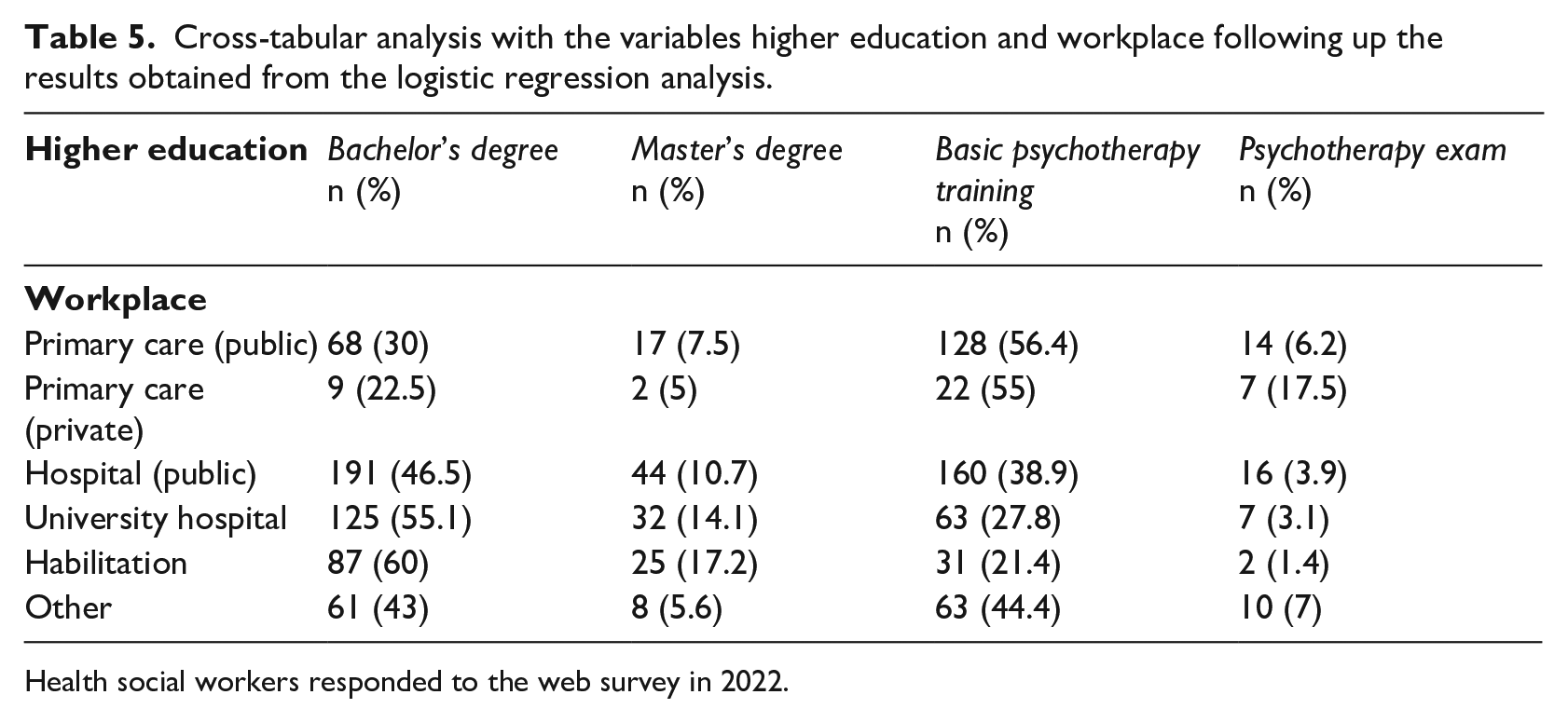
Health social workers responded to the web survey in 2022.
Discussion
This study contributes both new knowledge to an area that has been little researched, but also an in-depth analysis that has previously been lacking in the area. The central finding of this study was that higher education and workplace were the variables found to be statistically significantly related to the dependent variables. The strongest statistical significances were found in relation to higher education, but it was also found that the proportion of health social workers with further higher education differed between workplaces. In relation to frequency of reading research literature, both workplace and higher education were statistically significantly associated with differences among health social workers. However, the differences were more statistically distinct in relation to higher education. Higher education was also found to be the only background factor including an outcome associated with higher odds of choosing research results as one of the three most important knowledge sources.
Regarding research literature, it was found that those with a master’s degree and basic psychotherapy training read such literature to a greater extent than expected according to the post hoc test. Thus, higher education appears to be associated with keeping up to date with research (cf. Parrish et al., 2023). Considering workplace, some statistically significant differences were found in the outcomes of primary care (public) and habilitation according to the post hoc test. The effect sizes obtained corresponded to a small effect. Thus, these differences must be interpreted with caution. It cannot be assumed that the variables used are comprehensive in explaining differences (cf. Iovu et al., 2015; James et al., 2019; Moe and Enmarker, 2020).
The binary logistic regression analysis showed that two background factors included outcomes that were statistically significantly associated with choosing research results as one of their three most important knowledge sources in practice. The only outcome associated with higher odds of choosing research results was having a psychotherapy exam as the highest completed degree. This finding is in line with Bergmark and Lundström (2011) who found that social workers with a greater number of higher education credits were more positive to research-based methods. Having taken an exam in psychotherapy was included here as it gives the highest amount of higher education credits, 135 higher education credits in addition to a bachelor’s degree. However, a master’s degree in social work involves 120 higher education credits, but this outcome was not found to be statistically significantly associated with choosing research results, in contrast to the findings of Iversen and Heggen (2016). A study on occupational therapists also found a positive relationship between further higher education and research utilisation (Brown et al., 2010), which is partly in line with the results of this study. The association found between having taken a psychotherapy exam and choosing research results as a source of knowledge may indicate that existing research is more likely to be conducted with a psychological/psychotherapeutic focus and hence more relevant to practice.
The other outcomes with a statistically significant association to choosing research results from the logistic regression analysis were the workplaces public hospital and university hospital. Working in a public hospital or university hospital was associated with lower odds of choosing research results in comparison to the reference group that was working in public primary care. This finding was surprising since university hospitals in Sweden are expected to be closely connected to research and this mission is not limited to specific professions (Ministry of Social Affairs, 2016). This result was followed up by an analysis of potential differences in higher education between health social workers from different workplaces. The analysis revealed that there were relatively large differences in higher educational level between health social workers employed in primary care (public) versus hospitals (public) and university hospitals. Among the latter two, the proportion of health social workers with a bachelor’s degree was significantly higher, while the proportion of health social workers with some form of psychotherapy training/exam was significantly higher in primary care, both public and private. Heiwe et al. (2013) have noted that health social workers in primary care tend to work more specifically with psychotherapeutic treatment, which in itself requires further higher education training for this group of health social workers. The findings from this study suggest that the intended link between universities, university hospitals and health social workers is not working in practice.
Job tenure, measured in number of years as health social worker, was the background factor with the lowest association to research knowledge utilisation. This background factor was not found to be statistically significantly related to reading of research literature and was only statistically significantly associated with choosing research results as a single independent variable in the logistic regression analysis. When entered in the mutually adjusted model, it was insignificant. Previous research has had different findings in relation to job tenure. Studies related to social work have shown a weak relationship between job tenure and research utilisation (Bergmark and Lundström, 2011; Iversen and Heggen, 2016). A study among nurses found no relationship between seniority (5 ⩽ years in occupation) and research utilisation (Moe and Enmarker, 2020). Described findings are in line with results from this study. Another study focusing on occupational therapists found, however, that longer job tenure was related to research involvement (Brown et al., 2010), which can include activities that favour the use of research.
Despite the claim that social work practice is based on research (IFSW, 2022), our data show that the support for this among Swedish health social workers is weak. On a descriptive level, research literature was the form of literature that respondents used least frequently (Figure 1). Research results were the third least chosen knowledge source among respondents (Figure 2). As noted earlier, it is noteworthy that health social workers working in university hospitals do not seem to have a clear link to research, which contradicts the mission of the organisations (Ministry of Social Affairs, 2016). Sweden, as well as other national contexts (Bergmark and Lundström, 2011; Jacobsson and Meeuwisse, 2020; Parrish et al., 2023), has undergone changes in the governance of health care and social work in the direction of evidence-based work. As previously mentioned, a central part of EBP is to utilise research knowledge. The results from our data show that this is done to a low extent by health social workers and thus indicates that EBP seems to have gained a limited foothold in social work in health care.
Although this study found some evidence for the influence of the background factors measured, it cannot be assumed that these background factors are comprehensive in relation to research knowledge utilisation among health social workers. The survey did not allow for degree of collaboration and interaction with other healthcare professions. Browne (2006) used a theoretical division between multidisciplinary teams (formal teams with low interaction), interdisciplinary teams (higher degree of interaction but clear professional boundaries) and transdisciplinary teams (close collaboration between professionals). Degree of collaboration and interaction with other professions might influence the use of research knowledge, for example, by taking part in journal clubs (Gardner et al., 2016) in which the team shares relevant research or other literature. A team culture that promotes all professional endeavours may also motivate health social workers to search for and assess research relevant to their practice. Another factor related to professional context that might have been able to contribute to explaining the results is whether health social workers are alone in their profession at the workplace. Health social workers may constitute a minority in their workplace, as opposed to social workers in more traditional social work sectors (Björkenheim, 2007). Two factors that might influence research knowledge utilisation are job satisfaction and whether working full time (James et al., 2019; Pugh, 2016). Finally, another factor that might be influencing research knowledge utilisation, but was not measured, is research literacy. Research literacy can be described as an ability and certainty in finding, taking part in and evaluating research (Beaudry and Miller, 2016). Thus, there are several potential influencing factors that were not included in this study.
Implications from this study
Employers have a responsibility (Ministry of Social Affairs, 2016) and good opportunity to promote the ability of health social workers to benefit from current research and use this knowledge in practice. The findings of this study indicate that there are incentives to invest in further higher education for health social workers and employers have an opportunity to support this. This could be achieved, for example, by offering higher education opportunities as part of the service. Although higher education can be one way of strengthening the use of research knowledge among health social workers, there are other strategies to suggest as well. Since studying in higher education takes time and requires resources, this is not a sufficient measure on its own. In line with this study’s findings, a suggestion might be that health social workers who have already benefitted from further higher education can provide support to more junior colleagues in different aspects of what is included in research literacy (Beaudry and Miller, 2016). Another suggestion that can improve research knowledge utilisation in clinical practice is to introduce and maintain journal clubs (Gardner et al., 2016), a forum where health social workers share relevant research with each other. This requires an active leadership that rewards the use of research. The results of this study can be interpreted as evidence that the basic higher education that the respondents have undergone, for example, the bachelor’s degree, is inadequate in terms of anchoring prospective practitioners in using research in their future work (cf. Umstead, 2019).
In a long-term perspective, these suggestions can have several beneficial aspects. First, it can improve the direct care of patients and their relatives. Second, by strengthening the status of the profession, health social workers can contribute to better holistic care. Finally, it may enable health social workers to become more confident and active in participating in public debate.
Implications for future research
In Sweden, a licence for health social workers (licensed healthcare counsellor) was introduced on 1 July 2019. There is a transition period that will end on 1 July 2024. After this period, the requirement to be eligible to obtain a licence will be to have graduated from the relatively newly started Master of Science in Health Care Counselling. At present, there is no official decision that only licensed persons may work as health social workers, but such a requirement is likely to be imposed eventually as requirements for licensing apply to, for example, nurses and occupational therapists. Thus, future health social workers will probably need to undergo further higher education than a bachelor’s degree of social work. Among the learning outcomes of this further higher education, students are expected to
demonstrate knowledge of the field’s scientific basis and insight into [our emphasis] current research and development work as well as knowledge of the connection between research and proven experience and the importance of the connection for professional practice. (SFS, 1993: 100)
The formulation ‘insight into’ is a reinforcement of the formulation ‘have knowledge of’ from the corresponding learning outcomes of the Bachelor’s programme (SFS, 1993: 100). In line with findings from this study, further higher education might improve the utilisation of research knowledge among health social workers. Therefore, it is important to follow up these results in future years.
Furthermore, it can be suggested that several background factors that were not used in this study are included in future research: degree of collaboration with other professions, whether working alone as a health social worker or not, job satisfaction and whether working full time. Another suggestion is that research knowledge utilisation might be measured differently. For example, a future survey might include some form of measurement of research literacy, involving health social workers’ different abilities and certainties in relation to this concept.
Limitations
A limitation of the data is that the survey was sent to health social workers who were organised in a trade union, professional organisation or research network, and that one trade union declined the request to distribute the survey. The number of health social workers organised in Vision is not known to the authors. However, according to Sjöström (2013), most of the social workers affiliated with a trade union in Sweden are members of the Union for Professionals, while the members of Vision constitute a more blended group of both academics and non-academics. As the survey went out to slightly more than half of the estimated population of health social workers in Sweden, it can be assumed that a majority of the population was able to participate. No register on health social workers exists in Sweden. Representativeness can therefore not be calculated. The sample was assumed not to be skewed in any direction.
Conclusion
The conclusion of this study is that further higher education proved to be the variable with the greatest influence on research knowledge utilisation. The study found that the differences that could be detected between health social workers based on workplace were also related to differences in the distribution of those with higher education. Job tenure was found to have a small impact on research knowledge utilisation and thus the results indicate that it is important to establish a foundation in research knowledge in the higher education. There is a need for further research in this area to better understand which background factors play a significant role in research knowledge utilisation among health social workers from different national contexts. Likewise, the study identified a need to investigate in the future the significance of the ongoing innovation in further higher education in Sweden.
Supplemental Material
sj-docx-1-isw-10.1177_00208728241235264 – Supplemental material for Research knowledge utilisation among Swedish health social workers: Influence of higher education, job tenure and workplace
Supplemental material, sj-docx-1-isw-10.1177_00208728241235264 for Research knowledge utilisation among Swedish health social workers: Influence of higher education, job tenure and workplace by Daniel Ståhl and Jörgen Lundälv in International Social Work
Footnotes
Acknowledgements
The authors would like to thank all the survey respondents. They also express their gratitude to the Union for Professionals, the Swedish National Association of Social Workers in Health and Mental Health Care and the National Network for Research in Social Work in Health Care. Furthermore, the authors would like to thank the anonymous reviewers of this manuscript.
Declaration of conflicting interests
The authors declared no potential conflicts of interest with respect to the research, authorship, and/or publication of this article.
Funding
The authors received no financial support for the research, authorship, and/or publication of this article.

Data availability statement
The data that support the findings of this study are available from the corresponding author upon reasonable request.
Supplemental material
Supplemental material for this article is available online.
Author biographies
References
Supplementary Material
Please find the following supplemental material available below.
For Open Access articles published under a Creative Commons License, all supplemental material carries the same license as the article it is associated with.
For non-Open Access articles published, all supplemental material carries a non-exclusive license, and permission requests for re-use of supplemental material or any part of supplemental material shall be sent directly to the copyright owner as specified in the copyright notice associated with the article.
