




Abstract
Throughout Europe, one of the main problems facing policymakers is that of falling rural populations. In many cases, this is aggravated by high levels of local government borrowing. Although researchers have sought to determine the causes of this debt, much remains to be known about the factors influencing the default risk of small- and medium-sized towns, information that would help them formulate policies to combat the loss of population. The aim of our study is to identify factors relevant to this default risk. We analyzed demographic, socioeconomic, and financial factors in a sample of 6456 Spanish local governments by their population size. Our findings show that financial policies applied to reduce this risk should vary according to the population size, as certain factors exert a specific influence on smaller municipalities. Nevertheless, socioeconomic and financial variables have more impact on default risk than demographic factors. Our findings are novel and useful for all concerned in combating the depopulation of rural areas in Europe, owing to the relevance of conclusions for the design of public policies based on the sustainability of public services in small municipalities.
The measurement of the default risk in local governments reveals very relevant information for the design of public policies against depopulation. Socioeconomic and financial variables have more impact on default risk than demographic factors. The evolution of the measurement of default risk reveals that policies against depopulation must be defined based on the size of the municipalities. The influencing factors on the default risk are interesting to decide if finance government investments through loans that allow the repopulation of small municipalities.
Introduction
International organizations have warned that Europe faces a major demographic problem, namely the depopulation of small- and medium-sized towns (SMSTs). However, until recently, depopulation has been an issue that has not received great attention, either from the academic point of view or from the political or social (Miyauchi et al., 2021; Pinilla and Sáez, 2017). The European Union (EU) has over 100,000 municipalities, of which 95% have fewer than 20,000 inhabitants, and countries with a majority of rural areas represent 33% of the European population (Eurostat, 2022b). The European Observation Network for Territorial Development and Cohesion (ESPON) reported that this depopulation has been greatly aggravated by agricultural restructuring and the concentration of employment in large cities. Indeed, in most European countries, demographic growth has been lower in rural than in urban areas, and population is more concentrated in or around larger cities and metropoles; meanwhile, immigration will not compensate for depopulation and ageing in the rural parts of southern Europe (ESPON, 2020). Considering these problems of depopulation, and in line with the UN Sustainable Development Goals (2019), the OECD (2019) recommended that studies be conducted of demographic, socioeconomic, and financial factors to design public policies aimed at avoiding the disappearance of small municipalities.
In this context, too, international organizations (IMF, 2021; OECD, 2021a; UN, 2021; World Bank, 2021) and research studies (Buendía-Carrillo et al., 2020; Lara-Rubio et al., 2017) have concluded that the financial viability of public services is essential to the sustainability of SMSTs. This financial sustainability has three dimensions: service, revenue, and debt (IFAC, 2013). So, policies aimed at improving these dimensions could contribute to improving the financial sustainability of government services in SMSTs, thus potentially leading to an increase in the population living in rural areas affected by depopulation.
Similarly, ESPON (2020) stated that access to government social and economic services is a key factor in the quality of life in European territories. Thus, ESPON (2020) and the OECD (2019) concluded that sparsely populated areas tended to have poor access to public services, mainly owing to insufficient income to meet citizens’ demands, which often led to their residents moving to larger cities. In turn, this drop in population implies a reduction in the resources for local governments (LGs) since their main source of income is subsidies from taxes collected by the central government, whose volume depends on the number of inhabitants (Park and LaFrombois, 2019). García and Muñiz (2020) concluded that in municipalities, the reduction in the number of inhabitants caused the contributions of other public administrations to decrease too.
Therefore, depopulation has a direct negative impact on the resources of LGs, which lose the capacity to provide public services to citizens and, indirectly, worsens their quality of life and favours the exodus to large cities. Thus, in SMSTs, subsidies from the central government to finance local services are an interesting solution to combat depopulation since a scarcity of their own revenues (such as housing or vehicle taxes) can increase debt.
Accordingly, the risk of loan repayment default (henceforth, default risk) is a question of enormous interest for researchers, politicians, managers, users of public services, financial analysts, taxpayers and citizens in general (Buendía-Carrillo et al., 2020; IMF, 2021; UN, 2021; World Bank, 2021). The aim of the present study is to analyze factors that may influence the default risk of SMSTs. By incorporating population size into the study, we identify demographic, socioeconomic and financial variables related to government borrowing and hence the sustainability of public services. Accordingly, this empirical study focuses on the financial evolution of 6456 Spanish LGs, during the period 2009–2018. The findings obtained are novel and useful for all concerned in combating the depopulation of rural areas in Europe.
Literature review and theoretical framework
The findings of the previous research fostered interest in and the opportunity to study the influence of three types of variables on the default risk of LGs: demographic variables, socioeconomic variables, and financial variables (Alam et al., 2019; Dzialo et al., 2019; García and Muñiz, 2020; Lara-Rubio et al., 2017; Merino and Prats, 2020; Santis, 2020; Shon and Kim, 2019). At the same time, other works found utility in some theories to study the financial behaviour of public entities, but these studies did not specifically analyze the default risk in medium and small LGs (Buendía-Carrillo et al., 2020; Gómez-Miranda et al., 2022; Ortiz et al., 2018; Rodríguez et al., 2018). Specifically, these theories were institutional theory, legitimacy theory, stakeholder theory, agency theory, intergenerational equity theory, and pragmatic municipalism theory.
The conclusions of some authors allow us to deduce that four of these theories (institutional theory, legitimacy theory, stakeholder theory, and pragmatic municipalism theory) can be used to analyze demographic and socioeconomic factors that may influence the LG default risk (Gómez-Miranda et al., 2022; Sinervo, 2014). For one, institutional theory postulates that organizations attempt to fulfil social obligations in order to gain the support and acceptance of the environment necessary for their own success and survival (Dowling and Pfeffer, 1975). Moreover, according to legitimacy theory, the survival of the organization will depend on its ability to achieve goals desirable by society and distribute economic, social, or political benefits to the groups from which it derives its power (Shocker and Sethi, 1973). For its part, the stakeholder theory postulates that the objective of management must be the long-term maximization of the well-being of the interested parties, which are the groups or individuals that can affect or be affected by the efforts of an organization to achieve their goals (Freeman, 1984). Finally, the theory of pragmatic municipalism maintains that LGs face austerity by innovating and exploring alternative provision of public services, within the limits of political and community needs (Kim and Warner, 2016).
These four theories suggest the relevance of analyzing the relationship of demographic and socioeconomic variables to the default risk of governments since the financial decision-making of LGs may be affected by the structure and characteristics of the population, as conditioning factors of the environment, as well as by the social and economic profile of the citizens. Thus, following these theories, the demographic and socioeconomic characteristics of the population can affect the spending and tax-collection decisions of the LGs’ leaders, which can have considerable effects on the default risk. Based on this theoretical framework, previous research on financial health in large LGs suggested the need to analyze the influence on the default risk of SMSTs of some demographic variables, such as population size, generational turnover, population density, dependency, immigration, and gender (Alessandria et al., 2020; Buendía-Carrillo et al., 2020; Guerron-Quintana, 2020; Mahía, 2018; Merino and Prats, 2020; Rodríguez-Bolívar et al., 2016; Santis, 2020; Vera, 2018). At the same time, other works on financial management in large LGs suggested the need to study the effect on the default risk of SMSTs of several socioeconomic variables, including total unemployment, unemployment by sectors, unemployment by age, and unemployment by gender (García, 2019; Lara-Rubio et al., 2017).
Turning to financial variables, the previous literature has suggested analyzing their influence on government default risk based on the agency theory and the intergenerational equity theory (Rodríguez et al., 2018). According to the agency theory, one or more individuals (principals) grant mandates to another individual (agent) to carry out activities in accordance with the interests of the principal (Jensen and Meckling, 1976). Additionally, in the theory of intergenerational equity, the objective is to preserve for future generations the right to an adequate standard of living, preventing current generations from resorting to excessive indebtedness as a result of expenses exceeding income (Letelier, 2011). These two theories suggest that in the LGs, the citizens will demand responsible management from the rulers, who should feel obliged to synchronize their interests with the population's and to be prudent in the adoption of financial decisions, such as those related to indebtedness and default risk, which can compromise the future and demand higher payments from taxpayers. From these theoretical foundations, the conclusions of previous works on financial management in large LGs suggest analyzing the influence on the default risk of SMSTs of some financial variables, such as financial autonomy, fiscal pressure, the structure and nature of income, and the structure and nature of expenses or financial liabilities (Alam et al., 2019; Balaguer-Coll et al., 2015; Olmo and Brusca, 2021; Ribeiro et al., 2019).
Method
Sample selection
This empirical study focuses on LGs in Spain. This country was chosen for analysis because public debt has grown sharply in the Mediterranean region, reaching levels well above the EU average (Eurostat, 2022a). In Spain, public sector debt, especially that of LGs, is among the highest in the EU, exceeding 120% of GDP and threatening the sustainability of public services (Buendía-Carrillo et al., 2020; IMF, 2021; Navarro-Galera et al., 2021; OECD, 2021b). This focus is corroborated by Buendía-Carrillo et al. (2020) and Rodríguez-Bolívar et al. (2016), who have observed that Spain is a very appropriate country in which to study the financial management of LGs, because it has 8117 municipalities and a wide diversity of population sizes that can be classified according to the public services provided (Pinilla and Sáez, 2017).
The study sample was composed of 6456 LGs (see Table 1), with data for the period 2009–2018. These municipalities were classified into four population segments, reflecting the different levels of public services that each local entity must provide, according to its population, under Spanish legislation (Article 26 of the Local Government Law 7/1985). This approach is in line with previous research in Spain on LGs’ financial management (Balaguer-Coll et al., 2015; Balaguer-Coll and Ivanova-Toneva, 2019). In each segment, the data for calculating the default risk were obtained from the annual accounts submitted to the Spanish Court of Auditors (www.tcu.es) and from the financial statements published on municipal websites.
Dependent variable
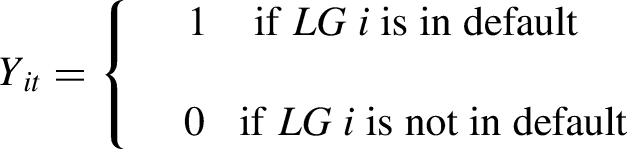
Following the current concept of default established by the Basel Committee on Banking Supervision (BCBS, 2017), we define the dependent (or explained) variable as a dichotomous variable assigned the value 1 when there is a plausible risk that the municipality will be unable to meet its loan payment obligations and, therefore, will be in default, or the value 0 when the municipality has sufficient payment capacity to meet its obligations.
Following prior research in this field (Buendía-Carrillo et al., 2020; Lara-Rubio et al., 2017) and in accordance with Spanish legislation, we consider that a LG is in a situation of default when it meets at least one of the conditions defined in Table 2. The choice of these criteria is based on the usefulness of accounting information for government decision-making (Ehalaiye et al., 2020, 2021; Gómez-Miranda et al., 2022).
The rule prohibits LGs from arranging long-term loans if the debt is greater than 110% of current income (Art. 53.2). In addition, Royal Decree Law 8/2010 establishes that, starting in 2011, a LG with outstanding debt between 75% and 110% of the income can sign long-term loans credits previously requesting authorization from the regional government of financial guardianship. Therefore, considering the period of time analyzed (2009–2018) and the indicator of the norms to prohibit loans, in this work we apply these risk criteria that are uniform throughout the period analyzed and they reflect high risks of default. Consequently, our dependent variable, indicative of LG default risk, can be represented as follows:

Independent variables
Based on the previous literature and the theoretical framework, we used 33 independent (or explanatory) variables. Table 3 defines these variables and describes the expected sign (positive or negative) of their relationship with default risk (the dependent variable).
Based on institutional theory, legitimacy theory, stakeholder theory, and pragmatic municipalism theory, we chose 11 demographic variables and 10 socioeconomic variables that could affect default risk. This influence is owing to the relationship of the characteristics of the population with the demand for spending and the LG's ability to generate income.
Buendía-Carrillo et al. (2020) reported a positive relationship between population size and municipal default risk, warning that the higher level of spending required to meet the needs of a larger population could increase government debt and result in greater difficulties in its repayment (Vera, 2018). Therefore, we expect to find a positive relation between the variable population size and default risk.
Regarding population density, recent studies have obtained conflicting results. In large towns, a lower population density is associated with a higher default risk (Lara-Rubio et al., 2017), in medium-sized ones (population 20,001–50,000 inhabitants), the opposite effect has been observed, and in smaller ones (<20,000 inhabitants) this variable is not statistically significant (Buendía-Carrillo et al., 2020). So, we expect this estimator to have a positive or negative sign, depending on the size of the population.
In Spain, rates of dependency are rising owing to population aging. However, this trend may be offset by the parallel rise in numbers and economic integration of the immigrant population, which presents special sociodemographic characteristics. In some age groups and municipalities, the immigrant population now represents a significant proportion of the total Spanish population (Mahía, 2018). Among other consequences, in large municipalities the relative presence of the dependent population (Rodríguez-Bolívar et al., 2016) and of the immigrant population (Vera, 2018) is associated with higher levels of public debt. So, we examine the relation between the proportions of the immigrant and the dependent populations on default risk, expecting to find a positive sign.
Likewise, we also consider the effects of gender (Buendía-Carrillo et al., 2020) and age (Santis, 2020) of the dependent population, since either of these characteristics could impact on SMSTs’ financial capacity. Migratory movements can pose significant financial challenges to host countries (Guerron-Quintana, 2020) and the local economy may be influenced by specific characteristics of the immigrant population (Alessandria et al., 2020). Therefore, we extend previous research findings by including migrants’ gender and their degree of dependency. The latter consideration is of particular interest, in view of the changes produced by immigration in the composition of the Spanish population, and because few studies have addressed the role of immigrants as recipients of welfare state benefits (Mahía, 2018). For all these variables, we expect to obtain a positive association with LG default risk.
In addition, falling birth rates and rising life expectancies have changed the age structure of the population, reducing the presence of the young and increasing that of the older population. This is an unprecedented global phenomenon, with long-lasting and pervasive repercussions at all levels and that will have major consequences on the demand for infrastructure and public services (Merino and Prats, 2020). This demographic aging, which can be measured through the index of generational turnover, will decrease the size and importance of the economically active population, with significant economic implications, especially in smaller municipalities with high levels of youth unemployment (Pinilla and Sáez, 2017). We believe this variable may have a positive or a negative sign, depending on whether or not the decrease in generational rotation impoverishes LG finances.
With respect to socioeconomic variables, previous research suggests that high levels of unemployment can have an unfavourable effect on the finances of large municipalities, raising public spending, increasing the debt and making repayment more difficult (Balaguer-Coll and Ivanova-Toneva, 2019; García, 2019; Lara-Rubio et al., 2017; Navarro-Galera et al., 2017). However, the latter studies did not stratify the unemployed population by gender, age, and business activity sector, nor did they relate it to municipal size, unlike our own analysis. We expect to obtain a positive sign for the relationship between each of these variables and default risk.
Although rising per capita income is associated with increased public spending (García, 2019), in large LGs this increase is also associated with a lower probability of loan repayment difficulty (Lara-Rubio et al., 2017; Navarro-Galera et al., 2017). Our analysis considers whether this relationship holds, too, in SMSTs. We expect to obtain a negative sign.
Turning to the financial variables, the postulates of the agency theory and the intergenerational equity theory justified the choice of 12 such variables. The selection of these 12 variables was based on their influence on the financial capacity of the government to respond to the needs of citizens, as well as on the financial result of its decision-making that can foster the future capacity to provide services. Budget regulations in Spain (Organic Law 2/2012, on Budgetary Stability and Financial Sustainability) establish that LGs must maintain a balance between their income and expenses. The income obtained is the main financial determinant of municipal borrowing requirements (Ehalaiye et al., 2017). Therefore, LGs should take advantage of periods of higher tax receipts and/or transfers from the central government to reduce their debt levels (Ribeiro et al., 2019).
By itself, depopulation in rural areas reduces the revenues of LGs and their ability to provide services, which increases the interest of citizens in migrating to large cities (ESPON, 2020; OECD, 2019; Park and LaFrombois, 2019). Therefore, it is interesting to study the influence of central government subsidies and aids on the default risk of SMSTs. Thus, we selected financial sustainability or autonomy as our independent variable, which is measured as (total income – subsidies and aids)/total income. An increase in state aid reduces the autonomy of LGs, and a reduction increases this autonomy.
Financial autonomy provides LGs with greater availability and control of their resources (Olmo and Brusca, 2021), reduces borrowing needs (Pérez-López et al., 2014), enhances financial health (Balaguer-Coll et al., 2015) and hence reduces default risk (Buendía-Carrillo et al., 2020). We expect, therefore, to obtain a negative sign for the variables that measure fiscal pressure, financial autonomy, and the balance of financial liabilities per inhabitant in LGs of different population sizes. However, we also expect to obtain a negative sign for expenditure on financial liabilities per inhabitant, since an increase in this variable might reduce the level of debt and hence default risk.
Revenue diversification contributes to financial stability, helping LGs better manage their operating budgets and invest in more ambitious capital projects (Shon and Kim, 2019). To our knowledge, however, no previous studies have considered the relationship between the specific weight of different types of revenue and LG default risk. In our analysis, following previous research (Alam et al., 2019), we expect to obtain a negative sign for variables concerning the nature and specific weight of tax revenue – that is, real estate tax, vehicle tax, and public fees and charges.
Another study (Buendía-Carrillo et al., 2020; Rodríguez-Bolívar et al., 2016) concluded that the nonfinancial budget outcome, capital revenue, and capital expenditure all increase the debt requirements of large LGs. Our analysis considers the influence of capital revenue on the default risk of municipalities of different population sizes, for which a positive sign is expected.
Finally, certain costs (such as personnel, current, and financial expenses) and their structure may also affect the level of debt (Dzialo et al., 2019; Vera, 2018). To our knowledge, their influence on default risk in municipalities of different population sizes has not been considered previously. We expect to find a positive sign for these variables.
Logistic regression model with panel data
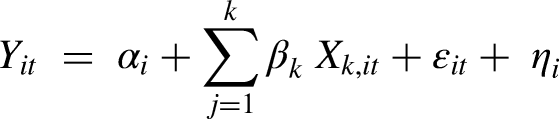
The use of a panel data method substantially expands the study sample by combining temporal and cross-sectional dimensions. In the present study, our analysis is based on a vector formed by 32 explanatory variables for N LGs in T periods of time (10 years). Thus, the parameter Xit is defined for i = 1 … N and t = 1 … T.
This technique has been used in recent studies in government entities (Gómez-Miranda et al., 2022; Lara-Rubio et al., 2017, Navarro-Galera et al., 2021) since it allows monitoring of the behaviour of each LG over time. In addition, panel data have managed to reduce multicollinearity and improve the efficiency of the model, guaranteeing the reliability of the results (Wooldridge, 2010).
We applied Hausman's (1978) test to find out if we selected fixed effects or random effects in the logit data panel. The test establishes that the random effects logit data panel method should be used when Prob > chi2 is greater than 0.05, and the fixed effects method otherwise. In the first case, changes in the behaviour of each explanatory variable for non-payment are not considered, while in the fixed effects mode the behaviour of each individual does influence the explanatory variables.
In accordance with the structure and characteristics of our sample and the Hausman test (1978) results, we built a discrete choice panel data model with random effects, based on the theoretical framework proposed by McFadden (2001) and McFadden and Train (2000). Thus, for each observation i, there may be j alternatives according to time t, given a deterministic indirect utility function of alternative j that can be explained by the 33 independent variables defined in Section Independent variables and justified following the theoretical framework set out in Section Literature review and theoretical framework. Therefore, from:
In accordance with the reasoning set out in Section Independent variables, the dependent variable

Analysis of results
The statistical descriptions of all the input variables are shown in Table 4. Table 5 presents the empirical results obtained – that is, reliability and consistency – showing the coefficients transformed into odd ratios via the exponential of the β coefficient (exp [β]), which are measures of association used on dichotomous variables. The odds ratio shows the effect that a variation of the independent variable has on the probability of incurring a default.
Regarding the robustness of the efficiency in the estimators, the results of the Hausman (1978) test (p > 0.05) support that the null hypothesis of equality at 95% confidence must be accepted, confirming that the estimations through effects random are consistent. From the estimated beta parameters, based on the formulas in Section Logistic regression model with panel data, the probabilities of default for each LG in our sample can be estimated, for the 6456 estimates distributed in each population segment according to Table 1. After these calculations, the above results indicate that as the size of the municipality increases, so does the mean default risk. In the smaller municipalities (<5000 inhabitants) the mean default risk is 19.01%, while in the larger ones (>50,000 inhabitants) it is 44.27%. The overall mean value is 21.59%. Regarding the overall correct prediction, the best results obtained were in the model of the first population segment with 91.46% where LGs presented a mean default risk of 19.01%. However, the worst overall correct prediction was obtained for the segment of large municipalities, with 82.30% and an average default probability of 44.27%. For the total model, the correct percentage of classification was 90.84%, and all the municipalities in the sample had a mean default risk of 21.59%.
We also checked that the correlation between independent variables was low. The variance inflation factor (VIF) test shown in Table 6 suggests acceptable values of multicollinearity between variables, which confirms that there was no relationship among these variables that would account for the event studied. Therefore, our results are robust and reliable.
The results for the total sample indicate that socioeconomic and financial variables have a greater influence than demographic ones on default risk. In the latter case, an increase in the immigrant population (male and female) and in the rate of generational turnover may contribute to default risk. This finding is novel, as previous research only studied large LGs in this respect (Rodríguez-Bolívar et al., 2016), omitting SMSTs from their analysis. However, our results also show that an increase in the dependent population (aged >65 years) may reduce default risk, which is contrary to the conclusions drawn by Santis (2020). Accordingly, in SMSTs with a relatively large dependent population, policymakers should adopt more prudent spending policies, thus supporting financial solvency. Moreover, financial transfers from the central administration to finance services for the dependent population can increase LG resources by reducing default risk.
Analysis by population segments indicates that an increase in the population aged over 65 years contributes to reducing default risk in SMSTs (segments 2 and 3). In large municipalities, however, the opposite effect is observed, possibly because policymakers are more distant from local inhabitants and therefore less responsive to their needs. With respect to the gender, our evidence is inconclusive. On the other hand, generational change appears to increase default risk in SMSTs (segments 2 and 3), which leads us to conclude that its effect on the demand for public services depends on the size of the municipality. This relationship is an advance on the conclusions reported by Merino and Prats (2020) and Pinilla and Sáez (2017). However, this result should be interpreted by taking into account the related findings for socioeconomic and financial variables, such as unemployment.
The proportion of the immigrant population within the total population, by gender, is relevant to default risk for all sizes of LG except segment 3. Our findings, therefore, show that the immigrant population is associated with default risk, and that the gender of this population should also be considered. These results corroborate the view that LG solvency may be influenced by specific characteristics of the immigrant population (Alessandria et al., 2020), according to the size of the local population.
Regarding the socioeconomic variables, we concur with previous reports (Balaguer-Coll and Ivanova-Toneva, 2019; García, 2019) that most of the unemployment-related variables have a negative impact on default risk. Advancing on previous work (Lara-Rubio et al., 2017; Navarro-Galera et al., 2017), we show that in smaller municipalities the higher the proportion of unemployed males, the greater the default risk. No such relationship was observed for medium-sized or large municipalities. A possible explanation for this finding is that smaller municipalities are mostly located in rural areas, where women's access to the labour market has traditionally been lower. Another novel aspect of our results is the evidence that in the construction sector the influence of unemployment is greater for workers aged 25–44 years, possibly because in recent years the populations of large municipalities are becoming younger, whereas in small ones they are aging (Ministry of Territorial Policy, 2021).
Increased municipal income per inhabitant is associated with a lower default risk, but only in smaller municipalities (segment 1), a finding that extends previous reports in this area (Lara-Rubio et al., 2017; Navarro-Galera et al., 2017). The negative effect of the generational turnover rate might be offset by the increased revenue from the taxes and fees paid by younger inhabitants.
Financial autonomy contributes to increasing default risk, especially in LGs with greater than 20,000 inhabitants. This result, which is contrary to the findings of previous research (Balaguer-Coll et al., 2015; Olmo and Brusca, 2021), might reflect the effects of fiscal pressure arising from an increased demand for public services, resulting in higher expenses, greater indebtedness, and, therefore, more difficulty repaying loans. In addition, this result provides empirical evidence for the influence of central governments transfers on the financial risks of LGs. Our findings indicate that the increase in these aids (reduction of financial autonomy) can reduce the default risk and, therefore, improve the capacity of LGs to provide services that encourage citizens to reside in SMSTs.
In all population segments, fiscal pressure seems to reduce default risk, which corroborates previous research (Buendía-Carrillo et al., 2020; Lara-Rubio et al., 2017; Navarro-Galera et al., 2017), although this influence is stronger in municipalities with more than 20,000 inhabitants.
In small LGs, all of the variables related to municipal revenues seem to favour a reduction in default risk. However, in those with more than 20,000 inhabitants, the only variable of this type that has explanatory power is that of the proportion of public fees and charges in budget revenues, an aspect that has not been previously reported (Alam et al., 2019; Shon and Kim, 2019).
Analysis of the variables related to different areas of LG spending shows that these factors are relevant to default risk, thus extending the findings of previous research (Dzialo et al., 2019; Vera, 2018). The influence of these variables is similar for all sizes of municipalities. Investment spending has a similar influence to that of current spending, although the spending structure only influences the default risk of the largest municipalities (population >50,000 inhabitants). Finally, the results show that LGs with a lower level of financial liabilities per inhabitant tend to have a lower default risk. This is true for all population sizes except segment 3 (medium-sized municipalities).
Our results provide evidence for the consistency and validity of the institutional theory, legitimacy theory, stakeholder theory, and pragmatic municipalism theory to explain the influence of demographic and socioeconomic variables on LG default risk. In addition, our findings reinforce the validity of the agency theory and the generational equity theory to explain the influence of financial variables on the risk of default.
Conclusions
The results of this study show that larger LGs are more likely to be at risk of default than small- and medium-sized ones. This finding, which represents an advance on previous research, suggests that financial policies to fight depopulation should be tailored according to the population size of the municipality. In small ones, loan repayments represent a lower financial risk than is the case in larger towns. This circumstance facilitates the financing of public infrastructure and hence sustainable economic development.
For the sample as a whole, our findings indicate that socioeconomic and financial variables have a greater influence on default risk than demographic variables. LG decisions seem to affect financial and socioeconomic factors more than demographic ones (such as population age and gender balance), via changes in taxation, spending or investment, commitments to financial consolidation and/or employment promotion. Our study findings suggest that LG policies to combat depopulation should focus especially on measures of a socioeconomic and financial nature, favouring the capacity to finance public investments through bank loans. However, in applying these policies, special attention should be paid to risks such as an increase in the size of the immigrant population and in the generational turnover rate.
In SMSTs, an increase in the size of the dependent population (aged >65 years) reduces financial risk. Hence, this factor may influence the volume of debt, but at the same time reduce default risk. From this, we deduce that policymakers’ greater proximity to the population in small LGs may foster greater financial responsibility regarding municipal revenue and spending.
Our results also indicate that in SMSTs, an increase in the rate of generational turnover may worsen default risk. However, when financial variables are included in the analysis, an increase in per capita income could offset the latter effect. Accordingly, in rural areas any such generational change should be addressed by policies aimed at promoting employment and raising per capita income among younger people. So, small LGs could reduce their financial risks and improve their capacity to obtain loans for investments enabling sustainable economic development and enhancing the viability of public services.
A growing immigrant population, too, might provoke a worsening of default risk, in almost all population segments, and therefore policies aimed at increasing a LG's borrowing capacity should seek to raise per capita income and reduce the unemployment rate among the immigrant population. This is especially so for workers in the construction sector. Furthermore, our findings suggest that in smaller municipalities, financial policies to combat depopulation should pay special attention to reducing the male unemployment rate among those aged 25–44 years.
Likewise, our study results show that an increase in fiscal pressure can alleviate default risk, especially in municipalities with more than 20,000 inhabitants. In SMSTs, an increase in budget revenue can reduce default risk, but in larger municipalities the only financial variable that influences financial risk is the revenue from public fees and charges. Therefore, in smaller municipalities, an appropriate financial policy would be to encourage the acquisition of homes and vehicles, thus generating municipal income through the corresponding taxes. This policy would be particularly effective among younger people, according to our analysis of generational turnover. Our results also suggest that smaller municipalities should adopt policies aimed at early debt repayment and that their spending structure (unlike the case of large municipalities) has no influence on financial risk.
For current public policies on depopulation, these conclusions suggest the importance of measures aimed at promoting employment among young people, maintaining fiscal pressure, increasing population density, and creating infrastructure for public services.
Finally, although our findings are based on empirical research in Spain, our conclusions can be interesting for other countries. Recent Eurostat reports (2022b) show that in European countries, 82.38% of municipalities are very small, 12.40% are small, and 3.28% are large. In addition, many European countries have a population structure very similar to Spain's in terms of the percentage of very small and small municipalities (83.93% and 11.40%, respectively): Portugal (86.03% and 10.32%), Austria (87.68% and 11.03%), France (93.76% and 4.90%), and Germany (72.63% and 20.88%). Likewise, CEMIR (2016) concluded that the competencies of European LGs are very similar, although they depend on their population size. Second, these findings may be interesting for those countries with a high volume of bank debt, similar to Spain. Countries with high volumes of bank debt at the state level (debt greater than 100% of GDP) include Greece, Italy, Portugal, France, Belgium, and Cyprus; countries with high volumes of bank debt at the municipal level (debt greater than 5% of GDP) include Sweden, Finland, France, Latvia, Denmark, Italy, the Netherlands, and Portugal (Eurostat, 2022a). On the other hand, these conclusions may be useful for designing policies against depopulation in 2022 and beyond. According to Eurostat (2022a), in Europe the percentage of municipal debt over GDP remains very high (5.7%). In addition, as a consequence of the pandemic, many countries increased the specific weight of LG debt over GDP, including France (+1.4%), Portugal (+0.7%), Italy (+0.2%), Germany (+0.2%), and Belgium (+0.2%). Moreover, the IMF (2022), OECD (2022), and World Bank (Guénette et al., 2022) have recognized a high risk of an upcoming economic recession in European countries, with a special negative impact on unemployment, tax revenue, and public spending. Our findings have identified some of these variables as risk factors for default. However, the usefulness of our findings has some limitations in other countries, owing to the diversity of financing models and the different delivery and budgeting methods. The analysis of these problems represents an interesting avenue for future research.
Supplemental Material
sj-docx-1-ras-10.1177_00208523231158982 - Supplemental material for Fighting depopulation in Europe by analyzing the financial risks of local governments
Supplemental material, sj-docx-1-ras-10.1177_00208523231158982 for Fighting depopulation in Europe by analyzing the financial risks of local governments by Andrés Navarro-Galera, Dionisio Buendía-Carrillo, María Elena Gómez-Miranda, and Juan Lara-Rubio in International Review of Administrative Sciences
Footnotes
Acknowledgments
The authors thank the collaboration of the Supreme Audit Institution of Kingdom of Spain, and more specifically to its Department of Local Governments, which allowed us access to accounting data for all the municipalities analyzed in this paper.
Declaration of conflicting interests
The author(s) declared no potential conflicts of interest with respect to the research, authorship, and/or publication of this article.
Funding
The author(s) received no financial support for the research, authorship, and/or publication of this article.

References
Supplementary Material
Please find the following supplemental material available below.
For Open Access articles published under a Creative Commons License, all supplemental material carries the same license as the article it is associated with.
For non-Open Access articles published, all supplemental material carries a non-exclusive license, and permission requests for re-use of supplemental material or any part of supplemental material shall be sent directly to the copyright owner as specified in the copyright notice associated with the article.
