




Abstract
This article aims to explore the impact of digital communication tools application by citizens and the perceived usefulness of social media on the relationship between citizens and local authorities. The data were gathered in April–September 2020 through a survey (CAWI) among citizens of Poznan, Poland (n=502), and Kutaisi, Georgia (n=504), and were analyzed with structural equation modeling. The findings show that the intensity of digital communication tools usage for participation in the city branding and the perceived usefulness of social media contribute to the lasting relationships between citizens and local authorities in both countries. The novelty of this research concerns comparing two countries with different levels of development. Georgia is a developing economy in Europe and is in the process of modernizing the local governance across the cities. Poland, however, is a mature economy with a post-transformation heritage, where its cities benefit from considerable experience in building and developing citizen participation policies. Furthermore, the research was conducted amid the COVID-19 pandemic and evidenced the growing popularity of digital tools adoption by citizens in city matters. This study contributes to understanding the impact of digital tools on the relationship between citizens and local authorities in terms of city brand management. Citizens' participation in the city branding process via various digital communication tools increased citizen commitment towards long-lasting collaboration with local authorities. Moreover, citizens' perception of social media usefulness positively influences their desire to engage in the city branding process online, supporting the trust-building and collaboration between citizens and local authorities.
The intensiveness of digital tools usage – governments should identify the tools already trusted and popular among their audience and employ those tools to a greater extent to maximize the chances of feedback, high citizen participation, and commitment. Citizens’ perception of social media – such characteristics as ease of use, transparency, ease of communication with the municipality, and safety encourage citizens to get involved in the city brand management process. Consequently, local authorities should consider the features mentioned above and develop the online tools quality.
Introduction
In recent marketing literature, researchers have given significant attention to the role of digital tools in engaging customers in the branding process (Hollebeek et al., 2014). At the same time, the public sector management literature highlights the importance of online tools in increasing stakeholders' engagement and participation in public activities. The internet gave citizens the power to impact the process of decision-making, including the local branding decisions (Bolivar and Munoz, 2019; Eshuis et al., 2014; Zheng, 2017). Unlike traditional collaboration tools, online and social media platforms offer more accessibility and shared space for engagement and collaboration (Zheng, 2017). According to Eshuis et al. (2014), city branding may be called participatory if it is an interactive process, where citizens’ feelings, emotions, and preferences can constantly shape the evolving character of the brand. Citizens' online participation in city branding processes could be expressed via consulting citizens through online surveys and discussion panels, enabling them to express their ideas and feelings about the city brand (Eshuis et al., 2014).
Social media constitute a significant space for city brand promotion and offer a boundless capacity to the city branding processes (Zhou and Wang, 2014). According to Sevin (2016), social media contribute to innovative place branding projects via sharing impressions and generating different types of content by stakeholders. Unlike the cities' official websites dedicated to official correspondence and announcements, social media allow more informal dialogues with the citizen. Via social media, city authorities provide diverse content for informational and promotional purposes and gather feedback to foster citizen inclusion in city branding (Paganoni, 2015; Sevin, 2016). Such content is generated by local governments and ordinary social media platforms users. Furthermore, the interactive, participative, open, and transparent nature of social media contributes to building the commitment of all stakeholders, resulting in increased city brand identification and satisfaction (Zhou and Wang, 2014).
The role and power of social media has been even more apparent and recognizable amid the Covid-19 pandemic, as people felt the urge to connect, read, and share up-to-date information. Statistics show that over 4.6 billion people were active internet users by October 2020, which is 59% of the global population. Furthermore, 3.96 billion people are accounted as social media users, with a 10% yearly increase in 2020 (Global Digital Population, 2020). Moreover, according to the “COVID-19 Digital Sentiment Insights” survey, almost 12 million new users started using online services in Central and Eastern Europe led by the imposed lockdown (McKinsey and Company, 2020). Governments also accelerated their digital efforts during the pandemic. Countries across Central and Eastern Europe (CEE) have launched innovative solutions to help tackle the crisis, such as tracing apps, digital assistants and chatbots for health topics, and online applications for relief funding. The local government authorities, employing more traditional communication tools before the pandemic, had to engage more in digital communication. However, according to the study covering 25% (679) of the Polish communes (Baranowska and Ciesielska, 2021), by May 2021 only 164 studied communes had adapted their web pages in any way to the crisis.
Social media's primary characteristics are engagement, connectedness, participation, conversation, and openness. The simple information spread and awareness building have been elevated to collaboration, interactivity, and multi-side communication by Web 2.0 (Kaplan and Haenlein 2010). Social media has turned into a powerful digital multipurpose communication tool that helps brands to establish and strengthen the digital voice, engage customers, and build unique customer relationships (Wang et al., 2012). Online communication tools also enable the local government to become more responsive and user-driven. Consequently, city residents are not only consumers of city services but active participants in city life (Bloomberg Associates, 2018).
Considering the opportunities mentioned above for establishing citizen-to-government cooperation, the study's main objective is to understand the impact of digital media application and the perceived usefulness of social media on the relationship among the citizens and local authorities. The study will also help explain how digital communication may contribute to city branding.
Background and hypotheses
The intensity of digital communication tools use and perceived usefulness of social media
According to many researchers, the use of digital technologies significantly increased citizens' involvement in public affairs and consequently fostered digital democracy (Linders, 2012). Previous studies have shown that the intensity of digital communication tools use positively impacts building, bonding, and maintaining social capital (Ellison et al., 2007; James and Meredith, 2020; Park and Kim, 2013; Riedl et al., 2013; Stojanovic et al., 2018). Therefore, we argue that the intensive use of various digital tools in city branding matters will strengthen relationships between the local authorities and citizens. The intensity is understood as the frequency of particular digital tools usage.
Various scholars in management science have studied individuals' attitudinal drivers towards online behavioral intentions and discovered that the level of virtual engagement is directly correlated with the perception of the usefulness of digital tools compared with the traditional communication channels (Alharbi and Kang, 2014; Casaló et al., 2010; Liao et al., 2007; Wu and Chen, 2005).
Previous studies on the Technology Acceptance Model have identified two major factors that influence online tool usage behavioral intention (Davis, 1989). The first is the perceived ease of use, which refers to the user's belief on how the usage of this tool will make the experience seamless and convenient. The second is perceived usefulness, which brings more rational factors in place, and refers to the belief that the tool helps users enhance the operation performance. Various factors shape the user perception toward a particular tool, such as intuitive navigation, overall ease of use, and user-friendliness (Gefen et al., 2003). According to the authors, the above-mentioned characteristics of social media determine the effective building and strengthening of relationships with customers.
Strength of citizens' relationship with the administration
Governance principles (Bovaird and Löffler, 2003) have been reflected in the city branding context, proving that place branding is a complex network establishment between local authorities, the private sector, and citizens united for a common purpose to develop a place brand (Giovanardi, 2012). All these mentioned actors significantly contribute to place brand identity via engaging and initiating discussions empowering them to shape the city brand (Houghton and Stevens, 2011).
To better understand citizens’ intentions for engaging with local governments in the place branding process, it is necessary to know the components of these relationships. According to Morgan and Hunt (1994), a relationship is a relational exchange between parties. The fundamentals of successful relationships rely on establishing, developing, and maintaining lasting relational exchanges (Morgan and Hunt, 1994). The primary idea of relationship marketing is value creation, which is achieved via communication and interaction among different stakeholders (Gummesson, 2017). Donaldson and O'Toole (2000) assess relationship strength by two components: belief and action. The belief measures behavior, which is derived from social bonding of the parties, whereas the action is related to the economic ties that bind them together. Bhagat and Williams (2002) measured relationship strength in the context of outcomes that include direction (what the parties in the relationship do), intensity (how hard parties work), and persistence (how long a person works). For measuring relationship strength, some authors propose also looking at it from the angle of durability (Bolton, 1998; Marsden and Campbell, 1984; Mitrega, 2006; Schijns and Schröder, 1996).
In this study, we understand relationship strength according to the definition of Hunt et al. (2006), as a sum of relational factors such as trust, commitment, cooperation, and communication between the relation exchange parties. According to these authors, commitment to the relationship exists when it is considered so important for the involved parties that it fuels them with an enduring desire to maintain it. In the city branding context, it could be defined as the citizens' aspiration to put maximum effort into maintaining and/or enhancing the relationships with local government continuously in city branding activities. Morgan and Hunt (1994) used the constructs of trust–commitment to describe the strength of a customer relationship. A higher level of trust in government authorities leads to a higher level of citizen participation (Berger, 2009). Moreover, trusting citizens show high commitment, which leads to maintaining and strengthening solid relationships (Huang and Wilkinson, 2013). As a result, in the city branding context, trusted citizens will significantly influence shaping the desired city brand image reflecting citizens' preferences. Another construct used by authors to describe the strength of the relationship is cooperation. A flawless communication process also characterizes effective cooperation. According to Hunt et al. (2006), information technology (IT) supports knowledge and idea-sharing through better communication flows. Thus, the successful relationship between a citizen and local government authority can be measured by assessing the level of trust in another party, commitment to the relation, and the frequency of communication between parties.
Studies about digital tools' influence on forming solid relationships are popular. By providing citizens with various tools for interacting with government, citizens are given an opportunity to engage with city management activities closely, increasing their confidence toward local authorities and determining the long-term relationship strength (Steinhoff et al., 2019). High-quality communication should be relevant, timely, and reliable, making it important to analyze the intensity of media use and its connection with the relationship strength. Therefore, a hypothesis is proposed: H1: The greater the intensity of digital communication tools use, the stronger the citizens' relationship with the local authorities.
Moreover, collaborative relationships require considerable transfers of technology and knowledge sharing among partners. Thus, relationship marketing strategies often require firms to adopt information systems to share knowledge (Hunt et al., 2006). Likewise, in the case of local government relations with the citizens, information must be readily available and helpful to facilitate their participation in local government decisions. Availability of information and moderation tools (surveys, forums, chat rooms) strengthen citizens' confidence in the institutions (Pasquier and Villeneuve, 2018). Thus, the applied tools should transfer the information effectively, making it necessary to measure their usefulness. Therefore, we would like to verify the hypothesis: H2: The greater the perceived social media usefulness, the stronger the citizens' relationship with the local authorities.
Study method
As a study group, the citizens from two cities, Poznan (Poland) and Kutaisi (Georgia) were selected. These are twinned cities, from 2009, that actively cooperate in joint projects, which was the primary reason for picking them for the study. Contrary to big urban hubs and capital cities that have a high proportion of migrant population, such peripheral cities are mainly populated by native inhabitants (in both studied cities, the share of non-native inhabitants was less than 5% in 2018). The native inhabitants have a better understanding of the city brand identity. That is, they have a better knowledge of the history, infrastructure, quality of life, or services, which makes them a good source of information. Moreover, Georgia is an emerging economy in Europe, with new attempts to modernize local governments across all the cities. In contrast, Poland is a mature economy, however with a post-transformation heritage, where the city of Poznan has considerable experience in building and developing citizen participation policies.
These cities can be considered representative of the other large cities, with at least 100,000 inhabitants in the studied countries, in terms of the socio-economic, educational, and internet development. In all large cities in Georgia, above 82% of the population has access to the internet (GeoStat, 2021), out of which 96% use social media. In the large cities with over 100,000 inhabitants in Poland, over 90% of the population has access to the internet (Statistics Poland, 2020). As for the use of social media by the Polish local authorities and the intensity of social media communication policy, according to recent surveys almost 70% of the Polish cities, including the largest ones, use social media to communicate with the citizens (Baranowska and Ciesielska, 2021).
The studies in both countries were carried out via the online interview method (CAWI) with the help of local research agencies via their web panels, with users ranging between the ages 18–65+. Notably, both of the studies were conducted during the COVID-19 pandemic between April–September 2020. A random sampling technique was applied and 504 surveys were conducted with the inhabitants of Kutaisi (Georgia) and 502 surveys in Poznan (Poland). Only people who received an invitation to the survey had access to it. The selection of respondents for the study was determined by a stratified random sampling procedure. The sampling frame was narrowed down only to people who met the survey criteria and strata were determined by gender and age. The sample structure for each age and gender group reflected the age and gender structure of internet users of each country.
Structured questions with Likert-type scales were included in the study questionnaire (Malhotra, 2006), which consisted of circa 30 closed and semi-open questions. First, SPSS 24 was employed for analyzing collected data for the preliminary analysis, and as the next step, structural equation modeling (SEM) with IBM AMOS, ver.25 was performed.
The studied constructs were measured using both existing and adapted scales. To measure the "intensity of digital communication tools’ usage," a question asked respondents which digital tools they were using for presenting ideas, promoting their city, and evaluating city brand (yes/no answers). The questions were: Please mark among the below listed digital tools which you are using for presenting your ideas about city brand: Official website of city municipality, Official Facebook page, Youtube, Twitter, Instagram, Information and Media portals, Online petition, Email, Online questionnaire, Video live stream, Online public forum, Other.
Please mark among the below-listed internet tools which you are using for promoting your city brand: Facebook, Instagram, Twitter, Blogs, Youtube, Snapchat, Mobile Applications, TripAdvisor/Airbnb/Booking.com.
Please mark among the below-listed internet tools which you are using for evaluating city brand: Official website of city municipality, Official Facebook page, Twitter, Online petition, Email (your message to the government), Online questionnaire, Video live stream, Online public forum, Other.
To measure the "perceived social media usefulness," the respondents were asked to evaluate social media offered for use by the city hall. The evaluation was based on five different criteria: ease of use, transparency, ease of communication with the municipality, user orientation, and safety (Kolsaker and Lee-Kelley, 2008).
To measure the "relationship strength," the study adopted four items from Morgan and Hunt (1994): "My trust toward the local government has increased during past two years," "I want to be more actively involved in the communication with local government," "The communication with local government is useful for me," "I participate in the activities/events organized by city hall, several times a year."
The items were rated on seven-point Likert scales ranging from 1 ("I strongly disagree ") to 7 ("I strongly agree").
We checked the common method bias (Podsakoff et al., 2003) and found that it was not a problem in our study.
Main results
Regarding the subsample in Poznan, the highest score for perceived usefulness of social media was 4.79, indicating the best evaluation of the dimension “social media – easy to use”, similar to Kutaisi, where the highest score for perceived usefulness of social media was 5.51. As for the intensity – most citizens use digital tools for participation in city brand co-creation (mean: 4.63) in Poznan, whereas in Kutaisi, most citizens use digital tools for participation in city promotion (mean: 1.04)
Cronbach's Alpha was employed for testing the reliability of the scales (Nunnally and Bernstein, 1994). As for Kutaisi, the scale measuring "Intensity of use" had a good internal consistency (ά=0.726). The scales measuring "Perceived usefulness" and "Relationship strength" had an excellent internal consistency (ά =0.802; ά =0.828).
In Poznan, the reliability indicators for the scale items measuring "Intensity of use" (ά=0.893), "Relationship strength" (ά=0.868), and “Perceived usefulness” (ά =0.920) were classified in the “very good” and “excellent” ranges of Cronbach's alpha values.
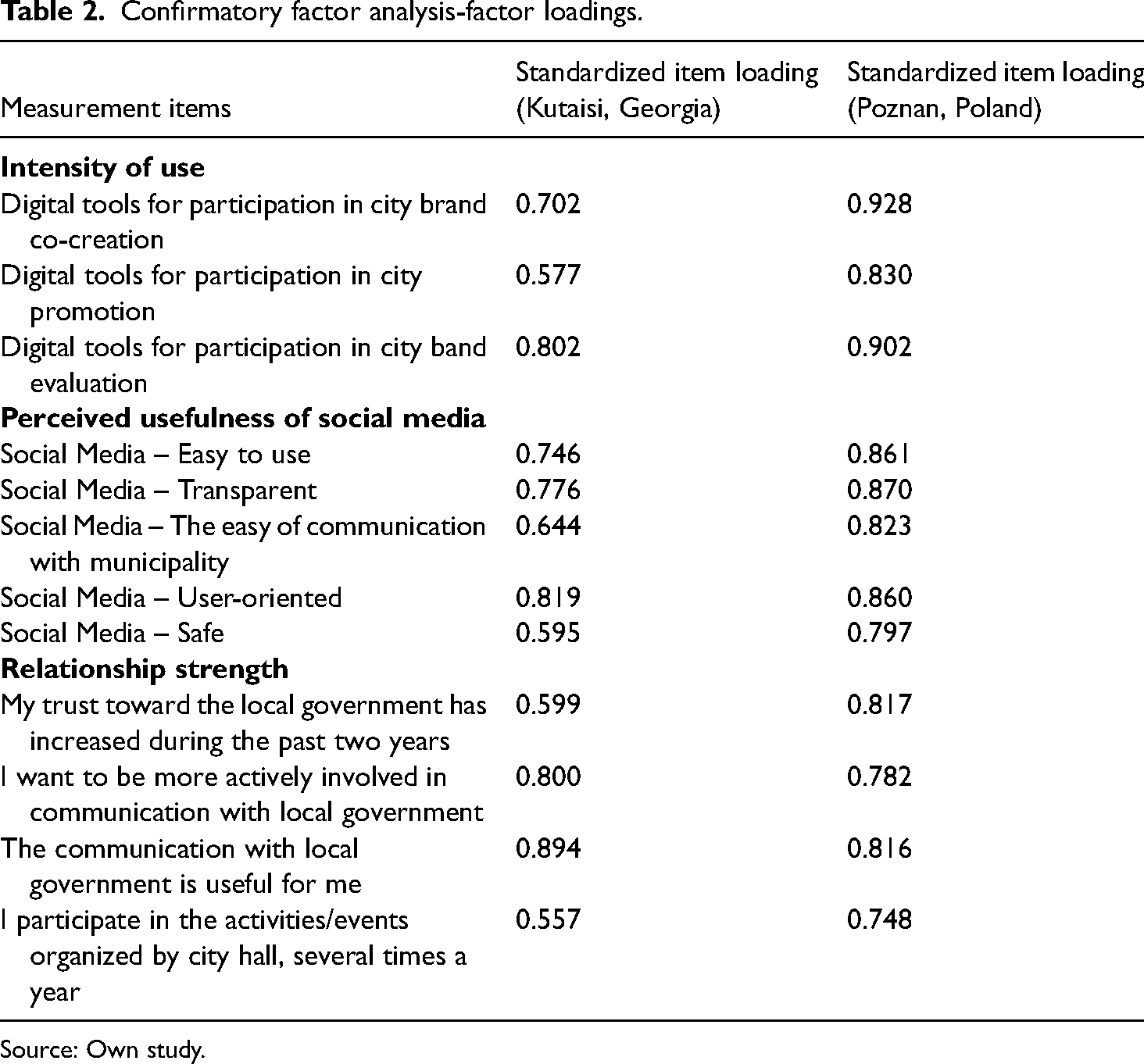
A confirmatory factor analysis was conducted to assess the constructs' validity and test the model fit (Table 2, online). The standardized factor loadings of all operational items exceeded the proposed minimum level of 0.5 (Hair et al., 2010).
Confirmatory factor analysis-factor loadings.
Source: Own study.
Kutaisi, Georgia
Psychometric properties of scales were assessed based on F-L criteria (Fornell and Larcker, 1981). The F-L criteria are “Composite reliability” (CR 0.70) for reliability and convergent validity and “Average variance extracted” (AVE 0.5) – a conservative criterion of convergent validity.
As shown in Table 3 (online), all constructs are characterized by high CR, exceeding 0.7, indicating that all constructs are reliable. The AVE, a conservative criterion for convergent validity, also holds for “Usefulness” and “Relationship strength”. As for “Intensity”, the value of AVE is 0.49, slightly below the threshold value, and since the AVE criterion is a conservative one, composite validity may be recognized based on the high CR value (Fornell and Larcker, 1981).
Psychometric properties of scales, Georgia.
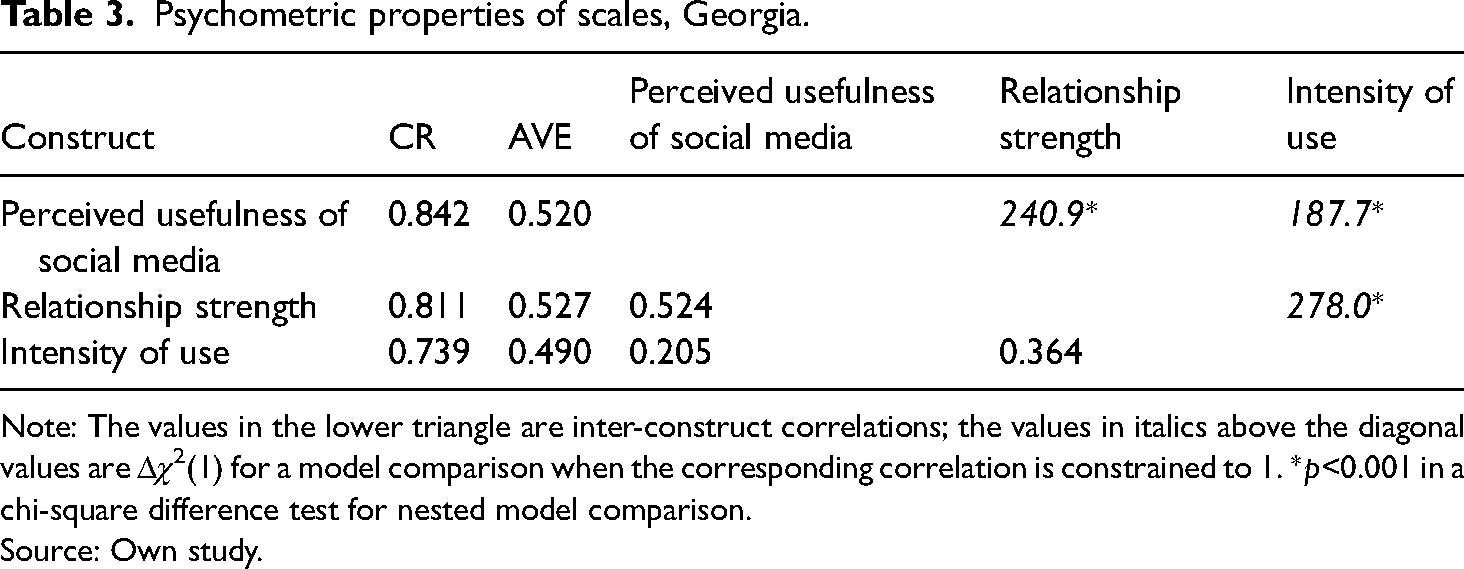
Note: The values in the lower triangle are inter-construct correlations; the values in italics above the diagonal values are Δχ2(1) for a model comparison when the corresponding correlation is constrained to 1. *p<0.001 in a chi-square difference test for nested model comparison.
Source: Own study.
To assess the discriminant validity, we compared nested models for each inter-construct correlation, including the unconstrained model and a model with correlation constrained to 1. To impose constraints on correlations, we scaled the constructs by constraining their variances to unity. The imposed constraint resulted in a significantly poorer model fit in the case of all correlations as assessed based on the chi-square difference tests, Δχ2(1). That is, all the correlation between construct differs from 1, so discriminant validity can be recognized (Bagozzi et al., 1991).
Theoretical validity is achieved when convergent and discriminant validity exists and this is the case for all constructs.
The measurement model fit is acceptable/satisfactory for the Georgian subsample. The incremental fit indices such as CFI (0.951), NFI (0.923), TLI (0.925) are above the acceptable level of 0.9. The RMSEA indicator has an acceptable value 0.55 (0.043; 0.067) moreover χ2=129.170; df=51(p=0.00) (Hooper et al., 2008). The SRMR was not defined because some data values were missing. The level of structural model fit is the same as the measurement model fit level (Figure 1).
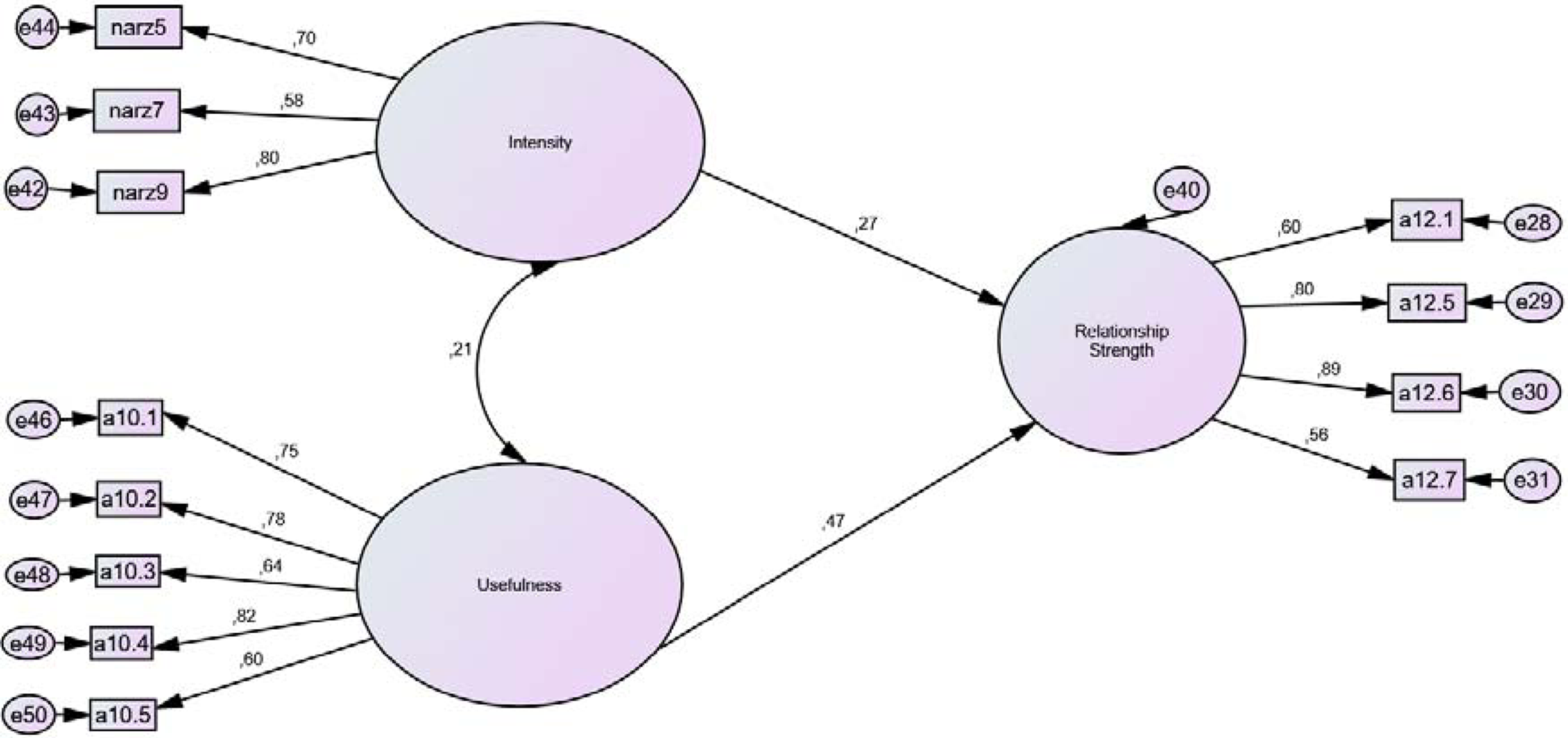
Digital tools and citizens’ relationship with the city (Kutaisi, Georgia).
Descriptive statistics of the studied variables in Kutaisi, Georgia (n = 504) and Poznan, Poland (n = 502).
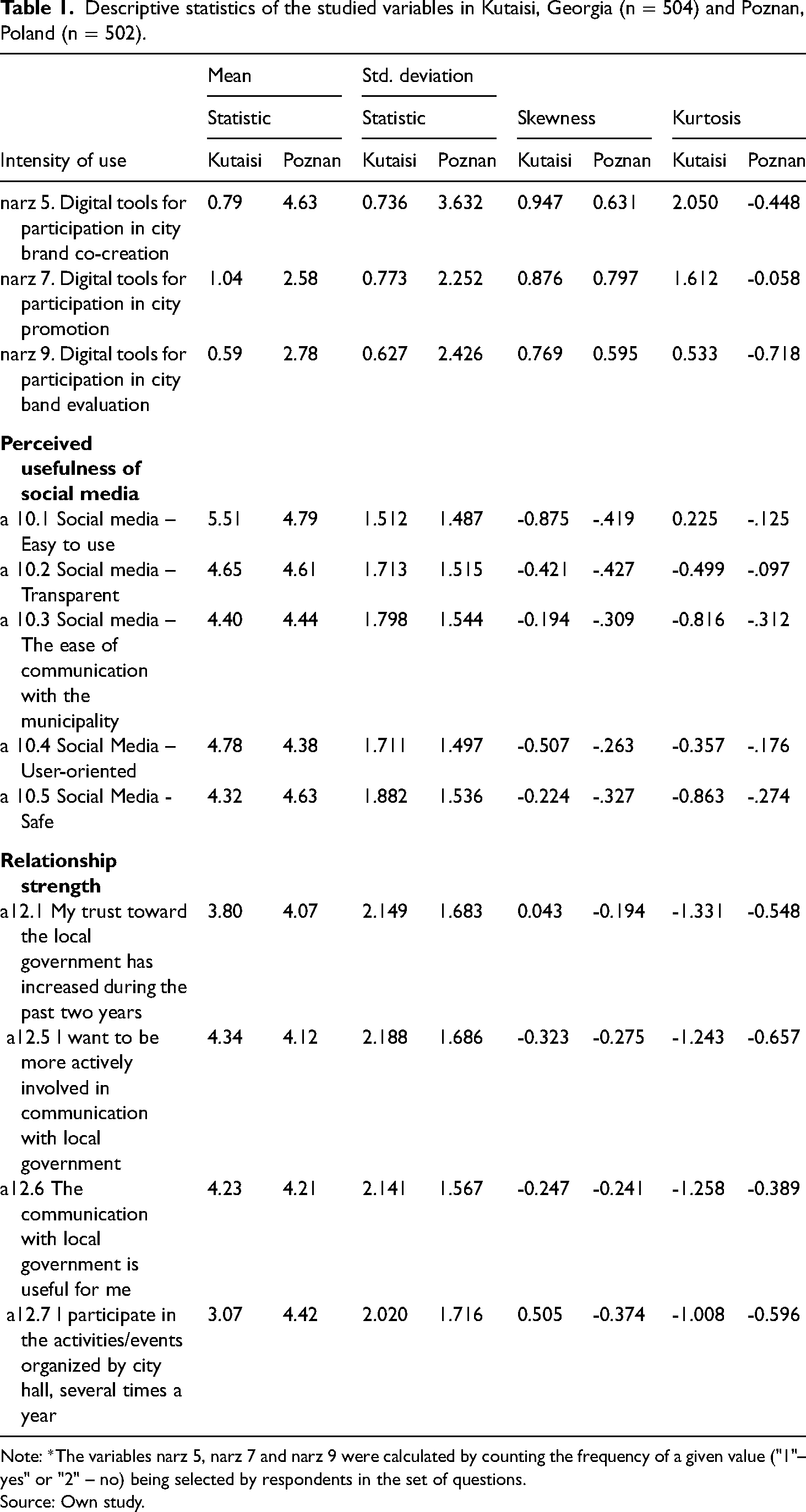
Note: *The variables narz 5, narz 7 and narz 9 were calculated by counting the frequency of a given value ("1"–yes" or "2" – no) being selected by respondents in the set of questions.
Source: Own study.
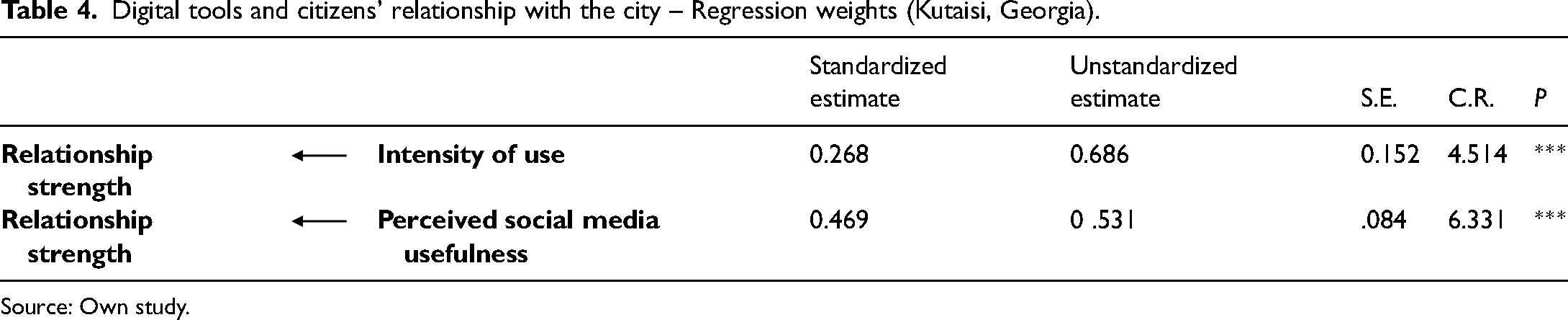
Table 4 (online) shows the path coefficients for the structural model. The first hypothesis validates the relationship between digital communication tools' use and relationship strength. The second hypothesis tests the relationship between perceived social media usefulness and relationship strength. The dependent variable "Relationship strength” is positively influenced by “Intensity of use” (SE = 0.27, p<0.001) and, more strongly, by “Perceived usefulness” (SE = 0.47, p<0.001). The strength of correlation between “Intensity of use” and “Perceived usefulness”, is small (SE = 0.21, p<0.001).
Digital tools and citizens’ relationship with the city – Regression weights (Kutaisi, Georgia).
Source: Own study.
Psychometric properties of scales, Poland.
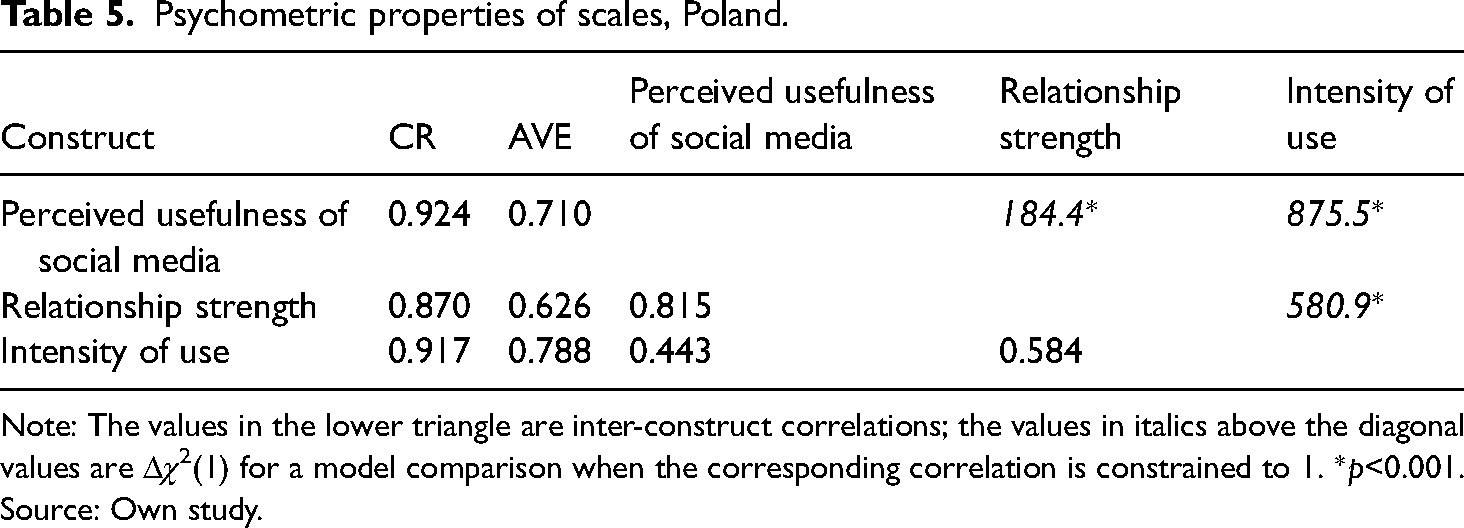
Note: The values in the lower triangle are inter-construct correlations; the values in italics above the diagonal values are Δχ2(1) for a model comparison when the corresponding correlation is constrained to 1. *p<0.001.
Source: Own study.
Poznan, Poland
All constructs show high CR (exceeding 0.7) and AVE values, so all constructs are reliable and demonstrate convergent validity, as for “Intensity of use” the value of AVE is 0.788, for “Perceived usefulness” 0.710, and for “Relationship strength” 0.626 (Table 5). Discriminant validity is proved for all constructs. As convergent and discriminant validity exists, the theoretical validity is met. That is, all constructs are reliable and valid.
The measurement model fit is acceptable for the Polish subsample as well. The incremental fit indices, such as CFI (0.979), NFI (0.967), TLI (0.968), are above 0.9. The RMSEA indicator has an acceptable value of 0.56 (0.44, 0.068); moreover, χ2=131.391; df=51(p=0.00). The level of structural model fit is the same as the measurement model fit level (Figure 2).
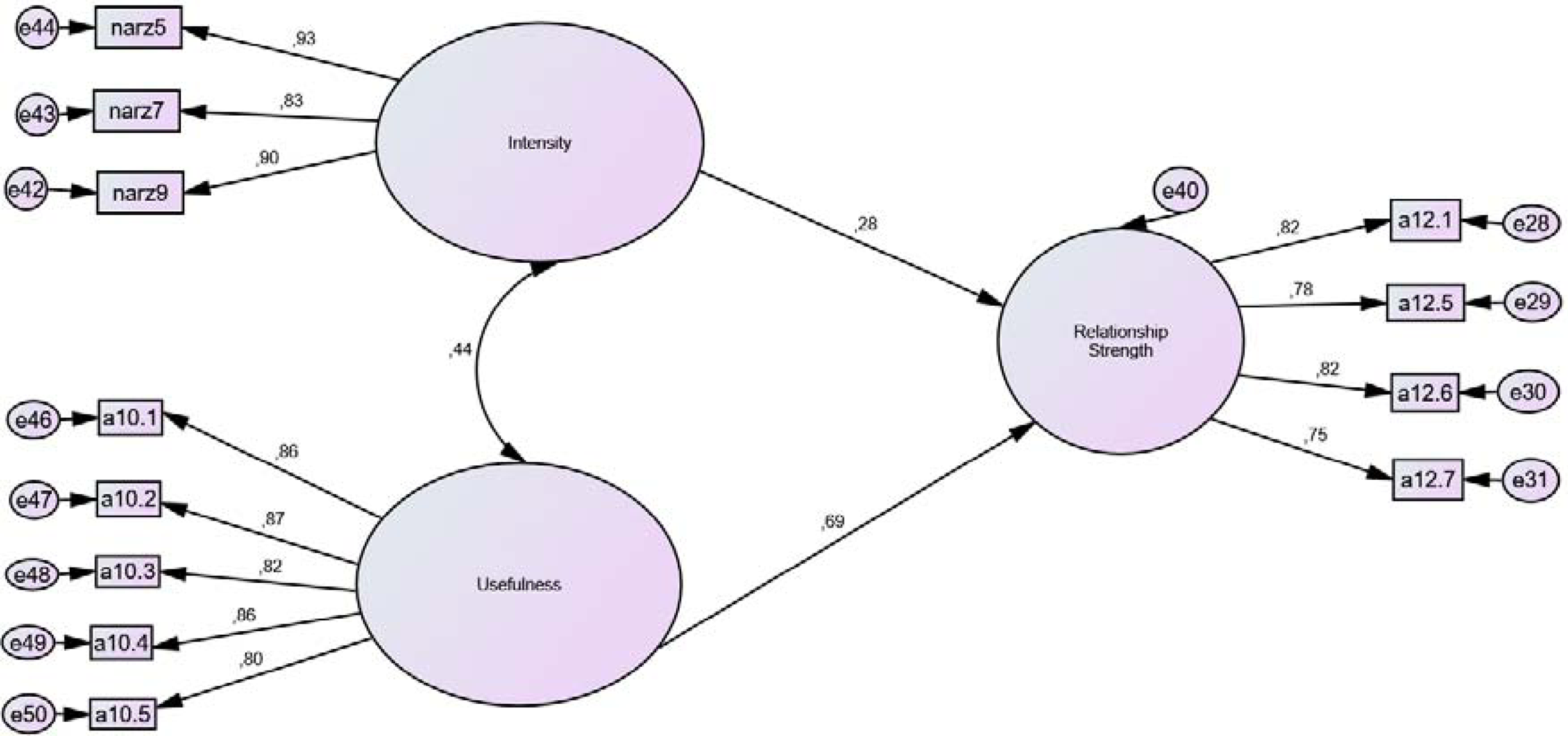
Digital tools and citizens’ relationship with the city (Poznan, Poland).
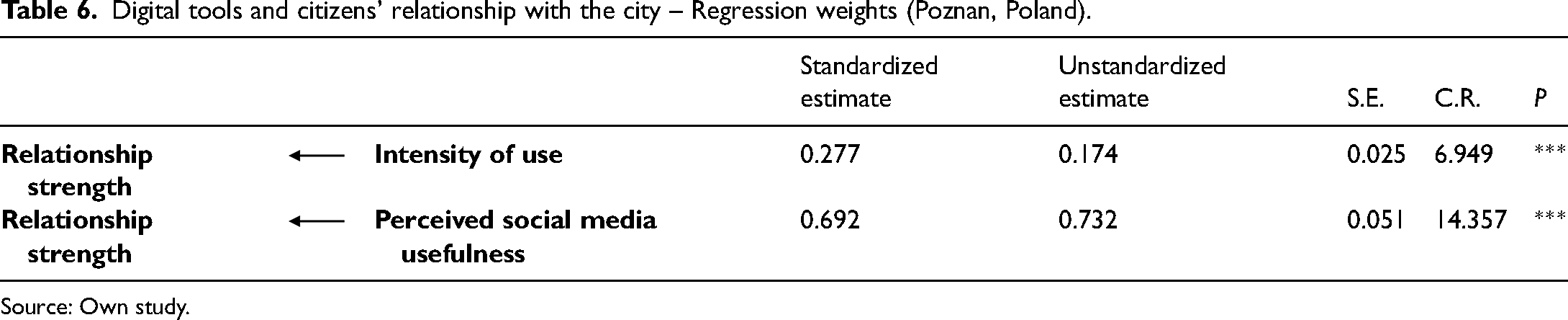
Path coefficients for the structural model are presented in Table 6 (online). The dependent variable "Relationship strength" is positively influenced by both “Intensity of use” (SE =0.28, p<0.001) and “Perceived usefulness” (SE =0.69, p<0.001). There is moderate correlation between “Intensity” and “Perceived usefulness”, (SE= 0.44, p<0.001). Similar to Kutaisi, “Perceived usefulness” in Poznan showed a stronger effect on the “Relationship strength”.
Digital tools and citizens’ relationship with the city – Regression weights (Poznan, Poland).
Source: Own study.
The study also found that Facebook is similarly often used for promotion in Georgia and Poland (Georgia 69% and Poland 65%; the difference is not statistically significant z=1.52 p=.128). In general, the use of social media and digital tools other than Facebook in Poland is more intensive (p<.000); however, we can see a clear dominance of Facebook use among the social media types in Georgia.
Discussion and conclusions
The study indicates that rapid development of digital communication tools has elevated citizens' participation into different dimensions. Starting from the least sophisticated level – spreading information about governments' decisions, up to the most comprehensive way of participation – empowering citizens to have the final say during the decision-making (Bolivar and Munoz, 2019; Zheng, 2017).
Even though the previous studies connected with relationship marketing theory have identified the significance of digital tools, the subject has not been empirically explored in the city branding context. The previous studies on using digital tools in city branding have been limited only to a narrow context. Some authors examined the influence of city council websites on place brand identity communication or its impact on shaping the desired city brand image (Florek and Insch, 2006; Paganoni, 2015; Trueman et al., 2012). Other studies apply the content analysis of cities' social media profiles (Facebook, Twitter, and Instagram) in terms of city brand meaning formation or in city image creation (Andehn et al., 2014; Björner, 2013). Unlike these studies, this research contributes to the current understanding of the relationship between the intensity of use, the usefulness of online tools, and relationship strength between citizens and local government in city brand management.
As for the connection between the use of the digital communication tools and the relationship with the city authorities, it was supported in both cities. Previous studies from the relationship marketing field have identified that a successful relationship is determined by trust, commitment, keeping promises, shared values, cooperation, and communication (Grönroos, 2004; Hunt et al., 2006). Thus, we have supported studies showing that establishing strong citizen-to-government cooperation results from digital tools acceptance (Linders, 2012) and intensity of communication. Other investigations have found that digital tools create alternative ways of interaction and opportunities for establishing citizen-to-government cooperation. As a result, digital tools are increasing the strength of the relationship between local authorities and citizens (Linders, 2012). The research in both cites has found that citizen participation in city branding via intensively used digital communication tools led to increased citizens' commitment to local authorities and willingness to collaborate long term.
The study has also revealed that the intensity of particular digital tool use has an influence on relationship strength. In the case of Kutaisi (Georgia), the popularity of Facebook among other online communication tools can be explained by the fact that access to the internet and usage of social media platforms have been drastically increasing in emerging countries in the past five years, whilst they have reached a plateau in developing countries (Pew Research Center, 2019). As for Poznan (Poland), apart from the government-offered digital tools, intensive use of the tools such as Booking.com/Airbnb/blogs/Youtube, surprisingly also contributes to strengthening relations between citizens and local authorities. Perhaps via these tools, citizens voluntarily share positive opinions about the city they live in, which fosters city promotion and builds emotional support for local policies.
Based on the study results, the conclusion can be made that a strong relationship between citizens and local authorities is the basis of a successful participatory city branding process, in which citizens are involved in a dialogue with local authorities about values, images, stories, and different attributes of the city (Stevens et al., 2021). The variety of online tools and their intense use allows citizens to participate in city brand promotion by creating authentic content and sharing it with a broad audience (Andehn et al., 2014; Jeuring and Haartsen, 2017). Our study also evidenced that citizens of large Polish and Georgian cities are recommending others to visit/see their city, as they are spreading positive word-of-mouth. Citizens with high trust in local authorities see themselves as responsible owners of the brand (Eshuis and Edwards, 2013) and therefore become co-creators and ambassadors that actively contribute to the development, implementation, and advancement of the city brand (Stevens et al., 2021).
The citizens' perception of the usefulness of social media affects their desire to online engagement (Alharbi and Kang, 2014; Casaló et al., 2010). Therefore, it strengthens relationships with local authorities (Gefen et al., 2003). The study also has shown that the perceived usefulness of social media affects more intensely the relationship between citizens and local authorities in both cities.
Apart from promotion, previous studies have shown that using different online communication tools results in citizens' increased participation in city brand co-creation via online discussions/forums and e-voting (Hereźniak 2017; Lucarelli, 2019). In addition, it should be noted that from the brand-building perspective, a strong relationship between citizens and local authorities leads to more distinctive city brand creation, because citizens act as city brand ambassadors, who are passionate about it and are actively engaged in various activities (Braun et al., 2013; Yu and Kim, 2020).
In both countries, the influence of perceived usefulness of social media on relationship strength is greater than the influence of digital tools’ intensity of use. Moreover, in Poland the constructs of intensity and usefulness are related twice as strongly as in Georgia. This might be owing to the Polish citizens' more advanced use of digital tools. They might choose these tools more consciously, because the city government offers them a broader choice of them, and they have been exposed to these tools for a longer time than the Georgians.
In addition, this study has identified the main digital tools that determine the relationship strength between citizens and local authorities in Georgia. It is interesting to understand the reasons behind the tendency that Facebook is the most popular tool for citizen participation in city branding. This latter observation is also backed by the previous study of Hughes et al. (2012), who argued that more sociable people tend to use Facebook more often, which enables their expression, encourages dialogue, and creates space for emotional exchange and high interaction. That study confirms that the choice of local government authorities in selecting the right social media platform might have a decisive role in the digital communication of the city and its citizens (Hughes et al., 2012).
The final contribution of the study is connected with the fact that this subject has not yet received sufficient attention in Georgian cities. The available studies dedicated to digital technologies relate to tourism and show the role of social media marketing strategies in developing destination brand image or consider digital interactive technologies for the promotion of tourist destinations (Kveladze, 2016; Todua, 2017). The studies mentioned in Georgia were based on previous literature reviews and case studies and not quantitative methods. Therefore, there was a need to apply a more thorough and complex examination.
Finally, currently, residents' relations with the authorities are at a low level of intensity in Poland and Georgia compared with Western Europe. Low public involvement and consequently a weaker citizen–local authorities relationship represent an important challenge for the cities in Georgia (Council of Europe, 2020). In Poland, close cooperation among citizens and local authorities has been noticed only in cities with more than 100,000 inhabitants (Pistelok and Martela, 2019). Therefore, digital participation can spark interest and involvement, especially among the younger audience.
Practical implications and limitations of the study
Based on our research, the following recommendations can be drawn for helping the government authorities in building strong relations with the citizens:
Intensiveness of digital tools usage – governments should identify the tools that are already trusted and the popular social media among their audience and employ these to a greater extent to maximize the chances of feedback, high citizen participation, and commitment. The intensive use of digital tools other than the city webpages and media channels – local authorities should consider diversifying across digital tools, such as Booking.com/Airbnb/blogs creating opportunities to strengthen relations between citizens and the authorities. Thus, close collaboration of local authorities with active citizens and bloggers on the mentioned digital tools to share a positive opinion about Poznań or Kutaisi would contribute to more intensive use of these tools among various parties interested in the particular cities. Perception of usefulness – characteristics such as ease of use, transparency, ease of communication with the municipality, and safety encourage citizens to use particular tools and to get involved in the city brand management process. Consequently, local authorities should consider these features and develop their quality. This would increase the chances of cooperating with citizens in making public decisions. According to study results, Polish authorities should also focus on the remaining factors that affect the relationship strength. The examined two constructs – intensity of use and perceived usefulness – are not the main determinants of the relationship strength. Moreover, citizens in Georgia are intensively using Facebook, while the intensity of using other tools could also be increased to benefit from digital participation fully.
Our conclusions are limited by the context of the study. Therefore, future studies should focus on other cities (countries), leading to different results. Furthermore, as we mainly focused on social media, it would be interesting to analyze other digital tools (e.g., websites, CRM platforms) and their role in relationship marketing in the municipal context.
Declaration of conflicting interests
The author(s) declared no potential conflicts of interest with respect to the research, authorship, and/or publication of this article.
Footnotes
Funding
The research was supported by National Science Centre, Poland (grant no. 2019/33/N/HS4/02004). The publication was co-financed by the Collegium of World Economy, Warsaw School of Economics.

Supplementary material
Supplementary documents can be found at https://journals.sagepub.com/home/ras.