




Abstract
This systematic literature review analyses the body of knowledge on the budgeting practice known as participatory budgeting (PB). This review identifies and analyses a dataset of 139 English-language papers focused on PB in the public sector published over three decades (1989–2019) in academic journals of different disciplines. The findings shed new light on PB, by systematizing this body of knowledge and explaining the PB idea journey. A research agenda is also set by clarifying overlooked areas of research and practical interests.
Points for practitioners
The review provides a conceptual model to cope with specific issues in each phase of a PB journey, and it also sheds light on the role of political and managerial actors.
Traditional and new themes to design a PB and implement participatory mechanisms are proposed.
Practitioners can benefit from indications about the use of technological tools in mobilizing participation.
Introduction
In the public sector, the practice of participatory budgeting (hereafter, PB) has received growing recognition among scholars, practitioners and policy-makers over recent decades (Cabannes and Lipietz, 2018; Ebdon and Franklin, 2006*1; Jung, 2021; No and Hsueh, 2020; Rubin and Ebdon, 2020; Wampler, 2007). PB can generally be defined as a budgeting practice built on the active participation of citizens in budgetary decisions with the aim of influencing resource allocation. In practice, approaches range from a general view, interpreting PB as a process whereby citizens are able to provide input on at least a part of the budget, to a stricter understanding that includes openness to all citizens, a combination of direct and representative democracy, deliberation and not simply consultation, self-regulation and redistribution towards the poor (Goldfrank and Schneider, 2006*). The variety of approaches to PB is visible in the different existing definitions of the practice (see online Appendix 1 for a selected sample).
PB has a long history, as testified by the experiences that emerged in South America since the end of the 1980s and the long tradition of citizen involvement in the budget process in the United States, through mechanisms such as public hearings and citizen budget committees (Ebdon and Franklin, 2006*), which have supported a wide approach to the concept of PB. Currently, this practice has re-gained prominence owing to the increasing attention paid to citizen engagement, co-production and democratic governance. To improve the quality of public services, satisfy the growing needs of the community, and address multiple societal challenges, citizen involvement has been considered a valuable element (Michels, 2011). The engagement of citizens can support a better identification of problems helping the organizations to deal with reductions in state expenditures and can allow an efficient and effective collaboration to deal with crisis times (Anessi-Pessina et al., 2020).
The variety of PB interpretations, together with its journey across the world, has characterized the development of this practice through experience. This results in a wide set of models of PB (Sintomer et al., 2008*) and several normative expectations have been developed on the issue. Despite the relevance of the topic and the lively debate on its development, surprisingly, the body of knowledge on PB in the public sector remains largely unsystematized, as shown by the lack of reviews of the topic, while a few previous attempts have reviewed the practice limitedly to the private sector (Shields and Shields, 1998). The current study fills this gap, by systematically reviewing previous research on the topic to build a research agenda through a replicable, scientific and transparent process (Tranfield et al., 2003). The research has thus two main contributions: first, it contributes to understanding PB through the systematization of the body of knowledge that has not been previously analysed in a systematic and comprehensive way; second, it contributes to identifying interesting paths for the future work of both scholars and practitioners (Denyer and Tranfield, 2006; De Vries et al., 2016; Kuipers et al., 2014).
To achieve this goal, this review investigates the PB idea journey, based on the theoretical “idea journey” concept proposed by Perry-Smith and Mannucci (2017), which emphasizes the different phases an innovative idea should go through to become successful. The review integrates this approach with the framework provided by Ebdon and Franklin (2006*), specifically built on the key elements characterizing PB. This framework helps to identify the key elements of PB expressly addressed throughout the journey of the PB idea from its initial generation to its impact. The review thus relies on an innovative theoretical approach, suitable for investigating how the PB idea journey has been investigated in the academic debate and how the study of its key elements has contributed to the development of the practice. It is based on the multidisciplinary and longitudinal analysis of a dataset of 139 English-language articles published in academic journals over three decades from 1989 – which is considered a reference year because of the first experience with PB in Porto Alegre – to 2019.
The next section illustrates our theoretical framework based on the idea journey (Perry-Smith and Mannucci, 2017) and how it is applied to PB with the support of Ebdon and Franklin’s (2006*) model. The third section illustrates the research methodology, while the fourth describes the dataset. In the fifth section, findings of the PB journey are reported. The last section draws conclusions and sets future research agendas.
Interpreting PB as an “idea journey”
The cradle of PB is largely considered to be Porto Alegre, Brazil, where the experience of citizen inclusion in budgeting started in 1989 and was included, in 1996, as a best practice by the United Nations (Avritzer, 2012*; Baiocchi and Ganuza, 2014*). Porto Alegre rapidly became a kind of global icon and the starting point for an idea that has “travelled much further than Brazil” (Sintomer et al., 2008*: 166). This worldwide diffusion process has occurred through local adaptation and innovation and the result is that even today, despite being widely discussed and often celebrated, much is still to be known about “what it is that actually travels under the name of PB” (Ganuza and Baiocchi, 2012: 1).
Therefore, the time seems ripe to recognize the extensive literature produced on the issue. To examine the insights and findings of published research articles, this article takes inspiration from the “idea journey” proposed by Perry-Smith and Mannucci (2017). This theoretical approach was initially elaborated in managerial studies on innovation and creativity, to provide a framework to understand “how and when a novel idea either successfully moves through the entire journey, ultimately changing the field, or gets ‘stuck’ in any one phase or loop between phases” (Perry-Smith and Mannucci, 2017: 54). To make this approach more suitable for the scope of our analysis, we combine it with the framework provided by Ebdon and Franklin (2006*), which includes four key elements to analyse PB experiences: the governmental environment, the design of the process, the mechanisms used for participation, and the goals and outcomes of participation in budgeting. The result is a convenient scheme (Figure 1) to reflect on how PB has been progressing in the world and identify possible research gaps. We specifically conceptualize our reinterpretation of each phase in the PB idea journey.
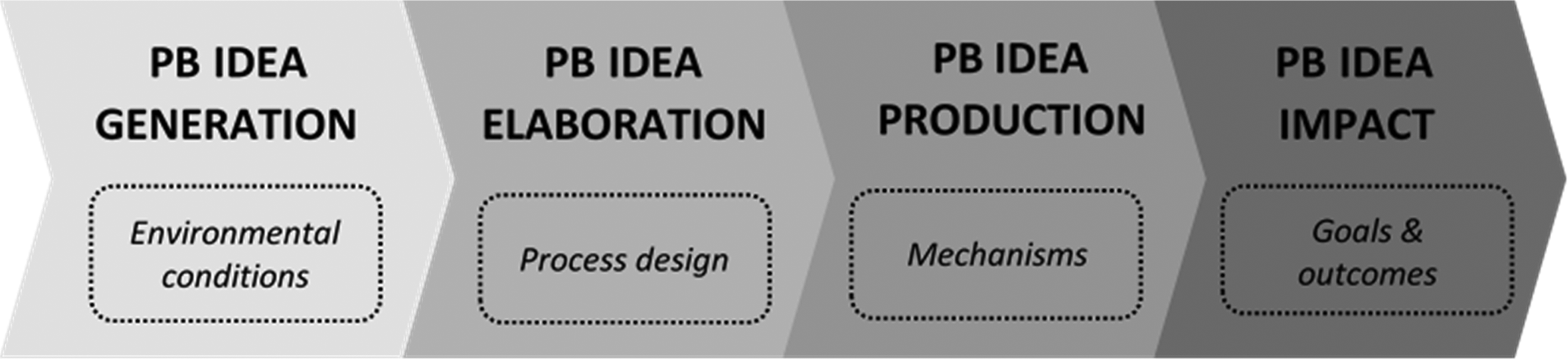
Phases of PB idea journey.
The first journey phase represents “the process of generating a novel and useful idea” (Perry-Smith and Mannucci, 2017: 55). The authors assume that the generation of innovative ideas is highly influenced by the social context. This is in line with what has happened in the PB experience. Deep understanding of PB adoption requires examination of the environment in which the idea develops and, especially, consideration of conditions that favour or hinder its implementation. Following Ebdon and Franklin (2006*), four main external environmental components must be addressed: (1) structure and form of government, (2) political dynamics and culture, (3) legal requirements and (4) population size and diversity.
The elaboration phase is defined “as the process of systematically evaluating a novel idea's potential and further clarifying and developing the idea” Perry-Smith and Mannucci (2017: 57). In the PB field, inspiration from other cases and adaptation of pre-existing models can be relevant (Sintomer et al., 2008*). Factual elaboration of a PB process thus includes “a variety of considerations, such as (1) timing, (2) type of budget allocation, (3) participants and (4) gathering sincere preferences” (Ebdon and Franklin, 2006*: 439).
Perry-Smith and Mannucci (2017) break the idea implementation into two sub-phases: production and impact. During the production, “the idea is turned into something tangible – a finished product, service, or process” (Perry-Smith and Mannucci, 2017: 59). The final product of PB is essentially characterized by the mechanisms that are applied to elicit citizen participation in the budget process and to channel their preferences (Ebdon, 2002*). In the brief story of PB, many traditional mechanisms have been tried, including: (1) public meetings, (2) focus groups, (3) simulations, (4) committees and (5) surveys (Ebdon and Franklin, 2006*).
During the idea impact phase, “the innovation is accepted, recognized, and used by the field” (Perry-Smith and Mannucci, 2017: 59). In this stage, both the goals and outcomes of participation are considered. Research should explore how and to what extent the PB idea came to be accepted and recognized in the field, the kind of internal and external impacts that are produced, how they can be assessed, if they meet the organizational and social expectations, and whether they can be generalized.
Methodology
The research began by establishing the boundaries of the search. First, we identified a set of search terms, which resulted from the authors’ previous knowledge of the topic and a scoping study conducted to select the most suitable words for identifying PB studies. Four search rounds were launched in three databases (Scopus, Business Source Complete, ISI Web of Knowledge), to obtain a comprehensive and reliable dataset (see online Appendix 2). The selection of these databases is considered adequate because of their comprehensiveness and the similarity to other literature reviews (De Vries et al., 2016; Kroll, 2014). These searches were guided by a specific review protocol, which set the inclusion criteria. Papers were only included in the final dataset if they met all these criteria. Only English-language papers were selected, to avoid translation problems and contribute to the replicability of the research. The publication time frame was between 1989 (January) and 2019 (September), to review the body of knowledge since the Porto Alegre style of PB began in 1989 (Sintomer et al., 2008*).
The records found through the searches were first screened based on titles (and abstract when needed), in order to select only those focused on PB in the public sector, which would guarantee the coherence of the studies selected. The resulting papers were screened according to the research type (international peer-reviewed journal articles) and discipline (public administration, political sciences, management and accounting). To implicitly assess paper quality, the review included only publications in academic journals. The journal classification powered by SCImago, the publicly available portal powered by Scopus, was used as a reference to classify the journals in the different fields. Accordingly, examples of excluded studies are conference papers, book chapters, or research published in different fields. Duplicates were eliminated, and the resulting dataset was further screened by reading the abstract, introduction and, if needed, the full text, to eliminate papers where topics were inapplicable or only loosely related to PB in the public sector. The three authors have checked the papers in each step and cross-checked the others’ decisions; cases of doubts were discussed until agreement was reached. Figure 2 depicts the steps in the search process. The initial step yielded 1481 results. The final number of articles in the dataset is 139. Appendix 3 (online) summarizes the eligibility criteria.
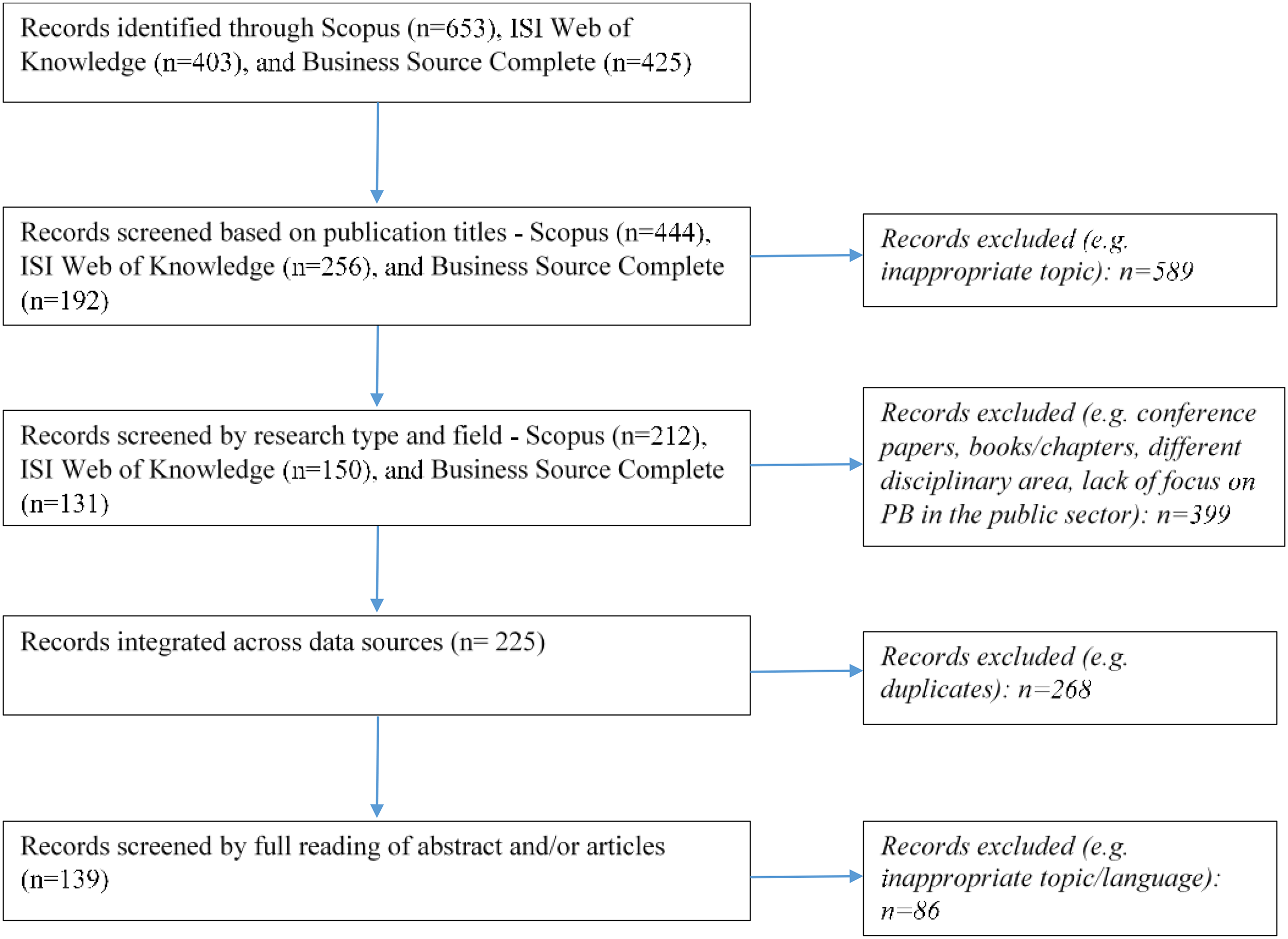
Flow diagram: selection process.
To analyse the papers, we developed a coding scheme. We individually read a subset of papers and developed a possible classification scheme. The coding scheme was then finalized and the classification of the studies in the database refined (Broadbent and Guthrie, 2008).
First, in order to describe the dataset, the coding scheme included year of publication, authorship (academic, practitioner, or both), disciplinary field and design (empirical or conceptual) (e.g. Broadbent and Guthrie, 2008; Ritz et al., 2016).
Second, the coding scheme focused on the analysis of the key issues addressed in the papers. This analysis was built on the identification and categorization of the issues according to the theoretical framework of this review. One research assistant was trained to categorize the papers using the labels corresponding to the elements of the framework (e.g. environmental conditions, process design). The assistant identified the most opportune label, based on the aim and research questions of each paper, and completed a theme spreadsheet, indicating both the elements of the framework and the detailed issues analysed. The other researchers reviewed the classification, for coding reliability purposes. Further, regular meetings were conducted to discuss issues and divergent cases (Ritz et al., 2016). In some cases, a paper was linked to more than one element of the framework, receiving multiple labels. The analysis of the key issues was integrated with the analysis of their development over time, by considering the year of publication, and over space, considering the continent studied and the tier of government where studies were carried out.
Descriptive analysis
The literature review included academic journal publications from 1989 to 2019. As shown in Figure 3, the number of publications becomes noteworthy during the 2000s, increasing significantly during the 2010s, with a peak in recent years (2016–2019); the final year in our analysis, 2019, has the largest number of publications (22). This implies that the bottom-up approach to PB has required time to attract the attention of scholars and reach an academic audience. Further, despite its long history, PB is still alive, and the recent increase in the number of publications confirms that the practice is on the agenda of public sector organizations across many countries.
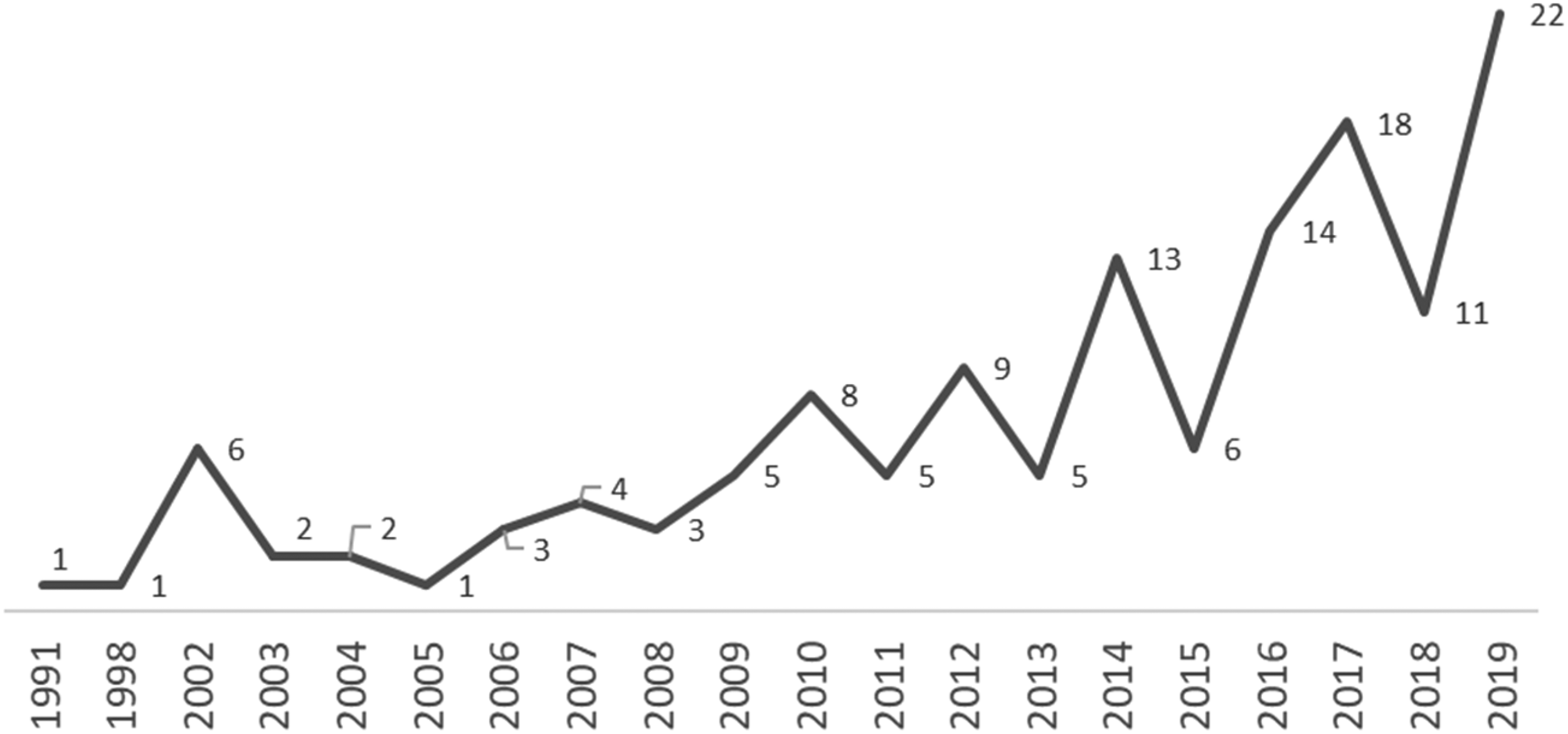
PB publications per year (number of papers).
The majority of the papers were written by scholars (77%), with a few cases of collaborations between scholars and practitioners (19%) and a limited number of papers written only by practitioners (4%). Interestingly, the first paper in the dataset, published in 1991, was written through a collaboration between scholars and practitioners, consistent with the fact that PB was born in praxis. Further, collaborations have increased in the last five years.
Analysis of the research setting (Figure 4) shows that the majority of papers investigated North and South American experiences, consistent with the origins and long history of the practice in these contexts. Further, the level of government most investigated was local. Municipalities were the focus of 69% of the studies, while 9% focused on district/neighbourhood levels, and 9% investigated cases at multiple levels of government, often including municipality and district levels.
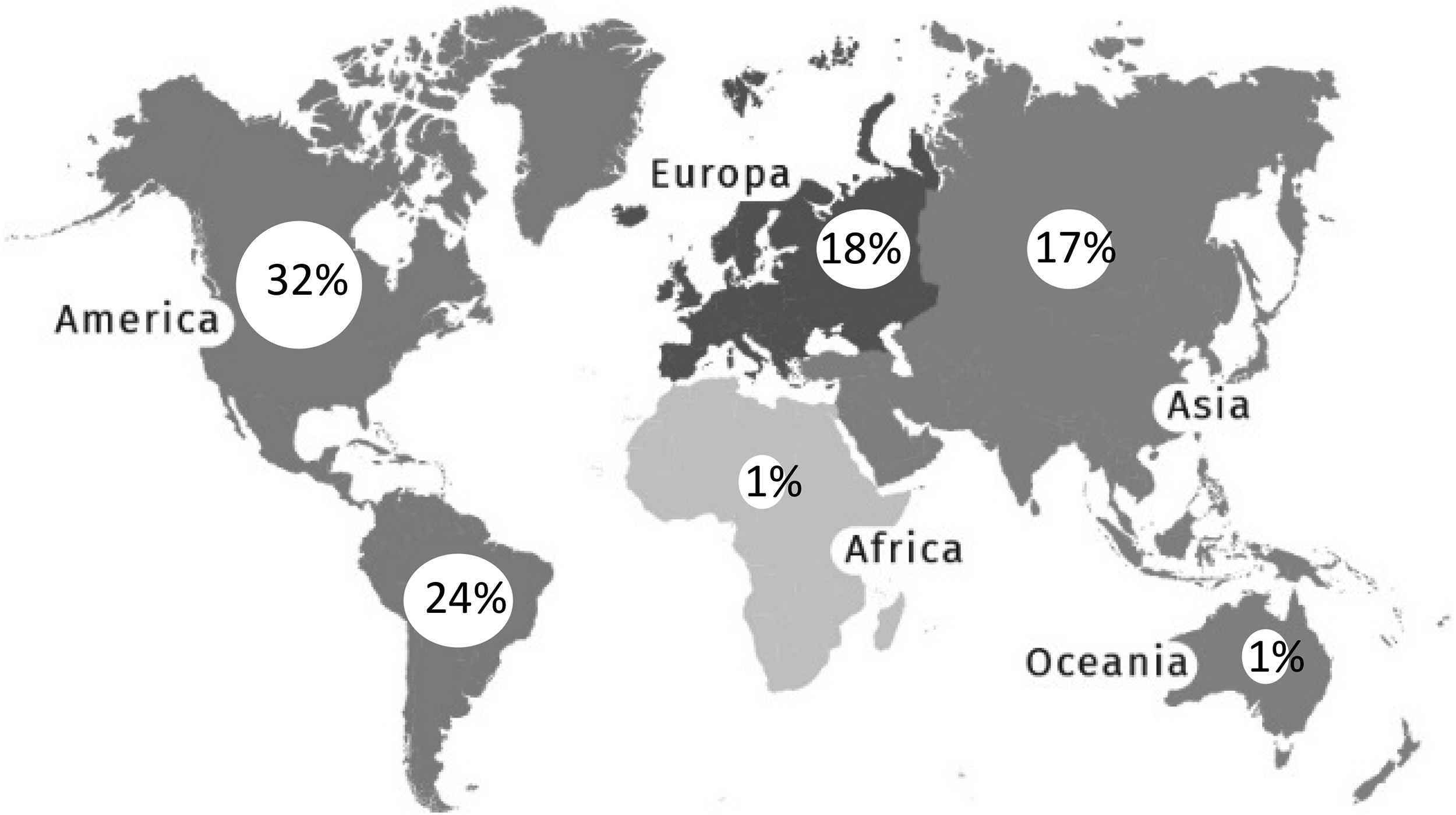
PB over space (percentage of papers).
Considering the methodological approach, the body of knowledge on PB is strongly influenced by empirical studies (80%): predominantly field study/case study/interviews (37%) and survey or statistical analysis carried out on collected empirical data (26%). Mixed approaches have been adopted, mainly in the 2014–2019 period (10%); interestingly, several studies have used less common approaches, such as action research and experiment, starting from the second half of the 2000s.
Papers that are conceptual in nature comprise 20% of the dataset. Only one could be termed theoretical, and a few cases are reviews of previous studies, although they are neither systematic nor broad reviews. A significant component of the dataset is represented by commentary or normative papers (17%), based on reflections or discussions of empirical experiences, through reliance on secondary data or personal experiences/knowledge. These studies are mainly concentrated in the second half of the period analysed. Finally, the great majority of the papers in the dataset do not use general theories.
The PB idea journey: a longitudinal thematic analysis
In this section, by analysing the key issues addressed, we present the results of our investigation into what the existing literature studied and concluded regarding PB. We based our analysis on the previously discussed theoretical framework. Three of the papers use general taxonomies to map PB practices applying general modelling entail all the phases of the journey (Ebdon and Franklin, 2006*; Schneider and Busse, 2019*; Sintomer et al., 2008*), so are not included. Thirty-six articles address two or more of the four phases, rather than focusing primarily on one. The remaining 100 papers have one of the four phases as their main focus. Results related to each of the four key phases in the journey and PB elements will be discussed next.
Idea generation: environmental conditions for initial PB adoption
Studies on the environmental conditions for PB only began in 2002 and have increased significantly in recent years, with 48 of 55 papers published in this category in the last decade – 21 of which were in the last three years and covered both external and internal factors.
Among external factors, governmental structure and form have received attention. Generally, scholars (Krenjova and Raudla, 2013*; Patsias et al., 2013*) believe that PB is associated with policies and mechanisms of decentralized planning, devolved financial management and fiscal autonomy. Centralized and non-democratic powers (Xiaojun and Ge, 2016*) and the existence of political elites and technocrats limit the authentic experience of PB (Wu and Wang, 2012*; Ye, 2018*).
Political dynamics and culture are also relevant (Wampler, 2018*). PB finds a more favourable environment when other civic engagement policies and tools (e.g. health councils, city master plans) are promoted (e.g. Avritzer, 2012*). Civil organizations’ positive role in generating PB ideas is also acknowledged (Mishra, 2014*), especially in developing countries (Bland, 2011*; Kasymova, 2017*). In weak civil societies, governing bodies and technocrats’ predominance leads to poor PB results (Krenjova and Raudla, 2013*; Nylen, 2002*). Overall, PB adoptions may be considered a stimulus to promote participation in other areas (Madej, 2019*; Nylen, 2002*).
PB adoption has not generally come through legal requirements. However, some South American countries were influenced by Porto Alegre successfully imposing PB at state and local levels with mixed effects (Bland, 2017*; Jaramillo and Wright, 2015*; Rodgers, 2010*). In these cases, concerns about the authenticity of citizens’ inclusion and community-building are plausible (Franklin et al., 2010*).
Generating PB ideas also depends on population size and diversity. Municipalities with large populations are often a laboratory for innovative PB experiences. Their social tensions may represent effective input for PB adoption, clearly shown by the iconic case of Porto Alegre (Baiocchi, 2003*) but also demonstrated by some large North American cities (i.e. Chicago, New York, Los Angeles) (Jabola-Carolus, 2017*). However, in contexts with a high degree of diversity, “the dialectic between designed environment and substantial participation” must be constantly “reconstituted” (Meléndez and Martinez-Cosio, 2019*: 18).
In addition, internal factors are recognized, relating to organizational capabilities and leadership, professionalism and commitment of managers. Large, complex organizations appear more sensitive to innovation in the civic inclusion field and are often better equipped with financial, technical and intangible resources (Ewens and Van der Voet, 2019*). Successful PB adoption has been positively associated with managers’ professionalism, education and open-mindedness (Zhang and Yang, 2009*). The organizational environment may be crucial in PB adoption (Kluvers and Pillay, 2009*); therefore, training activities are recommended: not only to educate citizens (Callahan, 2002*) but also to enhance public managers and officials’ leadership in managing conflicts and creating commitment (Liao and Zhang, 2012*). Reluctance of managers demonstrates a clearly negative effect on factual citizen engagement (Liao, 2018*). Moreover, relationships between managers and politicians play a role in originating and/or subsequently changing PB (Melgar, 2014*; Uddin et al., 2019*). These organizational factors (capabilities, leadership, professionalism and commitment of managers
Idea elaboration: designing PB
The design of citizen participation has been researched in most of our sample, with publications starting in 2002, though most (50 of 60 papers) appeared in the last decade.
The definition of participants has drawn attention. Social, cultural and economic factors should be considered, to make PB both accessible to all citizens and able to incorporate different expectations (Wood and Murray, 2007*). The inclusiveness and the representativeness of PB remain key issues, especially in non-democratic and poor societies, where serious attention is not paid to disadvantaged people (Zhuang, 2014*) and poverty-related bias is detectable in co-decision processes (Grillos, 2017*). PB design should consider the structural constraints of gender, disability, race, language and wealth (Carbonai et al., 2017*). Inclusiveness problems also occur in wealthy countries; for example, affluent and highly educated residents were overrepresented among those voting in the Chicago PB process (Pape and Lim, 2019*). Little is known about those who wish to participate but do not (Christensen and Grant, 2016*).
These aspects also relate to the timing of when inclusion should be introduced. Good process designs allow citizens time and space to acquire knowledge, increase mutual trust and share ideas, but we lack clear indications of how to operationalize this concept (Christensen and Grant, 2016*). For Guo and Neshkova (2012*), citizen input plays a more important role in the information-sharing and programme-assessment stages than in a budget's discussion and decision-making phases.
Another aspect is the collection of sincere preferences. Citizen participation may be affected by problems of authenticity and autonomy (Holdo, 2016*). Hernández-Medina (2010*: 529) believes “flexible institutional design”, to adapt to the urban context and experts’ presence, is key to improving inclusiveness and authenticity. Other scholars, however, demand a shift towards a more grassroots idea of participation, with community-based organizations’ involvement (Justice and Dülger, 2009*; Kasdan and Markman, 2017*; Lerner, 2017*).
Participants’ characteristics and their inclusion's quality also depend on the topics framed in PB. Co-decisions were initially associated with urban planning, social housing and capital spending (Sintomer et al., 2008*), owing to their social relevance, especially in critical contexts affected by social and economic inequality (Robbins et al., 2008*). More recently, PB has been linked to policy-making processes in the field of social policies (i.e. policies for young people, gender inclusion or other disadvantaged categories). At the same time, PB can be applied to fiscal revenues (Jimenez, 2013*) but little is known about what happens when different topics are addressed. In this sense, consideration of the topics is an important issue to understand PB design.
Topics must be linked to the portion of the budget available for co-decision and the type of budgeting allocation. PB may be seen as tokenistic when that portion is small (Christensen and Grant, 2016*). PB is often about capital spending, but there are cases of co-decision focusing on fiscal policies or budget-cutting (Jimenez, 2013*). Other scholars advocate expanding funding and broadening eligibility, to enable more residents to use PB, better address their priorities, reduce frustration and open PB up to new innovative ideas (Kasdan and Markman, 2017*; Lerner, 2017*).
PB also requires that internal actors as elected or governing officials and administrative managers and staff play an important role in designing and implementing PB, particularly in managing conflicting opinions and creating two-way dialogue between government and citizens (Zhang and Liao, 2011*).
Civic society organizations (especially non-governmental organizations (NGOs)) are often seen as experts and consultants in promoting and designing PB. They act as third party intermediaries between governing bodies and citizens (Justice and Dülger, 2009*), with the effect of expanding participation, and can gather consistent flows of budgetary information to build a logical debate with the state and also promote innovative ways to collect extra funding for the participatory project (Lerner, 2017*; Mishra, 2014*). Less explored is the role of other external consultants who act as “professional connectors” with citizens (Geurtz and Van De Wijdeven, 2010*: 541).
Idea production: implementing PB through participatory mechanisms
Few papers in our sample (20) focused on participatory mechanisms. Studies have principally focused on traditional in-person participation. In light of the digitalization wave, new technological mechanisms are now also being investigated.
Public meetings, in the form of citizens’ assemblies, are the main traditional mechanisms, especially in South American experiences (Baiocchi, 2003*) but also in North America, Europe and China (Bartocci et al., 2019*; Franklin et al., 2010*; He, 2011*, 2019*). The idea is that PB should privilege conditions for dialectics, and assemblies represent deliberative democracy. In contexts with a strong ideological matrix, such as Brazil in the 1990s, assemblies were seen as the best tool to mobilize the transformative power of participation and gain a more substantial role for democracy (Baiocchi and Ganuza, 2014*). However, in settings with a different background, such as the US, the preference for public hearings is owing to their simplicity and the fact that elected officials place greater value on mechanisms that interact more closely with citizens (Franklin et al., 2009*). Other stakeholder engagement techniques have commonly been used, such as focus groups (Franklin and Ebdon, 2005*), citizen advisory boards (Callahan, 2002*; Franklin and Rickard, 2016*) and citizen surveys (Watson et al., 1991*), but are less appreciated by politicians because issues are analysed here more at macro and community levels (Franklin et al., 2009*).
Recent developments in technology have enabled the application of new tools (i.e. e-forums, e-voting and use of social media) for PB that can provide support in terms of information, lobbying, consultation, dialogue and decision functionality (Rose and Lippa, 2010*). These methods allow for increased participant numbers, the inclusion of the voice of minorities and the capacity to transform individual preferences into a group decision in a fair way, which means a better and wider representation of interests (Caceres et al., 2007*; Kim, 2008*; Rios et al., 2017*; Robbins et al., 2008*). There are, however, critical concerns about the quality of participation (Lim and Oh, 2016*) and potential loss of citizen trust in PB (Barros and Sampaio, 2016*). Based on an investigation in Boston and San Francisco, Clark and Guzman (2016*) conclude that technology has enhanced information for management purposes, but “there is no support to suggest that this form of citizen participation has a role in altering how funds are allocated to departments” (p. 956).
Idea impact: PB's goals and outcomes
While few studies investigate PB's goals and outcomes (38 in total, 20 as the main focus), interest in this issue has recently increased. Very few studies address the initial goals of PB adoption (Bartocci et al., 2019*; Falanga and Lüchmann, 2020*). Most try to assess the final participation outcomes, especially through qualitative analysis. Cross-country studies highlight the importance of the environmental setting in understanding the reasons for different outcomes (Wood and Murray, 2007*). Moreover, researchers’ subjectivity, differences in research methods, and awareness that each outcome entails a variety of facets, may explain divergent results.
One group of studies investigates cases of PB's use to gather input for decision-making, change resource allocation and innovate policies. Research, mainly in the Brazilian context, focuses on general or specific public policies, such as health and education programmes (Touchton and Wampler, 2014*), health services (Goncalves, 2014*) and key municipal services (Wood and Murray, 2007*). These are conducted at a macro level, where budget allocation modifications are associated with successful public policy innovations, in terms of equity and sometimes effectiveness (e.g. reducing infant mortality rates).
A second group of studies considers that PB can also be applied as a retrenchment tool. Jimenez (2013*: 924) reveals that “among budget-cutting strategies, participatory cities favor high-loss and high-conflict responses such as reducing or eliminating services and laying off personnel.” Conversely, “among revenue-raising responses, participatory cities have a higher probability of implementing slight-loss, low-conflict responses, such as increasing sales taxes and introducing service fees.”
Furthermore, according to a third group, PB can be a tool to gain support for budget proposals and increase political legitimacy. In two Chinese cases, government officials use PB to morally justify public policy (Wu and Wang, 2012*). In a Spanish case, appointed officials retain discretionary power, cherry-picking from different budget proposals (Font et al., 2018*). However, the final goal is to reinforce local authorities’ existing power. In this regard, some critical scholars view PB as a way to gain power or reinforce political dominance (e.g. Kuruppu et al., 2016*). Others stress that PB may be part of an institution-building process, aiming to instill a partisan advantage (Goldfrank and Schneider, 2006*). Similarly, others suggest other downsides: populism, time loss, inability to conceal deficiencies in governance, overestimation of citizens’ expectations in the face of limited resources, and limited freedom of action of local self-governing bodies (Voznyak and Pelekhatyy, 2017*). We detected no specific studies exploring PB's potential to educate participants about the budget.
A fourth group of studies concerns increased transparency, accountability and trust among constituents. Experiences in New York (Swaner, 2017*), Russia (Aleksandrov et al., 2018*) and Ukraine (Volodin, 2019*) confirm PB's potentially positive effects, especially regarding increasing trust in government. We do not know whether this also reduces cynicism about government. Other scholars, though, believe that PB may increase social conflict, owing to an extension of the political space (Ganuza et al., 2014*).
Finally, a fifth group states that PB is analysed as a practice to create a sense of community (Pinnington et al., 2009*). Citizen empowerment, civil society activism and social justice are seen as fundamental values of participation. From this perspective, the Brazilian experience has been especially investigated. In Porto Alegre, PB's attractiveness has become more trans-classist over time (De Sousa Santos, 1998*). The cases of Belo Horizonte and Betim demonstrates that institutional innovations like PB can affect “qualified form of empowerment among nonelite activists and former activists” (Nylen, 2002*: 140). However, recent studies question these results. In the global PB take-up, the communication is clearly present, but empowerment is more variable and arguable (Baiocchi and Ganuza, 2014*). A re-examination of Porto Alegre's experience poses this question: “almost thirty years after the creation of the PB, … to what extent has PB preserved and materialized the potential for participation to be radically transformative?” (Rocha Franco and Teixeira Assis, 2019*: 85).
Discussion
PB is still alive after 30 years, as demonstrated by the increasing number of publications on the topic, which has peaked in recent years. The bottom-up approach to PB has taken several years to attract the attention of scholars, but it is now a popular reform for policy-makers and practitioners. When adoption of the PB idea started, academic attention was limited and focused essentially on the mechanisms and impacts of citizen involvement in the budgeting process. Later, attention shifted towards the environmental conditions supporting the elaboration of the PB idea and the process used to generate it. Recently, a certain level of maturity has led to a more critical consideration of the PB idea's impact (see Figure 5).
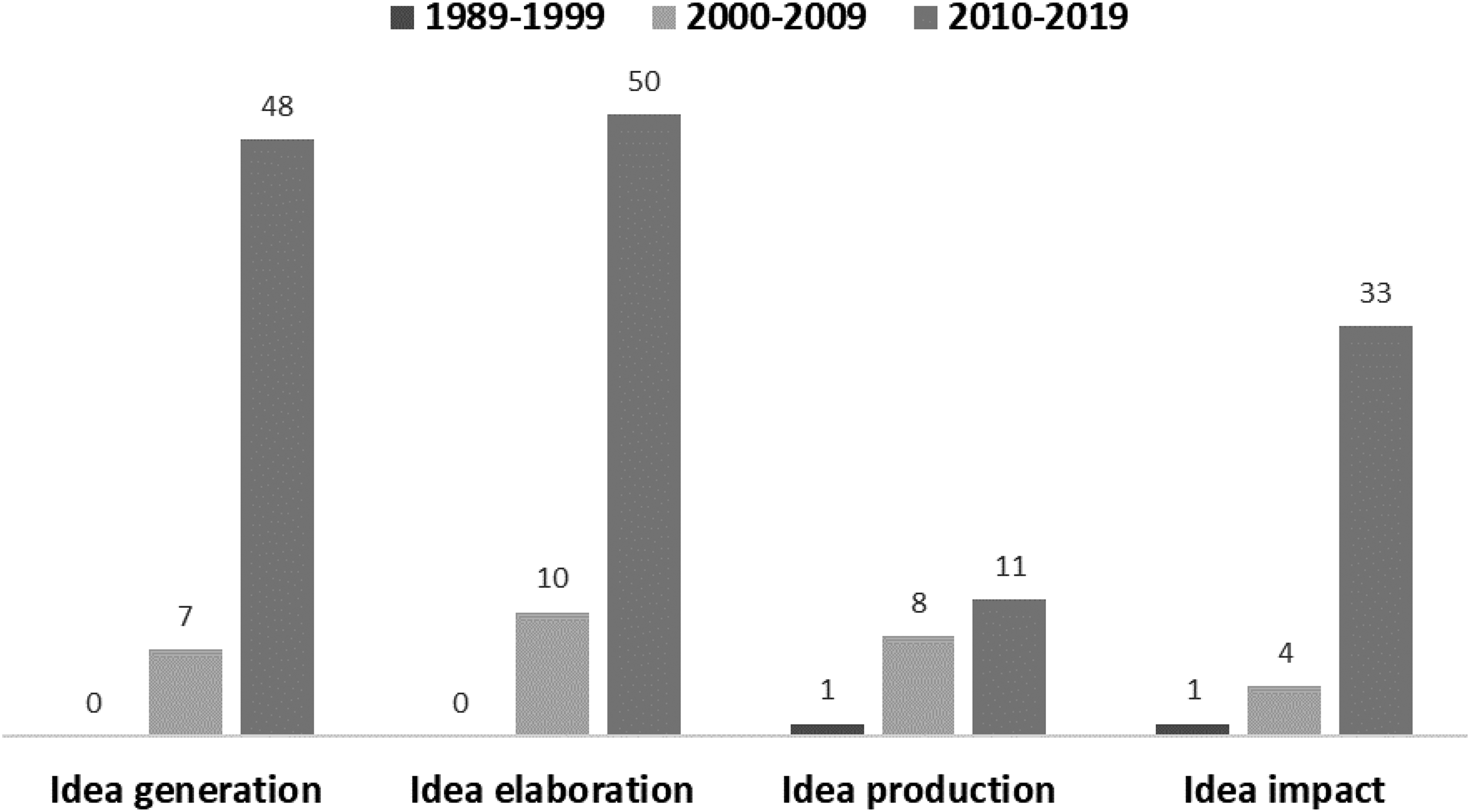
The PB idea journey: a longitudinal thematic analysis (number of papers).
First, in the generation of the PB idea, the environmental conditions have been increasingly recognized as relevant (Wampler, 2018*). Externally, the co-existence of and integration with other participative tools can support the generation of PB, as well as the adoption of policies and mechanisms of decentralized planning, devolved financial management and fiscal autonomy (Avritzer, 2012*). Larger and more diverse contexts can also stimulate authentic participation (Hayduk et al., 2017*). Legal requirements/incentives do not appear to be necessary, although they may be helpful in some contexts (Bland, 2017*; Jaramillo and Wright, 2015*; Rodgers, 2010*). Interestingly, internal factors are also recognized among the drivers of PB (Ewens and Van der Voet, 2019*). The commitment and the professionalism of both politicians and managers are pivotal for embracing the PB idea (Liao and Zhang, 2012*; Melgar, 2014*; Uddin et al., 2019*).
Second, previous studies have focused on the design of PB, especially on how citizen participation in the budgeting process can be realized. This entails several aspects. One is the issue of inclusion and representativeness. Lay actors should be included without distinctions (who) (Wood and Murray, 2007*) and at the right moment to make their contribution to the budgeting process effective (when) (Christensen and Grant, 2016*). The preferences expressed by citizens should reflect their values and interests in a sincere and genuine way (what) (Holdo, 2016*). In addition, the topics framed by budgeting decisions should be further analysed. In the debate, these issues are identified as critical and calling for further investigation: how do these aspects relate to each other? In this regard, few studies have addressed the role internal actors (politicians and managers) and external experts (consultants) can play in supporting the generation and elaboration of the PB idea.
Third, only a few papers in the dataset focused on the participatory mechanisms that can be specifically adopted to involve citizens in the budgeting process. The majority of these papers paid attention to traditional in-person methods, whose specific design may depend on the political and social context (Baiocchi and Ganuza, 2014*), while more recent studies have increasingly recognized the potential power of digital tools (Rios et al., 2017*; Rose and Lippa, 2010*). Nevertheless, the technology impact on PB is controversial, and the quality of the final decisions is disputable, leading to a need for additional study.
Fourth, growing and recent attention has been paid to the impact of PB. Scholars mainly recognize PB's potential for gathering input for more informed decision-making (Touchton and Wampler, 2014*). Studies (e.g. Rocha Franco and Teixera Assis, 2019*) have also adopted a more critical approach, recognizing the risk of both using PB symbolically to obtain legitimacy and exploiting PB to reinforce existing power mechanisms. The impacts in terms of accountability, trust and transparency call for further research, owing to the mixed existing evidence (Swaner, 2017*; Volodin, 2019*). A critical perspective on PB is assuming relevance in the academic debate. In addition, we know little about the original goals of communities that have adopted PB and their alignment with the real outputs. Do impacts vary because the goals were different or for other reasons, such as differences in designs, mechanisms or environment?
In addition to suggestions for future research related to each of the four phases of the idea journey of PB, we recommend other fruitful areas for study.
Most research continues to be based on single qualitative case studies of PB, making it difficult to generalize the findings. More comparative studies are needed to understand similarities and differences in PB around the globe. Cheung (1997)'s inventory of new public management reforms in 25 countries could represent a valuable model for a multinational comparison of PB within and across countries and continents. In addition, a major, continuing gap in the literature relates to institutionalization (Holdo, 2016*). Some studies focus on situations where PB was used once or twice and then discontinued, while its use in other places, including Porto Alegre, has changed over time (Melgar, 2014*). Adaptations of budget reforms over time are common, and the same may be true for PB. New administrations may not be interested, resources may no longer be available, or perhaps it is felt that participation is no longer needed in that form. We need more studies that address PB over time and map whether and how it changes and becomes institutionalized. Moreover, we have still to acquire knowledge on how PB can work in different settings and at different institutional levels. Descriptive analysis of our dataset shows that little research has been conducted in some geographical areas, especially in emerging economies, where there is no history of democratic governments and the role of external actors (i.e. NGOs) is crucial. At the same time, the majority of research is focused on municipalities and districts, and much more can be done to explore the potential and criticisms of PB at higher tiers of government (i.e. regional or central). Moreover, PB may be fruitfully investigated also in the light of different policy arenas of application and diverse ways to fund it (money can be also collected by external partner organizations).
Conclusions
Our review sheds light on new areas in which future research would be useful to further develop and test theory. Besides the external environmental components identified by Ebdon and Franklin (2006*), our investigation has detected the relevance of internal elements such as organizational capabilities, in terms of financial, material, knowledge and human resources, that are available (Cabannes and Lipietz, 2018), and the power, leadership, professionalism and perception of managers (Liao and Zhang, 2012*; Zhang and Liao, 2011*). With regard to elaboration of a PB process, two other elements must be considered: the topics framed in co-decision (Kasdan and Markman, 2017*) and the role of internal actors (politicians and managers) and external actors (experts, consultants and civic organizations as intermediaries) (Aleksandrov et al., 2018*; Lerner, 2017*). Concerning participatory mechanisms, a recent explosion of ICT-produced digital innovations, such as e-forums, e-voting (Rose and Lippa, 2010*) and social media platforms, have influenced PB processes (Gordon et al., 2017*) and other two-way communication procedures (e.g. budget simulations) that can affect PB. This latter element can be particularly relevant in the light of the burden implied to administer a PB and the recent tendency to outsource some administrative activities. Finally, in addition to those identified by Ebdon and Franklin (2006*), other goals and impacts of PB can be detected (Ebdon et al., 2018), such as transparency and accountability, retrenchment management and policy innovation.
Table 1 (see online) reports a revised version of the Ebdon and Franklin (2006*) framework that can be used to explore the future evolution of civic participation in budgeting in light of the issues that are already challenging public administration.
The ongoing global pandemic is having devastating effects on both economies and public health, and governments around the world must make difficult budget decisions in response to these problems (Grossi et al., 2020). Presumably, PB can be a valuable tool for public officials to cope with this process, given the significant role citizens and other stakeholders play in these emergency times (Anessi-Pessina et al., 2020). On the other hand, the feasibility of civic engagement in decision-making when governments enjoy specific extra funding may be arguable. We have controversial indications from previous studies (Davidson, 2018). The Porto Alegre model of funding new projects could be adjusted to receive citizen input for reducing spending (Rubin and Ebdon, 2020), and other mechanisms such as ICT forms of online simulations can also be valuable for enhancing the role of citizens in decision-making during this global crisis and perhaps simplifying the administration of some forms of participation in budgeting. However, PB has great potential when the economic and health conditions return to a new normal and discretionary funds are less limited.
The current study has identified potential avenues for further research that can help both academics and practitioners, hopefully in collaboration, to develop PB and make it a suitable tool for coping with the current scenario. The journey may still be long!
Supplemental Material
sj-docx-1-ras-10.1177_00208523221078938 - Supplemental material for The journey of participatory budgeting: a systematic literature review and future research directions
Supplemental material, sj-docx-1-ras-10.1177_00208523221078938 for The journey of participatory budgeting: a systematic literature review and future research directions by Luca Bartocci, Giuseppe Grossi, Sara Giovanna Mauro and Carol Ebdon in International Review of Administrative Sciences
Footnotes
Declaration of conflicting interests
The author(s) declared no potential conflicts of interest with respect to the research, authorship, and/or publication of this article.
Funding
The author(s) received no financial support for the research, authorship and/or publication of this article.
Data availability statement
The data management practices are compliant with GDPR regulations.

Supplemental material
Supplemental material for this article is available online.
Note
1. Papers cited from the dataset are denoted by * and are included in the supplemental material available online.
References
Supplementary Material
Please find the following supplemental material available below.
For Open Access articles published under a Creative Commons License, all supplemental material carries the same license as the article it is associated with.
For non-Open Access articles published, all supplemental material carries a non-exclusive license, and permission requests for re-use of supplemental material or any part of supplemental material shall be sent directly to the copyright owner as specified in the copyright notice associated with the article.
