



Abstract
The link between actual government performance and citizens’ performance perceptions has been controversial. Given the prevalence of negativity bias, however, the link between bad performance and citizens’ perceptions could appear to be strong. To explore this theoretically unconfirmed link, this study uses a quasi-experiment that contrasts a Japanese town in fiscal crisis, involving tax increases and service cuts, with a control village not in fiscal crisis. Using a difference-in-differences analysis with a careful retrospective pretest, it finds negative effects of the fiscal crisis on citizens’ process perception, while it shows no effects on citizens’ service satisfaction and trust in the mayor, council, and administrators. The study further finds positive associations between citizens’ performance perceptions and civic engagement. It discusses these findings to identify the boundary conditions in which a bad performance–negative perception link is likely to appear.
Psychology literature on negativity bias suggests that the causal links and mechanisms between bad performance and negative perceptions are stronger than those between good performance and positive perceptions. Not only citizens, but also politicians and administrators, hold negativity bias. Their blame-avoidance strategies could alleviate the growth of citizens’ negative perceptions with bad performance. Participatory governance might moderate the bad performance–negative perception link by placing citizens in a performance-improvement process and promoting their interaction with government officials.
Keywords
Introduction
Growing concerns with the negative image of government have urged governments worldwide to measure and improve their performance. The implicit hypothesis behind this performance movement is: “Citizens create negative perceptions when governments perform poorly. Similarly, citizens create positive perceptions when governments perform well.” Extant literature has identified this hypothesis as often invalid because citizens combine various factors, such as beliefs, past experiences, or expectations, with their judgment of government performance (Van de Walle and Bouckaert, 2003; Van Ryzin, 2007; Yang and Holzer, 2006). However, these studies have not paid much attention to the distinction between citizens’ attitudinal responses to bad performance and those to good performance. Psychology literature on negativity bias suggests that the causal link between bad performance and negative perceptions would be stronger than that between good performance and positive perceptions (Baumeister et al., 2001; Rozin and Royzman, 2001). Behavioral public administration studies have shown stronger effects of negative information on citizens’ perceptions of government performance (James and Moseley, 2014; Olsen, 2015; van den Bekerom et al., 2021). While these experiments reveal negativity bias in citizens’ performance perceptions, this does not necessarily mean that bad government performance is linked with citizens’ perceptions in the field. Specifically, unlike bad performance information designed for experiments, government officials might attenuate the negative aspect of performance information to avoid blame from citizens (Hood, 2007; Nielsen and Baekgaard, 2015). The questions about whether and how actual bad performance is linked with citizens’ perceptions remain uncertain. Therefore, this study explores the link and mechanisms, using a real case of municipal management failure.
For this purpose, the study uses a Japanese case of local fiscal crisis, involving tax increases and service cuts. It constructs a quasi-experimental framework that contrasts a treatment town in fiscal crisis to a control village not in fiscal crisis. Given the absence of pretest data, causal inference rests on a difference-in-differences (DID) design with a careful retrospective pretest. Data were collected from 600 randomly sampled citizens with a response rate of 44%. Qualitative interviews were also conducted to design the survey and interpret the experimental results. This study finds negative effects of the fiscal crisis on citizens’ process perception, while it finds no effects on service satisfaction and trust in the mayor, council, and administrators. It also finds positive associations between citizens’ performance perceptions and participation in local elections and civic organizations. Although this quasi-experiment on two Japanese municipalities is limited and its findings cannot be generalized, it contributes to identifying the boundary conditions in which a bad performance–negative perception link is likely to appear (Rohlfing, 2012).
The rest of this study proceeds as follows. The next section reviews the theoretical development and empirical evidence on government performance and citizens’ perceptions, and then identifies hypotheses specifically for the bad performance–negative perception link. The subsequent section describes the methods to explore and examine the hypotheses. Finally, the study presents the findings and discusses their theoretical implications.
Conceptual framework
This study addresses the bad performance of local governments that are at the forefront of delivering public services. The deterioration of frontline service and management could be more direct and deleterious to citizens than that of national-level service and management. The venues of municipal management are thus suitable for exploring the causal links and mechanisms between objectively measured bad performance and citizens’ performance perceptions. The study identifies a case of local fiscal crisis, involving tax increases and service cuts, as bad performance.
In particular, when a national government legally sets certain debt levels to identify the fiscal crisis of local governments, these meet the two criteria of objective performance measures: (1) precise assessment of a performance dimension; and (2) information availability and openness to verify its accuracy (Andrews et al., 2006). Tax increases and service cuts announced in a formal fiscal reform plan largely meet these criteria. To implement the fiscal reform, local governments are required to discuss whether to raise taxes and which services to cut. These politically sensitive issues possibly lead to a tight electoral race between mayoral candidates. This study considers such a political process of fiscal crisis and specifies the relevant aspects of citizens’ performance perceptions.
Citizen evaluation and bad performance
Citizens’ positive perceptions of the government can be seen as an essential performance outcome from a utilitarian perspective (Van de Walle and Bouckaert, 2007; Van Ryzin, 2007). In contrast, since Stipak (1979) cast doubt on the validity of citizens’ performance evaluation, some empirical studies have supported this doubt by showing the gaps between citizens’ perceived performance and objectively measured performance (Brown and Coulter, 1983; Kelly and Swindell, 2002). Other studies have shown the accuracy of citizens’ evaluation, which closely corresponds to formal performance indicators in some areas of local government services (Van Ryzin et al., 2008). Behavioral public administration studies have further revealed the complicated process that citizens use to combine various factors, including expectations, prior experiences, and beliefs, with their judgment of government performance (James, 2011; Marvel, 2016; Van Ryzin, 2006). These findings imply that the causal relationship between actual performance and citizens’ perceptions would be configurational, meaning that the causal link appears depending on configurations of such conditions as service types, managerial contexts, and cognitive biases (Mahoney, 2008; Rohlfing, 2012). Drawing on negativity bias theory, this study identifies the distinction between bad and good performance as a key condition that changes the causal link and mechanisms.
Psychology literature on negativity bias offers two core implications for citizens’ asymmetrical responses to bad and good performance: (1) bad performance generally has stronger effects on citizens’ perceptions than the counterpart of good performance; and (2) citizens’ response mechanisms to bad performance are different from those to the corresponding good performance (Baumeister et al., 2001; Rozin and Royzman, 2001). Recent experimental studies have shown stronger effects of negative information on citizens’ perceptions of government performance (James and Moseley, 2014; Olsen, 2015; van den Bekerom et al., 2021). These survey experiments use hypothetical performance information that is designed to be equivalently negative and positive. As Rozin and Royzman (2001) stress, however, equally negative and positive events rarely occur in the real world. Therefore, using an actual case of municipal management failure, this study explores possibly powerful links and unique mechanisms between bad government performance and citizens’ negative perceptions.
Multiple aspects of local government performance
Government performance embraces myriad dimensions. Even in a single unit of local government, it involves service provision, legislation, street-level bureaucracy, the local council, and the mayor. To address citizens’ perceptions of specific parts of a government, the key aspects are institutional and personal (Christensen and Lægreid, 2005; Yang and Holzer, 2006). The institutional aspect refers to the performance of the local government system. It can be further classified into public service systems and democratic decision-making systems. Citizens’ perceptions of the entire public service system, including taxation and service delivery, are largely represented by their confidence in or satisfaction with overall service quality. In terms of the democratic system, perceptions of the decision-making process are essential. The existing literature has shown that citizens respond more to processes than to policy or service outputs (Hibbing and Theiss-Morse, 2002; Van Ryzin, 2015). The personal aspect refers to the performance of individual actors such as the mayor, council members, and administrative officials. Frederickson (1991) argues that faith or trust in elected and appointed officials is necessary to overcome times of shortage or crisis that require a certain degree of sacrifice from citizens. Thus, this study identifies personal trust as a key perception of fiscal crisis.
In sum, this study identifies an actual case of fiscal crisis as bad performance and addresses its link with citizens’ perceptions of the institutional and personal aspects of local government performance. The principles of negativity bias suggest that citizens respond strongly to bad performance. This study thus constructs the following hypotheses: A fiscal crisis that involves tax increases and service cuts has negative effects on citizens’ satisfaction with the overall service quality of the local government (H1), perceived appropriateness of the decision-making process (H2), and personal trust in the mayor (H3), council (H4), and administrative officials (H5).
It should be noted, however, that negativity bias is rooted in not only citizens, but also politicians and bureaucrats. Blame-avoidance theory offers an essential perspective on how elected and nonelected officials respond to a negative event (Hood, 2007; Nielsen and Baekgaard, 2015). Specifically, politicians attempt to avoid blame for fiscal crisis in order to be reelected. Public managers are concerned with any blame that makes it difficult to implement fiscal reform. In providing performance information, both elected and nonelected officials will stress the future benefits of the reform plan rather than the additional burden. These blame-avoidance strategies could mediate the growth of citizens’ negative perceptions, depending on other conditions, such as managerial contexts of bad performance and citizens’ closeness to officials. Therefore, this study adopts an exploratory approach to these hypotheses, which are theoretically unconfirmed.
Civic engagement and government performance perceptions
A distinctive feature of local governance is the firsthand interaction between citizens and local authorities. Extant studies on social capital have shown the positive associations between citizens’ attitudes toward government and levels of civic engagement (Keele, 2007; Putnam, 2000). In particular, when citizens engage in community activities as members of civic organizations, they are likely to interact with local politicians and administrators. Some of those citizens may participate further in local elections, public meetings, and collective petitions (Dowding and John, 2012; Putnam, 2000). Since they are part of the administrative and political process, they are more likely to accept government officials’ blame-avoidance strategies and create positive attitudes toward the fiscal reform. On the other hand, citizens who are not engaged in civic activities interact with fewer people and thus hold low levels of generalized trust. They tend to lack knowledge on government activities and feel powerless with regard to them, which fuels their cynicism and negative attitudes toward political and administrative leaders and government systems. Given the well-established extant theories, this study examines the following hypothesis using a confirmatory approach: H6: Levels of civic engagement are positively associated with citizens’ perceptions of local government performance.
Figure 1 visualizes the theoretical model and empirical approaches to the hypotheses.
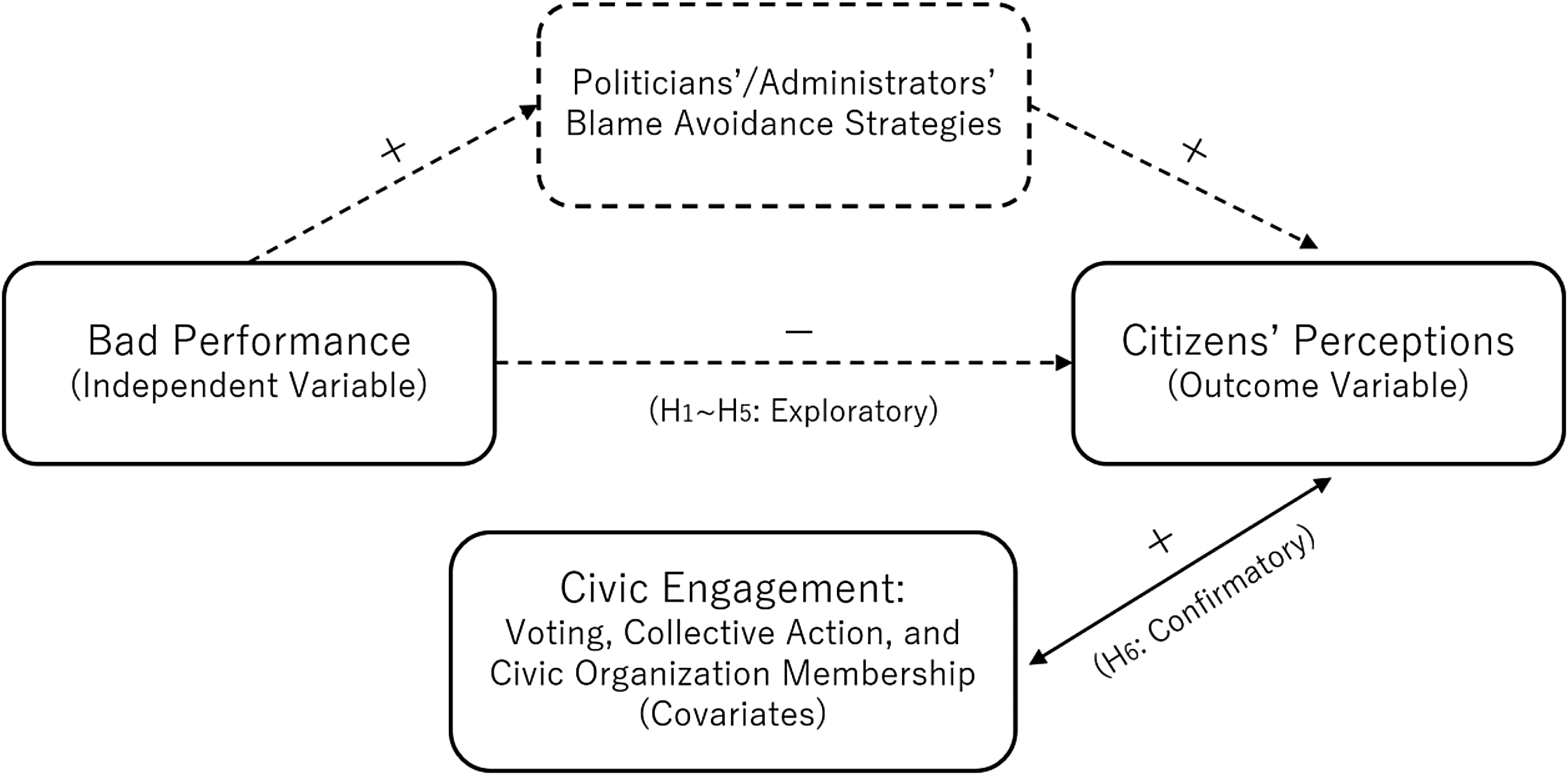
Model of bad performance–negative perception link with civic engagement.
Methods
Using the case of a Japanese town in fiscal crisis, this study empirically measures the effects of the fiscal crisis on citizens’ perceptions of government performance. The estimation approach is based on a DID design (treatment town versus control village, before versus after the fiscal crisis). A simple comparison between the treatment and control municipalities could result in severely biased estimates due to latent differences. DID removes these separable time-invariant biases by comparing the changes in the mean outcomes over time between the treatment and control municipalities. However, this quasi-experimental design poses two methodological challenges for testing the bad performance–negative perception link in the real world.
First, it is unknown whether citizens recognize the treatment, namely, the fiscal crisis. To explore the existence and characteristics of the treatment, the author stayed in the treatment town for six months and conducted qualitative interviews with its citizens. Dunning (2012) suggests that this type of qualitative exploration, which he calls “causal process observations,” is crucial for the persuasive use of experiments. Second, the emergence of a fiscal crisis in a municipality is almost unpredictable and thus poses the considerable difficulty of conducting a baseline survey before it occurs. Given the lack of pretest data, this study used a retrospective pretest in which respondents were asked to recall their pretreatment status at the posttest time (see Hill and Betz, 2005).
Background
Given the increased levels of local debt in the 2000s, the Japanese central government enacted the Act on the Assurance of the Sound Financial Status of Local Governments (ASFS) in 2007 and fully implemented it in 2009. The ASFS sets national criteria for fiscal soundness, which comprises four measures: (1) real deficit ratio; (2) consolidated real deficit ratio; (3) real debt ratio; and (4) future burden ratio. For instance, the “future burden ratio” is estimated using the formula: Expected redemption for total local bonds/Fiscal size of a local government. Local governments that exceed the set value (350% of the future burden rate) are required to implement fiscal reforms under the supervision of the Ministry of Internal Affairs and Communication (MIC), even if they meet the other three ASFS criteria. This new legislation compelled 21 municipalities to design fiscal reform plans in the 2009 fiscal year. 1 The legal mandate for fiscal reform is highly exogenous; thus, these cases offer a suitable experimental setting to measure the effects of the fiscal crisis on citizens’ performance perceptions.
Site selection
Among the 21 municipalities in fiscal crisis, this study selected the town of Ohwani in the Aomori Prefecture as the treatment town. The primary reason for this site selection was the availability of a comparable control village not under fiscal crisis: Inakadate. The experimental design requires the treatment and control groups to be identical regarding the factors that affect the measured outcomes in order to isolate the treatment effects. The two municipalities have similar population sizes and per capita incomes, as shown in Table 1. The areas of Ohwani and Inakadate have been administered as the same county for at least 700 years and hence share similar cultural backgrounds. They have similar access to Hirosaki, which is the central city of the Tsugaru area and has approximately 200,000 residents. While Ohwani and Inakadate belong to the same county, they are not geographically adjacent (see Figure 2). This geographical disconnection is necessary for meeting the stable unit treatment value assumption (SUTVA) of DID, in which the treatments are completely represented without relevant interactions between the treatment and control groups (Lechner, 2011).
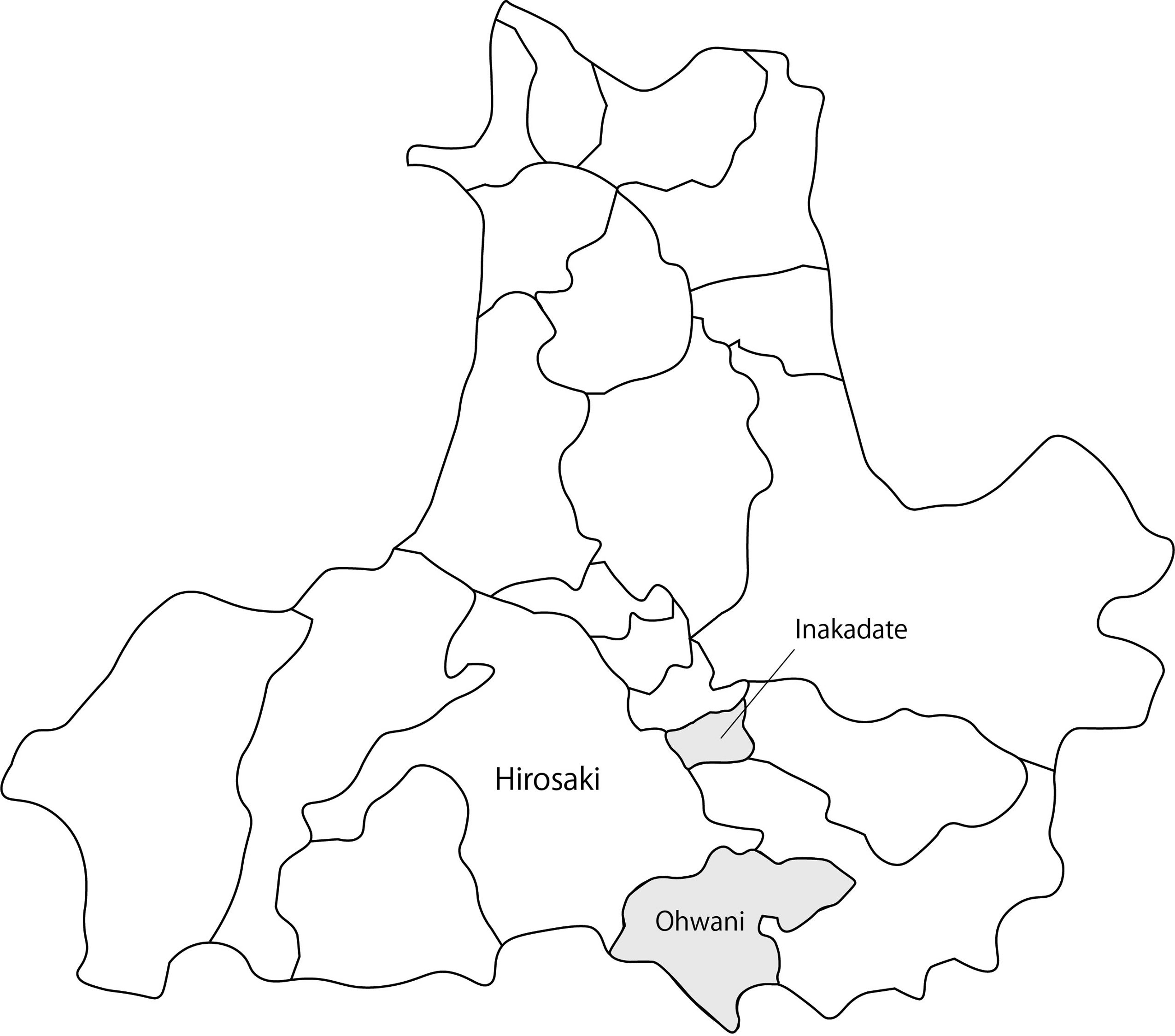
Map of Tsugaru area in Aomori Prefecture.
Demographics and fiscal status of Ohwani and Inakadate.
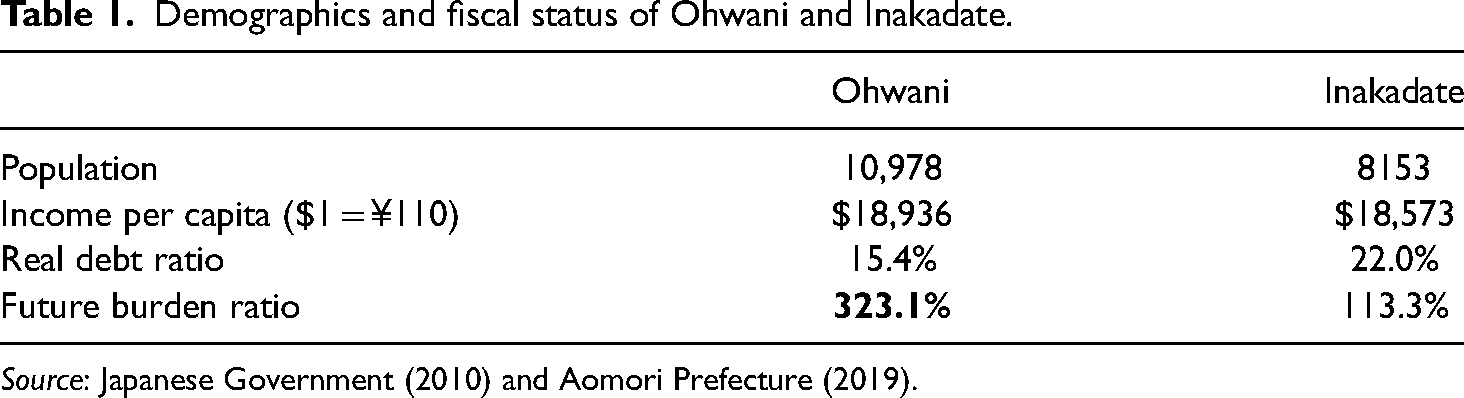
Source: Japanese Government (2010) and Aomori Prefecture (2019).
Furthermore, DID makes the common trend assumption (CT): if the treatment group was not subjected to the treatment, it would experience the same time trends as the control group. The evidence supporting CT is presented in Figure 3. The per-capita income trends in Inakadate parallel those in Ohwani before and after the fiscal crisis. These trends further justify the assumption that economic conditions had little impact on citizens’ perceptions of either the Ohwani or Inakadate governments during the fiscal crisis.
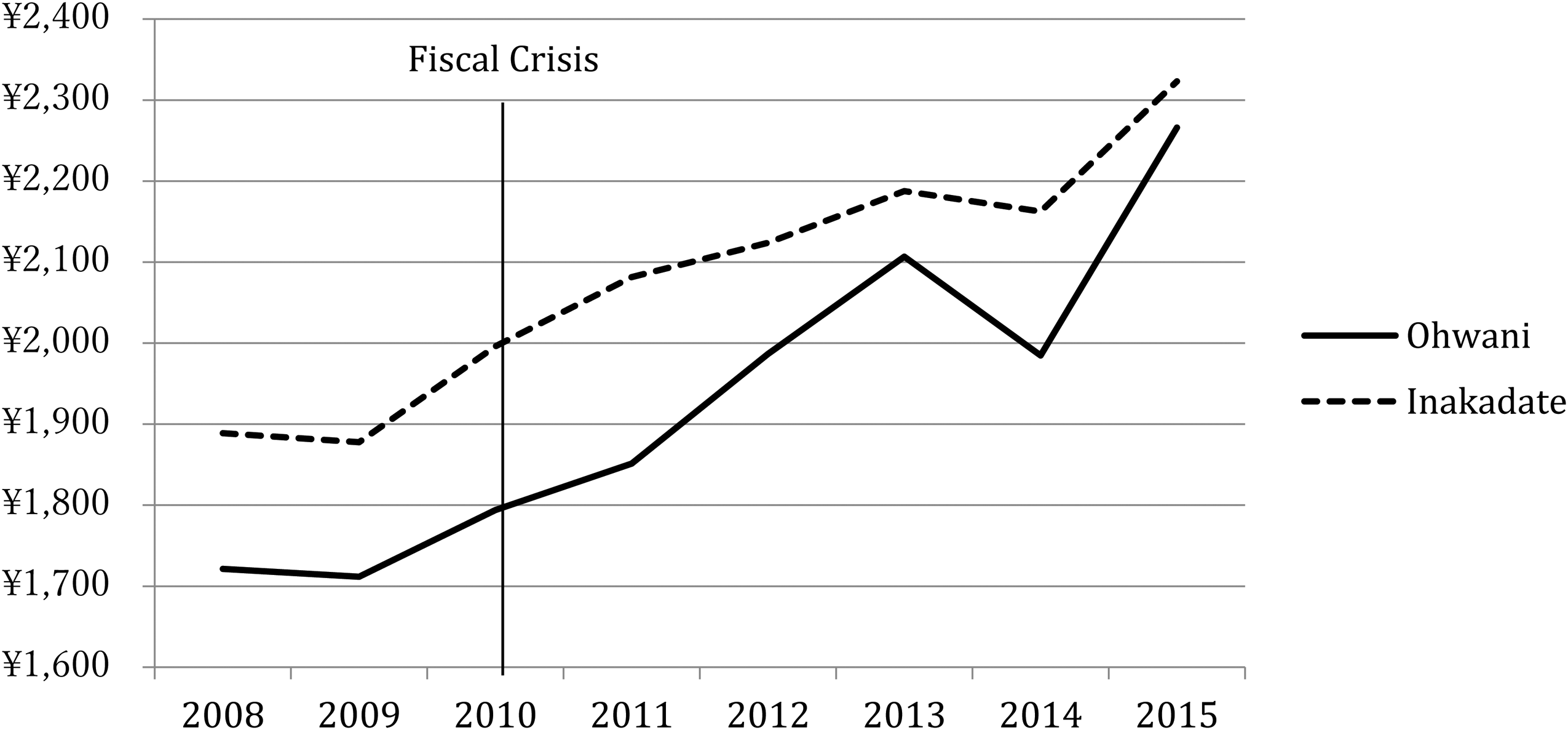
Trends of income per capita in Ohwani and Inakadate from 2008 to 2015.
Treatment: Fiscal crisis and legally mandated fiscal reform
Following the fad of New Public Management in 1989, the Ohwani government co-founded a new regional development company with private resort developers that aimed to expand ski and hot-spring facilities and establish a large resort complex. However, new and larger ski facilities were constructed nearby in the 1990s, and the Ohwani resort complex lost its popularity. Private developers withdrew from this business in 1997, and the Ohwani government became solely responsible for the finances of the regional development company. Despite its managerial efforts, this led the Ohwani government to post a 392.6% future burden rate in 2009, exceeding the ASFS criteria for fiscal soundness.
Under the supervision of Aomori Prefecture and the MIC, the Ohwani government implemented its fiscal reform to solve the fiscal crisis. The reform involved increasing the property tax from 1.4% to 1.6%, transitioning from free to paid garbage collection, a buyout of three childcare facilities and town-managed public housing, subsidy cuts for civic organizations, and a reduction in town-managed bus routes. The property tax increase was implemented from 2011, and the other reform efforts were introduced from 2010. In contrast, Inakadate, the control village, took the initiative to implement spending cuts to reduce its relatively high debt level (see Table 1) from 2004 to 2007. Since Inakadate's own relatively small spending cuts affect only the pretreatment status of citizens’ perceptions, this would not be a serious issue in the DID estimation.
After the announcement of the fiscal reform plan in March 2010, Ohwani's mayoral election was conditionally scheduled for June 2010. The election race was held between the incumbent mayor, who had designed the fiscal reform plan, and a younger candidate, who proposed a more austere fiscal policy. This tight race resulted in the same number of votes (3524) for each candidate. According to election law, they drew lots, and the new candidate won. The new administration reviewed the fiscal reform plan and proposed extending the fiscal reform from four to 13 years. However, the content of the reform plan underwent no substantial changes. The mayor subsequently won reelection in 2014 to retain the incumbency.
Mayoral elections for Inakadate were held in 2008 and 2012, and both ended with victory for the current mayor. Given that incumbent mayors ran in the elections in both Ohwani and Inakadate, the elections shared opportunities for both treatment and control groups to assess the past administration and select either the incumbent mayor or a new candidate. Thus, this study identifies the turnover of the Ohwani mayor as part of the treatment.
Causal process observation
The author resided in Ohwani town from April to October 2015 and conducted 14 semi-structured interviews. These interviews aimed to explore whether Ohwani residents were conscious of the treatment, namely, the fiscal crisis. The first two interviewees were recruited through Ohwani town officials and then asked to introduce the author to someone else who could fill the missing age cohort of the interview pool. All interviews were conducted in person and recorded using a digital voice recorder. In total, eight men and six women ranging in age from their 20s to their 70s participated in the qualitative interviews.
The interviewer first asked the interviewees to identify critical issues with the municipal management, without mentioning Ohwani's fiscal status. All the interviewees identified fiscal crisis as one of the critical issues, while their levels of knowledge of or interest in the ongoing process varied greatly. Half of the interviewees mentioned tax increases, but only two knew specifically which taxes had increased. Their interest in the service cuts was closely related to living circumstances, while few described the whole picture. For instance, interviewees who used the town-managed buses knew about the reduction in routes. Most interviewees showed more interest in assessing the political process of fiscal reform than talking about the quality of municipal services. The assessments were largely negative.
The interviewees’ assessments of the past and current mayors were closely linked to their personal histories. A female interviewee said of the current mayor's ability: “I’m skeptical about his management ability since his shop is not running well.” When discussing the council members, most interviewees mentioned one whom they knew personally and presented their positive perceptions of the member. The interviewees’ perceptions of administrative officials also varied depending on their personal experiences. A middle-aged male participant said: “[In the town hall,] officials say ‘Hello’ to me in a very soft voice…. I don't have a good impression on them.” Some participants found positive changes among the town officials. A female interviewee said: “Officials definitely became kinder and treat our requests faster after the fiscal crisis.” These interview results will be considered when developing survey tools and interpreting the experimental results.
Survey design
This study adopted a stratified random sampling of the voter registration lists of Ohwani and Inakadate. Each list contains the full name, gender, birth date and year, and address of the voters. A total of 600 subjects from Ohwani and Inakadate (300 each) were randomly selected using the random function of Excel, consistent with the gender and age composition of each residential district. Participants were between 30 and 75 years of age and had to fulfil a residence criterion for the period of interest, namely, before and after Ohwani's fiscal crisis (2009–2015). Residents who moved in or out of either municipality during the crisis were excluded from the sample.
The survey used two specific techniques to improve recall: a two-step process and memory elicitor. Specifically, the questionnaire was designed to inquire about respondents’ perceptions regarding, first, the current local government and then the past one. The present serves as a benchmark because it is generally more salient and available than the past (Pearson et al., 1992). Furthermore, at the beginning of each section, the questionnaire asked whether respondents voted in the most recent or previous mayoral election. An election can elicit memories regarding municipal management quality since it offers a shared opportunity for all participants to assess past administration (Vicente, 2010).
Even though these measures are carefully designed to elicit memories, any retrospective measures are subject to recall bias. Recall bias implies that survey participants remember their former status as better or worse than it actually was and hence provide different responses. The magnitude and direction of recall bias may vary according to participants’ perceptions of the treatment (Blome and Augustin, 2015; Hill and Betz, 2005). The negativity bias theory suggests that Ohwani citizens are likely to view the fiscal crisis as negative rather than positive. This implies that the main concern with recall in this study was an overestimation of the treatment effects. Meanwhile, it can be argued that recall is as real as ongoing attitudes (Pearson et al., 1992). To explore the bad performance–negative perception link, it is crucial to investigate how citizens view their former status before bad performance and whether their views of the past affect their current attitudes under management reform for performance improvement.
Data and measures
Data were collected in September 2015 in Ohwani and in October 2015 in Inakadate. The survey questionnaires were first mailed to the participants and collected during door-to-door visits two weeks after delivery. Door-to-door visits enabled the screening of respondents’ eligibility to participate in the survey. The overall eligibility rate of this survey was 91.17% (547 out of 600 in total; 266 in Ohwani and 281 in Inakadate). Response Rate 2 (RR2) of this survey was calculated according to the standard definition of the American Association for Public Opinion Research. RR2 was 44.06% overall (241/547), 43.98% in Ohwani (117/266), and 44.12% in Inakadate (124/281).
As presented in the conceptual framework, this study measures the five dimensions of citizens’ perception of local government as the outcome variables (see Table 2). It should be noted that blame-avoidance strategies are embedded in each measure in diverse forms. Specifically, this study measures their satisfaction with overall service quality rather than with specific public services. To minimize blame, public officials implemented tax increases and service cuts that target small groups, such as large property owners and bus users in isolated areas. The sample size of this study would be insufficient to represent the small group targeted by each service cut, while it could measure citizens’ aggregated dissatisfaction from all tax increases and service cuts.
Five measures for citizens’ performance perceptions.
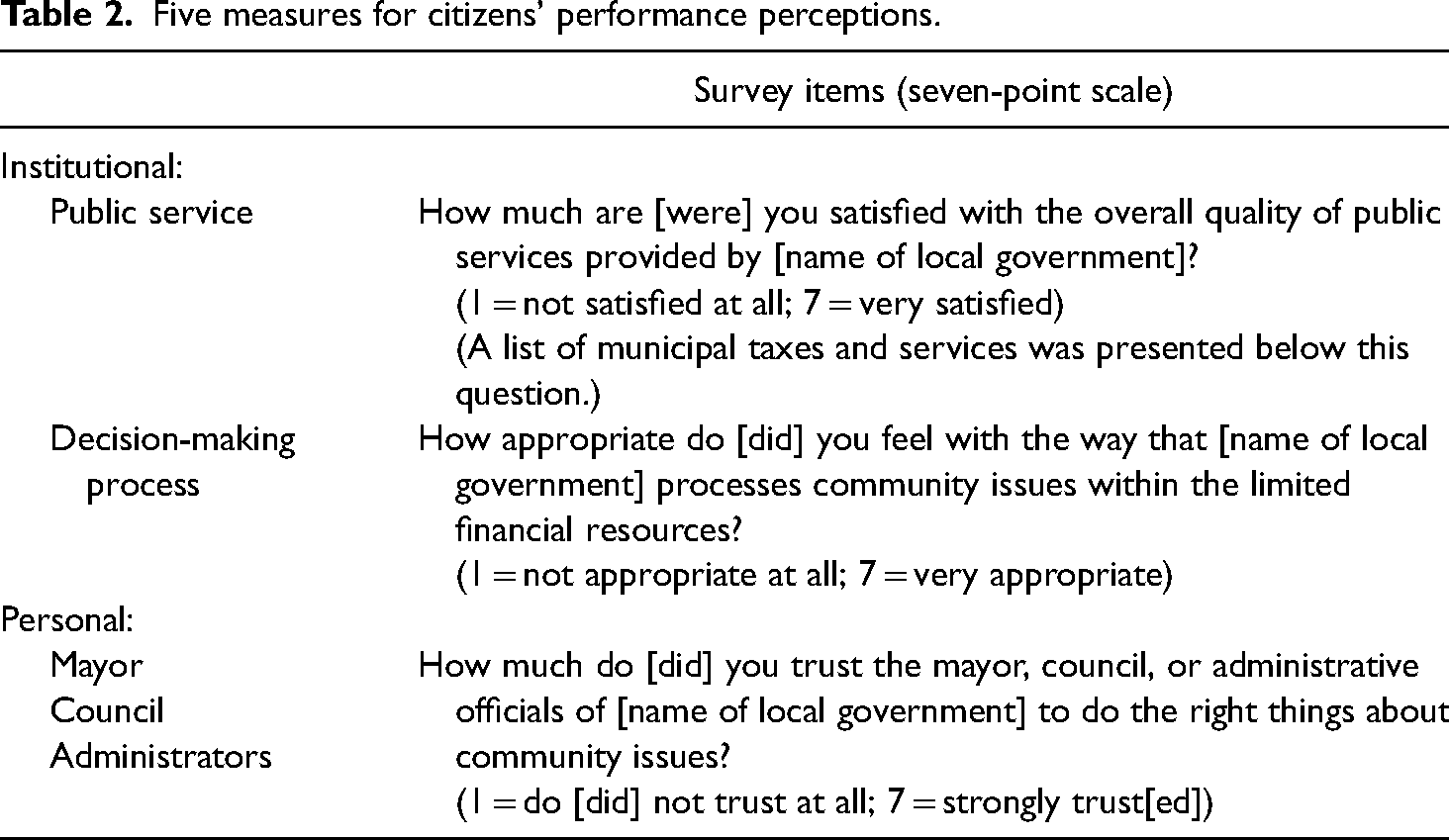
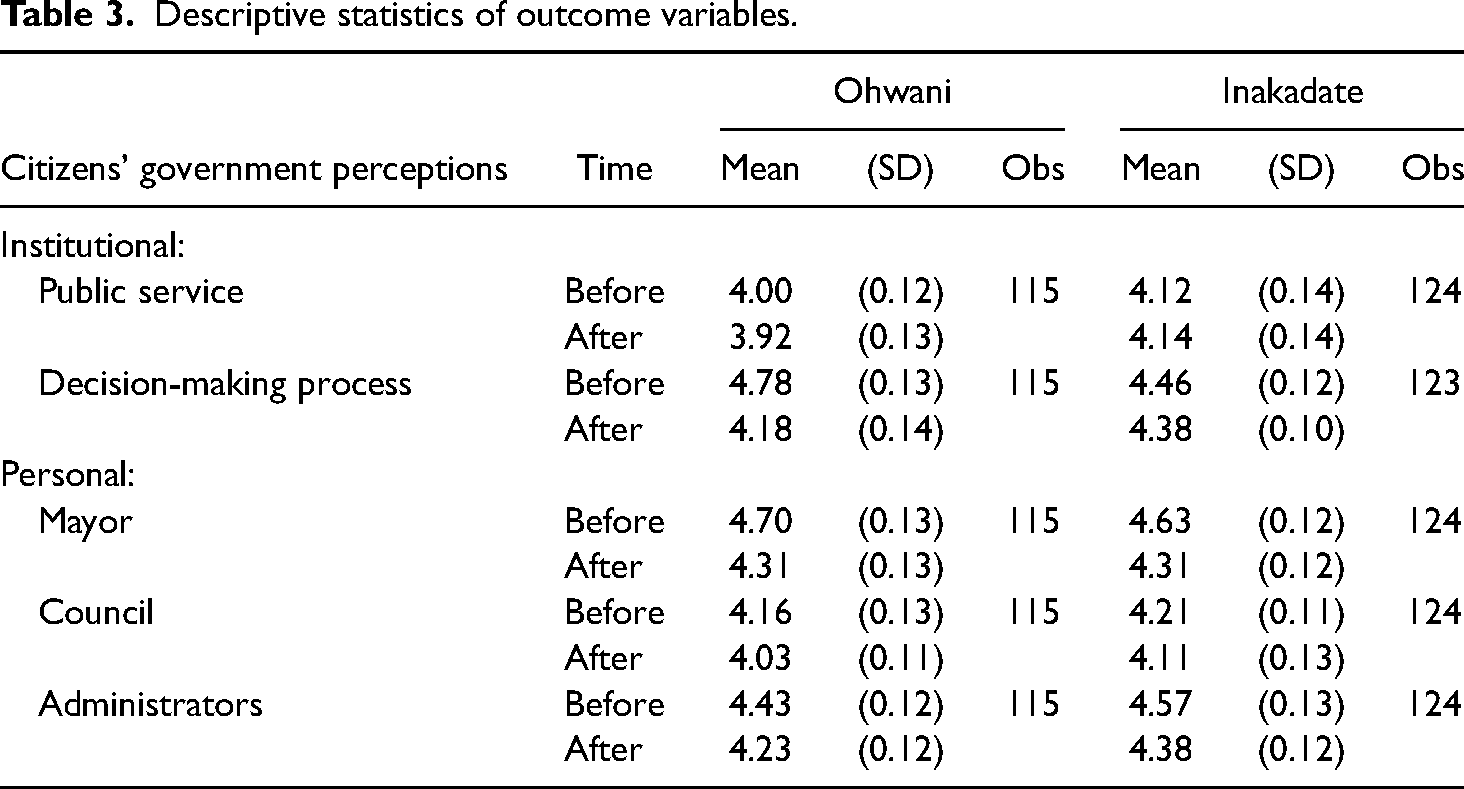
Further, the study used citizens’ perceived appropriateness of the process to measure their overall process perception. Although the “appropriateness” of the process can be measured using multiple terms, such as fairness and transparency (Van Ryzin, 2015; Young and Hassan, 2020), the interviews revealed that citizens tend to express their perception of the overall process rather than these specific dimensions. The survey items for personal trust were developed based on Cook and Gronke (2005). In the interviews, citizens tend to assess individual politicians and administrators based on their personal experiences. This suggests that blame-avoidance strategies would be embedded more in personal trust than in process perception. Government officials could utilize their strategies more in interactions with citizens than in the overall reform process. Table 3 presents descriptive statistics of the outcome variables.
Descriptive statistics of outcome variables.
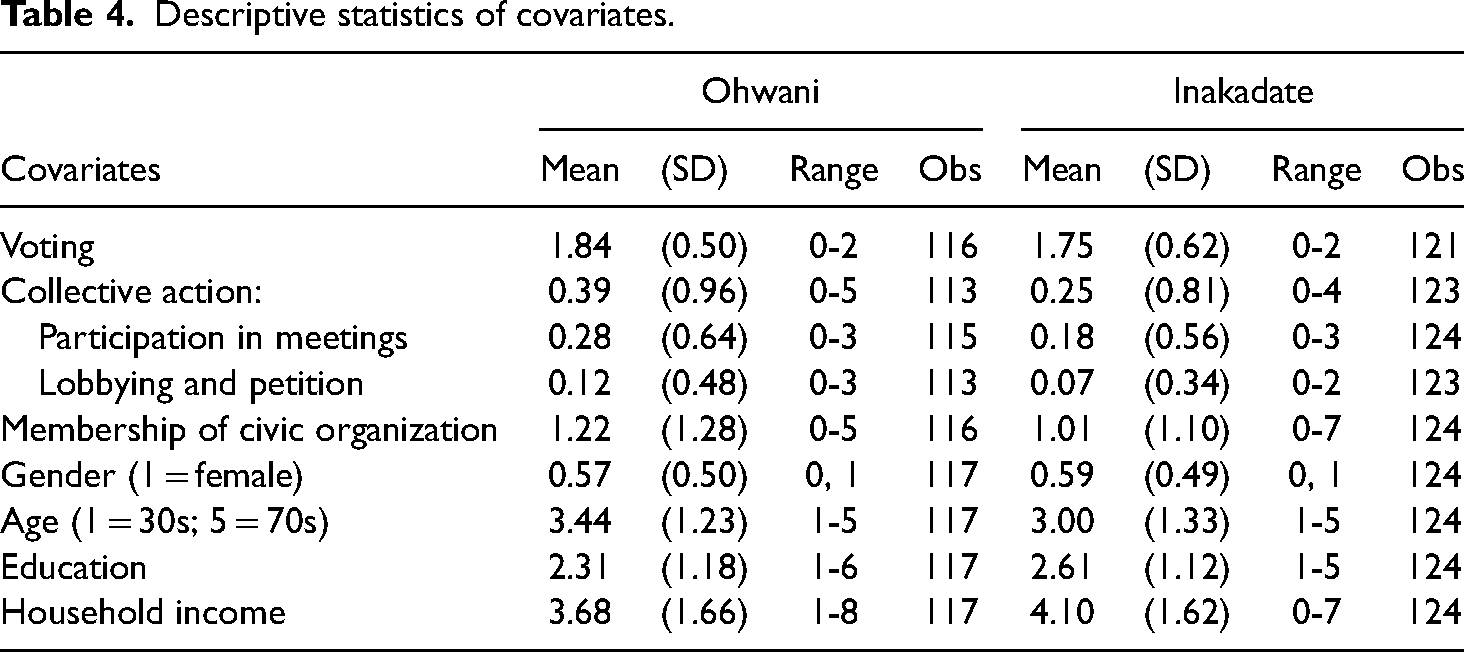
The covariates in this study were designed to test the associations between civic engagement and citizens’ performance perceptions (H6) and to control for socio-demographic factors. The levels of civic engagement were measured by three factors: voting in local elections; collective action; and membership in civic organizations. Drawing on Dowding and John (2012), the frequency of collective action was measured by the sum of the two survey items: (2) participation in public meetings; and (3) lobbying and petitions (alpha = 0.65). Additionally, it considered four socio-demographic factors as covariates: gender, age, education, and income. Table 4 summarizes the descriptive statistics for the covariates. The datasets and survey questions are available in the Open Science Framework (DOI: 10.17605/OSF.IO/UZW28). 2
Descriptive statistics of covariates.
Results
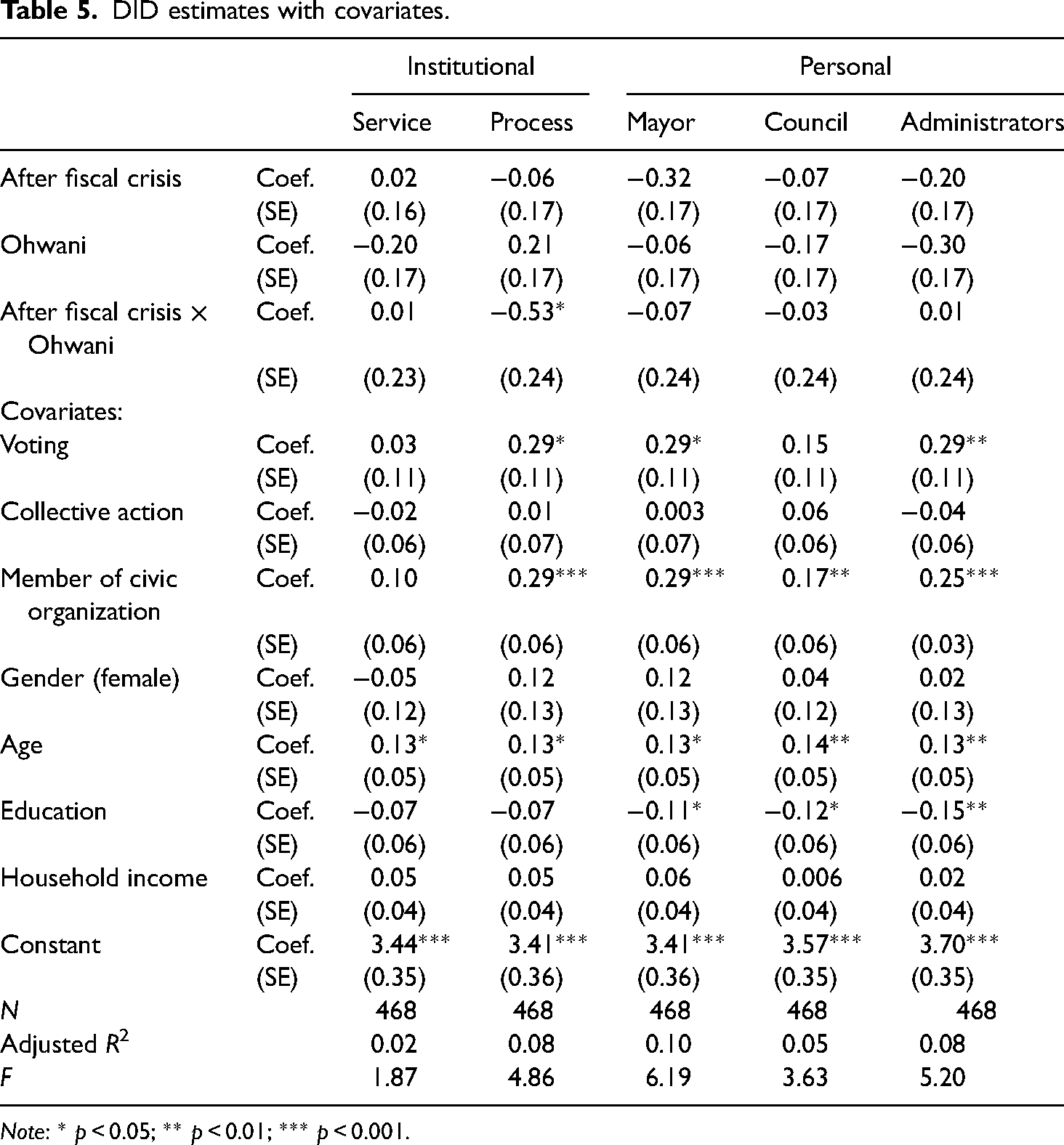
This study explores whether a fiscal crisis lowers citizens’ satisfaction with overall service quality (H1), perceived appropriateness of the decision-making process (H2), and personal trust in the mayor (H3), council (H4), and administrative officials (H5). It further tests whether levels of civic engagement are positively associated with citizens’ performance perceptions as covariates (H6). Table 5 shows the DID estimates with covariates from ordinary least squares (OLS) regressions. 3 In each model, the variable of interest is the interaction term After fiscal crisis × Ohwani. This study also conducted DID estimates without covariates (these regressions are not shown in this article). Both estimates without and with covariates presented the same results. This implies that the selection problems are at least partially solved with this quasi-experimental design. Additionally, Figure 4 visualizes the two-way interaction of the outcomes: Ohwani (treatment) versus Inakadate (control), before versus after the fiscal crisis.
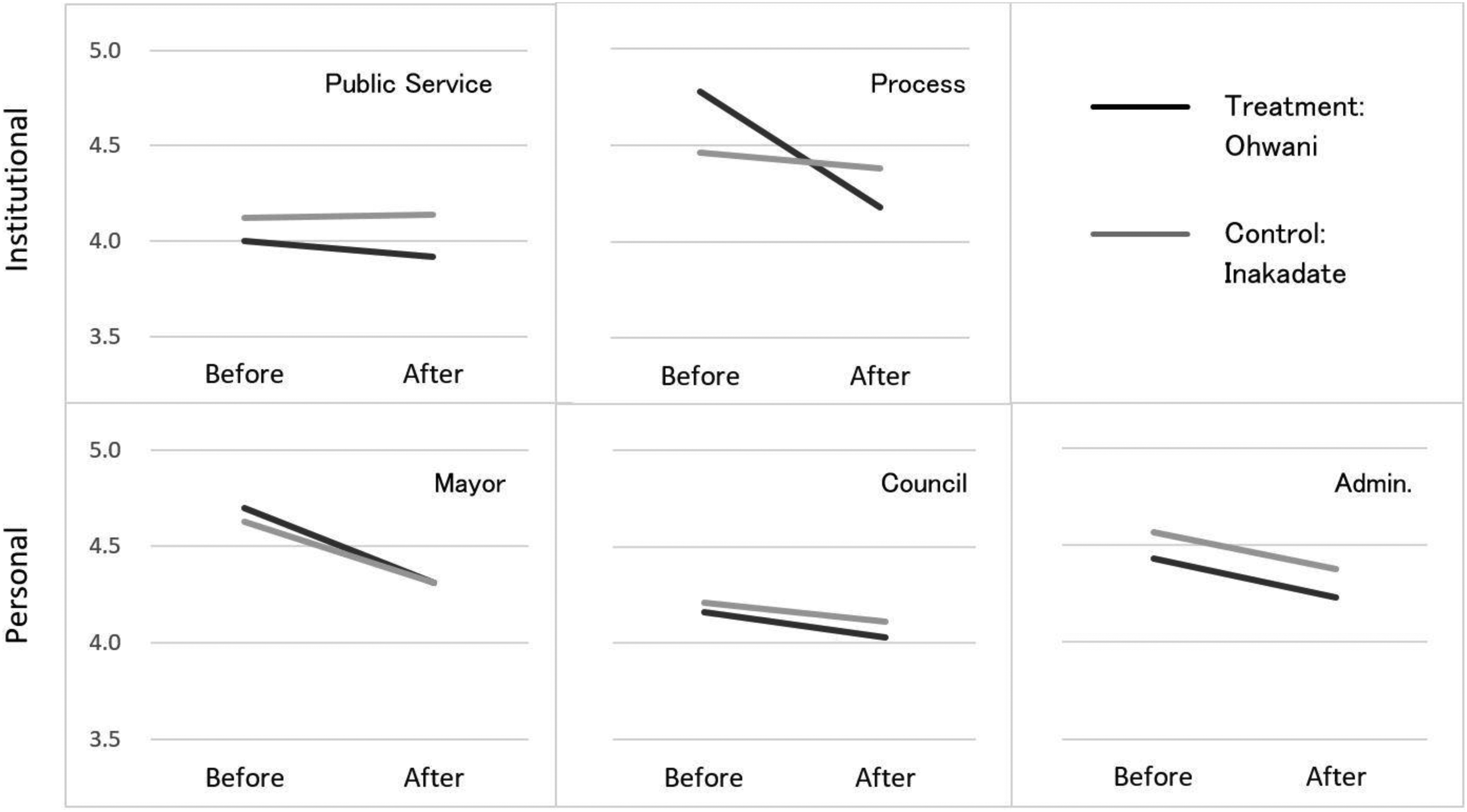
Interaction analysis—mean ratings of the outcome variables before and after fiscal crisis.
DID estimates with covariates.
Note: * p < 0.05; ** p < 0.01; *** p < 0.001.
The DID estimates show no significant changes in citizen satisfaction with overall service quality. Despite the tax increases and service cuts, Ohwani citizens did not lower their service satisfaction in comparison with Inakadate citizens (H1). In contrast, the estimates indicate negative and significant interaction terms for the perceived appropriateness of the decision-making process (p < 0.05) (H2). After the fiscal crisis, more Ohwani citizens came to perceive the government process on community issues as inappropriate than Inakadate citizens who did not experience the crisis.
The DID estimates show no treatment effects on personal trust in the mayor (H3), council (H4), and administrative officials (H5). Given the tight race in the mayoral election and turnover, the null result on H3 may be led by the diffused support of Ohwani citizens toward the then and incumbent mayors. Unlike the mayoral elections, both Ohwani and Inakadate citizens experienced relatively stable transitions in their councils. Ohwani citizens under the fiscal crisis did not reduce their trust in the council to less than that of Inakadate citizens. The null result on H5 implies that Ohwani citizens did not, in comparison, lower their trust in administrative officials. As the interviews revealed, some Ohwani citizens observed that the attitude and services of officials improved after the fiscal crisis, while others showed consistently negative perspectives toward them. Such heterogeneous treatment effects may have led to the null result.
This study further examines its associations with the levels of civic engagement (H6). Table 5 presents positive and significant associations between the membership of civic organizations and the four outcome measures (process, mayor, council, and administrative officials) and those between voting and the three outcome measures (process, mayor, and administrative officials). It is worth noting that the same results are also found in the separate OLS regressions for the treatment group (these regressions are not shown in this article). Overall, H6 is partially supported.
Discussion
Public administration scholars have long examined whether a link exists between actual government performance and citizens’ performance perceptions. However, this question remains inconclusive. Drawing on the principles of negativity bias, this study explored possibly powerful links and unique mechanisms between bad performance and negative perceptions. This study found no links between bad performance, namely, fiscal crisis, and service satisfaction and trust in local politicians and administrators. It showed only a link with citizens’ process perception. The study further found positive associations of citizens’ process perception and personal trust with civic engagement. While the quasi-experiment on two Japanese municipalities is limited and the findings cannot be generalized, theoretical implications from the findings contribute to identifying the boundary conditions in which the bad performance–negative perception link is likely to appear.
Blame-avoidance theory offers a possible path toward explaining the null results on citizens’ service satisfaction and trust in politicians and administrators (Hood, 2007). Specifically, citizens’ blame or negative attitudes toward the fiscal reform prevent politicians from being reelected and administrators from improving their fiscal status and securing their positions. To minimize blame, the Ohwani town government implemented tax increases and service cuts that target small groups, such as large property owners and bus users in isolated areas. Furthermore, in explaining the fiscal reform, politicians and administrators stress the future benefits of the reform rather than the additional burden. If citizens were to remain in the town after the fiscal crisis, they would be inclined to accept this blame-avoidance strategy. They wish or need to be positive about the future, while highly dissatisfied citizens move out (Shinohara, 2018).
It should be noted that negativity bias would not always be central in the mechanisms between bad government performance and citizens’ perceptions. For instance, expectancy-disconfirmation theory provides another path toward explaining the null result, particularly on service satisfaction (see, e.g., Van Ryzin, 2006). Ohwani citizens are likely to expect a deterioration in service quality under fiscal stress. The gap between their expectations and perceived quality would be small, and thus their judgment of overall service quality would not be changed much even during the fiscal reform. On the other hand, citizens with low expectations would respond more to good performance. A lack of links between bad performance and citizens’ perceptions does not necessarily mean that government efforts to improve bad performance are also delinked with citizens’ perceptions.
The key question in this study's findings is why only citizens’ process perception became more negative during the fiscal crisis. This implies that the process might be more influential on citizens’ perceptions than policy or service outputs in the case of bad performance (Hibbing and Theiss-Morse, 2002; Van Ryzin, 2015). The qualitative interviews support this implication by showing Ohwani citizens’ higher attention to the fragmented process of fiscal reform than to the decline in service quality. Citizens’ evaluation might rest more on the process of how the government improves its performance than the current decrease in service quality. In contrast, when most citizens recognize direct benefits from taxation and service delivery, they may not pay much attention to the decision-making process. Furthermore, blame-avoidance strategies would not effectively mediate the growth of negative perceptions of the process because most government officials cannot control collective decision making.
Finally, citizens’ process perception and trust in elected and nonelected officials are positively associated with participation in local elections and civic organizations. In Ohwani town, whose population is about 10,000, citizens directly interact with elected and nonelected officials through electoral campaigns and civic activities. Such firsthand interactions may alleviate citizens’ negative perceptions of fiscal crises. This implies that participatory governance could be a moderator for the bad performance–negative perception link. Additionally, participatory governance is more likely to exist in smaller municipalities due to the lower administrative burden (Chudnovsky and Peeters, 2021). Aoki (2018) also presents the case of a small Japanese town where participatory governance enabled citizens and local officials to recover the town from severe earthquake damage. A small municipality size can be seen as an unnecessary but sufficient part of participatory governance that weakens the bad performance–negative perception link (Mahoney, 2008).
Conclusion
This study theoretically centered on negativity bias and empirically explored the bad performance–negative perception link using an actual case of local fiscal crisis in Japan. The core implication from the findings is that actual bad performance would be delinked or linked with citizens’ performance perceptions depending on the configuration of other conditions, including blame-avoidance strategies, participatory governance, and the size of the municipality (Rohlfing, 2012). Blame-avoidance strategies would alleviate citizens’ negative perceptions under participatory governance in which citizens have accessible opportunities with government officials. However, under a fiscal crisis, the local government is required to discuss whether to raise taxes and which services to cut. Since such a process is out of the control of most officials, citizens’ negative perception of the process might grow without blame-avoidance strategies. These managerial contexts of each bad-performance case would form unique causal mechanisms for citizens’ perceptions. In addition to the extant survey experiments, further exploration of actual cases of bad government performance would contribute to understanding the mechanisms of citizens’ performance perceptions and to developing behavioral public administration.
Footnotes
Declaration of conflicting interests
The author declared no potential conflicts of interest with respect to the research, authorship, and/or publication of this article.
Funding
This work was supported by the Keio University Academic Development Funds for Graduate-Level Developmental Research (grant number FG21004).
