



Abstract
Co-production is the involvement of citizens in the design and delivery of services. In primary schools, this involves parents working with teachers to improve the educational development of their children. In this contribution, we present the results of a systematic literature review on co-production in primary schools to establish what research has been conducted and to what extent there is evidence on the effectiveness of co-production in this context. After three subsequent steps of literature selection, an initial database of 3121 articles was reduced to 122 articles which were then carefully analysed. Generally, co-production in education tends to be aimed at specific groups, which makes it hard to generalize, but some findings appear more generally applicable. Co-production does appear to improve students’ knowledge acquisition. Parent–teacher relationships can be difficult and ambiguous, but teacher training appears to be an effective tool for improving co-production.
Points for practitioners
Although co-production in schools is increasingly popular, it has been tested mostly for specific socioeconomic groups. Further testing is necessary to know whether it would work as a mainstream method. Co-production in school requires a tailor-made approach. The evidence suggests that it is only effective if it is adapted to the specific context. It is therefore misleading to speak of co-production in schools as a single phenomenon; there are many different types of co-production in schools. Investing in teacher training turns out to be helpful in overcoming initial resistance.
Introduction
Co-production is the involvement of citizens in the design and delivery of services. Examples can be found in various areas such as employment, housing, health care and safety (Brandsen et al., 2018; Verschuere et al., 2012). In primary schools, co-production involves parents working with teachers to improve the educational development of their children. In this contribution, we present the results of a systematic literature review on co-production in primary schools to establish what research has been conducted and to what extent there is evidence of the effectiveness of co-production in this context.
Research on co-production has matured considerably in recent years. In its early days, it consisted of early explorations of the topic – particularly associated with the work of Ostrom (1996) and later Pestoff (2006) and Alford (2009). In subsequent years, these were accompanied by a number of mostly small and qualitative cases demonstrating the relevance and potential benefits of this type of participation (for instance, those bundled in Pestoff and Brandsen, 2008; Pestoff et al., 2012). More recently, there were efforts to make research in this area more systematic and rigorous, to move from agenda-setting to fact-finding. A number of methodologically more diverse and sceptical studies emerged examining effects of co-production, for instance on trust (Fledderus et al., 2014), and motivation (Van Eijk and Steen, 2016) and inclusiveness (Clark et al., 2013).
However, despite these improvements, general co-production research often still misses a major source of evidence, in that it is insufficiently informed by specialist research on services. In many areas, there is already evidence of the effects of citizen involvement, but due to differences in terminology, networks and language, we remain ignorant of it. Through a literature review, we have tried to reduce our knowledge deficit in at least one important area, which is primary education.
The presumed effects of co-production in schools
If co-production is implemented in schools, parents are no longer treated as passive clients observing the educational development of their children, but as active participants in the process (see Osborne and Strokosch, 2013). In education research, active parental participation in children’s schooling has often been assumed to positively affect academic achievement of children (e.g. Baeck, 2010; Coleman et al., 1996; Epstein, 1987; Epstein and Dauber 1991; Harris and Goodall, 2008). Epstein (1987) developed a theory of overlapping spheres of influence of families and schools on students’ learning that asserts that pupils learn more and succeed at higher levels when home, school, and community work together to support pupils’ learning and development. This made an essential early contribution to the debate on parental involvement, although other approaches have since become dominant. Active parental involvement is also considered to be a part of the solution to narrow the achievement gap between groups across racial, cultural and socioeconomic divisions (Edwards and Kutaka, 2015). For these two reasons, today parental involvement forms an integral part of the educational policy paradigm in the Western world.
Question and contribution
The question then arises: what is the scientific evidence on the actual effects of parental involvement? Do we know whether the expectations regarding co-production in schools are realized? We have tried to answer this question by conducting a systematic literature review of education research and mirror it with co-production research. In our analysis, we will provide an overview of the topics discussed and evidence presented in the conceptual papers, review studies, policy analyses and empirical papers on co-production research. In this, we will not only show but also reflect on how broad this evidence is. As we will demonstrate, there is some evidence of the effects of co-production, but it is uneven and in some respects biased.
Our contribution to co-production research is twofold. First, we add to existing co-production research by looking into a field where co-production, defined as parental involvement, is all but new. Policy initiatives to get parents involved date back to the 1980s. Moreover, all children have to attend primary school, which makes the educational sector a logical sector to learn from and test the assumptions about co-production. While research into childcare services is comparatively well developed (e.g. Jakobsen and Andersen, 2013; Porter, 2012; Vamstad, 2012), primary schools have attracted less academic attention in co-production research. This may reflect the different roles of parents: in childcare they far more often run and/or own the facility.
Our second contribution is to encourage cross-fertilization of the findings from education research with the more general research on co-production. The findings from the former rarely penetrate to the latter, although parental involvement has been studied extensively. It would be a pity to miss out on such an important source of evidence.
In the next section we will explain how co-production in primary schools can be defined. Next, we will explain the exclusion and inclusion criteria during the subsequent steps of the systematic literature review. Finally, we will present our results and reflect on their implications.
What is co-production in a primary school?
In this article we define co-production as ‘a relationship between a paid employee of an organization and (groups of) individual citizens that requires a direct and active contribution from these citizens to the work of the organization’ (Brandsen and Honingh, 2016). This excludes those activities that are generally beneficial to the service and indirectly helpful for the mission of the organization, but do not involve interaction with the professional. For instance, reading bedtime stories or preparing proper breakfasts are ways in which parents demonstrably advance their children’s learning abilities; however, they are not co-production in that they do not involve a joint effort with teachers.
In this article we focus on activities that are directly related to the school’s core activities (e.g. remedial teaching programmes, where parents together with staff define learning objectives and learning activities), not on complementary co-production activities (e.g. organizing extra-curricular activities such as school excursions). Only in the former case can we expect the interaction to substantially affect or modify the service provided by the school (Averill, 1973: 287).
We will examine two core goals of the service, derived from the work of Biesta (2013). 1 The first is qualification through the acquisition of knowledge. This is a school’s obvious function: the implementation of the official curriculum (the reading, writing and arithmetic part). Learning goals are formulated; teachers instruct and assist pupils in the learning process. Parents can contribute to this by assisting with homework, additional reading classes, and also by helping to develop programmes for remedial teaching.
The second goal is socialization – inducting pupils into cultural traditions. The role of the teacher is not only to impart knowledge and technical skills, but also to help students become active, responsible and socially engaged citizens. In many countries, citizenship development is an explicit and compulsory subject (Euridyce, 2005, 2012). Pupils acquire citizens’ skills during regular lessons, but also during sport activities, exchange programmes, excursions and projects. Therefore the socialization of pupils often remains an implicit effect of school activities (Willemse et al., 2015), which in turn makes it difficult to determine the contributions parents can make to it.
Methodology
Systematic review methods allow a comprehensive assessment of the state of the art by applying rigorous, objective and transparent steps, as well as criteria for reaching conclusions from a body of scientific literature (Petticrew and Roberts 2006). In contrast to traditional literature reviews, a systematic literature review avoids intentional or unintentional bias in the selection of publications by identifying all potentially relevant literature through transparent and explicit steps. In public administration, such systematic reviews are increasingly popular. They enable identification of areas where substantial progress has been made and where future research could be directed (De Vries et al., 2016; Voorberg et al., 2015).
First, we designed review protocols to ensure a transparent and rigorous selection of studies. Because academic discussions on parental contributions are dispersed, the review started with a broad range of keywords to capture co-production and the relationships between parents and schools. Three review studies (Bakker et al., 2013; Desforges and Abouchaar, 2003; Jeynes, 2012) as well as Epstein’s (1987) paper about different modes of parental involvement were instrumental in delineating a comprehensive list of search terms to conduct the meta-review. The search terms were kept deliberately broad to capture the full bandwidth of studies that address parents’ contributions. A Boolean search was carried out using the keywords (parent* AND (co-product* OR involv* OR engag* OR partnership OR co-operat* OR participat*) AND (education* OR school*)). We performed the search in two complementary databases, Web of Science and Education Resource Information Centre (ERIC), in March 2016. Two separate primary reference databases were constructed. There was no overlap between the two datasets. The data were selected in four steps (see Figure 1).
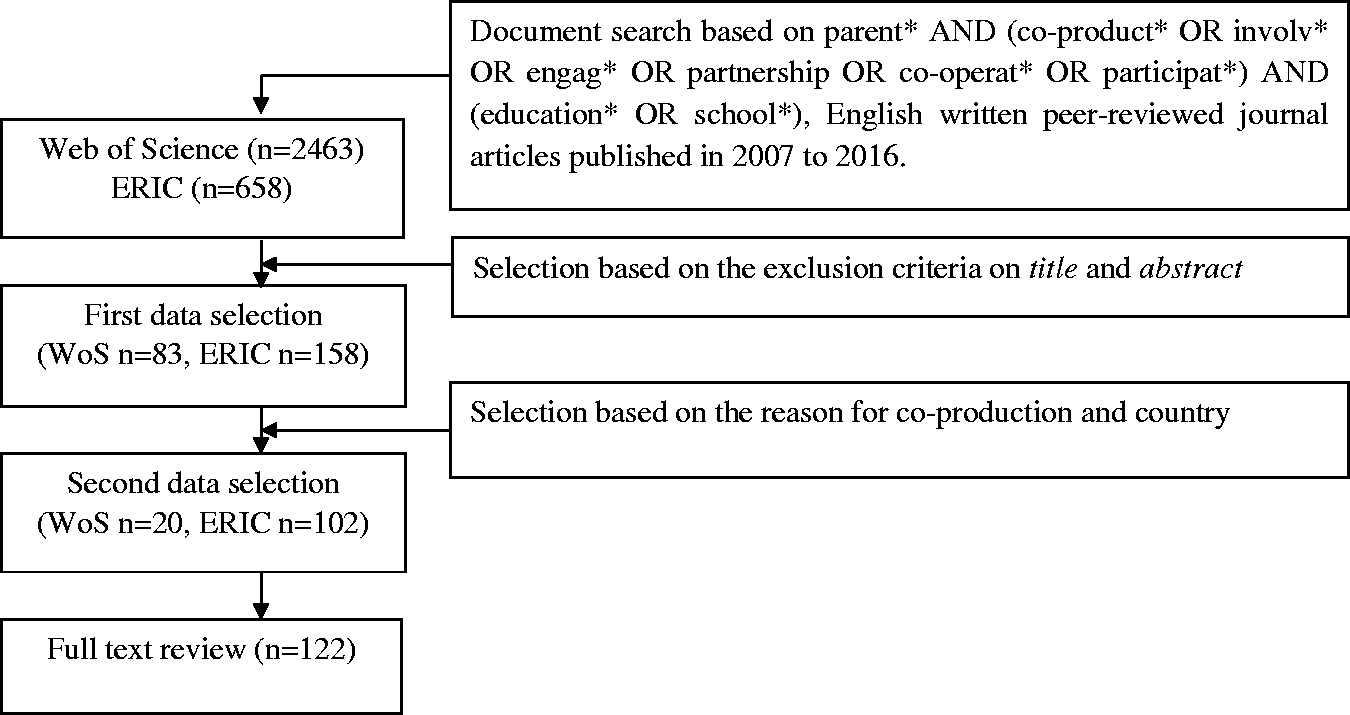
Schematic representation of the systematic literature selection process
To begin with, literature was selected on the basis of the following inclusion criteria. First, reviews, editorials, peer-reviewed papers, published and Online First, to ensure the quality of the papers included. Second, the sample included English written papers published from 2007 to 2016. The sample only included papers from the social sciences domain. This yielded 2463 articles in Web of Science and 658 articles in ERIC.
Next, the abstracts were subjected to further analysis based on three exclusion criteria. First, we limited our sample to articles with an explicit focus on the relationship between co-producers and service providers; barriers and facilitators to parental involvement; and the governance of parental involvement. Second, we only included articles that dealt with children of in the 4–12 years age range. This yielded 83 articles in Web of Science and 158 articles in ERIC.
After this, the abstracts were further sifted based on the reasons for engaging in co-production. We made an inventory of articles that examined co-production in case of any particular specific behavioural problems, for example, violent behaviour or bullying among children, or personality disorders such as autism and ADHD, but did not include these papers for further analysis (N = 63 in Web of Science, N = 56 in ERIC). This is because our aim was to analyse co-production initiatives with the ambition to involve different types of parents and not only the parents of children with specific individual needs. It is well documented that the ties between teachers and parents of children with specific needs are relatively stronger and that they have more frequent contact. However, if we are interested in co-production as a potentially mainstream method in primary schools, it is necessary to focus on children without such special needs. Following this line of reasoning, we also excluded co-production with specific health objectives (e.g. nutrition programmes, counter-obesity programmes). Finally, we only included articles covering developed countries, to ensure a reasonable level of comparability. This yielded 20 articles in Web of Science and 102 articles in ERIC.
Finally, we carefully analysed the full texts of these 122 papers. We designed a data extraction table to systematically collect data to answer the research questions. It included the following categories: bibliographic information, focus of the study, methodology, theoretical orientation, mode of co-production, organizational barriers and facilitators, and the relation between teachers and parents.
Although we aimed to be as comprehensive and transparent as possible, there were some limitations to our approach that need to be considered (Petticrew and Roberts, 2006). Only peer-reviewed publications were included to ensure scientific and methodological rigour. Including grey literature might have yielded additional insights, although it would have raised other challenges. The review only included two scientific databases: other databases could have provided additional results, though again at a potential cost to validity. Finally, the review was limited to English-language material only, for practical reasons.
Analysis
First, we provide an overview of countries considered in the sample. Then we will proceed with an overview of the topics discussed in the conceptual papers, review studies, and policy analyses. Finally, we will discuss what empirical issues stand out and what effects of co-production have been documented so far.
In the sample (n = 122), over half of the papers were about the United States (58 percent), followed by the United Kingdom (7 percent), Australia (5 percent) and South Africa (4 percent). The gap between the numbers of studies examining the top two countries, the US and UK, and the rest is very large indeed (see Table 1). It is hard to say exactly to what extent this reflects the methodological choice of language or the actual attention paid to co-production in schools. However, the policy discussions (see below) indicate that it may be partly the latter.
Countries in the sample.
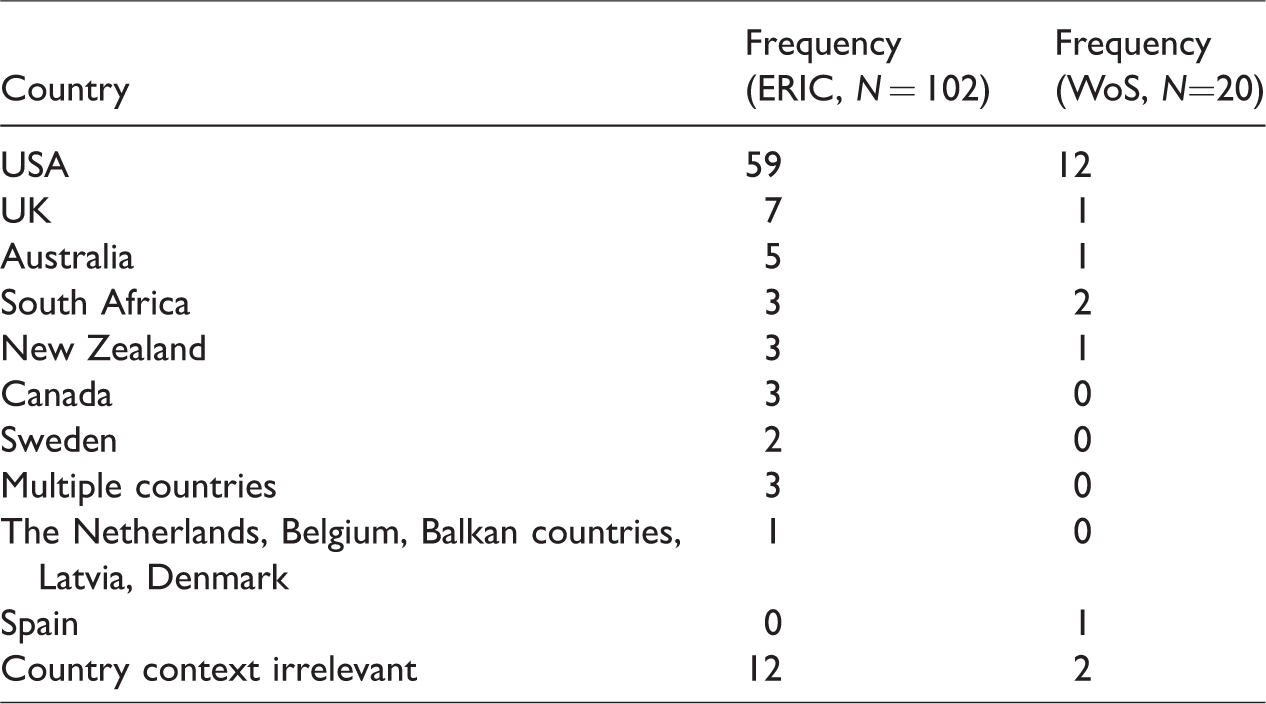
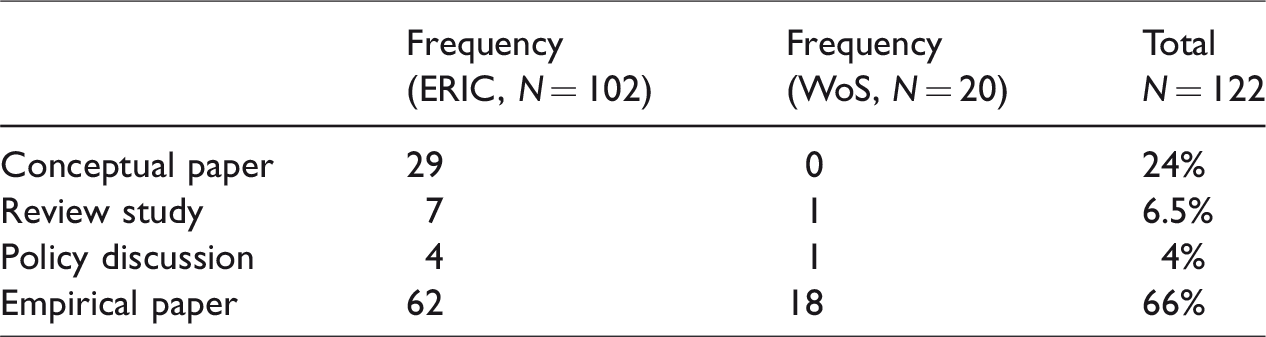
Table 2 shows that the majority of papers were empirical and a quarter conceptual. There were far fewer review studies and policy discussion papers. We will briefly attend to the content of conceptual papers, review studies and policy analysis before zooming in on the empirical research of co-production in primary education.
Types of papers.
Conceptual papers
In the conceptual papers we noticed a strong focus on theoretical reflections on the assumptions underlying co-production and the diverse interpretations of parental activities in and around school (Daniel, 2011; Pushor, 2012). A majority of conceptual papers addressed the question how to build stronger relationships between the home and the school (Kirshner and Jefferson, 2015; Wilkins and Terlitsky, 2016), especially among papers looking into ways of getting disadvantaged groups involved (LaRoque, 2013; Carnie, 2013; LaRocque et al., 2011; Gonzalez et al., 2013; Wegman and Bowen, 2010). In some of the papers, specific guidelines were presented for teachers on how to put parents at ease or improve communication (Ratcliff and Hunt, 2009).
Review studies
The review studies were very diverse. Almost half had a relatively narrow focus, sharply contrasting with prior literature reviews that provided a general overview (e.g. Bakker et al., 2013; Desforges and Abouchaar, 2003). For instance, one study focused on the involvement of Latino parents in mathematics lessons (Lopez and Donovan, 2009), another on involvement in language skills training (Baird, 2015), yet another focused on involving parents in rural areas in the US (Semke and Sheridan, 2012). Jeynes (2010) reviews parental styles at home, arguing that the more subtle aspects of parental behaviour (e.g. offering structure and support) are more important than overt behaviour, such as the time invested in school tasks and homework.
Policy discussions
The articles on policy discussions revealed marked differences between countries in terms of how co-production is embedded in policy debates. In a country like Denmark (Knudsen and Andersen, 2014), the discussion about the kinds of responsibilities that could be delegated to parents was just unfolding, whereas in the UK and the US it already had a considerable history.
The historical development of school governance policy in the UK shows an increasing interest in stakeholder involvement as a precondition for a well-functioning school (Ranson, 2011). A narrative analysis shows the policy debate moving from the relation between social class and school success in the 1960s, through the discourse of accountability in the 1970s, marketization in the 1980s and 1990s, to a recent interest in direct interventions into parenting and the regulation of school relations with parents (Bridges, 2010). In the US, collaboration with parents is legally required for pre-service teachers' graduation (De Bruïne et al., 2014; Willemse et al., 2016). Moreover, there is a strong mobilization of parents at the grassroots level to advance a school reform agenda (Manno, 2012). Parents organize themselves outside of the traditional Parent Teacher Association, which allows them to challenge the conventions of the public education system.
Empirical papers
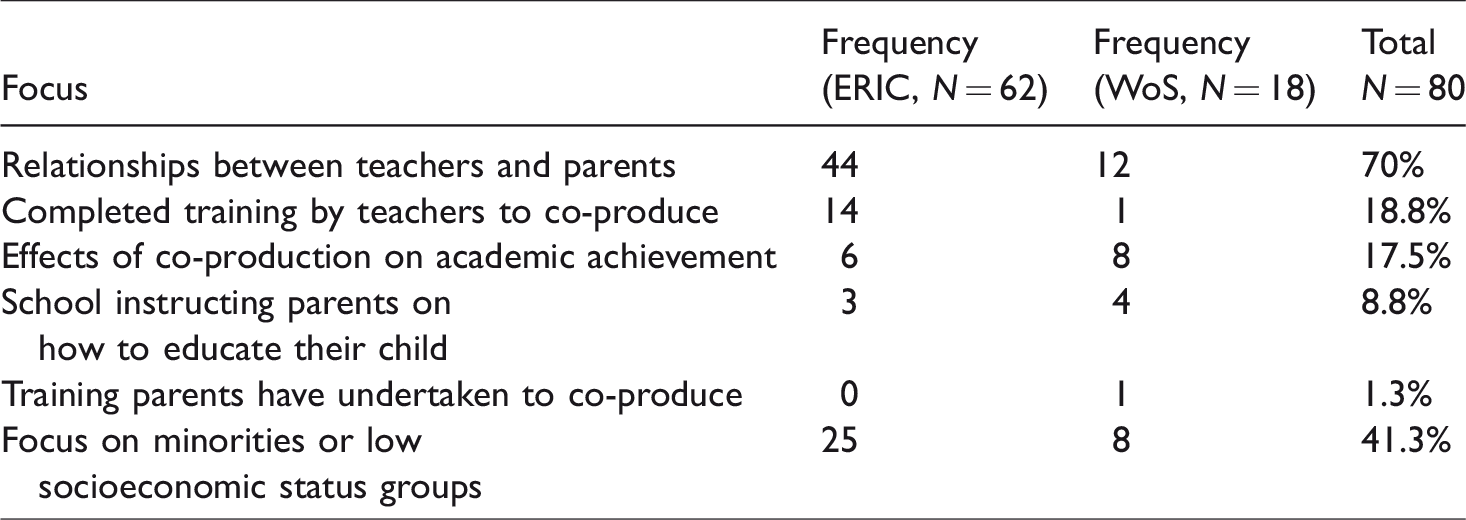
Table 3 presents the main issues in the 80 empirical papers. About 70 percent of the articles discussed the relationships between parents and teachers. Almost 19 percent of papers focused on teacher training, but there was only one paper on parental training. Again, almost 19 percent of empirical papers examined the effects of co-production. More than 40 percent of empirical papers focused on special groups of parents – minorities or low socioeconomic status. We will now briefly describe the main five issues arising from these different types of papers.
Focus in the empirical studies.
Antecedents of coproduction in primary education
There were a number of typologies of how parents can be involved in and around schools (e.g. Hutsinger and Jose, 2009), but most studies still refer to Epstein and Dauber’s (1991) six categories of parental involvement (involvement in basic obligations at home; school to home and home to school communications; assistance at the school; assistance in learning activities at home; involvement in school decision-making, governance and advocacy; and collaboration and exchange with community organizations).
However, regarding the mechanisms contributing to better academic achievements and effective parental involvement, the studies were diverse and inconclusive (e.g. Martinez-Cosio, 2010). They examined the impact of socioeconomic status, home literacy, organizational factors, the role of school leaders (Auerbach, 2009; Pridham and Deed, 2012) and the extent to which government policies are perceived as supportive. Four papers also reflected on the mutual expectations between teachers and parents regarding parental involvement (Christianakis, 2011; Coco et al., 2007; Ma Rhea, 2012) and the dominance of white middle-class ideas about the proper role of parents, and mothers in particular (Widding, 2013).
Indeed, many studies explored the social causes behind (a lack of) co-production and referred to Bourdieu’s notion of social capital (e.g. Curry and Adams, 2014; Shoji et al., 2014). They questioned teachers’ notions about parent involvement, poverty issues and disadvantaged groups (Frempong et al., 2011) and discussed the implications of the different resources parents could make available to their children. They reflected a search for mechanisms to compensate pupils and their parents for disadvantages that might be related to ethnic or cultural backgrounds or economic disadvantages (Hands, 2013; Stofile et al., 2014).
The parent–teacher relation
Other studies explored the effect of the parent–teacher relationship on co-production. Generally, they tended to show that how teachers evaluate pupils and how they react to parental involvement relates to demographic and class characteristics (Dumais et al., 2012; Steiner, 2014). They also reported a negative attitude towards parental involvement on the part of a number of teachers (Flanigan, 2007; Wood and Olivier, 2011). These viewed parents in a negative light, an attitude which stood in the way of cooperative relationships (Wood and Olivier, 2011). This, in turn, was influenced by cultural differences and a lack of skills on how to deal with such differences (Flanigan, 2007).
Several articles examined how schools instruct parents on how to educate their children. Although this does not represent a classic co-production relationship, these articles gave some insight into how schools perceive the partnership. A Danish study showed the potential ambiguities: the school allowed parents to define their own responsibilities, while simultaneously interfering by limiting potential responsibilities (Knudsen and Andersen, 2014).
Training teachers to co-produce
A major theme in empirical papers was how to train teachers to improve their skills in building school–parent partnerships. Various studies acknowledged that there is not yet enough attention for the development of such skills in the teachers’ initial training (De Bruïne et al., 2014; Flanigan, 2007; Willemse et al., 2016). The teaching programmes that do pay attention to the development of family–school partnerships usually focus on communication with parents (Jensen, 2007; Willemse et al., 2016). These have role-playing activities designed to expand teachers’ understanding and skills in partnering with parents (Mehlig and Shumow, 2013).
Experimental studies testing different training programmes to enhance the co-production skills of teachers reported promising results. There is a positive change in teachers’ attitude towards school–family partnerships after completing such programmes (De Bruïne et al., 2014; Hedges and Lee, 2010). Treatment group members articulated a theoretical and practical understanding of the benefits of family involvement. They emphasized the importance of collaboration between home and school, whereas control group members expressed antagonism and ambivalence toward families (Bartels and Eskow, 2010; Flanigan, 2007; Warren et al., 2011; Zygmunt-Fillwalk, 2011). Moreover, the experiments show that such programmes provide teachers with practical guidelines on how to involve parents and different types of families.
Finally, there are studies with practical tips for teachers to build stronger relationships with families (Egbert and Salsbury, 2009; Foster, 2012). For instance, there are American studies with detailed practical guidelines on how to address migrant families (Auerbach, 2011; Colombo, 2007).
The effects of co-production
A sizeable number of studies examined the effects of co-production on knowledge acquisition. A wide variety of effects have been measured: maths scores and the extent to which parents show that they are interested in maths education (Martin et al., 2015; Sheldon et al., 2010); the effects of involving parents in literacy programmes (Altschul, 2011; Robledo-Ramon and García Sanchez, 2013; Sylva et al., 2008) and the effects of home visits (Stetson et al., 2012).
The effects of parental involvement programmes are relatively well documented. However, the aim and target groups of programmes vary considerably, which complicates comparability. Some programmes were developed to raise the language, maths or writing skills of pupils, others to train and empower parents, yet others to help parents and teachers develop joint strategies, rules and guidelines necessary to help children realize their full potential (see also Feiler et al., 2008). Programmes for parents to assist them in helping children with maths (Sheldon et al., 2010) and literacy (Bierman et al., 2008; Robledo-Ramon and García Sanchez, 2013) were found to contribute to a significantly higher level of academic success (Robledo-Ramon and García Sanchez, 2013).
We found only one study on the effects of co-production on socialization, the other core goal of schools (Bierman et al., 2008). This found a positive association between parents’ training programmes on how to assist their children and the latter’s emotional understanding, social problem-solving capabilities and social behaviour.
Target groups of parents
Finally, there were a large number of studies that focused on how schools could support the engagement of parents from specific socioeconomic and demographic groups.
One type of study examined co-production with parents in socially and economically disadvantaged neighbourhoods, by providing them with the necessary knowledge, skills and confidence (Dawson-McClure et al., 2015; Reece et al., 2013; Sylva et al., 2008). These studies overwhelmingly reported that, after completion of the programmes, participating parents remained successfully involved in their children’s education (Dawson-McClure et al., 2015; Reece et al., 2013). They also showed a significant effect of the programmes on children’s reading and writing skills, as well as parents’ strategies to help children read (Sylva et al., 2008).
Other, partially overlapping studies focused on co-production with parents from different ethnic and minority backgrounds (Jeynes, 2003), for instance, Chinese (Hutsinger and Jose, 2009), Latino (Lopez and Donovan, 2009) and Korean parents (Lim, 2012), showing how their cultural traditions affect their opinions on and involvement in their children’s educational development. This research on immigrants and minority groups came predominantly from the US, but not uniquely so. Similar studies came from other countries such as Sweden (Dahlstedt, 2009) and the UK (Niehaus and Adelson, 2014). Here some cultural differences emerge, as in the relatively school-centred nature of the Swedish approach, where schools still determine the rules of the game (Dahlstedt, 2009).
Conclusion
The evidence on the nature of co-production, its potential benefits and its effects on educational quality is still far from mature. This systematic literature review helps to alleviate this, by allowing us to learn from work done in the field of educational studies that remains mostly unknown in general co-production research. The main purpose of this article was to bring together different streams of literature and analyse the evidence on the effects of co-production in primary schools.
The review shows that, although there are many experiments with co-production, it is still far from becoming a mainstream instrument in education policy. Where it is being put into practice, it is often focused on specific socioeconomic or demographic groups, as a means to get these groups involved and to narrow achievement gaps for disadvantaged groups. This inevitably limits the external validity of research findings, because it is often unclear how specific approaches will affect the education process and teacher–parent relationships in other contexts.
Nevertheless, the analysis does suggest some findings that hold up more generally. Co-production appears to improve education with respect to knowledge acquisition, but little is yet known about how it affects socialization. Teachers can be hostile to parental involvement, but it is hard to draw firm conclusions on this point, as the parent–teacher relationship is contingent on many individual, cultural and institutional characteristics. What the evidence does suggest is that training teachers to co-produce can be an effective method to overcome initial resistance. In parallel, studies overwhelmingly report that the completion of a parent training programme offers target group parents the means to become more involved in the educational development of their children and that their involvement benefits their children’s reading and writing skills.
All in all, it appears (inevitably) that more systematic comparative research is needed. Nevertheless, the findings from the literature review do add valuable insights to our knowledge on co-production. This especially concerns effects: although co-production research has delivered case-based and circumstantial evidence that the approach improves service quality, there has been little evidence to prove this. The literature review suggests that such improvements have been demonstrated in the area of education, even if the evidence needs to be further broadened. The evidence on parent–teacher relationships mirrors findings for other types of services.
More such reviews can only be encouraged, because simply becoming aware of the research that has already been conducted – regardless of what is yet to be done – is likely to advance our knowledge of co-production considerably.
Footnotes
Declaration of conflicting interests
The author(s) declared no potential conflicts of interest with respect to the research, authorship, and/or publication of this article.
Funding
The author(s) received no financial support for the research, authorship, and/or publication of this article.