




Abstract
Background:
While the COVID-19 pandemic’s total impact on global mortality is uncertain, an estimated 15 million excess deaths occurred during the first two pandemic years, suggesting that a broad impact, since several causes of death showed a substantial rise.
Aims:
To estimate excess suicides in Brazil and evaluate differences within and between subgroups during the first 2 years of the COVID-19 pandemic.
Method:
Based on suicide data from the mortality information system of the Brazilian Ministry of Health, the expected number of suicides was estimated by age group, gender, 4-month periods and regions through quasi-Poisson generalized additive models. Analyses were performed in R software and RStudio.
Results:
Between March 2020 and February 2022, 29,295 suicides were reported in Brazil, close to what would be expected (30,116; 95% Confidence Interval (95% CI): [28,009, 32,224]), albeit in males and females aged 30 to 59 years and 60 years and over, there were excess suicides in at least one of the six 4-month periods evaluated, especially in the second pandemic year. In the Southeast region, a 28% increase was observed in women 60 years and older during the second year. In the North region, suicide increased 23% and 32% among women aged 30 to 59 years during the first and second pandemic years, respectively. The Northeast region had a 16% excess in suicides among men aged 30 to 59 years and 61% among women 60 years old and older during the second pandemic year, reaching 83% in July to October 2021.
Conclusions:
During the first 2 pandemic years, the pattern of suicides was not homogeneous in Brazil. There were substantial excess suicides in women aged 30 to 59 years from the North and Northeast, while among the elderly and men there was a consistent pattern in several four-month periods throughout Brazil.
Introduction
Although the total impact COVID-19 pandemic on global mortality is uncertain, it has been estimated that 15 million excess deaths occurred during the first two pandemic years, compared to 5.42 million deaths due to COVID-19 reported during the same period (Msemburi et al., 2023), suggesting that the pandemic had a broad impact, since several causes of death showed a substantial rise. During the first months of pandemic, the indirect effects on suicides were widely discussed and there were alarming predictions of an unavoidable suicide epidemic (Gunnell et al., 2020; Samson & Sherry, 2020). Nearly 2 years after the first case of COVID-19, a very different picture emerged from several nationwide analyses: recent estimates showed that the incidence of suicide remained stable or declined with respect to pre-pandemic trends, except in certain genders, age groups, and areas within countries (Pirkis et al., 2022). Although the worst predictions on suicides in the first two pandemic years have not been confirmed, the global public health challenge has persisted because the long-term effects associated with the potential economic downturn may increase the risk of suicide, especially in LMICs (Sinyor et al., 2023).
It is estimated that nearly 93,000 people died by suicide annually between 2015 and 2019 in the Americas (PAHO, 2022). Apart from this remarkable mortality pattern several studies have showed that the pandemic is having burdensome repercussions on mental health, increasing anxiety and depression, coupled with the severe disruption of mental health services and deepening inequalities, mainly in Latin America and Caribbean countries (Gerbaldo & Antunes, 2022; Oliveira et al., 2023; Tausch et al., 2022).
Brazil has been hit hard during the COVID-19 pandemic, resulting in roughly 706,000 direct and a few hundred thousand indirect deaths, including those related to diabetes mellitus, maternal mortality and other respiratory causes (Nucci et al., 2023; Orellana et al., 2022; Saraceni et al., 2023). According to a preliminary analysis on suicides in Brazil during the first pandemic months, excess suicides were almost entirely restricted to certain subgroups (Orellana & Souza, 2022), such as women and girls, the elderly and those regions that historically have the worst social indicators and access to health facilities (Baqui et al., 2020; Ferreira et al., 2023; Szwarcwald et al., 2016). However, analyses from 2021 onward, when the direct effects of the epidemic were even more severe, were not found.
Given the scarcity of studies evaluating the evidence on excess suicide during the first two pandemic years, the present study aimed to estimate excess suicides in Brazil and evaluate patterns of inequality within and between subgroups during the first 2 years of the COVID-19 pandemic.
Methods
Study design, data sources, and units of analysis
This is an exploratory mixed ecological study (Morgenstern, 1995) with a counterfactual approach (Helleringer & Queiroz, 2022). We used data from March 2015 to February 2022 from the mortality information system of the Brazilian Ministry of Health (Ministério da Saúde, 2023). Data from 2015 to 2021 are considered finalized by the Ministry of Health, while the 2022 dataset is considered preliminary and was last updated on March 3rd, 2023.
Working definitions
Because the incidence of suicide is low among children, we restricted the analysis to persons 10 years or older. Deaths with an underlying cause classified as ‘voluntarily self-inflicted injuries’ (codes X60-X84) (WHO, 2000) were selected, considering the victim’s place of residence. The expected number of suicides was estimated for the period between March 2020 and February 2022 because March 2020 was the month in which the first death due to COVID-19 was officially reported in Brazil. February 2022 marked the end of second year of the epidemic in Brazil.
Included variables
The following variables were considered: age group (10–29; 30–59; 60 years and over), gender (male; female), observed suicides in the baseline or for each of the five pre-pandemic years (beginning in March and ending in February of the following year – thresholds assumed for analytical purposes only) from March 2015 to February 2020, time period in 4-month periods (March–June, July–October and November–February) for each of the five pre-pandemic years (the first year being from March 2015 to February 2016, the second from March 2016 to February 2017, the third from March 2017 to February 2018, the fourth from March 2018 to February 2019, and the fifth from March 2019 to February 2020), and region (Southeast; South; Northeast; Central-West; and North).
Data analysis
The estimate of excess suicides was based on the ratio between observed and expected deaths between March 2020 and February 2022, with results presented in six 4-month periods (March–June 2020, July–October 2020, November 2020–February 2021, March–June 2021, July–October 2021, November 2021–February 2022) by region, gender and age group. According to the WHO, excess deaths was expressed as a percentage, which is more understandable to decision-makers (WHO, 2020). In line with this approach, the 4-month periods data on suicides between March 2015 and February 2020 were used to estimate the expected number of deaths in each of the 4-month periods between March 2020 and February 2022. Our analyses also followed the counterfactual approach, which has proven very useful for estimating the indirect effects of crises in which health services are severely compromised and excess deaths are concentrated in marginalized groups (Flor et al., 2022; Pirkis et al., 2022). The COVID-19 pandemic can thus be better understood through this approach, which reasonably represents the difference between observed deaths and the number of deaths that would have occurred in the absence of the pandemic (Helleringer & Queiroz, 2022).
Expected suicides were obtained through adjustments of quasi-Poisson generalized additive models (Hastie & Tibshirani, 1990), corrected for overdispersion. Age group, gender, 4-month periods, and the interaction between year of occurrence with age groups were considered as predictors in each regional model and at the country-level with p values <20% assumed as statistically significant. The year of occurrence was adjusted in a non-parametric manner (spline) to capture possible nonlinear trends of suicides. Based on the adjusted models, expected suicides were estimated in six 4-month periods between March 2020 and February 2022. The width of the 95% confidence intervals for each one of the expected point estimates was compared to the corresponding observed value. Analyses were performed in R software, version 4.1.2 and RStudio, version 2023.03.1+446 (http://www.r-project.org).
Ethical considerations
The present study did not require approval by a human research ethics committee as all data were de-identified and already in the public domain.
Results
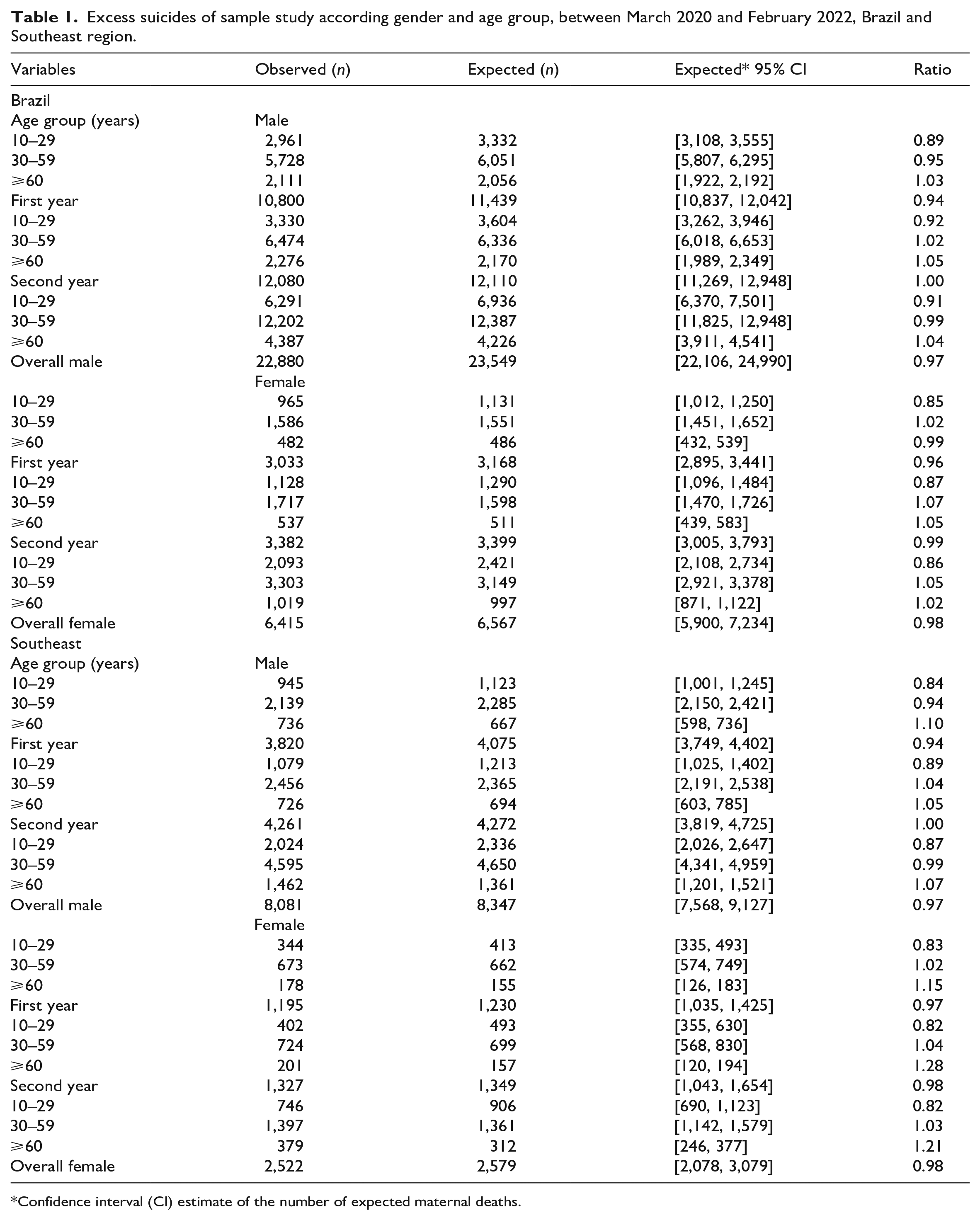
Between March 2020 and February 2022, 29,295 suicides were reported in Brazil, 10.603 in the Southeast, 7,058 in the Northeast, 6,601 in the South, 2,753 in the Central-West, and 2,280 in the North regions. The incidence of suicides was close to what would be expected based on the reported cases in the previous years [30.116 expected (95% CI [28,009, 32,224])]. A similar pattern was observed in the analysis stratified by gender. In both males and females aged 10 to 29 years, we observed a decrease in suicides in the aggregated analysis during the first pandemic year and a decrease with threshold statistical significance in the second one. In males aged 30 to 59 years, a decrease in suicides during the first pandemic year was observed, but not in the second one. In the temporal analysis, the number of suicides followed a pattern in line with the expected in individuals 60 years and over (Table 1). In males and females aged 30 to 59 years or 60 years and over, there was an excess of suicides in at least one of the 4-month periods evaluated, mainly among females (Figure 1).
Excess suicides of sample study according gender and age group, between March 2020 and February 2022, Brazil and Southeast region.
Confidence interval (CI) estimate of the number of expected maternal deaths.
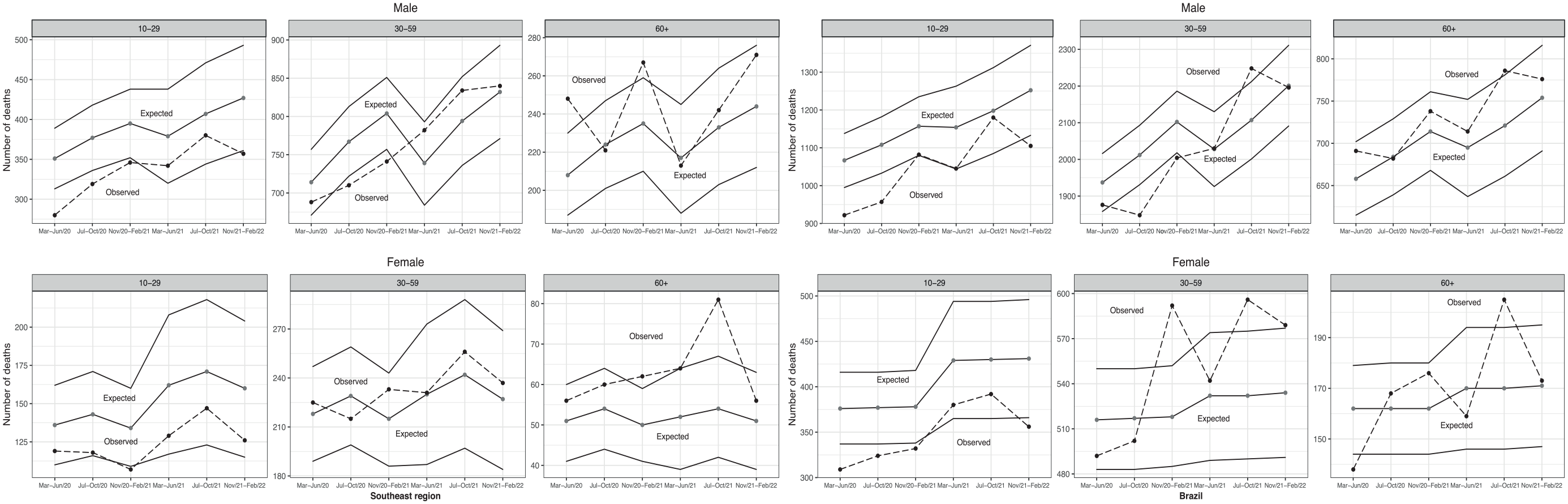
Excess suicides of sample study according gender, age group and six consecutive 4-month periods, between March 2020 and February 2022, Southeastern region and Brazil.
At the regional level, a 16% decrease in the number of suicides among males 10 to 29 years old was observed in the Southeast region during first pandemic year, along with an increase of 28% among females 60 years and older during the second pandemic year and an excess of suicides with threshold statistical significance of 10% among males aged 60 years or older during the first pandemic year (Table 1). According to the temporal analysis, in both males and females aged 60 years or older from the Southeast region, excess suicides were observed in two out of six 4-month periods evaluated, mainly in November 2020 to February 2021 (Figure 1).
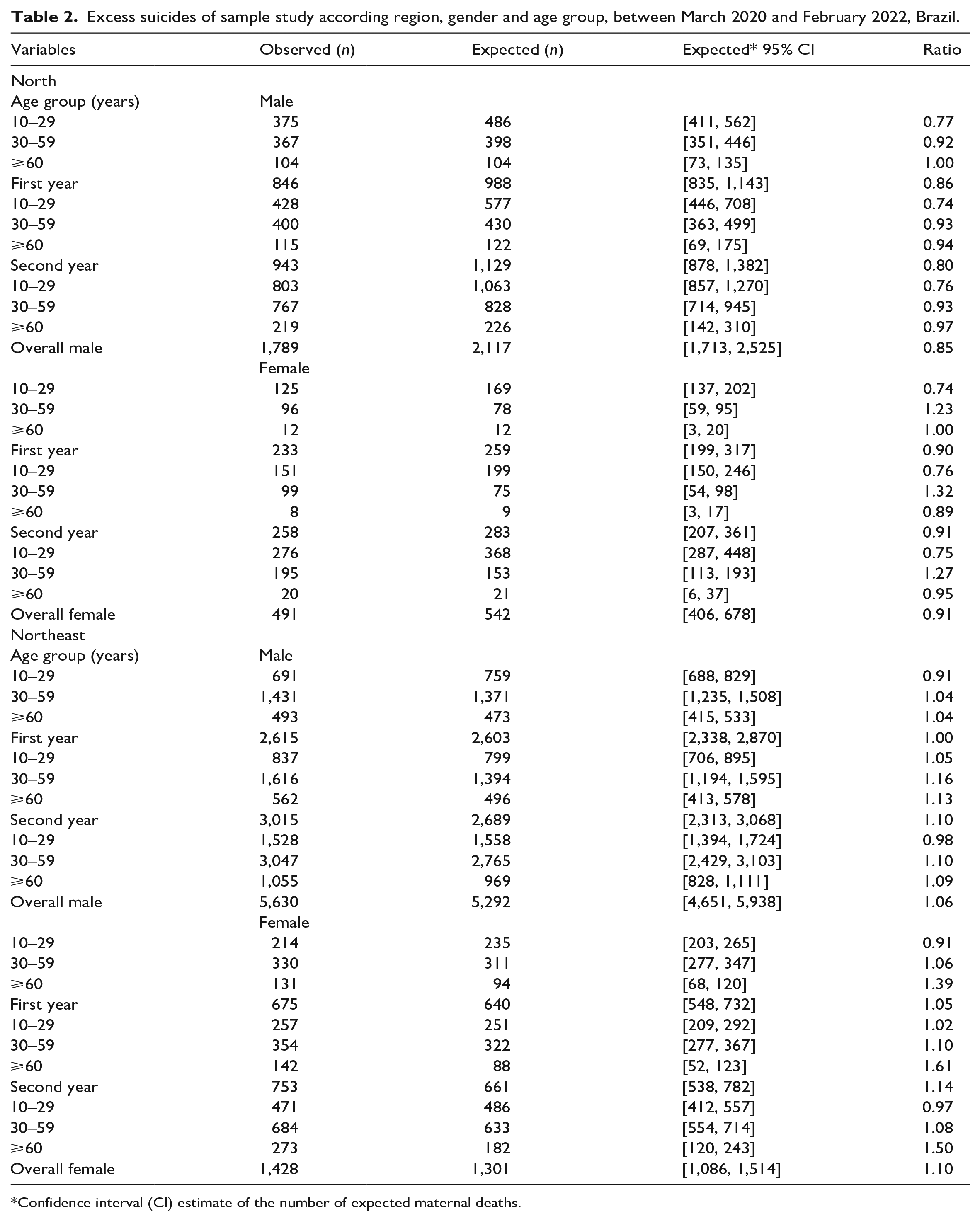
In the North region, suicide decreased by 24% among males aged 10 to 29 years, regardless of the pandemic year and increased 23% and 32% among females aged 30 to 59 years during the first and second pandemic years, respectively (Table 2). The temporal analysis of excess suicides revealed that among females aged 30 to 59 years there was an increase in half of all 4-month periods (July–October 2020, November 2020–February 2021, and July–October 2021) in addition to excess suicide with threshold statistical significance in all other 4-month periods. In males and females aged 60 years and over there were excess suicides in March to June 2020 and July to October 2020, respectively (Figure 2).
Excess suicides of sample study according region, gender and age group, between March 2020 and February 2022, Brazil.
Confidence interval (CI) estimate of the number of expected maternal deaths.
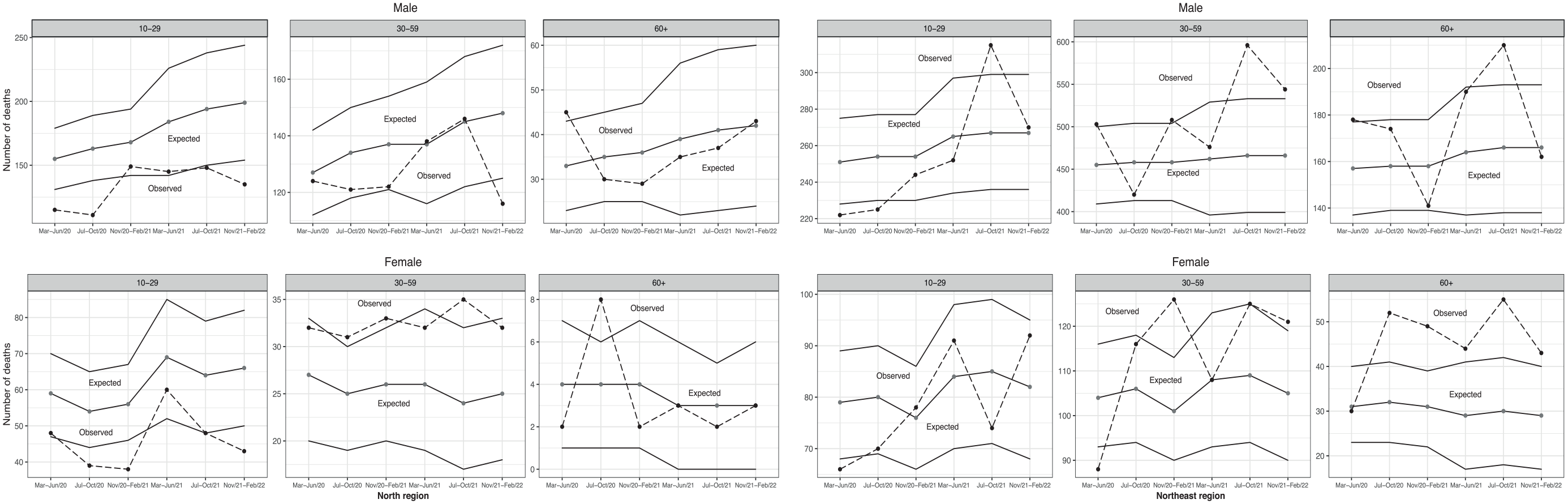
Excess suicides of sample study according gender, age group and six consecutive 4-month periods, between March 2020 and February 2022, North and Northeast regions, Brazil.
The Northeast region had a 16% excess in suicides among males aged 30 to 59 years in the aggregate analysis for the second pandemic year and a 50% excess of suicides among females aged 60 years and over regardless of pandemic year (Table 2). The temporal analysis revealed an excess of suicides in at least one of the six 4-month periods among males, irrespective of age group. There were excess suicides in males aged 30 to 59 years in all 4-month periods except March-June 2021. Excess suicides were observed in all individuals aged 60 years and over in March to June 2020 and July to October 2021. In females aged 30 to 59 years suicide increased in November 2020 to February 2021 and November 2021 to February 2022, as well as in five out of six four-month periods evaluated among women aged 60 years and over, reaching 83% (55/30) in July to October 2021 (Figure 2).
In the South region suicide decreased by 19% among males aged 10 to 29 years during the second pandemic year. Among females, suicides occurred according to the expected, regardless of age group and pandemic year (Table 3).
Excess suicides of sample study according region, gender and age group, between March 2020 and February 2022, Brazil.
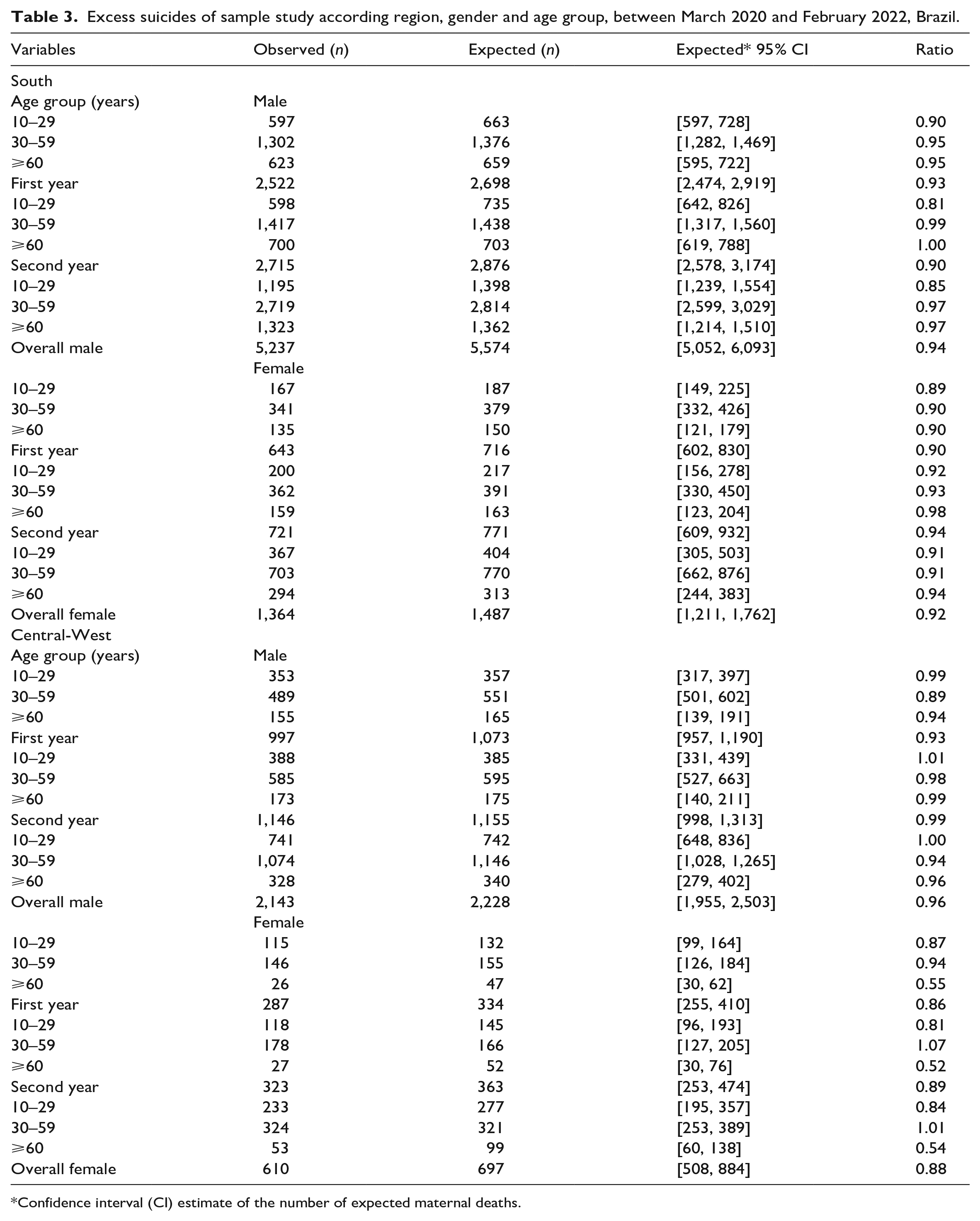
Confidence interval (CI) estimate of the number of expected maternal deaths.
In the Central-West region suicide among males occurred according to the expected, except in individuals aged 30 to 59 years during the first pandemic year. A similar pattern was observed among females, despite a decrease in suicides of 46% in those aged 60 years and over, regardless of pandemic year (Table 3). In females aged 30 to 59 years, suicide increased in July to October 2021, in addition to excess suicide with threshold statistical significance in males aged 30 to 59 years in November 2021 to February 2022 (Figure 3).
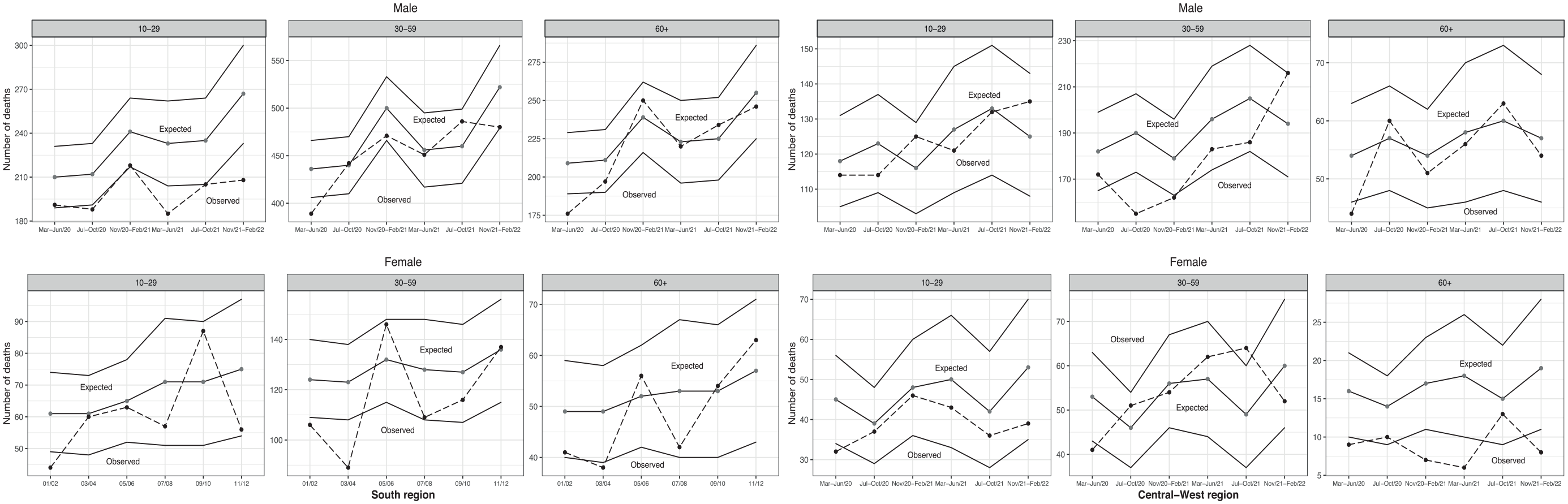
Excess suicides of sample study according gender, age group and six consecutive 4-month periods, between March 2020 and February 2022, South and Central-West regions, Brazil.
Discussion
Our estimates indicate that, during the first two pandemic years, suicide rate in Brazil did not change. Nevertheless, this pattern was not homogeneous among regions, age groups and pandemic years. A substantial excess in suicides was found in females aged 30 to 59 years from the Brazilian North and Northeast regions, apart from consistent excess suicides in specific 4-month periods in both males and females aged 60 and over in the North, Northeast, and Southeast regions.
Despite the significant decrease in suicides in Brazil throughout the entire study period among all individuals aged 10 to 29 years old, there was no evidence of a significant change between observed and expected suicides during the second pandemic year. However, this pattern was not consistent in males, especially in the North and South regions, where there was a significant decrease in two out of the three 4-month periods of the second pandemic year.
The overall decrease in observed suicide in Brazil among individuals aged 10 to 29 years seems to contradict a significant upward mortality trend between 2016 and 2019 in individuals aged 15 to 39 years (Brazil, 2021), even when taking into account the clear divergence between the 10 to 29 and 15 to 39 years age categories.
The lower-than-expected number of suicides in individuals aged 10 to 29 years may be due to several factors, especially during the first pandemic year. Among those under 20 years old, during the first pandemic year, for example, it is possible that social distancing measures, home-schooling, and a general adaptation to a more digital way of life (i.e. increased use of social media or even tele-healthcare for suicide prevention), may have contributed to longer periods of time at home with family, fewer academic fees and/or concerns with peers in school, providing greater parental surveillance on those with a higher risk of suicide (Appleby et al., 2021; Liu et al., 2020; Radeloff et al., 2021; Shi et al., 2022). In contrast, the 18% (315/267) excess in suicides from July to October 2021 among males 10 to 29 years of age in the Northeast region exclusively is worrisome.
For those aged 30 to 59 the general suicide pattern in Brazil was stable throughout the entire study period, regardless of gender. However, the consistent increase in suicides from the first (2%) to the second (7%) pandemic year among females cannot be ignored, especially when we consider that there were excess suicides with threshold statistical significance during the second year, a unique phenomenon relative to males and other age groups at the national level. Females from the North region exhibited significant excess suicide, irrespective of pandemic year. Significant excess suicides were also observed among females from the Northeast region in two out of the six 4-month periods, in addition to a 30.6% excess in July–October 2021 among females from the Central-West-region.
On the whole, we found that the significant increase in observed suicides was more evident in women aged 30 to 59 years and at certain points during the second pandemic year. It is interesting to point out that only in women aged 30 to 59 years from the South region, the number of observed suicides was smaller than the predicted, in the first and second pandemic years, demonstrating a heterogenous pattern of suicides between Brazilian regions.
A nationally representative Brazilian survey carried out in 2019 showed high levels of exposure to violence in the previous 12 months among adult women when compared with their male counterparts, mainly psychological (offense, humiliation or ridicule and yelling or cursing) and physical violence (slapping and shoving with intention to hurt) (Mascarenhas et al., 2021). Despite the higher prevalence of physical violence in the North region when compared to the South region, the North region has shown a lower proportion of adults who sought health care (Mascarenhas et al., 2021). Finally, Mascarenhas et al. (2021) also suggest that intimate partners were the main perpetrators of psychological, physical, and sexual violence, aside from the household being the main place of occurrence. We also emphasize that the North and Northeast regions had the most significant mean annual rate increase of lethal violence against women in Brazil from 2000 to 2019 (Moroskoski et al., 2022).
The excess in suicides among non-elderly females in certain sub-groups in Brazil also deserves attention, despite not being exclusive to Brazil during the COVID-19 pandemic (Martínez-Alés et al., 2023; Pouradeli et al., 2023; Ryu et al., 2022; Yoshioka et al., 2022). Women aged 30 to 59 years were probably the most impacted by excess suicides in the Brazilian pandemic setting. It would be reasonable to expect this in the elderly, usually the age group at greatest suicide risk, in Brazil and throughout Latin America (Dávila-Cervantes, 2022; Pires et al., 2022). The consequences of caregiver death for children, for example, can be devastating with long-term impacts (Hillis et al., 2022).
It is very likely that women have suffered disproportionately during the pandemic, owing to the double burden of job responsibilities and domestic duties, which encompass tending to their own and their children’s health, home schooling their children, stress from food insecurity, the lethal and non-lethal consequences of COVID-19 or even the premature death of a spouse or close relative, especially if this person was an important source of household income (Camarano, 2020; King et al., 2023; Milner et al., 2014; Racine et al., 2021; Santos et al., 2022; Strohmeier & Branje, 2023). One last explanatory hypothesis would be the increase in domestic violence or abuse against women prior to and during pandemic restrictions, since these kinds of victimizations can be exacerbated during crises like outbreaks and natural disasters (Campbell et al., 2023; Kim & Royle, 2023; Kitulwatte et al., 2023; Morgan et al., 2022; Nesset et al., 2021), further increasing women’s vulnerability to suicide (MacIsaac et al., 2017).
While the pandemic’s effect on excess suicides appears to be more marked in women aged 30 to 59, we must emphasize that excess suicide among Brazilian males aged 30 to 59 was also observed in July to October 2021, corroborating previous studies showing increases in suicide incidence at the population and individual levels during severe crises that result in economic recession and unemployment, particularly in working-age males (Gunnell & Chang, 2016; Meda et al., 2022; Milner et al., 2014; Okşak et al., 2023), aside from risk factors such as divorce, mental illness, and substance abuse (Whitley, 2021). More specifically, the Northeast region showed excess suicide during the second pandemic year, particularly from July to October 2021, reaching 27.9% (596/466). In 2020 and especially in 2021, the Northeast region had the lowest average income in the employed population, compared to all other Brazilian macroregions. It also had the highest unemployment rate in Brazil in 2020 and 2021, surpassing 18% in the first three trimesters of 2021 (Feijó & Peruchetti, 2022).
For those aged 60 years and over the number of suicides was also stable throughout the entire study period in Brazil, regardless of gender and pandemic year. However, significant excess suicides among women from the Northeast region were observed, regardless of pandemic year, as well as among women in the Southeast region, mainly in July–October 2021 of the second pandemic year. As may be expected, there was excess suicide in the older age group (Chen et al., 2023; Pires et al., 2022; Ryu et al., 2022), mainly in the Northeast, confirming previous predictions during the first 10 months of the pandemic in Brazil (J. D.Y.Orellana & de Souza, 2022).
It is worth noting that, nationwide, our work also showed consistent excess suicide among the elderly from July to October 2021, irrespective of gender and reaching 20.6% (205/170) among women. Likewise, there was excess suicide in at least one of the 4-month periods, regardless of gender, in the North, Southeast, and especially the Northeast regions, where 83.3% (55/30) more suicides than expected occurred among women 60 years old and older from July to October 2021. The 4-month period of July to October 2021 is closely situated with the 2 months following the great mortality peak due to COVID-19 in Brazil (Colonia et al., 2023).
There are many potential reasons for excess suicides in older populations. Measures such as physical distancing and the accumulated losses of everyday situations, that is, a partial or complete disconnect from society because of limited alternative means of conducting their lives, especially as regards the use of information and communications technologies (including the possible role of the infodemic) and/or of close relatives and loved ones may have worsened mental health and feelings of loneliness, making older people more vulnerable to suicide (Braz et al., 2023; Romero et al., 2021; Segerstrom et al., 2023; Wister et al., 2023). It is also possible that the strongest direct mortality effect of COVID-19 on older people, particularly in individuals with severe mental illness, may explain the higher excess suicide found in individuals 30 to 59 years old compared to those aged 60 years and over (De Hert et al., 2021; Kasal et al., 2023).
Finally, our findings have made clear the striking differences in suicides among Brazilian regions during COVID-19 pandemic. This is because, while the Northeast region had the worst scenario, with excess suicides in females and males, in all age groups and all 4-month periods evaluated, the South region did not display excess suicide in a single 4-month period. Our results also reveal how suicide increased in the Southeast region during the second pandemic year (reaching 28% among females aged 60 years and over), particularly in July to October 2021, when excess suicide reached 50% (81/54), which may be related to the high rate of urbanization (Cribari-Neto, 2023).
The substantial burden of excess suicide found in the North and Northeast regions is not surprising and may be partially explained by well-known socioeconomic inequalities, lower mental health service use and by the strongest direct effect of the Covid-19 pandemic in comparison with South region, for example (da Costa Dantas et al., 2023; Paula et al., 2014; Szwarcwald et al., 2016; Tiguman et al., 2022). In 2020 and especially in 2021, the Northeast region had the lowest average income in the employed population, regarding other Brazilian regions. Beyond that had the highest Brazilian unemployment rate in 2020 and 2021, reaching rates above 18% in the first three trimesters of 2021 (Feijó & Peruchetti, 2022). On the other hand, the North region has been severely impacted by the pandemic’s direct effects, including the dire Manaus oxygen crisis, when many people died due to a lack of supplies and medical care (J. D.Y.Orellana et al., 2021).
Our approach has some limitations and, therefore, our findings should be interpreted carefully. Two out of the 24 months evaluated have provisional death counts, specifically the January and February 2022 data. However, as we have analyzed our data more than 360 days after the end of the study period, the possibility of underestimating the suicide counts for this reason is hugely limited and would have little influence on this interpretation. To a small extent, our estimates may also be affected by underreporting of deaths by suicide, also in the North and Northeast regions, as some suicides may have been misclassified as other underlying causes or unspecified external causes of death (Marín-León et al., 2012; J. D.Y.Orellana et al., 2019; Soares Filho et al., 2021). Due to the smaller number of suicides reported in regions as the North and Central-West, it was not possible to explore additional covariates such as race/skin color, socioeconomic position or even age groups in further detail to better understand the suicide pattern evaluated.
As a strength of this study, we highlight that our approach allowed for variations in excess suicide at the regional level, stratified in six 4-month periods, as well as across the population sub-groups gender and age groups to be captured. This probably illustrates part of the acute and long-term indirect pandemic effects on suicides over 2 consecutive years, not just half a year or 1 year, and mostly focused on the entire period. We also highlighted that our study evaluated data from one of the most populous and harshly punished countries by the direct effects of the COVID-19 pandemic globally.
Conclusion
After 2 pandemic years in Brazil, the trajectories of excess suicides suggest a larger impact during the second pandemic year, mainly in July to October 2021, as well as in the North and Northeast, the two poorest Brazilian regions, where the health emergency was managed most precariously. Lastly, we stress the importance of continual monitoring of the long-term effects of suicide and improved access to mental healthcare, themselves subject to further aggravation by new crises.
Footnotes
Author contributions
JDYO contributed to the study’s conception, data collection, written, data interpretation, and final revision of the manuscript. MLPS and BLH participated in written, data interpretation, and writing the manuscript, including the final revision.
Funding
The author(s) received no financial support for the research, authorship, and/or publication of this article.
