




Abstract
Background:
Different types of accumulated stress have been found to have negative consequences for immigrants’ capacity to adapt to the new environment. It remains unclear which factors have the greatest influence.
Aims:
The study investigated whether immigrants’ experience of great difficulty in adapting to a new country could best be explained by (1) country of origin, (2) exposure to accumulated stressors before arrival or (3) after arrival in the new country and/or (4) reserved attitude toward integrating into the new society.
Methods:
The 119 first-generation immigrants from Somalia, Vietnam and China, living in Malmö, Sweden, were interviewed in a standardized manner.
Results:
Experiencing great difficulty in adapting to Sweden was independent of length of residence, but significantly related to all four influences, studied one at a time. Country of origin was also related to stressors and attitude. When the effects of the other influences were mutually controlled for, only exposure to accumulated stressors in Sweden (and especially experiencing discrimination/xenophobia/racism) accounted for great adaptation difficulty. Stressors in Sweden had a greater effect if the immigrant had been exposed to stressors earlier.
Conclusions:
Immigrants’ long-term experiences of great difficulty in adapting to a new country were explained primarily by exposure to accumulated stressors while moving to and living in the new country, rather than by their backgrounds or attitudes toward integrating. This suggests promoting strategies to avoid discrimination and other stressors in the host country.
Introduction
Migrating to a new country is a complicated and demanding process, involving a multitude of practical, economic and emotional challenges in leaving the homeland, finding and moving to a host country and establishing a new life there (Carswell, Blackburn, & Barker, 2011). These challenges and stressors may be especially strong for immigrants exposed to trauma and conflicts (e.g. war, famine, poverty, illness, refugee camps, asylum seeking, discrimination, etc.) before and/or after arrival in the new country (Bhui et al., 2003, 2005, 2006; Carswell et al., 2011).
Accumulated stress associated with the different phases of migration has been found to have negative consequences for immigrants’ physical and mental health (Gerritsen et al., 2006; Gil-González et al., 2012; Matheson, Jorden, & Anisman, 2008) and for their capacity to adapt to the new environment (Yakushko, Watson, & Thompson, 2008). Immigrants typically have elevated rates of physical and mental disorders, compared with the population in the host country (Rosvall, Grahn, Modén, & Merlo, 2008, pp. 20–21). One very notable example is the significantly increased rates of schizophrenia-related psychoses observed in some immigrant groups living in northern European countries, for example, Afro-Caribbeans in England and Surinamese in The Netherlands (Chakraborty, McKenzie, Hajat, & Stansfeld, 2010; Selten et al., 2001), including Scandinavia (Cantor-Graae, Pedersen, McNeil, & Mortensen, 2003; Cantor-Graae, Zolkowska, & McNeil, 2005).
Our study in Malmö (Zolkowska, Cantor-Graae, & McNeil, 2001), Sweden, found a strong relation between country of origin and risk for psychoses, with notably high psychosis rates in immigrants from Somalia (relative risk (RR) 11.0) and Vietnam (RR 6.0), and a very low rate in Chinese immigrants (reference group with RR 1.0) (Zolkowska et al., 2001). While the cause of these increases in serious mental illness is unknown, some researchers (Bourque, van der Ven, & Malla, 2011; Hjern, Wicks, & Dalman, 2004; Selten, van der Ven, Rutten, & Cantor-Graae, 2013) have suggested that this reflects the influence of psychosocial stressors.
If exposure to psychosocial stressors is the basis for increased psychosis rates in some immigrant groups, and if stressors increase risk for difficulty in adapting, then we would predict that rates of having experienced great difficulty in adaptation would (a) run parallel to each immigrant group’s risk for serious mental disorder (i.e. a ‘country-of-origin effect’), and (b) possibly also be related to a reserved attitude toward integrating into the new society (‘the reserved-attitude effect’), but that (c) accumulated stressors would account for adaptation difficulties and replace the possible country-of-origin effect and the reserved-attitude effect, when all three types of influences are studied together. To test these predictions, and learn more about influences on immigrants, we studied immigrants from three countries whose risk for mental disorders was already determined (Zolkowska et al., 2001). These immigrants were residing in Malmö during the study, and had generally been resident in Sweden for a considerable period. Malmö is Sweden’s third largest city, 40% of whose 300,000 residents are first- or second-generation immigrants (SCB, 2011). A vast majority (88%) come from non-Nordic countries and many have been exposed to stressors before and after arrival in Sweden. Malmö is a residentially segregated city, with a high rate of social problems. Malmö thus provides an excellent setting for investigation of the role of stressors in immigrants’ adaptation to a new country.
In this study, special interest was aimed at identifying the most sensitive period for exposure to stressors (before vs after arrival in Sweden) and the specific stressors with the most negative effect on long-term adaptation. ‘Great difficulty in adaptation’ was operationally defined by the immigrant stating that it was ‘very stressful/very difficult to adapt to life in Sweden’ (vs not at all stressful/a little stressful/sometimes stressful), in response to a direct question.
Method
Sample
The sample consisted of 119 subjects (18–65 years of age; 64 females and 55 males), with 39 from Somalia, 41 from Vietnam and 39 from China. The primary reasons for choosing immigrants from these three countries were (a) their highly varied risks for developing schizophrenia-related psychoses, (b) the histories of stressors (including war/social unrest) in their countries of origin and (c) their difference in appearance from that of ‘native Swedes’, which increases risk for discrimination and other stressors in Sweden. Among the immigrants from 158 nations resident in Malmö, immigrants from Somalia were the 14th largest group (n = 1,551), Vietnamese the 16th largest (n = 1,274) and China the 21st largest (n = 884); these study groups constituted only 10%–20% the size of the largest immigrant groups (from Iraq, n = 9,940; Denmark, n = 8,972; and former Yugoslavia, n = 8,426).
Immigrants living in Malmö are generally residentially segregated, and these three study groups live primarily in areas with a very high immigrant population density. Somali social life is strictly organized around ‘Somali clubs’, while many of the Vietnamese appear to have their primary social contact through temples, where they interact socially and share meals with other Vietnamese. Immigrants from China appear to have greater social contact outside their own ethnic group.
Inclusion criteria for subjects were (a) first-generation immigrant from one of the three countries, (b) 18–65 years old at time of study, (c) formally resident in the city of Malmö and (d) willing to participate in the interview. No additional selection criteria existed, and no requirements were made concerning the subject’s length of residence in Sweden, ability to understand and speak Swedish or current or past mental health history. Subjects were recruited in the manner most appropriate to each ethnic group: immigrants from Somalia were recruited at the Somalis Association in Malmö and immigrants from China and Vietnam were recruited through a contact person within these ethnic communities. None of the subjects who were asked and agreed to participate were excluded, and all who began the interview completed it. (Missing data existed for some questions; sample size for the analyses is shown in the tables.) The sample’s demographic and familial characteristics are presented in Table 1.
Demographic characteristics.
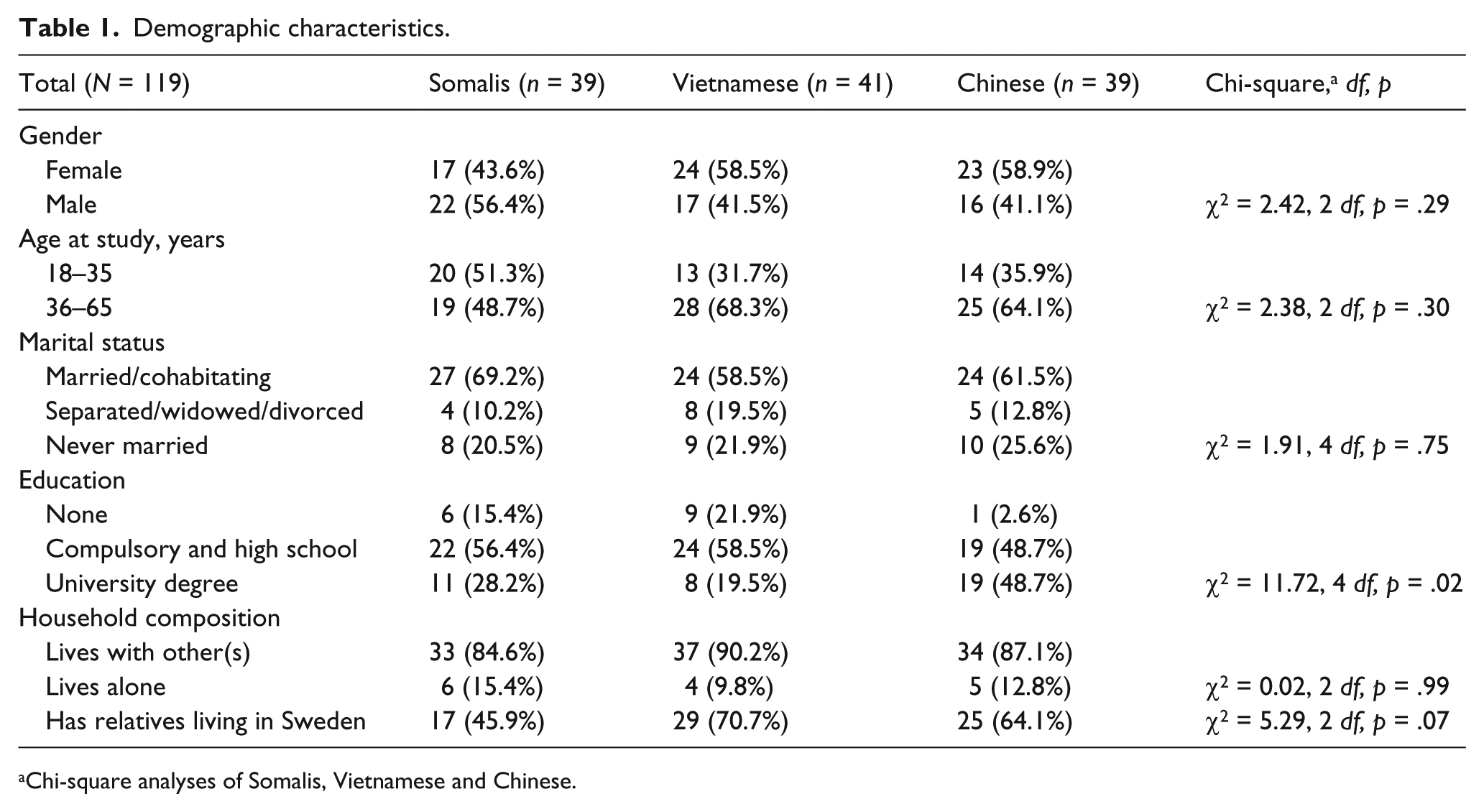
Chi-square analyses of Somalis, Vietnamese and Chinese.
Subjects were recruited without any consideration of their mental health or history of contact with psychiatry, and no independent information exists concerning the mental health history of the subjects and their biological relatives. However, in a section of the interview entitled ‘Trauma and Mental Problems in Sweden’ (see below), the subjects were specifically asked whether they ‘had experienced any form of serious trauma in Sweden, for example serious illnesses, bad accidents, hospitalizations, etc’. None of the 119 subjects reported having had mental illness or being treated for it, and no other information presented during the course of the interviews suggested such a history for these subjects.
The study was approved by the Lund University Board of Research Ethics.
Interview
Data were collected by interview by the first or second author, with assistance of a translator, as needed. The need for a translator was determined on an individual basis when verbally informing the subject about the study. The translator for the Somalis was a Somali immigrant who was authorized and used by the medical system. The translator for the Vietnamese/Chinese was a Chinese student in natural sciences at Lund University.
The interviews were conducted in different places (at the participant’s home, at meeting places, in a car etc.) chosen by the participants. The interview took from 1 to 2 hours, depending on the need for a translator. The interview was based on a structured questionnaire with specified alternative answers. The interviewer chose the alternative answer that agreed best with participant’s answer to the question.
For the current study, we analyzed 29 questions concerning the participant’s demographic and background characteristics, stressors during childhood, migration history, present life situation and experiences in Sweden.
Demographic and background characteristics
Demographic and background characteristics included (a) Gender, (b) Age at study (categorized as 18–35, 36–65 years), (c) Marital status (married/cohabiting, separated/widowed/divorced, never married), (d) Education (none, compulsory/high school, university degree), (e) Household composition (lives with others vs lives alone), (f) Has relatives living in Sweden (some, none) (Table 1) and Length of residence in Sweden (years).
Adaptation difficulties in Sweden
Adaptation/integration difficulties in Sweden constituted the following: (a) Does not have employment (vs has employment), (b) Never gets together with Swedes (vs often/sometimes), (c) Does not want to remain in Sweden (vs will stay/only thinking about moving back to home country), (d) Feels that material life in Sweden has been poorer than expected (vs better than expected/so-so/as expected), (g) Feels that social life in Sweden has been worse than expected (vs better than expected/so-so/as expected), (h) Feels it is very stressful/difficult to adapt to life in Sweden (vs not at all stressful/a little stressful/stressful sometimes) (Table 2).
Adaptation difficulties in Sweden: comparison of Somalis and Vietnamese versus Chinese (logistic regression model).
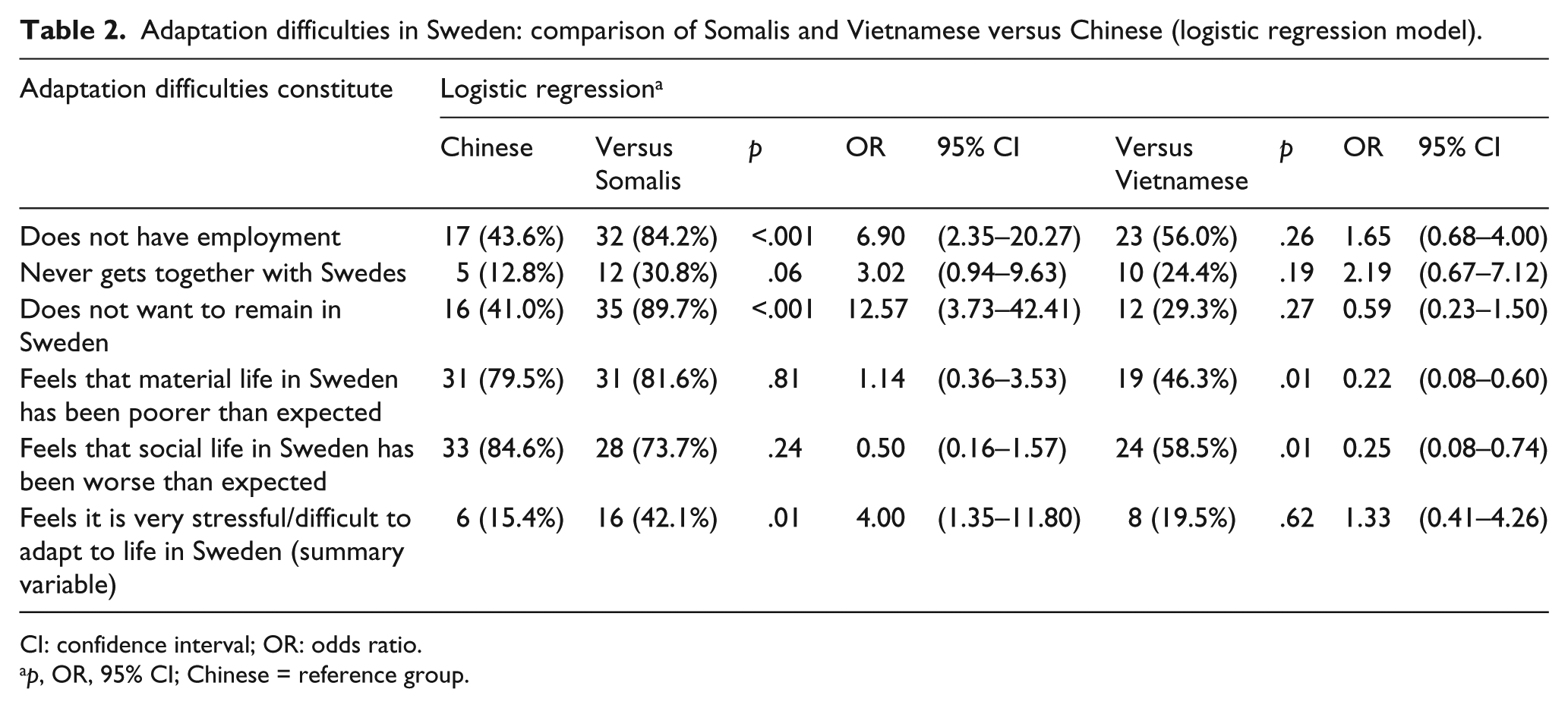
CI: confidence interval; OR: odds ratio.
p, OR, 95% CI; Chinese = reference group.
Stressors before arrival in Sweden
Stressors during childhood, life events in their home country and events during migration before arrival in Sweden included the following: (a) Experienced particular strains (i.e. serious somatic illness, serious accident, injury, being hospitalized, parental unemployment, economic difficulties in family, parent’s substance abuse, natural disaster, political unrest) during childhood (vs none); (b) Residential crowding: lived with eight or more persons in the same house (vs 1–7); (c) Experienced trauma per the Harvard Trauma Questionnaire (HTQ, Mollica et al., 1992) (vs no); (d) Lived in a refugee camp (vs no); (e) Sought political asylum in Sweden (vs work/study/family reunion/other reason for immigrating) and (f) Had economic difficulties migrating to Sweden (vs easy/neither easy nor difficult) (Table 3). The total number among these six stressors yielded a measure of accumulated stress for that period.
Stressors before arrival in Sweden and in Sweden and reserved attitude toward integration: comparison of Somalis and Vietnamese versus Chinese (logistic regression model).
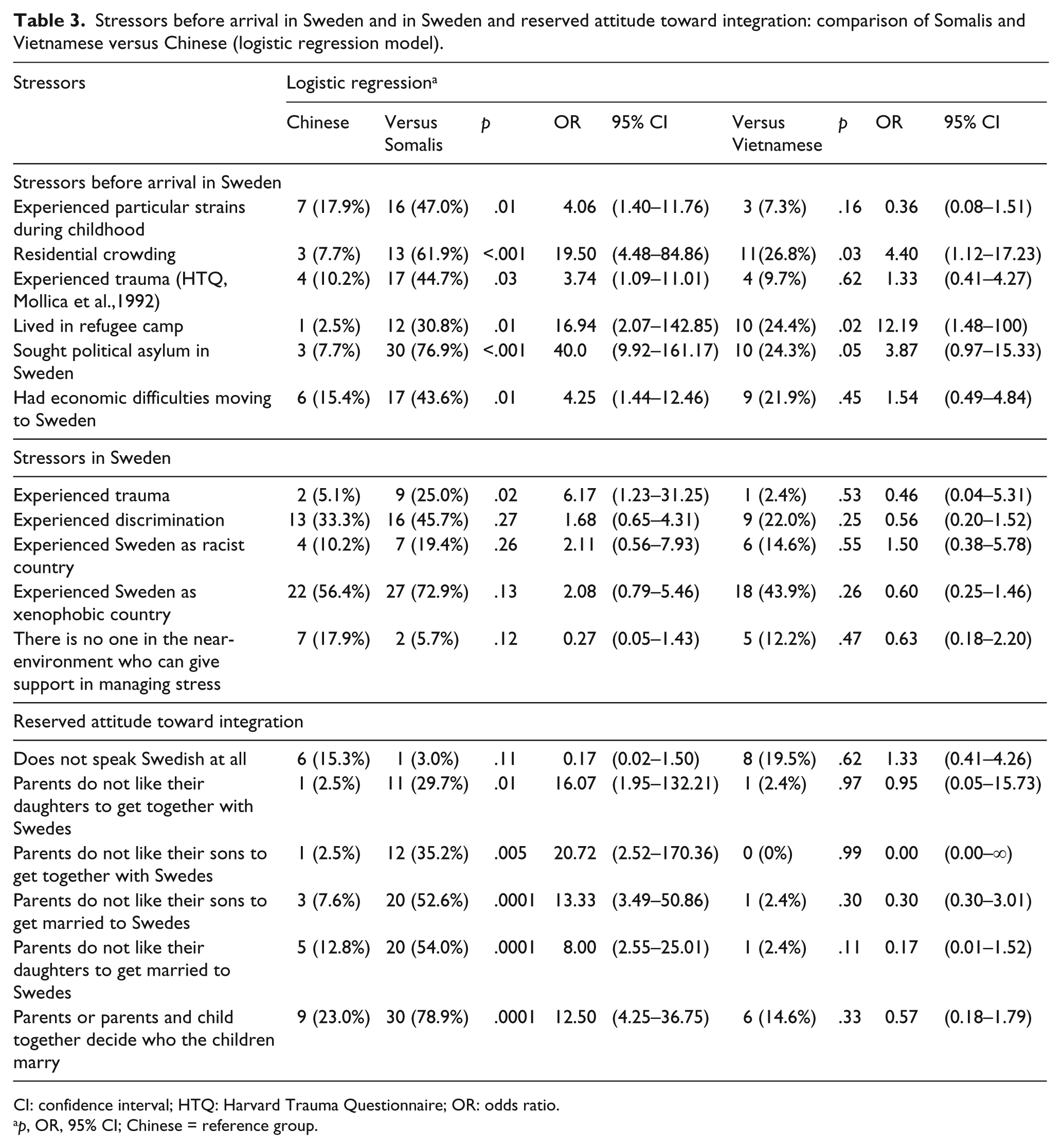
CI: confidence interval; HTQ: Harvard Trauma Questionnaire; OR: odds ratio.
p, OR, 95% CI; Chinese = reference group.
Stressors in Sweden
The stressors during residence in Sweden included the following: (a) Experienced trauma (vs no) according to the HTQ, (b) Experienced discrimination in Sweden (vs no), (c) Experienced Sweden as a racist country (vs no), (d) Experienced Sweden as a xenophobic country (vs no) and (e) There is no one in the near-environment who can give support in managing stress (vs gets (some) support) (Table 3). The total number among these five stressors constituted a measure of accumulated stress during residence in Sweden.
Reserved attitude toward integration
The following items were assumed to reflect the immigrant’s reserved attitude toward integrating into Swedish society, or (item F) maintaining an attitude that is completely opposite to Swedish cultural norms: (a) Does not speak Swedish at all (vs speaks (some) Swedish), (b) Does not like their daughters to get together with Swedes (vs not dislike this), (c) Does not like their sons to get together with Swedes (vs not dislike this), (d) Would not like their sons to marry Swedes (vs not dislike this), (e) Would not like their daughters to marry Swedes (vs not dislike this) and (f) Thinks the parents or parents and child together should decide who the child marries (vs child decides alone) (Table 3). The total number among these six items represents a measure of accumulated reserved attitude. (‘Swedes’ was intended to mean ‘native Swedes’, which was self-evident to these subjects.)
Analyses
Chi-square, Spearman correlation and t-test (PASW Statistics 18) were used to investigate whether immigrants from the three countries differed on demographic characteristics, duration of residence, accumulated stressors and total attitude toward integrating. Logistic regression (PASW Statistics 18) was used to determine whether country of origin was significantly related to specific items representing adaptation difficulties, stressors and reserved attitude. Somalis and Vietnamese were compared with Chinese.
Logistic regression was used to test whether having ‘great adaptation difficulty’ (see ‘Introduction’ section) was related to four types of influence: (a) country of origin, (b) total number of stressors before arrival in Sweden, (c) total number of stressors in Sweden and (d) total number of signs of a reserved attitude toward integrating. We first analyzed each of these summary variables by itself and then included all significant summary variables in the same logistic regression analysis, to test the effect of each summary variable while mutually adjusting for the effects of the other significant summary variables.
An epidemiological exposure model was used to study rates of adaptation difficulties associated with four different combinations of stressors (absent vs present, before vs after migration, Table 4), analyzed for 95% confidence intervals (CIs) on odds ratios (ORs) for two independent binomials (StatXact 9).
Risk for great adaptation difficulty related to different combinations/timing of stressors. a
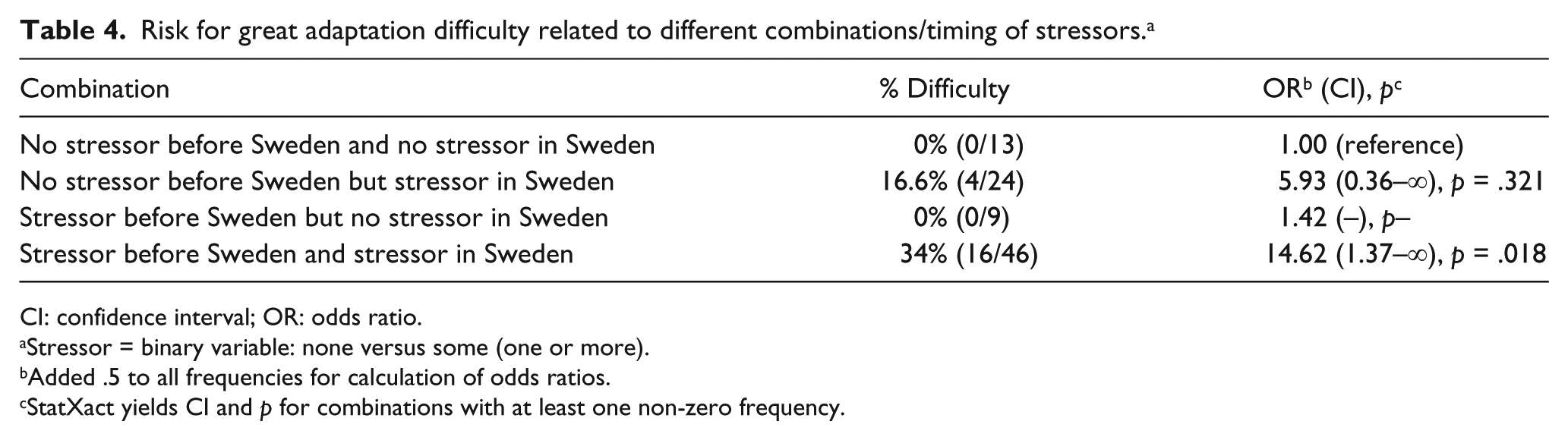
CI: confidence interval; OR: odds ratio.
Stressor = binary variable: none versus some (one or more).
Added .5 to all frequencies for calculation of odds ratios.
StatXact yields CI and p for combinations with at least one non-zero frequency.
Finally, exact probability, with ORs and 95% CIs, was used to determine which specific stressors were most strongly related to adjustment difficulty.
Statistical significance was defined as p ≤ .05, two-tailed.
Results
Demographic characteristics
Across the three immigrant groups, no significant differences were found in gender, age, marital status, household composition at the time of the study or having relatives in Sweden. Immigrants from Somalia and Vietnam had a significantly lower educational level than did Chinese immigrants. Educational level was unrelated to stressors before and in Sweden and to adaptation difficulty, and thus not included as a potential confounder in subsequent analyses.
Length of residence in Sweden and difficulty in adaptation
The immigrants had resided in Sweden for an average of 13.0 (SD 8.5, range 1–34) years, and a great majority of all three groups (100% Somalis, 85.3% Vietnamese and 74.3% Chinese) had been residents for more than 5 years. Length of residence in Sweden was unrelated to degree of difficulty (three degrees) in adapting to life in Sweden (Spearman rs = −.02, n = 117, p = .80), and subjects who expressed great difficulty in adapting to Sweden (n = 29, mean 13.17 years) did not differ significantly (t = 0.48, 115 df, p = .62) from the other subjects (n = 88, mean 12.31 years) in length of residence. Length of residence was thus not included as a potential confounder.
Country of origin and great difficulty in adaptation and integration in Sweden
Compared with Chinese, Somalis were significantly more often not employed, did not want to remain in Sweden and reported experiencing that it was ‘very stressful and difficult’ to adapt to life in Sweden. Somalis were not significantly different from Chinese on not getting together with Swedes or being more dissatisfied with their material or social lives in Sweden.
Vietnamese did not show a significant increase in any of the signs of difficulties in adaptation/integration in Sweden, and they even expressed significantly less disappointment (than did the Chinese) concerning how their material and social lives have been in Sweden.
Country of origin and stressors prior to Sweden
Compared with Chinese, Somalis had experienced a significantly greater number among the six stressors prior to arrival in Sweden (t = 7.31, 21.25 df, p < .001), as well as a significant increase in each of the six specific stressors (ORs = 3.74–40.00).
Vietnamese also had experienced significantly more among the six stressors than did Chinese (t = 2.13, 78 df, p = .036), with significant increases in residential crowding, having lived in a refugee camp and having sought political asylum in Sweden (ORs = 3.87–12.19) (Table 3).
Country of origin and stressors in Sweden
Somalis had experienced significantly more of the five specific stressors in Sweden in total (t = 2.78, 63 df, p = .007) than had the Chinese, with a significant increase only for trauma. The Vietnamese tended (non-significantly) to have experienced fewer stressors in total than had the Chinese (t = −0.66, 78 df, p = .500), with ORs of 0.46–0.63 for trauma, discrimination, xenophobia and lack of support (Table 3).
Country of origin and accumulated stressors in total
Combining stressors from before and after arrival in Sweden, Somalis had experienced significantly more stressors in total (t = 5.06, 49 df, p < .001), while Vietnamese did not differ significantly from Chinese (t = 0.96, 78 df, p = .330).
Country of origin and reserved attitude toward integration
Somalis had a significantly greater number of reserved attitudes than did Chinese (t = 4.54, 37.95 df, p < .001), with significant differences on five of the six specific items and substantial differences (ORs = 8.00–20.72) on negative attitudes toward their children getting together with Swedes and marrying Swedes.
Vietnamese had, if anything, fewer reserved attitudes than did Chinese (t = −1.10, 78 df, p = .270), and almost never expressed a negative attitude toward their children socializing with or marrying Swedes (Table 3).
Number of stressors in total and risk for great difficulty in adaptation in individual subjects
The individual subjects had experienced from 0 to 9 of the 11 total stressors, and this total number was clearly related to the immigrant’s risk for experiencing great difficulty adapting to the new country (log regression p = .001, OR = 1.59, CI = 1.21–2.10). Great difficulty in adapting to Sweden was very seldom reported by immigrants who had experienced zero or only one stressor (1/27, 3.7% with great difficulty), or even those exposed to two to three stressors (7/42 or 16.6%, p = .202, OR = 5.20, CI = 0.59–243.2). In contrast, risk for great difficulty in adaptation increased strongly on exposure to four or more stressors in total (12/23 or 52.1%, p = .0002, OR = 21.36, CI = 3.22–1257.0).
The timing of stressors and risk for great difficulty in adaptation in individual subjects
Exposure to one or more stressors while living in Sweden was decisive for the occurrence of great adaptation difficulty (Table 4): None of the 22 immigrants who totally lacked stressors in Sweden reported having great difficulty in adaptation, while more than one-fourth (20/70, 28.5%) of subjects with one or more stressors in Sweden experienced great difficulty in adaptation.
Furthermore, while stress prior to arriving in Sweden did not – by itself – increase risk for great adaptation difficulty, such earlier stress made the immigrants more sensitive to the effect of stress in Sweden: adaptation difficulties were found in 34.7% of subjects, with stressors both before and in Sweden, compared with 16.6% of subjects with stressors only in Sweden (p = .184, OR = 2.66, CI = 0.70–12.42) (Table 4). The increase in adaptation difficulties associated with exposure to stressors before arriving in Sweden (OR = 5.93 for stressors only in Sweden→14.62 for stressors both before and in Sweden) thus appears to be at least ‘additive’ in strength.
The comparative effect of country of origin, number of stressors before and in Sweden and reserved attitude toward integrating
Each of the four types of influence was significantly related to adaptation difficulty, when that influence was analyzed by itself (Table 5).
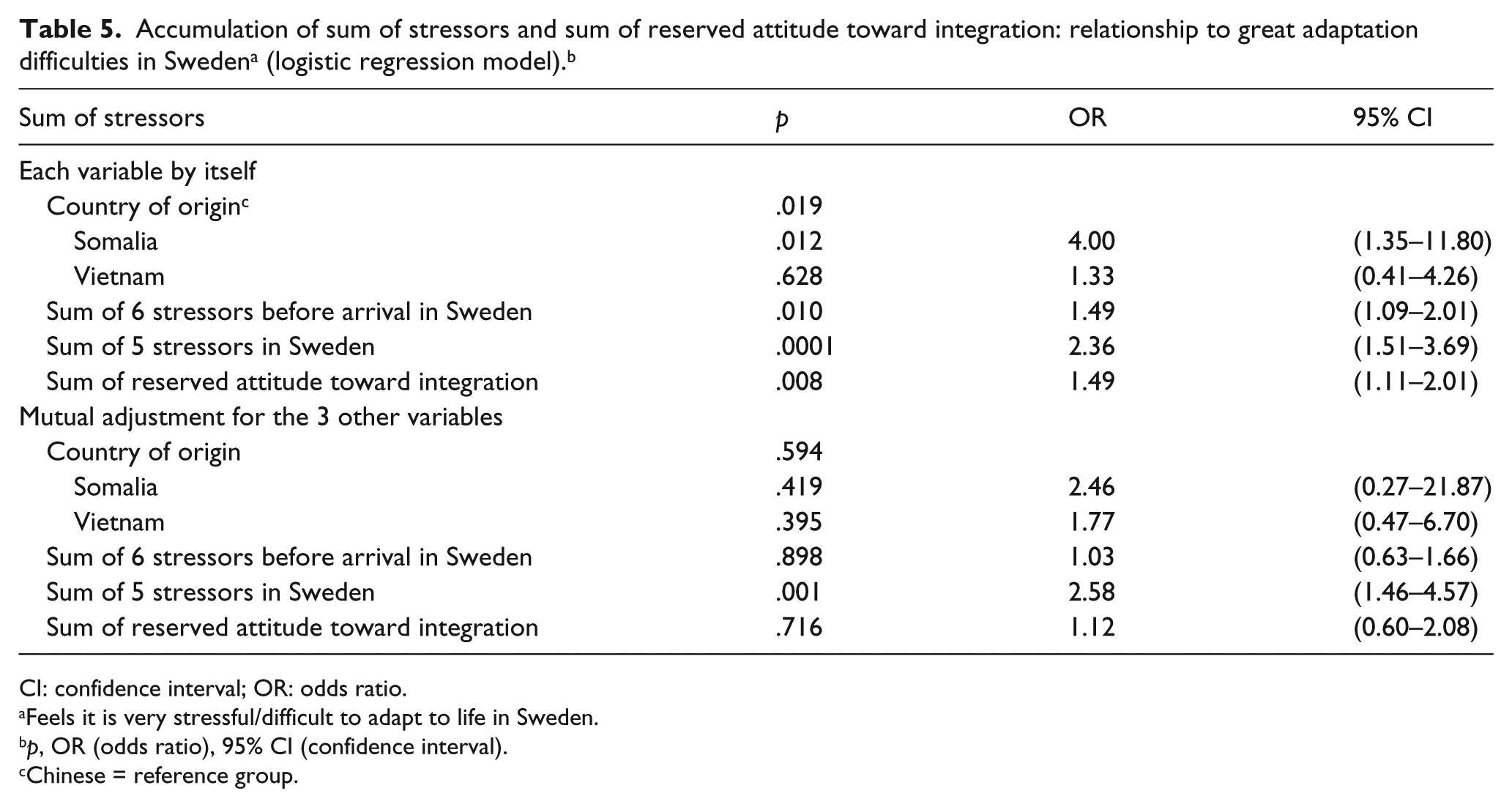
CI: confidence interval; OR: odds ratio.
Feels it is very stressful/difficult to adapt to life in Sweden.
p, OR (odds ratio), 95% CI (confidence interval).
Chinese = reference group.
However, when regression analyses were mutually adjusted for the effects of the other three types of influence, only number of stressors in Sweden remained significantly related to great difficulty in adaptation, and number of stressors in Sweden accounted for the effects of number of stressors before Sweden, country of origin and being reserved toward integration.
Specific stressors with the greatest negative effect
Great difficulty in adaptation was significantly and most strongly related to economic difficulty in moving to Sweden (p = .0006, OR = 5.14 (2.09–12.63)); to experiences of discrimination (p = .001, OR = 4.31 (1.77–10.49)), xenophobia (p = .002, OR = 5.14 (1.79–14.71)) and racism (p = .037, OR = 3.11 (1.07–9.01)) in Sweden; and to having lived in a refugee camp prior to Sweden (p = .035, OR = 2.88 (1.10–7.54)). Similar but non-significant trends were found for having experienced residential crowding in childhood (p = .069, OR = 2.52 (0.95–6.67)) and trauma in Sweden (p = .056, OR = 3.29 (0.97–11.15)) and having sought political asylum in Sweden (p = .077, OR = 2.25 (0.96–5.27)).
Great difficulty in adaptation was less frequently associated with having experienced trauma before residing in Sweden (p = .191, OR = 2.02 (0.77–5.26)), exposure to particular strains while growing up (p = .200, OR = 1.91 (0.73–4.98)) or not having someone to help cope with stress in Sweden (p = .100, OR = 2.08 (0.86–5.00)).
Discussion
This study of immigrants from Somalia, Vietnam and China residing in Sweden’s third-largest city found that each group’s rates of (a) adaptation difficulty, (b) stressors earlier in life, (c) stressors while living in Sweden and (d) reserved attitudes toward integrating all ran parallel with that specific group’s relative risk for developing schizophrenia-related psychoses (Zolkowska et al., 2001). This supports the suggestions that the increased rates of psychoses observed in some immigrant groups are due to increased stress (Cantor-Graae et al., 2005; Cantor-Graae and Selten, 2005, Selten et al., 2013; Zolkowska et al., 2001). We found further that an experience of great difficulty in adapting to Sweden (after, on the average, 13 years’ residence) was significantly related to four types of influence, that is, the immigrants’ country of origin, accumulated stressors before arrival in Sweden, accumulated stressors during residence in Sweden, and accumulated reserved attitudes toward integrating, when each type of influence was studied by itself. However, with mutual control for the effects of the other three variables, only exposure to accumulated stressors while living in Sweden accounted for an experience of great difficulty in adapting. Nevertheless, while exposure to stressors before arriving in Sweden was not sufficient to lead to adaption difficulties, earlier stressors increased the negative effects of stressors in Sweden.
The specific stressors that had an especially negative effect on adaptation to the new country were economic hardship and living in a refugee camp during migration and experiences of discrimination/xenophobia/racism in the new country, confirming findings in previous studies (Bhui et al., 2006; Broudy et al., 2007; Williams, Neighbors, & Jackson, 2003). The negative effects of stressors seem to accumulate over time, the risk for great adaptation difficulty increasing by about 50% with each additional stressor (among 11 possible stressors), and multiplying dramatically (OR > 21) on exposure to four or more stressors.
The results demonstrate clearly that investigation of cause and effect relationships in migration requires a multi-facetted approach that allows testing alternative explanations. Had we studied only the effects of country of origin, stressors during childhood, or reserved attitude toward integrating into Swedish society, we would have had significant results supporting the conclusion that that factor was a cause of the adaptation difficulties, and not have observed that the effects of these reasonable influences were instead accounted for by the influence of accumulated stressors in the host country.
Strengths and limitations of the study
The strengths of the study were its multi-facetted approach, testing predictions based on previous findings regarding three immigrant groups’ risks for psychosis in the new country, and using immigrants’ long-term perspective and personal experience of difficulty in adapting. The limitations were the rather small and not necessarily representative nature of the samples, plus the inability to determine with certainty whether the sample was free of a history of serious mental disorder.
Conclusion
An important take-home message is that immigrants’ experience of great difficulties adapting to a new country is not primarily a consequence of factors related to where they come from, what problematic experiences they have been exposed to early in life, or what attitudes they have toward integrating into the host society, but rather what stressors (especially economic difficulties, living in a refugee camp and discrimination/racism) they have experienced while moving to and living in the host country. Awareness of these relationships should provide an empirically determined basis for reducing risk for adaptation difficulties.
Footnotes
Funding
This research was supported by grants from the Medical Research Council, Sweden, the Medical Faculty, Lund University, Sweden, and The Stanley Medical Research Institute, Bethesda, USA. Yingyuan Zhu provided valuable assistance as translator, and professor Jonas Björk provided excellent statistical advice.