




Abstract
The study employed three-level logistics models using the EU-LFS data of 20 European countries to examine how the gender composition of academic fields of study and the demand for highly skilled workers affect the likelihood of women to be employed in professional occupations. In 2004, the concentration of women in specific fields of study contributed to widening gender inequality. In 2015, studying in a female-dominated field decreased the likelihood of employment in professional occupations for both men and women, but men studying in female-dominated fields were still more likely than women to enter professional occupations. Gender gaps are narrowing in labor markets seeking high-skilled employees, suggesting the likelihood of employment in professional occupations increases for both genders with an academic education.
Introduction
Two related trends are evident in most industrial countries: first, the transformation of labor markets from labor-intensive to knowledge-based, and second, the improved access to higher education for both genders. Education affects individuals’ life chances and well-being (Hout, 2012) and is closely related to labor-market achievements. Thus, education is often seen as a vehicle for reducing group inequality (Brand and Xie, 2010). At the same time, technological developments have changed the nature of jobs. This new reality, together with the rise in the completion of higher education, has transformed the composition of the labor force in meaningful ways. First, the skill composition has changed with the influx of highly skilled workers. Second, the rise in education is especially pronounced among women (DiPrete and Buchmann, 2013; England, 2010). Because education is closely related to women’s economic behavior, the gender composition of the labor force has changed in tandem with the gender composition of highly skilled occupations (England, 2010). Not surprisingly, the possible consequences of these trends on social and economic inequality have attracted considerable scholarly attention.
In a context where men’s and women’s educational attainments converge, and work patterns become similar, gender inequality is expected to decline (Cha and Weeden, 2014). The expansion of higher education is therefore expected to contribute to rising gender equality in the labor market. Indeed, there are indications that the traditional gender gaps in wages and positions have gradually narrowed in various countries (England, 2010; O’Reilly et al., 2015; Seehuus, 2019; Stier and Herzberg-Druker, 2017). However, the narrowing has stagnated in recent years (England et al., 2020).
Gender inequality in labor-market outcomes appears to result from significant gender differences that continue to exist in certain areas of academic study, thus reinforcing gender inequality in positions and rewards (McKinnish, 2021; O’Reilly et al., 2015; Zheng and Weeden, 2023). In fact, some suggest the expansion of higher education will not necessarily change gender segregation in academic fields of study (Charles and Bradley, 2002, 2009). Moreover, if women enter male-dominated fields, the supply of highly skilled workers may surpass demand, and in the competition for prestigious positions, women may still be disadvantaged. Indeed, even in the context of expansion in higher education, women continue lag behind men, although they have increased their entrance into male-dominated academic fields (Quadlin et al., 2021; Stier and Herzberg-Druker, 2017). While various explanations of these gaps have been offered, there are undoubtedly more mechanisms to be revealed, and this was the goal of the current research.
Beyond the acquisition of education and skills, women’s position in the labor market is affected by local labor-market structures (Ballarino et al., 2014). Countries differ in their occupational structures, and this effects the relative demands for skilled and unskilled workers, as well as the ability of the highly educated to find employment commensurate with their skills. The related educational systems and trends thus differ across countries, with some seeing a rise in education earlier and faster than others. There are also differences in the gender composition of individual fields of study and how this has changed (if at all) over time. While gender segregation in fields of study is substantial in all countries, there are variations across countries (Charles and Bradley, 2002, 2009).
We argued that the ongoing gender gap in labor-market outcomes is related to two mechanisms: one has to do with gender segregation in fields of study in higher education (the supply side) and the other has to do with labor-market structure and the demand for specific skills. Therefore, we asked whether gender inequalities in labor-market outcomes are declining, as some have predicted. To better understand the mechanisms maintaining the gender gaps among the highly educated, we examined gender differences in access to professional occupations between 2004 and 2015 in selected European countries. Our focus on the highly educated (those with at least a Bachelor’s degree) and their likelihood to secure professional employment builds on recent studies finding more pronounced gender gaps among higher income quintiles (Mandel and Rotman, 2021, 2022; Quadlin et al., 2023) and identifying professions as critical sites where inequality intensifies (Ashley et al., 2023). As income strongly correlates with educational attainment and professional occupations, concentrating on highly educated individuals and their access to professional employment allowed us to examine the upper strata of income distribution and reveal mechanisms driving the persistent gender disparities. Professional occupations typically require advanced educational credentials, specialized qualifications, and specific skill sets. Examining gender gaps among the highly educated should illuminate less frequently addressed dimensions of labor-market gender inequality.
We asked two research questions. First, to what extent is gender segregation in specific fields of study related to the gender gap in securing employment in professional occupations and has this association changed over time? Second, recognizing that both supply and demand factors affect employment outcomes, how does the demand for highly skilled employees affect the gender gap across countries, and how has this relationship has evolved? Our comparative approach, utilizing data from the European Labor Force Surveys (EU-LFS), enabled a comprehensive examination of the relationships between higher education characteristics, occupational structures, and gender inequality trends over time.
Gender inequality in accessing professional occupations
Field of study
The acquisition of higher education has risen considerably in the last three decades, more so for women than men (Bobbitt-Zeher, 2007; Boertien and Permanyer, 2019; DiPrete and Buchmann, 2013). Women have increased their presence in universities and colleges and expanded their participation in formerly male-dominated professions such as medicine, law, and the sciences (DiPrete and Buchmann, 2013). The literature on gender and higher education documents a decline in gender segregation in academic fields of study; we might have expected this decline to lead to greater gender similarity in employment held after graduation, but it has not. At the same time, men have not significantly increased their entry into female-dominated fields either at school or in the labor market (England, 2010). Gender segregation at school and in the labor market therefore remains substantial (Charles and Bradley, 2002, 2009; Charles and Grusky, 2004; Mann and DiPrete, 2013; Quadlin et al., 2023; van De Werfhorst, 2017).
While some changes can be expected to improve women’s position in the labor market, the effect of the expansion of education on gender inequality is complex, resting largely on the interplay between demand for and supply of highly educated workers in any particular place, as well as men’s and women’s initial selection of field of study. The growing supply of highly skilled women and their entrance into male-dominated fields might reduce gender inequalities in access to employment in professional occupations, as discrimination against women becomes too expensive. Specifically, employers who continue to exclude qualified women face competitive disadvantages as they operate with smaller talent pools and potentially higher recruitment costs, while their competitors can access a broader range of high-quality candidates (Becker, 2010). However, because both men and women have improved their educational attainment and seek higher education in greater numbers, competition for good positions in the labor market is likely to increase. Because there are still discriminatory practices, women remain at a disadvantage. These practices include statistical discrimination where employers use gender as a proxy for perceived productivity differences, taste-based discrimination reflecting employer or client preferences, and institutional barriers such as biased recruitment networks or promotion processes that favor men (Arrow, 1973; Reskin, 2000). It is therefore not clear whether women have improved their position relative to men. In addition, the labor market has changed, with new jobs created and skill demands updated in response to technological changes or the supply of highly skilled workers. Consequently, many highly educated workers, females more than males, are employed in jobs for which they are over-qualified (Addison et al., 2020; Figueiredo et al., 2015; Stier and Herzberg-Druker, 2017).
Some studies have found education contributes to the narrowing of gender wage gaps (Gill and Leigh, 2000; Loury, 1997; Stier and Herzberg-Druker, 2017), although important differences in education still separate men from women in their academic fields of study, so men and women enter different occupations and earn different wages. Men tend to specialize in areas that are better rewarded (Barone et al., 2019; Bradley, 2000; Davies and Guppy, 1997; Gerber and Schaefer, 2004; Goyette and Mullen, 2006). Moreover, individuals (both men and women) who major in fields of study such as engineering and computer science tend to earn more than those who major in education and the humanities (Daymont and Andrisani, 1984; Gerber and Schaefer, 2004; Quadlin et al., 2021). Finally, although women have increased their participation in male-dominated fields, gender segregation as a whole remains substantial in higher education attainment (Alon and DiPrete, 2015; Alon and Gelbgiser, 2011; Bradley, 2000; Charles and Bradley, 2002; Weeden et al., 2017).
Although gender segregation by field of study plays an important part in earnings inequality early in one’s career, it does not fully account for the gender gap in earnings (Alon, 2015; Bobbitt-Zeher, 2007; Quadlin et al., 2023). The effect of field of study on labor-market outcomes has been attributed to two main factors. First, some fields instill better job-related human capital, that is, skills more directly translated into specific occupations (e.g. engineering, medicine, law), while others (e.g. social sciences) are less specific in terms of skill acquisition (Bobbitt-Zeher, 2007; Figueiredo et al., 2015; He and Zhou, 2018). The former fields have traditionally been male-dominated, although the gender composition of some has changed in recent years (England and Li, 2006; van De Werfhorst, 2017). Second, as England (2005) argues, whereas male-dominated fields are highly rewarded in the labor market, female-dominated fields are undervalued. Findings show workers who have academic credentials acquired in female-dominated areas of study earn less than workers with academic credentials acquired in male-dominated areas (Bobbitt-Zeher, 2007; England, 2005).
More women are entering formerly male-dominated fields of study (England and Li, 2006). The rise in women’s acquisition of higher education in general and their entry into new fields in particular are therefore expected to decrease the significance of gender in the labor market because employers will have a larger pool of highly skilled workers to choose from. That is, educational credentials signify ability, talent, and productivity (Kalleberg, 2008; Solga, 2002), raising the price of gender discrimination.
Our first research question, based on the extensive literature on gender segregation and its relationship to gender inequality, centered on the association between the gender composition of fields of study and gender gaps in the likelihood of employment in professional occupations among the highly educated. On the one hand, it is plausible to expect that if women acquire the same education as men, the gaps between men and women on entering professional occupations will decrease. On the other hand, the rise in education and women’s increased entry into male-dominated occupations may result in a surplus of skilled workers, both male and female (Verhaest and Van der Velden, 2013). The result may stimulate competition for good positions, where women remain at a disadvantage because men may continue to increase their presence in the most-preferred fields of study, while employers continue to prefer filling those positions with men.
Demand in the labor market
Alongside the rise in educational attainment and the (somewhat) narrowed gender segregation in fields of study, changes have occurred in the structure of labor markets. The transition from a labor-intensive to a knowledge-based workplace has led to an increase in the demand for highly skilled employees (Autor et al., 2003; Spitz-Oener, 2006). However, not all labor markets perform the same way. European countries exhibit substantial variation in both their occupational structures and the extent of gender-based occupational segregation, which shapes opportunities for women to access professional positions. Some countries have developed extensive knowledge economies with large public sectors, creating substantial demand for professional workers in education, healthcare, and public administration, while others maintain more traditional occupational structures with smaller professional sectors. This cross-national variation in the size and composition of professional employment creates different opportunity structures for highly educated workers. Gender-based occupational segregation patterns also vary substantially across European countries. Some countries exhibit high levels of gender segregation, while others show different patterns of segregation within professional hierarchies. (Charles and Grusky, 2004; Directorate-General for Employment, Social Affairs and Inclusion (European Commission) et al., 2009).
Previous studies have found gendered gaps in wages vary between countries, with different wage structures and welfare regimes explaining these disparities (Blau and Kahn, 1996; Mandel and Semyonov, 2005). Mandel and Semyonov (2006) found diverse country characteristics were associated with the percentage of females in managerial occupations. For example, the odds of women to be employed in managerial positions was higher when the welfare regime was less progressive. In their review of research on women’s employment, Steiber and Haas (2012) argued that to understand the relationship between employment and education, it is imperative to examine the country context within which women’s employment is nested (Mandel and Semyonov, 2006; Steiber and Haas, 2012). We embrace these findings as our point of departure.
The country context matters because countries differ not only in welfare regimes but also in additional factors related to employment such as the demand for skilled labor, that is, in their occupational structure. This factor exists alongside country-level variations in education systems, the level of educational expansion, and the distribution of men and women across both academic fields and occupations (Arum et al., 2007; Charles and Bradley, 2002; Klein, 2016). These structural differences mean that the same level of educational expansion may have different implications for gender equality across countries. In contexts with high demand for professional workers and relatively gender-neutral occupational structures, educational gains may more readily translate into improved occupational outcomes for women. Conversely, in countries with limited professional employment opportunities or deeply entrenched occupational gender segregation, highly educated women may face greater constraints despite their qualifications. Queuing theory may explain existing gender gaps in accessing good positions in preferred occupations, but we do not know whether those gaps differ by countries’ occupational structures. An increased supply of highly educated women may still weaken gender stereotypes which may affect the statistical discrimination and raise the price of discrimination (Figueiredo et al., 2015), causing gender inequalities to decline in contexts of growing representation of women in male-dominated areas. However, based on queuing theory, in the context of women’s entry into formerly male-dominated fields of study, the resulting supply of highly qualified women may heighten the competition for good positions, especially because men have also improved their education. In addition, while employers will have a larger pool of candidates to choose from, they may still continue to favor men, based on the taste discrimination theory, even when the demand for professional workers is expanding. Again, such discriminatory practices may vary across occupations. For example, when supply falls short of demand, as is the case in many occupations, women will be hired for the better jobs. Moreover, women may be considered as attractive as men in occupations that are new, expanding, and perceived as gender-neutral, or for which women’s specific skills are highly valued.
Thus, our second research question asked how the occupational structure in different countries is associated with gender gaps in university graduates’ employment in professional occupations. Whether gender inequalities will be lower, higher, or unaffected in the context of expanded higher education remains an open question. Even if professional occupations expand, competition is still expected to favor men. It is therefore important to ascertain whether women have increased their presence in traditionally male-dominated fields of study or increased their presence in already female-dominated academic fields. From the demand side, we expect that when the occupational structure of a country is characterized by a high share of highly skilled employees, the gender gap among those holding lucrative positions will narrow.
To summarize, considering the changes in educational attainment and the reversal of gender gaps in education, as well as changes in labor markets, we asked whether country context and labor-market characteristics influence gender gaps among the highly educated in terms of securing professional employment. We examined this question by comparing the likelihood of highly educated men and women to be employed in professional occupations in European Union countries. We also asked whether selected structural features—the gender composition of particular fields of study and the share of workers in highly skilled occupations—operate similarly for men and women. Finally, we examined the extent to which changes over time in segregation of fields of study based on gender have contributed to gender gaps in securing employment in professional occupations. We included fields of study that vary in their level of gender segregation, nested in countries that differ in their level of highly skilled workers.
Data and methods
The study drew on the 2004 and 2015 EU-LFS. 1 The EU-LFS is a large household sample that covers persons aged 15 years and over who live in private households. National statistical institutes across Europe conduct the surveys and are responsible for selecting the sample, preparing the questionnaires, conducting the direct interviews among the sampled households, and forwarding the results to Eurostat. At the European level, data are transformed for comparability across countries and over time. We used the annual files for each country and restricted our analysis to men and women who had completed an academic education. Our sample included only men and women who had earned at least a BA degree (ISCED 5 and above in the 1997 classification and ISCED 6 and above in the 2011 classification). The sample was further limited to those who had acquired higher education during the previous 15 years, since these respondents were asked about their field of study and were of working age (i.e. 25–55 years of age). The sample included 20 countries: Austria (AT), Belgium (BE), Cyprus (CY), Denmark (DK), Estonia (EE), Spain (ES), Finland (FI), France (FR), Greece (GR), Hungary (HU), Ireland (IE), Italy (IT), Latvia (LV), Lithuania (LT), Luxemburg (LU), Netherlands (NL), Norway (NO), Portugal (PT), Sweden (SE), and Slovakia (SK). The EU-LFS data include more countries, but because we used the ISCO-08 3-digit coding of occupations, in addition to field of study, we excluded a few countries (e.g. field of study data are not available for the Czech Republic). Complete data were available for the 20 countries included in the analysis.
Dependent variable
We examined the likelihood of highly educated men and women to secure employment in professional occupations. Based on ISCO-08 3-digit coding for the 2015 data and ISCO-88 3-digit coding for the 2004 data, we created categories distinguishing professional from non-professional occupations. The former included professionals (codes 211–265) excluding nurses (Nursing and Midwifery Professionals: categories 223 and 222 in ISCO-88 and ISCO-08) and teachers (Vocational Education Teachers (232), Secondary Education Teachers (232), Primary School and Early Childhood Teachers (234), Other Teaching Professionals (235—available only in the ISCO-08 coding)). Nursing and teaching are traditionally populated mainly by women; excluding them from the professional occupations would therefore suggest more accurate measurement of gender gaps. All other occupations (managers, semi-professionals, clerks, sales and services, blue-collar and unskilled occupations) constituted our reference category “non-professional occupations.” Professional occupations are considered the most prestigious occupations and often require higher educational attainments and specific qualifications and skills. Examining gender gaps among highly educated populations is particularly revealing of their underlying mechanisms. While one might expect higher education to reduce these disparities, previous research has paradoxically found that the most substantial gender gaps exist precisely within this demographic.
Independent variables
On the individual level, the main independent variable was gender; additional independent variables included in the models were demographic characteristics: age (in years centered on the mean), family status (1 = married, 0 = otherwise), 2 migration status (1 = native born, 0 = otherwise), and working hours (centered on the mean). At the second level, field of study, we measured two indicators: the percentage of women in each field of study in 2004 and 2015, and the change in gender composition in the field between 2004 and 2015. To estimate the changes in gender composition, we determined whether the rate of women entering each field had increased (1 = increased, 0 = otherwise) from 2004 to 2015. The third level was the country level. To capture the demand for highly skilled employees at the country level, we calculated the rate of employees in professional occupations as a proportion of the total workforce (academic and non-academic). We used the ILO database to extract the share of professional employees out of the total workforce in 2002 and 2013 for each of the investigated countries. This allowed us to capture the demand for professional employees in each country prior to measuring the dependent variable. The use of this measure as an indication of the demand for highly skilled workers may not be perfect, but given the increase in recent years of the over-educated in the labor market (Addison et al., 2020; Flisi et al., 2017; McGuinness, 2006), we can assume that in most countries, the share of highly skilled employees captures the demand for this type of worker.
Empirical procedure
We asked two research questions. First, how does the gender composition of fields of study affect gender disparities in holding professional occupations and has this changed over time? Second, to what extent are countries’ occupational structures associated with gender gaps among those employed in professional occupations?
To answer these questions, we employed three-level hierarchical models: the first level pertained to individuals, the second to academic field of study, and the third to country. We investigated eight fields of study (humanities, education, social sciences, science, engineering, agriculture, health, and services) in each country. We thus obtained 160 cases at the second level (8 fields*20 countries). Hierarchal linear models (HLM) were employed separately for each point in time (2004 and 2015). Using the 2015 data, we further tested the association of changes in the gender composition in fields of study between 2004 and 2015. We were aware that using HLM with 20 countries is not ideal, however, previous research have done so (Heisig and Solga, 2015; Levels et al., 2014).
The models also included cross-level interaction terms between gender and women’s concentration in (country-specific) field of study and between gender and the country’s share of employees in professional occupations. A negative interaction between gender and field of study implies women are penalized by being in highly feminized fields. Similarly, a positive interaction between gender and the share of professions in the country implies that in countries with high demand for professional workers, the gender gap is reduced.
Findings
Gender gaps in professional occupations
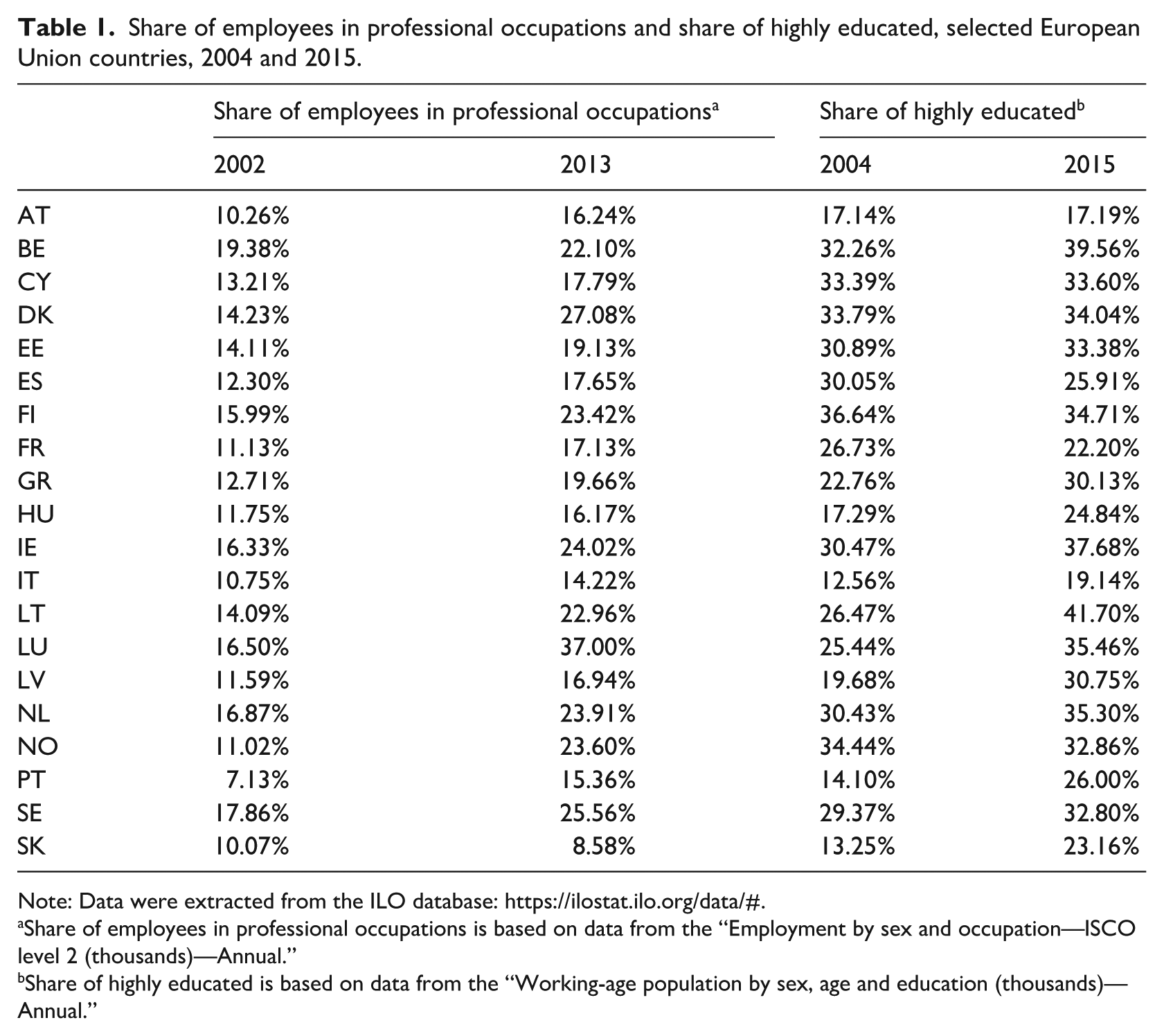
Table 1 presents the occupational and education characteristics of the countries included in the study at the two time points. During the period of interest, the demand for professionals, although varied, grew considerably in all countries. At the earlier time point, the percentage of professionals in the workforce ranged from 7 percent (Portugal) to slightly less than 20 percent (Belgium); at the later time point, the range was 8 percent (Slovakia) to 37 percent (Luxemburg). The rate of growth varied across countries, however.
Share of employees in professional occupations and share of highly educated, selected European Union countries, 2004 and 2015.
Note: Data were extracted from the ILO database: https://ilostat.ilo.org/data/#.
Share of employees in professional occupations is based on data from the “Employment by sex and occupation—ISCO level 2 (thousands)—Annual.”
Share of highly educated is based on data from the “Working-age population by sex, age and education (thousands)—Annual.”
The share of the highly educated in each country increased in most of the countries sampled (excluding Spain, France, Finland, and Norway), but the countries differed in the rate of change over time (Table 1, right panel). For example, countries with initially low shares of highly educated people, such as Portugal and Slovakia, almost doubled the share over the period; in other countries, which contained relatively high shares of highly educated people, such as Denmark and Sweden, the growth was more moderate. However, there was still variation between countries in the share of highly educated at the later time point.
We examined gender differences in professional employment among the highly educated in each country. More specifically, we asked how university-educated women fared in the labor market in each case. Were they able to find employment in professional occupations and thereby translate their higher education into good positions in the labor market? As stated earlier, supply may exceed demand for a highly professional workforce, leaving women at a disadvantage. However, women may respond to new opportunities and manage to utilize their skills, a possibility that, accompanied by changes in academic fields of study, may reduce the gap with men.
Figure 1 presents the gender gap among university graduates in professional occupations in 2004 and 2015, by country. At both time points, in all the countries studied, a larger percentage of men than women worked in professional occupations. While highly educated men and women in all countries increased their employment in professional occupations, women still lagged behind men everywhere (Estonia was the exception). In 2004, the gaps were especially large in Luxemburg, Italy, Norway, and Denmark. In 2015, the gaps were especially large in Finland, Hungary, Denmark, and Italy. These countries differed in both the percentage of those completing higher education and the rate of change in that trend over time.
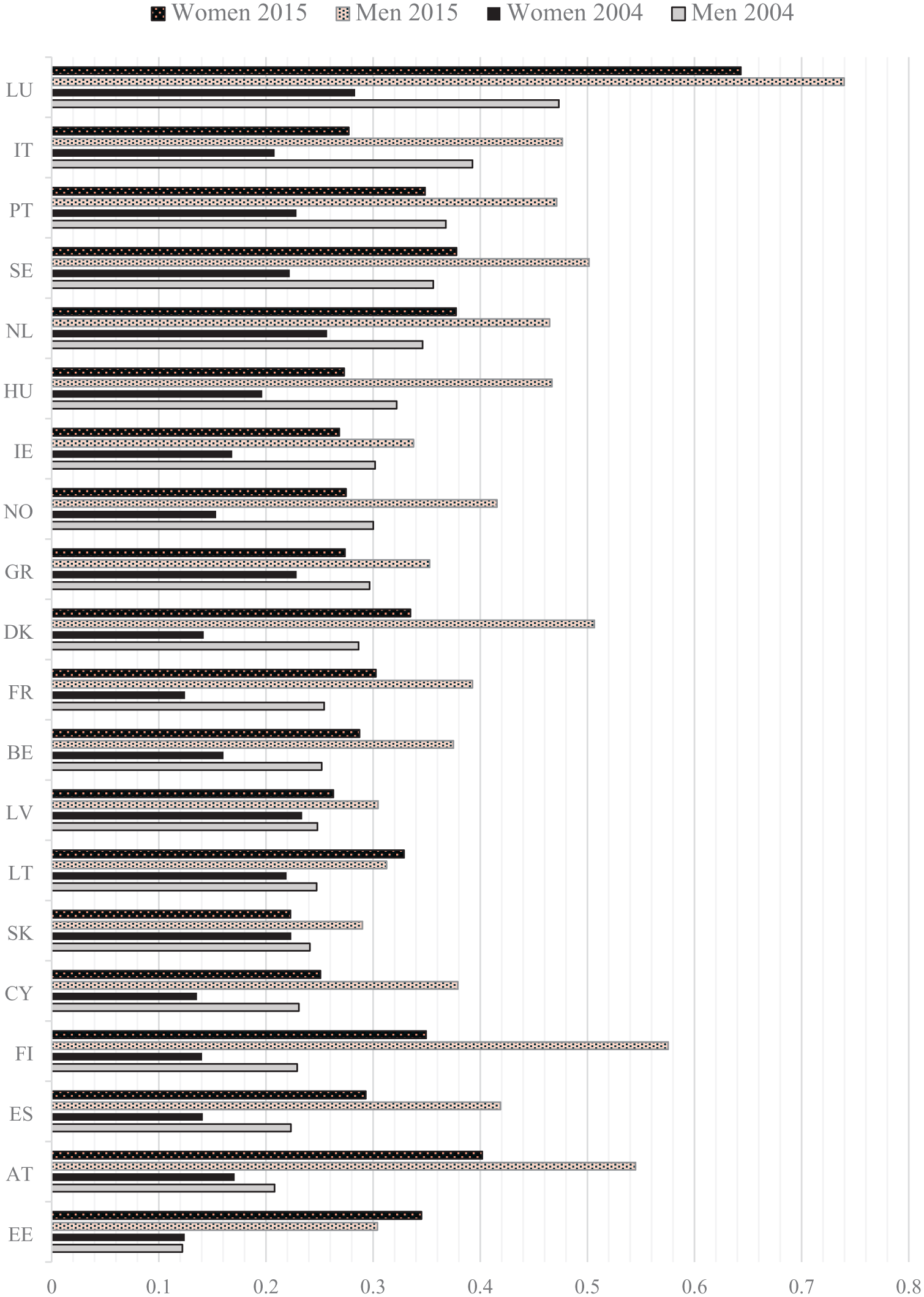
Share of men and women with academic education employed in professional occupations in European Union countries, 2004 and 2015.
To gain a better understanding of the mechanism driving gender gaps in employment we asked how the gender composition of fields of study changed between 2004 and 2015 in the countries studied. Like others, we discovered that while women increased their educational attainments, substantial gender differences remained (Alon and DiPrete, 2015; England and Li, 2006; Morgan et al., 2013). This finding led us to search for the fields of study where men or women dominated in the changes that occurred and to determine whether the patterns differed across countries.
Figure 2 presents the share of women in the fields surveyed. In general, health, education, and social sciences were heavily populated by women, but these fields differed in size and in changes by country over time. Men represented the majority in engineering in both 2004 and 2015, although in some countries (e.g. Denmark, Italy, Norway), women’s share increased between 2004 and 2015. Country-level trends in the gender composition of the sciences were more varied. In some countries (e.g. Cyprus and Italy), science was a male-dominated field in 2004 but became more gender-neutral over time, with many women entering the field. In other countries (e.g. Estonia, Ireland, Latvia, and Lithuania), science was gender-neutral or female-dominated in 2004 and male-dominated in 2015. Education, the humanities, the social sciences, and health were heavily populated by women in both 2004 and 2015. Women’s share in the field of education increased between 2004 and 2015. Most countries saw an increase in the share of men in the social sciences, but the field remained female-dominated.
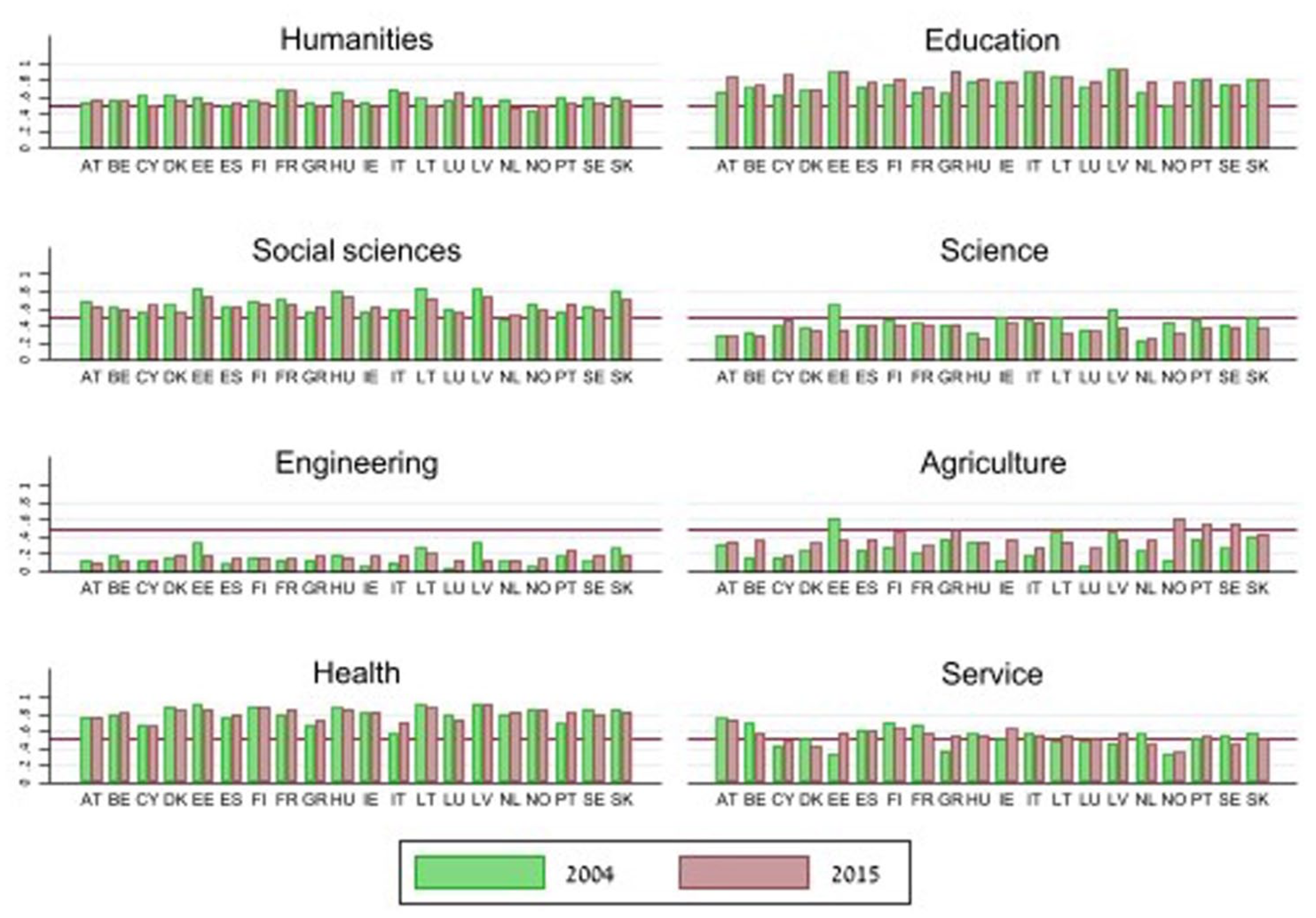
Share of women in fields of study in European Union countries, 2004 and 2015.
On the whole, we found cross-country variations in male-female concentrations in certain fields of study, together with variations in the patterns of change in those fields. In addition to different levels of demand for professional occupations in different labor markets, we found variations in the gender gap among the highly educated employed in professional occupations.
Gender gaps in context
We employed multilevel models to test our research questions (full models are presented in Appendix 2). These models accounted for the variations in individual characteristics, the gender composition of a field of study and its changes over time, and the share of professional employees at the country level (see Appendix 1 for descriptive statistics). The dependent variable in all the models was an individual’s employment in a professional or non-professional occupation. 3 We looked for systematic gender gaps in professional occupations for those individuals in different academic fields of study and across countries. We also examined how the gender composition of fields of study was associated with the gender gaps in employment in professional occupations. Finally, we examined whether occupational structure, that is, our measure for demand for highly skilled employees in the labor market, was associated with those gaps. After analyzing the data for 2004 and 2015 separately, we constructed a model for 2015 that included changes in the gender composition of fields of study between the two points in time (see Appendix 3).
For each year, Model 1 included only individual-level covariates and the random effects of field of study and country. Model 2 added field of study-country indicators and their cross-level interactions with gender: the percentage of women in each academic field. In Model 3, we added a country-level indicator, the share of professional employees out of total employees in the country, to capture the occupational structure. We also considered cross-level interactions at the country level.
Figure 3 illustrates the gender gap in securing employment in professional occupations in 2004 and 2015. The average marginal effects show a significant but diminishing gender inequality over time. In 2004, women had a probability of securing employment in professional occupations that was 0.087 lower than men’s, representing a substantial disadvantage. By 2015, while a significant gender gap persisted, it had notably narrowed: women’s probability was 0.035 lower than men’s. The gender gap thus decreased by 0.052 over the 11-year period, representing approximately a 60 percent reduction in the initial disadvantage. Despite this positive trend, women with an academic education remained significantly less likely to be employed in professional occupations than men with comparable characteristics in both time periods.
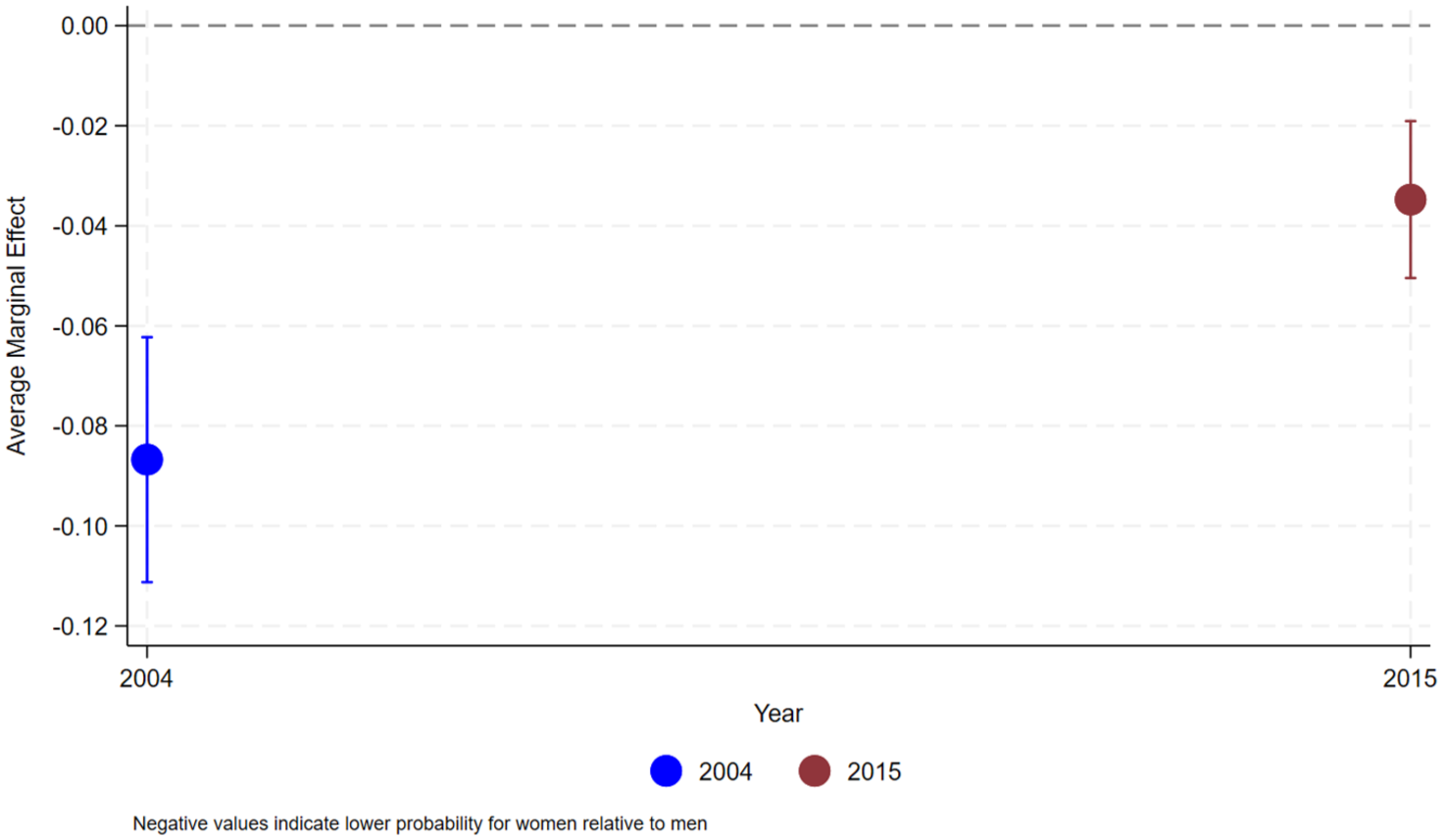
Gender gaps in securing employment in professional occupations, average marginal effects, 2004 and 2015.
Research Question 1
To answer our first research question on the association of the gender composition in a specific field of study with the likelihood of being employed in a professional occupation, we included the field-level gender composition in Model 2 (Appendix 2) for both 2004 and 2015. We continued to find significant gender differences, with highly educated women lagging behind men in their chances of being employed in a professional occupation.
The second-level model (field of study) included the effect of the percentage of women in a field and a cross-level interaction between gender and the percentage of women in that field. The main effect of field of study pertains to men’s likelihood of being employed in a professional occupation. When examining the 2004 and 2015 models, we discovered changes over time. In 2004, the likelihood of men being employed in professional occupations was not associated with their field of study’s gender composition, but in 2015, both men and women in female-dominated fields of study were less likely to be employed in a professional occupation. However, the interaction term between being female and the percentage of women in a field of study was negative in both 2004 and 2015, suggesting women graduating from a female-dominated-field were more disadvantaged than men in that they were less likely to be employed in a professional occupation.
The cross-level interactions we found after examining the gender gaps in employment in professional occupations (Model 2) implied the higher the percentage of women in a field of study (i.e. a female-dominated field), the larger the gender gap for graduates from this field in the workforce. That is, gender differences in employment in professional occupations seem to increase for those graduating from female-dominated fields of study. Figure 4 demonstrates these complex interactions by presenting the predicted probabilities of being employed in professional occupations for men and women by the percentage of women in fields of study, displayed separately for 2004 and 2015. As the figure shows, in 2004, when the population of a field of study was female-dominated, the predicted probability of women being employed in a professional occupation decreased. However, in 2015, both men and women studying in female-dominated fields had lower probabilities of employment in a professional occupation. This suggests that while men’s prospects of employment in professional occupations were not affected by the gender composition of their chosen field of study in the past, both men and women whose higher education was in a female-dominated field were now penalized in the labor market. The figure also shows gender differences in the probability of being employed in professional occupations increased with the rise in the percentage of women in a field of study, although the gap declined over time—almost disappearing for women studying in male-dominated fields. In other words, women who study in academic fields typically considered men’s areas of expertise obtain better positions.
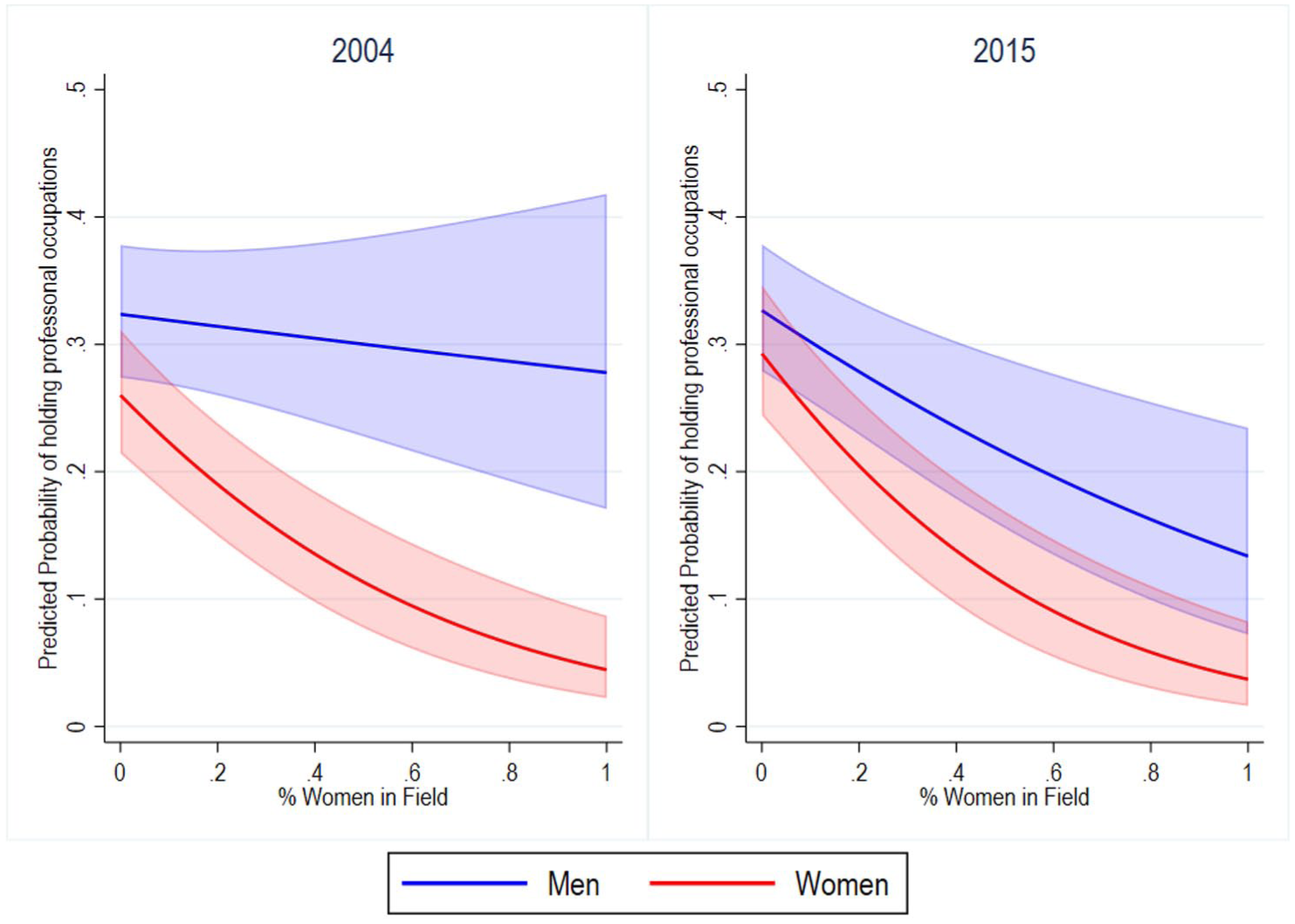
Gender gaps in employment in professional occupations in European Union countries–predicted probabilities by gender composition of field, 2004 and 2015.
Finally, we asked whether changes in the gender composition of fields of study affected the gender gap in securing professional positions over time. To that end, using 2015 data, we employed a model with a variable at the field level that captured whether the field of study had changed and become more female-dominated, by country. The results (see Appendix 3) showed changes in the gender composition of fields of study did not contribute to a better understanding of the gender gap as a factor in the likelihood of being employed in a professional occupation.
Research Question 2
The second research question focused on the association between labor-market structure and gender gaps in employment in professional occupations. Model 3 in Appendix 2 presents the results. Figure 5 illustrates the gender gap in the probability of securing professional employment (men’s probability minus women’s probability) as a function of fields’ gender composition across country contexts. The left panel shows countries with lower professional employment shares (30%), while the right panel shows countries with higher professional employment shares (70%). In 2004 (solid lines), both country contexts exhibited substantial gender inequality that increased with the percentage of women in the field. However, by 2015 (dashed lines), there was marked reduction in gender gaps across all contexts. Notably, in countries with lower professional shares (left panel), fields with less than 40 percent women showed a female advantage (negative values) in 2015, while female-dominated fields still exhibited a male advantage but at reduced levels compared to 2004. In countries with higher professional shares (right panel), the 2015 pattern showed minimal gender gaps in male-dominated fields and only slight male advantage in female-dominated fields, indicating near gender parity. The relationship between field gender composition and gender inequality in securing professional employment was moderated by country-level professional employment structure, with higher professional-share countries demonstrating greater progress toward gender equality by 2015. These results suggest that when labor markets contain more highly skilled jobs, women find more opportunities to work in the respective occupations, leading to a decline in the gender gap in occupational opportunities. It is also plausible that when employment in these occupations is scarce, employers still prefer men, even when women have similar skills. Other models (not shown here) included changes in the share of employees in professional occupations between the two points in time. Although we found an increase in most countries, we did not find any association between the changes and the gender gap with respect to highly educated employees employed in those occupations.
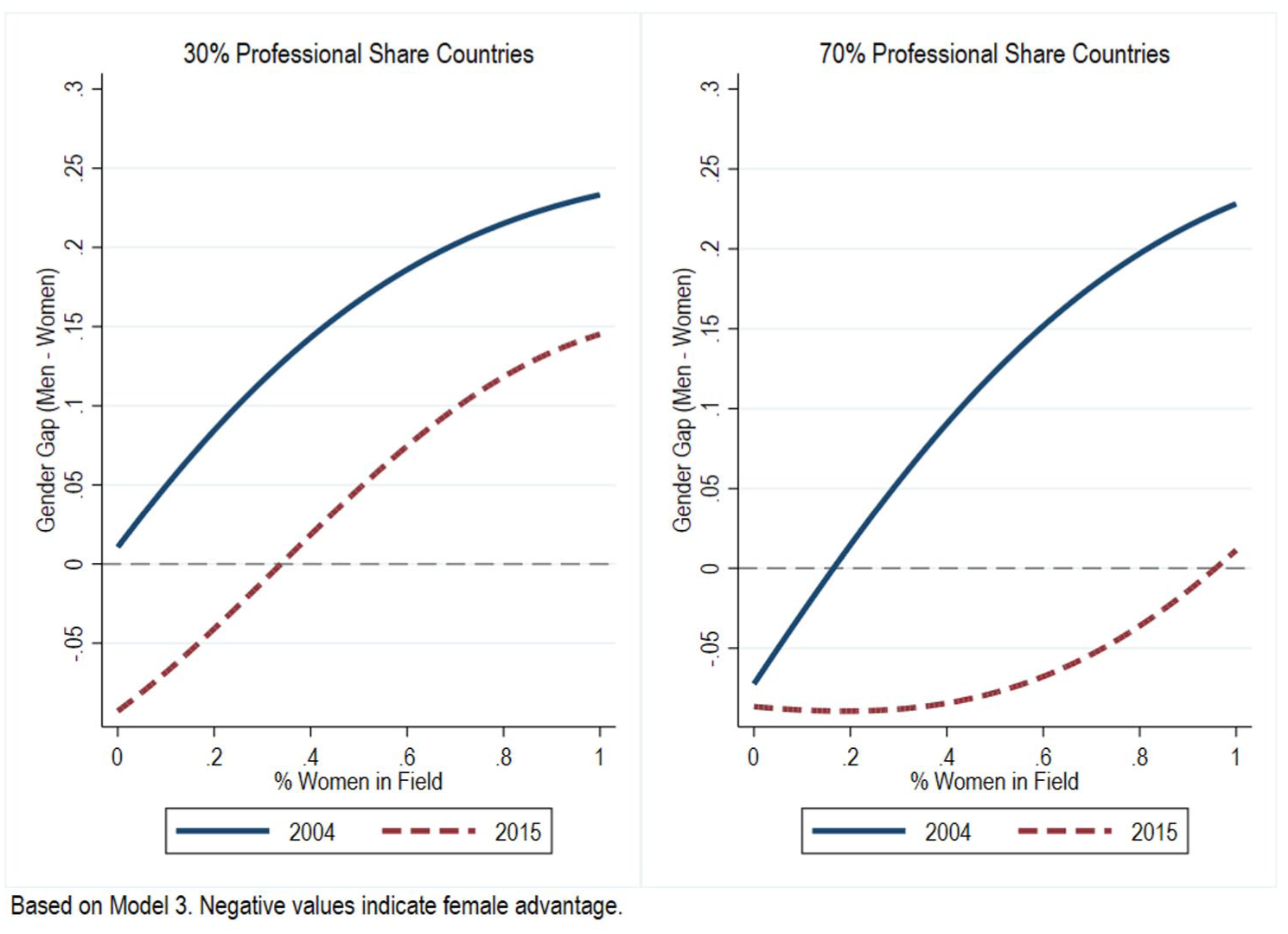
Gender gaps in employment in professional occupations in European Union countries–predicted probabilities by gender composition of field and share of professional employees at the country level, 2004 and 2015.
To validate our findings, we performed robustness checks of our models. We examined models in which the dependent variable was the likelihood of entering professional and managerial occupations. The results did not change. In a previous analysis, we examined additional country-level indicators. We included the percent change in employment in professional occupations between 2000 and 2015 to denote changes in local labor-market structure in terms of highly skilled labor, GDP (obtained from OECD database; https://data.oecd.org/gdp/gross-domestic-product-gdp.htm), and the gender inequality index obtained from the UN development program (http://hdr.undp.org/en/content/gender-inequality-index-gii). However, including these country-level characteristics did not contribute to our understanding of the gender gaps; hence, they were excluded from the results presented here.
To summarize, there is an ongoing and substantial gender gap among the highly educated in employment in professional occupations. The gap is even wider for those graduating from fields of study with larger shares of women. The female disadvantage exists in all fields of study, despite changes in the gender composition of certain fields in some countries. There is some room for optimism, however. First, on the country level, the gender gap in employment in a professional occupation has narrowed in highly skilled labor markets. Second, on the individual level, the gender gap in employment in professional occupations decreased between 2004 and 2015. Importantly, our findings suggest that the penalty associated with graduating from female-dominated fields has diminished over time, particularly in a context of higher demand for skilled workers, indicating that competitive pressures in knowledge-intensive labor markets may be reducing some forms of field-based gender inequality.
Conclusions
Educational attainment has increased in most European countries in recent decades. In light of these changes, we asked whether women have made progress in the labor market due to their greater educational attainment or whether they still lag behind men. We focused on gender inequality in the employment of the highly educated in professional occupations and asked whether levels of inequality were related to the gender composition of fields of study and/or labor-market share of highly skilled workers. Our findings suggest women with an academic education are still at a disadvantage relative to men. Gender gaps in employment in professional occupations were substantial in all the European countries studied. Nevertheless, our findings suggest a declining significance of gender in securing employment in these occupations. Although gender gaps still existed in 2015, they were less salient than in 2004.
We also examined the association between two structural characteristics—field of study and country-level employment structure—and gender inequality. We began by exploring the gender composition of various fields of study and the changes in those fields over time. Based on previous research, we anticipated two different effects of field of study on gender inequality in securing employment in professional occupations. On the one hand, we expected that if women acquire the same education as men, the gender gaps in entering professional occupations should decrease. On the other hand, women’s increased entry into male-dominated fields might result in a surplus of skilled workers, affecting both genders (Verhaest and Van der Velden, 2013). This could result in heightened competition for desirable positions, and women may be at a disadvantage in this competition: men have also increased their presence in the preferred fields, and employers continue to favor hiring men for those positions. Indeed, our findings showed gender gaps decreased over time, and both men and women graduating from female-dominated fields had a lower likelihood of securing employment in professional occupations. This emphasizes the devaluation of female-dominated areas of expertise, as the likelihood of women finding employment in professional occupations was higher for those educated in fields where the majority of students were men.
As others have previously found (Budig, 2002; Stier and Yaish, 2014), men studying in female-dominated fields may constitute a minority but they still enjoy better employment prospects after graduation. Women pay a dual price for that domination: devaluation of the field itself and employment disadvantages relative to men studying in the same field. However, when examining the two time points, we found men’s likelihood of securing employment in professional occupations in 2004 was not associated with the specific field’s gender composition. By 2015, however, they were penalized in the same direction as women studying in female-dominated fields. That is, the likelihood of being employed in professional occupations significantly declined if they studied in female- rather than male-dominated fields. This finding provides additional evidence of the devaluation of fields dominated by women.
Finally, we examined the association between the share of highly skilled workers at the country level and the size of gender gaps in the labor market. We anticipated that in countries characterized by a higher share of professional employees, the gender gap in lucrative positions would narrow. As expected, while gender gaps were pronounced in both high- and low-professional-share countries in 2004, by 2015, the gaps were more significant in countries with a lower proportion of professionals. This suggests that increased demand for workers heightens the price of discrimination and allows women access to male-dominated occupations.
Taken together, our findings suggest a complex mechanism driving gender inequalities. On the one hand, gender inequality has decreased at the individual level. On the other, the importance of gender inequality at the institutional level, in this case, field of study, is increasing. Put differently, women’s entry into formerly male-dominated fields of study gives them a good starting point: they are less discriminated against and have increased access to more lucrative positions. But women entering these fields in recent years may comprise a select group; given their skills and achievements, they have raised the price of discrimination.
Taken together, our findings suggest a complex mechanism driving gender inequalities. On the one hand, gender inequality has decreased at the individual level. On the other, the importance of gender inequality at the institutional level, in this case, field of study, is increasing. Put differently, women’s entry into formerly male-dominated fields of study gives them a good starting point: they are less discriminated against and have increased access to more lucrative positions. This pattern suggests that discrimination becomes economically unsustainable when employers face large pools of qualified female candidates, forcing discriminatory employers to compete at a disadvantage. But women entering these fields in recent years may comprise a select group; given their skills and achievements, they have raised the price of discrimination. However, our finding that field-level gender composition continues to matter—and may be increasing in importance—suggests that segregation operates through different mechanisms than individual-level discrimination. This points to institutional discrimination, where women may gain access to male-dominated fields but continue to face systematic channeling into lower-status specializations or face different promotion trajectories within these fields. The persistence and potential strengthening of field-level effects over time indicates that while direct taste-based discrimination may be declining due to competitive pressures, more subtle forms of statistical discrimination and institutional barriers remain embedded in organizational structures and occupational hierarchies. Furthermore, the country context matters. In countries with relative low demand for professional employees, gender gaps in securing professional employment persist, while in countries with high demand for professional employees, these gaps are less evident, stressing the role-played by labor-market conditions in the maintenance or reduction of gender gap.
The study is not without limitations. Due to data limitations and our focus on cross-country comparison, we had to exclude parenthood status from our analysis, but this can be a driver of gender inequality. The literature on gender gaps in the labor market identifies the effect of the motherhood penalty (Buchmann and McDaniel, 2016; Budig and England, 2001; Cukrowska-Torzewska and Matysiak, 2020; England et al., 2020; Glauber, 2018; Jee et al., 2019), whereby women are penalized in the labor market in terms of wages and employment based on their motherhood status. Future research should examine the extent to which parenthood serves as a mechanism that prevents women from securing more lucrative positions in the labor market.
Furthermore, cross-national differences in fertility patterns and their changes over time, alongside varying welfare policies, likely contribute significantly to gender inequality in securing professional employment. These factors merit comparative analysis but were beyond the scope of the present research. We suggest an in-depth investigation of specific occupations or labor markets is needed to better understand this issue. Future research should also focus on gender gaps in wages, not just employment in professional occupations. More detailed information on fields of study (the data we used were limited in this respect) could yield further insights into this mechanism.
We asked whether context (field of study, country characteristics) matters and whether it is one of the mechanisms underlying gender gaps in the employment of the highly educated in professional occupations. Our findings suggest the gender composition of a field of study (but not the changes in that composition in recent years) and the occupational structure of the labor market both contribute to the maintenance of this gap. Our findings thus draw attention to the possible consequences of educational expansion in the labor market for gender inequality. On the one hand, women are accumulating more resources and becoming better equipped to compete for good jobs. Their educational attainments and the fields they enter affect their prospects in the labor market and raise the cost of discrimination. On the other hand, barriers to equality persist, partly because women still specialize in certain fields, and partly because employers seem reluctant to hire women for high-ranking positions.
Footnotes
Appendix
Multilevel logistic regression models predicting employment in a professional occupation in European Union countries, including changes in gender composition of fields of study, 2015.
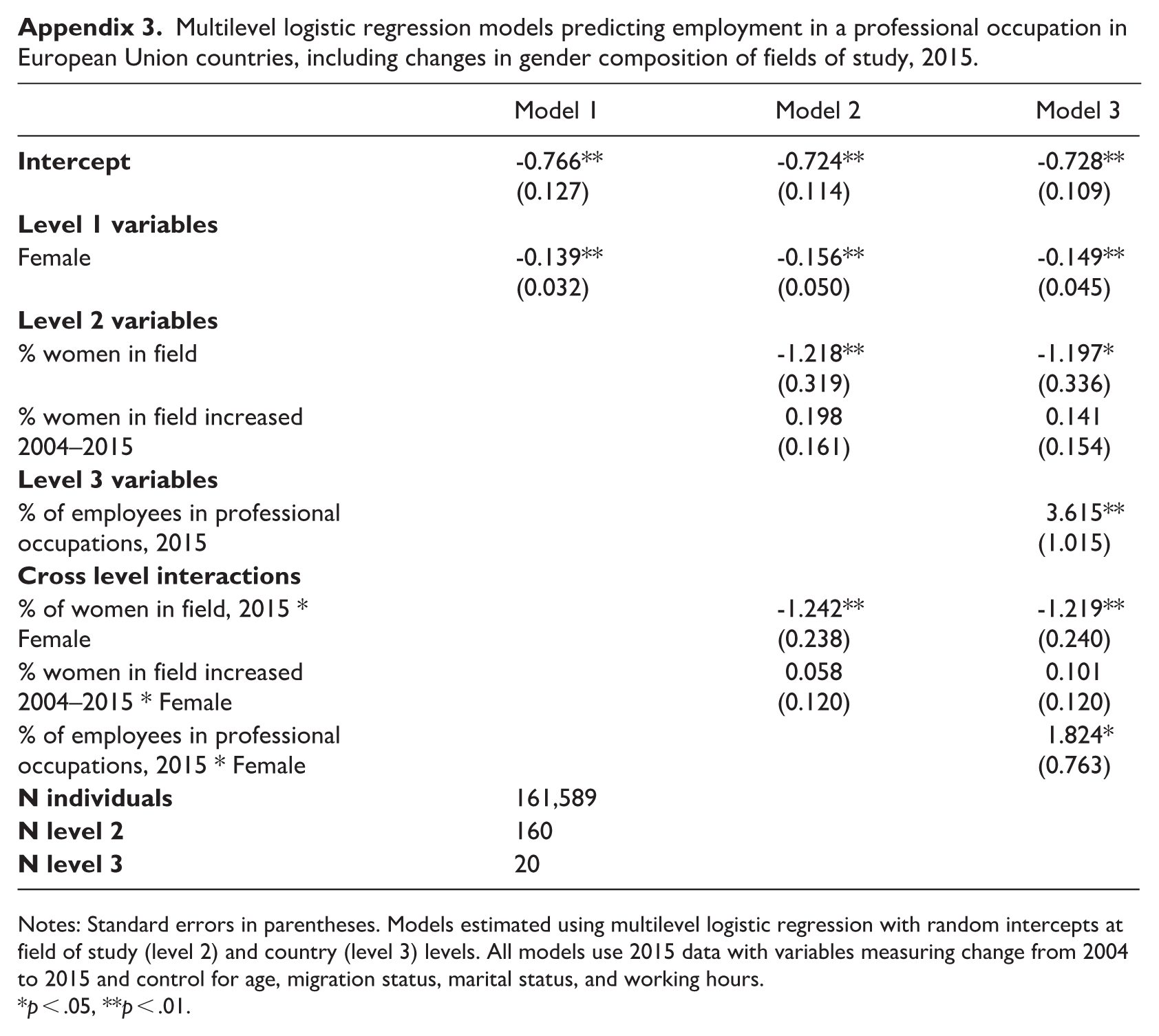
| Model 1 | Model 2 | Model 3 | |
|---|---|---|---|
|
|
-0.766**
(0.127) |
-0.724**
(0.114) |
-0.728**
(0.109) |
|
|
|||
| Female | -0.139**
(0.032) |
-0.156**
(0.050) |
-0.149**
(0.045) |
|
|
|||
| % women in field | -1.218**
|
-1.197*
|
|
| % women in field increased 2004–2015 | 0.198 |
0.141 |
|
|
|
|||
| % of employees in professional occupations, 2015 | 3.615**
|
||
|
|
|||
| % of women in field, 2015 * Female | -1.242**
|
-1.219**
|
|
| % women in field increased 2004–2015 * Female | 0.058 |
0.101 |
|
| % of employees in professional occupations, 2015 * Female | 1.824*
|
||
|
|
161,589 | ||
|
|
160 | ||
|
|
20 | ||
Notes: Standard errors in parentheses. Models estimated using multilevel logistic regression with random intercepts at field of study (level 2) and country (level 3) levels. All models use 2015 data with variables measuring change from 2004 to 2015 and control for age, migration status, marital status, and working hours.
p < .05, **p < .01.
Funding
The authors received no financial support for the research, authorship, and/or publication of this article.
