




Abstract
This article shows how two separate traditions of social movement studies can be combined to better understand the dynamics of collective action. It does so by integrating frame analysis with the emotional approach to social movements. It does so in studying the nationwide protests that took place in Slovakia in 2018, which forced the prime minister to resign. For frames to resonate with the public, they need to play on emotions. Although some scholars have pointed out that frames play on emotions, they have not offered any theory showing which emotions each type of frame needs to get resonance. In this article, we present a model that connects different emotions to different frames. This model can be applied to the study of all types of mass protests.
Introduction
In the 1980s, theorizing about social movements and mass protests took a cultural turn, as scholars began emphasizing such aspects as how movement entrepreneurs frame their arguments (e.g. Caiani, 2023; Giesen, 2006; Hart, 1996; Polletta, 2008). In the following decade, social movement theorizing took an emotional turn (Cammaerts, 2021; Flam, 2014; González-Hidalgo and Zografos, 2020; Tang, 2021). Despite these developments, surprisingly little effort has gone into combining these two approaches. Even though social movement theorists of frame analysis sometimes admit that the frames play on emotions (e.g. Snow et al., 2014; Snow and Lessor, 2022), it is rare for them to discuss what kinds of emotions each type of frame uses. If frames require emotions, then we cannot have a complete framing theory unless we have a theory about what types of emotions each frame relies on. If we do not know what types of emotions each type of frame relies on, then we cannot fully understand the dynamics of how framing works. We might accept the common division of framing into diagnostic, prognostic, and motivational, but since frames require emotional appeals to gain resonance, then to understand why each of these frames matters for social movements, we need to know what types of emotions they use.
Similarly, although social movement theorists of emotions sometimes admit that activists frame emotions or at least emotions can be analyzed as frames (e.g. Jasper, 2011, 2018: 13), it is also rare for them to discuss what types of frames use different types of emotions. Normally, when social movement theorists make a link, they limit themselves to showing the connection between anger or moral outrage and diagnostic (or injustice) frames (e.g. Gamson, 1992; Nikolayenko, 2022) but leave out the other two important frames from the work of Snow et al. (1986): prognostic and motivational frames. Yet, as Snow et al. (1986) point out, in order to mobilize people, in addition to diagnosing the problem, movement leaders must also offer solutions (prognostic framing) and motivate people to take part in collective action events (motivational framing). If all three frames are necessary for mobilizing people, then by ignoring the emotions that prognostic and motivational frames use, we cannot understand how emotions influence mass protests. Consequently, theories of emotions have remained incomplete and not given a full picture of the emotions that social movements use and how they use them. Thus, both emotional and framing approaches to social movement theory would be greatly enhanced by a model that links emotions to framing.
Sometimes scholars of frame analysis look at frame alignment or resonance and emotions (e.g. Ketelaars et al., 2017; Snow et al., 2019) or emotional resonance (e.g. Giorgi, 2017; Robnett, 2004; Schrock et al., 2004). However, this typically requires analyzing participants through such methods as interviews, survey data, ethnographic studies, and so on to understand what participants were thinking or feeling. Nonetheless, this does not answer the question of this article, which is what types of emotions are linked to the three types of frames that Benford and Snow delineated. Moreover, there is the practical matter that it is easy to get access to data for analyzing what frames activists use and what emotions they play on as it only requires an analysis of texts (such as transcriptions of speeches, social media postings, etc.), while analysis of resonance usually requires fieldwork, interviews, or surveys. Consequently, by relying on texts, it is also possible to do historical research. Moreover, even if a few attempts have been made at looking at emotion and resonance, an approach that combines frame analysis with emotions should take up the three frames that form the core of theorizing about social movement frames.
This article shows how we can unite the frame analysis approach with the emotional approach to social movement theory by focusing on the case of Za slušné Slovensko (ZSS) or “For a Decent Slovakia” movement that erupted in 2018 after the murder of the young investigative journalist Ján Kuciak and his fiancée. Not only did this movement succeed in getting the well-entrenched populist Prime Minister Robert Fico to resign after 12 years of being in power, but it also contributed to his party’s electoral defeat in the elections 2 years later. Even though this is only a single case study, it presents a model that can be used for all types of collective action, although further studies will be needed to see how our model might have to be modified to fit other cases.
We chose the Slovak protests because it represents an interesting case. They took place in a post-communist country in an area where social scientists have claimed that civil society is much weaker than that in more established Western democracies, and activists have preferred to create professionalized NGOs rather than arrange protest events (Howard, 2003; Mendelson and Glenn, 2002; Narozhna, 2004; for a critique, see the study by Jacobsson and Saxonberg, 2013). Nonetheless, our case is not about post-communism. On the contrary, we argue that our approach can be applied to all types of collective action. Therefore, we conclude our article by giving examples from many diverse types of social movements, basing our analysis on articles that apply an emotional approach. In doing so, we show how the various emotions these articles discuss fit into the three types of frames that Snow et al. developed, but since the authors of these studies did not consciously try to apply frame analysis, usually only one or two of the three frames can be ascertained from their articles. Nonetheless, our discussion of their articles shows how it would have been easy to present the emotions used in these protests in terms of the three types of frames.
We are not denying that other factors such as research mobilization or political openings are also important, but since, according to our knowledge, no social movement scholars have yet created a model showing what types of emotions each of the three frames uses, for reasons of space, our article focuses on this one issue. Furthermore, in many cases, such as the present Slovak case, the political openings and resource issues are rather simple and do not require a great amount of analysis. The manner in which activists mobilized resources was mainly via postings on Facebook, which is the source that we analyze in this article. Meanwhile, the main political opening was the fact that there was a coalition government in power, which included a party (Most-Híd) that sympathized with the demands of the protesters and, thus, threatened to bring down the government if certain demands were not met.
This article proceeds by first giving a basic review of the events that led to the downfall of the prime minister, followed by a theoretical section where we explain our synthesis of framing and emotions, a method section, and then finally our analysis of the ZSS movement and a section where we show how the model developed in this article can be applied to many other diverse cases.
Background: the ZSS movement
Prime Minister Robert Fico has been a dominant figure in Slovak politics. Formerly one of the leaders of the Party of the Democratic Left, he founded the party Smer-SD (Direction Social Democracy) in 2002 and became prime minister in the years 2006–2010, 2012–2018 (when he resigned due to pressure from the demonstrations), and most recently, in 2024 when his party won the elections. Even though the party officially called itself “social democratic” and formerly sat with the socialist group in the European Union (EU) parliament, it has been described as populist, socially conservative, and often played on nationalist-xenophobic themes against immigrants and Roma (cf. Frič and Gyárfášová, 2020; Stanley, 2017). During its long period in power, the party became entrenched in corruption and cronyism, with its top officials being accused of cooperating with dubious businesspeople with connections to the underworld. The journalist Kuciak was murdered while investigating the businessman Marian Kočner, who had strong connections to high-level Smer-SD officials.
Since it was widely assumed that Fico’s governing party was implicated in the murder, the event led to mass protests throughout the country. The activists chose the name “for a decent Slovakia” to show that they aimed to make Slovakia a country where politics was based on mutual respect and honesty rather than greed and corruption. Originally, their main demand was to have an independent investigation of the murder under the auspices of international investigators and the establishment of a new government, whose members were not under suspicion of being corrupt or having links to organized crime. Shortly thereafter, the ministers of interior and culture resigned. Finally, on 15 March 2018, Fico delivered his resignation; however, the coalition government remained in power until the 2020 elections, which it lost. The protest movement announced it would resume its demonstrations unless Police President Tibor Gašpar also resigned. Several days later, the newly appointed interior minister Tomáš Drucker resigned because he opposed Gašpar’s dismissal. Shortly after Drucker’s resignation, Gašpar agreed to step down by the end of May 2018.
How were activists able to quickly organize protests that brought out tens of thousands of people to the streets to force the prime minister to resign? The next section describes how we can synthesize frame analysis with the emotional approach to social movements to explain this outcome.
Social movement theory and the ZSS movement
First, this section looks at the frame analysis approach to social movements, followed by a review of the literature on the emotional approach, after which we discuss more clearly how we can link the two approaches. For reasons of space, we restrict ourselves to discussions of the literature specifically on social movements. There is a rich literature on framing that spans many other fields, such as communications, linguistics, psychology, and sociology (Giorgi, 2017). When it comes to emotions, nowadays almost all social sciences and even many natural sciences have deep-going discourses over the role of emotions, so to discuss all this literature would probably require a several-volume book series rather than an article.
Frame analysis
In the 1980s, social movement theorists began recognizing that the success of social movements depends on more than objective structural conditions such as economic developments, political constellations (e.g. Tarrow, 1991), access to resources (e.g. McCarthy and Zald, 1977; Tilly, 1978), or the degree of relative deprivation (e.g. Gurr, 1970). The success of these movements to a large part depends on the ability of the movement leaders and activists to frame their arguments in a manner that resonates with their audience. Benford and Snow (2000) delineate three framing tasks necessary for gaining resonance among the public. First, social movement entrepreneurs need to explain to the public what the problem is (i.e. the diagnostic frame). After all, if there is no problem, there is no reason to act. This is similar to the “injustice frame” that Gamson (1992) describes. This frame requires movement activists to assign the blame to somebody. Once they diagnose the problem, they must propose a solution to the problem (i.e. the prognostic frame); for even if there is a problem, there is no point in acting unless there is a plausible solution. Finally, they need a motivational frame to induce the population to participate in collective action and demand change.
Of course, not all frames resonate among the audience; thus, there is a cultural element to framing. As Zald (1996: 266) notes, social movements “draw on the cultural stock for images of what is an injustice, for what is a violation of what ought to be.” There is now a rich literature on issues of frame resonance that looks at different reasons why some frames gain more resonance than others, due to cultural aspects. Thus, the focus has mostly been on cognitive issues (e.g. Giorgi, 2017; Tarrow, 2013). There has also been greater emphasis now on frame alignment and resonance and discussions about such issues as bridging, amplification, expansion, transformation, and linkage (e.g. Dioun, 2018; Snow et al., 2019; Tarrow, 2013; Zhou et al., 2022). Others have introduced new terms to the discussion about resonance, such as “symbolic resonance” (Tarrow, 2013: 17).
Even though culture matters, it is still unusual to bring emotions into frame analysis. Benford (1997: 419) himself criticizes framing theorists for leaving out emotions, noting that “we continue to write as though our movement actors (when we actually acknowledge humans in our texts) are Spock-like beings, devoid of passion and other human emotions.” Snow et al. (2019) admit that the idea of “moral shock” coming from the discourse on emotions matters for resonance. Goodwin et al. (2001) point out that motivational framing implies emotions but add that those within the frame analysis tradition have not theorized this. Other articles on framing have also admitted that emotions matter for framing, but without developing any kind of model that links frames to emotions (e.g. Snow et al., 2014; Snow and Lessor, 2022).
There have been some attempts at bringing emotions into frame analysis, but these attempts have not tried to show how Benford and Snow’s schema of three frames corresponds to any type of emotional landscape. Thus, Ketelaars et al. (2017) admit that although almost all studies of frame analysis rely on cognitive types of frame alignment, emotions also matter for gaining resonance, but they do not develop a model for this. Eyerman (2006) also notes that frames have both a cognitive and emotive side but does not discuss what types of emotions each type of frame plays on. The few times framing theorists have tied emotions to a particular frame, it has usually been to link anger or moral outrage to diagnostic (or injustice) frames (e.g. Gamson, 1992; Nikolayenko, 2022). Yet, even these studies leave out prognostic and motivational frames.
To be sure, Schrock et al. (2004) emphasize that motivational frames play on emotions but do not state what types of emotions motivational framing could rely on. They also observe (Schrock et al., 2004: 64): “Naming something an injustice . . . simultaneously instructs others that anger is appropriate and social change is necessary,” but they do not link injustice to any frame (which we argue belongs to the diagnostic frame). Several authors have also pointed out that “injustice frames” rely on emotions, even though they do not usually specify which types of emotions they rely on (e.g. Norgaard, 2006: 383).
Some social movement scholars have indeed linked injustice frames to feelings of anger (e.g. Goodwin et al., 2004; Jasper, 1998). Nevertheless, they do not discuss what kinds of emotions the three types of frames developed by Benford and Snow use; and even if we claim that the injustice frame corresponds well to the diagnostic frame, it still leaves the other two frames unaccounted for. To be fair, Jasper (1998: 413) points out that motivational framing is based on emotions but leaves it at that without offering any clues as to what types of emotions such framing uses. If scholars of framing approaches are correct in claiming that three different types of frames are necessary for mobilizing people, then we cannot understand how framing works if we only have a theory about the first frame (diagnostic/injustice) and no theory about what emotions are important for the other two frames.
Rather than trying to fully link emotions to framing by analyzing which emotions each type of frame uses, there has been a trend to analyze the role emotions play in resonance (e.g. Ketelaars et al., 2017; Snow et al., 2019). Several scholars have started using the term “emotional resonance” (e.g. Giorgi, 2017; Robnett, 2004; Schrock et al., 2004) and claim that in order for frames to work, they need “emotional resonance” as well as cultural resonance. However, they do not develop a scheme by which one can analyze which types of emotions get emotional resonance for different types of frames. Similarly, Cadena-Roa (2002) invokes the idea of “emotional dramaturgy” for framing but does not develop any theory about what types of frames invoke what types of emotions.
If we accept that frames require emotions to gain resonance, then we must develop a theory regarding which emotions each type of framing uses and why they would use it, which is our task below.
Emotions and social movements
Since this article focuses on the attempts at analyzing the emotions of social movements and linking them to the three frames from the discourse on frame analysis in social movements, we concentrate on those theorists who have discussed the emotions within social movements. Consequently, we leave out important theorists of emotions, such as Hochschild, who did not write about social movements. Her work on managing emotions (Hochschild, 1983) has been instrumental for much of the discourse on the sociology of emotions, but we have not seen this approach applied to social movements. In later work, she did analyze the rise of populism in the United States and emphasized the role of resentment, which is a theme of much research on populism (e.g. Abramowitz and McCoy, 2019; Betz, 1993; Buštíková, 2014; Patenaude, 2019; Wilson and Davis, 2011), but even resentment has been largely absent from the discourse on social movement theory.
We follow Jasper (2011) in differentiating between reflex emotions that come immediately and reflexive emotions that come from longer-term group events. We further divide the reflex emotions into a negative group, which is associated with diagnostic framing, and a positive group, which is associated with prognostic framing. Finally, we have a group of positive, reflexive emotions based on feelings of community and togetherness, which are associated mainly with motivational framing.
Negative emotions and diagnostic framing
It is not surprising that diagnostic framing is associated with negative emotions: If there is no problem to diagnose, then there is little reason to protest. We have already noted earlier that some theorists of framing have admitted directly or indirectly that diagnostic frames or injustice frames often play on anger. The role of anger has been at the forefront of theorizing about emotions and social movements. Scholars have noted that people often protest because something happens that makes them feel angry (Jasper, 2014; Saxonberg, 2001, 2013), creates a “moral shock” (Polletta and Amenta, 2001), or induces “moral outrage” (Jasper, 1997). As Flam (2005: 27) remarks: “Anger is of key importance because it constitutes a key antidote to the fear of repression.” Furthermore, “[i]n contrast to cynicism and resignation, moral outrage or anger directed at the opponent mobilizes” (Flam, 2005: 20). Political sociologists have observed that anger is a driving force behind voting for populists (Conover and Feldman, 1986). Since potential participants often feel fear and anxiety, movement activists need to find a way to transform these feelings into moral indignation and outrage (Goodwin et al., 2001: 16; cf. Groenendyk, 2011).
As noted earlier, some scholars applying frame analysis have linked anger and outrage to diagnostic and injustice frames. This is logical as people would hardly feel anger or moral outrage if they felt that government actions were just. Yet, even if people feel anger and want to take action to force change, they could hardly feel motivated unless they have some feelings of hope that they could succeed.
The discourse on emotions and mobilization generally concludes that while anger is mobilizing, fear is demobilizing (e.g. Conover and Feldman, 1986; Rico et al., 2017). The reason being that when people feel fear, they feel it is something that is beyond their control or the control of politicians, so they cannot blame anyone and mobilize against them. However, when they feel anger, they blame specific groups within the country and believe it is possible to take measures to change the situation for the better. Nonetheless, some authors claim that fear can lead to mobilization when combined with hope (e.g. Kleres and Wettergren, 2017; Nabi and Myrick, 2019). This kind of combination of negative with positive emotions is what Jasper (2018: 51) calls a “moral battery.” This combination fits our model well, but we show in this article that each of the emotions belongs to a different frame. The negative emotion of fear or anger belongs to the diagnostic frame (i.e. the frame showing the problem and reason to feel fear or anger), while the positive emotion such as hope belongs mostly to the prognostic frame (i.e. the frame that gives hope by offering a solution).
Shame is another negative emotion that comes up often in discussions about mass mobilizations (e.g. Eyerman, 2006; Harris, 2024; Van Ness and Summers-Effler, 2018). Scheff (1997 and many other texts) emphasizes the role that shame plays in society and discusses how it can lead to a spiral of anger and shame. Turner and Stets (2006a: 553) postulate that shame along with feelings of guilt “are reactions to one’s moral worth within a moral community.” Thus, shame is based on how one is evaluated by others (Turner, 2006). Similarly, Jasper (2018) considers shame to be a moral emotion.
Shame is particularly important for marginalized groups, such as gay people, who then need to play on emotions of pride to counterbalance their ostracization from society (e.g. Gould, 2009; van Troost et al., 2013). In our case, the mobilized group represented society in general, so there were no excluded groups; nonetheless, the activists did at times play on emotions of shame for their diagnostic framing, although not as much as anger. Turner and Stets (2006b) take a broader view and argue that people feel shame when they are unable to meet expectations. In the case of Slovakia, citizens might feel shame in that their fellow citizens had elected a corrupt government.
Even though one might consider shame to be a rather reflexive emotion since it comes from a group, we follow Gold (2015: 114), who groups it together with anger and fear (among others) as a “basic emotion.” In our view, it is not connected to the positive emotion of togetherness/communalism that is typical for motivational framing, and this is also what our empirical results show.
Positive emotions and prognostic framing
Some studies of emotions specifically refer to the role of hope in mobilizing people (e.g. Jensen and Bang, 2017; Kuntz and Thompson, 2009). For instance, hope may help motivate groups to support social change (Greenaway et al., 2016). Feeling hopeful connects a positive outlook with the desire to change the status quo. Conflict-solving communication may boost acceptance of proposed solutions (Cohen-Chen et al., 2017). Jasper (2011) emphasizes the joy that participants can feel when attending demonstrations.
It is perfectly logical that prognostic frames often play on hope; after all, if diagnostic frames play on anger at injustices, there would still be no point in protesting if the activists are not able to provide a solution that gives hope that there is a solution to the problem. Hope also matters somewhat for motivational framing, although it does not seem to be as important for motivational framing as it is for prognostic framing. If potential participants have little hope of success, they are unlikely to feel it is worth their time and energy to participate; therefore, there is some connection between hope and motivational frames.
Pride is another important emotion. Jasper (2018: 4) calls this a “moral” emotion but admits that it can be a reflex emotion that protesters feel immediately (p. 48). This emotion is particularly useful for mobilizing marginalized groups, such as gay people, who feel shame. In this situation, appeals to pride provide a prognostic frame that offers a solution to their situation (e.g. Britt and Heise, 2000; Gould, 2009; Jasper, 2011). Turner (2006) claims that feelings of pride come from the evaluation of others. Applied to social movements, one can say that when movement activists use the pride frame, of course, they want the members of the group to feel pride.
In addition to feeling pride, protesters can also feel joy (Jasper, 2011, 2018; Rimé and Páez, 2023; Saxonberg, 1999; Summers-Effler, 2002; van Troost et al., 2013). Even though we might expect joy to be more a motivational issue than prognostic, we list it here under prognostic framing because empirically in our case, every time activists use terms related to joy, they do so in connection with pride and mostly in prognostic frames. In addition, theorists often link joy to pride (e.g. Jasper, 2014, 2018; Kuntz and Thompson, 2009; van Troost et al., 2013). Furthermore, Jasper (2011: 287) lists joy as a reflex emotion, which in our model goes along with prognostic framing rather than motivational framing. We acknowledge that joy could provide a strong motivation for joining a demonstration, so the question is why this does not come more often in motivational framing than in prognostic framing. An obvious answer is that joy is normally an emotion that participants feel, but not something that movement leaders use in their framing. It is rare to appeal directly to feelings of joy, but participants still might feel joy when attending rallies. Feelings of joy among participants can be uncovered through survey data, interviews, and ethnographic or participatory observation, but it is usually not part of a direct framing strategy among movement leaders.
Positive reflexive communal emotions and motivational framing
Once activists explain the problem in the diagnosis frames that are based on feelings of anger, fear, or shame and then provide a solution in the prognosis frames that they link to hope and pride, they have to encourage people to take the step of actually participating in protest actions. These feelings are “reflexive” in that they need to be based on long-term feelings that induce people to continue participating in protests. We show in this article how motivational frames can be based on communal feelings of togetherness and solidarity, and we also explain why, at least concerning short-term uprisings, emotional approaches based on rituals (such as the “liminal phase” and Durkheim’s notion of “collective effervescence”) do not comprise a part of motivational framing.
Studies of social movements sometimes emphasize the importance of “communal feeling” that can arise to motivate people to engage in collective action (e.g. Lee, 2017).
Eyerman (2006) writes about the “sense of belongingness.” Turner (2006: 282) argues that “People have a need to sense that they are part of the ongoing flow of interaction.” Gold (2015) discusses how movements induce feelings of belonging and community. Barjasteh and Jafarnejad (2023) note how demonstrations can bring about a sense of unity. As long as the police do not violently repress the protests, there is often a carnival-like atmosphere, with music, entertainment, humorous skits, and so on (Hammond, 2020; Saxonberg, 1999, 2001), where people feel like they have come alive and “really lived” (Trnka, 2012). Being a part of a group creates positive feelings of togetherness (e.g. Dolata and Schrape, 2016; Pizarro et al., 2022) and solidarity (Jasper, 1998); the feeling that one is part of something important.
If a social movement is long-lasting, spanning years or even decades, then the movement is likely to create rituals and symbols to keep the movement going. In doing so, they create the emotional energy (Collins, 2004, 2014; Jasper, 2014; Summers-Effler, 2002) that motivates people to continue participating in movements over the long term. Summers-Effler (2002: 42) observes that “the power of the symbol will diminish over time. In order to maintain the power to call up emotional energy, it must be periodically recharged with solidarity experiences.” When a movement succeeds, it creates a “collective effervescence of solidarity” (Collins, 2014: 300). Rimé and Páez (2023: 1321) define collective effervescence as the “considerably amplified emotional state manifested by the participants of a collective assembly because of their experience of shared emotions and the ensuing reciprocal emotional activation.” Turner (1969: 94) wrote similarly about the “liminal phase” within groups who are practicing the rites of passage. During the liminal phase of a ritual, communitas is able to develop (Olaveson, 2001).
Even though collective effervescence and liminal phases might play a role in motivating people to participate in movements over long periods, they are not likely to matter for short-term mobilizations of the sort that took place in Slovakia that aimed to force the government to resign and have a murder investigated. Thus, for example, writing about the Czechoslovak “Velvet Revolution” in 1989, Trnka (2012) concludes that in this uprising that only lasted several months, participants did not experience anything resembling Turner’s communitas. Finally, even if social movements that have existed for many years might develop rituals that lead to communitas/liminal phases/collective effervescence, it is not clear that this would be promoted directly in motivational framing. We are not aware of cases in which scholars have linked these terms to frame analysis. Furthermore, analyzing whether participants themselves have such feelings would require more interviews, survey data, or ethnographic/participatory research, rather than analyzing the frames that movement leaders use.
Table 1 summarizes the link between frames and emotions.
Links between different types of frame and emotions.
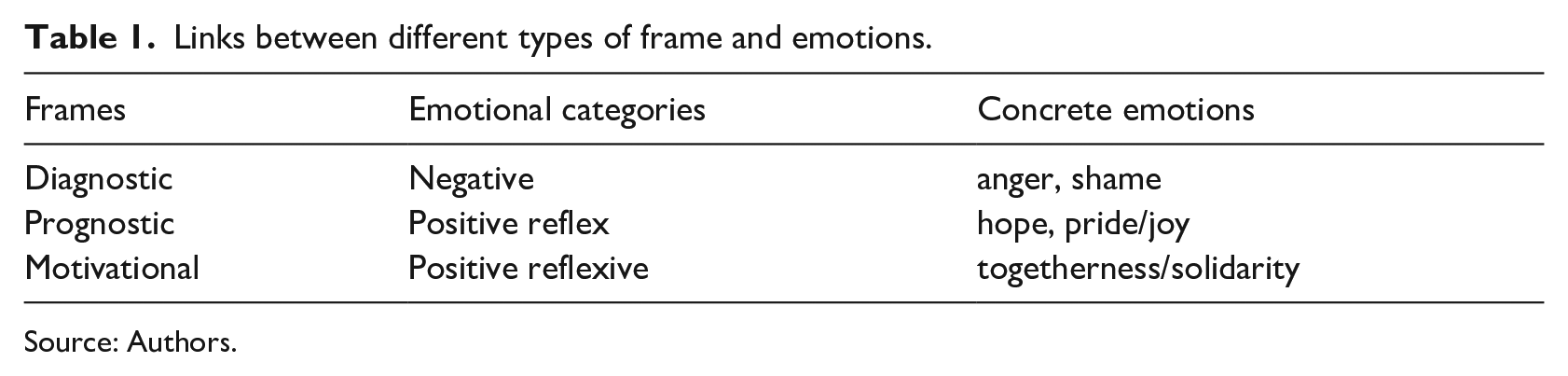
Source: Authors.
A brief note about previous studies of Central European social movements
Even though our study develops a model that could be applied to all collective action events, the Slovak case is especially interesting, since very little has been written so far about emotions and social movements in post-communist Central Europe. Saxonberg (2001, 2013) has argued that anger combined with frustrated rising expectations was essential for the revolts against the communist regimes, while Ost (2005) has examined the role that anger has played in Poland’s labor movement. Jasper and Zhelnina (2023) write about how activists fighting against Moscow’s renovation schemes played on feelings of belongingness. Kuntz and Thompson (2009) mention several types of emotions that were important for the “color revolutions” but do not link their discussion to the discourse on emotions in social movements; nor do they mention frame analysis. Trnka (2012) discusses how emotions matter for the revolution against the communist regime in Czechoslovakia but does not emphasize the role of any particular emotion or relate the arguments to the discourse on emotions in social movements other than to point out that Turner’s idea of communitas is not applicable.
Some studies have discussed the role of framing in post-communist social movements without linking the frames to emotions (e.g. Heitlinger, 1996; Saxonberg, 2003: ch 8). Others have also combined frame analysis with the political opportunity approach without discussing emotions (e.g. O’Dwyer, 2012), or they combined frame analysis with collective identity (e.g. Vermeersch, 2003).
By far, the most common approach to post-communist social movements in Central Europe has been that of political and/or economic opportunity structures (e.g. Císař and Navrátil, 2016; Císař and Vráblíková, 2019; Jacobsson, 2013; Korolczuk and Saxonberg, 2015). Often, such scholars combine opportunity structures with the resource mobilization approach (e.g. Císař and Vráblíková, 2010; Fagin, 2000).
Given the lack of studies on emotions and social movements in Central Europe, the Slovak case also has empirical value, especially since studies of social movements in Central Europe have analyzed Czechia, Poland, and Hungary much more than Slovakia. However, the main goal of this article is theoretical as our model can be applied to all collective action events, which is why, at the end of this article, we give examples of how our model could be applied to other cases.
Research design
The following section will now introduce the methodological framework that guided our research. In our case study, we analyzed how the ZSS movement employed its framing, combined with the use of specific emotional appeals in its communication with the public. First, we discuss how our case study is generalizable, then we discuss our choice of data, followed by a discussion of the time frame.
Case study
Since this is the first time, according to our knowledge, a study investigates what types of emotions each type of the three frames uses, we focus on one case—the national protests in Slovakia—but we establish a model that can be applied to all mass mobilizations. This type of investigation has been called a “Building Block” study that aims to “identify common patterns” (Thomas, 2011: 515). Since the model we develop in this study can be applied to all mass mobilizations, in accordance with the work of Gerring (2004: 341), we aim to “elucidate features of a larger class of similar phenomena.”
Using social media
It is becoming increasingly common to analyze public social media communication that social movements display (e.g. Castells, 2015; Demirdis, 2019; Fillieule and Dafflon, 2022; Gerbaudo, 2018; Krinsky and Crossley, 2013). We follow this trend and focus on the ZSS’s Facebook page, as it was the main form of mass communication that the movement used. The movement never created any Twitter or TikTok profiles during its existence, and its Instagram profile remains rather insignificant in terms of followers compared to its official Facebook page.
As one of the most popular social networks in Slovakia, Facebook continues to be extensively used as a public communication channel by Slovak political parties and their leaders (e.g. Kluknavská and Hruška, 2019; Krajčovič, 2021; Školkay and Marincea, 2021), presidential candidates during campaigning (Svidroňová et al., 2019), youth political organizations (Mihálik et al., 2022), or regional municipalities (Svidroňová et al., 2018). With more than 2,500,000 users in Slovakia (nearly half of the population), Facebook dominates the social media market in the region (DataReportal, 2023). Therefore, the potential audience remains highest on Facebook, compared to, for example, Twitter (with approximately 385,300 users), which has rather marginal importance in Slovakia (DataReportal, 2023). Despite its immense popularity, empirical research on the use of Facebook by citizen initiatives and grassroots movements in Slovakia remains relatively scarce (for an exception, see the study by Siedlecka, 2021). Still, we would argue that Facebook constitutes an integral tool for grassroots mobilization and bottom-up initiatives, as the mainstream media often ignores or negatively portrays protest and openly anti-status quo movements groups (such as the ZSS) (Cammaerts, 2012; Hamdy and Gomaa, 2012). This encourages such groups increasingly to rely on digital networks (Milan, 2015). While statements and slogans disseminated through digital platforms may not necessarily capture all aspects of the movement’s agenda (Kou et al., 2017: 807–808), we postulate that to analyze the movement’s framing activities, it becomes more viable to look at what the movement declares about itself compared to what other, secondary sources, such as the press or TV, have to say about its activities. Such reports are prone to bias, and they only pick and choose parts of speeches rather than showing the entire speech.
The statements, which appeared on the official Facebook page of the ZZS movement, can, therefore, be considered a viable source of the main themes and messages that those behind the initiative wished to communicate to the public. In our material, the movement did not openly affiliate with any political party and strived to present itself as a civic, bottom-up initiative. In one of its event descriptions (March 9, 2018), the movement explicitly declared that “[t]he organizers of the rally are not members of any political party.” The Facebook posts of ZSS mostly contained statements made by civic activists officially representing the movement, but they also included Slovak popular figures such as actors or musicians, who declared their open support for the initiative.
Framing periods
The periods that we analyze are structured around core events in the genealogy of the ZSS movement. We outline three periods with the most-attended mass protests in Slovakia. These intervals cover those events that we consider to be the most significant for the 2018–2019 Slovak political crisis (such as the resignation of key figures in the government, and the first anniversary of the murder). Communication with the public through the official Facebook page of the movement began on 7 March 2018, 1 two days before the 9 March 2018 wave of protests that were held around the country and among the Slovak diaspora abroad. More than 50,000 people attended the largest protest, which took place in the capital (Demiger et al., 2018). These demonstrations induced the prime minister to step down on 15 March 2018, leading to the formation of a new government. Thus, our first interval covers the initial phase of mobilization starting with the first Facebook post on 7 March up to the resignation of the prime minister on 15 March 2018.
Our second period covers 16 March 2018 to 5 April 2018. On 16 March 2018, the movement organized another large wave of protests across cities at home and abroad, with the largest event bringing an estimated 65,000 people into the capital (Martinková et al., 2018). This second wave of protests, which effectively mobilized more than 100,000 people across the whole country, was followed by a brief pause in protest activities after the new government was formed. The protests resumed on 5 April 2018, as ZSS openly voiced its anger regarding the lack of further measures to investigate the murder and reform the police. Countrywide protests continued on a monthly basis throughout the rest of 2018. However, these events never attracted as many attendees as the previous waves of protests.
The third period revolves around a mass wave of protests, which ZSS organized on 21 February 2019, to mark the first anniversary of the murder. We focus our analysis on the week before the wave of first-anniversary mass protests took place and the week after it occurred, 14 February 2019 to 28 February 2019. The protests focused on the unresolved murder case and the cabinet not fulfilling its promises to carry out reforms of the law enforcement agencies. An estimated 25,000 people attended the rallies in Bratislava (Folentová and Demiger, 2019).
Even though we divide the protests into three periods, it is beyond the scope of this article to analyze the different dynamics of each period. Moreover, our results show that in all three periods, the same types of emotions were used for each frame. If it were a long-lasting social movement that existed over decades, such as gay pride or the environmental movement, then it could be possible to investigate long-term dynamics, such as the creation of rituals (Turner, 1977 [1969]).
Data collection and coding
We conducted our analysis in three steps. First, we compiled Facebook posts and video transcripts from the selected time frames into a single document, using data from the CrowdTangle public insight tool on the official ZSS Facebook page (122 Facebook posts). 2 Second, for the content analysis of framing strategies, we deductively coded the transcripts of all the Facebook posts as utilizing diagnostic, prognostic, or motivational framing based on the study by Benford and Snow (2000).
Even though the division into three different frames is deductive in that we start out from the theory that states that these are the important frames for mobilizing people, the issue of what emotions belong to which frame is based on a combination of deductive and inductive methodology. It is deductive in that we started our coding looking for the emotions that are mentioned most often in the literature on emotions and social movements and political mobilization. Thus, based on our literature review, we settled on anger, fear, shame, pride, and hope. When we realized that motivational frames often played on feelings of community and solidarity, we added them as well and based our choice also on the appropriate literature; thus, this brought on a somewhat inductive aspect. Even though we started out with theoretical claims as to what emotions would be important (deductive reasoning), there was no literature that predicted what emotions would be important for which frames (inductive reasoning) except for the claim that diagnostic frames play on anger (deductive reasoning). In general, we can state that although we combine deductive and inductive methods, our basic coding is data-driven as we did not have clear hypotheses about which emotions would be important for each frame (except for the diagnostic frame) and also because we found the emotions of solidarity and togetherness that we did not originally expect to find.
We soon realized that several longer Facebook posts utilized more than one type of framing; therefore, we broke down each post using statements as our unit of analysis. In our analysis, a coded statement represents a segment of text with a framing strategy and emotional appeal. A single Facebook post could, therefore, contain several statements, with each linking a particular framing strategy to a different emotional appeal.
We coded as diagnostic those statements that, for example, engaged in the identification of an issue or a problem that needed an amendment, attributed blame for the status quo, or criticized the overall social situation and the inadequate measures taken by the establishment. We coded statements as being prognostic if they envisioned an alternative to the status quo and provided solutions to the issues articulated through diagnostic framing. Finally, we coded statements as motivational that invited the audience to join activities that ZSS organized.
After categorizing statements based on the type of framing strategy, we coded the emotional appeals they contained. Proceeding in two rounds, we first coded all statements that used either of the three framing strategies, assigning to them specific emotions. In line with the work of authors such as Brader (2006) and Bil-Jaruzelska and Monzer (2022), we followed a coding question, “which emotions did the ZSS movement aim to evoke through this statement?” We eliminated from our analysis statements containing a framing strategy, but not having an emotional appeal (three statements in the whole corpus). The fact that all the framing statements except for three had clear emotional appeals supports the notion that frames need to play on emotions to get resonance.
The indicators for the presence of emotional appeals within a given statement were based on the presence of explicit emotional expressions (“we are proud,” “there is hope in,” etc.), as well as our evaluation of the overall tone of the communicated message. Table 1 shows how we coded the emotions. After arriving at a final list of emotional appeals that we identified (anger, shame, togetherness/solidarity, hope, pride/joy), we recoded the whole corpus in a second round deductively. We do not use joy as a separate type of emotion because empirically, we did not find any cases of joy that did not also include the feeling of pride. In addition, we did not find any emotional appeals that were based on fear, so we did not assign it to any type of frame.
Both co-authors had to agree on the coding to increase its validity. We also had to agree on the translations from Slovak to English, which was helped by the fact that one of us is a native Slovak speaker and the other a native English speaker. In the end, we arrived at the final number of 148 statements that combined social framing with appeals toward the emotions discussed in our theory section.
Analyzing the frames
In the following section, we analyze the discursive construction of ZSS’s frames with emphasis on which types of emotional appeals the movement utilizes in each kind of frame. We proceed by studying three distinct periods, each marked by several significant events that occurred in the country in relation to ZSS’s activities, thus tracing the development of the framing strategies, which the movement used.
The first weeks of the ZSS movement (7–15 March)
The first period ranges from the beginning of communication through the Facebook page (7 March 2018) to the resignation of Prime Minister Robert Fico (15 March 2018). Figure 1 summarizes the relative distribution of each type of framing with the associated category of emotional appeals during the first period. Our data show that during the first weeks after the murder, ZSS primarily employed negative emotions in its diagnostic framing. The movement used this type of framing to display anger toward problematic aspects of the corrupt, unresponsive system that required amendment. For its prognostic framing, the movement employed positive and communal emotions by providing an alternative to the status quo within the polity and articulating its vision of a “decent” Slovakia. Finally, communal emotions dominated their motivational framing, as they emphasized feelings of togetherness to appeal to people to participate in protest rallies. Now we explain this in greater detail.
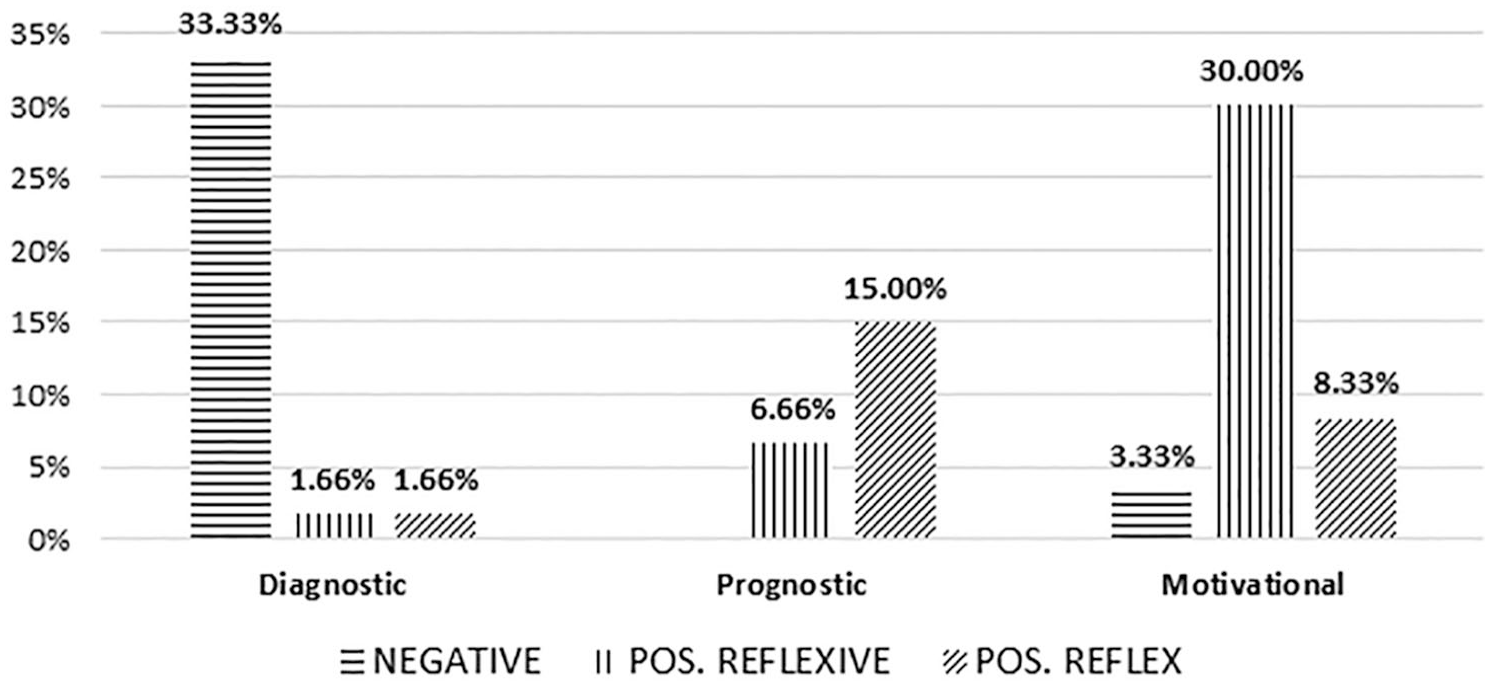
The relative distribution of emotional appeals within framings in the first period. 7 March 2018 to 15 March 2018 (N = 60a).
Throughout the first weeks after the murder, ZSS employed several diagnostic frames in its communication that stressed negative emotional appeals. After the creation of its Facebook page, the organization’s social media communication consisted mainly of short video invitations in which various public figures (actors, singers, etc.) invited citizens to participate in the protests taking place in larger cities across the whole country. On 9 March 2018, ZSS posted an invitation to the rally, which contained the following statement:
Today it is clear that Prime Minister Robert Fico and Minister of Interior Robert Kaliňák do not represent the values for which thousands of people in Slovakia and around the world took a stand last Friday [2 March 2018 protest].
Here, they directed their anger mainly at the governing parties, declaring in a later post that these “include people who are suspected of corruption and links to organized crime” (9 March 2018). 3
The ZSS movement notes that protesters are angry at the government, as it does not represent “civic” values (decency, honesty, and so on) and should therefore step down. The only viable solution here is the appointment of a new government. ZSS worked with this theme in its social media posts on numerous occasions during the first period, with anger being articulated toward governing elites who “have humiliated and deceived the entire civil public by their actions” (12 March 2018). The assignment of blame is another core aspect of the diagnostic framing (Benford and Snow, 2000). In this manner, ZSS directs anger at the governing party Smer-SD (now Smer-SSD), which they indirectly hold responsible for the murder of the journalist who wrote about corruption scandals that discredited Smer’s chief officials. On 15 March 2018, ZSS stated that:
We must not forget everything that has surfaced during the last few days. The mistakes that occurred in the investigation of the murder of Ján and Martina, all the corruption cases that Ján also pointed out, the politicians’ links to organized crime, the corruption, the theft of euro funds.
Here, the movement channeled anger toward the governing elites and law enforcement agencies, with the former being accused of deliberately hampering the investigation process due to their involvement in the corrupt activities that the murdered journalist covered in his work. A similar statement, in which the emotion of anger toward those in power played a dominant role, can also be observed in an earlier post, according to which:
the efforts of the ruling coalition to stay in power at all costs are clear evidence they want to sweep all corruption cases under the carpet (12 March 2018).
The ZSS movement’s social media communication during the first period employed diagnostic framing that relied heavily on anger. The movement used it to describe the corrupt, untrustworthy character of the governing elites and attribute to them indirect responsibility for the murder. Other categories of emotional appeals were mostly absent in the diagnostic framings during this interval. None of the frames were based on fear, which supports the claims of theorists who argue that anger is mobilizing while fear is demobilizing.
During the first weeks after the murder, the ZSS movement’s prognostic framing relied predominantly on channeling positive and communal emotions. Initially, the ZSS movement relied on using positive reflex emotions in its articulations of solutions and alternatives, mostly based on hope. For example, the movement described the overall ethos of the rallies by noting that people “feel hope again, that Slovakia can change for the better” (12 March 2018). The idea that new elections can shape the future face of the country for the better is also featured in the movement’s prognostic framing, as in:
We need a new chance for a decent and fair Slovakia and that is why we demand early elections. This is currently the only way through which we can try to restore people’s trust in the state (12 March 2018).
In this example, the movement appealed to hope that a “decent and fair Slovakia” may come about after people get a chance to vote for new representatives.
Their prognostic framing often relied on feelings of togetherness. For example, in a 15 March 2018 post, ZSS declared:
Students, teachers, workers, businessmen, politicians, we have a historic chance to start cleaning up corruption in Slovakia. It is up to us how we rise to this challenge.
The movement employed prognostic framing to articulate its alternative to the corrupt system by appealing to both hope and togetherness: “We are dealing with an extremely dangerous and difficult opponent, but together, we can improve our country for the better” (7 March 2018). 4
The ZSS movement utilized prognostic framing during the first weeks after the murder, which mainly revolved around articulating alternatives to the corrupt system. They did so by emphasizing the hope that things can get better and the feeling of togetherness among their followers.
Motivational framing is the third type that social movements use in their communication. ZSS worked predominantly with positive reflexive communal emotions, but also positive reflex emotions for its motivational framing, calling upon its followers to join active resistance and take part in mass protests organized throughout the country. In one posting on 15 March 2018, ZSS delivered a rallying call that combined hope and togetherness, noting:
We believe that the fate of this country is not indifferent to all of us, and we will take to the streets together on Friday! We are all the ones we have been waiting for.
One representative of ZSS delivered a similar invitation appealing to togetherness, stating, “I hereby call on all of you who care about this country not to be afraid and to participate with us,” stressing further that “cohesion is very important for our country” (8 March 2018).
Apart from relying on these communal positive reflexive and positive reflex emotions, two instances of motivational framing have also been present. For example, the post delivered on 14 March 2018 worked with the negative emotion of anger regarding governing elites’ refusal to step down, noting that “[l]ast Friday the people said it clearly—This government must resign! That’s why we are continuing this Friday with the Rallies for A Decent Slovakia.”
The motivational framing that the ZSS conducted during the first weeks of its existence worked mostly with the positive reflexive emotion of togetherness to persuade its followers to jointly “take up the streets,” “organize,” and “stand up” for the movement’s demands. Calls for direct actions that can bring about a change thus represent the bulk of statements that utilized this last type of framing.
A brief pause in protest activities (16 March–5 April)
The second period began shortly after Prime Minister Robert Fico’s resignation, during which the ZSS representatives canceled a scheduled wave of mass protests (23 March 2018), stepping back while observing the implementation of amendments, which the newly appointed cabinet had promised. The movement resumed its activities in the streets, with another wave of mass protests occurring throughout the country on 5 April 2018. Figure 2 shows the relative distribution of emotional appeals in the second time interval. Negative emotional appeals clearly dominate the diagnostic frames, with communal positive reflexive emotions featuring in both prognostic and motivational ones.
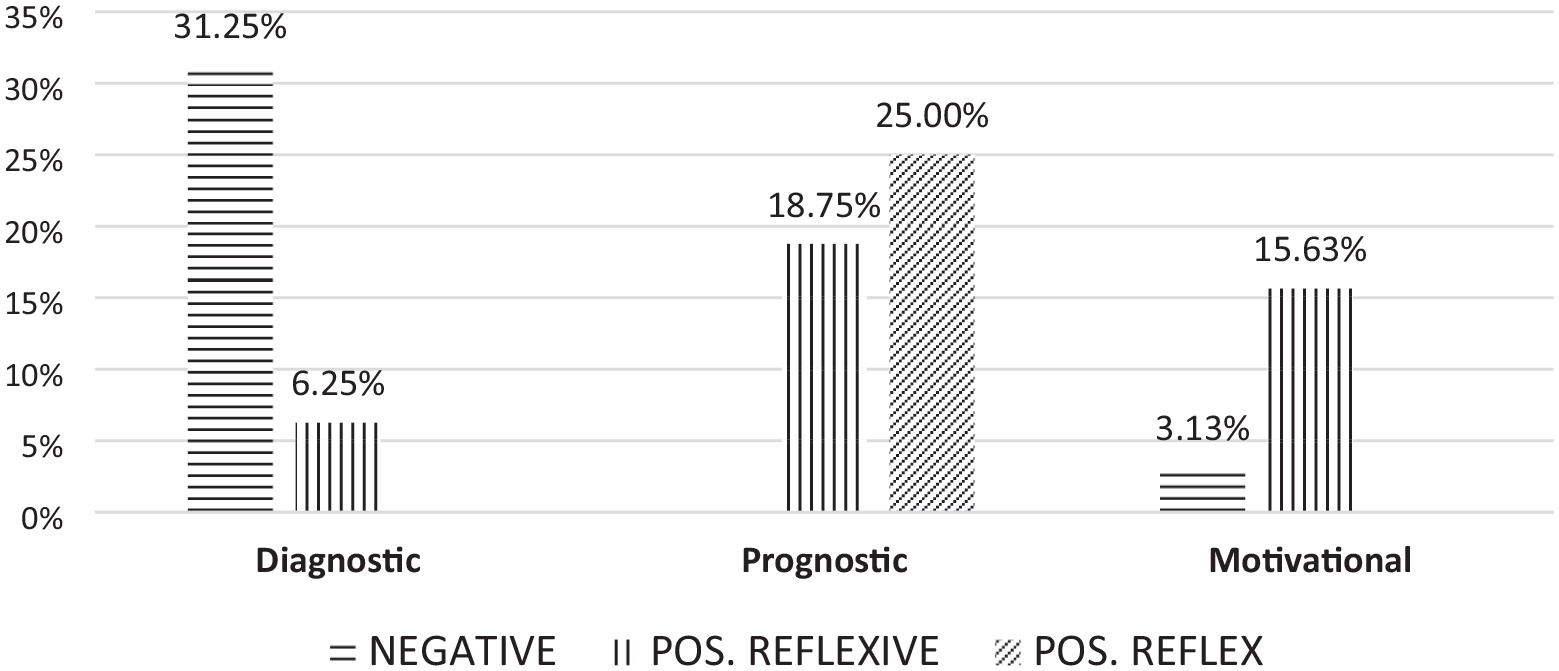
The relative distribution of emotional appeals within framings in the second period. 16 March 2018–5 April 2018 (N = 32).
During the first days after Prime Minister Robert Fico’s resignation, the ZSS movement did not call for protests, but rather observed the steps that the new cabinet took. Diagnostic framings, which would articulate problematic conditions that needed fixing within the polity, were thus absent initially. However, this did not last long, as the movement began to work with the negative emotion of anger once again, stemming from the reluctance of the new government to adopt the promised systematic changes. The movement declared through its official Facebook page on 28 March 2018 that:
Thursday marks 10 days since the vote of confidence for the government occurred and yet we see no clear signal that it is serious about trying to restore public trust.
After the recently dismissed Prime Minister Fico accused the protest organizers of planning a coup, ZSS reacted with anger once again:
If anyone is trying to stage a coup here, it is Robert Fico. Robert Fico is attempting a coup of hatred and fear against decent people (27 March 2018).
On 4 April, the movement engaged in diagnostic framing by criticizing the police officials, while offering support to the street-level police:
This week in the squares, we will also support the decent members of the police force who have their hands tied under the leadership of Mr. Gašpar (4 April 2018).
Here, ZSS articulated anger toward the dissatisfactory situation among law enforcement agencies. At the same time, it also appealed to togetherness (in the form of solidarity) by supporting all “decent” members of the police who cannot do their job properly within a system that “ties their hands.”
In this period, ZSS initially expressed partial satisfaction with the development after the reformation of the government. While pausing its protest activities to give the new government a chance, the movement appealed to hope that change could come, declaring that:
We are not going anywhere; we will keep a close eye on the systemic changes that the new government has signed up to and declares it is ready to implement immediately (22 March 2018).
ZSS also appealed to pride/joy along with togetherness in commenting on its attained achievements:
In the last four weeks, we have achieved a lot. Robert Fico and Robert Kaliňák left politics and these four weeks have shown that Slovakia is connected across the entire country, across foreign countries, and that together, we can stand up for a decent and corruption-free Slovakia (22 March 2018).
Later on, as the protest activities resumed, ZSS used prognostic frames that worked with togetherness to outline the joint initiative of its followers in creating the desired “decent” and “fair” future for the country in stating:
[t]ogether we call for a decent and fair Slovakia. A Slovakia where corruption is punished, not courage. A Slovakia where investigators and special prosecutors do not sweep cases under the carpet but take them to court (4 March 2018).
The motivational framing in March relied on communal (positive reflexive) and negative emotions but left out positive reflex emotions of hope. This is one important result of our study: for motivational framing, positive reflexive communal emotions of togetherness have been more important than positive reflex emotions of hope and pride/joy. The lack of positive reflex emotions for this period could have been because the movement was less active and its leaders were more disillusioned over the lack of progress that the government was making in its judicial reforms and solving the murder case. In providing a rationale for further engagement, ZSS stressed that, together, people can make Slovakia a “decent” country again:
As we have already announced, a civic platform “For Decent Slovakia” will be established, to which we invite all decent citizens who care about Slovakia being a decent and fair country (28 March 2018).
The 1-year anniversary of the murder—no change visible on the horizon? (14–28 February 2019)
While the movement had organized several smaller protest activities on a monthly basis from April 2018 until February 2019, another mass wave of protests took place throughout the entire country on the first anniversary of the murder on 21 February 2019. Therefore, we look at the framing from 1 week before these protests occurred until 1 week afterward (14 February 2019–28 February 2019). Figure 3 shows the relative distribution of emotional appeals during the final period, with negative emotions being prevalent in diagnostic framing, and positive ones in prognostic.
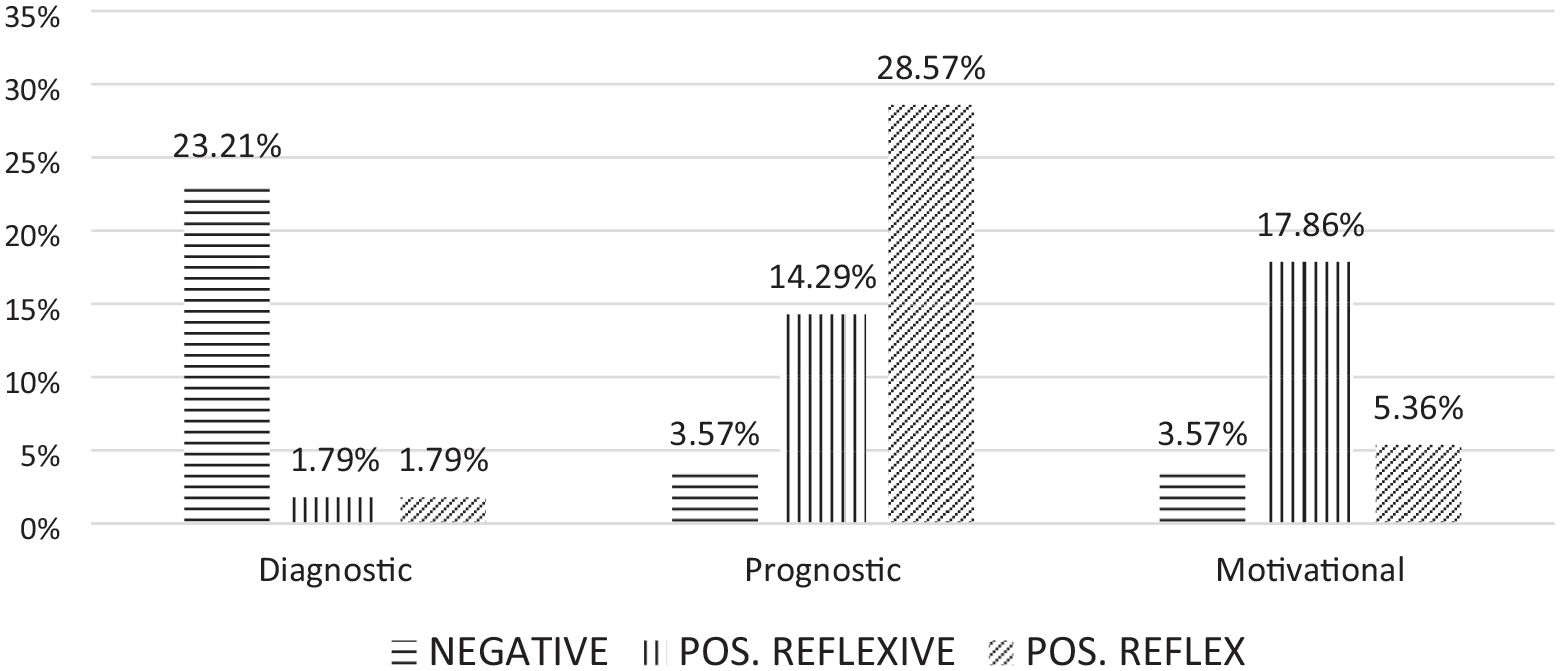
The relative distribution of emotional appeals within framings during the third period.
The diagnostic framing strategies in this period strived to mobilize followers before the first anniversary of the murder by describing the persistently unfavorable situation in the country. Once again, anger is the most important emotion for their diagnostic framing. For example, ZSS argued that the steps taken by the new government were inadequate, with the murder remaining unsolved after 1 year of investigations. Therefore, they claim that “politicians continue to have no problem using hate and conspiracies as their working method. We are angry at those who do not have the courage to hold themselves personally accountable” (20 February 2019). The movement also used shame in its diagnostic framing: “We are ashamed of the rudeness and cynicism of people in public office” (20 February 2019).
ZSS employed prognostic framing to reflect on the positive results of its 1-year struggle, utilizing pride/joy. For example, the movement declares in one of its posts that:
the first day already showed us that our path is very meaningful. We received a lot of positive feedback. [. . .] We heard what kind of Slovakia people want (20 February 2019).
The appeal toward pride/joy is present in the statement delivered by one of ZSS representatives: “It started with us wanting to light candles, and suddenly, you see the power that people have. That power can move a country” (20 February 2019). The same posts then worked with the emotion of hope: “Because of these people, I believe we have a chance for a better country—A more decent Slovakia” (20 February 2019). The movement also worked with the positive emotion of hope in several other statements that visualized the future of the country:
If we want to live in a decent country, we must not forget what that square showed us. It is up to us whom we choose. All of us, we create decency (20 February 2019).
There were also instances of anger in the prognostic framing:
If we want to move forward, we need to know the names of those who ordered this monstrous murder! We are calling for a credible government, a government with policies that are a real service to all the people, policies that bring vision and solutions (20 February 2019).
The representatives of the movement then channeled hope and togetherness, in connection with the vision of a future that will bring about a “change.” In a status posted on 25 February 2019, ZSS declared that:
It’s going to be a long journey, literally and metaphorically, but we look forward because we know that at the end of the day, change will come. All of us together are the ones we’ve been waiting for.
Motivational framing in this period revolved mostly around togetherness, with Facebook posts containing rallying calls such as, “[t]ogether we must endure. See you in the square in a week” (14 February 2019) or “[w]e would not be able to organize the rallies without you, so we will be grateful for each and every one of you” (16 February 2019).
Motivational framing in this period also took up the theme of the upcoming 2019 presidential elections. Here, the ZSS movement employed several statements that used motivational framing, working with the positive emotion of hope in connection with the anticipated post-electoral development. Thus:
We want to motivate and mobilize people to not hesitate to vote, to vote for clearly pro-European candidates who respect democratic principles, who reject hatred, conspiracies, and extremism. We want to spread hope that we have a chance for a better country (25 February 2019).
During the final period, the ZSS movement relied heavily on negative emotions for its diagnostic framing. It complained about the unsatisfactory situation in the country 1 year after the murder. It emphasized feelings of anger, as the murder had still not been solved. Such discontent with the situation in the country resulted in a massive wave of protests on the first anniversary of the murder. Meanwhile, in its prognostic framing, the movement summarized its activities and accomplishments during its first year and pointed out the positive aspects of the mobilizations. As Figure 3 shows, positive reflex emotions strongly dominated. Hope and pride/joy were the most common emotions in the prognostic framing. In addition to celebrating its accomplishments, ZSS also called upon its followers to remain persistent and not give up. Positive reflexive communal emotions were most important for their motivational framing. In this period, the movement used feelings of togetherness to mobilize its followers before the March 2019 presidential elections, and it stated that they could make a difference if they acted as a single force.
Linking emotions to frames: possibilities from previous studies
Although we have not found any studies that link emotions to frame analysis, almost all empirical studies of social movements provide examples, which could be analyzed in terms of the three frames (diagnostic, prognostic, and motivational). Now we give some brief examples from extremely diverse cases to exemplify this. Since these studies did not use frame analysis, most do not give examples that allow one to find all three types of frames, but they all allow for at least one or two types of frames, and if they had tried to link emotions to frames, we are certain they could have given examples of all three frames.
Nikolayenko (2022) writes about anti-regime protests in Belarus. The article is filled with examples of anger, moral shock, and fear, which easily connect to diagnostic frames. The article also cites the claim that “[i]t is time to build new, free Belarus” (Nikolayenko, 2022: 87), which is a diagnostic frame that appeals to hope. On that same page, the author cites the claim of an activist:
There is only one path to get rid of fear and this system. This path should be taken together. It is not scary when we are together. It is safer when we are together. Together, we are strength and might.
This is a motivational frame playing on the reflexive communal emotion of togetherness.
Moving to a different continent, Caro Romero (2023) writes about Latin-American homosexual liberation movements. One example of a positive emotion in the article that one can easily link to the prognostic frame is:
For example, the first time the FLHA [Frente de Liberación Homosexual Argentino] marched through the streets of Buenos Aires their chants included phrases like “Your body is yours and you can do with it whatever you want” and “We only want to be free to love freely,” in an attempt to convey a new sense of self-perception as well as to garner sympathy from those who deemed love a core value (Caro Romero, 2023: 141).
Here, the solution to the problem (the prognostic frame) is the postive reflex emotion of love, so you can do with your body whatever you want.
Another example from this article:
The mediation of fear constricts the body, the body slows down and one is very afraid of being. But the body still demands, expresses itself, yet as there is the precedent of fear then comes the guilt as an answer. Fear leads to guilt, and this stops a person, or in this case, the whole movement, from unfolding (Caro Romero, 2023: 142).
In this case, the diagnostic frame is the oppression of rights, which leads to the negative emotions of fear, causing one to feel guilty.
Mackenzie (2022) studies COVID activism in the American city of Philadelphia. The article notes that the activists proclaimed that inaction means death, which corresponds to a diagnostic frame of the problem, but it also plays on negative emotions:
In calling forward a public for the expression of Covid death in the context of its political, economic and racial inequities therein, this archive of feelings leverages unspeakable loss into rage at racial injustice, poverty and Covid-19. A collective image of the (many) dead alongside its cause, simply stated—Inaction—becomes a political act of grief-turned-rage and accountability for a community that has experienced sweeping COVID loss, alongside the inability to see or care for loved ones as they died.
Thus, the diagnostic frame claims the problem is inaction, which leads to the negative emotion of rage, which is similar to anger. The article also displays a motivational frame which plays on the positive reflexive communal feeling of togetherness: “We can beat COVID globally if we have the political will to do so” (Mackenzie, 2022: 7).
Conclusion
Our study shows how social movement scholars can combine two different traditions of social movement research: framing and emotional approaches, to get a better picture of how movements employ different types of emotions for different types of framing. Even though we use Slovakia as our case study, we give examples at the end of this article that show how our approach can easily be applied to all mass mobilizations in all parts of the world.
In the Slovak case, ZSS primarily used negative emotions for its diagnostic framing. It mostly relied on anger, but sometimes also used shame. By articulating dissatisfaction with the then-incumbent government, the movement successfully forced Robert Fico to resign back in 2018. However, this did not stop him from coming back to power in the 2024 elections, after the public outcry surrounding the murders gradually diminished and large portions of the population became dissatisfied with the unstable government that replaced him. In support of those theorists who claim that anger is mobilizing, while fear leads to passivity, we can point out that the movement never used fear in its framing. During the first period of our study, the movement used anger in combination with diagnostic framing in 20 statements, which mostly criticized the corrupt and unresponsive establishment for its failure to accept responsibility for the murder and to take adequate measures. In the second period, the diagnostic framing also relied on anger (10 statements), but also had 2 instances of togetherness to express solidarity with those public servants who cannot do their job properly under such a corrupt regime. Anger also dominated the final period with 10 statements, followed by shame (3), as the movement used these emotions in the diagnostic framing, because some of its core demands had still not been addressed 1 year after the murder took place.
Positive reflex emotions have featured the most in SZZ’s prognostic framing, although communal (positive reflexive) emotions have also played a role. The first interval contained appeals that articulated an alternative to the “corrupt” system, relying mostly on hope (9 statements), with the movement also accenting cohesion among its followers with togetherness (4). Meanwhile, the second interval contained prognostic frames that worked predominantly with appeals to togetherness (6), hope (5), and also pride/joy (3). The first-anniversary period relied on prognostic frames working primarily with hope (10), togetherness (8), as well as pride/joy (6).
Finally, SZZ’s motivational framing relied mostly on communal (positive reflexive) emotions, although positive reflex emotions also played a role. During the first period, the movement called upon its followers to take direct action immediately after the news about the murder was publicized. In this period, the movement appealed mostly to togetherness (18 statements) and hope (4). The second period contained motivational frames that worked primarily with togetherness (5), calling upon the followers to join the newly established civic platform. The third period saw the utilization of both positive reflex and positive reflexive (communal) emotions in the motivational framing. ZSS used mostly togetherness (10 statements) and hope (2) to mobilize followers in connection with the 1-year anniversary protest and the 2019 presidential elections.
Our results are logical: it would be difficult to diagnose a problem using positive emotions, as the purpose is to convince people to be dissatisfied with the situation. Our study also supports those theorists who claim that anger is more important than fear for mobilizing people. It is also logical that positive feelings of pride/joy and hope would be the most common emotions used in prognostic framing, as such frames should give hope that a solution to the diagnosed problem is possible. Finally, it also makes sense that communal (positive reflexive) emotions would dominate motivational framing, as the feeling that one is part of a group—part of something great—can offer a strong inducement to join the crowd. Positive emotions of hope play a role, but a lesser one, as social movement leaders need to offer participants feelings of hope that they can succeed, as well as feelings of pride/joy that they have already accomplished something and are capable of accomplishing more.
This study presents a model that can be applied to all types of mobilizations in all parts of the world, regardless of the issue. We show this by taking up three very different cases of different types of protests that took part in different parts of the world, based on recent articles that discuss the emotions that arose in these movements. Our discussion shows that it is easy to link their discussions of emotions to the different types of framing.
Nonetheless, our choice of cases has some limits, so further studies are necessary to see if the model needs to be modified to fit certain types of cases. For example, we would expect shame to play a much more important role in the diagnostic framing for movements based on marginalized groups, and pride would likely play a greater role in the prognostic frame for such groups as activists try to replace shame with pride. Furthermore, it is the nature of a short national uprising that rites and rituals are less likely to develop. Longer-lasting movements that mobilize people over many years might go through a “liminal phase” and develop “collective effervescence,” although it is not sure that such developments could be seen from applying frame analysis.
