




Abstract
In past and contemporary societies, kin presence and support are widely cherished for helping couples contend with parenthood. Thus, it is hypothesized that intergenerational cooperation in raising children influences fertility decisions. Despite the potential benefits of having a supportive family environment, societies with dissimilar social, structural, and geographical conditions may exhibit cross-cultural differences that are characterized by variations in family processes and reproductive outcomes. To demonstrate the influence of context, this study draws on the 2006 and 2016 East Asian Social Survey and uses generalized Poisson regression to investigate cross-national differences in the effect of intergenerational support on fertility in East Asia. The results show distinct patterns in the effect of intergenerational financial support, instrumental support, and geographic proximity on fertility. Financial support and proximity to grandparents are particularly conducive to childbearing among urban families. Instrumental support appears to be more beneficial for societies going through the second phase of the gender revolution (South Korea and Taiwan) than for societies with stronger gender role constraints (Japan). The findings highlight how context underpins the effect of intergenerational support on fertility.
Introduction
For decades, evolutionary anthropologists and demographers have identified humans as cooperative breeders who place a high value on kinship when it comes to raising offspring (Hrdy, 2009; Sear et al., 2003). In the wake of parenthood, couples often require additional support from grandparents to assist with caregiving responsibilities, domestic chores, and increased financial needs. The availability and involvement of grandparents have been shown to induce fertility-promoting effects (Sear and Coall, 2011). Notably, mothers tend to reproduce at a higher rate when their children are raised with the help of family (Hrdy, 2009). Considering the growing challenges of raising children in modern society, increasing research efforts have been devoted to understanding the relationship between intergenerational support and childbearing patterns across different sociocultural contexts (e.g. Chu et al. (2014) in Taiwan, Del Boca (2002) in Italy, Ji et al. (2015) in China, Mathews and Sear (2013) in Britain, Snopkowski and Sear (2016) in Indonesia, Rutigliano (2020) in Europe, and Pessin et al. (2022) in the United States).
There are different forms of intergenerational support, such as financial support and instrumental support. Financial support from grandparents helps to defray the cost of raising children and may reduce the perceived financial barriers associated with having larger families, while instrumental support in the form of childcare and assistance with domestic tasks mitigates the time costs of raising children. These forms of intergenerational financial and instrumental support have been shown to influence decisions about having children (Eibich and Siedler, 2020; Thomése and Liefbroer, 2013). Furthermore, the literature suggests that living close to grandparents increases the likelihood of having face-to-face contact and facilitates the provision of domestic, emotional, and other time-intensive support (Gruijters and Ermisch, 2019). Intergenerational co-residence or residing within walking distance of grandparents may therefore encourage fertility since it signals the availability of kin, making grandparental resources more accessible and easily mobilized (Snopkowski and Sear, 2016).
However, most of the existing research has been conducted in Western and European countries, with relatively few studies on Asia. East Asian societies have been recognized as having “ultra-low fertility” (Jones, 2019; Jones et al., 2009), which is defined as sub-replacement fertility at or below 1.3 children per woman. Thus, research on the extent to which intergenerational support impacts fertility in this region offers an important perspective for understanding existing family systems and childbearing patterns. It provides useful knowledge on the potential mechanisms underlying the relationship between grandparental support and fertility in contexts with very low fertility.
Given the modest help provided by governments in the region, intergenerational support—including financial support, instrumental support, and grandparental proximity—is particularly important in East Asia (Esping-Andersen, 2009). For instance, government expenditure on family benefits (e.g. income support during parental leave and child allowances) is considerably lower in East Asia (1.4% of the GDP in Japan, 0.9% in South Korea, and 0.43% in Taiwan in 2011) than in Nordic countries (3.48% of the GDP) (Gauthier, 2016). In these circumstances, intergenerational support becomes pertinent to fertility decisions since grandparents may need to step in and provide monetary and care support if the government is unable to do so adequately. However, recent studies on the relationship between intergenerational support and fertility have yielded mixed results. For example, intergenerational co-residence and support were not found to have a positive influence on fertility in China and Taiwan (Chu et al., 2014; Ji et al., 2015). In contrast, they were positively associated with having a first and a second child in Japan (Fukukawa, 2013) and a second child in South Korea (Yoon, 2017) (Korea hereafter).
Different sociocultural asymmetries and institutional arrangements may influence how couples navigate their fertility trajectories. As Sear et al. (2016) have pointed out, it is vital not to view complex societies as monolithic but to engage with and use variation across and within countries to understand differences in fertility behavior. To this end, inter- and intra-societal comparisons are particularly useful to better understand how broader social, structural, and geographical conditions shape family outcomes. The present study, which adopts a comparative cross-national perspective, uses representative data from four East Asian societies to examine and juxtapose the association between intergenerational support and fertility in Japan, Korea, Taiwan, and China. It considers three aspects of intergenerational support: geographic proximity to grandparents(-in-law), financial support from grandparents(-in-law), and instrumental support from grandparents(-in-law). The study also investigates intra-regional variations within the four societies to consider how the effect of grandparental support might vary in different areas.
By focusing on cross-national differences in a relatively overlooked region, this study seeks to contribute to the extant literature in three ways. First, it examines whether the hypothesis that cooperative breeding through intergenerational support promotes fertility holds in low-fertility East Asian contexts. Prior evidence suggests that the hypothesis may hold in East Asia as institutional support for families is relatively low in the region. However, there are limited comparative studies investigating the link between intergenerational support and fertility. While East Asian societies share some common patterns, such as the convergence to very low fertility, they are characterized by distinctive social and cultural contexts. The four East Asian societies were chosen because they all exhibit long-term fertility decline and share similar late marriage and low non-marital fertility trends, which is important when considering only the married sample. This study points to context as a major consideration in the cooperative breeding hypothesis that contributes to heterogeneous associations between intergenerational support and fertility.
Second, the present study provides insights into fertility differentials in terms of the potential effects of intergenerational support by using comparable survey data with equivalent measures. Previous studies have used data from individual countries with disparate measures of intergenerational support, which precludes a systematic cross-national comparison of findings in the region. This study uses three identical measures of intergenerational support—financial support, instrumental support, and proximity to grandparents—to comprehensively examine the connection between grandparental assistance and fertility in East Asia. The use of three support types may uncover different facets of support patterns that go beyond the commonly examined grandparental childcare assistance, which could provide important information about the types of support needed by contemporary families.
Third, and perhaps most significantly, the study sheds light on the multi-layered disparities in patterns of association between intergenerational support and fertility by highlighting intra-regional variations even within societies. Despite the anticipated benefits of intergenerational support, insights from the comparisons may draw attention to potential nuances and subtleties of the associations between various living arrangements, support patterns, and childbearing outcomes in rural and urban areas. The extent to which various types of support are associated with fertility may have important demographic and social consequences, especially considering East Asia’s rapid urbanization (World Bank, 2015). Based on the aforementioned, the article discusses the findings’ implications and identifies new research avenues.
Intergenerational support and fertility
Intergenerational support, particularly from grandparents, serves as an important source of informal help for couples (Sear and Coall, 2011). According to the cooperative breeding hypothesis, humans are embedded in a social childrearing system where intergenerational support and assistance in raising offspring increase fertility and result in larger family sizes (Hrdy, 2005). The beneficial effects of grandparental presence and support have been documented in numerous studies (e.g. Kaptijn et al., 2010; Snopkowski and Sear, 2016; Waynforth, 2012).
Grandparents and grandparents-in-law can influence fertility in three important ways. First, intergenerational geographic proximity, defined as sharing a residence with grandparents or in-laws or living within walking distance, often means the availability of kin and their willingness to help. According to international research from both Asian and Western societies, intergenerational geographic proximity is positively related to childbearing. In Japan and China, women living in extended families tend to have higher fertility than those living in nuclear households (Morgan and Hirosima, 1983; Zhang, 1990a). This situation has been attributed to the reduced opportunity costs of raising children, with grandparental support playing an important role in such reduction. In Indonesia, Snopkowski and Sear (2016) found that grandparental assistance had a positive effect on parity progression for women below parity three and suggested that the relationship between grandparental availability and fertility might be mediated by the provision of help. Relatedly, it has been demonstrated that living in close geographic proximity to grandparents increases the likelihood of having a first child in Germany (Hank and Kreyenfeld, 2003). In Bulgaria, women’s intentions to have additional children were also increased by the availability of resources from grandparents (Bühler and Philipov, 2005).
Second, co-residence and regular interactions with grandparents(in-law) increase pro-natal priming, which promotes fertility by instilling norms that maximize reproductive fitness (Sear et al., 2016). Through the transmission of pro-natal sentiments and information, fertility priming encourages individuals to have more children (Newson et al., 2005). For example, Mathews and Sear (2013) found that women who received childcare assistance from family are simultaneously encouraged and primed to have another child. Fertility priming can be explicit or implicit. Grandparents may overtly persuade their adult children to reproduce, or they may raise conversation topics that are related to childbearing to influence their subsequent decision-making in a way that encourages reproduction (Mathews and Sear, 2013).
Third, grandparental assistance through the provision of financial or instrumental help (e.g. housework, childcare) can reduce the direct and indirect costs of having children. The direct costs of raising a child are defined as the monetary expenditure incurred by parents to meet their children’s needs (e.g. education, food, healthcare), whereas the indirect costs refer to the opportunity costs associated with lost wages as a result of fewer hours worked at a job or time spent on parenthood responsibilities. Some scholars have argued that societies with readily accessible intergenerational support experience fewer childbearing constraints and higher fertility rates (Turke, 1989). Conversely, in societies where intergenerational assistance is weak, childbearing and child-raising costs are higher, which makes couples less likely to have children. Increasing evidence suggests that, primarily in Western cultures, intergenerational financial support and instrumental support in the form of informal childcare can increase the likelihood of additional births (Kaptijn et al., 2010; Tanskanen and Rotkirch, 2014; Thomése and Liefbroer, 2013).
While the cooperative breeding hypothesis posits that grandparental support will likely have a positive effect on fertility, this study proposes that the association is complex and context-specific. There has been limited comparative research into the different effects of intergenerational support on fertility between and within societies (Sear et al., 2016). This study wishes to fill this gap by seeking answers to the following two questions: (1) To what extent does the effect of intergenerational support on fertility differ across the four East Asian societies in question? (2) To what extent does the effect vary within the urban and rural areas of each society?
Inter- and intra-societal variability in East Asia
There is a lack of consensus in the literature regarding the effect of intergenerational support on fertility in East Asia. Evidence from China suggests that the presence of grandparents and their involvement in childcare are particularly important as they reduce mothers’ caregiving burden (Chen et al., 2000, 2011). Grandparental childcare is a crucial component of keeping mothers in the job market in urban areas, especially when the number of publicly funded daycare programs is declining (Du et al., 2019). Although Ji et al. (2015) found evidence supporting the positive effect of grandparental childcare provision on fertility intention in the Jiangsu province (eastern China), the effect of co-residence with grandparents or grandparents-in-law was absent.
In Taiwan, Chi and Hsin (1996) found that co-residing with the husband’s parents increased the likelihood of having a first child, while Chu et al. (2014) showed that the same type of co-residence delayed women’s first birth. In a similar vein, Kim (2017) discovered that grandparental childcare assistance in Korea had no significant impact on fertility, but Yoon (2017) demonstrated that support from grandparents increased the likelihood of having a second birth. Likewise, in Japan, Fukukawa (2013) found that grandparental involvement was positively associated with having a first and a second child, whereas Raymo et al. (2010) and Yoda (2021) suggested that living with or near grandparents(-in-law) may only have limited effects on marital fertility and fertility intentions. These mixed findings imply that further research should be done to understand the underlying contexts of intergenerational support and childbearing in East Asia.
East Asian contexts
Marriage and fertility trends
In East Asia, marriage is a precondition for childbearing as non-marital fertility is relatively uncommon. The percentage of non-marital births is around 2 percent in Japan, 1.5 percent in Korea, 4 percent in Taiwan, and 5 percent in China (Raymo et al., 2015; Yu and Xie, 2021). The average age at first marriage has increased steadily in East Asia. Between 1970 and 2010, the singulate mean age at marriage increased by 5 years in Japan, 6.8 years in Korea, 7.8 years in Taiwan, and 4.1 years in China (Jones and Yeung, 2014). In Japan, Korea, and Taiwan, more than 30 percent of men and women aged 30 to 34 years had never been married (United Nations Population Division, 2019). In China, the percentage of never having been married has increased but is still around 6 percent for women and 15 percent for men.
Along with these marriage trends, East Asia has been experiencing very low fertility rates for the past few decades. Figure 1 shows the total fertility rates for Japan, Korea, Taiwan, and China. Since the late 1980s, fertility in Japan, Korea, and Taiwan has fallen below the replacement level. The literature has highlighted the rising financial and opportunity expenses of having children, as well as tensions between East Asia’s rapid socioeconomic changes, and rigid gender role expectations as potential explanations for the region’s very low fertility rates (Anderson and Kohler, 2013; Cheng, 2020; Jones et al., 2009; Raymo et al., 2015; Tan, 2022b). In China, the government’s introduction of the one-child policy in 1980 may have contributed to the country’s low birth rates and slow population growth. In the 1990s, China’s fertility rates also declined below the replacement level.
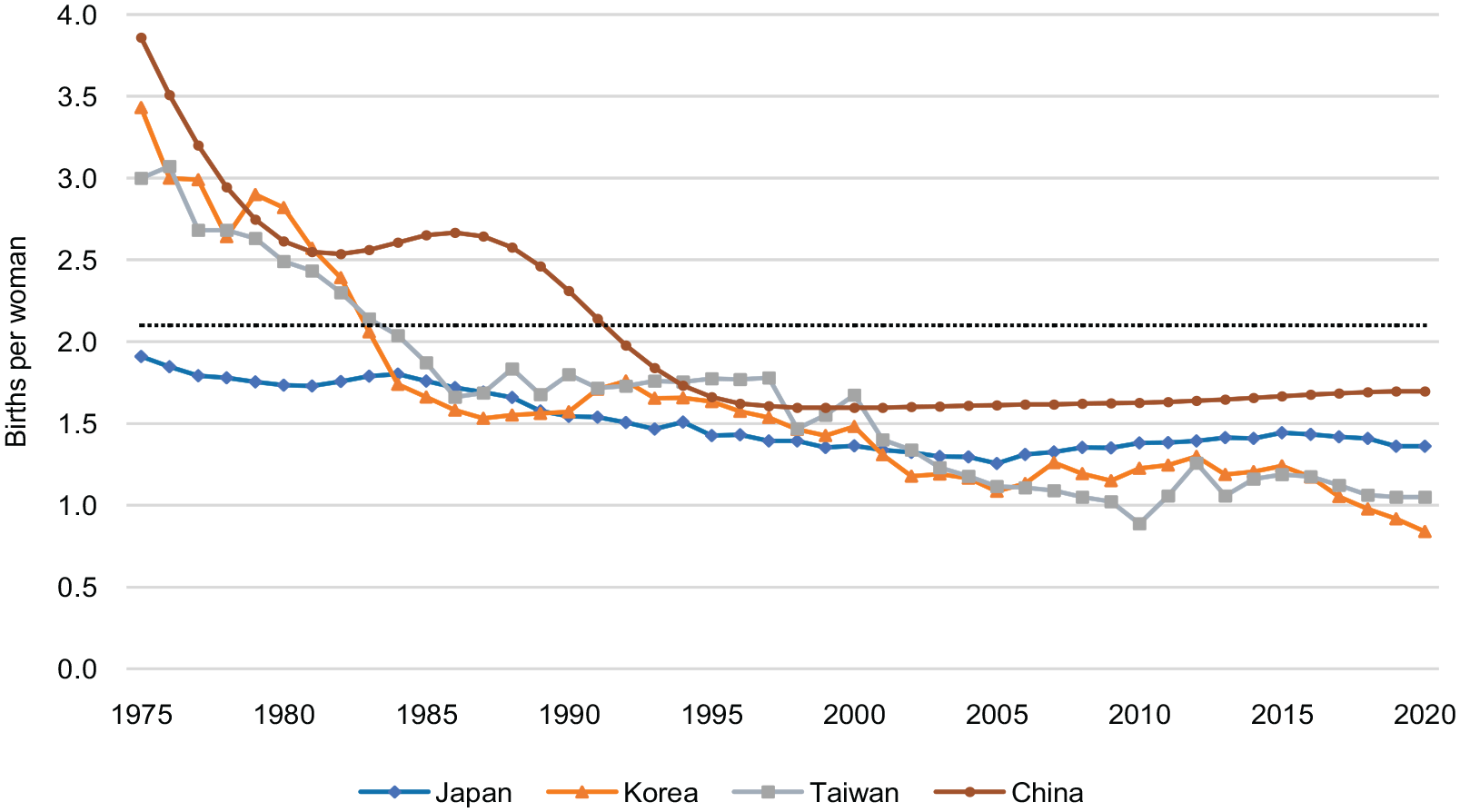
Total fertility rates, 1975–2020.
Governments in East Asia have been developing policy measures to address low fertility. As early as the 1990s, the Japanese government introduced the Angel Plan to provide better childcare support and encourage more births (Seike, 2016). The Angel Plan included a series of measures to promote reproduction, including the establishment of childcare leave, an increase in child allowance, tax reliefs for working parents, exemptions from paying social security premiums, and reductions in waiting time for parents seeking childcare (Suzuki, 2006). These measures were subsequently expanded and developed into a national Vision for Children and Childrearing to assist couples in raising children. Compared to Japan, policy responses in Korea and Taiwan were delayed, even though they had reached below-replacement fertility in the early 1980s. In Korea, the Saeromaji Plan was introduced in 2006 to give parents financial incentives and childcare leave options, while the White Paper on Population Policy was developed in Taiwan to offer parents some tax relief, cash benefits, and leave options (Bak, 2019; United Nations Population Division, 2015). China’s one-child policy was lifted in 2016 to allow people to have two children. Despite these policy initiatives, fertility rates in the four East Asian societies remain persistently low.
Regional variations
Within the overall trends, existing literature has also highlighted regional differences in the prevalence and timing of family formation (Ji and Yeung, 2014; Kulu, 2013), which may be related to the degree of urbanization in each society. Across the four East Asian societies, the proportion of urban residents has been rising, though at varying rates. Between 1950 and 2020, urban populations increased by 38 percent in Japan, 60 percent in Korea, 52 percent in Taiwan, and 50 percent in China (United Nations Population Division, 2018).
Rural–urban economic disparities complicate how intergenerational support influences fertility because costs associated with having children are higher in urban than rural areas (Lee and Pol, 1993; Li and Wang, 1994; Mosk, 1980). The distribution of opportunity structures and local sociocultural norms also tend to differ between urban and rural areas (Riederer and Buber-Ennser, 2019). For instance, urban families can benefit from greater availability of institutional resources (e.g. health and childcare services), but they are subject to higher living expenses. In East Asia, the financial and opportunity costs linked with having children are important considerations for childbearing (Gauthier, 2016). Despite the economic potential in urban areas, the mounting cost of living and childcare places a significant restriction on reproduction. Therefore, it is expected that intergenerational proximity and support may alleviate some of these costs and have a positive effect on childbearing. Specifically, it is hypothesized that co-residing or living within walking distance of grandparents(-in-law) and receiving frequent financial assistance from grandparents(-in-law) will have a greater positive effect on fertility for individuals residing in urban than in rural areas (Hypothesis 1).
Sociocultural contexts
Cultural and gender norms between and within societies intertwine in complex ways, shaping the effect of intergenerational support on fertility. Compared to Western societies, East Asian societies are more masculine and have a higher power distance (Hofstede, 2001). While high masculine cultures have different expectations for men and women, high-power distance cultures are more deferential to authority and often accept a hierarchical distribution of power (Hofstede, 2001). For example, the power distance indices (PDIs) of China (80), Korea (60), Taiwan (58), and Japan (54) are higher than the PDI of Sweden (31). Similarly, the masculinity indices (MIs) of China (66), Korea (39), Taiwan (45), and Japan (95) are higher than the MI of Sweden (5).
However, there remains considerable variability in gender norms within East Asia. For example, traditional gender role expectations are more strongly held in Japan, where women are primarily responsible for the domestic sphere and may feel obligated to perform most household tasks (Kan and Hertog, 2017). This is indicative of a stall in the second gender revolution as more women are participating in the labor market, but more equitable domestic divisions of labor have yet to be achieved. As a ramification of the stalled gender revolution, additional support from grandparents may become less valued as women are expected to fulfill their homemaker role. In contrast, Taiwan appears to hold less traditional gender beliefs as women tend to spend less time on domestic labor compared to other East Asian societies (Kan and Hertog, 2017). Without the need to conform to normative gender expectations, support from grandparents may assist couples to achieve a more favorable reproductive outcome in a relatively more egalitarian society such as Taiwan, which is further along the second gender revolution.
Given the gendered nuances across varying contexts, it is hypothesized that instrumental grandparental support is more likely to have a favorable impact on fertility in East Asian societies that are more advanced in the second gender revolution (such as Taiwan) than societies that are less advanced in the second gender revolution (such as Japan) (Hypothesis 2).
Data
The data were drawn from the 2006 and 2016 East Asian Social Survey (EASS), which is archived at https://www.eassda.org. The family module of the survey was conducted only in these 2 years. In other years, the EASS focused on culture (2008), health (2010), social capital (2012), and work life (2015). The EASS questionnaires are incorporated into pre-existing general social surveys in the four participating East Asian societies: China (Chinese General Social Survey), Japan (Japanese General Social Survey), Korea (Korean General Social Survey), and Taiwan (Taiwanese Social Change Survey). The 2006 and 2016 EASS family surveys include pertinent data on family co-residence and geographic proximity, frequency of financial or instrumental support received, number of children born, and other demographic information, such as age, sex, marital status, and education. To ensure a nationally representative sample, multistage probability sampling was used to recruit the respondents. The response rates for the 2006 and 2016 EASS were 53.3 percent (N = 2130) and 55 percent (N = 2660) in Japan, 65.7 percent (N = 1605) and 46.9 percent (N = 1051) in Korea, 42 percent (N = 2102) and 49.7 percent (N = 2024) in Taiwan, and 38.5 percent (N = 3208) and 68.9 percent (N = 4132) in China, respectively. Detailed descriptions of the response rates can be found in the EASS codebooks for each data set through the link provided above. Nationally representative weights were provided by the EASS to account for survey nonresponse and ensure that the samples were representative of each population of interest. The present study focused on married couples in which the wife was of reproductive age (i.e. between 15 and 45 years old).
Measures
The dependent variable is the number of children the couple had, which was measured as a count variable. When determining the independent variables, the study considered three aspects of intergenerational support: geographic proximity to the husband’s or the wife’s parent(s), financial support from the husband’s or the wife’s parent(s), and instrumental support from the husband’s or the wife’s parent(s). Henceforth, the husband’s or the wife’s parent(s) is referred to as “grandparent(s)(-in-law).” Intergenerational geographic proximity was coded into three categories: (1) couples co-residing with at least one grandparent(-in-law), (2) couples residing within 15 minutes of the residence of at least one grandparent(-in-law), and (3) couples residing 30 minutes away or more by transportation. Financial support measured how frequently grandparents(-in-law) provided financial support in the last 12 months, while instrumental support measured how frequently grandparents(-in-law) assisted with household chores (e.g. cleaning, meal preparation, shopping, running errands) or care work (e.g. childcare) in the last 12 months. These were measured on a five-point scale, ranging from “very frequently” to “not at all.” Following Tan (2018), the two variables were treated as dichotomous (0 = no (not at all/seldom/sometimes); 1 = yes (very frequently/often)). Couples were coded as frequently receiving financial support if they received monetary transfers very frequently or often. Couples were coded as frequently receiving instrumental support if they very frequently or often received help in taking care of household chores or performing care work.
The study included an indicator for society (i.e. Japan, Korea, Taiwan, and China) and controlled for additional sociodemographic characteristics, including both partners’ ages (quadratic specification), wife’s and husband’s education (0 = lower than tertiary; 1 = tertiary or above), wife’s and husband’s self-reported health status (0 = poor health; 1 = good health), wife’s and husband’s number of siblings (count variable), highest educational attainment of grandparents(-in-law) (0 = lower than high school; 1 = high school or above), the couples’ employment status (1 = both in full-time employment; 0 = not both in full-time), whether they have a child of age ⩽3 (0 = no; 1 = yes), first child’s sex (1 = female; 0 = otherwise), and area of residence (0 = rural; 1 = urban). As the data were collected at different times, a binary variable was included to account for the survey year (0 = 2006; 1 = 2016).
Methods
The best method for modeling the number of children is a Poisson regression since the number of children is a count variable (a non-negative integer) with a minimum value of zero (Greene, 2008). The Poisson distribution is discrete and positive, which provides a suitable representation of the expected number of occurrences in a fixed period of time. When linear regression is used, it may yield negative or fractional values that are less appropriate for a count outcome (i.e. number of children).
However, given that the variation in the observed number of children was lower than that predicted by the Poisson distribution, this study applied the generalized Poisson regression to account for the under-dispersion (see Table A1 in Online Appendix A). To examine the association between intergenerational support and fertility, the models were first estimated without the key predictors (i.e. only with the controls) and then with the key predictors (intergenerational geographic proximity, financial support, and instrumental support). Subsequently, to understand cross-national differences in the association between intergenerational support and fertility, two-way interactions between the society and each key predictor were estimated. Finally, to explore intra-regional variations in the association between intergenerational support and fertility, three-way interactions between society, area of residence, and key predictors were estimated. Separate models were estimated for China because of its distinctive birth planning policy.
The same models were used to analyze the data for Japan, Korea, and Taiwan, and standard errors were grouped at the societal level to allow for residual correlation between observations made within the same society. The generalized Poisson regression results are reported using incidence rate ratios (IRR), which indicate the relative incidence rate of bearing children among populations or population subgroups. All the models were adjusted using the sample weights provided by the EASS. The target sample consisted of 5568 couples. Each couple had at least one surviving grandparent(-in-law). After excluding 842 observations with one or more missing values, the sample size was reduced by 15 percent for Japan, 12 percent for Korea, 7 percent for Taiwan, and 19 percent for China (see Table A2 in Online Appendix B for missing data patterns). The final sample was made up of 4726 observations. The analyses were performed using Stata/SE 16.0 and the user-written command gpoisson (Harris et al., 2012).
Results
Table 1 presents the summary statistics for the EASS sample. The mean ages of husbands and wives were similar in Japan, Korea, and Taiwan. Compared to the other three East Asian societies, the Chinese sample was, on average, 3 years younger. The mean number of siblings was lowest in Japan and highest in Taiwan. The mean number of children for the sample was 1.7 in Japan, 1.69 in Korea, 1.78 in Taiwan, and 1.46 in China. On average, the educational attainment of Korean respondents was higher, and that of Chinese respondents was lower. Grandparental education was highest in Japan. Chinese respondents, who were slightly younger, were more likely to report being in better health. China had a lower proportion of urban residents than the other three societies. Taiwan had the highest share of couples with both partners working full-time (50.3%). There were more childless couples in Korea (12.65%) than in China (12.1%), Taiwan (9.87%), or Japan (7.11%). The percentage of couples co-residing with grandparents or grandparents-in-law was higher in Taiwan (42.83%) and China (40.16%) than in Korea (10.08%), which had the lowest co-residence rate. Overall, couples were more likely to have received instrumental support from grandparents or grandparents-in-law than financial support.
Summary statistics of couples’ characteristics.
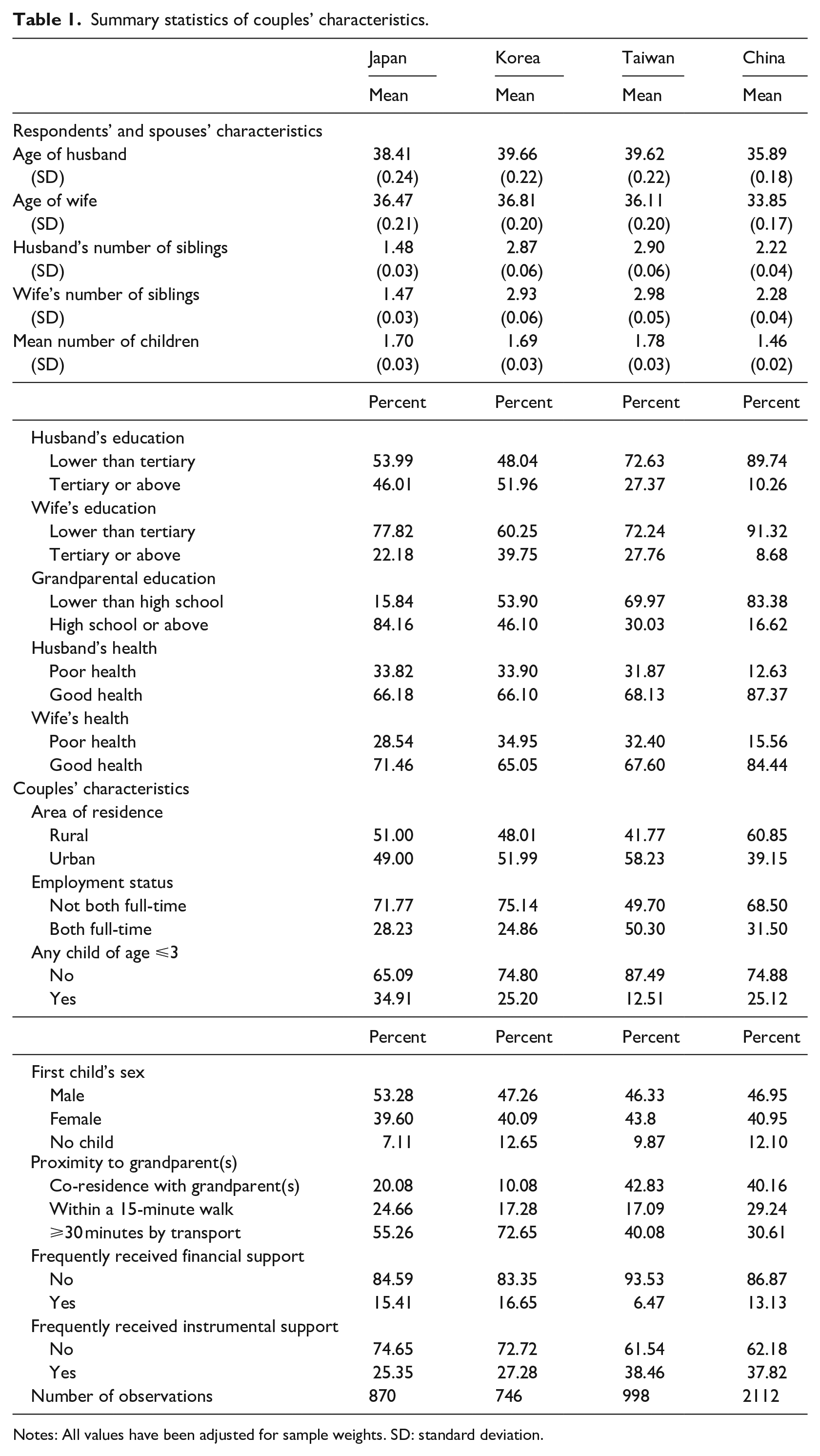
Notes: All values have been adjusted for sample weights. SD: standard deviation.
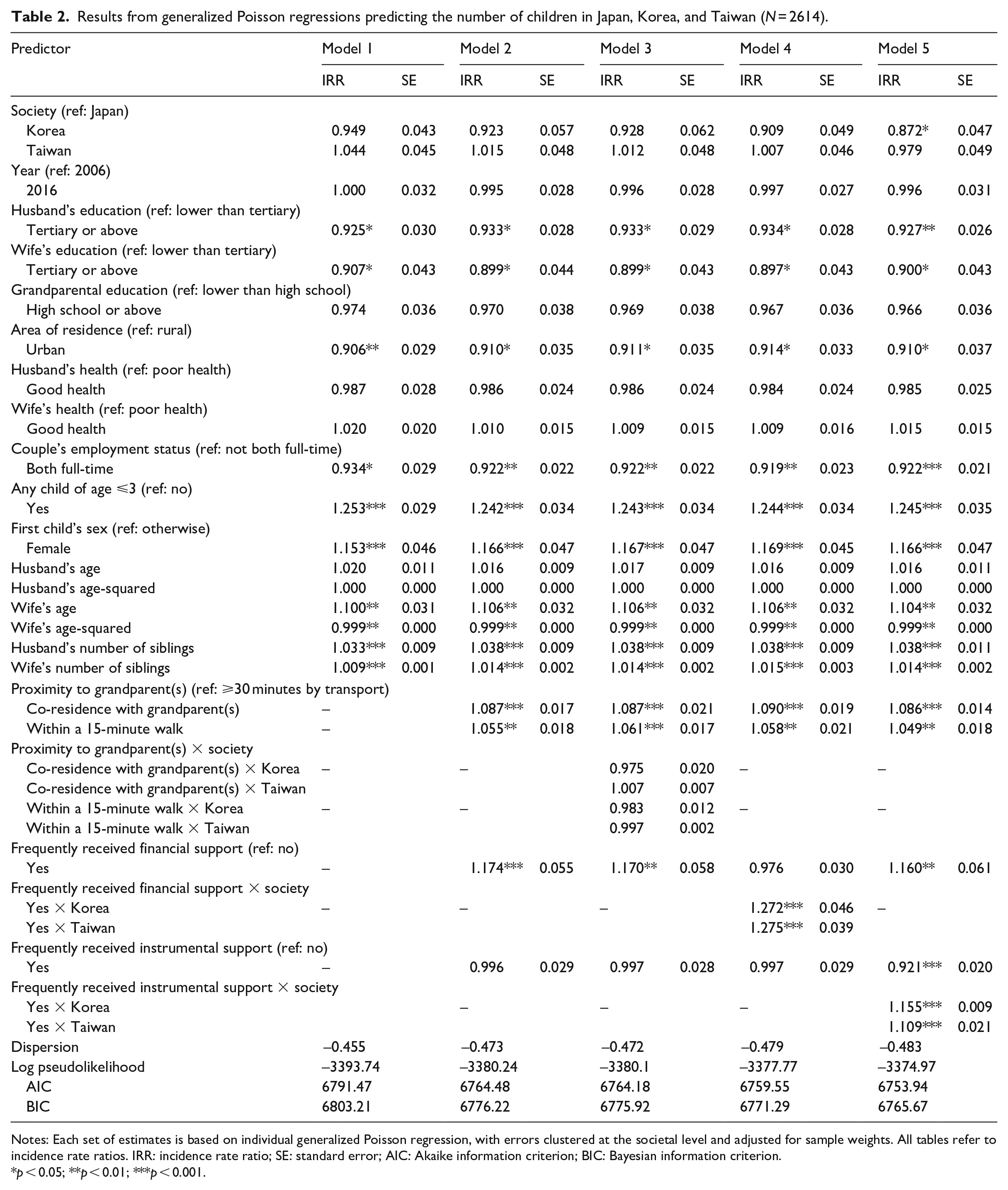
To understand the effects of intergenerational geographic proximity and support on fertility, the results of the generalized Poisson regressions for Japan, Korea, and Taiwan are presented in Table 2. Model 1 (controls only) demonstrates that the incidence rate of having children was significantly lower for husbands with tertiary education (IRR = 0.925, p = 0.015) than for husbands with lower levels of education. Similarly, wives with tertiary education had a lower incidence rate of having children (IRR = 0.907, p = 0.037) compared to wives with lower levels of education. These findings suggest that higher levels of education have a negative impact on fertility. There was also a significant association between the area of residence and fertility. Couples residing in urban areas had a lower incidence rate of having children (IRR = 0.906, p = 0.002) compared to couples residing in rural areas. Couples who were both working full-time had a lower incidence rate of having children (IRR = 0.934, p = 0.026) than couples with other employment arrangements. Couples with a child aged 3 or younger had a higher incidence rate of having children (IRR = 1.253, p < 0.001) than those without a child aged 3 or younger. Couples whose first child was female had a higher incidence rate of having more children (IRR = 1.153, p < 0.001) relative to those whose first child was male or who had no children. The number of siblings was likewise positively correlated with fertility.
Results from generalized Poisson regressions predicting the number of children in Japan, Korea, and Taiwan (N = 2614).
Notes: Each set of estimates is based on individual generalized Poisson regression, with errors clustered at the societal level and adjusted for sample weights. All tables refer to incidence rate ratios. IRR: incidence rate ratio; SE: standard error; AIC: Akaike information criterion; BIC: Bayesian information criterion.
p < 0.05; **p < 0.01; ***p < 0.001.
Model 2 reveals significant associations between intergenerational support and fertility. Specifically, couples co-residing with grandparent(s) (IRR = 1.087, p < 0.001) or residing within a 15-minute walk of grandparent(s) (IRR = 1.055, p = 0.002) had a significantly higher incidence rate of having children compared to couples who were not co-residing or residing near grandparent(s). Similarly, couples who frequently received financial support from grandparent(s) had a higher incidence rate of having children (IRR = 1.174, p < 0.001) than couples who did not.
To examine cross-national differences in the effect of intergenerational co-residence and support on reproduction, Models 3, 4, and 5 included two-way interactions between the society and each key predictor (i.e. intergenerational geographic proximity, financial support, and instrumental support). Model 3 finds no significant difference in the effect of intergenerational geographic proximity on fertility between Japan, Korea, and Taiwan. Model 4 suggests that the positive effect of receiving frequent financial support on fertility was significantly higher for Korea and Taiwan compared to Japan. Model 5 demonstrates that receiving frequent instrumental support was negatively associated with fertility in Japan but positively associated with fertility in Korea and Taiwan.
To simultaneously investigate inter- and intra-societal differences in the association between intergenerational support and fertility, a series of three-way interactions between society, area of residence (i.e. rural or urban), and key predictor was introduced in subsequent models. The findings indicate significant three-way interactions between intergenerational support, society, and area of residence. Figure 2 shows the predicted values from the average marginal effects of intergenerational co-residence on the number of children born by society and area of residence.
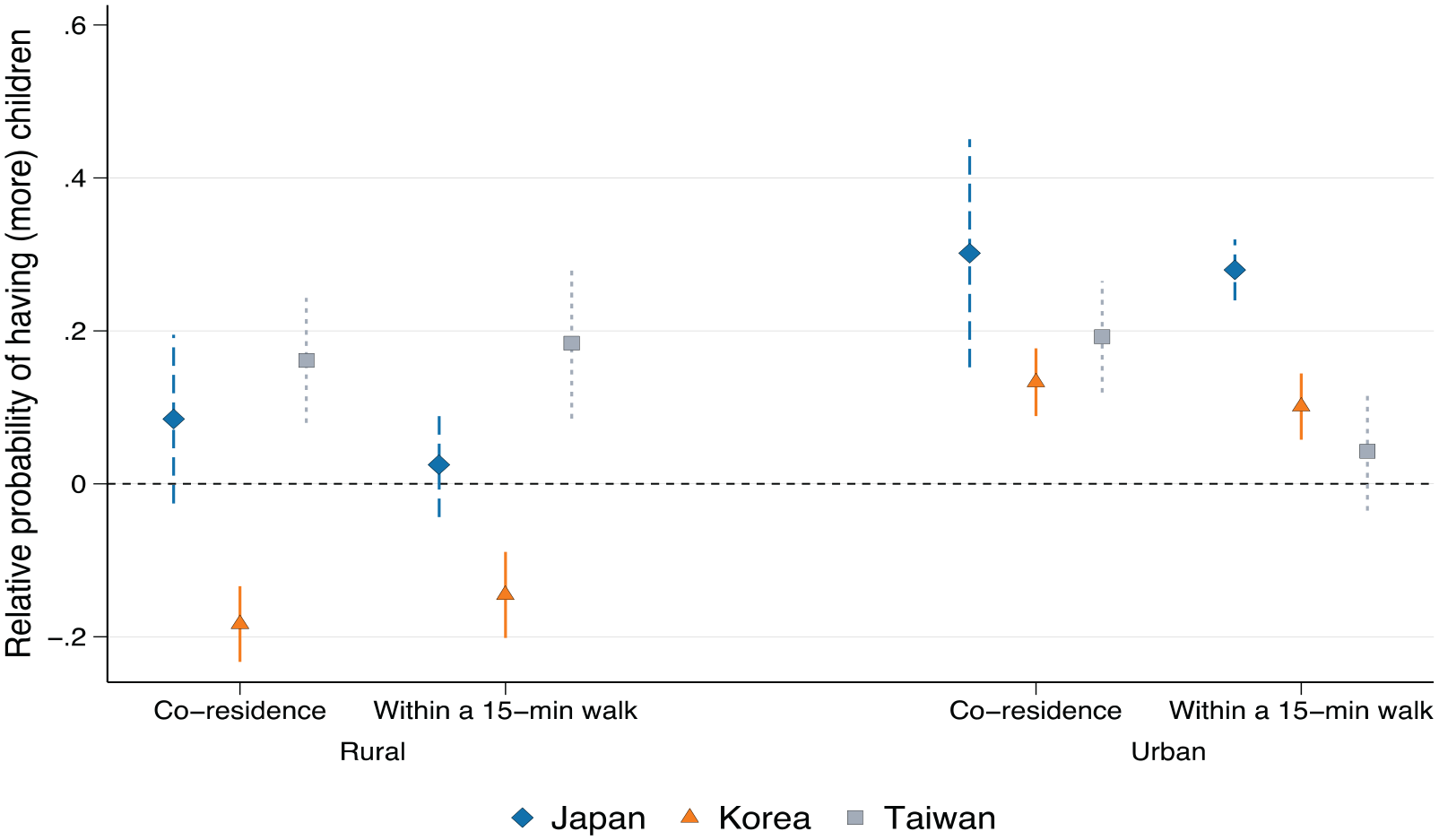
Average marginal effects of co-residing or living near grandparent(s) on the number of children, by society and area of residence.
Across the three societies, couples who co-resided with grandparent(s) in urban areas had a significantly higher probability of reporting having more children than couples who did not co-reside with grandparent(s), with no significant inter-societal differences. However, for couples residing in rural areas, the positive effects of co-residency on fertility appeared to be significant only in Taiwan.
A similar pattern was observed in couples who frequently received financial support from grandparent(s), particularly those residing in urban areas (see Figure 3). Across the three societies, urban couples who frequently received financial support from grandparent(s) had a higher probability of having more children than those who received no or infrequent financial support. For couples residing in rural areas, the positive effect of receiving frequent financial support from grandparent(s) appeared to be significant only in Taiwan.
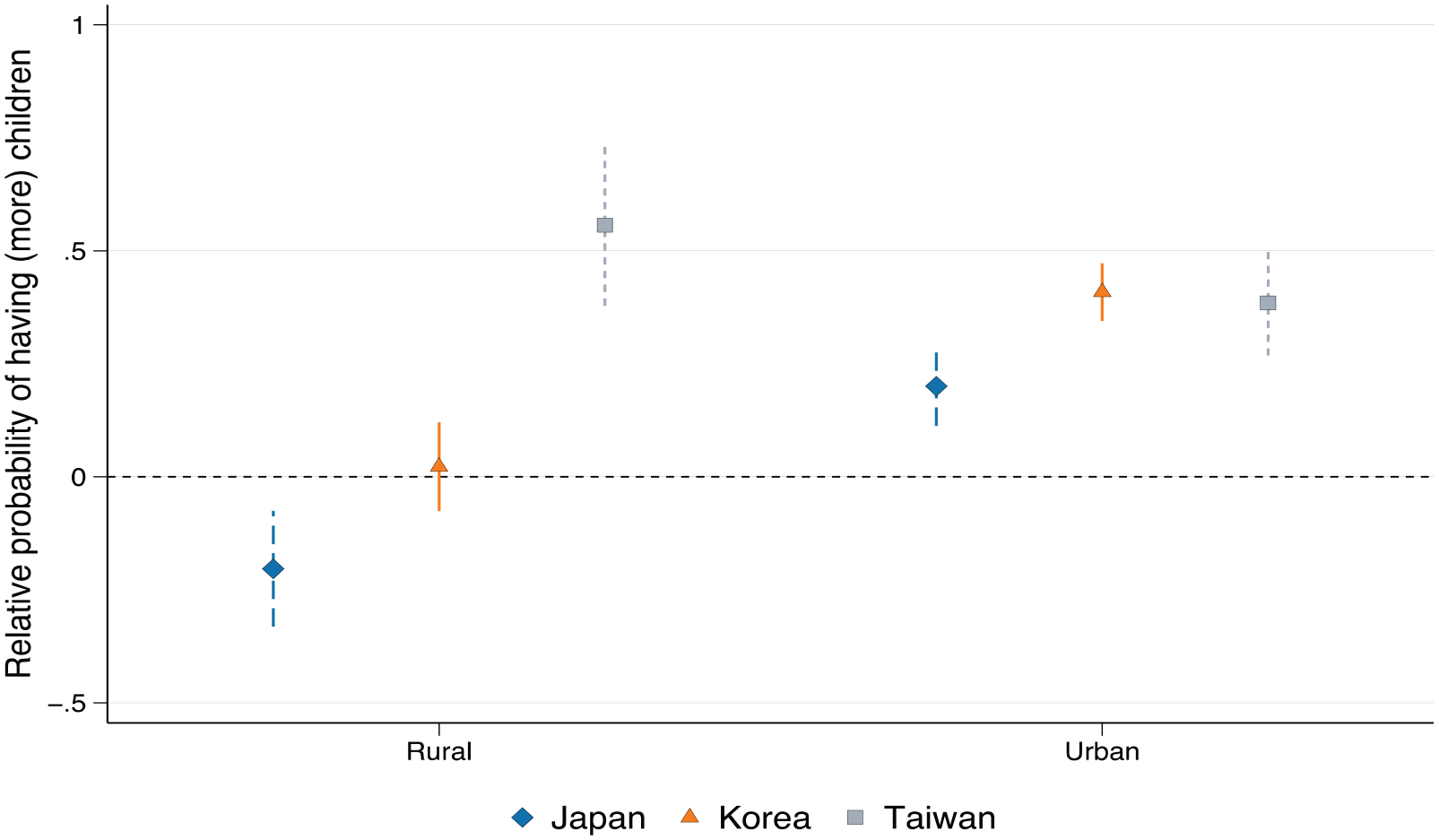
Average marginal effects of frequently receiving financial support on the number of children, by society and area of residence.
The effect of instrumental support on fertility varied among countries. Figure 4 shows the average marginal effects of frequently receiving instrumental support from grandparent(s) on the number of children born by society and area of residence. Across rural and urban areas in Korea, couples who frequently received instrumental support had a higher probability of having more children compared to couples who received no or infrequent instrumental support. The effects were less significant in Taiwan, and couples in Japan saw an inverse association between frequently receiving instrumental support and fertility.
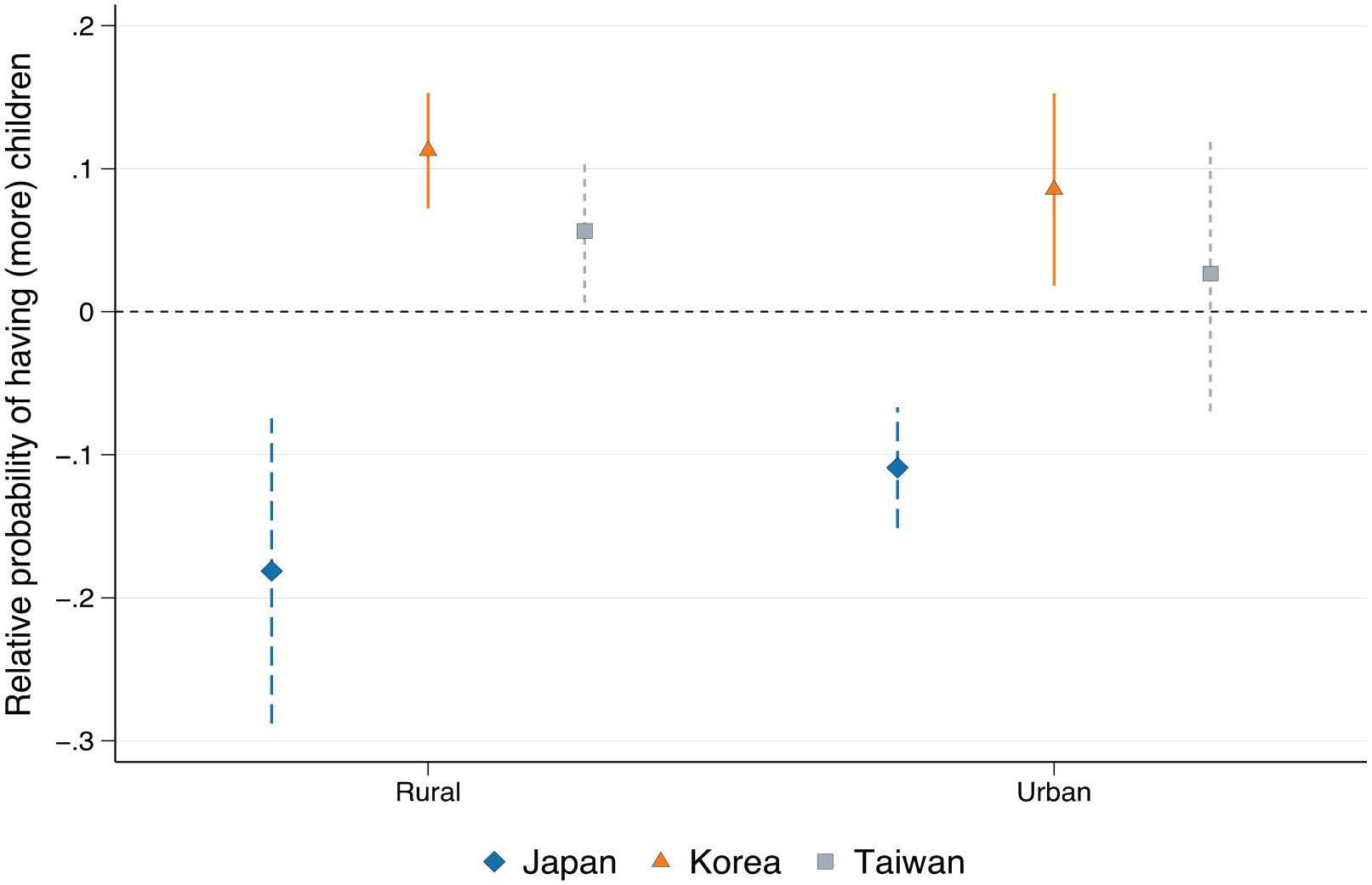
Average marginal effects of frequently receiving instrumental support on the number of children, by society and area of residence.
Turning to China, the results of the generalized Poisson regressions in Table 3 show that husbands with higher education were associated with lower fertility, whereas wives with higher education were associated with higher fertility. Those with more educated grandparent(s) were more likely to have lower fertility. Compared to couples living in rural areas, couples residing in urban areas had significantly lower fertility. The number of siblings in a couple as well as having a female first child was positively associated with fertility. In contrast to the findings from Japan, Korea, and Taiwan, couples who resided within a 15-minute walk of grandparent(s) (IRR = 0.924, p = 0.02), frequently received financial support (IRR = 0.835, p = 0.013), or received instrumental support (IRR = 0.932, p = 0.013) were associated with lower fertility than couples who did not.
Results from generalized Poisson regressions predicting the number of children in China (N = 2112).
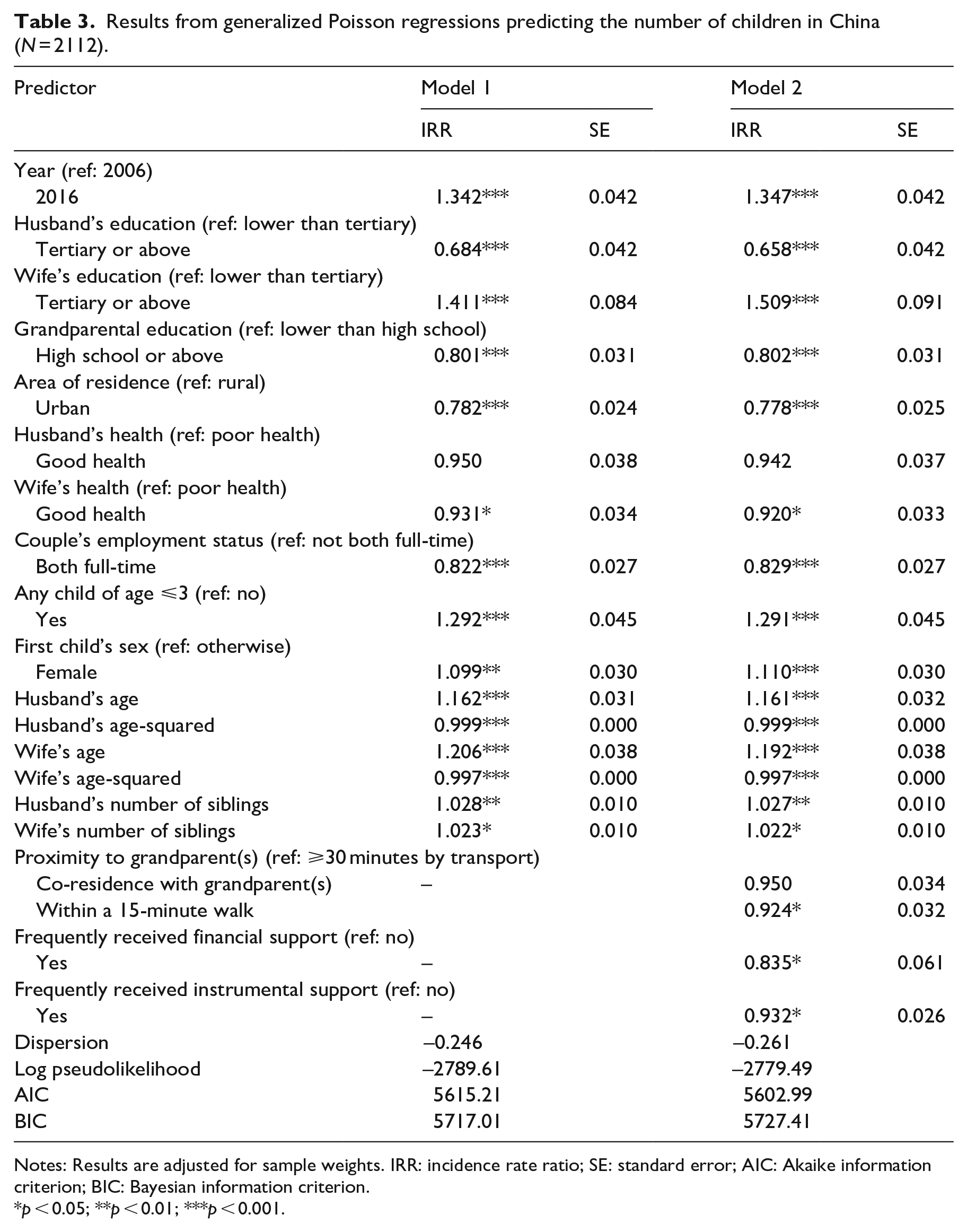
Notes: Results are adjusted for sample weights. IRR: incidence rate ratio; SE: standard error; AIC: Akaike information criterion; BIC: Bayesian information criterion.
p < 0.05; **p < 0.01; ***p < 0.001.
A series of interaction terms were included to examine the possible effects of intergenerational support on fertility by area of residence (i.e. urban or rural) in China. The interaction term between financial support and area of residence was not significant. However, the interaction between instrumental support and the area of residence was significant. For rural couples, the association between instrumental support and having children was negative, whereas the association was positive for urban couples (see Figure 5).
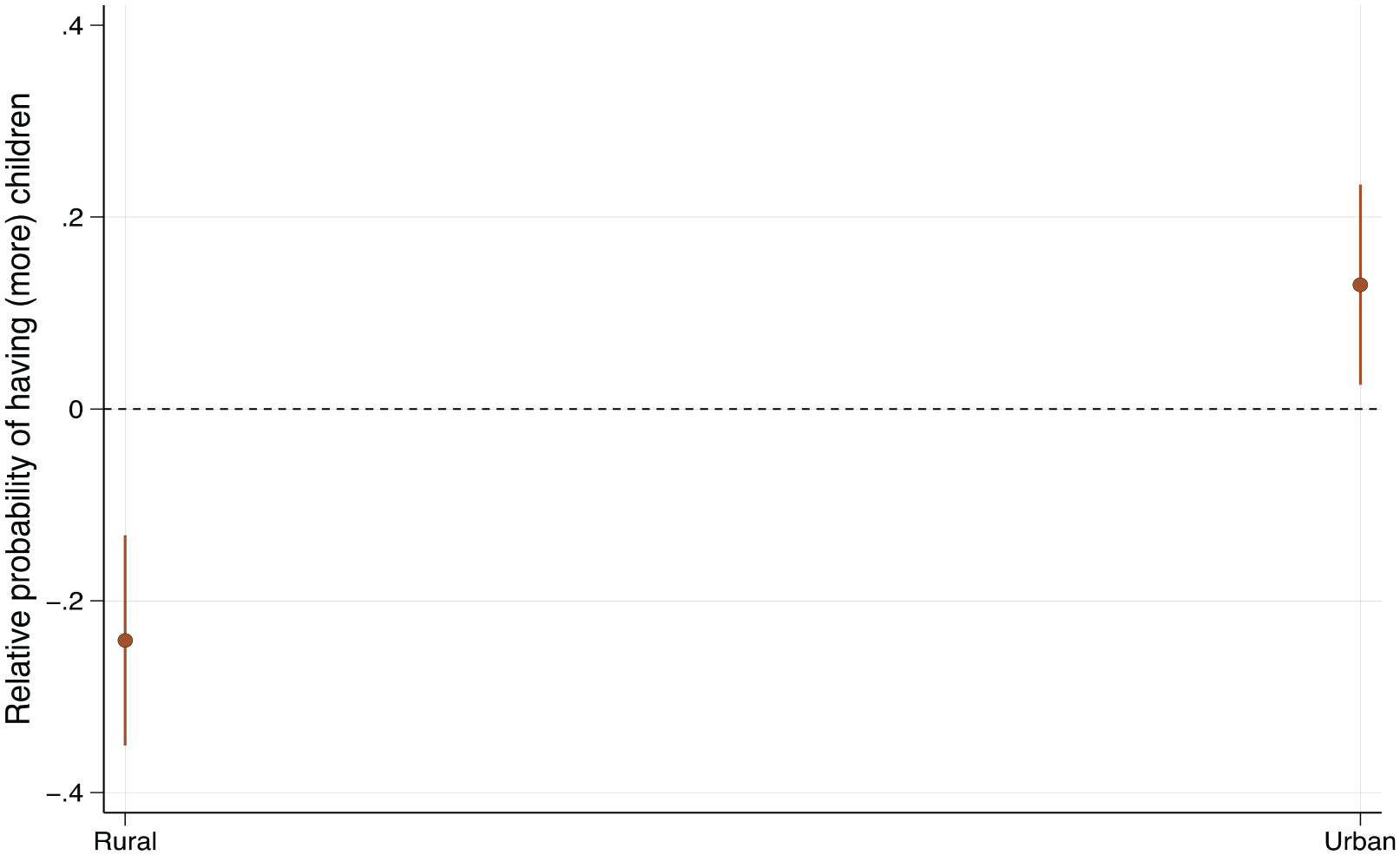
Average marginal effects of frequently receiving instrumental support on the number of children in China, by area of residence.
Auxiliary and sensitivity analyses
Due to East Asian patrilineal customs, previous studies (e.g. Chu et al., 2014; Yoda, 2021) have suggested that the husband’s parents may have a stronger influence on a couple’s fertility. Thus, additional analyses were conducted to determine whether the parent(s) of the husband or the wife had a greater impact on the intergenerational support effect on fertility. These analyses differentiated the key predictors according to whether the couples were in geographic proximity with and receiving financial and instrumental support from the husband’s or the wife’s parent(s). The direction and significance of the results were comparable to those for Japan, Korea, and Taiwan (see Table A3 in Online Appendix C). In the Chinese sample, residing near and receiving financial support from the wife’s parent(s) was negatively associated with fertility (Table A3 in Online Appendix C). No substantial effects from the husband’s parent(s) were observed. These findings suggest that in Japan, Korea, and Taiwan, support from both the husband’s and the wife’s parent(s) may be important for fertility, whereas in China, support from the wife’s parent(s) negatively impacts the likelihood of having more children.
The generalized Poisson model was compared to the standard Poisson regression and negative binomial models to evaluate the performance of the different models (see Tables A4 to A7 in Online Appendix D). Based on the model fit statistics (i.e. the Akaike information criterion and the Bayesian information criterion), the generalized Poisson model provided the best fit for the data. To check the robustness of the key predictors, sensitivity analyses were performed utilizing financial support and instrumental support as continuous variables. The results were consistent with the findings of the main analyses. Models with a different age restriction were used to limit the observations to couples with wives under the age of 40 to assess whether the effects changed based on an alternative age cut-off. These models yielded comparable results and did not alter the conclusions (see Tables A8 and A9 in Online Appendix D).
Discussion and conclusion
In East Asia, fertility rates have been declining for several decades. This study’s premise, which was based on the cooperative breeding hypothesis, postulated that intergenerational support may have a positive effect on fertility. As previous research has suggested that this effect varies depending on broader social, structural, and geographical conditions, the study compared four low-fertility societies: Japan, Korea, Taiwan, and China. The findings partially support the cooperative breeding hypothesis. Intergenerational support, especially in urban households where multigenerational living arrangements and grandparental resources help reduce the financial and opportunity costs of having children, is shown to be an important contributor to fertility outcomes. The patterns of association between intergenerational support and fertility vary significantly among regions. These could be due to urban–rural differences in economic conditions and gender norms within the household. Although the literature tends to view East Asia as an undifferentiated whole, this study sheds light on the importance of context and circumstance.
The positive effect of financial support and grandparental geographic proximity on fertility appears consistent across Japan, Korea, and Taiwan, particularly for couples in urban areas who experience higher housing and living expenditures. Results in these three societies largely support the first hypothesis, which contends that co-residing or living within walking distance of grandparents(-in-law) and receiving frequent financial assistance will have a greater positive effect on fertility for couples residing in urban than rural areas. The results are consistent with previous studies that showed the positive impact of intergenerational assistance on marital fertility (Morgan and Hirosima, 1983; Snopkowski and Sear, 2016; Zhang, 1990b). Given that the rising cost of housing and the high cost of having children are the two most frequently cited reasons for not achieving the ideal or desired family size (Anderson and Kohler, 2013; Gauthier, 2016; Jones, 2019), intergenerational transfers may help people realize their desires for fertility by providing an important source of support and alleviating the cost of having children. As housing is becoming increasingly unaffordable in many urban parts of East Asia (Asian Development Bank, 2019), couples co-residing with their parents after marriage often live in properties that are owned by their parents. Therefore, it is expected that higher reproduction will relate to the alleviation of cost-of-living pressures afforded by intergenerational support.
In the case of China, the results paint a slightly different picture. One possible reason that might explain the differences is the country’s birth planning policy. Using a large-scale survey in the Jiangsu province, Zheng et al. (2009) discovered that a third of respondents cited the government’s birth planning policy as a reason for wanting only one child. Grandparental proximity and support are unlikely to influence the fertility decisions of this group of couples. More significantly, living close to or receiving support from the wife’s parents was negatively associated with fertility. This may be a result of a strong ideology in China that husbands and their families are generally expected to provide for their wives. Therefore, the involvement of the wife’s parents may be negatively related to childbearing.
The study found considerable cross-national variation in the association between instrumental support and fertility, which appears to stem from differences in sociocultural contexts. For example, in both rural and urban areas of Korea, couples who frequently received instrumental support had a higher probability of having more children. This finding is consistent with research by Park et al. (2010) and Yoon (2017), who found that women were more likely to have additional children if family members helped with the housework and childcare. In Taiwan, a similar positive association between instrumental support and fertility was observed, suggesting that grandparental assistance with household and childcare may lighten the load on couples and encourage childbearing. In contrast, couples in both rural and urban locations in Japan exhibited a negative association between instrumental support and having children.
These findings support the idea that instrumental support from grandparents is more likely to have a positive effect on fertility in societies that have advanced in the second gender revolution than in societies that have not (Hypothesis 2). Men’s increased household labor contribution suggests that Korea and Taiwan are in the second phase of the gender revolution (Kan et al., 2019; Kim, 2017; Tan, 2022a). This may produce a different effect on the association between intergenerational support and fertility as grandparental assistance can lessen women’s domestic workload and increase childbearing. Conversely, stronger gender norms in Japan may reinforce the expectation that wives should assume the traditional role of a homemaker, stalling the second gender revolution. When women are expected to contribute more to domestic tasks, receiving instrumental help from grandparents may contravene these expectations and be negatively associated with fertility. In China, urban couples see a favorable correlation between instrumental support and fertility, but rural couples experience a negative correlation. As rural families may possess a stronger gender ideology than urban families, grandparental intervention can upset family relations and reduce fertility. In conclusion, although the ultra-low fertility observed in East Asia may seem a homogeneous phenomenon from afar, each community has its own unique processes for influencing fertility.
Overall, this study’s findings share similarities with existing literature, pointing to heterogeneous patterns of associations between intergenerational support and fertility in specific regional and sociocultural contexts (Harknett et al., 2014; Tanskanen et al., 2014). Notably, Tanskanen et al. (2014) discovered that in the United Kingdom, frequent contact with the husband’s parents is associated with a higher probability of having an additional child, whereas frequent contact with the wife’s parents is associated with a lower probability of having more children. The differential grandparental effects on fertility by lineage varied similar to those observed in China. In Europe, childcare assistance from grandparents had a positive association with fertility intentions in France and Norway, but a negative association in Bulgaria and Lithuania (Tanskanen and Rotkirch, 2014). Gender equality is more prevalent in France and Norway than it is in Bulgaria and Lithuania (Human Development Reports, 2022). This is consistent with research from East Asia, which showed that instrumental support is associated with higher fertility in societies making more progress on gender equality than societies making less progress on gender equality. Although heterogeneity in the cooperative breeding framework has received little attention, a key theme that has consistently emerged in the literature and our findings is the important role of contextual variation that shapes the connection between intergenerational support and fertility. Additional studies can expand the geographical scope of research in this field to provide a fuller comparative perspective on the association between intergenerational and fertility across different regional and sociocultural contexts.
This study has some limitations—though it also presents opportunities for future research. First, measures used in this study are based on self-reporting and may be subject to recall bias or social desirability bias. Respondents may have underreported the assistance they receive from grandparents to “save face” (Hwang, 2006), as seeking help in East Asian cultures is often perceived as being a burden to others or being unable to provide for one’s family (Lin and Yamaguchi, 2011). Second, the data lacked information on grandparental pressure to reproduce. In East Asian contexts where filial piety and familism are strong, couples’ decisions about having children may be influenced by grandparental fertility priming (Newson et al., 2007). The persistence of pro-natal cultural norms may be another avenue for future research on the pathways of intergenerational influence on fertility. Third, the cross-sectional nature of the data may not preclude the possibility that the association between intergenerational support and fertility may be bidirectional. In a similar vein, the cross-sectional data may not accurately reflect the dynamics of living arrangements as couples may experience residential transitions; for example, the practice of rotating co-residence among adult sons in some societies may reduce the duration of stay. Given the prolonged time of childrearing, the provision of grandparental support over the last 12 months may not always accurately characterize couples’ overall support. However, to date, this is the best available data for examining this topic through a comparative lens. This study serves as the first step in examining the importance of informal support on family processes in settings with considerable intergenerational solidarity. Crucially, the study stresses the pressing need for the collection of longitudinal data for future comparative research. Fourth, intergenerational relationships may be reciprocal. For instance, co-residence can also mean the provision of assistance and support to grandparents. As more couples in East Asia are caring for both their children and elderly parents (Tan, 2018), future research should focus on determining how intergenerational exchanges affect fertility.
This study contributes to the literature on intergenerational support and fertility by providing a detailed investigation into the cross-national and intra-regional variations that shape the effect of intergenerational geographic proximity, financial support, and instrumental support on fertility in very low fertility contexts. The findings of this study suggest that more attention should be paid to understanding the nuanced contextual and sociocultural factors that underlie fertility processes and outcomes. Particularly significant is the unintended adverse effect on fertility of domestic and caregiving assistance in societies with more rigid gender roles, which suggests that cultural influences may complicate how grandparental support influences fertility. Conversely, help with housework and caregiving may benefit couples in societies with less strong gender norms. Although intergenerational support might not substitute men’s contributions, it could complement or supplement existing distributions of labor. Finally, the findings consistently demonstrate that the positive link between intergenerational support and fertility is accentuated among couples residing in urban areas. Given the low fertility trends in East Asian societies and the limited impact of institutional support in meeting the needs of parents in rapidly urbanizing societies, further research is needed to better understand the role of intergenerational support in shaping childbearing behavior and assisting couples in their journey of parenthood.
Supplemental Material
sj-docx-1-cos-10.1177_00207152231161791 – Supplemental material for Cross-national differences in the association between intergenerational support and fertility in East Asia
Supplemental material, sj-docx-1-cos-10.1177_00207152231161791 for Cross-national differences in the association between intergenerational support and fertility in East Asia by Jolene Tan in International Journal of Comparative Sociology
Footnotes
Acknowledgements
I am grateful to Dr Michael Roettger, Professor Edith Gray, and Dr Kim Xu for their comments and ongoing support. This paper also benefited greatly from the comments and suggestions of Shao-Tzu Yu, Associate Professor Bernard Baffour, ANU colleagues, and the Editor and reviewers of the International Journal of Comparative Sociology. I thank the East Asian Social Survey Data Archive for the data used in this study.
Declaration of conflicting interests
The author(s) declared no potential conflicts of interest with respect to the research, authorship, and/or publication of this article.
Funding
The author(s) disclosed receipt of the following financial support for the research, authorship, and/or publication of this article: This research was supported by the Australian Government Research Training Program Scholarship.

Supplemental material
Supplemental material for this article is available online.
References
Supplementary Material
Please find the following supplemental material available below.
For Open Access articles published under a Creative Commons License, all supplemental material carries the same license as the article it is associated with.
For non-Open Access articles published, all supplemental material carries a non-exclusive license, and permission requests for re-use of supplemental material or any part of supplemental material shall be sent directly to the copyright owner as specified in the copyright notice associated with the article.
