




Abstract
Part-time employment has repeatedly been proposed as a solution for integrating women into the labor market; however, empirical evidence supporting a causal link is mixed. In this text, we investigate the extent to which increasing part-time employment is a valid means of augmenting women’s labor market participation. We pay particular attention to the institutional context and the related characteristics of part-time employment in European countries to test the conditions under which this solution is a viable option. The results reveal that part-time employment may strengthen female employment in Continental Europe and especially in Southern Europe, where an increase in part-time employment—even if it is demand-side driven—leads to greater employment participation among women. We also discuss some policy implications and trade-offs: Although part-time work can lead to higher numbers of employed women, it does so at the cost of increasing gendered labor market segregation. We analyze data from the European Labor Force Survey (EU-LFS) 1992–2011 for 19 countries and 188 regions and exploit regional variation over time while controlling for time-constant regional characteristics, time-varying regional labor market features, and (time-varying) confounding factors at the national level.
Keywords
Introduction
Increasing women’s labor market (LM) participation in Europe has gone hand in hand with the expansion of part-time work (PTW) in many countries. Bivariate associations between PTW and women’s employment rates appear to support claims that a greater availability of part-time jobs could also foster women’s employment in countries with notoriously low female LM participation (OECD, 2013; Thévenon, 2013). However, empirical support for the idea that PTW could causally increase employment remains unclear (OECD, 2010), and “there is no clear evidence […] that countries which experienced a rise in the share of part-time jobs also experienced a rise in overall employment” (Boeri et al., 2005: 24). This lack of evidence suggests that PTW effects might be heterogeneous and depend on features from institutional and normative contexts as well as on women’s characteristics (Del Boca et al., 2005, 2009; Dieckhoff et al., 2016; Lyberakia et al., 2013).
In this article, we consider the extent to which part-time employment could be a means of increasing women’s inclusion in the LM, and we assess the importance of the institutional and structural context for moderating the role of PTW to foster women’s employment. We make a significant contribution to the vast literature, which predominantly documents differences in the characteristics of PTW across national contexts and among different groups of women. Based on this literature, we theoretically argue that a combination of various macro-dimensions largely determines whether an increase in part-time jobs also increases women’s LM integration and consequently leads to higher levels of gender equality. Our empirical analyses confirm that the institutional context is central: PTW expansion is indeed associated—net of possible confounders—with female employment growth, especially in contexts characterized by low or moderate female LM participation throughout the life course, relatively rigid labor and product markets, and marginal PTW. Moreover, empirical evidence suggests that PTW is associated with net female employment creation in Southern Europe, even when it is involuntary—that is, when it stems from firms’ needs rather than from women’s preferences. This evidence contributes to our theoretical understanding of the links (Coleman, 1990) between institutional arrangements, employment creation, and gender equality and suggests that a broader demand-side perspective—along with a micro-supply-side view—must be applied to explain the nexus between part-time employment, women’s LM participation, and economic equity among men and women more generally (European Commission, 2017; Grotti and Scherer, 2014, 2016).
We adopt a comparative perspective across European regions and over time and take into account cross-level interactions between LM arrangements and women’s characteristics. By pooling European Labor Force Survey (EU-LFS) data from 1992–2011 for 19 countries, we identify the contexts in which a rising incidence of part-time employment has been associated with growth in female LM participation. Given the significant intra-country heterogeneity of local LM conditions, in order to identify the effect of an increase in PTW on women’s employment, we focus on regional variations over time and within countries. In so doing, we also allow for (education-specific) national time trends in employment rates and test for the effect of changes in PTW availability net of possible group-specific employment trends, which are variously related to period effects and/or to other policy or institutional arrangements. The proposed empirical strategy also allows us to control for confounding time-varying factors at the national level, regional time-constant unobserved heterogeneity, and time-varying regional LM characteristics. 1 In addition, we address micro-level heterogeneity by analyzing whether the growth of PTW has affected women differently based on their individual and household characteristics (i.e. their level of education and the presence of children).
The next section introduces the debate and findings on PTW trends and increasing female employment in Europe. Section “Data and methods” presents our data and empirical strategy. The results in section “Empirical results” demonstrate how PTW growth is related to an increase in women’s employment opportunities in two country clusters of special interest. As a robustness check, we further distinguish between the effects of involuntary and voluntary PTW to separate the effects of PTW growth on women’s employment into a more demand-driven component, based on employer’s needs, and a more supply-side component, based on women’s preferences. In section “Conclusion,” our conclusions and some policy implications are discussed. We find that if PTW represents a tool that can be used to strengthen female employment in Continental and Southern Europe, it does so at the expense of boosting greater gender segregation in the LM, which represents an apparently unavoidable trade-off.
Part-time work and women’s employment
Characteristics of part-time employment
The importance of including women in paid employment is widely accepted, and the beneficial effects of employment for individuals, families, and societies regarding their overall well-being and the prevention of economic marginality or even the sustainability of pension systems has been well documented in the literature (Bettio et al., 2013; Boeri et al., 2005; Dotti Sani and Scherer, 2018; Korpi et al., 2013; OECD, 2017). Part-time employment is highly gendered and often seen as a means of combining employment with family duties, thereby reducing the work–life conflict (Russell et al., 2009). Even if it is generally associated with lower rewards, worse employment quality, and poorer career chances, PTW can nonetheless represent a valid alternative to non-activity. Opting to work part-time might be a matter of choice as well as of constraints. Evidence exists that individual factors and preferences are crucial for PTW diffusion, and married women with family responsibilities are in fact most likely to work part-time (Bardasi and Gornick, 2008; Berghammer and Riederer, 2018; Drobnič and Guillén, 2011; Gornick and Jacobs, 1998; Tijdens, 2002). Hakim (1992, 2000, 2008) argues that many women actually prefer to work part-time, and Beham et al. (2012) have shown that part-time employment goes hand in hand with higher levels of satisfaction regarding the work–life balance. This vision of PTW as an “integrative device” emphasizes the notion that part-time jobs provide opportunities for individuals who would not otherwise be active in the LM (Booth and van Ours, 2013). A high share of voluntary PTW is often considered an indicator of the employment-integration potential of this type of job (OECD, 2010).
However, merely interpreting PTW in terms of an individual’s preferences and choice can be misleading. Part-time employment might be a result of LM-related demand-side dynamics that promote marginal forms of employment in the peripheral labor force (e.g. women with care responsibilities), which includes individuals who do not really have a choice regarding their employment (Fagan and Lallement, 2000; Fagan and Rubery, 1996; O’Reilly and Fagan, 1998; Tijdens, 2002). LM segmentation theory implies that employers use the so-called non-standard employment (Hipp et al., 2015) as a cheap and easily available buffer to counter the volatility and competition of (international) markets or simply to accommodate customers’ requirements, as is the case in the service sector (Allaart and Bellmann, 2007; Tijdens, 2002). Part-time employment is a major component of this “peripheral” workforce. In fact, the sectoral shift toward services and firms’ rising need for organizational flexibility constitute demand-side factors that underlie the increase in PTW and other forms of flexible jobs (Buddelmeyer et al., 2008; Euwals and Hogerbrugge, 2004; Visser, 2002; Boeri 2010). Moreover, the various sources of employment marginality tend to accumulate. Part-time workers are generally more likely than full-time workers to work under various forms of temporary employment contracts (Fagan and Burchell, 2002; Fernández-Kranz et al., 2015; Paoli and Merllié, 2001), which are often associated with substantial work insecurity (Burgoon and Dekker, 2010) and little opportunity for skill development and training (Cutuli and Guetto, 2013; Nelen and de Grip, 2009). If PTW mainly involves cheap, secondary LM positions, it leads not only with worse employment quality but potentially also with a considerable substitution of part-time jobs for full-time jobs, as was reported by Mauro and Garibaldi (1999) for most EU countries. Although there might be both supply- and demand-side drivers of PTW in EU countries, we argue that the prevailing character of PTW is affected by each country’s structural and institutional settings.
Country differences in the diffusion and characteristics of PTW
The vast body of literature has documented country differences in terms of the incidence and characteristics of PTW. Different models of part-time employment appear to prevail depending on the context (McGinnity and McManus, 2007). The institutional determinants of the diffusion of PTW include the sectoral composition of the LM, the levels of labor and product market regulation, the legal regulation of working hours, the tax system (making it more or less attractive for the second earner to work full- or part-time, with individual taxation favoring full-time employment), and the availability of childcare (Buddelmeyer et al., 2008; Hipp et al., 2015; OECD, 2010). Normative contexts—which influence individual attitudes and the societal acceptance of gender-specific working hours—have also been cited as factors that affect the persistent country differences in PTW distribution (Trappe et al., 2015). Some scholars have argued that the wider societal “gender arrangement” contributes to the diffusion of PTW (Anxo et al., 2007; Boeckmann et al., 2015; Lewis et al., 2008). In countries such as the Netherlands, Germany, and Austria, 2 mothers of young children still appear to be expected not to work full-time (Anxo et al., 2007; Booth and van Ours, 2013; Gutiérrez-Doménech, 2005; Kelle et al., 2017; Lewis and Plomien, 2009). Women in Southern Europe, on the other hand, often completely withdraw from the LM to be full-time mothers. Interestingly, working part-time because no full-time employment can be found (so-called “involuntary part-time work”) occurs quite often in Southern Europe, yet is not a mass phenomenon in any EU country (OECD, 2010, 2013). 3
The characteristics of PTW also vary considerably depending on national employment regulations. While the quality of employment, work autonomy, earnings, and career chances are generally lower for part-time jobs compared with full-time employment, the extent to which this is the case depends on institutional and structural characteristics. Hipp et al. (2015) highlighted how the legal situation affects the quality of part-time employment, and Bardasi and Gornick (2008) suggested that occupational segregation is important to understanding differences in the extent of wage inequalities between full- and part-time employees. The authors also demonstrated how country differences in LM regulation affect the transformation of PTW from a secondary LM segment into an integration policy. Gallie et al. (2016) stressed that, in addition to the quality of PTW, satisfaction also varies significantly with national contexts. Anxo et al. (2007) reported that voluntary part-time activity is particularly high among German and Dutch women, and Booth and van Ours (2013) revealed how Dutch women are generally satisfied with their part-time working hours. Overall, part-time jobs are less penalizing in regulated Central EU LMs (Dieckhoff et al., 2016; Rubery, 1998), and wage differentials appear to be particularly small in the Netherlands (Hu, 2005; Robson et al., 1999). Marginal low-paid PTW is predominant in the United Kingdom (Ermisch and Wright, 1993), where it is much more common among the low-educated (Fagan and Rubery, 1996; O’Reilly and Fagan, 1998) and is concentrated in the service sector. In the United Kingdom, FTW/PTW wage differentials reach about 30 percent (Hu, 2005), which is only partially accounted for by observable characteristics, such as human capital accumulation and the type of occupation (Bardasi and Gornick, 2008; Fernández-Kranz et al., 2015). In summary, European countries differ in the characterization of their part-time employment, which comes with different levels of diffusion, quality, and composition. Moreover, countries also differ with regard to the capacity of PTW to favor women’s LM integration, as we discuss in the next section.
Women’s employment and PTW availability
The increase in part-time female employment has stimulated a great deal of empirical research with the aim of establishing whether and where a (causal) effect on overall female LM participation exists. As previously stated, the evidence is mixed and inconclusive. In their attempt to account for the determinants of employment growth during the 1980s and 1990s, Garibaldi and Mauro (2002) found that the availability of PTW is associated with an increase in overall employment mainly in the service sector and among prime-age women, though employment gains come largely at the expense of full-time positions, as is the case with the diffusion of other “flexible” forms of employment (Barbieri and Cutuli, 2016, 2018). Buddelmeyer et al. (2008) found causal effects in both directions, with the impact of PTW diffusion on female employment being stronger than that of female employment on PTW diffusion. Jaumotte (2003) draws similar conclusions adopting country-level tax incentives for PTW as an instrumental variable for the share of part-time jobs in female employment.
However, studies relying on aggregate data provide no insight as to how institutional settings, policy levers, and labor and product market characteristics influence the employment chances of different types of women. Although women’s characteristics as well as their attributes and opportunity costs are crucial, studies that combine macro- and micro-level information from several countries in a longitudinal setting remain scarce (Steiber and Haas, 2012). According to Del Boca (2002), LM rigidities and a lack of childcare services simultaneously increase the costs of children for married women and discourage their decision to become employed (Del Boca et al., 2005). Improving the availability of part-time jobs and childcare services would thus increase the LM participation of married women in Italy and Spain (Del Boca and Sauer, 2009), but not in France or the United Kingdom (Del Boca et al., 2005). In general, the literature also suggests the need to take the overall quality of part-time jobs into account: Del Boca et al. (2009) found that the diffusion of PTW is positively associated with women’s employment only in countries in which part-time jobs offer the same social protection and stability as full-time work (FTW).
In line with this literature, we argue that the combination of different macro-contextual dimensions determines the importance of PTW regarding women’s LM participation. A joint consideration of various dimensions seems appropriate given the contingent development of the institutional, structural, and regulatory contexts (Hall and Soskice, 2001; Hipp et al., 2015). We roughly follow a well-known typology that distinguishes among Liberal, Conservative/Continental, Mediterranean/Southern-European, Post-socialist/Eastern-European, and Social-democratic/Nordic countries (Amable, 2005; Blossfeld and Drobnič, 2001; Chang, 2000; Esping-Andersen, 1990, 1999; Ferrera, 1996). The proposed country clusters are ideal-typical cases of welfare and LM settings. However, to provide a detailed picture of the dynamics of PTW, France is kept as a separate case instead of grouping it with the Continental cluster because its public support for women’s and mothers’ employment more strongly resembles that of the Nordic countries, whereas certain aspects of LM regulation render it closer to the Mediterranean countries. 4
Conceptually, we identify three aspects related to the characteristics and use of PTW that should moderate the consequences that increasing PTW diffusion has on women’s employment: the predominant way of combining employment and family in the household, the amount of labor and product market flexibility, and the quality of PTW.
First, European countries differ considerably in terms of how they combine labor and family duties and their different levels of female LM participation over the life course. The predominant household-earner model results from a combination of the welfare type and related family policies, LM characteristics and regulations, and the normative arrangements of a given society (Esping-Andersen, 2009). The “dual-earner model” of the work–family arrangement prevails in the Nordic countries, France, the United Kingdom, and Eastern Europe. The Nordic countries and (to a lesser extent) France have proven capable of promoting continuous female employment participation mainly through generous family policies and welfare services and a developed public service sector. In Liberal countries, work–family reconciliation instead has to rely largely on the market. In the Eastern-European model, high rates of female LM participation result in a model of dual full-time earner couples, though the work–life balance remains difficult. On the other hand, in Continental (Conservative) and Mediterranean countries, where care activities are mainly endogenized within the family, traditional or modified “male breadwinner” family models prevail. In Southern Europe, female employment is particularly low (overall and throughout the life course), and there is certainly room for female employment to grow. Working part-time is an option that would enable mothers to remain employed in all countries, though the extent to which this is the case and the consequences of this option vary depending on the context (Anxo et al., 2007; Lanninger and Sundström, 2013; Tattarini et al., 2018).
Second, the level of Labor and Product Market Flexibility is supposed to come with implications for the role that PTW can play in increasing women’s employment. In countries with flexible labor and product markets (and with levels of PTW above the EU28 average), flexible work schedules incentivize the division of care and work, and available childcare favors PTW as a tool for the work–life balance. PTW is disincentivized in less dynamic and more regulated contexts of dualistic markets (Southern- and Eastern-European countries), and family events often lead to non-employment of mothers, especially in the absence of reconciliation policies (Del Boca and Sauer, 2009; Steiber and Haas, 2012). The Northern and the Anglo-Saxon models are characterized by flexible labor and product markets, but while the work–life balance is further eased in the North (and in France) by a highly supportive state, family services in Liberal countries are mainly left to the market. In the Liberal contexts (i.e. the United Kingdom), PTW represents in primis a tool that can be implemented to realize cheap employment positions and numerical flexibility for firms (Atkinson and Meager, 1986; Pollert, 1991). The Conservative and Southern-European countries (as well as France) are distinguished by more rigid and regulated labor and product markets, in which PTW is also limited in terms of growth.
Finally, the quality of part-time employment—which distinguishes between predominantly marginal forms of PTW and non-marginal PTW and which is related to the regulation and structure of the LM—is also important in defining the role that PTW can have in increasing women’s employment levels. Marginal PTW implies greater wage differentials, lower social entitlements, and poorer job quality overall. Marginal PTW prevails in Liberal, Mediterranean, and Eastern-European countries, where PTW is often of lower quality and highly penalized (Brainerd, 2000). On the other hand, in France, Continental, and Northern-European countries, PTW is generally of good quality and comparable with FTW; moreover, the penalties associated with it are rather modest. Due to rather short full-time working hours in France, differences to PTW are less relevant overall.
Expectations and empirical approach
Due to the differences between institutional contexts, we expect the character of PTW and therefore also its effects on women’s employment chances to vary across countries. More precisely, we expect increasing PTW to foster women’s employment, especially in countries in which the institutional and normative context enhances the (modified) male breadwinner model and in which the gender employment gap is therefore high, namely, in the Continental cluster and even more so in the Mediterranean cluster (H1). However, the increasing availability of part-time employment might affect different groups of women differently depending on the context (H2). In Continental countries, voluntary maternal PTW is rather common, and women’s employment is highly responsive to family events. 5 Nevertheless, opportunity costs are also high for the highly educated in these countries, and the positive effect of increases in the incidence rate of part-time jobs on women’s employment should thus be concentrated among mothers with intermediate and low levels of education (H2-a), especially as their children grow older. In Southern Europe, the lack of family policies and the presence of labor and product market rigidities lead to a polarization between highly work-oriented women with a lifelong attachment to the LM and those who spend a major part of their lives out of employment. Among the latter group, many “adaptive” women (to use Hakim’s term)—who would be willing to combine having children with employment—are often excluded from the LM, even before childbirth. An increase in the incidence of part-time jobs would thus provide a wider range of Mediterranean women (characterized by different degrees of work orientation and opportunity costs) with a chance to ameliorate the strict trade-off between children and full-time employment, even if their PTW were located in the secondary market or were not their first choice. Therefore, the positive effect of an increase in the availability of part-time jobs should be more generalized in Mediterranean countries (H2-b)—that is, it should be less dependent on women’s education and care responsibilities.
Empirically, we investigated the effects of PTW availability on female employment across clusters (i.e. separately for each group of countries) and rely on variation of PTW diffusion within regions over time by applying country and region fixed-effects probit models. In so doing, we identify separate effects for each “cluster” of PTW increases on women’s employment while controlling for other national and regional characteristics that shape female LM participation in different local and national contexts.
Data and methods
Our empirical analyses used data from the EU-LFS for 19 European countries from 1992–2011 to study the employment chances of women aged 25–44 (see Overview 1). All models were estimated separately for the six clusters: The Nordic cluster includes Denmark, Finland, Norway, and Sweden; the Continental cluster includes Austria, Belgium, and Germany; 6 France was kept separate and might be considered to follow the Nordic cluster; the Mediterranean cluster includes Italy, Greece, and Spain; the Liberal cluster is represented by the United Kingdom; and the Post-socialist, Eastern-European cluster includes Bulgaria, the Czech Republic, Hungary, Poland, Romania, Slovenia, and Slovakia.
Yearly data from 1992–2011 for 188 regions (number of regions per country in brackets).
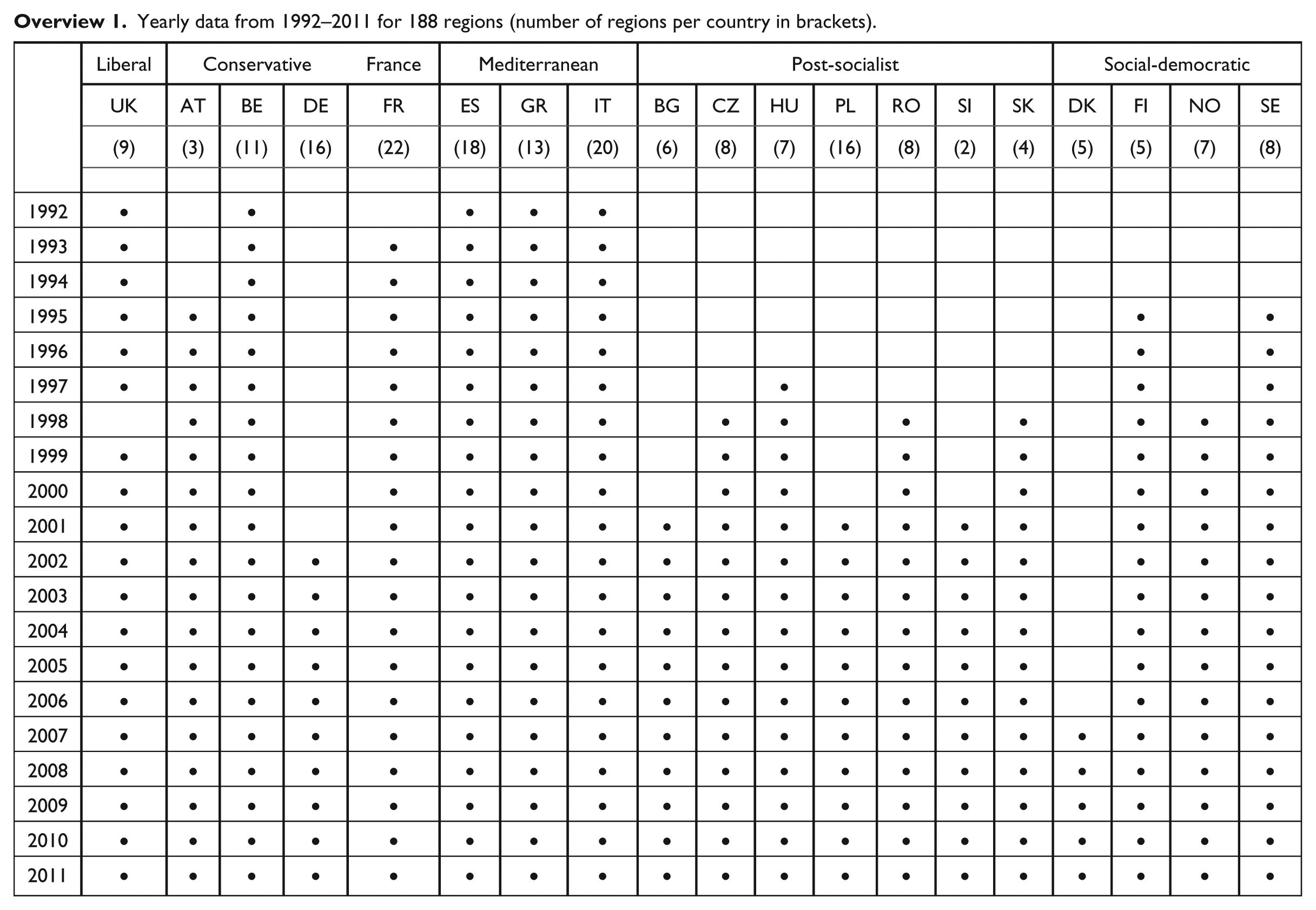
We regress women’s employment on micro-level characteristics and LM features operationalized at the regional level, exploiting the variation within the 188 available regions over time. Focusing on regional LM heterogeneity allows for a more robust identification of the association between PTW availability and trends of female employment and enables us to overcome the problems of multilevel studies with too few higher level units (Bryan and Jenkins, 2015). Our dataset covers about 4.5 million cases (individuals), which makes it possible to base estimates of macro-effects exclusively on regional variation over time. This aspect is crucial to our study as it enables us to control for confounders at both the national and regional levels. More specifically, we applied probit models according to the following specification 7

where i, j, z, and t represent the individual, regional, country, and year levels, respectively.
Employmentijzt was operationalized as a dummy variable that takes the value of 1 in the case of employment and 0 otherwise. A person is employed if she reported having performed any work for pay or profit during the reference week. Women on maternity leave are not considered to be employed, whereas marginal part-timers, the self-employed, and family workers are included among the employed, regardless of weekly work intensity or contractual arrangements. Our main explanatory variable (%PTWjt) is the percentage of part-time working women as a share of total female employment in dependent employment in the age group of 15–64 as measured at the regional level for each year. 8 This PTW measure accounts for the region- and year-specific share in part-time positions. We took this measure as a proxy of the availability of part-time jobs 9 and assigned the corresponding regional measures to each individual based on residence information (regions largely correspond to Nomenclature of Territorial Units for Statistics (NUTS)-2 levels of classification). 10 Calculating the PTW share on the basis of self-reported information by respondents allowed for variation in actual working hours as foreseen under the national definition of PTW (though these differences are limited).
Xi represents a vector of individual characteristics. Women’s education was measured in three categories (lower secondary, upper secondary, and tertiary levels), and age was considered in four 5-year age classes (ranging from the 25–29 age group to the 40–44 age group). We controlled for immigrant status (native/non-native), for the presence of a partner and marital status (single/not, widowed/separated/divorced/cohabiting/married). Women’s care responsibilities were measured via the number of children in the household, distinguishing between children up to 5 years old and those older than 5.
Importantly, we included fixed effects to control for all time-constant regional and national characteristics: Rj and Cz represent the fixed region and country effects, respectively. 11
While all time-constant heterogeneity was captured by the regional fixed effects, national time-varying characteristics associated with changes in employment opportunities for different types of women were captured via a three-way interaction between country, education, and linear time trends. The inclusion of country- and education-specific time trends (Cz·time trends·Educationi) controlled for changes in (unobserved) time-varying factors defined at the national level that might influence women’s employment differently according to their educational level (such as parental leave schemes or in-cash and in-kind benefits, the effects of which vary with women’s education). 12 To account for time-varying confounders at the regional level, the models included three time-varying regional control variables (Xjt). The male youth unemployment rate served as the best proxy for the economic cycle due to its high responsiveness to economic conjuncture. The percentage of women with a temporary contract has been used as a proxy for LM deregulation. Finally, the percentage of self-employed women among the total number of employed women served to capture other potential drivers of the increase in female employment. The rationale behind including these variables was to keep under control possible biases originating from the correlation between changes in female employment rates and the variation in workforce composition as well as—relatedly—the variation in LM structures. Model (1) was estimated separately for the six groups of countries. All countries enter the analysis with the same weight. 13 The reported estimates of the PTW effect were based on the variation within regions over time. To allow for heterogeneous PTW effects according to women’s education and care responsibilities, models included the appropriate interaction terms.
Despite focusing on longitudinal variations within regions, PTW effects can only be interpreted as robust covariations between the regional level of PTW and women’s employment. The share of PTW from dependent employment probably also includes supply-side factors or preferences, and endogeneity might thus arise from women’s choice to enter the LM through (and not thanks to) a part-time job. Therefore, we do not suggest a causal interpretation of these results.
To approximate a causal interpretation of PTW effects, a pure demand-driven proxy of PTW is needed. 14 To separate the effects of PTW in a more demand-driven component, based on employer’s needs, and in a more supply-driven component, based on women’s preferences, we disentangled the voluntary and involuntary components of the regional part-time employment trends. “Involuntary PTW” was defined as the share of part-time workers (on total employed) who reported not being able to find full-time jobs. “Voluntary part-time employment” was computed as the difference in the shares between overall and involuntary part-time employment. While voluntary part-time employment might include both supply- and demand-side factors, the (change in the) rate of involuntary part-time jobs can be seen as being associated only with demand-side factors. A direct, positive effect of the incidence of involuntary PTW on women’s employment could thus be interpreted as a “lower limit” of the possible overall causal effect of PTW on women’s employment. In light of this consideration and assuming that trends in involuntary PTW are exogenous to women’s choices, we also used the longitudinal variation in involuntary part-time shares as an instrumental variable for voluntary part-time rates in order to avoid endogenous estimates.
Empirical results
Does the increased availability of part-time employment increase women’s employment?
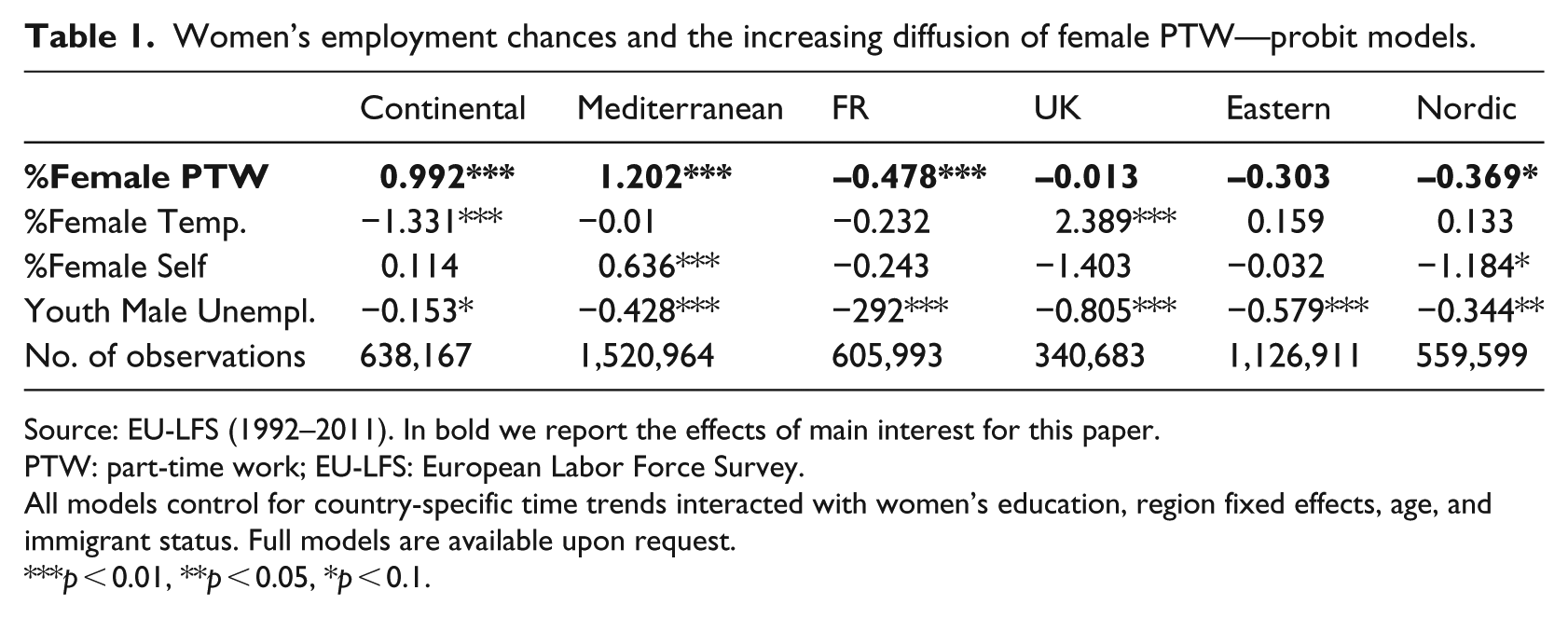
Table 1 presents the results of equation (1) applied separately to the six “country clusters” and reports probit coefficients. In order to facilitate the interpretation, we computed average marginal effects (AMEs) based on the observed changes in the regional variables in the analyzed time window within each cluster and expressed as two standard deviations of this average regional variation. Full models are provided in the online supplementary material.
Women’s employment chances and the increasing diffusion of female PTW—probit models.
Source: EU-LFS (1992–2011). In bold we report the effects of main interest for this paper.
PTW: part-time work; EU-LFS: European Labor Force Survey.
All models control for country-specific time trends interacted with women’s education, region fixed effects, age, and immigrant status. Full models are available upon request.
p < 0.01, **p < 0.05, *p < 0.1.
We find that an increasing availability of PTW is associated with higher employment rates for women, but only in the Continental and Mediterranean clusters, which confirms H1. In the Continental cluster, positive and significant effects of increases in regional PTW correspond to an absolute effect of 2.9 percentage points. In other words, the average variation in PTW rates within regions over time contributes to 26 percent of the average increase in women’s employment rates from 1992 to 2011. Among the Mediterranean countries, the absolute effect increases women’s employment by 18 percent from 1992 to 2011 (AME of 3.1 percentage points). In Eastern Europe, where full-time dual-earner families have been the norm, no significant effect is found. Women’s employment decisions are likely unrelated to institutional and LM settings and are instead probably largely driven by wider structural economic conditions. No effect is also found in the Liberal context, and in the Nordic cluster the effects of PTW diffusion even lead to a reduction in women’s employment. Additional analyses revealed that PTW is concentrated among low-educated women who are employed in marginal segments of the LM. However, the absolute impact is negligible (AME of about 0.4 percentage points). Interestingly, an increase in PTW in France also reduces women’s employment, which suggests that France is in fact more similar to the Nordic countries in these aspects. Additional analyses confirmed that the presented clusters are internally rather homogeneous. 15
Further results from Table 1 deserve comments, though they are not the focus of this article. As expected, women’s employment responds to macroeconomic trends in all contexts. The negative effect of the male youth unemployment rates is strongest in Liberal countries (2 percentage points), closely followed by Eastern Europe, and is weakest in the Continental clusters (AME of 0.5 percentage points). More interestingly, the diffusion of temporary contracts does not relevantly increase women’s employment, which confirms previous findings (Barbieri and Cutuli, 2016; Kahn, 2010) that LM flexibilization/deregulation does not foster employment. Only in the Liberal country does a very small positive association emerge: The AME associated with this effect corresponds to 1.5 percentage points. Additional analyses revealed that this positive effect mostly concerns low-educated women whose employment within a temporary arrangement responds to conjunctural fluctuations. In contrast, the diffusion of temporary employment is associated with decreasing employment chances in the Continental cluster (estimated AME is −1 percentage point), which we interpret as a signal of the different efficacy of alternative flexibility levers on employment creation. Moreover, moderate support for the idea that the diffusion of self-employment may represent a means of increasing women’s employment comes only from the Mediterranean countries, where female self-employment is positively associated with women’s employment chances (AME of 1.9 percentage points). Additional analyses revealed that this effect is concentrated among low-educated married women. 16 In the Nordic cluster, the share of self-employment is slightly negatively associated with female employment trends (about 1.5 percentage points). 17
Which women profit most? The effect of PTW based on women’s characteristics
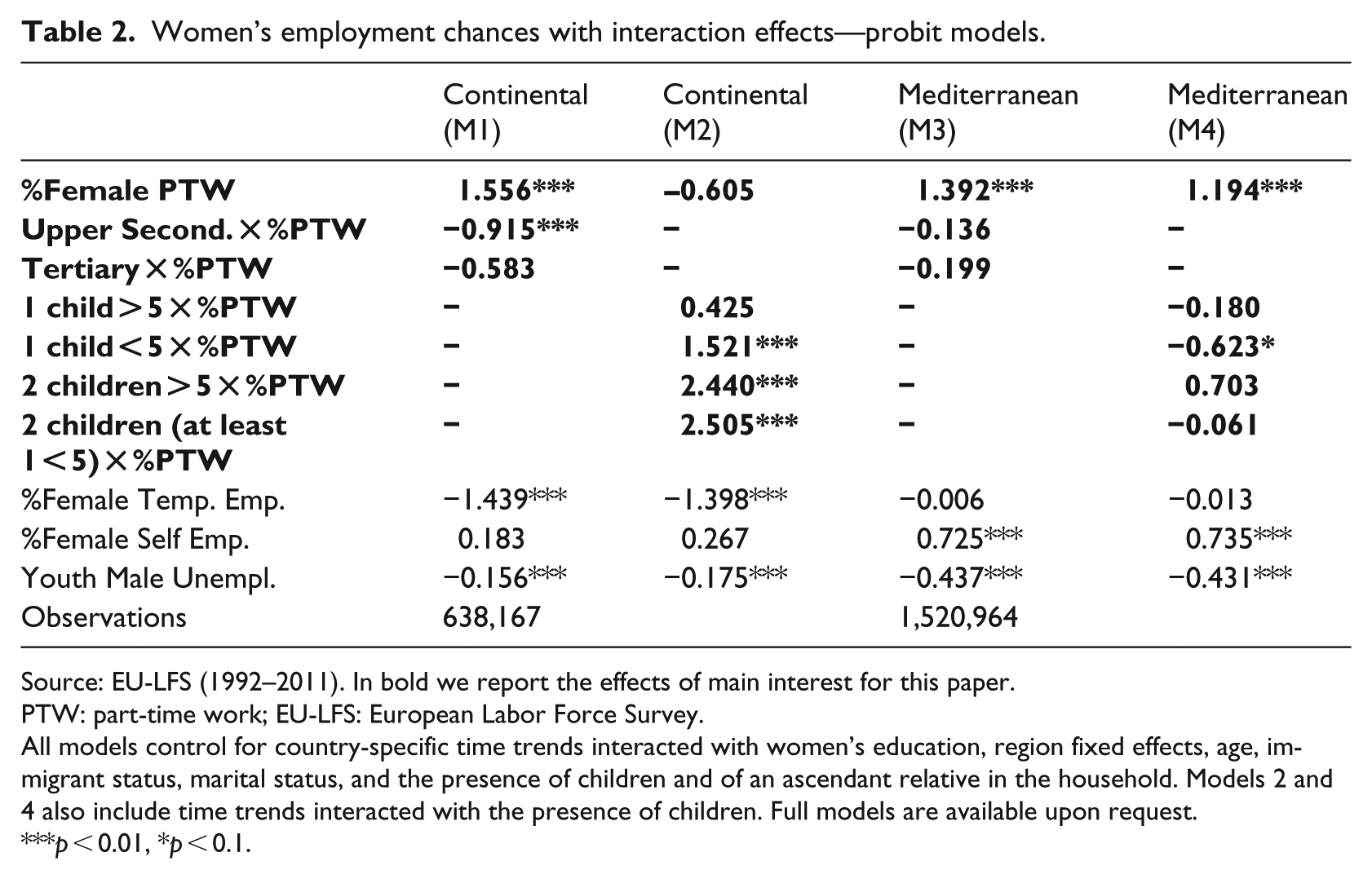
As mentioned previously, PTW might bring some but not all women into employment. In order to capture this heterogeneity across different groups of women, the models in Table 2 account for individual and household characteristics and the relevant interaction terms. We proceeded with this more detailed analysis only for contexts in which we found an effect of the regional PTW increase on women’s employment.
Women’s employment chances with interaction effects—probit models.
Source: EU-LFS (1992–2011). In bold we report the effects of main interest for this paper.
PTW: part-time work; EU-LFS: European Labor Force Survey.
All models control for country-specific time trends interacted with women’s education, region fixed effects, age, immigrant status, marital status, and the presence of children and of an ascendant relative in the household. Models 2 and 4 also include time trends interacted with the presence of children. Full models are available upon request.
p < 0.01, *p < 0.1.
Model 1 considers the interaction with women’s educational attainment. Consistent with expectations (H2-a), in Continental countries, the PTW effect is particularly large for low-educated women, even if a significant positive effect exists at all educational levels. Model 2 reveals how the PTW effect varies with the number and age of children in the household. 18 Indeed, part-time jobs only contribute to the employment of women with one child under five or with two children in the household (regardless of their age). 19
The pattern of PTW effects is very different in Mediterranean countries (Models 3 and 4). There is no significant interaction with women’s education and only very limited variation depending on the presence of children in the household, which supports the idea of a generalized effect of PTW on women’s employment chances independently of their endowments (H2-b). Put differently, in Southern Europe, the augmentation of PTW is associated with an increase in LM participation for all women and is not concentrated among specific groups of women.
Demand-side change: separating involuntary and voluntary part-time employment
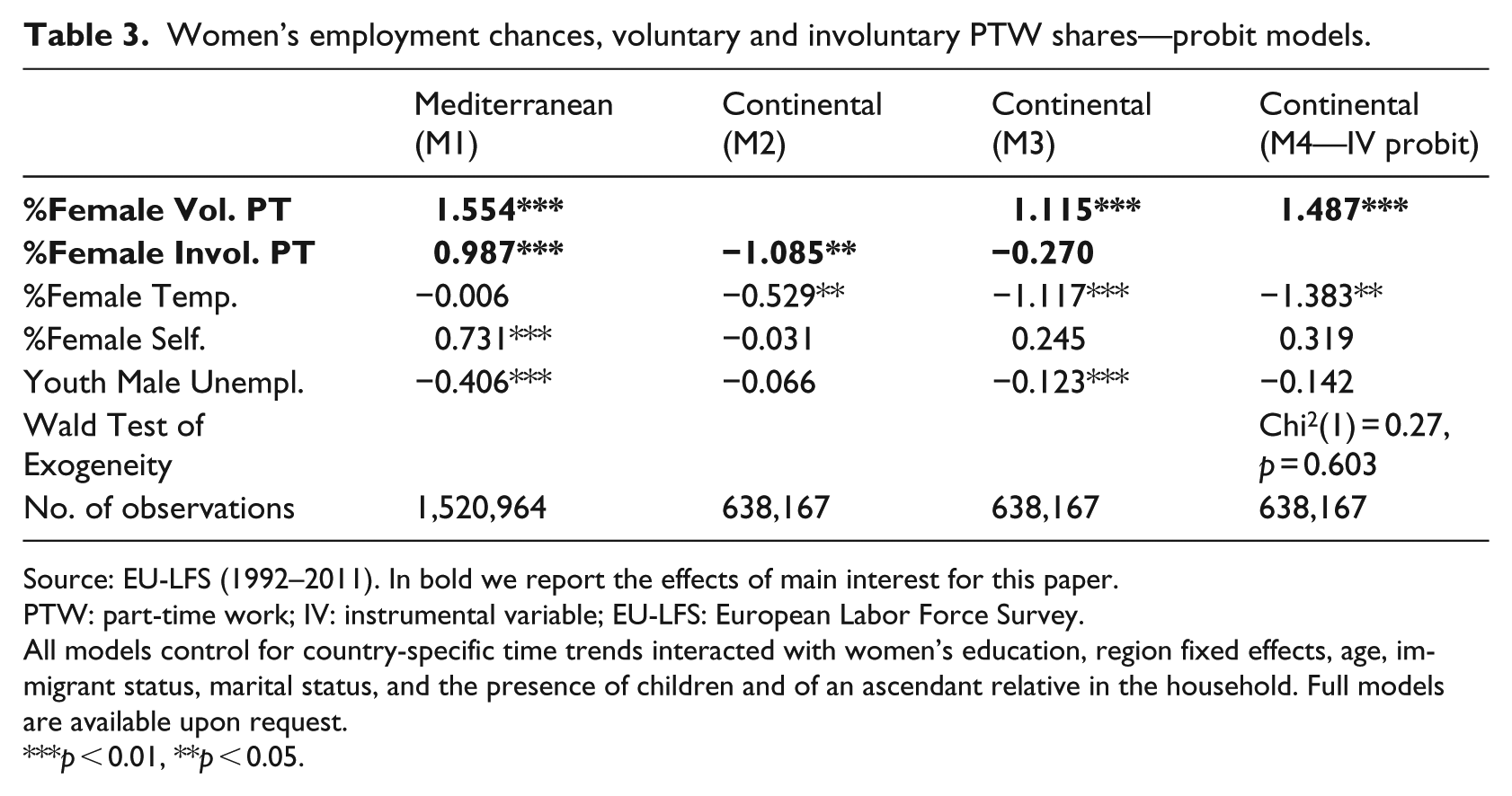
Results for the Continental cluster in Table 2 (Models 2 and 3) suggest that part-time employment represents a choice in the case of low opportunity costs and/or care responsibilities associated with the presence of children in the household. This finding indicates that parts of the PTW effect should be attributed to its voluntary component. In fact, when measuring increases in voluntary and involuntary PTW separately, only the voluntary part of PTW is positively associated with increases in women’s employment (Model 3 in Table 3). On the other hand, the generalized pattern of PTW effects among Mediterranean women from Table 2 suggests a significant role of both voluntary and involuntary, demand-driven components, as results from Model 1 in Table 3 confirm. The positive effect of an increase in involuntary PTW supports the claim that demand-driven PTW may foster women’s employment chances. In these “low-participation countries,” the increased availability of part-time positions—even if undesired—may thus bring women into the LM.
Women’s employment chances, voluntary and involuntary PTW shares—probit models.
Source: EU-LFS (1992–2011). In bold we report the effects of main interest for this paper.
PTW: part-time work; IV: instrumental variable; EU-LFS: European Labor Force Survey.
All models control for country-specific time trends interacted with women’s education, region fixed effects, age, immigrant status, marital status, and the presence of children and of an ascendant relative in the household. Full models are available upon request.
p < 0.01, **p < 0.05.
Results in Table 3 further suggest that endogeneity might be an issue as far as the overall effect of PTW (in Table 1) in the Continental cluster is concerned (i.e. women’s employment increases through PTW and not thanks to it). In Continental countries, the involuntary component of PTW shows no effect when voluntary PTW is controlled for (–0.270 (n.s.), Model 3 in Table 3). An increase in the regional shares of involuntary PTW even appears to be weakly and negatively correlated with female employment. By contrast, the effect of involuntary PTW also remains strong and significant, net of voluntary PTW, for Mediterranean countries (Model 1 in Table 3). To circumvent the possible endogeneity of the effect of voluntary PTW, we used an instrumental variable approach in which we used the share of involuntary PTW in the LM as an instrument for the share of voluntary PTW. Under the common assumptions of the instrumental variable (IV) approach, this method provides an estimate of the causal effect of voluntary PTW on women’s employment chances. 20 Model 4 in Table 3 displays the results from the IV probit model and suggests that there is also a real positive effect of the availability of jobs with reduced hours on women’s employment in Continental countries (1.49*** in M4 compared with 1.12*** in M2). In line with these very similar results, the Wald test suggests that the instrument is not needed.
Conclusion
Most research on PTW has focused on either its features and how they vary with different contexts and individuals’ characteristics or its consequences for pay or employment careers. We investigated the potential of part-time employment to include women in the LM and how its influence depends on the broader institutional context. We framed the discussion within a macro-comparative scheme and stressed the role of regulatory and LM settings, work–life balance arrangements, and the quality of PTW for women’s employment opportunities both in general and—more specifically—for the potential impact of increasing PTW availability for women’s employment chances.
The empirical results confirm the notion that an increase in the availability of part-time employment increases women’s employment in Continental/Conservative and especially the Mediterranean contexts, in which women’s employment is low and “the revolution” of women’s new roles remains largely incomplete (Esping-Andersen, 2009; Rein, 1980). In these countries, there is still potential to increase women’s participation through the diffusion of part-time employment. Even if PTW is involuntary, it can be a means of catching up with contexts of more gender-egalitarian employment participation, as is the case in the Liberal, Eastern, and Nordic countries. Therefore, based on our results, part-time employment may serve as a core lever that can be used to foster women’s employment, especially in Southern Europe, where the employment of all women reacts positively to the rising availability of PTW. However, there are important caveats regarding the implicit assumptions behind this specific type of jobs, the role of regulatory policies for overall female employment, and the underlying model of social citizenship.
First, when part-time employment is typically associated with lower wages and poorer career prospects, it inevitably reinforces LM segmentation on a gender basis as well as a gendered division of paid and unpaid work, thereby confining women to a role as secondary earners. This scenario implies what is usually known as the “employment–equality trade-off,” which is an echo of 1990s mainstream labor economics. This employment–equality trade-off assumes that employment creation comes at the cost of greater inequality in the LM (i.e. more gender inequality in the specific case of PTW). 21 Such a credo has been at the root of the era of LM deregulation, which has only had a weak “honeymoon effect” on job creation (Barbieri and Cutuli, 2016). However, the increase in female employment does not necessarily have to exact the price of more inequality between genders and among women always and everywhere. In specific contexts, part-time employment can be a tool for increasing women’s employment opportunities and their families’ wealth and economic security.
Second, PTW is only one of several methods for reaching the goal of increasing female LM participation. The implementation of appropriate measures—especially childcare services for young children—could help reconcile incompatibilities between fertility and employment (Blau and Kahn, 2013; Del Boca et al., 2009; Schmitt, 2012). Furthermore, the fact that involuntary PTW contributes to increased female employment in Mediterranean countries and that positive effects of PTW even exist among highly educated women without children suggest that institutional rigidities have an underlying effect on low participation. For instance, the high product market regulation that characterizes Southern Europe strongly limits the demand for jobs in the service sector (Cutuli, 2017; Messina, 2004; Pissarides et al., 2005), especially for low-educated women. Reducing these rigidities would thus likely support job creation and a growing demand for female labor.
Finally, policies that increase incentives for part-time positions reinforce women’s industrial citizenship rather than their social citizenship (Bleijenbergh et al., 2004)—which is an issue in post-industrial political economies—even if women’s part-time employment is mostly voluntary and chosen by mothers as a means of re-entering employment, as is the case in Northern and Continental countries. These caveats lead to a more general consideration: part-time employment does not constitute a “neutral” option of labor and social policies. Nevertheless, in a broader perspective on social inequalities and when considering the crucial importance of a second income to keep less advantaged households out of economic marginality (Barbieri and Bozzon, 2016; Lohmann and Marx, 2018; Barbieri et al 2018), promoting PTW might be a socially rational option, the pros and cons of which should be painstakingly considered. The trade-off may appear inevitable, especially in hard times of LM deregulation policies and macro-constraints on expansionary monetary and fiscal policies. To reduce the evident risks of part-time employment as well as the broader occupational and social risks related to the deregulation of European LMs, transitional labor market solutions should be incentivized (O’Reilly et al., 2000; Schmid, 2001, 2006). Regarding PTW, incentives should be designed in a manner that constitutes a voluntary and temporary option rather than a dead-end trajectory, and transitions between different working-time regimes need to be made fluid. In this manner, not only would part-time positions constitute a useful flexibility tool for both employers and employees, but men and highly work-oriented women might also be encouraged to consider part-time jobs for a certain period of time in their life course.
Supplemental Material
Supplementary_Full_models – Supplemental material for Part-time employment as a way to increase women’s employment: (Where) does it work?
Supplemental material, Supplementary_Full_models for Part-time employment as a way to increase women’s employment: (Where) does it work? by Paolo Barbieri, Giorgio Cutuli, Raffaele Guetto and Stefani Scherer in International Journal of Comparative Sociology
Footnotes

References
Supplementary Material
Please find the following supplemental material available below.
For Open Access articles published under a Creative Commons License, all supplemental material carries the same license as the article it is associated with.
For non-Open Access articles published, all supplemental material carries a non-exclusive license, and permission requests for re-use of supplemental material or any part of supplemental material shall be sent directly to the copyright owner as specified in the copyright notice associated with the article.
