




Abstract
Severe hearing impairment profoundly affects quality of life, necessitating advanced auditory assistive technologies. This study evaluates contemporary headphones and assistive listening equipment for individuals with profound hearing loss using a novel multi-method decision-making framework. The framework integrates the Fuzzy Analytic Hierarchy Process (Fuzzy AHP) with Particle Swarm Optimization (PSO) to derive and optimize the weights of 20 evaluation criteria, followed by the Fuzzy Combinative Distance-based Assessment (COCOSO) and Fuzzy Zero-Sum Game to rank 10 headphone models. Furthermore, fuzzy COCOSO is used in the SWOT analysis to rank strategic factors. It has the following benefits: it accommodates expert judgment uncertainty, effectively balances compromise and aggregation strategies, and provides strong, comprehensible rankings that support the development of a subsequent TOWS-based strategy. The results reveal that speech clarity, sound amplification, and noise cancelation are the most influential criteria, with the Bose SoundControl Hearing Aids, Phonak Roger On, and BeHear NOW Personal Amplifier identified as top-performing models. The combined SO1, SO2, ST1, and ST2 strategies—emphasizing superior sound quality alongside cost efficiency—emerge as the most effective. Overall, the proposed framework contributes a dependable and flexible decision-support tool that links technological evaluation with strategic planning, advancing the development of tailored auditory solutions and improving market competitiveness in the hearing-assistive technology sector.
Keywords
Introduction
Hearing impairment is a significant disability impacting millions globally, with severe hearing impairment constituting a notably difficult portion. Individuals with this illness encounter challenges in communication, social engagement, and overall quality of life. The innovations in assistive technologies, particularly headphone models tailored for profound hearing loss, have become essential solutions. These devices utilize sophisticated features such as sound amplification, noise cancelation, and hearing aid compatibility to meet the specific requirements of users. Nonetheless, choosing and planning the development of such technologies necessitates systematic evaluation methods that can encompass both technical efficacy and user-focused factors.
The Multi-Criteria Decision-Making (MCDM) approach has effective and powerful tools for handling complex decision problems, especially with assistive technologies for individuals with disabilities. Several studies discussed the application of MCDM in helping people with disabilities; for instance, Huang and Tzeng 1 utilized the Fuzzy DEMATEL method to establish job accommodation strategies for individuals with hearing impairments, illustrating the efficacy of MCDM in customizing solutions to particular requirements. Recent studies in transportation systems demonstrate how high-resolution sensing, denoising, and uncertainty-aware modeling improve decision accuracy and interpretability. Li et al. 2 developed a trajectory-based conflict prediction model for freeway diverging risks using multiple ML algorithms; Chen et al.3,4 advanced denoising schemes and aerial-video trajectory reconstruction for robust traffic-flow and trajectory analysis. These works illustrate how rigorous data conditioning enhances model reliability. Recent work in other engineering domains also illustrates the power of hybrid decision-support and optimization frameworks. For example, Kose 5 demonstrates how shore-power (“cold-ironing”) technology was evaluated via emission-share modeling in ports. Li et al. 6 present a three-stage predictive control strategy to manage EV-charging and residential load overlap under uncertainty. Chen et al. 7 propose a MetaFormer-based monocular depth-estimation system to support distance sensing in port logistics. Similarly, Mumtaz 8 utilized the AHP method to rank obstacles to e-health adoption in older demographics, emphasizing the significance of MCDM in improving accessibility and usability. Recent studies by Hezam et al.9–11 utilize hybrid MCDM methodologies, including the Fermatean Fuzzy COCOSO and Double Normalization-Based Weighted Aggregation techniques, to assess autonomous smart wheelchairs and digitally sustainable transportation systems for people with disabilities. These studies highlight the adaptability of MCDM frameworks in enhancing assistive technology, ensuring they address the varied requirements of disabled and elderly individuals while fostering inclusivity and sustainability.
By providing a systematic way to identify and prioritize critical aspects for advancement and innovation, SWOT analysis (Strengths, Weaknesses, Opportunities, and Threats) is a popular strategic technique for assessing and creating assistive technology. To help stakeholders match technology improvements with user wants and market expectations, SWOT analyzes internal and external elements methodically. This provides a thorough picture of the strategic landscape. New research shows that quantitative methodologies, such as MCDM, when combined with SWOT analysis, significantly improve decision-making accuracy. For instance, Shakerian et al. 12 used a fuzzy SWOT-TOPSIS model to evaluate organizational strategies, and Wang et al. 13 applied SWOT-Fuzzy AHP for renewable energy resource selection. In the context of assistive technology for people with disabilities, these experiments show how flexible SWOT may be in dealing with complicated problems.
Integrating SWOT with MCDM techniques has increased its usefulness and made it possible to confront imprecision and uncertainty in decision-making. Büyüközkan et al. 14 integrated hesitant fuzzy linguistic AHP with SWOT for selecting health tourism strategies, and Büyüközkan et al. 15 implemented urban logistics strategies using SWOT analysis with numerous preference relations.
Recent research has increasingly focused on hybrid fuzzy decision-making approaches across diverse domains. For example, interval type-2 fuzzy logic has been applied to enhance control robustness in heavy-haul train operations under uncertain disturbances. 16 In transportation systems, trajectory-based data analysis has been used to better understand lane-changing behaviors in uncertain traffic environments. 17 Similarly, ensemble generative adversarial networks have been employed to improve ship detection under low-visibility conditions, showcasing the importance of hybrid models for decision support in safety-critical systems. 12 Closer to our domain, Hezam 18 proposed a comprehensive fuzzy framework combining IFAHP, SWOT-IFTOPSIS, and the fuzzy Shapley value to evaluate and develop strategies for smart cane technology.
Collectively, these works highlight the growing trend of integrating fuzzy MCDM, optimization, and hybrid analytical methods to address uncertainty in complex decision environments. However, they remain largely domain-specific and do not provide an end-to-end methodological chain that extends from criteria weighting to strategy prioritization. Our study addresses this gap by presenting a unified Fuzzy AHP–PSO, Fuzzy COCOSO, and Fuzzy Zero-Sum Game framework tailored to assistive headphone evaluation and development.
On the other hand, fuzzy game theory offers a more sophisticated framework for evaluating various alternatives. Fuzzy game theory facilitates a comprehensive assessment of technological attributes, user requirements, and development plans by encapsulating interactions and trade-offs among criteria in uncertain conditions. This approach has demonstrated efficacy in dispute resolution and attaining optimal results in decision-making situations with various stakeholders. A combination of fuzzy logic and game theory augments its utility, facilitating the management of uncertainty and imprecision in decision-making processes. Razavian et al. 19 enhanced zero-sum gray game theory to tackle obstacles in big data deployment within smart cities, highlighting its capacity to resolve intricate, real-world issues. Additionally, Chen et al. 20 proposed a hybrid emergency decision-making technique combining the trapezoidal fuzzy best-worst method and the Zero-Sum-Game, demonstrating the robustness of fuzzy game theory in high-stakes scenarios. Abdelkader et al. 21 developed a hybrid fuzzy AHP-game theory model for prioritizing factors affecting water pipeline deterioration, while Falana et al. 22 used a fuzzy-AHP and game theory model to assess privacy risks on social media platforms.
Numerous studies integrated SWOT analysis, game theory, and MCDM, such as Motallebi et al. 23 integrated game theory with SWOT and gap analysis to evaluate Industry 4.0 strategies inside a steel supply chain, illustrating its effectiveness in tackling intricate, multi-stakeholder issues. Similarly, Hasankhani et al. 24 combined game theory with SWOT and hybrid MCDM methodologies to ascertain optimal waste-to-energy techniques, emphasizing its efficacy in sustainable development. Pournabi et al. 25 utilized AHP-SWOT and game theory to address conflicts in wetland conservation, demonstrating the integration of fuzzy-based methodologies with game theory. These studies highlight the adaptability of game theory in addressing conflicting aims and attaining equitable solutions, rendering it an essential instrument for assessing assistive technologies.
Table 1 summarizes recent studies utilizing MCDM methods, metaheuristic algorithms, SWOT analysis, and game theory across many sectors to meet the stated research gap and offer a thorough review of available methodology.
Summary of MCDM, metaheuristics, SWOT, and game theory applications.
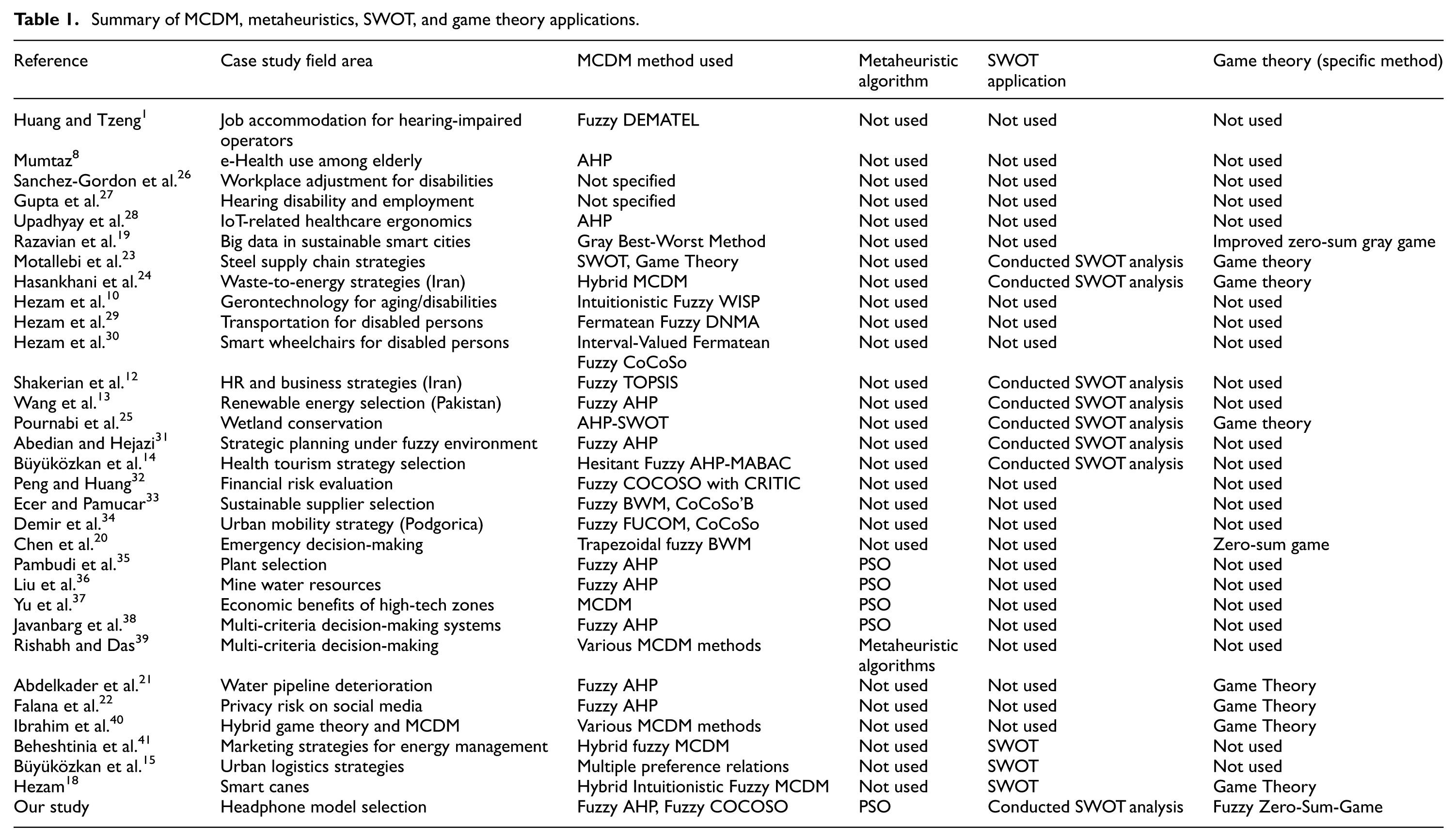
While several studies have combined MCDM methods with a single additional component—such as SWOT analysis or game theory—these efforts remain fragmented and do not establish a comprehensive methodological chain. Previous research has explored partial integrations, and even the most closely related work in the assistive-technology domain, 18 which linked IFAHP, SWOT–IFTOPSIS, and the fuzzy Shapley value method, did not incorporate metaheuristic refinement and therefore did not complete the sequence from weight optimization to ranking and strategic formulation. To the best of our knowledge, no existing study has integrated MCDM, metaheuristic optimization, SWOT analysis, and game theory within one unified decision-support framework. The present study addresses this gap by proposing a complete and fully connected methodology that brings together fuzzy AHP–PSO for weight optimization, fuzzy COCOSO for robust alternative ranking, fuzzy Zero-Sum-Game theory for strategic evaluation, and SWOT for contextual strategic interpretation. This unified framework offers a new direction for structured, uncertainty-aware, and strategically informed decision-making in hearing-assistive technologies, with a particular focus on end-user needs and evolving market conditions.
This research has two main purposes. The primary objective is to aid stakeholders in choosing the most appropriate headphone model customized to their particular requirements. The second objective is to assist manufacturing and development firms in identifying the best strategies by utilizing strengths, seizing opportunities, rectifying weaknesses, and alleviating prospective threats. The study intends to connect technology evaluation with strategic planning, offering practical insights for the creation of effective assistive technologies through a cohesive framework. The suggested framework not only improves the quality of life for those with profound hearing loss but also lays the groundwork for extensive research and practical implementations, thereby affirming its efficacy and promoting the development of more accessible technologies.
Unlike existing studies that rely on a single evaluation technique, our framework integrates multiple complementary methods. This ensures that the analysis is not only based on aggregated performance scores (via Fuzzy COCOSO) but also considers competitive equilibrium insights (via Fuzzy Zero-Sum Game). Such integration provides more robust, validated, and actionable results for both model selection and strategic development.
Hence, the contributions of this study are outlined as follows:
Combine fuzzy AHP to determine criteria weights and use PSO to optimize and find the final weights.
Utilize the fuzzy COCOSO method and fuzzy Zero-Sum-Game method to rank and evaluate the most well-known headphone models for severe hearing impairment.
Conduct a SWOT analysis to identify strategies and employ the fuzzy COCOSO method for ranking.
Develop a TOWS matrix to formulate actionable development strategies.
Apply the fuzzy Zero-Sum-Game framework to evaluate and refine development strategies.
The manuscript is structured as follows: Section 2 examines the theoretical framework of our case. Section 3 delineates the suggested methodological framework, encompassing the integration of fuzzy AHP-PSO, fuzzy COCOSO, fuzzy Zero-Sum-Game, and SWOT analysis. Section 4 delineates the findings and discussion. Section 5 ultimately summarizes the study’s findings, consequences, and potential limitations, while offering recommendations for further research.
Theoretical review
In this section, there are two subsections: the first subsection discusses contemporary headphone models for people with severe hearing impairment, and the second subsection examines the theoretical foundations and important evaluation criteria.
Modern headphone models for severe hearing impairment
As can be seen in Table 2, this section will provide a concise summary of the most recent headphone models that are appropriate for individuals with severe hearing impairments.
Brief review of modern headphone models for severe hearing impairment.
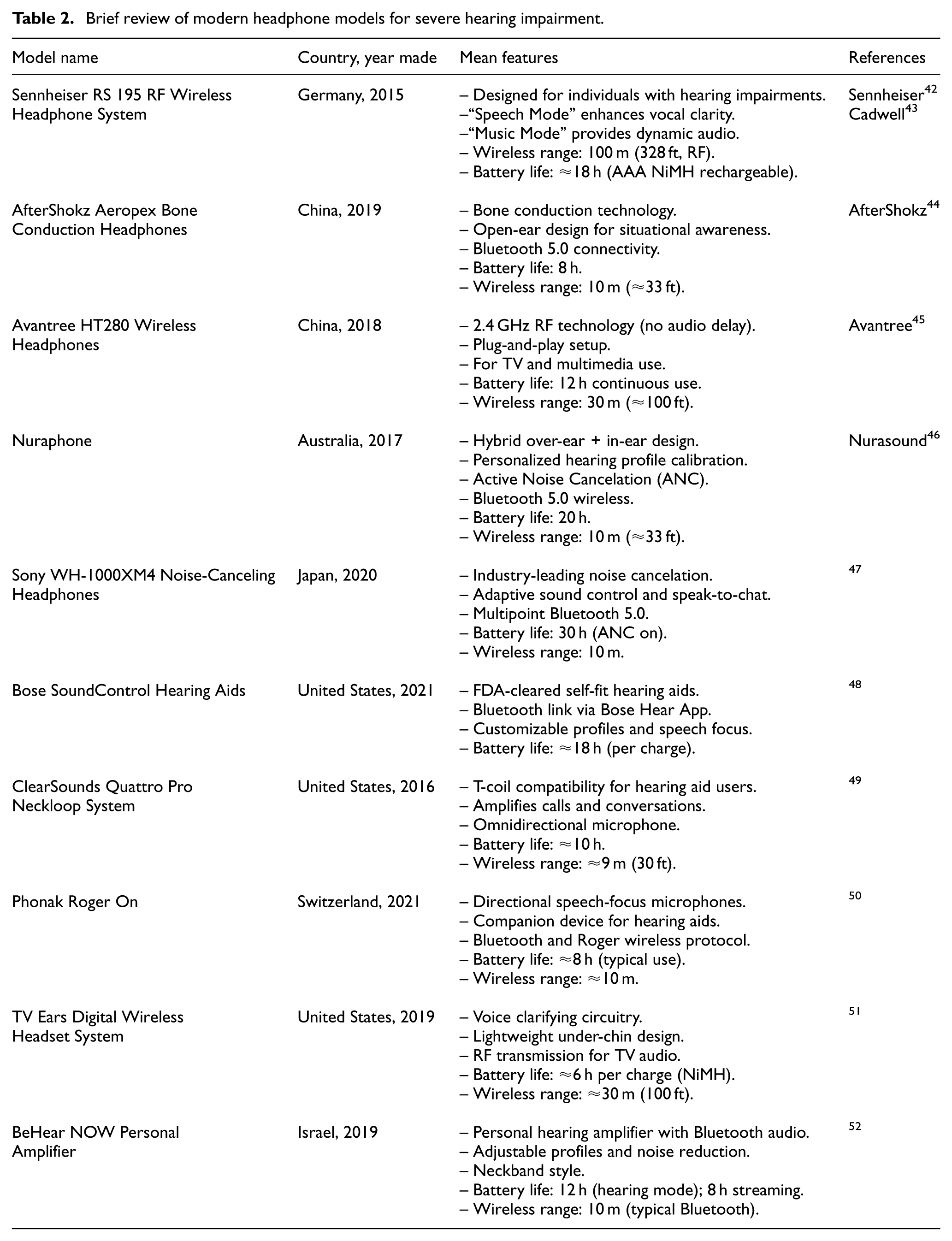
The Sennheiser RS 195 RF Wireless Headphone System was launched in 2015 and produced in Germany. Intended for those with hearing problems, it includes a “Speech Mode” to improve vocal clarity by diminishing background noise and a “Music Mode” for providing a dynamic sound spectrum. It provides a wireless range of up to 328 ft, enabled by a charging transmitter port. The comfortable over-ear design with cushioned ear cups facilitates continuous use, and the 18-h battery life renders it suitable for lengthy listening sessions. The device is adaptable and compatible with televisions, audio systems, and digital devices.
The AfterShokz Aeropex Bone Conduction Headphones, introduced in 2019 in China, utilize bone conduction technology to convey sound through the cheekbones, circumventing the ear canal. Their open-ear design promotes situational awareness, while Bluetooth compatibility with a 30-foot range improves usage. These headphones are constructed with a lightweight titanium frame, ensuring both durability and comfort. Featuring an 8-h battery life and IP67 water resistance, they are ideal for busy consumers.
The Avantree HT280 Wireless Headphones, launched in 2018 and produced in China, are designed for television and media applications. They utilize 2.4 GHz RF technology to eliminate audio delay and provide a volume enhancement of up to 30% greater than conventional headphones. These headphones include a 100-foot wireless range and are easily configured with plug-and-play functionality. The over-ear, lightweight construction guarantees comfort, and the kit has a charging port.
The Nuraphone, introduced in 2017 and produced in Australia, integrates over-ear and in-ear configurations for enhanced noise isolation. It swiftly generates a customized hearing profile in less than a minute and includes active noise reduction as well as a “Social Mode” for perceiving ambient noises when necessary. The device provides a 20-h battery life and convenient on-ear controls, rendering it highly functional and user-friendly.
The Sony WH-1000XM4 Noise-Canceling Headphones, launched in 2020 in Japan, are acclaimed for their superior noise cancelation designed for loud surroundings. They incorporate intelligent auditory technology that modifies sound according to activity and location. These headphones have Bluetooth compatibility for hearing aids, offering a battery life of up to 30 h and rapid charging capabilities. Their lightweight, collapsible shape guarantees portability.
The Bose SoundControl Hearing Aids, launched in 2021 in the United States, are FDA-approved over-the-counter devices intended for moderate to severe hearing impairment. The Bose Hear app provides adjustable sound profiles, and the design is lightweight and practically imperceptible behind the ear. The device prioritizes speech clarity in noisy settings, offers a battery life of up to 18 h per charge, and does not necessitate professional fits.
The ClearSounds Quattro Pro Neckloop System, launched in 2016 in the United States, is intended for hearing aid wearers with T-coil functionality. It enhances audio for telephonic communication, music playback, and face-to-face discussions. The system has Bluetooth connectivity for hands-free operation and a removable omnidirectional microphone for improved voice clarity. The lightweight and ergonomic design guarantees extended comfort throughout wear.
The Phonak Roger On, introduced in 2021 in Switzerland, serves as an auxiliary device for hearing aids, particularly suited for group discussions or noisy settings. It employs directional microphones to concentrate on speech while minimizing ambient noise. The device features Bluetooth connectivity, is tiny, and is portable. It includes a rechargeable battery with enduring performance.
The TV Ears Digital Wireless Headset System, launched in 2019 in the United States, is engineered for delivering clear television audio without causing disturbance to others. The Voice Clarifying Circuitry enhances human speech frequencies. Featuring a wireless range of up to 50 ft, it enables adjustable volume separate from the television speakers. The lightweight under-the-chin headset configuration guarantees comfort throughout prolonged usage.
The BeHear NOW Personal Amplifier, launched in 2019 in Israel, enhances ambient sounds and Bluetooth audio for individuals utilizing hearing aids. It provides customizable sound profiles via the BeHear application. The lightweight in-ear configuration features noise reduction technology for improved clarity, rendering it suitable for music, calls, and direct discussions.
Assessment criteria for headphone models for severe hearing impairment
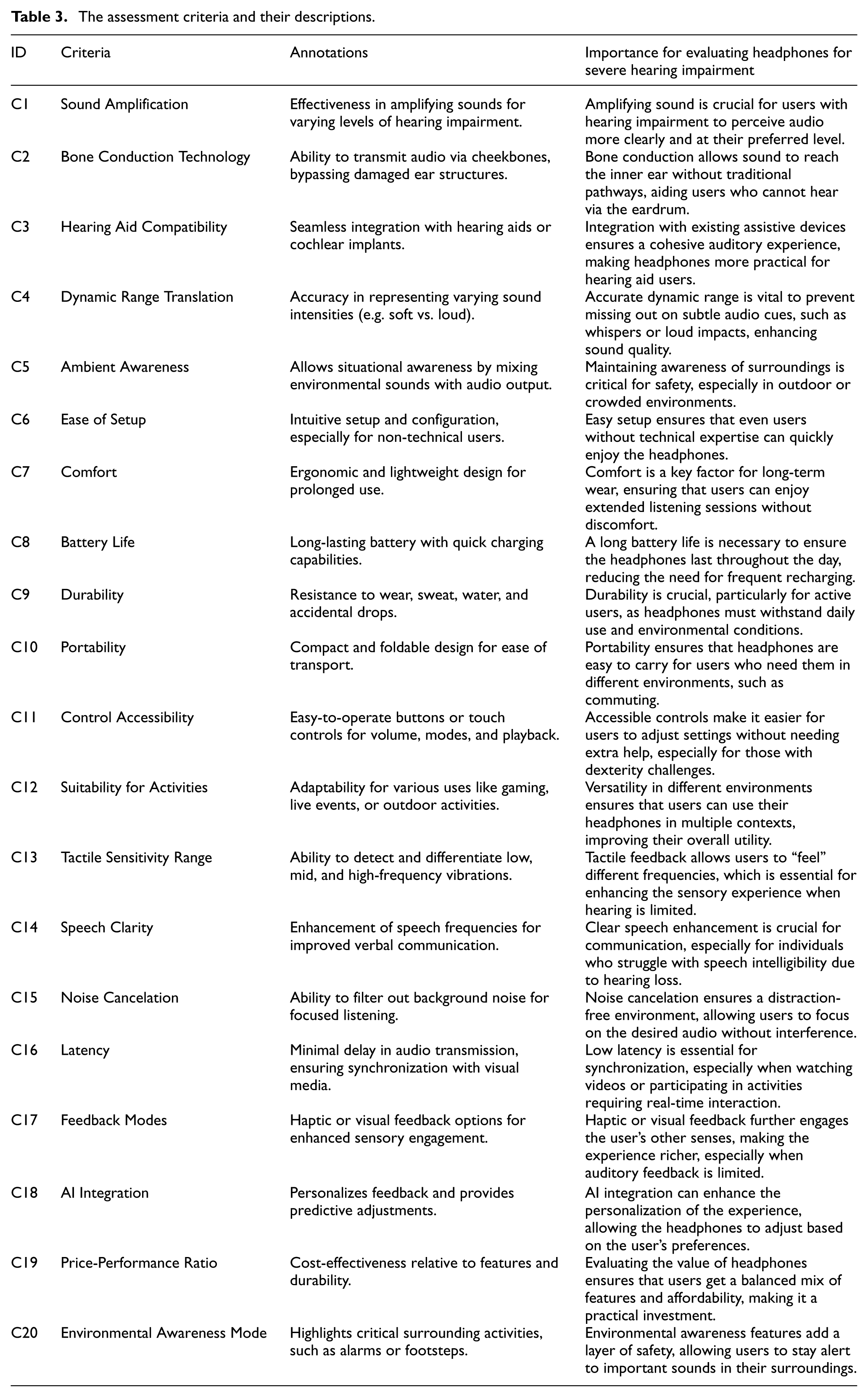
When evaluating assistive devices, particularly headphones designed for people with severe hearing impairments, it is necessary to define and prioritize assessment criteria. There are 20 criteria that are proposed by this research, and they are outlined in Table 3.
The assessment criteria and their descriptions.
Research methodology
Through the use of well-established MCDM approaches and strategic frameworks that are specifically adapted to the creation of assistive technology, the following methodology is implemented. In this section, we have separated it into four subsections: an introduction to fuzzy-AHP, fuzzy-PSO, fuzzy-COCOSO, and fuzzy Zero-Sum-Game approach. Finally, we will conclude with a summary and a flowchart of the methodology. The input data for this study were obtained from two sources. First, objective specifications of the headphone models (e.g. battery life, wireless range, bone conduction technology) were extracted from manufacturer documentation and published references (see Table 2). Second, subjective evaluations were provided by a panel of four experts (assistive technology specialist, biomedical engineer, rehabilitation expert, and market analyst), who assessed the headphones against the proposed 20 criteria using linguistic terms converted into fuzzy numbers. The relative importance of the criteria was determined through expert pairwise comparisons using the Fuzzy AHP method and further optimized using PSO.
Fuzzy AHP
The Fuzzy Analytic Hierarchy Process (Fuzzy AHP), an extension of Saaty’s 53 Analytic Hierarchy Process (AHP) utilizes fuzzy set theory to mitigate uncertainties and ambiguities in decision-making. Fuzzy AHP improves the robustness of evaluations in complicated circumstances by enabling decision-makers to articulate preferences and uncertainties using fuzzy numbers. 54 This approach has been extensively utilized across multiple domains, including technology assessment, owing to its proficiency in managing ambiguous data and subjective evaluations successfully. 55 This study uses Fuzzy AHP to prioritize criteria for selecting ideal headphone models, thereby establishing a more trustworthy decision-making framework.
Define the decision-making problem by determining all the criteria, sub-criteria, and the alternatives.
Create pairwise comparison matrices using triangular fuzzy numbers (TFNs) for each criterion and alternative.
The fuzzy pairwise comparison matrix

l ij is lower bound, m ij is most likely value, and u ij is upper bound.
Calculate the fuzzy geometric mean of each criterion i of the normalized matrix

Normalize the fuzzy geometric means to obtain fuzzy weights:

Calculate the Consistency Index (CI) and Consistency Ratio (CR) using the following equations:

λ
max
is the largest eigenvalue of the matrix

where RI is the Random Consistency Index based on matrix size n. When
Combine the experts’ weights using the Fuzzy Weighted Geometric (FWG) operator:

where w k is the weight of the k decision-maker, and m is the number of experts.
Using any method of defuzzification on the

Rank the criteria based on the crisp value of
Multiply the weights of criteria w i by the relative performance of each alternative p ik .
Compute the overall scores for each alternative:

w
i
: Weight of criterion i, p
ik
: Performance of alternative
Rank the alternatives based on their scores S k . Higher scores indicate better alternatives.
Although Fuzzy AHP provides a solid basis for deriving expert-driven weights, the results can still carry some degree of subjectivity and inconsistency. To strengthen the reliability of these weights, we refined them using Particle Swarm Optimization (PSO). Unlike methods that rely on gradients, PSO operates through a population-based search over a constrained solution space, which makes it particularly suitable for multi-criteria decision-making. Compared with other metaheuristic approaches, such as Genetic Algorithms (GA) or Differential Evolution (DE), PSO is more straightforward to implement, requires fewer control parameters, and generally has a lower computational cost. 57 These advantages make it a practical choice for refining subjective weights in a way that is both reproducible and efficient. Previous studies have also shown that PSO and its hybrid variants can enhance the consistency of AHP weights and reduce decision-making uncertainty.35,38 In our study, the PSO fitness function was structured to achieve three goals: (i) to maintain compatibility with the Fuzzy AHP pairwise comparisons, (ii) to align with performance-related signals, and (iii) to preserve feasibility of the weight distribution. This design ensures that the optimization process remains conservative-respecting the original expert input while making modest, data-driven adjustments. Additionally, we monitored the Consistency Index and Consistency Ratio (CI/ /CR) during the refinement process to confirm that the adjusted weights remained within acceptable limits.
Particle swarm optimization PSO
PSO is a metaheuristic method introduced in 1995 and has since been applied to a wide range of applications. In this context, we will use PSO to optimize the weights determined by the Fuzzy AHP (Fuzzy Analytic Hierarchy Process) method. The input will include factors such as the expert scores for each criterion. The key steps of PSO are as follows:
Start with fuzzy AHP-derived weights
Ensure weights are normalized:
Each particle represents a weight vector
Initialize particles around
Use the Consistency Index (CI) from AHP to ensure optimized weights align with expert judgments.
Let RI be the random index for the matrix size n.
Define the Consistency Ratio:
We will include a term that minimizes the error between weights and normalized performance scores
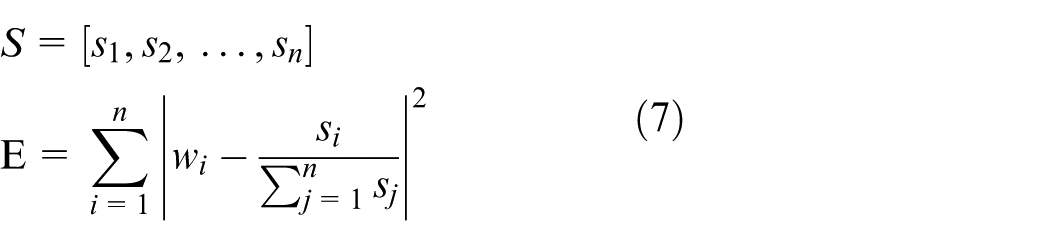
Enforce

Combine the components with appropriate weights

In this study, we aim to balance four key aspects: (i) preserving the Fuzzy AHP pairwise-comparison structure through the AHP consistency term; (ii) aligning the weights with experts’ criterion-level importance scores; and (iii and iv) softly enforcing normalization and non-negativity. The fitness function applies weighting coefficients
Our objective is to minimize F(W), a fitness function designed to optimize decision-making weights. This function is flexible, balancing subjective and objective criteria, while also incorporating a consistency check to ensure that weight remains aligned with expert pairwise judgments. Furthermore, it supports data integration by including objective performance metrics when available, thus providing a more comprehensive and robust optimization framework.


where ω is the inertia wight,
Once the stopping criteria are met, the final weight vector W is considered optimal, having minimized the fitness function while adhering to the constraints and balancing both subjective and objective criteria.
In this study, PSO was implemented using a swarm of 30 particles and a maximum of 200 iterations. Particle positions were initialized uniformly in the interval [0, 1] and projected onto the probability simplex to satisfy the weight-sum constraint. Velocities were initialized within ±0.2. The inertia weight decreased linearly from 0.9 to 0.4, and the cognitive and social coefficients were both set to 1.5. After each update, particle positions were clipped to [0, 1] and re-projected to the simplex to maintain feasibility. Convergence was achieved when the change in the best global fitness value dropped below 10−6 for 25 consecutive iterations or when the iteration limit was reached. A fixed random seed (42) was used to ensure full reproducibility.
Fuzzy combined compromise solution (Fuzzy COCOSO) method
The Fuzzy COCOSO method is an advanced MCDM technique that integrates fuzzy logic to handle uncertainty and imprecision in decision data. Building upon the foundational steps of the COCOSO method, the fuzzy extension incorporates fuzzy numbers to better represent ambiguous information. Below is a detailed breakdown of the Fuzzy COCOSO method, including mathematical equations and references to the specified studies.
Define the decision-making problem by determining all the for n criteria and m alternatives.
Create fuzzy matrix using triangular fuzzy numbers (TFNs) for each criterion and alternative.
The fuzzy pairwise comparison matrix
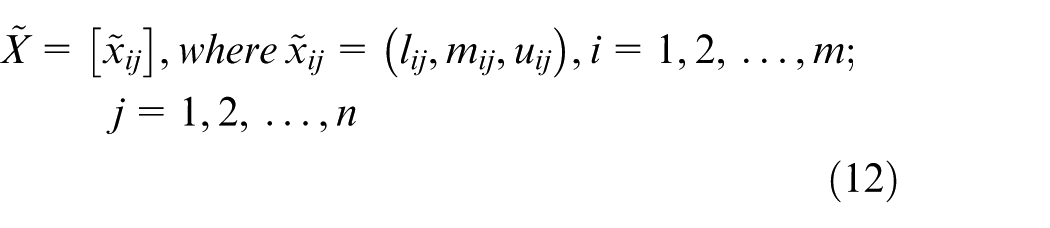
l ij is lower bound, m ij is middle value, u ij is upper bound.
Normalize the fuzzy geometric means to obtain fuzzy weights:

As the steps in the above section

⊗ denotes the multiplication of a fuzzy number by a scalar weight.
Compute the aggregated scores for each alternative using both the sum and product of weighted normalized values:
Sum of the weighted normalized values:

Product of the weighted normalized values:

Convert the fuzzy aggregated scores

Integrate the defuzzified scores to obtain a combined compromise score for each alternative:

where α is a compromise coefficient determined by the decision-maker.
Rank the alternatives based on the combined compromise scores C i , Alternatives with higher C i , values are considered more favorable.
Fuzzy Zero-Sum Game analysis
The Fuzzy Zero-Sum Game Analysis introduces fuzzy intervals to account for uncertainties in payoffs within a traditional Zero-Sum-Game framework. The payoffs are expressed as triangular fuzzy numbers
Step 1: Define the Weighted Fuzzy Payoff Matrix
Incorporate the weights of the criteria
For each entry in the fuzzy payoff matrix by representing each element of the utility matrix as a triangular fuzzy number
l ij The lower bound represents the minimum possible payoff.
m
ij
: The
u ij The upper bound represents the maximum possible payoff.
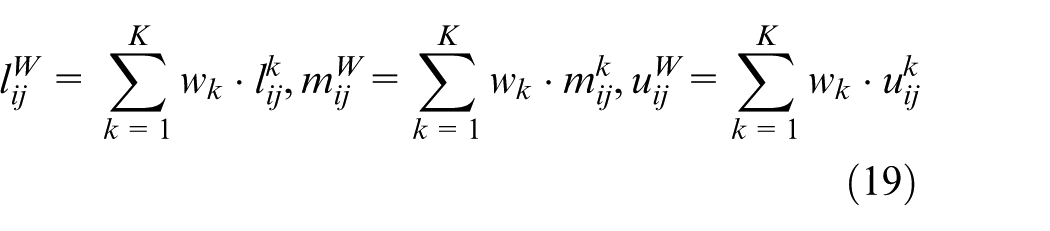
Construct the weighted fuzzy payoff matrix using
Step 2: Normalize the Fuzzy Payoff Matrix
Normalize each element of the fuzzy payoff matrix to ensure comparability between payoffs. Normalization can be performed using the following equations:
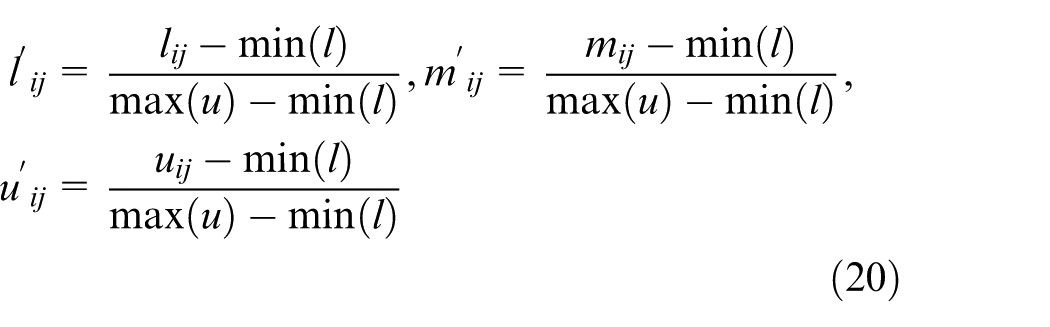
Where
Step 3: Formulate the Linear Programing Models
Player 1 (Maximizer):
Maximize z
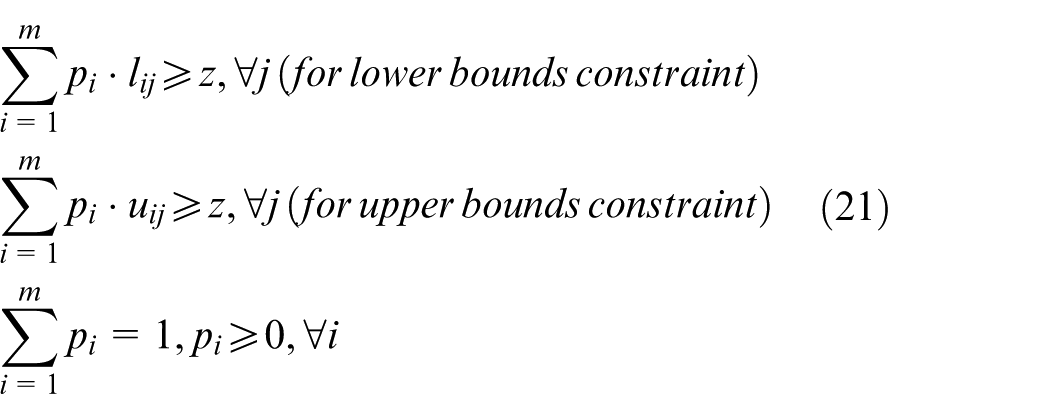
Player 2 (Minimizer):
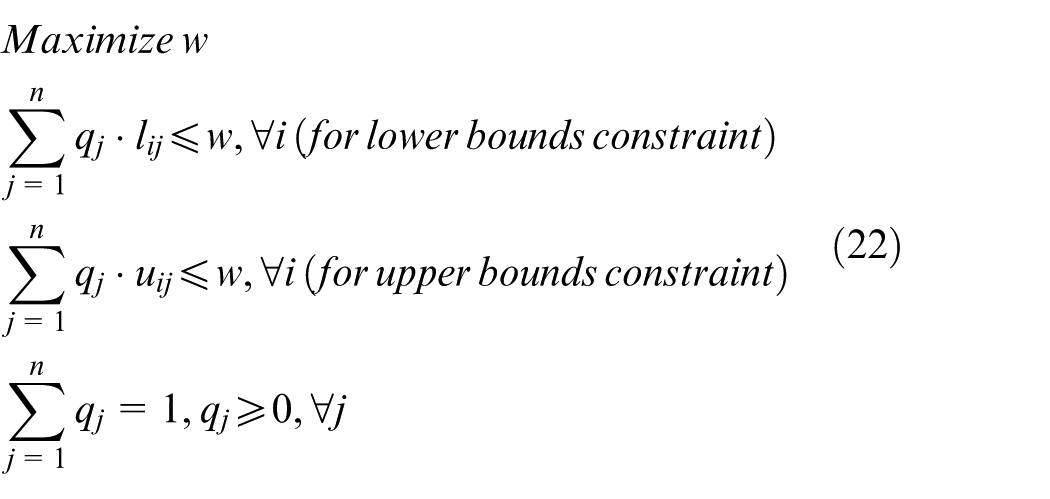
Step 4: Solve the Linear Programing Problems (LPs)
Python software is used to solve the LP problems for both players:
➢ Solve the LP to find the optimal probabilities p
i
for Player 1′s strategies. ➢ Determine the maximum payoff z.
➢ Solve the LP to find the optimal probabilities q
j
for Player 2′s strategies. ➢ Determine the minimum loss w.
Step 5: Interpret the Results
Analyze the results to understand the optimal strategies and outcomes for both players:
➢ Player 1 aims to maximize their worst-case guaranteed payoff (z).
➢ Player 2 aims to minimize their worst-case maximum loss (w).The solution aligns with the concept of Nash equilibrium in a Zero-Sum-Game context, where both players have no incentive to deviate unilater ally.
Methodology summary
In the following subsection, the methodology is described, along with a flow diagram (as depicted in Figure 1) of the primary procedures that were utilized:
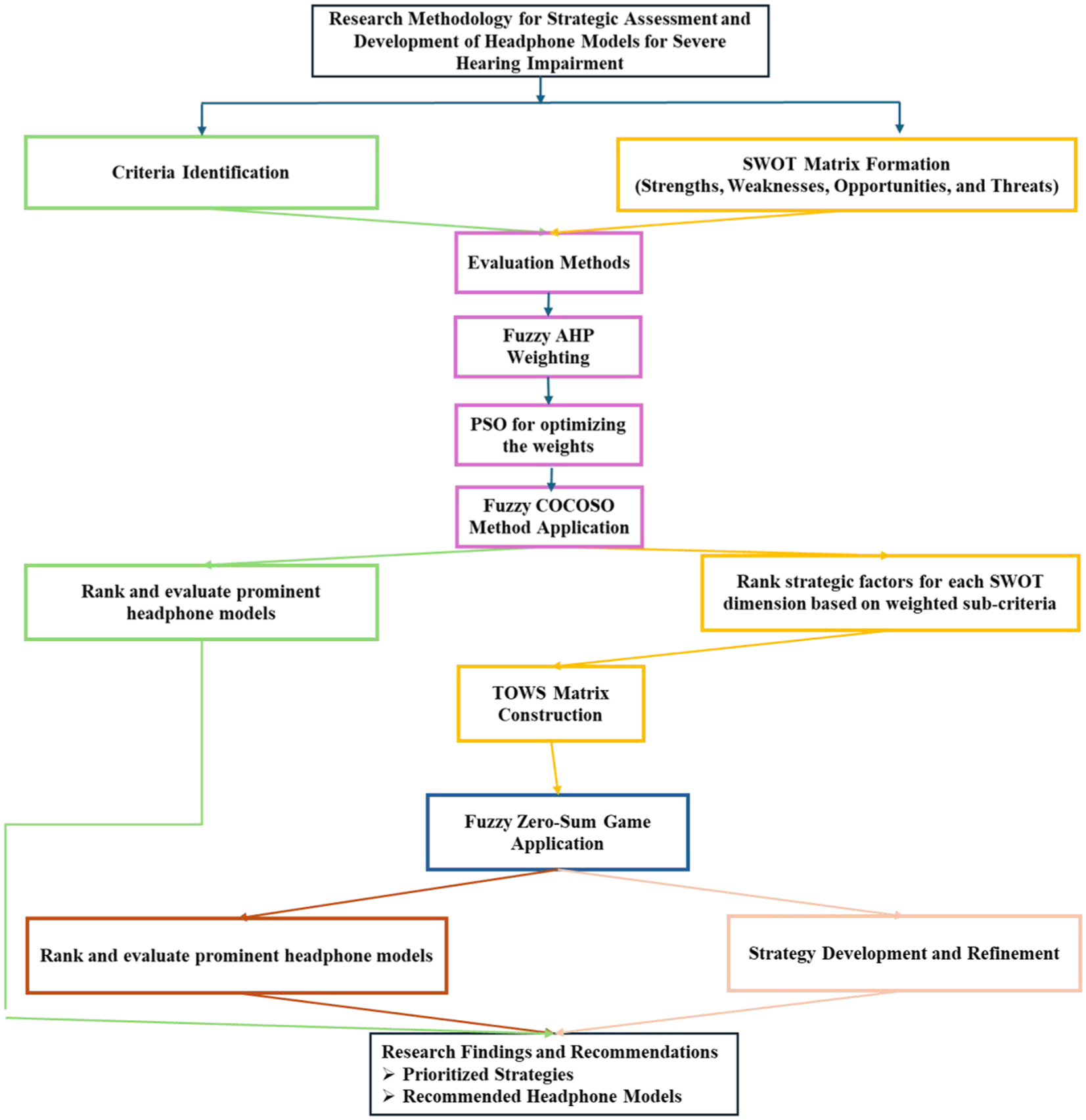
Flowchart of the methodology.
Step 0: Research Objective
Identify and rank critical criteria for evaluating headphone models. for severe hearing impairment.
Identify the optimal prominent headphone models for severe hearing impairment.
Determine the optimal development strategies
Step 1: Criteria Identification
List essential criteria.
Step 2: Finding the Weights of Criteria
Determine weights of criteria using the Fuzzy AHP.
Improve the weights of criteria using PSO method.
Step 3: SWOT Analysis
Establish and categorize strategic factors within a SWOT matrix.
Step 4: Fuzzy COCOSO Method Application
Rank strategic factors for each SWOT dimension based on weighted sub-criteria.
Rank and evaluate prominent headphone models for severe hearing impairment.
Step 5: TOWS Matrix Construction
Develop strategies based on TOWS analysis.
Step 6: Fuzzy Zero-sum Game Approach
Assess and refine development strategies.
Rank and evaluate prominent headphone models.
Step 7: Research Findings and Recommendations
Figure 1 presents a structured overview of the proposed framework, illustrating how criteria identification, weight determination, SWOT factor evaluation, device ranking, and strategy optimization are interconnected. The diagram highlights the sequential integration of Fuzzy AHP, PSO, Fuzzy COCOSO, and the Fuzzy Zero-Sum Game, clarifying how the outputs of each stage serve as inputs to the next.
It is also important to articulate the rationale behind this integration. The framework combines Fuzzy AHP, PSO, Fuzzy COCOSO, the Fuzzy Zero-Sum Game, and SWOT analysis to form a coherent and comprehensive decision-support system. Fuzzy AHP captures uncertainty in expert judgments when deriving criteria weights, while PSO refines those weights through global optimization to improve their consistency with expert assessments and technical data. Fuzzy COCOSO then provides compromise-based rankings that balance additive and multiplicative perspectives, and the Fuzzy Zero-Sum Game models competitive interactions among headphone alternatives, revealing equilibrium outcomes that cannot be identified through aggregation methods alone. Finally, the SWOT analysis—enhanced by fuzzy evaluation—links the technical assessment to actionable strategic development. Together, these methods create a unified framework that addresses both performance evaluation and long-term strategic planning, offering insights that would not emerge from single-method or partially integrated approaches.
Results and discussion
This study achieved its research objectives by following a comprehensive framework that utilized a systematic approach to assess and enhance headphone technology for individuals with profound hearing loss. Initially, we needed to identify the most critical feature to evaluate while analyzing headphone models. Subsequently, we needed to evaluate all the models and choose the most efficient ones. A SWOT analysis was conducted to examine various headphone models and their qualities concerning each model’s opportunities, threats, advantages, and drawbacks. A game theory approach was employed to determine the optimal combinations of strategies to improve the efficiency and acceptance of headphone models for those with severe hearing impairment.
Fuzzy AHP for determining the criteria weights
In this part, criteria weights are calculated based on the insights of four experts specializing in technology pertinent to headphone models for profound hearing impairment. Each expert’s perspective was accorded equal importance to guarantee a balanced assessment of the criteria and strategic aims. The decision-making team comprised an assistive technology specialist, a biomedical engineer, a rehabilitation expert, and a market analyst. They provided substantial insights to the evaluation process by combining their knowledge in usability, technological innovation, practical application, and market dynamics. As mentioned in the methodology, the criteria weights were derived from expert pairwise comparisons and refined using PSO. This comprehensive review examined both the technical and practical dimensions of headphone performance and adoption, providing a balanced analysis.
The Fuzzy AHP steps outlined in subsection (3-a) were utilized to determine the criteria weights. The final weights allocated to the criteria are presented in Table 4.
Final weight of criteria using fuzzy AHP.
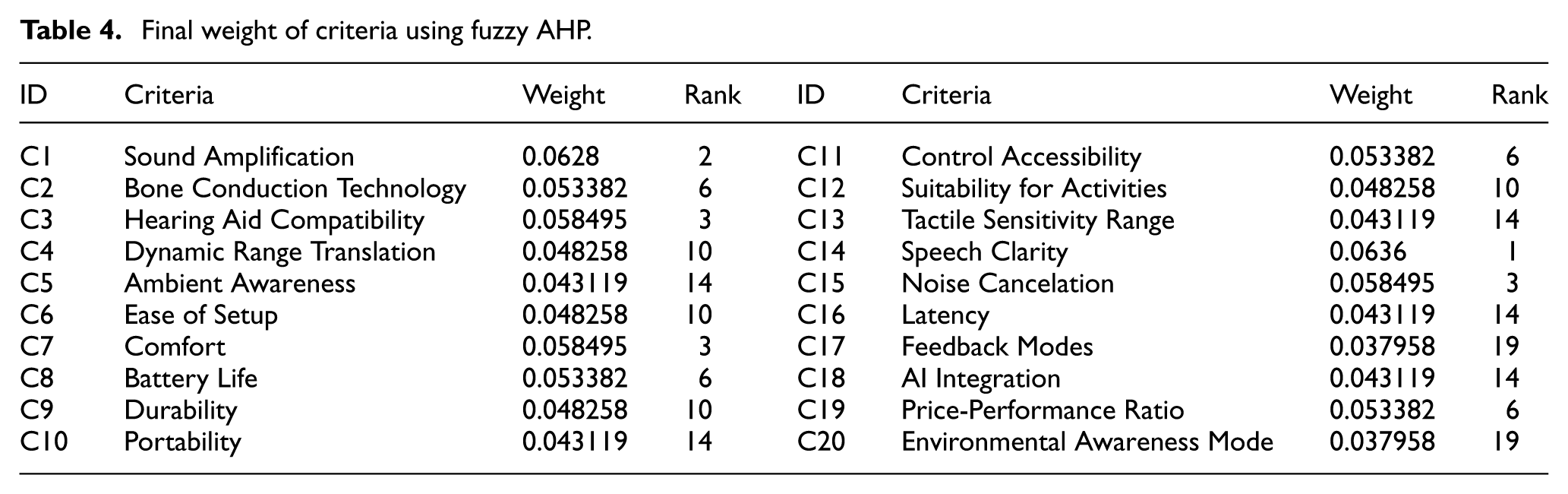
The findings provide light on the weight of each criterion, which is helpful for making decisions. With a weight of 0.0636, Speech Clarity (C14) takes first place as the most essential criterion. This highlights the importance of audible and comprehensible audio, especially for applications involving speech and communication. Second in importance with a weight of 0.0628, Sound Amplification (C1) highlights the significance of volume and clarity, particularly for users with hearing problems. Third place goes to Noise Cancelation (C15), whose 0.0585 weight reflects its function in improving the listening experience by reducing interference from outside noise. Criteria of moderate importance encompass Hearing Aid Compatibility (C3) and Comfort (C7), both ranked third with a weight of 0.0585. These criteria are vital for guaranteeing accessibility for users with hearing aids and assuring comfort during prolonged use. Bone Conduction Technology (C2), Battery Life (C8), and Price-Performance Ratio (C19) are ranked sixth, each assigned a weight of 0.0534, signifying its moderate significance. Bone conduction is essential for particular user demographics, battery longevity is a pragmatic concern, and the price-performance ratio is a significant determinant for budget-conscious consumers. Conversely, Feedback Modes (C17) and Environmental Awareness Mode (C20) are the least significant criteria, both positioned 19th with a weight of 0.0380. These features are specialized and not commonly emphasized by the majority of consumers. Likewise, Tactile Sensitivity Range (C13), Latency (C16), and AI Integration (C18) are ranked 14th with a weight of 0.0431, signifying that they are not predominant concerns for most users.
In summary, Speech Clarity, Sound Amplification, and Noise Cancelation are the crucial factors for assessing headphones, as they directly influence fundamental functionality and user experience. Conversely, Feedback Modes and Environmental Awareness Mode are the least significant, embodying specialized attributes that may not pertain to all users. These insights can inform headphone design, marketing, and selection, ensuring that the most desired attributes are highlighted while less vital characteristics are tailored for certain user demographics. The aggregated FAHP matrix satisfied the AHP consistency requirement (CI = 0.05996, RI = 1.6301, CR = 0.0368), confirming that the expert judgments were coherent and internally consistent.
Particle Swarm Optimization (PSO) for optimizing the criteria weights
The PSO procedure was applied to refine the FAHP-derived weight vector in a 20-dimensional simplex-constrained search space. The swarm consisted of 30 particles with a maximum of 200 iterations, following the parameter settings described in Section 3.2. The inertia weight decreased from 0.9 to 0.4, the velocity was limited to ±0.2, and both cognitive and social coefficients were set to 1.5. This combination provided stable convergence during tuning experiments and avoided premature stagnation. The fitness function incorporated consistency and alignment terms to ensure compatibility between expert judgments and the optimized weights. All PSO runs used the same fixed random seed (42) for reproducibility.
Table 5 displays the mean scores attributed by four experts to each criterion for headphone evaluation. The scores represent the consensus of experts regarding the significance of each attribute. Criteria C1 (Sound Amplification) and C14 (Speech Clarity) attained the maximum score of 10, signifying their status as the most essential elements. C3 (Hearing Aid Compatibility), C7 (Comfort), and C15 (Noise Cancelation) received excellent scores of 9, underscoring their importance in headphone performance and user experience. Criteria of moderate importance, including C2 (Bone Conduction Technology), C8 (Battery Life), C11 (Control Accessibility), and C19 (Price-Performance Ratio), received a score of 8, indicating their practical significance. C5 (Ambient Awareness), C10 (Portability), C13 (Tactile Sensitivity Range), C16 (Latency), C17 (Feedback Modes), C18 (AI Integration), and C20 (Environmental Awareness Mode) received lower scores, ranging from 5 to 7, indicating that experts consider these aspects to be of lesser priority. The scores correspond with the Fuzzy AHP weights, underscoring the experts’ agreement on the primacy of sound quality, comfort, and utility over specialized or secondary features.
The experts’ average scores.

In order to bring the Fuzzy AHP weights into line with the experts’ ratings, the PSO approach was used to refine them. To find the optimal weights, the PSO algorithm minimized a fitness function that took into account the following factors: conformity with objective performance ratings, consistency with Fuzzy AHP evaluations, and non-negativity and normalization constraints. A more balanced and data-driven prioritization of criteria is reflected in the final weights, as indicated in Table 6. While hearing aid compatibility (C3, 0.0622) and sound amplification (C1, 0.0619) are still important criteria, speech clarity (C14, 0.0626) is still at the top. The relevance of Noise Cancelation (C15, 0.0547) and the Price-Performance Ratio (C19, 0.0594) in performance and cost concerns is demonstrated by their high rankings. Because of the specific uses for which they were developed, lower-ranking criteria like Feedback Modes (C17, 0.0350) and Environmental Awareness Mode (C20, 0.0357) continue to receive less weight.
Final weight of sub-criteria using PSO.
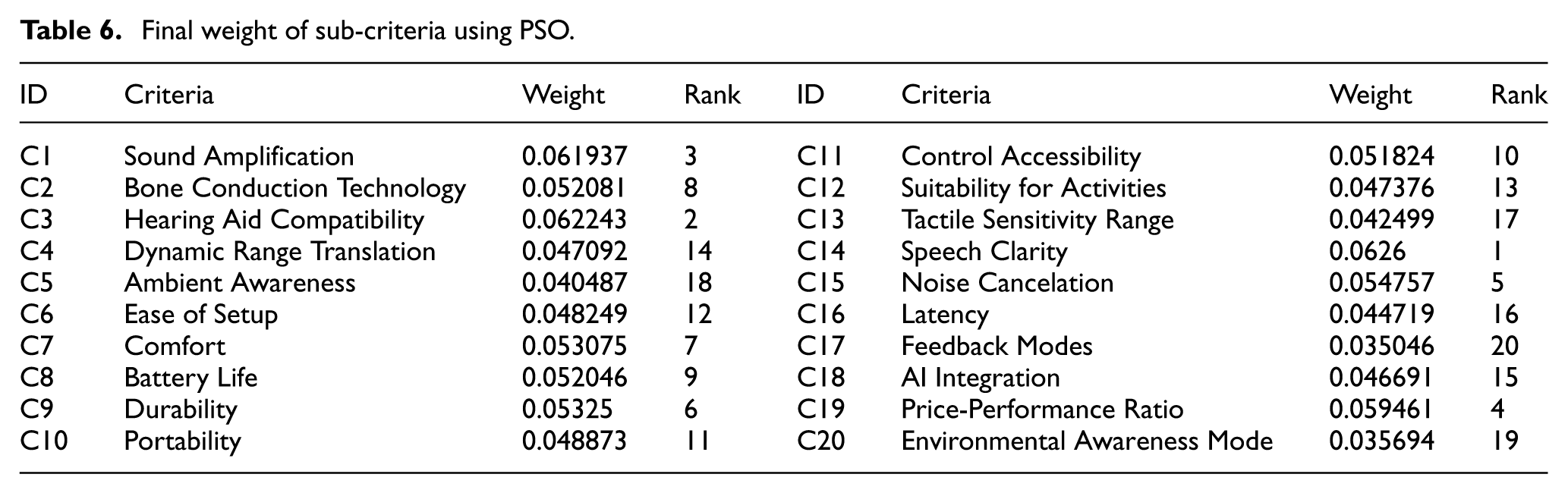
Figure 2, Tables 4, and 6 indicate that the PSO-optimized weights differ slightly from the Fuzzy AHP results, indicating a data-driven approach. For example, C14 for Speech Clarity and C1 for Sound Amplification were given slightly different weights to make them more in line with the experts’ ratings, but they were still at the top. In the optimized model, Hearing Aid Compatibility (C3) took center stage, highlighting its significance. As a result of its real-world relevance, Price-Performance Ratio (C19) also rose to popularity. Feedback Modes (C17) and Environmental Awareness Mode (C20), two less essential criterion, remained in their low rankings despite seeing no modifications. All things considered, the PSO findings offer a more accurate and impartial weighting system that maintains the fundamental priorities established by Fuzzy AHP.
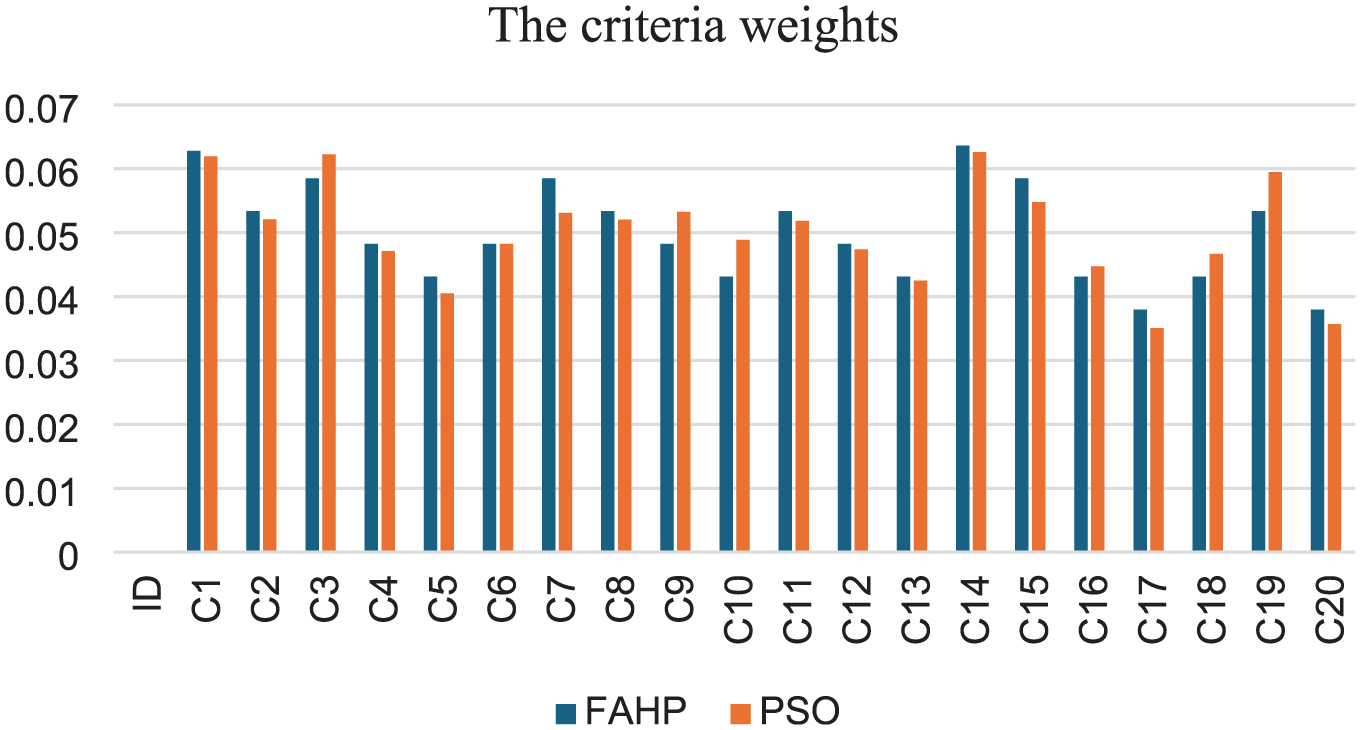
Comparison of the criteria weights using Fuzzy AHP and PSO.
With the use of expert scores and the consistency of paired assessments, the Fuzzy AHP weights were effectively optimized using PSO. According to the findings, the three most important factors for judging headphones are speech clarity (C14), compatibility with hearing aids (C3), and sound amplification (C1). Noise Cancelation (C15) and the Price-Performance Ratio (C19) were also prioritized during optimization to meet consumer expectations for performance and price. Confirmation of lower-ranked criteria’ perceived lack of importance lends credence to their specialized uses, such as Feedback Modes (C17) and Environmental Awareness Mode (C20). In order to prioritize the most valued features while keeping them aligned with expert judgments and objective performance measurements, these findings offer a comprehensive and data-driven paradigm for decision-making in headphone design and evaluation.
Figure 2 compares the weights derived from Fuzzy AHP and the PSO-refined configuration. The figure highlights how PSO adjusts a subset of high-influence criteria, particularly Speech Clarity (C14), Hearing Aid Compatibility (C3), and Sound Amplification (C1), while preserving the overall structure of the expert-based FAHP weights.
Headphone models evaluation
In this part, we give the ranking results of the headphone models utilizing the Fuzzy COCOSO and Zero-Sum-Game methodologies. Figure 3 and Table 7 present the findings and comparative efficacy of the examined headphones. These strategies were utilized to rank the alternatives based on the weighted criteria established in the previous section.
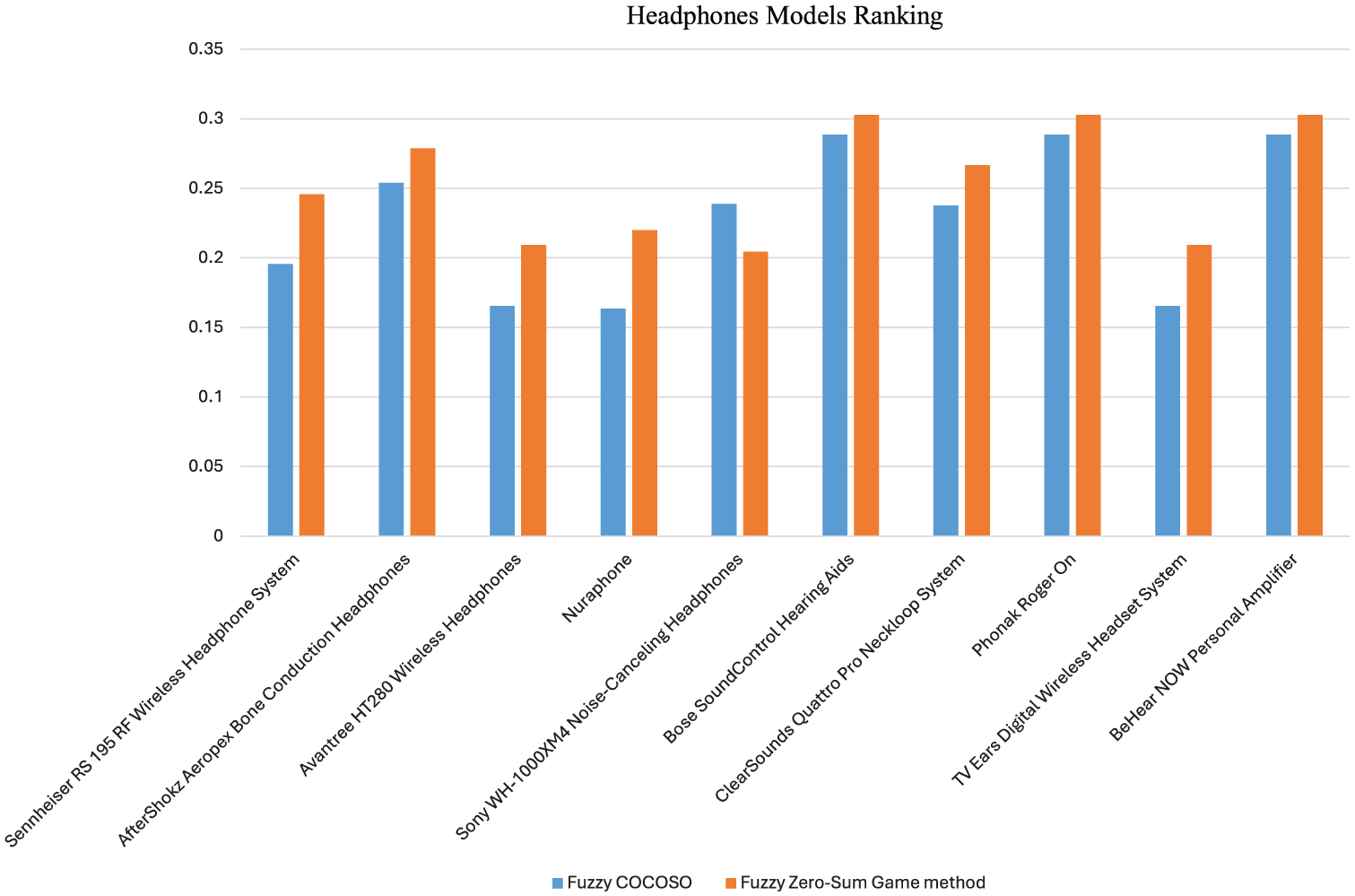
Headphone models ranking using Fuzzy COCOSO and Fuzzy Zero-Sum Game methods.
Comparison of headphone models ranking using Fuzzy COCOSO and Fuzzy Zero-Sum Game methods.
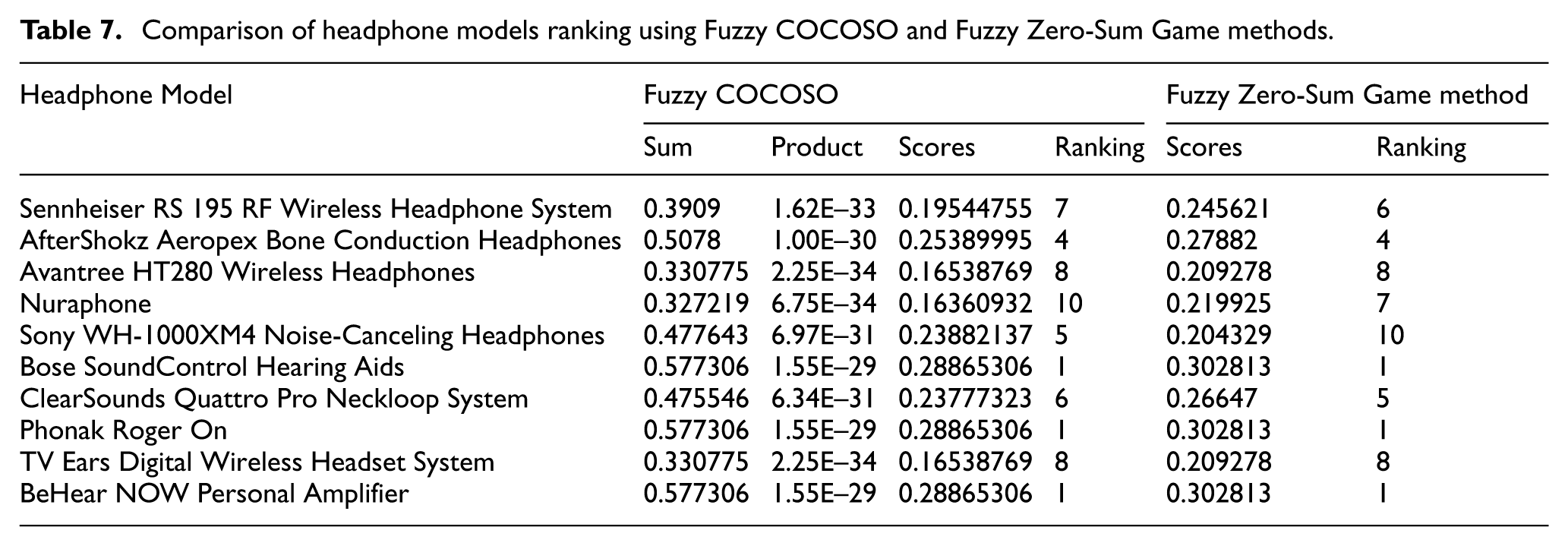
Figure 3 and Table 6 summarize the ranking outcomes from both Fuzzy COCOSO and the Fuzzy Zero-Sum Game. The figure visually demonstrates the strong agreement between the two methods, particularly for the highest-ranked alternatives such as Bose SoundControl Hearing Aids and Phonak Roger On. It also highlights the relative underperformance of models such as Avantree HT280 and TV Ears, reinforcing the consistency between additive-multiplicative scoring and strategic payoff analysis
In detail, the Bose SoundControl Hearing Aids, Phonak Roger On, and BeHear NOW Personal Amplifier are the top-performing models for both methods. These achieving the highest scores (0.2887 in FUZZY COCOSO and 0.3028 in Fuzzy Zero-Sum Game). This is due to the strong performance of these models in important criteria such as speech clarity, hearing aid compatibility, and noise cancelation. The Avantree HT280 Wireless Headphones and TV Ears Digital Wireless Headset System received a lower ranking and poor scores in both methods due to its poor performance in the important criteria.
While the top and bottom rankings are very similar across the board, there are some little differences. For example, the Sony WH-1000XM4 Noise-Canceling Headphones rank fifth in FUZZY COCOSO but fall to 10th in the Fuzzy Zero-Sum Game. This is probably because the two systems take different approaches to calculating and weighting competition scores. The AfterShokz Aeropex Bone Conduction Headphones consistently perform well, as they rank fourth in both FUZZY COCOSO and the Fuzzy Zero-Sum Game. These differences illustrate how the two approaches work well together; although the Fuzzy Zero-Sum Game prioritizes competitive performance, FUZZY COCOSO focuses on weighted aggregation.
The test results indicate that the top-performing headphone models in terms of essential characteristics such as noise cancelation, hearing aid compatibility, and voice clarity are the Phonak Roger On, the BeHear NOW Personal Amplifier, and the Bose SoundControl Hearing Aids. The dependability and utility of both strategies for users with particular needs, such as hearing assistance, are underscored by the uniformity in rankings overall. The TV Ears Digital Wireless Headset System and Avantree HT280 Wireless Headphones, both of inferior ranking, may require enhancements to enhance their competitiveness. The minor differences in outcomes between FUZZY COCOSO and Fuzzy Zero-Sum Game might be attributed to the distinct procedures employed by the two approaches: The Fuzzy Zero-Sum Game prioritizes relative performance and competitive scoring, in contrast to FUZZY COCOSO’s weighted aggregation of criteria. These disparities underline the importance of employing multiple evaluation approaches to provide a thorough understanding of model performance. The comprehensive findings provide valuable insights for both buyers and sellers, guiding planning and development toward elements most pertinent to actual purchases.
The dual use of Fuzzy COCOSO and Fuzzy Zero-Sum Game provides complementary insights. While Fuzzy COCOSO emphasizes compromise-based aggregation across weighted criteria, the Fuzzy Zero-Sum Game highlights competitive interactions and equilibrium strategies. The convergence of results across these two perspectives increases the robustness of the rankings and enhances confidence in the reliability of the findings.
SWOT analysis
By applying the SWOT analysis to a wide variety of headphones made for the deaf and hard of hearing, this study examines the strategic elements that have an impact on these products. Using a SWOT (Strengths, Weaknesses, Opportunities, and Threats) analysis, this study will try to find major competitive advantages, improvement spots, market potential, and outside obstacles. For a thorough comprehension of the strategic environment, the SWOT matrix classifies elements including cutting-edge audio technology, accessibility for those with hearing loss, battery life, price, and current market trends. With this methodical strategy, you may find growth and innovation opportunities in a competitive and ever-changing business, and make better judgments overall. Table 8 summarizes the strategies together with their descriptions.
SWOT analysis matrix for headphone models: strategic factors and classification.
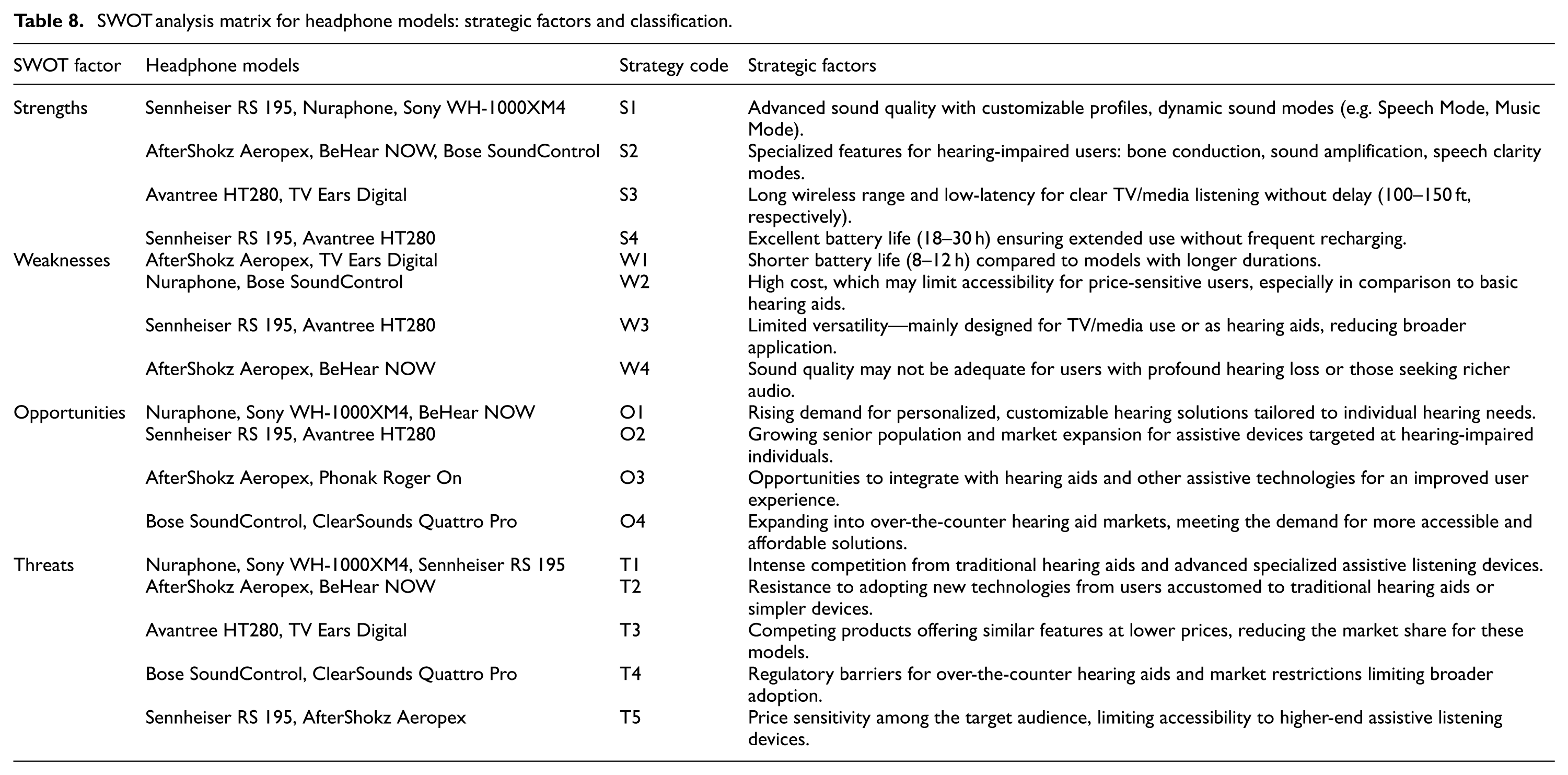
The SWOT analysis table provides a thorough and comprehensive assessment of the strategic elements affecting different headphone models, especially those intended for hearing-impaired individuals and general consumers. It delineates strengths, including superior sound quality, dynamic sound modes, bone conduction, and configurable profiles, which directly cater to the requirements of hearing-impaired individuals. Weaknesses are distinctly classified, emphasizing particular concerns such as battery life restrictions and product applicability constraints (e.g. TV/media-centric vs multifunctional). Opportunities highlight emerging industry trends, including the aging demographic, the need for customized solutions, and the incorporation of other assistive technology. Simultaneously, threats pertain to competition from conventional hearing aids and economical alternatives, including price sensitivity within the target audience. This matrix offers a definitive and pragmatic framework for strategic decision-making, facilitating a comprehensive grasp of competitive positioning, areas for enhancement, and prospective growth prospects in a dynamic market.
To systematically analyze the SWOT matrix, we applied the fuzzy COCOSO method. This approach ranks strategic factors by combining the sum and product of weighted scores, providing a balanced and reliable evaluation. Using this method, we were able to prioritize the strengths, weaknesses, opportunities, and threats (SWOT) based on their relative importance and impact. As a result, the analysis becomes more objective and dependable, supporting better-informed strategic decisions.
The fuzzy COCOSO method offers several key benefits for SWOT analysis. First, it combines compromise and aggregation strategies, leading to a more balanced prioritization of factors. Second, the fuzzy setting makes it possible to capture expert opinions more flexibly, reducing the uncertainty and vagueness often present in strategic evaluations. Third, compared with classical SWOT or other ranking methods, fuzzy COCOSO produces more stable and consistent results across different scenarios, which strengthens the reliability of the recommendations.
This approach integrates both compromise and aggregation strategies, enabling a more balanced prioritization of SWOT factors. Second, the fuzzy environment allows expert opinions to be expressed with flexibility, addressing uncertainty and vagueness in strategic assessments. Third, compared to classical SWOT or other ranking methods, Fuzzy COCOSO produces stable and consistent rankings across scenarios, enhancing the robustness of strategic recommendations. These features make Fuzzy COCOSO particularly suitable for SWOT-based strategy development in assistive technology contexts.
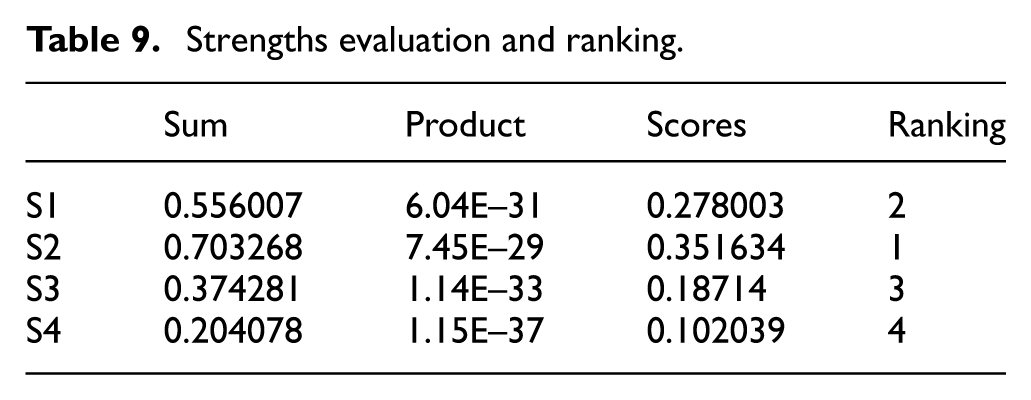
The strengths evaluation findings, presented in Table 9, indicate that S2 (Specialized features for hearing-impaired users: bone conduction, sound amplification, voice clarity modes) occupies the top position with a score of 0.351634. This underscores the essential necessity of catering to the distinct requirements of hearing-impaired individuals via innovative technologies. S1 (Superior sound quality with configurable profiles and dynamic sound modes) ranks second, highlighting the importance of premium audio and personalization. S3 (extended wireless range and low latency for television/media listening) and S4 (superior battery longevity) occupy the third and fourth positions, respectively, signifying that although these attributes are advantageous, they are somewhat less significant than the foremost two strengths. These rankings highlight the importance of emphasizing user-centric features and sophisticated technology capabilities in the development of products.
Strengths evaluation and ranking.
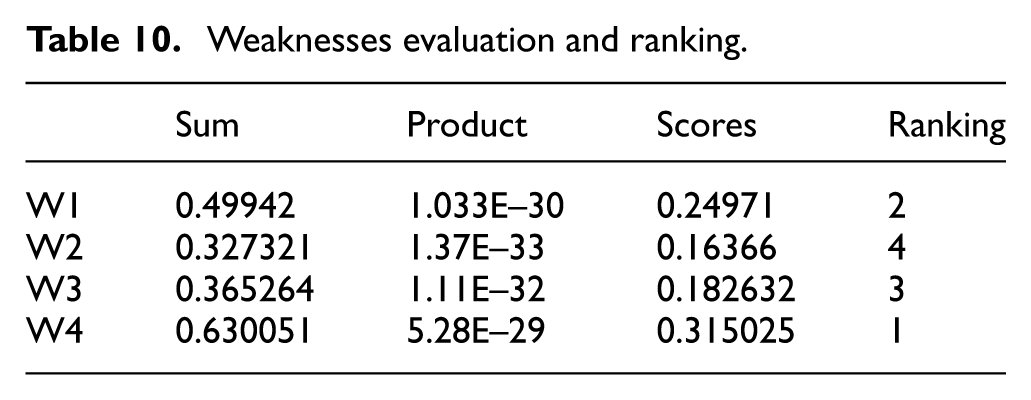
The assessment of weaknesses, detailed in Table 10, designates W4 (Sound quality may not be sufficient for users with substantial hearing loss or those desiring enhanced audio) as the most significant problem, achieving a top rank with a score of 0.315025. This indicates that enhancing audio quality for individuals with profound hearing impairment should be a primary area of emphasis. W1 (Reduced battery longevity) is positioned second, underscoring the necessity for improved battery efficiency in specific models. W3 (limited versatility—primarily intended for television/media applications or as hearing aids) and W2 (high cost) occupy the third and fourth positions, respectively, signifying that although these factors are important, they are less critical than sound quality and battery longevity. These findings underscore the necessity of overcoming technical constraints and financial obstacles to enhance customer happiness and market competitiveness.
Weaknesses evaluation and ranking.
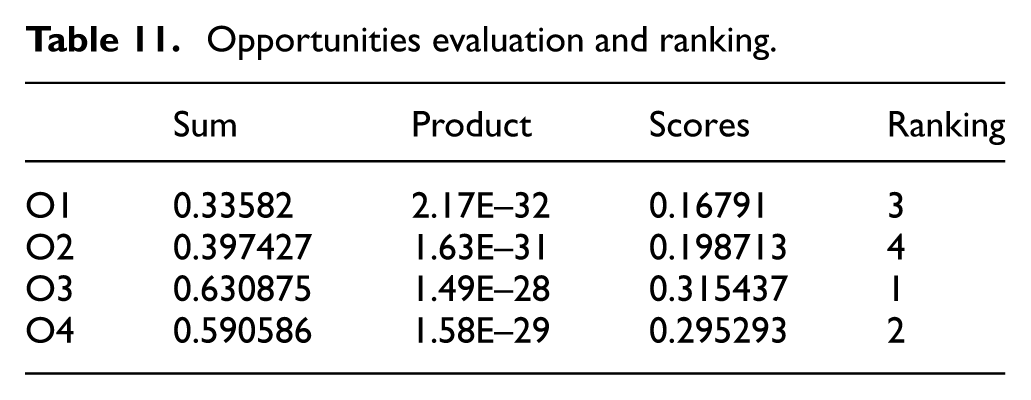
The evaluation of opportunities, as outlined in Table 11, indicates that O3 (Opportunities for integration with hearing aids and other assistive technologies to enhance user experience) ranks highest with a score of 0.315437, signifying the increasing potential for technological integration and collaboration within the assistive listening sector. O4 (Expanding into over-the-counter hearing aid markets) ranks second, signifying substantial prospects for enhancing the accessibility and affordability of hearing solutions. O1 (Increasing demand for personalized, customizable hearing solutions) and O2 (Expanding senior population and market growth for assistive devices) are ranked third and fourth, respectively, indicating that although these trends are significant, they are less urgent than integration and market expansion opportunities. These findings underscore the necessity to leverage technical improvements and industry trends to foster growth and innovation.
Opportunities evaluation and ranking.
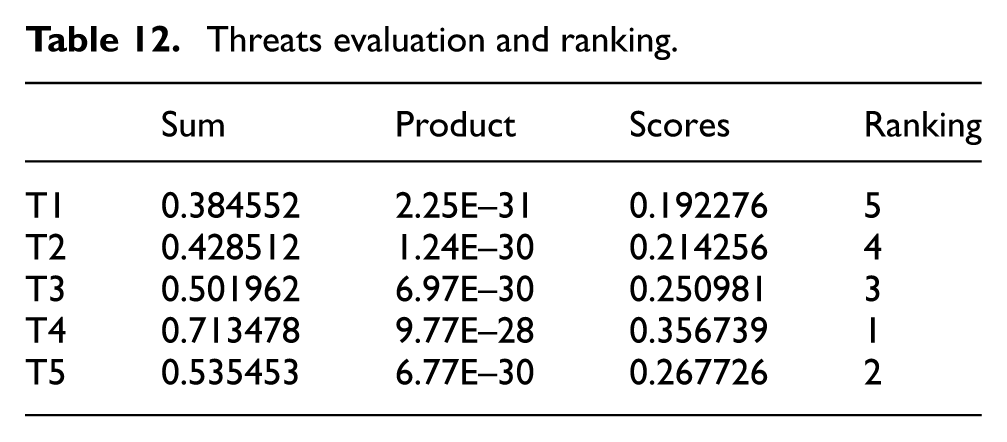
The threat assessment presented in Table 12 designates T4 (Regulatory barriers for over-the-counter hearing aids and market constraints inhibiting wider adoption) as the paramount threat, achieving the highest rating with a score of 0.356739. This highlights the difficulties presented by regulatory obstacles in broadening market access. T5 (Price sensitivity within the target demographic) ranks second, highlighting the necessity to reconcile cost with sophisticated features. T3 (Competing goods providing analogous features at reduced prices) and T2 (Reluctance to embrace new technology among users familiar with conventional hearing aids or simpler devices) are ranked third and fourth, respectively, underscoring the competitive and behavioral obstacles in the market. T1 (Intense competition from conventional hearing aids and sophisticated specialized assistive listening devices) ranks fifth, signifying that although competition is a concern, it is less paramount than regulatory and pricing challenges. These findings underscore the necessity of navigating regulatory frameworks and addressing consumer affordability to successfully reduce threats.
Threats evaluation and ranking.
Utilize the fuzzy COCOSO methodology to systematically rank the SWOT components for clear and effective strategic decision-making. Stakeholders can improve product offers, market positioning, and growth in the competitive environment of assistive listening devices by emphasizing strengths, fixing weaknesses, capitalizing on opportunities, and minimizing threats.
TOWS matrix: Strategy development
The TOWS matrix is a strategic instrument employed to synchronize internal factors (Strengths and Weaknesses) with external factors (Opportunities and Threats) to formulate actionable strategies. This chart displays an enhanced TOWS matrix that integrates all SWOT elements, emphasizing eight principal strategies for clarity and precision. Each strategy aims to exploit strengths, rectify flaws, seize opportunities, and alleviate dangers, guaranteeing focused and efficient results for headphone models in a competitive marketplace.
Table 13 presents a detailed TOWS matrix, classifying strategies into four quadrants: SO (Strengths-Opportunities), WO (Weaknesses-Opportunities), ST (Strengths-Threats), and WT (Weaknesses-Threats). It encompasses eight strategies targeting essential domains, including customized hearing solutions, integration with assistive technology, competition from conventional hearing aids, and price sensitivity. For instance, SO1 utilizes superior sound quality and distinctive characteristics to fulfill the need for customized solutions, whilst WT2 reduces expenses by offering economical versions. The table presents a definitive framework for stakeholders to augment product offerings, refine market positioning, and propel growth efficiently.
TOWS matrix: strategic development for headphone models incorporating All SWOT factors.
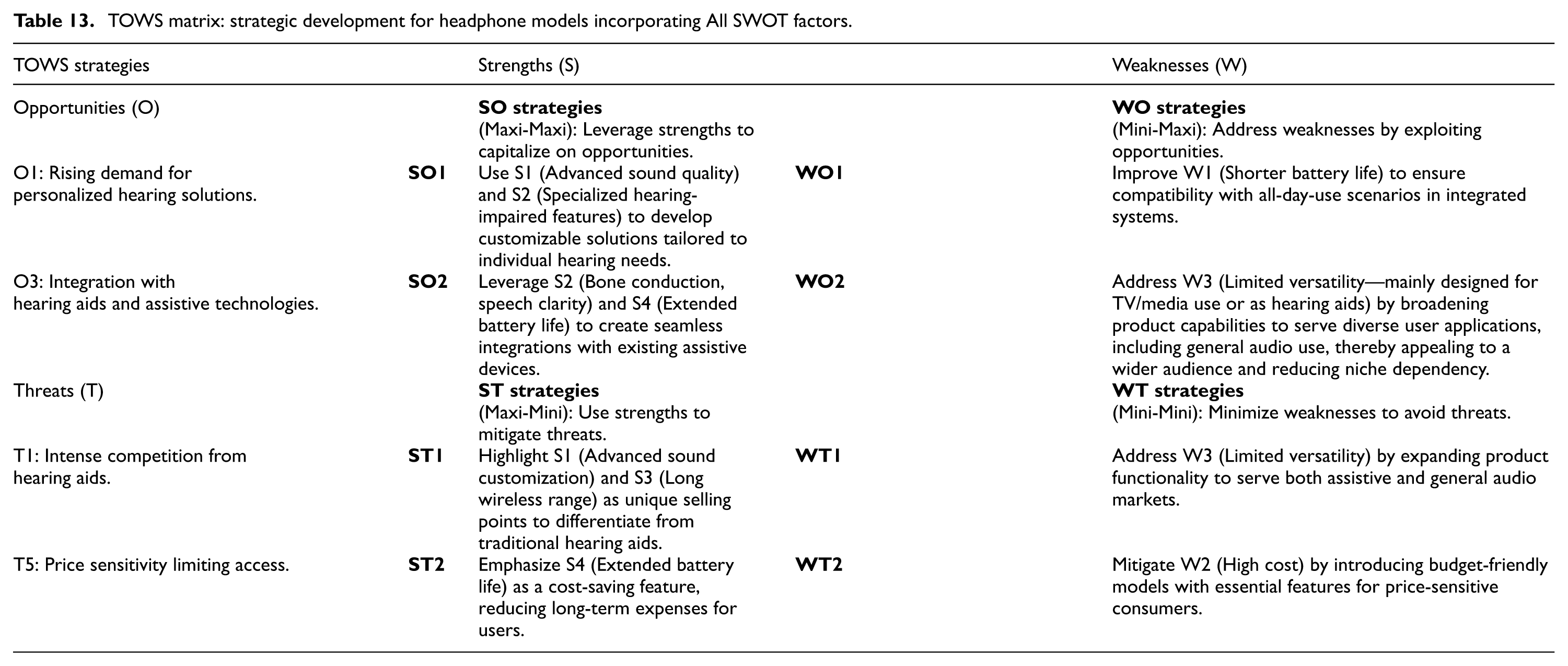
Table 14 delineates the 16 most significant combined strategies extracted from a total of 72 potential combinations identified through the TOWS study. These strategies aim to exploit strengths, rectify deficiencies, seize opportunities, and alleviate threats concerning headphone models for hearing-impaired individuals and general customers. Each plan is delineated into precise steps, guaranteeing clarity and practical insights for stakeholders. This table functions as a thorough reference for the effective implementation of initiatives.
Description of the combined strategies.
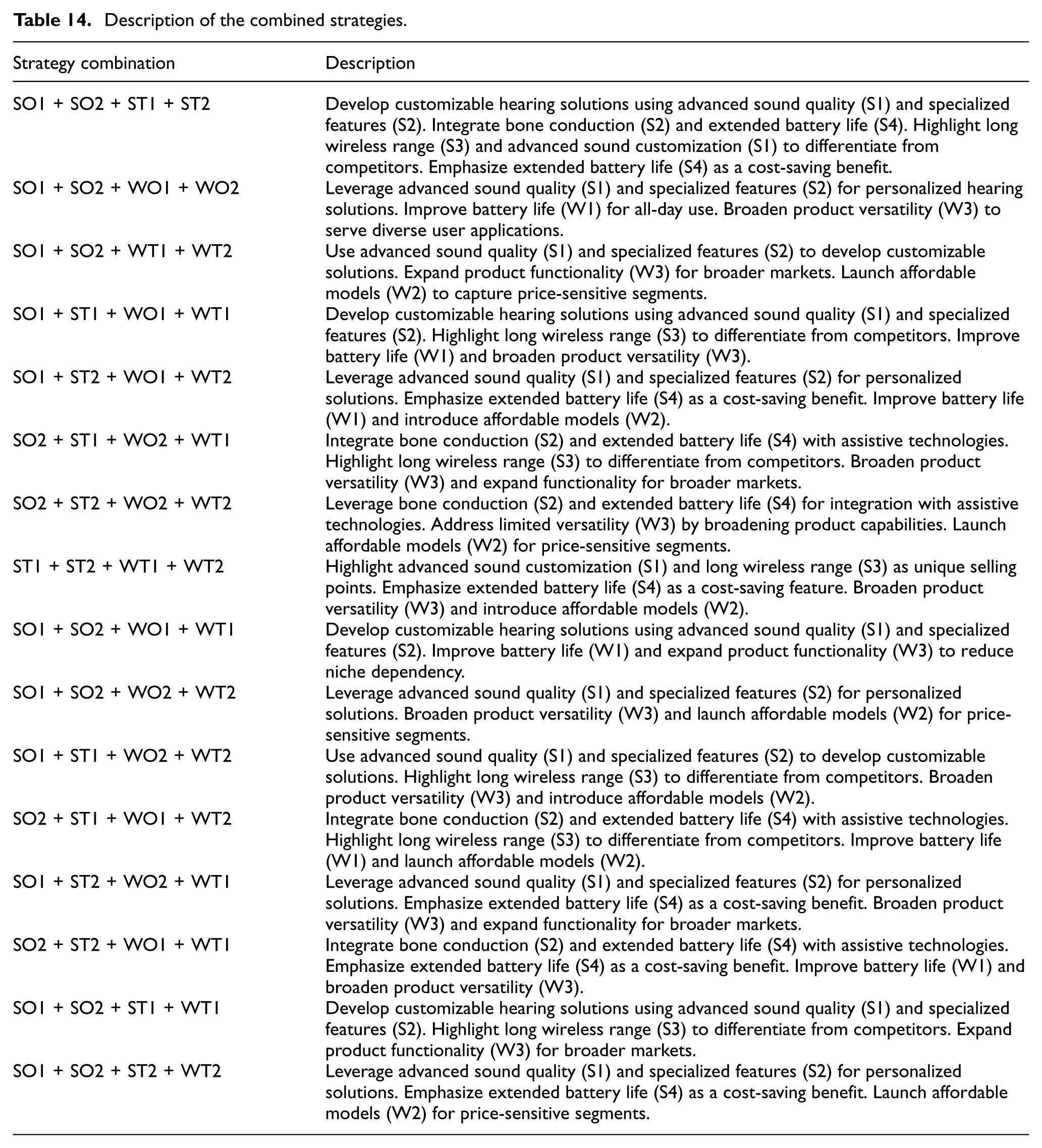
Table 15 illustrates the Utility Matrix for Strategy Combinations. Experts assigned a weight to each technique, indicating its relative significance. The weights for the strategy codes are located in the second row of Table 15. These weights were employed to rank the strategies and guarantee that higher-priority options were identified.
Fuzzy utility matrix for the 16 most important combined strategies derived from TOWS analysis.
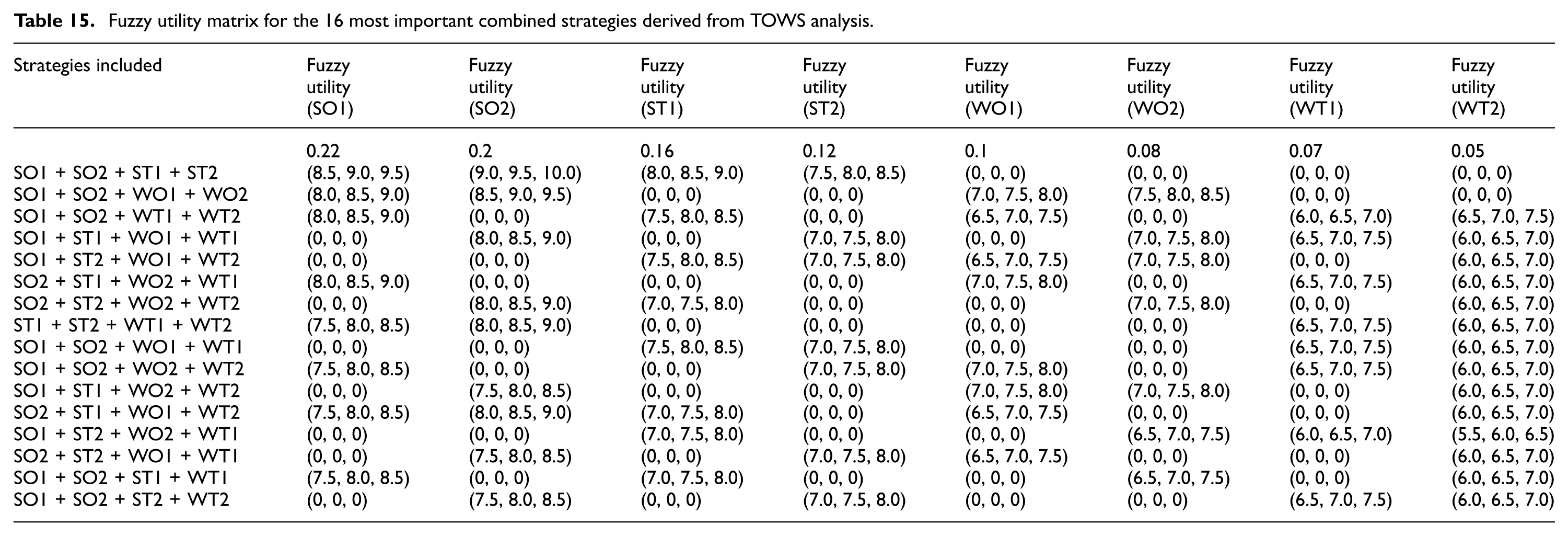
The Fuzzy Utility Matrix was developed to assess the efficacy of each integrated strategy. SO1 + SO2+ ST1 + ST2 possesses fuzzy utility values of (8.5, 9.0, 9.5) for SO1, (9.0, 9.5, 10.0) for SO2, and so on. These figures indicate the anticipated efficacy of the strategy combination across various scenarios.
Subsequently, the Zero-Sum Game approach was employed to rank and assess the 16 integrated methods.
This approach involves two players:
Table 16 displays the outcomes of employing the fuzzy Zero-Sum Game approach to assess and prioritize the 16 most significant combined strategies obtained from the TOWS research. Each strategy receives a score reflecting its performance within the Zero-Sum Game framework, and these scores are utilized to establish the ranking of the strategies. The scores indicate the strategies’ capacity to enhance strengths, rectify flaws, exploit opportunities, and alleviate risks, so offering a definitive prioritization for decision-making. This table is a vital result of the analysis, assisting stakeholders in choosing the most efficient ways for execution.
Ranking of combined strategies based on fuzzy Zero-Sum Game analysis.
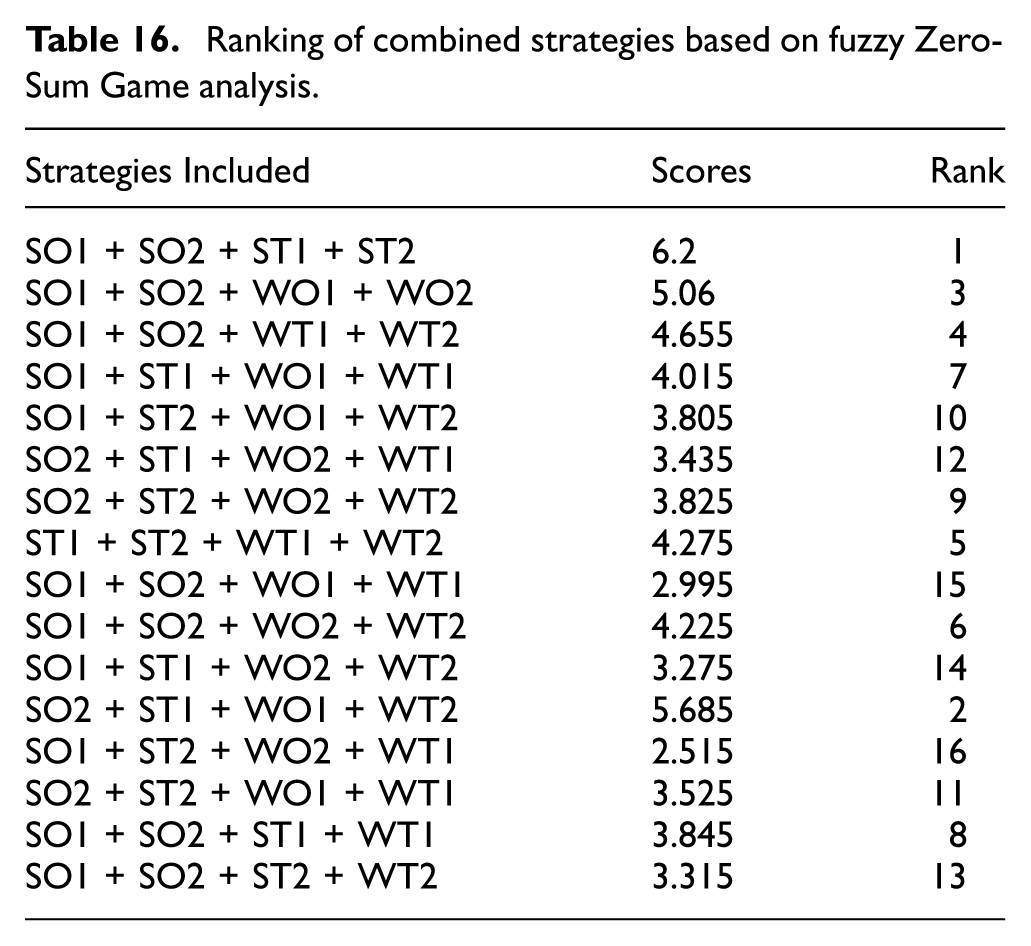
Table 16 illustrates the rank of the examined strategies: The strategy SO1 + SO2 + ST1 + ST2 scores highest with a score of 6.2, demonstrating its exceptional efficacy in capitalizing on strengths and opportunities while alleviating dangers. This amalgamation integrates superior sound quality (SO1), tailored functionalities for hearing-impaired individuals (SO2), competitive differentiation (ST1), and cost-efficiency (ST2), rendering it the most efficacious method overall. Likewise, SO2 + ST1 + WO1 + WT2 ranks second with a score of 5.685, underscoring its robust emphasis on amalgamating strengths with opportunities while mitigating weaknesses to reduce threats. These premier strategies are strongly advised for prompt execution owing to their significant influence and congruence with business objectives.
The Mid-Ranked Strategies, including SO1 + SO2 + WO1 + WO2 (rank 3, score 5.06) and ST1 + ST2 + WT1 + WT2 (rank 5, score 4.275), exhibit moderate performance. These strategies concentrate on mitigating weaknesses and using strengths alongside opportunities; nonetheless, they are less effective than the highest-ranked tactics. For instance, SO1 + SO2 + WO1 + WO2 enhances battery longevity (WO1) and expands product variety (WO2), which are significant but not as vital as optimizing advanced sound quality and specialized features. These strategies ought to be regarded for execution as secondary priority.
The Lower-Ranked Strategies include: SO1 + ST2 + WO2 + WT1 (rank 16, score 2.515) and SO1 + SO2 + WO1 + WT1 (rank 15, score 2.995), which are positioned at the lowest tier, signifying their restricted efficacy. These combinations concentrate on mitigating weaknesses and reducing threats but lack the robust alignment with strengths and opportunities shown in superior plans. Although these strategies may have some merit, they ought to be deprioritized in favor of more consequential alternatives.
Hence, we must prioritize the highest-ranked strategies, specifically SO1 + SO2 + ST1 + ST2 and SO2 + ST1 + WO1 + WT2, as they have the greatest impact and alignment with company objectives.
Furthermore, we must see Mid-Ranked Strategies as Secondary Priorities: Strategies such as SO1 + SO2 + WO1 + WO2 and ST1 + ST2 + WT1 + WT2 should be executed as secondary priorities to tackle supplementary areas for enhancement.
Additionally, we deprioritize lower-ranked strategies: Strategies such as SO1 + ST2 + WO2 + WT1 and SO1 + SO2 + WO1 + WT1 should be deprioritized due to their minimal impact relative to higher-ranked alternatives.
The findings from the Zero-Sum Game analysis yield a definitive and practical ranking of the 16 integrated strategies. By concentrating on the highest-ranked strategies, stakeholders can optimize the efficacy of their strategic initiatives, guaranteeing congruence with organizational objectives and priorities. This method guarantees an equitable and rational distribution of resources, fostering growth and competitive superiority.
Conclusions
This study presented a comprehensive framework for evaluating and strategically developing assistive headphone models for individuals with severe hearing impairment. Our approach combined the Fuzzy Analytic Hierarchy Process (Fuzzy AHP) with Particle Swarm Optimization (PSO) to generate consistent and optimized weights for 20 evaluation criteria. These weights were then applied within the Fuzzy COCOSO model and the Fuzzy Zero-Sum Game to rank 10 headphone models. To link evaluation with strategic planning, we integrated SWOT analysis—enhanced by Fuzzy COCOSO-and applied a TOWS matrix to formulate actionable development strategies under uncertainty.
The results identified Speech Clarity (C14), Sound Amplification (C1), and Noise Cancelation (C15) as the most influential criteria, highlighting their essential role in improving auditory performance for users with severe hearing impairment. Across the evaluated devices, Bose SoundControl Hearing Aids, Phonak Roger On, and BeHear NOW Personal Amplifier consistently emerged as the strongest performers under both Fuzzy COCOSO and Fuzzy Zero-Sum Game analyses. Strategically, the combined SO1+ SO2+ ST1 + ST2 configuration proved to be the most advantageous, while the SO2 + ST1 + WO1 + WT2 strategy offered a robust alternative by addressing weaknesses while leveraging strengths and opportunities. These outcomes provide guidance at both the product design and strategic development levels.
From a broader perspective, this study contributes to literature by demonstrating a fully integrated methodological chain that connects fuzzy MCDM, metaheuristic optimization, comparative ranking, and strategic game-theoretic reasoning. Integrating Fuzzy AHP with PSO enhances the reliability of criteria weights, while the dual-layer ranking system (Fuzzy COCOSO and Fuzzy Zero-Sum Game) provides stronger analytical robustness than relying on a single MCDM technique. Practically, the findings offer clear implications for manufacturers, policymakers, and healthcare providers by identifying the features that most directly influence user benefit and market competitiveness.
In summary, this study offers a novel methodological approach and practical insights for decision-making in assistive technology. By connecting device evaluation with strategic planning through an integrated, uncertainty-aware framework, it provides a rigorous and actionable tool for optimizing headphone selection and guiding innovation in the hearing-assistive technology sector.
Footnotes
Appendix 1
Acknowledgements
The authors are extremely grateful to the editors and the anonymous reviewers for their valuable comments and suggestions, which have helped improve the quality of the manuscript.

Ethical considerations
This study did not involve human participants or animal subjects, and therefore ethical approval was not required.
Consent to participate
No human data were gathered or analyzed in this study, so informed consent was not required.
Consent for publication
No human data were gathered or analyzed in this study, so informed consent was not required.
Author contributions
The authors confirm responsibility for the following: study conception and design, data collection, analysis and interpretation of results, and manuscript preparation.
Funding
The authors disclosed receipt of the following financial support for the research, authorship, and/or publication of this article: The authors would like to extend their appreciation to the Deanship of Scientific Research at King Saud University for funding this work through Waed Program (W25-81).
Declaration of conflicting interests
The authors declared no potential conflicts of interest with respect to the research, authorship, and/or publication of this article.
Data availability statement
The data used in this study were derived from manufacturer specifications and expert evaluations. All datasets were processed using custom-developed codes, and no external datasets were employed.