




Abstract
The rapid growth of distributed energy resources has highlighted the importance of monitoring the system state of distribution networks. One key technology that enhances observability in distribution systems is the Phasor Measurement Unit (PMU). However, there are still challenges in effectively deploying PMUs in practice. One challenge is the solution multiplicity in optimal PMU placement (OPP). Another challenge arises from the limited deployment space available at distribution nodes, leading to incomplete observability and the need for optimization to ensure node observability. To address the challenge of solution multiplicity, this work proposes a two-stage OPP approach that considers critical node observability. The first stage optimization model determines the minimum number of PMUs required to meet observability requirements. The second stage model identifies the solution with the greatest observability redundancy while satisfying practical constraints. To validate the effectiveness of our approach, this work conducts simulations using both IEEE testing systems and a real-world distribution feeder. These simulations provide empirical evidence of the benefits of the proposed OPP model and demonstrate its applicability in practical scenarios.
Keywords
Introduction
The usage of Phasor Measurement Units (PMUs) has become integral to the state monitoring system in power systems. These units utilize the Global Positioning System (GPS) to provide synchronized phasor measurements, ensuring accurate and real-time data synchronization. By leveraging the GPS-synchronized data from a wide area, PMUs offer precise measurements that allow for a deeper understanding of the system’s transient state. This technology is extensively deployed in bulk systems to enhance situation awareness and protection. PMUs have demonstrated their effectiveness in various applications within bulk systems. These include state estimation, voltage and frequency control, disturbance and outage monitoring, and more. Their successful implementation showcases their value and potential in improving the operation and management of power systems.
The deployment cost of PMUs has led to the development of Optimal PMU Placement (OPP) strategies aimed at finding the minimum number of PMUs needed for complete observability. 1 OPP has been a topic of active research since the invention of PMUs, and it continues to attract significant attention in the data-driven era. While OPP has traditionally been focused on bulk systems, there has been a recent increase in the deployment of PMUs, including micro-PMUs, in distribution systems and even micro-grids. 2 However, the cost and installation room constraints pose challenges in practice. Traditional PMU devices are often expensive, which means that utilities may have budget limitations that prevent the installation of PMUs on every node in the distribution system. Additionally, the size of traditional PMU devices makes it difficult to find adequate space for installation within a distribution node. As a result, there is a growing interest in installing as few PMUs as possible in distribution network while still meeting the observability requirements, taking into consideration the cost and space constraints.
The optimization problem of Optimal PMU Placement (OPP) involves determining the location and type of PMU deployment, which is heavily influenced by the network topology. Using Kirchhoff’s Voltage Law (KVL) and Kirchhoff’s Current Law (KCL), the bus/node voltage magnitude and phasor angle can be calculated if it is adjacent to a bus/node with a PMU.3,4 In the existing literature, researchers have proposed various approaches to address the OPP problem.5–8 Some studies focus on effective algorithms for minimizing the OPP problem. The pioneering work by Baldwin et al. 1 introduces the concept of a spanning measurement subgraph and develops an algorithm to determine the minimum PMU placement. Other works, such as Chakrabarti and Kyriakides, 9 propose exhaustive search-based approaches that ensure global optimality by enumerating all possible solutions.
More recent research has employed heuristic methods to optimize PMU placement, including genetic algorithms,10–12 particle swarm optimization, 13 imperialistic competition algorithms, and TABU search. 14 However, the main drawback of these search-based algorithms is that they cannot guarantee global optimality, although they offer reduced computational time. This disadvantage may result in excessive PMU investment for large-scale systems. Recently, the work 15 proposes an approach that combines Genetic algorithms and Binary Particle Swarm Optimization. They claim the proposed approach can guarantee the maximum observability and get the global optimal solution for IEEE 14-bus, 30-bus, 57-bus, and 118-bus systems.
To address scalability issues resulting from zero-injection buses, Mukherjee and Roy 8 propose a graph theory-based algorithm. Some researchers focus on mathematical models of the OPP problem and employ optimization solvers to find solutions. For example, Xu and Abur 5 propose an Integer Linear Programing (ILP) model for OPP. Esmaili et al. 6 consider observability redundancy, which helps reduce observability loss post-contingency. Contingency constraints are considered in Teimourzadeh et al., 2 where a mixed-integer linear programing model is established to ensure post-contingency stability. Nonlinear Programing (NLP) and MIP models with zero injection are presented in Almunif and Fan. 16 Authors in Theodorakatos et al. 17 simplify the polynomial constraints and generalize a pattern search algorithm. The ILP model proposed in Su et al. 18 improves observability under topology changes in distribution networks. Additionally, a semidefinite programing (SDP) based formulation is proposed to consider single PMU loss and single branch outage. 19 Authors in Theodorakatos et al.20,21 integrate SDP, quadratic-constrained programing, and ILP to solve the OPP, ensuring maximum reliability.
Some studies in the literature have taken into account the unique characteristics and operations of distribution systems.22,23 The bulk system has meshed network and PMU with more channels may be install at each bus. In contrast, most distribution systems has radial topology and limited space and budget constraints for PMU placement. Therefore, PMU deployment scheme for distribution system is different from that for bulk system. For example, topology reconfiguration is considered in Su et al., 18 Ibarra et al., 24 and Wang et al. 25 Authors in Khodadadi Arpanahi et al. 7 consider the micro-PMU channel number limit for radial distribution systems. The output uncertainty of distributed generators is addressed in Wang et al. 25 Phase unbalance and unknown transformer tap ratios are considered in Biswas et al. 26 Communication links and PMUs are optimally placed together for distribution system estimation in Zhao et al. 27 A binary carnivorous plant algorithm is employed to solve the optimization problem of micro-PMU, phasor data concentrator, and communication link placement in Mukherjee and Roy. 28 Authors in Tiwari and Kumar 29 present a binary particle swarm optimization-based approach to address the OPP problem considering distribution reconfiguration. Risk of operation is considered for OPP in distribution systems in Mukherjee and Roy. 30
The main contributions of the proposed method are listed below. We propose a two-stage OPP approach for distribution systems in this paper. The first stage of the proposed method aims to determine the minimal number of PMUs required. In the second stage, another optimization model is established to find the scheme with the largest observability redundancy while considering practical constraints. This work develops the ILP model based on zero-injection neighborhood, which includes one or more zero injection nodes and nodes adjacent to them. Unlike previous approaches in the literature, such as Theodorakatos et al.,
21
the proposed approach employs different models based on the zero injection neighborhood and considers practical constraints specific to distribution systems. We present a graph theory-based algorithm to search for the zero injection neighborhood, which has a time complexity of
Two-stage OPP model
PMU placement principles
The OPP problem involves two main objectives. The first objective is to determine the optimal placement scheme that requires the minimum number of PMUs while ensuring full observability of the entire network. The second objective is to maximize observability when there is a contingency where one PMU becomes unavailable (N-1 PMU contingency). Both of these objectives heavily rely on the concept of observability.
Observability analysis in power systems can be approached through two methods: numerical observability and topological observability. Numerical observability analysis involves complex and computationally expensive matrix computations, making it less practical for large-scale systems. On the other hand, topological approaches are commonly used for observability assessment due to their computational efficiency. In a distribution network, achieving full observability means that every node in the network can be observed, either directly or indirectly through neighboring nodes. A node is considered observable if its voltage vector can be measured by a PMU. Therefore, the observability of a distribution system is determined by whether all nodes are observable.
To address the OPP problem, a strategic placement of PMUs is required to ensure full observability while minimizing the number of PMUs needed. This allows for accurate voltage measurements and monitoring of the entire network. Additionally, during N-1 PMU contingency, where one PMU may fail, it is crucial to maximize observability to maintain network monitoring and control. This can be achieved by carefully considering the placement of PMUs to minimize the impact of PMU failures on the observability of the system.
In summary, the OPP problem aims to find the optimal placement of PMUs in a distribution network to achieve two objectives: minimizing the number of PMUs while ensuring full network observability, and maximizing observability during N-1 PMU contingency. Topological observability analysis is commonly used due to its computational efficiency, and a node is considered observable if its voltage vector can be directly or indirectly measured by a PMU. There are different scenarios for node observability in the context of the OPP problem. Directly Measured Node: A node is equipped with a PMU, allowing for the direct measurement of its voltage vector as well as the current vectors of all the lines connected to it. This provides full observability of the node. Indirectly Measured Node: Nodes in this case are adjacent to directly measured nodes. With the voltage at one end of a branch, along with the branch current and impedance, the voltage at the other end of the branch can be calculated using Ohm’s Law. This indirect measurement enables observability of the node. Zero-Injection Neighborhood (ZIN): Nodes within ZINs are considered observable. A ZIN is a set of connected nodes that includes at least one zero-injection node, with all nodes in the set being adjacent to the zero-injection node. In systems with ZINs, Kirchhoff’s Current Law (KCL) and Kirchhoff’s Voltage Law (KVL) can be utilized to reduce the need for PMU deployment. By leveraging these laws, observability can be achieved without the direct measurement of every individual node.
In the proposed approach, these different cases of node observability are taken into consideration while determining the optimal placement of PMUs. The goal is to minimize the number of PMUs required while ensuring the observability of all nodes in the network. By strategically placing PMUs based on these observability scenarios, accurate voltage measurements and monitoring of the entire system can be achieved.
Basic OPP model
In the basic OPP model, the ZIN case is not explicitly considered. The objective of the basic model is to minimize the number of PMUs required in the network. This objective is formulated as a binary optimization problem, where a binary decision variable
The decision variable

In the meantime, the network topology can be described with an adjacent matrix
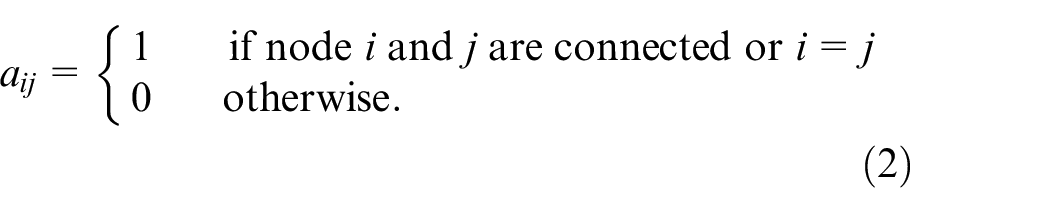
To ensure the topological observability of the system, a constraint is enforced in the basic OPP model. This constraint ensures that each node in the network is observed through either direct installation of a PMU or through adjacent nodes with PMUs. The constraint can be formulated as follows:

In this equation,
By enforcing this constraint, the basic OPP model aims to ensure that each node is observed either directly or indirectly through neighboring nodes with installed PMUs. The parameter
The basic OPP model can be formulated as an integer programing problem, as shown in the following formulation:



The objective is to minimize the total number of PMUs used in the network, subject to the constraint that each node has observability through either direct installation or neighboring nodes. However, this basic model does not explicitly consider ZIN measurement, potentially resulting in the placement of more PMUs than necessary
OPP model with zero injection neighborhood
With one zero injection node
Next, we explore the utilization of KCL-based calculation, specifically ZIN case, to optimize the PMU placement scheme and reduce the number of PMUs required. This approach relies on KCL and assumes that the line impedance is known. By incorporating KCL-based calculation into the existing OPP model, we potentially reduce the dependency on PMUs. This means that instead of relying solely on PMUs for observability, we can leverage the additional information provided by KCL-based calculation to achieve the same level of observability with fewer PMUs.
As depicted in Figure 1, an example of a zero-injection neighborhood is shown. In this example, node 3 is a zero-injection node, and the zero-injection neighborhood comprises nodes 2, 3, 6, and 7. To represent the current flowing from node i to j, let us denote it as

following KCL. By utilizing the known currents

where

Therefore, we can establish a proposition as follows

where
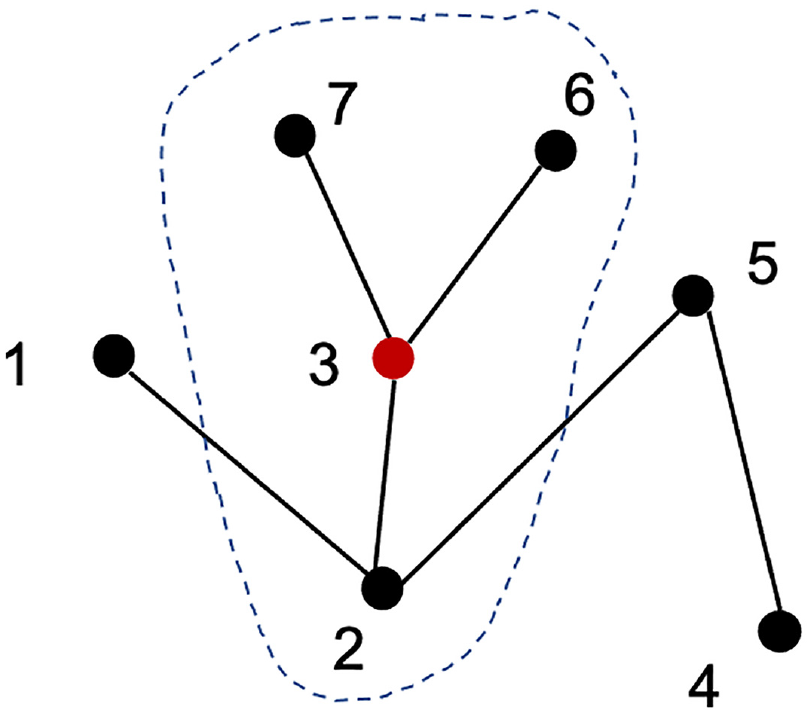
An illustrative example of zero-injection neighborhood. Node 3 is a zero-injection node, and the zero-injection neighborhood includes node 2, 3, 6, and 7.
According to the proposition above, we can establish zero injection neighborhood constraints in the OPP model.
More than one zero injection node
In distribution networks, it is not uncommon to have multiple adjacent zero-injection nodes. Figure 2 illustrates an example of two adjacent zero-injection nodes, where nodes 3 and 5 are connected. To achieve full observability in such cases, we need to formulate a constraint that ensures the necessary measurements are available. This can be accomplished by considering the following constraint:
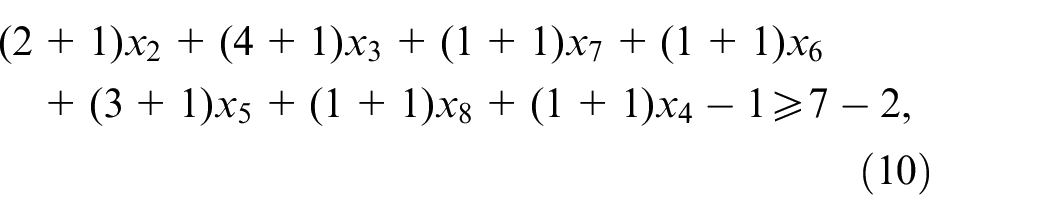
where line (3–5) is counted once, which is different from equation (9). Therefore, we establish a new proposition as follows

where
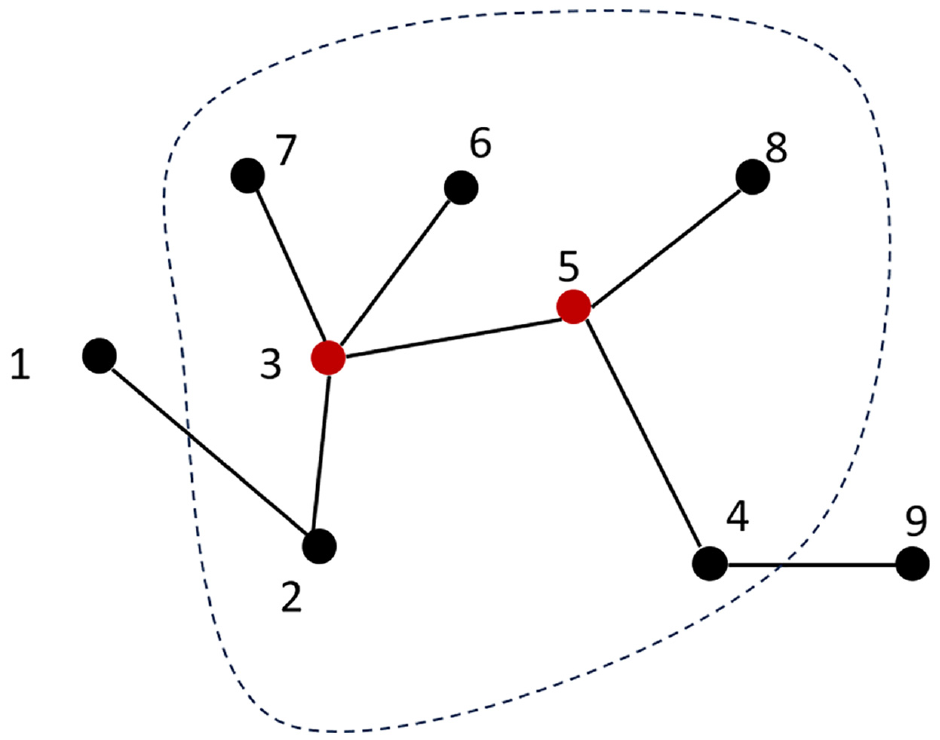
An illustrative example of zero-injection neighborhood. Node 3 and 5 are zero-injection nodes, and the zero-injection neighborhood includes node 2, 3, 4,5, 6, 7, and 8. The full observability constraint is shown in equation (10).
In this section, we propose a novel algorithm to search for the neighborhoods with more than two zero injection nodes. The algorithm involves two loops and one matrix power operation. The time complexity of the matrix power operation is
According to Proposition 2, we can get a new OPP model as




where
Two-stage OPP with redundancy and practical constraints
In order to ensure the security of power systems, the N-1 safety criterion is commonly employed. This criterion requires the system to maintain stable operation even if one component is disconnected due to a contingency. To meet this criterion, redundancy is often incorporated into the system. One approach to achieve full topological observability post-contingency is to place two PMUs at each node. However, this solution is not practically feasible due to the high cost associated with PMU deployment. Motivated by the N-1 security rule, we propose a method to minimize the observability loss caused by PMU contingencies. Our method builds upon the existing OPP model (P2) and introduces additional observability and practical constraints.
By incorporating these constraints into the OPP model, we aim to optimize the PMU placement scheme while considering the observability requirements and practical limitations of the power system. This enhanced model allows us to balance post-contingency observability and cost-effectiveness, ensuring that the power system remains secure while minimizing the deployment cost of PMUs.
Observability redundancy
In the previous sections,


where α i and β n can be set 1. Equation (15) denotes the observability degree for regular nodes, while (16) represents the observability for the neighborhood.
Must-observe nodes
In practical distribution networks, utilities typically monitor specific nodes critical to overall system operation rather than every single node. This selective monitoring approach considers factors such as high-priority loads and nodes crucial for ensuring system security. To represent the set of nodes that must be observed, we use the notation

Budget and space constraints
In previous models (P1) and (P2), the objective functions are focused on minimizing the number of PMUs required for observability. However, in practice, reducing the number of PMUs may not always be the highest priority. Another realistic objective in PMU placement schemes is to maximize the observability of the power system while staying within a given budget constraint. This means that the deployment of PMUs needs to be optimized to achieve the highest possible observability while considering the financial limitations.
In order to incorporate the budget constraints into the PMU placement scheme, we can formulate specific constraints that limit the total cost of deploying PMUs. These constraints ensure that the number and locations of the PMUs selected do not exceed the specified budget, while still achieving the desired level of observability. By considering both observability and budget limitations, new PMU placement constraints are established

where c i is the cost to deployment PMU at node i, and φ is the budget cap.
In addition to selecting specific nodes for monitoring, it is important to consider practical constraints when installing PMUs in a distribution network. Not all nodes may be suitable for PMU installation, for reasons such as lack of space or other physical limitations. To account for these constraints, we introduce additional constraints into the PMU placement problem. These constraints ensure that only nodes that meet the necessary criteria, such as having sufficient space or communication channel, are considered for PMU installation. Thus, we introduce constraints as follows.

where
A novel two-stage approach
Based on our experience, we have observed that when minimizing the number of PMUs deployed in a power system, there are often multiple optimal solutions. However, it is important to note that even if the number of PMUs is the same in these solutions, the degree of observability can vary significantly. Additionally, the post-contingency observability can also differ between these solutions.
In light of these observations, we propose a novel two-stage approach for PMU placement. This approach takes into account both the initial observability as well as the post-contingency observability of the power system. In the first stage, we focus on optimizing the initial observability, ensuring that the selected PMU locations provide the highest level of observability across the network. In the second stage, we further refine the placement by considering the post-contingency observability, ensuring that even under contingencies, the system remains observable.
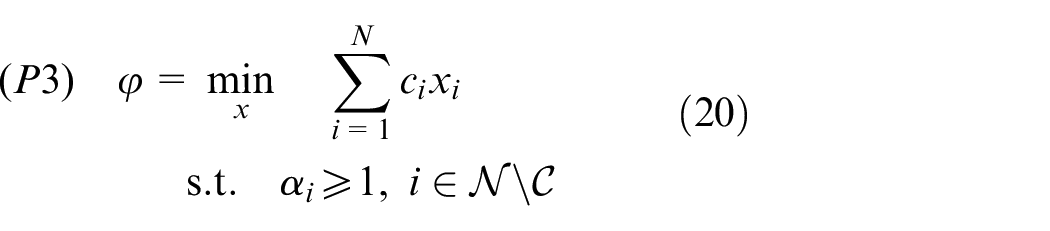


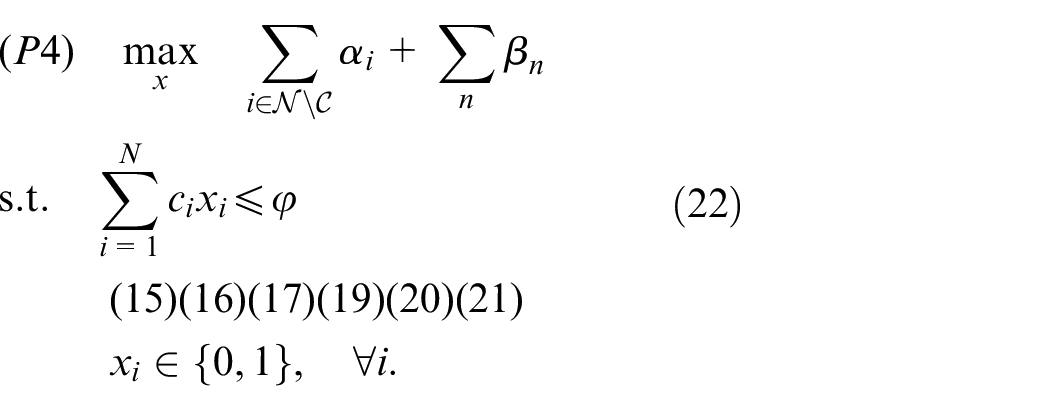
By solving problem (P3) and (P4) sequentially, we can get the maximum observability when there are multiple solutions. When budget constraints are enforced, we can formulate the model as
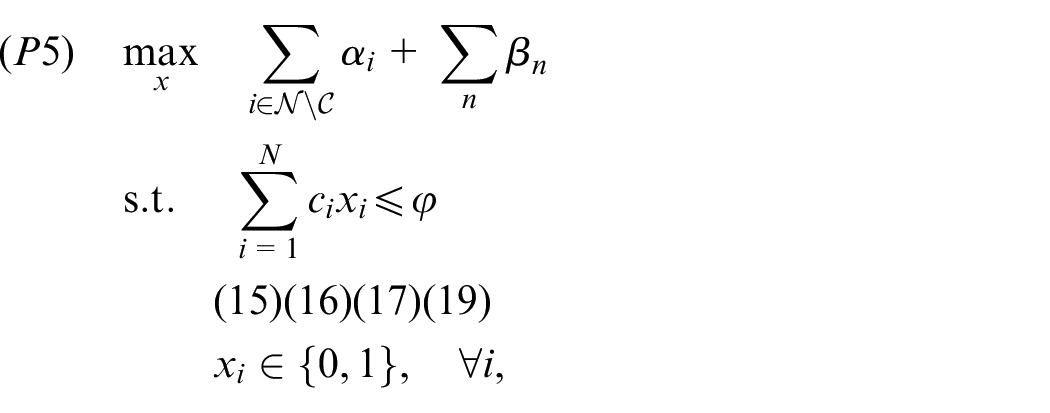
where (20) and (21) are dropped. That is because we cannot guarantee the full observability within the given budget constraints.
Case Study
In this section, the simulations are conducted for distribution feeders, including the IEEE 34-node, IEEE 37-node, IEEE 123-node, and a real-world distribution feeder in China. The simulations are performed using MATLAB and the optimization solver Gurobi 9.5.
We first present simulation results for the IEEE 34-node feeder. Algorithm 1 identifies three zero-injection neighborhoods. Figure 3 illustrates these neighborhoods, where the blue circle represents the zero-injection neighborhood. For instance, Nodes 808, 812, 814, 850, and 816 belong to the same neighborhood. The red nodes indicate the zero-injection ones, which include Nodes 812, 814, and 850.
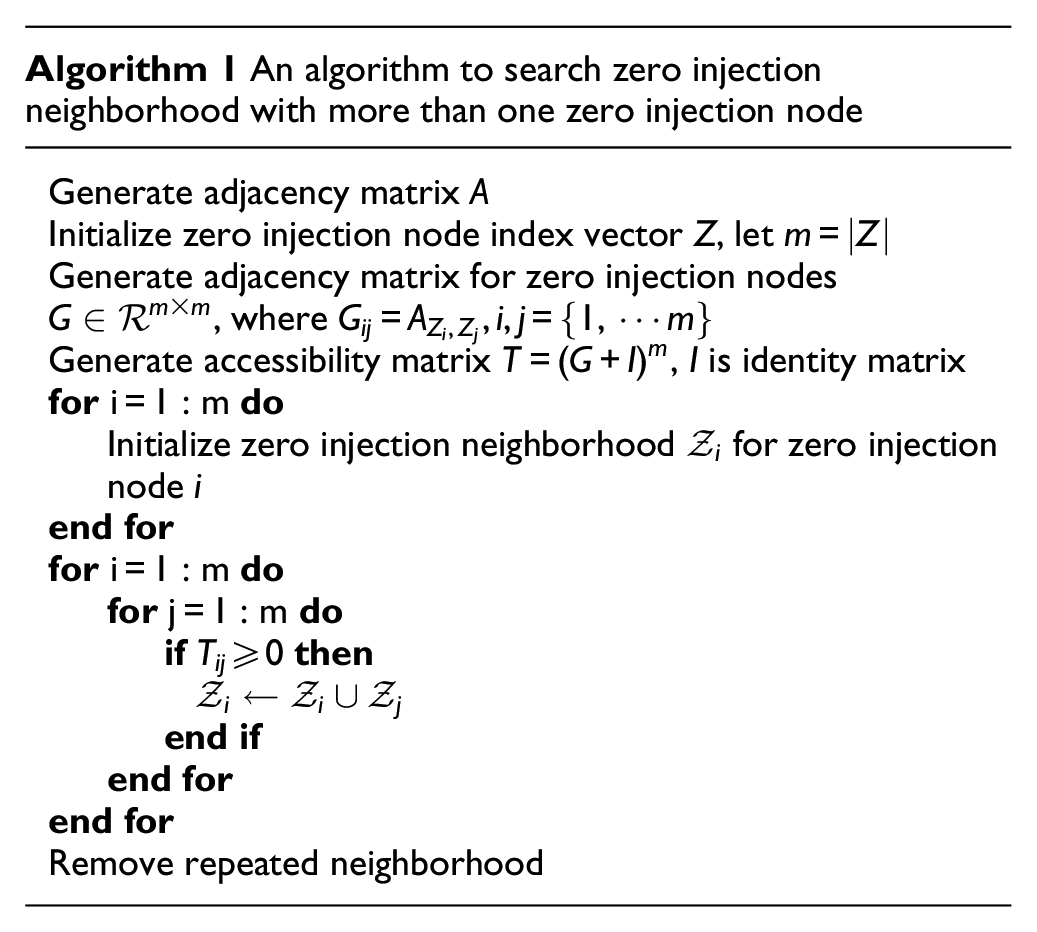
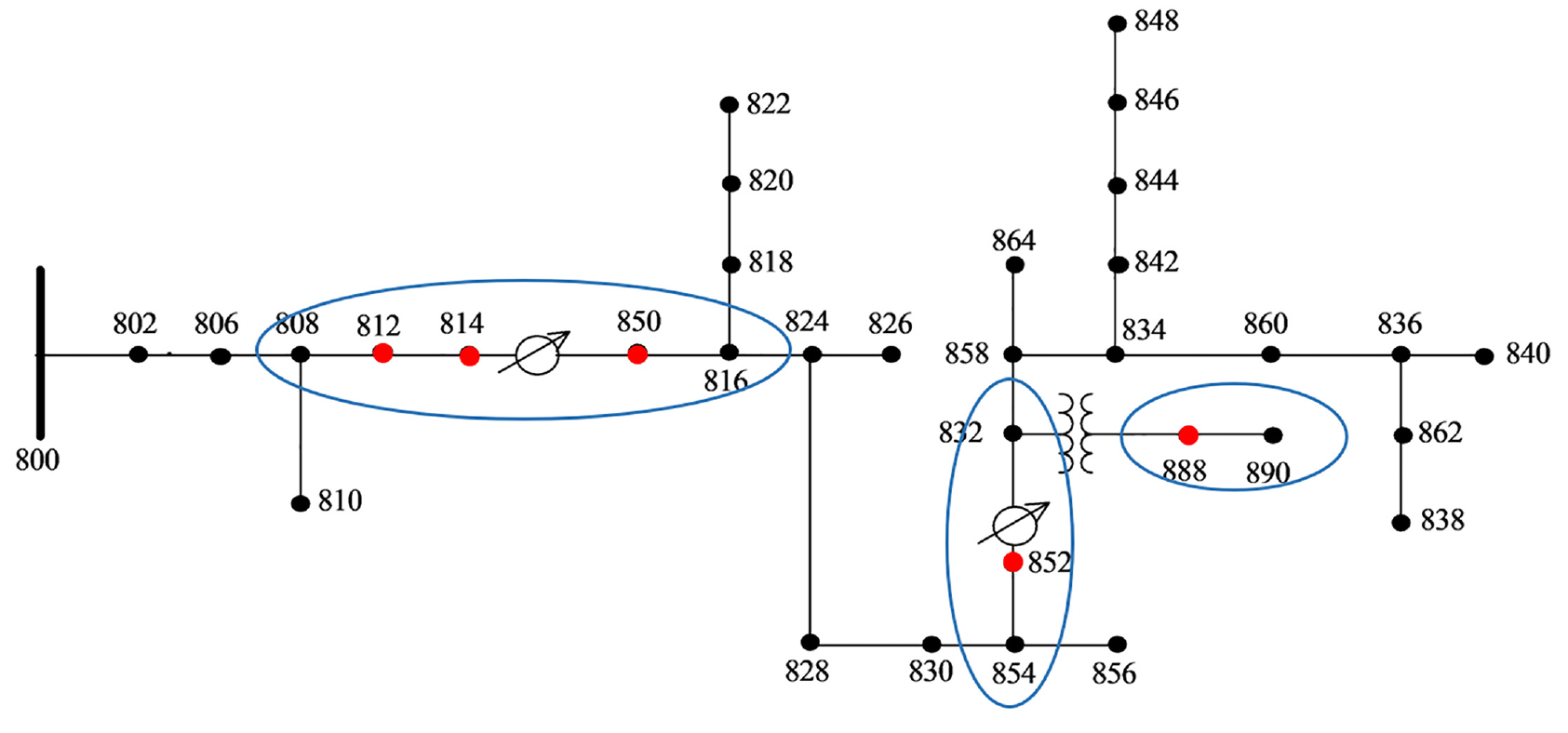
IEEE 34-node feeder. The red nodes are zero injection ones. Three zero injection neighborhoods are identified by the Algorithm 1.
In the IEEE 34-node feeder, 11 PMUs must be deployed to achieve full observability, as shown in Table 1. One of the deployment schemes is to place PMUs at Node 804, 810, 820, 824, 834, 838, 840, 846, 854, 864, and 890. By strategically placing these PMUs, we can the full network observability with some calculations. Table 2 presents the zero injection neighborhood search results using the proposed algorithm. For the IEEE 37-node feeder, 7 and 17 neighborhoods are found for the IEEE 37 and 123-node feeders, respectively.
Neighborhood search for IEEE 34-node feeder.

Zero injection neighborhoods for IEEE 37 and 123-node feeders.
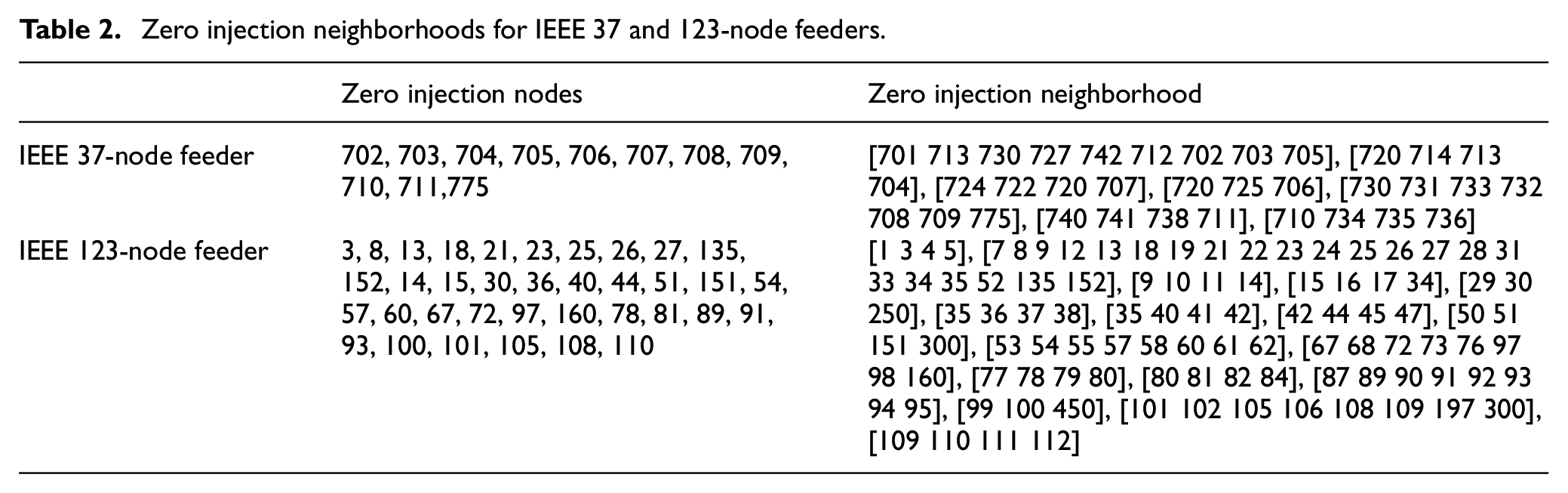
Table 3 presents the simulation results obtained from the regular OPP model for the IEEE 37-node and IEEE 123-node feeders. The “Placement Node” column presents the optimal locations to place the PMUs. The “Obs. Node # Post-cont.” column shows the average number of nodes that remain observable after a single PMU contingency. The second row of Table 3 has a “Total PMU” of 10 and a “Obs. Node” of 37. It means 10 PMUs must be installed to observe all 37 nodes for the IEEE 37-node feeder. We may lose some observability after a single PMU contingency. “Obs. Node Post-cont” of 34 means that the average number of observable nodes decreases to 34 for 10 contingency scenarios. This means that, on average, three nodes become unobservable due to the contingency.
Optimal PMU placement with full observability.

For the IEEE 123-node feeder, the third row of the table shows that 47 PMUs are needed to achieve full network observability. However, with a single PMU contingency, the average number of observable nodes decreases to 120 out of the total 123 nodes. This indicates three nodes lose observability post-contigency on average.
These results demonstrate that the solution to the regular OPP model can result in the loss of full observability post-contingency.
Table 4 displays the simulation results obtained from the two-stage OPP model (P3)(P4) for the IEEE 37-node and IEEE 123-node feeders. The table contains the same columns as Table 3, namely “Placement Node” and “Obs. Node # Post-cont.” However, in the OPP model (P4), observable nodes are considered in the objective function, which results in slightly different outcomes compared to Table 3.
Optimal PMU placement from model (P4).

In the case of the IEEE 37-node feeder, the second row of Table 4 shows that the number of required PMUs remains the same as in Table 3. However, the “Placement Node” column differs, as nodes 25 and 27 are now included as PMU placement locations. In contrast, these nodes are not assigned with PMUs in Table 3. Additionally, the post-contingency observable node number increases to 35 in the OPP model (P4), while it is originally 34 in the regular OPP model (P2). Similar trends can be observed in the results for the IEEE 123-node feeder. Although the number of PMUs remains unchanged, the post-contingency observable node number increases to 121 in the two-stage model from 120, which is attained by (P2).
This indicates that the solution multiplicity to OPP has a direct impact on the system observability post-contingency. One can have additional observability if the deployment scheme is carefully selected among the solution pool, even if the same number of PMUs are installed.
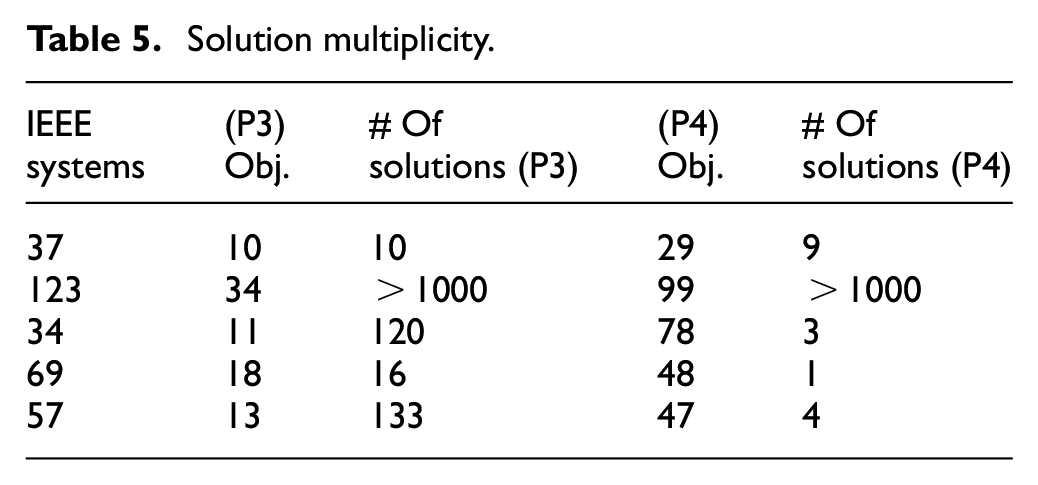
Table 5 shows the solution multiplicity issues for the OPP problem in the distribution systems. Row 4 shows that there are totally 120 solutions that can get full observability with 11 PMUs in the IEEE 34-node system. However, after solving problem (P4), we get objective value of 78. The solution number decreases to 3. It indicates solutions to (P3) have different observability degree. As shown in Figure 4, the observability degree of IEEE 34-node system ranges from 27 to 33 due to different PMU deployment and three solutions reach the maximum observability degree of 33. And in Figure 5, the observability degree of IEEE 69-node system ranges from 44 to 48 and only one solution achieves the optimal redundancy.
Solution multiplicity.
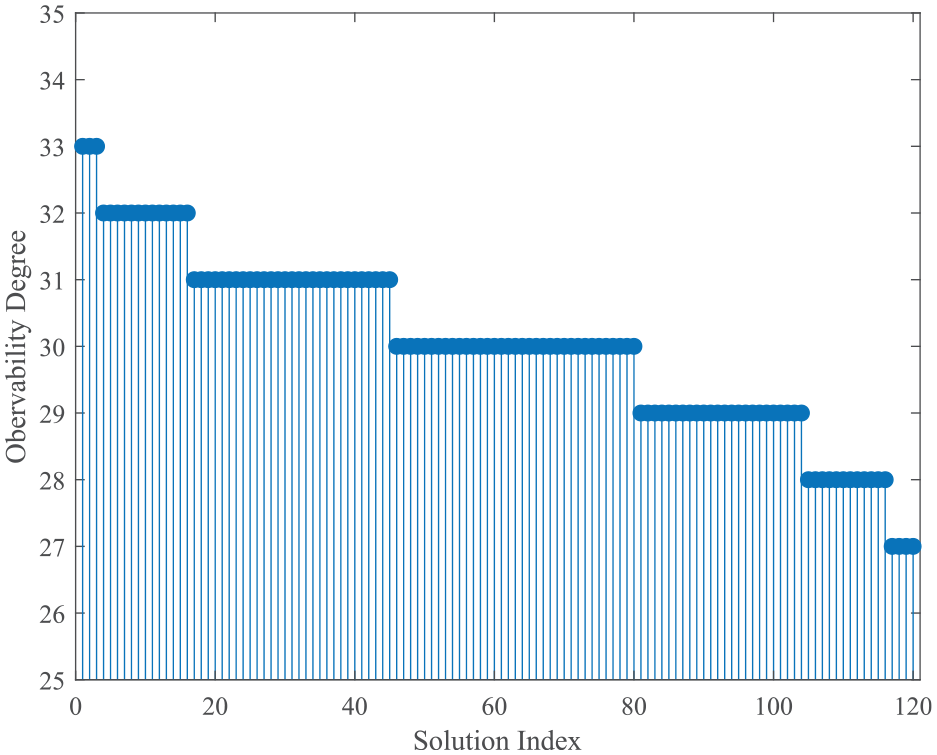
Observability degree of IEEE 34-node system.
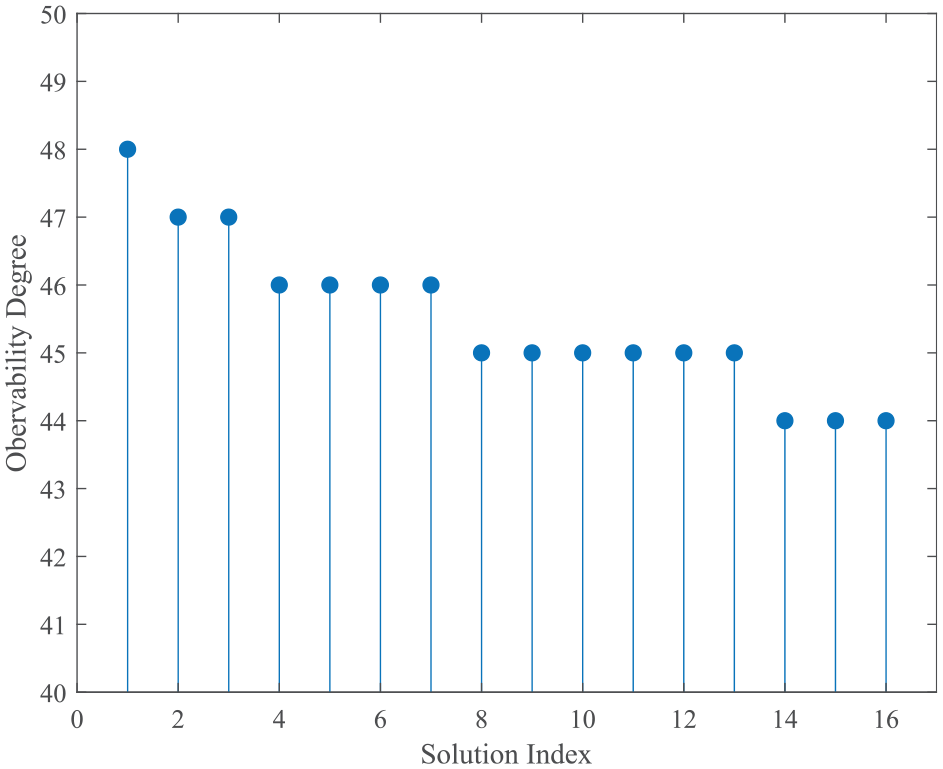
Observability degree of IEEE 69-node system.
Figure 6 showcases a real-world distribution feeder network located in Jiangsu Province, China. This particular feeder network consists of 31 nodes. To determine the optimal PMU placement, we employ our proposed approach and consider two different cases.
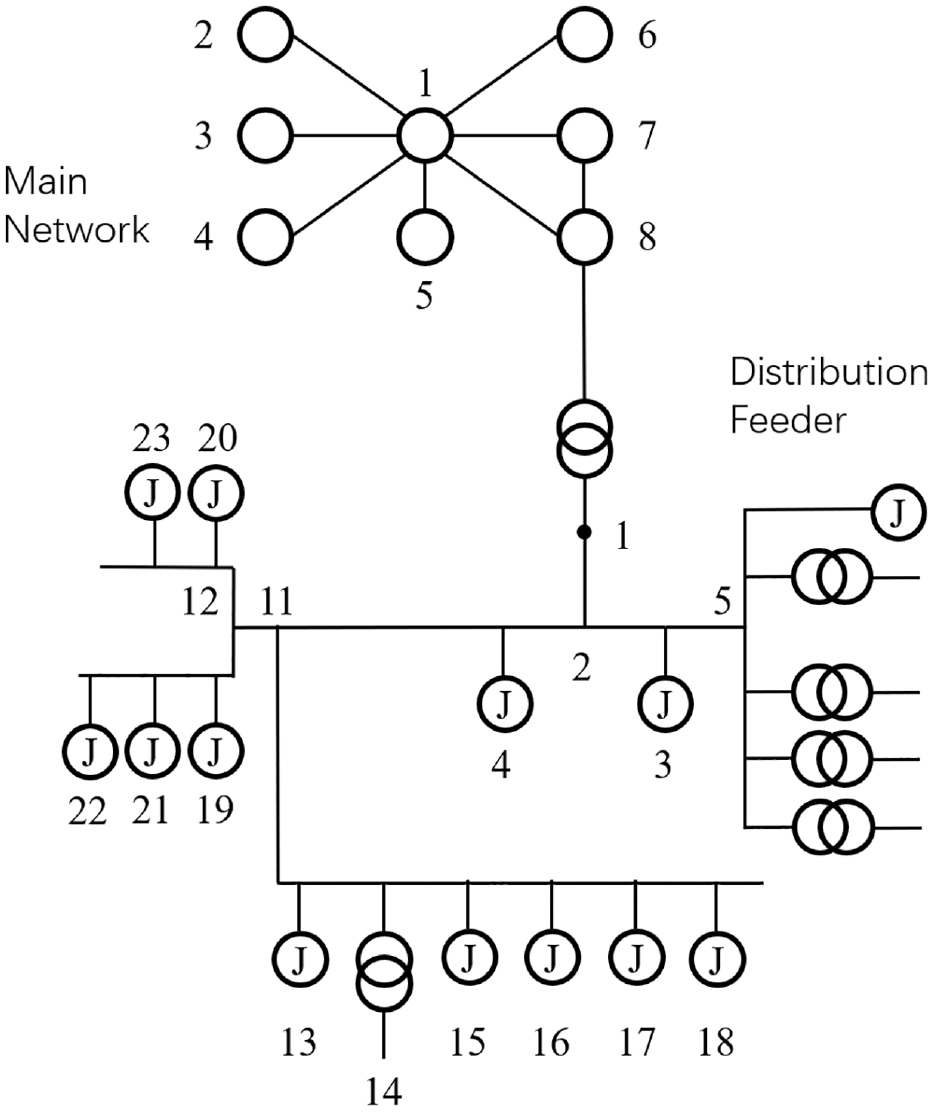
A real-world distribution feeder in Jiangsu Province, China.
In Case 1, there is a limitation on the number of PMUs that can be installed. The objective in this case is to minimize the number of PMUs while ensuring full observability of the entire network.
In Case 2, we introduce additional constraints on the number of PMUs. Specifically, the number of PMUs cannot exceed three. In this scenario, the objective is to maximize network observability while taking into account budget and space constraints.
By analyzing these two cases, we can determine the most efficient and effective PMU placement strategy for the real-world distribution feeder network in Jiangsu Province, China. Table 6 displays the results obtained from the proposed model for the real-world distribution feeder network in Jiangsu Province, China. In the first row of the table, we observe that eight PMUs are required to achieve full observability for all 23 nodes in the network. After a single PMU contingency, there are, on average, 20 observable nodes remaining.
Results for a real-world distribution feeder, Jiangsu Province, China.

However, in the case where the number of PMUs is restricted to three, the second row of the table shows that the number of observable nodes decreases to 11. This means that, on average, 11 nodes can still be observed even with the limitation on PMU numbers. Furthermore, in the event of a single PMU contingency, the average number of observable nodes decreases to seven. This indicates that there is a loss of observability for four nodes on average when faced with a contingency.
These results demonstrate the trade-off between the number of PMUs installed and the observability of the distribution feeder network. By considering the limitations on PMU numbers, we can still achieve a certain level of observability while optimizing the utilization of resources.
In the next phase of our case study, we implemented a two-stage approach. The results obtained from this approach are presented in Table 7.
16 Optimal solutions in the first stage of Jiangsu 23-node system simulation.
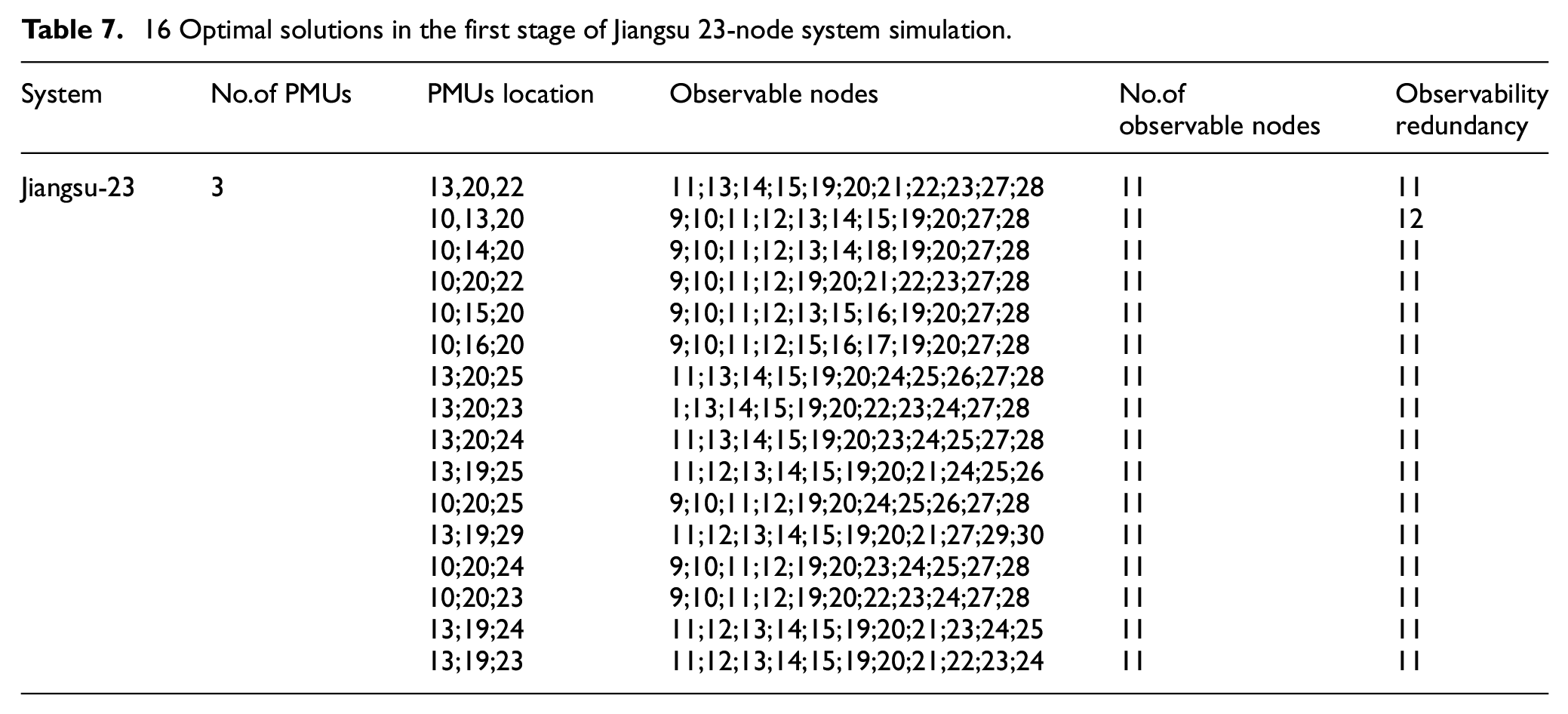
From the table, we can observe that there are 16 optimal solutions, all of which have the ability to observe 11 nodes in the distribution feeder network. However, it is important to note that these 16 solutions also exhibit observability redundancy. This means that certain nodes can be equipped with PMUs to enhance observability, even though the minimum requirement for observability is already met.
Specifically, we find that there is an observability redundancy of 12 for the nodes 10, 13, and 20. This indicates that installing a PMU at any of these three nodes would provide additional observability beyond the minimum requirement of 11 nodes.
These results highlight the flexibility and potential for redundancy in the placement of PMUs within the distribution feeder network. By strategically selecting the nodes for PMU installation, we can enhance the overall observability and ensure robust operation of the network.
Conclusion
This work presents a two-stage OPP approach to addressing solution multiplicity issues. The zero injection neighborhood, consisting of one or more zero injection nodes and their adjacent nodes, is employed in the approach. This work presents an algorithm to search zero-injection neighborhoods. The two-stage OPP model aims to select the most appropriate deployment scheme among multiple optimal solutions. Simulation results with IEEE test feeders and a real-world feeder demonstrate the effectiveness of the proposed model. The case studies show that the proposed algorithm can effectively search for zero-injection neighborhoods. The two-stage approach can identify the best deployment scheme among multiple combinations.
However, the work does not consider the impacts of other advanced measurement infrastructures (AMIs). Although other AMIs may not provide synchronized data, they are still valuable for state monitoring. In the future, we plan to explore approaches to integrate PMUs with other AMIs. Another limitation of the two-stage approach is that it can only give one PMU deployment scheme.
Footnotes
Declaration of conflicting interests
The author(s) declared no potential conflicts of interest with respect to the research, authorship, and/or publication of this article.
Funding
The author(s) disclosed receipt of the following financial support for the research, authorship, and/or publication of this article: This work is supported by science and technology projects of State Grid Jiangsu Electric Power Co., Ltd. under project number J2022098.

Data availability statement
Data sharing not applicable to this article as no datasets were generated or analyzed during the current study.