



Abstract
Given the importance of promoting a greener and more sustainable future, it is crucial to promptly tackle and improve the issues surrounding carbon emissions and inefficiency linked to traditional energy sources. This study presents a new optimization method for PV systems. It combines an IGWO Algorithm with PID-type SMC to enhance the effectiveness of MPPT. Using IGWO, the optimal MPP voltage is determined even in the face of changing environmental conditions. Afterwards, the PID-type SMC adjusts the actual output voltage of the Boost based on the expected voltage to generate the required duty cycle. The integrated approach considers the natural fluctuations in PV systems, where changes in the environment can greatly affect the maximum power point. An in-depth evaluation was conducted using simulation software based on MATLAB, and a practical testing platform was built accordingly. The simulation and experimental results in real-world scenarios show that the new MPPT strategy has excellent overall performance and can quickly determine and track the voltage value for MPP compared to established algorithms. This study lays the groundwork for applying IGWO and new SMC control theories in the field of renewable energy generation. It also contributes to the development of MPPT technology, considering the challenges posed by the controlled environment.
Introduction
Continual advancements in PV cell designs and materials have led to improved affordability, adaptability, and efficiency of solar panels in various climates and locations.1–4 The decentralized nature of solar energy, along with advancements in battery storage and grid integration, creates new and exciting possibilities for energy management and distribution. MPPT technology maximizes the power output of solar installations, increasing their productivity and effectiveness. Improving efficiency on a smaller scale can significantly increase energy production and financial benefits for large solar arrays. 5 Solar panels, known for their sustainable nature, can be affected by changes in temperature and sunlight intensity, which can impact their overall performance and efficiency. MPPT technology effectively addresses this concern by regulating the photovoltaic system to its optimal power point, thereby optimizing panel energy under various conditions. 6 Therefore, MPPT techniques are essential for PV systems and have sparked significant academic and industrial attention.
The research and development of MPPT techniques are closely linked to the progress of PV technology. By maintaining a steady voltage, the CV method ensures that a PV module stays close to its MPP.7,8 However, the method’s lack of flexibility in adjusting to changes in temperature or sunlight intensity is a result of its reliance on fixed voltage ratios.9–11 The P&O method involves adjusting the operating voltage of a PV system in a regular and organized way, while also keeping track of and recording the resulting power output.12,13 However, unpredictable changes in temperature or sunlight intensity can significantly impact the maximum power output, leading to a decrease in overall power generation when using the P&O method.14–16 The use of MPPT in PV systems through INC is a significant advancement in solar optimization. 12 By continuously comparing incremental conductance and instantaneous conductance, INC technology reliably and efficiently controls the operating point of the PV system to optimize power output. 17 However, the INC method utilizes circuits and algorithms that are more intricate. The increased complexity results in higher costs and requires a larger team with specific knowledge in system configuration and maintenance. 18
Implementing intelligent swarm optimization algorithms that take inspiration from social species such as birds, fish, and invertebrates has proven effective in tackling complex optimization problems, including MPPT for PV systems.19–22 Cluster intelligence algorithms for MPPT control offer significant advantages in terms of adaptability and resilience.23–25 Through the application of cluster intelligence, various algorithms such as PSO and ACO have been developed. 26 Even though the new swarm intelligence algorithm recognizes the global maximum, it does so at a slower convergence rate. 27 Therefore, it is crucial to prioritize improving the convergence speed of algorithms while ensuring their accuracy and stability. 28 Exploring ways to enhance computational methods for reduced power consumption and processing time has always been an active field of research. Reference 32 developed a powerful controller using a grasshopper optimization algorithm. This controller reduces the reliance on the exact model, but there is still room for further optimization of the control strategy in extreme conditions. In that year, Falehi also suggested an optimal improved SMC strategy for DFIG wind turbines to enhance the MPPT and FRT capabilities. This showed that it is possible to improve control performance by integrating optimization objectives, even though there is a challenge of long optimization time. 33 Soon after, In addition, to successfully implement MPPT in the field, it is crucial to effectively integrate these algorithms with the PV system’s topology and energy management system. This requires a thorough analysis. 29
Furthermore, cutting-edge control techniques such as SMC and MFAC are revolutionizing the management of PV systems.30,31 MFAC operates without the need for precise quantitative system modeling, unlike traditional control approaches. Nevertheless, in the absence of a comprehensive system model, the controller’s ability to predict system behavior is restricted, potentially resulting in less-than-optimal control decisions. 32 In contrast to traditional control methods that rely on precise simulations of system dynamics, SMC can maintain functionality even in the presence of external disturbances and changes in dynamic system parameters. 33 Reference 34 enhanced the system’s robustness by creating a highly robust fractional-order super twisted sliding-mode control scheme. This scheme aimed to improve the performance of the wind turbine in a dynamic voltage restorer, although it did come with a higher computational complexity. They proposed a strong fractional-order super twisted sliding mode control method to regulate a hybrid energy storage system, which reduces computational burden and improves control accuracy, although it relies on an accurate system model. 35 This series of studies showcases the advancements in sliding mode control techniques in enhancing the stability and efficiency of energy systems. Im-plementing adaptive sliding mode controllers can greatly enhance the MPPT efficacy of PV systems, even when the MPP fluctuates due to changes in solar irradiance and temperature. In addition, inadequate design of the sliding surface can lead to issues such as tracking problems, chattering, and system instability. Thus, it is crucial to carefully design the sliding surface to precisely represent the dynamic characteristics of the PV system and achieve rapid and consistent convergence to the maximum power point.
This study introduces a novel MPPT strategy that combines PID-Type SMC with IGWO to enhance the energy conversion efficiency of PV systems in the face of changing environmental conditions. Here are the main contributions of the article:
(1) The article employs advanced techniques to calculate the voltage of MPP accurately and efficiently, taking into consideration environmental changes like illumination. These techniques involve dynamic weighting principles and nonlinear convergence factors, resulting in precise calculations.
(2) A novel approach was developed to enhance voltage regulation in PV systems by combining the control benefits of PID and SMC. This PID-type SMC solution offers both robustness and adaptability. By incorporating PID-type SMC, the system’s adaptability and control stability are significantly improved, even in the presence of fluctuating conditions.
(3) The article discusses a PID-type SMC that can directly control the duty cycle. This feature enhances the accuracy and flexibility of the controller, allowing it to effectively respond to changing conditions.
Additionally, the article provides a more detailed explanation of how the subsequent sections are organized. In Section “PV Systems and MPPT,” the power generation principle of the PV system is discussed, along with the concept of MPPT technology. Section “MPPT strategy based on IGWO” outlines a method for finding the MPP voltage using an IGWO-based approach. The duty cycle is regulated by implementing a PID-type SMC, as explained in Section “Voltage tracking based on PID-type SMC.” In Section “Testing and analysis,” we evaluated and assessed the effectiveness of the devised MPPT strategy. Section “Conclusion” is the final part of the entire article.
PV systems and MPPT
PV power generation systems
To illustrate how PV cells work, we commonly use the equivalent circuit model of a solar cell, which is crucial for PV power generation systems.
Basic principles of PV cells
As shown in Figure 1, the PV cell’s equivalent circuit includes a diode, a series resistance, a current source, and a shunt resistance. The single-diode model is widely used to represent PV cells. All the explanation of the equations are listed in Notations.
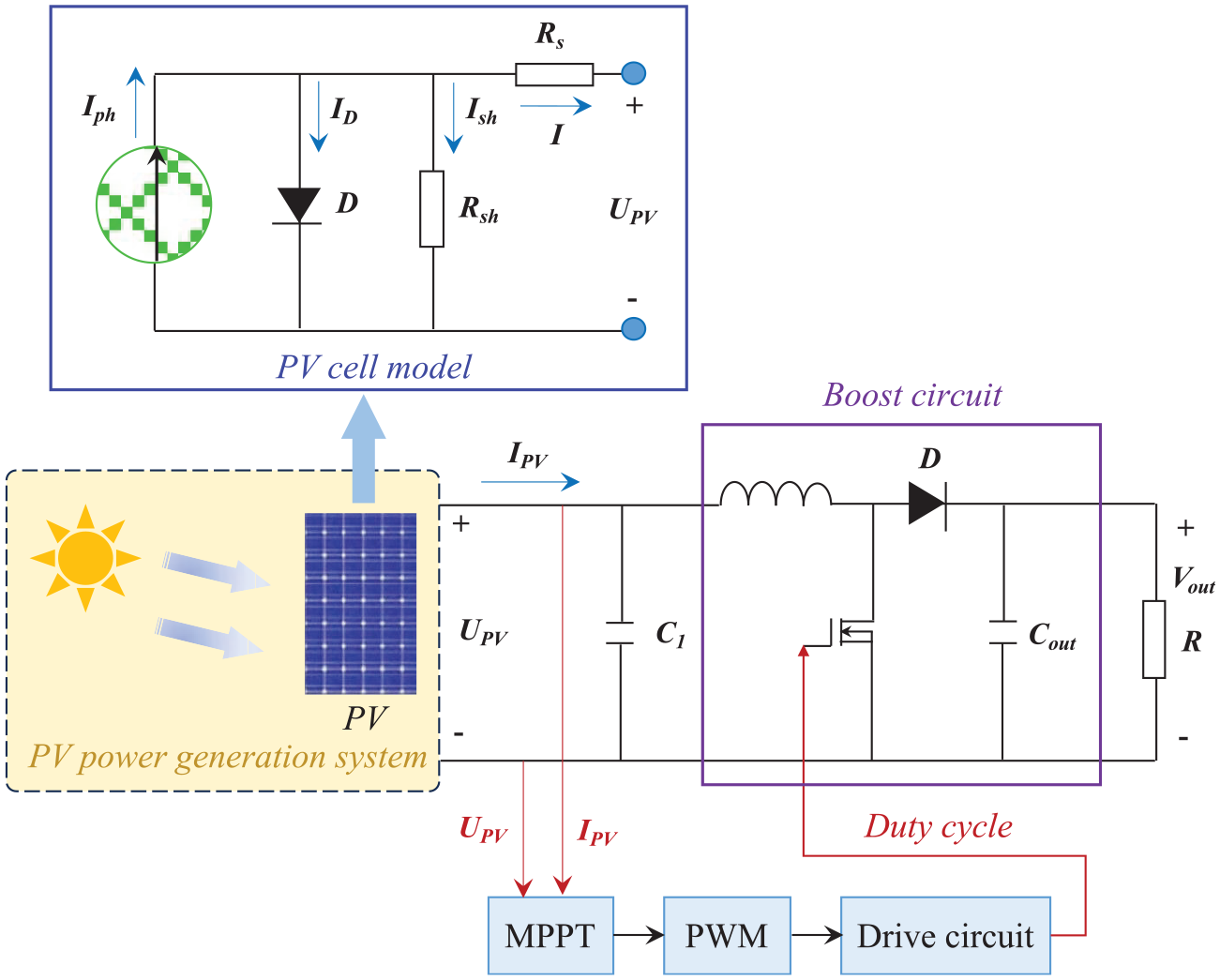
Structure of PV power generation system.
The output current

The diode current

The current through the shunt resistance

The behavior of a PV cell under varying irradiance and temperature conditions can be modeled by combining these equations. This capability is critical in the development and enhancement of PV power generation systems and their MPPT control technology.
Composition and efficiency of PV systems
The overall efficiency of a PV system is determined by the efficiency of the individual components and can be represented as:

The efficiency of PV panels can be calculated as:

The inverter’s efficiency is typically given by the manufacturer and is a measure of how effectively it converts DC to AC. For systems with batteries, the battery efficiency and charge controller efficiency must also be considered:

Output characteristics of PV cells
The output characteristics of PV batteries are usually described by current voltage and power voltage curves. The output current of a PV cell can be modeled using the equation of an ideal diode along with factors representing real world conditions. The equation is:

The power output of the PV cell is given by:

The MPP is located where the PV curve reaches its peak. At this point, the product of current and voltage is maximum, indicating the most efficient operation of the cell.
Boost circuits
Boost converters are a category of DC/DC converters that reduce the current while increasing (boost) the voltage from the input (PV panels) to the output. To mathematically model a PV system with a boost circuit, equations governing the output of the PV cells and the operation of the boost converter are required. The way a boost converter functions can be delineated by considering its duty cycle and the correlation between its input and output voltages.
When the switch is closed (MOSFET or IGBT is conducting), the inductor L begins to store energy, and the circuit equation can be expressed as:

When the switch is disconnected, the energy stored in the inductor is released to the output capacitor and load through the diode. The circuit equation is:

The duty cycle

The power efficiency of the boost converter is also an important factor, which can be defined as the ratio of the output power to the input power. Under optimal circumstances devoid of losses, the efficiency can approach 100%; however, in real-world situations, one must account for resistance, leakage, and switching losses. The current output from the boost converter, assuming ideal efficiency, is related to the input current as follows:

Disregarding losses, this relationship is regulated by the principle of energy conservation, which states that the output power is approximately equivalent to the input power (voltage times current). In a PV system with a boost converter, the input voltage and current are determined by the operating point of the PV panels, which is influenced by factors such as solar irradiance, temperature, and the characteristics of the PV cells.
The dynamic equation of the Boost circuit can be described as follows:



Concept and principles of MPPT
MPPT in PV power generation pertains to the operational principles and concept of maximizing the efficiency of the PV system at a specific moment, referred to as the MPP. At the MPP, the product of the voltage and current of the solar panel is at its maximum. MPPT method is implemented in solar inverters and charge controllers to obtain the utmost power from the PV array.
The MPP is where

The commonly used MPPT technologies are as follows:
(1) CV: The CV method is the earliest MPPT control method. This method is designed based on the output voltage data of PV batteries. By designing a constant voltage, the working point of the PV module is maintained near the MPP. In many environments, the relationship between the MPP voltage and the corresponding open circuit voltage of PV components remains consistent. Due to its inherent simplicity, this method is very attractive for small-scale PV applications.
(2) P&O: This technique involves perturbing the operating point and subsequently observing the resulting power variation. The perturbation continues in the same direction as power increases; conversely, if power decreases, the direction is reversed.
(3) Incremental conductance: This method calculates the derivative of power with respect to voltage (
Impact of weather factors on MPPT
The operational efficiency of MPPT in PV systems is notably compromised by meteorological conditions, specifically temperature and solar irradiance. Comprehending their ramifications is of the utmost importance to optimize the efficacy of MPPT algorithms and guarantee the proper functioning of PV systems amidst diverse environmental circumstances.
The two main meteorological factors that affect the MPPT efficiency of PV systems are as follows:
(1) Solar irradiance: This refers to the power per unit area received from the sun in the form of electromagnetic radiation. Higher solar irradiance leads to an increase in the photocurrent of the PV cell.
(2) Temperature: The temperature of the PV cells influences their efficiency. An increase in temperature typically reduces the bandgap of the semiconductor material, thereby lowering the open circuit voltage.
The photocurrent is proportional to the solar irradiance and can be modeled as:

The dark saturation current, which influences the IV characteristics of the PV cell, varies with temperature as follows:

The open circuit voltage is also affected by temperature and can be estimated using the equation:

The variability in meteorological conditions induces a shift in the MPP of the PV cell, as indicated by the dependence on temperature and irradiance. To maximize energy harvest and ensure that the PV system operates near the new MPP, MPPT algorithms must consistently adapt to these changes.
MPPT strategy based on IGWO
The GWO algorithm is a metaheuristic optimization technique that draws inspiration from the natural foraging behavior and social hierarchy of grey wolves. Thanks to its implementation, a wide range of optimization issues have been successfully resolved, such as PV power generation for MPPT.
Basic principles of GWO algorithm
The principles underlying the GWO algorithm are derived from the following aspects of grey wolf behavior:
(1) Social structure hierarchy: In addition to a strict social hierarchy, grey wolves live in packs. This hierarchy is simulated by the GWO algorithm, which divides wolves into four distinct categories.
Alpha (
Beta (
Delta (
Omega (
(2) Encircling prey: Throughout the chase, the wolves encircle their prey, a process simulated in GWO as the wolves’ position updates. These are the position update equations:
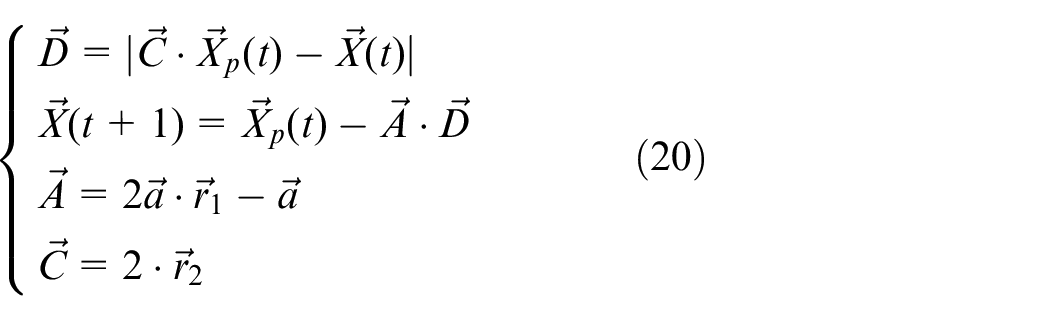
(3) Leading the pack are the top wolves, who steer the rest toward their target. The position update equations include variable coefficients to mimic the stages of exploration and exploitation, like the hunting behavior.
(4) The solution refinement process is demonstrated during the final stage of the search, where the value is decreased and the wolves are allowed to converge on the prey. In PV systems, the MPP is indicated by the location of the prey, while the positions of the wolves represent operating points, which are alternative terms for potential solutions. By iteratively adjusting the positions of the wolves, the algorithm aims to optimize the power output of the PV system and converge toward the MPP.
Improvements of GWO
The article modifies the algorithm’s structure to improve the convergence performance and optimization accuracy of GWO, resulting in more precise voltage values corresponding to MPP. The proposed improvements to GWO include the following two components:
Introduction of nonlinear convergence factors and dynamic weighting rules
By incorporating dynamic weighting rules and nonlinear convergence factors, the local search and global optimization functionalities of GWO can be significantly improved. The goal of these improvements is to optimize the balance between exploring and exploiting, which can result in faster convergence and better solutions.
(1) Nonlinear convergence factors
In standard GWO, the coefficient vector

The nonlinear decline facilitates a more thorough investigation during the initial iterations and a more intensive exploitation during the subsequent phases.
(2) Dynamic weighting rules
Dynamic weighting is accomplished through the modification of the influence exerted by the alpha, beta, and delta wolves when directing the omega wolves. This objective can be achieved by employing weighting coefficients that differ between iterations. One can ascertain the present whereabouts of an omega wolf.

To enhance diversity during subsequent phases while prioritizing the most effective solutions, it is possible to adjust these weights based on other pertinent criteria, such as the number of iterations.
Introduction of adaptive search mechanism and spiral search technique
With the integration of an adaptive search mechanism, the algorithm can effectively broaden its search range. At the same time, the article proposes that algorithms could make use of spiral search technology to help them avoid getting stuck in local optima. The procedure outlined above has the potential to greatly improve the effectiveness of the algorithm, especially when applied to PV systems that are optimized for MPPT.
(1) Adaptive search mechanism:
With the adaptive search mechanism in GWO, the search strategy can be adjusted in real-time to optimize the ongoing process. This can be accomplished by adjusting the equilibrium between exploration (which entails expanding the range of potential solutions being sought) and exploitation (which involves concentrating the search on the current optimal solutions being sought).
One approach to implement this is to modify the coefficient vectors

This modification increases the exploitation of the search in subsequent iterations while decreasing it to a more exploratory one in the beginning.
(2) Spiral Search Technique:
GWO is endowed with a novel behavior via the spiral search technique, which was motivated by the spiral motion observed in certain natural predators. Particularly effective for refining the solution in the final phases of the optimization procedure, this method may be utilized. Representing the position update via spiral search in the following manner:

Utilizing a spiral motion allows for a broader exploration of potential solutions in complex, multimodal settings commonly found in MPPT applications. Through the integration of an adaptive search mechanism and a spiral search technique, the performance of the GWO algorithm in MPPT applications for PV systems can be greatly improved.
The article uses the IGWO algorithm to determine the MMP when environmental factors change. The optimization objective function is to maximize the power function value. Therefore, using a single objective as the optimization objective function in this article can simplify the complexity of the problem compared to multi-objective optimization. A thorough assessment was carried out to analyze the effectiveness of the IGWO algorithm in MPPT for PV systems across various weather conditions. The analysis in Table 1 presents a comparison of the proposed algorithm with conventional MPPT methodologies such as PSO and ACO under different environmental conditions.
The comparative analysis of the proposed algorithm.
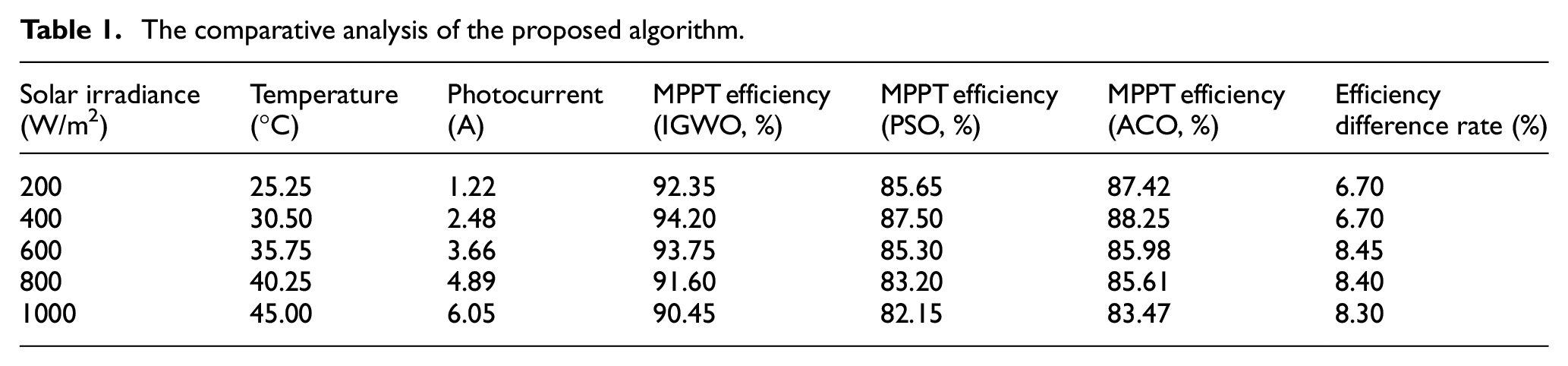
Based on Table 1, the proposed algorithm consistently outperforms conventional MPPT methods in terms of efficiency difference rate, showcasing its superior performance. The findings of this study highlight the significance of integrating adaptive and spiral search mechanisms into the IGWO framework to enhance its functionality for complex MPPT applications in photovoltaic systems.
Voltage tracking based on PID-type SMC
Control analysis
Combining PID control with SMC for voltage monitoring in PV systems brings together the benefits of both control strategies. Accurate control is achieved using easily modifiable parameters, while maintaining resilience to external disturbances and uncertainties is ensured by the model. The integration improves the system’s ability to monitor the MPP effectively and efficiently in different operating conditions.
PID controller
The PID controller calculates the control signal

The PID controller is highly versatile and can be applied to a variety of applications due to its simple architecture and easy implementation. This controller can achieve the desired control response by autonomously adjusting the proportional, integral, and differential coefficients.
SMC controller
SMC is a versatile control technique that can be implemented in various systems, such as PV power generation for voltage monitoring and MPPT. SMC demonstrates impressive efficacy in systems that are affected by external disturbances or uncertainties in the model, as it ensures compliance with the predetermined sliding surface despite these factors.
(1) Process of SMC:
The definition of a sliding surface, which is dependent on the states of the system, is a critical element of SMC. Ideally, the system’s states should remain on this surface, resulting in the intended dynamic behavior. The definition of the sliding surface S(x) for a given system is:

The purpose of the control law in SMC is to compel the system’s states to attain and remain on the sliding surface. Upon reaching the surface, the system demonstrates the intended dynamic features. The control law

Design of PID-type SMC
Control framework structure
The strategy depicted in Figure 2 combines SMC and PID control to achieve MPPT. The hybrid control strategy combines the robustness of SMC with the precise control capabilities of PID. Outline the organization of the control framework and the flow of signals within the designated system. The signal flow in this control system starts with the PV system, where the actual PV voltage
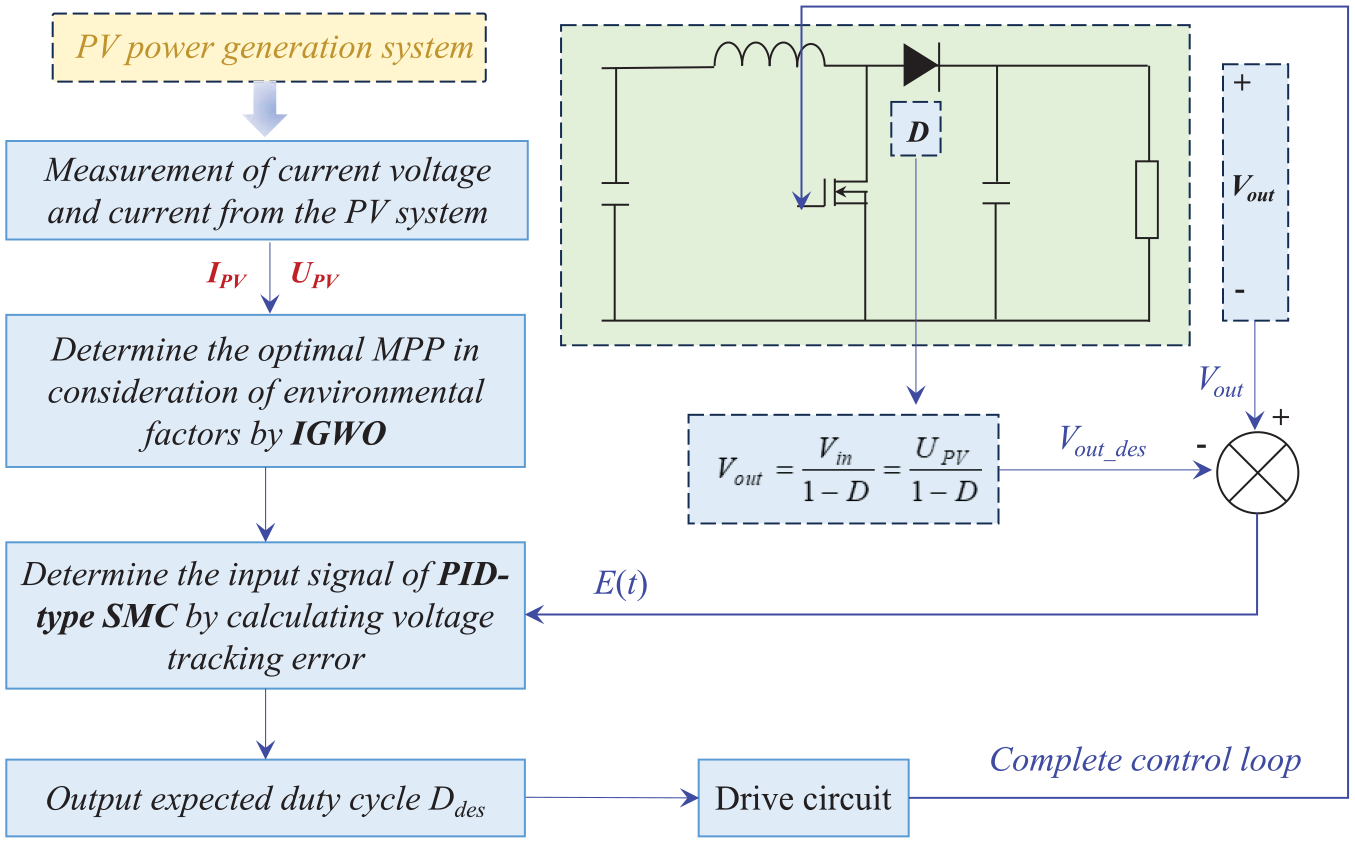
Control framework of PID-type SMC.
Theory of PID-type SMC
It is crucial to consider the inclusion of movable surfaces in SMC systems, as they directly affect the desired dynamic behavior of the system. Applying a PID control law to the sliding surface and transforming the PID outputs into additional state variables modifies the error dynamics.
According to the design concept of the article, the control quantity of PID-type SMC is the duty cycle D of the Boost circuit, which is U = D. The IGWO method is used to determine the MPP under changing weather conditions, and then the expected voltage Vout_des of the Boost circuit corresponding to the MPP is determined through mathematical transformation relationships. Collect the actual output voltage V out of the boost circuit of the photovoltaic system at the current moment, and calculate the difference e(t) between this voltage and the expected voltage as the input error signal of the PID-type SMC controller. Within each calculation step of the controller, corresponding expected voltage and actual output voltage will be generated. The actual value of the corresponding error signal will also be determined and used as the control input for PID-type SMC. Therefore, the control error of the controller can be expressed as:

The integration of a PID controller into a sliding surface formulation can be denoted as:


Therefore, according to equations (13) to (15) and (30), the differential of voltage tracking error can be further expressed as the following equation:

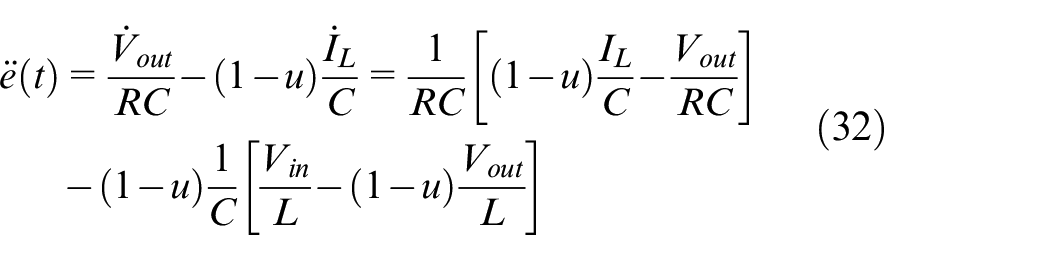
Based on the above analysis, the derivative of the designed sliding surface after time differentiation can be expressed as:
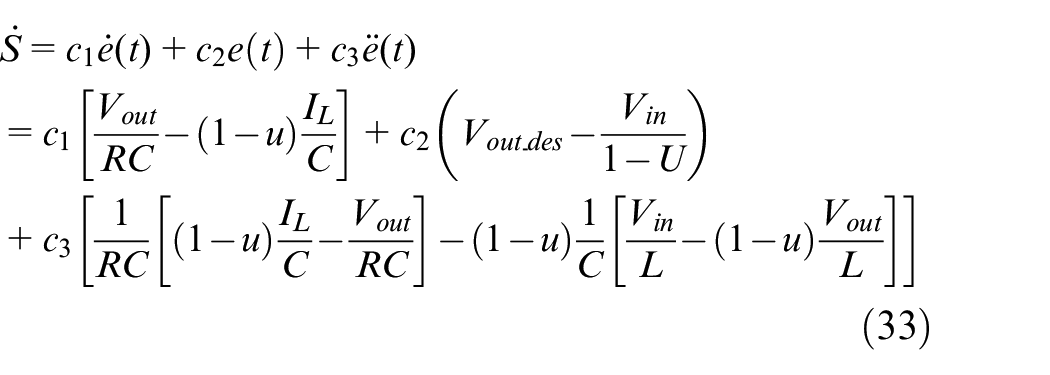
Adjusting the parameters of the reaching law allows for achieving the desired speed at which the system reaches the sliding surface. The convergence law selected in the article can be described as follows:

To improve the control law of PID-type SMC and minimize chattering, the article uses a more reasonable sat function instead of the sign function. The expression for the sat function is as follows:
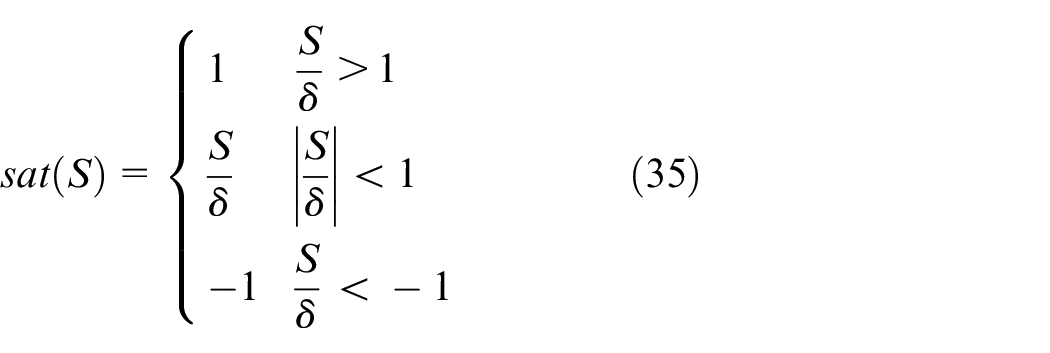
Therefore, based on the above analysis, the expression for the control output of PID-type SMC is:
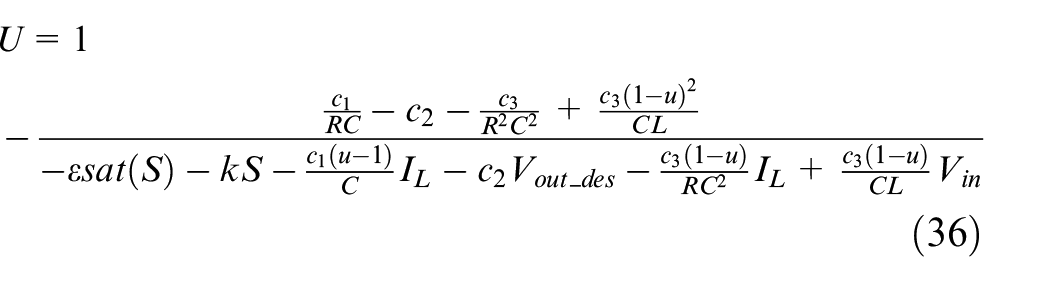
Proof of controller stability
Stability of a controller is of utmost importance in control theory. Establishing the stability of the PID-type SMC controller can be done by utilizing Lyapunov’s stability criterion. To demonstrate the stability of the designed PID-type SMC controller, the Lyapunov function V is defined as follows:

The derivative of the Lyapunov function with respect to time can be expressed as:

According to equations (34) and (38), the derivative of the Lyapunov function with respect to time can be further described as:

According to the assumption (
Building on this assumption, a comprehensive evaluation of various control methodologies has been conducted in Table 2, with a specific focus on PID, SMC, and PID-type SMC controllers used in PV systems. The assessment, conducted on a scale ranging from VERY LOW to VERY HIGH, indicates that while standard PID controllers are known for their simplicity (LOW complexity and applicability), they fall short in terms of precision (HIGH error in voltage tracking). SMC controllers at the performance-intermediate level offer a decent balance, but they could be more effective.
The evaluation of various control strategies.
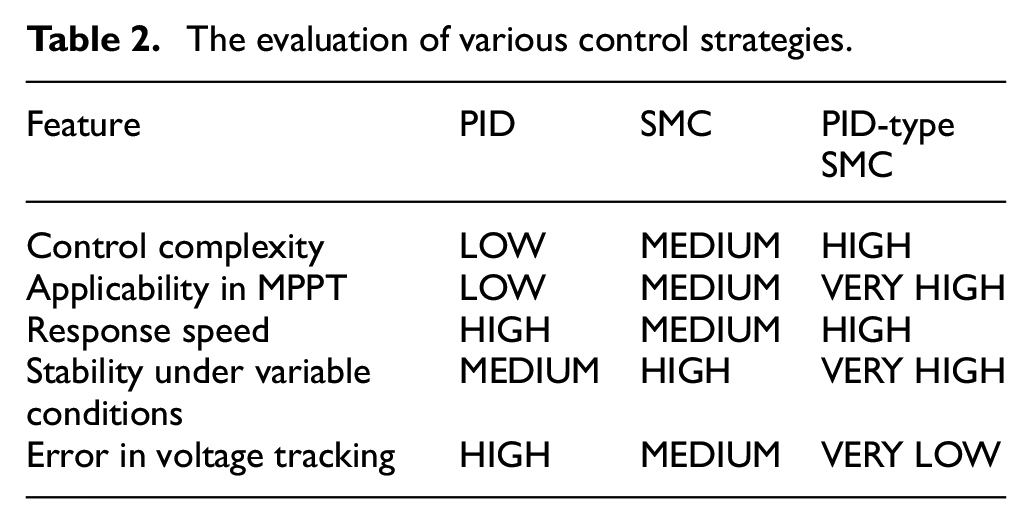
Based on Table 2, SMC controllers of the PID-type show improved performance by combining features from both PID and SMC methodologies. Not only are they highly complex, but they also demonstrate exceptional stability under varying conditions. This emphasizes the enhanced accuracy and flexibility of the PID-type SMC, demonstrating its crucial role in enhancing the effectiveness and reliability of PV systems in response to different environmental factors.
Testing and analysis
This section examines the PV system’s response to specific inputs and compares the results with the anticipated behavior, considering the physical characteristics of the PV cells and the MPPT algorithms. Testing scenarios are selected to reflect real-life conditions with light intensities at 600, 800, and 1000 W/m2, thereby examining the PID-type SMC’s tracking performance and stability under fluctuating light intensities, as shown in Figure 3.

Experimental platform and data acquisition equipment.
Comparison of different MPP voltage search strategies
To optimize PV system efficiency, the viability of integrating GWO into MPPT and the efficacy of enhancing GWO were evaluated. An analysis was conducted on the efficacy of GWO and IGWO in determining the voltage of MPP.
A comparative analysis of the fitness values of each algorithm that converges to MPP under identical conditions is depicted in Figure 4(a) and (b). For comparative analysis, the PSO algorithm is implemented. The algorithm’s real-time adaptability and precision with respect to the maximal power point are demonstrated by these results. The 500-iteration dynamic performance of three algorithms is illustrated in Figure 4(a). With the progression of the iterative procedure, the fitness of all three algorithms progressively improves until it ultimately stabilizes at a value that is moderately fluctuating in nature, mirroring the anticipated algorithmic exploration. In contrast to PSO and GWO, IGWO commences with more favorable fitness values, suggesting that it functions as a more efficacious early search technique. In contrast to alternative optimization algorithms, the Grey Wolf algorithm exhibits a comparatively accelerated optimization process due to its initial step of response generation, followed by answer comparison and sorting to produce the optimal solution. As shown in Figure 4(a), the convergence rate of GWO and IGWO is consequently greater than that of PSO.
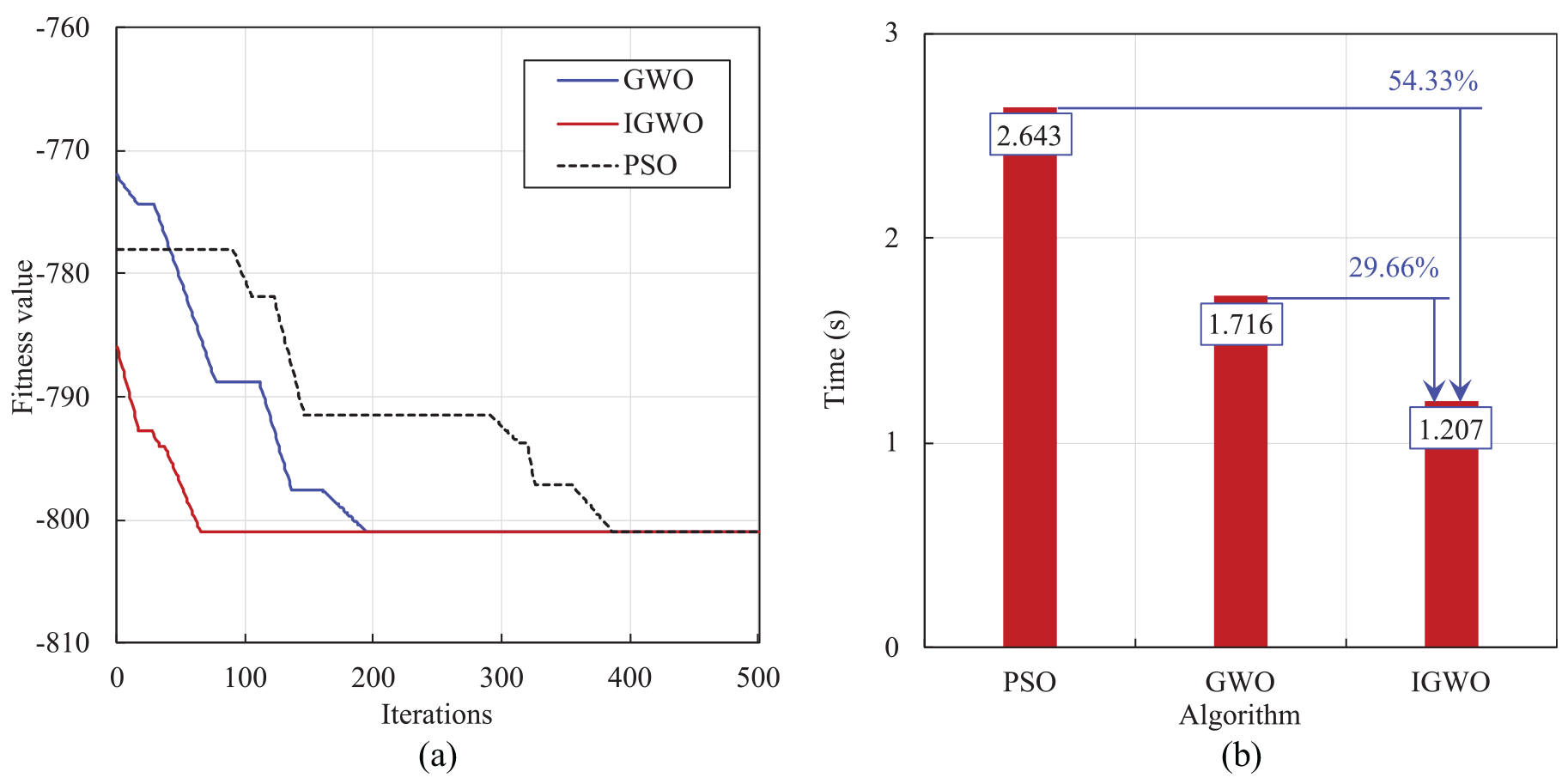
Comparison of different algorithms: (a) Comparison of fitness values of different algorithms and (b) The time required for different algorithms to reach stability.
Therefore, Figure 4(a) highlights the effectiveness and exceptional performance of the IGWO method, while also demonstrating that the GWO and PSO algorithms, although still viable approaches, are more prone to modifications and converge at a slower rate when optimizing and determining MPP. Additionally, to improve the accuracy of the results and determine the time it takes for different algorithms to reach a stable state, the study conducted 30 optimization calculations. The average time required by each algorithm to achieve stability is shown in Figure 4(b). Figure 4(b) clearly shows that the IGWO achieves stability in the shortest time, specifically 1.207 s, whereas the PSO takes the longest time to reach a stable state. On the other hand, the proposed improvement technique significantly reduces the average time required for IGWO to reach a stable state, compared to GWO, by 29.66%. Therefore, the improved stability and efficiency demonstrated by the IGWO make it a highly attractive choice for power point tracking monitoring in PV systems.
The power monitoring capabilities of various MPPT technologies – PSO, IGWO, CV, IVC, and P&O – over time and at a uniform light intensity of 1000 W/m2 are depicted in Figure 5. Based on the results presented, it can be concluded that the IGWO method offers notable benefits in terms of rapidly attaining and sustaining power output in proximity to the MPP, which is estimated to be around 800 W. The rapid convergence of IGWO within a limited number of iterations, as opposed to other methods, indicates that its algorithm framework has impressive performance and can easily handle the optimization calculations required for optimal power. The PSO method has shown great potential for convergence to MPP, coming in second only to IGWO. IGWO, on the other hand, demonstrates a much faster optimization speed compared to PSO. In addition, the power curves of the CV, INC, and P&O methods demonstrate a significant decrease in performance when compared to the PSO and IWGO methods proposed in the article. Although various MPPT methods can estimate the MPP, the IGWO proposed in the article achieves this process the fastest, which is crucial for improving energy utilization efficiency. On the other hand, the increasing size of the oscillation curve’s amplitude suggests that the method is becoming less accurate and stable over time, especially when exposed to high light intensity for extended periods. The decreased fluctuations of the curves in Figure 5 indicate that IGWO and PSO offer practical benefits in PV MPPT control. In short, the results shown in Figure 5 demonstrate the impressive ability of IGWO to quickly reach the maximum power point (MPP) and maintain a consistent power output close to the optimal level. This makes it a valuable tool for enhancing the energy collection efficiency of PV systems.
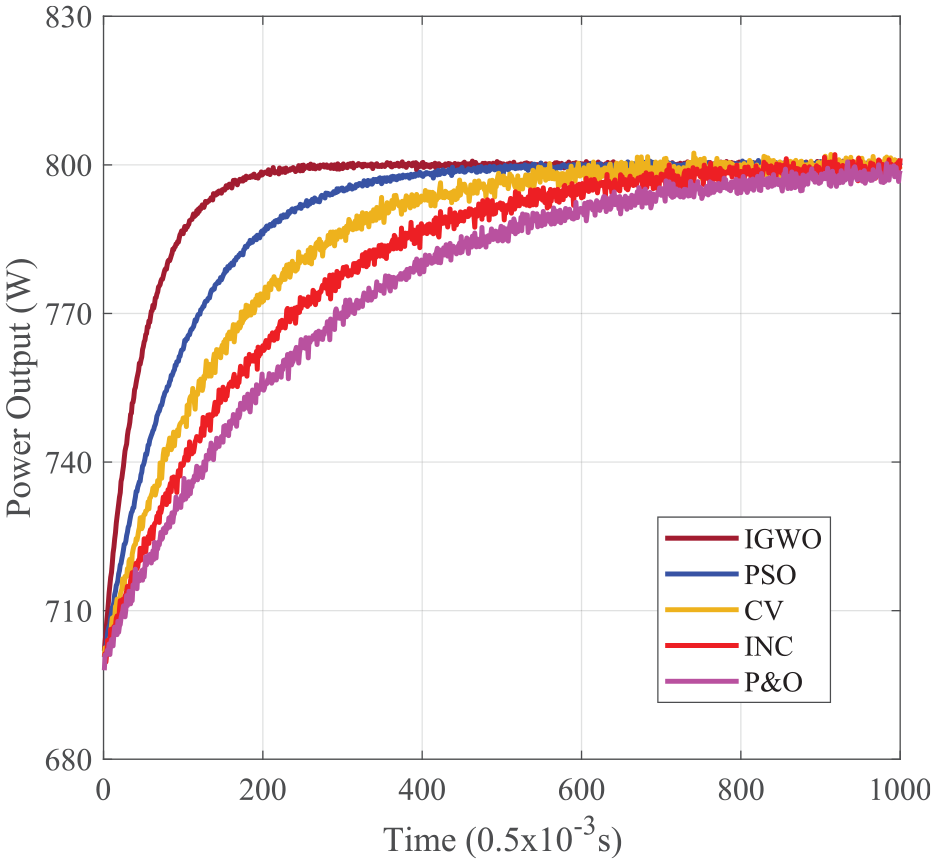
Comparison of power curves at 1000 W/m2 light intensity.
Performance analysis of PID type SMC
The analysis centered on assessing the effectiveness of the PID-type SMC discussed in the article in monitoring the expected voltage to achieve MPPT. In addition, to enhance the credibility of the findings, comparative analyses were performed using the control results of PID and SMC.
Figure 6 shows a comparison of the control results obtained from the designed PID-type SMC, PID, and SMC. The figure provides a detailed explanation of the stability and response characteristics of these systems when exposed to consistent solar irradiance. The power value associated with MPP during testing is 800 W. Additionally, assess the monitoring capabilities of the three approaches mentioned above. There is a shift in the reference voltage value between 0.05 s and 800 W. The power decreases from 800 W to 0 within a time of 0.85 s. The results shown in Figure 6(a) demonstrate that all three methods can accurately calculate the expected power.
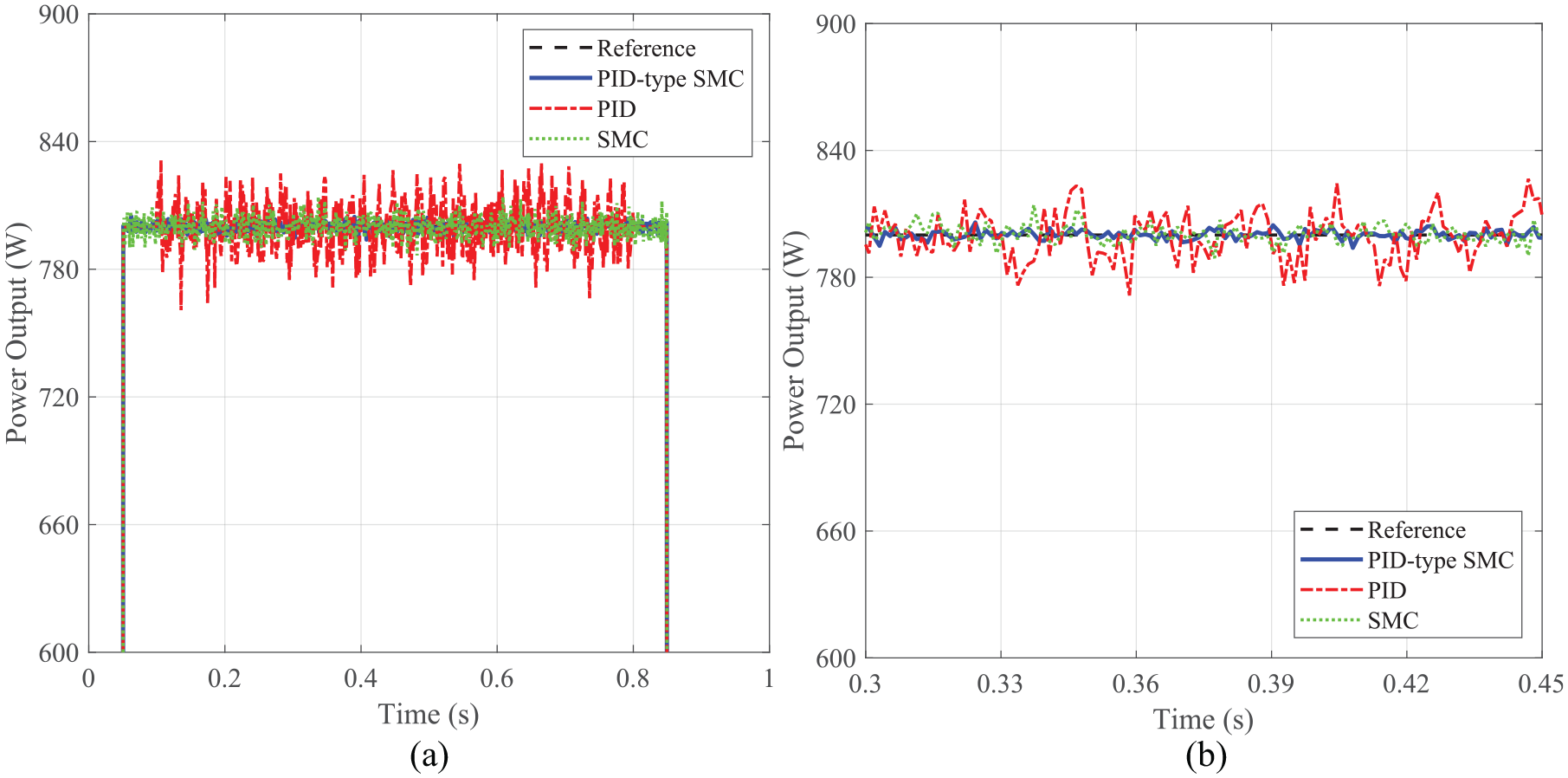
Comparison of MPPT methods performance: (a) comparison of different voltage tracking methods and (b) partial enlarged view of (a).
However, there are significant differences in the speed and stability of tracking among the three algorithms due to variations in their underlying structures. The significant fluctuation in PID’s power monitoring suggests that this approach is highly unreliable. However, the SMC method has successfully addressed this issue by significantly reducing the oscillation amplitude of the curve. Therefore, the SMC method is a better choice for the MPPT strategy of PVs compared to the PID method. On the other hand, PID-type SMC has shown remarkable tracking capabilities.
On the other hand, the oscillation amplitude of the corresponding trajectory for a PID-type SMC is extremely small, as depicted in Figure 6(b), which demonstrates remarkable stability during the tracking process. The outcomes mentioned above confirm the effectiveness and practicality of the PID-type SMC proposed in the article. This approach could be useful for implementing MPPT strategies.
Figure 6 demonstrates the differences in monitoring performance and output stability among different methods, confirming the exceptional performance of the method presented in the article.
When it comes to the operational environment of photovoltaic power generation systems, factors such as shading, sun position, and climatic conditions play a crucial role in determining power generation. Ultimately, these effects can be described as fluctuations in the brightness of light. To simulate the impact of variable factors such as environmental and meteorological fluctuations, the algorithm’s monitoring performance is examined in Figure 7. Three testing scenarios were chosen for the article, each involving a light intensity of 600, 800, and 1000 W/m2. The proposed PID-type SMC exhibits favorable tracking performance and stability, as evidenced by the minimal oscillation of the curves (shown in Figure 7). Although both PID and SMC are capable of monitoring MPP, their efficacy is notably distinct from that of PID-type SMC. In addition, as shown in Figure 7(b), the adaptability of PID-type SMC is enhanced as the light intensity varies. Applying the PID-type SMC suggested in the article to the MPPT strategy yields superior overall performance.
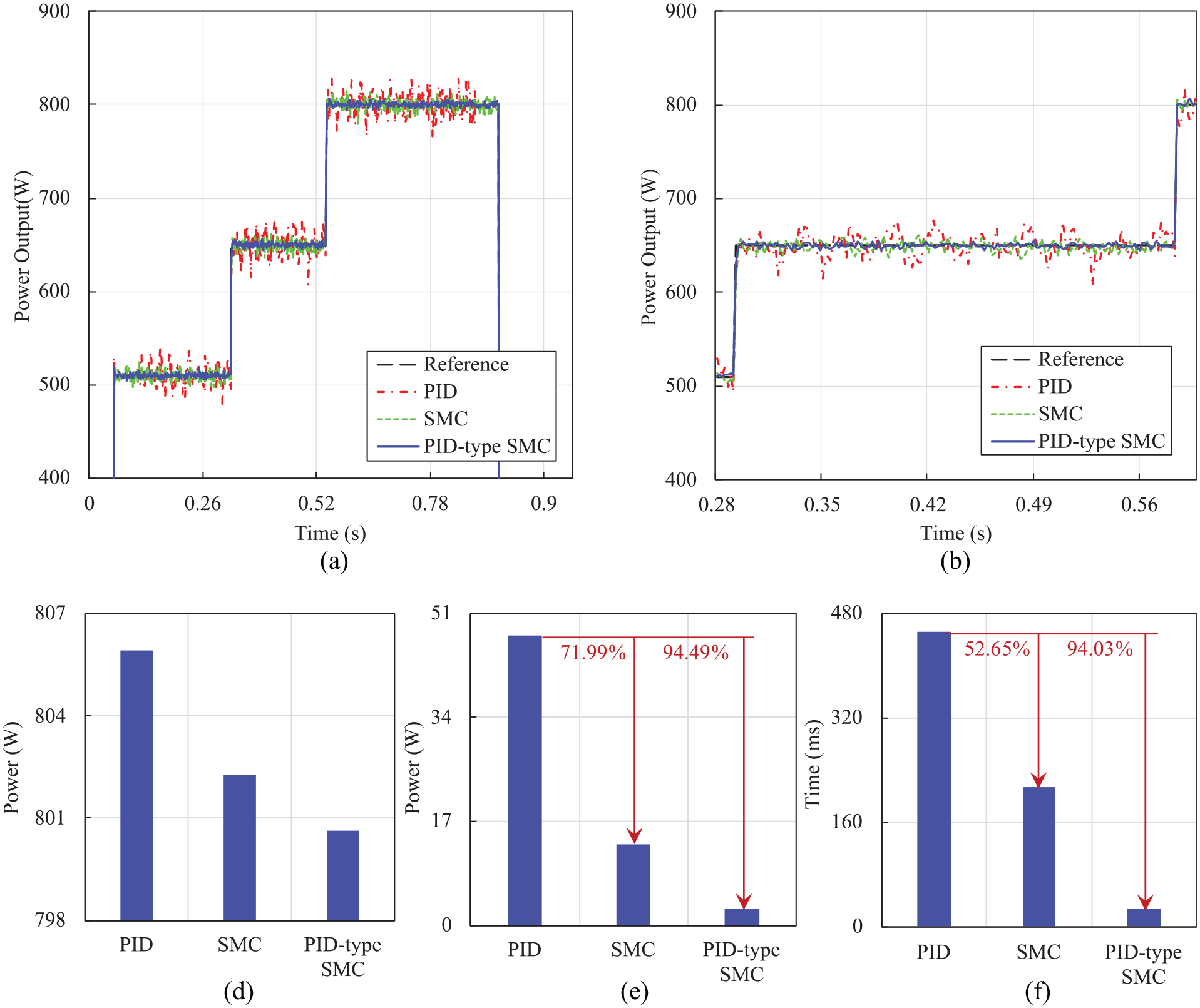
Comparison of algorithm performance under changing lighting conditions: (a) tracking performance under changing lighting conditions, (b) partial enlarged view of (a), (c) the average actual output power, (d) maximum error between actual output power and reference power, and (e) The time required for the controller to start and reach MPP.
Furthermore, to assess the tracking performance of each method, the average actual output power of three approaches under a light intensity of 1000 W/m2 is illustrated in Figure 7(c). The average output result of PID-type SMC is in closest proximity to the reference power (800 W), as shown in Figure 7(c). This indicates that this approach demonstrates the utmost level of stability and monitoring performance. Figure 7(d) shows the maximum error between the tracking result curves of the three methods and the reference curve. The PID type SMC significantly reduces the maximal tracking error by 94.49% compared to PID, as demonstrated in Figure 7(d). Furthermore, this finding indicates that SMC is a superior choice for the PV MPPT strategy when compared to PID, as the tracking error of SMC has been significantly reduced by 71.99%. The findings mentioned above are additionally backed by Figure 7(e). Figure 7(e) illustrates the time it takes for each method to reach a stable state from the beginning, and it shows that PID type SMC has the most significant advantage. As a result, Figure 8 can be used as a valuable data reference for designing and implementing different MPPT strategies. The choice of strategies can then be made based on specific application needs.
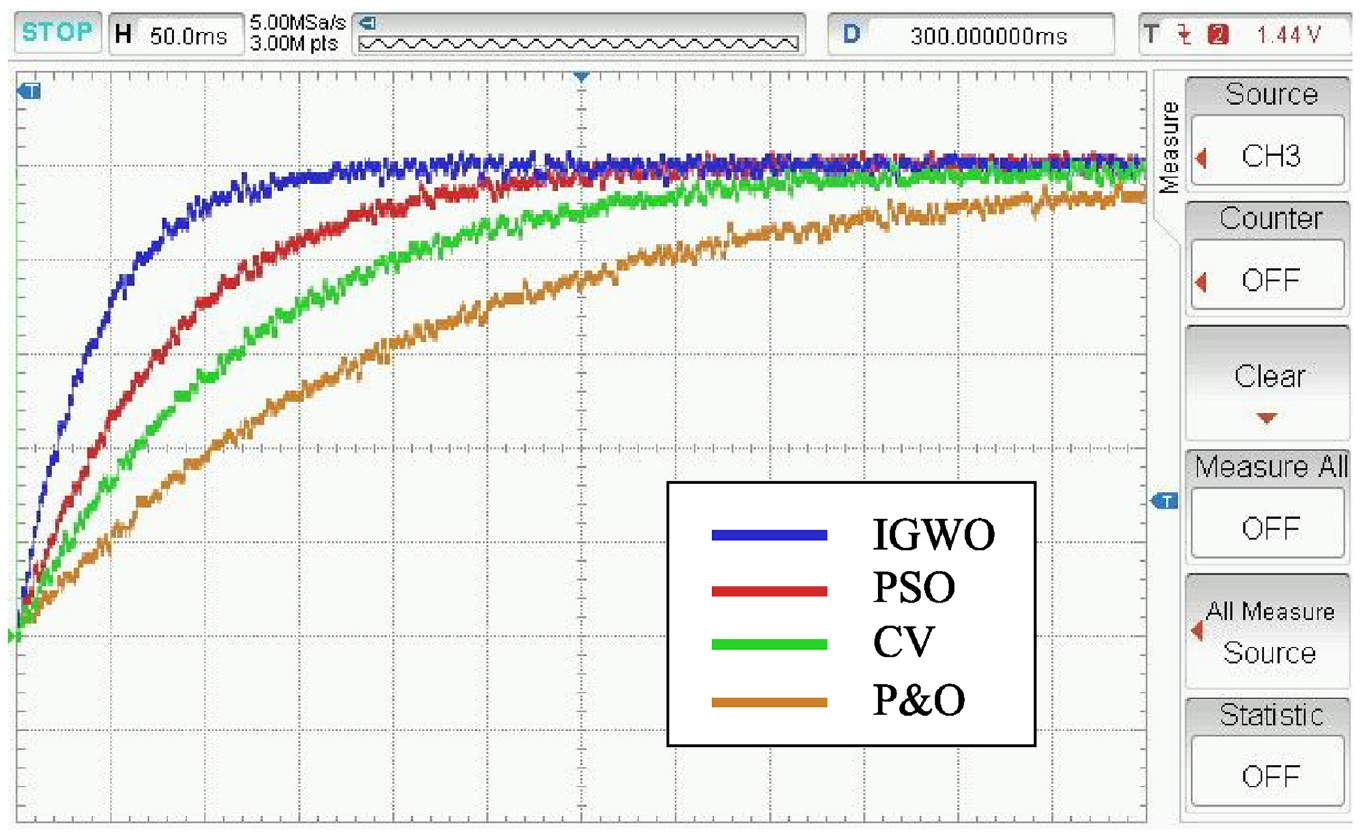
Experimental comparison of power curves at 1000 W/m2 light intensity.
Experimental Testing
To replicate a practical photovoltaic scenario, a test arrangement was built using the components shown in Figure 3 and Table 3. Testing MPPT algorithms with a systematic approach guarantees precise, reliable, and flexible data collection and analysis. Figure 8 illustrates the power output of four MPPT methods with different numbers of iterations. Some of the procedures include IGWO, PSO, CV, and P&O. The figure demonstrates that the IGWO method consistently generates a greater power output compared to the alternative methods, indicating its effectiveness and precision in determining the optimal power point. With an increase in the number of iterations, the power output of each method stabilizes. The IGWO method stands out with its exceptional tracking performance and quick convergence.
The equipment in experiment.
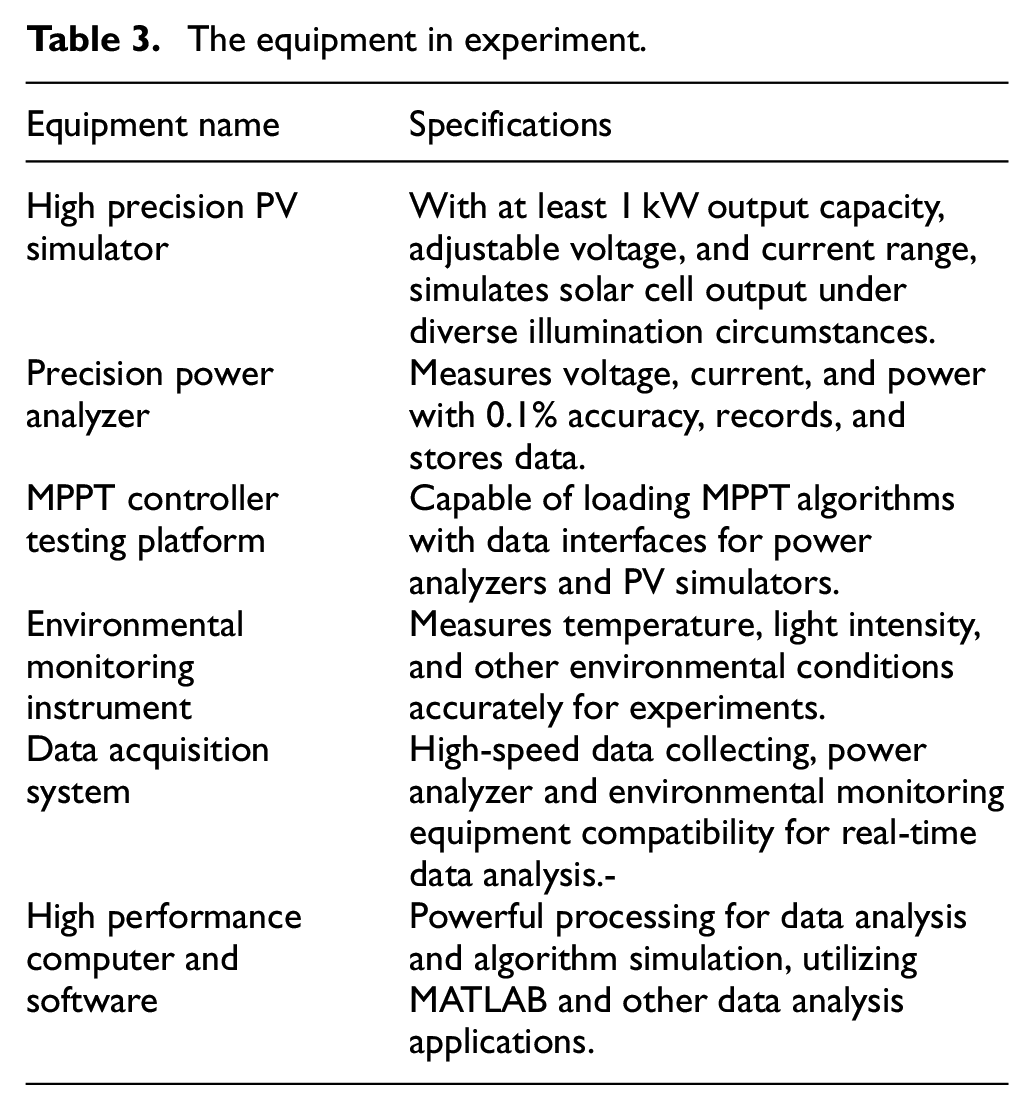
Figure 9 demonstrates the power output of various MPPT methodologies during a three-second simulation period. In just 1.5 s, the power reference is swiftly raised from 150 to 200 W, mimicking a shift in environmental conditions. The IGWO method is highly adaptable and quickly adjusts its output to match the newly set maximum power point. Compared to other approaches, IGWO has a unique ability to adapt to environmental changes, which greatly enhances its effectiveness and accuracy as an MPPT method. Unlike other approaches, IGWO demonstrates increased stability and reduced volatility, providing additional evidence for its effectiveness in dynamic environments.
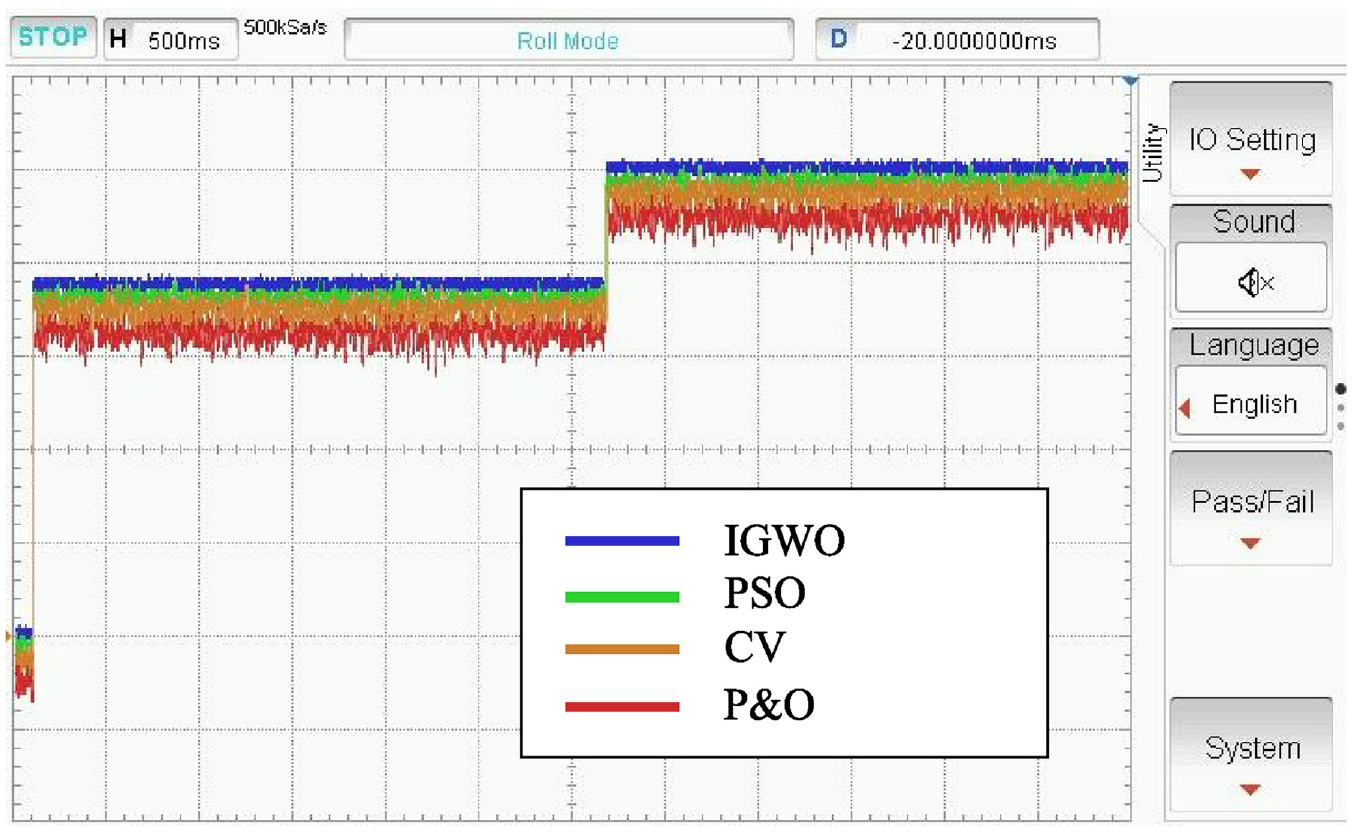
Experimental comparison of different MPPT methods.
The experimental design, as shown in Figure 10, recreates the dynamic characteristics of solar irradiance over a three-second period. The simulation begins by generating an initial output power of 150 W to replicate typical operational conditions. The sudden increase in power to 200 W in just 1.5 s indicates a significant boost in the capacity for generating photovoltaic energy due to changes in the surrounding area. To effectively evaluate the adaptability of each algorithm to sudden changes in input conditions, it is essential to include this variability.
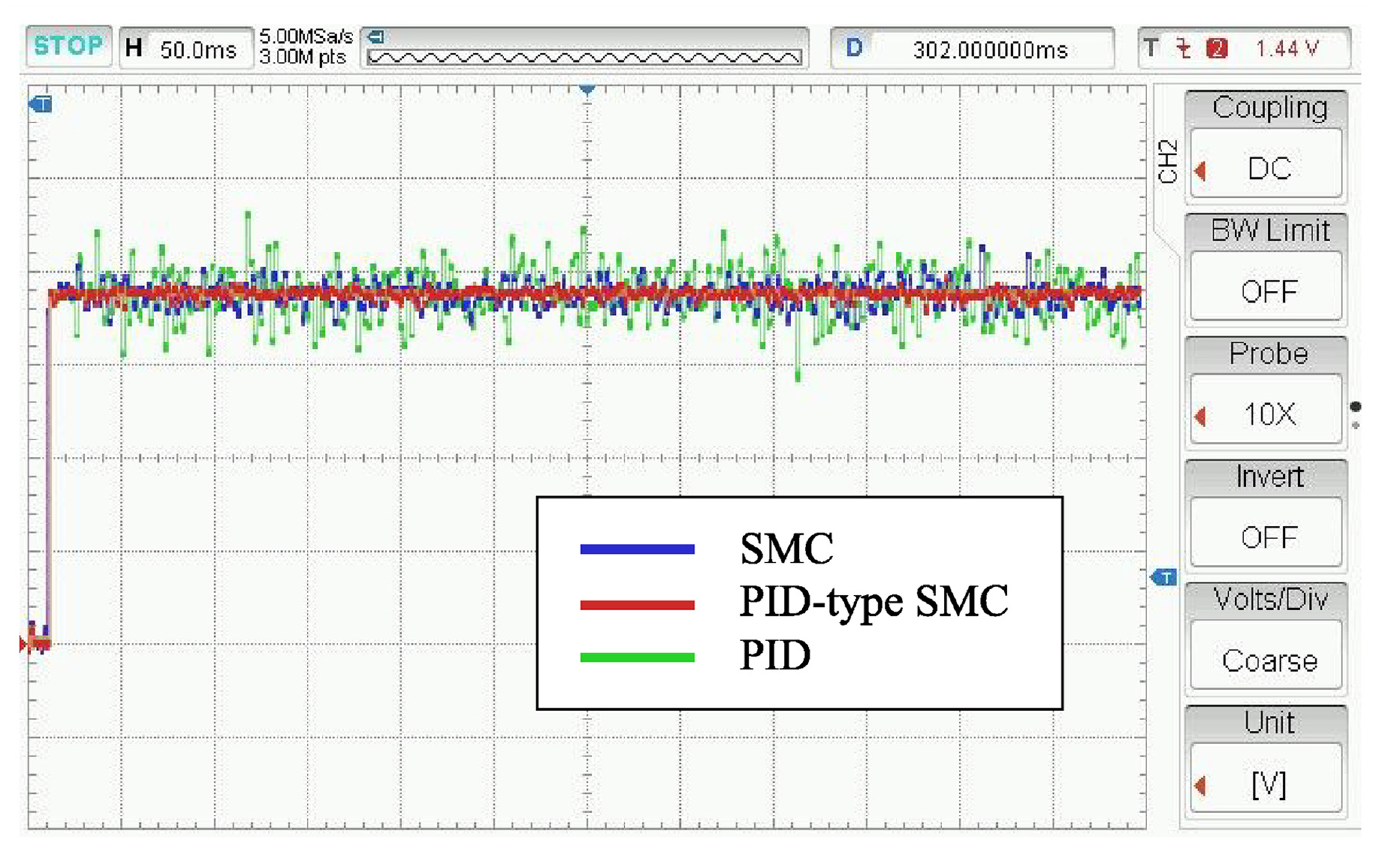
Experimental testing of tracking performance using different methods.
In real-world test bench application scenarios, the PID-type SMC demonstrated the highest tracking accuracy, as illustrated in Figure 9. This approach is better suited for the MPPT strategy of PV power generation systems when compared to PID and SMC. The experimental results show a remarkable level of agreement with those obtained through MATLAB simulations. This supports the validity and precision of the enhanced method that has been suggested for real-world use. The experimental findings offer crucial empirical evidence for the continuous improvement of MPPT control in photovoltaic systems.
Discussing about the internal and external threats
In potential practical application scenarios, the results obtained in the article may be subject to internal or external threats, thereby affecting the effectiveness and generalizability of the research results.
Internal threats
(1) Parameter settings: The parameter settings of IGWO and PID type SMC algorithms may have a significant impact on the results. If the parameters are not optimized or selected improperly, it may lead to inaccurate results or low efficiency.
(2) Model accuracy: Using MATLAB for simulation may introduce issues with model accuracy. If the simulation model cannot accurately reflect the dynamics of the real photovoltaic system, the simulation results may not accurately predict the performance of actual applications.
(3) Experimental setup: The construction of the experimental platform and the control of testing conditions may also become internal threats. For example, improper control of fluctuations in experimental environmental conditions (such as lighting, temperature, etc.) may affect the accuracy of the results.
External threats
(1) Diversity of environmental factors: Although research considers changes in environmental conditions, real-world environmental conditions may be much more complex and variable than those simulated or controlled in experiments. This may limit the ability to generalize simulation and experimental results to different geographical locations and climate conditions.
(2) Universality of technology: The proposed MPPT strategy and control method may perform well in specific types or configurations of photovoltaic systems, but its effectiveness and applicability in all types of photovoltaic systems still need to be verified.
To address these threats, measures can be taken to enhance the internal and external effectiveness of research. For example, conducting extensive parameter sensitivity analysis, expanding the range of experimental conditions, comparing the performance of different photovoltaic system types, and considering economic and engineering factors in practical application scenarios. In addition, comparative analysis with existing technologies is also an important aspect of ensuring research contributions.
Conclusion
This article introduces a new MPPT strategy that combines IGWO and PID type SMC to improve the power generation efficiency of PV systems in dynamic and complex environments. The goal is to enhance the overall performance of MPPT. The effectiveness of the developed strategy is confirmed through simulation and experimentation. In summary, the article concludes with the following points:
(1) The article proposes an advanced optimization method based on IGWO, which exhibits superior convergence and optimization accuracy in determining MPP voltage under different environmental conditions. This algorithm outperforms traditional techniques such as CV, INC, P&O, and PSO in terms of optimization accuracy and convergence speed.
(2) Integrating PID type SMC into the MPPT strategy enhances the system’s adaptability and control stability under fluctuating environmental conditions, providing robust and accurate voltage monitoring at the MPP. The direct control of the duty cycle of the boost converter by PID type SMC enables the system to maintain optimal performance even in the face of changing environments. This integrated MPPT strategy combines the global optimization ability of swarm intelligence optimization algorithms with the adaptability and robustness of improved SMC, providing an efficient solution for real-time MPPT of photovoltaic systems.
(3) The article comprehensively verifies the proposed MPPT strategy through detailed simulation and experimental testing, demonstrating its superior performance compared to established algorithms. The research results emphasize the potential of the combination of IGWO and PID type SMC in significantly improving the energy recovery efficiency and overall performance of photovoltaic power generation systems.
This study marks a significant progress in the optimization of photovoltaic energy collection, providing a novel and effective MPPT strategy that is highly suitable for addressing the challenges posed by dynamic and complex environmental conditions. Future research may expand this work by exploring the application of the proposed strategy in real-world scenarios across different climates and geographic regions, further validating its effectiveness and adaptability in improving the efficiency of renewable energy systems.
Abbreviations
PV Photovoltaic
MPP Maximum power point
IGWO Improved grey wolf optimization
CV Constant voltage
PID-type SMC PID-type sliding mode control
INC Incremental conductance
SMC Sliding mode control
PSO Particle swarm optimization
MFAC Model-free adaptive control
ACO Ant colony optimization
MPPT Maximum power point tracking
STC Standard test conditions
Footnotes
Appendix
Acknowledgements
This article has not received funding support.
Declaration of conflicting interests
The author declared no potential conflicts of interest with respect to the research, authorship, and/or publication of this article.
Funding
The author received no financial support for the research, authorship, and/or publication of this article.
Research and academic achievements
Leijia Liu has accumulated rich practical experience in modeling theory, mechanism design, optimization algorithms, and system development, focusing on areas such as distributed smart grids, optimized operation of energy internet, and interaction between source, network, load, and storage. Leijia Liu has worked in the fields of intelligent robots, grid connected photovoltaic model simulation, and visual steady-state evoked potential signal analysis at the Institute of Robotics and Intelligent Systems at Chongqing University, the System Simulation Institute at Tsinghua Sichuan Energy Internet Research Institute, and the Institute of Electrical Theory and New Technology at Chongqing University.
Academic outputs
- Published Paper: Leijia Liu has published two papers:
1. Han L, Gao H,
2.

Data availability statement
All relevant data are within the paper.