




Abstract
Gas turbines play a core role in clean energy supply and construction of comprehensive energy system, and the control performance of primary frequency modulation (PFM) of gas turbine has a great impact on the frequency control of the power grid. However, there are some control difficulties in the PFM control of gas turbines, such as the coupling effect of fuel control loop and speed control loop, slow tracking speed and large variation of operating conditions. To relieve the above difficulties, a control strategy based on the fuzzy-modified active disturbance rejection control (F-MADRC) proposed in this paper. Based on the analyses of the parameter stability region for active disturbance rejection control (ADRC), fuzzy tuning rules of parameters for F-MADRC are designed. Finally, the proposed F-MADRC is applied to the PFM system of MS6001B heavy-duty gas turbine. The simulation results show that the gas turbine unit with the proposed method can obtain the best control performance of the PFM with strong ability to deal with system uncertainties. The proposed method shows good engineering application potential.
Keywords
Introduction
Gas turbine units have become a key component in China’s construction of new-type power system, due to its advantages of fast response, high efficiency, and cleanliness. In order to cope with the load rise and fall and frequency fluctuation caused by the large-scale integration of new energy power resources to the power grid such as wind power and photovoltaic power, gas turbine units need to have strong PFM capability, which is of great significance for the safe operation and frequency stability of the grid. 1 The control strategies should have fast set-point tracking and external disturbances rejection performance, where PFM is facing many control difficulties such as frequent changes in working conditions and external multi-source disturbances.
In order to further enhance the PFM capability of gas turbine units, many scholars have conducted extensive research on control strategy design, control logic optimization, and other aspects. Ji and Jiang 1 proposed a medium pressure heating throttling scheme to optimize the PFM logic in order to improve the load regulation margin of gas turbine units. Wu 2 achieved a significant improvement in the unit’s PFM response speed through methods such as optimizing the speed control mode of the main control system, reducing the frequency modulation dead zone, and increasing the frequency modulation amplitude. In Xi and Sun, 3 the unit response speed to the PFM command is improved by methods such as adding blocking logic and modifying the frequency difference signal. In Xiao et al., 4 an optimization logic based on feed forward limiter and power closed-loop compensation is proposed to improve the PFM capability, addressing the issue that the PFM response index cannot meet the requirements of the power grid.
Most of actual PFM control schemes of gas turbine is based on proportional-integral (PI) control strategy. 5 This is because PI controller has the advantages of simple structure, excellent performance, simple implementation, and clear parameter meanings. 6 However, the inherent structure of PI controllers leads to insufficient anti-disturbance performance. 7 In order to further improve the PFM capability of gas turbine, a control strategy based on active disturbance rejection control (ADRC) is proposed in Shu et al. 8 The ADRC parameters are optimized by multi-objective genetic algorithm to improve the PFM capability of gas turbine. In addition, control strategies based on neural network have also been studied in the PFM system of gas turbine. 9 Due to the large amount of calculation required for advanced control strategies, there are still challenges in practical application. However, given the computing power of the current gas turbine control platform, there is still no lack of potential for large-scale engineering application. 10
ADRC has been widely used in the engineering field due to its strong anti-disturbance capability, robustness, and other advantages. 11 By using an extended state observer (ESO) to estimate the total disturbance in real-time and the control law to compensate the total disturbance, ADRC ensures a good balance between tracking performance and anti-disturbance performance. Due to the above advantages, ADRC is widely used in micro-grid hybrid energy storage systems, 12 permanent magnet synchronous motor systems, 13 nano-positioning stage systems, 14 and superheated steam temperature systems. 15 However, gas turbine units need to operate in a wide range of operating conditions due to peak modulation and frequency modulation, and since the ADRC parameters are designed under nominal operating conditions, the control performance will be degraded to a certain extent when gas turbine units deviate from the nominal operating conditions. Since fuzzy control has the advantages of operating condition adaptability, nonlinear processing, and fault tolerance. To address the above issue, the combination of fuzzy control and ADRC control strategy is considered, utilizing the advantages of fuzzy control in adaptability to operating conditions, nonlinear processing, fault tolerance, etc. 16 Yang et al. 17 and Han et al. 18 attempt to use a combined control strategy that incorporates fuzzy control and ADRC control strategy to achieve satisfactory control performance under all operating conditions. However, the complex fuzzy rules increase the complexity of implementation to some extent.
To solve above difficulties and improve the control capability of the gas turbine PFM, this paper proposes a fuzzy-modified active disturbance rejection control (F-MADRC) strategy. The main contributions of this paper can be summarized as,
(1) A F-MADRC strategy is proposed for the gas turbine PFM, where the fuzzy tuning is presented.
(2) The effectiveness of the proposed F-MADRC strategy is verified under nominal and uncertain operating conditions, respectively.
This rest of this paper is arranged as: the composition of the PFM system of the MARK V heavy-duty gas turbine is introduced in Section “Primary frequency modulation (PFM) model of MS6001 B heavy-duty gas turbine,” and the control characteristics of the system are analyzed. Then the calculation of the stability region of ADRC parameters is performed, and the influences of ADRC parameters on the control effect are analyzed in next section. Then the F-MADRC strategy proposed in this paper is applied to the PFM control of MARK V heavy-duty gas turbine unit in Section “Fuzzy tuning of F-MADRC parameters.” Section “Simulation results” show simulation results under nominal and uncertain operating conditions. Finally, the conclusions of this paper are provided in Section “Conclusions.”
Primary frequency modulation (PFM) model of MS6001 B heavy-duty gas turbine
In Wei et al., 14 a PFM system of MS6001 B heavy-duty gas turbine based on MARK V control system is introduced. The structural diagram of the PFM control system is shown in Figure 1, the speed control system, the fuel control system, and the acceleration control system are contained, where the acceleration control speed is generally kept constant in the control system. The models of some key links are as follows:


and

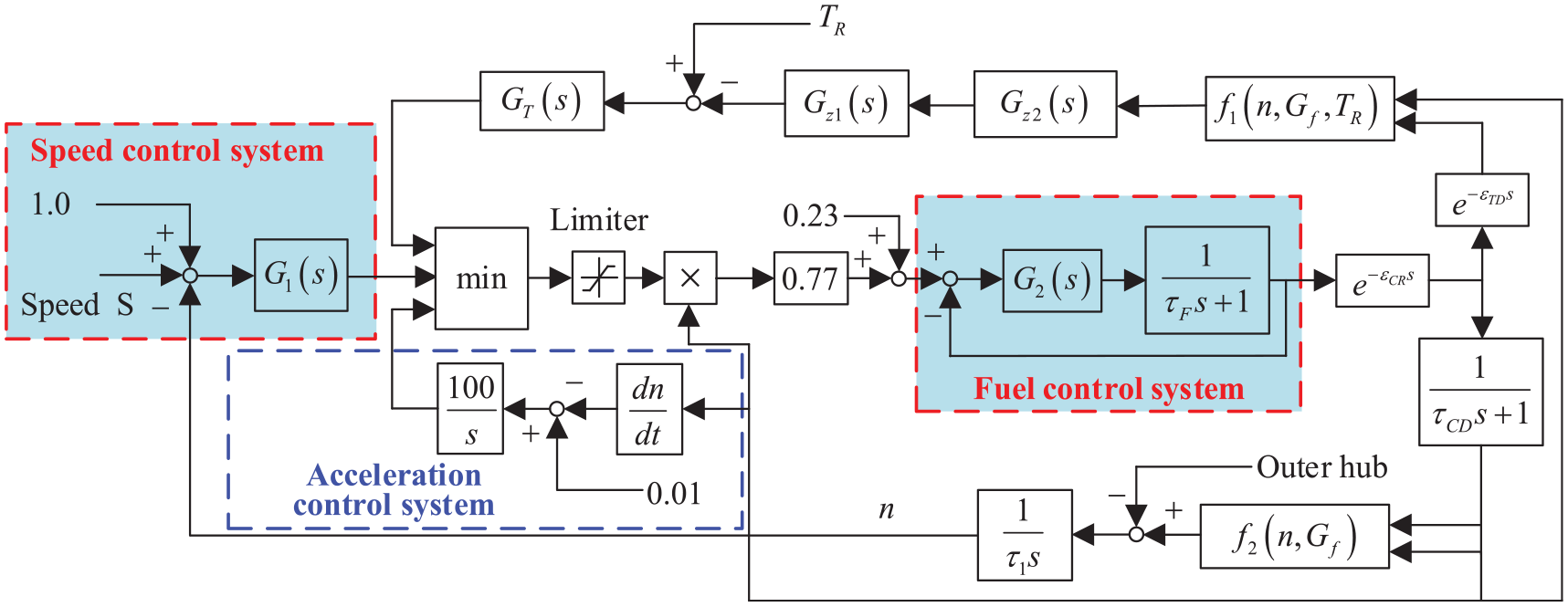
Primary frequency modulation (PFM) control model of MS6001B heavy duty gas turbine.
Other physical meanings and corresponding values of model parameters can be seen in Wei et al.,
14
and are not provided here. The controllers for speed control and fuel control in the system are
The system model is based on a liquid-fueled circulating single-shaft gas turbine, with a rated speed of 5100 r/min and rated power of 35.9 MW. The exhaust temperature, rated inlet temperature, and speed governing droop of the gas turbine unit are 550ºC, 15ºC, and 4%, respectively. 5
From Figure 1, the output of the gas turbine fuel control system goes through a pure lag link and an inertial link. Combined with
ADRC principle
Considering that a general system can be described as follows through transformation:

Where
Set

where

where
Since the output

where
Then the structure of ADRC can be obtained which is shown in Figure 2.
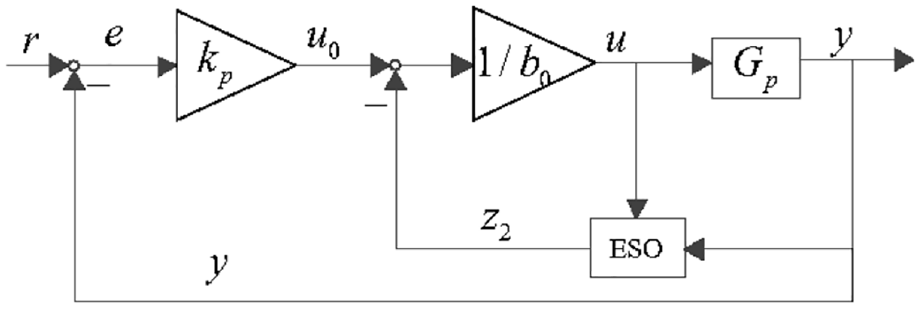
Diagram of ADRC structure.
Since

The controlled object shown in equation (8) is an integral series-type object. Through the real-time estimation and compensation of ESO, the object can be compensated as an integral series-type object, and then controlled by the proportional control law expressed in equation (7). Then the closed-loop system becomes:

Then the transfer function of the closed-loop system is

At this point, the parameters that needs to be tuned in ADRC include

Due to the presence of pure lag links in both the fuel control system and speed control system of gas turbines, the control performance will deteriorate. Based on Zhao and Gao,
21
an optimized ADRC is designed which is shown in Figure 3. The control variable
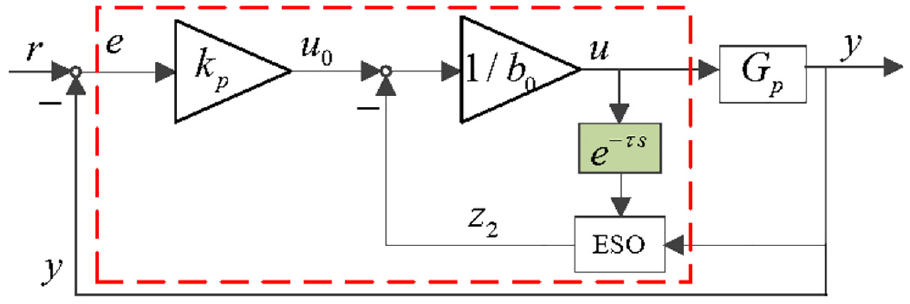
Diagram of modified ADRC structure.
At this point, the parameters that need to be tuned for optimized ADRC are
In order to analyze the distribution of parameter stability region of the optimized ADRC, the controlled object is transformed into the following frequency domain form:

According to the method in Wu et al., 22 the calculation equation for the optimized ADRC parameter stability regions can be expressed as follows:

In order to better analyze the optimized ADRC parameter stability region, taking
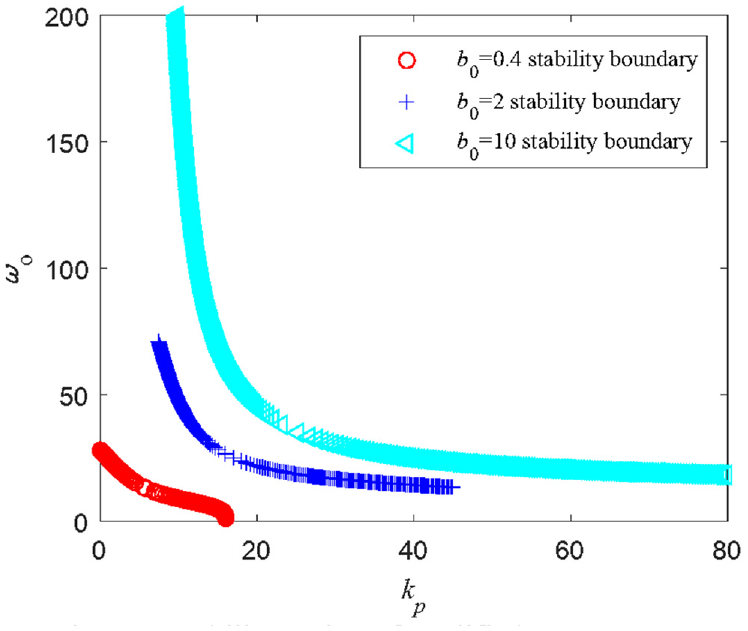
Stability region of modified ADRC structure.
To calculate the ADRC parameter stability region of
Fuzzy tuning of F-MADRC parameters
To ensure that the optimized ADRC can maintain optimal control performance with changing operating conditions, a parameter adjusting method for F-ADRC is proposed. This method uses speed deviation or fuel deviation, as well as the corresponding deviation rate, as inputs of the fuzzy controller in F-MADRC. By designing reasonable fuzzy rules, the parameters of F-MADRC are updated in real-time for different deviations and different operating conditions, ensuring the control performance of F-MADRC. Since


where
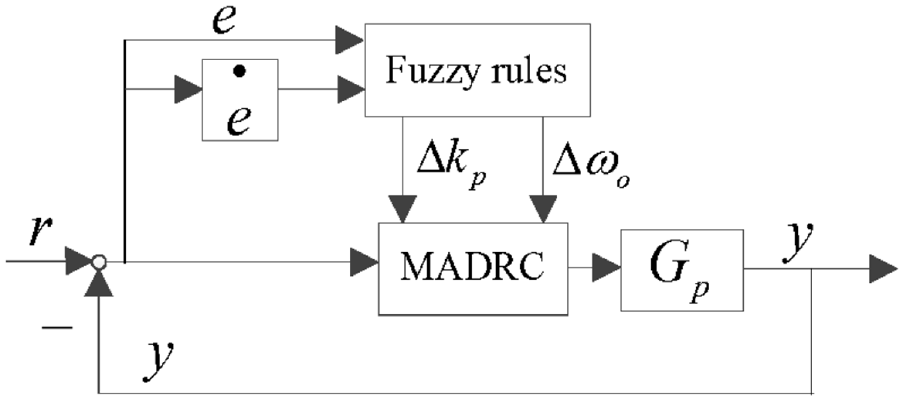
The fuzzy tuning of F-MADRC.
Seven linguistic values are used for the fuzzy tuning of the F-MADRC parameters, and the corresponding fuzzy sets of linguistic variables are as follows: {NB, NM, NS, ZO, PS, PM, PB} are used to represent {negative big, negative medium, negative small, zero, positive small, positive medium, positive big}. Considering its high sensitivity, the triangular membership function is used in this paper, and its shape is calculated by three parameters
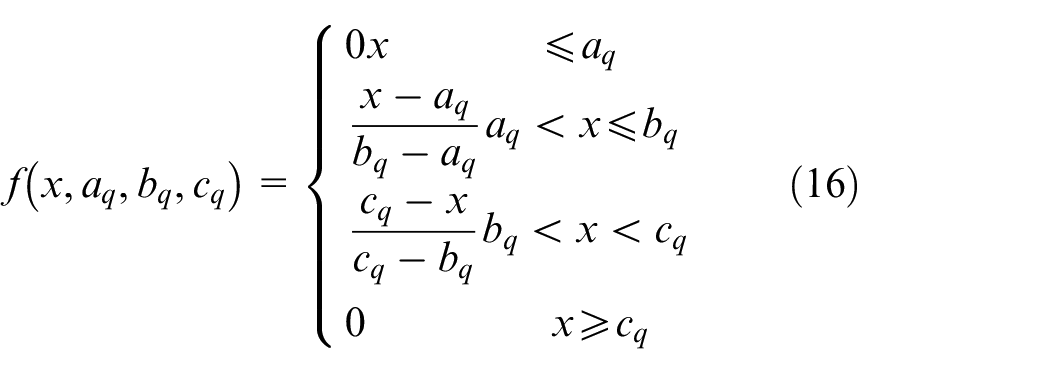
where the parameters
Based on the MADRC parameters
The fuzzy tuning of
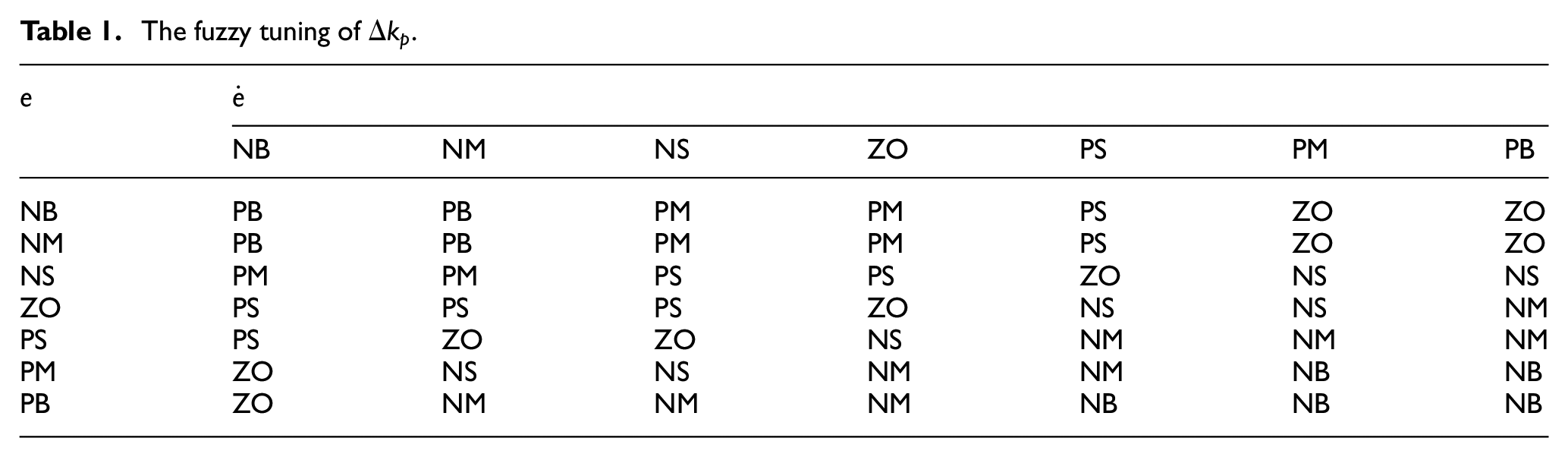
The fuzzy tuning of
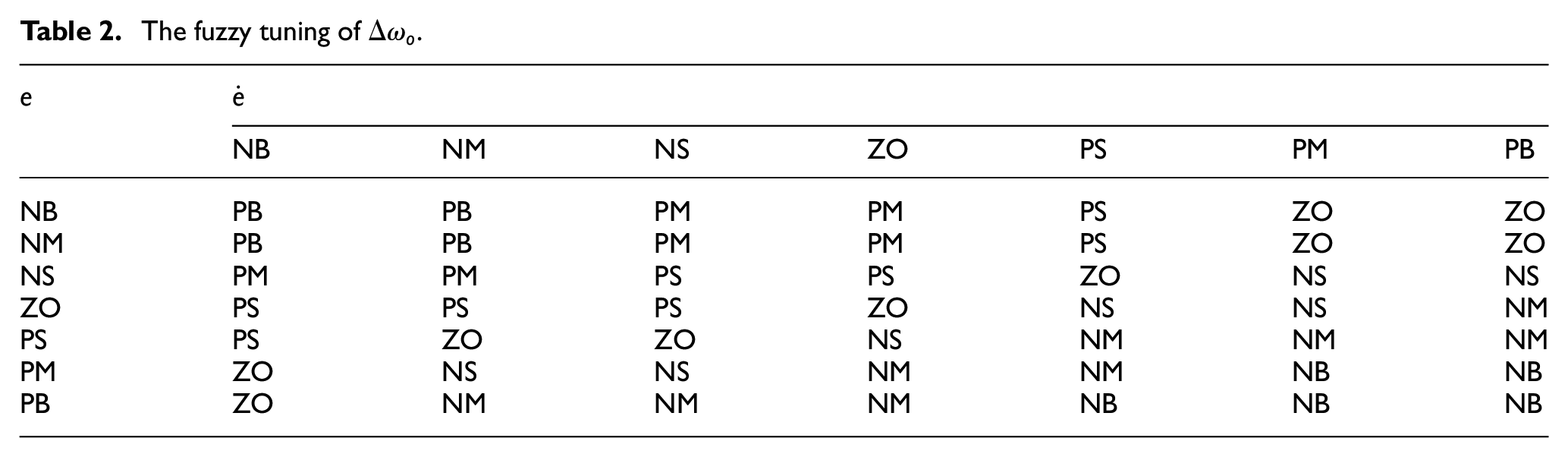
Simulation results
In this section, the proposed F-MADRC is applied to gas turbine PFM system shown in Figure 1, both
Controller parameter lists.

Control performance comparison under nominal operating conditions
Under nominal operating conditions, which means the model parameters are the nominal parameters given in Section “Primary frequency modulation (PFM) model of MS6001 B heavy-duty gas turbine,” simulation results as shown in Figure 6(a) and (b) and Figure 7(a) and (b) are obtained. The simulation settings are as follows: Under initial stable working conditions of the system, the PFM signal of the unit steps up at 100 s, it rises by 0.01 and then stabilizes. Then, at 600 s, it steps up again by 0.02 and then stabilizes. Finally, at 1100 s, the speed decreases by 0.03 and then stabilizes. It should be noted that the model established in normalized form, where the value is 1 under nominal operating conditions and varies accordingly.
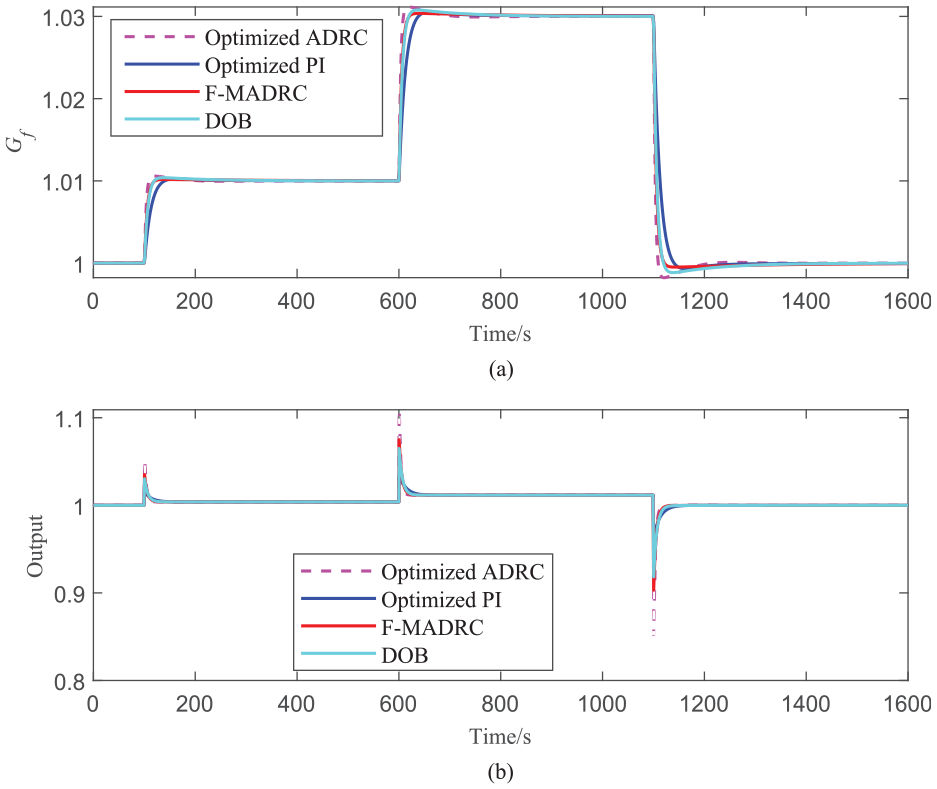
Outputs of G f and n under nominal working conditions.
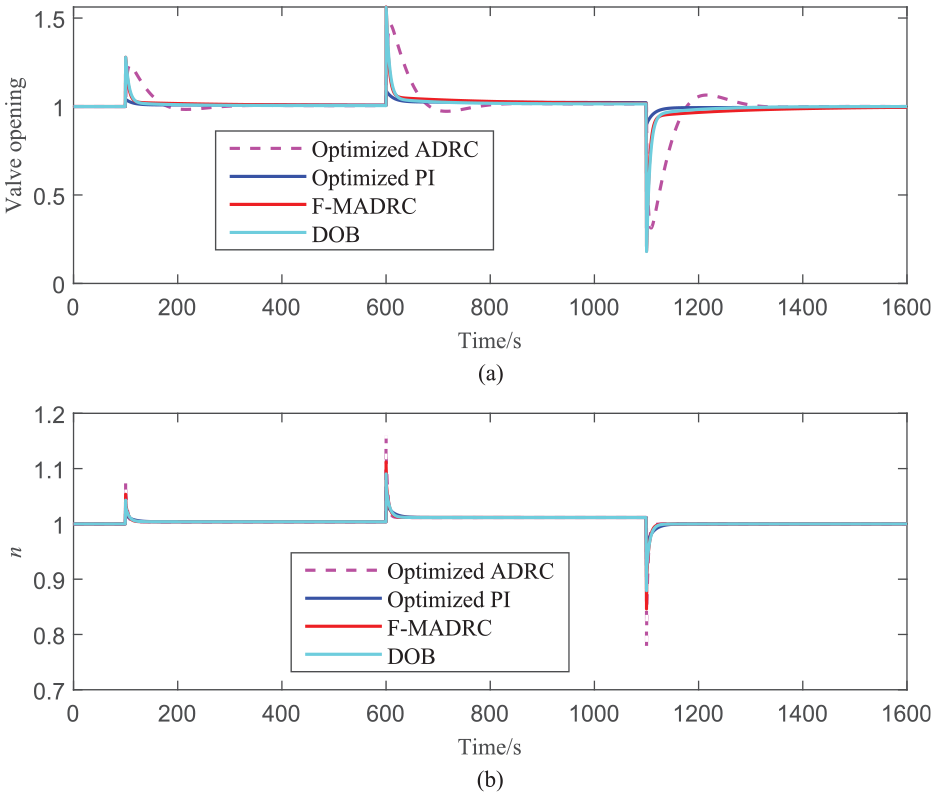
Valve opening and unit speed under nominal working conditions.
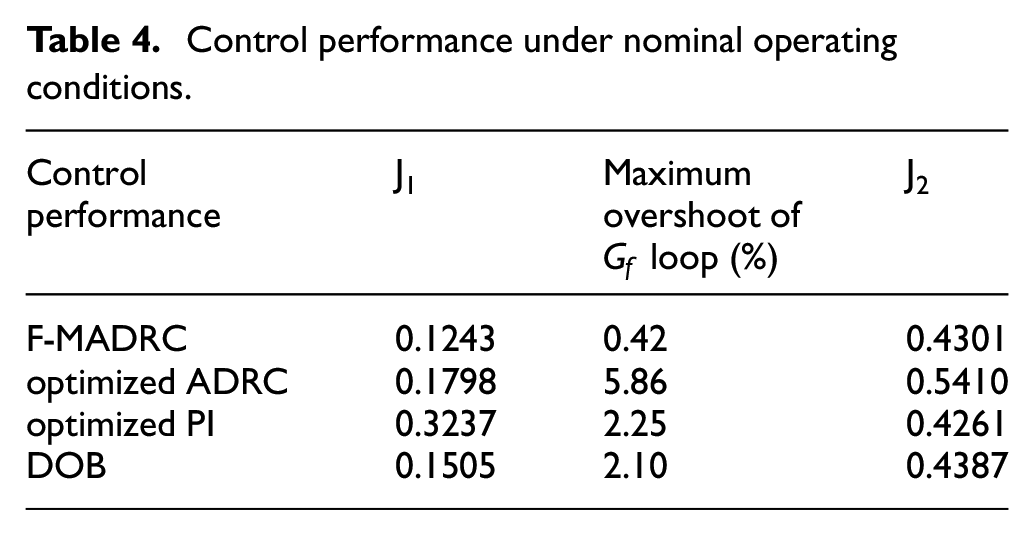
From Figure 6(a), it can be observed that the proposed F-MADRC has the smallest overshoot, and its response speed is faster than that of the optimized PI controller, and very close to the optimized ADRC and DOB. From Figure 6(b), the overshoot of F-MADRC is smaller than that of the optimized ADRC, optimized PI controller and DOB, but its response speed is faster than the optimized PI controller. To better evaluate the performance of the three control strategies, Table 4 provides
Control performance under nominal operating conditions.
To compare the input disturbance rejection abilities of these controller strategies, input disturbances of valve opening and n have a step change with an amplitude of 0.05 at 100 and 600 s, respectively. The simulation results are shown in Figure 8(a) and (b) and Figure 9(a) and (b). It can be learnt that F_MADRC has the strongest disturbance rejection ability for the input disturbances of valve opening and n as shown in Figure 8(a). Besides, optimized ADRC has stronger disturbance rejection ability than that of DOB and optimized PI, and optimized PI has the weakest disturbance rejection ability.
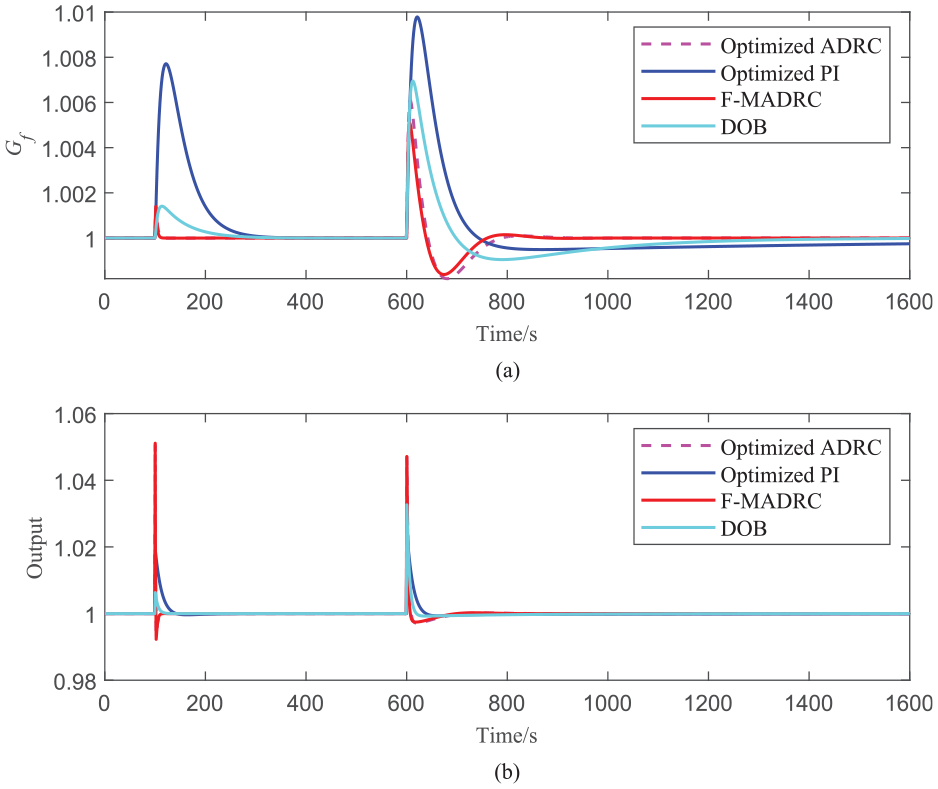
Outputs of G f and n under nominal working conditions.
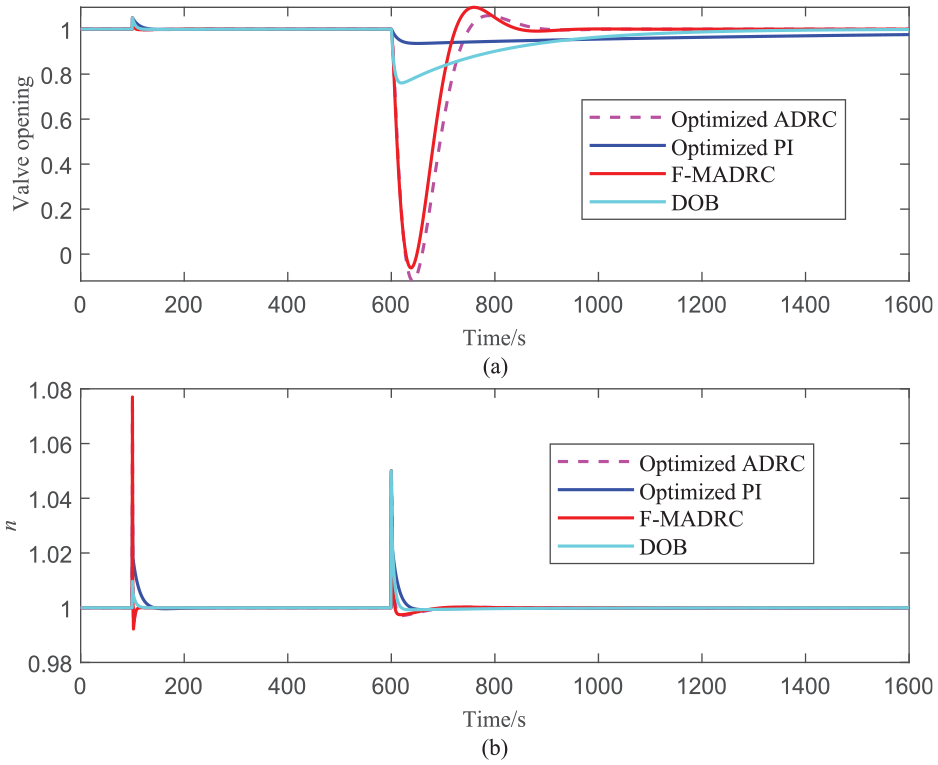
Valve opening and unit speed under nominal working conditions.
Control performance comparison under uncertain operating conditions
Due to the dynamic parameter variations in the gas turbine caused by changes in operating conditions, modeling simplification, and other reasons, there is inevitably some uncertainty in the system. In order to evaluate the control performance of the above control strategies in the presence of system uncertainty, several dynamic parameters from
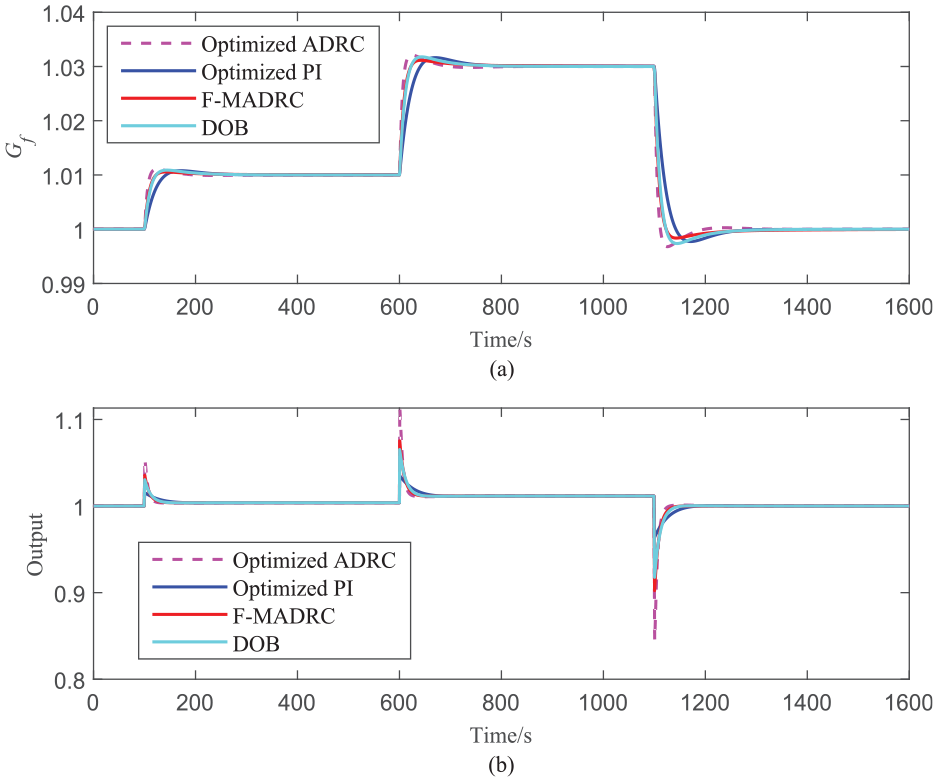
Outputs of G f and n under uncertain working conditions.
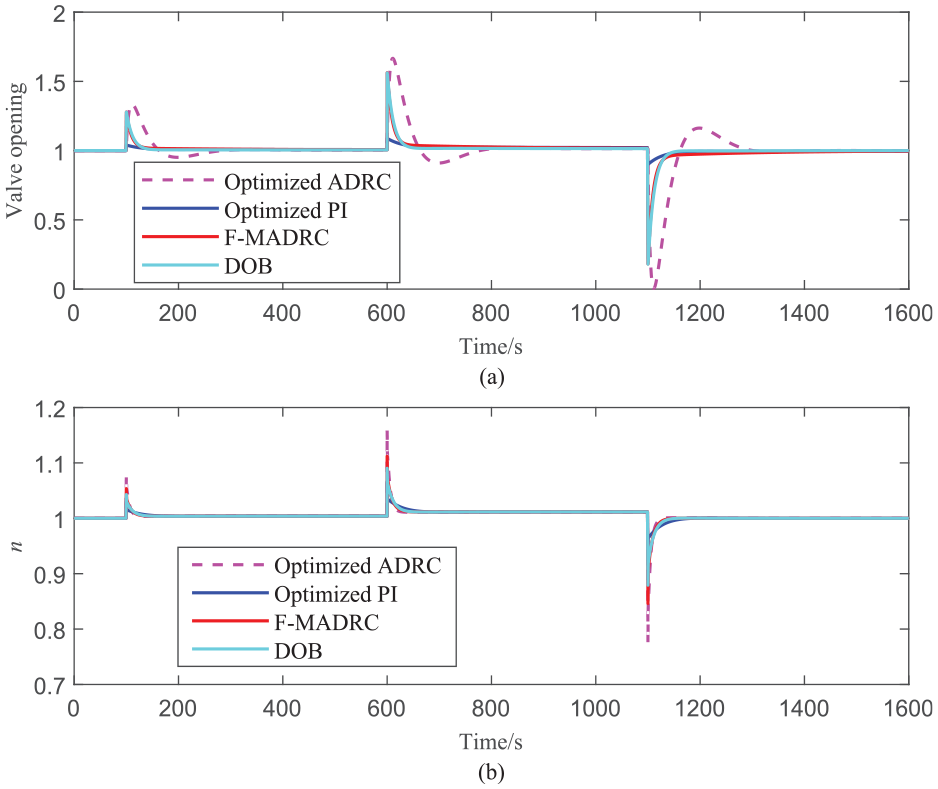
Valve opening and unit speed under uncertain working conditions.
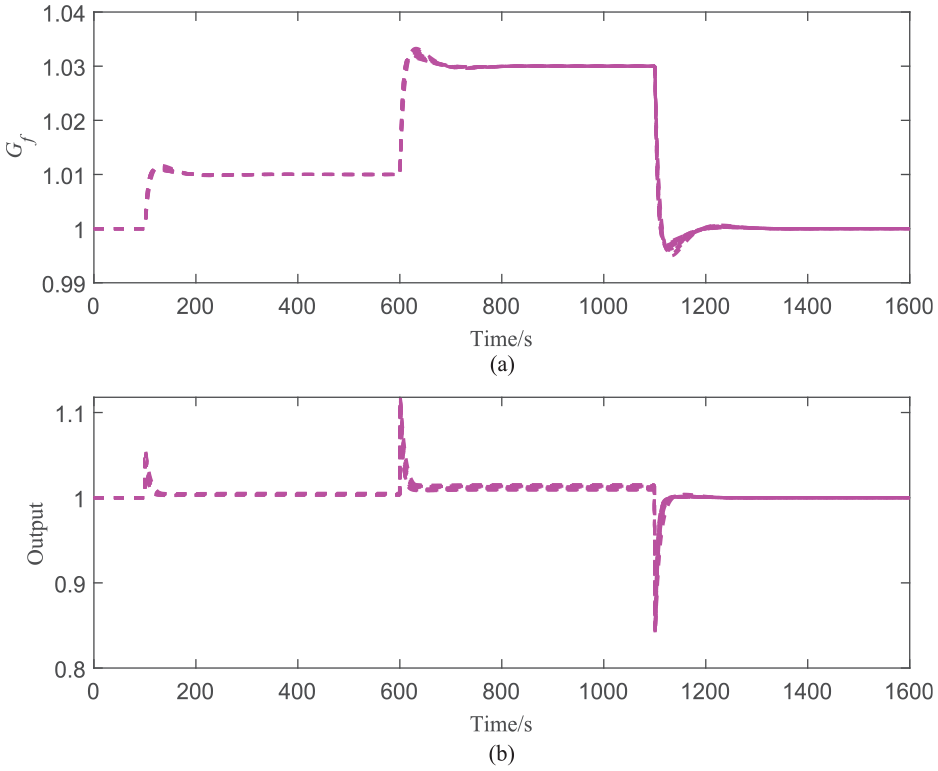
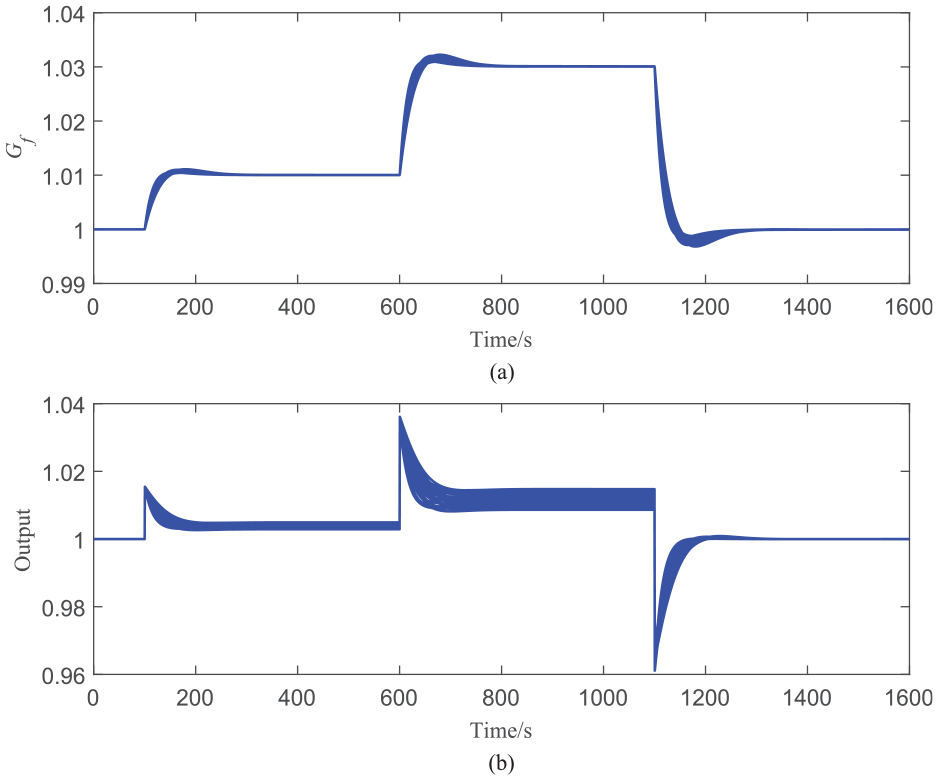
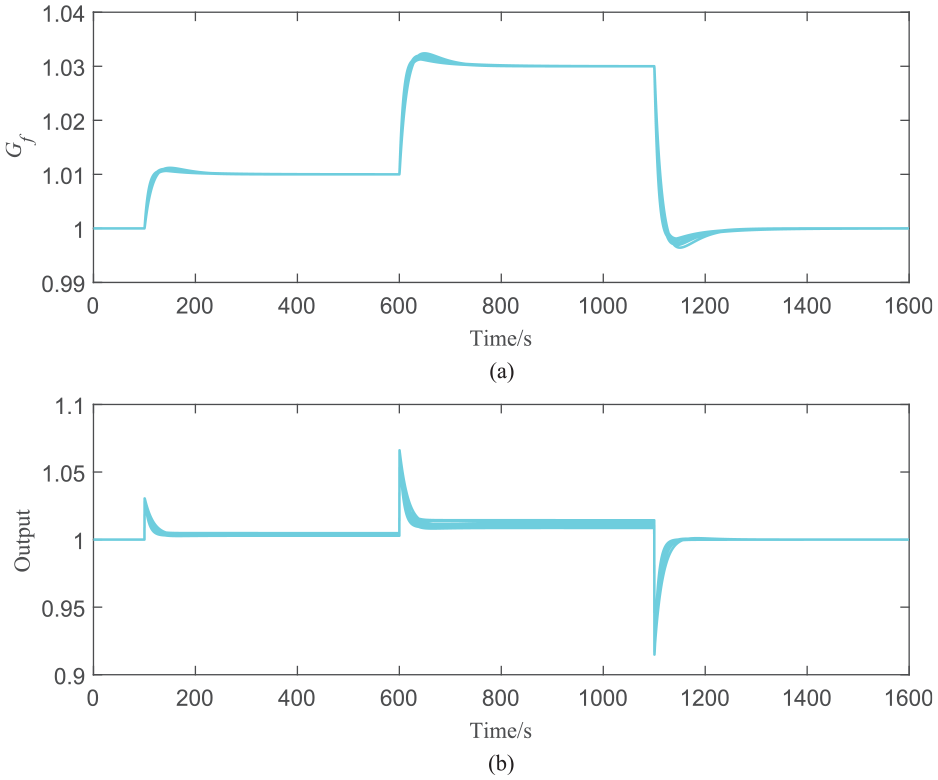
To further compare the ability of the control strategies to handle uncertainty in the PFM control system, Monte Carlo simulation is conducted. Firstly, the dynamic parameters and intermediate parameters
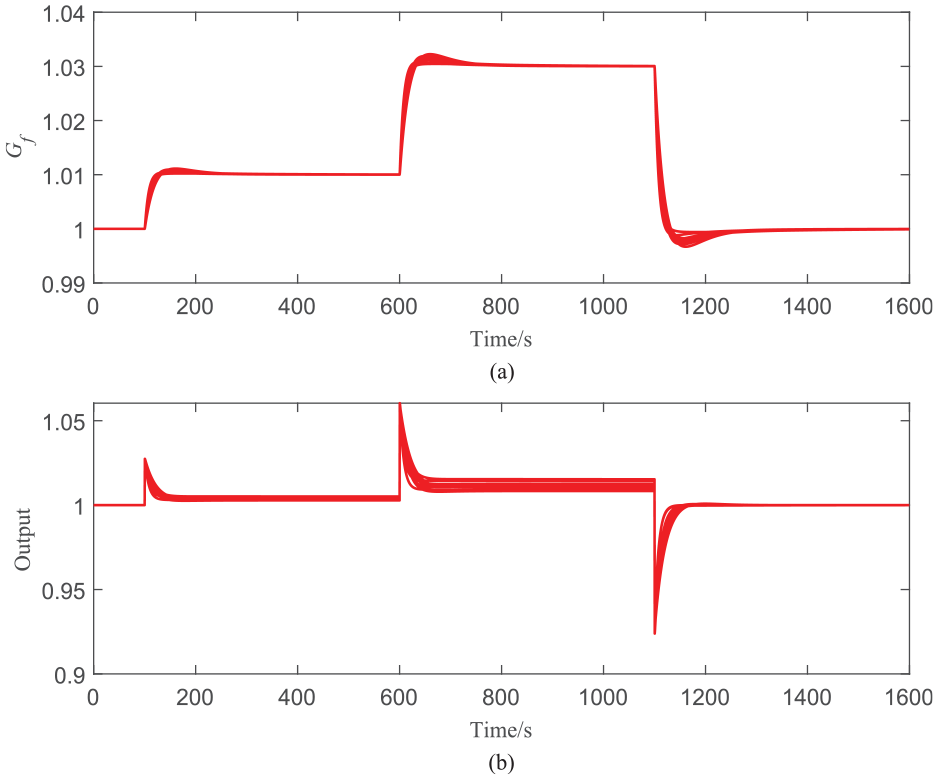
Outputs of G f and n under uncertain working conditions with F-MADRC.
Outputs of G f and n under uncertain working conditions with optimized ADRC.
Outputs of G f and n under uncertain working conditions with optimized PI.
Outputs of G f and n under uncertain working conditions with DOB.
From Figures 12 to 15, it can be observed that F-MADRC can ensure a relatively ideal control performance even in the presence of uncertainty in the MS6001B heavy-duty gas turbine PFM control system. The output of the system remains close to the nominal operating conditions even when uncertainty exists, demonstrating its strong ability to handle system uncertainty. Similarly, optimized ADRC and DOB also both exhibit a strong capability to handle system uncertainty, ensuring that the output of the system remains near the nominal operating conditions, the result is shown in Figures 13 and 15. However, from Figure 14, it is evident the ability of optimized PI in handling system uncertainty is the weakest. Based on the above analysis, it can be concluded that F-MADRC has the best PFM control ability while ensuring robustness, and has great potential for practical industrial applications.
Conclusions
To improve the PFM control ability of gas turbines, a F-MADRC control strategy is proposed in this paper to enhance the control performance of the PFM system. Firstly, the PFM control model of the MS6001B heavy-duty gas turbine is introduced, and its control characteristics are analyzed. Then, based on the analysis of the stable region of the self-tuning control parameters, fuzzy self-tuning rules for the parameters are designed. Finally, the F-MADRC control strategy is applied to the PFM system of the MS6001B heavy-duty gas turbine, and the simulation results show that the loop using the F-MADRC control strategy has smaller overshoot while ensuring fast response. Moreover, the Monte Carlo experiment results demonstrate that the F-MADRC control strategy can also achieve satisfactory control performance in dealing with system uncertainty, showing its strong engineering application value. Future work will focus on the experimental verification, containing practical implementation, logic protection, parameter tuning, to further validate the effectiveness of the proposed method based on theoretical and simulation analysis.
Footnotes
Acknowledgements
We would like to thank all those who have contributed to this paper for their valuable assistance.
Declaration of conflicting interests
The author(s) declared no potential conflicts of interest with respect to the research, authorship, and/or publication of this article.
Funding
The author(s) received no financial support for the research, authorship, and/or publication of this article.

Data availability statement
All data generated or analyzed during this study are included in this published article [and its supplementary information files].