




Abstract
Mathematics is one of the important subjects of a student at various stages. From the past to present, hearing the name of mathematics has been accompanied by fear and anxiety for a significant group of students. Quality of mathematics education is a complex and multifaceted concept, and various authors with different viewpoints have proposed methods regarding the quality. Decision making in the selection of the teaching method is one of the pillars of a teacher and applying proper methods which are appropriate to the educational environment has an effective role in the success of education and reduction of students’ anxiety. In this research, with the help of Network Data Envelopment Analysis (NDEA) and Sexton’s method, we are going to rank several different teaching methods to reduce the math anxiety of second year elementary school students. Several methods were implemented in the classrooms and after that the results were evaluated using the above method and it was found that the game method has the highest rank and based on this research, it will be tried to implement this method in the classroom. Lessons should be used to reduce students’ math anxiety. In this article, we delve into the study of practical scenarios and conditions that may make the utilization of these methods more effective in mathematics education. Additionally, we offer recommendations to teachers and individuals involved in math instruction to maximize the benefits of mathematical education and reduce math anxiety.
Introduction
The ultimate purpose of education is the humanization and future building. Since the future of societies is built by humans, the main purpose and the mission of the education should be sought in humanization which most of it is taken by the official institution of education and schools. The most important responsibility of the school is to plan for teaching and learning. For that education leads to learning, it must be planned for it. Educational design includes all experiences and teaching and learning opportunities that are designed and implemented by the teacher in order to create the desirable changes in learners’ behavior and its efficiency is evaluated. Educational evaluation is one of the basic duties of the management which the manager investigates the various dimensions of an educational system based on it and measures the rate of achievement of purpose. Among educational materials, mathematics education, due to its abstract and subjective nature, is the most effective tool in developing and training logical structures and mental processes. 1
Educational evaluation is one of the basic tasks of management, on the basis of which the manager examines the various dimensions of an educational system and measures the extent to which the goals have been achieved, and the areas for removing obstacles and modifying methods, improving the results, and finally moving on to other stages. It provides growth. As a result, the function of evaluation as one of the management duties should be superior to other management functions of the university system, because this makes it possible to achieve the desired goals by using as much resources as possible. Therefore, the university system should continuously judge the desirability of its input, process and output factors and use the results to improve education, research and provide specialized services to the society.
One of new methods of efficiency evaluation is data envelopment analysis, which is a multi-criteria method for making decision and measuring performance. In this method, by using several input and output variables, the efficiency of the units whose their information is available can be calculated and efficient units can be separated from inefficient units.
Data envelopment analysis is a non-parametric approach based on mathematical programing that makes it possible to evaluate the efficiency of similar units of decision making that have multiple data and multiple outputs.
The necessity and importance of evaluating the performance create the continuous improvement that these forces can be the performance of organizations, a huge synergy force of the program support of the growth and development as well as creating opportunities for organizational excellence.
Governments, organizations and institutions are making progressive efforts in this regard. Without investigating and achieving knowledge regarding the progress rate and achieving purposes as well as without identifying challenges facing the organization and obtaining feedback and information on the implementation rate of developed policies and identifying cases that need serious improvement, the continuous improvement of the performance will not be possible and it will not be possible to measure and evaluate. The purpose of this paper is to present a practical method for ranking units of decision-making, In the DEA model.
In the DEA model, it is considered the DMU standard as a black box. Therefore, in order to use them, DEA network models are needed.
In a parallel network, it is considered subunits where the sum of inputs and outputs is equal to the total input and total output, and in a multi-stage network, the output of the first stage is the input of another stage. This paper seeks the best method among the teaching methods to reduce students’ anxiety by using the parallel network ranking model of DEA.
In the next part of this paper, it will be explained the mathematics education and its purposes, and then it will be given a brief overview of data envelopment analysis, and finally it will be drawn conclusions.
Mathematics education and its necessity
Mathematics is one of the oldest science that has always been of interest to human beings. This knowledge has very important role in human life, especially in everyday life. 2
The responsibility of many professionals and researchers is to study how learners achieve mathematical knowledge. They include math teachers, teacher educators and research that all of them can be described as math educators, and the branch that accepts this responsibility is called math education. The aim of a math educator is to optimize the experience of students’ math learning in term of mental and emotional point of view. In general, the evolution of causes of students’ failure to learn math is one of duties of teaching math. Among the important issues of mathematics education are learning and teaching the mathematics curriculum and the math assessment. Some mathematical researchers consider mathematical science as the only effective factor in teaching mathematics.
Bass Emphasizes that mathematical learning is not only a discipline of discovery and creation, but also a discipline of learning and teaching, so he notes that the mathematical professional community has absorbed, critiqued, transmitted, and disseminated the cumulative mathematical knowledge. However, learning math apart from the math profession often causes problems for both children and teachers who are struggling to understand and use ideas and tools of this discipline that these ideas and tools are interpenetrative, powerful, and subtle, even at the most basic level. 3
The most important goal of mathematics education is thinking, and teachers are recommended to increase the level of thinking ability in their students. Consequently, these days, the duty and responsibility of the teacher is heavier and more complex than ones in the past. It is no longer possible to lead society and its people to a complex and advanced transformation with traditional methods, and students are less likely to learn with such methods. 7
Mathematical thought is one of the most important goals of mathematics education, which plays an essential role in promoting learning. Some available descriptions of mathematical thought emphasize on problem-solving methods, while others focus on developing the mathematical conceptual understanding. Mathematics education is one of the main challenges of the educational system and Burton believes that only a small number of students are successful in mathematics and most of them have not developed mathematical thought. 8
According to the existing methods, the teacher is confused in the choice of education and cannot distinguish which method is more effective for reducing math anxiety. In this article, we tried to find a way to reduce students’ anxiety with the help of NDEA ranking.
A review of data envelopment analysis (DEA)
Mathematical programing techniques for evaluating the efficiency of decision-making units (DMUs) have multiple inputs and multiple outputs. Efficiency measurement has always considered by researchers because of its importance in evaluating the performance of a company or organization. 9
In 1957, Farrell used a method similar to efficiency measurement in engineering subjects in order to measure efficiency of a manufacturing unit. The items that Farrell considered in efficiency measurement included an input and an output.
Charnes et al. developed Farrell’s view and provided a model that was able to measure the efficiency with multiple inputs and multiple outputs. This model was called data envelopment analysis and for the first time, in PhD dissertation’s Edward Sexton under the guidance of Doyle and Green, 1994, Sexton et al., 1986 was used with a title of Lin, Chen, and Xiong (2016) at Carnegie University. Due to the fact that this model was proposed by Charles Cooper and Rhodes, it became known as the CCR model, which is an abbreviation of the first letters of the names of the three people is mentioned, and was presented in 1978 in a paper entitled “Efficiency measurement of decision-making units.” 10 This technique is an experience-based method that does not require traditional assumptions and limitations of efficiency measurement.
Since its introduction, this method has been widely used in all organizations, both for-private and public center. Provided that a decision-making unit has only one input and one output, the efficiency of these units is obtained by dividing the output by the input, even if there are multiple inputs and outputs. If the price (value) of each input and each output is available, efficiency can be determined by dividing the weighted sum of the outputs by the weighted sum of the inputs.
Traditional data envelopment analysis treats each system as a black box. This means that inputs and outputs are used to calculate the efficiency of the whole system and no attention is paid to its intrinsic processes. However, in intrinsic structures of many systems, there are intermediate values and this is the distinguishing feature of a traditional and a network perspective. Kao has invented models for evaluating network decision-making units using both serial and parallel structures, which are defined based on the efficiency product of the sections. 11 Data envelopment analysis is an effective tool for evaluating the performance and testing units of decision-making. In the main model of CCR, the efficiency of each DMU is measured by the ratio of the weighted-sum of outputs to the weighted-sum of inputs. One of the ranking methods in order to select the best DMU unit of decision-making among the efficient DMUs is the Cross-efficiency method.12,13 This model is solved in order to determine a set of optimal weight to obtain the optimal efficient value of the DMU under evaluation. It is also possible to calculate the Cross-efficiency of each DMU with respect to the weights of the other DMUs that this process is repeated for all DMUs, thus it results in obtaining a Cross-efficiency matrix. 14
In 1986, Sexton, Silkman, and Hogan introduced the cross-efficiency concept in data envelopment analysis (DEA), which allows the overall efficiency of a DMU to be evaluated through self-evaluation or peer-evaluation. In contrast to conventional DEA, where a DMU is evaluated by its optimal weights or self-evaluation, cross-efficiency appraises a DMU by a set of weights that are optimally obtained in favor of all other DMUs or peer-evaluation. Optimal weights for efficient DMU are not always unique, which decreases the effectiveness of cross-efficiency evaluation. However, different secondary goals, including aggressive and benevolent models, have been introduced to tackle this issue (Doyle and Green, 1994, Sexton et al. 1986). 15 Lin, Chen, and Xiong (2016) introduced an iterative method that provides a unique set of weights for positive input and output data, which decreases the number of zero weights without applying any prior weight restriction. 16
Cross-efficiency evaluation has long been suggested as an alternative method for ranking DMUs in DEA. As it in 1994 Doyle and Green they discussed this issue usefulness of cross efficiency possibly reduces as the DEA optimal weights are not unique. In 1986 Sexton et al. and Doyle and in 1994 Green, suggested the use of secondary goals to deal with the non-uniqueness issue. They investigate two models which the first one identifies optimal weights that maximize not only the efficiency of a particular DMU under evaluation but also the average efficiency of other DMUs. The second model seeks weights that minimize the average efficiency of those other units. 17
Method
The ranking process is done using Sexton method and network DEA model. It is considered schools as a DMU, each of which has subunits.
According to the model, efficient subunits can be obtained.

St




In this structure, the total input is divided among all parts and the total output is obtained from the output of all parts. x
ij
(i = 1, 2, …, m) is the total input of all decision-making units of j (j = 1, 2, …n).
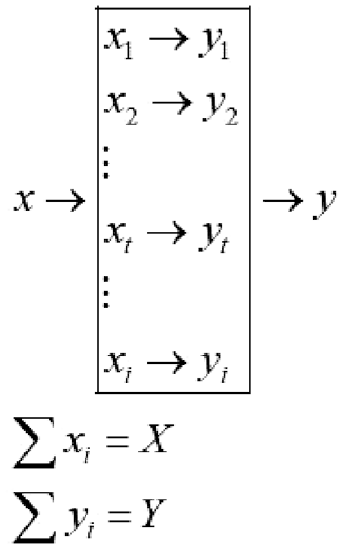
Parallel Structure (Kao and Hwang) 18
Suppose 4 efficient units are obtained from the above model. The cross matrix is obtained as follows:
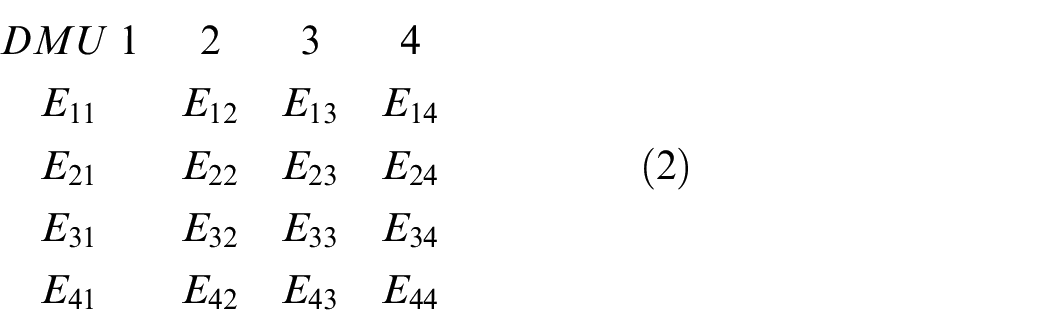
Which E kj is obtained from the following relationship:

That
After completing the cross-efficiency matrix, the efficiency score of each unit will be calculated using the following formula:

- As stated, the purpose of this article is to obtain a method reduction of students’ anxiety. There are different methods for teaching mathematics. We will rank the methods using a questionnaire and a Likert scale.
- Suppose we have n decision-making units (we consider schools as decision-making units) with m inputs and s outputs, and each of the schools has k subunits (subunits are classrooms).
- First step: First, the questionnaire is completed by parents, students and teachers based on Fenmascherman’s questionnaire and Zank’s anxiety questionnaire.
- Second step: We divide the schools into four categories so that the average grades before teaching the students do not have a significant difference.
- Third step: Each group of schools is taught a method.
- Fourth step: Using the obtained data and information and with the help of method I, we will rank the schools.
Result
Case study
Forty schools from Semnan schools, 20 girls’ schools and 20 boys’ schools each of which we randomly selected 5 classrooms, and then the same test was taken from each school as an entrance test. Then, based on the entrance test, we divided the schools into four groups so that their average evaluations differed not meaningful There are 5 schools in each group, 5 classes in each school, 5 teachers in each school, and 20 students in each class. Totally, we have 4000 students and 200 teachers. First, the questionnaires were completed by students, teachers and parents. We explained the methods to the teachers of each school and asked them to teach the relevant method. Then, each group of schools was randomly taught one of the teaching methods (explanatory method, cooperative method, game-based method, and brainstorming method) by the respective teacher. And then the same test was taken from the students and a question was presented to the students to present the assignment and consolidate the learning. The input was the evaluation score of students before teaching, the interest of students before teaching, the amount of spending time on teaching, the cost, the number of students who are not anxious, and the output was the evaluation score of students after. From teaching, we consider the number of students who did their homework correctly, the opinion of parents who agree with this teaching method, the number of students who are interested after teaching, and the number of students who are not anxious, and we rank the schools by according to model I.
The data is in the following table:
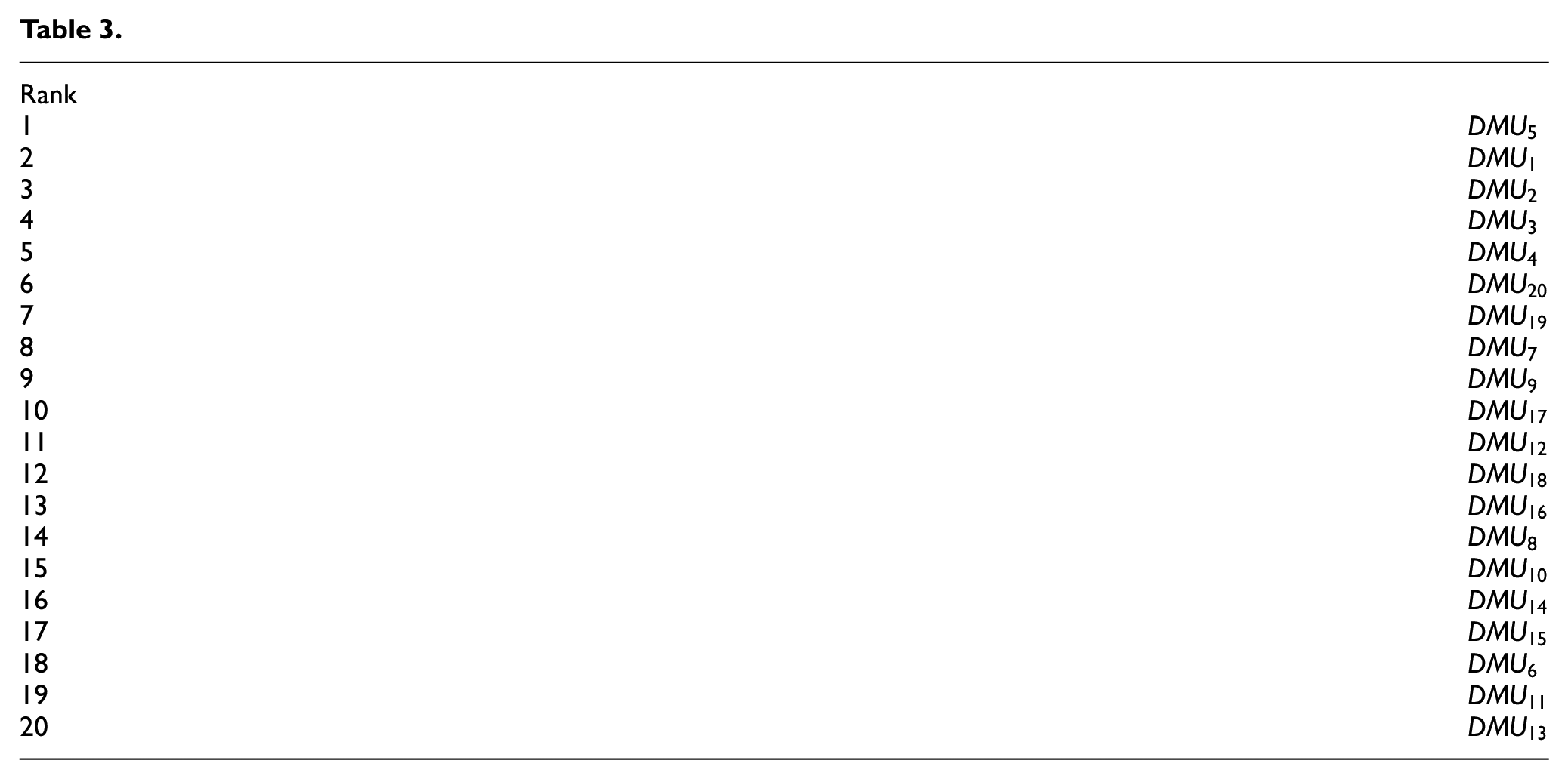
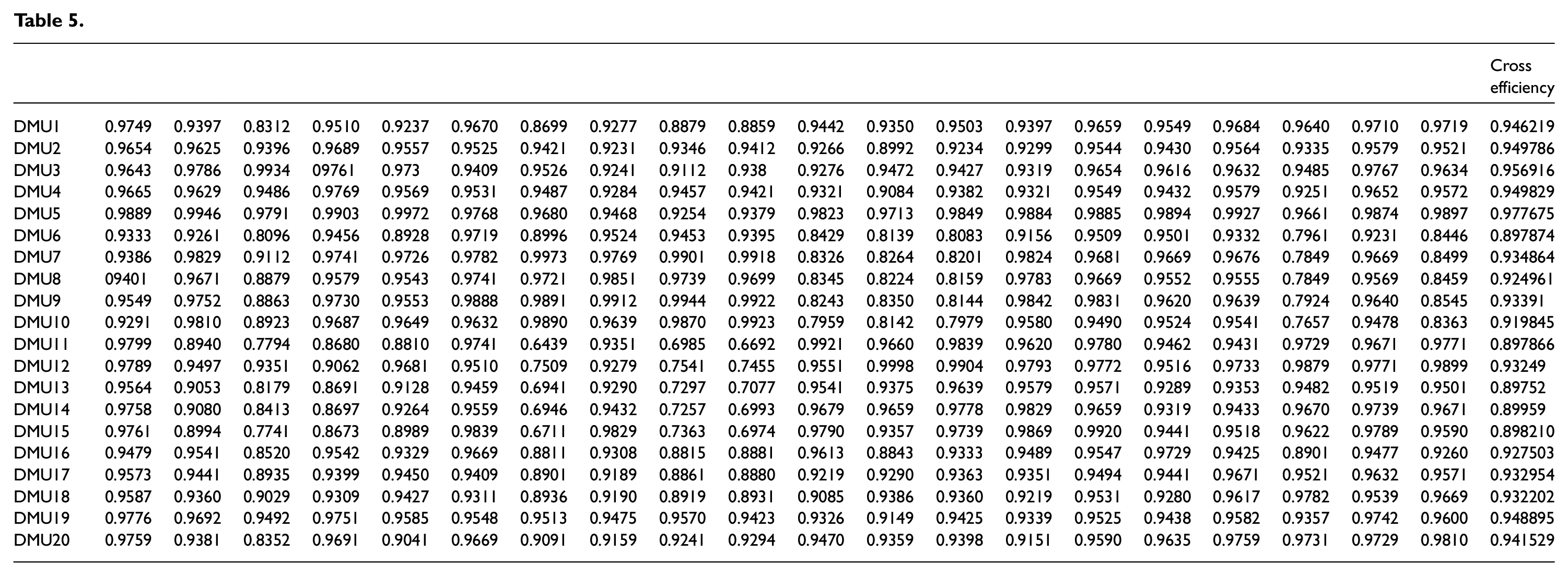
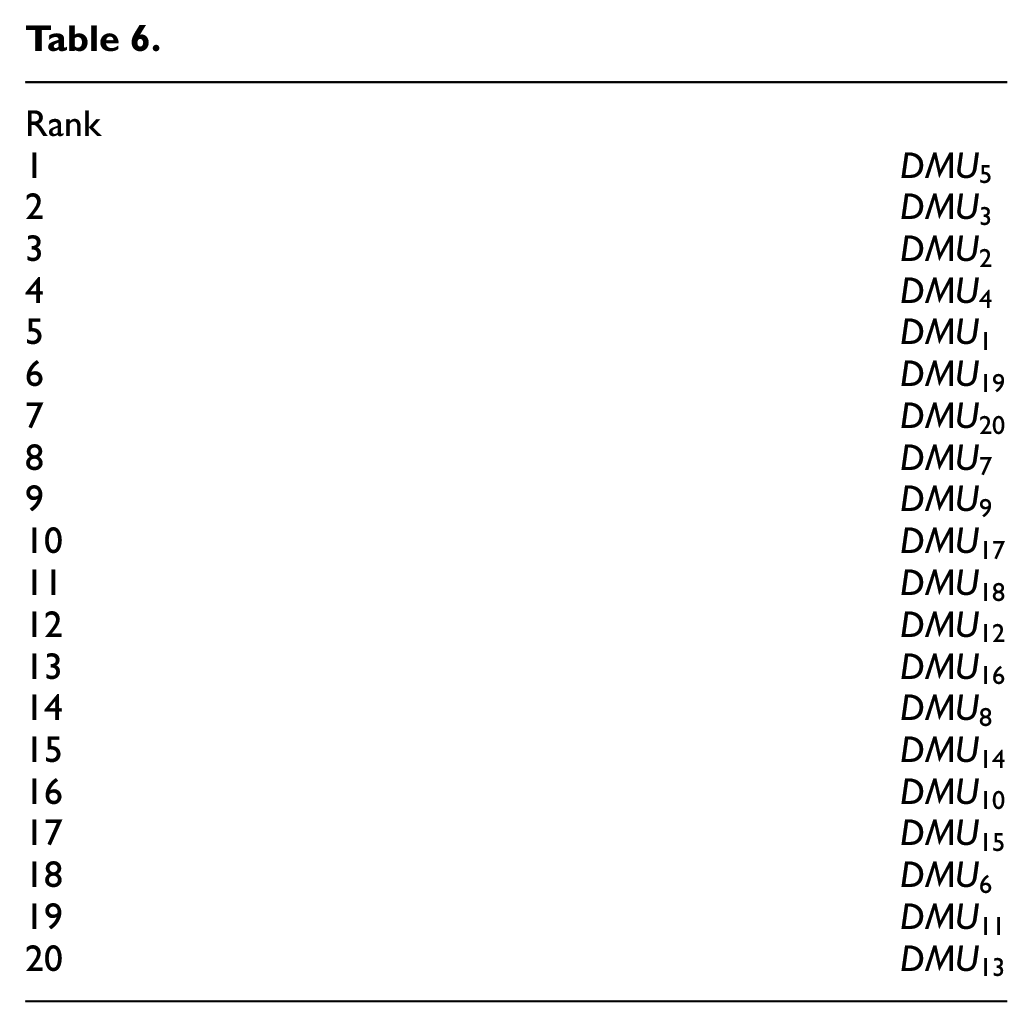
Table 1 displays the results for girls’ schools. Table 2 represents the efficiency achieved using model 1 with girls’ schools data, and Table 3 ranks the girls’ schools. And Table 4 shows the results for boys’ schools. Table 5 represents the efficiency achieved using model 1 with boys’ schools data, and Table 6 ranks the boys’ schools. At last, the chart illustrates girls’ and boys’ schools using the explanatory method, cooperative method, game-based method, and brainstorming method.
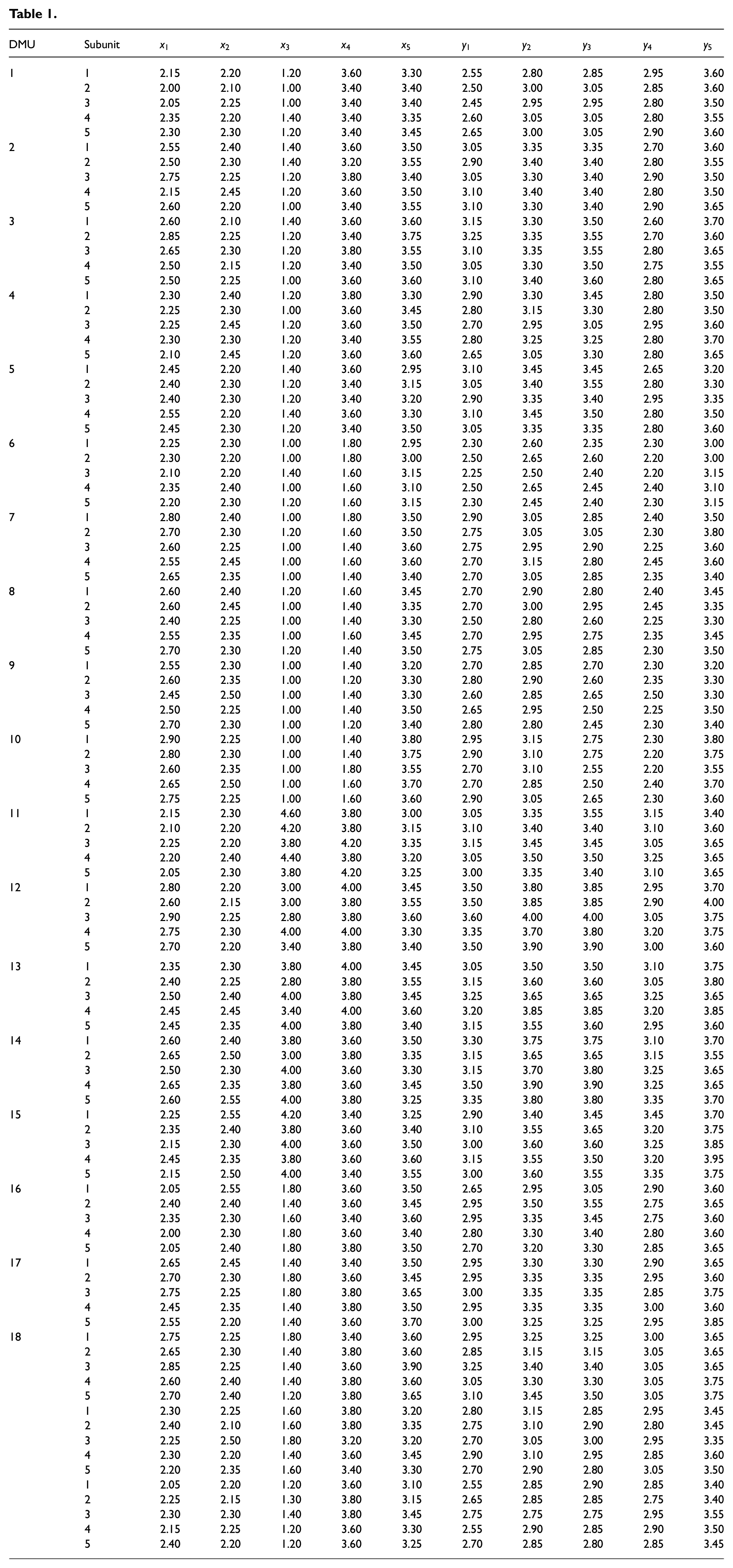
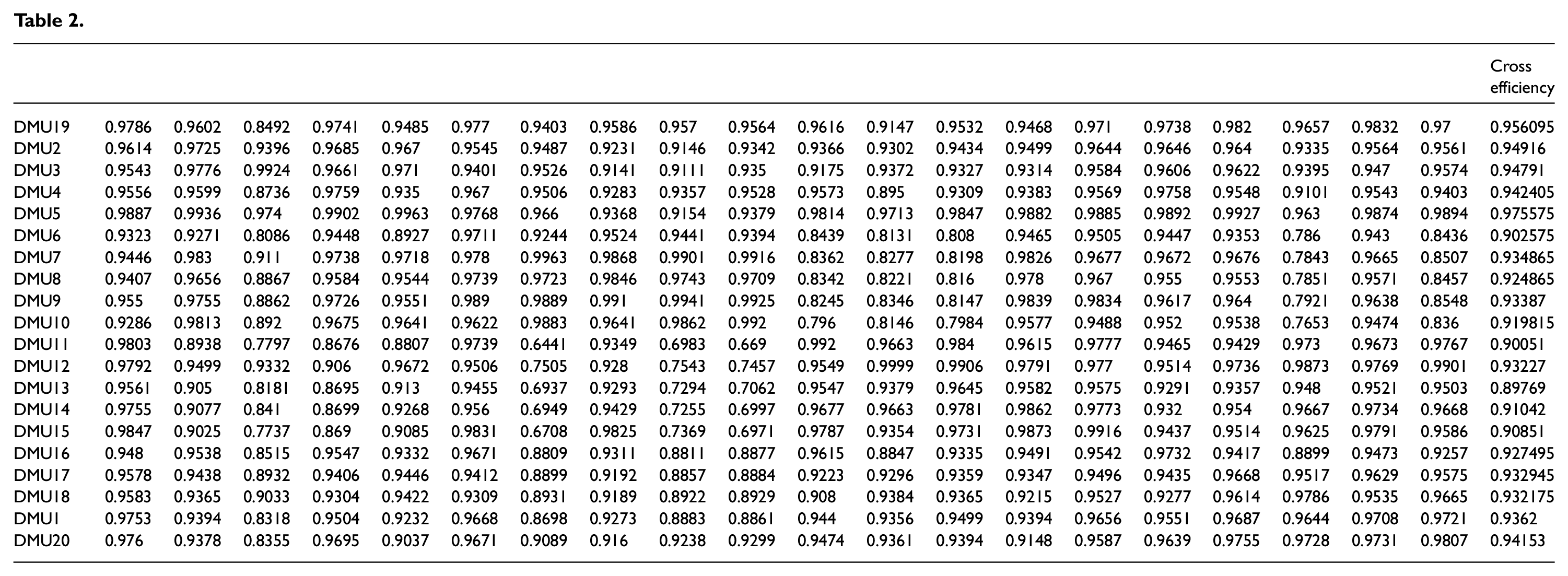
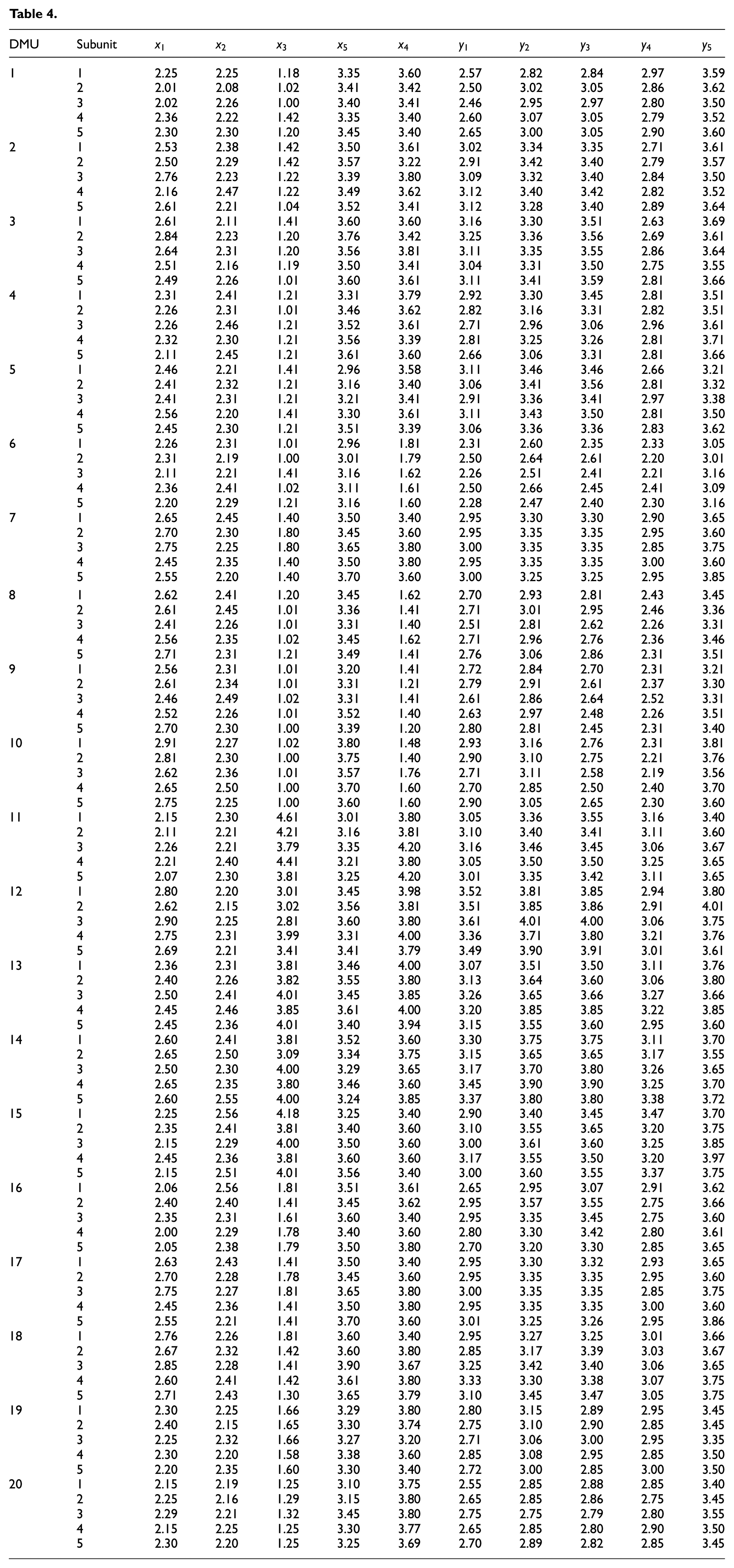
In the table above,
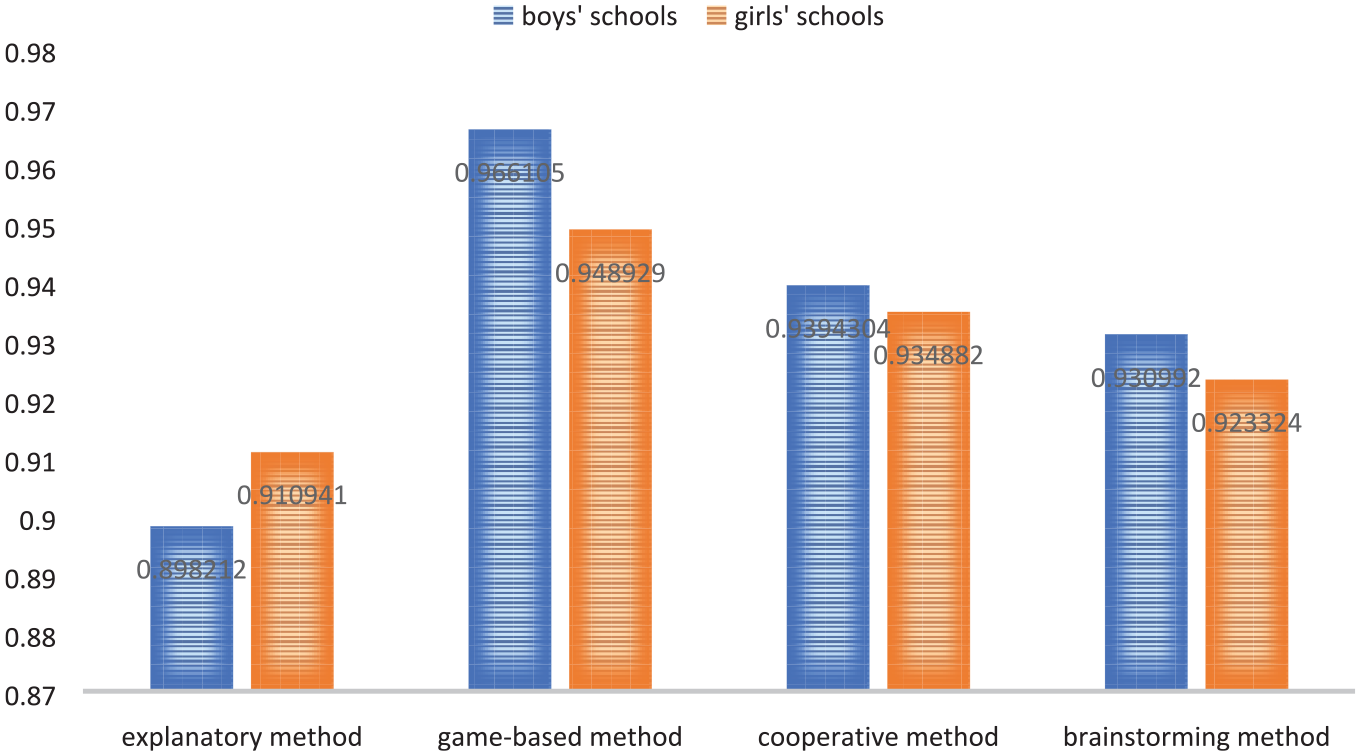
Teaching Method Evaluation chart.
Conclusion
As it was observed, the game method has a better rank than other methods girls’ and boys’ schools. When the concepts taught in the math lesson are accompanied by play, the student tries to learn it with more interest. When the concepts taught in math are meaningful in students’ lives and are according to their understanding and abilities, students will be more interested in learning while taking more responsibility for learning.
The more understandable and more tangible the problem is for students, the easier it will be for them to find a solution. The more objective examples, exercises, and techniques the teacher uses, the sweeter, easier, and more practical students will find math.
Footnotes
Acknowledgements
we would like thanks the personnel of the elementary schools of Semnan city for helping us to gather the data and articles.
Correction (February 2025):
The affiliation of all authors has been updated in the article.
Declaration of conflicting interests
The author(s) declared no potential conflicts of interest with respect to the research, authorship, and/or publication of this article.
Funding
The author(s) received no financial support for the research, authorship, and/or publication of this article.

Data availability statement
Data sharing not applicable to this article as no datasets were generated or analyzed during the current study.